Industrial Revolution c 1750 1850 Industrial RevolutionWhy England


- Slides: 15
Industrial Revolution, c. 1750 -1850
Industrial Revolution--Why England? • Seven reasons 1. Application of machine power 2. Dynamic society 3. Expanding population supplied more workers and the initial market for products *What fed the growing urban population?
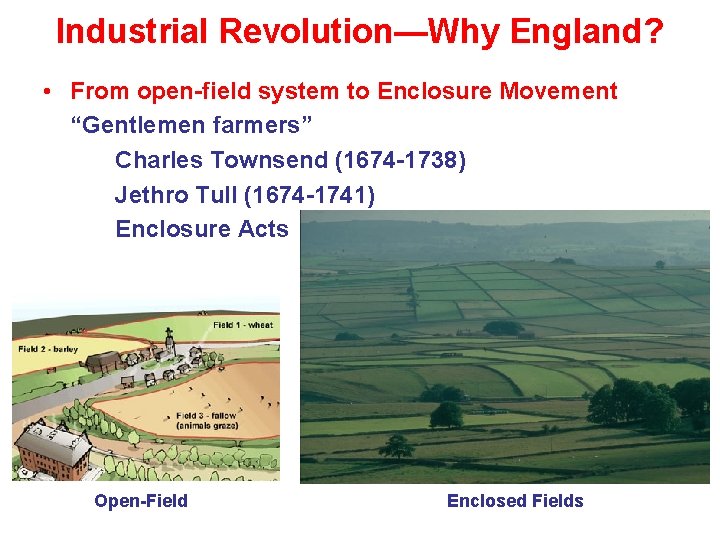
Industrial Revolution—Why England? • From open-field system to Enclosure Movement “Gentlemen farmers” Charles Townsend (1674 -1738) Jethro Tull (1674 -1741) Enclosure Acts Open-Field Enclosed Fields
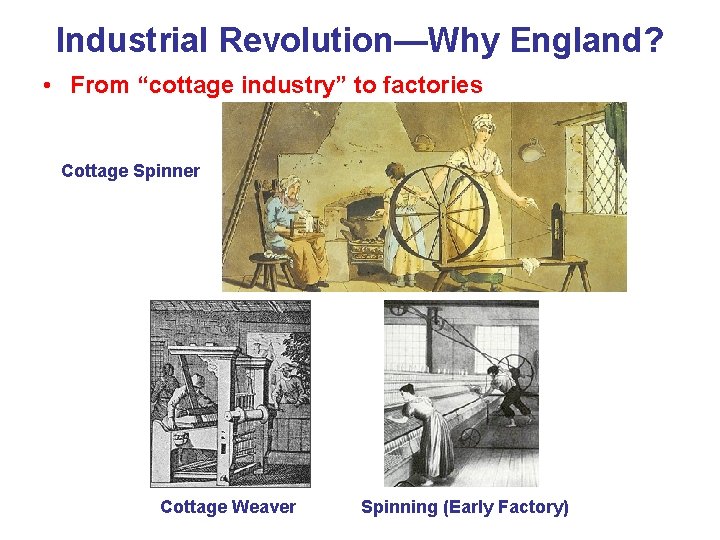
Industrial Revolution—Why England? • From “cottage industry” to factories Cottage Spinner Cottage Weaver Spinning (Early Factory)
Industrial Revolution—Why England? 4. Transportation system 5. Mastery of the seas 6. “Splendid isolation” 7. Flexibility of social/political system
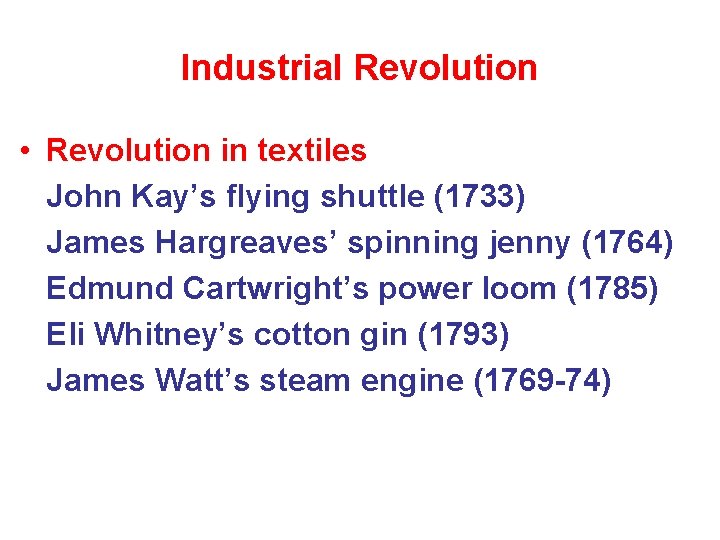
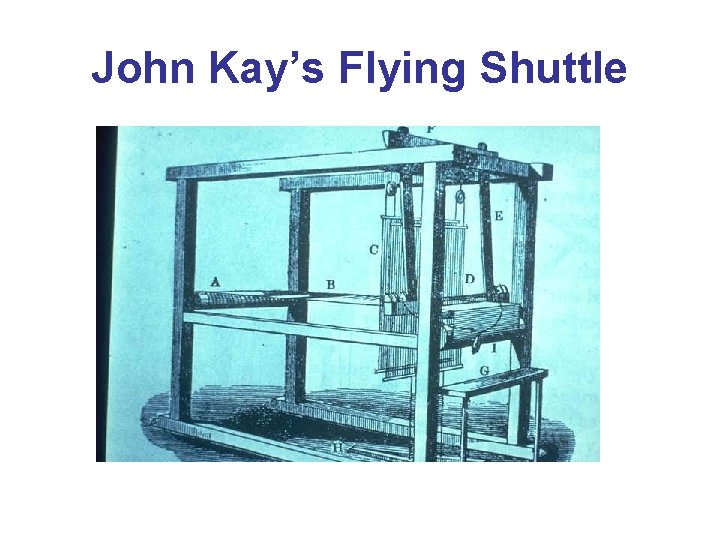
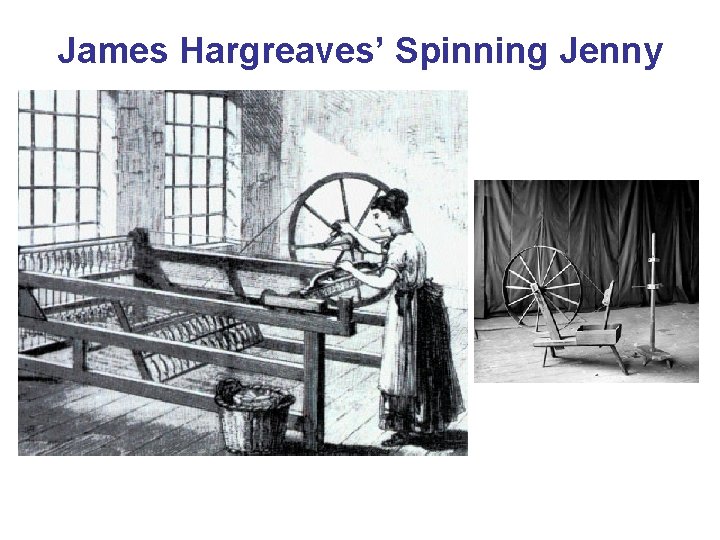
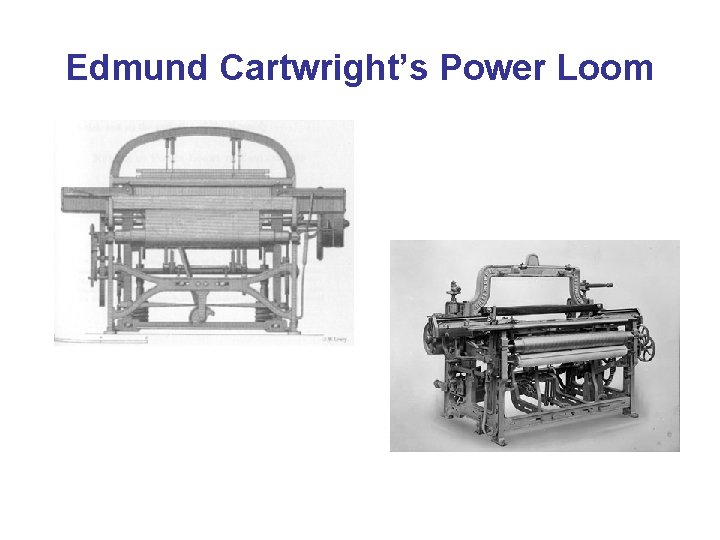
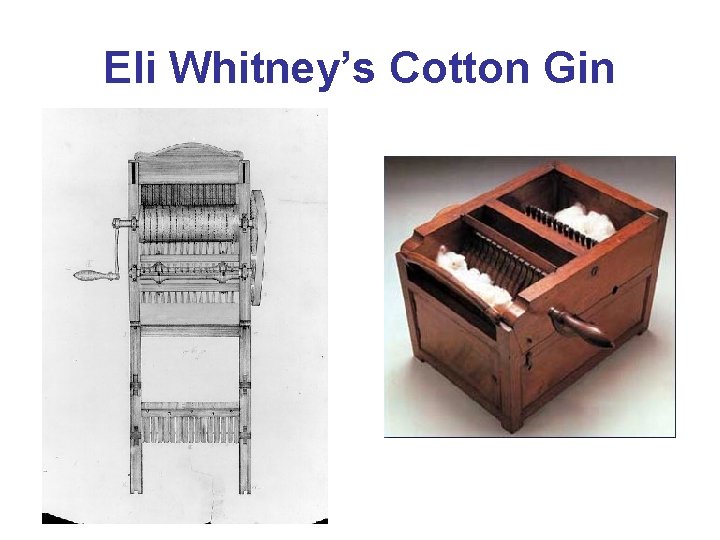
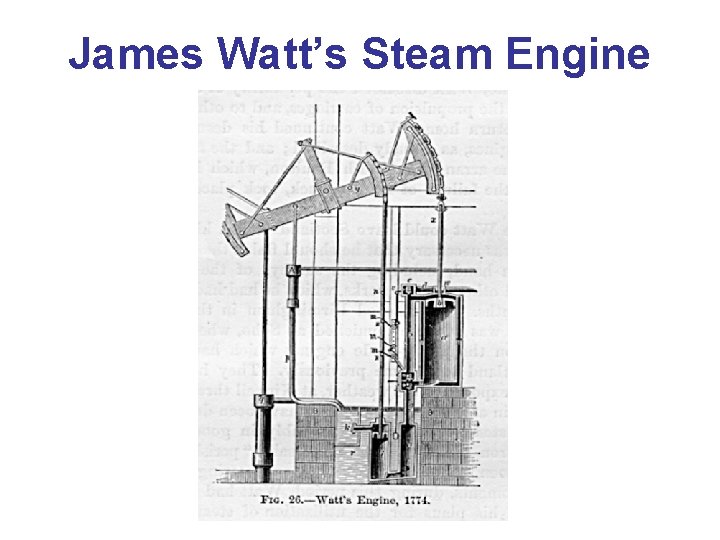
Industrial Revolution • Revolution in textiles John Kay’s flying shuttle (1733) James Hargreaves’ spinning jenny (1764) Edmund Cartwright’s power loom (1785) Eli Whitney’s cotton gin (1793) James Watt’s steam engine (1769 -74)
John Kay’s Flying Shuttle
James Hargreaves’ Spinning Jenny
Edmund Cartwright’s Power Loom
Eli Whitney’s Cotton Gin
James Watt’s Steam Engine
Industrial Revolution— Long-Term Impact • • • Rural to urban society Privileged to a leveling society Subsistence to market economy Illiterate to literate society Stationary to mobile society Local to global horizon
Industrial Revolution— Long-Term Impact • Good side Explosion of goods and services Epidemics wiped out • Underside Wrenching process Loss of traditional values Emergence of new class conflict
Industrial Revolution— Long-Term Impact • Four “tion” factors 1. Standardization 2. Specialization 3. Synchronization 4. Concentration
The End El Fin Ha-Sof Al-Had