Take out a piece of paper Name the








- Slides: 88
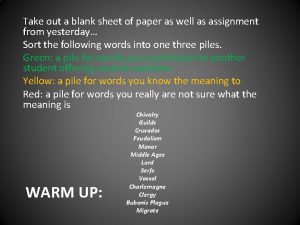
Take out a piece of paper Name the Seven Dwarves
u Was the exercise easy or difficult? It depends on certain circumstantial factors: • Whether you like Disney movies • How long ago you watched the movie • How loud the people around you when you are trying to remember
Memory The Phenomenon of Memory u u u What is memory? What role does it play in the lives of humans? Luis Bunuel, Spanish filmmaker, said, “Memory is what makes our lives … Without it, we are nothing. ” The Roman statesman Cicero once said: “Memory is the treasury and guardian of all things. ” u To a psychologist, Memory is any indication that learning has persisted over time. Memory is our ability to store and retrieve information. u Our capacity for remembering the many voices, sounds, and songs, flavors, smells, textures, faces, sights, and events, general knowledge, and procedures is amazing!!
Your Memory… Your memory ability is most apparent in your recall of unique and/or highly emotional moments in your past. – For example: a vivid memory of a car accident; your first romantic kiss; your context when you heard some tragic news When forming memories you must select, process, store, and retrieve information. Even more, to understand what you remember and HOW, we must know how information is encoded.
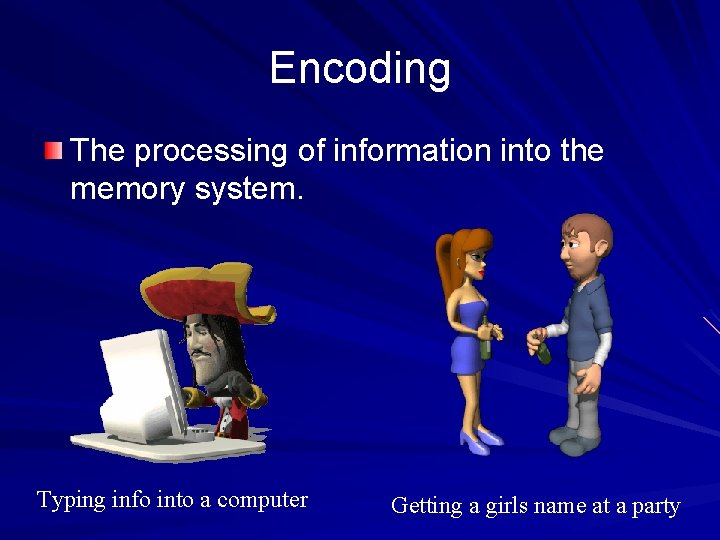
Encoding The processing of information into the memory system. Typing info into a computer Getting a girls name at a party
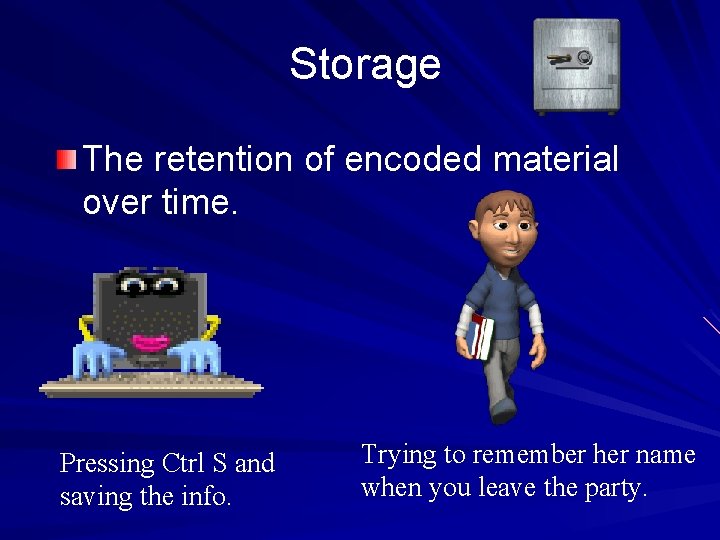
Storage The retention of encoded material over time. Pressing Ctrl S and saving the info. Trying to remember her name when you leave the party.
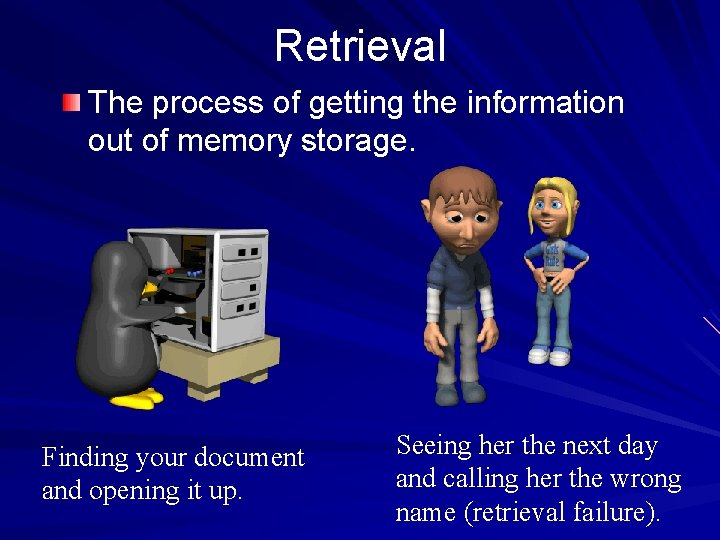
Retrieval The process of getting the information out of memory storage. Finding your document and opening it up. Seeing her the next day and calling her the wrong name (retrieval failure).
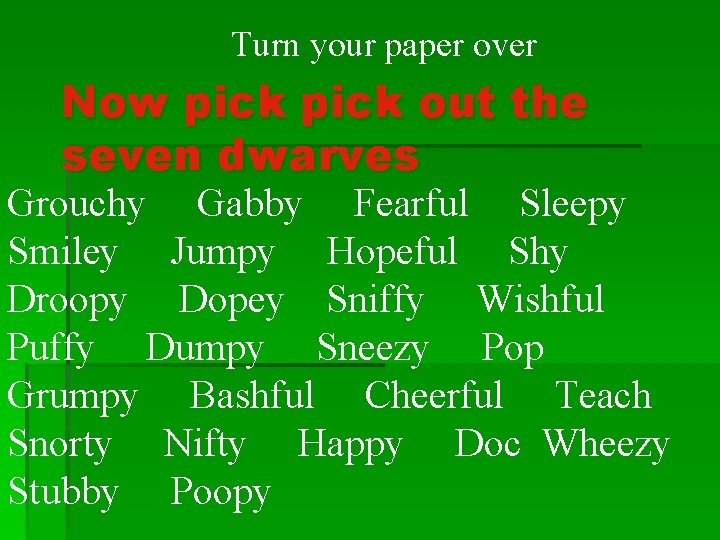
Turn your paper over Now pick out the seven dwarves Grouchy Gabby Fearful Sleepy Smiley Jumpy Hopeful Shy Droopy Dopey Sniffy Wishful Puffy Dumpy Sneezy Pop Grumpy Bashful Cheerful Teach Snorty Nifty Happy Doc Wheezy Stubby Poopy
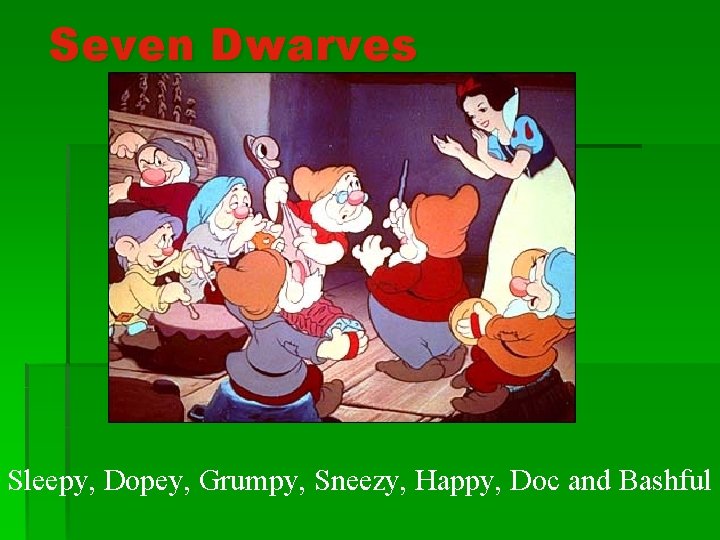
Seven Dwarves Sleepy, Dopey, Grumpy, Sneezy, Happy, Doc and Bashful
Did you do better on the first or second dwarf memory exercise? Recall vs. Recognition § With recall- you must retrieve the information from your memory (fill-in-the blank tests). § With recognition- you must identify the target from possible targets (multiplechoice tests). § Which is easier?
Memory … (of course) § To remember any event requires that we get information into our brains (encoding), retain that information (storage), and later get it back out (retrieval). § A computer encodes, stores, and retrieves too. First, it translates input (keystrokes) into an electronic language, much like the brain encodes sensory information into a neural language. § Next, the computer stores vast amounts of information on a disk, from which it can later be retrieved. § Our memories are less literal and more fragile than a computer’s. The computer is faster in processing information.
Memory … once again … n First: Acquisition (to remember you must acquire) n n n During acquisition, the relevant experience(s) leave some record or mark in the nervous system – called Memory Trace Second: Storage (storing information like a squirrel’s storing nuts in its many niches) Third: Retrieval (“trying to remember” – dredge particular memory trace) Therefore, it is clear that there can not be any remembering without prior acquisition (learning). Memory is the process by which we recollect prior experiences and information and skills learned in the past
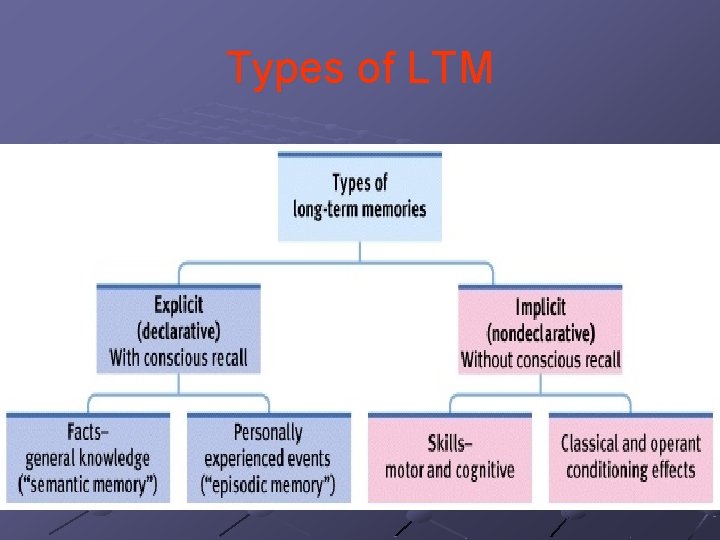
Memory … once again … n n There are different types of memory. Memory can be categorized according to kinds of information it stores: n n Events (experiences) General Knowledge Skills (physical abilities) These three types are called: Episodic, Generic, and Procedural
Episodic Memory n n Memory of specific events Memories of things that happen or experiences n n Example: what you ate for dinner last dinner or taking a quiz last Friday. Some episodic memories are very surprising, significant, or traumatic we tend to recall these events in great details. These are called: Flashbulb memories
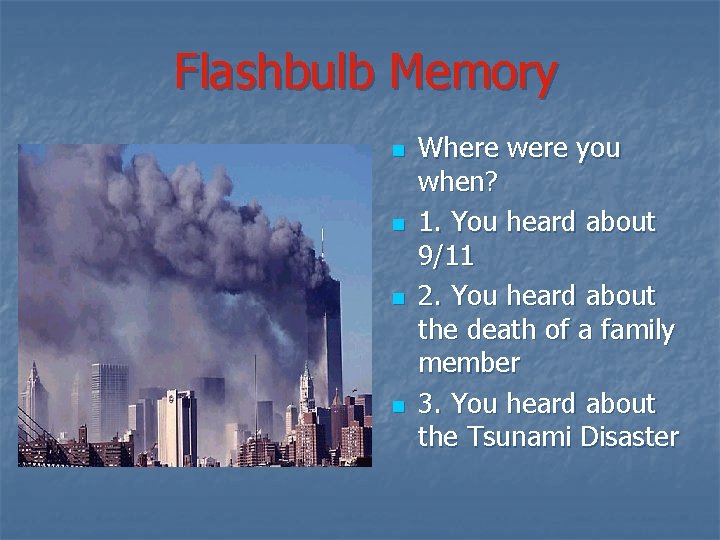
Flashbulb Memory n n Where were you when? 1. You heard about 9/11 2. You heard about the death of a family member 3. You heard about the Tsunami Disaster
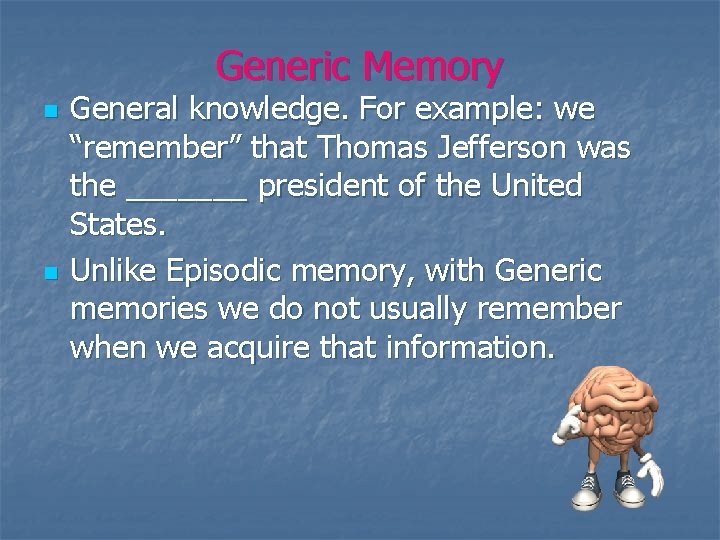
Generic Memory n n General knowledge. For example: we “remember” that Thomas Jefferson was the _______ president of the United States. Unlike Episodic memory, with Generic memories we do not usually remember when we acquire that information.
Procedural Memory n It consists of skills or procedures you have learned. n n Example: riding a bike, skipping rope, swimming, etc. Once such a skill has been learned it usually stays with you for many years. Even if you do not use it, you are unlikely to forget the procedure.
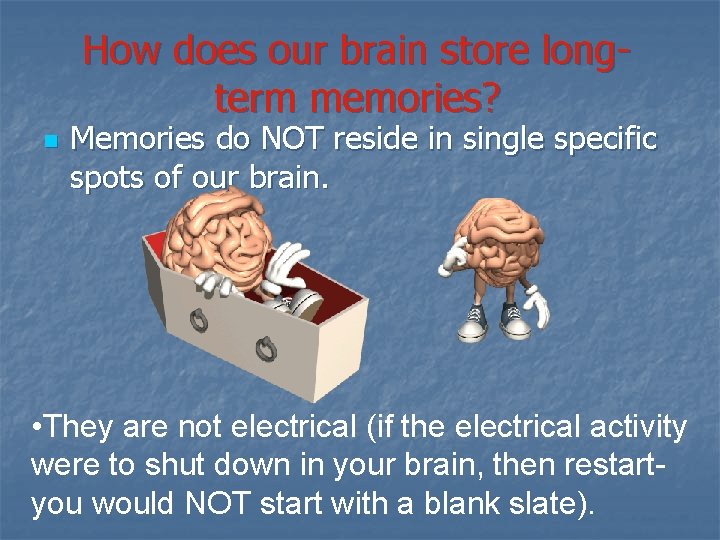
How does our brain store longterm memories? n Memories do NOT reside in single specific spots of our brain. • They are not electrical (if the electrical activity were to shut down in your brain, then restartyou would NOT start with a blank slate).
Sensory Memory The immediate, initial recording of sensory information in the memory system Stored just for an instant, and most gets unprocessed Examples: • You lose concentration in class during a lecture. Suddenly you hear a significant word and return your focus to the lecture. You should be able to remember what was said just before the key word since it is in your sensory register. • Your ability to see motion can be attributed to sensory memory. An image previously seen must be stored long enough to compare to the new image. Visual processing in the brain works like watching a cartoon -- you see one frame at a time. • If someone is reading to you, you must be able to remember the words at the beginning of a sentence in order to understand the sentence as a whole. These words are held in a relatively unprocessed sensory memory.
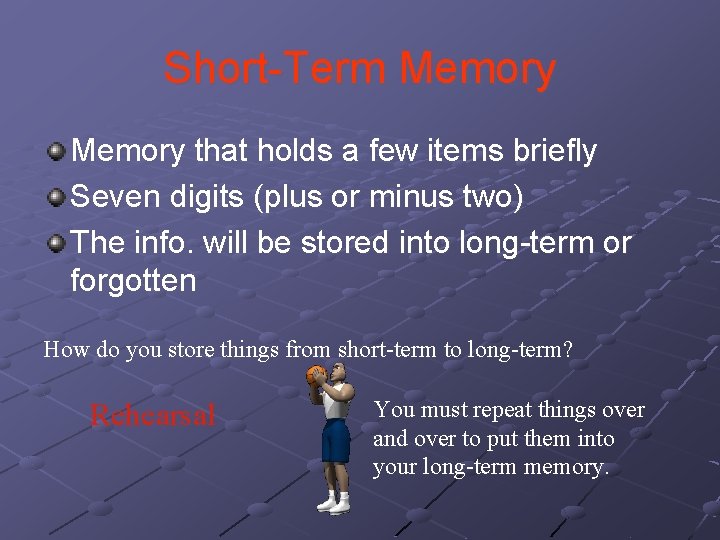
Short-Term Memory that holds a few items briefly Seven digits (plus or minus two) The info. will be stored into long-term or forgotten How do you store things from short-term to long-term? Rehearsal You must repeat things over and over to put them into your long-term memory.
Working Memory (Modern day STM) Another way of describing the use of short-term memory is called working memory. Working-Memory has three parts: 1. 2. 3. Audio Visual Integration of audio and visual (controls where you attention lies)
Long-Term Memory The relatively permanent and limitless storehouse of the memory system.
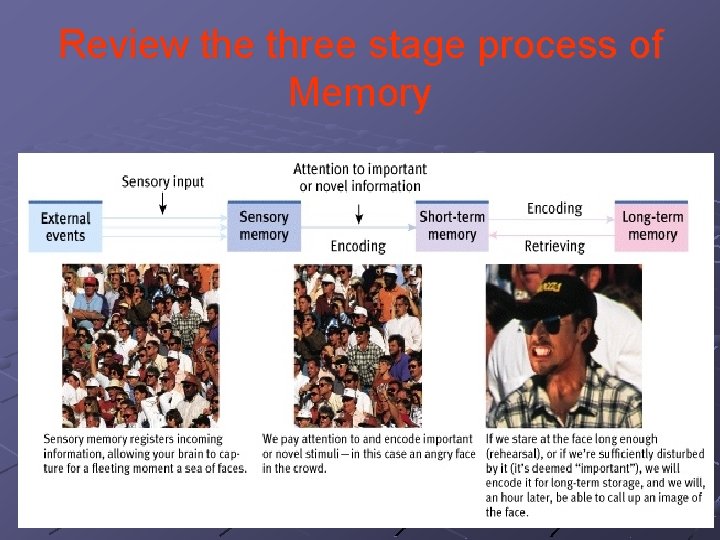
Review the three stage process of Memory
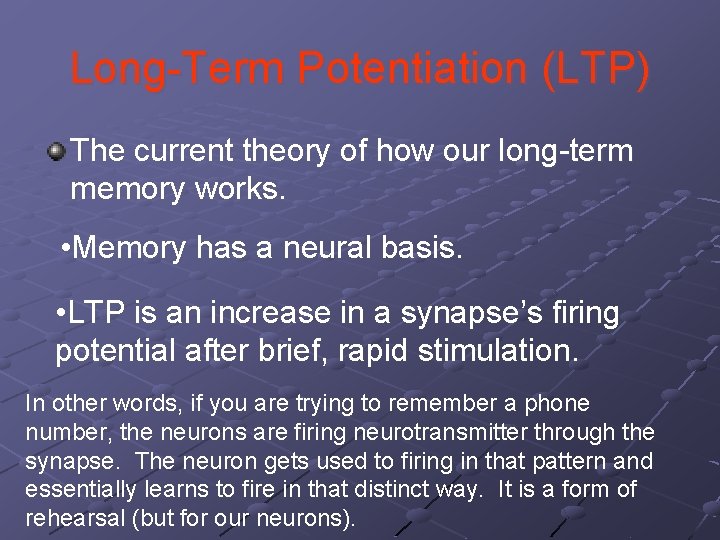
Long-Term Potentiation (LTP) The current theory of how our long-term memory works. • Memory has a neural basis. • LTP is an increase in a synapse’s firing potential after brief, rapid stimulation. In other words, if you are trying to remember a phone number, the neurons are firing neurotransmitter through the synapse. The neuron gets used to firing in that pattern and essentially learns to fire in that distinct way. It is a form of rehearsal (but for our neurons).
Stress and Memory Stress can lead to the release of hormones that have been shown to assist in LTM. Similar to the idea of Flashbulb Memory.
Types of LTM
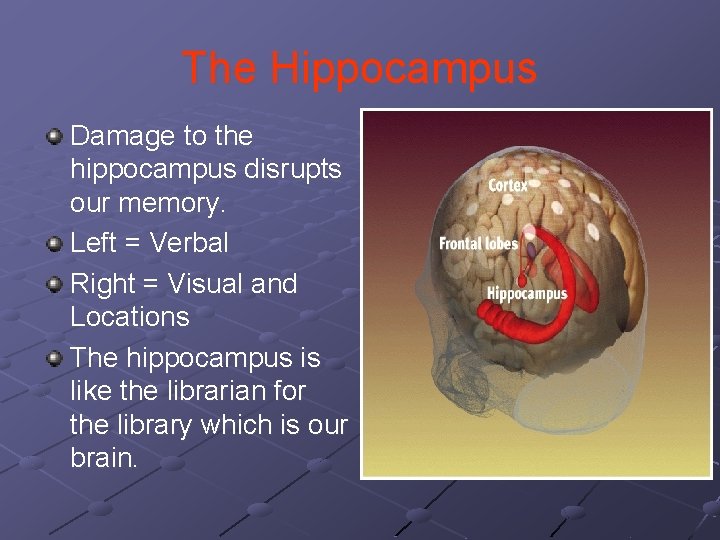
The Hippocampus Damage to the hippocampus disrupts our memory. Left = Verbal Right = Visual and Locations The hippocampus is like the librarian for the library which is our brain.
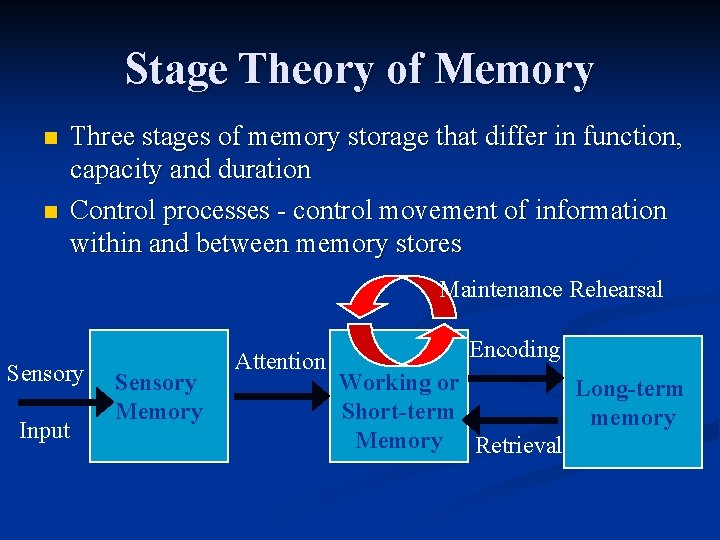
Memory is a process of encoding, storage, and retrieval. There are two theoretical approaches that explain memory. The first is called: Stage Theory – emphasizes a systematic process of memory of WHERE an item goes and HOW it is transferred and stored. There are three stages to memory: Sensory Memory Short-term Memory Longterm Memory The second is called: The Organizational View – emphasizes HOW memories are processed and organized in the brain.
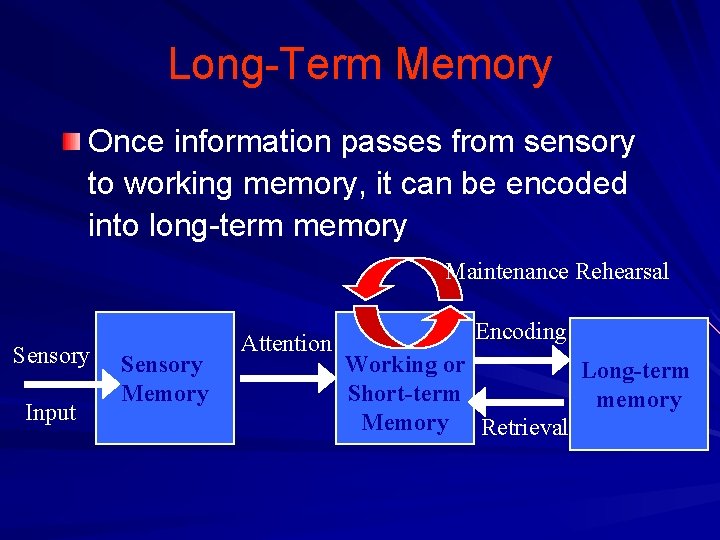
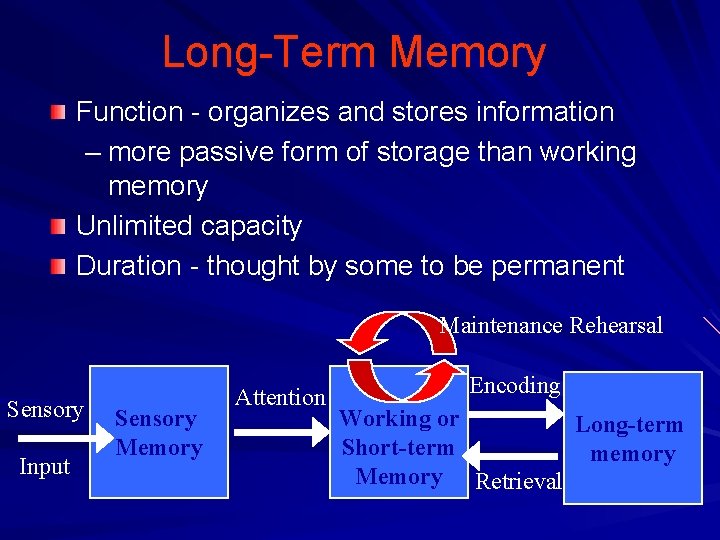
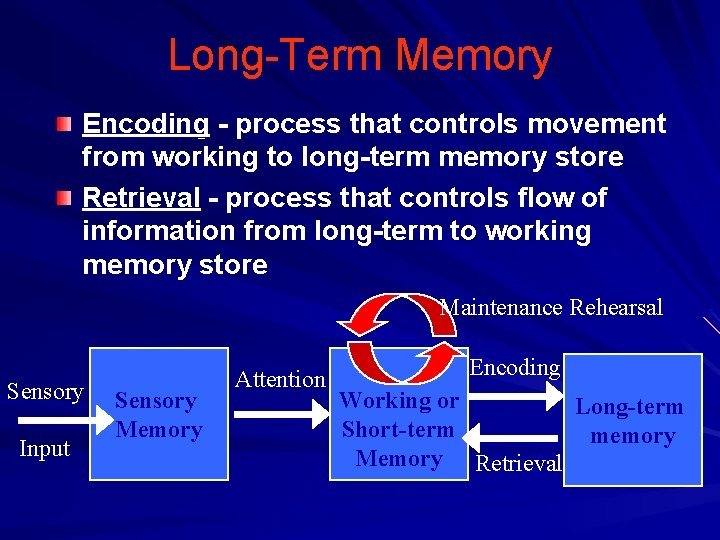
Stage Theory of Memory n n Three stages of memory storage that differ in function, capacity and duration Control processes - control movement of information within and between memory stores Maintenance Rehearsal Sensory Input Sensory Memory Attention Encoding Working or Long-term Short-term memory Memory Retrieval
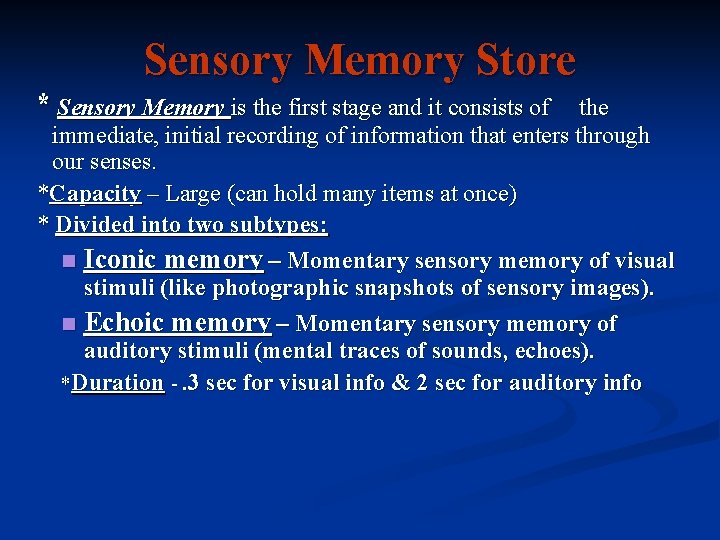
Sensory Memory Store * Sensory Memory is the first stage and it consists of the immediate, initial recording of information that enters through our senses. *Capacity – Large (can hold many items at once) * Divided into two subtypes: n Iconic memory – Momentary sensory memory of visual stimuli (like photographic snapshots of sensory images). n Echoic memory – Momentary sensory memory of auditory stimuli (mental traces of sounds, echoes). *Duration -. 3 sec for visual info & 2 sec for auditory info
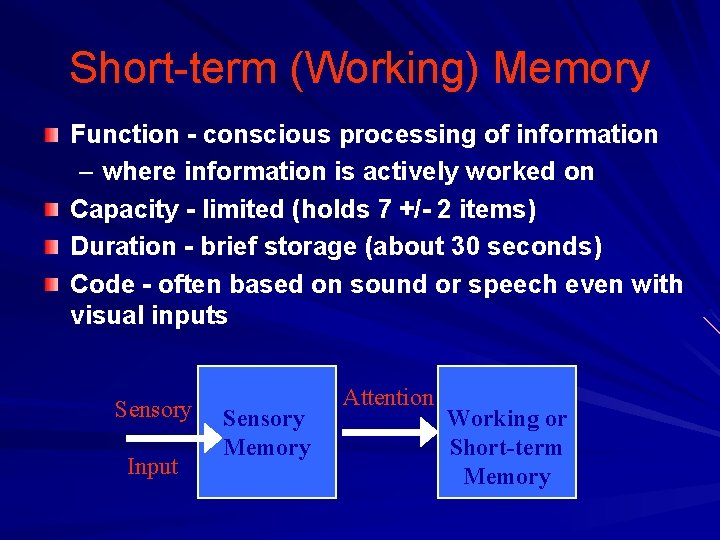
Short-term (Working) Memory Function - conscious processing of information – where information is actively worked on Capacity - limited (holds 7 +/- 2 items) Duration - brief storage (about 30 seconds) Code - often based on sound or speech even with visual inputs Sensory Input Sensory Memory Attention Working or Short-term Memory
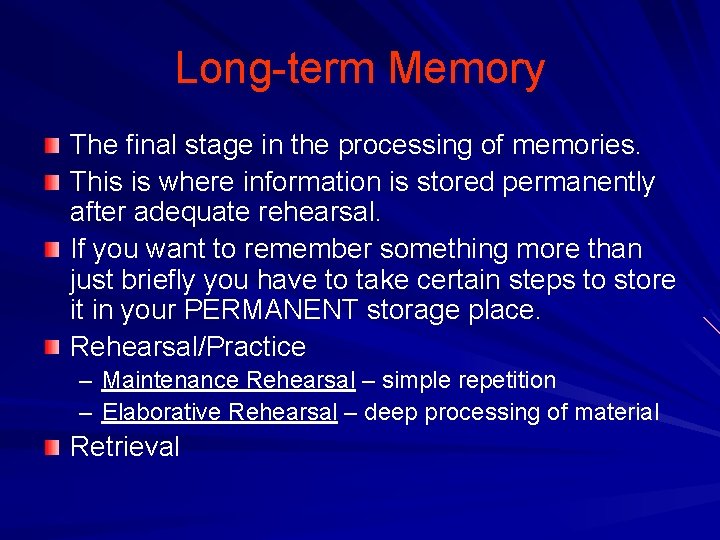
Long-term Memory The final stage in the processing of memories. This is where information is stored permanently after adequate rehearsal. If you want to remember something more than just briefly you have to take certain steps to store it in your PERMANENT storage place. Rehearsal/Practice – Maintenance Rehearsal – simple repetition – Elaborative Rehearsal – deep processing of material Retrieval
Long-Term Memory Once information passes from sensory to working memory, it can be encoded into long-term memory Maintenance Rehearsal Sensory Input Sensory Memory Attention Encoding Working or Long-term Short-term memory Memory Retrieval
Long-Term Memory Function - organizes and stores information – more passive form of storage than working memory Unlimited capacity Duration - thought by some to be permanent Maintenance Rehearsal Sensory Input Sensory Memory Attention Encoding Working or Long-term Short-term memory Memory Retrieval
Long-Term Memory Encoding - process that controls movement from working to long-term memory store Retrieval - process that controls flow of information from long-term to working memory store Maintenance Rehearsal Sensory Input Sensory Memory Attention Encoding Working or Long-term Short-term memory Memory Retrieval
Encoding : Getting the information in our heads!!!! Two ways to encode information Automatic Processing Effortful Processing
Automatic Processing Unconscious encoding of incidental information. You encode space, time and word meaning without effort. Things can become automatic with practice. For example, if I tell you that you are a jerk, you will encode the meaning of what I am saying to you without any effort.
Effortful Processing Encoding that requires attention and conscious effort. Rehearsal is the most common effortful processing technique. Through enough rehearsal, what was effortful becomes automatic.
Things to remember about Encoding 1. The next-In-Line effect: we seldom remember what the person has just said or done if we are next. 2. Information minutes before sleep is seldom remembered; in the hour before sleep, well remembered. 3. Taped info played while asleep is registered by ears, but we do not remember it.
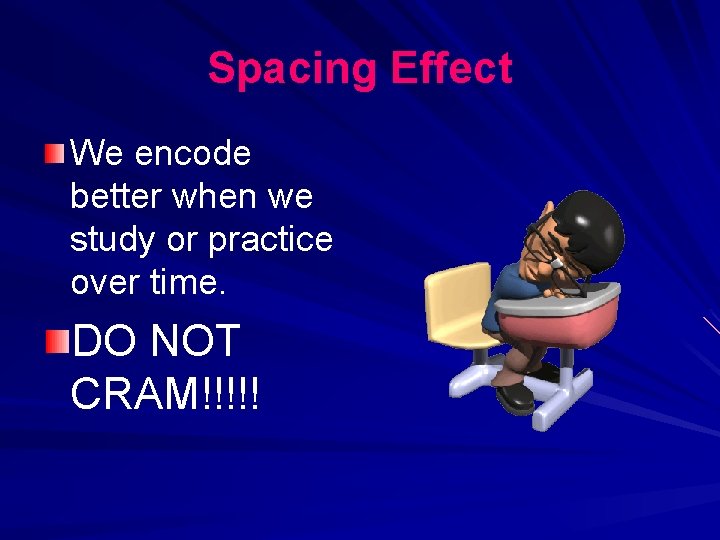
Spacing Effect We encode better when we study or practice over time. DO NOT CRAM!!!!!
Take out a piece of paper and…. List the U. S. Presidents
The Presidents Washington J. Adams Jefferson Madison Taylor Fillmore Pierce Buchanan Harrison Cleveland Mc. Kinley T. Roosevelt Eisenhower Kennedy L. Johnson Nixon Monroe JQ Adams Jackson Van Buren Harrison Tyler Polk Lincoln A. Johnson Grant Hayes Garfield Arthur Cleveland Taft Wilson Harding Coolidge Hoover FD. Roosevelt Truman Ford Carter Reagan Bush Clinton Bush Jr. Hargrave
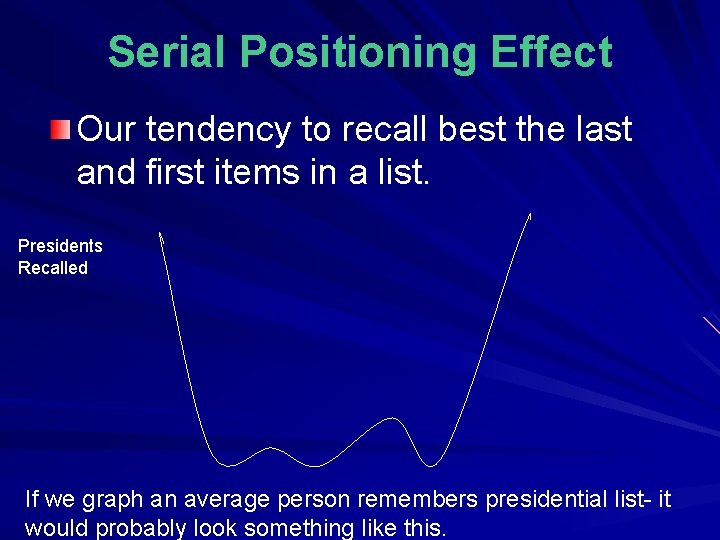
Serial Positioning Effect Our tendency to recall best the last and first items in a list. Presidents Recalled If we graph an average person remembers presidential list- it would probably look something like this.
Primacy and Recency Effects Primacy and Recency effects: when we try to remember a series of information, our memories of the first and last bits of info. tends to be sharpest. This primacy (first) and recency (last) effects.
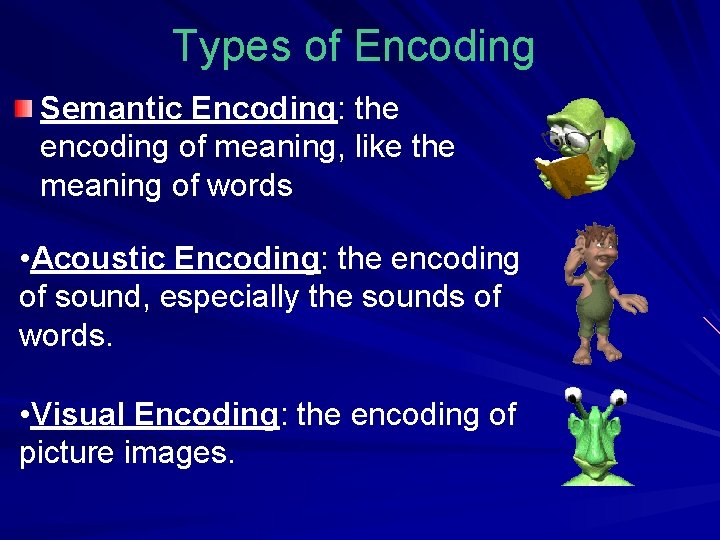
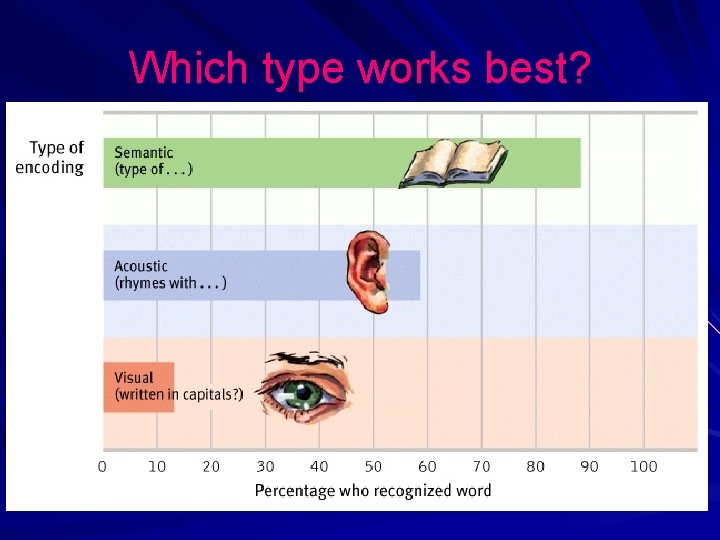
Types of Encoding Semantic Encoding: the encoding of meaning, like the meaning of words • Acoustic Encoding: the encoding of sound, especially the sounds of words. • Visual Encoding: the encoding of picture images.
Which type works best?
Self-Reference Effect An example of how we encode meaning very well. The idea that we remember things (like adjectives) when they are used to describe ourselves.
Tricks to Encode Use imagery: mental pictures Mnemonic Devices - Memory aids using imagery and organizational devices. "Mary Very Easily Makes Jam Saturday Unless No Plums. " Mars, Venus, Earth, Mercury, Jupiter, Saturn, Uranus, Neptune, Pluto. *** Peg-word System *** Method of Loci Give me some more examples….
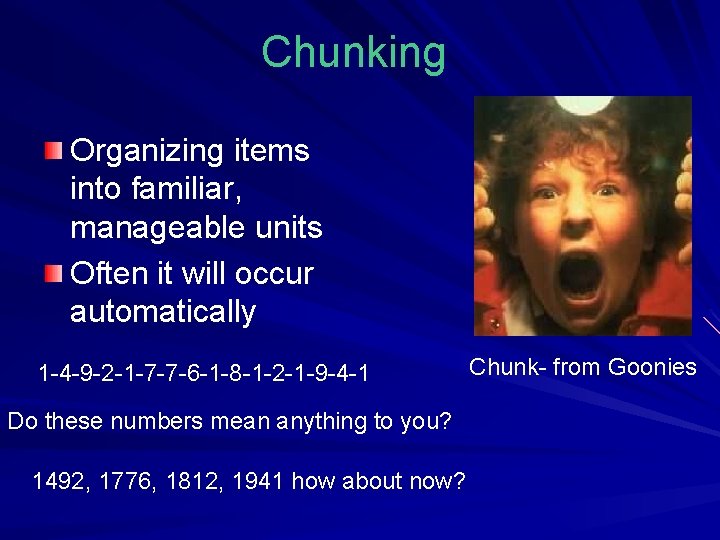
Chunking Organizing items into familiar, manageable units Often it will occur automatically 1 -4 -9 -2 -1 -7 -7 -6 -1 -8 -1 -2 -1 -9 -4 -1 Do these numbers mean anything to you? 1492, 1776, 1812, 1941 how about now? Chunk- from Goonies
Retrieval How do we recall the information we thought we remembered? Let’s Jog Our Memory!!!!!!!
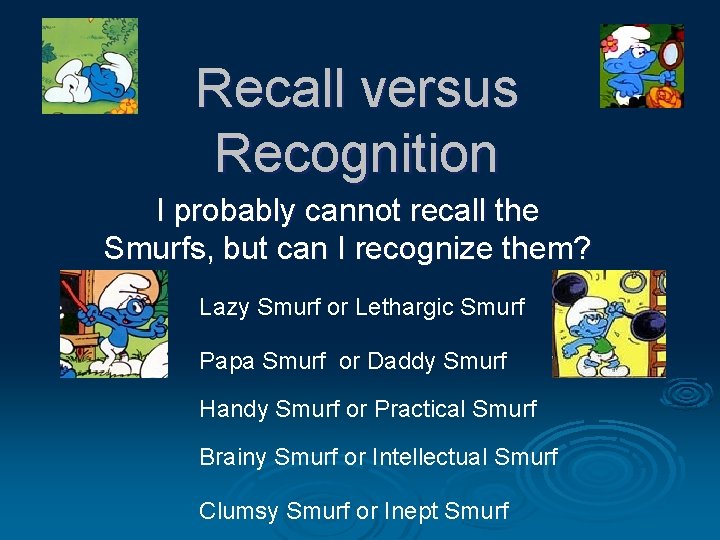
Recall versus Recognition I probably cannot recall the Smurfs, but can I recognize them? Lazy Smurf or Lethargic Smurf Papa Smurf or Daddy Smurf Handy Smurf or Practical Smurf Brainy Smurf or Intellectual Smurf Clumsy Smurf or Inept Smurf
Retrieval Cues Ø Things that help us remember • We often use a process called priming (the activation of associations in our memory) to help us retrieve information.
PRIMING EFFECT Ø Priming effect occurs when people respond faster or better to an item if a similar item preceded it. • For the most part, the priming effect is considered involuntary and is most likely an unconscious phenomenon.
Repetition Priming Repetition priming refers to the fact that it is easier (quicker) to recognize a face or word if you have recently seen that same face or word. Semantic Priming Semantic priming refers to the fact that it is easier (quicker) to recognize someone or word if you have just seen someone or a word closely associated.
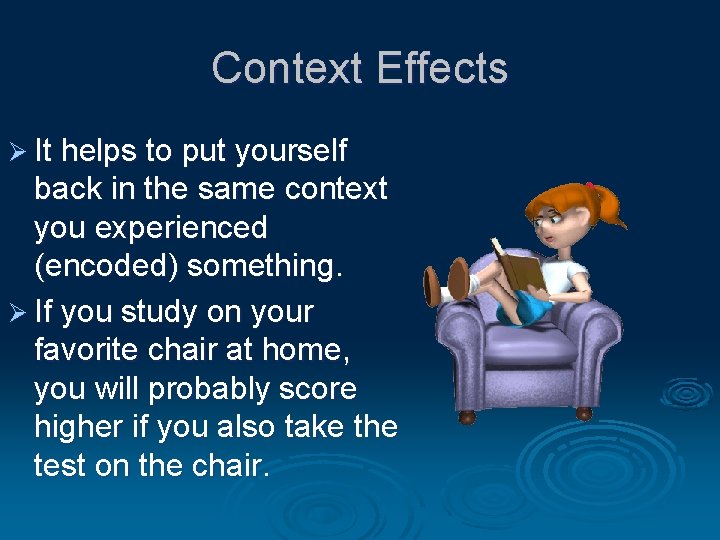
Context Effects Ø It helps to put yourself back in the same context you experienced (encoded) something. Ø If you study on your favorite chair at home, you will probably score higher if you also take the test on the chair.
Rest
Snore
Sound
Tired
Bed
Comfort
Awake
Eat
Wake
Dream
Slumber
Night Last
Déjà Vu Ø That eerie sense that you have experienced something before Ø What is occurring is that the current situation cues past experiences that are Is déjà vu really a glitch in the Matrix? very similar to the present one- your mind gets confused.
Mood-Congruent Memory Ø The tendency to recall experiences that are consistent with one's current good or bad mood. Ø If you are depressed, you will more likely recall sad memories from you past. Ø Moods also effect that way you interpret other peoples’ behavior
Forgetting Theories n n n Encoding failure Role of time Interference theories
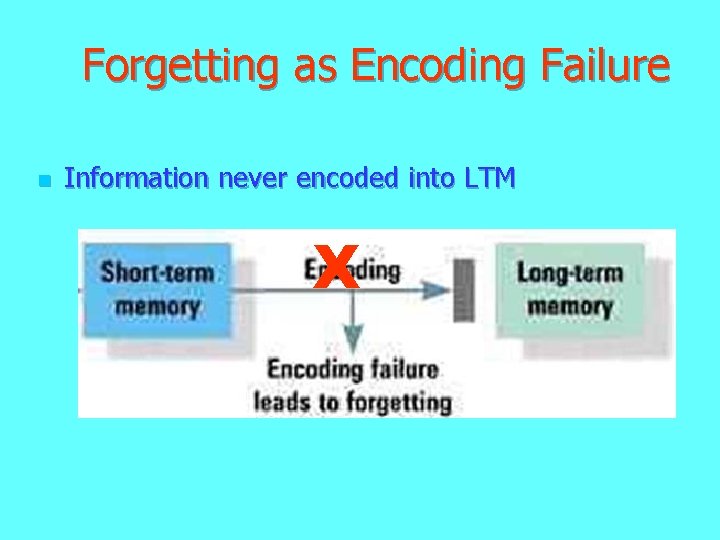
Forgetting as Encoding Failure n Information never encoded into LTM X
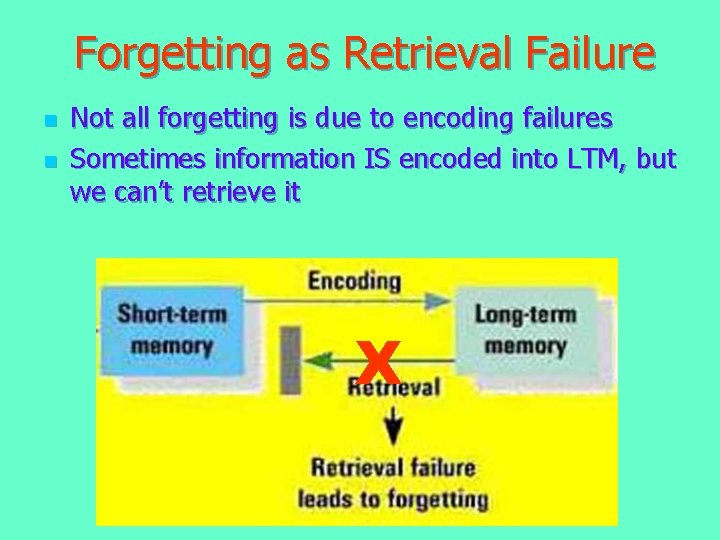
Forgetting as Retrieval Failure n n Not all forgetting is due to encoding failures Sometimes information IS encoded into LTM, but we can’t retrieve it X
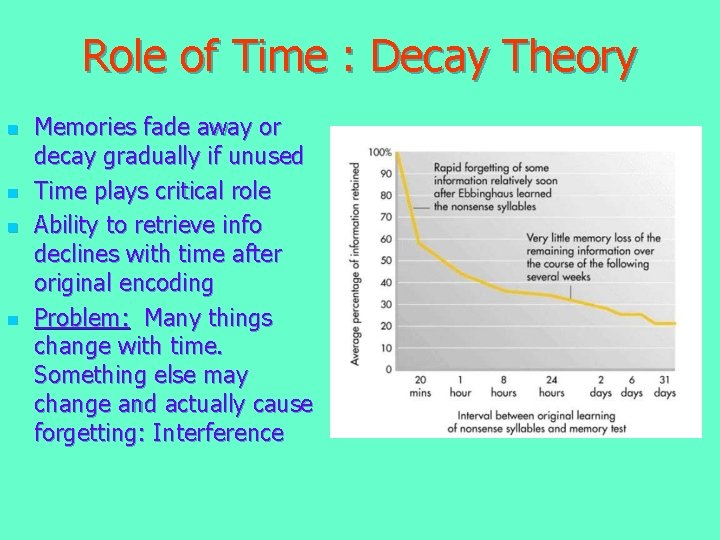
Role of Time : Decay Theory n n Memories fade away or decay gradually if unused Time plays critical role Ability to retrieve info declines with time after original encoding Problem: Many things change with time. Something else may change and actually cause forgetting: Interference
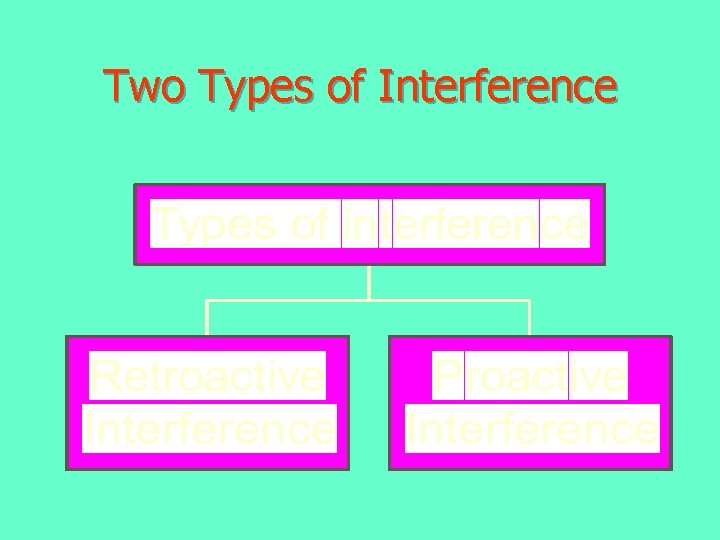
Interference Theories n n “Memories interfering with memories” Forgetting NOT caused by mere passage of time Caused by one memory competing with or replacing another memory Two types of interference
Two Types of Interference
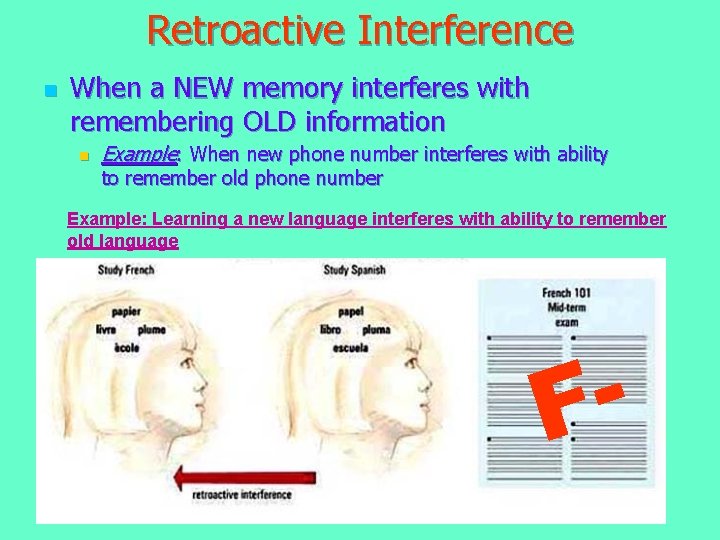
Retroactive Interference n When a NEW memory interferes with remembering OLD information n Example: When new phone number interferes with ability to remember old phone number Example: Learning a new language interferes with ability to remember old language F
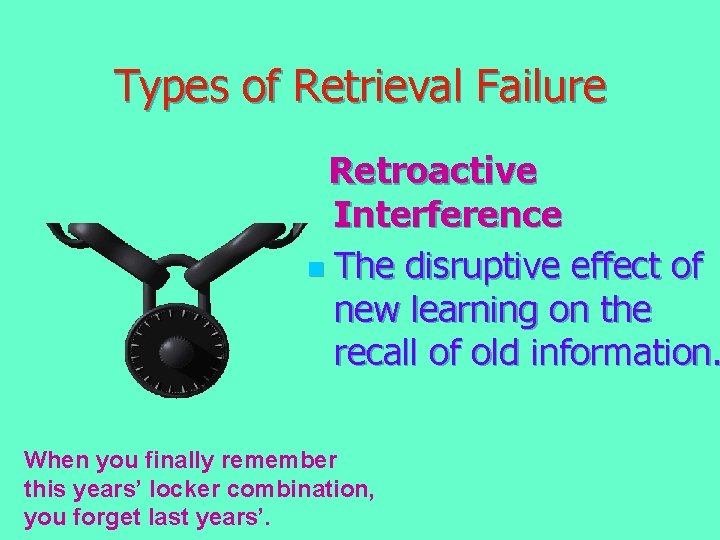
Types of Retrieval Failure Retroactive Interference n The disruptive effect of new learning on the recall of old information. When you finally remember this years’ locker combination, you forget last years’.
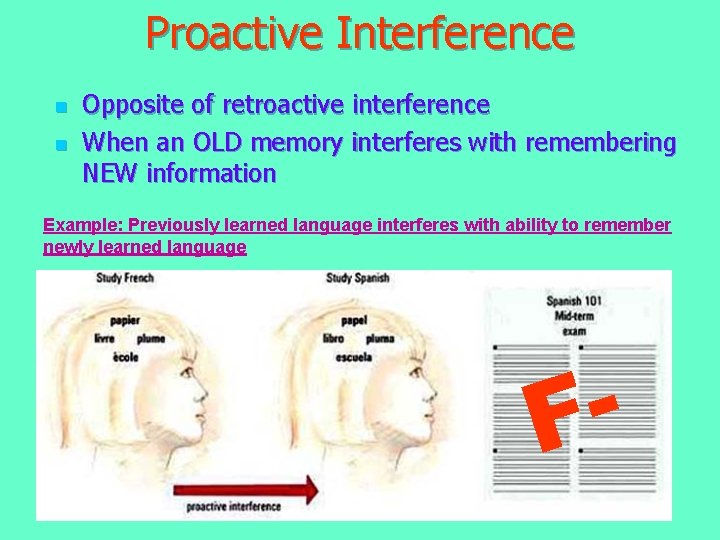
Proactive Interference n n Opposite of retroactive interference When an OLD memory interferes with remembering NEW information Example: Previously learned language interferes with ability to remember newly learned language F
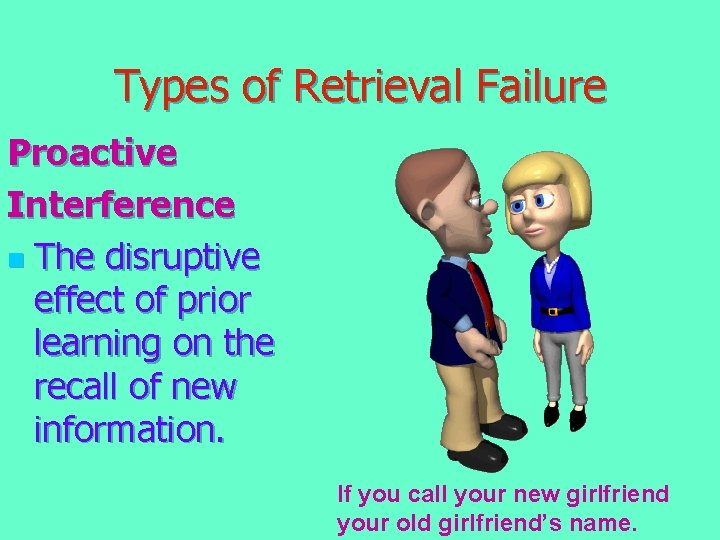
Types of Retrieval Failure Proactive Interference n The disruptive effect of prior learning on the recall of new information. If you call your new girlfriend your old girlfriend’s name.
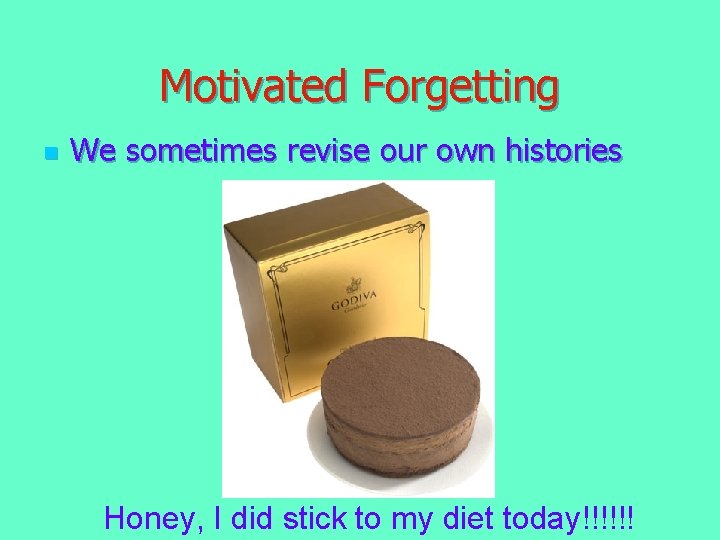
Motivated Forgetting n We sometimes revise our own histories Honey, I did stick to my diet today!!!!!!
Motivated Forgetting Why does is exist? One explanation is REPRESSION: n in psychoanalytic theory, the basic defense mechanism that banishes anxietyarousing thoughts, feelings and memories from consciousness.
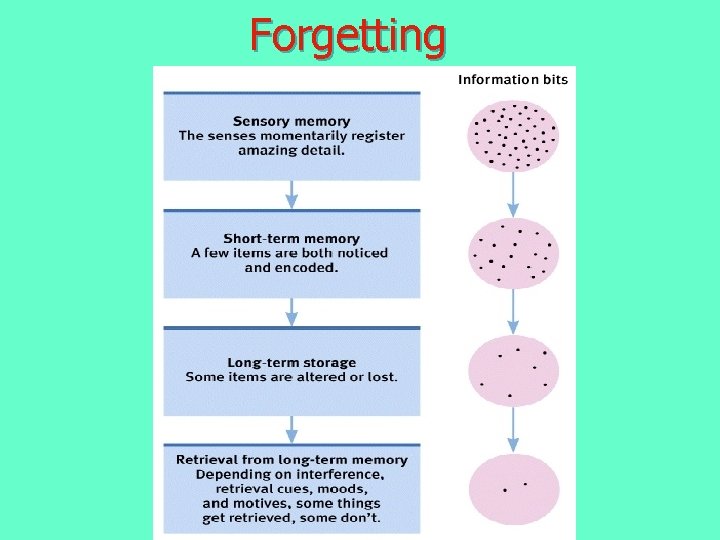
Forgetting
Memory Construction n n We sometimes alter our memories as we encode or retrieve them. Your expectations, schemas, environment may alter your memories.
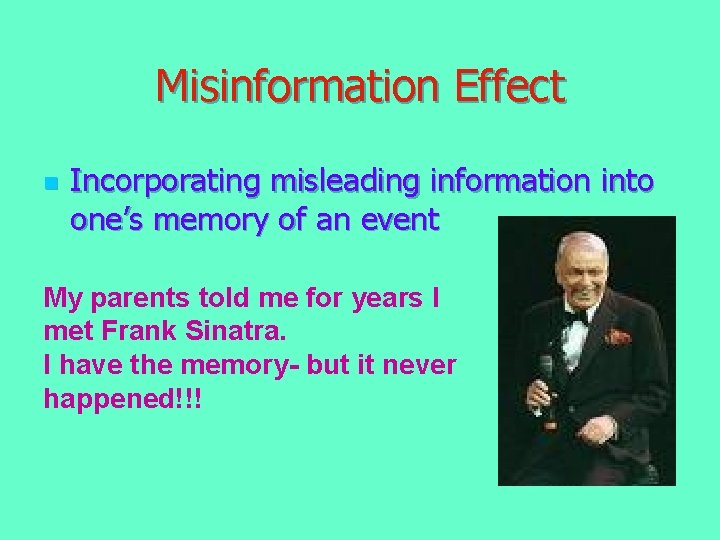
Misinformation Effect n Incorporating misleading information into one’s memory of an event My parents told me for years I met Frank Sinatra. I have the memory- but it never happened!!!
Source Amnesia (Source Attribution) n Attributing to the wrong source an event we have experienced, heard about, read about or imagined
Amnesia • • Amnesia: is a severe memory loss caused by brain injury, shock, fatigue, illness, or repression. Types of amnesia: n n n Childhood Amnesia (Infantile Amnesia) Anterograde Amnesia Retrograde Amnesia
Improving Memory Drill and Practice – repetition is one effective way to transfer information from sensory information to short-term memory and then to long-term memory. Mechanical Rehearsal and Elaborative Rehearsal Minimize interference Making connections to prior knowledge/information Form unusual associations – humorous or odd connections Use mnemonic devices – systems for remembering information Activate retrieval cues – mentally recreate situations and moods
Forgetting and Memory Improvement – Forgetting: is the failure to recognize or recall information that had been learned previously. Forgetting sometimes involves decay – the fading away of a memory. Recognition: the easiest memory task, is to simply identify objects/events/bits of info previously learned or encountered. Example: matching quiz Recall: is more difficult than recognition. It is the reconstruction of learned information in the mind. Example: short answer quiz Relearning: is to learn again something that once was learned but has been forgotten.