
Take out your notebook Write todays date The
Take out your notebook Write today’s date
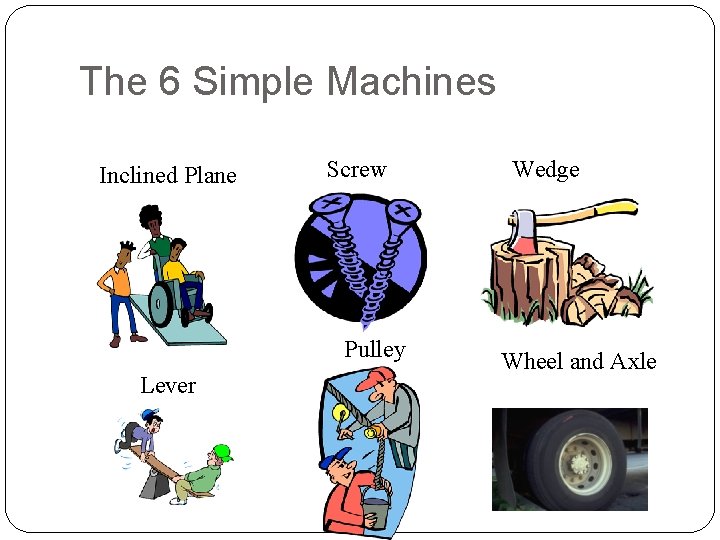
The 6 Simple Machines Inclined Plane Screw Pulley Lever Wedge Wheel and Axle
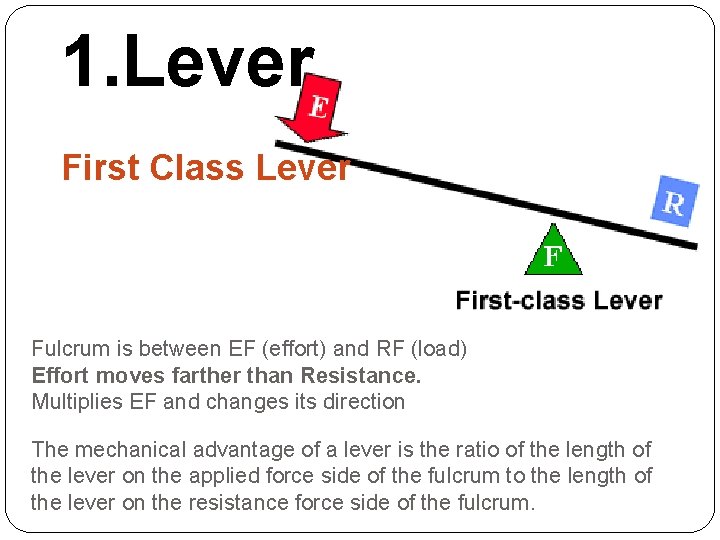
1. Lever First Class Lever Fulcrum is between EF (effort) and RF (load) Effort moves farther than Resistance. Multiplies EF and changes its direction The mechanical advantage of a lever is the ratio of the length of the lever on the applied force side of the fulcrum to the length of the lever on the resistance force side of the fulcrum.
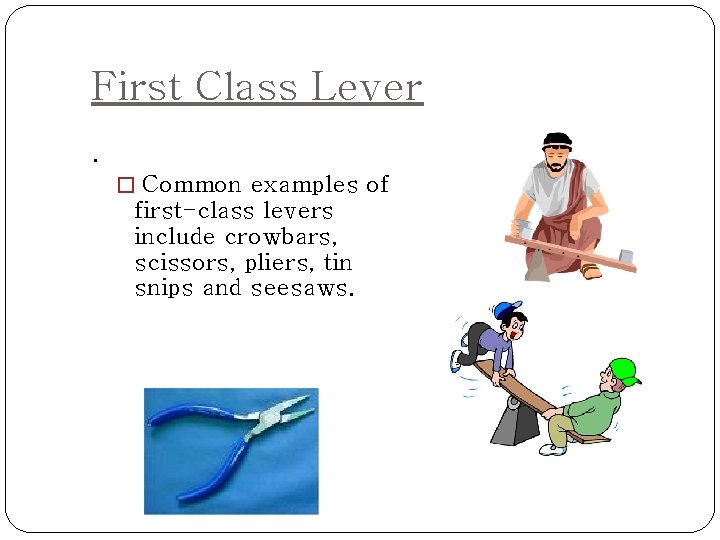
First Class Lever. � Common examples of first-class levers include crowbars, scissors, pliers, tin snips and seesaws.
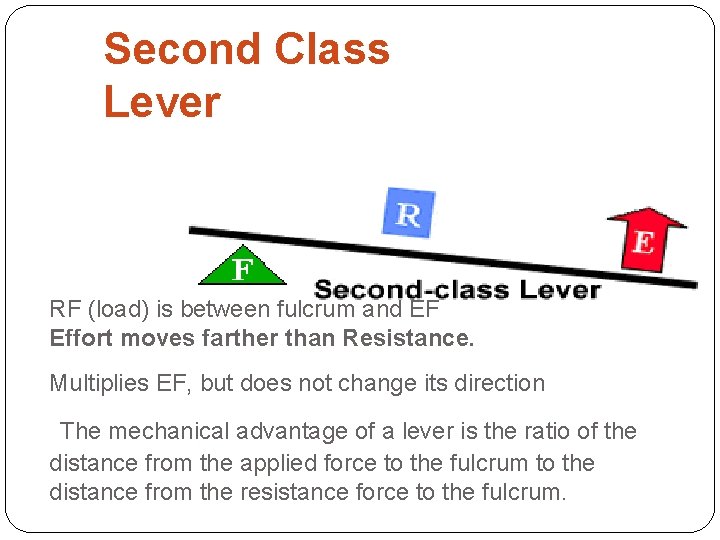
Second Class Lever RF (load) is between fulcrum and EF Effort moves farther than Resistance. Multiplies EF, but does not change its direction The mechanical advantage of a lever is the ratio of the distance from the applied force to the fulcrum to the distance from the resistance force to the fulcrum.
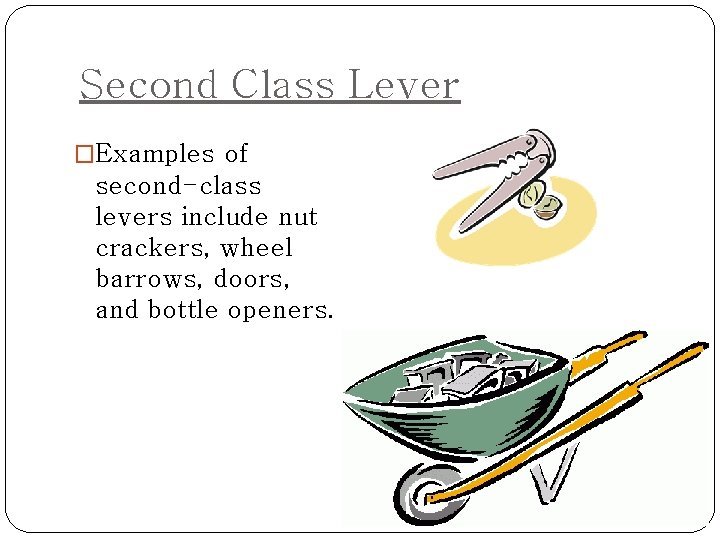
Second Class Lever �Examples of second-class levers include nut crackers, wheel barrows, doors, and bottle openers.
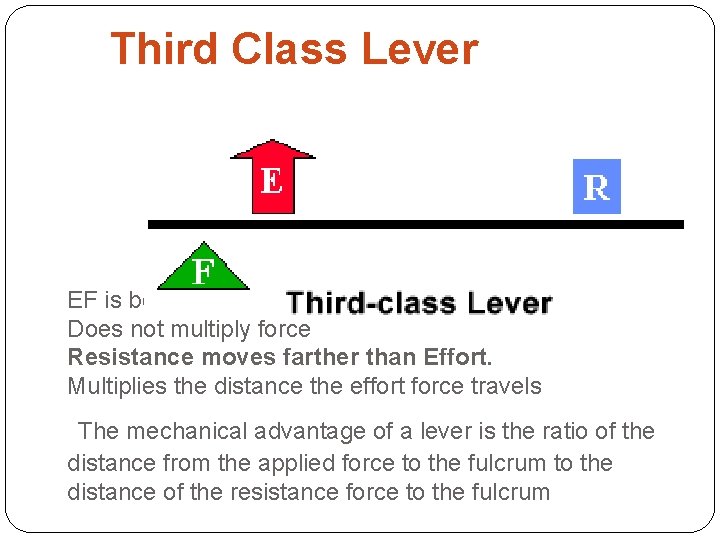
Third Class Lever EF is between fulcrum and RF (load) Does not multiply force Resistance moves farther than Effort. Multiplies the distance the effort force travels The mechanical advantage of a lever is the ratio of the distance from the applied force to the fulcrum to the distance of the resistance force to the fulcrum
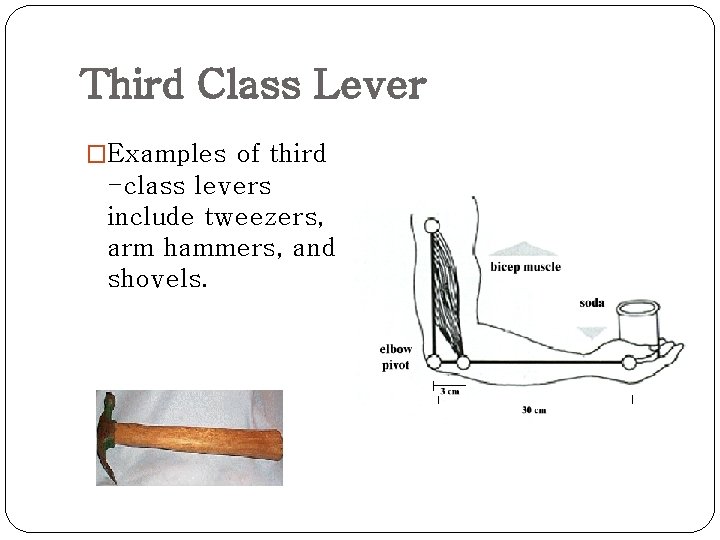
Third Class Lever �Examples of third -class levers include tweezers, arm hammers, and shovels.
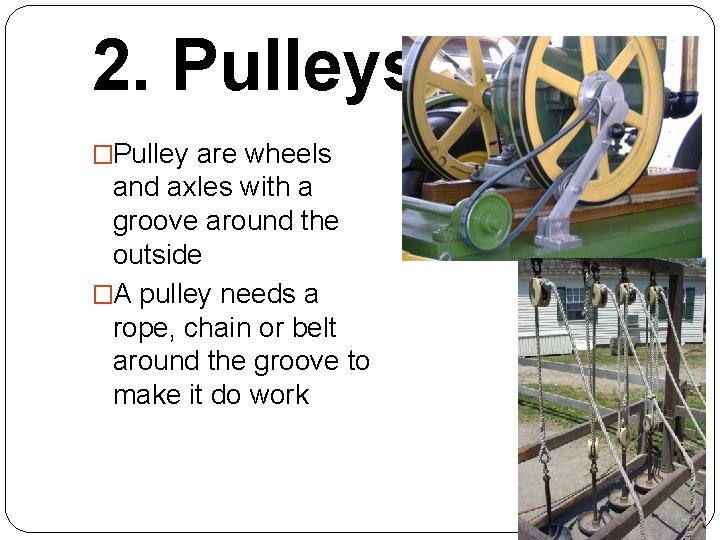
2. Pulleys �Pulley are wheels and axles with a groove around the outside �A pulley needs a rope, chain or belt around the groove to make it do work
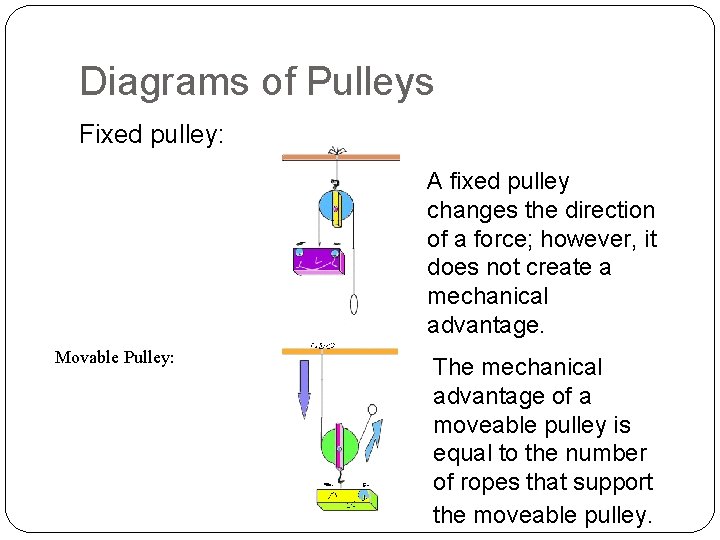
Diagrams of Pulleys Fixed pulley: A fixed pulley changes the direction of a force; however, it does not create a mechanical advantage. Movable Pulley: The mechanical advantage of a moveable pulley is equal to the number of ropes that support the moveable pulley.
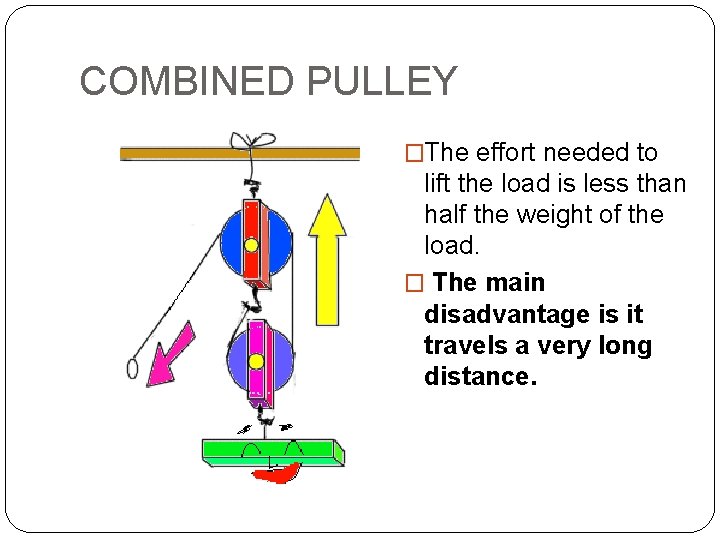
COMBINED PULLEY �The effort needed to lift the load is less than half the weight of the load. � The main disadvantage is it travels a very long distance.
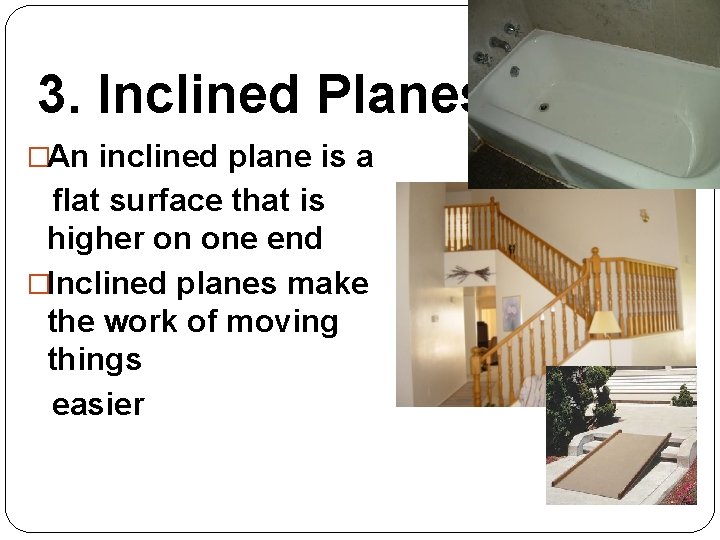
3. Inclined Planes �An inclined plane is a flat surface that is higher on one end �Inclined planes make the work of moving things easier
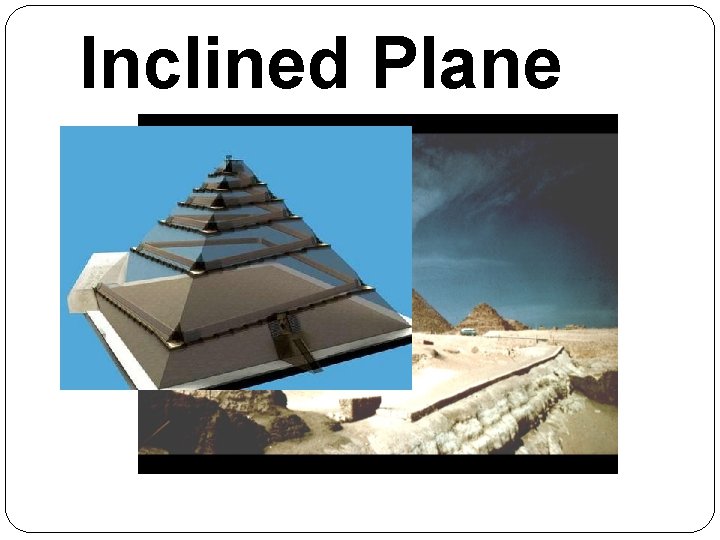
Inclined Plane
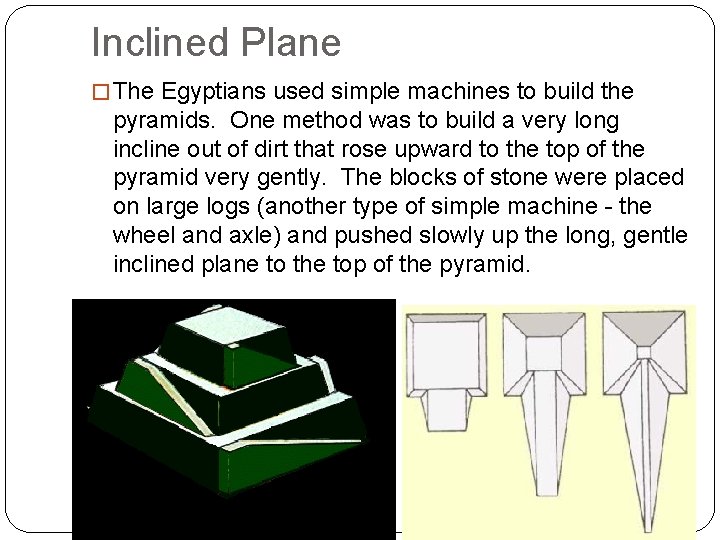
Inclined Plane � The Egyptians used simple machines to build the pyramids. One method was to build a very long incline out of dirt that rose upward to the top of the pyramid very gently. The blocks of stone were placed on large logs (another type of simple machine - the wheel and axle) and pushed slowly up the long, gentle inclined plane to the top of the pyramid.
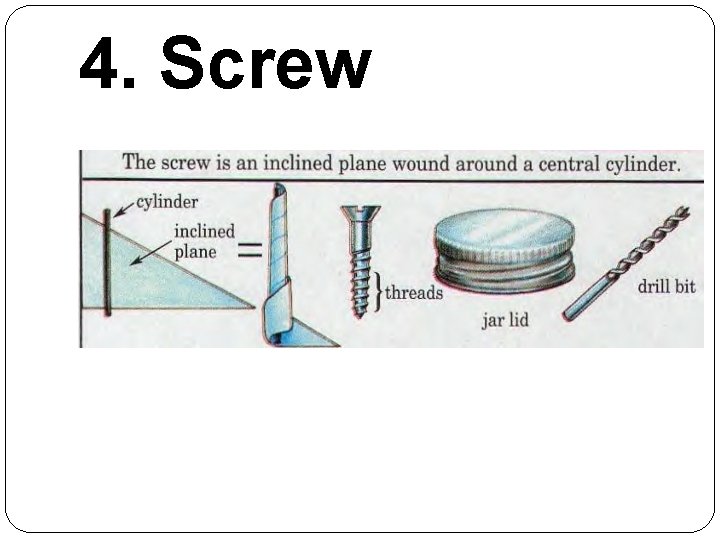
4. Screw
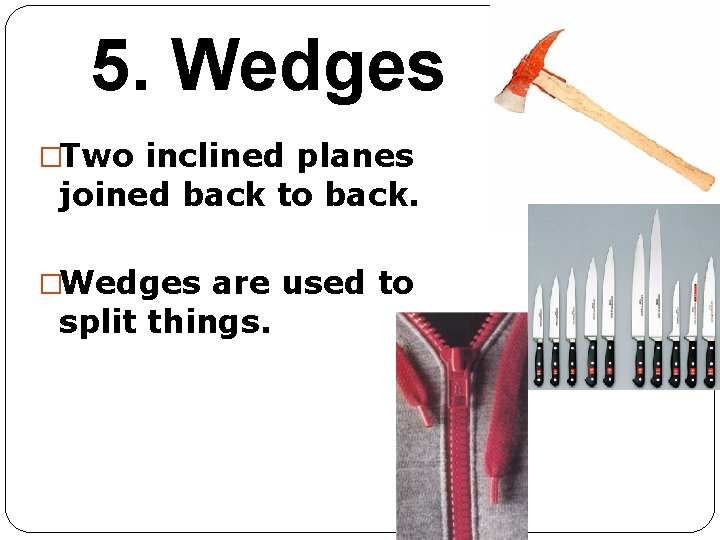
5. Wedges �Two inclined planes joined back to back. �Wedges are used to split things.
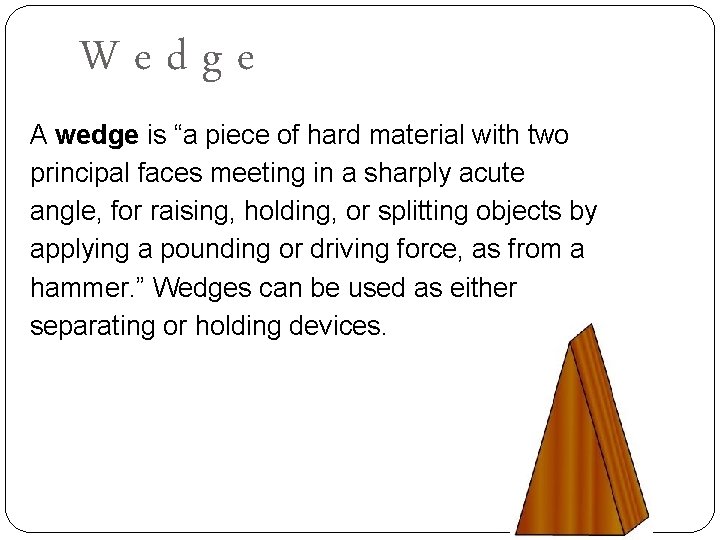
Wedge A wedge is “a piece of hard material with two principal faces meeting in a sharply acute angle, for raising, holding, or splitting objects by applying a pounding or driving force, as from a hammer. ” Wedges can be used as either separating or holding devices.
6. Wheel and Axle �Wheel and axle is an example of a simple machine, that has two parts to it. �Unlike most simple machines, the parts have to work together, in order to move it. �Wheel and axle machines, have the axle attached to the wheel, to help it to move, and to speed up things.
What makes it a wheel and axle system? �The wheel must be fixed to the axle. �One rotation of the wheel equals one rotation of the axle. �If the wheel and axle are not fixed then you basically have a pulley system.
Everyday examples of a wheel and axle system �A doorknob �Fishing reel �Carousel
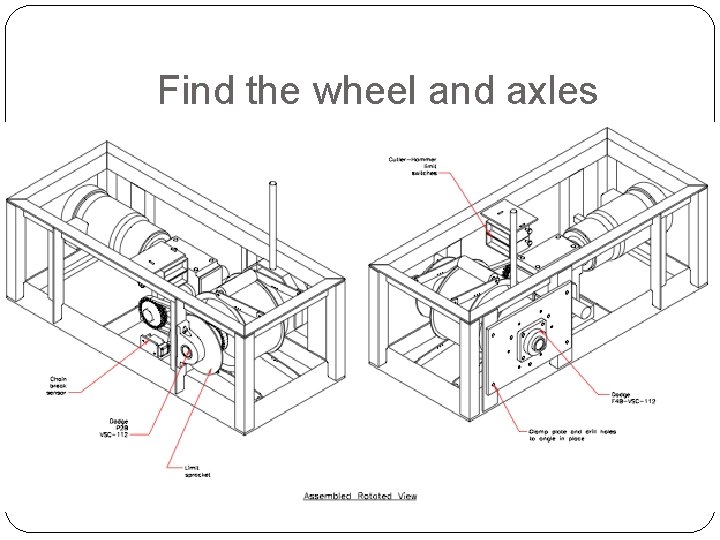
Find the wheel and axles
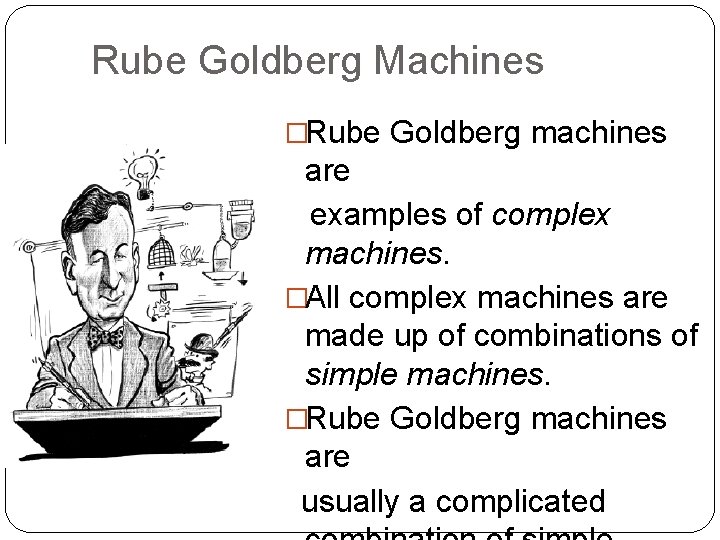
Rube Goldberg Machines �Rube Goldberg machines are examples of complex machines. �All complex machines are made up of combinations of simple machines. �Rube Goldberg machines are usually a complicated
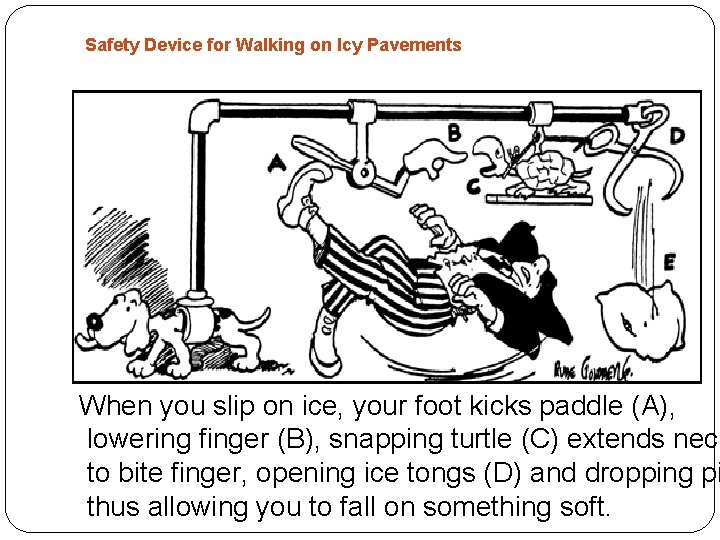
Safety Device for Walking on Icy Pavements When you slip on ice, your foot kicks paddle (A), lowering finger (B), snapping turtle (C) extends neck to bite finger, opening ice tongs (D) and dropping pi thus allowing you to fall on something soft.
Examples of Simple machines and Compound machines
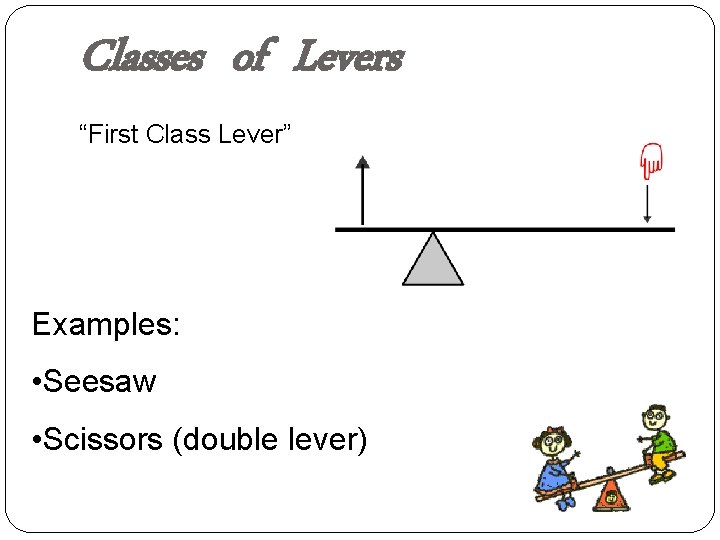
Classes of Levers “First Class Lever” Examples: • Seesaw • Scissors (double lever)
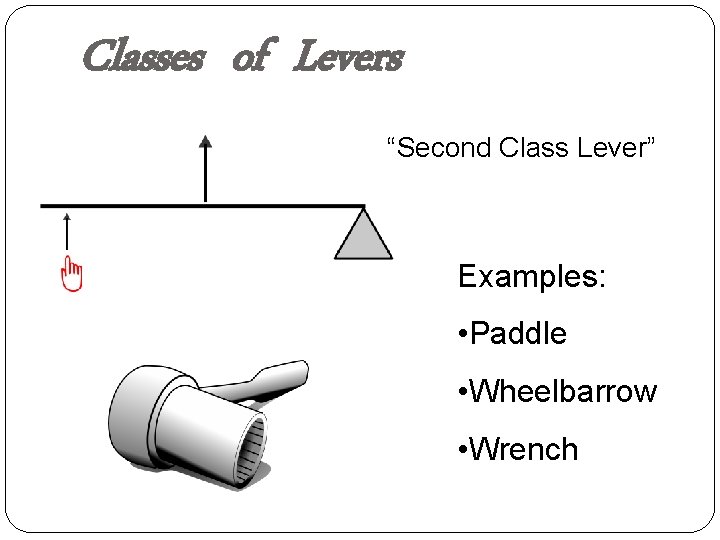
Classes of Levers “Second Class Lever” Examples: • Paddle • Wheelbarrow • Wrench
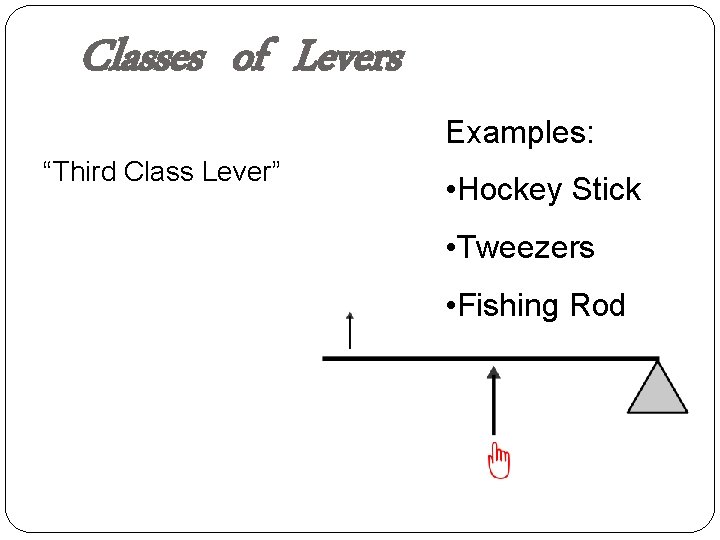
Classes of Levers Examples: “Third Class Lever” • Hockey Stick • Tweezers • Fishing Rod
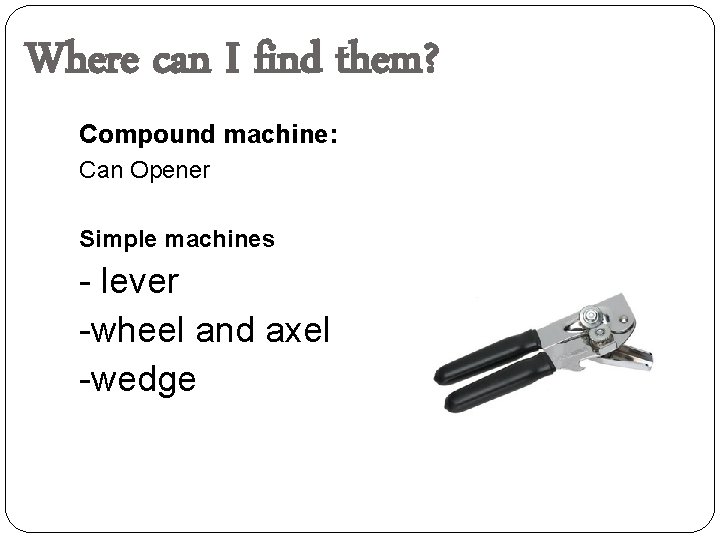
Where can I find them? Compound machine: Can Opener Simple machines - lever -wheel and axel -wedge
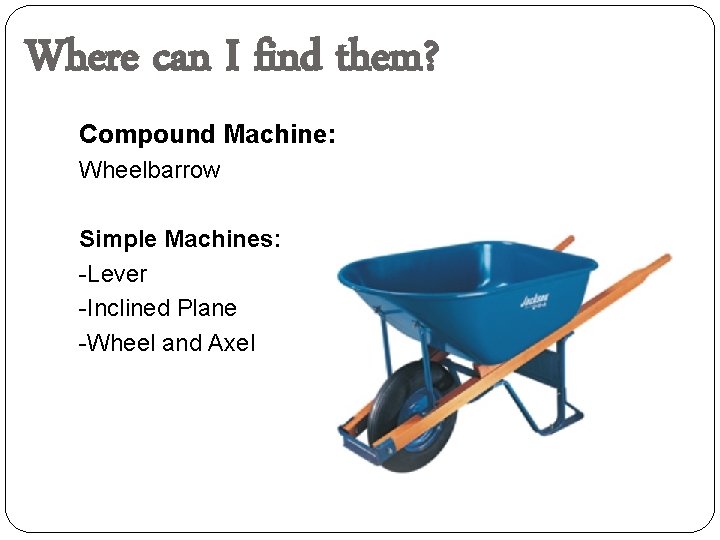
Where can I find them? Compound Machine: Wheelbarrow Simple Machines: -Lever -Inclined Plane -Wheel and Axel
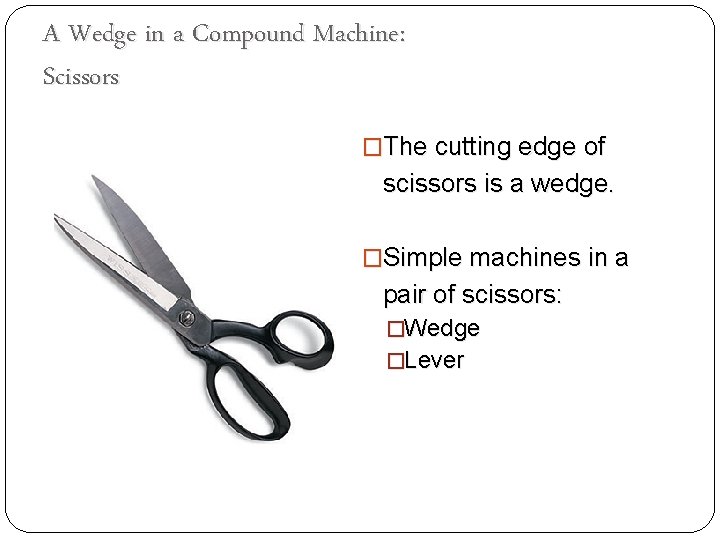
A Wedge in a Compound Machine: Scissors �The cutting edge of scissors is a wedge. �Simple machines in a pair of scissors: �Wedge �Lever
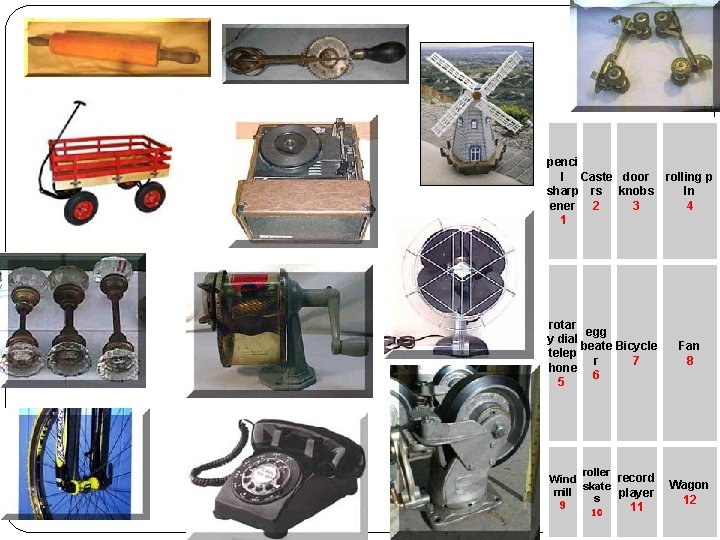
penci l Caste door rolling p sharp rs knobs In ener 2 3 4 1 rotar egg y dial beate Bicycle telep r 7 hone 6 5 Fan 8 roller record Wind skate mill player s 9 11 10 Wagon 12
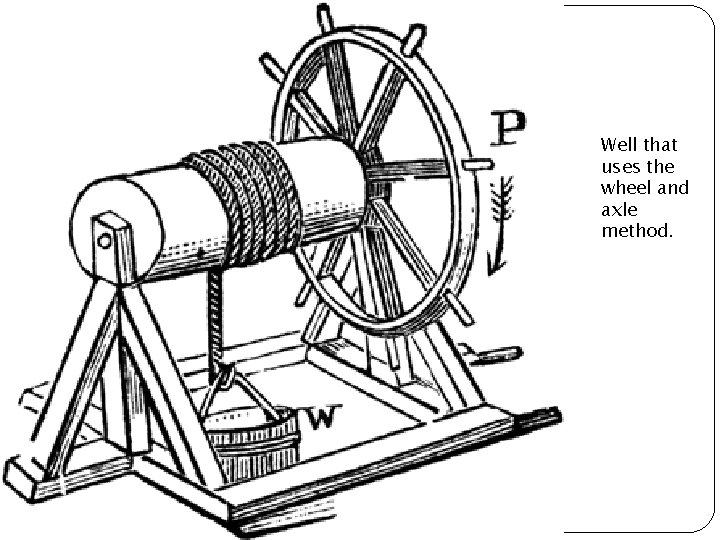
Well that uses the wheel and axle method.
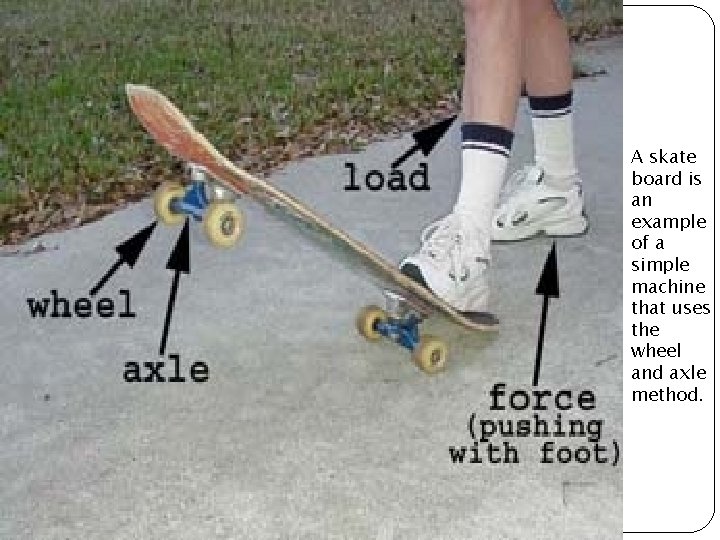
A skate board is an example of a simple machine that uses the wheel and axle method.
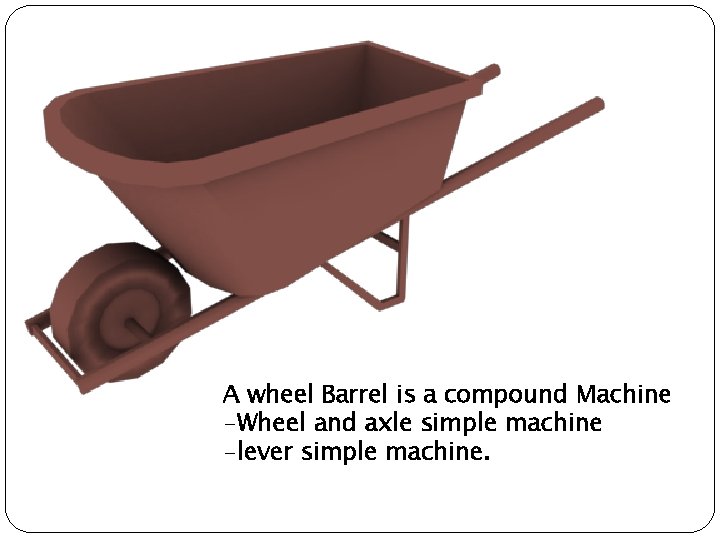
A wheel Barrel is a compound Machine -Wheel and axle simple machine -lever simple machine.
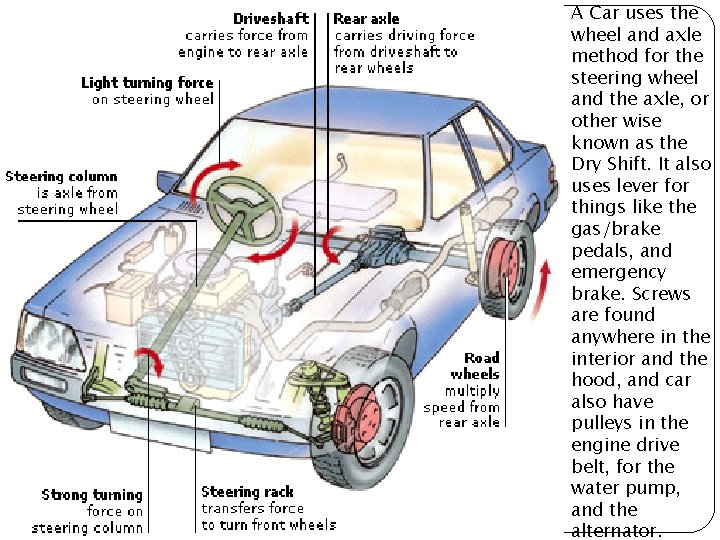
A Car uses the wheel and axle method for the steering wheel and the axle, or other wise known as the Dry Shift. It also uses lever for things like the gas/brake pedals, and emergency brake. Screws are found anywhere in the interior and the hood, and car also have pulleys in the engine drive belt, for the water pump, and the alternator.
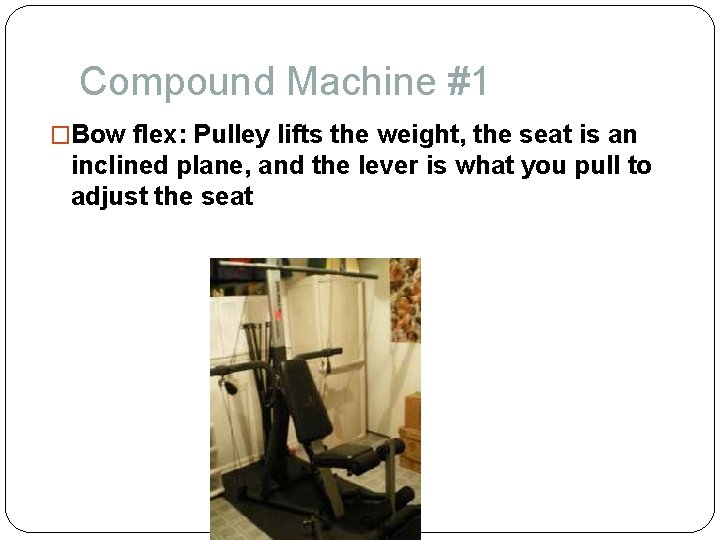
Compound Machine #1 �Bow flex: Pulley lifts the weight, the seat is an inclined plane, and the lever is what you pull to adjust the seat
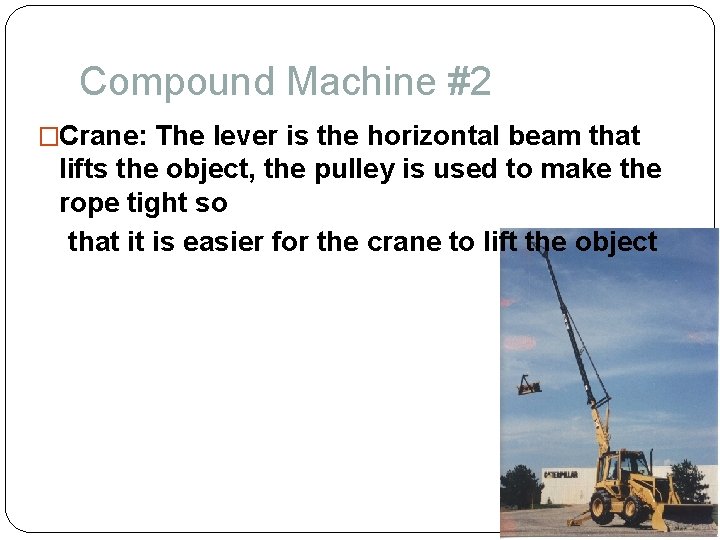
Compound Machine #2 �Crane: The lever is the horizontal beam that lifts the object, the pulley is used to make the rope tight so that it is easier for the crane to lift the object
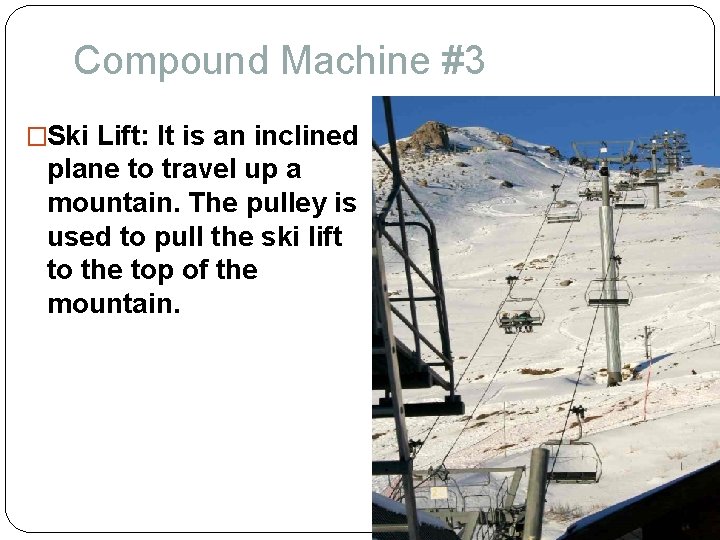
Compound Machine #3 �Ski Lift: It is an inclined plane to travel up a mountain. The pulley is used to pull the ski lift to the top of the mountain.
- Slides: 38