Nutrition in geriatrics a look at the ESPEN




- Slides: 41
Nutrition in geriatrics – a look at the ESPEN guidelines Tommy Cederholm, MD, Ph. D Professor Clinical Nutrition & Metabolism, Uppsala University Senior Consultant Theme Ageing, Karolinska University Hospital, Stockholm Sweden Previous ESPEN officer
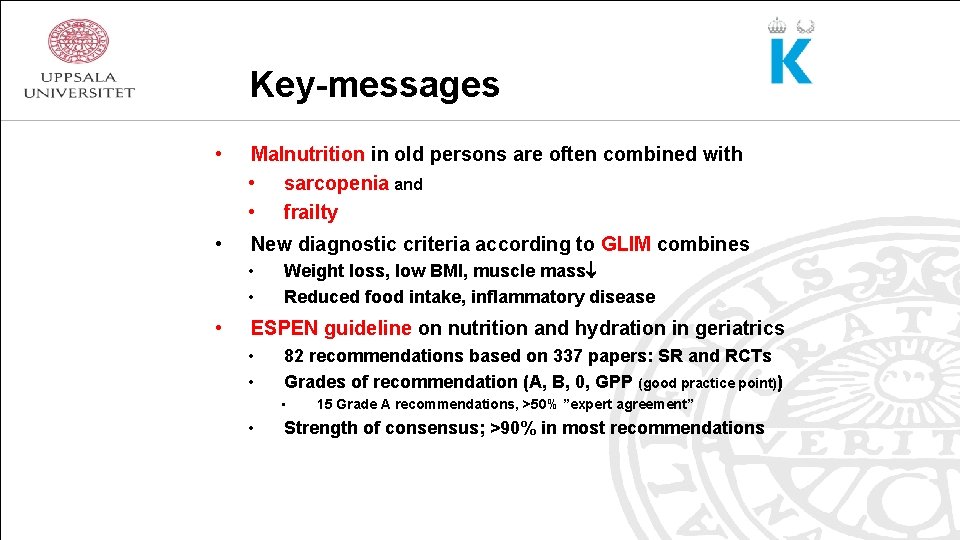
Key-messages • Malnutrition in old persons are often combined with • sarcopenia and • frailty • New diagnostic criteria according to GLIM combines • • • Weight loss, low BMI, muscle mass Reduced food intake, inflammatory disease ESPEN guideline on nutrition and hydration in geriatrics • • 82 recommendations based on 337 papers: SR and RCTs Grades of recommendation (A, B, 0, GPP (good practice point)) • • 15 Grade A recommendations, >50% ”expert agreement” Strength of consensus; >90% in most recommendations
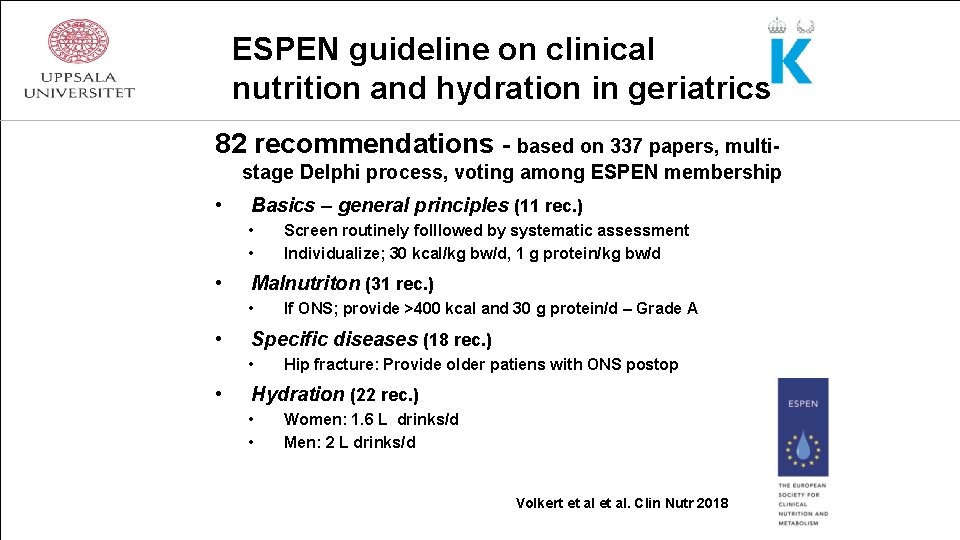
ESPEN guideline on clinical nutrition and hydration in geriatrics 82 recommendations - based on 337 papers, multi- stage Delphi process, voting among ESPEN membership • Basics – general principles (11 rec. ) • • • Malnutriton (31 rec. ) • • If ONS; provide >400 kcal and 30 g protein/d – Grade A Specific diseases (18 rec. ) • • Screen routinely folllowed by systematic assessment Individualize; 30 kcal/kg bw/d, 1 g protein/kg bw/d Hip fracture: Provide older patiens with ONS postop Hydration (22 rec. ) • • Women: 1. 6 L drinks/d Men: 2 L drinks/d Volkert et al. Clin Nutr 2018
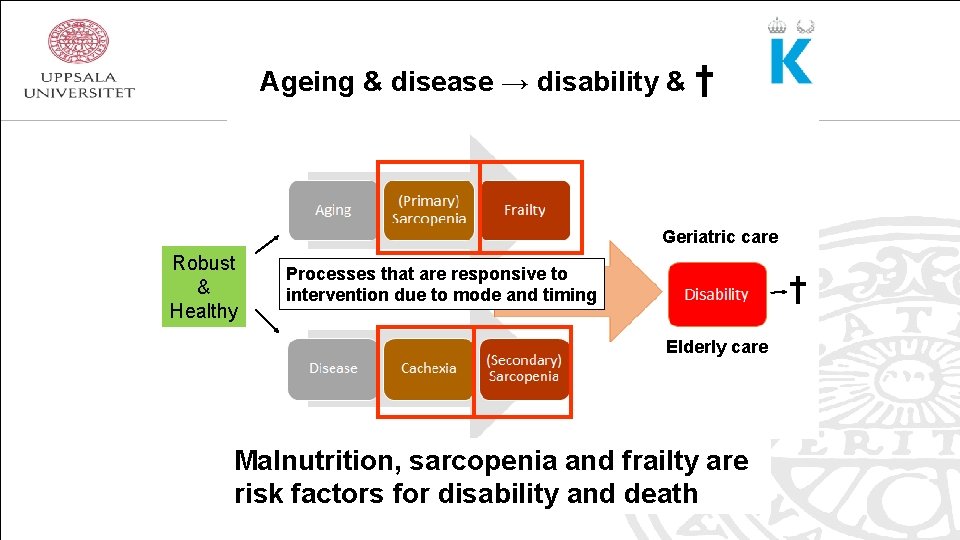
Ageing & disease → disability & † Geriatric care Robust & Healthy Processes that are responsive to intervention due to mode and timing † Elderly care Malnutrition, sarcopenia and frailty are risk factors for disability and death
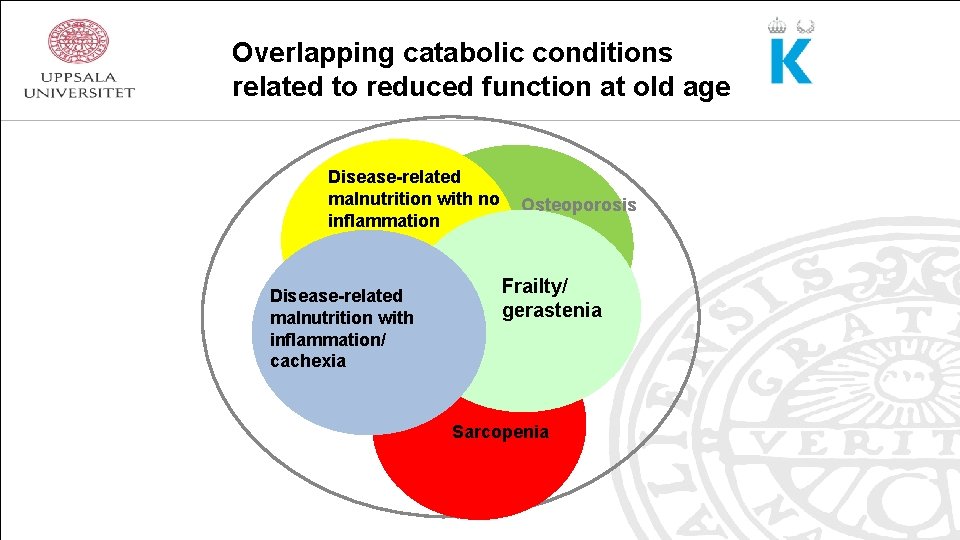
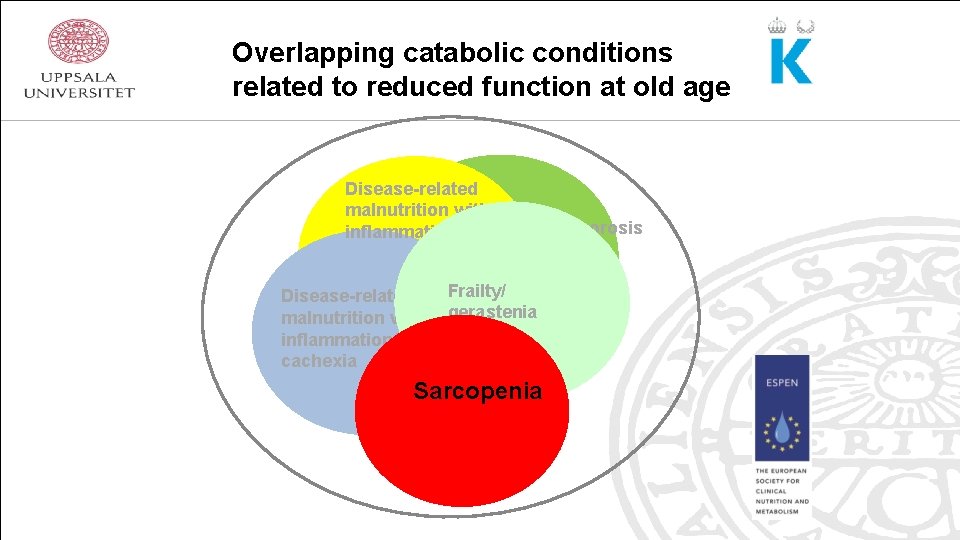
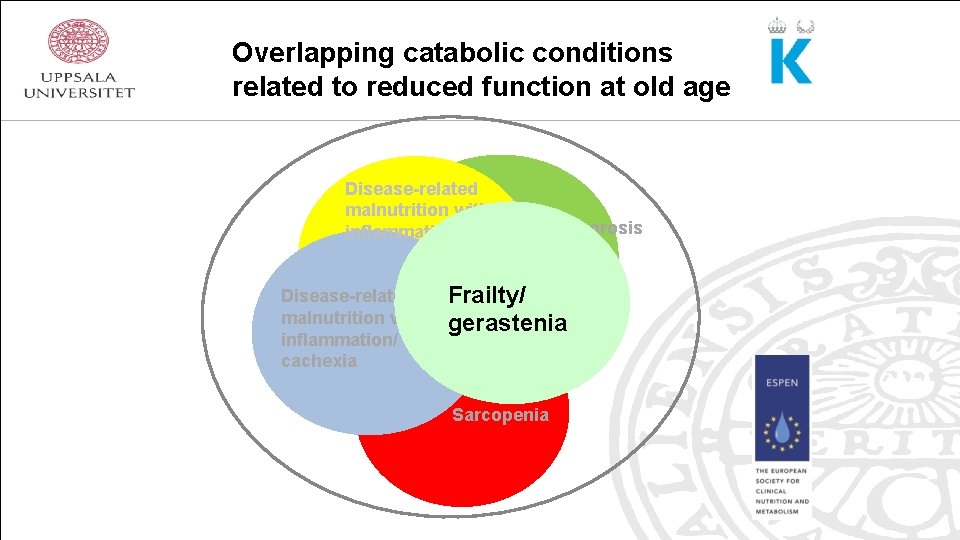
Overlapping catabolic conditions related to reduced function at old age Disease-related malnutrition with no Osteoporosis inflammation Disease-related malnutrition with inflammation/ cachexia Frailty/ gerastenia Sarcopenia
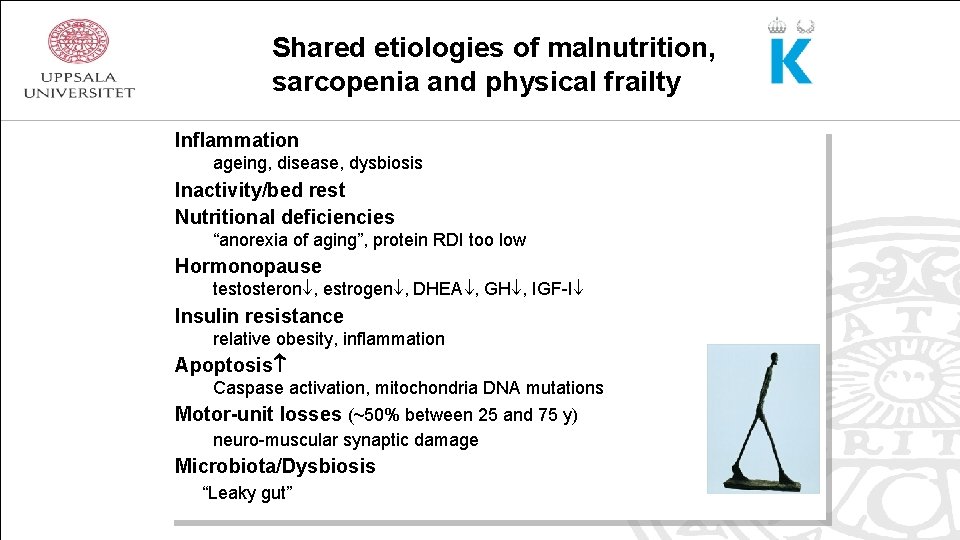
Shared etiologies of malnutrition, sarcopenia and physical frailty Inflammation ageing, disease, dysbiosis Inactivity/bed rest Nutritional deficiencies “anorexia of aging”, protein RDI too low Hormonopause testosteron , estrogen , DHEA , GH , IGF-I Insulin resistance relative obesity, inflammation Apoptosis Caspase activation, mitochondria DNA mutations Motor-unit losses (~50% between 25 and 75 y) neuro-muscular synaptic damage Microbiota/Dysbiosis “Leaky gut”
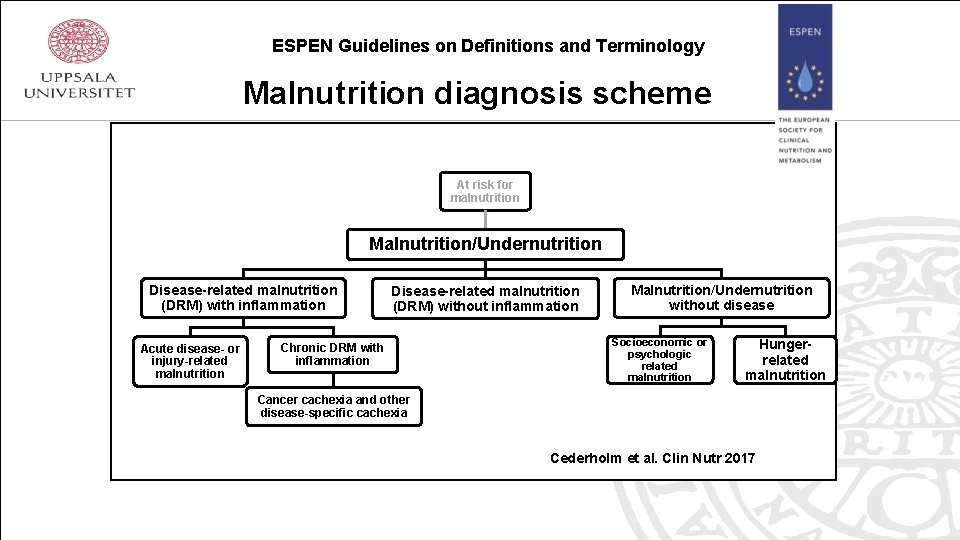
ESPEN Guidelines on Definitions and Terminology Malnutrition diagnosis scheme At risk for malnutrition Malnutrition/Undernutrition Disease-related malnutrition (DRM) with inflammation Acute disease- or injury-related malnutrition Disease-related malnutrition (DRM) without inflammation Chronic DRM with inflammation Malnutrition/Undernutrition without disease Socioeconomic or psychologic related malnutrition Hungerrelated malnutrition Cancer cachexia and other disease-specific cachexia Cederholm et al. Clin Nutr 2017
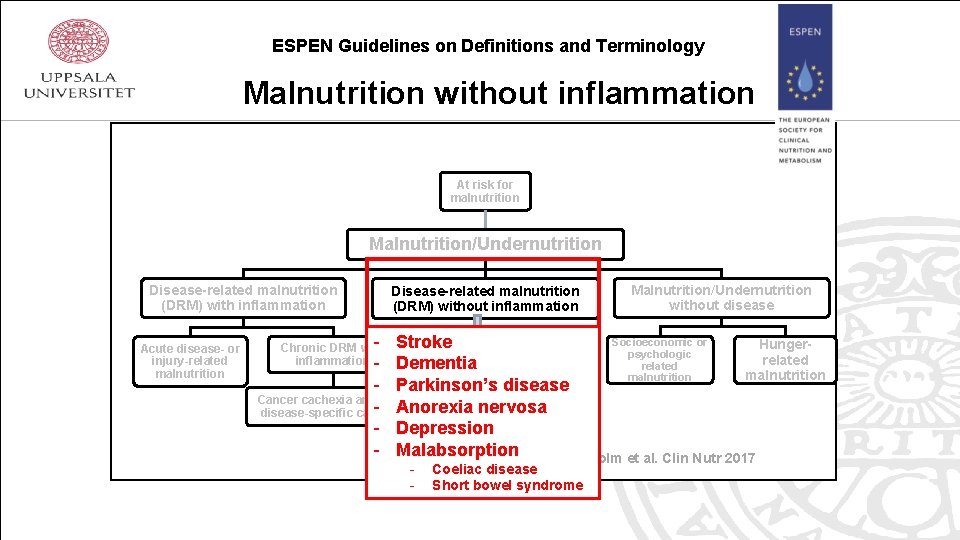
ESPEN Guidelines on Definitions and Terminology Malnutrition without inflammation At risk for malnutrition Malnutrition/Undernutrition Disease-related malnutrition (DRM) with inflammation Acute disease- or injury-related malnutrition Disease-related malnutrition (DRM) without inflammation Malnutrition/Undernutrition without disease Chronic DRM with inflammation - Socioeconomic or Stroke Hungerpsychologic related Dementia related malnutrition - Parkinson’s disease Cancer cachexia and other - Anorexia nervosa disease-specific cachexia - Depression - Malabsorption Cederholm et al. Clin Nutr 2017 - ESPEN Consensus Statement 2016 Coeliac disease Short bowel syndrome
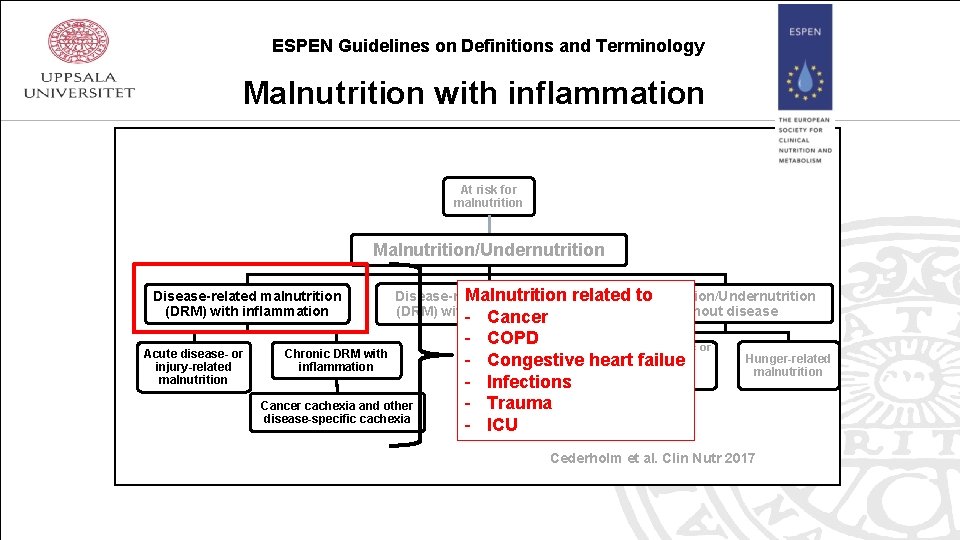
ESPEN Guidelines on Definitions and Terminology Malnutrition with inflammation At risk for malnutrition Malnutrition/Undernutrition Disease-related malnutrition (DRM) with inflammation Acute disease- or injury-related malnutrition Malnutrition/Undernutrition Malnutrition related to Disease-related malnutrition without disease (DRM) without inflammation - Cancer Chronic DRM with inflammation Cancer cachexia and other disease-specific cachexia - COPD Socioeconomic or psychologic Congestive heart failue related malnutrition Infections Trauma ICU Hunger-related malnutrition ESPEN Consensus Statement 2016 Cederholm et al. Clin Nutr 2017
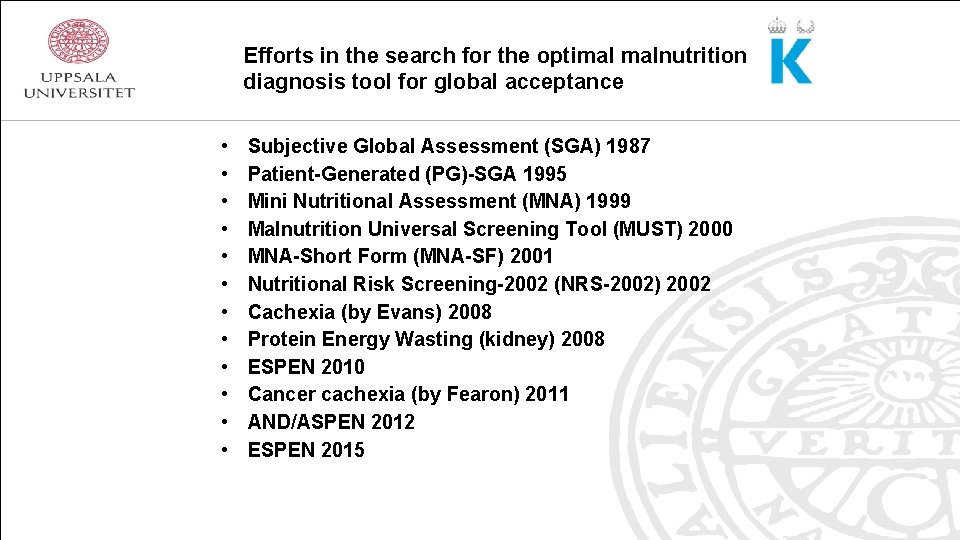
Efforts in the search for the optimal malnutrition diagnosis tool for global acceptance • • • Subjective Global Assessment (SGA) 1987 Patient-Generated (PG)-SGA 1995 Mini Nutritional Assessment (MNA) 1999 Malnutrition Universal Screening Tool (MUST) 2000 MNA-Short Form (MNA-SF) 2001 Nutritional Risk Screening-2002 (NRS-2002) 2002 Cachexia (by Evans) 2008 Protein Energy Wasting (kidney) 2008 ESPEN 2010 Cancer cachexia (by Fearon) 2011 AND/ASPEN 2012 ESPEN 2015
Global Leadership Initiative on Malnutrition A GLIM Pathway to Consensus 2016 -2018 ESPEN, ASPEN, FELANPE, PENSA • Modified Delphi process • GLIM face-to-face meetings CNW/Austin Jan 2016 ESPEN/Copenhagen Sept 2016 CNW/Orlando Feb 2017 ESPEN/The Hague Sept 2017 ASPEN/Las Vegas Jan 2018 ESPEN/Madrid Sept 2018 Jensen. JPEN 2016 Jensen & Cederholm. JPEN 2017 Cederholm & Jensen. Clin Nutr 2017
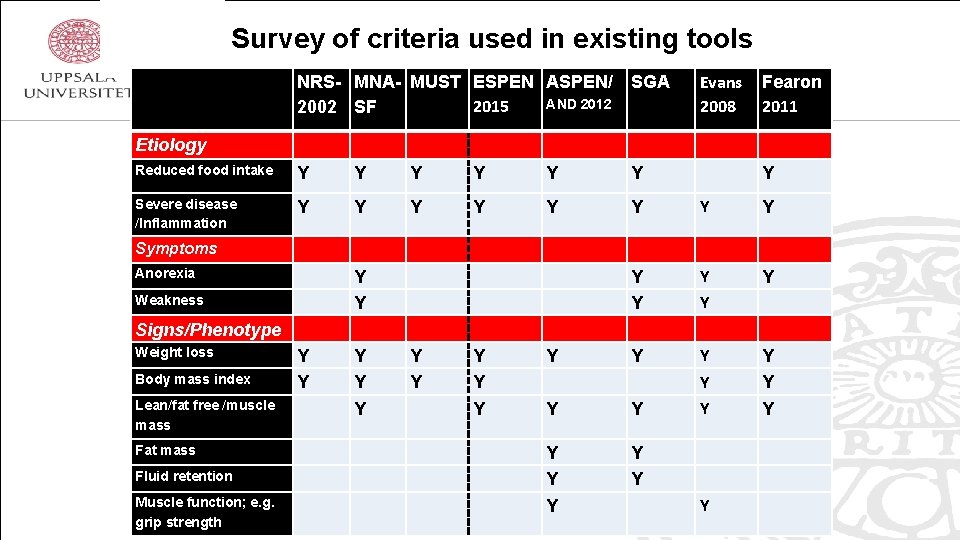
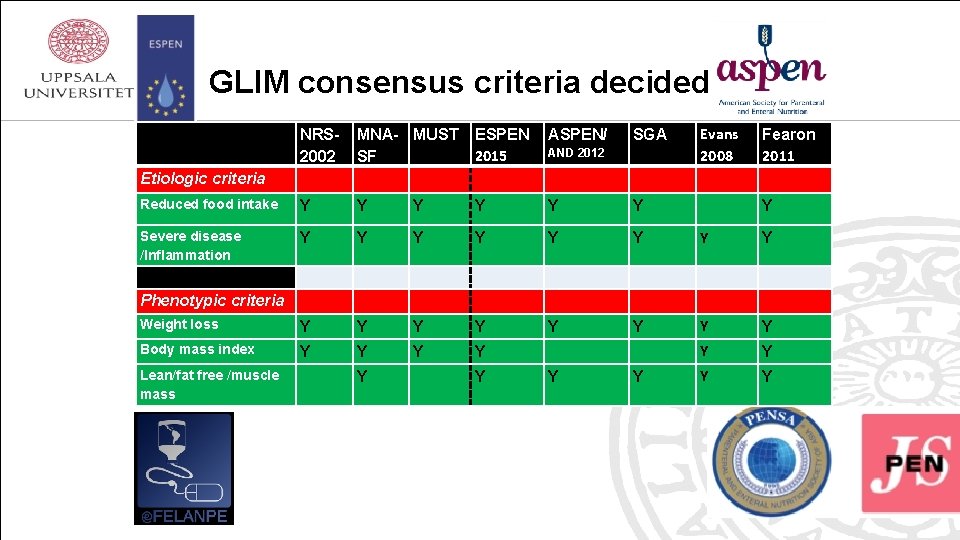
Survey of criteria used in existing tools NRS- MNA- MUST ESPEN ASPEN/ AND 2012 2015 2002 SF SGA Reduced food intake Y Y Y Severe disease /Inflammation Y Y Y Anorexia Weakness Signs/Phenotype Weight loss Y Body mass index Y Lean/fat free /muscle Y Y Y Y Y Y Fat mass Fluid retention Muscle function; e. g. grip strength Y Y Y Evans 2008 Fearon 2011 Etiology Symptoms mass Y Y Y Y Y
GLIM consensus criteria decided SGA Evans 2008 NRS 2002 MNA- MUST SF ESPEN 2015 ASPEN/ Reduced food intake Y Y Y Severe disease /Inflammation Y Y Y Phenotypic criteria Weight loss Y Y Y Y Body mass index Y Y Lean/fat free /muscle mass Y Y Y AND 2012 Fearon 2011 Etiologic criteria Y Y Y
The GLIM criteria co-published in Clin Nutr, JPEN and JCSM 2018
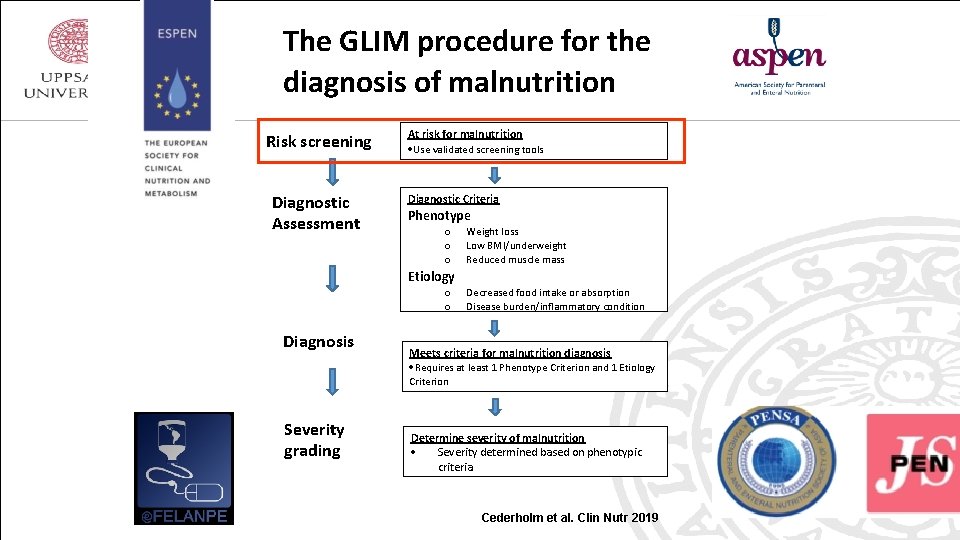
The GLIM procedure for the diagnosis of malnutrition Risk screening Diagnostic Assessment At risk for malnutrition Use validated screening tools Diagnostic Criteria Phenotype o o o Weight loss Low BMI/underweight Reduced muscle mass Etiology o o Diagnosis Decreased food intake or absorption Disease burden/inflammatory condition Meets criteria for malnutrition diagnosis Requires at least 1 Phenotype Criterion and 1 Etiology Criterion Severity grading Determine severity of malnutrition Severity determined based on phenotypic criteria Cederholm et al. Clin Nutr 2019
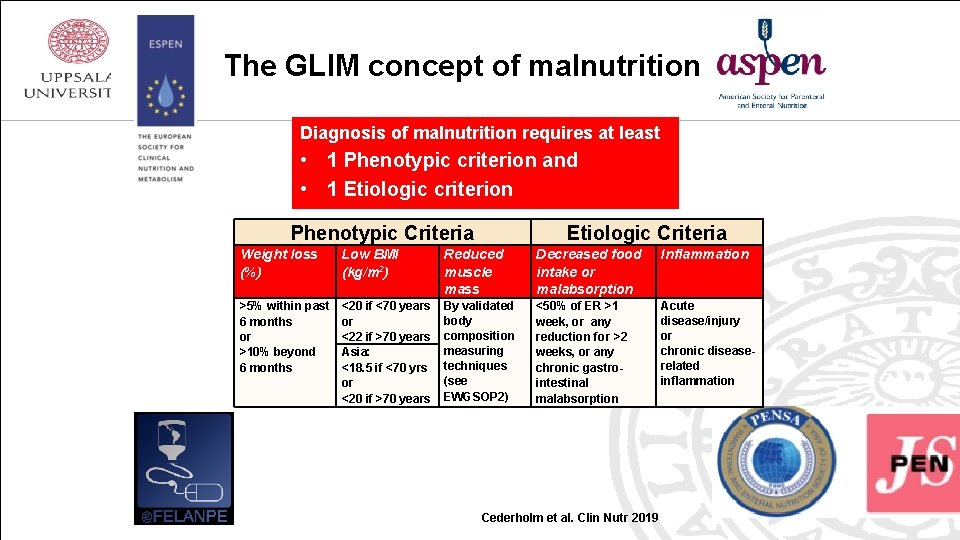
The GLIM concept of malnutrition Diagnosis of malnutrition requires at least • 1 Phenotypic criterion and • 1 Etiologic criterion Phenotypic Criteria Etiologic Criteria Weight loss (%) Low BMI (kg/m 2) Reduced muscle mass Decreased food intake or malabsorption Inflammation >5% within past 6 months or >10% beyond 6 months <20 if <70 years or <22 if >70 years Asia: <18. 5 if <70 yrs or <20 if >70 years By validated body composition measuring techniques (see EWGSOP 2) <50% of ER >1 week, or any reduction for >2 weeks, or any chronic gastrointestinal malabsorption Acute disease/injury or chronic diseaserelated inflammation Cederholm et al. Clin Nutr 2019
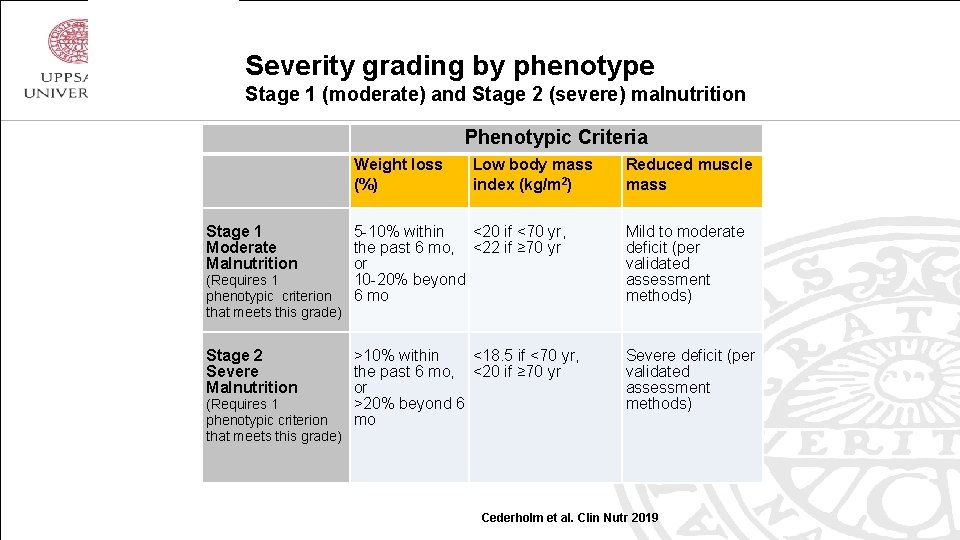
Severity grading by phenotype Stage 1 (moderate) and Stage 2 (severe) malnutrition Phenotypic Criteria Weight loss (%) Low body mass index (kg/m 2) Reduced muscle mass Stage 1 Moderate Malnutrition 5 -10% within <20 if <70 yr, the past 6 mo, <22 if ≥ 70 yr or 10 -20% beyond 6 mo Mild to moderate deficit (per validated assessment methods) Stage 2 Severe Malnutrition >10% within <18. 5 if <70 yr, the past 6 mo, <20 if ≥ 70 yr or >20% beyond 6 mo Severe deficit (per validated assessment methods) (Requires 1 phenotypic criterion that meets this grade) Cederholm et al. Clin Nutr 2019
Overlapping catabolic conditions related to reduced function at old age Disease-related malnutrition with no Osteoporosis inflammation Frailty/ Disease-related malnutrition with gerastenia inflammation/ cachexia Sarcopenia
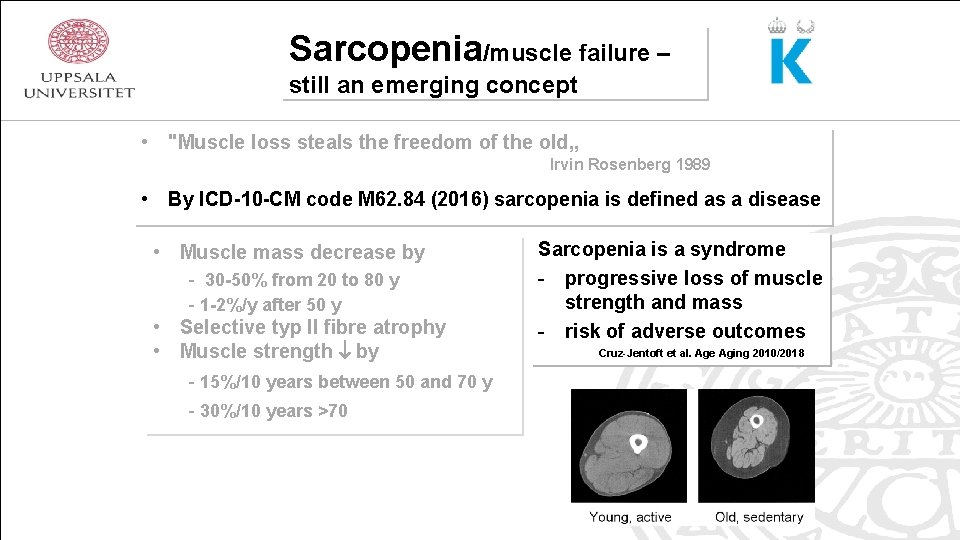
Sarcopenia/muscle failure – still an emerging concept • "Muscle loss steals the freedom of the old„ Irvin Rosenberg 1989 • By ICD-10 -CM code M 62. 84 (2016) sarcopenia is defined as a disease • Muscle mass decrease by - 30 -50% from 20 to 80 y - 1 -2%/y after 50 y • Selective typ II fibre atrophy • Muscle strength by - 15%/10 years between 50 and 70 y - 30%/10 years >70 Sarcopenia is a syndrome - progressive loss of muscle strength and mass - risk of adverse outcomes Cruz-Jentoft et al. Age Aging 2010/2018
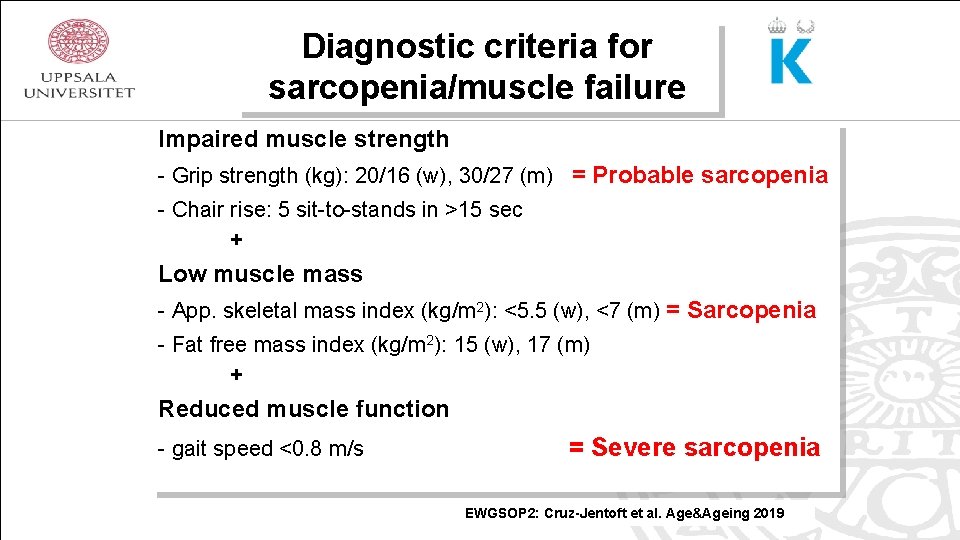
Diagnostic criteria for sarcopenia/muscle failure Impaired muscle strength - Grip strength (kg): 20/16 (w), 30/27 (m) = Probable sarcopenia - Chair rise: 5 sit-to-stands in >15 sec + Low muscle mass - App. skeletal mass index (kg/m 2): <5. 5 (w), <7 (m) = Sarcopenia - Fat free mass index (kg/m 2): 15 (w), 17 (m) + Reduced muscle function - gait speed <0. 8 m/s = Severe sarcopenia EWGSOP 2: Cruz-Jentoft et al. Age&Ageing 2019
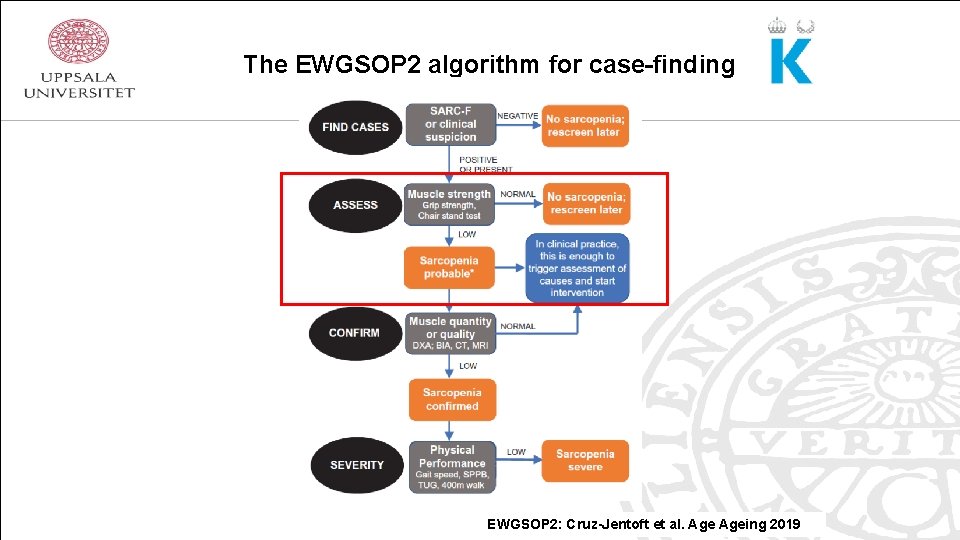
The EWGSOP 2 algorithm for case-finding EWGSOP 2: Cruz-Jentoft et al. Ageing 2019
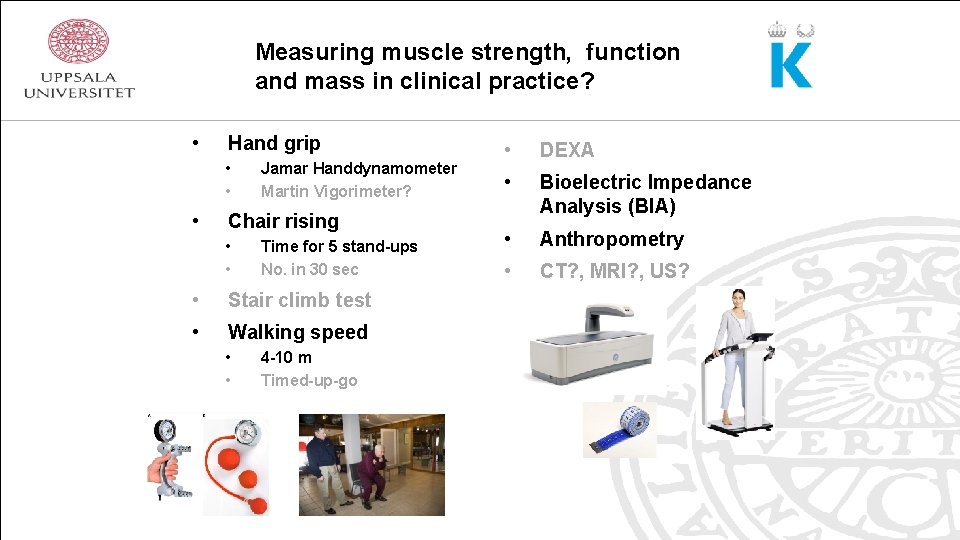
Measuring muscle strength, function and mass in clinical practice? • Hand grip • • • Jamar Handdynamometer Martin Vigorimeter? Chair rising • • Time for 5 stand-ups No. in 30 sec • Stair climb test • Walking speed • • 4 -10 m Timed-up-go • DEXA • Bioelectric Impedance Analysis (BIA) • Anthropometry • CT? , MRI? , US?
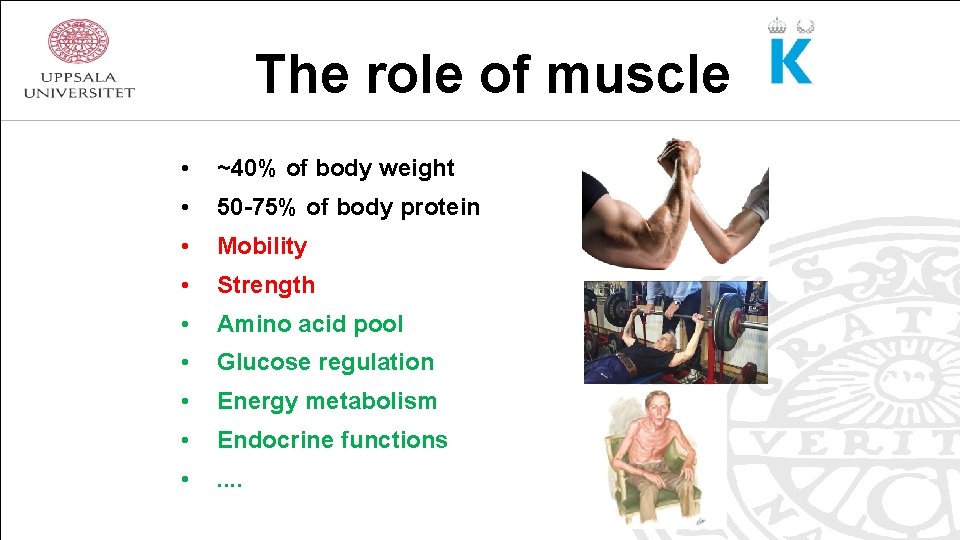
The role of muscle • ~40% of body weight • 50 -75% of body protein • Mobility • Strength • Amino acid pool • Glucose regulation • Energy metabolism • Endocrine functions • . .
Overlapping catabolic conditions related to reduced function at old age Disease-related malnutrition with no Osteoporosis inflammation Disease-related malnutrition with inflammation/ cachexia Frailty/ gerastenia Sarcopenia
Q: What is frailty? Linda Fried’s criteria (2001) • Weight loss • Weakness • Exhaustion • Slowness • Low physical activity Fried L et al. Frailty in older adults: evidence for a phenotype. J Gerontol 2001 Frailty is a state of vulnerability and reduced intrinsic capacity that affects older adults' ability to cope with adverse events (WHO). R: A combination of malnutrition and sarcopenia
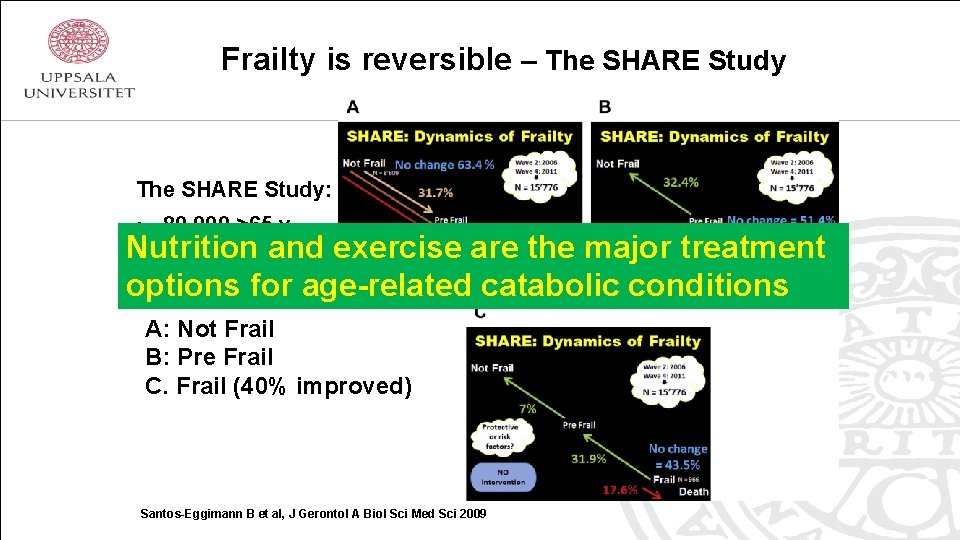
Frailty is reversible – The SHARE Study: • 80. 000 >65 y Nutrition and exercise are the major treatment • 5 -y f-up options for age-related catabolic conditions A: Not Frail B: Pre Frail C. Frail (40% improved) Santos-Eggimann B et al, J Gerontol A Biol Sci Med Sci 2009
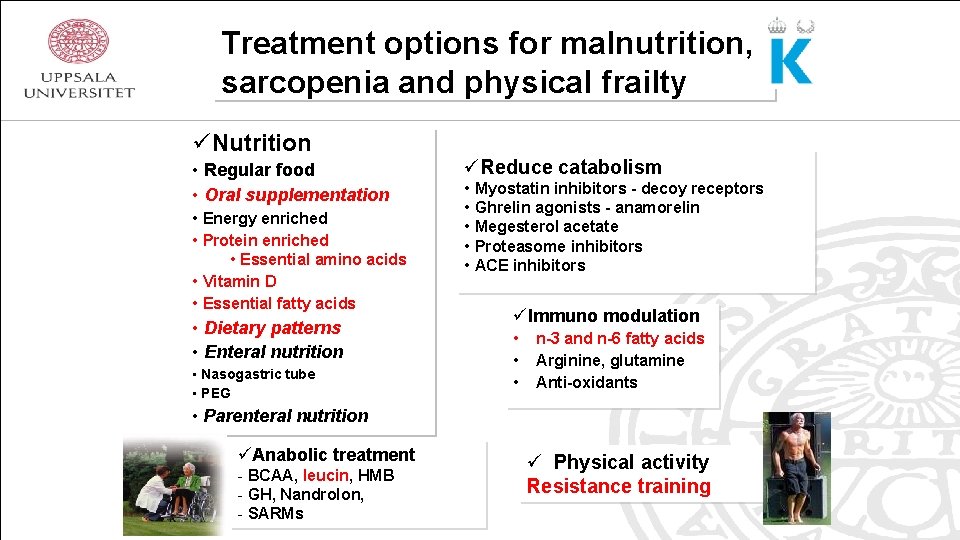
Treatment options for malnutrition, sarcopenia and physical frailty üNutrition • Regular food • Oral supplementation • Energy enriched • Protein enriched • Essential amino acids • Vitamin D • Essential fatty acids • Dietary patterns • Enteral nutrition • Nasogastric tube • PEG üReduce catabolism • Myostatin inhibitors - decoy receptors • Ghrelin agonists - anamorelin • Megesterol acetate • Proteasome inhibitors • ACE inhibitors üImmuno modulation • • • n-3 and n-6 fatty acids Arginine, glutamine Anti-oxidants • Parenteral nutrition üAnabolic treatment - BCAA, leucin, HMB - GH, Nandrolon, - SARMs ü Physical activity Resistance training
ESPEN guideline on clinical nutrition and hydration in geriatrics 48 recommendations on nutritional therapy • Education, counselling by dietician • Mealtime assistance, home-like environment, share mealtime • Fortified food, snacks, finger-food, texture modification • ONS: 400 kcal/d, 30 g prot/d; >1 month • EN: start without delay, <4 w by NG tube, >4 w PEG • Combine with physical activity • Hip fracture: Always offer ONS (NOT overnight EN) • Delirium (prevention), depression, pressure ulcer (healing), • Obesity: Avoid weigt loss if not indicated, if WL also PA • Diabetes mellitus: Avoid restrictive diets. Volkert et al. Clin Nutr 2018
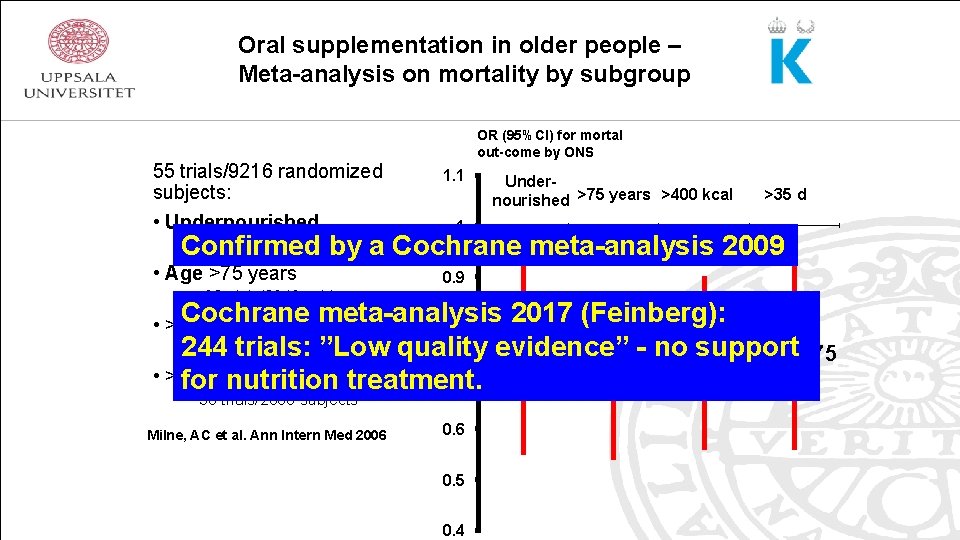
Oral supplementation in older people – Meta-analysis on mortality by subgroup OR (95%CI) for mortal out-come by ONS 55 trials/9216 randomized subjects: • Undernourished 1. 1 • Age >75 years 0. 9 Undernourished >75 years >400 kcal >35 d 1 – 21 trials/1825 subjects Confirmed by a Cochrane meta-analysis 2009 – 32 trials/2940 subjects Cochrane meta-analysis 2017 (Feinberg): • >400 kcal energy intake 0. 8 – 31 trials/2905 subjects 244 trials: ”Low quality evidence” - no support 0. 75 0. 72 0. 71 • >35 days of supplement 0. 7 for nutrition treatment. 0. 69 – 30 trials/2600 subjects Milne, AC et al. Ann Intern Med 2006 0. 5 0. 4
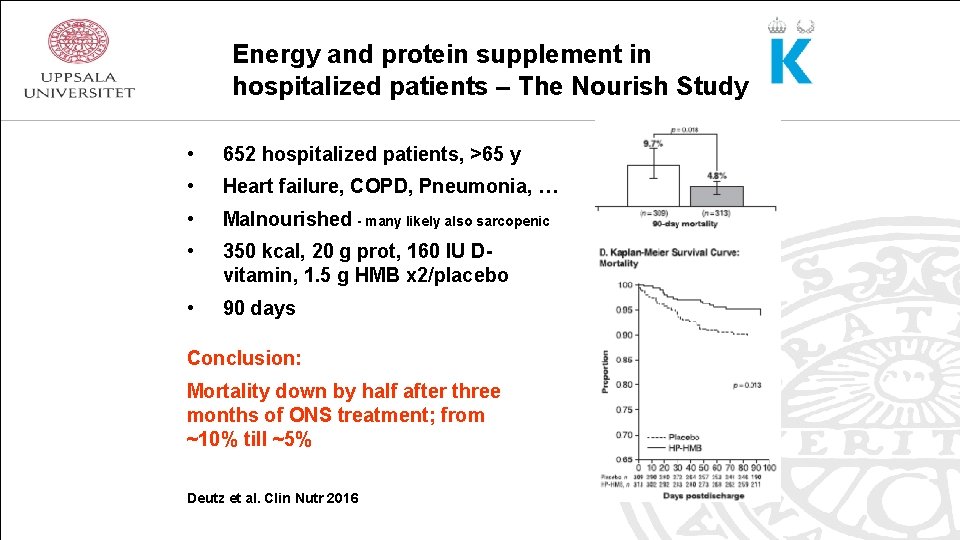
Energy and protein supplement in hospitalized patients – The Nourish Study • 652 hospitalized patients, >65 y • Heart failure, COPD, Pneumonia, … • Malnourished - many likely also sarcopenic • 350 kcal, 20 g prot, 160 IU Dvitamin, 1. 5 g HMB x 2/placebo • 90 days Conclusion: Mortality down by half after three months of ONS treatment; from ~10% till ~5% Deutz et al. Clin Nutr 2016
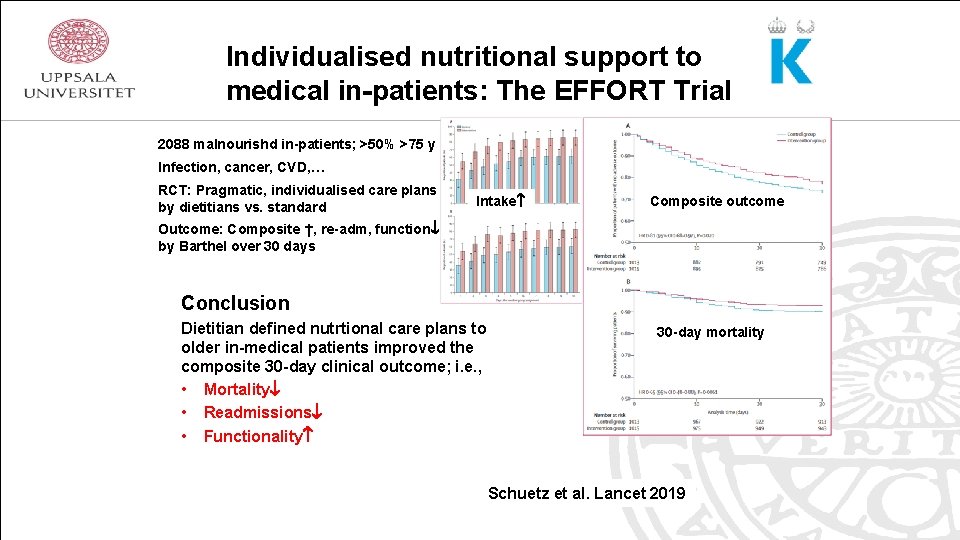
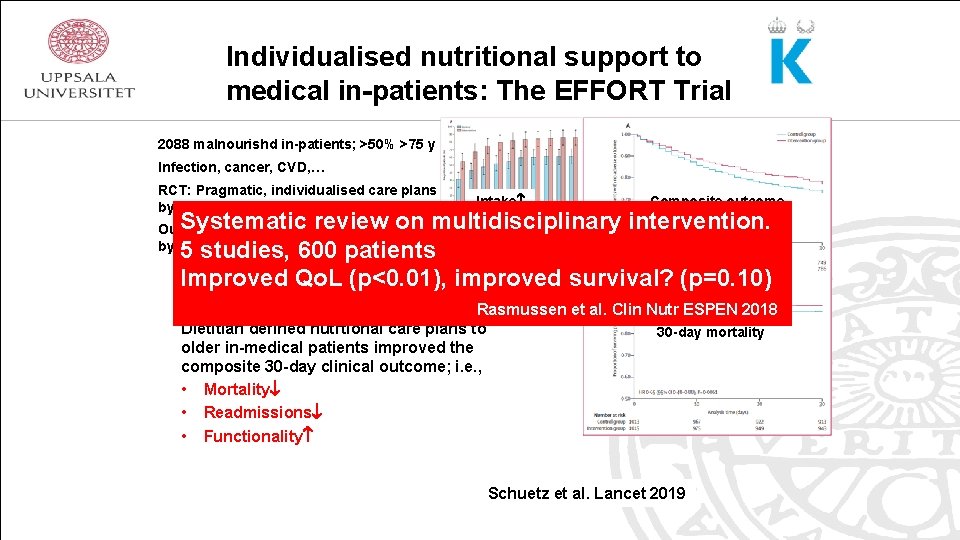
Individualised nutritional support to medical in-patients: The EFFORT Trial 2088 malnourishd in-patients; >50% >75 y Infection, cancer, CVD, … RCT: Pragmatic, individualised care plans by dietitians vs. standard Intake Composite outcome Outcome: Composite †, re-adm, function by Barthel over 30 days Conclusion Dietitian defined nutrtional care plans to older in-medical patients improved the composite 30 -day clinical outcome; i. e. , • Mortality • Readmissions • Functionality 30 -day mortality Schuetz et al. Lancet 2019
Individualised nutritional support to medical in-patients: The EFFORT Trial 2088 malnourishd in-patients; >50% >75 y Infection, cancer, CVD, … RCT: Pragmatic, individualised care plans by dietitians vs. standard Intake Composite outcome Systematic review on multidisciplinary intervention. 5 studies, 600 patients Improved Qo. L (p<0. 01), improved survival? (p=0. 10) Conclusion Rasmussen et al. Clin Nutr ESPEN 2018 Outcome: Composite †, re-adm, function by Barthel over 30 days Dietitian defined nutrtional care plans to older in-medical patients improved the composite 30 -day clinical outcome; i. e. , • Mortality • Readmissions • Functionality 30 -day mortality Schuetz et al. Lancet 2019
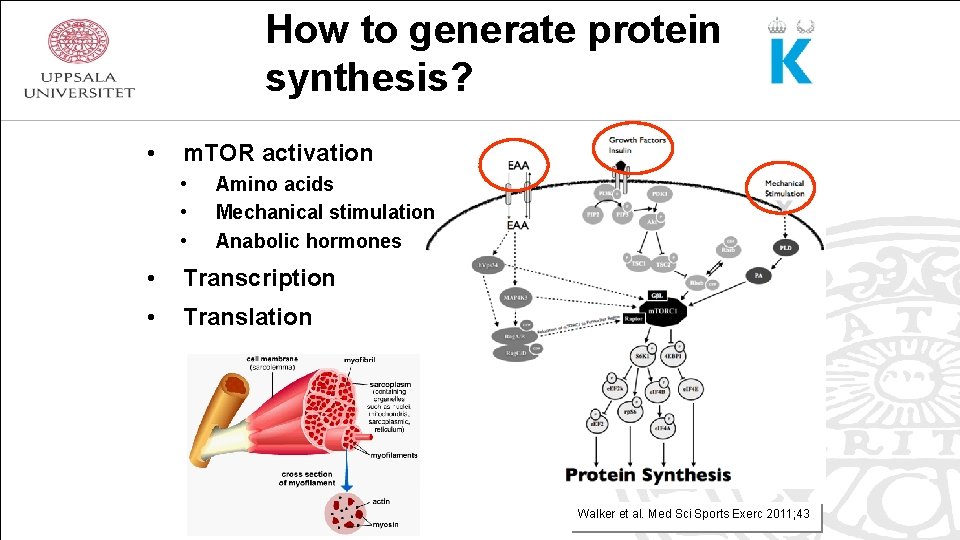
How to generate protein synthesis? • m. TOR activation • • • Amino acids Mechanical stimulation Anabolic hormones • Transcription • Translation Walker et al. Med Sci Sports Exerc 2011; 43
Protein intake and mobility limitation in the Health ABC Study 1998 ♀/♂, 70 -79 y com-dw • 6 -year follow-up • Tertiles of protein intake (FFQ) • Limited walking (400 m) or stair climbing (10 steps) • 1/3 developed mobility lim Conclusion: Protein intake >1 g/kg bw/d reduces 6 -y risk of mobility limitation T 1 – <0. 7 g/kg bw/d T 2 – 0. 7 -1. 0 g/kg bw/d T 3 – >1 g/kg bw/d T 1 vs T 3: HR 1. 89 (CI 1. 41 -2. 44) T 2 vs T 3: HR 1. 49 (CI 1. 20 -1. 84) to develop mobility limitation when compared to >1 g prot/kg bw/d Houston DK et al. JAGS 2017
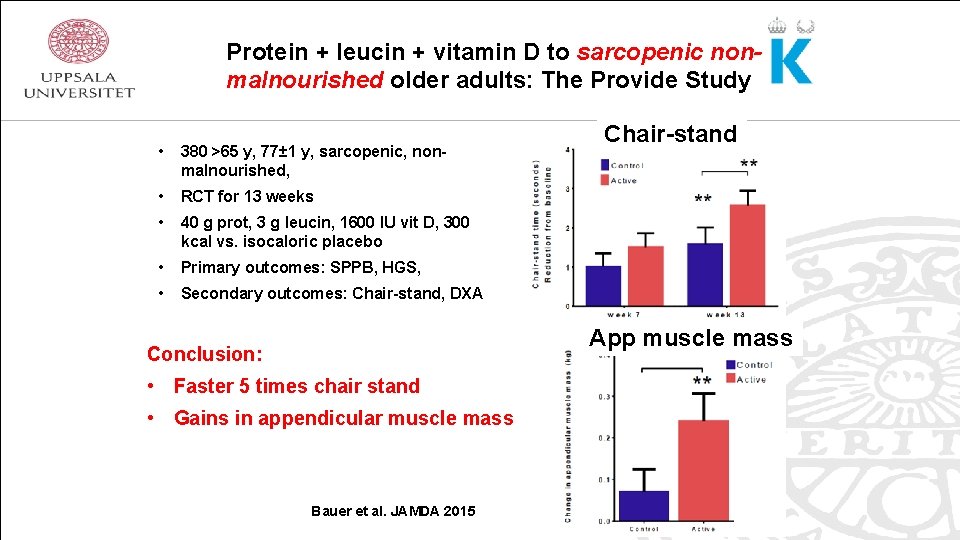
Protein + leucin + vitamin D to sarcopenic nonmalnourished older adults: The Provide Study • 380 >65 y, 77± 1 y, sarcopenic, nonmalnourished, • RCT for 13 weeks • 40 g prot, 3 g leucin, 1600 IU vit D, 300 kcal vs. isocaloric placebo • Primary outcomes: SPPB, HGS, • Secondary outcomes: Chair-stand, DXA Chair-stand App muscle mass Conclusion: • Faster 5 times chair stand • Gains in appendicular muscle mass Bauer et al. JAMDA 2015
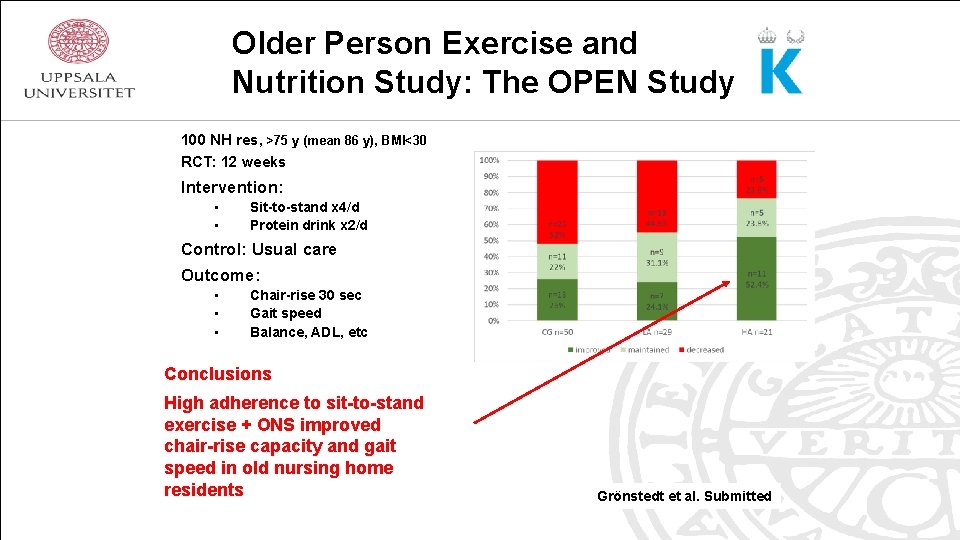
Older Person Exercise and Nutrition Study: The OPEN Study 100 NH res, >75 y (mean 86 y), BMI<30 RCT: 12 weeks Intervention: • • Sit-to-stand x 4/d Protein drink x 2/d Control: Usual care Outcome: • • • Chair-rise 30 sec Gait speed Balance, ADL, etc Conclusions High adherence to sit-to-stand exercise + ONS improved chair-rise capacity and gait speed in old nursing home residents Grönstedt et al. Submitted
Other nutrients • Fat quality? • Vitamin D? • Healthy - Mediterranean like diet?
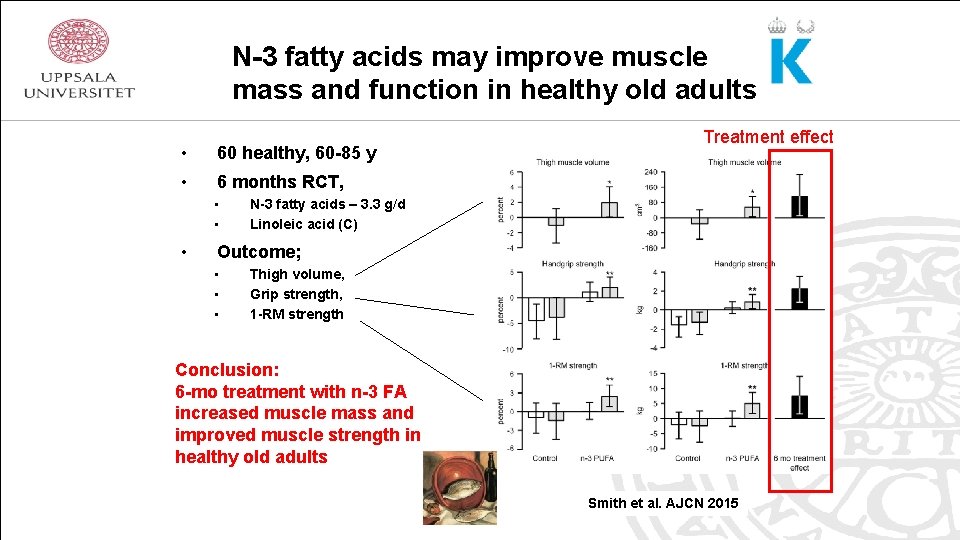
N-3 fatty acids may improve muscle mass and function in healthy old adults • 60 healthy, 60 -85 y • 6 months RCT, • • • Treatment effect N-3 fatty acids – 3. 3 g/d Linoleic acid (C) Outcome; • • • Thigh volume, Grip strength, 1 -RM strength Conclusion: 6 -mo treatment with n-3 FA increased muscle mass and improved muscle strength in healthy old adults Smith et al. AJCN 2015
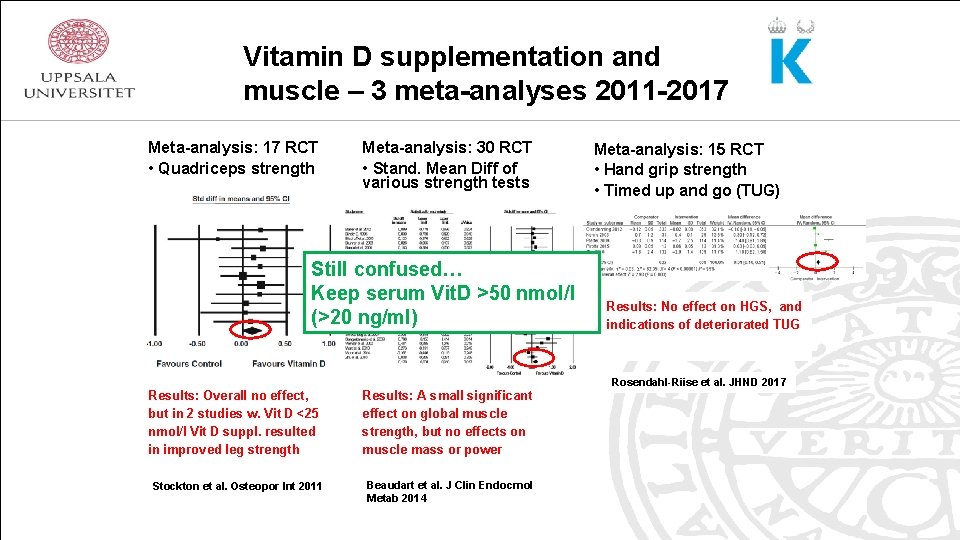
Vitamin D supplementation and muscle – 3 meta-analyses 2011 -2017 Meta-analysis: 17 RCT • Quadriceps strength Meta-analysis: 30 RCT • Stand. Mean Diff of various strength tests Still confused… Keep serum Vit. D >50 nmol/l (>20 ng/ml) Results: Overall no effect, but in 2 studies w. Vit D <25 nmol/l Vit D suppl. resulted in improved leg strength Results: A small significant effect on global muscle strength, but no effects on muscle mass or power Stockton et al. Osteopor Int 2011 Beaudart et al. J Clin Endocrnol Metab 2014 Meta-analysis: 15 RCT • Hand grip strength • Timed up and go (TUG) Results: No effect on HGS, and indications of deteriorated TUG Rosendahl-Riise et al. JHND 2017
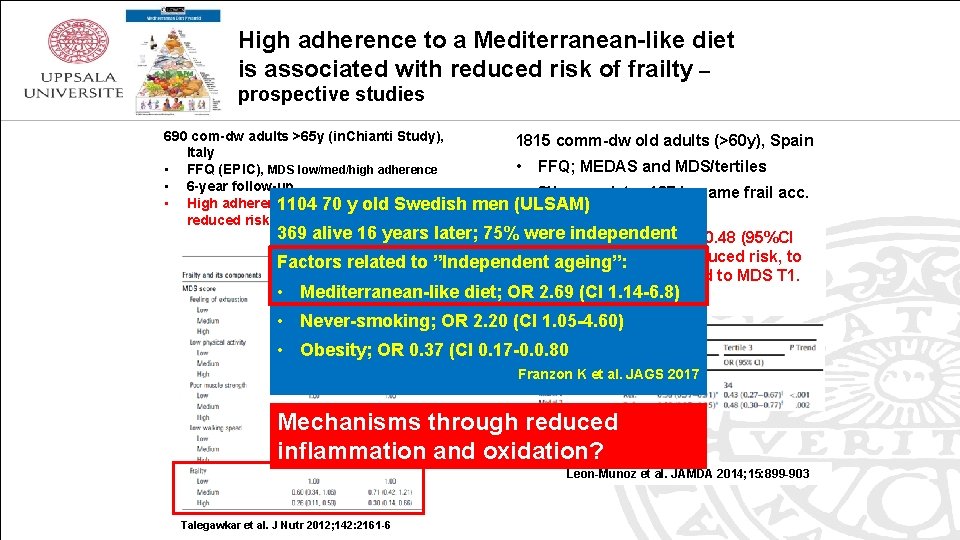
High adherence to a Mediterranean-like diet is associated with reduced risk of frailty – prospective studies 690 com-dw adults >65 y (in. Chianti Study), 1815 comm-dw old adults (>60 y), Spain Italy • FFQ; MEDAS and MDS/tertiles • FFQ (EPIC), MDS low/med/high adherence • 6 -year follow-up • 3½ years later 137 became frail acc. • High adherence to MD was ass. to 70% 1104 70 y old Swedish men (ULSAM) to Frieds criteria reduced risk of frailty; OR 0. 30 (0. 14 -0. 66) 369 alive 16 years later; 75% were independent • MDS T 3 had an OR of 0. 48 (95%CI 0. 30 -0. 77), i. e. 52% reduced risk, to Factors related to ”Independent ageing”: become frail compared to MDS T 1. • Mediterranean-like diet; OR 2. 69 (CI 1. 14 -6. 8) • Never-smoking; OR 2. 20 (CI 1. 05 -4. 60) • Obesity; OR 0. 37 (CI 0. 17 -0. 0. 80 Franzon K et al. JAGS 2017 Mechanisms through reduced inflammation and oxidation? Leon-Munoz et al. JAMDA 2014; 15: 899 -903 Talegawkar et al. J Nutr 2012; 142: 2161 -6
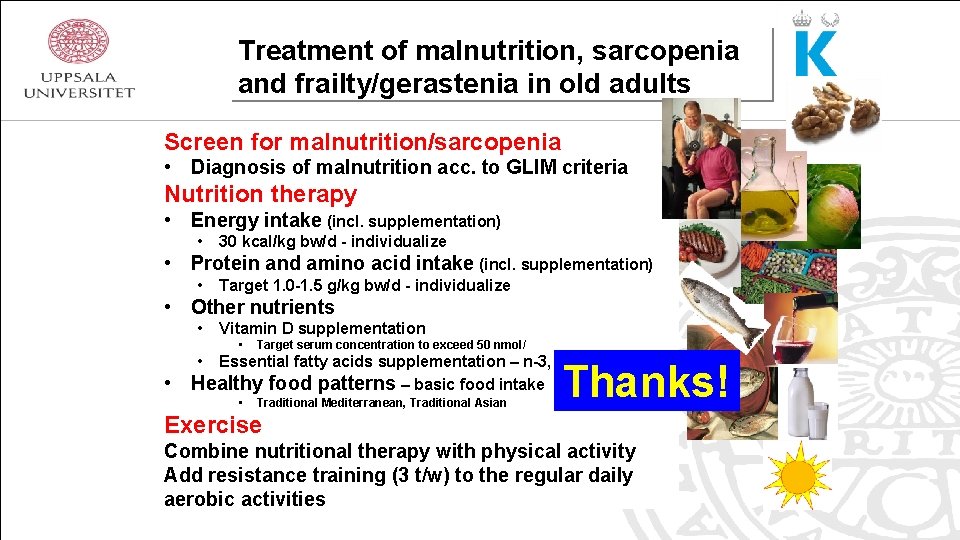
Treatment of malnutrition, sarcopenia and frailty/gerastenia in old adults Screen for malnutrition/sarcopenia • Diagnosis of malnutrition acc. to GLIM criteria Nutrition therapy • Energy intake (incl. supplementation) • 30 kcal/kg bw/d - individualize • Protein and amino acid intake (incl. supplementation) • Target 1. 0 -1. 5 g/kg bw/d - individualize • Other nutrients • Vitamin D supplementation • Target serum concentration to exceed 50 nmol/ • • Essential fatty acids supplementation – n-3, n-6 Healthy food patterns – basic food intake • Traditional Mediterranean, Traditional Asian Thanks! Exercise Combine nutritional therapy with physical activity Add resistance training (3 t/w) to the regular daily aerobic activities