The Einstein Geriatrics Fellowship Core Curriculum The Einstein
- Slides: 25
The Einstein Geriatrics Fellowship Core Curriculum
The Einstein Geriatrics Fellowship Core Curriculum • A 20 part lecture series designed for first year geriatrics fellows • Covers the ACGME content areas for fellowship training
Communication and Interviewing Skills with the Geriatric Patient Debra Greenberg, Ph. D
Objectives • To review goals in interviewing older persons and their caregivers • To review interviewing skills that will facilitate interactions with an older adult
Introductions • How do you introduce self? • How do you address the older adult?
Conditions for the Geriatric Interview • • Privacy Environment of the room Ability to see and hear provider Compensation for patients’ disabilities
Modification for the Hearing Impaired Person • Use slow, clear speech • Allow adequate time for the patient to respond • Assure adequate lighting to allow for simultaneous lip reading • Maintain visual contact "face-to-face" to allow for lip reading • High-pitched voices should be deepened Most hearing loss is high frequency
Modifications in Interviewing With an Interpreter • Interpreter vs. Translator • Interpreter should be non- family members whenever possible • The patient's permission should be obtained prior to using a family member/friend as a translator
Modification in Interviewing People with Dementia • Families and significant others should be interviewed separately whenever possible • When possible older person’s permission should be obtained prior to separate interviews
Geriatric Social History • Is there social support?
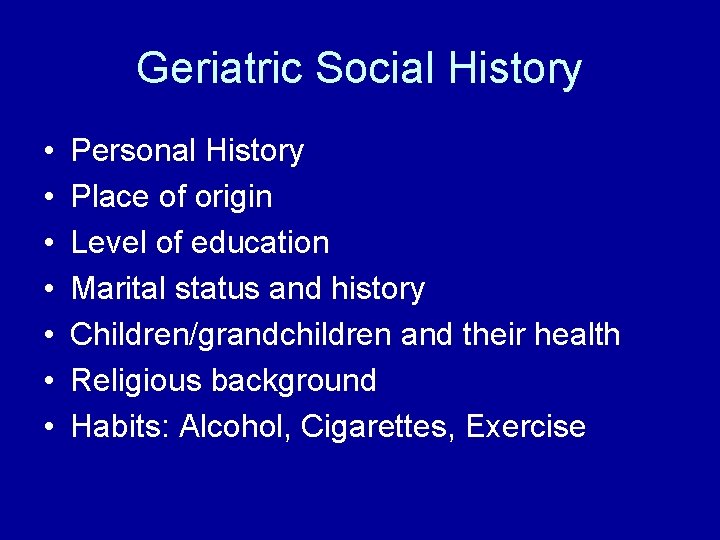
Geriatric Social History • • Personal History Place of origin Level of education Marital status and history Children/grandchildren and their health Religious background Habits: Alcohol, Cigarettes, Exercise
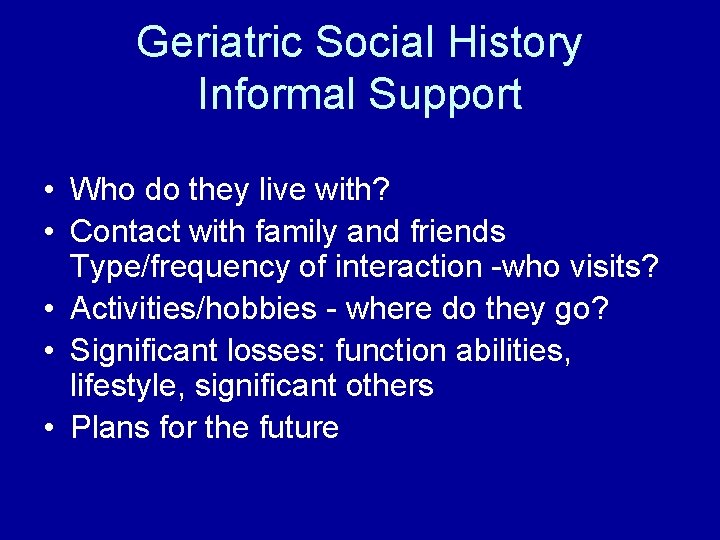
Geriatric Social History Informal Support • Who do they live with? • Contact with family and friends Type/frequency of interaction -who visits? • Activities/hobbies - where do they go? • Significant losses: function abilities, lifestyle, significant others • Plans for the future
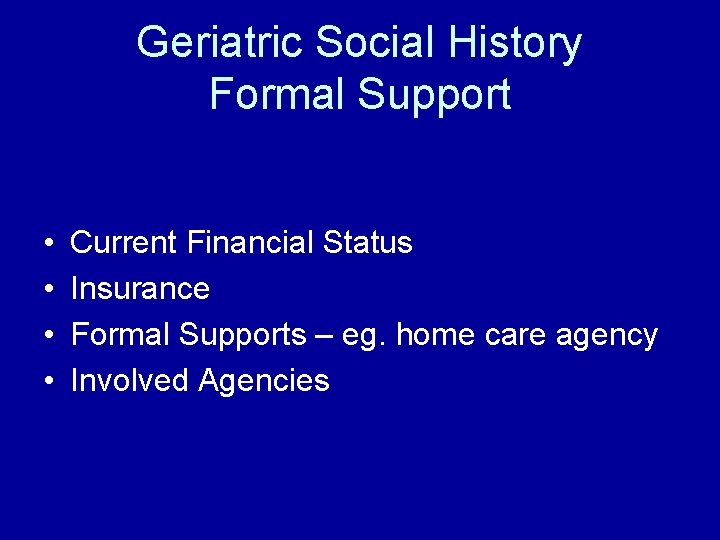
Geriatric Social History Formal Support • • Current Financial Status Insurance Formal Supports – eg. home care agency Involved Agencies
“The 3 Ps” • Presenting issue • Precipitating issue • Perpetuating issue
Determine the Purpose of the Contact • Presenting Issue • Why is the person here? What do they want? Routine health care New problem/new provider • A problem for the patient/ caregiver
Purpose of the Contact Precipitating Issues • What is their previous experience with health care? With other MD’s? • How have they negotiated the health care system in the past?
Purpose of the Contact • Perpetuating issues • What makes health practices and attitudes hard to change? • What do we want?
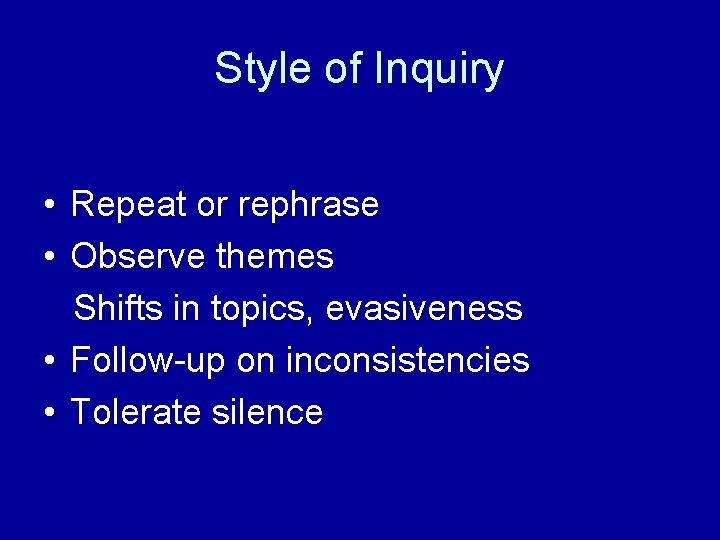
Style of Inquiry • Repeat or rephrase • Observe themes Shifts in topics, evasiveness • Follow-up on inconsistencies • Tolerate silence
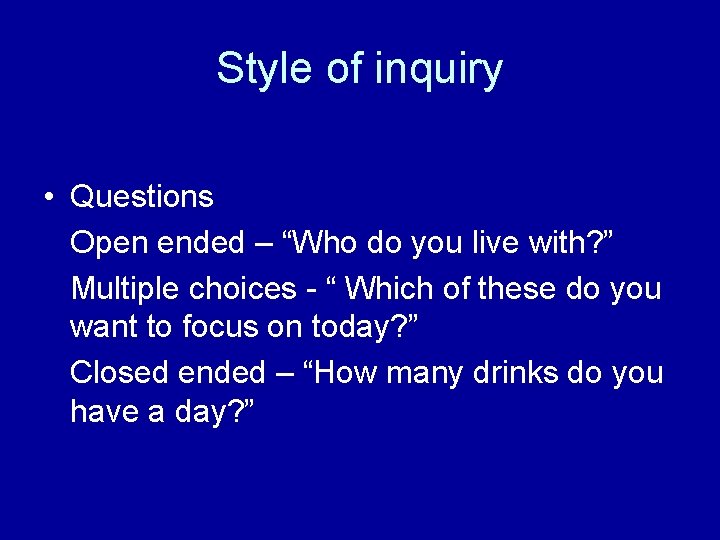
Style of inquiry • Questions Open ended – “Who do you live with? ” Multiple choices - “ Which of these do you want to focus on today? ” Closed ended – “How many drinks do you have a day? ”
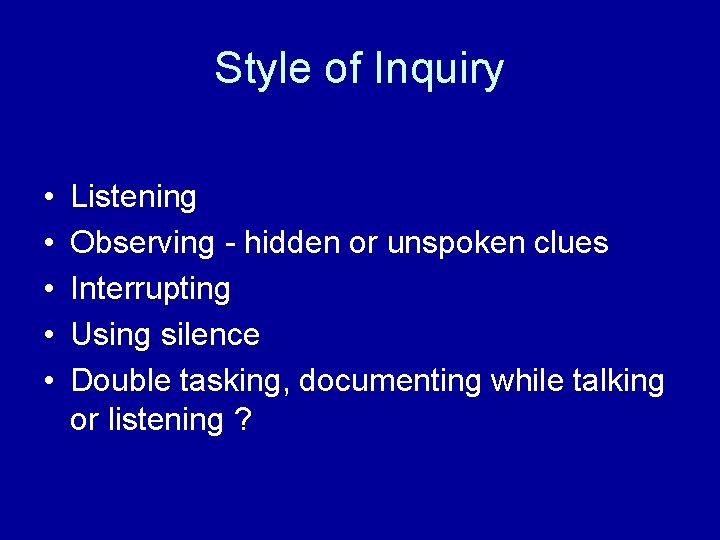
Style of Inquiry • • • Listening Observing - hidden or unspoken clues Interrupting Using silence Double tasking, documenting while talking or listening ?
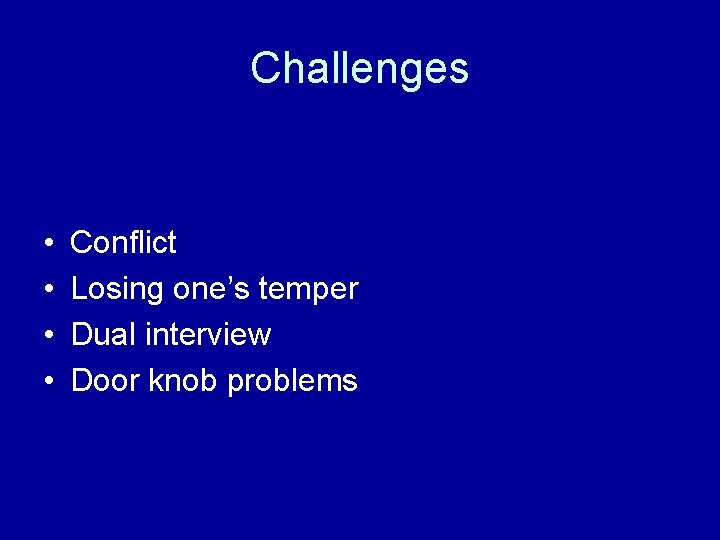
Challenges • • Conflict Losing one’s temper Dual interview Door knob problems
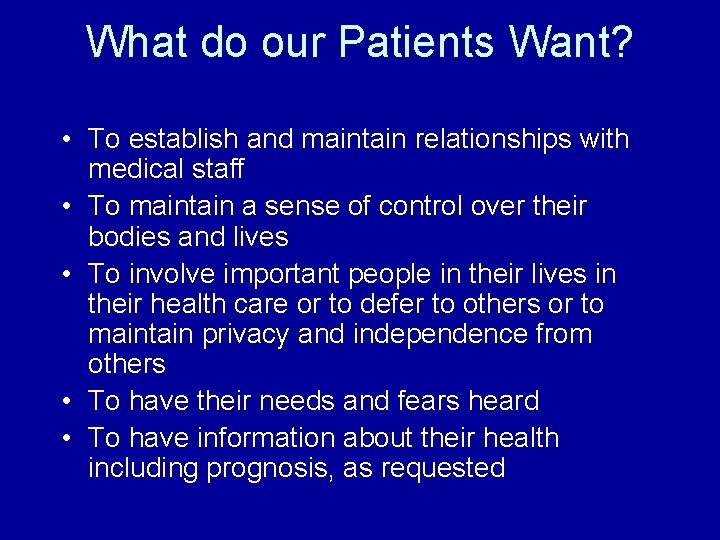
What do our Patients Want? • To establish and maintain relationships with medical staff • To maintain a sense of control over their bodies and lives • To involve important people in their lives in their health care or to defer to others or to maintain privacy and independence from others • To have their needs and fears heard • To have information about their health including prognosis, as requested
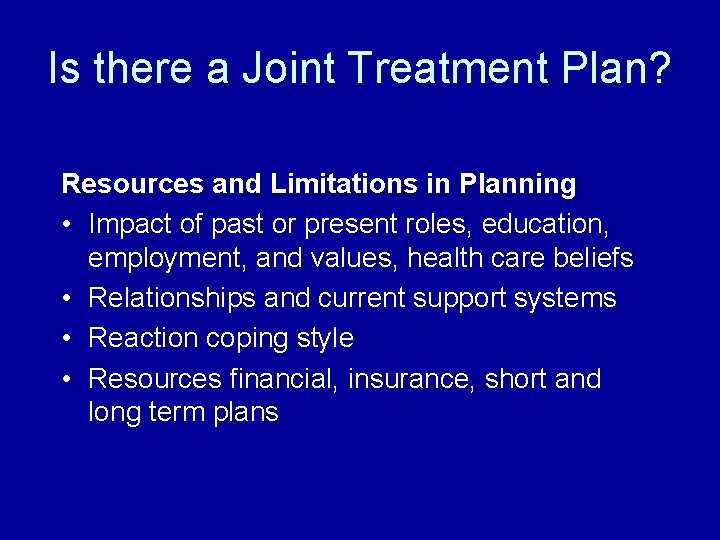
Is there a Joint Treatment Plan? Resources and Limitations in Planning • Impact of past or present roles, education, employment, and values, health care beliefs • Relationships and current support systems • Reaction coping style • Resources financial, insurance, short and long term plans
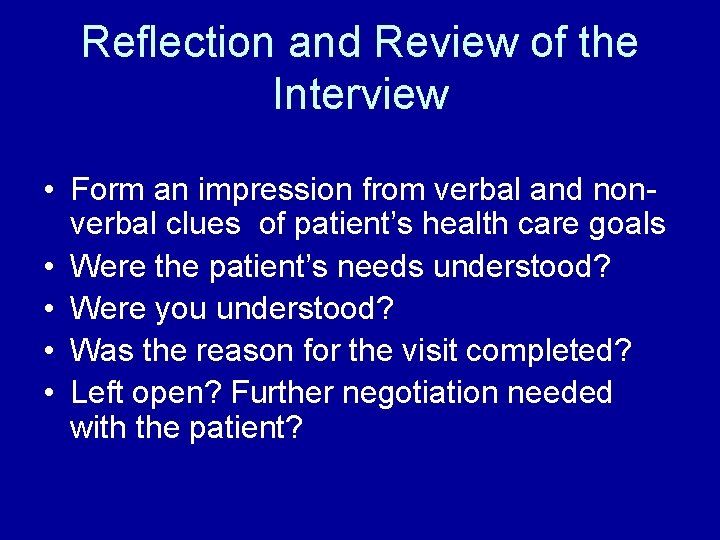
Reflection and Review of the Interview • Form an impression from verbal and nonverbal clues of patient’s health care goals • Were the patient’s needs understood? • Were you understood? • Was the reason for the visit completed? • Left open? Further negotiation needed with the patient?
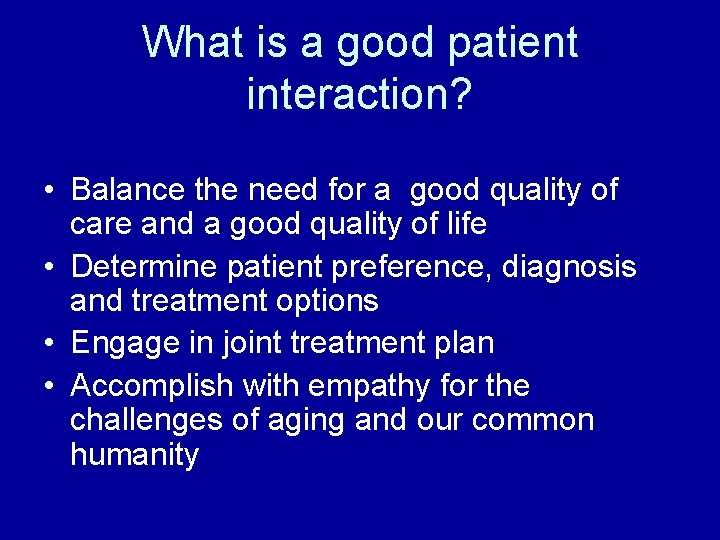
What is a good patient interaction? • Balance the need for a good quality of care and a good quality of life • Determine patient preference, diagnosis and treatment options • Engage in joint treatment plan • Accomplish with empathy for the challenges of aging and our common humanity