In the name of GOD Orthodontic treatment planning



- Slides: 44
In the name of GOD
Orthodontic treatment planning Presented by: Dr Somayeh Heidari Orthodontist
Reference: Contemporary Orthodontics Chapter 7 William R. Proffit, Henry W. Fields, David M. Sarver. 2007. Mosby
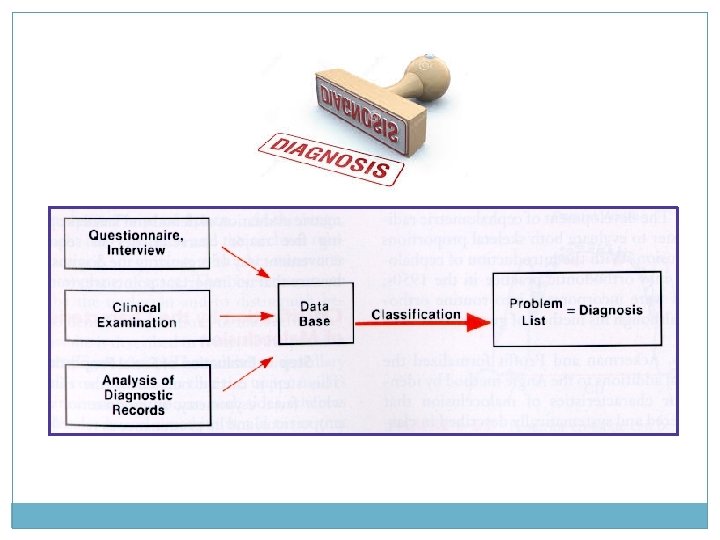
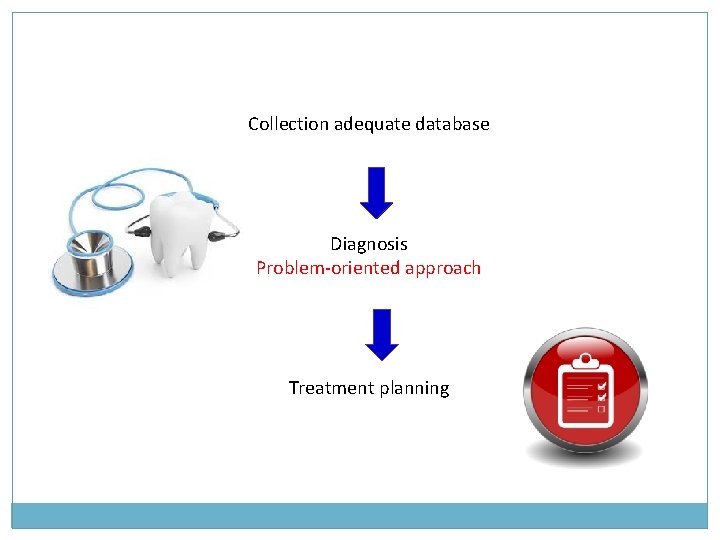
Collection adequate database Diagnosis Problem-oriented approach Treatment planning
The objective in treatment planning is to design the strategy that a wise clinician, using his/her best judgment, would employ to address the problem while maximizing benefit to the patient and minimizing cost and risk.
Avoid both missed opportunities (false negative or undertreatment) and excessive treatment (false positive or overtreatment) while appropriately involving the patient in the planning process.
Indications for orthodontic treatment
ü Psychosocial indications Remove, or at least alleviate, the social handicap created by an unacceptable dental and/or facial appearance. Enhance dental and facial appearance in individuals who already are socially acceptable but wish to improve their quality of life. Although the severity of the malocclusion correlates with its psychosocial effect, measuring how much the teeth protrude or how irregular they are is not sufficient to determine individual treatment need.
ü Developmental indications Maintain as normal a developmental process as possible. Problems related to development of the dentition occur relatively frequently, and often orthodontic treatment is needed to maintain dental health and continue normal development. These problems almost always should be corrected when noticed.
ü Functional indications Improve jaw function and correct problems related to functional impairment. Sever malocclusion affects normal function, usually not by making it impossible, but by making it more difficult for the affected individual to breath, incise, chew, swallow and speak normally. The reverse also is true: alteration or adaptation in function can be etiologic factors for malocclusion, by influencing the pattern of growth and development.
ü Trauma / Disease control indications Reduce the impact on the dentition of trauma or disease. Prevention of periodontal disease almost never is a reason for orthodontic treatment. Correcting tissue impingement by the teeth can be a benefit from orthodontic treatment at any age. Although protruding incisors are more likely to be damage, only in the most accident-prone child is this a valid reason for reducing overjet.
üAdjunctive treatment indications Facilitate other dental treatment, as an adjunct to restorative, prosthodontic or periodontal therapy.
Orthodontic treatment almost always is elective, but it can produce significant benefits in psychosocial well being, normal development, jaw function, dental/ oral health and improve outcomes in the treatment of dental disease. Orthodontics is needed if it would produce these benefits--- and not needed if it would not.
Type of treatment : Evidence – Based selection Treatment process should be chosen on the basis of clear evidence that the selected method is the most successful approach to that particular patient’s problem. The better the evidence, of course, the easier the decision.
Problem – oriented approach Identifying the patient’s problems evaluating the possible solutions those specific problems The best way to evaluate alternative treatment methods is with a randomized clinical trial, with great care is taken to control variables that might affect the outcomes. A second acceptable way is careful study of treatment outcomes under well-defined conditions.
Treatment goals : The soft tissue paradigm If we accept that both goals and limitations of orthodontic treatment are established more by soft tissue considerations than skeletal/dental relationships, treatment planning inevitably is affected.
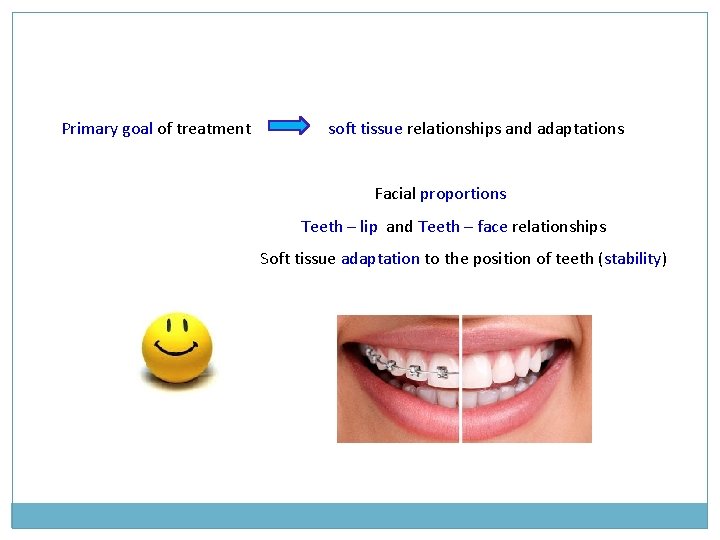
Primary goal of treatment soft tissue relationships and adaptations Facial proportions Teeth – lip and Teeth – face relationships Soft tissue adaptation to the position of teeth (stability)
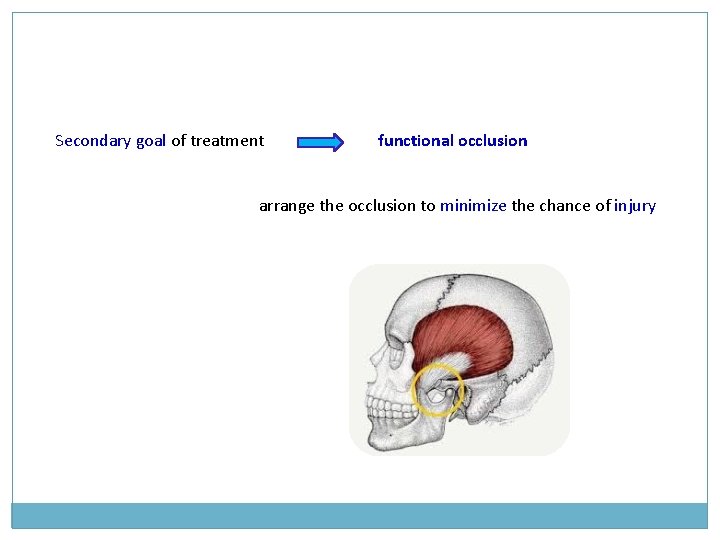
Secondary goal of treatment functional occlusion arrange the occlusion to minimize the chance of injury
Solving the patient’s problems Problem oriented diagnosis and treatment planning
Major issues in planning treatment Once patient’s orthodontic problems identified and prioritized, three issues must be faced as treatment planning begins: q The complexity of the treatment that would be required q The predictability of success with a given treatment approach q The patient’s (and parent’s) goals and desires
complexity of treatment Who should do the treatment?
predictability of treatment If alternative methods of treatment are available, which one should be chosen? Based on evidence
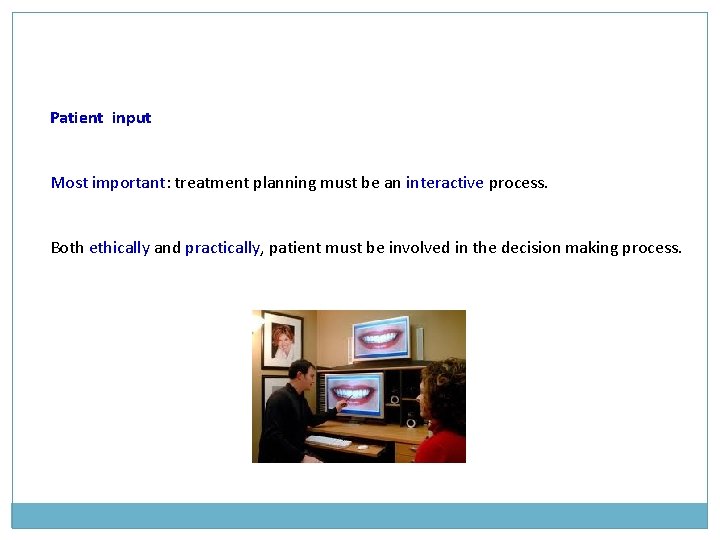
Patient input Most important: treatment planning must be an interactive process. Both ethically and practically, patient must be involved in the decision making process.
Orthodontic Triage : Distinguishing moderate from complex treatment problems An adequate database and a through problem list are necessary do the triage process.
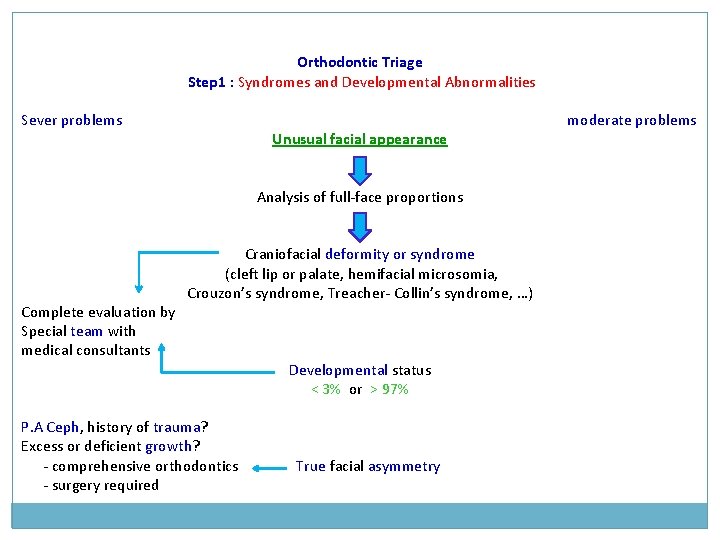
Orthodontic Triage Step 1 : Syndromes and Developmental Abnormalities Sever problems Unusual facial appearance Analysis of full-face proportions Complete evaluation by Special team with medical consultants Craniofacial deformity or syndrome (cleft lip or palate, hemifacial microsomia, Crouzon’s syndrome, Treacher- Collin’s syndrome, …) P. A Ceph, history of trauma? Excess or deficient growth? - comprehensive orthodontics - surgery required Developmental status < 3% or > 97% True facial asymmetry moderate problems
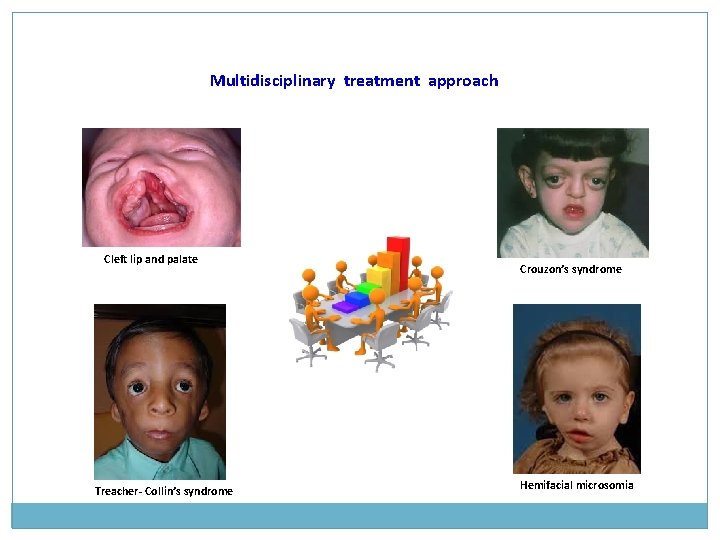
Multidisciplinary treatment approach Cleft lip and palate Treacher- Collin’s syndrome Crouzon’s syndrome Hemifacial microsomia
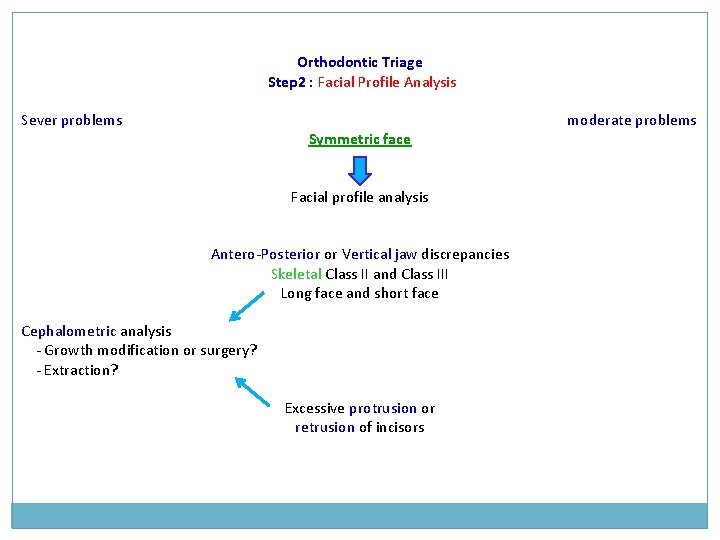
Orthodontic Triage Step 2 : Facial Profile Analysis Sever problems Symmetric face Facial profile analysis Antero-Posterior or Vertical jaw discrepancies Skeletal Class II and Class III Long face and short face Cephalometric analysis - Growth modification or surgery? - Extraction? Excessive protrusion or retrusion of incisors moderate problems
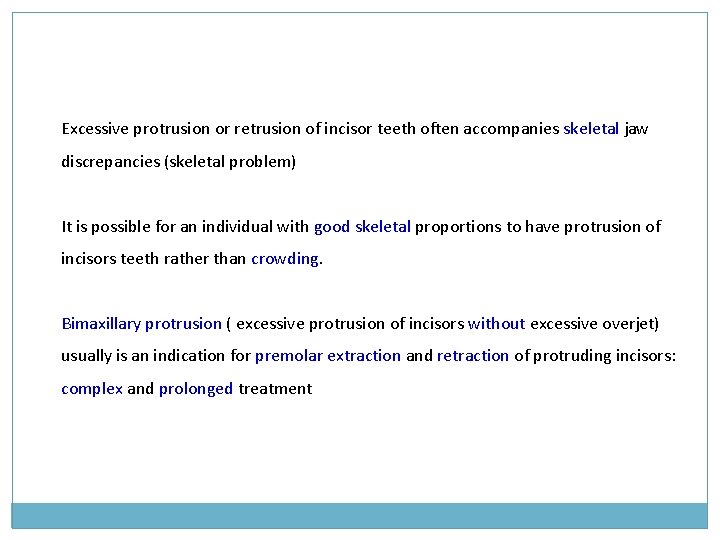
Excessive protrusion or retrusion of incisor teeth often accompanies skeletal jaw discrepancies (skeletal problem) It is possible for an individual with good skeletal proportions to have protrusion of incisors teeth rather than crowding. Bimaxillary protrusion ( excessive protrusion of incisors without excessive overjet) usually is an indication for premolar extraction and retraction of protruding incisors: complex and prolonged treatment
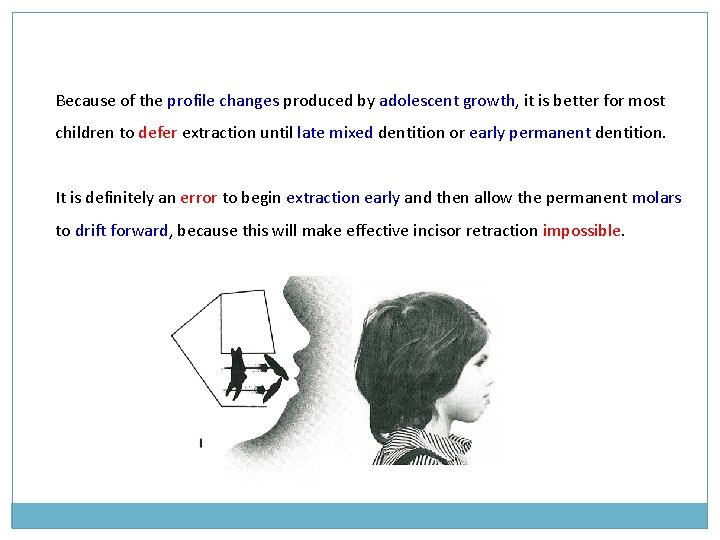
Because of the profile changes produced by adolescent growth, it is better for most children to defer extraction until late mixed dentition or early permanent dentition. It is definitely an error to begin extraction early and then allow the permanent molars to drift forward, because this will make effective incisor retraction impossible.
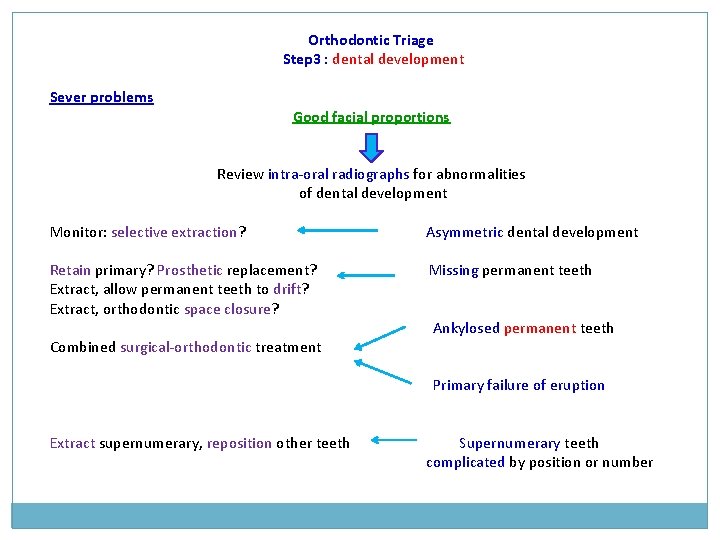
Orthodontic Triage Step 3 : dental development Sever problems Good facial proportions Review intra-oral radiographs for abnormalities of dental development Monitor: selective extraction? Asymmetric dental development Retain primary? Prosthetic replacement? Extract, allow permanent teeth to drift? Extract, orthodontic space closure? Missing permanent teeth Combined surgical-orthodontic treatment Ankylosed permanent teeth Primary failure of eruption Extract supernumerary, reposition other teeth Supernumerary teeth complicated by position or number
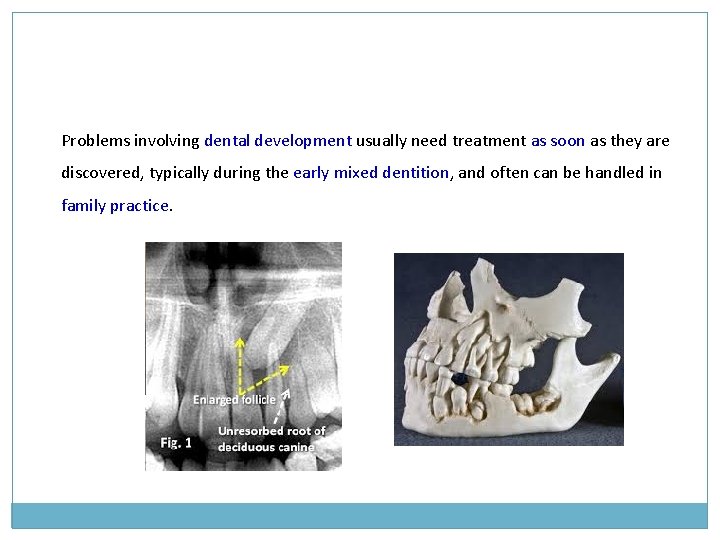
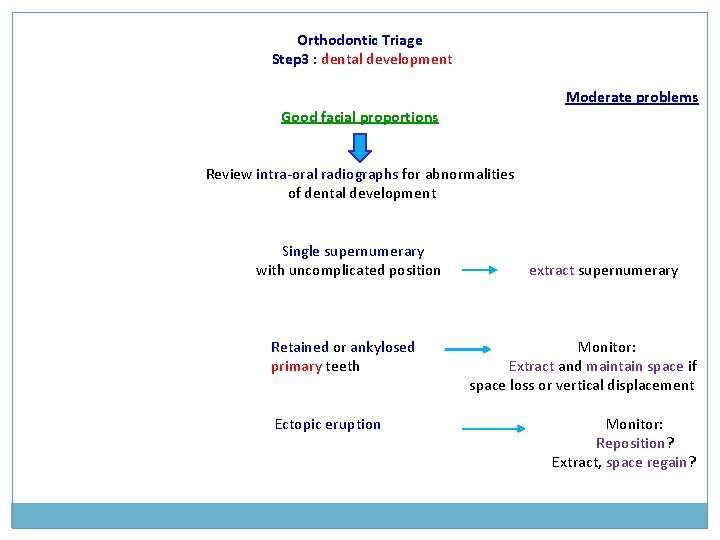
Problems involving dental development usually need treatment as soon as they are discovered, typically during the early mixed dentition, and often can be handled in family practice.
Asymmetric dental development ü if the difference is 6 months or more ü careful monitoring of the situation is needed ü often requires selective extraction ü can prevent a sever asymmetry problem at a later time ü few patients have a history of childhood radiation therapy to head and neck
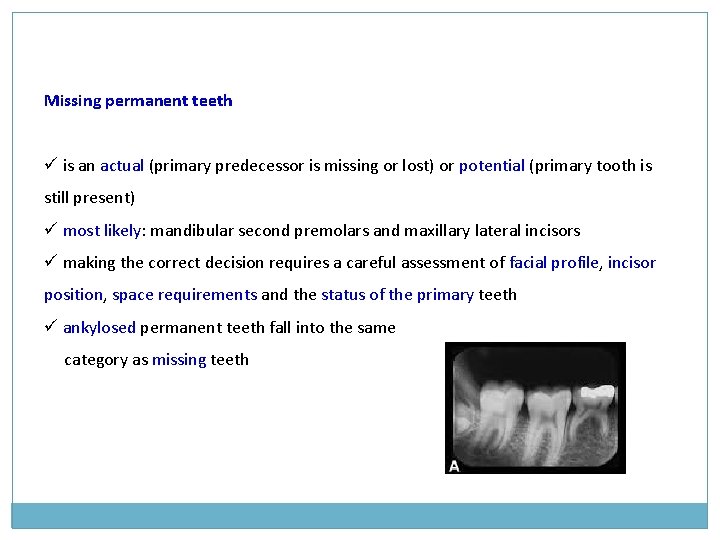
Missing permanent teeth ü is an actual (primary predecessor is missing or lost) or potential (primary tooth is still present) ü most likely: mandibular second premolars and maxillary lateral incisors ü making the correct decision requires a careful assessment of facial profile, incisor position, space requirements and the status of the primary teeth ü ankylosed permanent teeth fall into the same category as missing teeth
Supernumerary teeth ü in the anterior segment of the maxilla: 90% ü multiple, inverted or malformed supernumerary teeth: often displaced adjacent teeth ü multiple supernumerary: complex problem, perhaps syndrome or congenital abnormality ü early removal: carefully to minimize damage to adjacent teeth ü if causes displacement: surgical exposure, adjunctive periodontal surgery, and possibly mechanical traction
Orthodontic Triage Step 3 : dental development Moderate problems Good facial proportions Review intra-oral radiographs for abnormalities of dental development Single supernumerary with uncomplicated position Retained or ankylosed primary teeth Ectopic eruption extract supernumerary Monitor: Extract and maintain space if space loss or vertical displacement Monitor: Reposition? Extract, space regain?
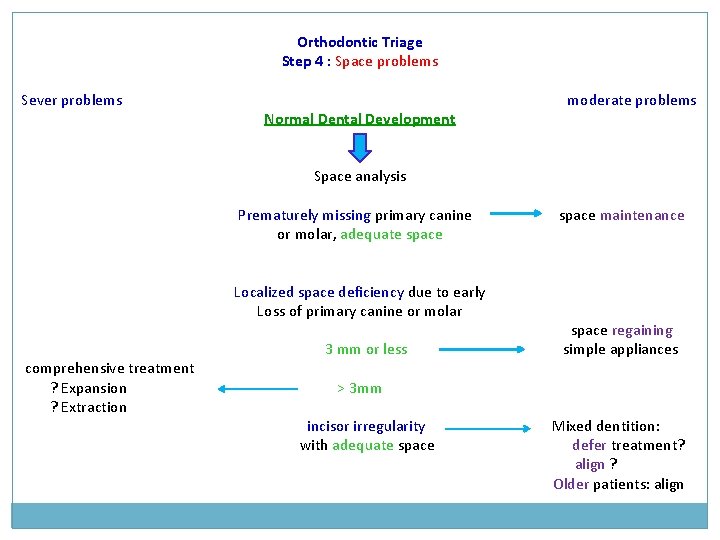
Orthodontic Triage Step 4 : Space problems Sever problems Normal Dental Development moderate problems Space analysis Prematurely missing primary canine or molar, adequate space Localized space deficiency due to early Loss of primary canine or molar comprehensive treatment ? Expansion ? Extraction 3 mm or less space maintenance space regaining simple appliances > 3 mm incisor irregularity with adequate space Mixed dentition: defer treatment? align ? Older patients: align
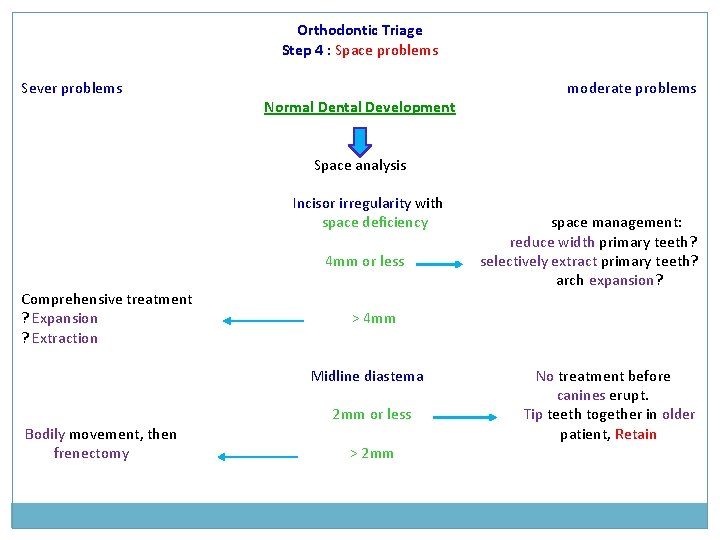
Orthodontic Triage Step 4 : Space problems Sever problems Normal Dental Development moderate problems Space analysis Incisor irregularity with space deficiency 4 mm or less Comprehensive treatment ? Expansion ? Extraction > 4 mm Midline diastema Bodily movement, then frenectomy space management: reduce width primary teeth? selectively extract primary teeth? arch expansion? 2 mm or less > 2 mm No treatment before canines erupt. Tip teeth together in older patient, Retain
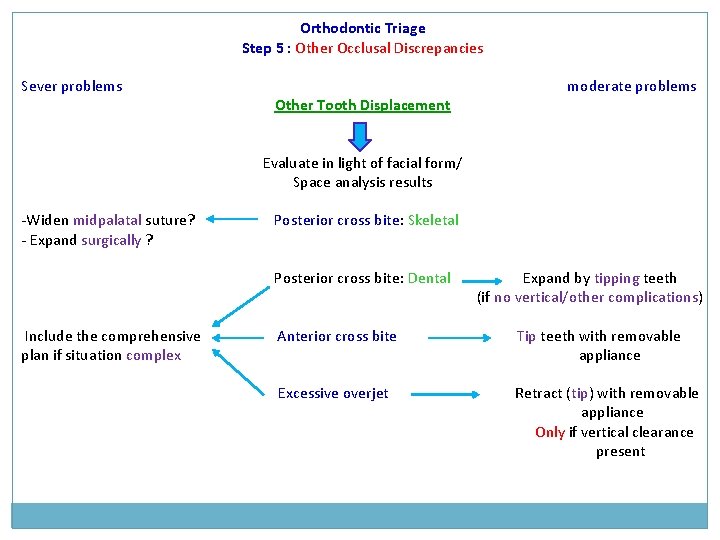
Orthodontic Triage Step 5 : Other Occlusal Discrepancies Sever problems Other Tooth Displacement moderate problems Evaluate in light of facial form/ Space analysis results -Widen midpalatal suture? - Expand surgically ? Posterior cross bite: Skeletal Posterior cross bite: Dental Include the comprehensive plan if situation complex Expand by tipping teeth (if no vertical/other complications) Anterior cross bite Tip teeth with removable appliance Excessive overjet Retract (tip) with removable appliance Only if vertical clearance present
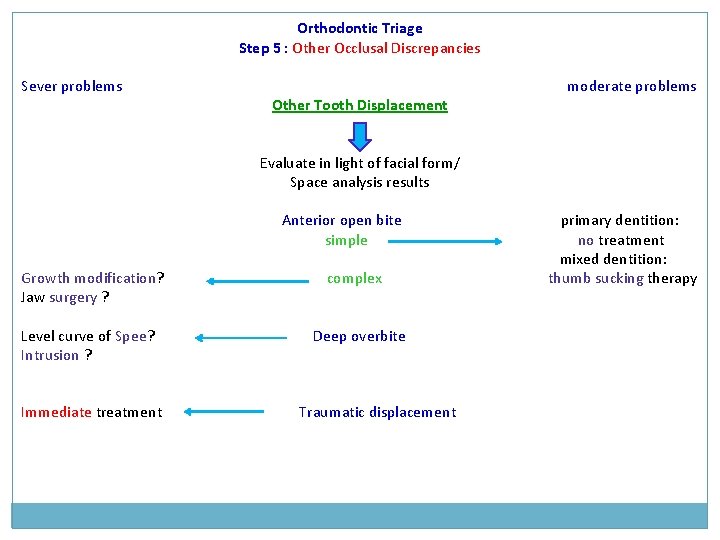
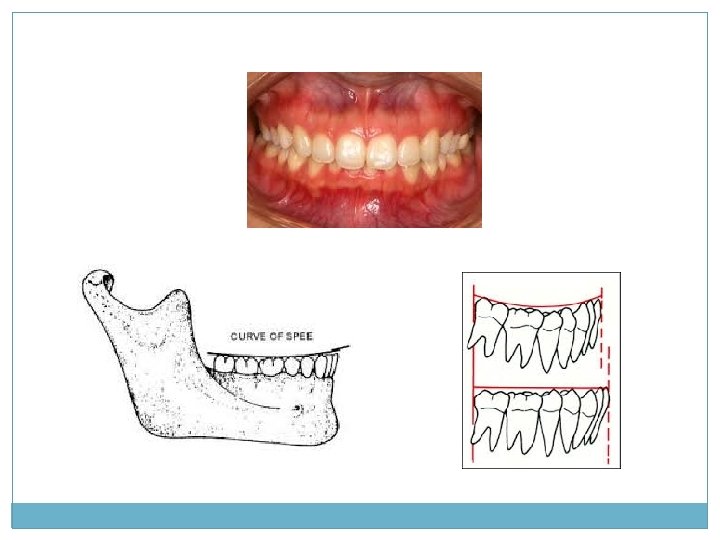
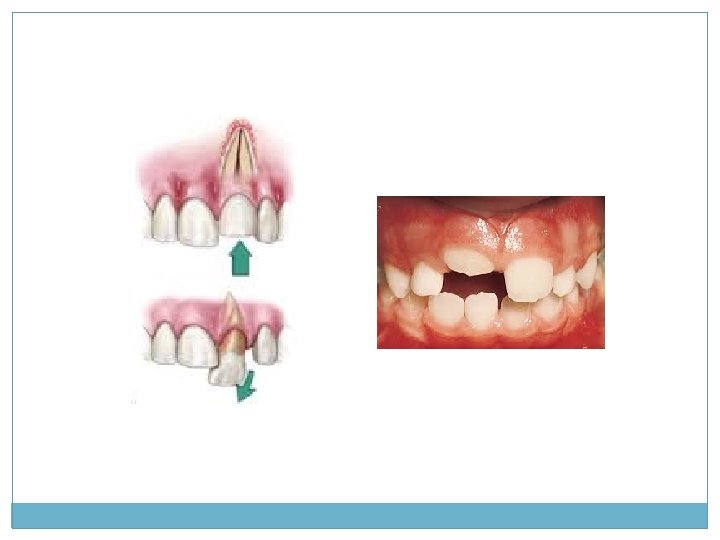
Orthodontic Triage Step 5 : Other Occlusal Discrepancies Sever problems Other Tooth Displacement moderate problems Evaluate in light of facial form/ Space analysis results Anterior open bite simple Growth modification? Jaw surgery ? Level curve of Spee? Intrusion ? Immediate treatment complex Deep overbite Traumatic displacement primary dentition: no treatment mixed dentition: thumb sucking therapy
Thanks for your attention