Diagnosis and treatment planning for Orthodontic cases Modern



- Slides: 22
Diagnosis and treatment planning for Orthodontic cases
Modern Orthodontics In the 21 st Century, Orthodontics differs in: • The concept of growth modification was introduced after the – discovery of cephalometry More emphasis on esthetics (Psychology) – Patients expect a greater degree of involvement in treatment – planning (Chief Complaint oriented T. P. ) Is offered much more frequently to adults than before –
The objectives of the Modern Orthodontics Esthetics (Psychology) • Stability • Health and Longevity • Creation of the best balance between occlusal relationships, dental and facial esthetics, stability of the results and long term maintenance
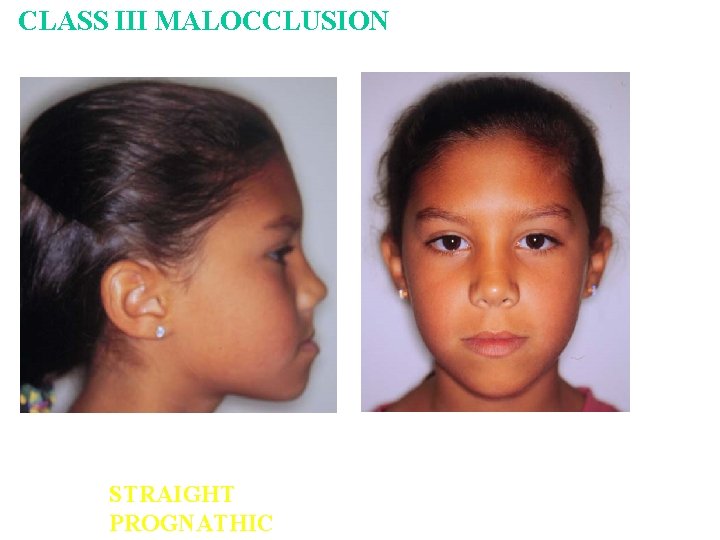
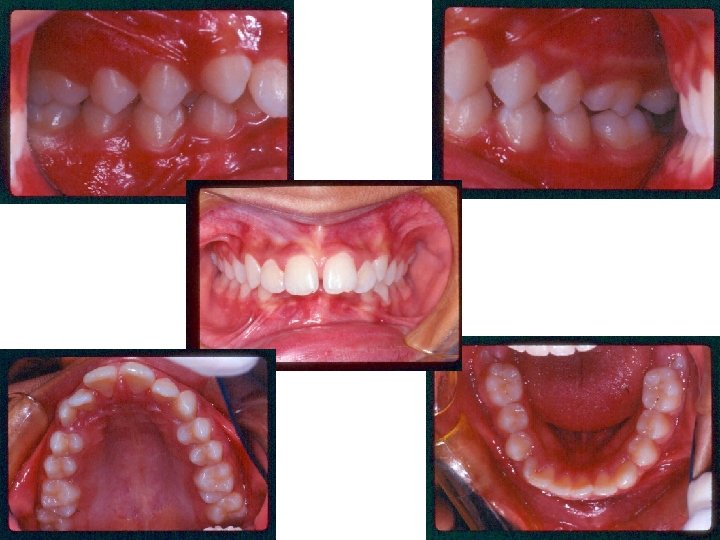
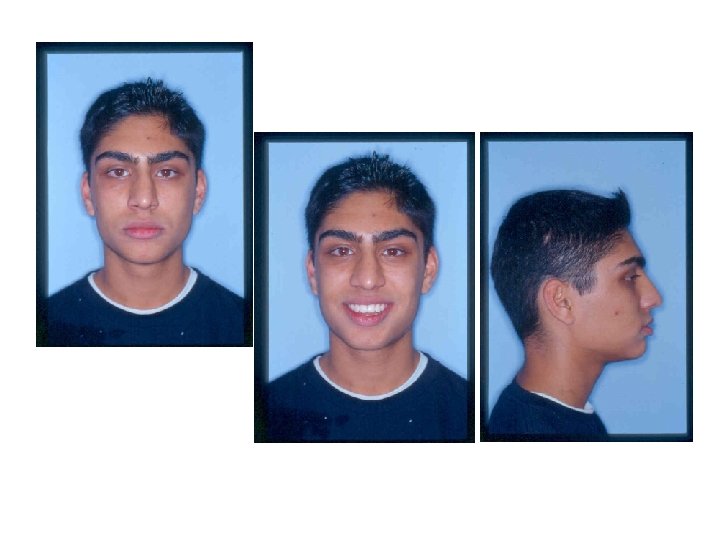
CLASS III MALOCCLUSION STRAIGHT PROGNATHIC
CLASS III MALOCCLUSION LATE MIXED DENTITION CLASS III MALOCCLUSION ANTERIOR CROSSBITE
CLASS III MALOCCLUSION DEEP OVERBITE MAXIMUM INTERCUSPATION
CLASS III MALOCCLUSION INITIAL CONTACT POSITION RESULTS IN SOME ANTERIOR FUNCTIONAL SHIFT
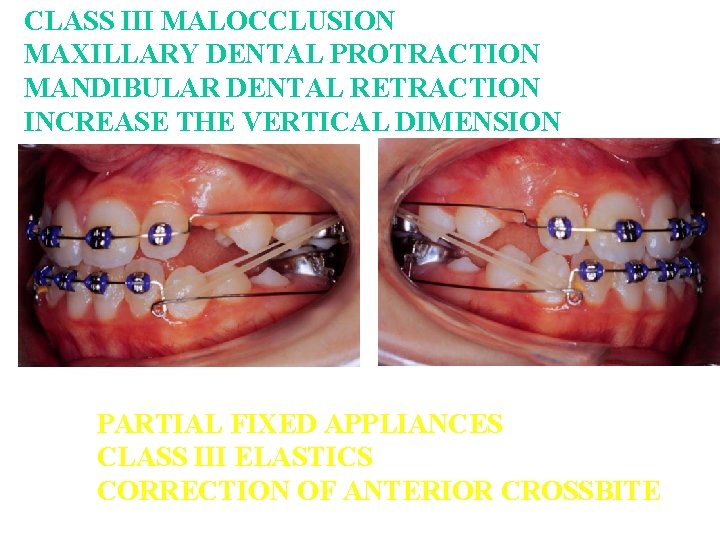
CLASS III MALOCCLUSION MAXILLARY DENTAL PROTRACTION MANDIBULAR DENTAL RETRACTION INCREASE THE VERTICAL DIMENSION PARTIAL FIXED APPLIANCES CLASS III ELASTICS CORRECTION OF ANTERIOR CROSSBITE
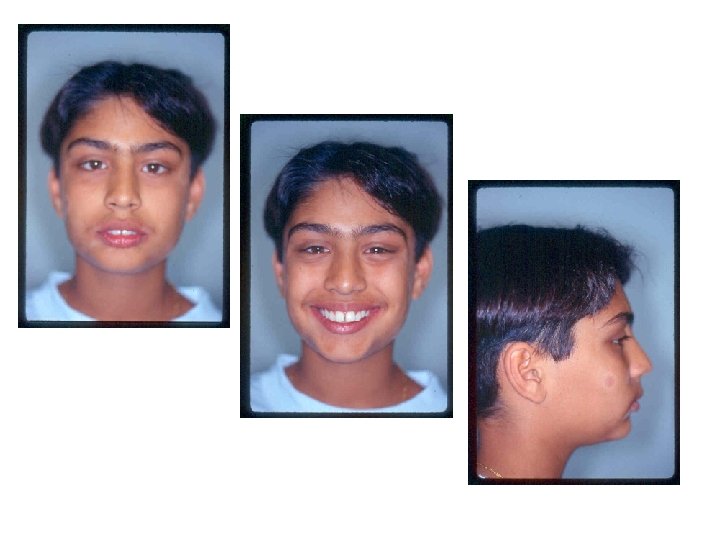
CLASS III MALOCCLUSION POST-TREATMENT NORMAL PROFILE
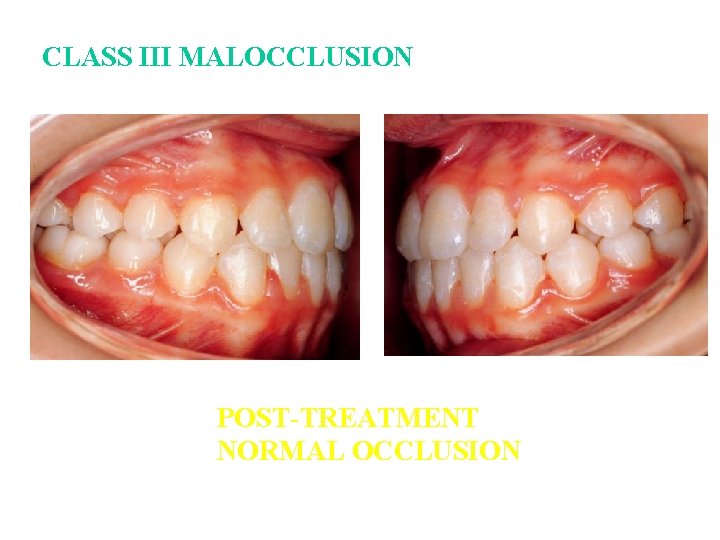
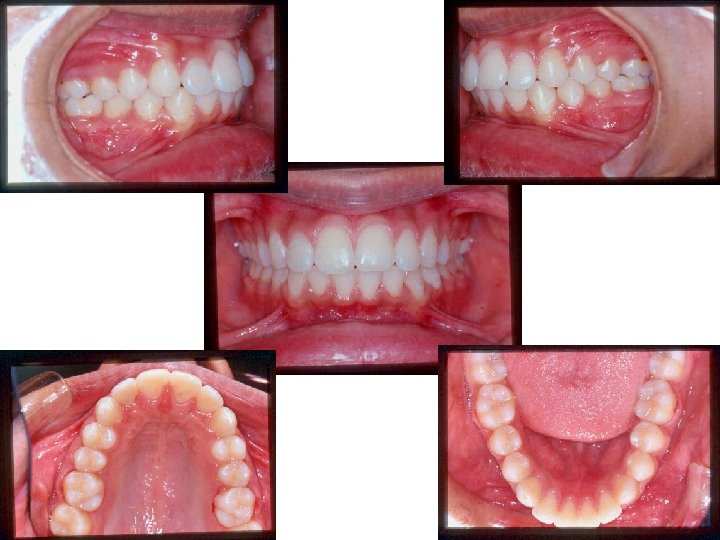
CLASS III MALOCCLUSION POST-TREATMENT NORMAL OCCLUSION
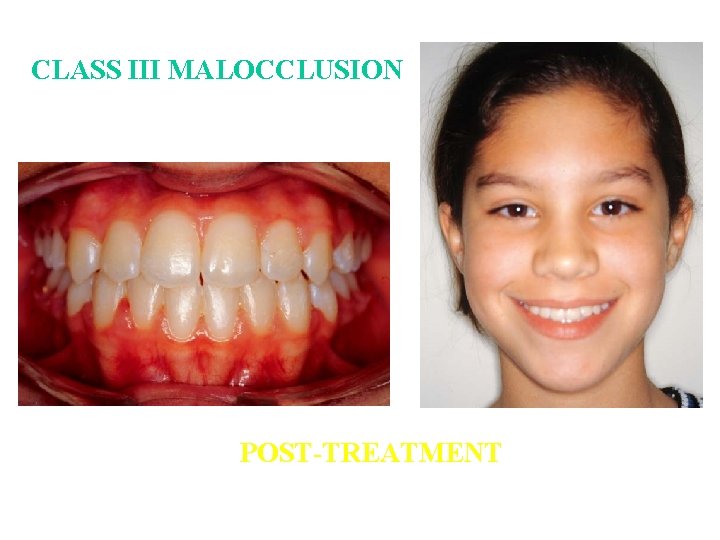
CLASS III MALOCCLUSION POST-TREATMENT
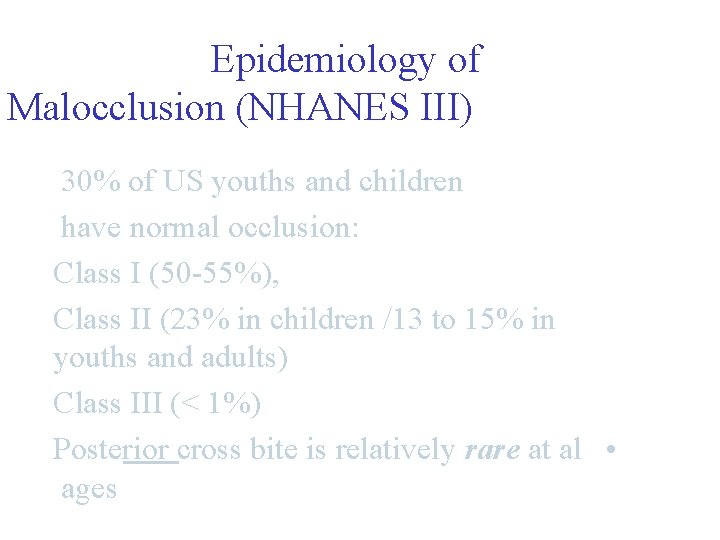
Epidemiology of Malocclusion (NHANES III) 30% of US youths and children have normal occlusion: Class I (50 -55%), Class II (23% in children /13 to 15% in youths and adults) Class III (< 1%) Posterior cross bite is relatively rare at al • ages
Evolution • Why Malocclusion is prevalent There was a tendency to decreased size and number of teeth Modern Humans have underdeveloped jaws Imbalance between the progressive decreased jaw size and tooth size can lead to teeth crowding or spacing Less use of masticatory forces with softer food could have lead to an increase in malocclusion
Need for orthodontic treatment Protruding, irregular, or maloccluded teeth can cause three types of problems for the patient: Discrimination because of facial appearance Problems of Oral functions and TMD Greater susceptibility to trauma, periodontal disease, or tooth decay
Psychological problems • Need for orthodontic Malocclusion is likely to be atreatment social handicap Well-aligned teeth and pleasing smile carry positive status to all social levels. Appearance makes a difference in teachers' expectations and therefore student progress, in employment and in competition for a mate. An individual who is grossly disfigured can anticipate a consistently negative response.
Oral function • Need for orthodontic treatment Severe malocclusion can compromise mastication as in Open bite cases With severe malocclusions, certain sounds might be impossible to be produced and patients usually need speech therapy (as in Cleft lip/palate patients) Severe malocclusions (Class III, anterior open bite, posterior cross bite and rotated/tipped teeth) correlate positively to TMD So, Malocclusion + TMD may indicate the need for orthodontic treatment.
Relationship to injury and Dental diseases Needcontributes for orthodontic treatment Malocclusion to caries and periodontal disease by increasing the areas of food stagnation. Trauma from occlusion due to improper alignment of teeth can cause periodontal diseases. Protruded incisors as in Class II Division 1 malocclusion, can make the patient more prone to trauma than wellaligned incisors.
Epidemiologic estimate of orthodontic treatment need and demand: Need for orthodontic treatment About 35 % of adolescents are perceived by parents and peers as needing orthodontic treatment. Dentists recommend treatment for another 20%. There is more orthodontic need in urban areas than in rural areas. Demand for orthodontic need is correlated to family income.