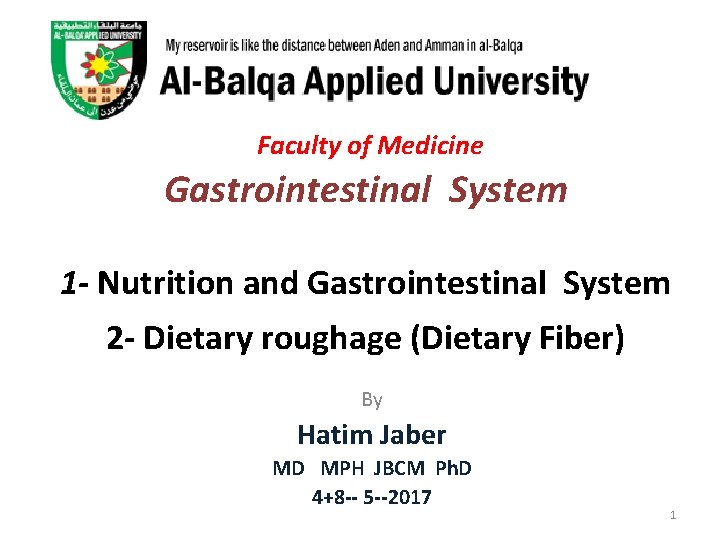
Faculty of Medicine Gastrointestinal System 1 Nutrition and


- Slides: 77
Faculty of Medicine Gastrointestinal System 1 - Nutrition and Gastrointestinal System 2 - Dietary roughage (Dietary Fiber) By Hatim Jaber MD MPH JBCM Ph. D 4+8 -- 5 --2017 1
Nutrition and Gastrointestinal System Presentation outline 4 -5 -2017 Time Introduction and Definitions 1300 to 13: 10 The use of nutritional terms, categorizing the nutrients as macro, micro, and essentials. 13: 10 to 13: 20 The use of Recommended Daily Allowance (RDA) tables. 13: 20 to 13: 25 Different preventive strategies to maintain good digestive health. General nutritional recommendations for patients with upper and lower gastrointestinal disorders. 13: 25 to 13: 30 to 13: 50 2
Nutrition definition • “The science/study of nutrients (that come from food), their action, interaction, and balance in relation to health and disease; and the process by which the organism (body) ingests, digests, absorbs, transports, utilizes and execrates food substances” • . . Science of food and its relationship to health… • . . Is a dynamic process in which the food that is consumed is utilized for nourishing the body. .
Background definitions • Nutrients: “Chemical substances in food that nourish the body by providing energy, building materials, and factors to regulate needed chemical reactions. ” • (Organic and inorganic complexes contained in food are called nutrients). • Essential nutrients: Must be provided by food because the body does not produce them in sufficient quantities or can not make them at all. • Nonessential nutrients: Healthy, well-nourished bodies can make them in sufficient quantities to satisfy their needs.
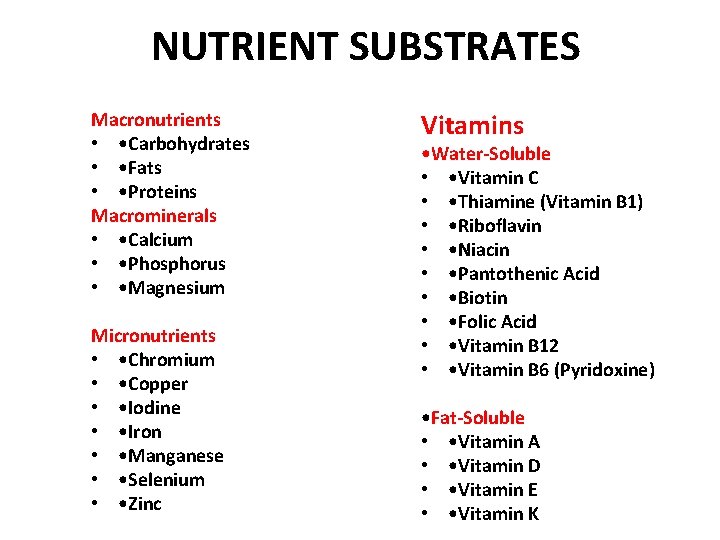
NUTRIENT SUBSTRATES Macronutrients • • Carbohydrates • • Fats • • Proteins Macrominerals • • Calcium • • Phosphorus • • Magnesium Micronutrients • • Chromium • • Copper • • Iodine • • Iron • • Manganese • • Selenium • • Zinc Vitamins • Water-Soluble • • Vitamin C • • Thiamine (Vitamin B 1) • • Riboflavin • • Niacin • • Pantothenic Acid • • Biotin • • Folic Acid • • Vitamin B 12 • • Vitamin B 6 (Pyridoxine) • Fat-Soluble • • Vitamin A • • Vitamin D • • Vitamin E • • Vitamin K
Adequate nutrition is characterized by: 1 -Daily intake of nutrients, which are (quantitatively and qualitatively). 2 -Adequate nutrition should consider physiological status and pathological disorders. 3 - Normal digestion, absorption, metabolism, excretion.
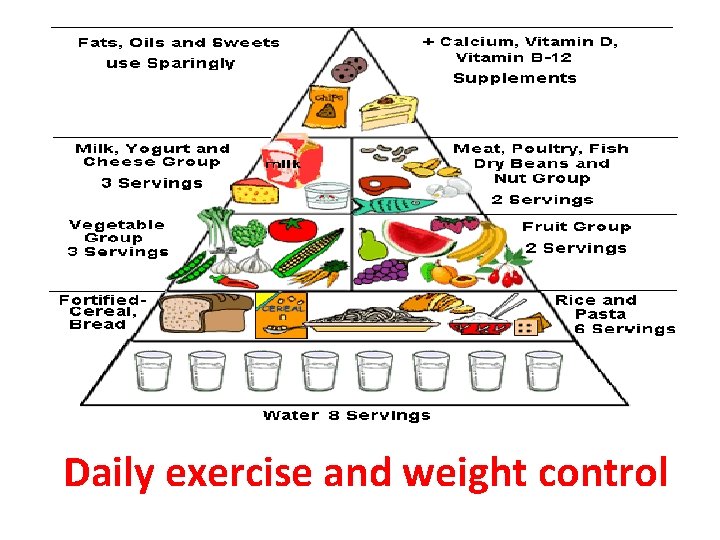
Daily exercise and weight control
NUTRITION AND HEALTH • Health professionals agree that the overall composition of the diet has an important effect on health. • Eating too much fat, sat. fat and cholesterol and not eating enough vegetables, fruits, and fiber has been linked to an increase in heart disease and other cancers. • In lean healthy people, death associated with weight loss >35%, protein storage loss >30%, and fat storage loss >70% •
NUTRITION AND HEALTH • Approximately one third of people in the general population complain of some gut-related symptoms, such as: - flatulence, bloating, heartburn, nausea, vomiting, constipation, diarrhea, food intolerance, incontinence, and abdominal pain. • While most physicians look at these gut-related symptoms in the context of the gastrointestinal (GI) diseases, gut-health related symptoms occur more often in the absence of demonstrable functional and structural diseases in the GI tract.
Vocabulary Digestion - mechanical & chemical breakdown of food into nutrients Metabolism - chemical reactions breaking down food and releasing energy from nutrients
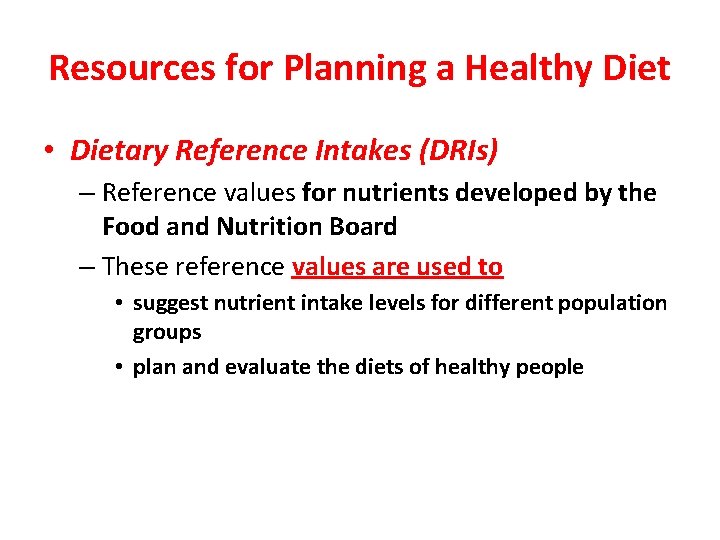
Resources for Planning a Healthy Diet • Dietary Reference Intakes (DRIs) – Reference values for nutrients developed by the Food and Nutrition Board – These reference values are used to • suggest nutrient intake levels for different population groups • plan and evaluate the diets of healthy people
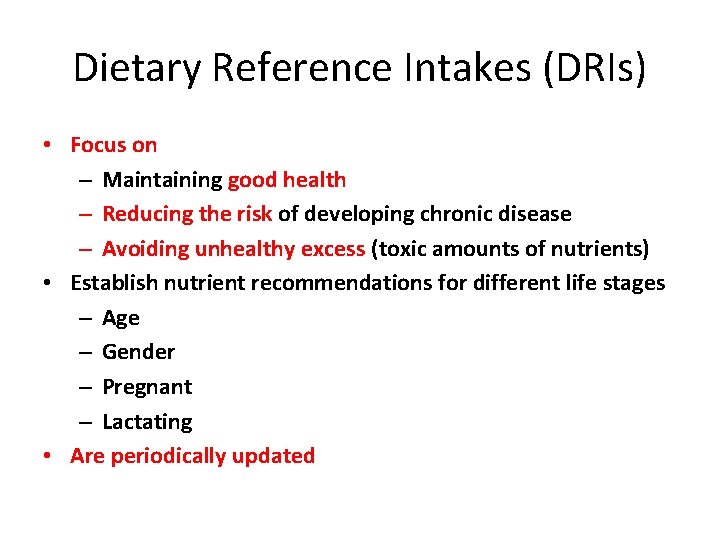
Dietary Reference Intakes (DRIs) • Focus on – Maintaining good health – Reducing the risk of developing chronic disease – Avoiding unhealthy excess (toxic amounts of nutrients) • Establish nutrient recommendations for different life stages – Age – Gender – Pregnant – Lactating • Are periodically updated
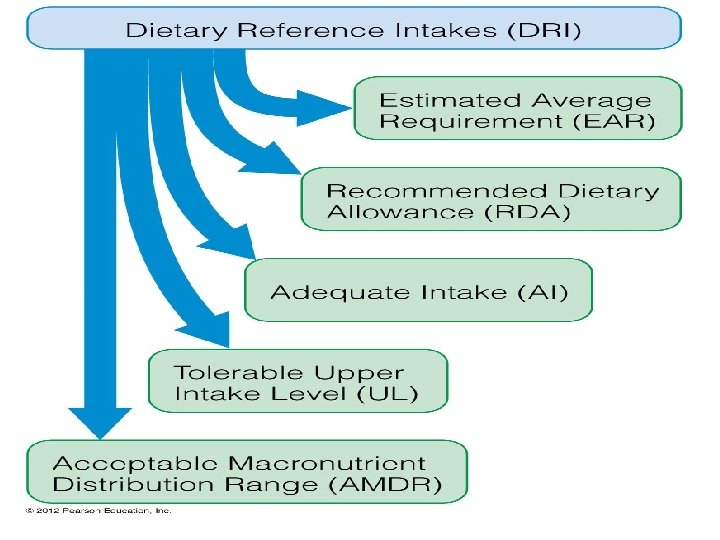
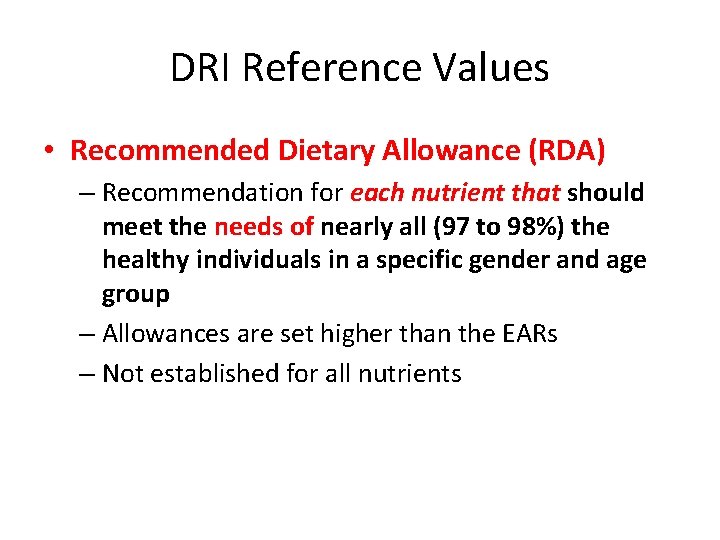
DRI Reference Values • Recommended Dietary Allowance (RDA) – Recommendation for each nutrient that should meet the needs of nearly all (97 to 98%) the healthy individuals in a specific gender and age group – Allowances are set higher than the EARs – Not established for all nutrients
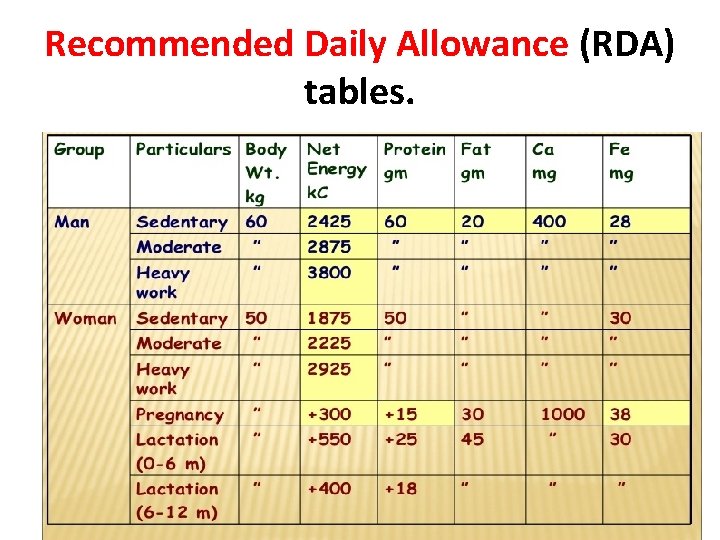
Recommended Daily Allowance (RDA) tables.
NUTRITION IN GI DISORDERS • Discuss nutrition in multiple gastrointestinal disorders
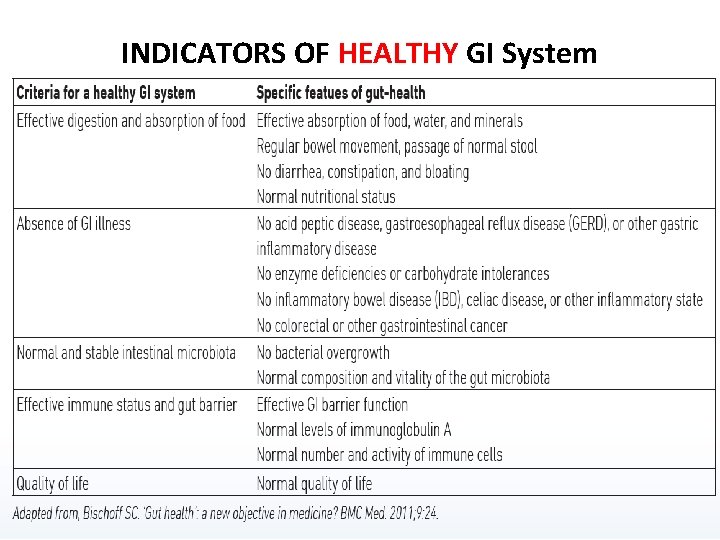
INDICATORS OF HEALTHY GI System
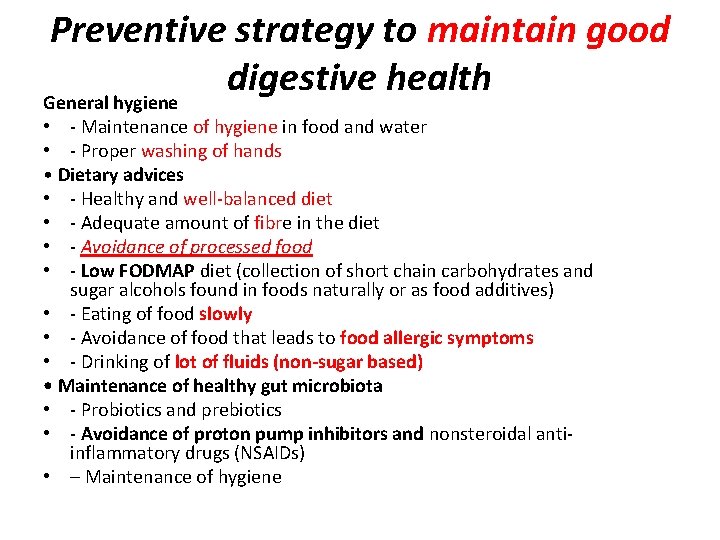
Preventive strategy to maintain good digestive health General hygiene • - Maintenance of hygiene in food and water • - Proper washing of hands • Dietary advices • - Healthy and well-balanced diet • - Adequate amount of fibre in the diet • - Avoidance of processed food • - Low FODMAP diet (collection of short chain carbohydrates and sugar alcohols found in foods naturally or as food additives) • - Eating of food slowly • - Avoidance of food that leads to food allergic symptoms • - Drinking of lot of fluids (non-sugar based) • Maintenance of healthy gut microbiota • - Probiotics and prebiotics • - Avoidance of proton pump inhibitors and nonsteroidal antiinflammatory drugs (NSAIDs) • – Maintenance of hygiene
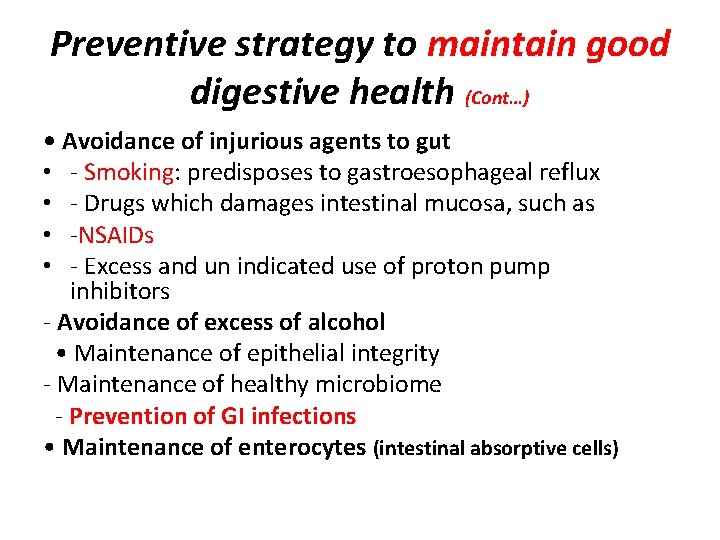
Preventive strategy to maintain good digestive health (Cont…) • Avoidance of injurious agents to gut • - Smoking: predisposes to gastroesophageal reflux • - Drugs which damages intestinal mucosa, such as • -NSAIDs • - Excess and un indicated use of proton pump inhibitors - Avoidance of excess of alcohol • Maintenance of epithelial integrity - Maintenance of healthy microbiome - Prevention of GI infections • Maintenance of enterocytes (intestinal absorptive cells)
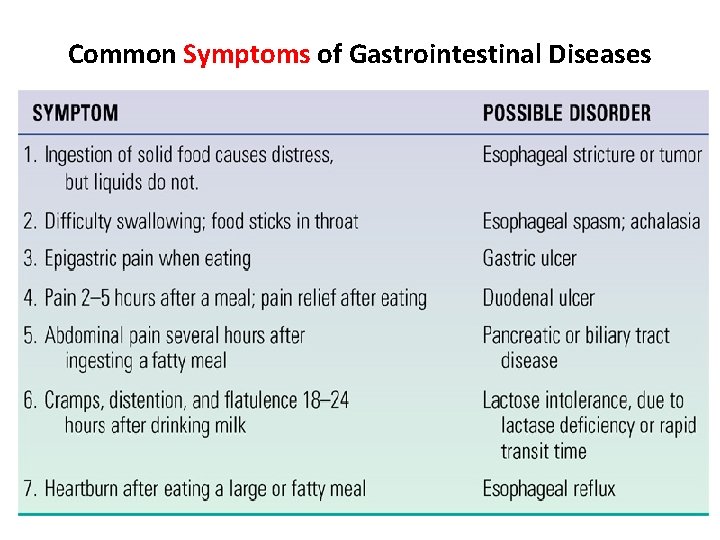
Common Symptoms of Gastrointestinal Diseases
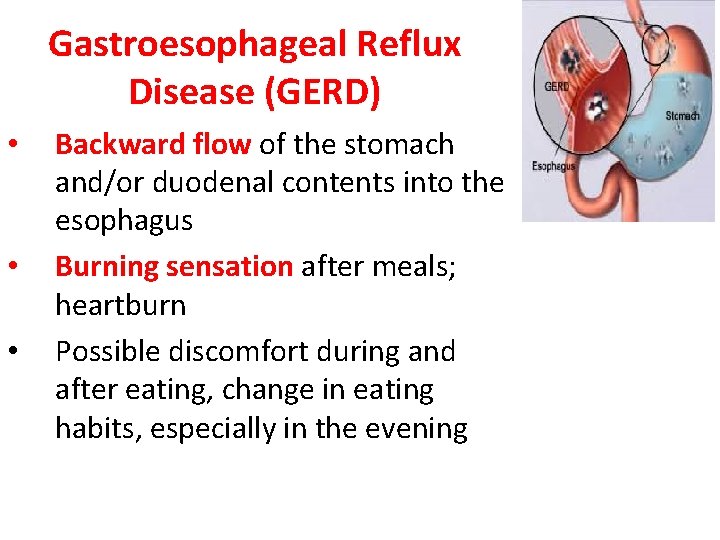
Gastroesophageal Reflux Disease (GERD) • • • Backward flow of the stomach and/or duodenal contents into the esophagus Burning sensation after meals; heartburn Possible discomfort during and after eating, change in eating habits, especially in the evening
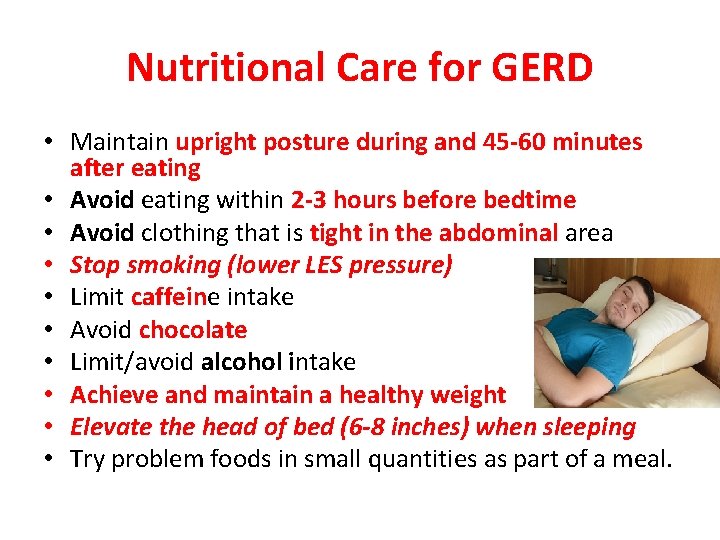
Nutritional Care for GERD • Maintain upright posture during and 45 -60 minutes after eating • Avoid eating within 2 -3 hours before bedtime • Avoid clothing that is tight in the abdominal area • Stop smoking (lower LES pressure) • Limit caffeine intake • Avoid chocolate • Limit/avoid alcohol intake • Achieve and maintain a healthy weight • Elevate the head of bed (6 -8 inches) when sleeping • Try problem foods in small quantities as part of a meal.
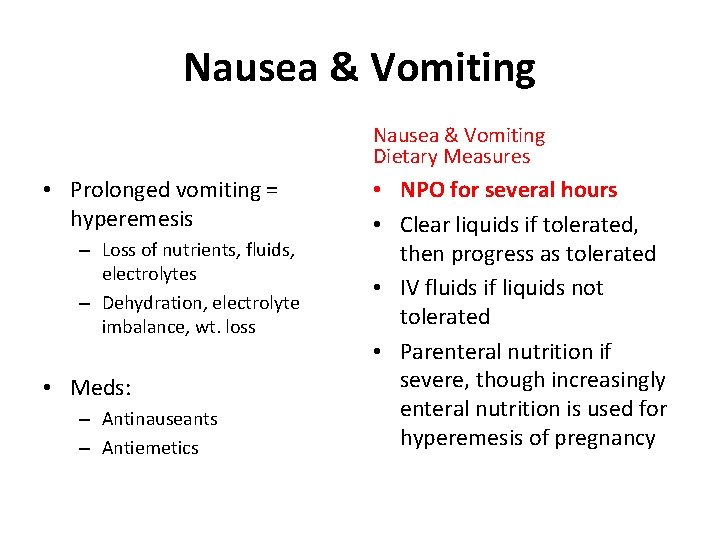
Nausea & Vomiting Dietary Measures • Prolonged vomiting = hyperemesis – Loss of nutrients, fluids, electrolytes – Dehydration, electrolyte imbalance, wt. loss • Meds: – Antinauseants – Antiemetics • NPO for several hours • Clear liquids if tolerated, then progress as tolerated • IV fluids if liquids not tolerated • Parenteral nutrition if severe, though increasingly enteral nutrition is used for hyperemesis of pregnancy
Dyspepsia Treatment • • Avoid offending foods Eat slowly Chew thoroughly Do not overindulge
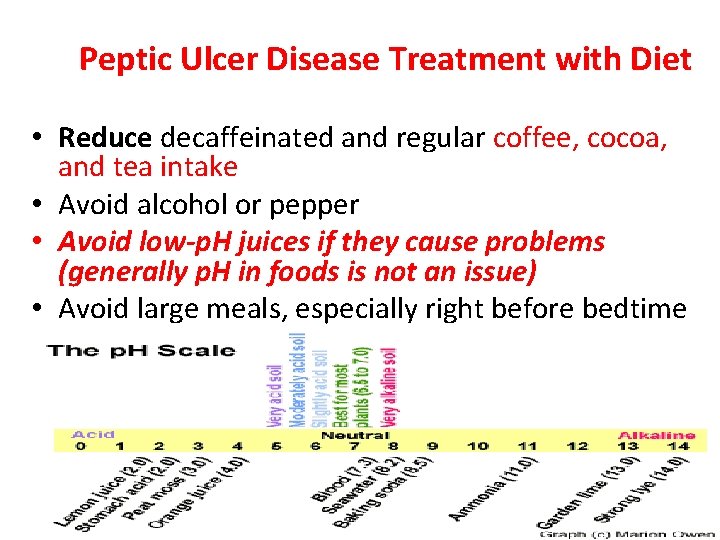
Peptic Ulcer Disease Treatment with Diet • Reduce decaffeinated and regular coffee, cocoa, and tea intake • Avoid alcohol or pepper • Avoid low-p. H juices if they cause problems (generally p. H in foods is not an issue) • Avoid large meals, especially right before bedtime
Peptic Ulcer Disease Treatment with Diet • Meal frequency is controversial: small, frequent meals may increase comfort but may also increase acid output • There is little evidence to support eliminating specific foods unless they cause repeated discomfort • Overall good nutritional status helps H. pylori
Dumping Syndrome • Complex physiologic response to the rapid emptying of hypertonic contents into the duodenum and jejunum • Dumping syndrome occurs as a result of total or subtotal gastrectomy and is associated with mild to severe symptoms including abdominal distention, systemic systems (bloating, flatulence, pain, diarrhea), and reactive hypoglycemia.
Dumping Syndrome – Dietary Treatment • Small meals spread throughout day • High protein (20%), moderate fat (30 – 40%), complex CHO as tolerated • Very small amts of concentrated sweets • Food and drink should be moderate in temperature • Use caution with high fiber foods – use pectin to decrease transit time, glucose absorption • Take liquids between meals in small amounts (1/2 to 1 cup)
Dumping Syndrome – Dietary Treatment • • Lactose transit – poorly tolerated Medium-chain triglycerides-steatorrhea Eat slowly, chew food thoroughly If dumping is a problem, have patient lie down 20 -30 minutes after meals to retard transit to small bowel
Principles of Nutritional Care • Intestinal disorders & symptoms: – Motility – Secretion – Absorption – Excretion • Dietary modifications – To alleviate symptoms – Correct nutritional deficiencies – Address primary problem – Must be individualized
Constipation • Defined as hard stools, straining with defecation, infrequent bowel movements • Normal frequency ranges from one stool q 3 days to 3 times a day • Occurs in 5% to more than 25% of the population, depending on how defined
Treatment of Constipation • Encourage physical activity as possible • Bowel training: encourage patient to respond to urge to defecate • Change drug regimen if possible if it is contributory • Use laxatives and stool softeners judiciously • Use stool bulking agents such as psyllium (metamucil) and pectin
MNT for Constipation • Depends on cause • Use high fiber or high residue diet as appropriate • If caused by medication, may be refractory to diet treatment
Inflammatory Bowel Disease • Crohn’s Disease and Ulcerative Colitis • Autoimmune diseases of unknown origin • Genetic component and environmental factors • Onset usually between 15 to 30 years of age
IBD Nutritional Management (acute) • Low-residue, low-fiber liquid diet • “Bowel rest” with parenteral nutrition • Enteral nutrition may have better success at inducing remission • Diet tailored to individual pt: • • Minimal residue for reducing diarrhea Limited fiber to prevent obstruction Small, frequent feedings Supplements , MCT with fat malabsorption
IBD Nutritional Management (chronic) • High protein, high calorie diet with oral supplements • Monitor vitamin-mineral status of iron, calcium, selenium, folate, thiamin, riboflavin, pyridoxine, vitamin B 12, zinc, magnesium, vitamins A, D, E • High fiber diet as tolerated • Avoid unnecessary restrictions
Diseases of Large Intestine • Irritable Bowel Syndrome • Diverticular Disease • Colon Cancer and Polyps
Irritable Bowel Syndrome (IBS) • Not a disease – syndrome • Abdominal pain, bloating, abnormal bowel movements – Alternating diarrhea, constipation – Abdominal pain, relieved by defecation – Bloating w/ feeling of excess flatulence – Feeling of incomplete evacuation – Rectal pain, mucus in the stool
WHAT IS THE ROLE OF FOOD IN IBS? • Irritable bowel syndrome (IBS) is common, with a pooled global prevalence of 11. 2%. • The etiology of IBS is not entirely clear, but 40% to 84% of IBS patients believe that food-items are important triggers of their gastrointestinal symptoms.
IBS: Incidence in U. S. 20% of women ~10 – 15% of men 20 – 40% of visits to gastroenterologists One of the most common reason pts first seek medical care • Increased absenteeism, decreased productivity • •
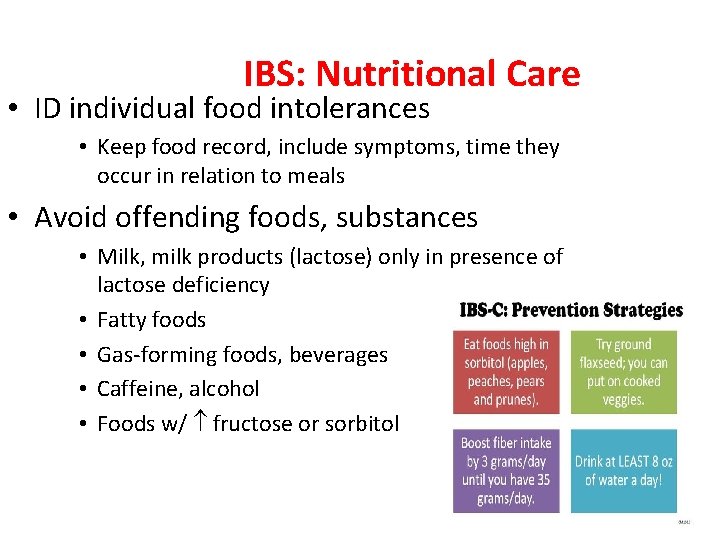
IBS: Nutritional Care • ID individual food intolerances • Keep food record, include symptoms, time they occur in relation to meals • Avoid offending foods, substances • Milk, milk products (lactose) only in presence of lactose deficiency • Fatty foods • Gas-forming foods, beverages • Caffeine, alcohol • Foods w/ fructose or sorbitol
IBS: Nutritional Care • Eat small frequent meals at relaxed pace, regular times • Gradually add dietary fiber to diet – 20 – 30 g – Fiber supplements may help (psyllium) • Fluids – 2 – 3 qts w/ fiber supp. • Regular physical activity to reduce stress
WHAT IS THE ROLE OF FOOD IN IBS? • Irritable bowel syndrome (IBS) is common, with a pooled global prevalence of 11. 2%. • The etiology of IBS is not entirely clear, but 40% to 84% of IBS patients believe that food-items are important triggers of their gastrointestinal symptoms.
What are FODMAPs? • FODMAPs are a collection of short chain carbohydrates and sugar alcohols found in foods naturally or as food additives. FODMAP is an acronym that stands for: • Fermentable – meaning they are broken down (fermented) by bacteria in the large bowel • Oligosaccharides – “oligo” means “few” and “saccharide” means sugar. These molecules made up of individual sugars joined together in a chain • Disaccharides – “di” means two. This is a double sugar molecule. • Monosaccharides – “mono” means single. This is a single-sugar molecule. • And • Polyols – these are sugar alcohols (however don’t lead to intoxication!)
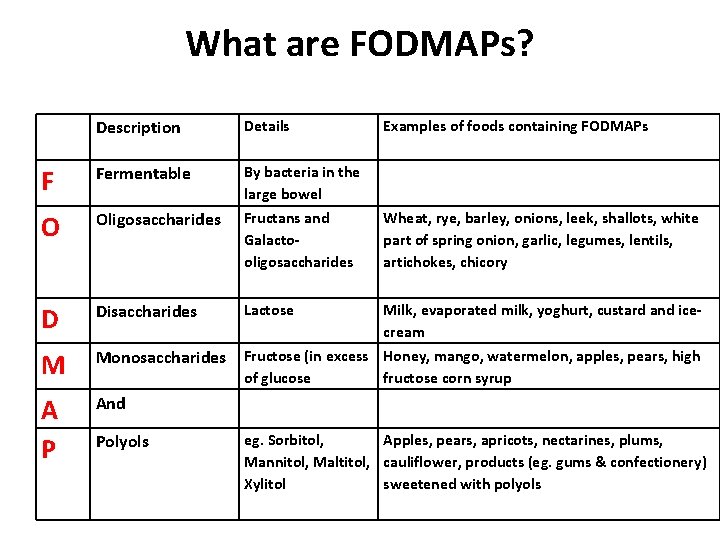
What are FODMAPs? Description Details Examples of foods containing FODMAPs F Fermentable O Oligosaccharides By bacteria in the large bowel Fructans and Galactooligosaccharides Wheat, rye, barley, onions, leek, shallots, white part of spring onion, garlic, legumes, lentils, artichokes, chicory D Disaccharides Lactose M Monosaccharides A P And Polyols Milk, evaporated milk, yoghurt, custard and icecream Fructose (in excess Honey, mango, watermelon, apples, pears, high of glucose fructose corn syrup eg. Sorbitol, Apples, pears, apricots, nectarines, plums, Mannitol, Maltitol, cauliflower, products (eg. gums & confectionery) Xylitol sweetened with polyols
Lower GI Disorders Summary • Food intolerances should be dealt with individually • Patients should be encouraged to follow the least restrictive diet possible • Patients should be re-evaluated frequently and the diet advanced as appropriate
Dietary roughage (Dietary Fiber) Presentation outline 8 -5 -2017 Time Introduction and Definitions 1000 to 10: 10 Mechanism by which dietary fibers affect normal functions. 10: 10 to 10: 20 Effect of fiber on nutrient absorption rates. 10: 20 to 10: 30 The beneficial effects of dietary fiber in disease prevention and management. 10: 30 to 10: 50 47
DIETARY FIBER; DEFINITION, • Dietary fiber is the edible parts of plants or analogous carbohydrates that are resistant to digestion and absorption by the human intestine. • Dietary fiber includes: - polysaccharides oligosaccharides, - lignin, and - associated plant substances.
Fiber • Fiber is the structural part of plants and is found in vegetables, fruits, grains and legumes. • Most dietary fibers are polysaccharides, like starch, but they are not digestible. • The human body lacks the enzymes needed to digest and absorb fiber. • As a result fibers reach the lower intestine intact where intestinal bacteria can ferment some fiber.
Dietary fibre was known as ‘ﺍﻟﻨﺨﺎﻟﺔ roughage’. • It comprises groups of substances in plant foods which cannot be completely broken down by human digestive enzymes, including lignin, polysaccharides such as cellulose and pectin. • It was originally thought that dietary fibre was not digestible and did not provide any energy. • It is now known fibre is fermented in the large intestine by gut bacteria to provide a small amount of energy (2 kcal/8 k. J per gram • Sources include wholegrain cereals and cereal products, vegetables, fruits, nuts, beans, lentils, potatoes
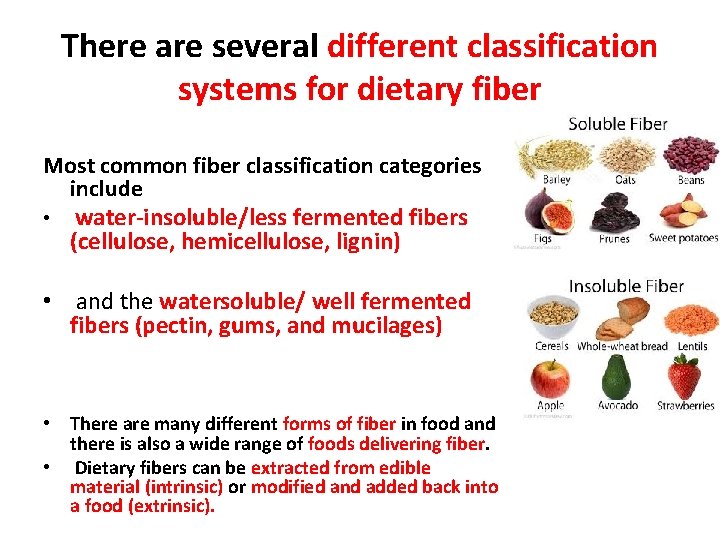
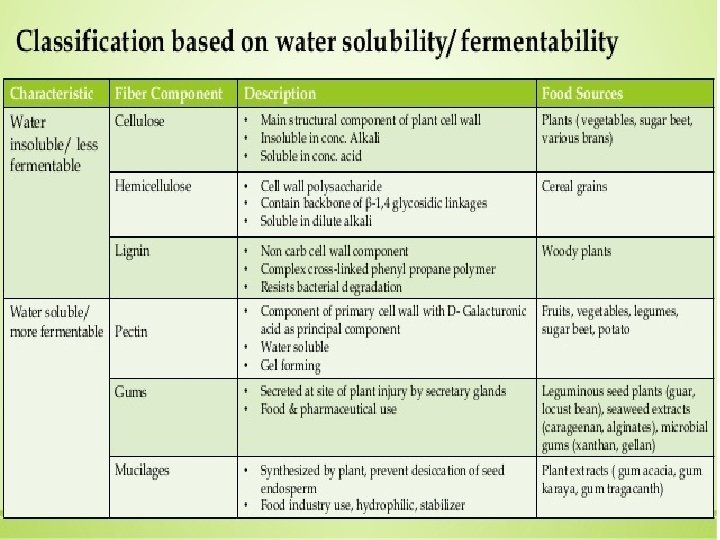
There are several different classification systems for dietary fiber Most common fiber classification categories include • water-insoluble/less fermented fibers (cellulose, hemicellulose, lignin) • and the watersoluble/ well fermented fibers (pectin, gums, and mucilages) • There are many different forms of fiber in food and there is also a wide range of foods delivering fiber. • Dietary fibers can be extracted from edible material (intrinsic) or modified and added back into a food (extrinsic).
Soluble Fibers • Soluble fibers dissolve in water, form gels and are easily digested by bacteria in the lower intestine. – Provides a feeling of fullness. – Slow down the rate food leaves the stomach. – May have a role with heart disease, diabetes and colon cancer – Soluble fibers may also protect against colon cancer • Found in legumes and fruits
Insoluble Fiber • Insoluble fibers absorb water and swell up resulting in a larger softer stool that is easier and quicker to pass. – Provides a feeling of fullness – Helps with intestinal function – May help with colon cancer • Found in grains and vegetables
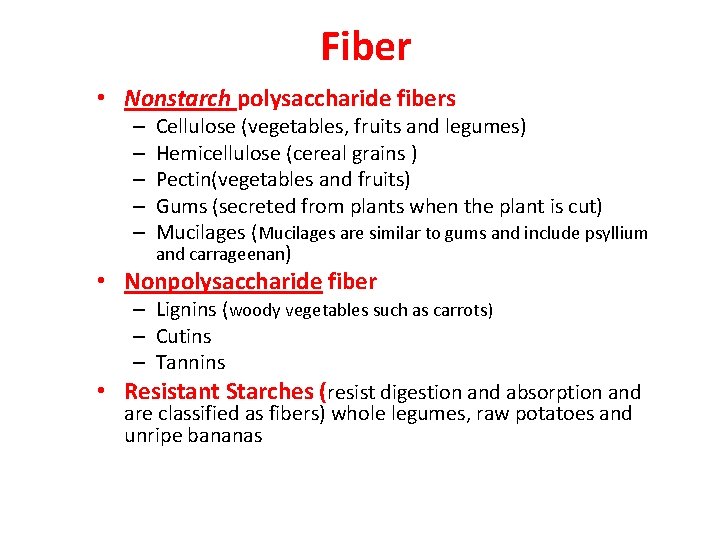
Fiber • Nonstarch polysaccharide fibers – – – Cellulose (vegetables, fruits and legumes) Hemicellulose (cereal grains ) Pectin(vegetables and fruits) Gums (secreted from plants when the plant is cut) Mucilages (Mucilages are similar to gums and include psyllium and carrageenan) • Nonpolysaccharide fiber – Lignins (woody vegetables such as carrots) – Cutins – Tannins • Resistant Starches (resist digestion and absorption and are classified as fibers) whole legumes, raw potatoes and unripe bananas
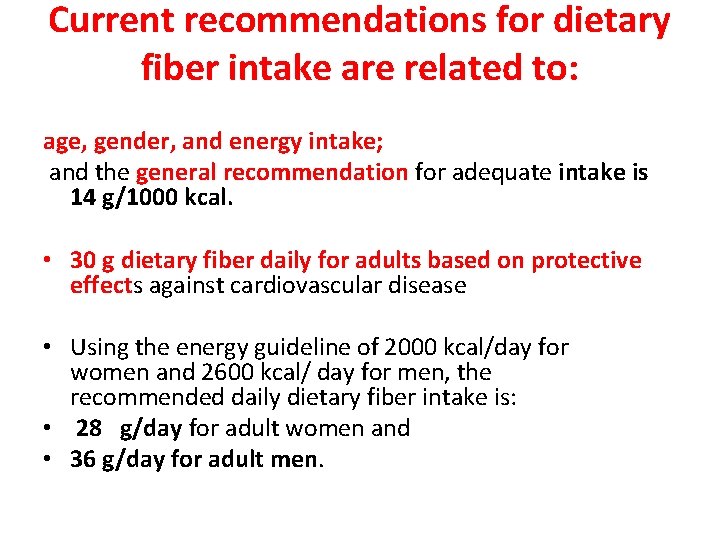
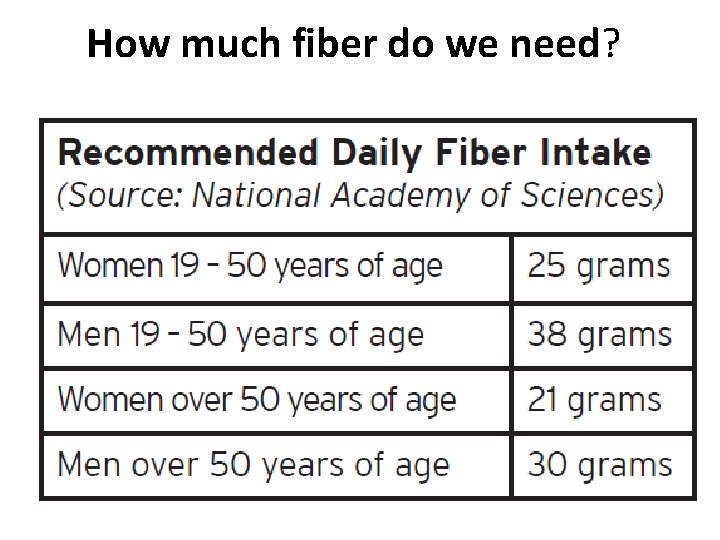
Current recommendations for dietary fiber intake are related to: age, gender, and energy intake; and the general recommendation for adequate intake is 14 g/1000 kcal. • 30 g dietary fiber daily for adults based on protective effects against cardiovascular disease • Using the energy guideline of 2000 kcal/day for women and 2600 kcal/ day for men, the recommended daily dietary fiber intake is: • 28 g/day for adult women and • 36 g/day for adult men.
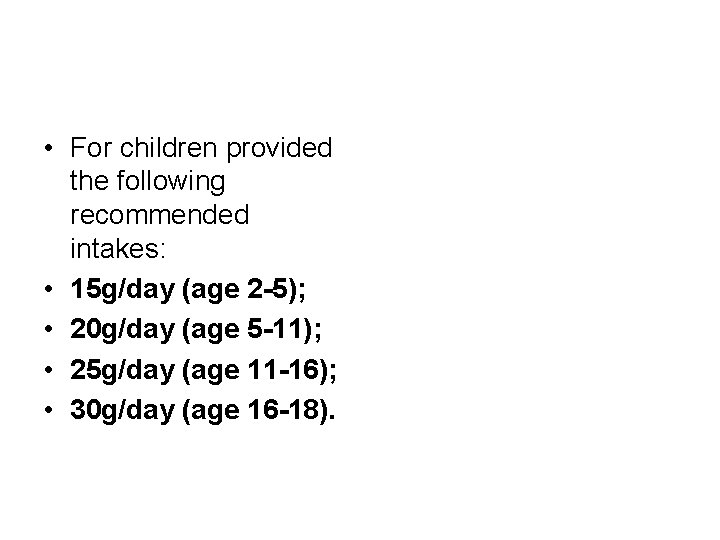
• For children provided the following recommended intakes: • 15 g/day (age 2 -5); • 20 g/day (age 5 -11); • 25 g/day (age 11 -16); • 30 g/day (age 16 -18).
How much fiber do we need?
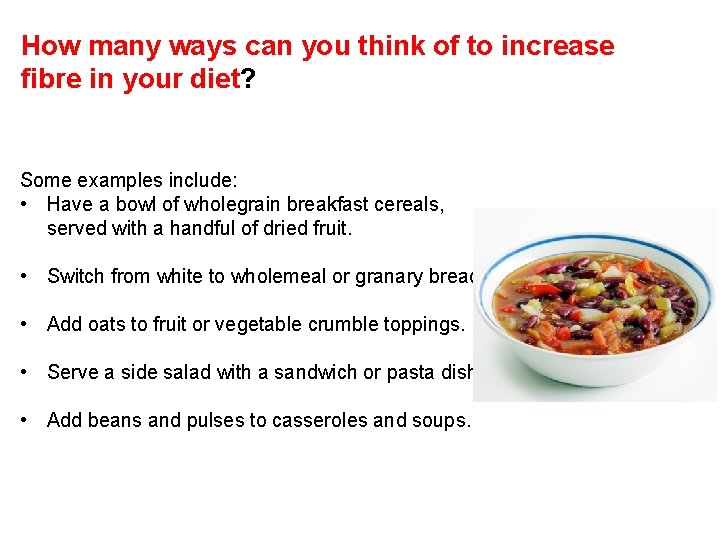
How many ways can you think of to increase fibre in your diet? Some examples include: • Have a bowl of wholegrain breakfast cereals, served with a handful of dried fruit. • Switch from white to wholemeal or granary bread. • Add oats to fruit or vegetable crumble toppings. • Serve a side salad with a sandwich or pasta dish. • Add beans and pulses to casseroles and soups.
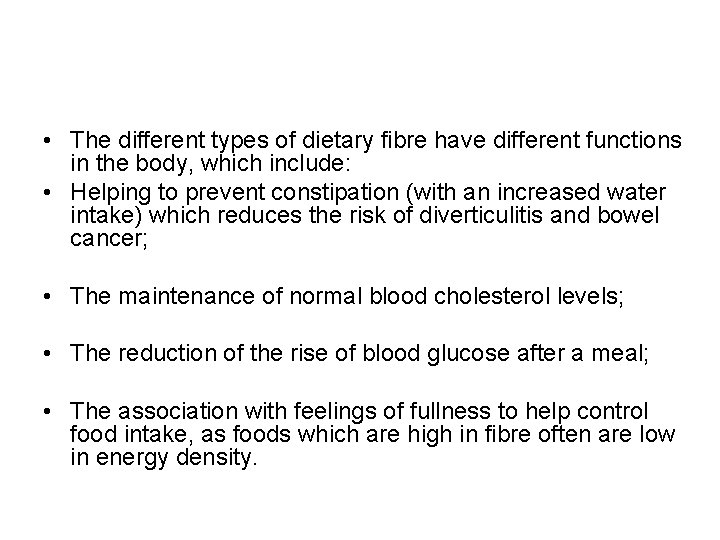
• The different types of dietary fibre have different functions in the body, which include: • Helping to prevent constipation (with an increased water intake) which reduces the risk of diverticulitis and bowel cancer; • The maintenance of normal blood cholesterol levels; • The reduction of the rise of blood glucose after a meal; • The association with feelings of fullness to help control food intake, as foods which are high in fibre often are low in energy density.
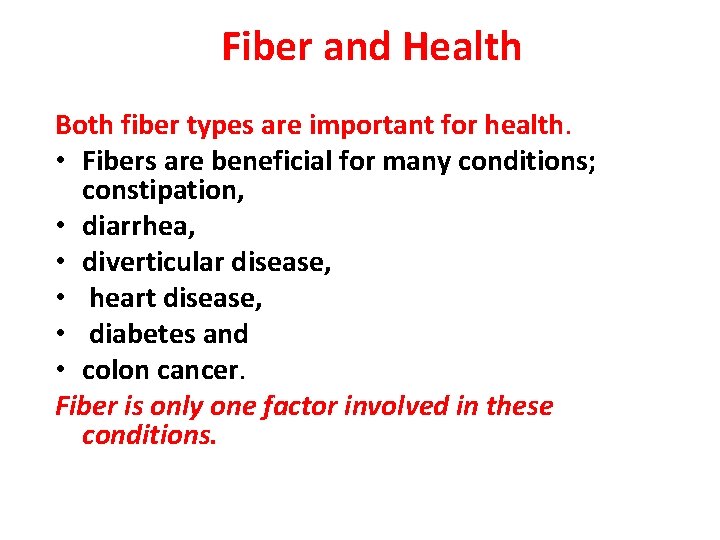
Fiber and Health Both fiber types are important for health. • Fibers are beneficial for many conditions; constipation, • diarrhea, • diverticular disease, • heart disease, • diabetes and • colon cancer. Fiber is only one factor involved in these conditions.
Fiber and Health • Foods high fiber have many factors that may be factors in lowering disease risk. – High fiber – Low in fat – High vitamins (antioxidants) – High in minerals – High in phytochemicals
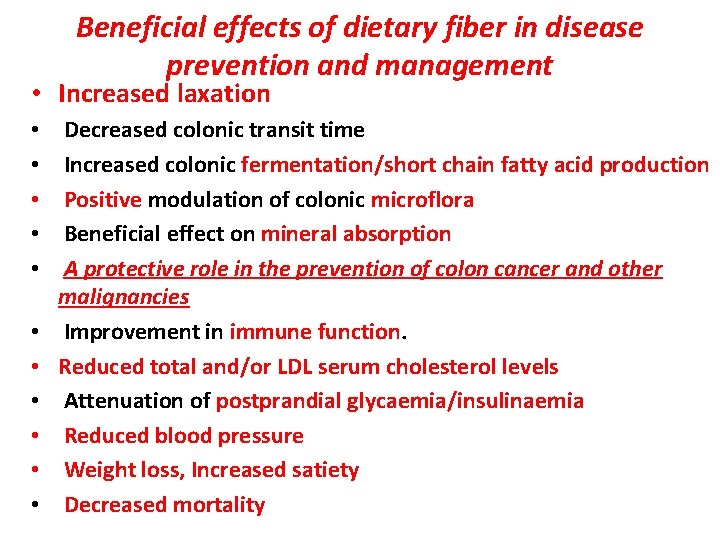
Beneficial effects of dietary fiber in disease prevention and management • Increased laxation • • • Decreased colonic transit time Increased colonic fermentation/short chain fatty acid production Positive modulation of colonic microflora Beneficial effect on mineral absorption A protective role in the prevention of colon cancer and other malignancies Improvement in immune function. Reduced total and/or LDL serum cholesterol levels Attenuation of postprandial glycaemia/insulinaemia Reduced blood pressure Weight loss, Increased satiety Decreased mortality
Role of Fiber in Digestion and Absorption • • Prevent constipation Increase fecal volume Decrease GI transit time Slowed or decreased nutrient absorption Bind cholesterol and minerals Reduce the risk of cancer and GBS Modify serum lipid concentrations – Short-chain fatty acids
Question True or false? • Dietary fibre is not digested in the small intestine. • True. Dietary fibre is not digested in the small intestine but may be fermented in the colon. • Dietary fibre is found in plant foods only. • True. Dietary fibre is a type of carbohydrate found exclusively in plants.
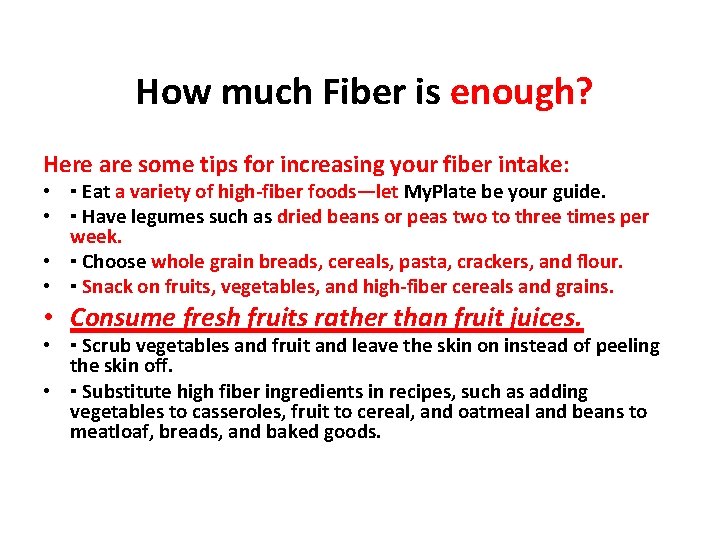
How much Fiber is enough? Here are some tips for increasing your fiber intake: • ▪ Eat a variety of high-fiber foods—let My. Plate be your guide. • ▪ Have legumes such as dried beans or peas two to three times per week. • ▪ Choose whole grain breads, cereals, pasta, crackers, and flour. • ▪ Snack on fruits, vegetables, and high-fiber cereals and grains. • Consume fresh fruits rather than fruit juices. • ▪ Scrub vegetables and fruit and leave the skin on instead of peeling the skin off. • ▪ Substitute high fiber ingredients in recipes, such as adding vegetables to casseroles, fruit to cereal, and oatmeal and beans to meatloaf, breads, and baked goods.
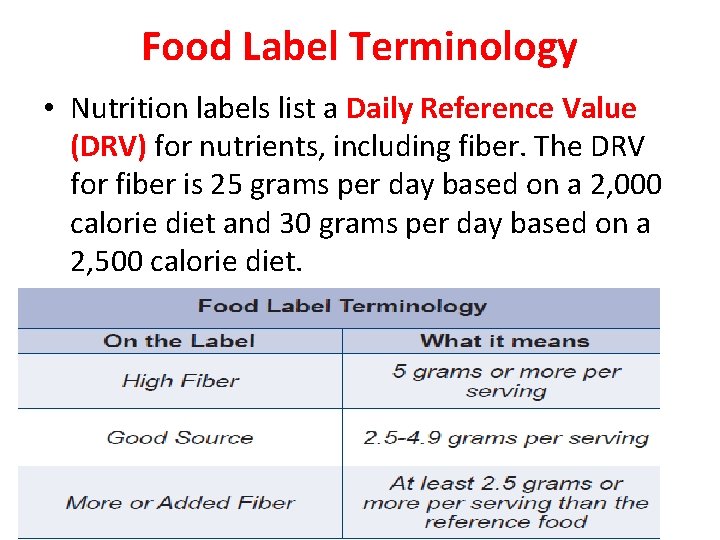
Food Label Terminology • Nutrition labels list a Daily Reference Value (DRV) for nutrients, including fiber. The DRV for fiber is 25 grams per day based on a 2, 000 calorie diet and 30 grams per day based on a 2, 500 calorie diet.
Intestinal Function • Insoluble fibers absorb water resulting in a larger, softer stool that is faster and easier to eliminate, which can help with: – Constipation – Hemorrhoids – Diverticular disease
Colon Cancer • Both insoluble and soluble fibers may protect against colon cancer – Insoluble fibers absorb water making a larger, softer stool which can: • Dilute potential carcinogens • Reduce transit time so the colon is exposed to any cancer causing substance for less time. – Soluble fibers can bind bile acids, potential carcinogens, and increase their excretion.
Heart Disease • As mentioned, soluble fibers can bind to bile acids and increase their excretion. • With fewer bile acids in the intestine, less fat is absorbed. • Also by increasing bile acid excretion, the liver must use its cholesterol to make new bile acids.
Diabetes • Soluble fibers may have a favorable effect on blood glucose. • Soluble fibers decrease the rate at which food is released from the stomach and delays glucose absorption into the blood. • This may help prevent wide swings in blood glucose throughout the day.
Weight Management • Foods rich in complex carbohydrates tend to be low in fat and added sugars which can help with weight management by providing fewer calories. • In addition, as fibers absorb water they swell up creating a feeling of fullness and delaying hunger.
How Much Fiber • The National Research Council set a Dietary Reference Intake (DRI) for dietary fiber. • An adequate Intake (AI) for dietary fiber was set at 14 grams dietary fiber per 1, 000 calories. – Thus for a reference 2, 000 calorie diet recommended intake would be 28 grams per day.
Too Much Fiber • Dietary fiber can bind some minerals and decrease their absorption. • However, if mineral intake is adequate a recommended dietary fiber intake will not compromise mineral balance. • Fiber intake is like all nutrients - “more” is not always “better. ” Consuming a diet that provides a variety of nutrients is the key.
Food Sources of Fiber • Foods are the best source of fiber, get both soluble and insoluble fiber. • Food sources of fiber include fruits, vegetables, whole grain products, legumes, nuts and seeds. • Cooking processing and removing peels can lower fiber content.