
Lecture series Gastrointestinal tract Dr Pradeep Kumar Professor
- Slides: 43
Lecture series Gastrointestinal tract Dr Pradeep Kumar, Professor department of physiology, KGMU, Lucknow
LECTURE-a-3 Gastrointestinal tract pancreatic secretions : its function and regulation
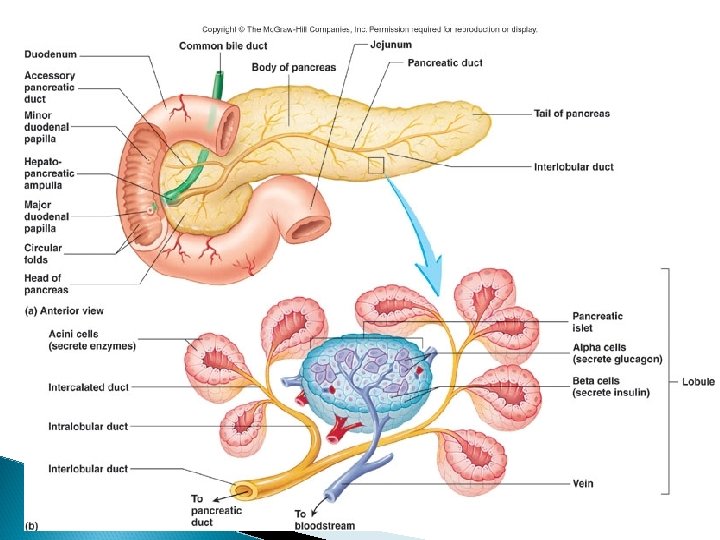
Pancreas (Essential exocrine gland) Gland with both exocrine and endocrine functions Location: retro-peritoneum, 2 nd lumbar vertebral level 15 -25 cm long 60 -100 g Extends in an oblique, transverse position
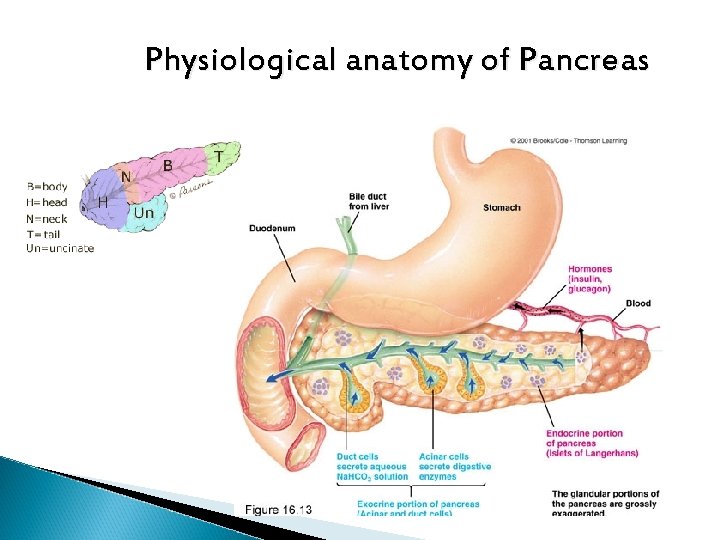
Physiological anatomy of Pancreas
Exocrine pancreatic secretions The pancreas acts as an exocrine gland by producing pancreatic juice which empties into the small intestine at hepato pancreatic ampulla The pancreas also acts as an endocrine gland to produce insulin.
Basic functions of pancreatic secretions It plays an important role: in digestion of lipids proteins and carbohydrates, in metabolism since it produces insulin and other hormones. in neutralizing the p. H to become suitable for the action of the pancreatic digestive enzymes.
Composition of normal human pancreatic juice Cations: Na + , K + , Ca 2+ , Mg 2+ (p. H approximately 8. 0) Anions: HCO 3 − , Cl − , SO 4 2− , HPO 4 2− Digestive enzymes (95% of protein in juice) Exocrine cells –produce 1200 to 1500 ml pancreatic juice /day
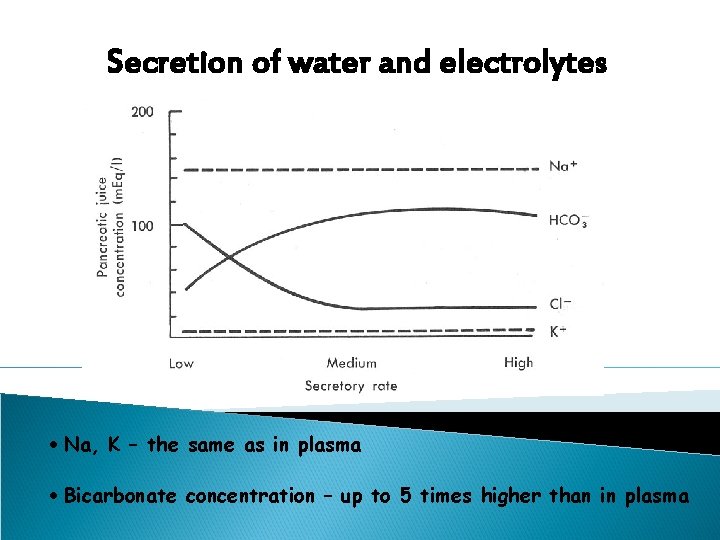
Secretion of water and electrolytes Na, K – the same as in plasma Bicarbonate concentration – up to 5 times higher than in plasma
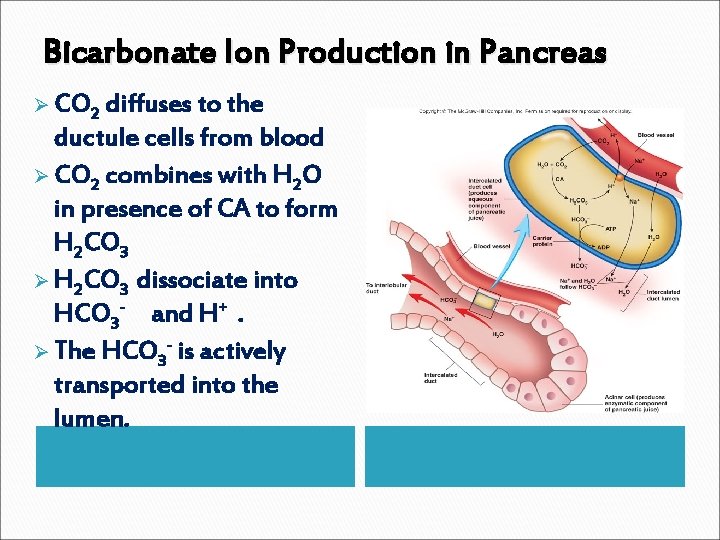
Bicarbonate Ion Production in Pancreas Ø CO 2 diffuses to the ductule cells from blood Ø CO 2 combines with H 2 O in presence of CA to form H 2 CO 3 Ø H 2 CO 3 dissociate into HCO 3 - and H+. Ø The HCO 3 - is actively transported into the lumen.
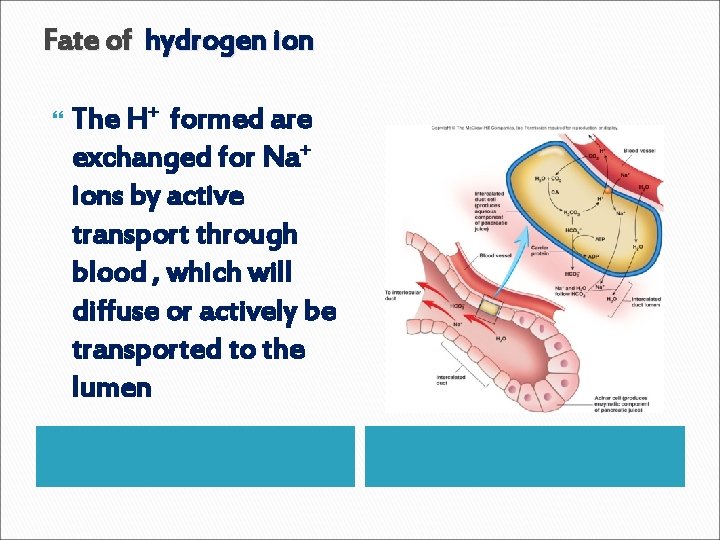
Fate of hydrogen ion The H+ formed are exchanged for Na+ ions by active transport through blood , which will diffuse or actively be transported to the lumen
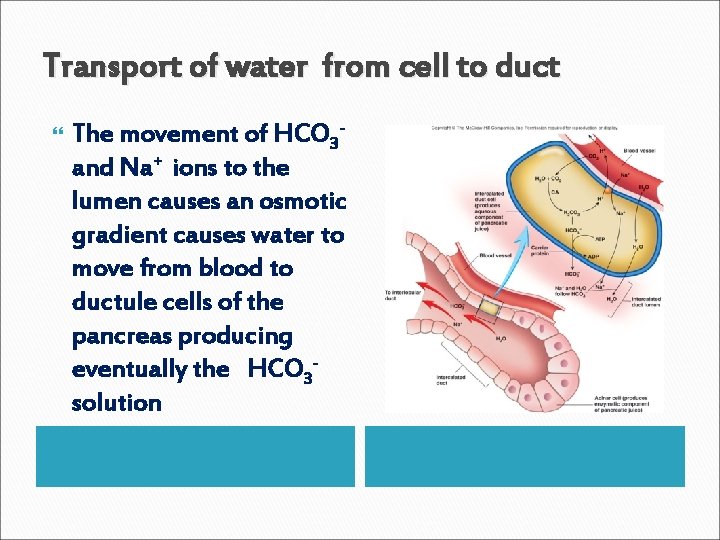
Transport of water from cell to duct The movement of HCO 3 and Na+ ions to the lumen causes an osmotic gradient causes water to move from blood to ductule cells of the pancreas producing eventually the HCO 3 solution
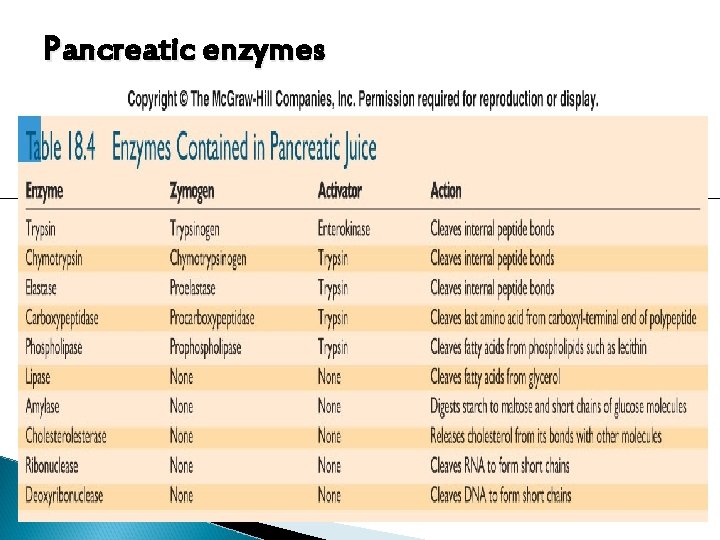
Pancreatic enzymes
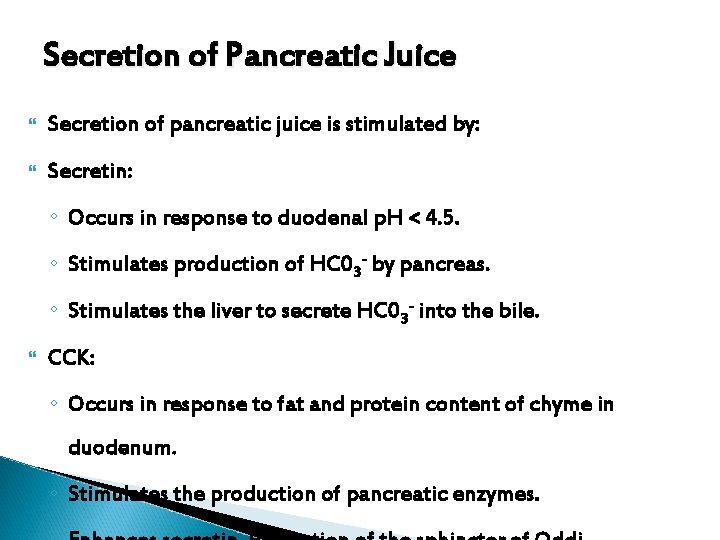
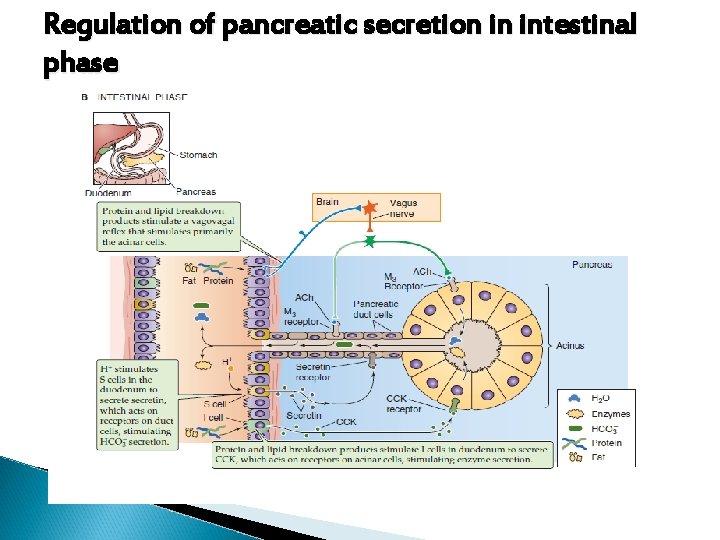
Secretion of Pancreatic Juice Secretion of pancreatic juice is stimulated by: Secretin: ◦ Occurs in response to duodenal p. H < 4. 5. ◦ Stimulates production of HC 03 - by pancreas. ◦ Stimulates the liver to secrete HC 03 - into the bile. CCK: ◦ Occurs in response to fat and protein content of chyme in duodenum. ◦ Stimulates the production of pancreatic enzymes.
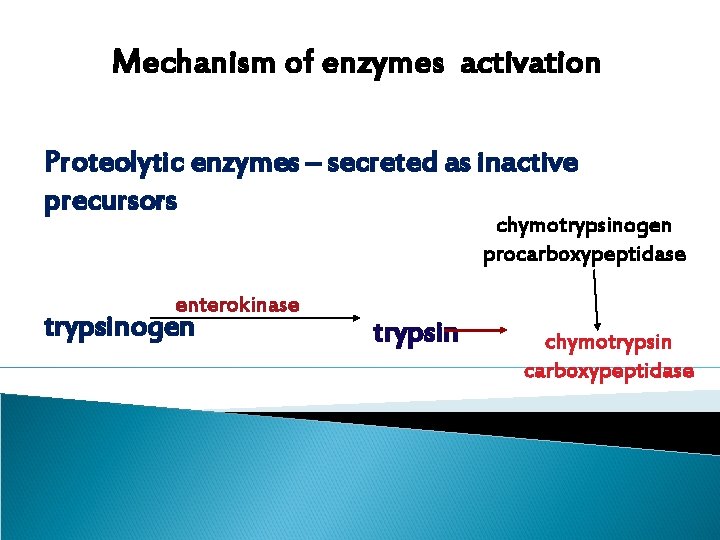
Mechanism of enzymes activation Proteolytic enzymes – secreted as inactive precursors chymotrypsinogen procarboxypeptidase enterokinase trypsinogen trypsin chymotrypsin carboxypeptidase
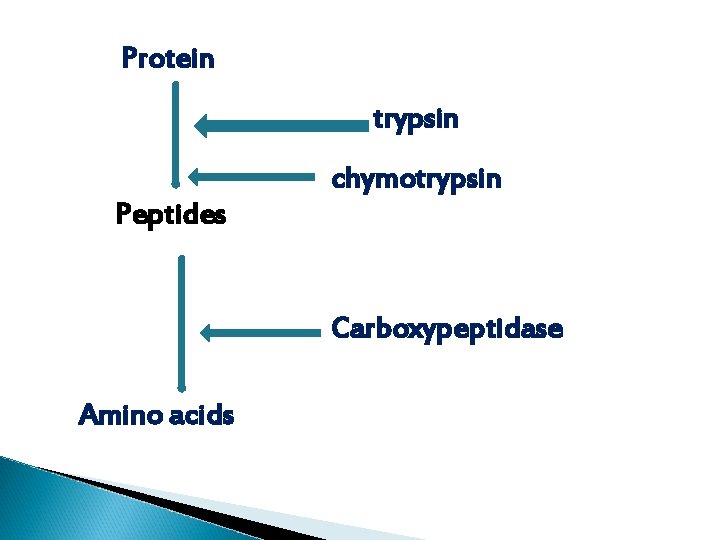
Protein trypsin chymotrypsin Peptides Carboxypeptidase Amino acids
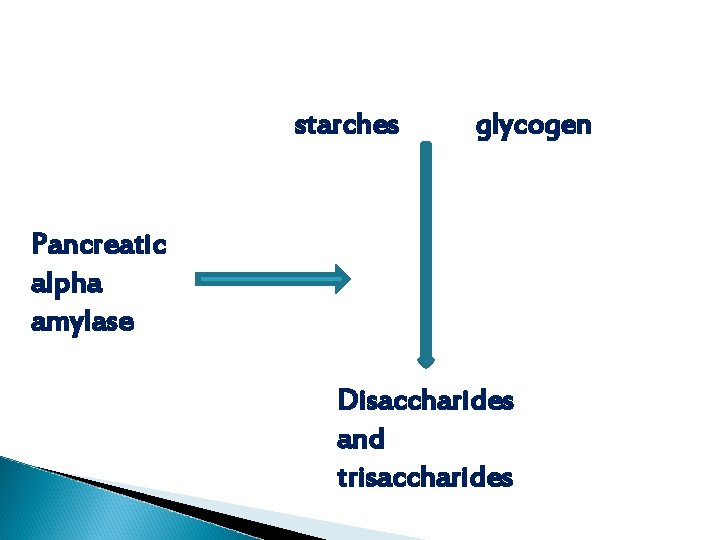
starches glycogen Pancreatic alpha amylase Disaccharides and trisaccharides
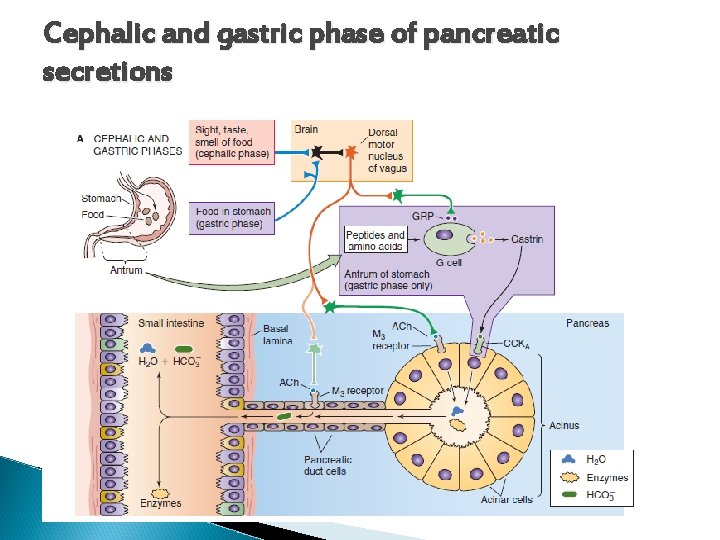
Cephalic and gastric phase of pancreatic secretions
Regulation of pancreatic secretion in intestinal phase
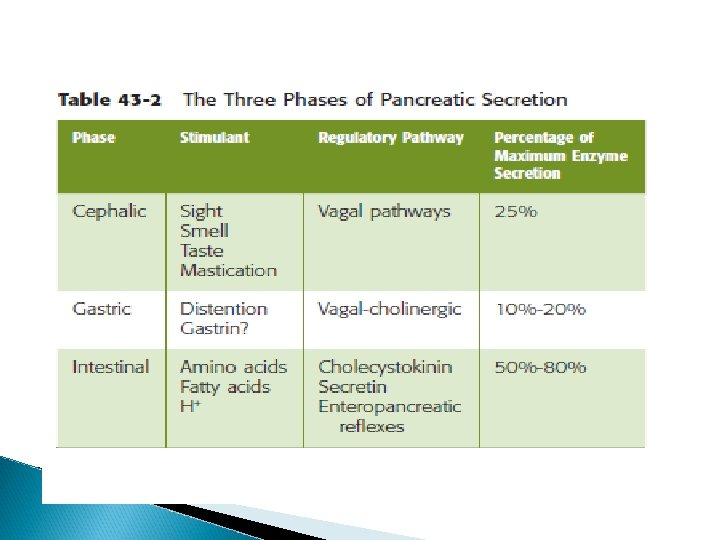
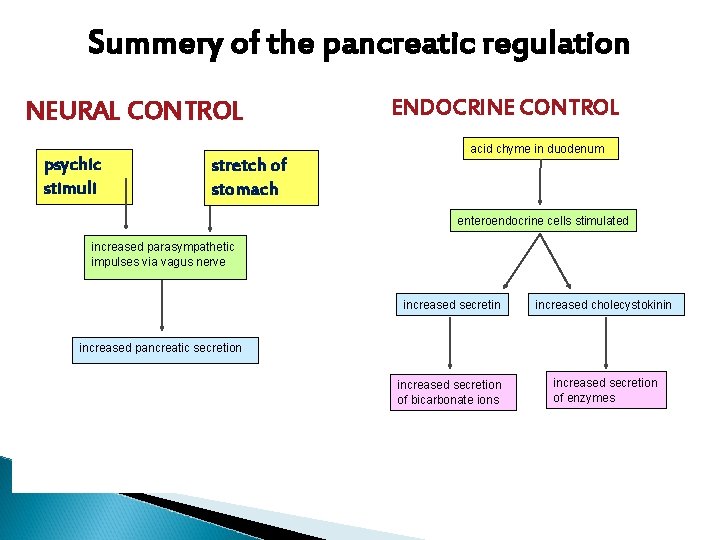
Summery of the pancreatic regulation NEURAL CONTROL psychic stimuli stretch of stomach ENDOCRINE CONTROL acid chyme in duodenum enteroendocrine cells stimulated increased parasympathetic impulses via vagus nerve increased secretin increased cholecystokinin increased secretion of bicarbonate ions increased secretion of enzymes increased pancreatic secretion
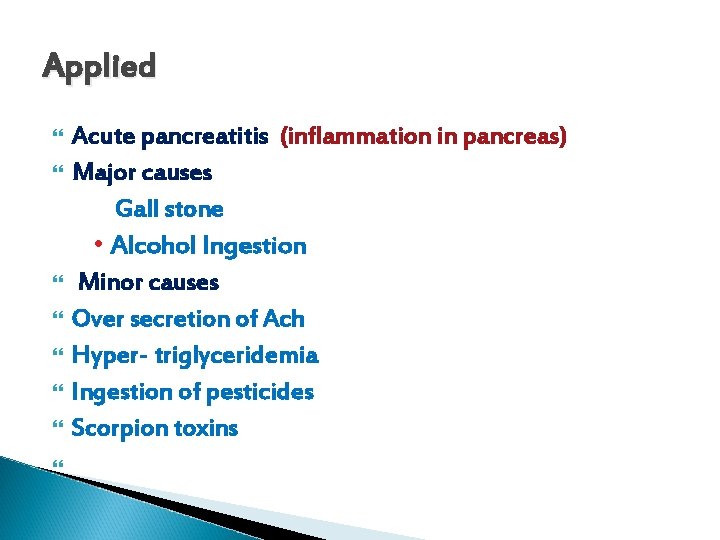
Applied Acute pancreatitis (inflammation in pancreas) Major causes Gall stone • Alcohol Ingestion Minor causes Over secretion of Ach Hyper- triglyceridemia Ingestion of pesticides Scorpion toxins
References Lippincott’s Illustrated Reviews: Physiology (2013) Medical Physiology, UPDATED SECOND EDITION (Walter F. Boron, MD, Ph. D) BERNE & LEVY, PHYSIOLOGY, SIXTH EDITION, UPDATED EDITION Ganong’s Review of Medical Physiology, T W E N T Y -F O U R T HEDITION
MCQs
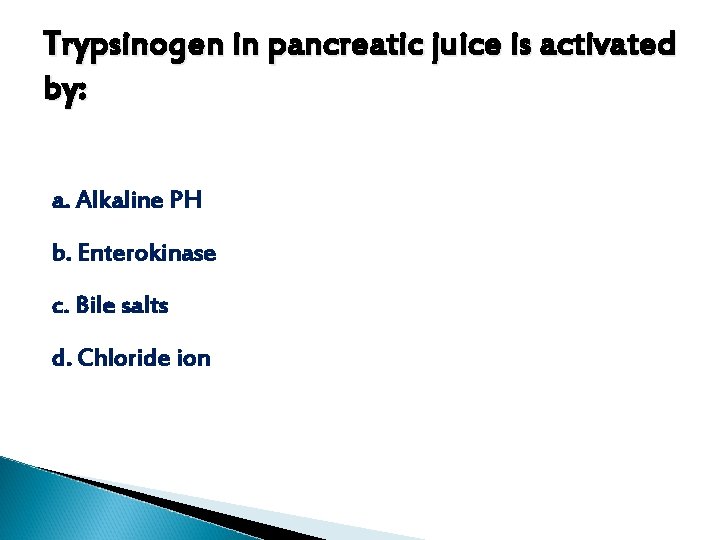
Trypsinogen in pancreatic juice is activated by: a. Alkaline PH b. Enterokinase c. Bile salts d. Chloride ion
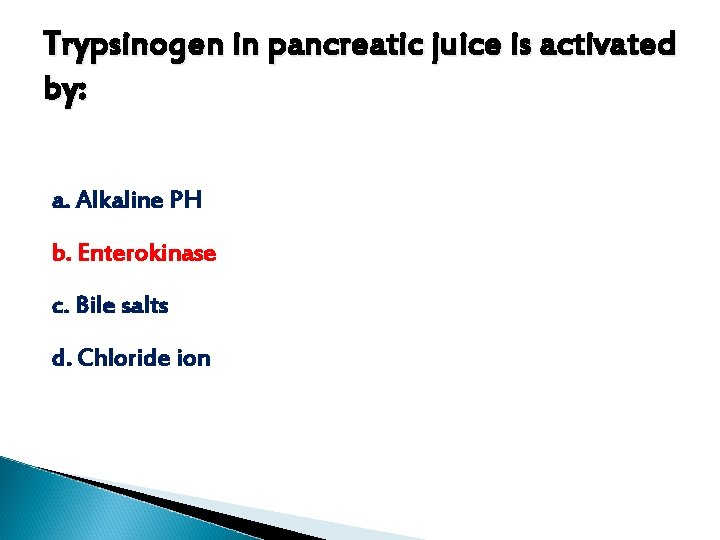
Trypsinogen in pancreatic juice is activated by: a. Alkaline PH b. Enterokinase c. Bile salts d. Chloride ion
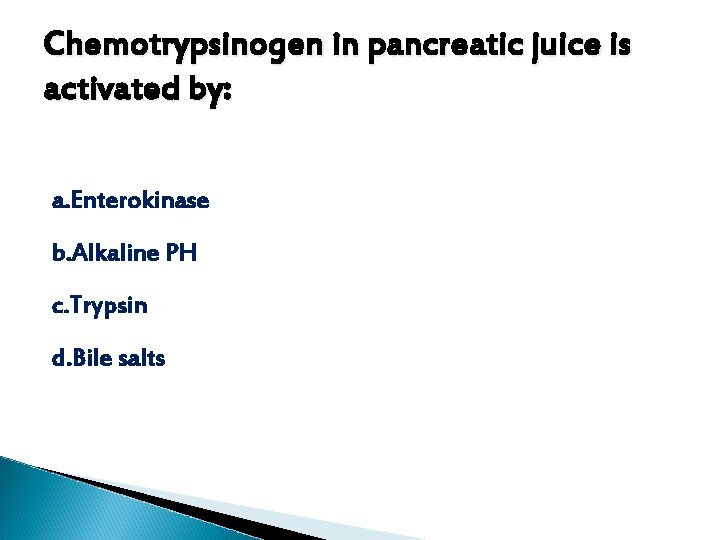
Chemotrypsinogen in pancreatic juice is activated by: a. Enterokinase b. Alkaline PH c. Trypsin d. Bile salts
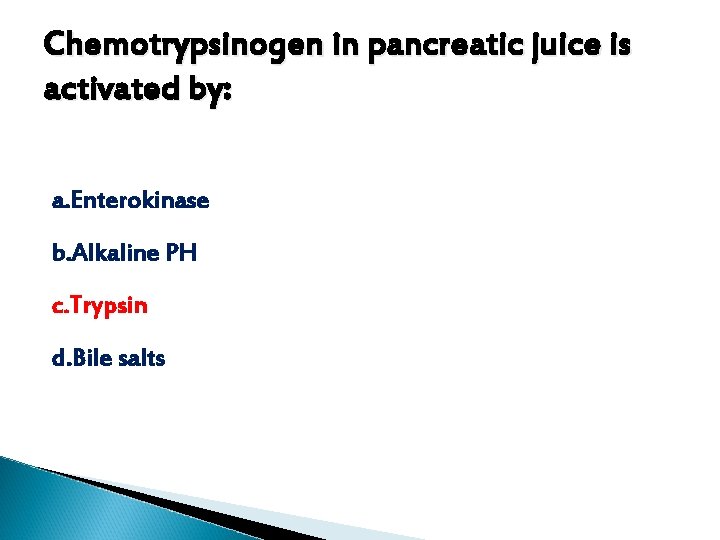
Chemotrypsinogen in pancreatic juice is activated by: a. Enterokinase b. Alkaline PH c. Trypsin d. Bile salts
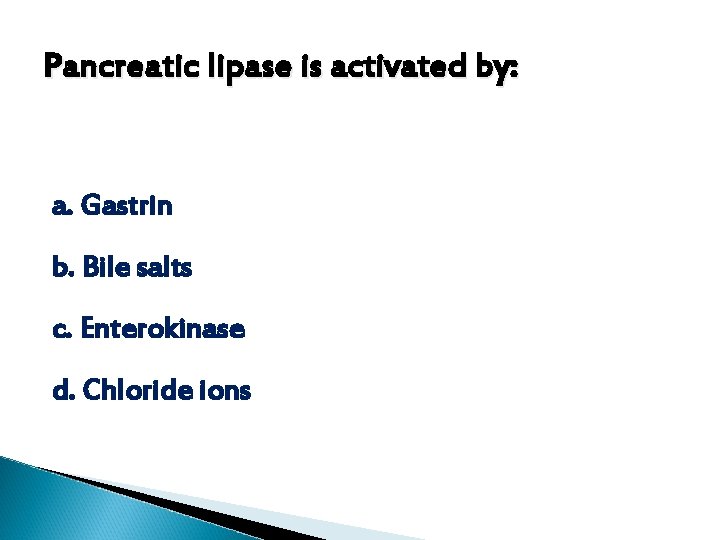
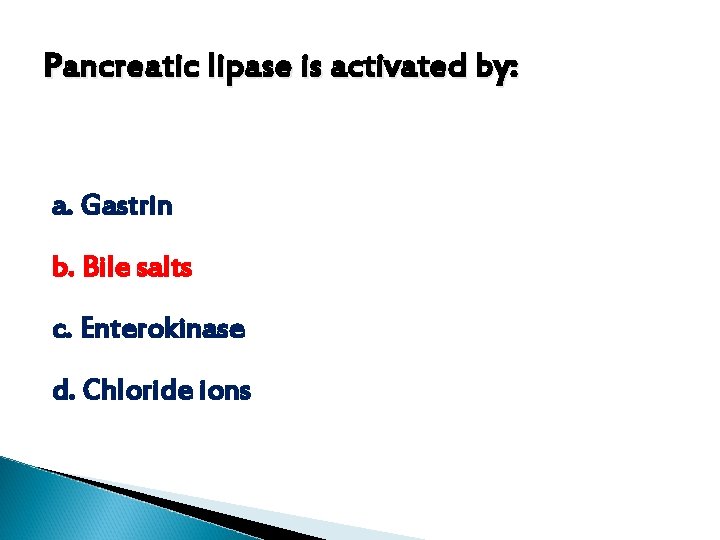
Pancreatic lipase is activated by: a. Gastrin b. Bile salts c. Enterokinase d. Chloride ions
Pancreatic lipase is activated by: a. Gastrin b. Bile salts c. Enterokinase d. Chloride ions
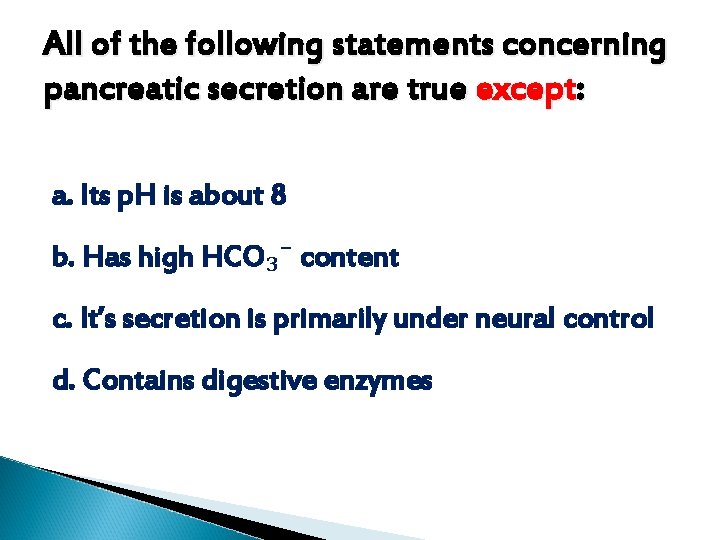
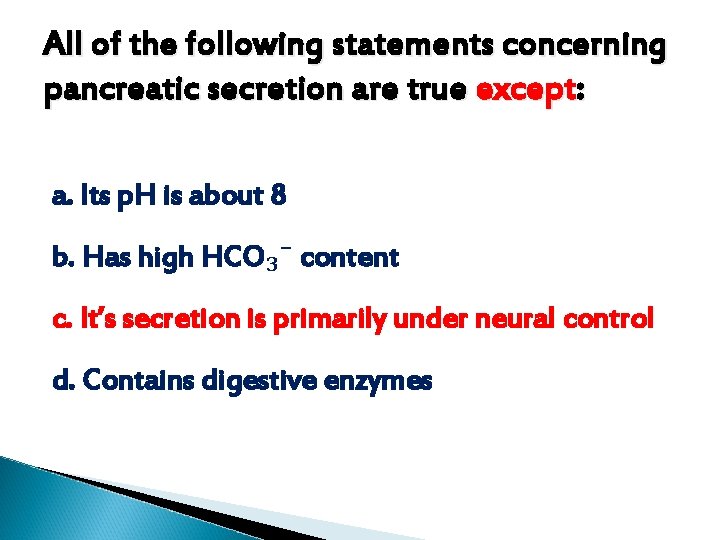
All of the following statements concerning pancreatic secretion are true except: a. Its p. H is about 8 b. Has high HCO₃⁻ content c. It’s secretion is primarily under neural control d. Contains digestive enzymes
All of the following statements concerning pancreatic secretion are true except: a. Its p. H is about 8 b. Has high HCO₃⁻ content c. It’s secretion is primarily under neural control d. Contains digestive enzymes
Pancreatic amylase is activated by: a. Bile salts b. Trypsin c. Cl ⁻ ions d. Enterokinase
Pancreatic amylase is activated by: a. Bile salts b. Trypsin c. Cl ⁻ ions d. Enterokinase
The volume of pancreatic secretion per day is about: a. 0. 6 liter b. 1. 5 liter c. 3 liter d. 2. 5 liter
The volume of pancreatic secretion per day is about: a. 0. 6 liter b. 1. 5 liter c. 3 liter d. 2. 5 liter
All the following statements concerning pancreatic secretion are true except: a. Sympathetic stimulation inhibits pancreatic HCO₃⁻ secretion b. The cephalic phase accounts for about 20 % of secretion after meal c. Pancreatic HCO 3 depresses further release of secretin d. Contains enzymes which digest polysaccharides to monosaccharides
All the following statements concerning pancreatic secretion are true except: a. Sympathetic stimulation inhibits pancreatic HCO₃⁻ secretion b. The cephalic phase accounts for about 20 % of secretion after meal c. Pancreatic HCO 3 depresses further release of secretin d. Contains enzymes which digest polysaccharides to monosaccharides
Pancreatic secretion is inhibited by all the followings except: a. Somatostatin b. Glucagon c. Acid in the duodenum d. Sympathetic stimulation.
Pancreatic secretion is inhibited by all the followings except: a. Somatostatin b. Glucagon c. Acid in the duodenum d. Sympathetic stimulation.
Loss of pancreatic secretion produces the following except: a. Maldigestion b. Malabsorption c. Dehydration d. Alkalosis
Loss of pancreatic secretion produces the following except: a. Maldigestion b. Malabsorption c. Dehydration d. Alkalosis
Thank you