
NURSING CARE OF THE CHILD OF GASTROINTESTINAL DISEASE
- Slides: 43
NURSING CARE OF THE CHILD OF GASTROINTESTINAL DISEASE Dr. Muntanavadee Maytapattana
TOPICS Overview GI System GI Disease �Diarrhea �Gastroenteritis �Gastritis �Intussusception �Hirschsprung’s disease Nursing Care of GI Disease
INFECTIOUS GI DISEASE
DIARRHEA Frequency - Diarrhea can usually be defined as an increase in stool frequency to twice the usual number per day in infants, or three or more loose or watery stools per day in older children Consistency and color Duration -Acute diarrhea (< 7 days) -Persistent diarrhea (> 14 days) -Chronic diarrhea (> 21 days)
GASTROENTERITIS (INFECTIOUS DIARRHEA) Gastroenteritis is defined as vomiting or diarrhea due to infection of the small or large bowel The changes in the small bowel are typically non inflammatory, while the ones in the large bowel are inflammatory
Diarrhea & Vomiting Fever, fatigue, headache, and muscle pain If the stool is bloody, more likely to be bacterial Some bacterial infections may be associated with severe abdominal pain and may persist for several weeks
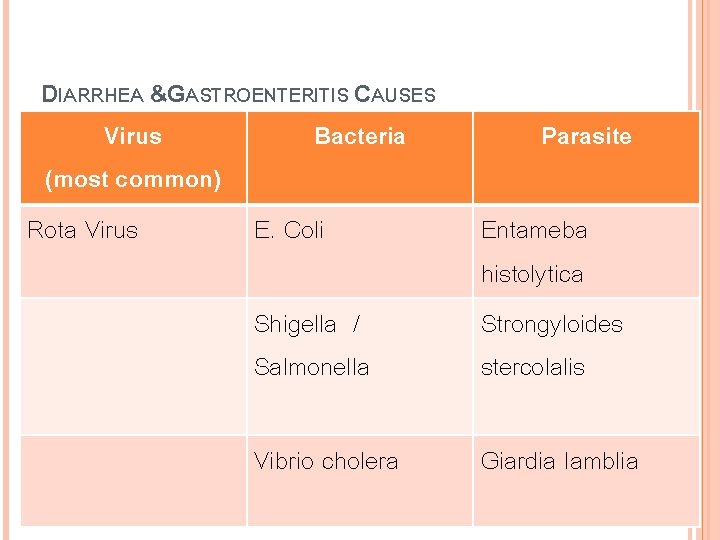
DIARRHEA &GASTROENTERITIS CAUSES Virus Bacteria (most common) Rota Virus E. Coli Parasite Shigella / Salmonella Entameba histolytica Strongyloides stercolalis Vibrio cholera Giardia lamblia
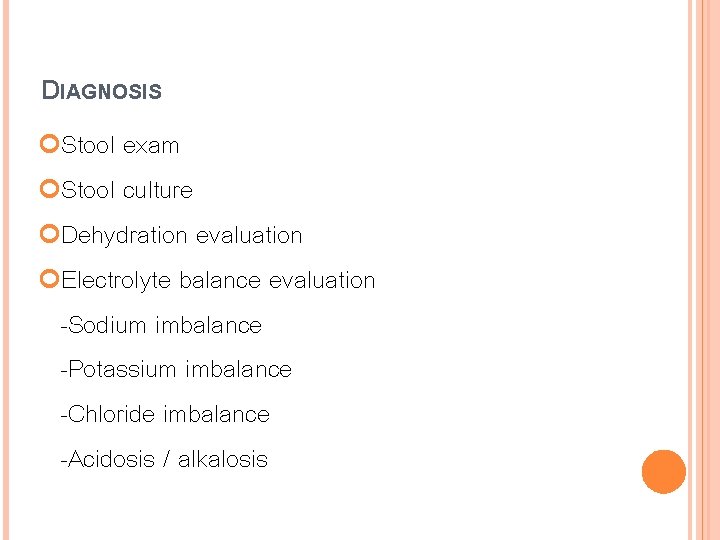
DIAGNOSIS Stool exam Stool culture Dehydration evaluation Electrolyte balance evaluation -Sodium imbalance -Potassium imbalance -Chloride imbalance -Acidosis / alkalosis
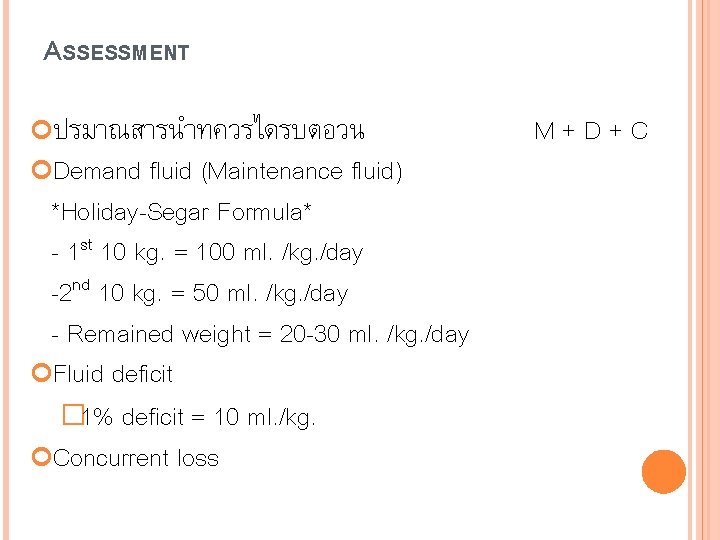
ASSESSMENT ปรมาณสารนำทควรไดรบตอวน Demand fluid (Maintenance fluid) *Holiday-Segar Formula* - 1 st 10 kg. = 100 ml. /kg. /day -2 nd 10 kg. = 50 ml. /kg. /day - Remained weight = 20 -30 ml. /kg. /day Fluid deficit � 1% deficit = 10 ml. /kg. Concurrent loss M+D+C
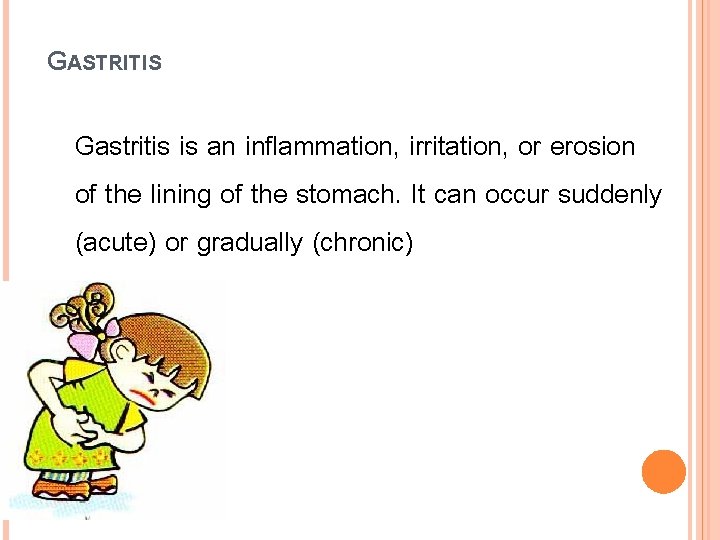
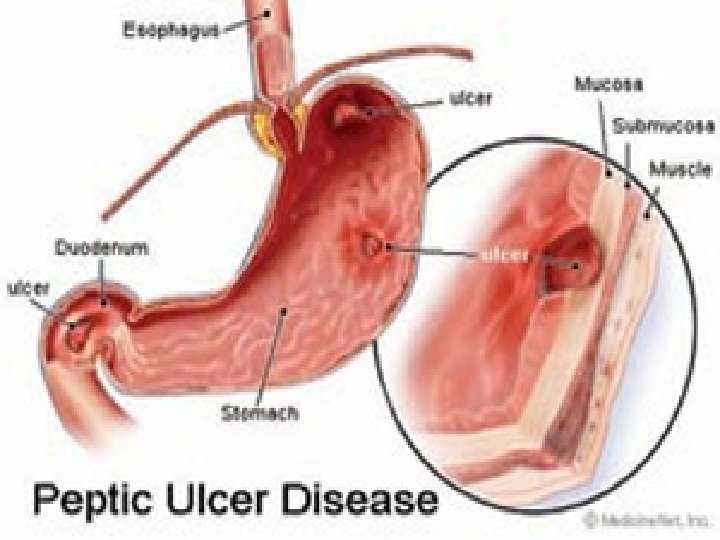
GASTRITIS Gastritis is an inflammation, irritation, or erosion of the lining of the stomach. It can occur suddenly (acute) or gradually (chronic)
ASSESSMENT Gastritis is a condition marked by inflammation and irritation of the lining of the stomach Child with the condition may develop nausea, vomiting, appetite loss, and unexplained weight loss. Often, children will also feel full even though they haven’t eaten very much, become bloated, or belch frequently when they have Gastritis.
GI DESEASE WITH SURGERY
INTUSSUSCEPTION
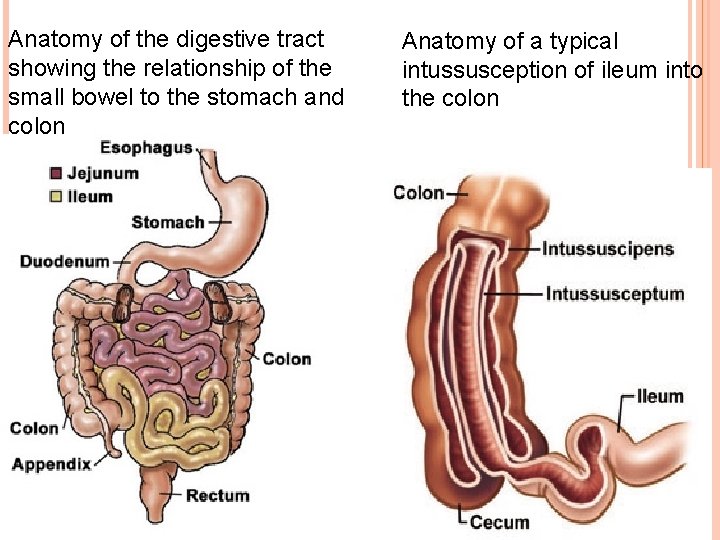
Anatomy of the digestive tract showing the relationship of the small bowel to the stomach and colon Anatomy of a typical intussusception of ileum into the colon
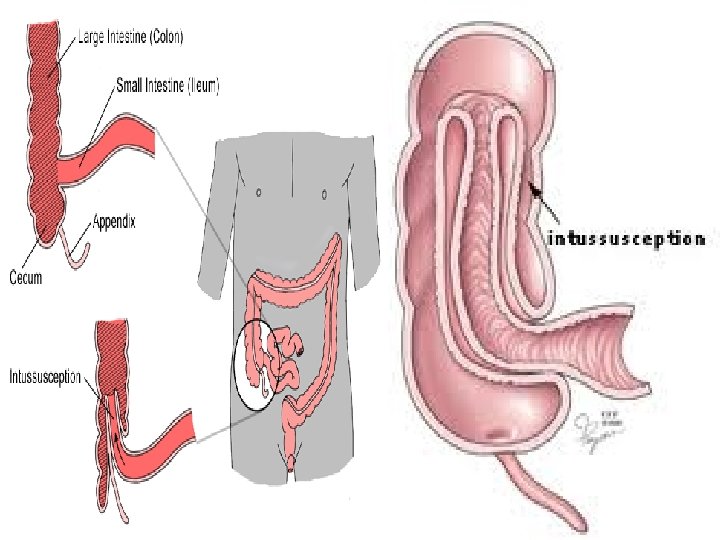
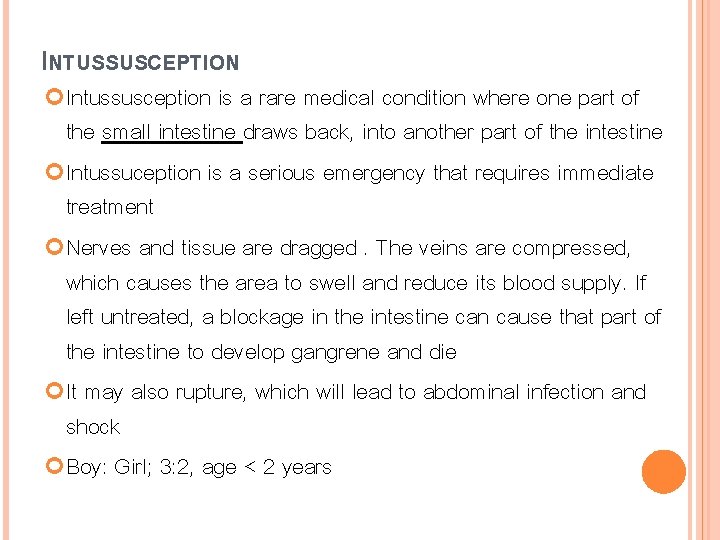
INTUSSUSCEPTION Intussusception is a rare medical condition where one part of the small intestine draws back, into another part of the intestine Intussuception is a serious emergency that requires immediate treatment Nerves and tissue are dragged. The veins are compressed, which causes the area to swell and reduce its blood supply. If left untreated, a blockage in the intestine can cause that part of the intestine to develop gangrene and die It may also rupture, which will lead to abdominal infection and shock Boy: Girl; 3: 2, age < 2 years
ASSESSMENT The main symptom of intussusceptions is intermittent cramping or abdominal pain. Infants will cry as if in sharp pain, and may draw their knees up the chest at intervals with the pain. Yellow and green vomit not associated with eating is another sign. If the patient also has currant jelly stool, or stool mixed with blood and mucus, this can be a sign that some portions of intestine are already dead
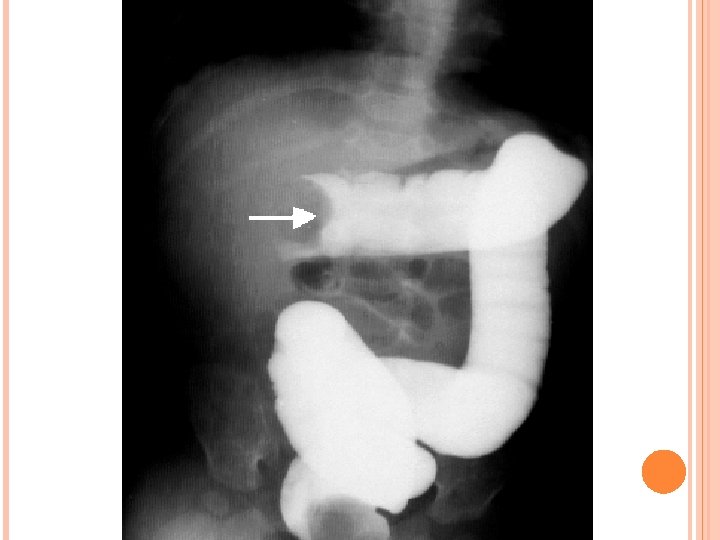
DIAGNOSIS Doctor will then perform a thorough abdominal examination Be able to feel the actual intussusception as a sausage-shaped mass in the abdomen X-rays are sometimes done to view the obstruction for a second confirmation
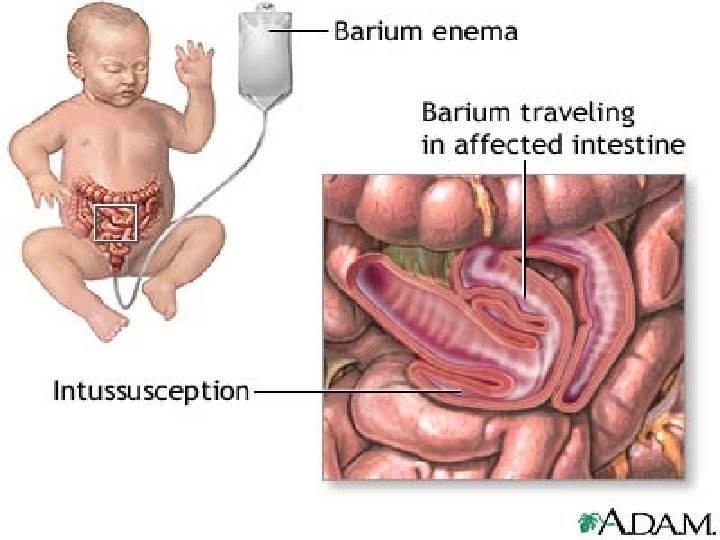
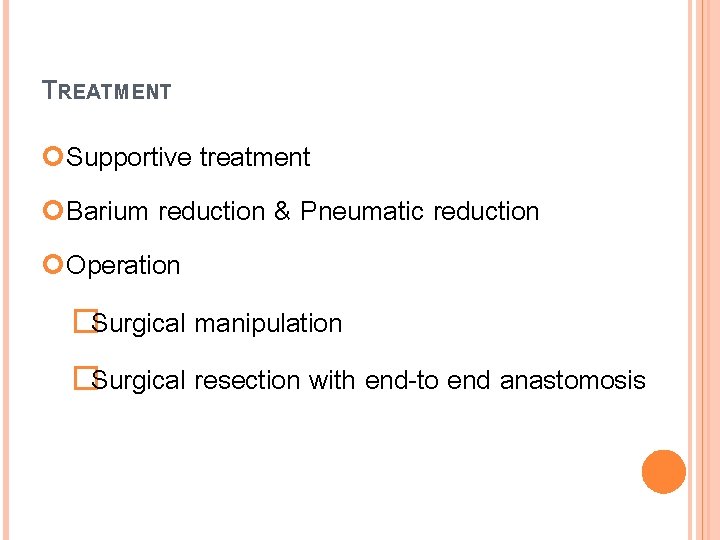
TREATMENT Supportive treatment Barium reduction & Pneumatic reduction Operation �Surgical manipulation �Surgical resection with end-to end anastomosis
HIRSCHSPRUNG’S DISEASE (CONGENITAL MEGACOLON)
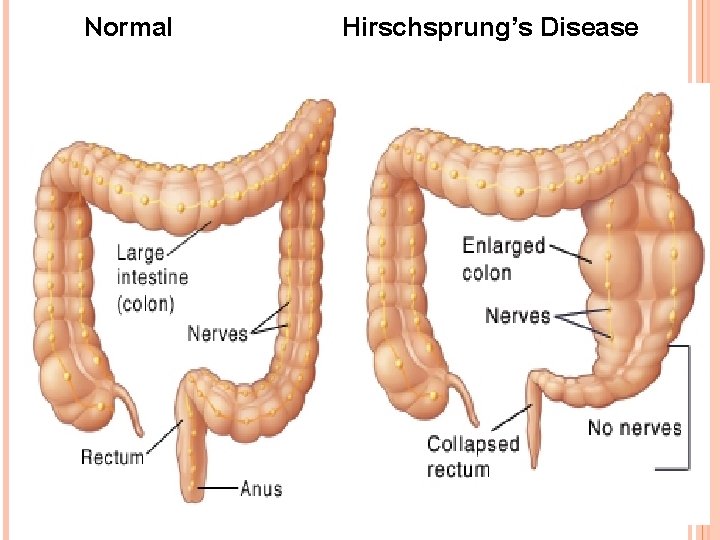
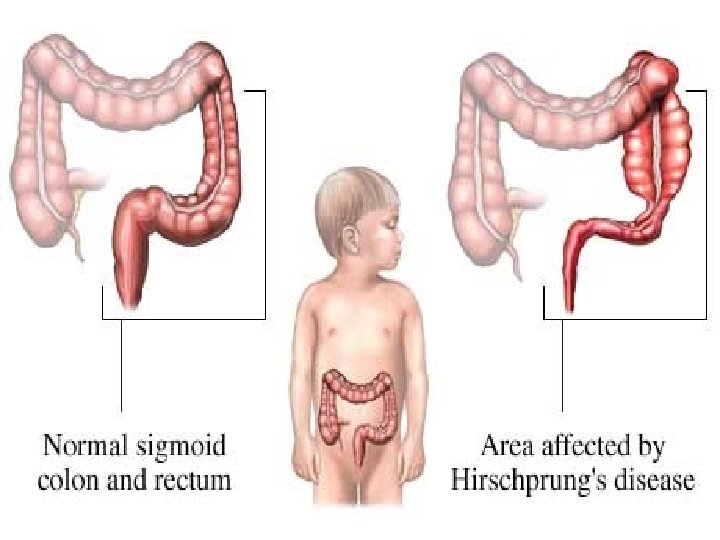
Normal Hirschsprung’s Disease
HIRSCHSPRUNG’S DISEASE An intestinal blockage due to impaired muscle movement within the bowel. Due to missing nerves within the bowel, intestinal contents accumulate, causing abdominal distention and bowel dysfunction. Often diagnosed in infancy, this condition causes newborns to develop constipation, abdominal distention, and vomiting. Additional symptoms may include the absence of a first stool (maconium), jaundice, and watery diarrhea Boy: Girl; 4 : 1
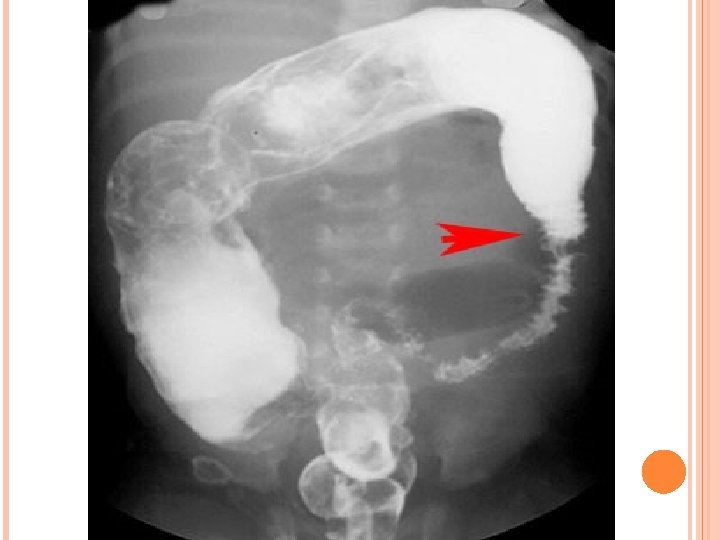
ASSESSMENT The presence of colon dilation In the presence of abdominal distention, Physical examination and palpation of the affected area may be performed. Any abnormalities discovered during a preliminary examination will usually prompt additional testing. If toxic megacolon is suspected, Abdominal X-ray and blood tests to evaluate electrolyte levels and detect the presence of any markers indicative of infection.
TREATMENT Supportive treatment -Rectal Irrigation Operation -Opened colostomy - Swenson, Duhamel, & Soave operation - Closed colostomy - Transanal endorectal pull through operation (dilate rectum 6 mo)
PAIN SCORES Neonatal Infant pain scale (NIPS) use for infant (0 -1 year) The Children’s Hospital of Eastern Ontario Pain Scales (CHEOPS) use for children 1 – 6 years Face Legs Activity Cry Consolability (FLACC) use for children 1 – 6 years (Neuron test) Verbal Rating Scale (VRS) Verbal Analog Scale (VAS) FACES
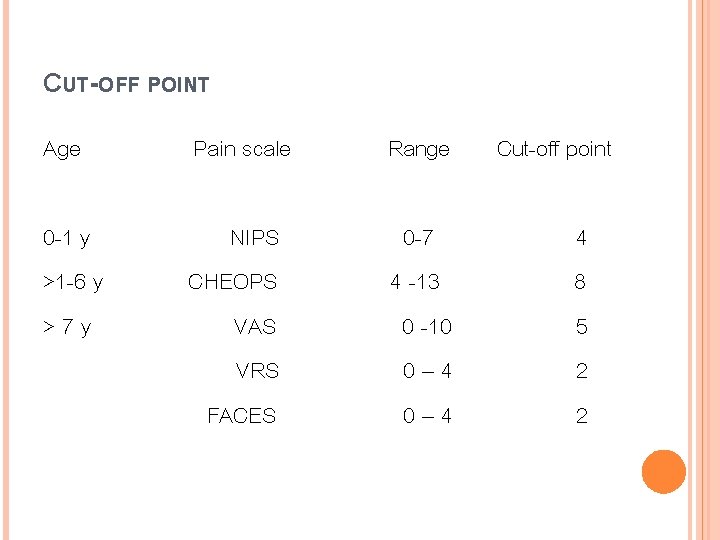
CUT-OFF POINT Age Pain scale Range 0 -1 y >1 -6 y >7 y NIPS CHEOPS VAS VRS FACES 0 -7 4 -13 0 -10 0– 4 Cut-off point 4 8 5 2 2
NURSING INTERVENTION &EVALUATION
NURSING DIAGNOSIS (INFECTIOUS GI DISEASE ) Decrease cardiac output Fluid volume deficit Electrolyte imbalance Diarrhea Hyperthermia Acute pain Fatigue Nutrition less than body requirement Child / Parental anxiety
NURSING DIAGNOSIS (GI DISEASE WITH SURGERY) Pre-operation -Fluid volume deficit -Electrolyte imbalance -Infection of intestine -Acute pain -Discomfort from constipation (Hirschsprung’s Disease) -Nutrition less than body requirement -Child / Parental anxiety
NURSING DIAGNOSIS Post-operation -Impair tissue perfusion -Electrolyte imbalance -Discomfort form flatulence -Nutrition less than body requirement -Infection after operation - Pain after operation
Answer & Question