
Semmelweis University Faculty of Medicine 1 st Department


- Slides: 32
Semmelweis University, Faculty of Medicine, 1 st Department of Surgery of the endocrine organs Rezső SZLÁVIK M. D.
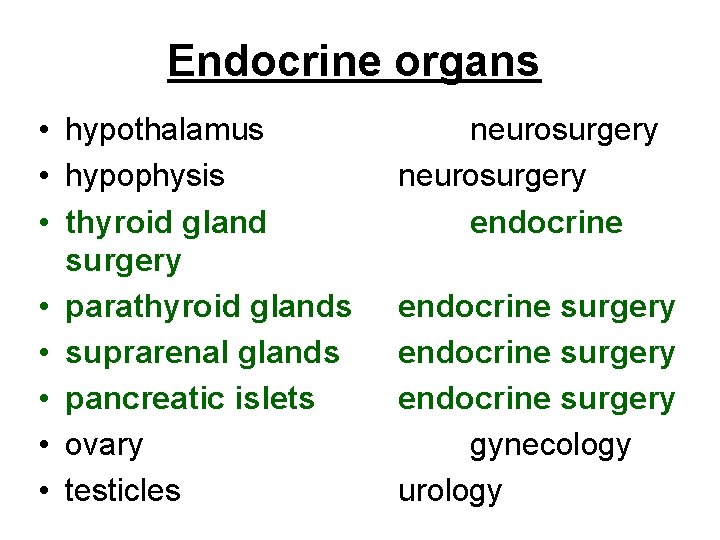
Endocrine organs • hypothalamus • hypophysis • thyroid gland surgery • parathyroid glands • suprarenal glands • pancreatic islets • ovary • testicles neurosurgery endocrine surgery gynecology urology
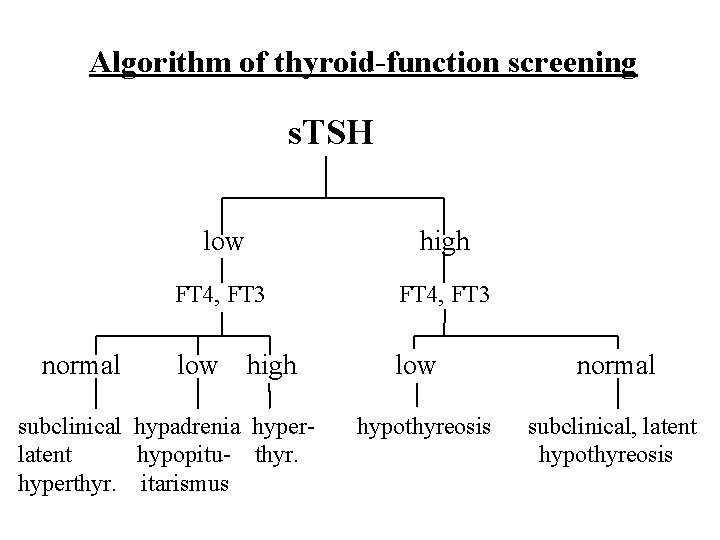
Algorithm of thyroid-function screening s. TSH normal low high FT 4, FT 3 low high subclinical hypadrenia hyperlatent hypopitu- thyr. hyperthyr. itarismus hypothyreosis normal subclinical, latent hypothyreosis
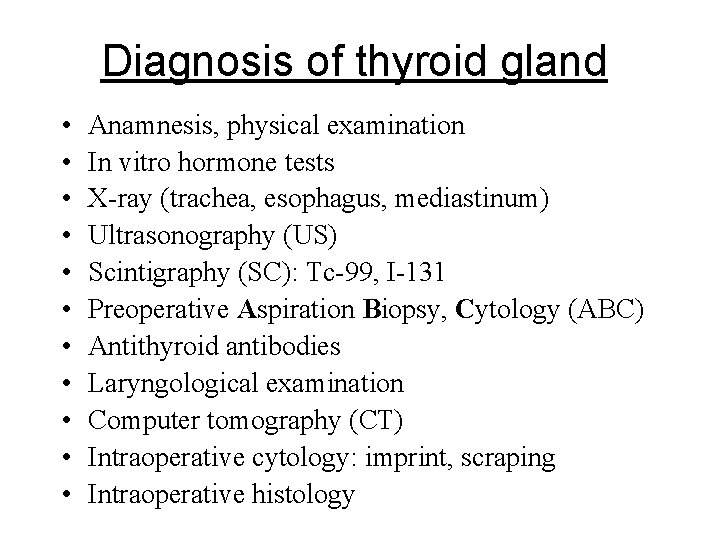
Diagnosis of thyroid gland • • • Anamnesis, physical examination In vitro hormone tests X-ray (trachea, esophagus, mediastinum) Ultrasonography (US) Scintigraphy (SC): Tc-99, I-131 Preoperative Aspiration Biopsy, Cytology (ABC) Antithyroid antibodies Laryngological examination Computer tomography (CT) Intraoperative cytology: imprint, scraping Intraoperative histology
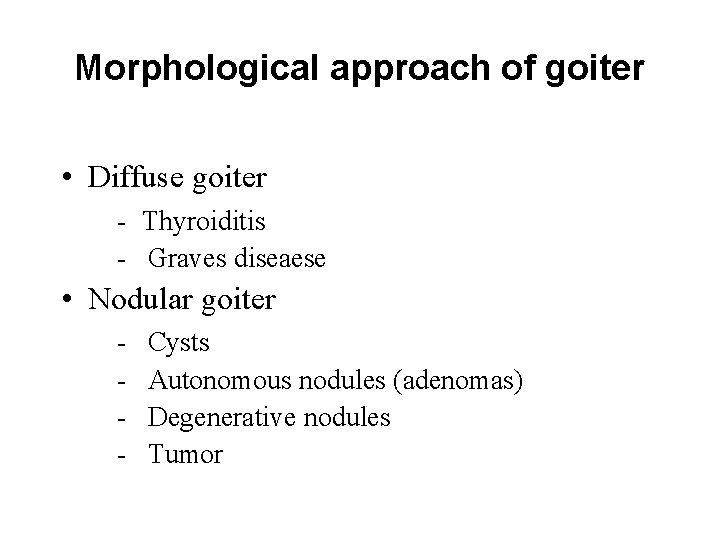
Morphological approach of goiter • Diffuse goiter - Thyroiditis - Graves diseaese • Nodular goiter - Cysts Autonomous nodules (adenomas) Degenerative nodules Tumor
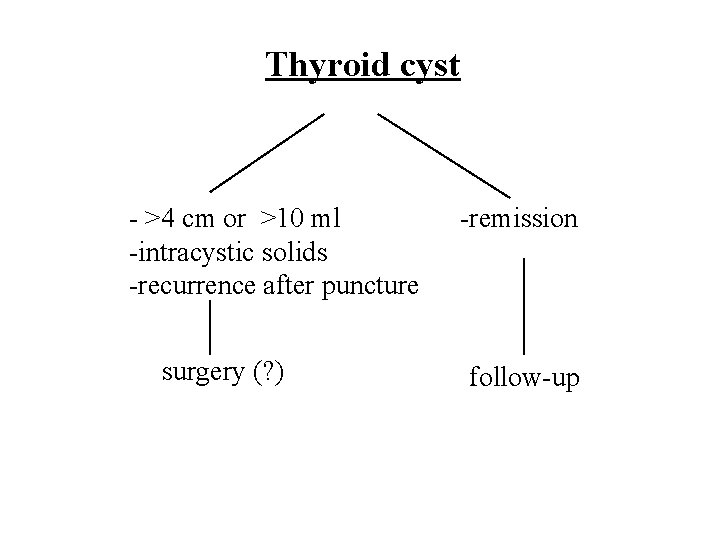
Thyroid cyst - >4 cm or >10 ml -intracystic solids -recurrence after puncture surgery (? ) -remission follow-up
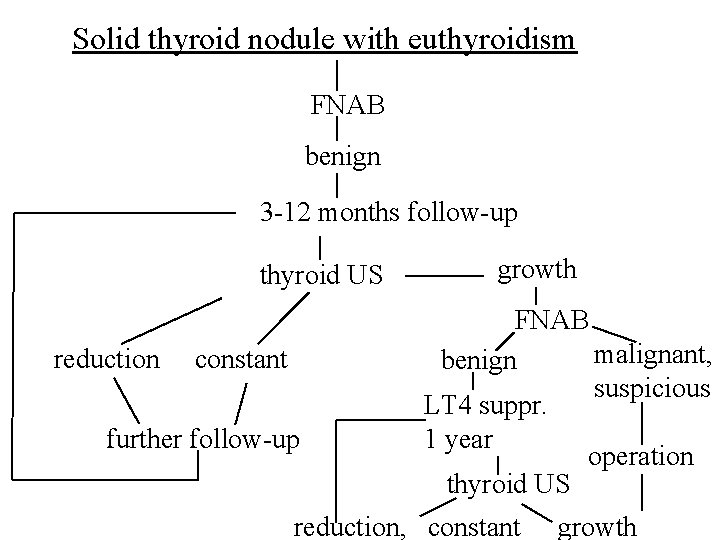
Solid thyroid nodule with euthyroidism FNAB benign 3 -12 months follow-up thyroid US reduction constant further follow-up growth FNAB malignant, benign suspicious LT 4 suppr. 1 year operation thyroid US reduction, constant growth
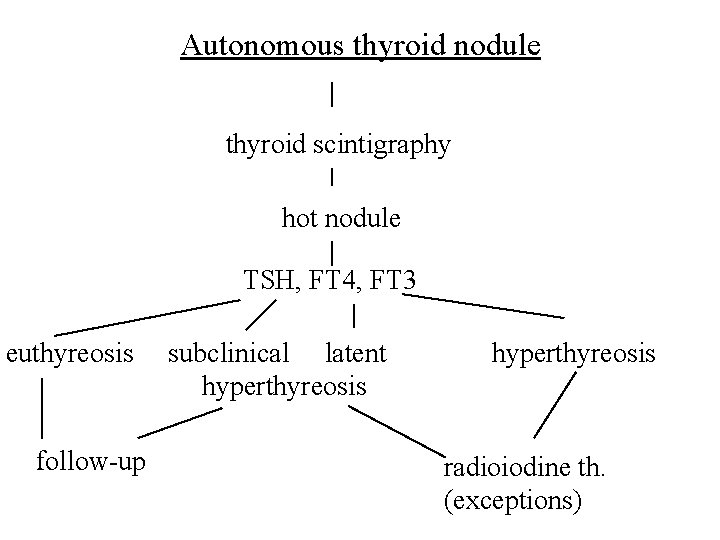
Autonomous thyroid nodule thyroid scintigraphy hot nodule TSH, FT 4, FT 3 euthyreosis follow-up subclinical latent hyperthyreosis radioiodine th. (exceptions)
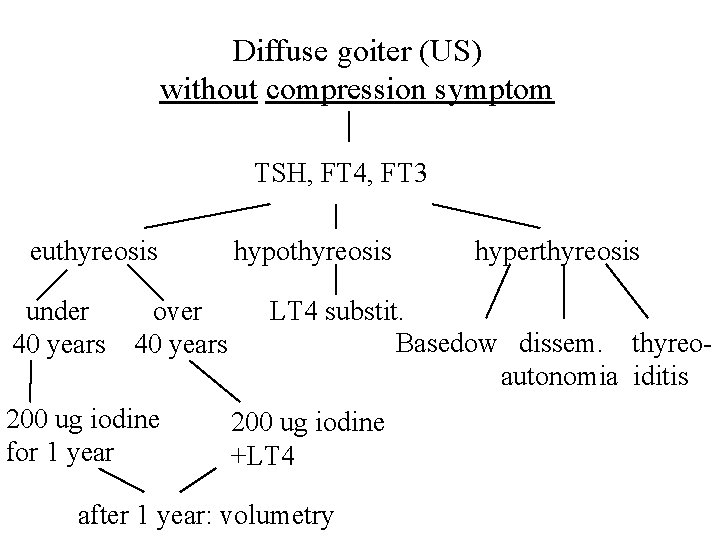
Diffuse goiter (US) without compression symptom TSH, FT 4, FT 3 euthyreosis under 40 years over 40 years 200 ug iodine for 1 year hypothyreosis hyperthyreosis LT 4 substit. Basedow dissem. thyreoautonomia iditis 200 ug iodine +LT 4 after 1 year: volumetry
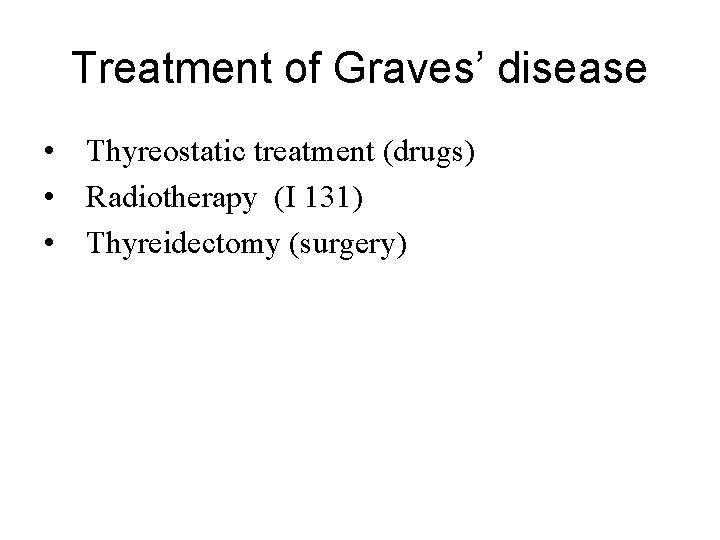
Treatment of Graves’ disease • Thyreostatic treatment (drugs) • Radiotherapy (I 131) • Thyreidectomy (surgery)
Indications for surgical treatment in Graves-disease • • • Relapse after drug treatment Intolerance of antithyroid drugs Contraindication of radioiodine therapy Large goiter Patient preference
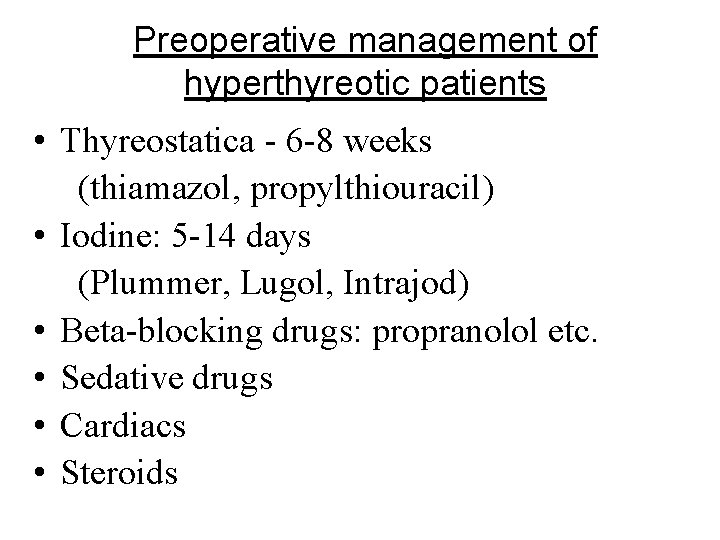
Preoperative management of hyperthyreotic patients • Thyreostatica - 6 -8 weeks (thiamazol, propylthiouracil) • Iodine: 5 -14 days (Plummer, Lugol, Intrajod) • Beta-blocking drugs: propranolol etc. • Sedative drugs • Cardiacs • Steroids
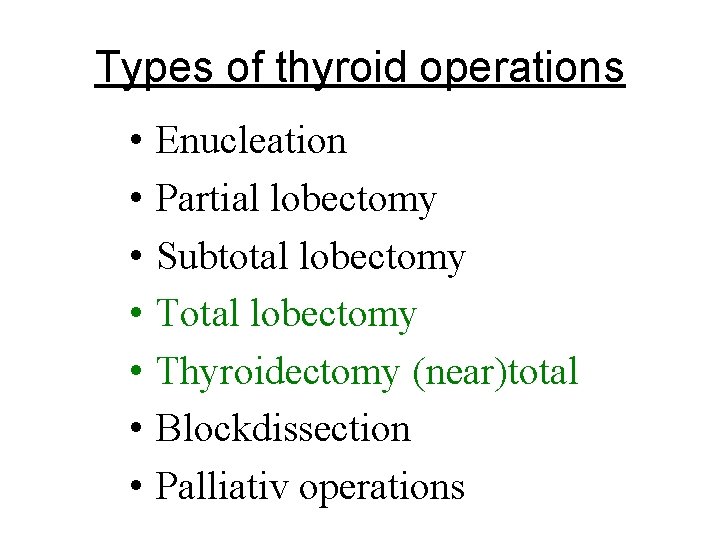
Types of thyroid operations • • Enucleation Partial lobectomy Subtotal lobectomy Thyroidectomy (near)total Blockdissection Palliativ operations
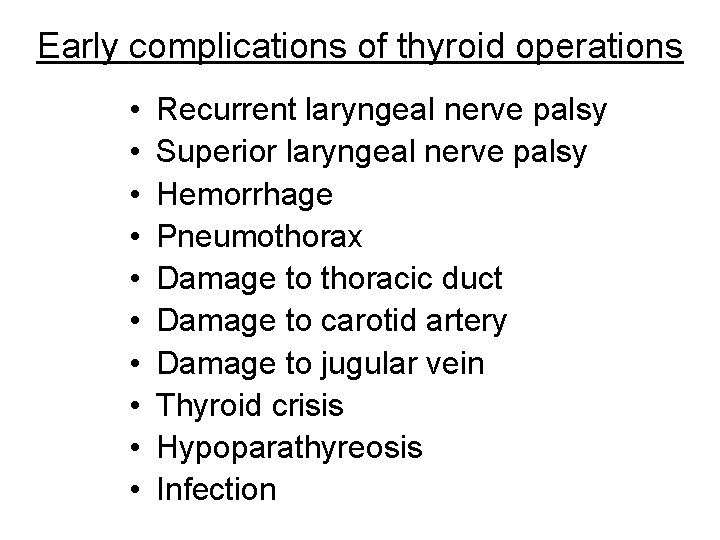
Early complications of thyroid operations • • • Recurrent laryngeal nerve palsy Superior laryngeal nerve palsy Hemorrhage Pneumothorax Damage to thoracic duct Damage to carotid artery Damage to jugular vein Thyroid crisis Hypoparathyreosis Infection
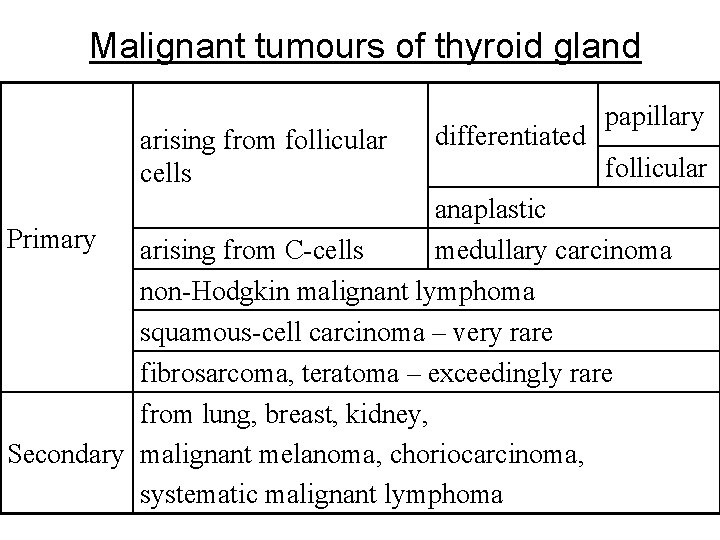
Malignant tumours of thyroid gland arising from follicular cells differentiated papillary follicular anaplastic Primary arising from C-cells medullary carcinoma non-Hodgkin malignant lymphoma squamous-cell carcinoma – very rare fibrosarcoma, teratoma – exceedingly rare from lung, breast, kidney, Secondary malignant melanoma, choriocarcinoma, systematic malignant lymphoma
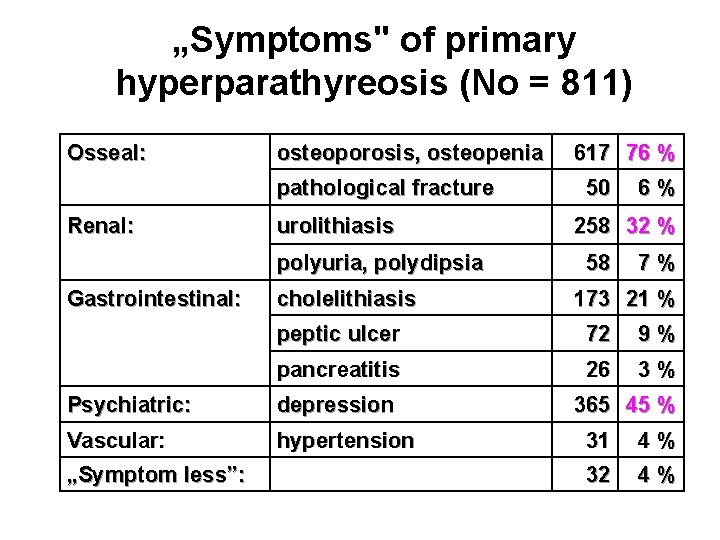
„Symptoms" of primary hyperparathyreosis (No = 811) Osseal: osteoporosis, osteopenia pathological fracture Renal: urolithiasis polyuria, polydipsia Gastrointestinal: cholelithiasis 50 6% 258 32 % 58 7% 173 21 % peptic ulcer 72 9% pancreatitis 26 3% Psychiatric: depression Vascular: hypertension „Symptom less”: 617 76 % 365 45 % 31 4% 32 4%
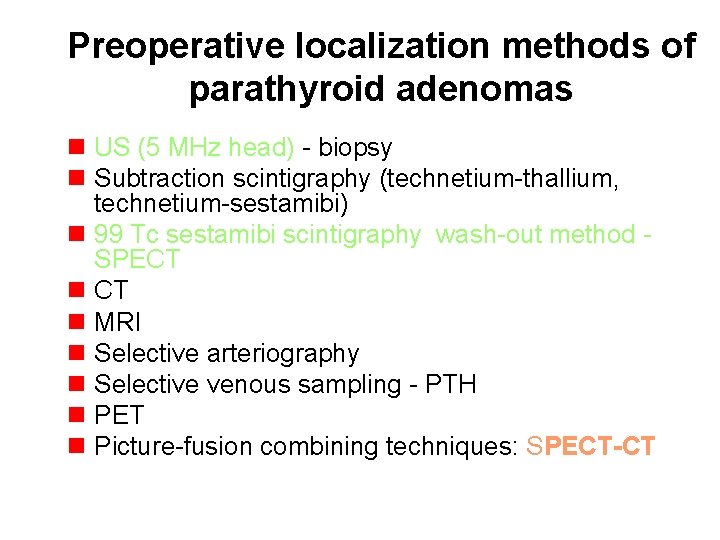
Preoperative localization methods of parathyroid adenomas n US (5 MHz head) - biopsy n Subtraction scintigraphy (technetium-thallium, technetium-sestamibi) n 99 Tc sestamibi scintigraphy wash-out method SPECT n MRI n Selective arteriography n Selective venous sampling - PTH n PET n Picture-fusion combining techniques: SPECT-CT
Preoperative diagnosis of primary hyperparathyroidism n Laboratory proving of PHPT: serum Ca and serum i. PTH level high n No thyroid or parathyroid operation in the history: only US and MIBI-scintigraphy n Thyroid or parathyroid operation in the history: operation after effective localization - MIBI, MRI and others.
Development of surgery in primary hyperparathyroidism ¶Bilateral exploration without localization diagnostic ·Unilateral exploration after preoperative localization ¸Minimal-access operations with pre- and intraoperative diagnostic procedures
Intraoperative diagnostics during parathyroidectomy Parathyroid localisation: u Metilenblue staining: l l intraop. i. v. preop. under US u Gamma-probe Checking of the result: u Frozen section u Intraoperative IPTH-measurement: l l in peripheral blood in tissue aspirates
Minimal-invasive therapy of primary hyperparathyroidism l US- controlled alcoholic infiltration l Selective intra-arterial injection: absolute alcohol + Lipiodol l Videoscopic parathyroidectomy: CO 2 insufflation gasless method cervical and/or extra-cervical ports l Video-assisted parathyroidectomy = VAP
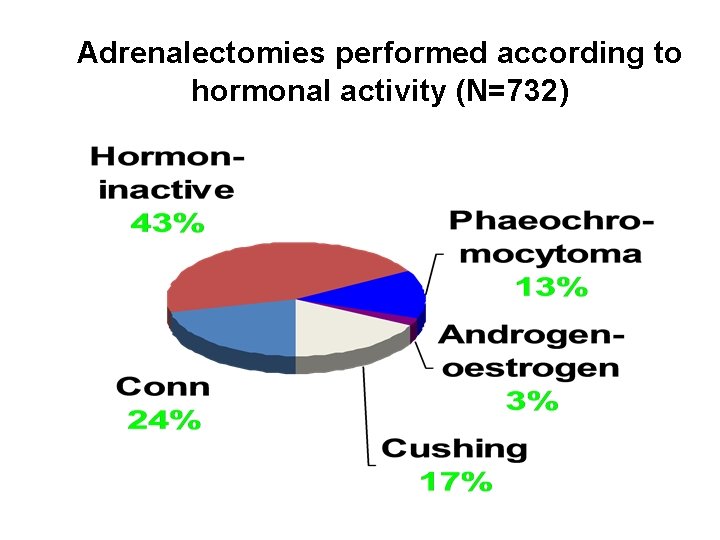
Adrenalectomies performed according to hormonal activity (N=732)
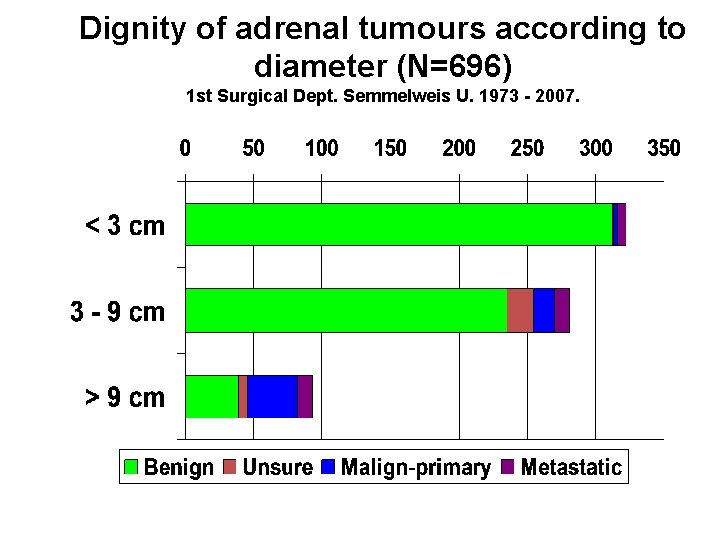
Dignity of adrenal tumours according to diameter (N=696) 1 st Surgical Dept. Semmelweis U. 1973 - 2007.
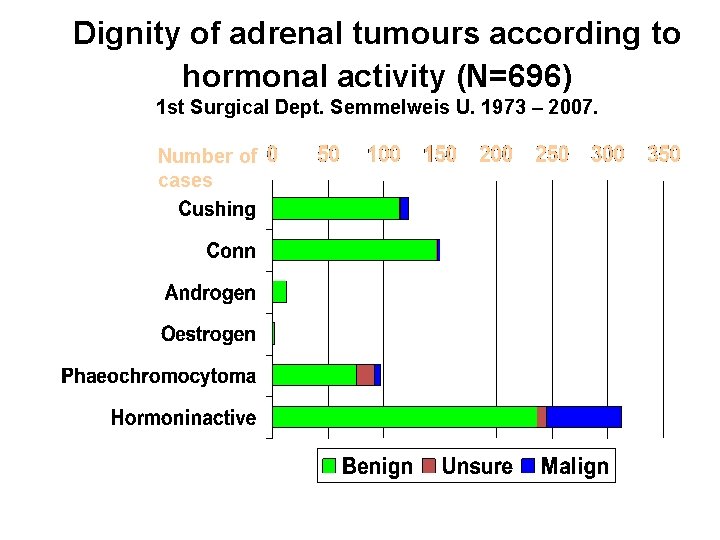
Dignity of adrenal tumours according to hormonal activity (N=696) 1 st Surgical Dept. Semmelweis U. 1973 – 2007. Number of cases
Techniques of adrenalectomy Traditional retroperitoneal transabdominal Videoscopic laparoscopic (1992 - ) retroperitoneoscopic (1994 - )
Contraindications of laparoscopic adrenalectomy l large tumor: > 6 -9 cm l locally invasive malignoma l general contraindications of laparoscopic operations
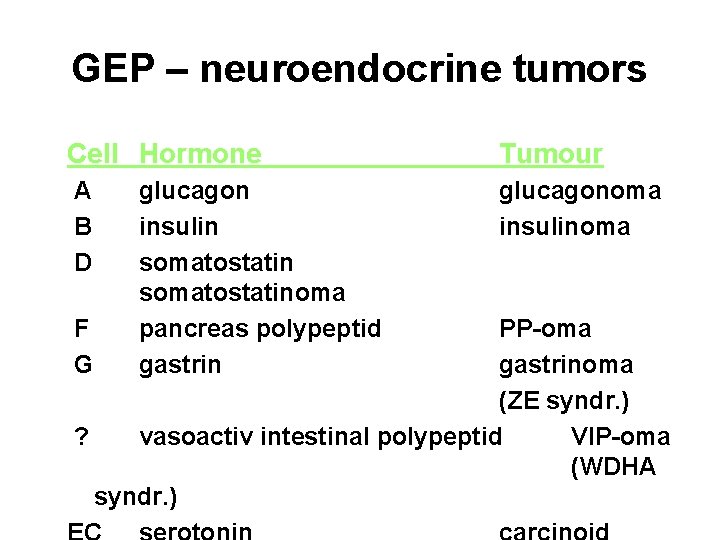
GEP – neuroendocrine tumors Cell Hormone Tumour A B D glucagonoma insulinoma F G glucagon insulin somatostatinoma pancreas polypeptid gastrin PP-oma gastrinoma (ZE syndr. ) ? vasoactiv intestinal polypeptid VIP-oma (WDHA syndr. )
Leading symptoms of hyperinsulinism l Hypoglycemic symptoms without collapse l Collapse with convulsion Symptoms persisted : 3, 5 years (mean) ( 2 months - 24 years )
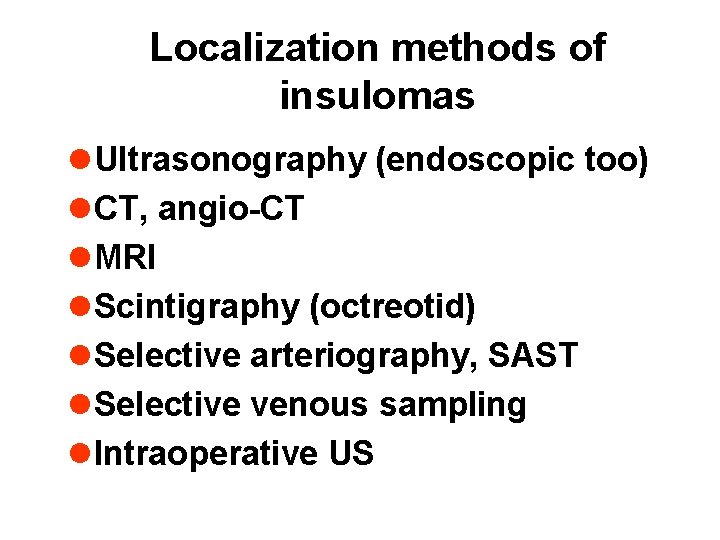
Localization methods of insulomas l Ultrasonography (endoscopic too) l CT, angio-CT l MRI l Scintigraphy (octreotid) l Selective arteriography, SAST l Selective venous sampling l Intraoperative US
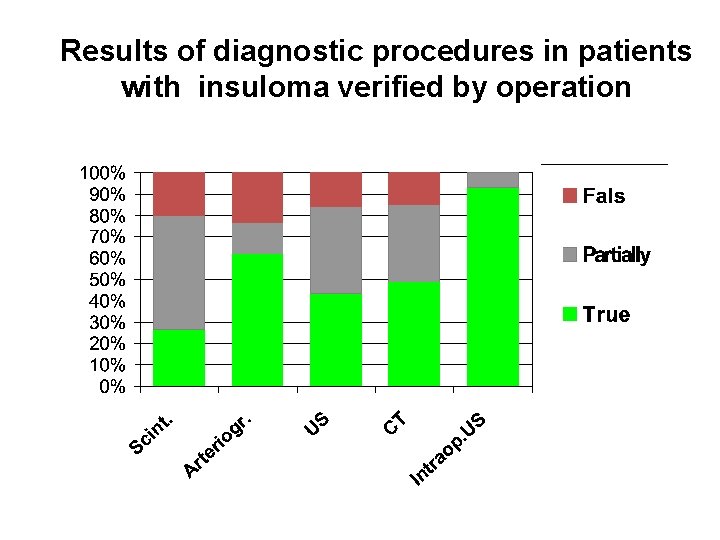
Results of diagnostic procedures in patients with insuloma verified by operation No of cases: 15 34 62 47 29