
Role of Pharmacognosy in development of Traditional and

- Slides: 36
Role of Pharmacognosy in development of Traditional and Allopathic system of medicine Silpa M Assistant professor Dept. of Pharmacology Yenepoya pharmacy college & research centre
Objectives §To know the role of pharmacognosy in the development of traditional and allopathic system of medicine §Creating awareness regarding traditional medicine systems. §To know the relation of pharmacognosy and traditional and allopathic system of medicine
Contents üIntroduction üRole of Pharmacognosy in development of : ØAllopathic system of medicine ØTrditional system of medicine : §Traditional Chinese medicine §Ayurvedha §Siddha system of medicine §Unani system of medicine §Homeopathy
INTRODUCTION • Natural products have been an exemplary source of medicine • This approach have been participated over years in various indigenous communities which led to development of diverse traditional health care system Eg: ØTraditional Chinese medicine ØAyurvedha ØSiddha system of medicine ØUnani system of medicine ØHomeopathy ØComplementary and alternative system of medicine. ØAfrican traditional medicine
§Pharmacognosy plays vital role in the development of Traditional and allopathic system of medicine §It provides a system wherein the active principles of the crude drugs derived from natural origin can could be dispensed , formulated and manufactured in dosage forms acceptable to allopathic system of medicines
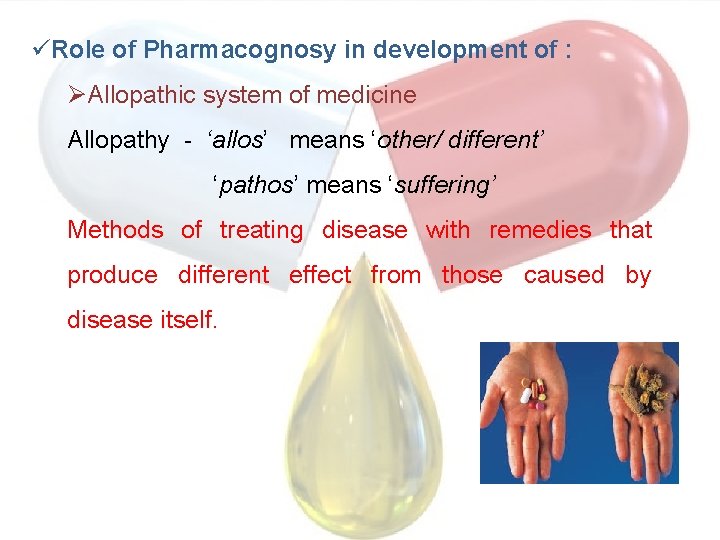
üRole of Pharmacognosy in development of : ØAllopathic system of medicine Allopathy - ‘allos’ means ‘other/ different’ ‘pathos’ means ‘suffering’ Methods of treating disease with remedies that produce different effect from those caused by disease itself.
§Earlier, extract of whole part of crude drug used as medicine §Concept was changed when phytoconstituents were isolated from plants §Then onwards, concept of medicine relies on phytochemical based §Not only giving knowledge about crude drug but also provides the information about chemical constituents
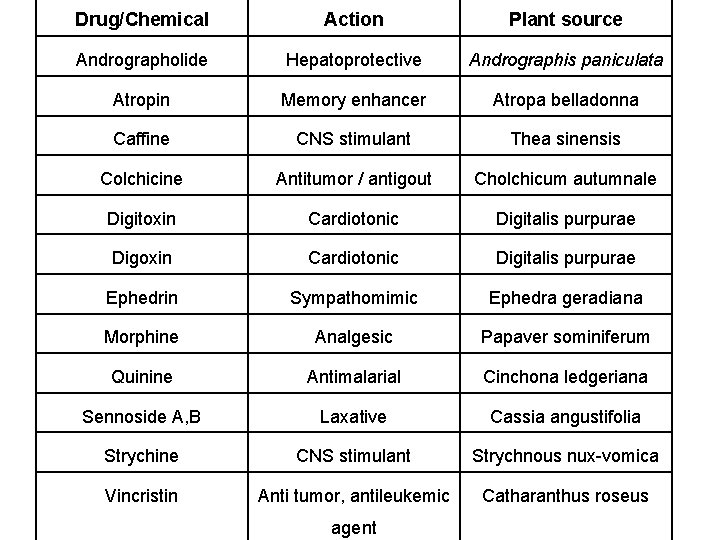
• Hence, pharmacognosy plays a big role in development of allopathic system of medicine as it depends on chemical moieties as a drug for which natural product. • Though today’s date most of the medicine is synthetically prepared, but influence of natural product is still relevant. • Many drugs which are used in modern medicinal system has been isolated from natural medicine
Drug/Chemical Action Plant source Andrographolide Hepatoprotective Andrographis paniculata Atropin Memory enhancer Atropa belladonna Caffine CNS stimulant Thea sinensis Colchicine Antitumor / antigout Cholchicum autumnale Digitoxin Cardiotonic Digitalis purpurae Digoxin Cardiotonic Digitalis purpurae Ephedrin Sympathomimic Ephedra geradiana Morphine Analgesic Papaver sominiferum Quinine Antimalarial Cinchona ledgeriana Sennoside A, B Laxative Cassia angustifolia Strychine CNS stimulant Strychnous nux-vomica Vincristin Anti tumor, antileukemic Catharanthus roseus agent
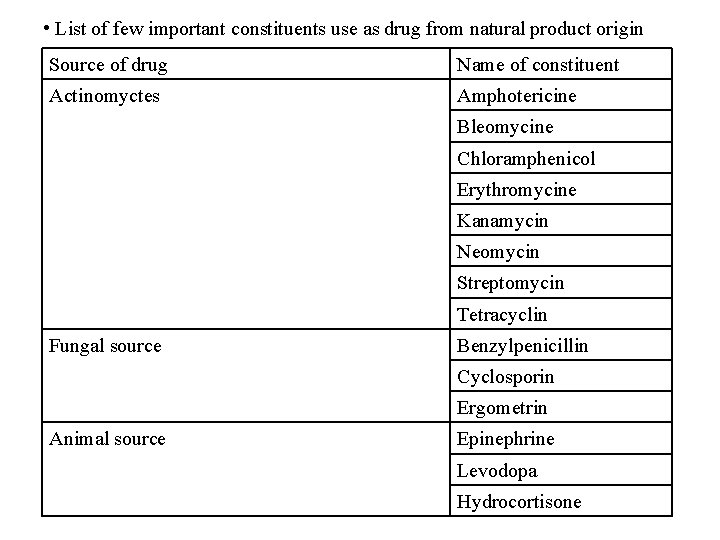
• List of few important constituents use as drug from natural product origin Source of drug Name of constituent Actinomyctes Amphotericine Bleomycine Chloramphenicol Erythromycine Kanamycin Neomycin Streptomycin Tetracyclin Fungal source Benzylpenicillin Cyclosporin Ergometrin Animal source Epinephrine Levodopa Hydrocortisone
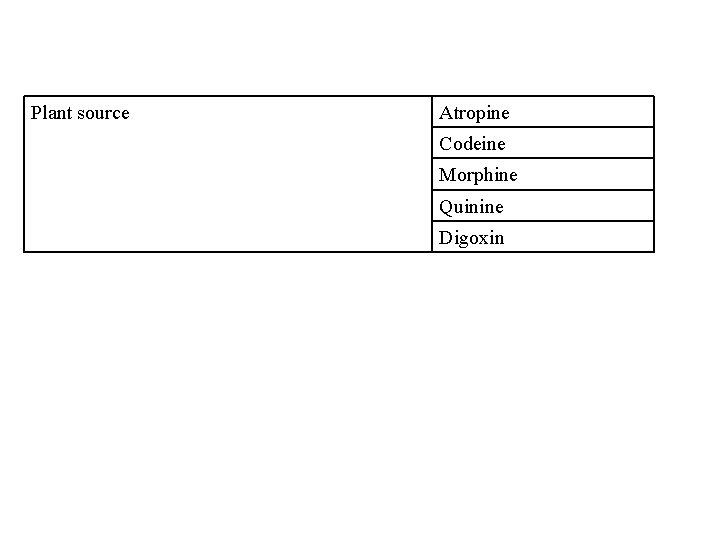
Plant source Atropine Codeine Morphine Quinine Digoxin
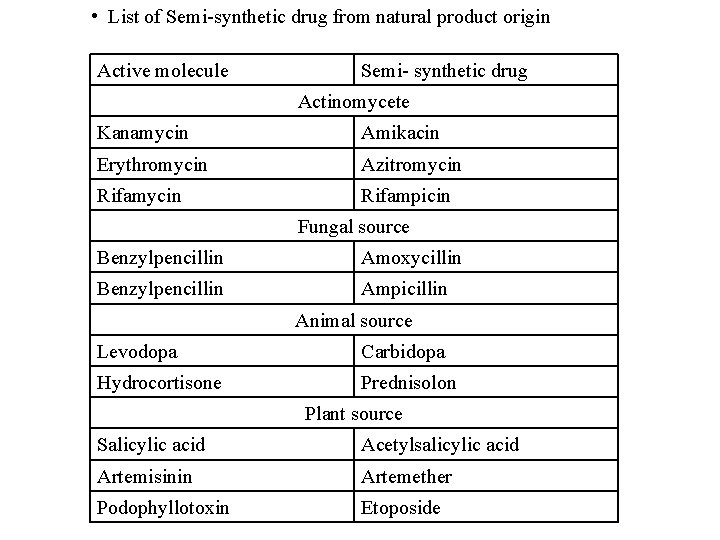
• List of Semi-synthetic drug from natural product origin Active molecule Semi- synthetic drug Actinomycete Kanamycin Amikacin Erythromycin Azitromycin Rifampicin Fungal source Benzylpencillin Amoxycillin Benzylpencillin Ampicillin Animal source Levodopa Carbidopa Hydrocortisone Prednisolon Plant source Salicylic acid Acetylsalicylic acid Artemisinin Artemether Podophyllotoxin Etoposide
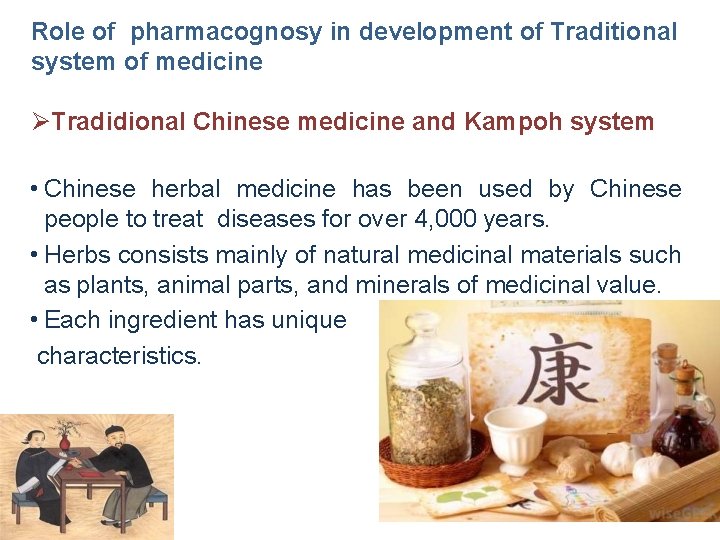
Role of pharmacognosy in development of Traditional system of medicine ØTradidional Chinese medicine and Kampoh system • Chinese herbal medicine has been used by Chinese people to treat diseases for over 4, 000 years. • Herbs consists mainly of natural medicinal materials such as plants, animal parts, and minerals of medicinal value. • Each ingredient has unique characteristics.
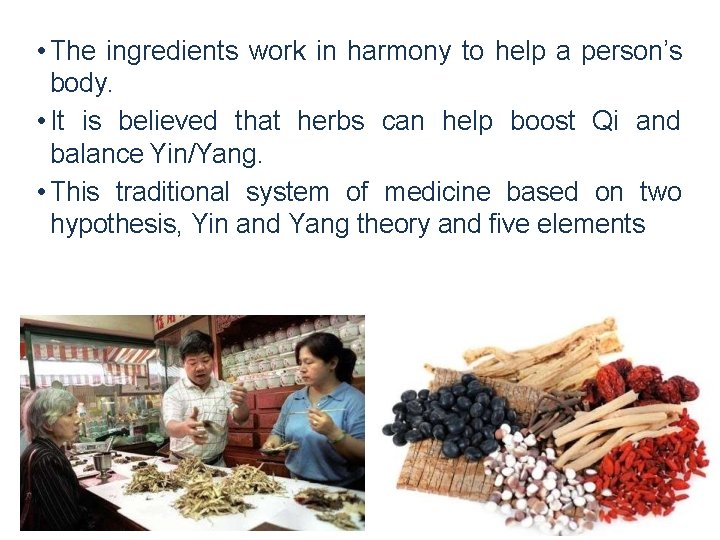
• The ingredients work in harmony to help a person’s body. • It is believed that herbs can help boost Qi and balance Yin/Yang. • This traditional system of medicine based on two hypothesis, Yin and Yang theory and five elements
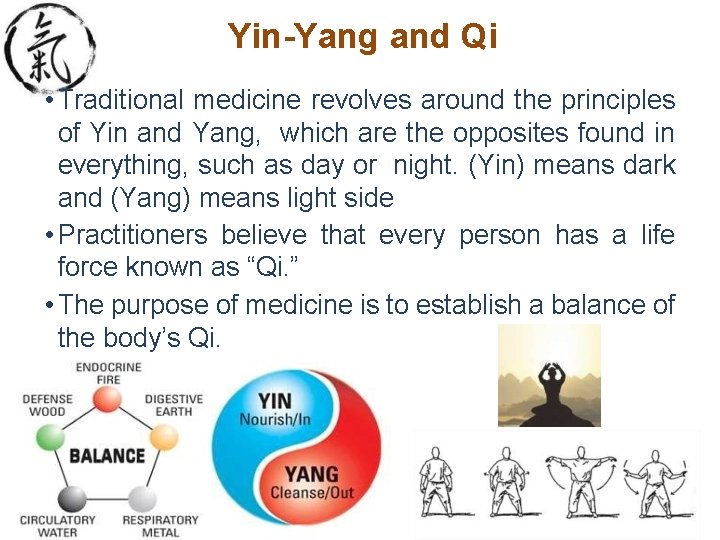
Yin-Yang and Qi • Traditional medicine revolves around the principles of Yin and Yang, which are the opposites found in everything, such as day or night. (Yin) means dark and (Yang) means light side • Practitioners believe that every person has a life force known as “Qi. ” • The purpose of medicine is to establish a balance of the body’s Qi.
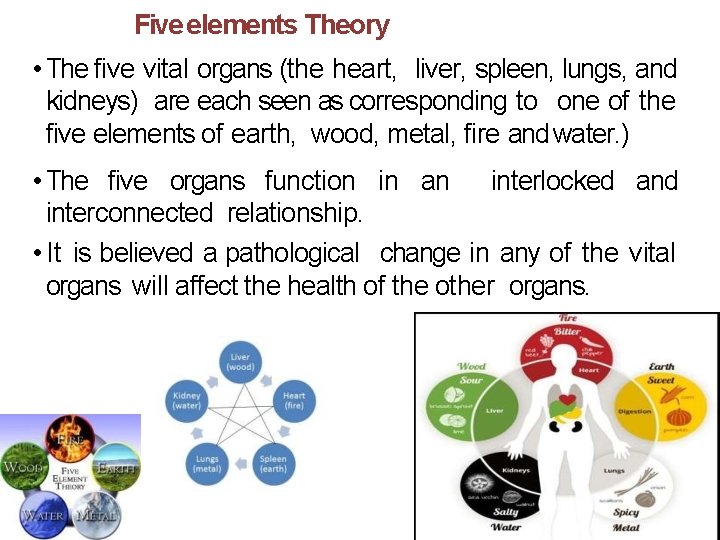
Five elements Theory • The five vital organs (the heart, liver, spleen, lungs, and kidneys) are each seen as corresponding to one of the five elements of earth, wood, metal, fire and water. ) • The five organs function in an interlocked and interconnected relationship. • It is believed a pathological change in any of the vital organs will affect the health of the other organs.
• The five elements theory proposes that each elements leads to the next in a continuous fashion like fire to metal, to wood, to earth, to water and so on. • The elements play dynamic role in the Chinese system of medicine like in making groups of herbal tastes and parts of the body. • According to this system, diseased conditions are the expressions of imbalance in yin and yang like excess or deficiency of either of them. • Eg: shivering occurs due to excess of yin while excess of yang cause fever
Traditional Chinese Herbal Medicine -- mixing different kinds of herb to make medicine that will cure diseases. Important herbs from this system are: Ephedra sinica , Rheum palmatum, Carthamus tinchorius , Panax ginseng etc.
The traditional system of medicine has spread to Japan and Korea in a form called Kampoh system. Although, it has developed its own characters, still the basic ideas like yin and yang have a crucial role in Kampoh system
Ayurveda AYURVEDA • Ayurveda is the dominant herbal tradition in India. It still enjoys the faith of a large number of people of our country though it is perhaps, the oldest system of healing in the world. • It is encouraged in many countries like Japan, Germany etc
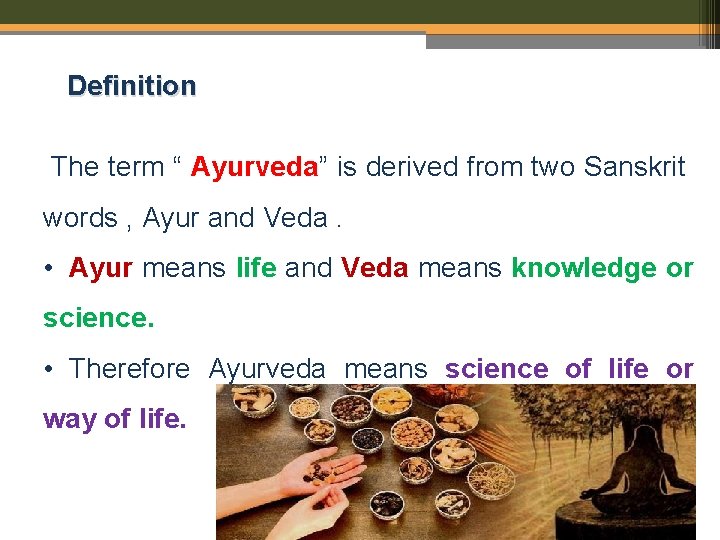
Definition The term “ Ayurveda” is derived from two Sanskrit words , Ayur and Veda. • Ayur means life and Veda means knowledge or science. • Therefore Ayurveda means science of life or way of life.
• Ayurveda incorporates science, religion and philosophy in it. • It is based on two hypothesis 1. Panchamahabhuta siddhanta Ayurveda is based on the hypothesis that everything in the universe is composed of five basic elements or Mahabhutas: earth, water, fire, air and space
2. Tridosha Siddhanta • • • It is the governering factors of pathophysiology of human body. Dosha means impurities or imbalance. The tridoshas are Vata (ether & air), Pitta (fire & water), and Kapha (water & earth ). These tridoshas in combination of five elements present in human body. It is believed that they are in harmony with each other, but in every human being one of them is dominating which, in turn is called as the prakruti of that person.
• Tridoshas are prsent in eight dhatus or ashtha dhatus (ex: Blood, Lymph, Adipose tissue, Flesh, Nervine tissue, Breating etc. ) of human body which produces three malas (excretory product) like Faeces, Urine and sweat. • When tridosha, ashthadhatu and mala are in balance with each other, it is called as healthy condition while imbalance causes a pathological condition.
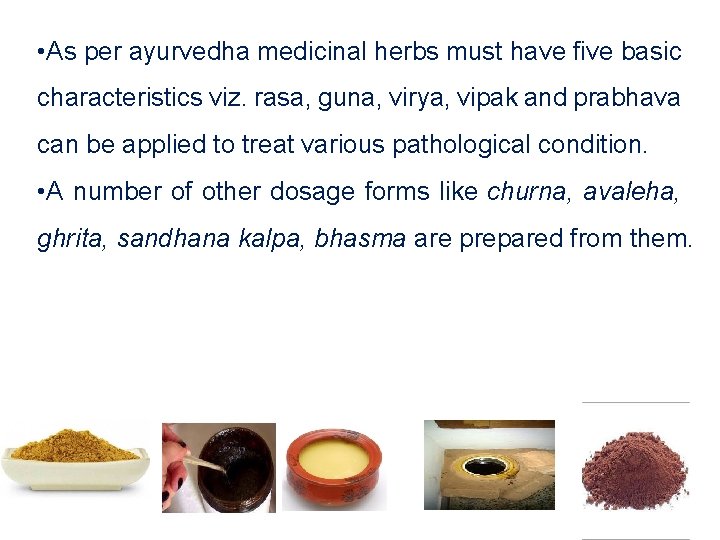
• As per ayurvedha medicinal herbs must have five basic characteristics viz. rasa, guna, virya, vipak and prabhava can be applied to treat various pathological condition. • A number of other dosage forms like churna, avaleha, ghrita, sandhana kalpa, bhasma are prepared from them.
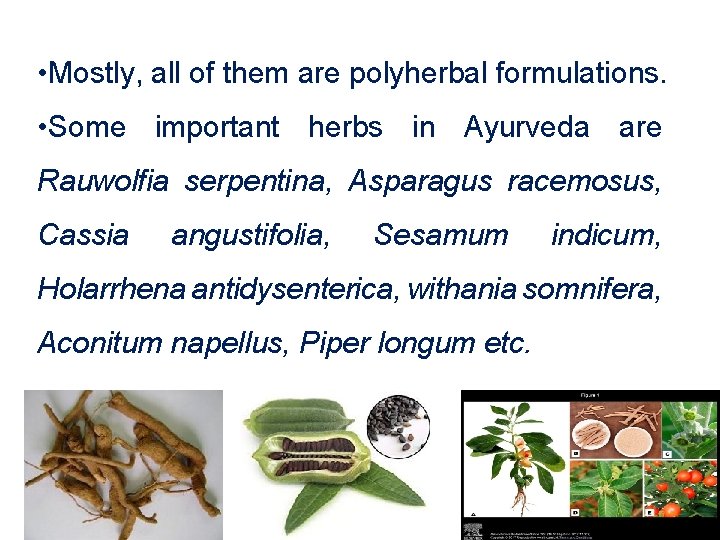
• Mostly, all of them are polyherbal formulations. • Some important herbs in Ayurveda are Rauwolfia serpentina, Asparagus racemosus, Cassia angustifolia, Sesamum indicum, Holarrhena antidysenterica, withania somnifera, Aconitum napellus, Piper longum etc.
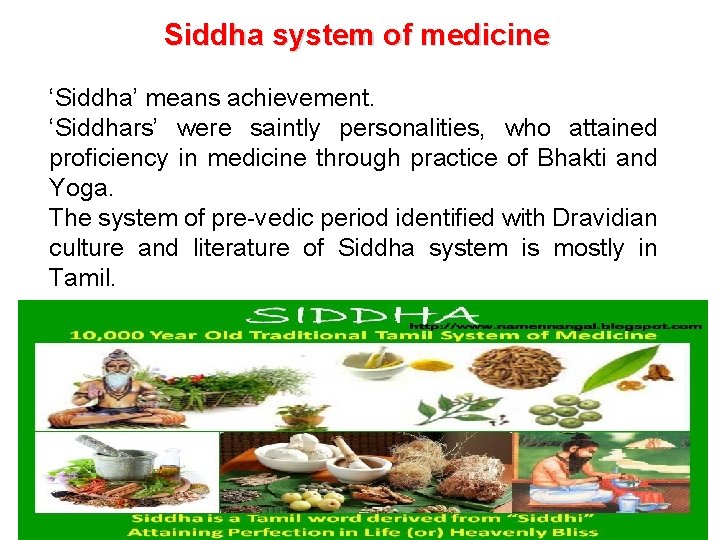
Siddha system of medicine ‘Siddha’ means achievement. ‘Siddhars’ were saintly personalities, who attained proficiency in medicine through practice of Bhakti and Yoga. The system of pre-vedic period identified with Dravidian culture and literature of Siddha system is mostly in Tamil.
Principle ØLike Ayurveda, this system was also based on the hypothesis that everything in the universe is composed of five basic elements: Earth, Water, Fire, Air, Space ØAccording to the Siddha medicine various physiological and psychological functions of the body are attributed to the combination of seven elements: Blood, Plasma, Adipose tissue, Flesh, Brain, Bone etc.
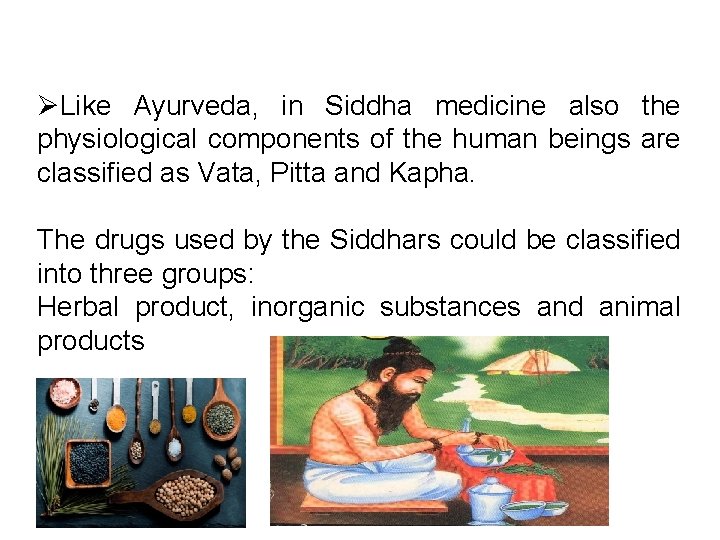
ØLike Ayurveda, in Siddha medicine also the physiological components of the human beings are classified as Vata, Pitta and Kapha. The drugs used by the Siddhars could be classified into three groups: Herbal product, inorganic substances and animal products
UNNANI SYSTEM OF MEDICINE • The roots of the system go deep to the times of Greek philosopher Hippocrates who is credited with it. • This system of Greek origin was further carried to Persia (Iran), where it has been improved by Arabian physicians. • This system is based on two theories viz. the Hippocratic theory of four humours (blood, phelgm, yellow bile and black bile) and the Pythagorean theory of four proximate qualities (hot, cold, moist and dry)
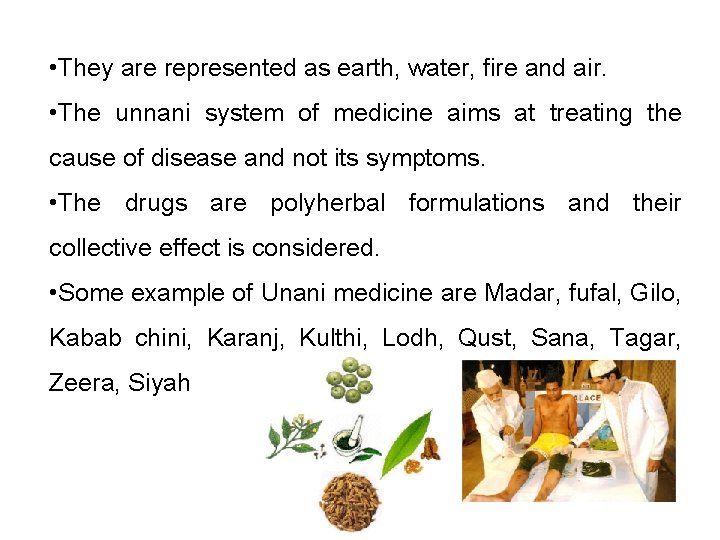
• They are represented as earth, water, fire and air. • The unnani system of medicine aims at treating the cause of disease and not its symptoms. • The drugs are polyherbal formulations and their collective effect is considered. • Some example of Unani medicine are Madar, fufal, Gilo, Kabab chini, Karanj, Kulthi, Lodh, Qust, Sana, Tagar, Zeera, Siyah
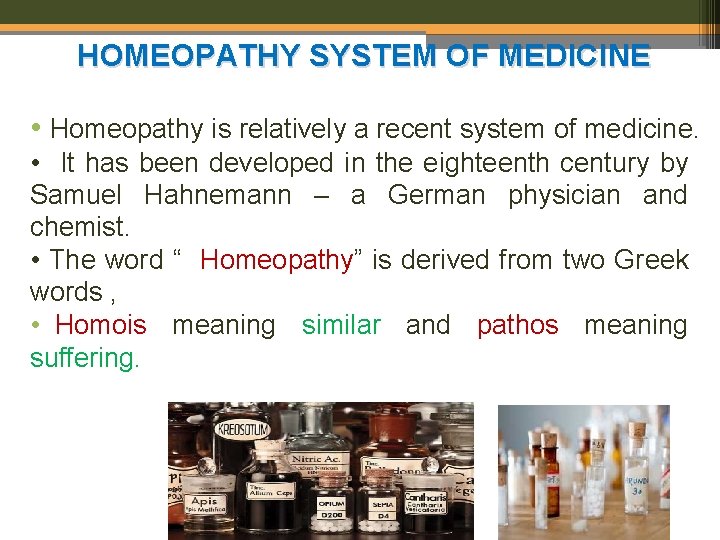
HOMEOPATHY SYSTEM OF MEDICINE • Homeopathy is relatively a recent system of medicine. • It has been developed in the eighteenth century by Samuel Hahnemann – a German physician and chemist. • The word “ Homeopathy” is derived from two Greek words , • Homois meaning similar and pathos meaning suffering.
Principle • The cause of the disease itself can be its treatment i. e. Law of similar. This is the basic principle of homeopathy. • The homeopathy based on the natural law of healing. “Similia Similibus Curentur ” which means “Likes are cured by likes” • According to Hahnemann, diseases are congenital and caused by gene mutations. • Toxic or poisonous substances are called Miasms are responsible for gene mutation
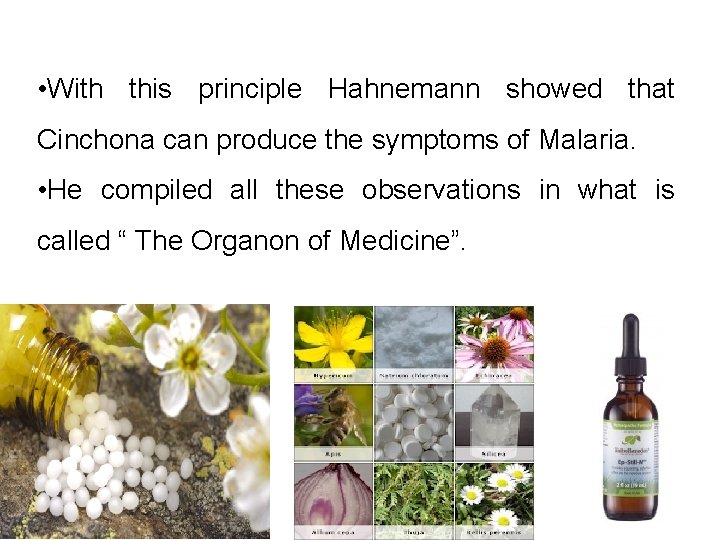
• With this principle Hahnemann showed that Cinchona can produce the symptoms of Malaria. • He compiled all these observations in what is called “ The Organon of Medicine”.
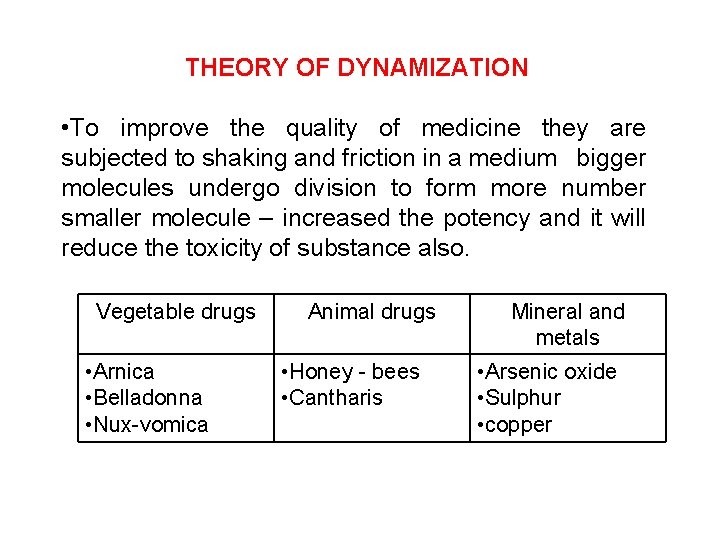
THEORY OF DYNAMIZATION • To improve the quality of medicine they are subjected to shaking and friction in a medium bigger molecules undergo division to form more number smaller molecule – increased the potency and it will reduce the toxicity of substance also. Vegetable drugs • Arnica • Belladonna • Nux-vomica Animal drugs • Honey - bees • Cantharis Mineral and metals • Arsenic oxide • Sulphur • copper
THANK YOU