Complex Transradial Interventions for CTOs 2010 Ramon Quesada




- Slides: 46
Complex Transradial Interventions for CTOs : 2010 Ramon Quesada, MD, FACP, FACC, FSCAI Medical Director, Interventional Cardiology Baptist Cardiac & Vascular Institute Miami, Florida
DISCLOSURES Ramon Quesada, MD I have no real or apparent conflicts of interest to report.
Disclosure Statement of Financial Interest Within the past 12 months, I or my spouse/partner have had a financial interest/arrangement or affiliation with the organization(s) listed below. Affiliation/Financial Relationship Grant/Research Support Consulting Fees/Honoraria Company None Abbott, Cordis, St. Jude, W. L. Gore, NMT Medical, Terumo & Boston Scientific Corporation Major Stock Shareholder/Equity None Royalty Income None Ownership/Founder None Intellectual Property Rights None Other Financial Benefit None
Why bother with TRA for a CTO? • • CTOs generally require larger catheters CTOs need bilateral coronary cannulation CTOs require longer flouroscopy times = more contrast and increased radiation for the patient and operator CTOs are technically much more difficult
CTOs generally require larger catheters Patient selection is critical since most CTOs require an 7 -8 Fr catheter TRA cannot be used in a smaller patient • • • Selective CTOs technically can be done through a 6 Fr catheter.
Why bother with TRA for a CTO? CTOs generally require larger catheters CTOs need bilateral coronary cannulation CTOs require longer flouroscopy times = more contrast and the patient and operator CTOs are technically much more difficult radiation for What about tortuosity and technical challenges? Tortuosity and technical challenges can be overcome since our main concern is with bleeding complications.
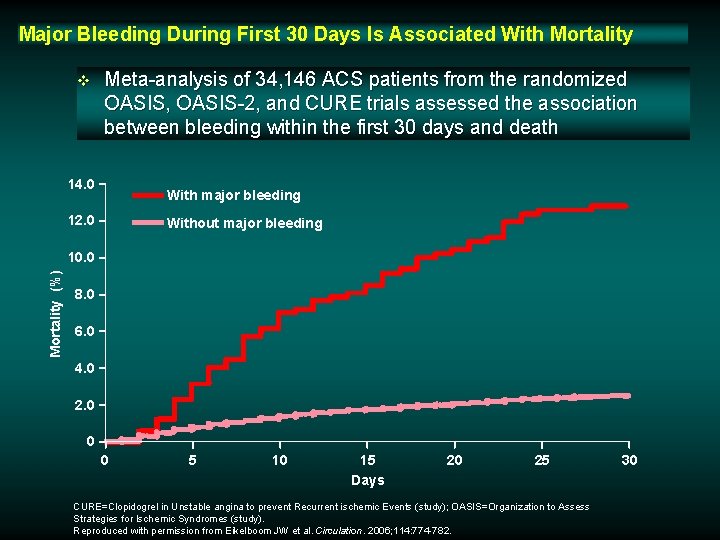
Major Bleeding During First 30 Days Is Associated With Mortality v Meta-analysis of 34, 146 ACS patients from the randomized OASIS, OASIS-2, and CURE trials assessed the association between bleeding within the first 30 days and death 14. 0 With major bleeding 12. 0 Without major bleeding Mortality (%) 10. 0 8. 0 6. 0 4. 0 2. 0 0 0 5 10 15 Days 20 25 CURE=Clopidogrel in Unstable angina to prevent Recurrent ischemic Events (study); OASIS=Organization to Assess Strategies for Ischemic Syndromes (study). Reproduced with permission from Eikelboom JW et al. Circulation. 2006; 114: 774 -782. 30
The Learning Curve: Transradial Pitfalls v Access v Radial Artery Spasm v Anatomical Variations v Transversing the Subclavian v Catheter Control and Backup
Radial Artery Occlusion v This directly correlates with the size of the catheter introducer v Alternatives include the sheathless approach and Remember patient selection!
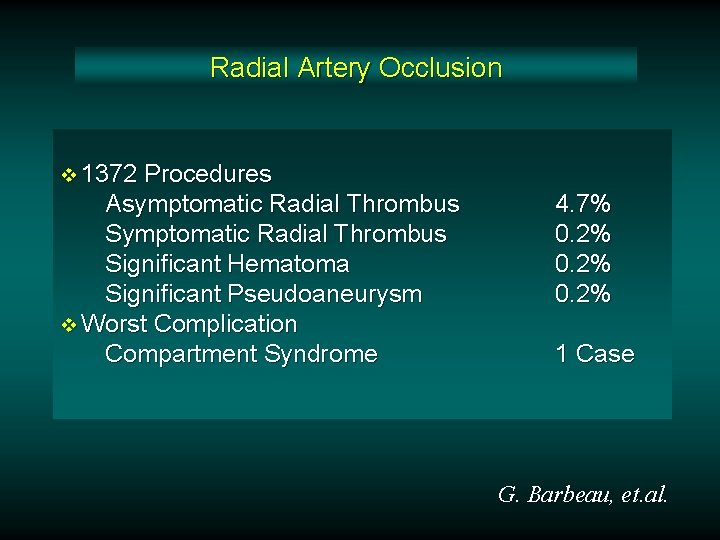
Radial Artery Occlusion v 1372 Procedures Asymptomatic Radial Thrombus Significant Hematoma Significant Pseudoaneurysm v Worst Complication Compartment Syndrome 4. 7% 0. 2% 1 Case G. Barbeau, et. al.
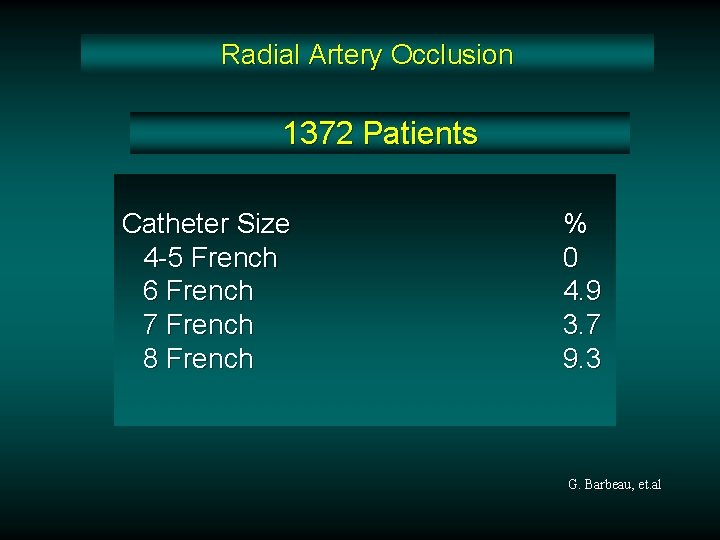
Radial Artery Occlusion 1372 Patients Catheter Size 4 -5 French 6 French 7 French 8 French % 0 4. 9 3. 7 9. 3 G. Barbeau, et. al
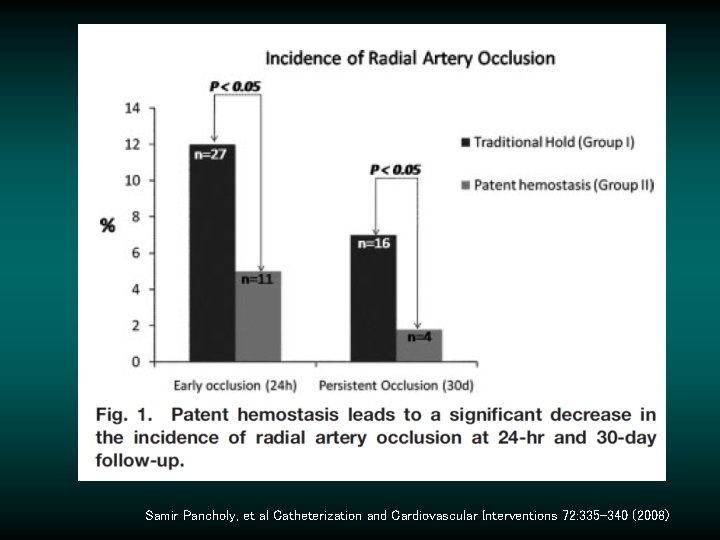
Samir Pancholy, et al Catheterization and Cardiovascular Interventions 72: 335– 340 (2008)
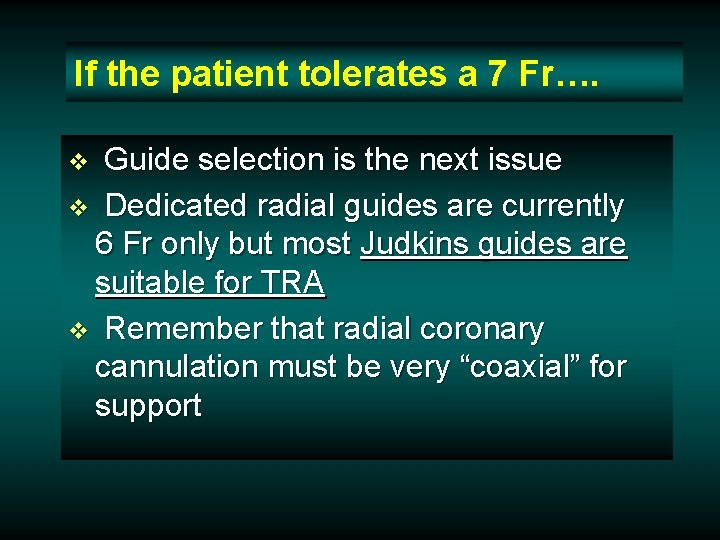
If the patient tolerates a 7 Fr…. Guide selection is the next issue v Dedicated radial guides are currently 6 Fr only but most Judkins guides are suitable for TRA v Remember that radial coronary cannulation must be very “coaxial” for support v
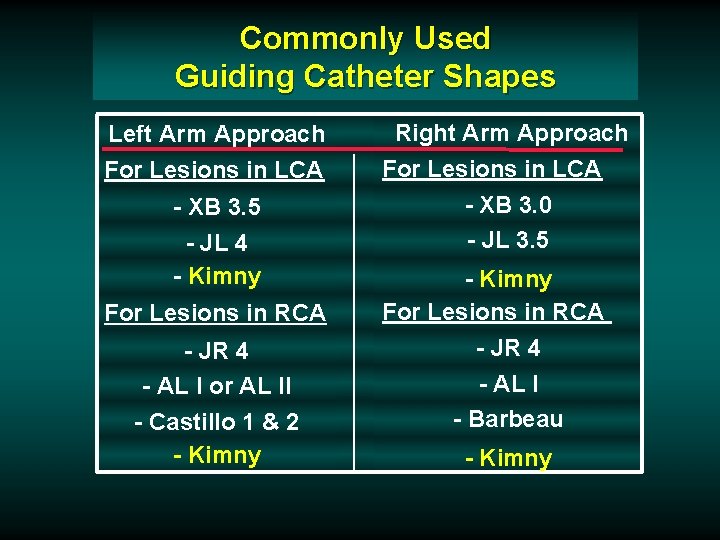
Commonly Used Guiding Catheter Shapes Left Arm Approach For Lesions in LCA - XB 3. 5 - JL 4 - Kimny For Lesions in RCA - JR 4 - AL I or AL II - Castillo 1 & 2 - Kimny Right Arm Approach For Lesions in LCA - XB 3. 0 - JL 3. 5 - Kimny For Lesions in RCA - JR 4 - AL I - Barbeau - Kimny
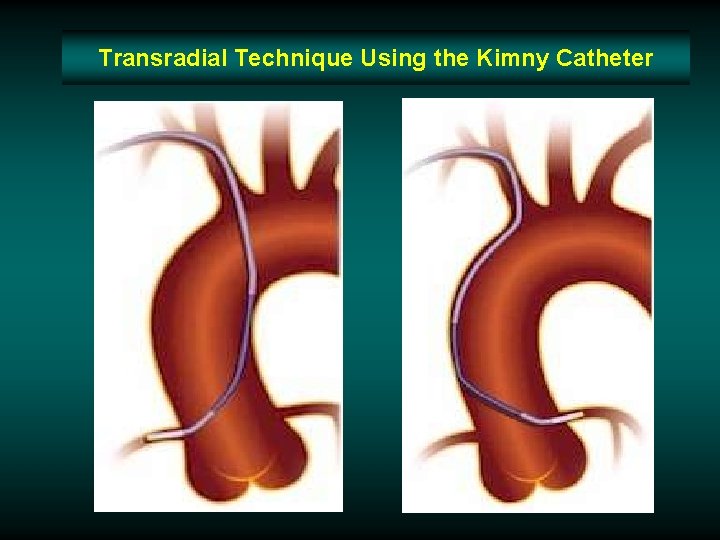
Transradial Technique Using the Kimny Catheter
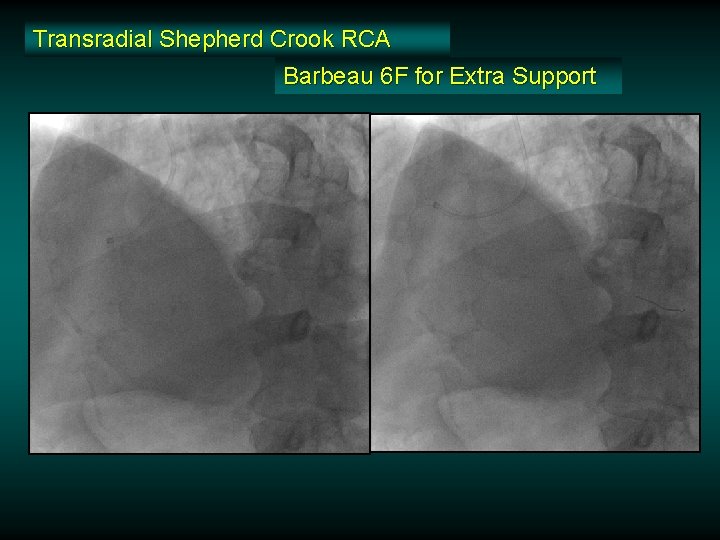
Transradial Shepherd Crook RCA Barbeau 6 F for Extra Support
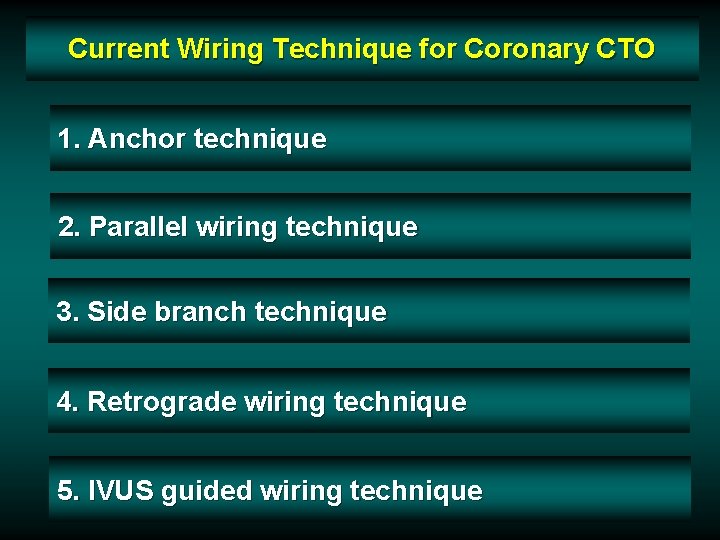
Current Wiring Technique for Coronary CTO 1. Anchor technique 2. Parallel wiring technique 3. Side branch technique 4. Retrograde wiring technique 5. IVUS guided wiring technique
Can you apply all the CTO techniques via the transradial approach?
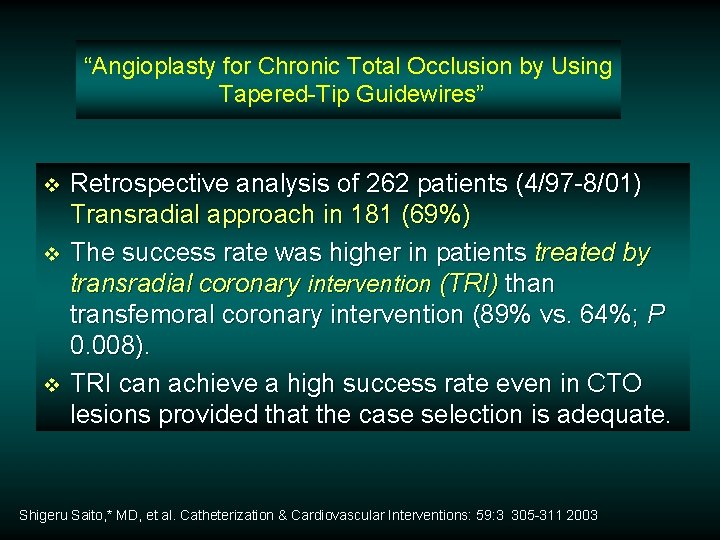
“Angioplasty for Chronic Total Occlusion by Using Tapered-Tip Guidewires” v v v Retrospective analysis of 262 patients (4/97 -8/01) Transradial approach in 181 (69%) The success rate was higher in patients treated by transradial coronary intervention (TRI) than transfemoral coronary intervention (89% vs. 64%; P 0. 008). TRI can achieve a high success rate even in CTO lesions provided that the case selection is adequate. Shigeru Saito, * MD, et al. Catheterization & Cardiovascular Interventions: 59: 3 305 -311 2003
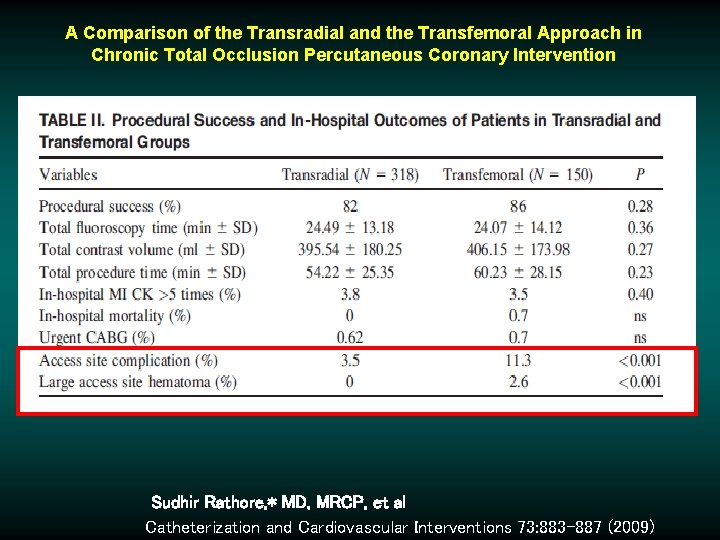
A Comparison of the Transradial and the Transfemoral Approach in Chronic Total Occlusion Percutaneous Coronary Intervention Sudhir Rathore, * MD, MRCP, et al Catheterization and Cardiovascular Interventions 73: 883– 887 (2009)
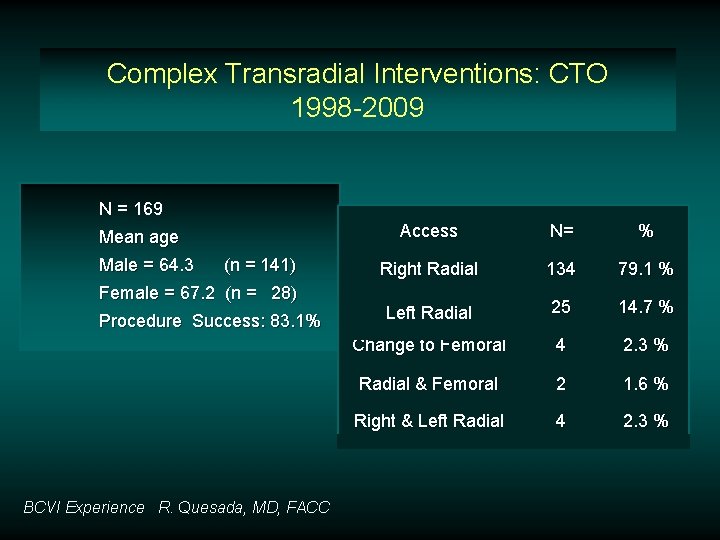
Complex Transradial Interventions: CTO 1998 -2009 N = 169 Mean age Male = 64. 3 (n = 141) Female = 67. 2 (n = 28) Procedure Success: 83. 1% BCVI Experience R. Quesada, MD, FACC Access N= % Right Radial 134 79. 1 % Left Radial 25 14. 7 % Change to Femoral 4 2. 3 % Radial & Femoral 2 1. 6 % Right & Left Radial 4 2. 3 %
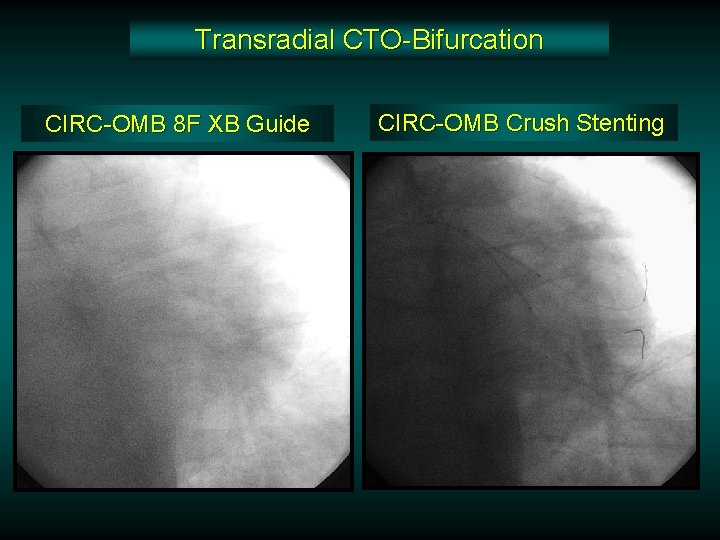
Transradial CTO-Bifurcation CIRC-OMB 8 F XB Guide CIRC-OMB Crush Stenting
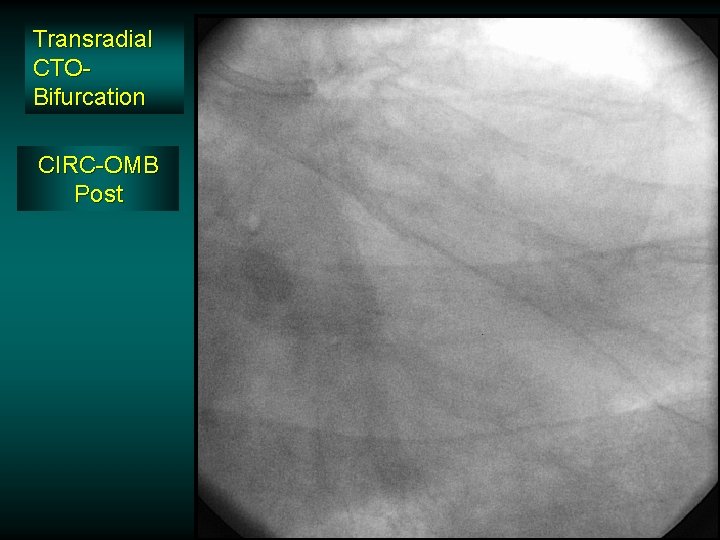
Transradial CTOBifurcation CIRC-OMB Post
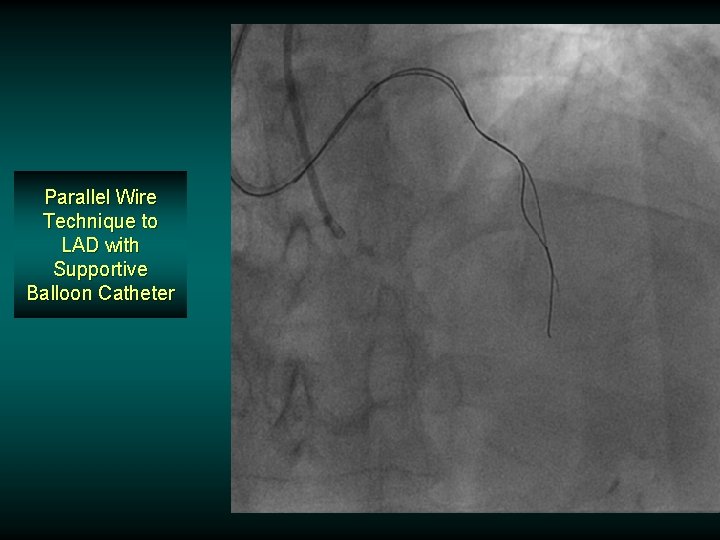
Parallel Wire Technique to LAD with Supportive Balloon Catheter
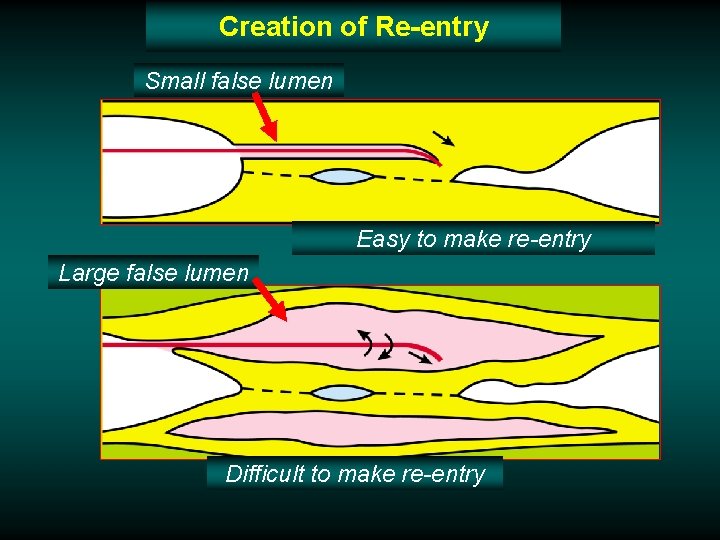
Creation of Re-entry Small false lumen True lumen Easy to make re-entry Large false lumen Difficult to make re-entry
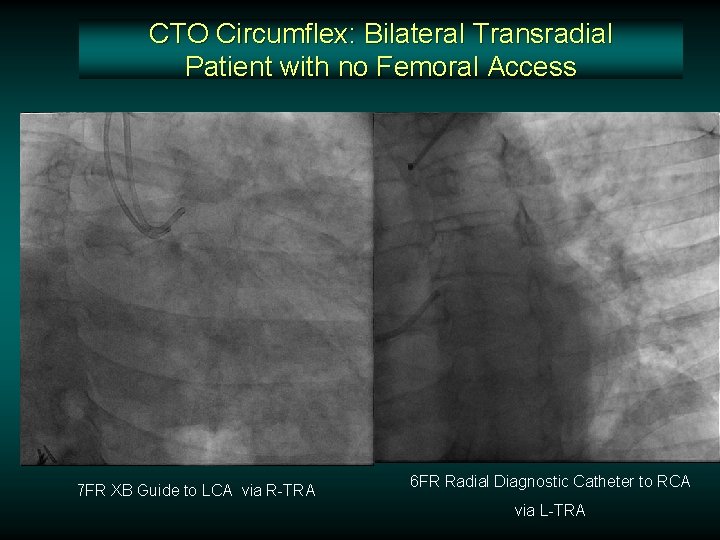
CTO Circumflex: Bilateral Transradial Patient with no Femoral Access 7 FR XB Guide to LCA via R-TRA 6 FR Radial Diagnostic Catheter to RCA via L-TRA
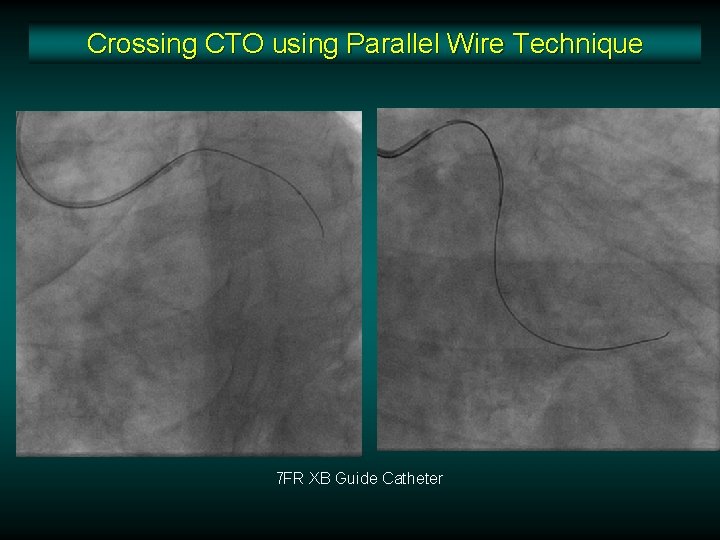
Crossing CTO using Parallel Wire Technique 7 FR XB Guide Catheter
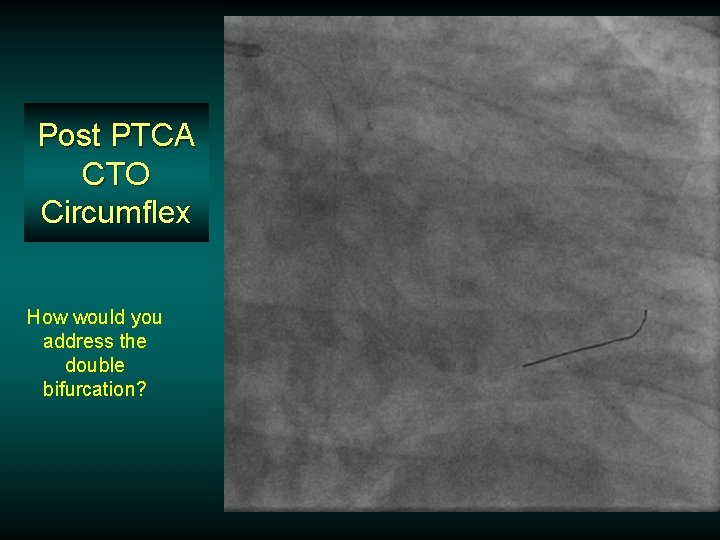
Post PTCA CTO Circumflex How would you address the double bifurcation?
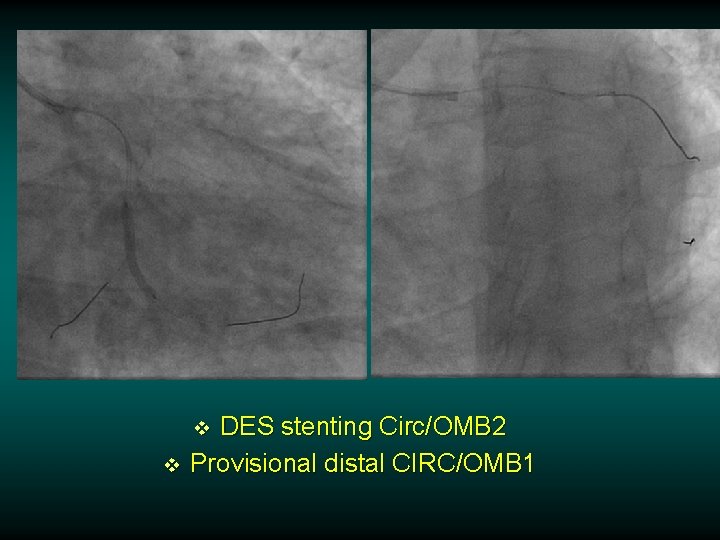
DES stenting Circ/OMB 2 Provisional distal CIRC/OMB 1 v v
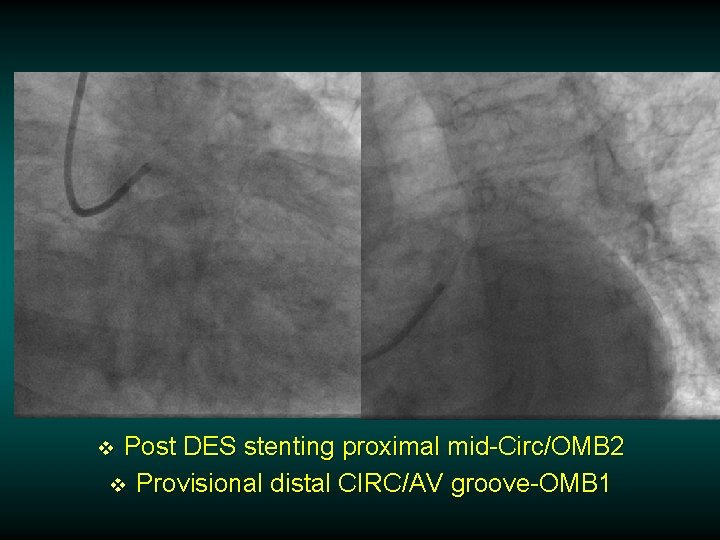
Post DES stenting proximal mid-Circ/OMB 2 v Provisional distal CIRC/AV groove-OMB 1 v
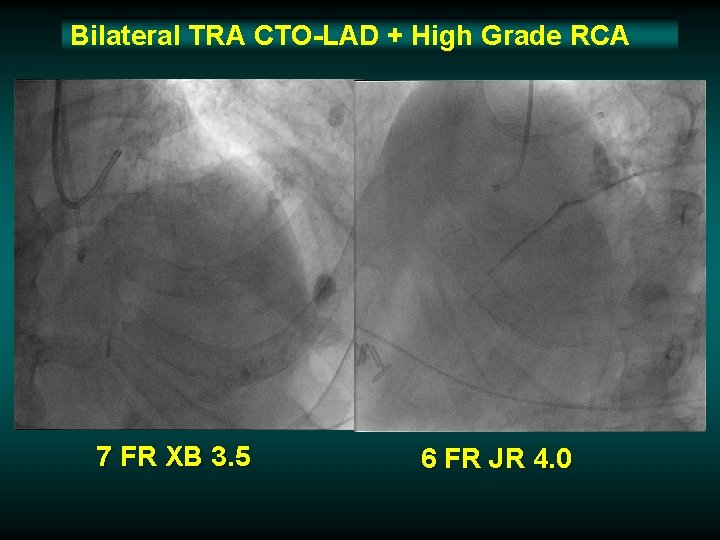
Bilateral TRA CTO-LAD + High Grade RCA 7 FR XB 3. 5 6 FR JR 4. 0
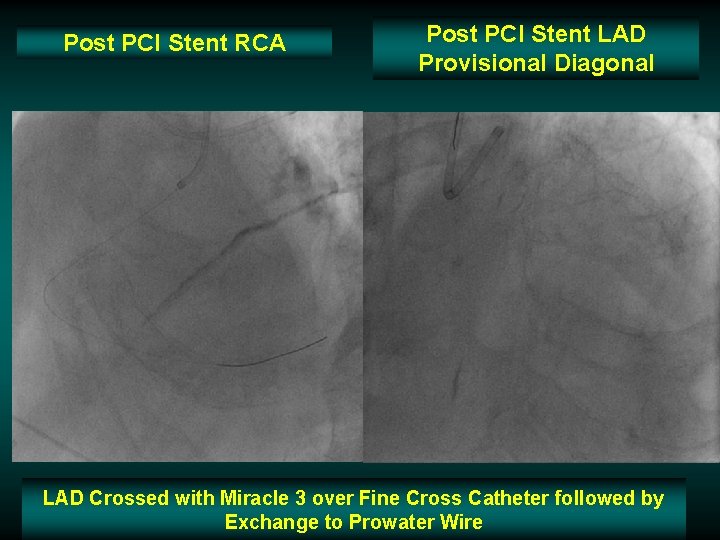
Post PCI Stent RCA Post PCI Stent LAD Provisional Diagonal LAD Crossed with Miracle 3 over Fine Cross Catheter followed by Exchange to Prowater Wire
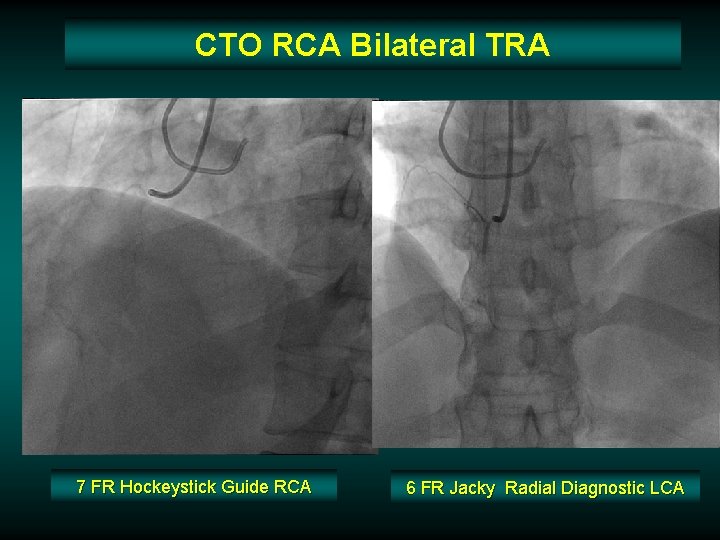
CTO RCA Bilateral TRA 7 FR Hockeystick Guide RCA 6 FR Jacky Radial Diagnostic LCA
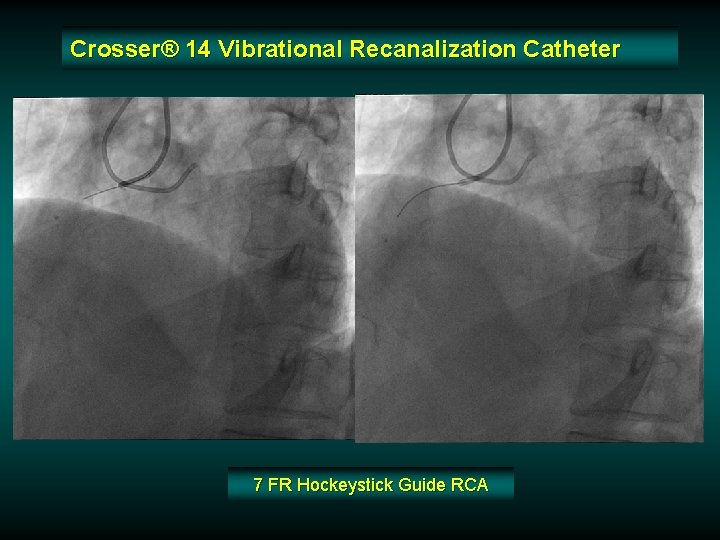
Crosser® 14 Vibrational Recanalization Catheter 7 FR Hockeystick Guide RCA
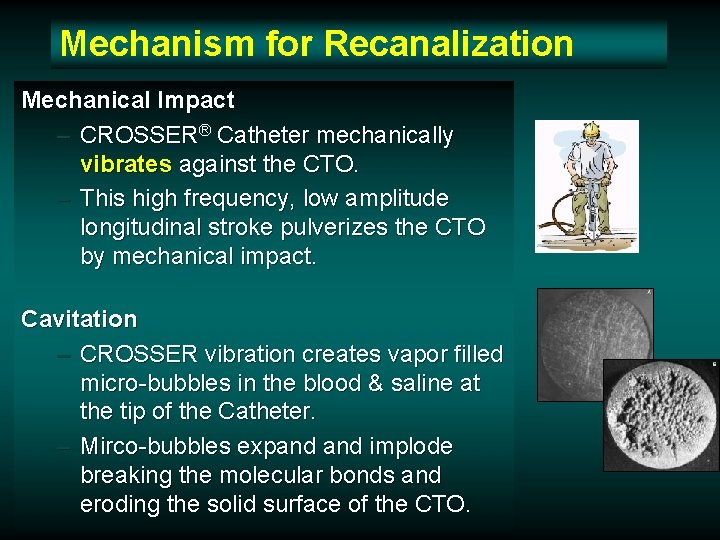
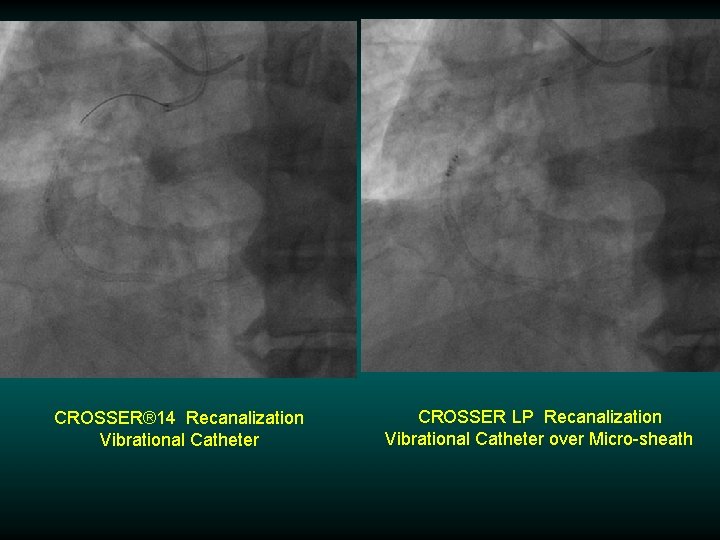
Mechanism for Recanalization Mechanical Impact – CROSSER® Catheter mechanically vibrates against the CTO. – This high frequency, low amplitude longitudinal stroke pulverizes the CTO by mechanical impact. Cavitation – CROSSER vibration creates vapor filled micro-bubbles in the blood & saline at the tip of the Catheter. – Mirco-bubbles expand implode breaking the molecular bonds and eroding the solid surface of the CTO.
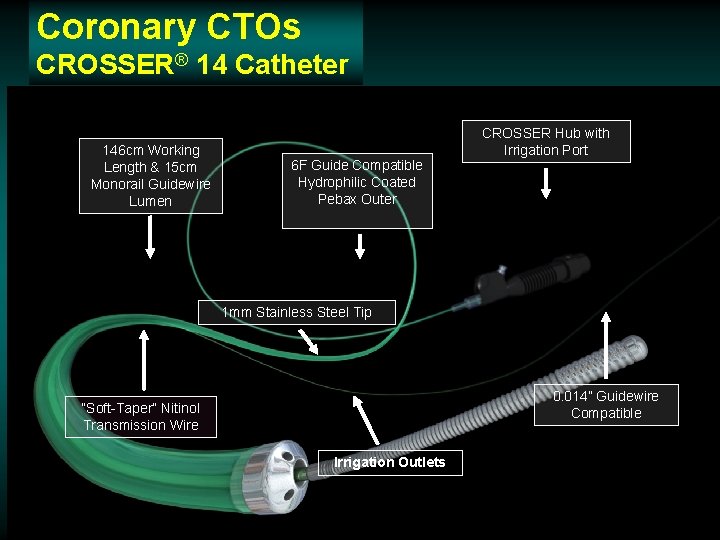
Coronary CTOs CROSSER® 14 Catheter 146 cm Working Length & 15 cm Monorail Guidewire Lumen CROSSER Hub with Irrigation Port 6 F Guide Compatible Hydrophilic Coated Pebax Outer 1 mm Stainless Steel Tip 0. 014” Guidewire Compatible “Soft-Taper” Nitinol Transmission Wire Irrigation Outlets 36
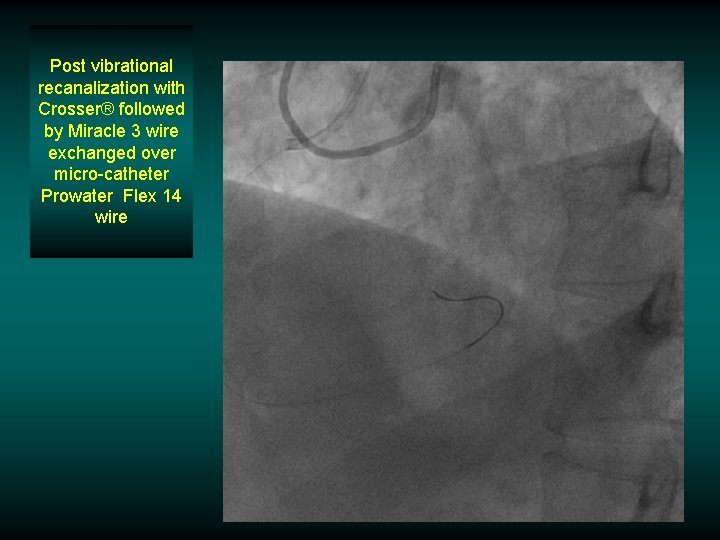
Post vibrational recanalization with Crosser® followed by Miracle 3 wire exchanged over micro-catheter Prowater Flex 14 wire
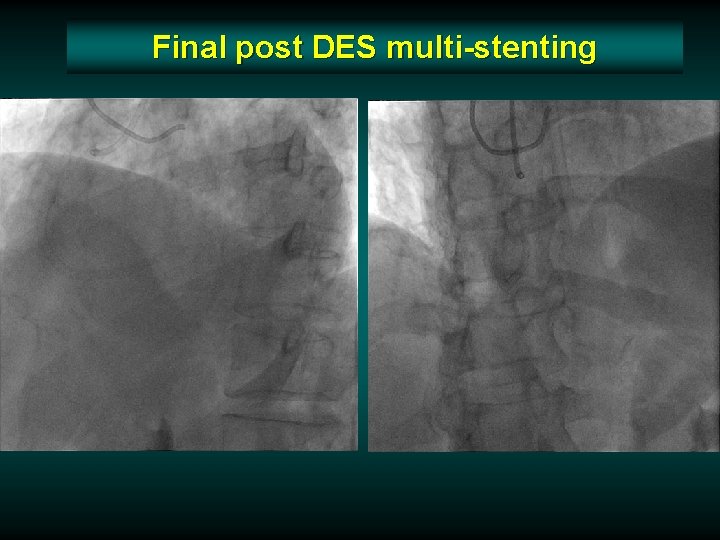
Final post DES multi-stenting
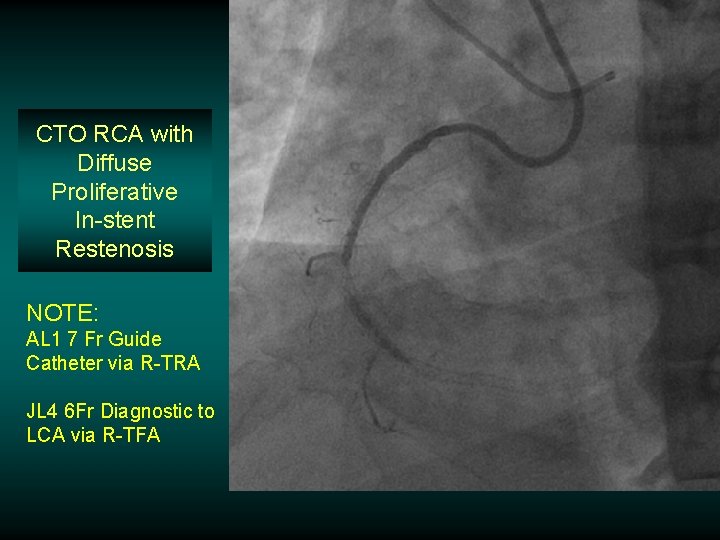
CTO RCA with Diffuse Proliferative In-stent Restenosis NOTE: AL 1 7 Fr Guide Catheter via R-TRA JL 4 6 Fr Diagnostic to LCA via R-TFA
CROSSER® 14 Recanalization Vibrational Catheter CROSSER LP Recanalization Vibrational Catheter over Micro-sheath
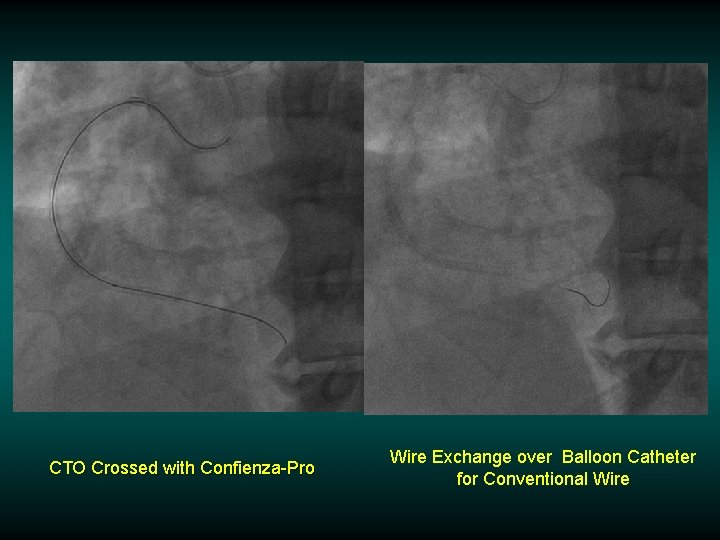
CTO Crossed with Confienza-Pro Wire Exchange over Balloon Catheter for Conventional Wire
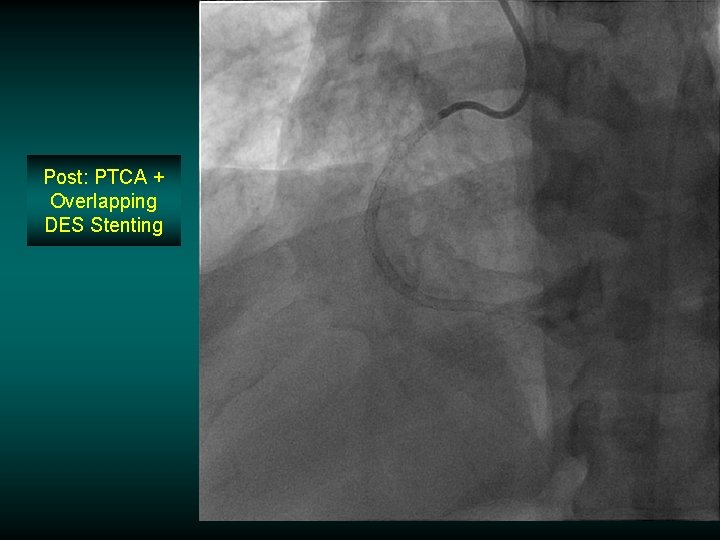
Post: PTCA + Overlapping DES Stenting
Can you apply all the CTO techniques via the transradial approach? YES! So why aren’t more interventionalists employing this approach?
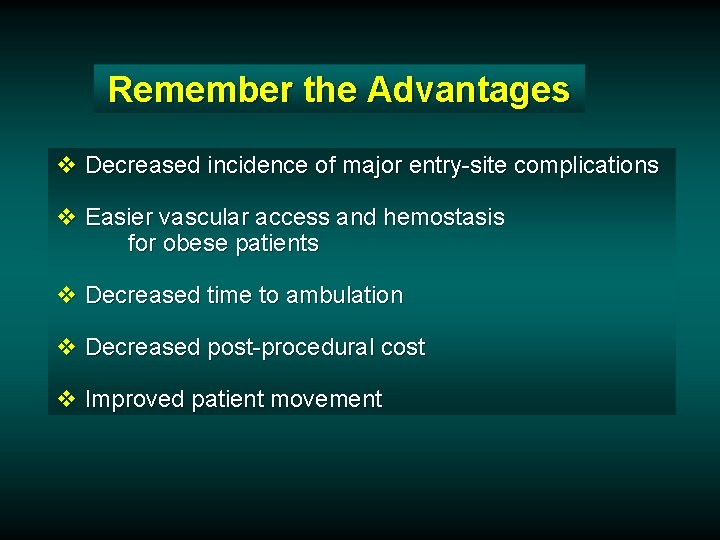
Remember the Advantages v Decreased incidence of major entry-site complications v Easier vascular access and hemostasis for obese patients v Decreased time to ambulation v Decreased post-procedural cost v Improved patient movement
International Symposium on Endovascular Therapy Save the Date January , 2011 Thank You