1 1 2 The Scientific Method Process of

- Slides: 39
1. 1. 2 The Scientific Method Process of the Scientific Method
Learning Objectives - Biology Definition of the term Biology? Name and explain at least three areas of study incorporated in Biology?
Definition for Biology BIOLOGY is the study of living things
Biology has many different areas of study n n n n Anatomy Biochemistry Botany Ecology Genetics Microbiology Physiology Zoology
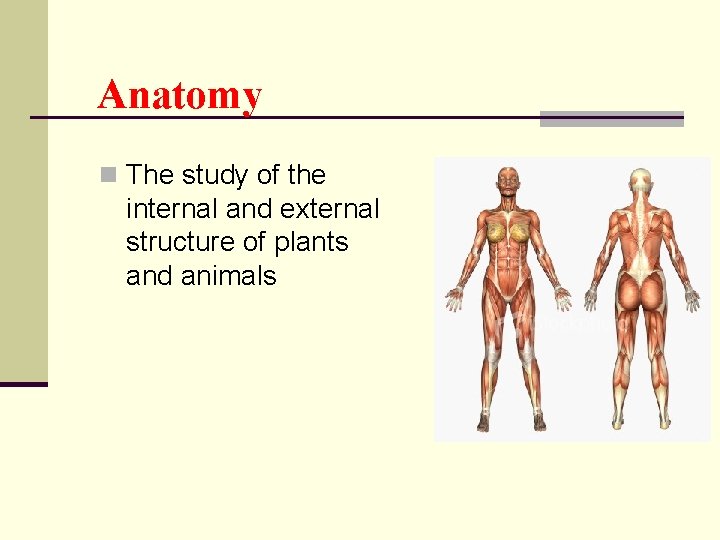
Anatomy n The study of the internal and external structure of plants and animals
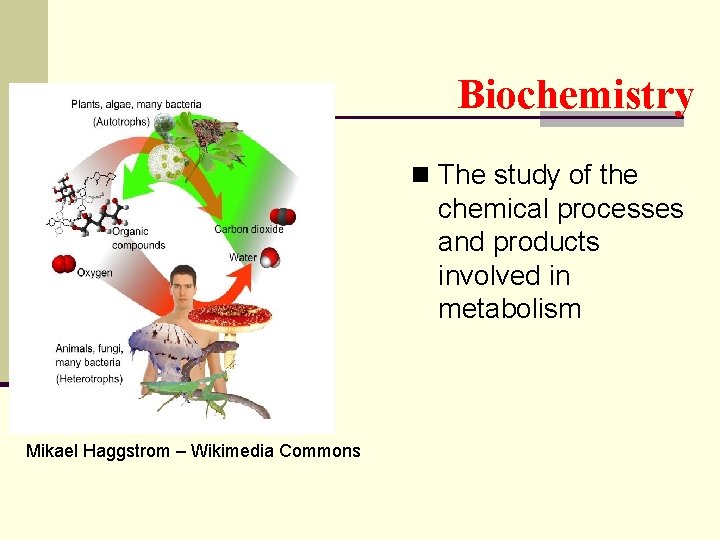
Biochemistry n The study of the chemical processes and products involved in metabolism Mikael Haggstrom – Wikimedia Commons
Botany n The study of plant structure, physiology, distribution and classification
Learning Objectives – Scientific Method n State the process of the Scientific Method n State the limitations of value of the Scientific Method n State some possible sources of errors 8
The Scientific Method n The scientific method is a way to solve a problem n This is the method on which all projects should be based. 9
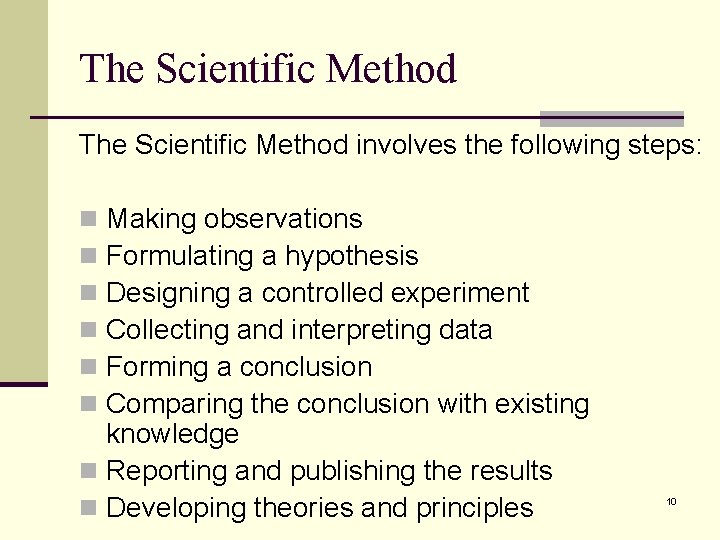
The Scientific Method involves the following steps: Making observations Formulating a hypothesis Designing a controlled experiment Collecting and interpreting data Forming a conclusion Comparing the conclusion with existing knowledge n Reporting and publishing the results n Developing theories and principles n n n 10
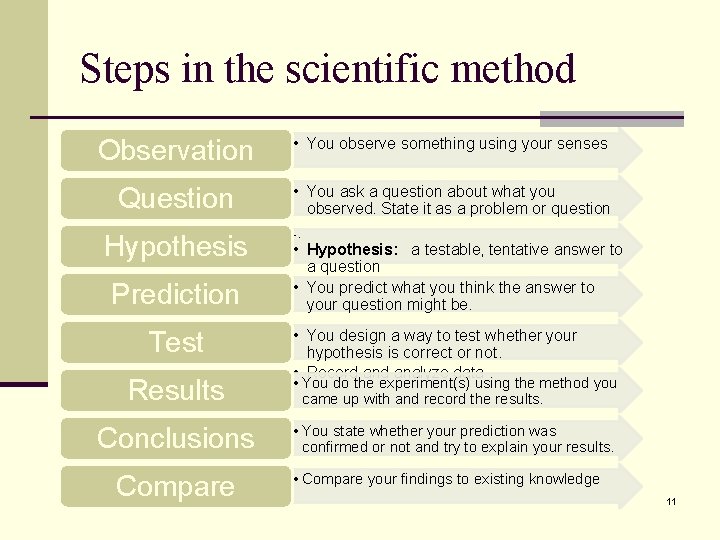
Steps in the scientific method Observation • You observe something using your senses Question • You ask a question about what you observed. State it as a problem or question Hypothesis Prediction Test • . • Hypothesis: a testable‚ tentative answer to a question • You predict what you think the answer to your question might be. • You design a way to test whether your hypothesis is correct or not. • Record analyze data Results • You do the experiment(s) using the method you came up with and record the results. Conclusions • You state whether your prediction was confirmed or not and try to explain your results. Compare • Compare your findings to existing knowledge 11
Observation n You observe something using your senses or machines which are basically extensions of those senses. 12
Question n You ask a question about what you observed. State it as a problem or question. 13
Learning check n What are the steps in the Scientific Method? 14
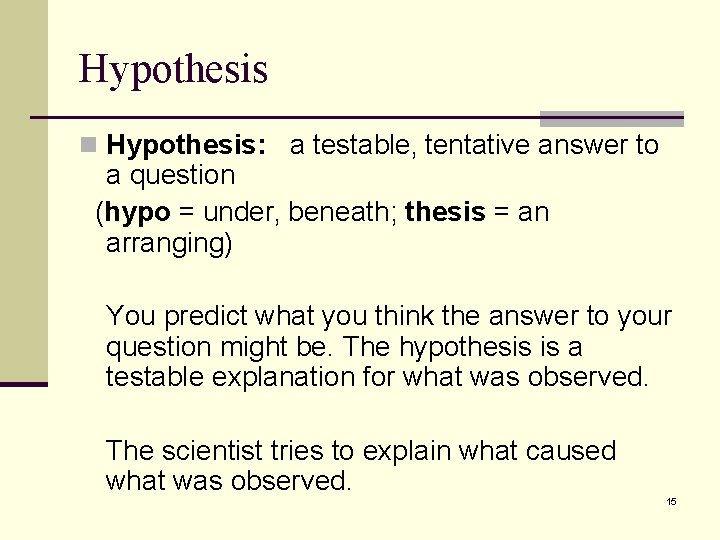
Hypothesis n Hypothesis: a testable‚ tentative answer to a question (hypo = under‚ beneath; thesis = an arranging) You predict what you think the answer to your question might be. The hypothesis is a testable explanation for what was observed. The scientist tries to explain what caused what was observed. 15
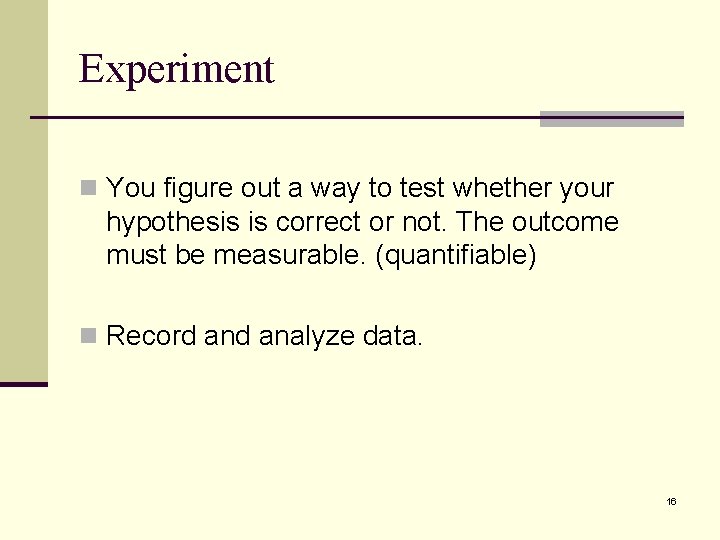
Experiment n You figure out a way to test whether your hypothesis is correct or not. The outcome must be measurable. (quantifiable) n Record analyze data. 16
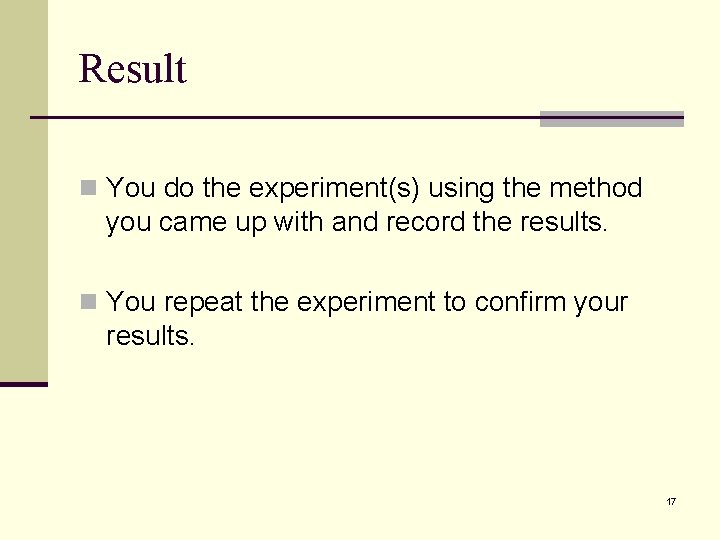
Result n You do the experiment(s) using the method you came up with and record the results. n You repeat the experiment to confirm your results. 17
Learning check What is the next step? n The Conclusion 18
Conclusion n You state whether your prediction was confirmed or not and try to explain your results. 19
Compare n You compare your conclusion with existing knowledge. 20
Finally n You Report and Publish your results. n You Develop a theory or principle. 21
Need to know n State the process of the Scientific Method Explain the following: n Observation ■ Hypothesis n Design Experiment n Record & Analyze Data n Conclusions n Compare to Existing Knowledge, n Reporting ■ Theory ■ Principle 22
1. 1. 2 The Scientific Method Limitations of the Scientific Method
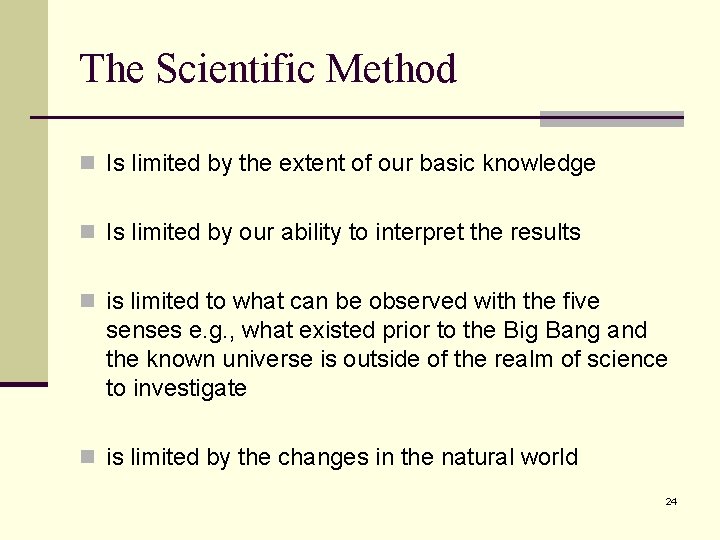
The Scientific Method n Is limited by the extent of our basic knowledge n Is limited by our ability to interpret the results n is limited to what can be observed with the five senses e. g. , what existed prior to the Big Bang and the known universe is outside of the realm of science to investigate n is limited by the changes in the natural world 24
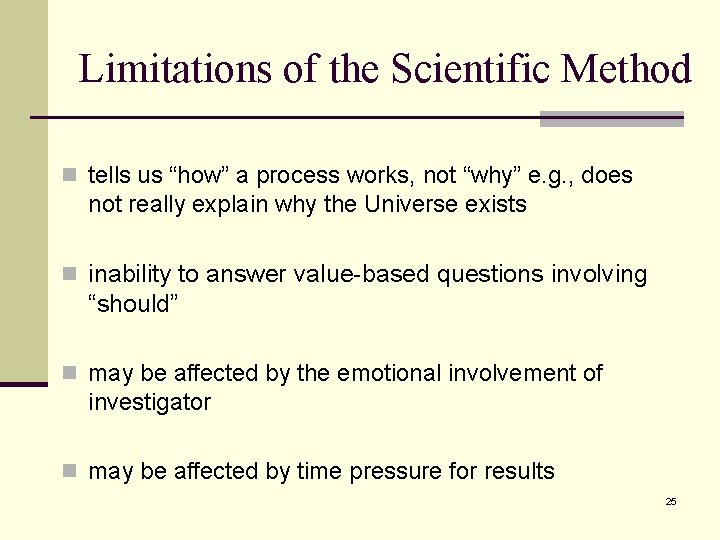
Limitations of the Scientific Method n tells us “how” a process works, not “why” e. g. , does not really explain why the Universe exists n inability to answer value-based questions involving “should” n may be affected by the emotional involvement of investigator n may be affected by time pressure for results 25
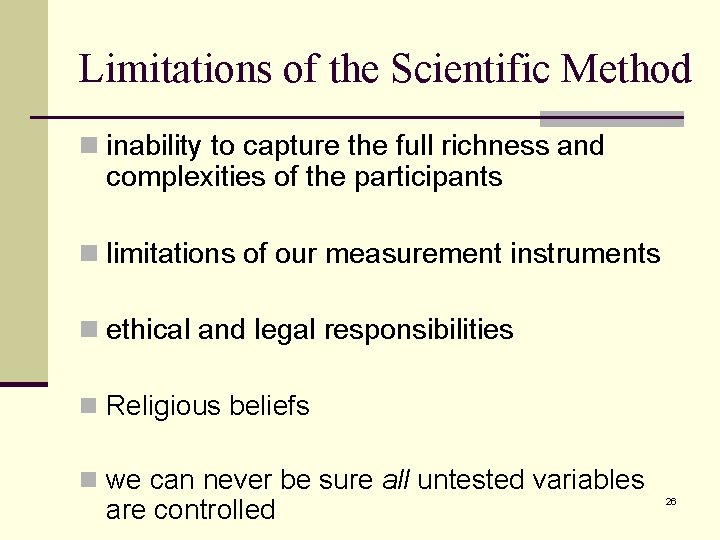
Limitations of the Scientific Method n inability to capture the full richness and complexities of the participants n limitations of our measurement instruments n ethical and legal responsibilities n Religious beliefs n we can never be sure all untested variables are controlled 26
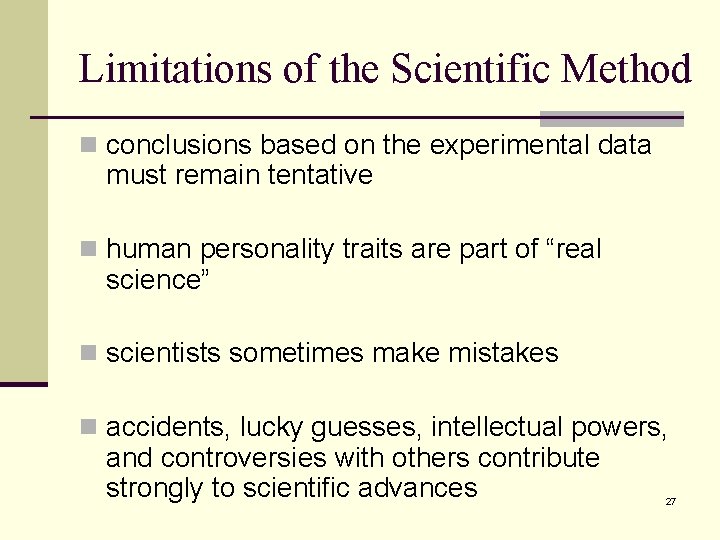
Limitations of the Scientific Method n conclusions based on the experimental data must remain tentative n human personality traits are part of “real science” n scientists sometimes make mistakes n accidents, lucky guesses, intellectual powers, and controversies with others contribute strongly to scientific advances 27
Need to know n State the limitations of value of the Scientific Method 28
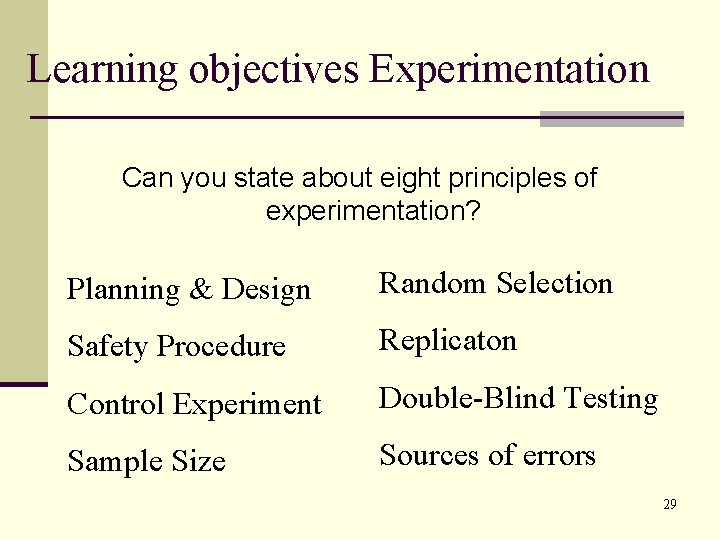
Learning objectives Experimentation Can you state about eight principles of experimentation? Planning & Design Random Selection Safety Procedure Replicaton Control Experiment Double-Blind Testing Sample Size Sources of errors 29
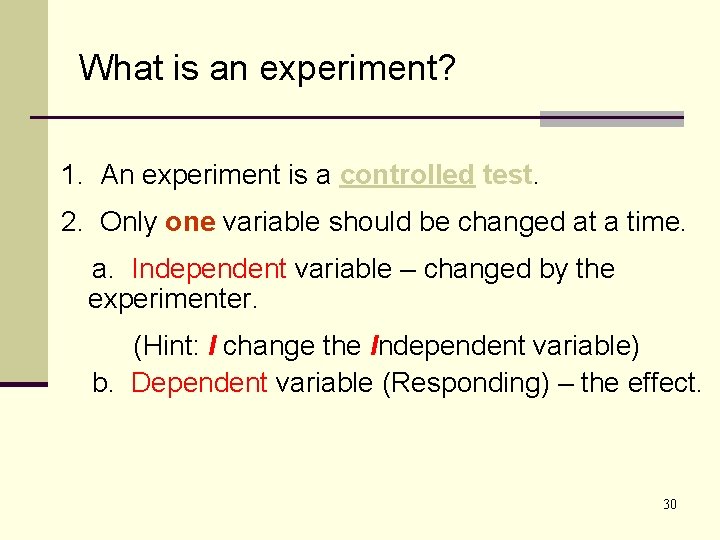
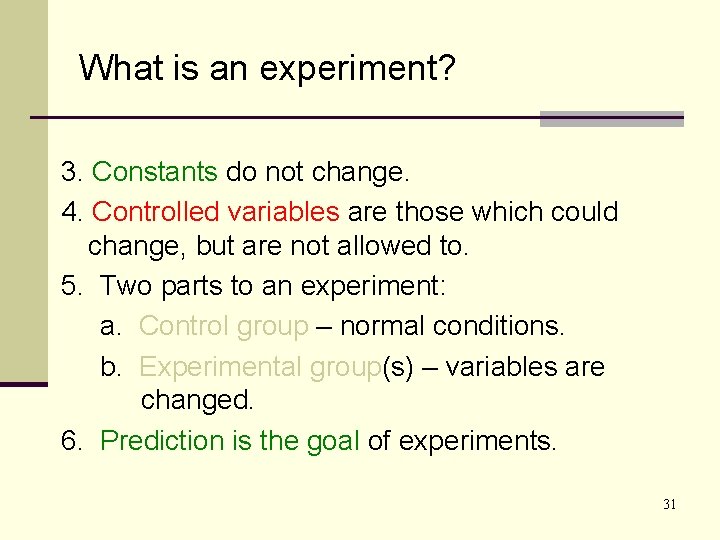
What is an experiment? 1. An experiment is a controlled test. 2. Only one variable should be changed at a time. a. Independent variable – changed by the experimenter. (Hint: I change the Independent variable) b. Dependent variable (Responding) – the effect. 30
What is an experiment? 3. Constants do not change. 4. Controlled variables are those which could change, but are not allowed to. 5. Two parts to an experiment: a. Control group – normal conditions. b. Experimental group(s) – variables are changed. 6. Prediction is the goal of experiments. 31
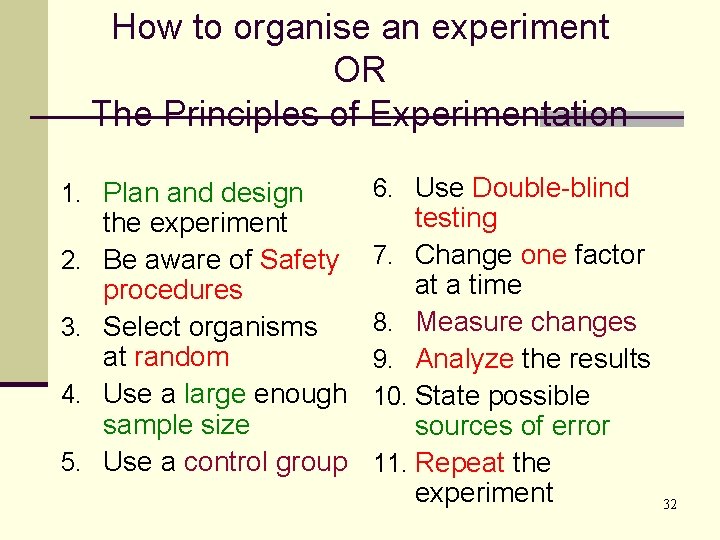
How to organise an experiment OR The Principles of Experimentation 1. Plan and design 2. 3. 4. 5. the experiment Be aware of Safety procedures Select organisms at random Use a large enough sample size Use a control group 6. Use Double-blind testing 7. Change one factor at a time 8. Measure changes 9. Analyze the results 10. State possible sources of error 11. Repeat the experiment 32
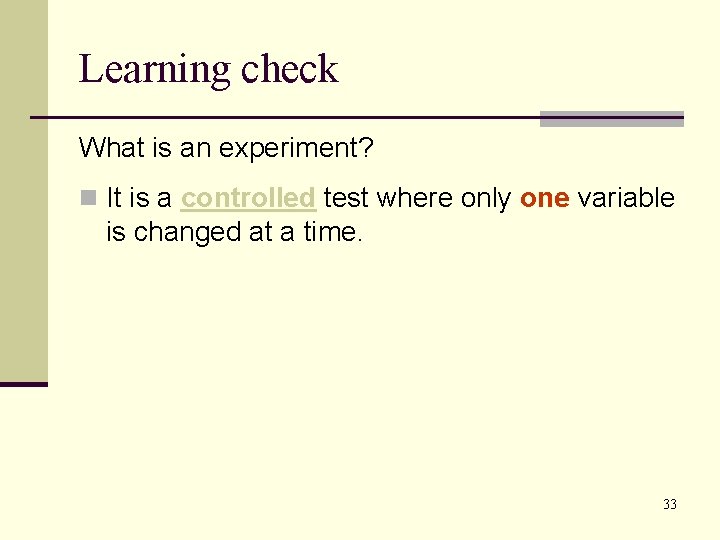
Learning check What is an experiment? n It is a controlled test where only one variable is changed at a time. 33
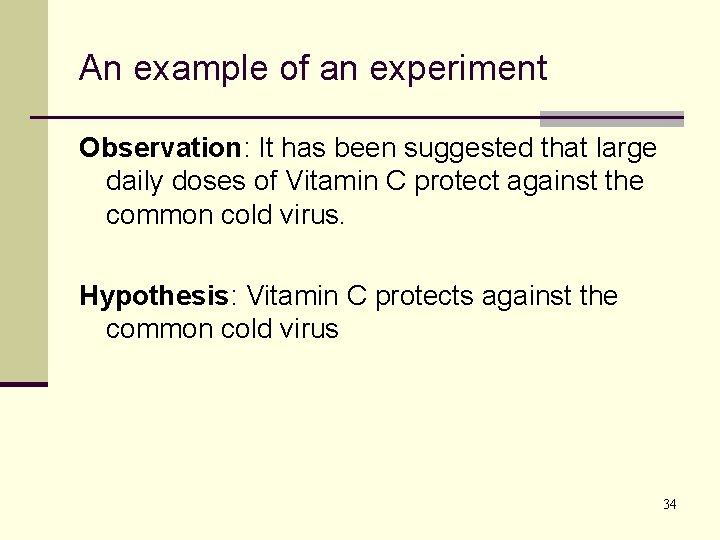
An example of an experiment Observation: It has been suggested that large daily doses of Vitamin C protect against the common cold virus. Hypothesis: Vitamin C protects against the common cold virus 34
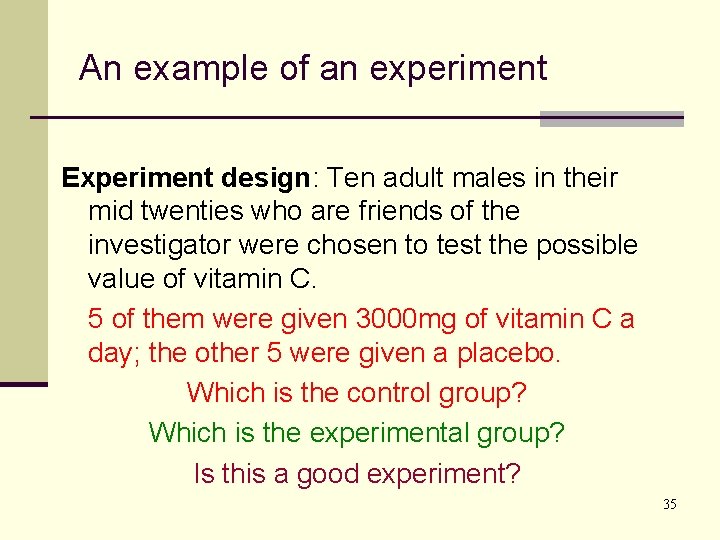
An example of an experiment Experiment design: Ten adult males in their mid twenties who are friends of the investigator were chosen to test the possible value of vitamin C. 5 of them were given 3000 mg of vitamin C a day; the other 5 were given a placebo. Which is the control group? Which is the experimental group? Is this a good experiment? 35
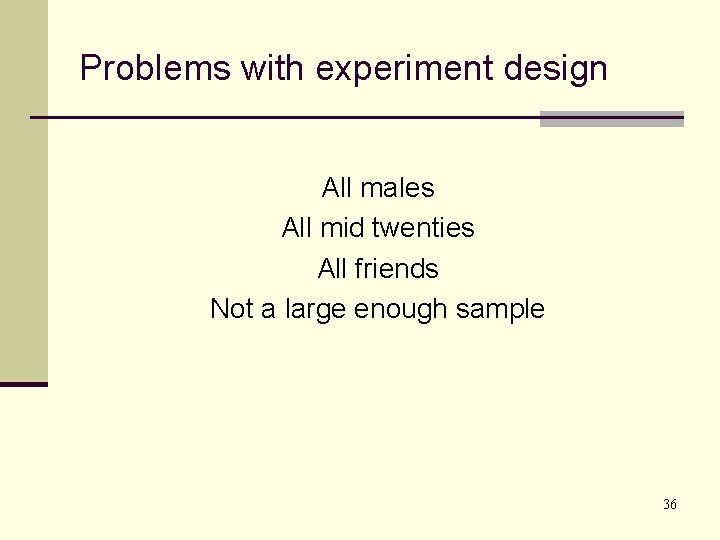
Problems with experiment design All males All mid twenties All friends Not a large enough sample 36
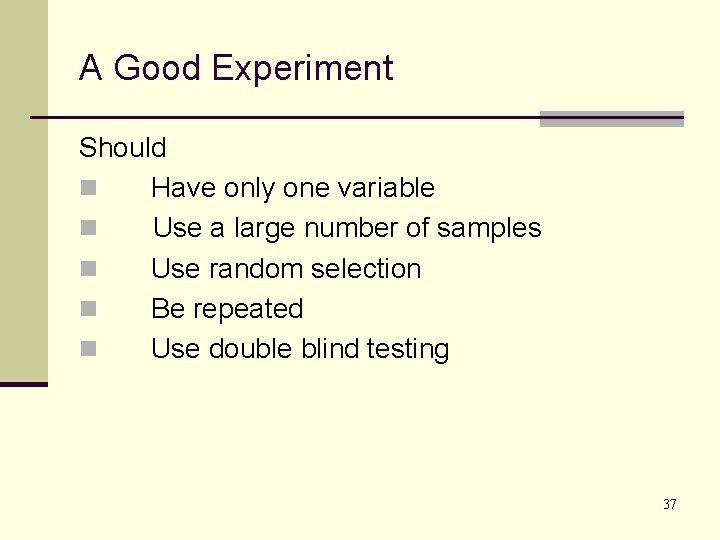
A Good Experiment Should n Have only one variable n Use a large number of samples n Use random selection n Be repeated n Use double blind testing 37
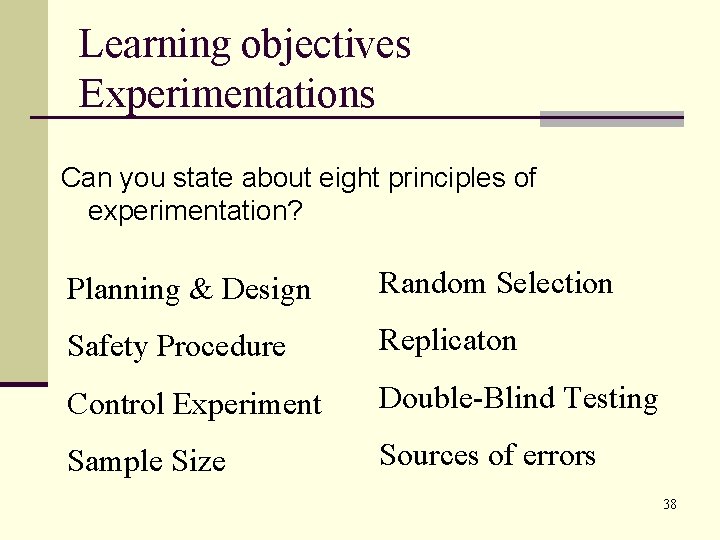
Learning objectives Experimentations Can you state about eight principles of experimentation? Planning & Design Random Selection Safety Procedure Replicaton Control Experiment Double-Blind Testing Sample Size Sources of errors 38
END 39