Wound Care Jeanne Lowe Ph D RN CWCN








- Slides: 68
Wound Care Jeanne Lowe Ph. D, RN, CWCN VA HSR&D Center of Excellence
Wound Care Objectives: • Describe skin function and structure • Discuss normal phases of healing • Identify factors that can interfere with normal healing • Describe basics of wound assessment • Discuss different categories of wound dressings 2
Functions of the Skin Protection Thermoregulation Sensation Metabolism Communication 3
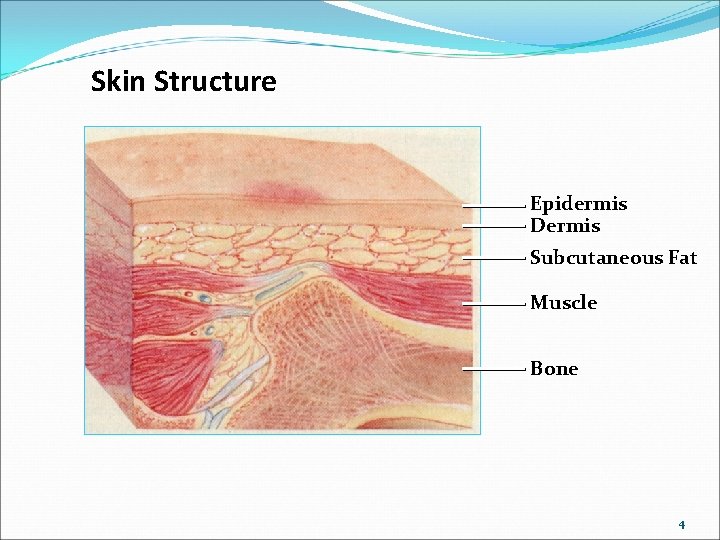
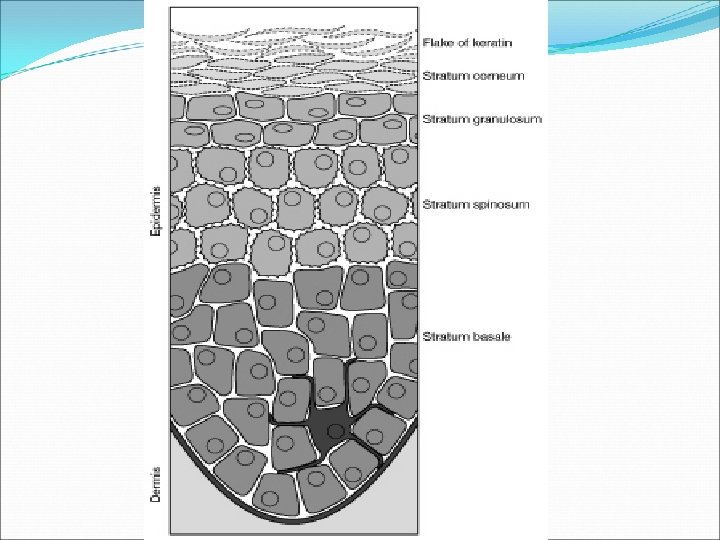
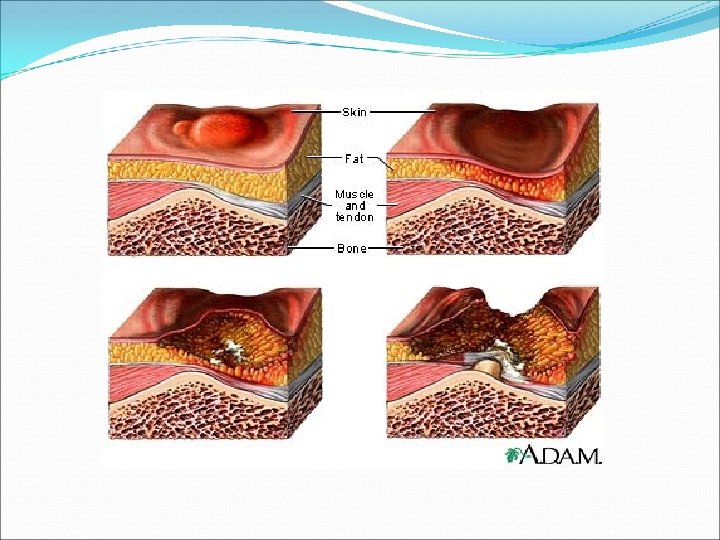
Skin Structure Epidermis Dermis Subcutaneous Fat Muscle Bone 4
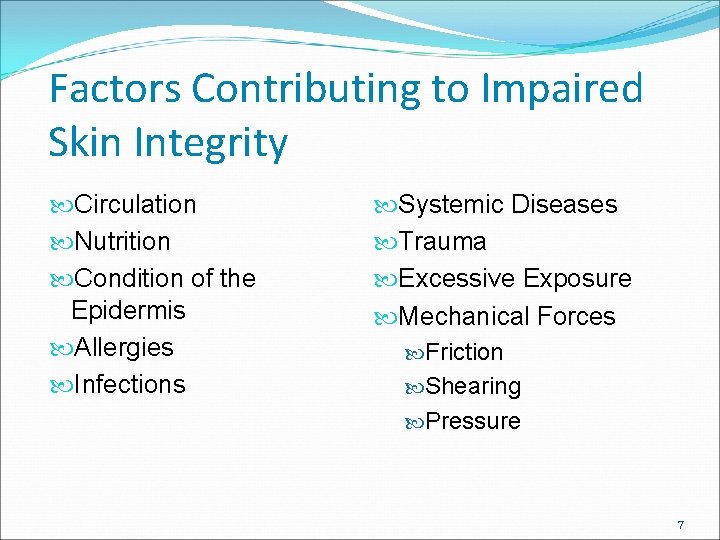
Factors Contributing to Impaired Skin Integrity Circulation Nutrition Condition of the Epidermis Allergies Infections Systemic Diseases Trauma Excessive Exposure Mechanical Forces Friction Shearing Pressure 7
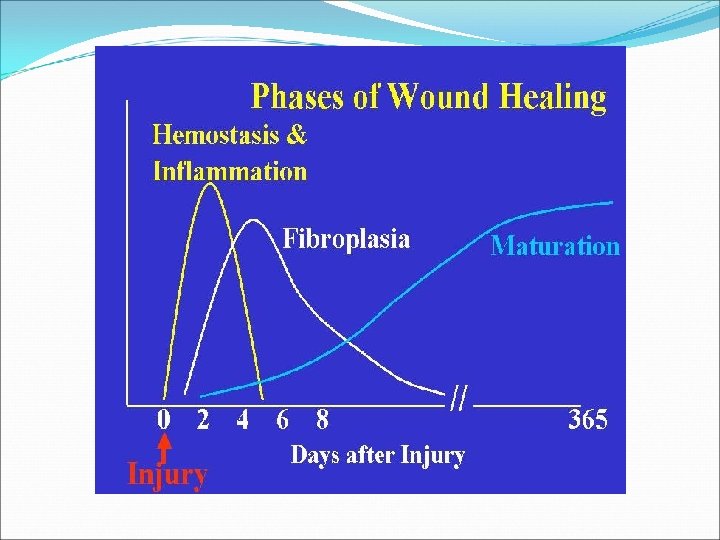
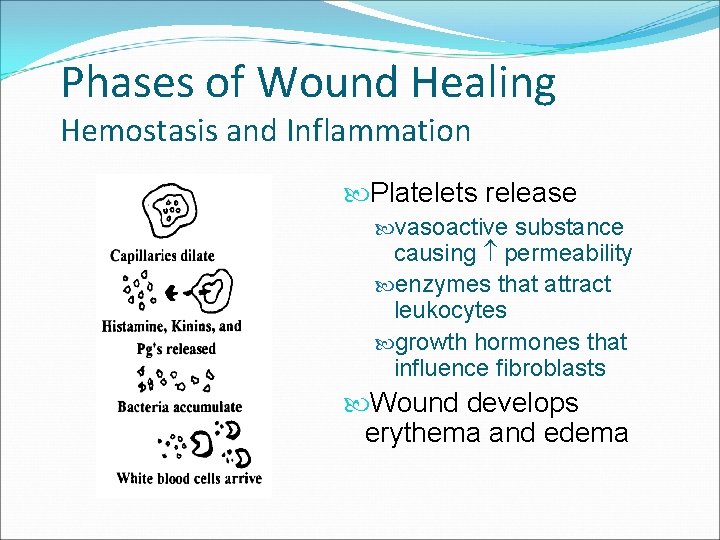
Phases of Wound Healing Hemostasis and Inflammation Platelets release vasoactive substance causing permeability enzymes that attract leukocytes growth hormones that influence fibroblasts Wound develops erythema and edema
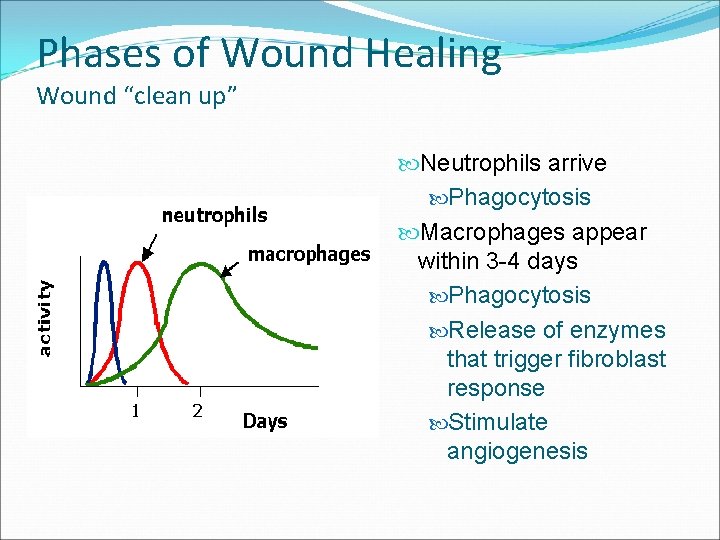
Phases of Wound Healing Wound “clean up” Neutrophils arrive Phagocytosis Macrophages appear within 3 -4 days Phagocytosis Release of enzymes that trigger fibroblast response Stimulate angiogenesis
Wound Repair Regeneration of injured cells by cells of same type (i. e. Epidermis, bone) Replacement by fibrous tissue (fibroplasia, scar formation)
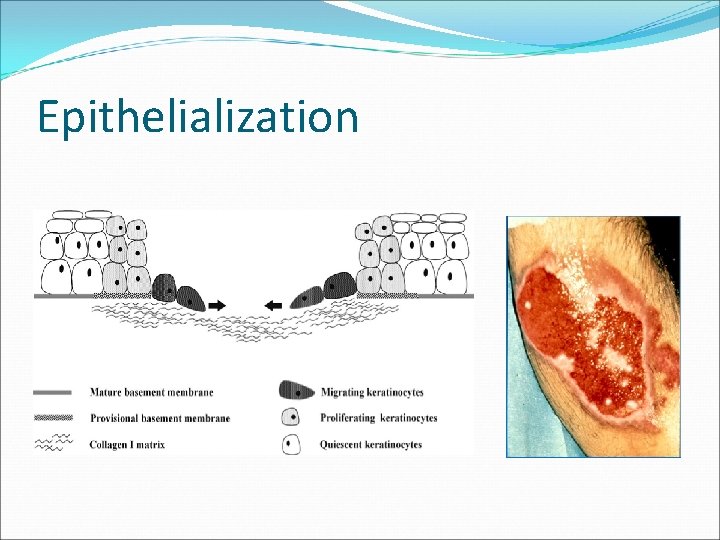
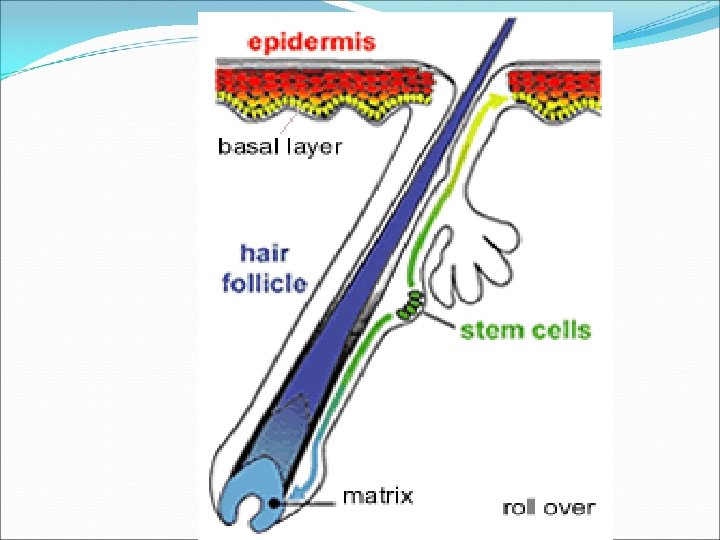
Epithelialization
Fibroplasia (Proliferation) Occurs within the granulation tissue framework (new blood vessels and loose collagen) Proliferation of fibroblasts at site of injury Growth factors Cytokines
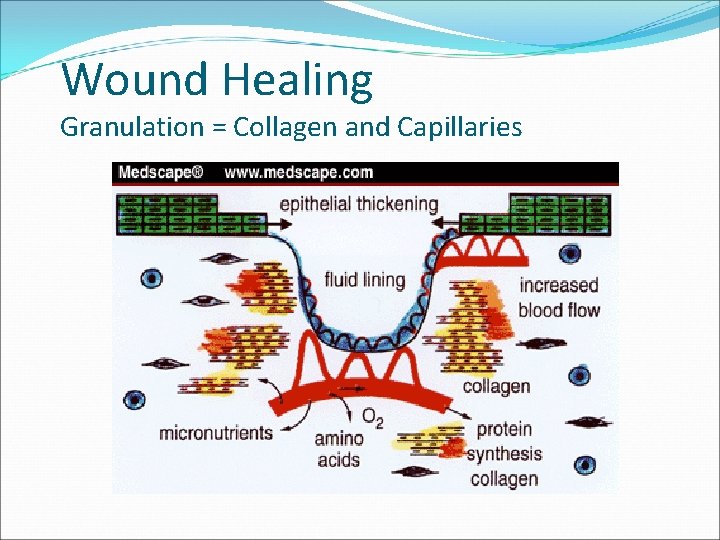
Wound Healing Granulation = Collagen and Capillaries
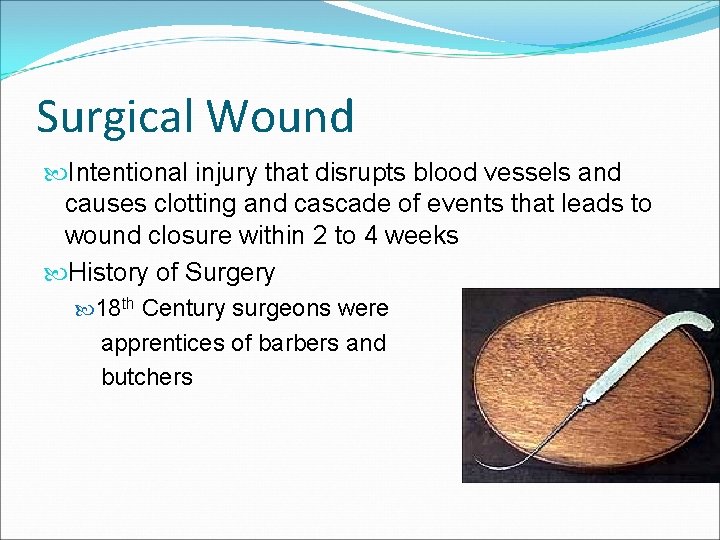
Surgical Wound Intentional injury that disrupts blood vessels and causes clotting and cascade of events that leads to wound closure within 2 to 4 weeks History of Surgery 18 th Century surgeons were apprentices of barbers and butchers
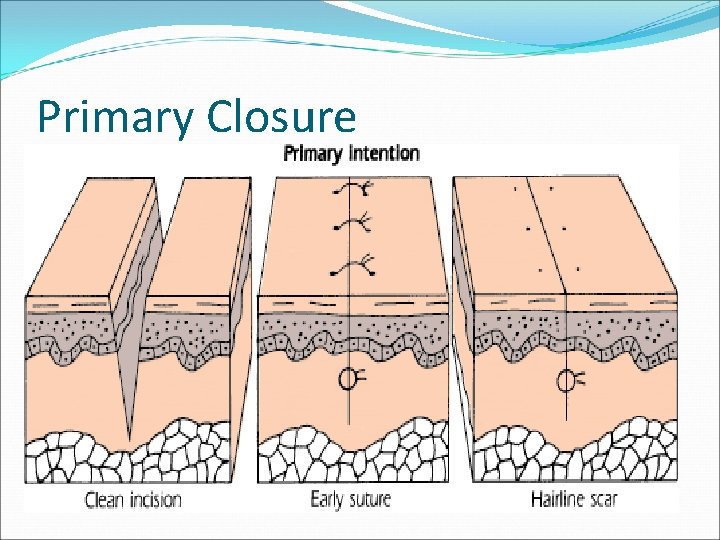
Primary Closure
Patient Risk Factors for Post-Surgical Wound Complications Obesity Diabetes Immunosuppression Cardiovascular disease Smoking Cancer Previous surgery Malnutrition
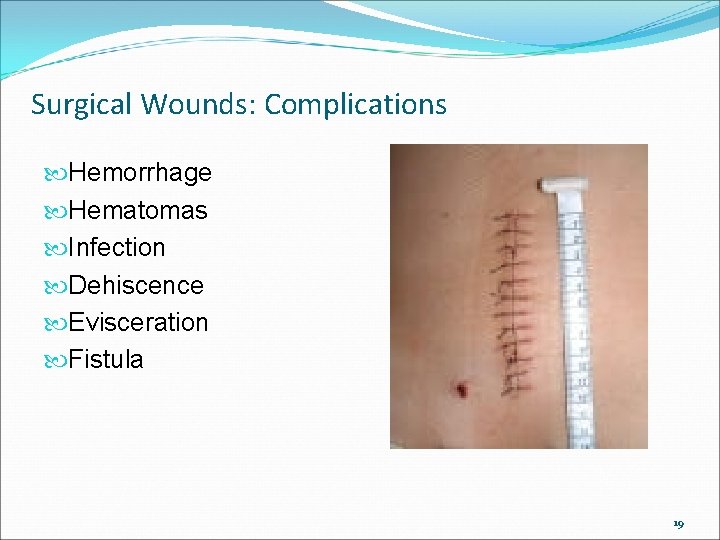
Surgical Wounds: Complications Hemorrhage Hematomas Infection Dehiscence Evisceration Fistula 19
Incision Healing Time Epithelial resurfacing complete at 2 -3 days No tensile strength, but impenetrable to bacteria “Healing ridge” 5 -9 days Lack of ridge = interventions to reduce incisional strain Most dehiscences occur 5 -8 days post-op, and about half are associated with infection
Incision Care Cover with dry sterile dressing 24 to 48 hours, then open to air Gently wash between sutures/staples to remove crusts Report persistent pain, bleeding, erythema, wound edge separation or cloudy drainage
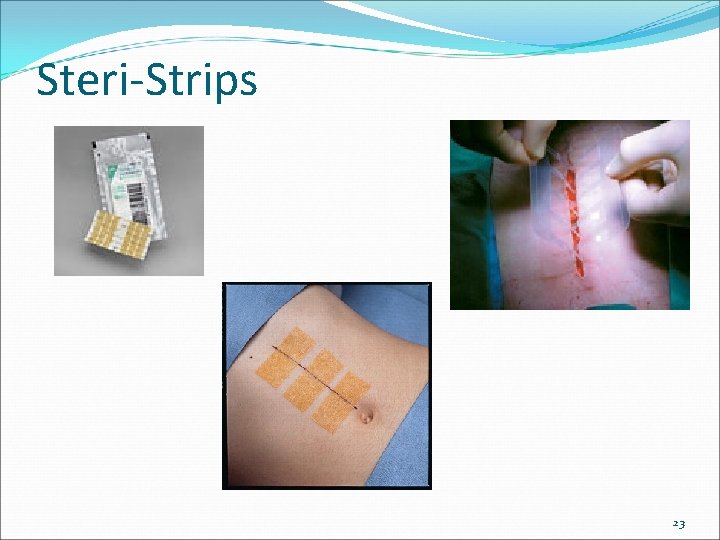
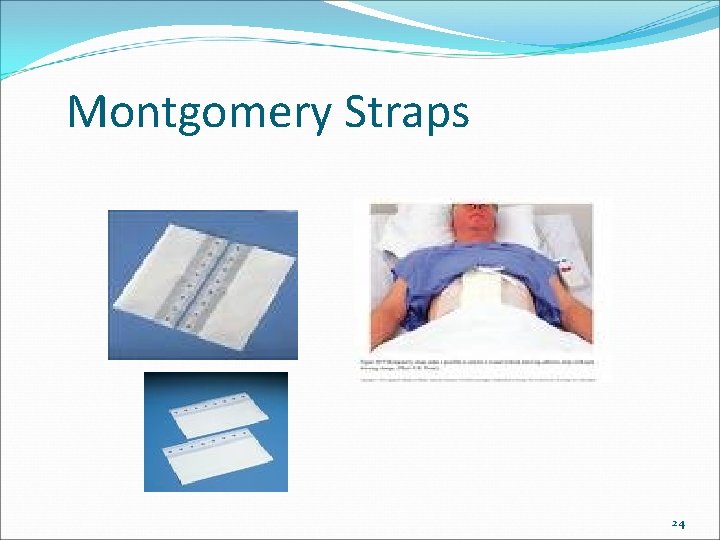
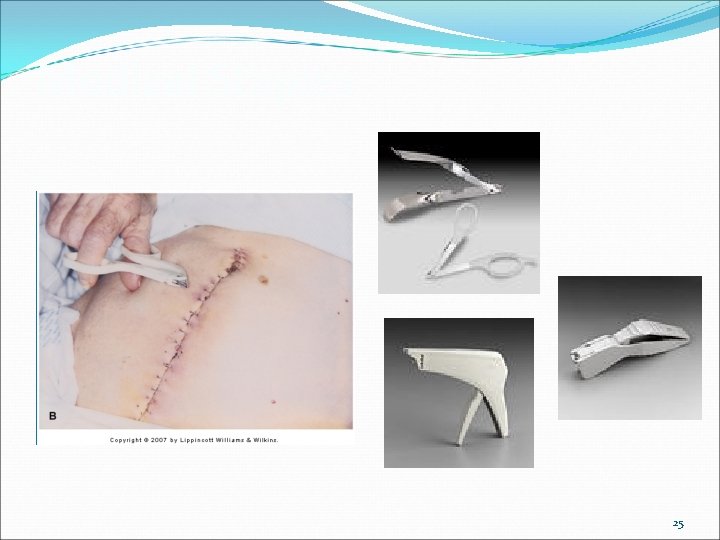
Wound Closure Aids Steri-strip Montgomery straps Medical Staples Sutures 22
Steri-Strips 23
Montgomery Straps 24
Medical Staples 25
Suture/Staple Removal Usually removed 7 -10 days post-op Incisions over areas with tension up to two weeks If concerned about incision dehiscence: Remove every other one Steri-strip
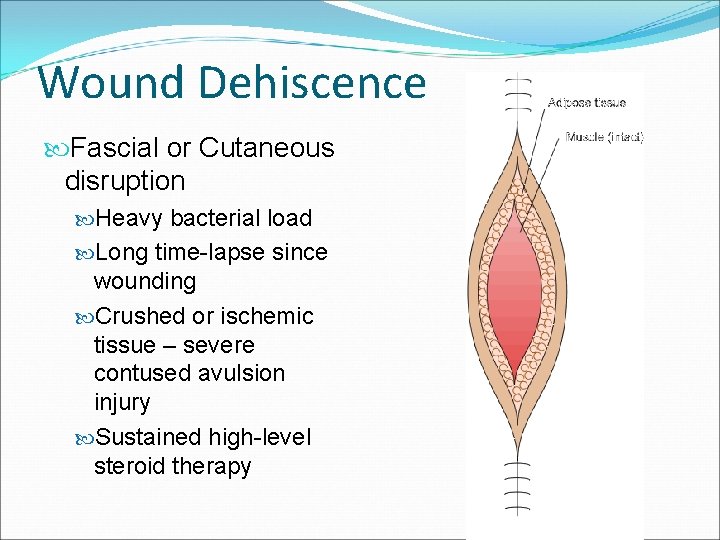
Wound Dehiscence Fascial or Cutaneous disruption Heavy bacterial load Long time-lapse since wounding Crushed or ischemic tissue – severe contused avulsion injury Sustained high-level steroid therapy
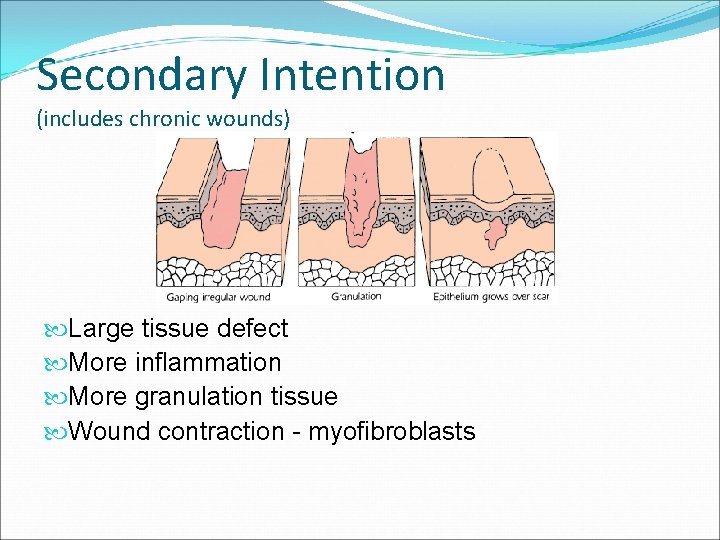
Secondary Intention (includes chronic wounds) Large tissue defect More inflammation More granulation tissue Wound contraction - myofibroblasts
Factors Inhibiting Wound Healing Medication Cortisone, and epinephrine Malnutrition Protein & calories Vitamin & mineral deficits Zinc, Vitamin A, Vitamin C, Vitamin E Dehydration Edema Perfusion Chronic illness & other conditions i. e. diabetes, CHF, immobility 29
Principles of Wound Care Keep wound moist Manage drainage Fill deep wounds Control bacterial load Protect wound from trauma Assess healing
Keep Wounds Moist Select dressings that maintain moisture. Minimize time that wounds are open to air. Add moisture to wound bed?
Manage Drainage Maceration makes skin more fragile. Excessive drainage requires nursing time.
Fill Dead Space Fill wound with dressing Be careful not to over-fill (no rocks)
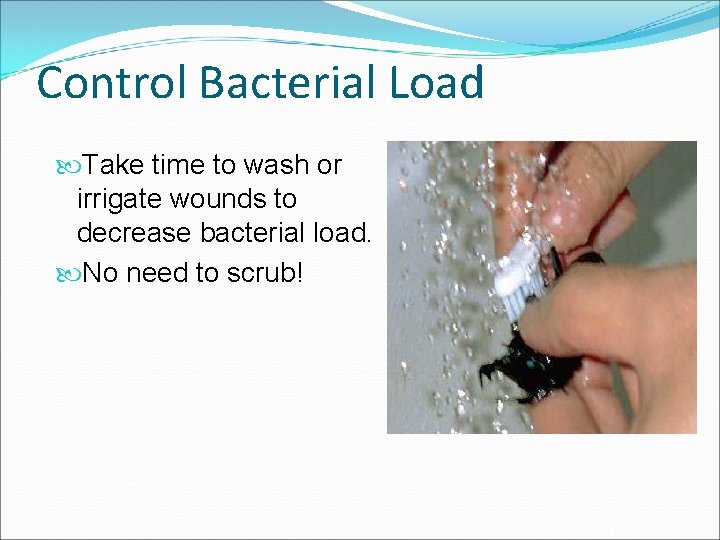
Control Bacterial Load Take time to wash or irrigate wounds to decrease bacterial load. No need to scrub!
Protect From Trauma Be gentle to skin Use non-stick dressings Minimize tape
But. . . Remember to protect yourself from splash
Assess Know what is under the dressing Know typical healing pattern Size matters Document
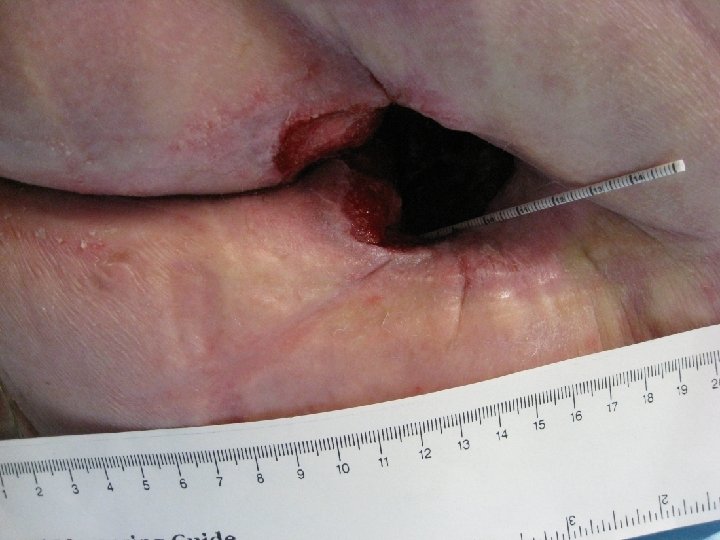
Document findings Location Size (length / width / depth) Wound base Drainage Surrounding skin Systemic infection What we’re doing
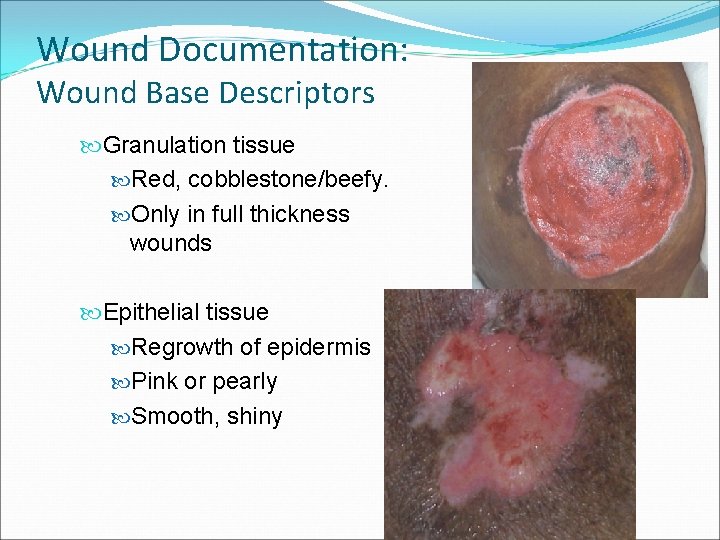
Wound Documentation: Wound Base Descriptors Granulation tissue Red, cobblestone/beefy. Only in full thickness wounds Epithelial tissue Regrowth of epidermis Pink or pearly Smooth, shiny
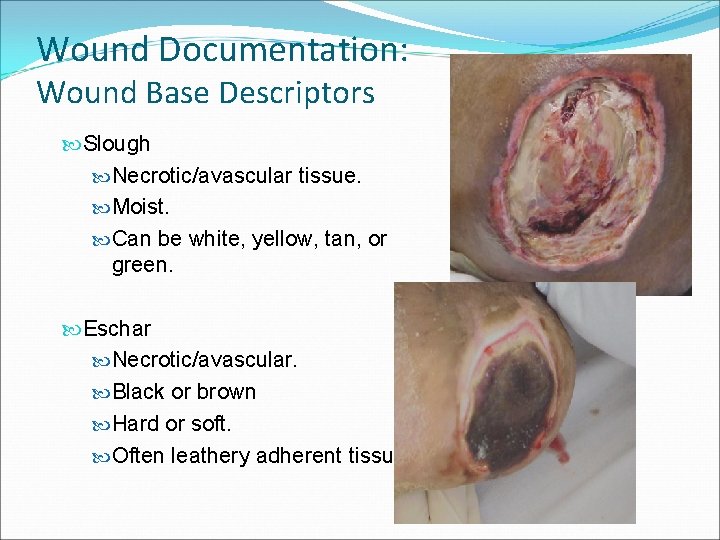
Wound Documentation: Wound Base Descriptors Slough Necrotic/avascular tissue. Moist. Can be white, yellow, tan, or green. Eschar Necrotic/avascular. Black or brown Hard or soft. Often leathery adherent tissue.
Wound Healing Basics Wounds do best in moist environment not too wet, not too dry Loosely pack when needed tight packing → injury to wound bed. Protect peri-wound skin No Sting Barrier Cleanse/irrigate before assessment Pre-medicate for pain prior to dressing changes If culture is needed cleanse wound thoroughly prior to swabbing swab in area of granulation/viable tissue if present. Never culture dressing!
Product Selection Frequency of change Ease of procedure Caregiver ability Availability of products Cost/reimbursement factors
Dressing Purposes: To absorb drainage To prevent contamination To prevent mechanical injury to the wound To help maintain pressure to prevent excessive bleeding To provide a moist wound environment To provide comfort
Treatment Options
Topical Wound Care Products Alginates/Fiber Gelling Dressings Antimicrobials Collagen Contact Layers Foams Gauze & Impregnated Gauze Hydrocolloid Hydrogels (Amorphous) Skin Sealants Topical Debriders Negative Pressure Therapy Compression Therapy
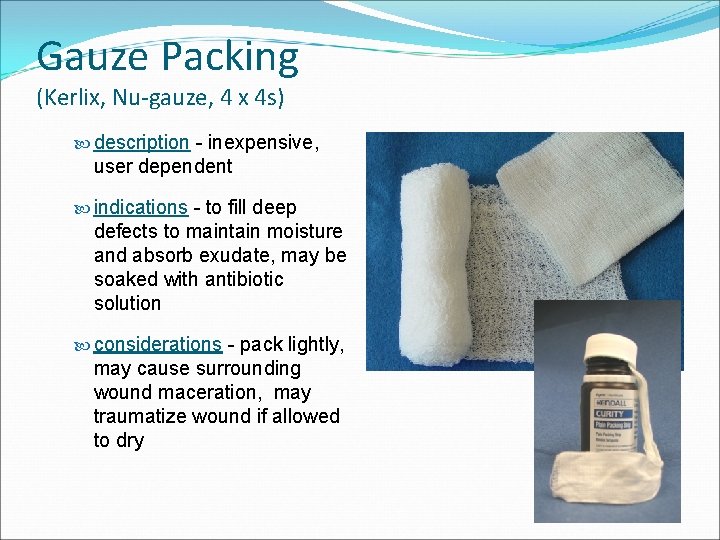
Gauze Packing (Kerlix, Nu-gauze, 4 x 4 s) description - inexpensive, user dependent indications - to fill deep defects to maintain moisture and absorb exudate, may be soaked with antibiotic solution considerations - pack lightly, may cause surrounding wound maceration, may traumatize wound if allowed to dry
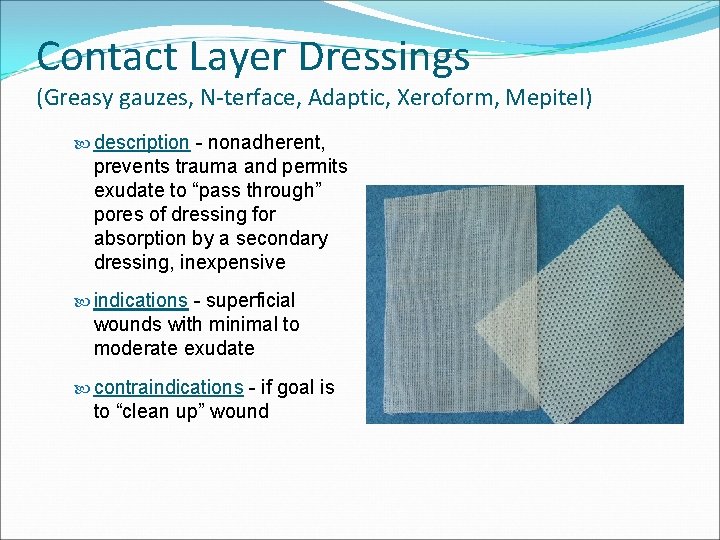
Contact Layer Dressings (Greasy gauzes, N-terface, Adaptic, Xeroform, Mepitel) description - nonadherent, prevents trauma and permits exudate to “pass through” pores of dressing for absorption by a secondary dressing, inexpensive indications - superficial wounds with minimal to moderate exudate contraindications - if goal is to “clean up” wound
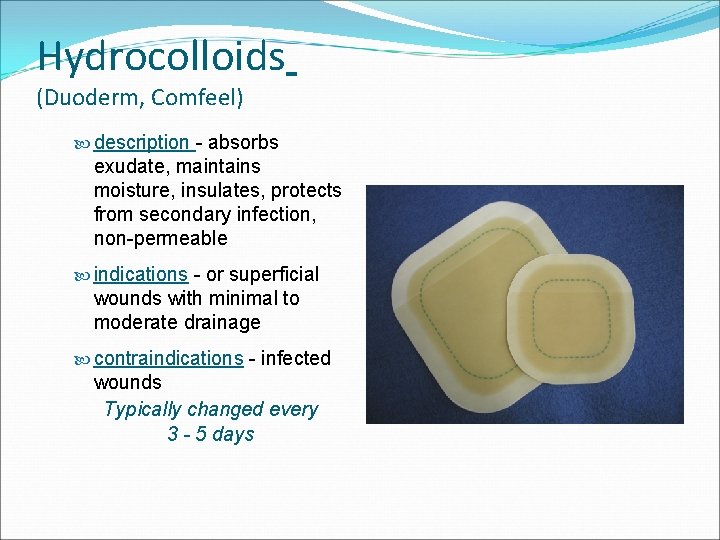
Hydrocolloids (Duoderm, Comfeel) description - absorbs exudate, maintains moisture, insulates, protects from secondary infection, non-permeable indications - or superficial wounds with minimal to moderate drainage contraindications - infected wounds Typically changed every 3 - 5 days
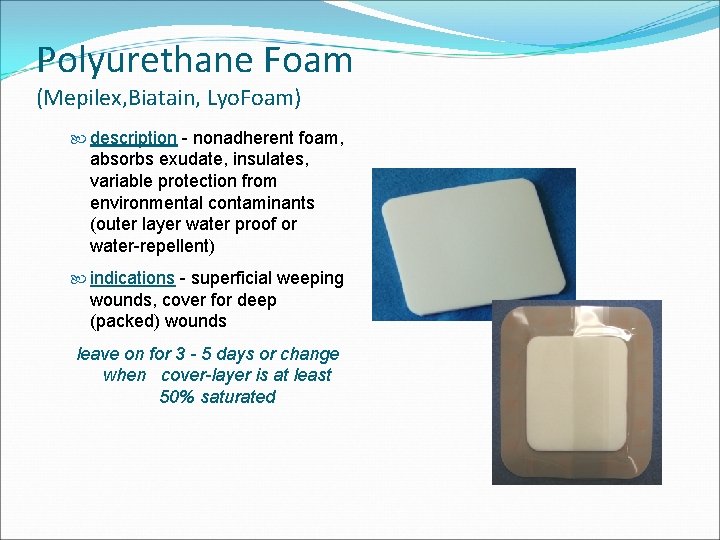
Polyurethane Foam (Mepilex, Biatain, Lyo. Foam) description - nonadherent foam, absorbs exudate, insulates, variable protection from environmental contaminants (outer layer water proof or water-repellent) indications - superficial weeping wounds, cover for deep (packed) wounds leave on for 3 - 5 days or change when cover-layer is at least 50% saturated
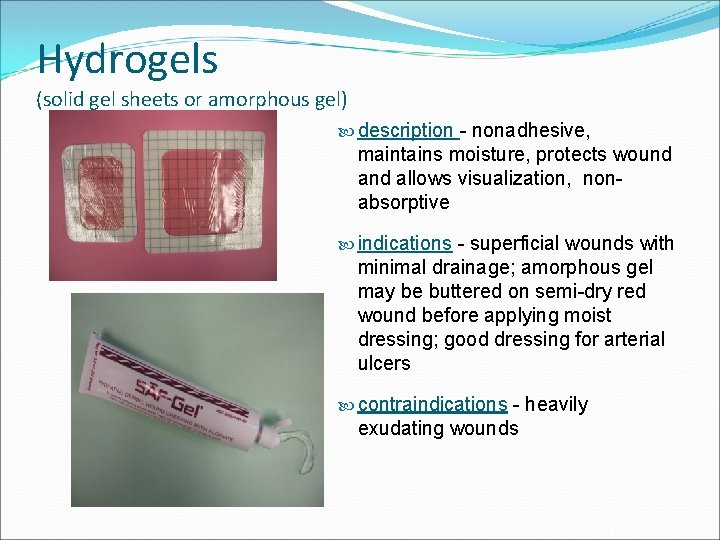
Hydrogels (solid gel sheets or amorphous gel) description - nonadhesive, maintains moisture, protects wound allows visualization, nonabsorptive indications - superficial wounds with minimal drainage; amorphous gel may be buttered on semi-dry red wound before applying moist dressing; good dressing for arterial ulcers contraindications - heavily exudating wounds
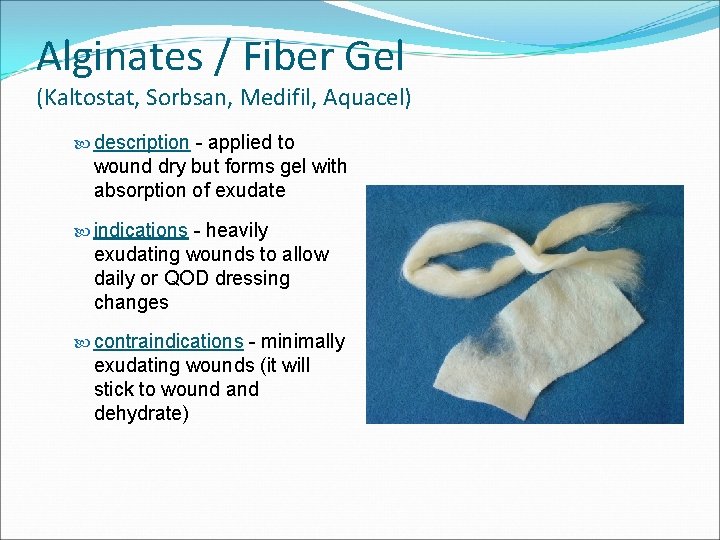
Alginates / Fiber Gel (Kaltostat, Sorbsan, Medifil, Aquacel) description - applied to wound dry but forms gel with absorption of exudate indications - heavily exudating wounds to allow daily or QOD dressing changes contraindications - minimally exudating wounds (it will stick to wound and dehydrate)
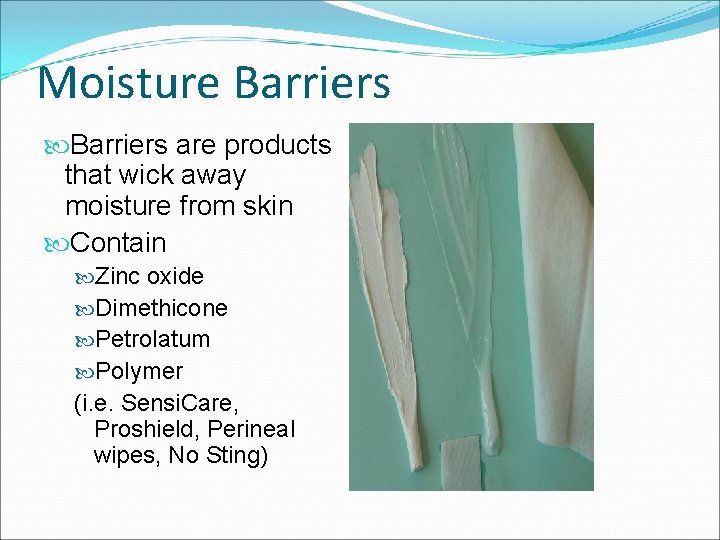
Moisture Barriers are products that wick away moisture from skin Contain Zinc oxide Dimethicone Petrolatum Polymer (i. e. Sensi. Care, Proshield, Perineal wipes, No Sting)
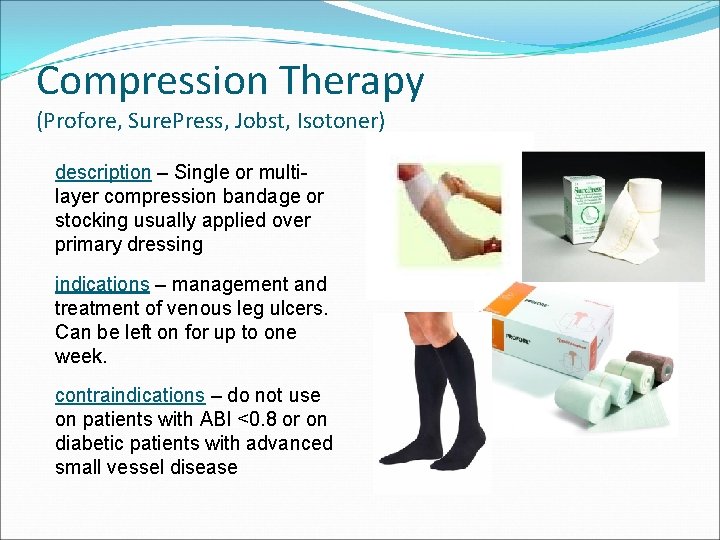
Compression Therapy (Profore, Sure. Press, Jobst, Isotoner) description – Single or multilayer compression bandage or stocking usually applied over primary dressing indications – management and treatment of venous leg ulcers. Can be left on for up to one week. contraindications – do not use on patients with ABI <0. 8 or on diabetic patients with advanced small vessel disease
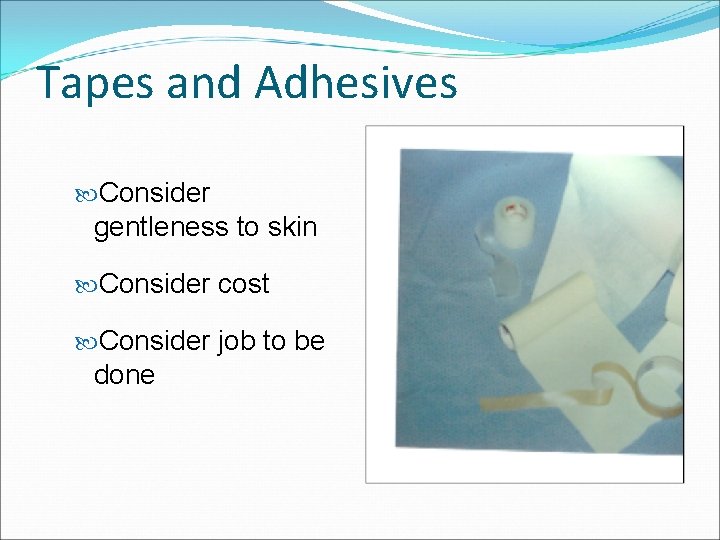
Tapes and Adhesives Consider gentleness to skin Consider cost Consider job to be done
Clinical Interventions Monitor skin at every visit Evaluate type of skin care practices Assess patient and/or caregiver ability Minimize exposure of skin to moisture from incontinence, perspiration, or drainage Evaluate need for specialty mattresses or seating cushions Assess nutritional status 56
Nutritional Deficits Determine barriers to the patient eating sufficient quantities of quality food Nutritionist consult? Diabetes education?
Moisture and incontinence Minimize exposure to moisture and soiling Use briefs and underpads to wick away moisture from skin Teach patients & caregivers to cleanse skin at the time of soiling Urine & feces very caustic Use barrier cream as necessary
Pressure Ulcer Prevention Assess for risk factors: immobility, moisture & incontinence, inadequate nutrition, impaired sensation or perception, decreased activity, exposure to friction & shear Incorporate risk assessment into plan of care Monitor patient’s skin at each visit
Document Evaluation Is the skin intact? Is the wound healing? Did the interventions work or not? If no progress at two-week assessment, time to change interventions If yes, do you want to continue? If no, how do you want to revise? Does patient understand risk factors and wound care plan?
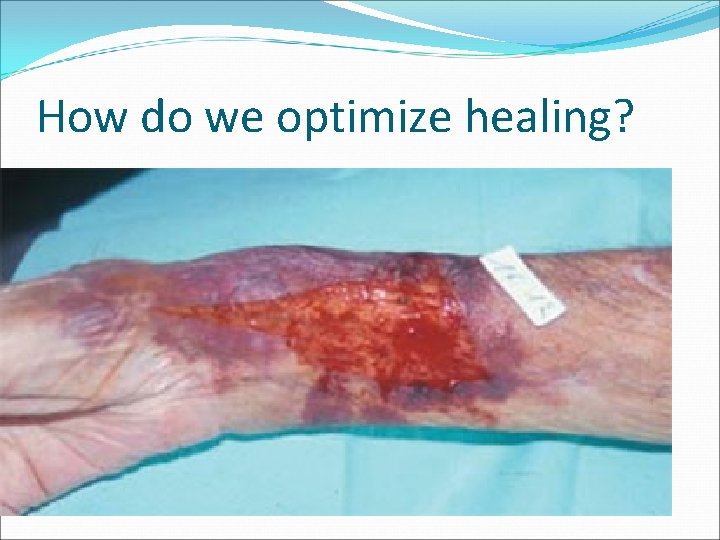
Case Studies 89 -year-old male with hx of COPD with chronic steroid use. Uses 2 L O 2 at home and smokes 1/2 pack cigarettes a day. Hx. Includes DM, depression, and prostate cancer. Presents to your clinic with right forearm wound after scraping arm against wheelchair.
How do we optimize healing?
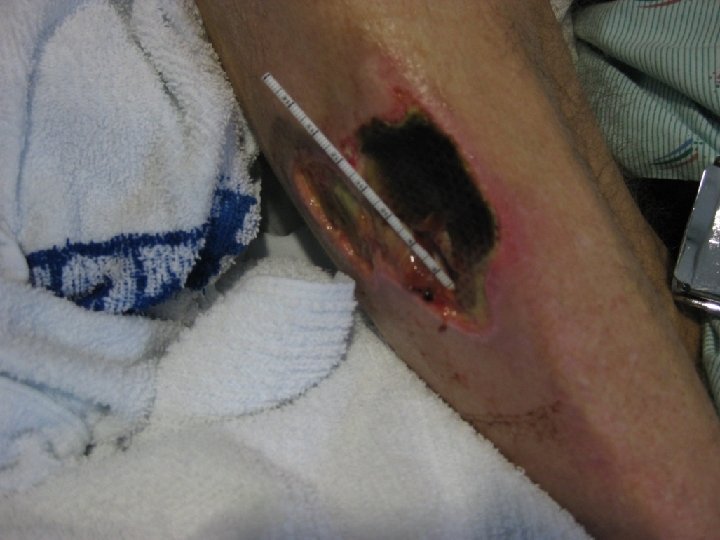
Case Studies 49 -year-old male with hx of IV heroin use. Smokes 2 packs cigarettes a day. Hx also includes Hep C, depression, and hypertension. Presents to your clinic with fever, chills, and right lower limb wound that he has had for months.
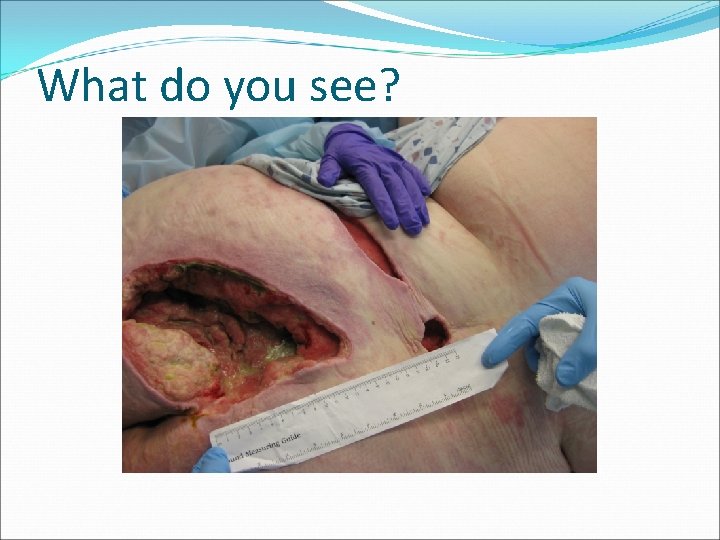
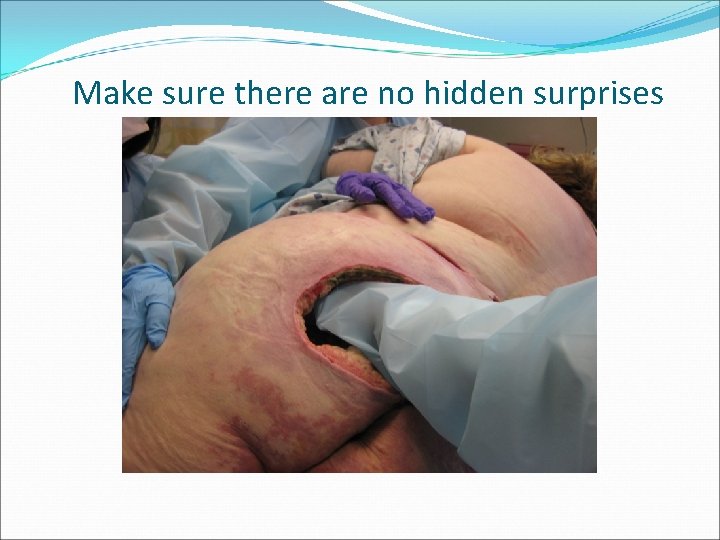
Case Studies 46 year-old female admitted to hospital for elective surgery to remove renal growth. Morbidly obese, uses 2 L O 2 at home, smokes 2 packs a day. Hx includes DM, depression, sleep apnea. Rarely gets out of bed at home (able to walk w/ assistance to bathroom). Suspected deep tissue injury to sacrum present on admission. Wound surgically debrided. Warning. . .
What do you see?
Make sure there are no hidden surprises
Questions?