
Feed back trigger 4 Prof dr Jeanne Adiwinata
Feed back trigger 4 Prof. dr. Jeanne Adiwinata Pawitan, Ph. D Dept. of Histology, FMUI
Onion - tears Substances in onion – tears (X) Lacrimal gland Glands in general • Endocrine glands • Exocrine glands § Mode of secretion § Consistency of their secretion
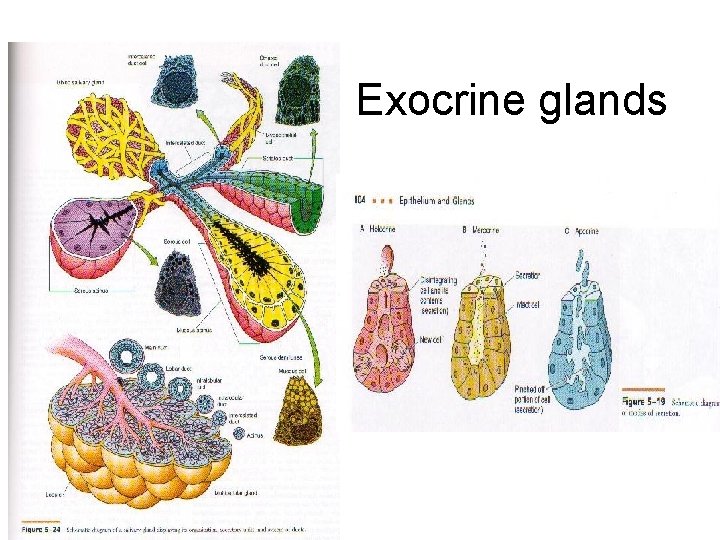
Exocrine glands
Cut Until how deep? – skin – underlying tissues Skin – (Q: related with cell & G? ) § Layers - epidermis – dermis, subcutis § Cells of the epidermis - (Q) – hyper/hypo pigmentation § Keratinocytes § Melanocytes § Langerhans cells § Merkel cells § What kind of tissue – epithelium § Various kinds of epithelium
Bleeding Blood – bloods cells • Appearance • Functions Platelets – what? Structure? • Non nucleated fragment of megakaryocyte • Small: 2 -4 μm, disk shaped Blood vessel – endothelium
Platelets § Central region – dark – granulomere § α granules § Platelet aggregation: thrombospondin § Blood coagulation: coagulation factors, platelet thromboplastin § Vessel repair: PDGF § δ granules § Ca, ADP, ATP - Platelet adhesion – aggregation § Serotonin, histamin § λ granules: hydrolytic enzyme – clot resorption § Periphery – clear – hyalomere § Plasmalemma: thromboxane A –platelet activator, vasoconstrictor § Surface opening tubule system – increase surface area § Dense tubular system (sequester Ca)
Endothelium Roles § Secretes substances § Type II, IV, V collagen, fibronectin, laminin – extra cellular matrix § Vasodilators + inhibitor of platelet aggregation: prostacyclin, NO § Converting/inactivating serotonin, prostaglandin, bradykinin, norepinephrin and thrombin § Clotting factors: von Willebrand factor, tissue thromboplastin § Vasoconstrictor: Endothelin I – vascular smooth muscle tone § Plasminogen activator – lysis of thrombus § Luminal plasmalemma: thrombomodulin, heparin-like molecule – inactivate certain coagulation factor § Possess receptors for leucocytes adhesion molecules (Lselectin, β 2 integrin) – leucocytes migrate into connective tissue
Red-swelling-pain • Swelling – in what kind of tissue § Connective tissue (loose) – cells § Classification of connective tissue § All kinds – microscopic appearance – function –location - cells § Pain – nerve tissue § Neurons
Loose connective tissue • Mast cells – histamines - vasodilatation § Content of granules § Primary (preformed) mediators § Heparin, histamine § Enzymes: neutral protease, peroxidase, superoxide dismutase § Eosinophil, neutrophil chemotactic factor § Secondary (newly synthesized) mediators § Arachidonic acid precursor - cytokines: leucotrienes, thromboxanes, prostaglandins § Non A – cytokines: platelet activating factor, bradykinins, IL, TNF.
Loose connective tissue • Mast cells – activation and degranulation § Have receptors for - Ig E – immediate hypersensitivity – anaphylactic reaction § Gartner 116 -120 • Histiocytes (macrophages) § phagocytosis – melanin – non exfoliating (Q: remain for a long time? )
Finger movement • Tendons – what kind of tissue? § dense regular connective tissue § Classification: collagenous, elastic § Microscopic appearances: cells • Muscles – microscopic appearances • Joints § Cartilage § Classification: hyaline, elastic, fibro-cartilage § Microscopic appearances: cells § Bone structure – types: compact, cancellous (spongy) § Microscopic appearance: cells
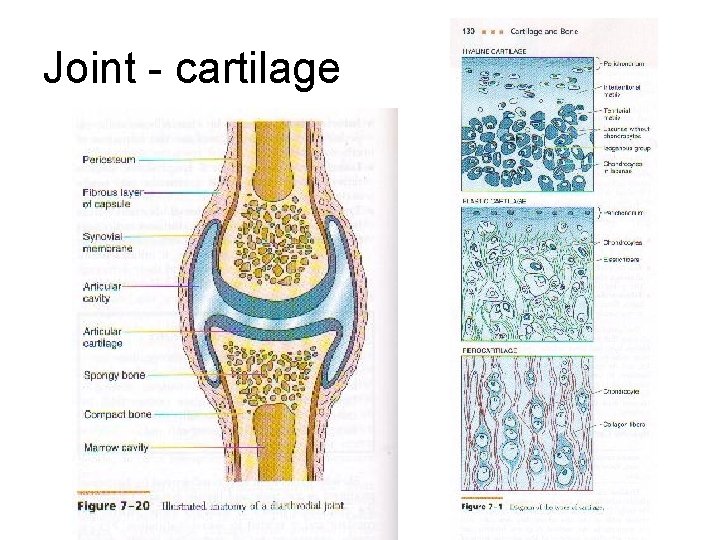
Joint - cartilage
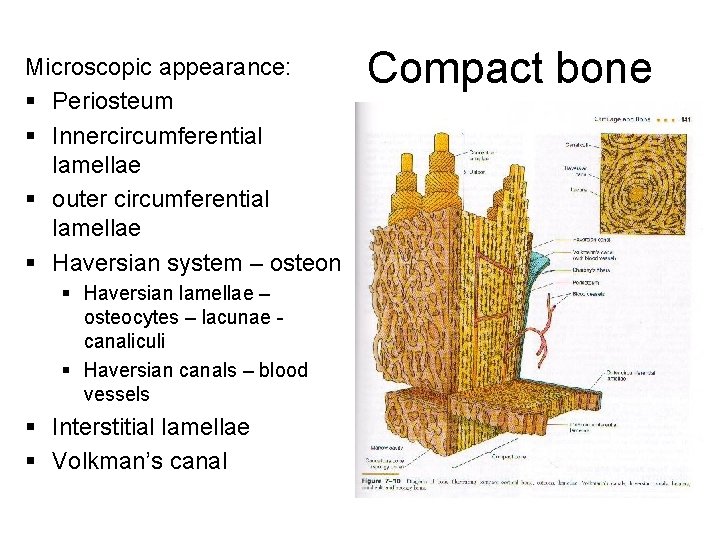
Microscopic appearance: § Periosteum § Innercircumferential lamellae § outer circumferential lamellae § Haversian system – osteon § Haversian lamellae – osteocytes – lacunae canaliculi § Haversian canals – blood vessels § Interstitial lamellae § Volkman’s canal Compact bone
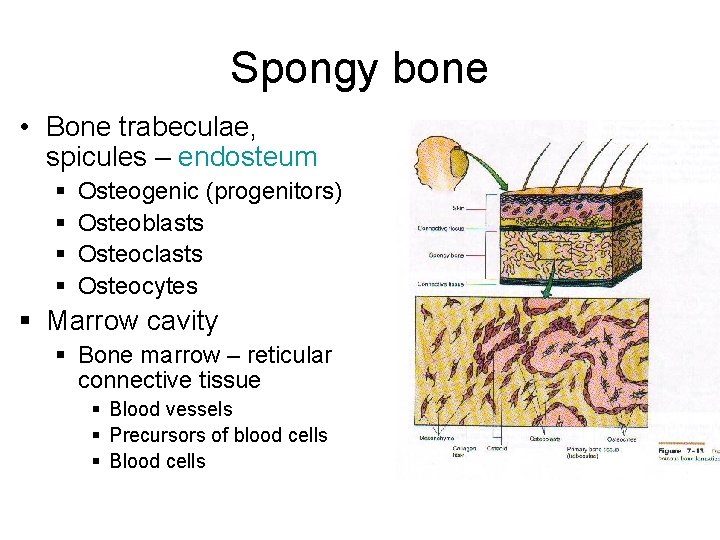
Spongy bone • Bone trabeculae, spicules – endosteum § § Osteogenic (progenitors) Osteoblasts Osteocytes § Marrow cavity § Bone marrow – reticular connective tissue § Blood vessels § Precursors of blood cells § Blood cells
- Slides: 14