
Science Freedom to Advance Wound Care John Boswick
Science: Freedom to Advance Wound Care John Boswick Memorial Lecture SAWC/WHS, April 16, 2011 Laura Bolton, Ph. D, Adjunct Assoc. Professor Department of Surgery (Engineering) RWJUMS New Brunswick, NJ, USA President, Bolton. SCI, LLC
Objectives Participants will be able to. . . Ø Separate fact from fiction about evidencebased wound care Ø Realize how science improves wound care outcomes Ø Appreciate value of reporting progress toward patient and wound goals
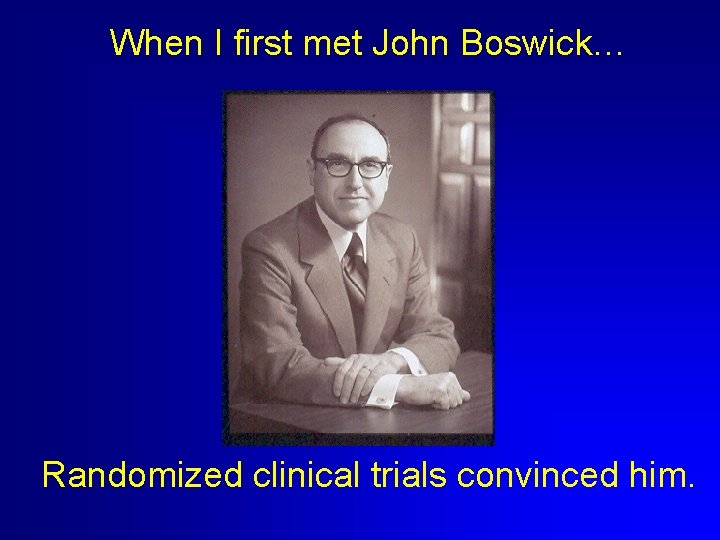
When I first met John Boswick… Randomized clinical trials convinced him.
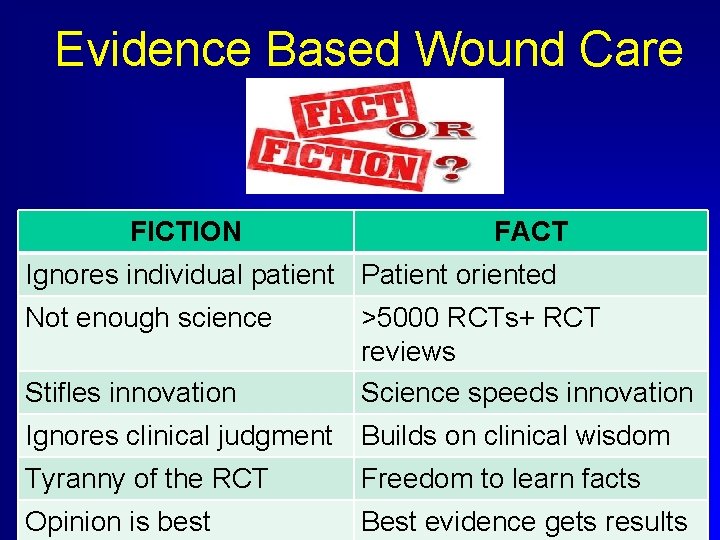
Evidence Based Wound Care FICTION FACT Ignores individual patient Patient oriented Not enough science Stifles innovation >5000 RCTs+ RCT reviews Science speeds innovation Ignores clinical judgment Builds on clinical wisdom Tyranny of the RCT Freedom to learn facts Opinion is best Best evidence gets results
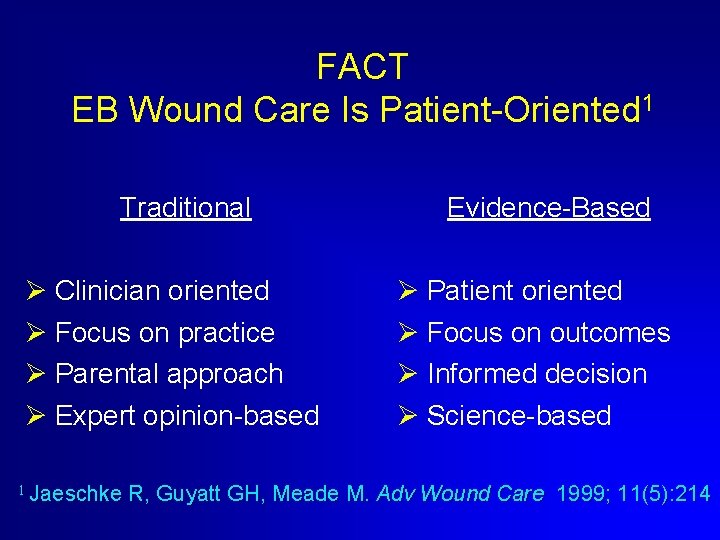
FACT EB Wound Care Is Patient-Oriented 1 Traditional Ø Clinician oriented Ø Focus on practice Ø Parental approach Ø Expert opinion-based 1 Jaeschke Evidence-Based Ø Patient oriented Ø Focus on outcomes Ø Informed decision Ø Science-based R, Guyatt GH, Meade M. Adv Wound Care 1999; 11(5): 214
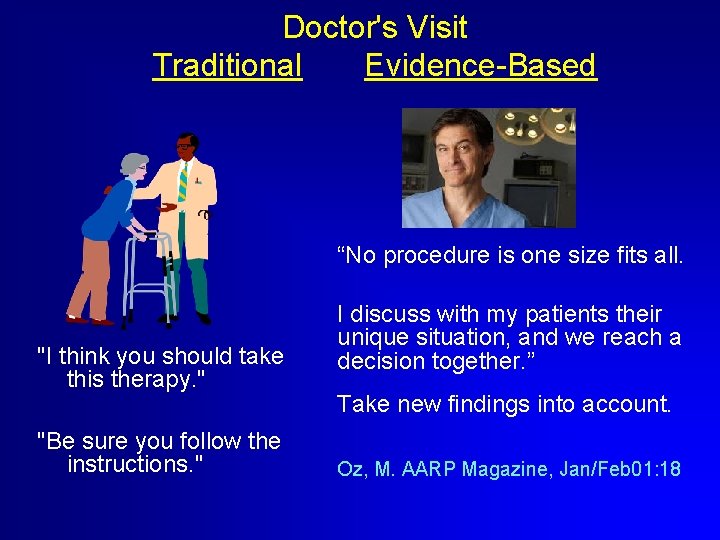
Doctor's Visit Traditional Evidence-Based “No procedure is one size fits all. "I think you should take this therapy. " "Be sure you follow the instructions. " I discuss with my patients their unique situation, and we reach a decision together. ” Take new findings into account. Oz, M. AARP Magazine, Jan/Feb 01: 18
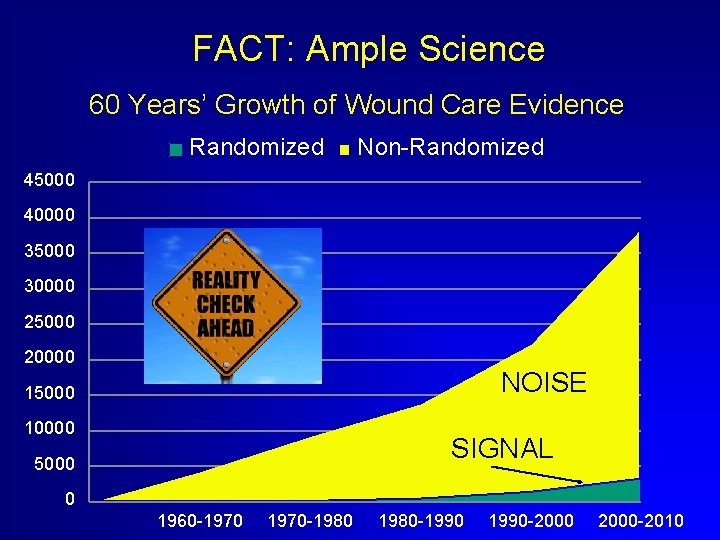
FACT: Ample Science 60 Years’ Growth of Wound Care Evidence Randomized Non-Randomized 45000 40000 35000 30000 25000 20000 NOISE 15000 10000 SIGNAL 5000 0 1960 -1970 -1980 -1990 -2000 -2010
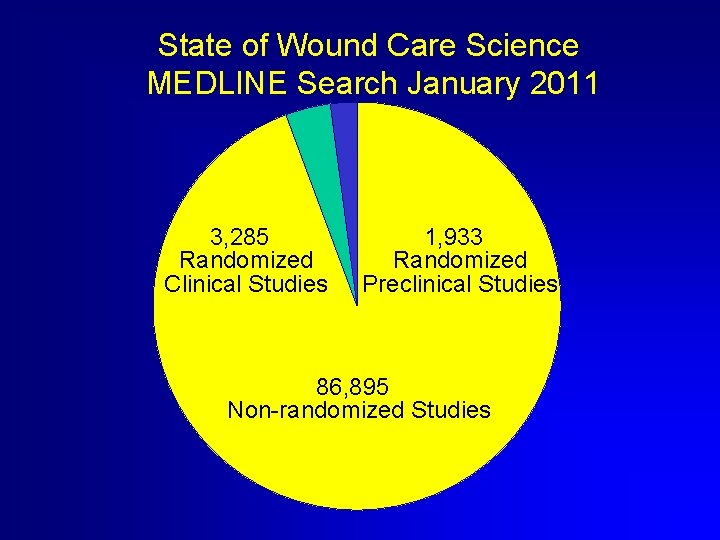
State of Wound Care Science MEDLINE Search January 2011 3, 285 Randomized Clinical Studies 1, 933 Randomized Preclinical Studies 86, 895 Non-randomized Studies
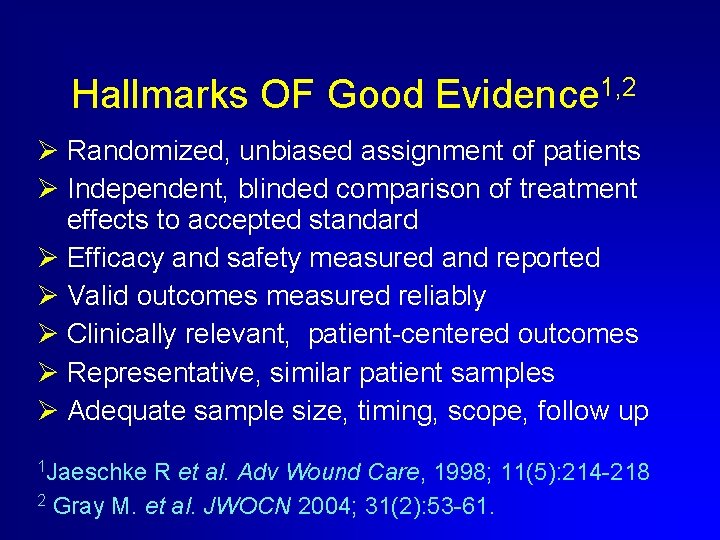
Hallmarks OF Good Evidence 1, 2 Ø Randomized, unbiased assignment of patients Ø Independent, blinded comparison of treatment effects to accepted standard Ø Efficacy and safety measured and reported Ø Valid outcomes measured reliably Ø Clinically relevant, patient-centered outcomes Ø Representative, similar patient samples Ø Adequate sample size, timing, scope, follow up 1 Jaeschke R et al. Adv Wound Care, 1998; 11(5): 214 -218 2 Gray M. et al. JWOCN 2004; 31(2): 53 -61.
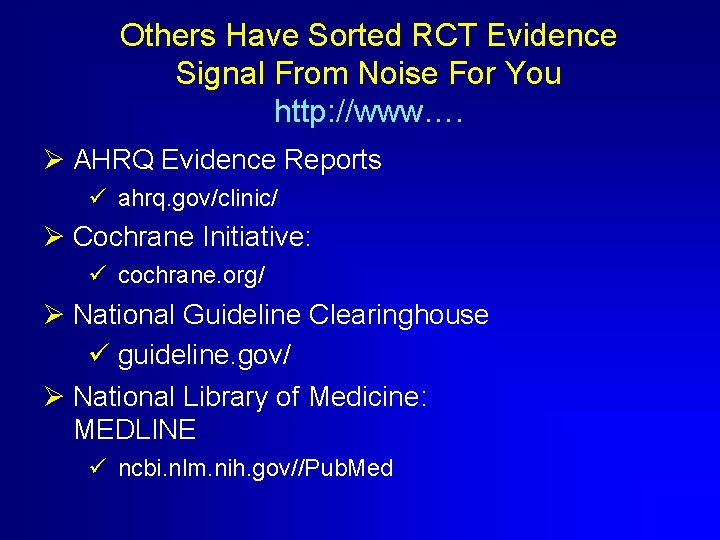
Others Have Sorted RCT Evidence Signal From Noise For You http: //www…. Ø AHRQ Evidence Reports ü ahrq. gov/clinic/ Ø Cochrane Initiative: ü cochrane. org/ Ø National Guideline Clearinghouse ü guideline. gov/ Ø National Library of Medicine: MEDLINE ü ncbi. nlm. nih. gov//Pub. Med

Fact: Science Speeds Innovation Physics / Practice Astronomy Chemistry Biology / Medical Uses All
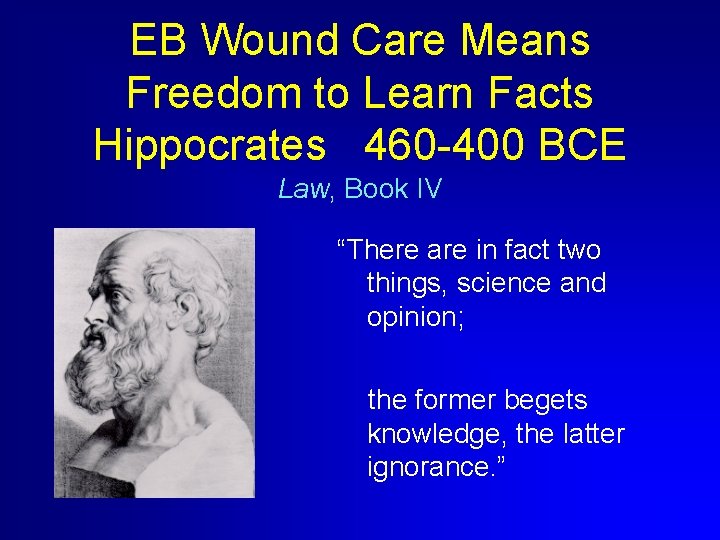
EB Wound Care Means Freedom to Learn Facts Hippocrates 460 -400 BCE Law, Book IV “There are in fact two things, science and opinion; the former begets knowledge, the latter ignorance. ”

If opinion is as strong as relevant RCT evidence in informing care decisions… Whose Opinion?
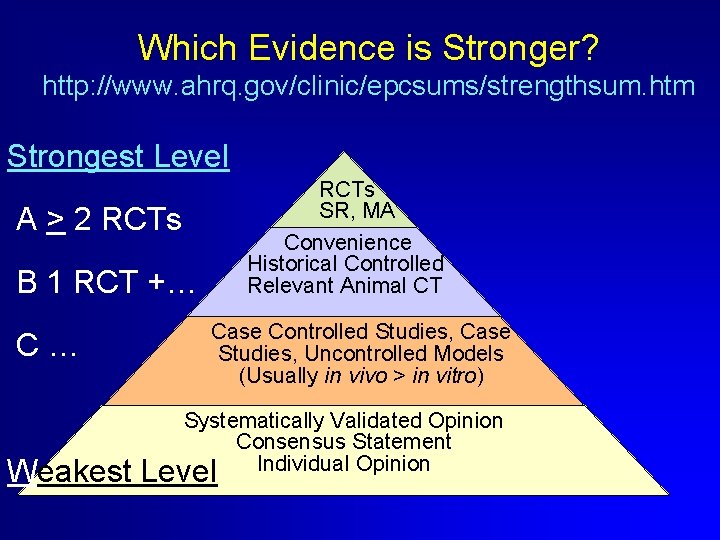
Which Evidence is Stronger? http: //www. ahrq. gov/clinic/epcsums/strengthsum. htm Strongest Level A > 2 RCTs B 1 RCT +… C… Weakest RCTs SR, MA Convenience Historical Controlled Relevant Animal CT Case Controlled Studies, Case Studies, Uncontrolled Models (Usually in vivo > in vitro) Systematically Validated Opinion Consensus Statement Level Individual Opinion
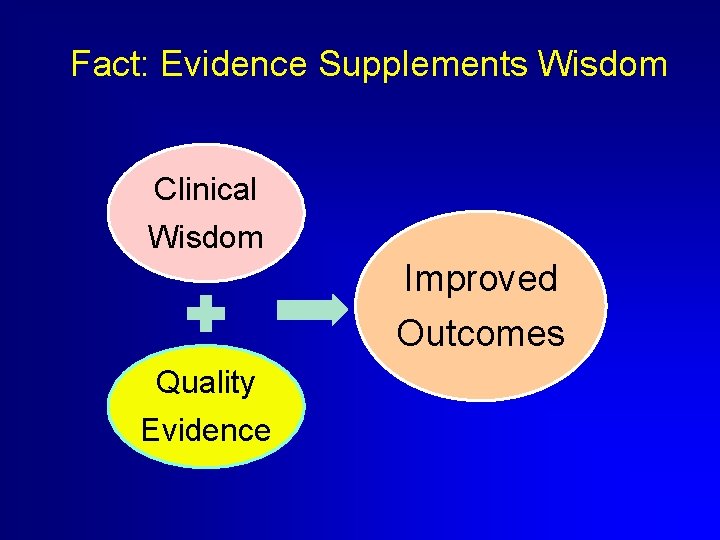
Fact: Evidence Supplements Wisdom Clinical Wisdom Improved Outcomes Quality Evidence
Realize How Evidence Improves Wound Care Outcomes BRIDGING THE GAP BETWEEN EVIDENCE AND PRACTICE
“Quality health care means. . . Ø Doing the right thing Ø At the right time Ø In the right way Ø To the right person Ø Having best results possible. ” Agency for Healthcare Research and Quality As quoted by Terris King, Office of Clinical Standards and Quality Centers for Medicare and Medicaid Services CMS, July 15, 2005,
Pearls For Using Evidence-Based Wound Care Ø Start with your patients Ø Multidisciplinary team Ø Build, use EB protocols ü Patient-oriented GOALs ü Evidence-based ACTION ü Measure PROGRESS Ø System-wide Quality Improvement ü Training, tools and check lists 1 Morrell C. et al. Nurs Stand. 2001 Apr 11 -17; 15(30): 68 -73. 2 van Rijswijk L. Amer J. Nursing 2004; 104(2): 28 -30. 3 Hermans MHE, Bolton LL, . Remington Report, 2001; 9(6) Suppl. 1: 6 -8
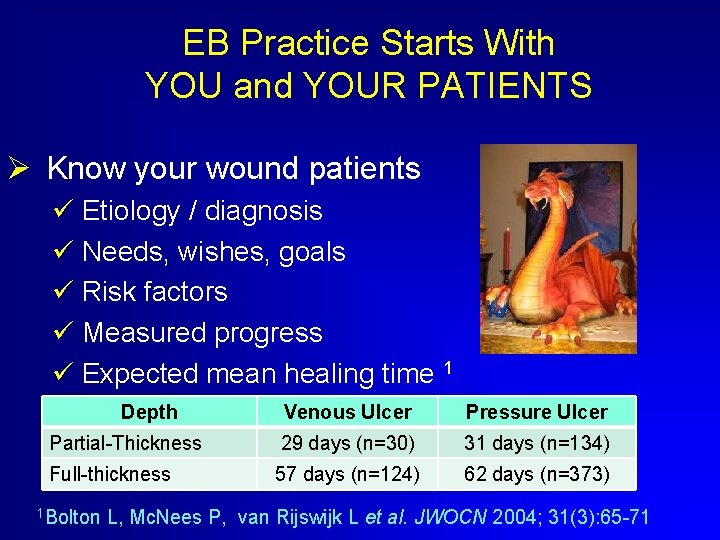
EB Practice Starts With YOU and YOUR PATIENTS Ø Know your wound patients ü Etiology / diagnosis ü Needs, wishes, goals ü Risk factors ü Measured progress ü Expected mean healing time 1 Depth Venous Ulcer Pressure Ulcer Partial-Thickness 29 days (n=30) 31 days (n=134) Full-thickness 57 days (n=124) 62 days (n=373) 1 Bolton L, Mc. Nees P, van Rijswijk L et al. JWOCN 2004; 31(3): 65 -71
Multidisciplinary Team’s Work! The wound is attached to A PATIENT! • Diagnose wound cause – – – Vasculature Nutrition Endocrinology Immune Disorders Infection Excessive/Prolonged Pressure/Moisture – Repeated Physical or Chemical Trauma
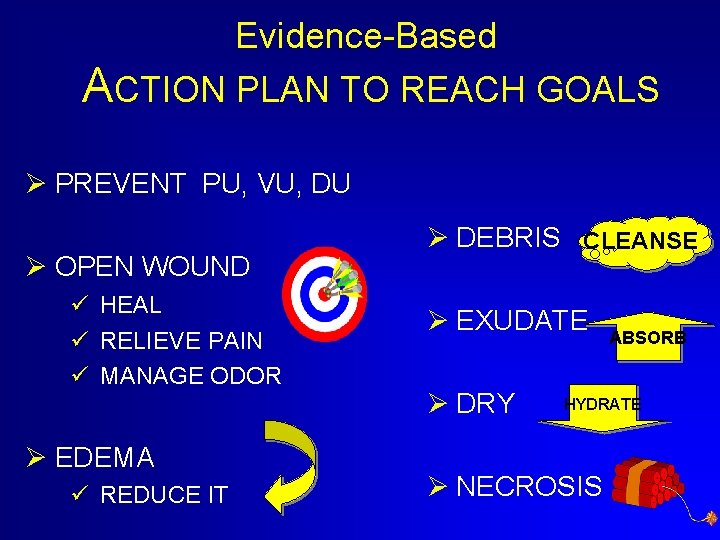
Evidence-Based ACTION PLAN TO REACH GOALS Ø PREVENT PU, VU, DU Ø OPEN WOUND ü HEAL ü RELIEVE PAIN ü MANAGE ODOR Ø EDEMA ü REDUCE IT Ø DEBRIS CLEANSE Ø EXUDATE Ø DRY ABSORB HYDRATE Ø NECROSIS

Build Protocols and Checklists From Evidence-Based Guidelines or Content Validated “Guidelines of Guidelines” WHS Solu t CAWC ions WOCN AP NPU Venous Ulcer & Pressure Ulcer Guidelines of Guidelines© www. aawconline. org www. guideline. gov
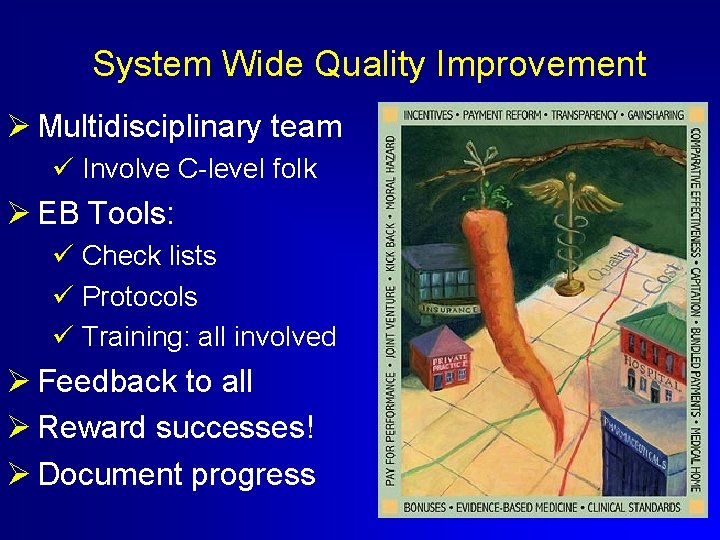
System Wide Quality Improvement Ø Multidisciplinary team ü Involve C-level folk Ø EB Tools: ü Check lists ü Protocols ü Training: all involved Ø Feedback to all Ø Reward successes! Ø Document progress
VALUE OF MEASURING PROGRESS Improve Clinical Outcomes! Stand Out in the Crowd!
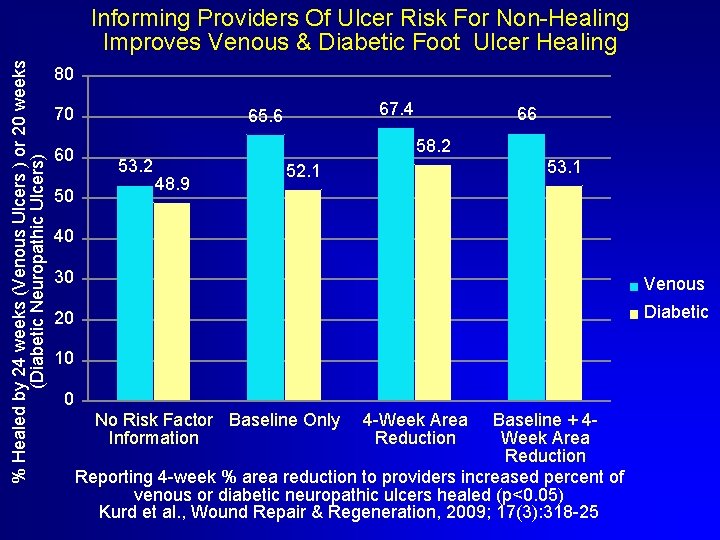
% Healed by 24 weeks (Venous Ulcers ) or 20 weeks (Diabetic Neuropathic Ulcers) Informing Providers Of Ulcer Risk For Non-Healing Improves Venous & Diabetic Foot Ulcer Healing 80 70 60 50 67. 4 65. 6 66 58. 2 53. 2 48. 9 53. 1 52. 1 40 30 Venous 20 Diabetic 10 0 No Risk Factor Baseline Only Information 4 -Week Area Reduction Baseline + 4 Week Area Reduction Reporting 4 -week % area reduction to providers increased percent of venous or diabetic neuropathic ulcers healed (p<0. 05) Kurd et al. , Wound Repair & Regeneration, 2009; 17(3): 318 -25
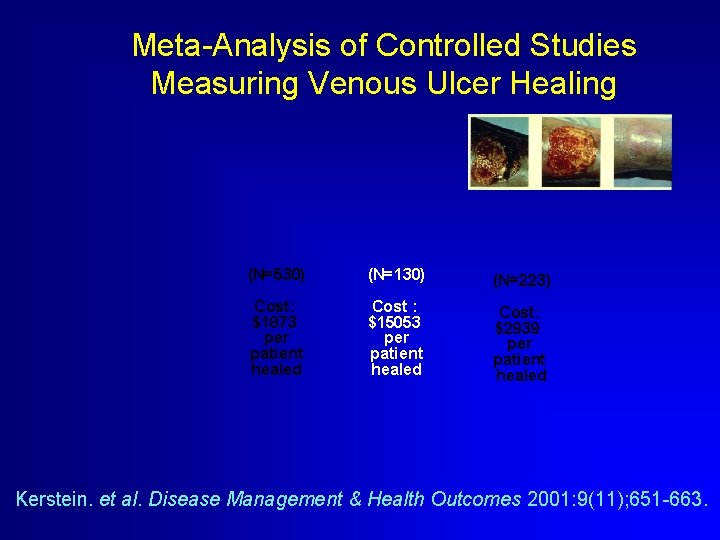
Meta-Analysis of Controlled Studies Measuring Venous Ulcer Healing (N=530) (N=130) (N=223) Cost: $1873 per patient healed Cost : $15053 per patient healed Cost: $2939 per patient healed Kerstein. et al. Disease Management & Health Outcomes 2001: 9(11); 651 -663.
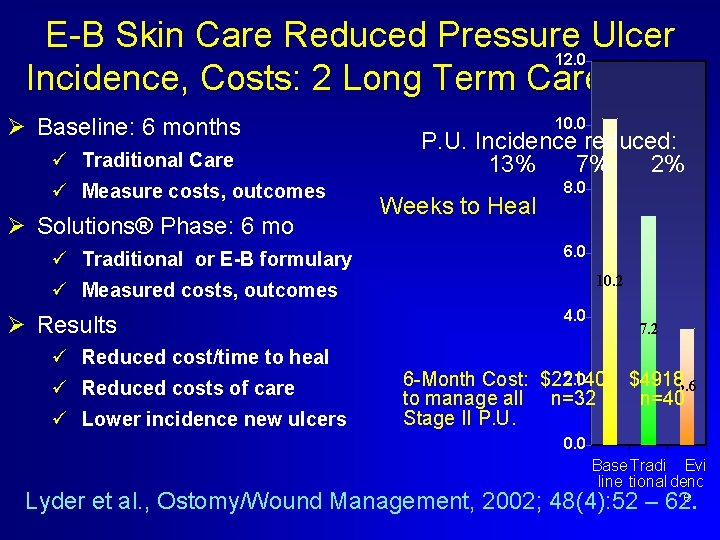
E-B Skin Care Reduced Pressure Ulcer 12. 0 Incidence, Costs: 2 Long Term Care Sites Ø Baseline: 6 months ü Traditional Care ü Measure costs, outcomes Ø Solutions® Phase: 6 mo 10. 0 P. U. Incidence reduced: 13% 7% 2% Weeks to Heal 8. 0 6. 0 ü Traditional or E-B formulary 10. 2 ü Measured costs, outcomes 4. 0 Ø Results ü Reduced cost/time to heal ü Reduced costs of care ü Lower incidence new ulcers 2. 0 6 -Month Cost: $22140 to manage all n=32 Stage II P. U. 7. 2 $49183. 6 n=40 0. 0 Lyder et al. , Ostomy/Wound Management, 2002; Base Tradi Evi line tional denc e 48(4): 52 – 62.
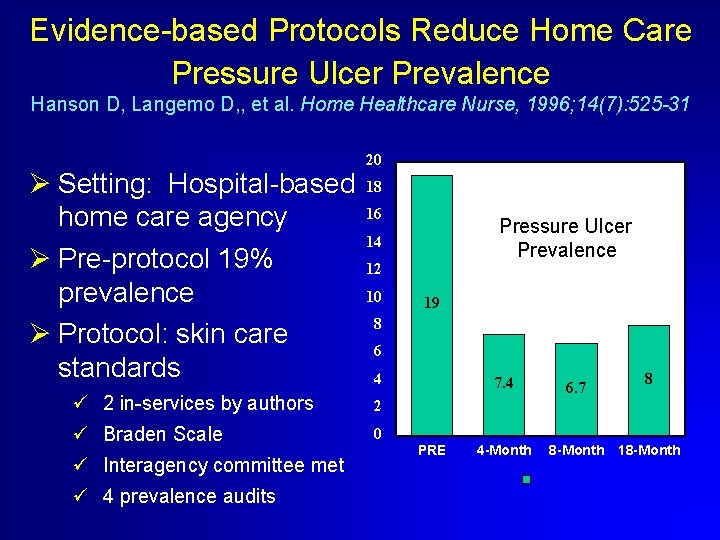
Evidence-based Protocols Reduce Home Care Pressure Ulcer Prevalence Hanson D, Langemo D, , et al. Home Healthcare Nurse, 1996; 14(7): 525 -31 Ø Setting: Hospital-based home care agency Ø Pre-protocol 19% prevalence Ø Protocol: skin care standards 20 18 16 12 10 6 4 2 ü Braden Scale 0 ü 4 prevalence audits 19 8 ü 2 in-services by authors ü Interagency committee met Pressure Ulcer Prevalence 14 7. 4 PRE 4 -Month 6. 7 8 8 -Month 18 -Month
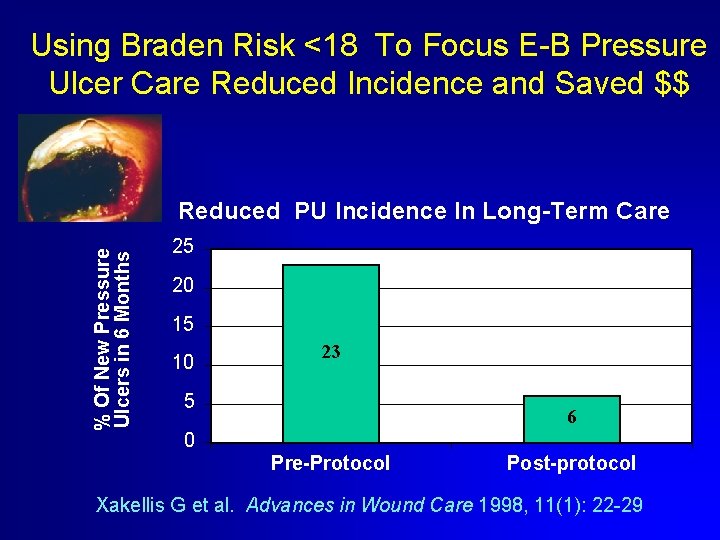
Using Braden Risk <18 To Focus E-B Pressure Ulcer Care Reduced Incidence and Saved $$ % Of New Pressure Ulcers in 6 Months Reduced PU Incidence In Long-Term Care 25 20 15 10 23 5 6 0 Pre-Protocol Post-protocol Xakellis G et al. Advances in Wound Care 1998, 11(1): 22 -29
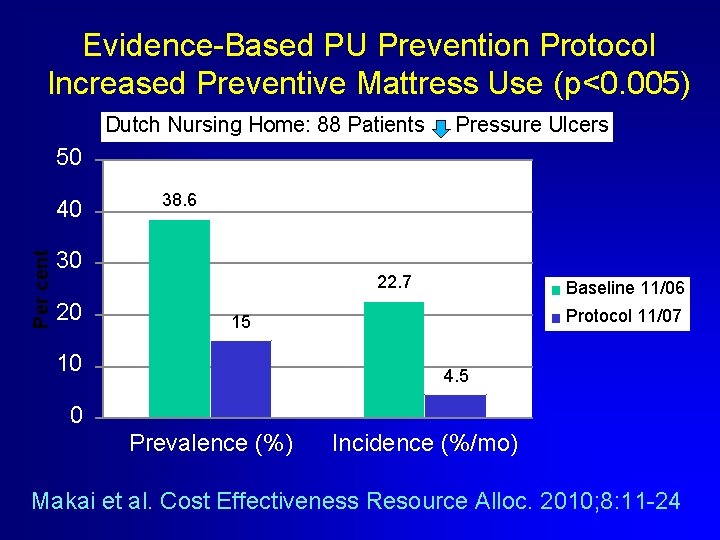
Evidence-Based PU Prevention Protocol Increased Preventive Mattress Use (p<0. 005) Dutch Nursing Home: 88 Patients Pressure Ulcers 50 Per cent 40 38. 6 30 20 22. 7 Baseline 11/06 Protocol 11/07 15 10 4. 5 0 Prevalence (%) Incidence (%/mo) Makai et al. Cost Effectiveness Resource Alloc. 2010; 8: 11 -24
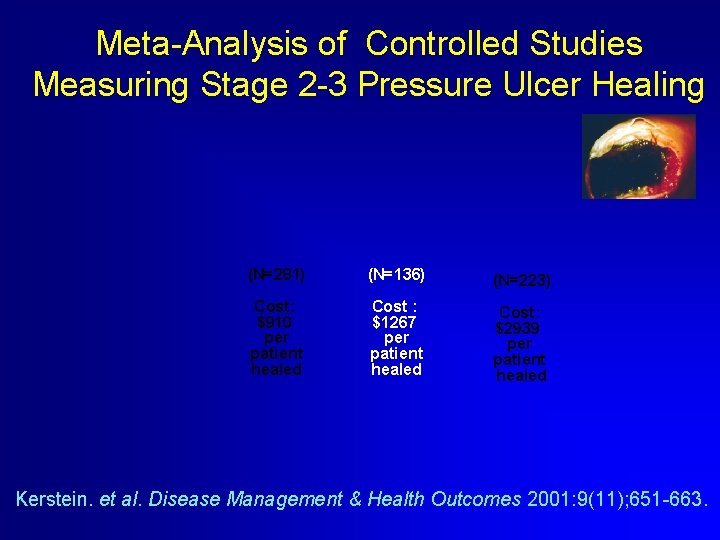
Meta-Analysis of Controlled Studies Measuring Stage 2 -3 Pressure Ulcer Healing (N=281) (N=136) (N=223) Cost: $910 per patient healed Cost : $1267 per patient healed Cost: $2939 per patient healed Kerstein. et al. Disease Management & Health Outcomes 2001: 9(11); 651 -663.
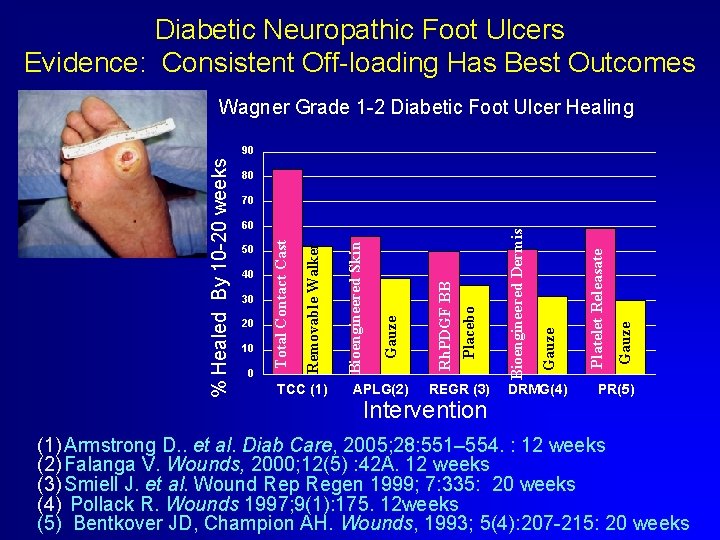
Diabetic Neuropathic Foot Ulcers Evidence: Consistent Off-loading Has Best Outcomes Wagner Grade 1 -2 Diabetic Foot Ulcer Healing 80 TCC (1) APLG(2) REGR (3) Intervention DRMG(4) Gauze Platelet Releasate 0 Gauze 10 Placebo 20 Rh. PDGF BB 30 Gauze 40 Bioengineered Skin 50 Removable Walker 60 Bioengineered Dermis 70 Total Contact Cast % Healed By 10 -20 weeks 90 PR(5) (1) Armstrong D. . et al. Diab Care, 2005; 28: 551– 554. : 12 weeks (2) Falanga V. Wounds, 2000; 12(5) : 42 A. 12 weeks (3) Smiell J. et al. Wound Rep Regen 1999; 7: 335: 20 weeks (4) Pollack R. Wounds 1997; 9(1): 175. 12 weeks (5) Bentkover JD, Champion AH. Wounds, 1993; 5(4): 207 -215: 20 weeks
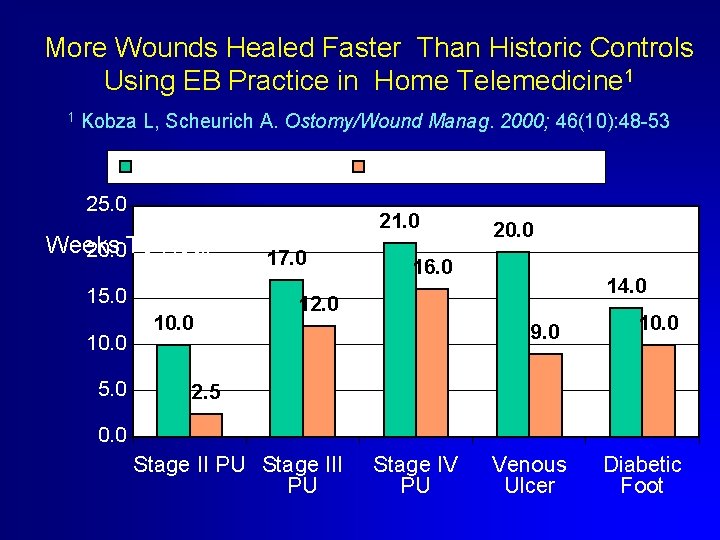
More Wounds Healed Faster Than Historic Controls Using EB Practice in Home Telemedicine 1 1 Kobza L, Scheurich A. Ostomy/Wound Manag. 2000; 46(10): 48 -53 Retrospective (n=120) 25. 0 Weeks 20. 0 To Heal 15. 0 10. 0 TM + EB Practice (n=76) 21. 0 17. 0 20. 0 16. 0 14. 0 12. 0 9. 0 10. 0 2. 5 0. 0 Stage II PU Stage IV PU Venous Ulcer Diabetic Foot
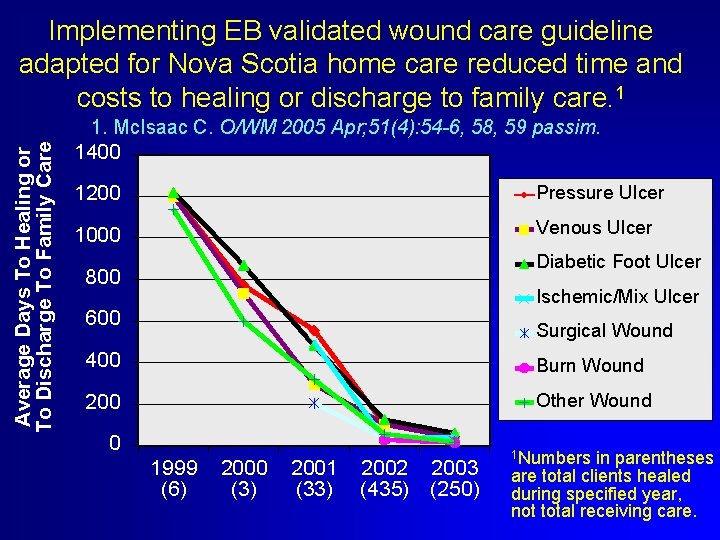
Implementing EB validated wound care guideline adapted for Nova Scotia home care reduced time and costs to healing or discharge to family care. 1 Average Days To Healing or To Discharge To Family Care 1. Mc. Isaac C. O/WM 2005 Apr; 51(4): 54 -6, 58, 59 passim. 1400 1200 Pressure Ulcer 1000 Venous Ulcer Diabetic Foot Ulcer 800 Ischemic/Mix Ulcer 600 Surgical Wound 400 Burn Wound 200 Other Wound 0 1999 (6) 2000 (3) 2001 (33) 2002 2003 (435) (250) 1 Numbers in parentheses are total clients healed during specified year, not total receiving care.
Science sets you free to improve wound care outcomes! Ø Fact: Evidence bases patient-oriented wound care on knowledge Ø Better, more reliable outcomes for Achieve Winning Outcomes ü Patient ü Wound Ø Progress to be proud of ü Faster healing ü pain, complications, cost Evidence
- Slides: 35