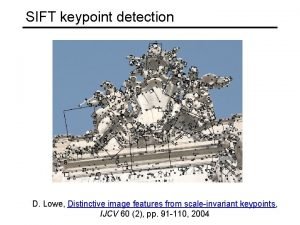
Distinctive Image Features from ScaleInvariant Keypoints David Lowe

- Slides: 26
Distinctive Image Features from Scale-Invariant Keypoints David Lowe
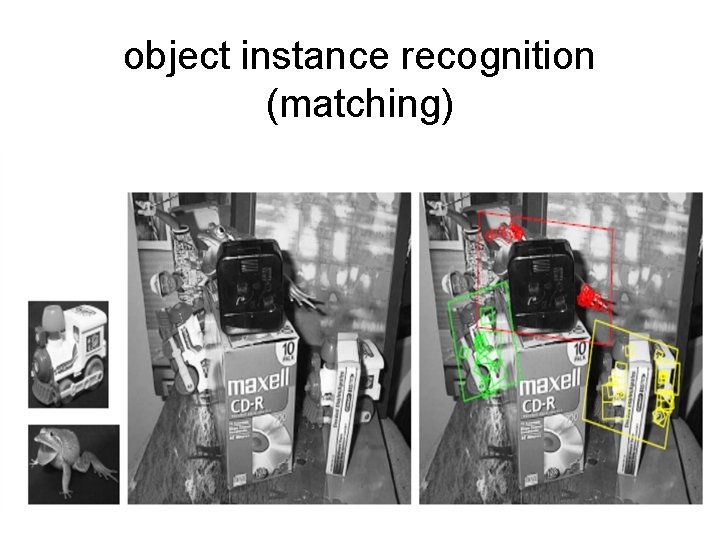
object instance recognition (matching)
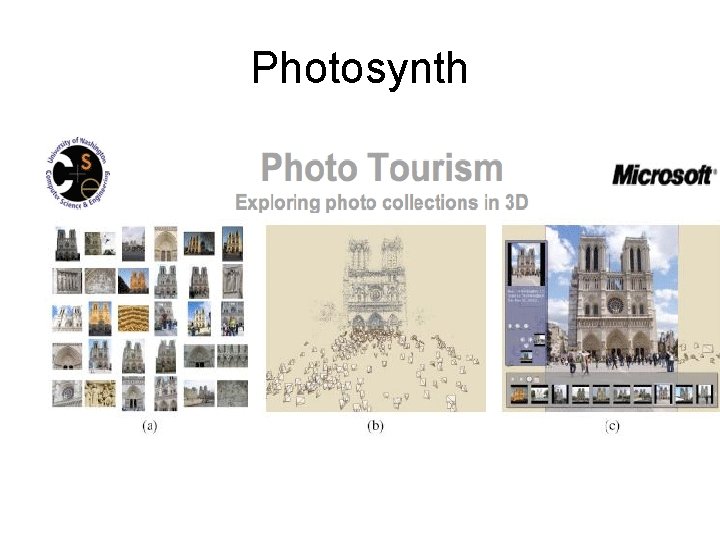
Photosynth
Challenges • • Scale change Rotation Occlusion Illumination ……
Strategy • Matching by stable, robust and distinctive local features. • SIFT: Scale Invariant Feature Transform; transform image data into scale-invariant coordinates relative to local features
SIFT • • Scale-space extrema detection Keypoint localization Orientation assignment Keypoint descriptor
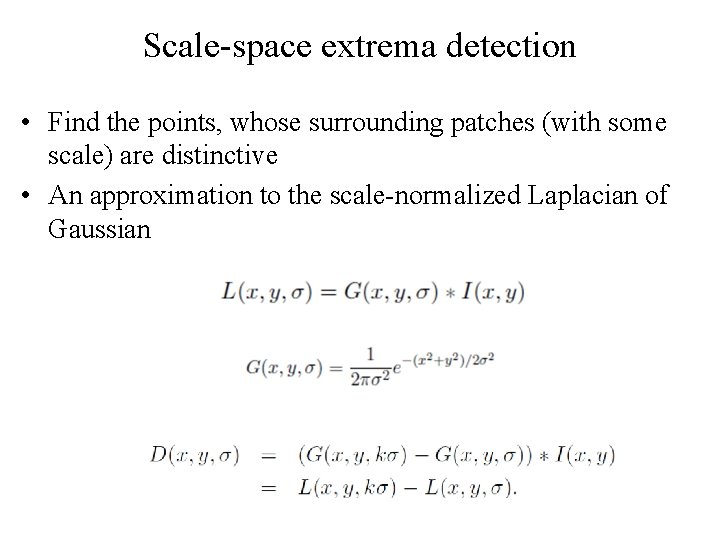
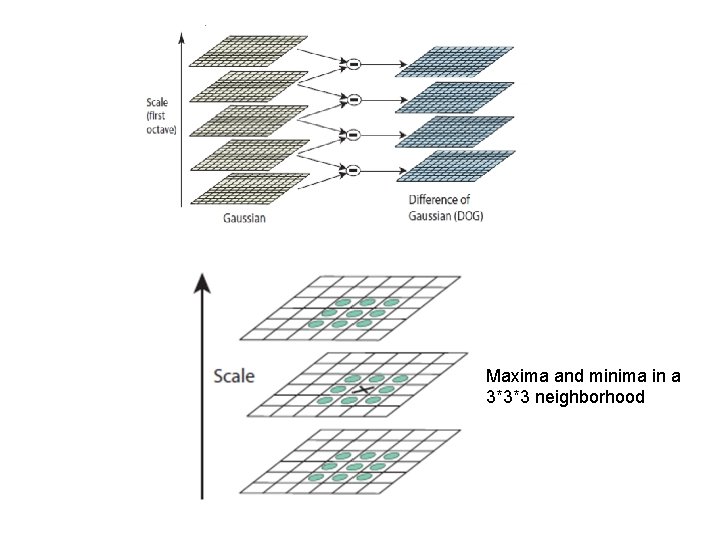
Scale-space extrema detection • Find the points, whose surrounding patches (with some scale) are distinctive • An approximation to the scale-normalized Laplacian of Gaussian
Maxima and minima in a 3*3*3 neighborhood
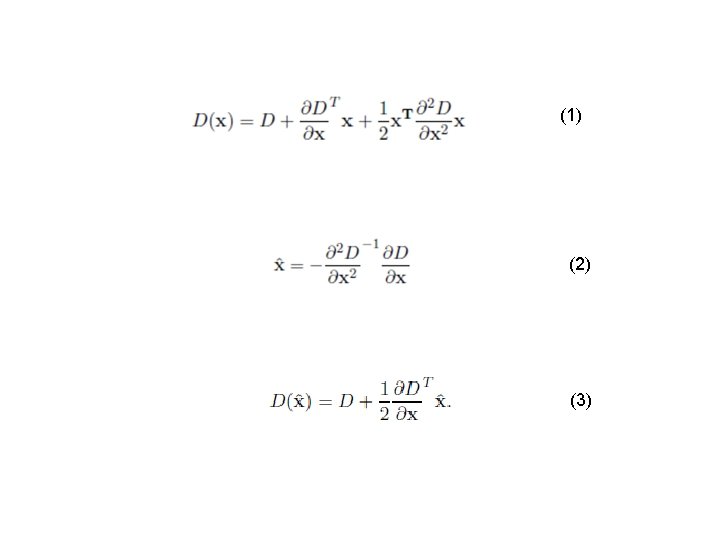
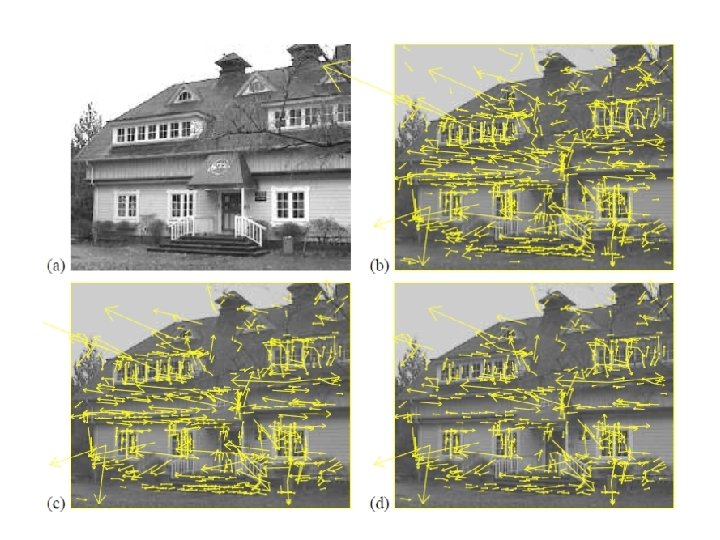
Keypoint localization • There are still a lot of points, some of them are not good enough. • The locations of keypoints may be not accurate. • Eliminating edge points.
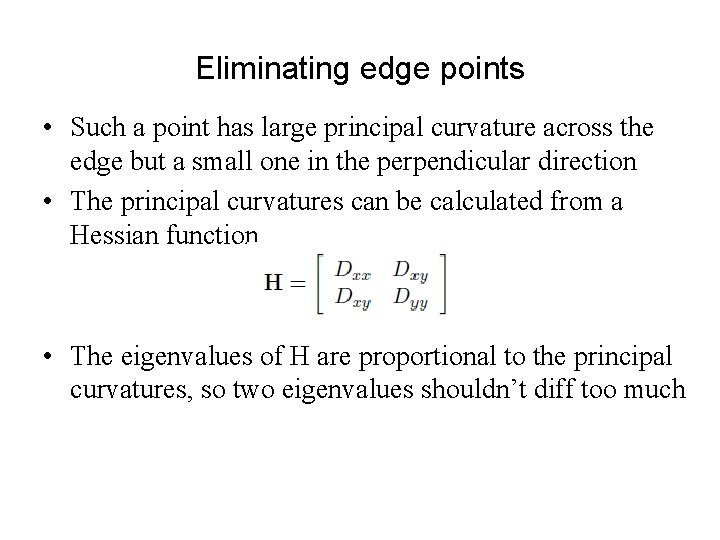
Eliminating edge points • Such a point has large principal curvature across the edge but a small one in the perpendicular direction • The principal curvatures can be calculated from a Hessian function • The eigenvalues of H are proportional to the principal curvatures, so two eigenvalues shouldn’t diff too much
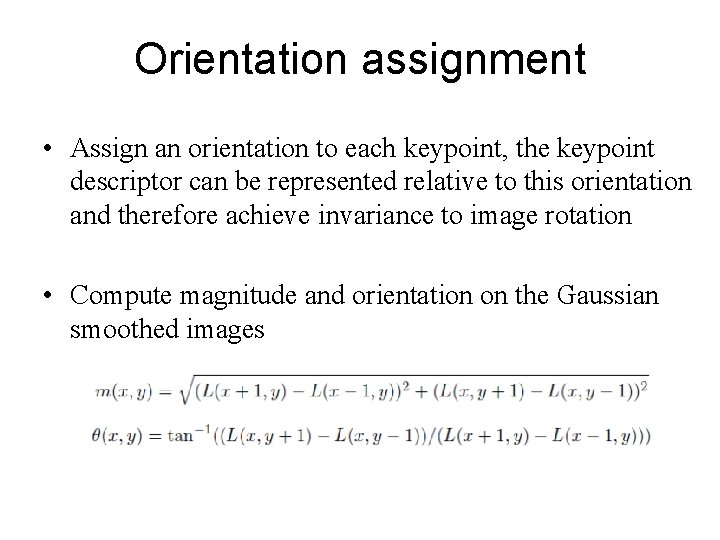
Orientation assignment • Assign an orientation to each keypoint, the keypoint descriptor can be represented relative to this orientation and therefore achieve invariance to image rotation • Compute magnitude and orientation on the Gaussian smoothed images
Orientation assignment • A histogram is formed by quantizing the orientations into 36 bins; • Peaks in the histogram correspond to the orientations of the patch; • For the same scale and location, there could be multiple keypoints with different orientations;
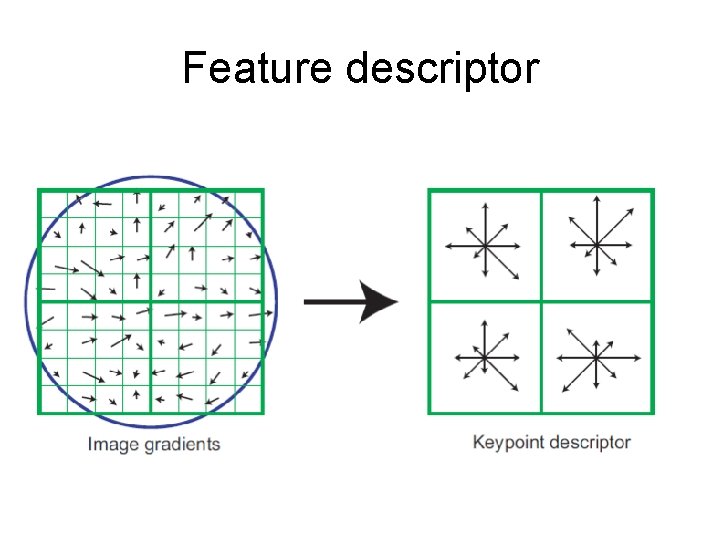
Feature descriptor
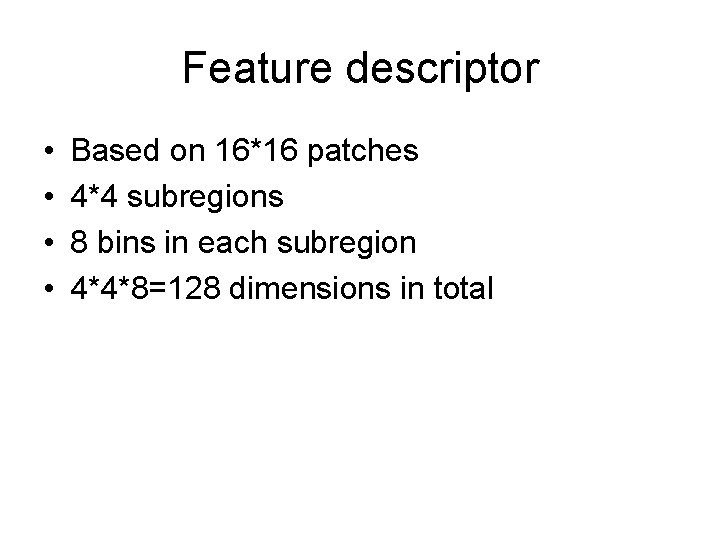
Feature descriptor • • Based on 16*16 patches 4*4 subregions 8 bins in each subregion 4*4*8=128 dimensions in total
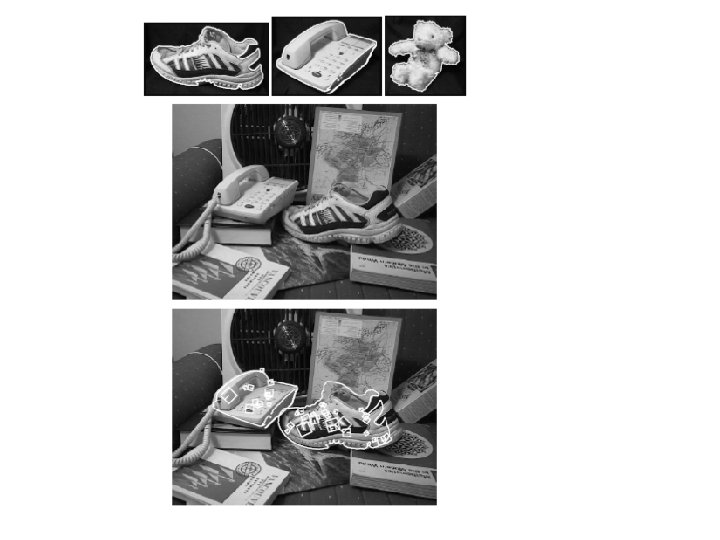
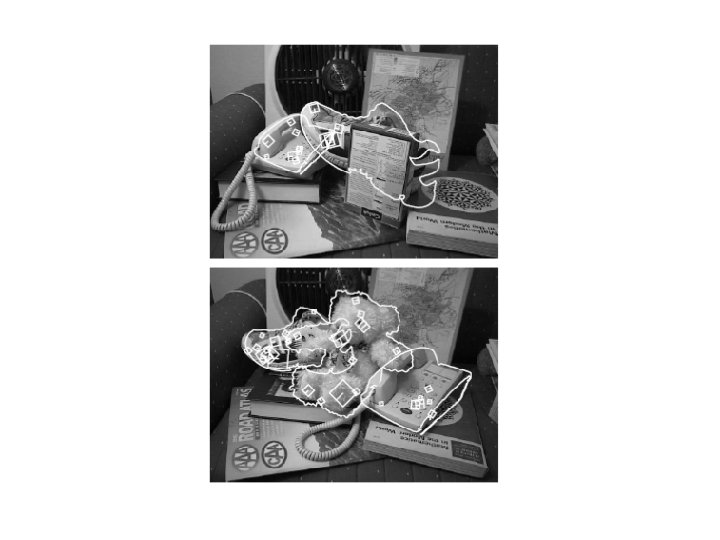
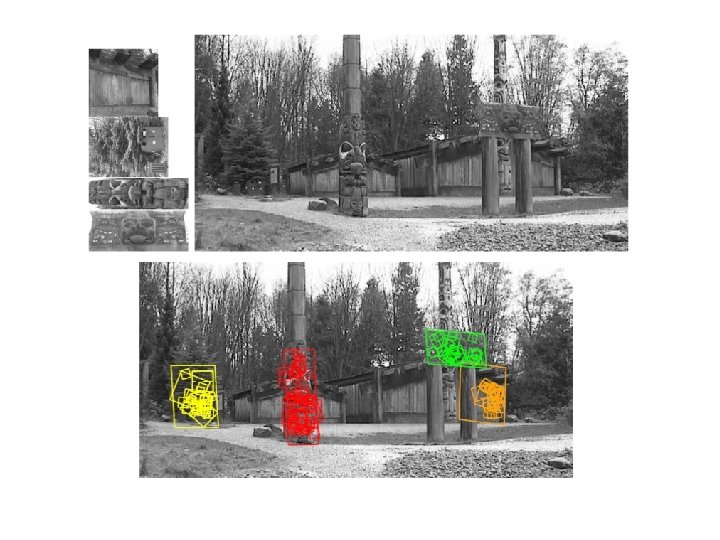
Application: object recognition • The SIFT features of training images are extracted and stored • For a query image 1. Extract SIFT feature 2. Efficient nearest neighbor indexing 3. 3 keypoints, Geometry verification
Extensions • 1. 2. 3. PCA-SIFT Working on 41*41 patches 2*39*39 dimensions Using PCA to project it to 20 dimensions
Surf • Approximate SIFT • Works almost equally well • Very fast
Conclusions • The most successful feature (probably the most successful paper in computer vision) • A lot of heuristics, the parameters are optimized based on a small and specific dataset. Different tasks should have different parameter settings. • Learning local image descriptors (Winder et al 2007): tuning parameters given their dataset. • We need a universal objective function.
comments • Ian: “For object detection, the keypoint localization process can indicate which locations and scales to consider when searching for objects”. • Mert: “uniform regions may be quite informative when detecting some types of ojbects , but SIFT ignore them” • Mani: “region detectors comparison” • Eamon: ” whether one could go directly to a surface representation of a scene based on SIFT features “