Chapter 13 Key Issue 1 and 2 WHY
- Slides: 25
Chapter 13 Key Issue 1 and 2 -WHY ARE DOWNTOWNS DISTINCTIVE? -WHERE ARE PEOPLE DISTRIBUTED IN URBAN AREAS
Key Issue 1: Why are Downtowns Distinctive
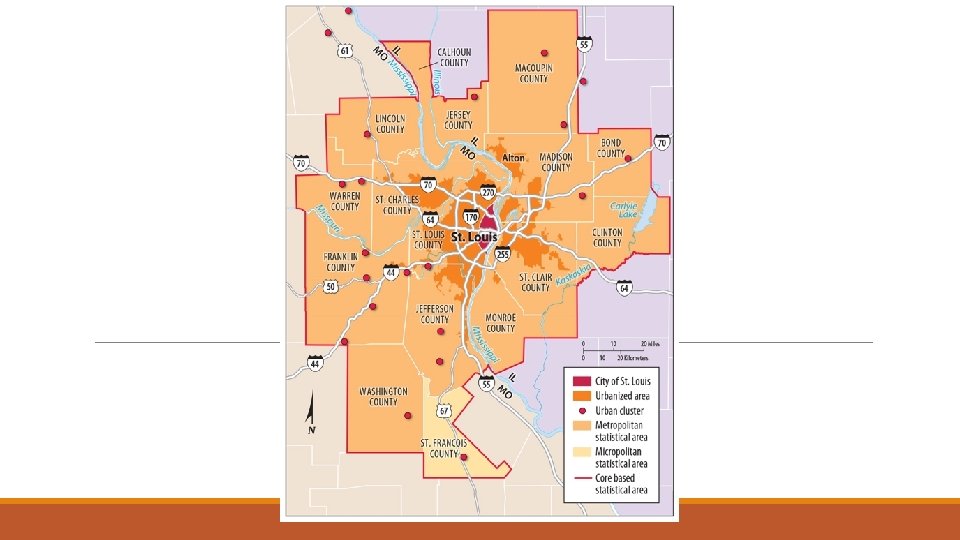
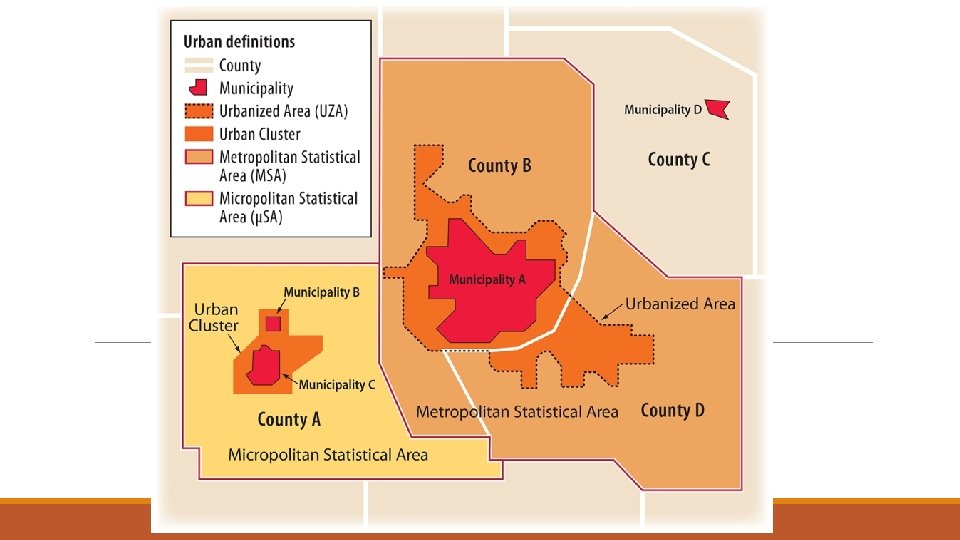
Central City -Different parts of a settlement: central city, urban area and metropolitan area. -Central City: an urban settlement that has been legally incorporated into a independent, selfgoverning unit known as a municipality. ◦ -Virtually all countries have local government systems that recognize cities as legal entities with fixed boundaries. ◦ Elected officials ◦ Boundaries are the geographic areas where the local government has authority
Urban Area -Consists of a central city and its surrounding built-up suburbs -Two types: ◦ Urbanized area: at least 50, 000 inhabitants ◦ Urban cluster: 2, 500 -50, 000 inhabitants ◦ 486 urbanized areas and 3, 087 urban clusters in the US as of 2013
Metropolitan Area -The economic and cultural area of influence of a settlement that extends beyond the urban area -Metropolitan Statistical Area (MSA): ◦ Urbanized areas with a population of at least 50, 000 ◦ The county within which the city is located ◦ Adjacent counties with a high population density and a large percentage of residents working in the central city’s county
Micropolitan Area -Micropolitan Statistical Area: ◦ Urbanized area of between 10, 000 and 50, 000 inhabitants ◦ The county in which it is located ◦ Adjacent counties tied to the city ◦ 541 in the U. S
Ways the census combines Micropolitan and Metropolitan areas -Core-based statistical areas -Combined statistical areas -Primary statistical areas
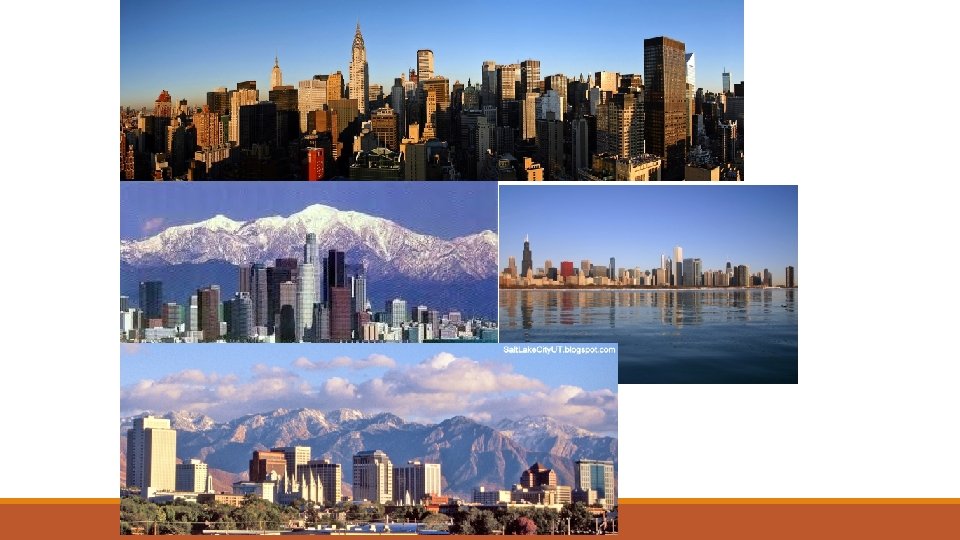
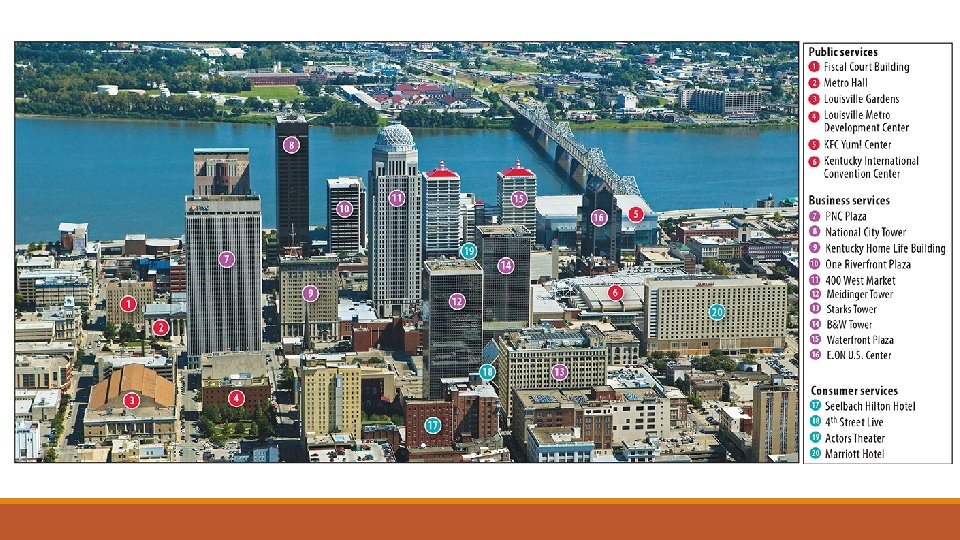
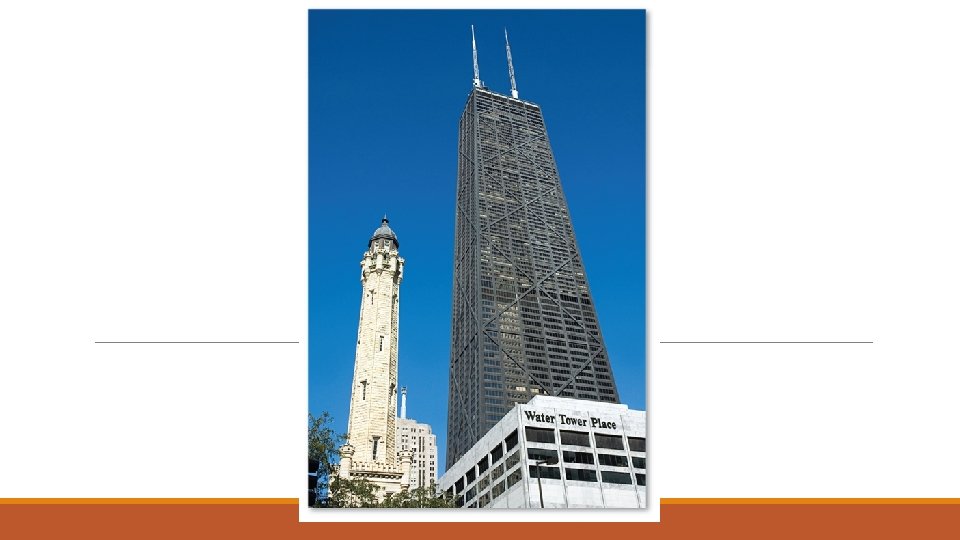
Central Business District (CBD) -Downtown. -Compact. Less than 1% of the urban land area but contains a large percentage of the public, business and consumer services. -Accessible. It’s the easiest part of the city to reach. -Focal point of region’s transportation -Oldest district in the city, usually at or near the origin of the settlement.
Public Services in CBDs - City hall, courts, county and state agencies and libraries. -Places of worship -Social service agencies -Sports facilities -Convention centers
Business Services in CBDs -Offices -Advertising, banking, finance, journalism and law particularly depend on proximity to professional colleagues. -Face to face contact - Central location for workers
Consumer Services in CBDs -3 types because they require accessibility to everyone in the region. 1. Retailers with high thresholds ◦ Department stores ◦ Expensive rent, so most of closed for suburban areas 2. Retailers with high ranges ◦ Specialists, jewelry stores ◦ Customers are scattered over a wide area ◦ Visited by tourists 3. Retailers serving CBD workers ◦ Workers shop or eating during their breaks ◦ Dry cleaning, clothing, food etc
Competition for Space in CBDs -Limited available land = very high land values -Lack of manufacturing: require lots of land - Ports have moved to areas with more space -Lack of residents: moved to suburban areas for more space, high rents in the city and the congestions. ◦ However, population living in the cities has increased. Townhouses and apartments have been constructed ◦ Downtown living is attractive: entertainment, restaurants, night life -Vertical features of the CBD: ◦ Underground: garages, loading docks, subways (shops and food by subway) ◦ Skyscrapers: building up! Vertical geography, the nature of the activity influences which floor it occupies
Key Issue 2: Where are People Distributed in Urban Areas?
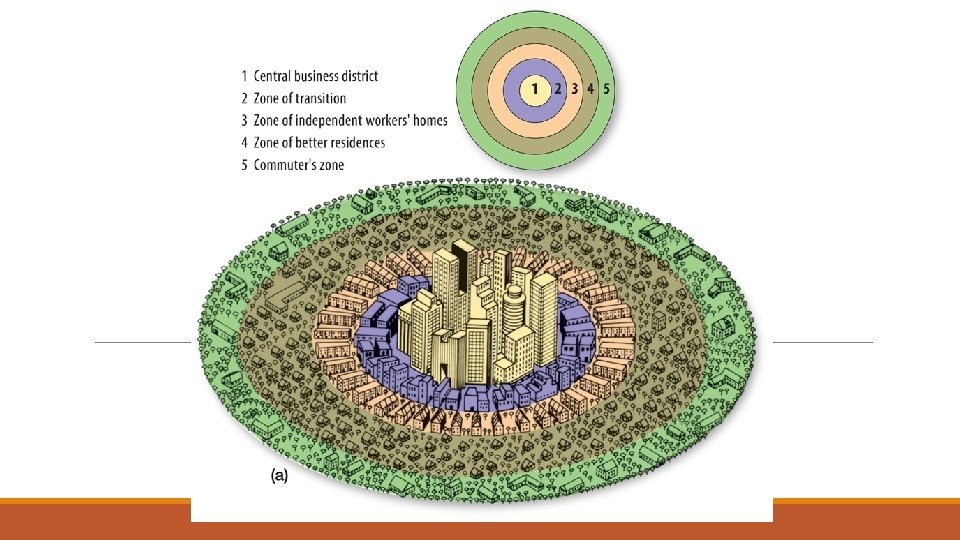
Models of Urban Structure: Concentric Zone Model -1923 Sociologist E. W Burgess - A city grows outward from a central area in a series of concentric rings, like the growth of rings of a tree. -Size and width varies, but basic types of rings appears in all cities in the same order
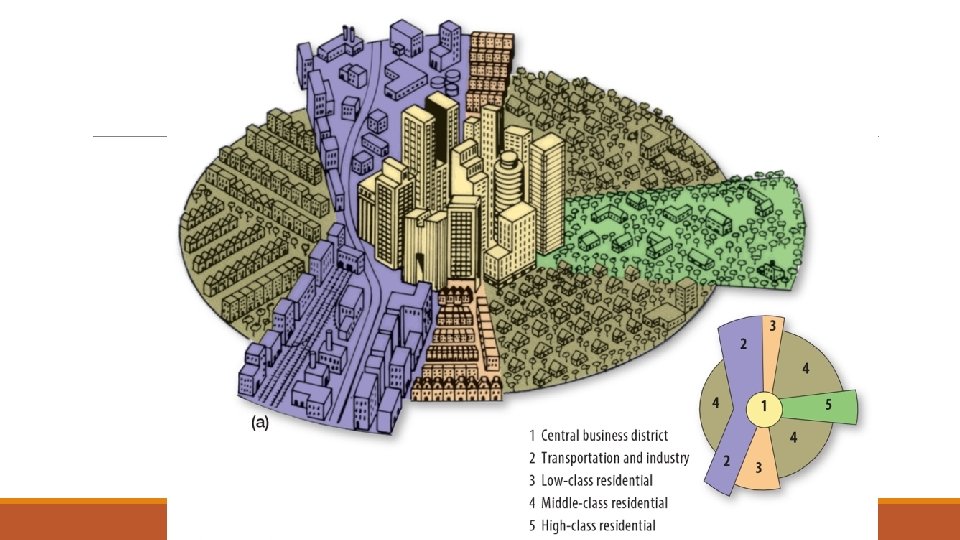
Sector Model -1939 Economist Homer Hoyt -City develops in a series of sectors -Certain areas of the city are more attractive for various activities -As the city grows, activities expand outward in a wedge/sector from the center
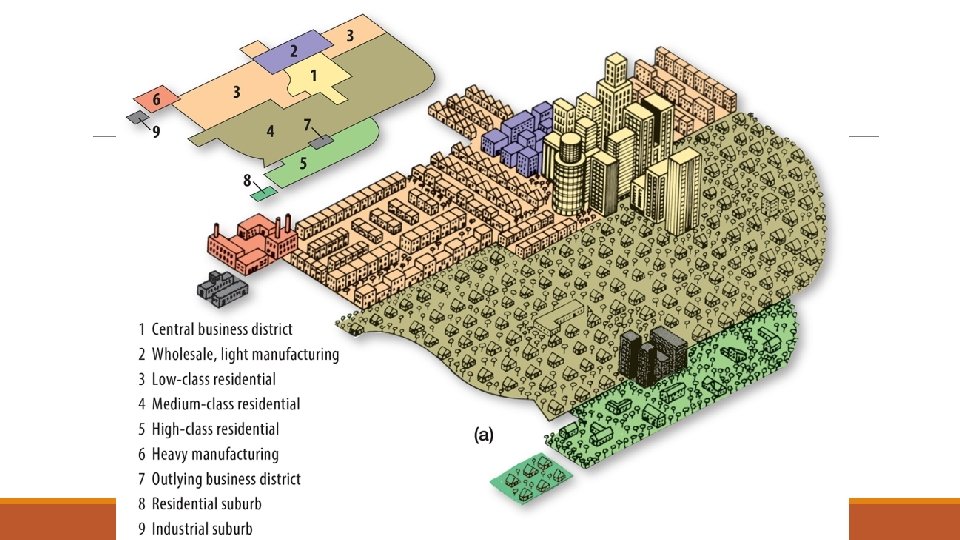
Multiple Nuclei Model -1945 Geographers C. D Harris and E. L Ullman -City is a complex structure that includes more than one center around which activities revolve -Ex: port, neighborhood business center, university etc -Some activities are attracted to particular nodes, whereas others try to avoid them ◦ Ex. University: surrounded by pizza places and bookstores ◦ Ex. Airport: hotels - Edge Cities: nodes of consumer and business services around the beltway
Now it’s your turn! -Take notes on how the models are applied in: ◦ North America ◦ Europe ◦ Developing Cities