The Management of Patients With Incomplete Revascularization Giora



- Slides: 32
The Management of Patients With Incomplete Revascularization Giora Weisz, MD Director of Cardiovascular Clinical Research, Center for Interventional Vascular Therapy Columbia University Medical Center New York, NY
Giora Weisz, MD §Ownership Interest (stock, stock options, or other ownership interests): §Medicasting
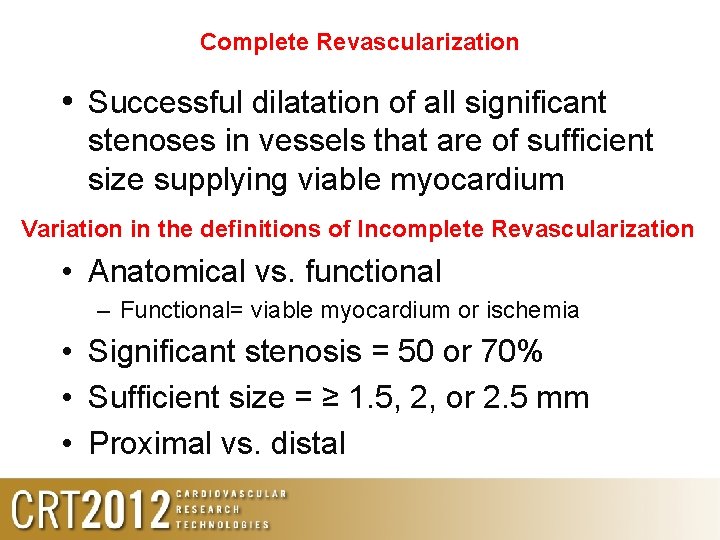
Complete Revascularization • Successful dilatation of all significant stenoses in vessels that are of sufficient size supplying viable myocardium Variation in the definitions of Incomplete Revascularization • Anatomical vs. functional – Functional= viable myocardium or ischemia • Significant stenosis = 50 or 70% • Sufficient size = ≥ 1. 5, 2, or 2. 5 mm • Proximal vs. distal
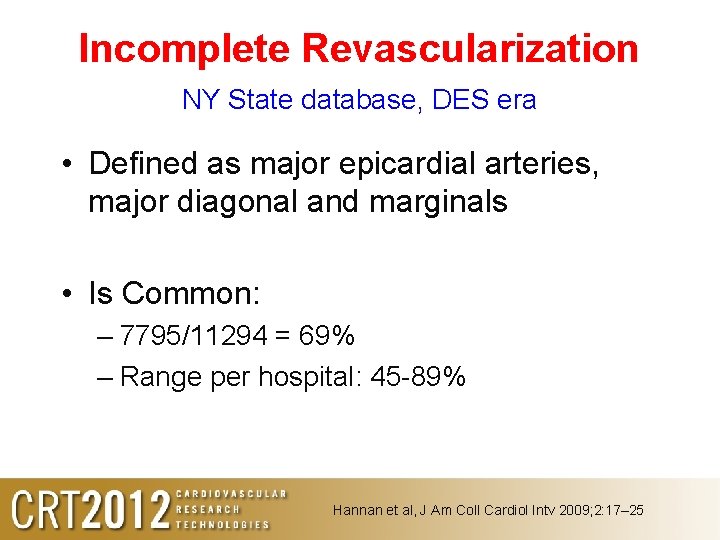
Incomplete Revascularization NY State database, DES era • Defined as major epicardial arteries, major diagonal and marginals • Is Common: – 7795/11294 = 69% – Range per hospital: 45 -89% Hannan et al, J Am Coll Cardiol Intv 2009; 2: 17– 25
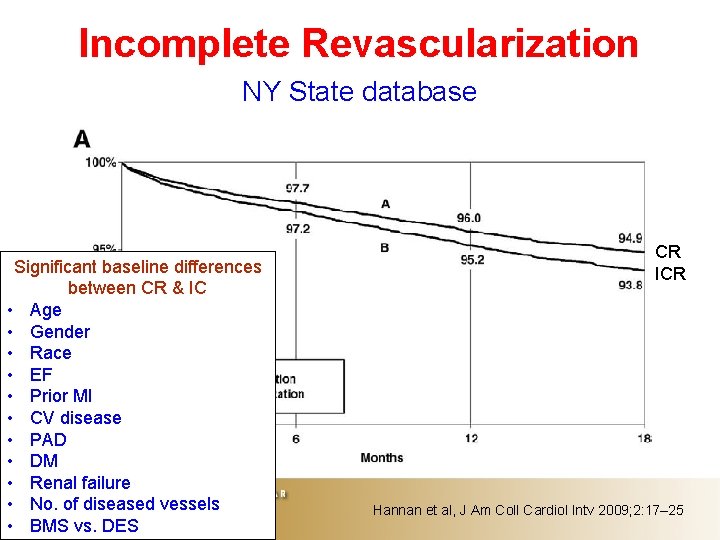
Incomplete Revascularization NY State database Significant baseline differences between CR & IC • Age • Gender • Race • EF • Prior MI • CV disease • PAD • DM • Renal failure • No. of diseased vessels • BMS vs. DES CR ICR Hannan et al, J Am Coll Cardiol Intv 2009; 2: 17– 25
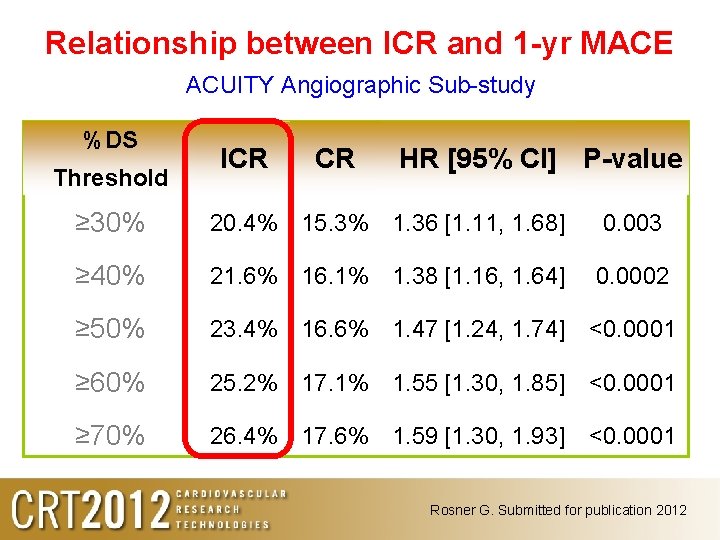
Relationship between ICR and 1 -yr MACE ACUITY Angiographic Sub-study %DS Threshold ICR CR HR [95% CI] P-value ≥ 30% 20. 4% 15. 3% 1. 36 [1. 11, 1. 68] 0. 003 ≥ 40% 21. 6% 16. 1% 1. 38 [1. 16, 1. 64] 0. 0002 ≥ 50% 23. 4% 16. 6% 1. 47 [1. 24, 1. 74] <0. 0001 ≥ 60% 25. 2% 17. 1% 1. 55 [1. 30, 1. 85] <0. 0001 ≥ 70% 26. 4% 17. 6% 1. 59 [1. 30, 1. 93] <0. 0001 Rosner G. Submitted for publication 2012
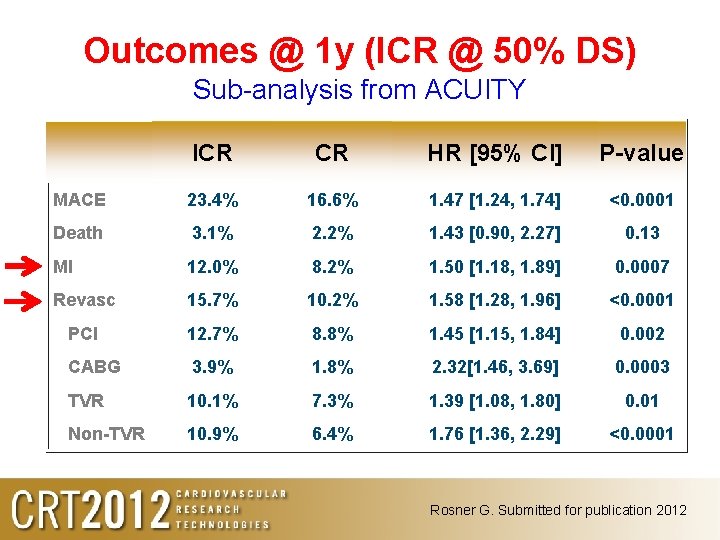
Outcomes @ 1 y (ICR @ 50% DS) Sub-analysis from ACUITY ICR CR HR [95% CI] P-value MACE 23. 4% 16. 6% 1. 47 [1. 24, 1. 74] <0. 0001 Death 3. 1% 2. 2% 1. 43 [0. 90, 2. 27] 0. 13 MI 12. 0% 8. 2% 1. 50 [1. 18, 1. 89] 0. 0007 Revasc 15. 7% 10. 2% 1. 58 [1. 28, 1. 96] <0. 0001 PCI 12. 7% 8. 8% 1. 45 [1. 15, 1. 84] 0. 002 CABG 3. 9% 1. 8% 2. 32[1. 46, 3. 69] 0. 0003 TVR 10. 1% 7. 3% 1. 39 [1. 08, 1. 80] 0. 01 Non-TVR 10. 9% 6. 4% 1. 76 [1. 36, 2. 29] <0. 0001 Rosner G. Submitted for publication 2012
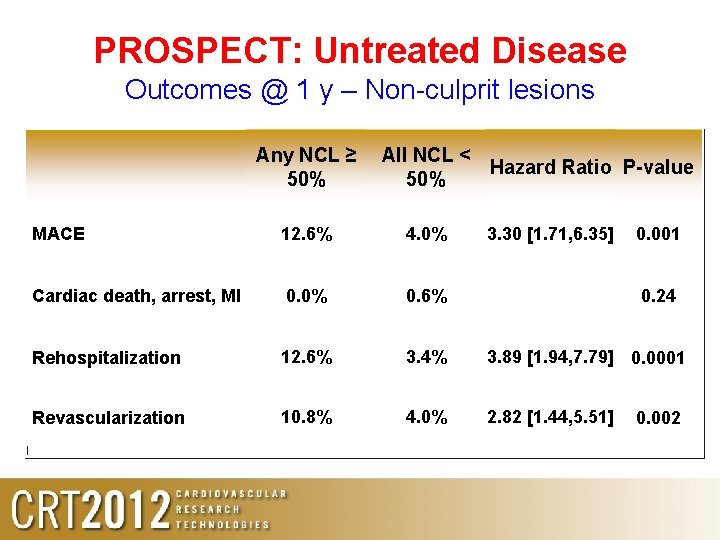
PROSPECT: Untreated Disease Outcomes @ 1 y – Non-culprit lesions Any NCL ≥ 50% All NCL < Hazard Ratio P-value 50% MACE 12. 6% 4. 0% 3. 30 [1. 71, 6. 35] Cardiac death, arrest, MI 0. 0% 0. 6% Rehospitalization 12. 6% 3. 4% 3. 89 [1. 94, 7. 79] 0. 0001 Revascularization 10. 8% 4. 0% 2. 82 [1. 44, 5. 51] 0. 001 0. 24 0. 002
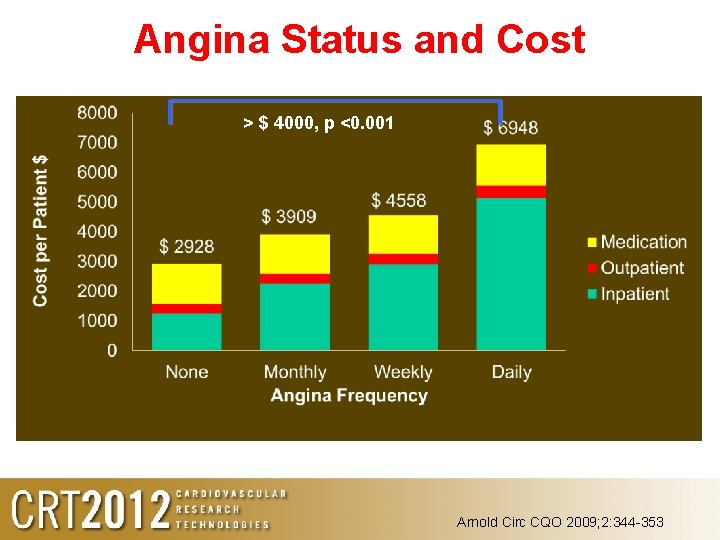
Angina Status and Cost > $ 4000, p <0. 001 Arnold Circ CQO 2009; 2: 344 -353
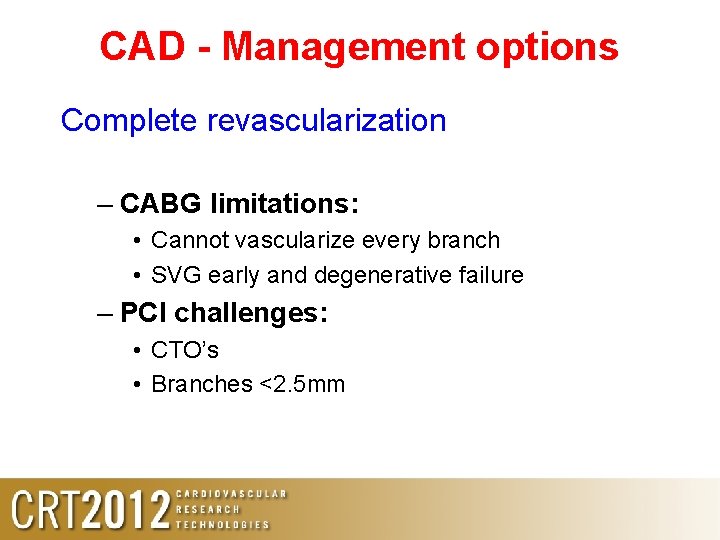
CAD - Management options Complete revascularization – CABG limitations: • Cannot vascularize every branch • SVG early and degenerative failure – PCI challenges: • CTO’s • Branches <2. 5 mm
CAD - Management options Medical Management of Angina / Ischemia – Secondary prevention – β-Blockers – Ca++ Channel inhibitors – Nitrates – Ranolazine
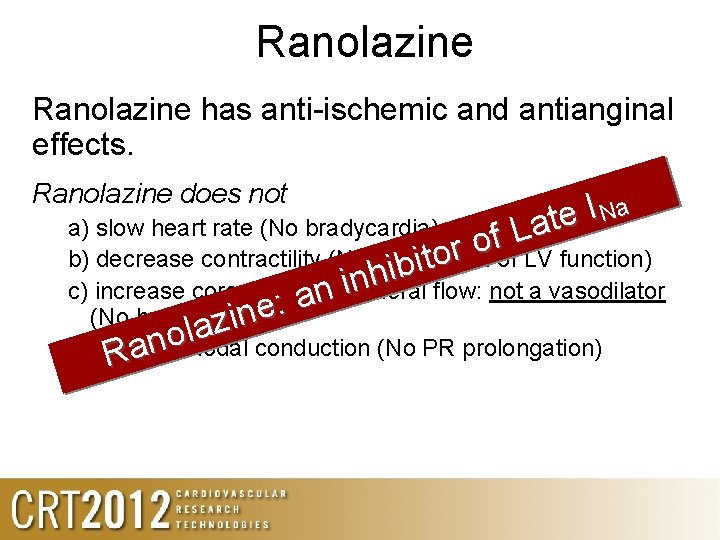
Ranolazine has anti-ischemic and antianginal effects. Ranolazine does not I Na e t a L f o a) slow heart rate (No bradycardia) r o b) decrease contractility (No depression of LV function) t i b i h n i c) increase coronary or peripheral flow: not a vasodilator n a : e (No hypotension) n i z a l onodal conduction (No PR prolongation) n d) slow AV a R R
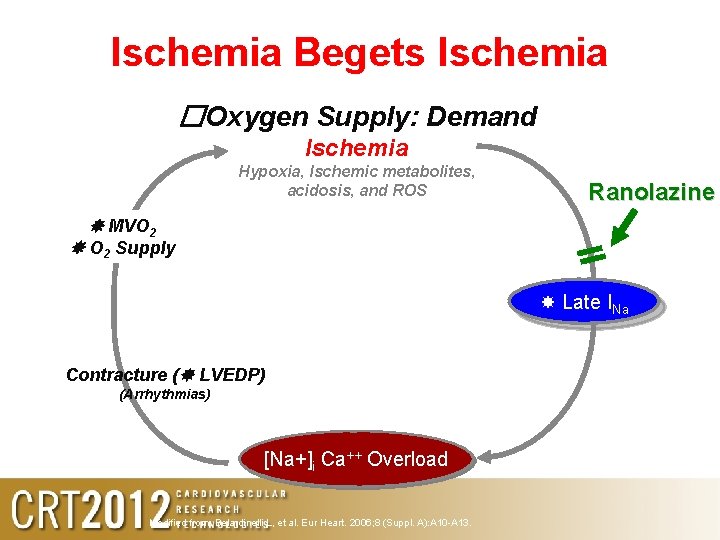
Ischemia Begets Ischemia �Oxygen Supply: Demand Ischemia Hypoxia, Ischemic metabolites, acidosis, and ROS Ranolazine MVO 2 Supply Late INa Contracture ( LVEDP) (Arrhythmias) [Na+]i Ca++ Overload Modified from: Belardinelli L, et al. Eur Heart. 2006; 8 (Suppl. A): A 10 -A 13.
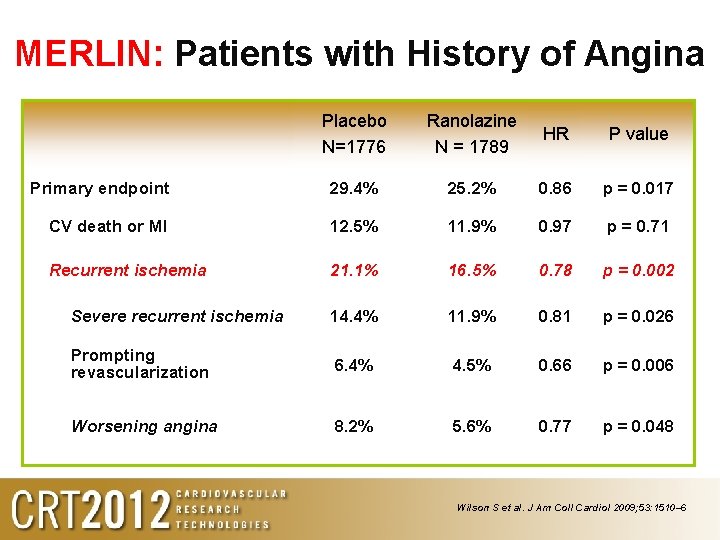
MERLIN: Patients with History of Angina Placebo N=1776 Ranolazine N = 1789 HR P value Primary endpoint 29. 4% 25. 2% 0. 86 p = 0. 017 CV death or MI 12. 5% 11. 9% 0. 97 p = 0. 71 Recurrent ischemia 21. 1% 16. 5% 0. 78 p = 0. 002 Severe recurrent ischemia 14. 4% 11. 9% 0. 81 p = 0. 026 Prompting revascularization 6. 4% 4. 5% 0. 66 p = 0. 006 Worsening angina 8. 2% 5. 6% 0. 77 p = 0. 048 Wilson S et al. J Am Coll Cardiol 2009; 53: 1510– 6
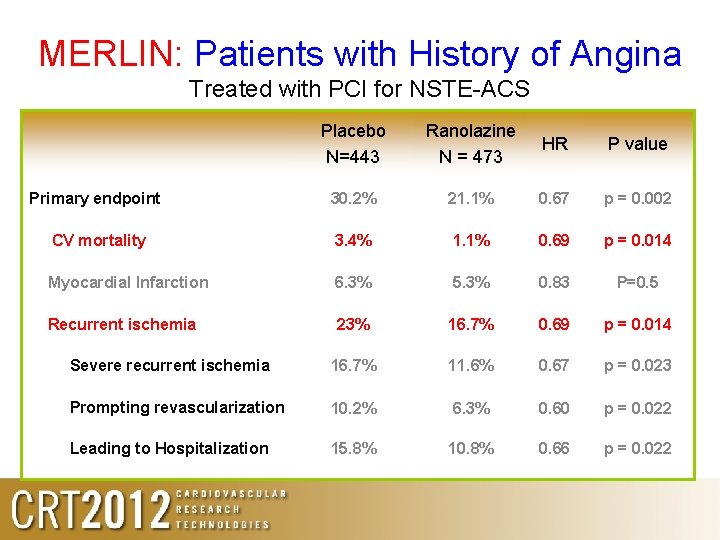
MERLIN: Patients with History of Angina Treated with PCI for NSTE-ACS Placebo N=443 Ranolazine N = 473 HR P value Primary endpoint 30. 2% 21. 1% 0. 67 p = 0. 002 CV mortality 3. 4% 1. 1% 0. 69 p = 0. 014 Myocardial Infarction 6. 3% 5. 3% 0. 83 P=0. 5 Recurrent ischemia 23% 16. 7% 0. 69 p = 0. 014 Severe recurrent ischemia 16. 7% 11. 6% 0. 67 p = 0. 023 Prompting revascularization 10. 2% 6. 3% 0. 60 p = 0. 022 Leading to Hospitalization 15. 8% 10. 8% 0. 66 p = 0. 022
Adjunctive Pharmacotherapy
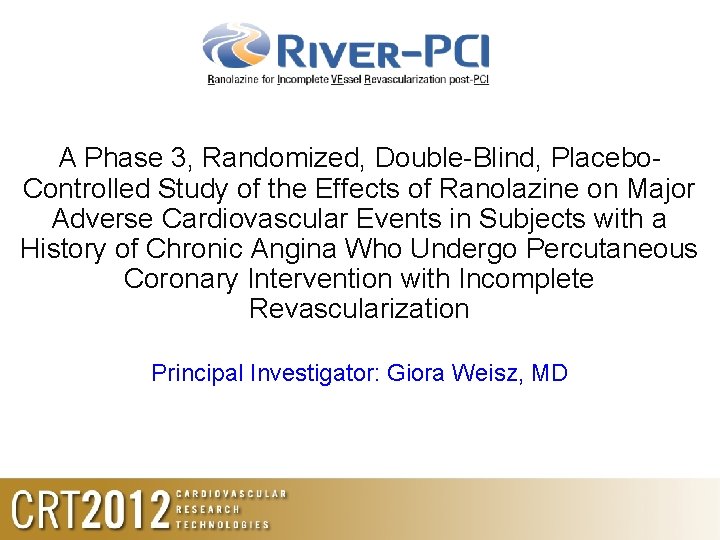
A Phase 3, Randomized, Double-Blind, Placebo. Controlled Study of the Effects of Ranolazine on Major Adverse Cardiovascular Events in Subjects with a History of Chronic Angina Who Undergo Percutaneous Coronary Intervention with Incomplete Revascularization Principal Investigator: Giora Weisz, MD
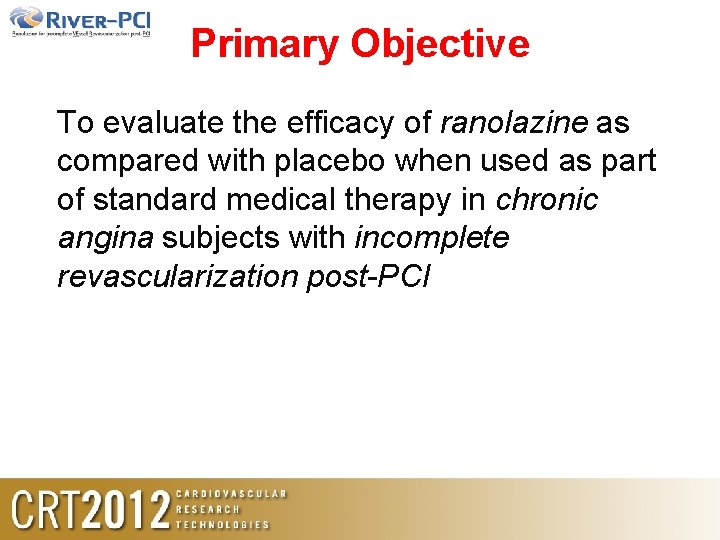
Primary Objective To evaluate the efficacy of ranolazine as compared with placebo when used as part of standard medical therapy in chronic angina subjects with incomplete revascularization post-PCI
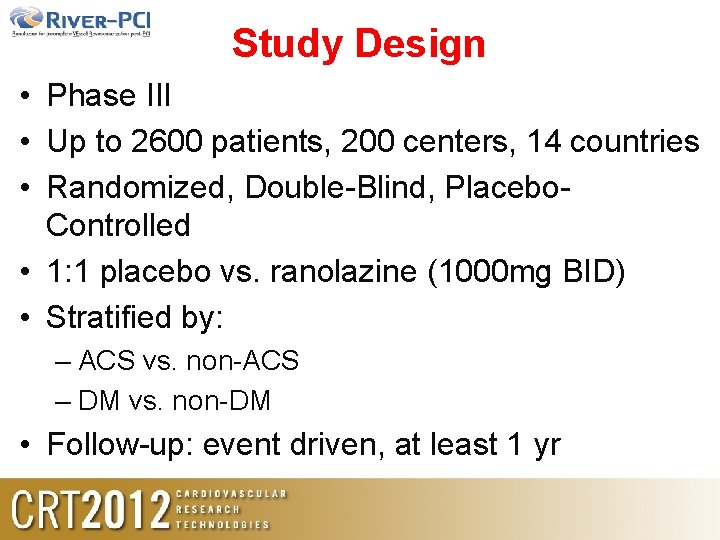
Study Design • Phase III • Up to 2600 patients, 200 centers, 14 countries • Randomized, Double-Blind, Placebo. Controlled • 1: 1 placebo vs. ranolazine (1000 mg BID) • Stratified by: – ACS vs. non-ACS – DM vs. non-DM • Follow-up: event driven, at least 1 yr
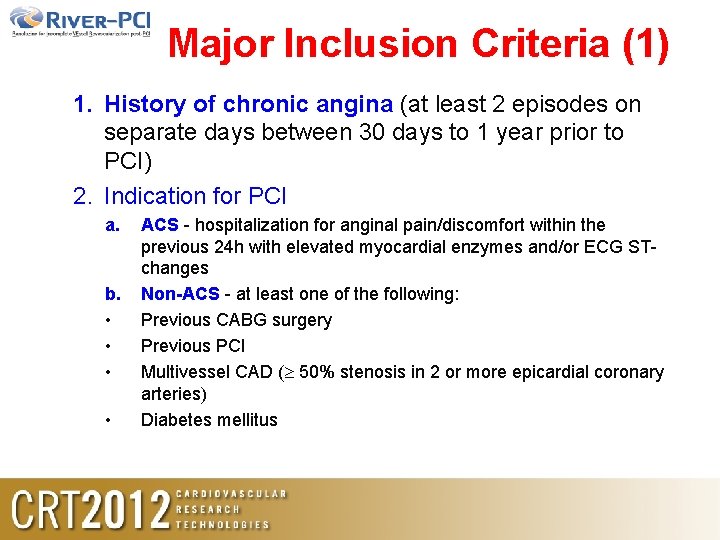
Major Inclusion Criteria (1) 1. History of chronic angina (at least 2 episodes on separate days between 30 days to 1 year prior to PCI) 2. Indication for PCI a. b. • • ACS - hospitalization for anginal pain/discomfort within the previous 24 h with elevated myocardial enzymes and/or ECG STchanges Non-ACS - at least one of the following: Previous CABG surgery Previous PCI Multivessel CAD ( 50% stenosis in 2 or more epicardial coronary arteries) Diabetes mellitus
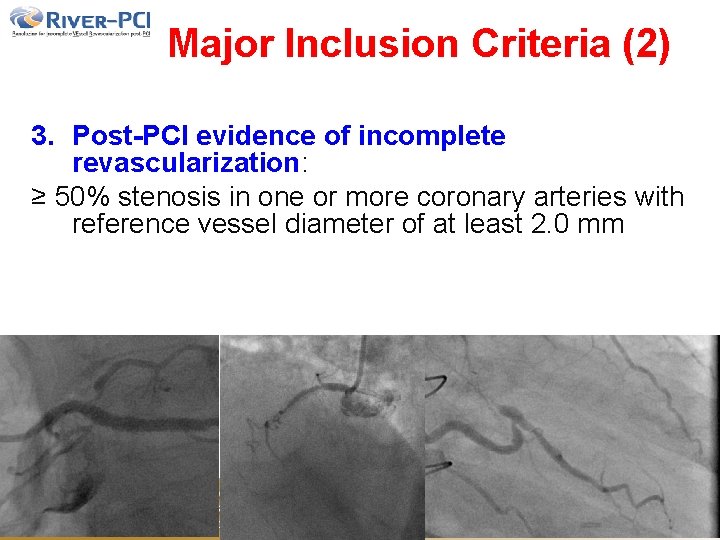
Major Inclusion Criteria (2) 3. Post-PCI evidence of incomplete revascularization: ≥ 50% stenosis in one or more coronary arteries with reference vessel diameter of at least 2. 0 mm
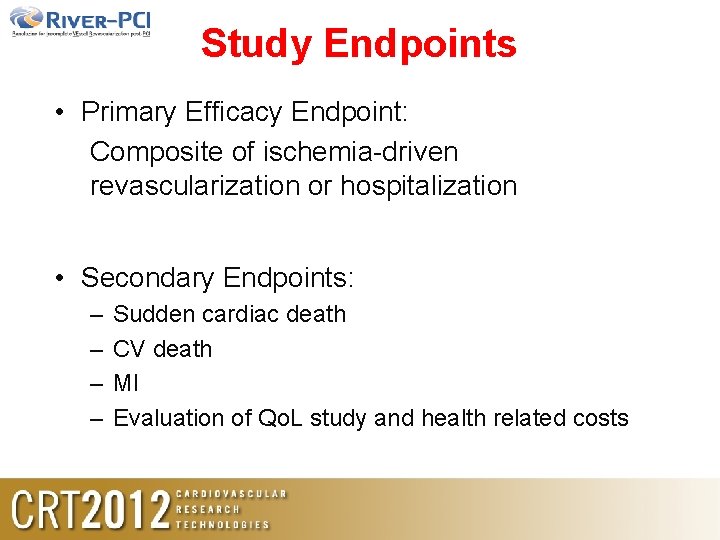
Study Endpoints • Primary Efficacy Endpoint: Composite of ischemia-driven revascularization or hospitalization • Secondary Endpoints: – – Sudden cardiac death CV death MI Evaluation of Qo. L study and health related costs
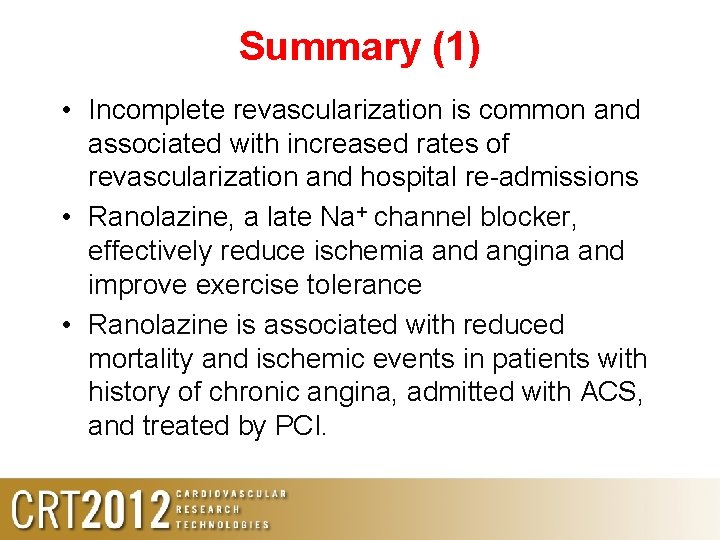
Summary (1) • Incomplete revascularization is common and associated with increased rates of revascularization and hospital re-admissions • Ranolazine, a late Na+ channel blocker, effectively reduce ischemia and angina and improve exercise tolerance • Ranolazine is associated with reduced mortality and ischemic events in patients with history of chronic angina, admitted with ACS, and treated by PCI.
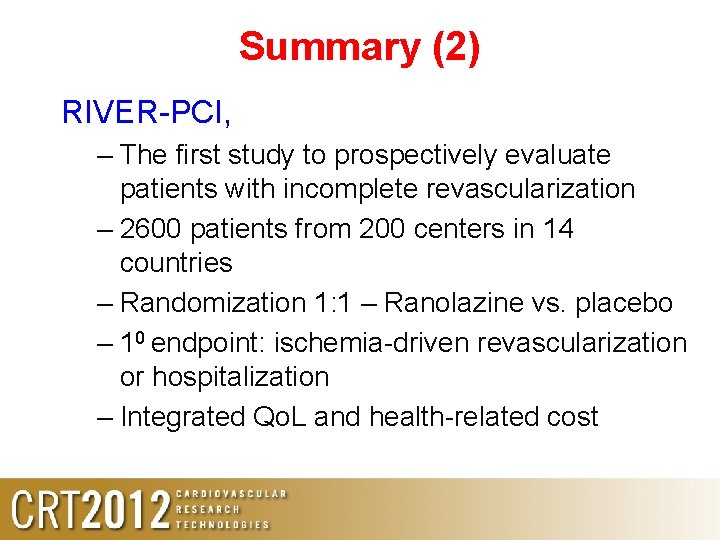
Summary (2) RIVER-PCI, – The first study to prospectively evaluate patients with incomplete revascularization – 2600 patients from 200 centers in 14 countries – Randomization 1: 1 – Ranolazine vs. placebo – 10 endpoint: ischemia-driven revascularization or hospitalization – Integrated Qo. L and health-related cost
The Management of Patients With Incomplete Revascularization Giora Weisz, MD Director of Cardiovascular Clinical Research, Center for Interventional Vascular Therapy Columbia University Medical Center New York, NY
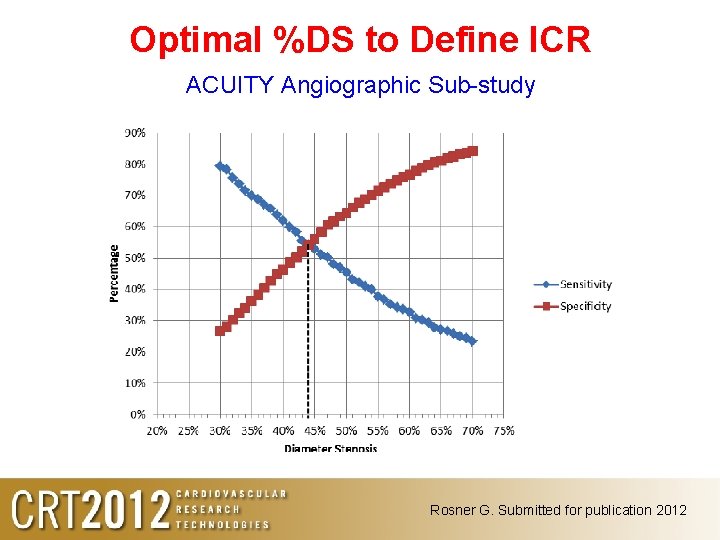
Optimal %DS to Define ICR ACUITY Angiographic Sub-study Rosner G. Submitted for publication 2012
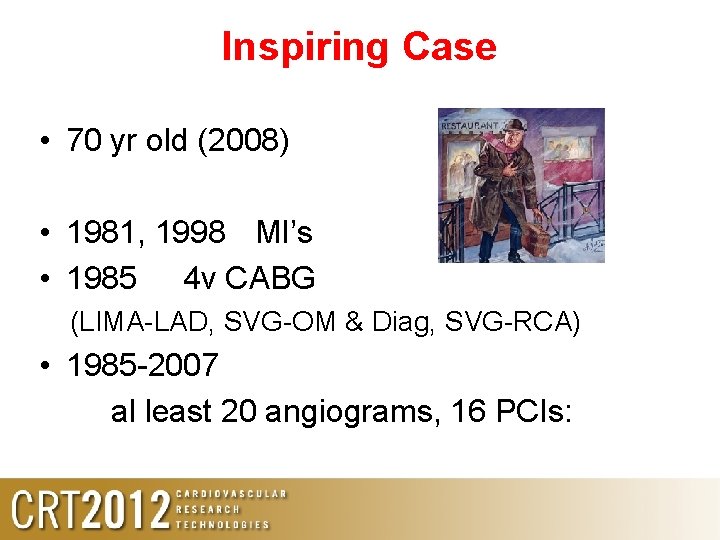
Inspiring Case • 70 yr old (2008) • 1981, 1998 MI’s • 1985 4 v CABG (LIMA-LAD, SVG-OM & Diag, SVG-RCA) • 1985 -2007 al least 20 angiograms, 16 PCIs:
Long Saga…
Incomplete Revascularization Ranolazine Management of Incomplete Revascularization
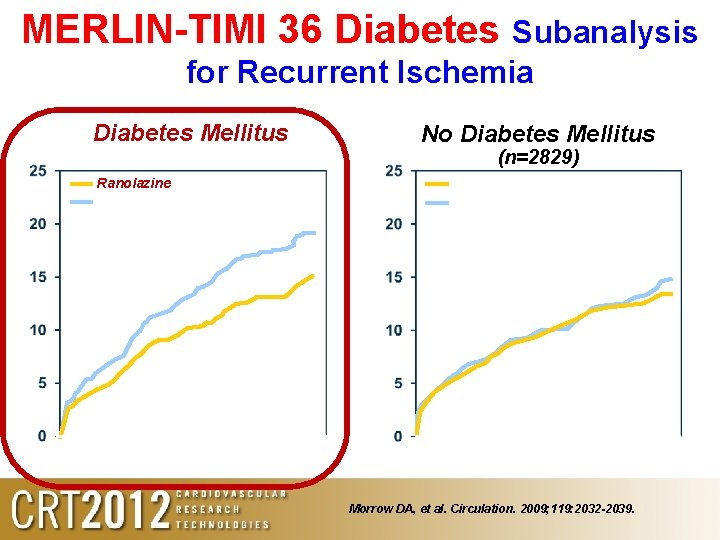
MERLIN-TIMI 36 Diabetes Subanalysis for Recurrent Ischemia Diabetes Mellitus No Diabetes Mellitus (n=1477) 19. 2% 15. 1% Hazard Ratio 0. 75 (95% CI 0. 61 -0. 93) P=0. 008 0 90 180 270 Follow-Up (days) 360 Ranolazine Placebo Recurrent Ischemia (%) Ranolazine Placebo (n=2829) 14. 6% 13. 3% Hazard Ratio 0. 95 (95% CI 0. 80 -1. 11) P=0. 50 0 90 180 270 Follow-Up (days) Morrow DA, et al. Circulation. 2009; 119: 2032 -2039. 360
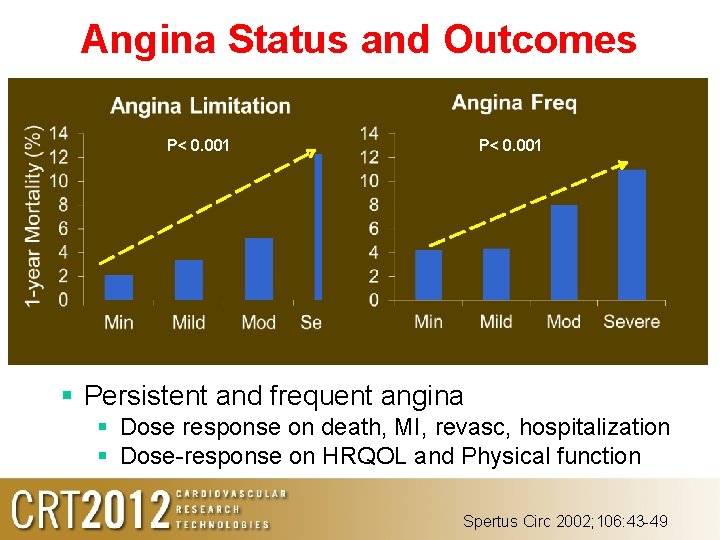
Angina Status and Outcomes P< 0. 001 § Persistent and frequent angina § Dose response on death, MI, revasc, hospitalization § Dose-response on HRQOL and Physical function Spertus Circ 2002; 106: 43 -49
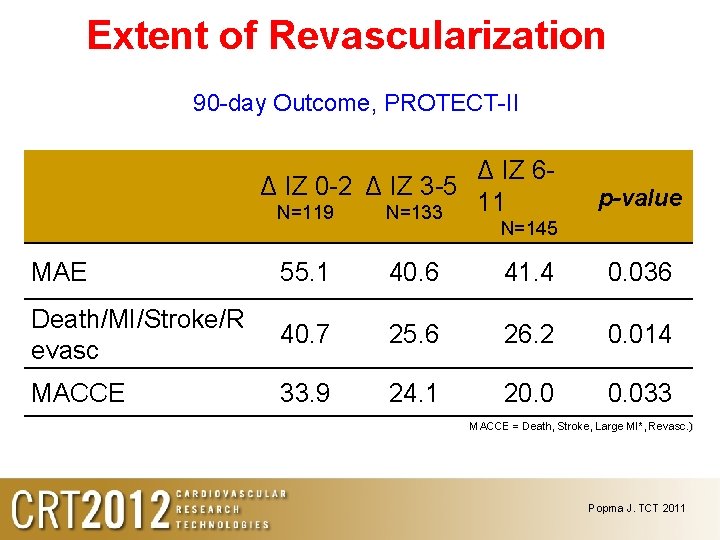
Extent of Revascularization 90 -day Outcome, PROTECT-II Δ IZ 6Δ IZ 0 -2 Δ IZ 3 -5 11 N=119 N=133 p-value N=145 MAE 55. 1 40. 6 41. 4 0. 036 Death/MI/Stroke/R evasc 40. 7 25. 6 26. 2 0. 014 MACCE 33. 9 24. 1 20. 033 MACCE = Death, Stroke, Large MI*, Revasc. )) Popma J. TCT 2011