SSEMA 2 Explain the role and functions of
- Slides: 42
SSEMA 2: Explain the role and functions of the Federal Reserve System LT: Role of Money LT: Federal Reserve System LT: Monetary Policy LT: Tools of Monetary Policy
SSEMA 2. a Explain the roles/functions of money as a medium of exchange, store of value, and unit of account/standard of value
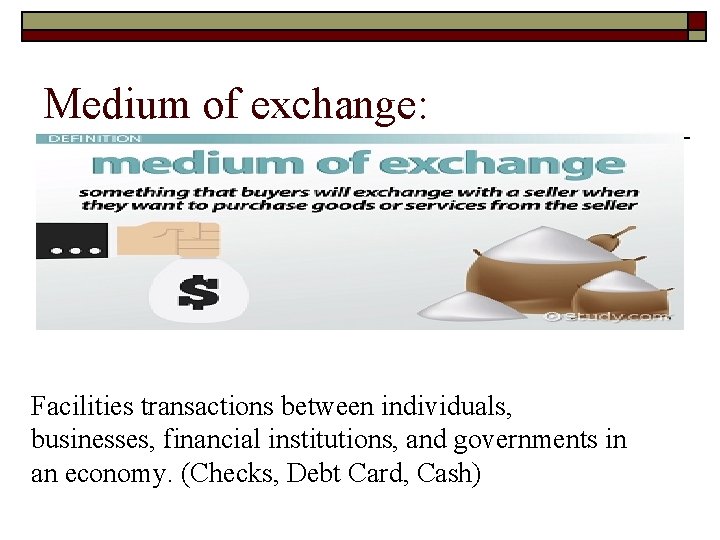
Medium of exchange: Facilities transactions between individuals, businesses, financial institutions, and governments in an economy. (Checks, Debt Card, Cash)
Store of Value o Belief money saved today will purchase a similar mount of goods/services in the future
Standard of Value/Unit of Account o We use money to compare services to decide if we can purchase items.
SSEMA 2. b o Describe the organization of the Federal Reserve System (12 Districts, Federal Open Market Committee (FOMC), and Board of Governors).
The Federal Reserve In Action
SSEMA 2 b: o Describe the Organization of the Federal Reserve System o The Federal Reserve System-Atlanta Version
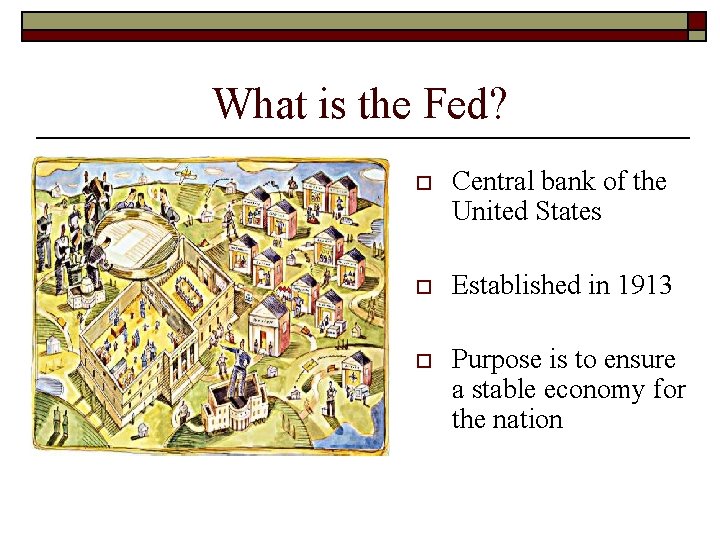
What is the Fed? o Central bank of the United States o Established in 1913 o Purpose is to ensure a stable economy for the nation
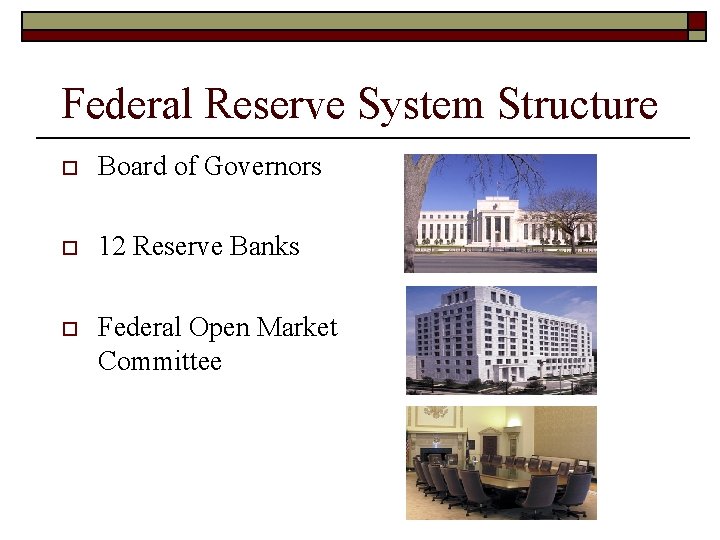
Federal Reserve System Structure o Board of Governors o 12 Reserve Banks o Federal Open Market Committee
When and why the Fed? o “The Fed” was established in 1913. To set Monetary Policy, in order to promote economic growth and full employment and to limit the impact of inflation and recessions.
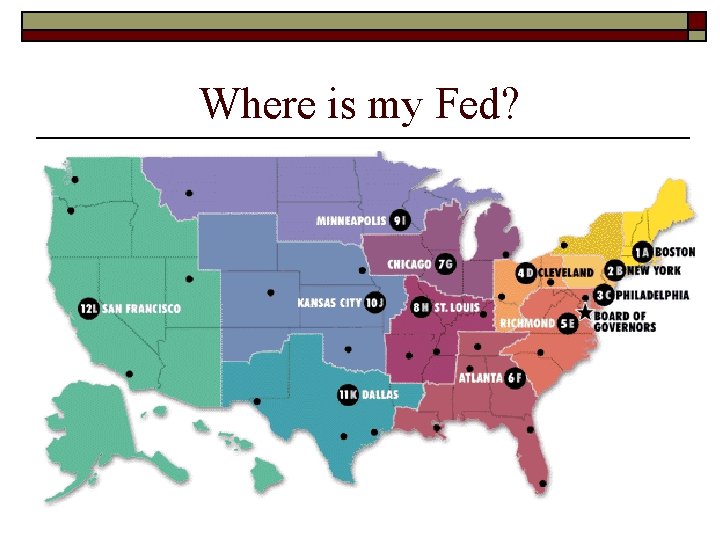
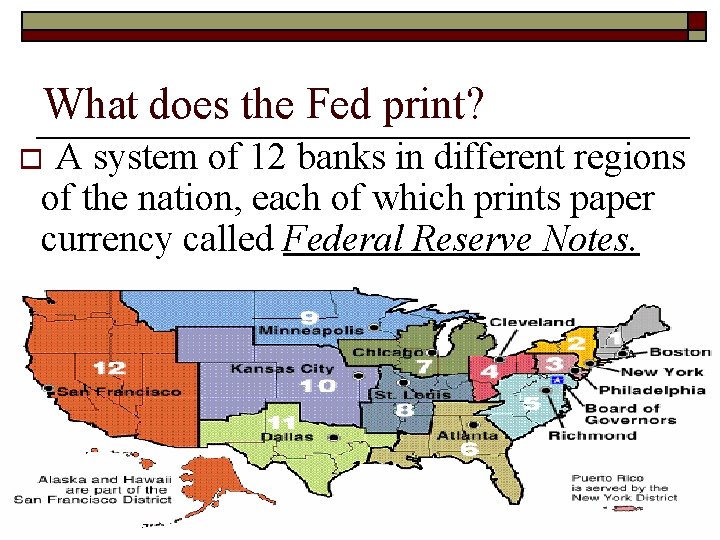
Where is my Fed?
What does the Fed do? Make and enforce rules about what banks can and cannot do. o Control Reserves: cash available for withdrawals, rather than being invested. Bank reserves are held by the Fed itself and transferred to individual banks as needed. o
What does the Fed print? A system of 12 banks in different regions of the nation, each of which prints paper currency called Federal Reserve Notes. o
Federal Reserve Banks o o Distribute the nation’s currency and coin Supervise and regulate member banks and bank holding companies Serve as banker for the U. S. Treasury Contribute to monetary policymaking through participation in the FOMC
Monetary Policy o Policy changes affect the nation’s supply of money and credit. o Actions have real shortand long-term effects on the economy.
How is the Fed structured? o o o District banks are private Ran by private board representing banking, business and community organizations Run day to day operations o o o Board of Governors are public Supervise the Federal reserve system. One Governor per district bank (12 is the max)
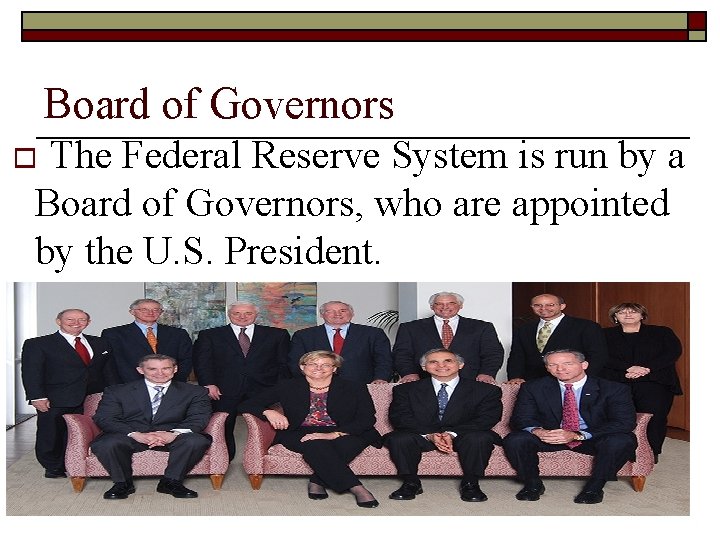
Board of Governors The Federal Reserve System is run by a Board of Governors, who are appointed by the U. S. President. o
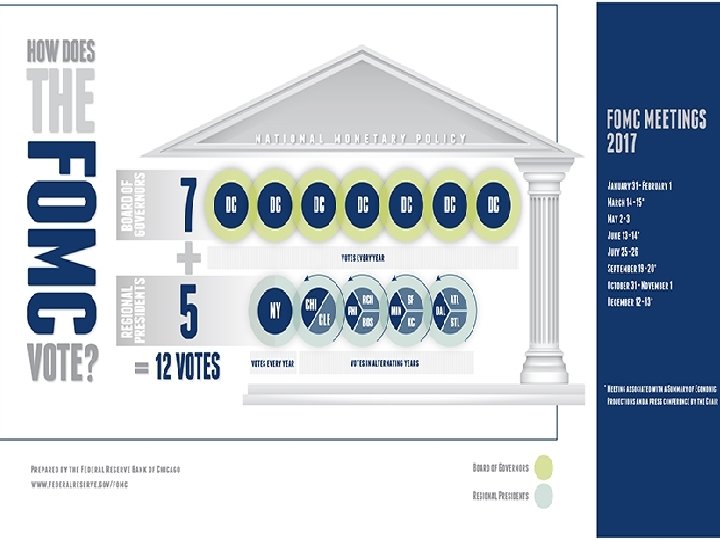
Federal Open Market Committee (FOMC) (Decides The Monetary Policy of the Fed) Holds the most power in regards to day monetary policy.
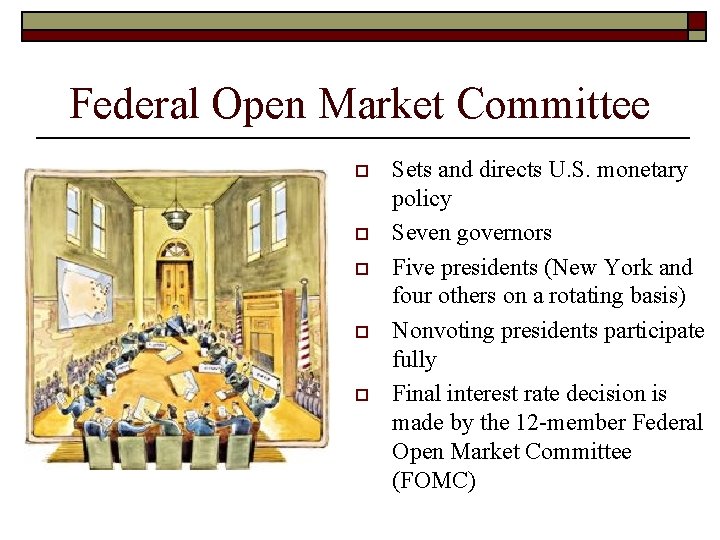
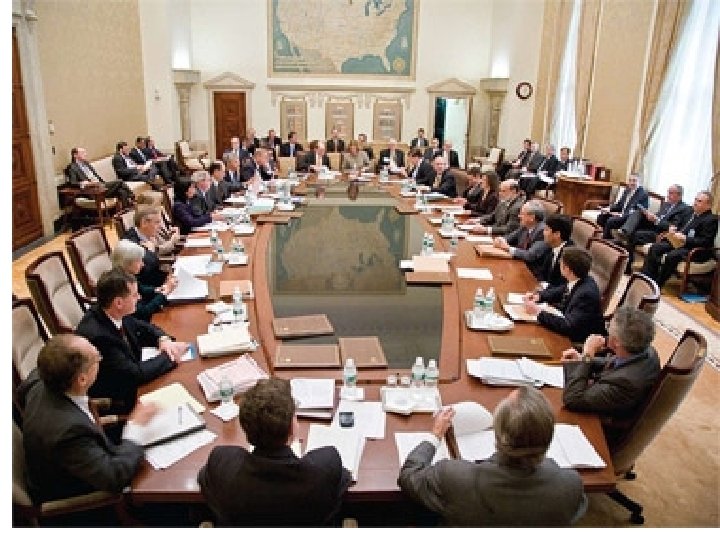
Federal Open Market Committee o o o Sets and directs U. S. monetary policy Seven governors Five presidents (New York and four others on a rotating basis) Nonvoting presidents participate fully Final interest rate decision is made by the 12 -member Federal Open Market Committee (FOMC)
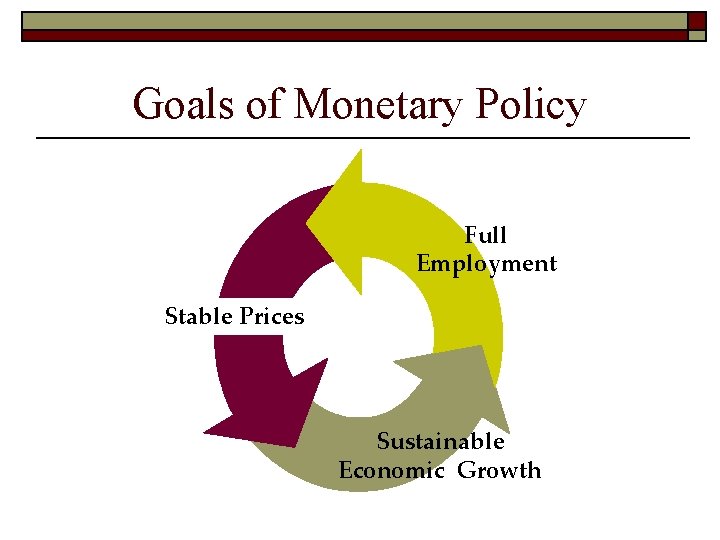
SSEMA 2. Define Monetary Policy Decisions of the Federal Reserve System and determine and/or regulate the money supply in the economy o Federal Reserve actions, as a central bank, to achieve three goals specified by congress o
Goals of Monetary Policy Full Employment Stable Prices Sustainable Economic Growth
SSEMA 2. d o o Describe how the Federal Reserve uses the tolls of monetary policy to promote its duel mandate of: 1. Price Stability 2. Full Employment 3. Economic Growth
Key Tools of Monetary Policy o Discount Rate n o Reserve Requirements n o The interest rate charged by the Federal Reserve to banks that borrow on a short-term (usually overnight) basis The amount of money banks must keep on reserve at the Fed Open Market Operations n n Buying and selling Treasury securities between the Fed and selected financial institutions in the open market Most important tool; directed by the FOMC
Key Federal Reserve Interest Rates o Federal Funds Rate n n o The market-based interest rate which banks charge each other on overnight loans of their reserve balances held at the Fed. The Fed achieves this rate through Open Market Operations. A target rate Discount Rate n n Applies to short-term loans made directly to commercial banks from the Federal Reserve System. Typically set at 1 percentage point above the Federal Funds Rate.
Interest on Required and Excess Reserves o The Feds pay banks interest on the required and excess reserves Financial Institutions keep in their bank n Banks making a profit for keeping excess money in the bank.
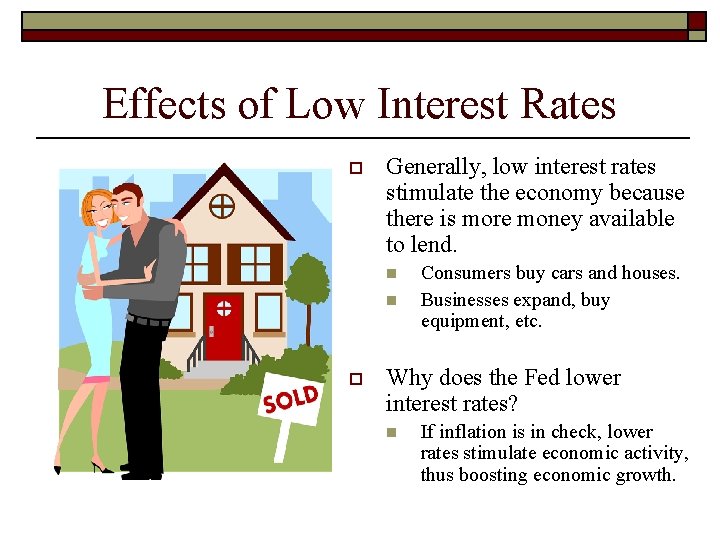
Effects of Low Interest Rates o Generally, low interest rates stimulate the economy because there is more money available to lend. n n o Consumers buy cars and houses. Businesses expand, buy equipment, etc. Why does the Fed lower interest rates? n If inflation is in check, lower rates stimulate economic activity, thus boosting economic growth.
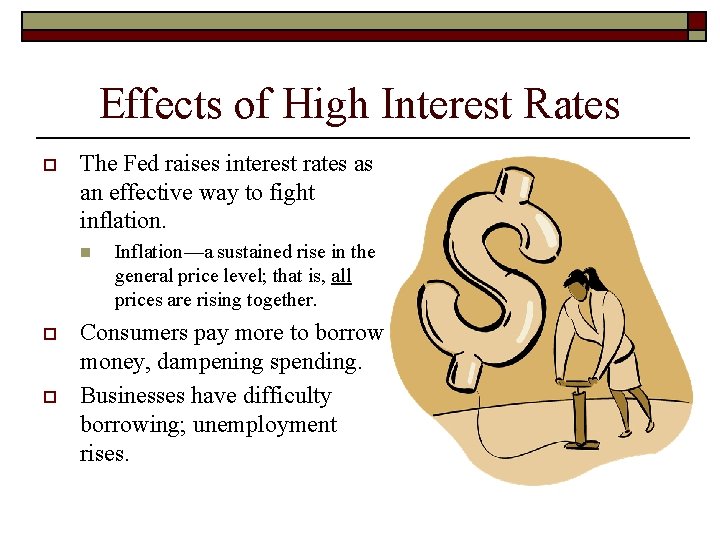
Effects of High Interest Rates o The Fed raises interest rates as an effective way to fight inflation. n o o Inflation—a sustained rise in the general price level; that is, all prices are rising together. Consumers pay more to borrow money, dampening spending. Businesses have difficulty borrowing; unemployment rises.
SSEMA 2. e o Describe how the Federal Reserve uses the tools of monetary policy to promote its dual mandate of price stability, full employment, and how those affect economic growth
Price Stability (Macro Goal) o The fed creates policies that help stabilize prices in the market and try to prevent inflation, stagflation results that can lead to a recession
Full Employment (Macro Goal) All individuals that are actively seeking employment have a job or occupation. The fed helps in this process by lowering interest rates and the discount rate to help businesses hire more people in the market. (Easier o to get loans)
Economic Growth (Macro Goal) o If there is more money circulating in the economy by the Fed’s policies, it can help promote growth thoughtout the entire economy.
Open-Market Operations o (The sale or purchase of U. S. treasury bonds) to control the flow of money…loaning money to the gov’t
bonds a. k. a securities o Bonds- document issued by the gov’t for which a person pays a certain price now, in exchange for a higher fixed amount, called face value, later. (takes money out of the market).
When The Fed sells securities (bonds), it lowers the money supply in hopes to fight inflations. o In the event of a recession the Fed will buy treasury bonds on the open market and congress will cut taxes. o
o When the feds sell securities, bank reserves of money decrease as households and businesses purchase bonds rather than save their money in banks.
o Feds buy securities it is increasing the supply of money back into the economy, This causes interest rates to drop, spending increases, price level with increase, and more money is pumped into the economy.
Regulating Money Supply… o In a recession the Feds buy government securities and lower the discount rate. n. Discount Rate- the interest rate it (gov’t) charges to other banks to lend them money.