Gazzaniga Heatherton Halpern Psychological Science FIFTH EDITION Chapter









- Slides: 118
Gazzaniga • Heatherton • Halpern Psychological Science FIFTH EDITION Chapter 5 Sensation and Perception © 2015 W. W. Norton & Company, Inc.
5. 1 How Do We Sense Our Worlds? Learning Objectives • Distinguish between sensation and perception. • Describe how sensory information is translated into meaningful stimuli. • Explain the concept of threshold. Distinguish between absolute threshold and difference threshold. • Explain how thresholds are related to signal detection and sensory adaption.
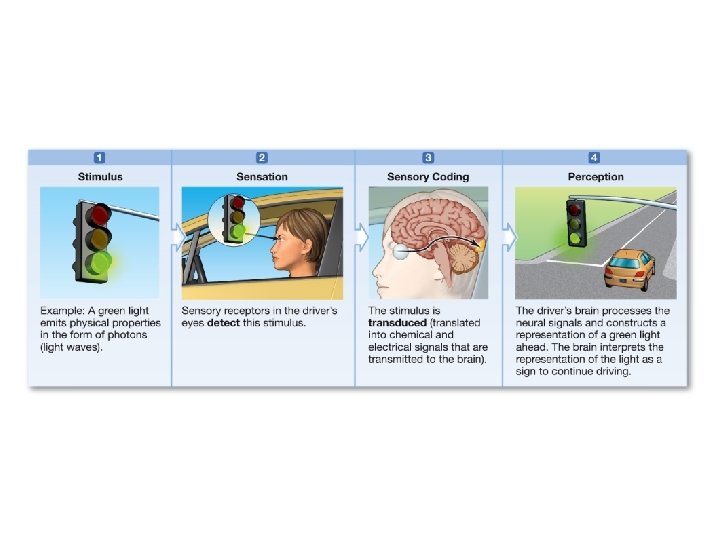
5. 1 How Do We Sense Our Worlds? • Sensation: the detection of external stimuli and the transmission of this information to the brain • Perception: the processing, organization, and interpretation of sensory signals
Diagram demonstrating an example of sensory input being transferred to perception
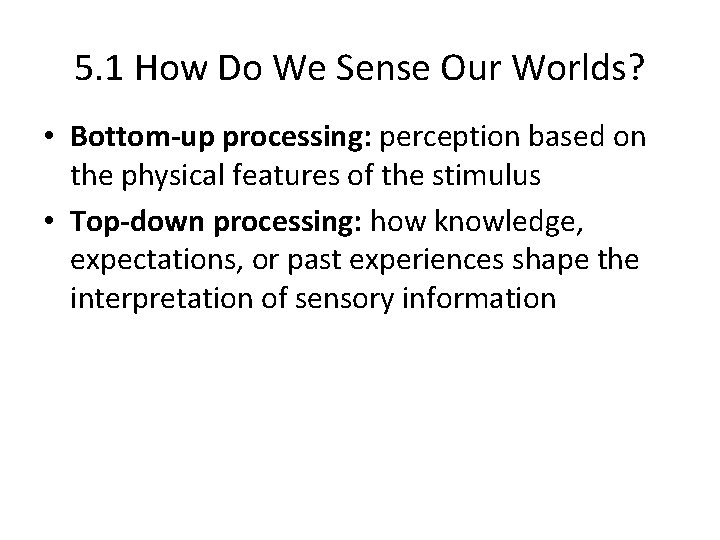
5. 1 How Do We Sense Our Worlds? • Bottom-up processing: perception based on the physical features of the stimulus • Top-down processing: how knowledge, expectations, or past experiences shape the interpretation of sensory information
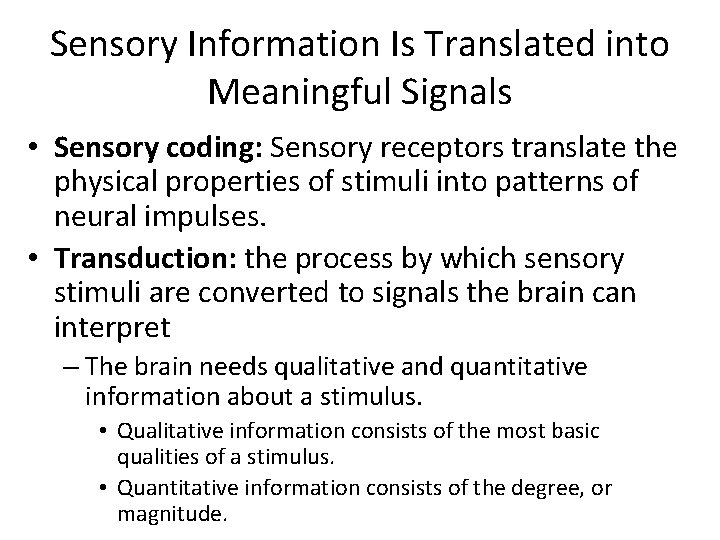
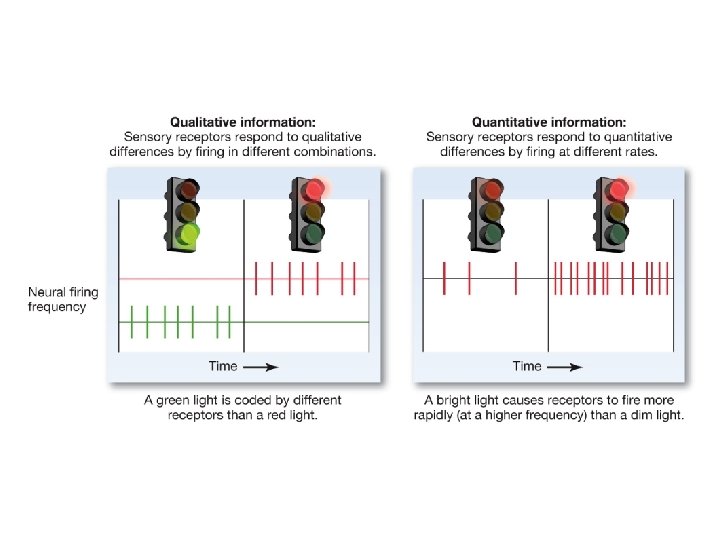
Sensory Information Is Translated into Meaningful Signals • Sensory coding: Sensory receptors translate the physical properties of stimuli into patterns of neural impulses. • Transduction: the process by which sensory stimuli are converted to signals the brain can interpret – The brain needs qualitative and quantitative information about a stimulus. • Qualitative information consists of the most basic qualities of a stimulus. • Quantitative information consists of the degree, or magnitude.
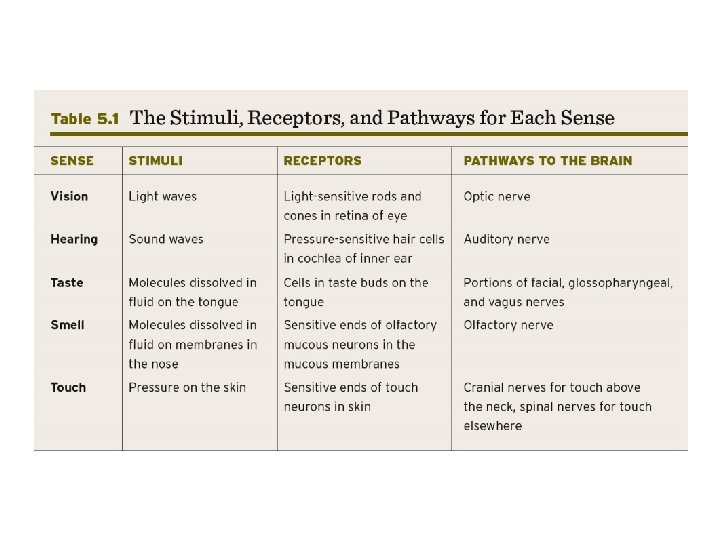
Table displaying the Stimuli, Receptors, and Pathways for Each Sense
Diagram contrasting qualitative and quantitative sensory information
Detection Requires a Certain Amount of the Stimulus • Psychologists try to understand the relationship between the world’s physical properties and how we sense and perceive them. – Psychophysics, a subfield developed during the nineteenth century by the researchers Ernst Weber and Gustav Fechner, examines our psychological experiences of physical stimuli.
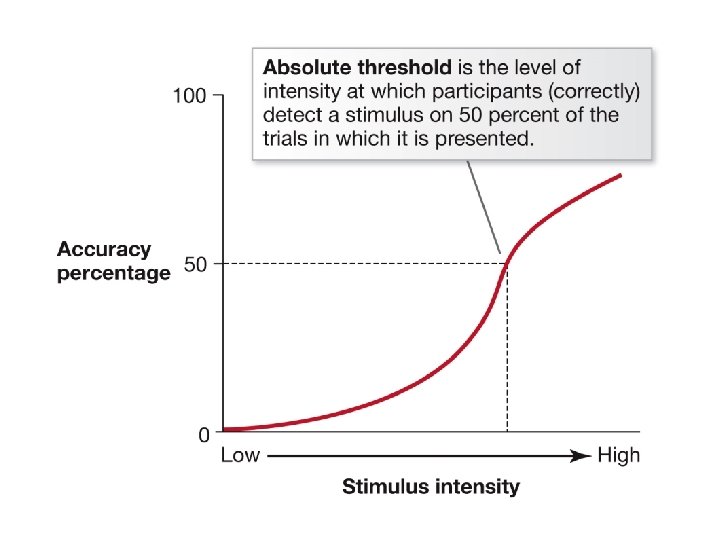
Sensory Thresholds • Absolute threshold: the minimum intensity of stimulation that must occur before you experience a sensation • Difference threshold: the minimum amount of change required for a person to detect a difference between two stimuli – Weber’s law: The just noticeable difference between two stimuli is based on a proportion of the original stimulus rather than on a fixed amount of difference.
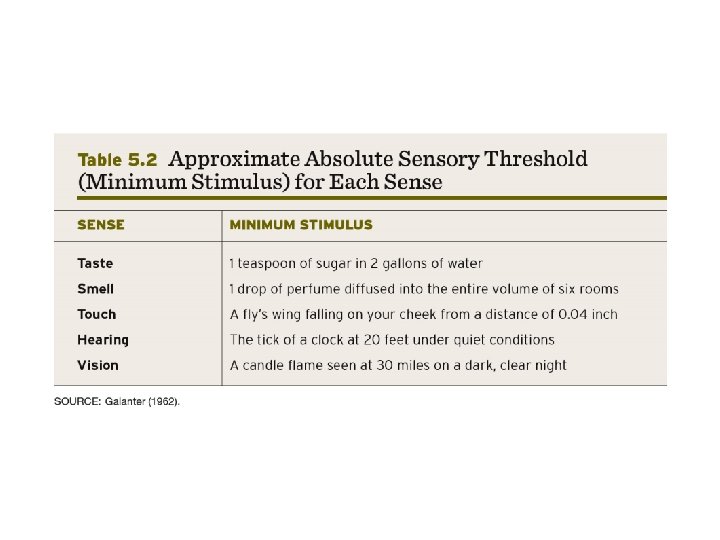
Table displaying the Approximate Absolute Sensory Threshold for Each of the Five Senses
Line graph highlighting the absolute threshold where the stimulus intensity reaches a point where it is detected with an accuracy of 50%
Man holding a television remote next to a woman reading a book
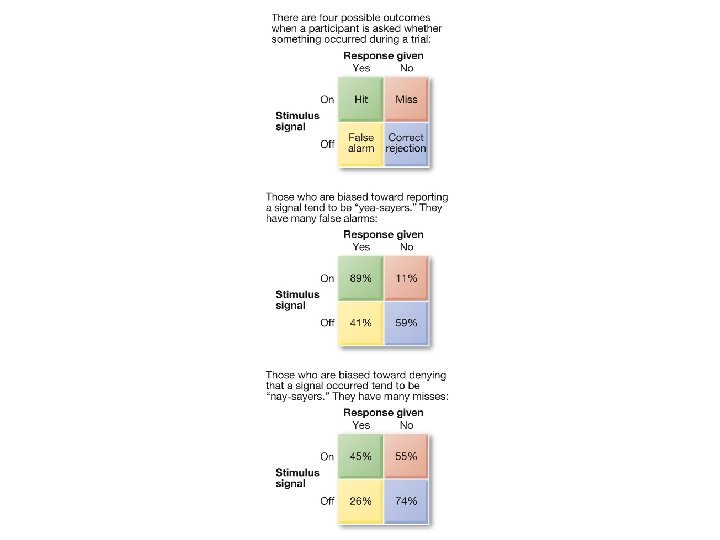
Signal Detection Theory • Signal detection theory (SDT ): a theory of perception based on the idea that the detection of a stimulus requires a judgment and is not an all-or nothing process – Signal detection research involves a series of trials in which a stimulus is presented in only some trials. In each trial, the participant must state whether he or she sensed the stimulus.
Radiologist looking at a series of scans of a human's abdomen region
Diagram displaying Payoff Matrices for Signal Detection Theory
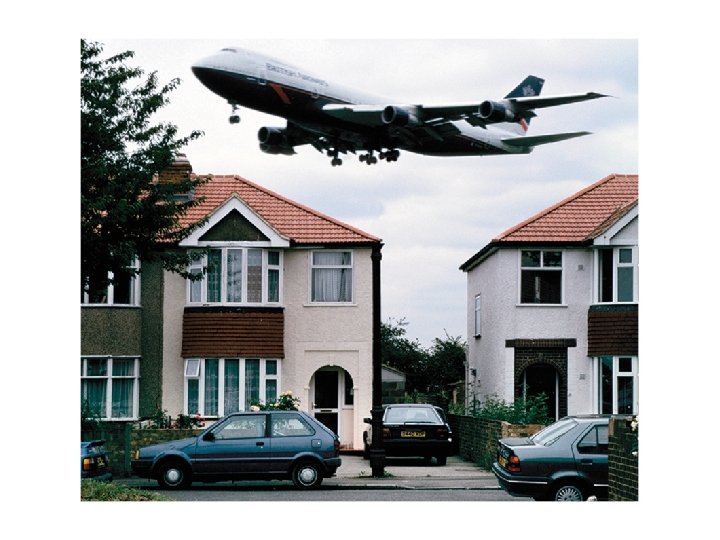
Sensory Adaptation • Sensory adaptation: a decrease in sensitivity to a constant level of stimulation – If a stimulus is presented continuously, the responses of the sensory systems that detect it tend to diminish over time; when a continuous stimulus stops, the sensory systems usually respond strongly as well.
Suburban homes with an airplane taking off in the background implying they live close to an airport.
The Brain Constructs Stable Representations • In perception, the brain integrates millions of diverse neural inputs to produce stable representations. – Working with just the electrical impulses it receives from nerves, the brain creates a rich variety of perceptual experiences.
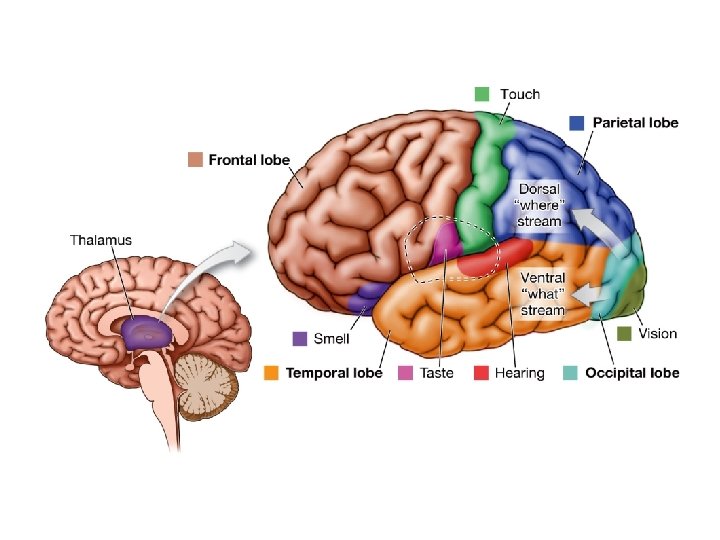
Diagram depicting the primary sensory areas of the human brain
What to Believe? Using Psychological Reasoning • Misunderstanding statistics: Does ESP exist? – Could people be able to perceive information beyond ordinary sensory information through extrasensory perception (ESP)? – Many reports of ESP are supported only by anecdotes, not by valid evidence. – Many claims about people’s ability to predict events can be explained through logic.
What to Believe? Using Psychological Reasoning • Nobel Prize–winning physicist Luis Alvarez found himself thinking of a long-lost friend from his college years. A few minutes later, he came across the friend’s obituary in a newspaper. – He calculated that the probability of thinking about a person shortly before learning of that person’s death likely happens around 3, 000 times per year in the United States. Put another way: About 10 people are likely to have this experience each day just by chance.
What to Believe? Using Psychological Reasoning – A “sender” in a soundproof booth focused on a randomly generated image. A “receiver” in another room tried to sense the sender’s imagery. The receiver was then asked to choose among four alternatives, one of which was correct. By chance, the receivers should have been correct 25 percent of the time. Across 11 studies found that receivers were right about 33 percent of the time. Is this evidence of ESP?
What to Believe? Using Psychological Reasoning • A statistical review of many such studies found little support for ESP • In an f. MRI study to examine brain functioning evidence for the existence of ESP using a sender/receiver paradigm, the researchers looked for brain differences between responses to the image. – There were absolutely no differences in brain responses. – This is strong evidence against the existence of ESP.
What to Believe? Using Psychological Reasoning • In a series of studies participants were asked to predict where erotic pictures would appear on a computer screen. – At a rate better than chance, participants were able to predict where the computer would present the erotic images. – These findings are highly controversial. • Most of the positive results were quite small, and they may have been produced through an inappropriate use of statistical procedures. – Researchers have been unable to replicate the results.
5. 2 How Are We Able to See? Learning Objectives • Explain how light is processed by the eyes and the brain. • Describe how color vision happens. • Compare and contrast trichromatic and opponent process theories of color vision. • Identify the Gestalt principles of perceptual organization. • Distinguish between monocular and binocular depth cues. • Describe motion perception and object constancies.
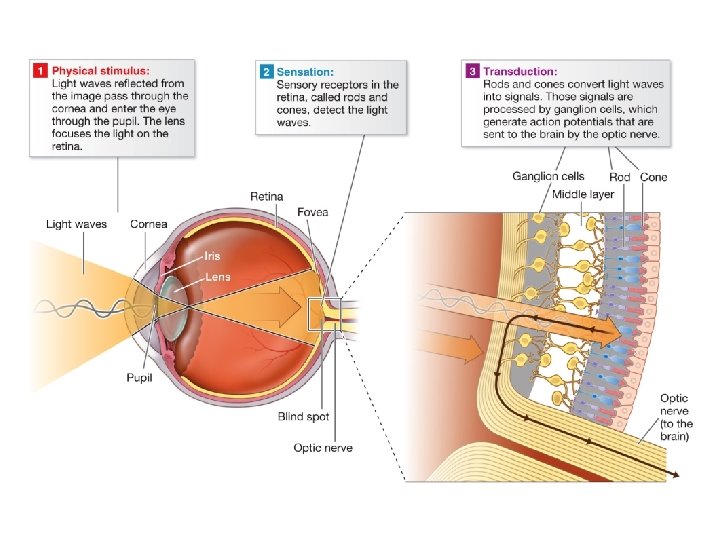
Sensory Receptors in the Eye Transmit Visual Information to the Brain • Crude camera analogy – This analogy does not sufficiently explain the intricate processes that take place in the eye. • Lights pathway through the eye: cornea → pupil → iris → lens → retina – Accommodation changes the shape of the lens. • Retina: the thin inner surface of the back of the eyeball, which contains the sensory receptors that transduce light into neural signals
Diagram of the human eye displaying the process of how we see
Rods and Cones • The retina has two types of receptor cells. – Rods: retinal cells that respond to low levels of light and result in black-and-white perception. – Cones: retinal cells that respond to higher levels of light and result in color perception. • Each retina holds approximately 120 million rods and 6 million cones. – Fovea: the center of the retina, where cones are densely packed
Transmission from the Eye to the Brain • The visual process begins with the generation of electrical signals by the sensory receptors in the retina. – These receptors contain photopigments, protein molecules that become unstable and split apart when exposed to light. • Rods and cones do not fire action potentials like other neurons. Instead, decomposition of the photopigments alters the membrane potential of the photoreceptors and triggers action potentials.
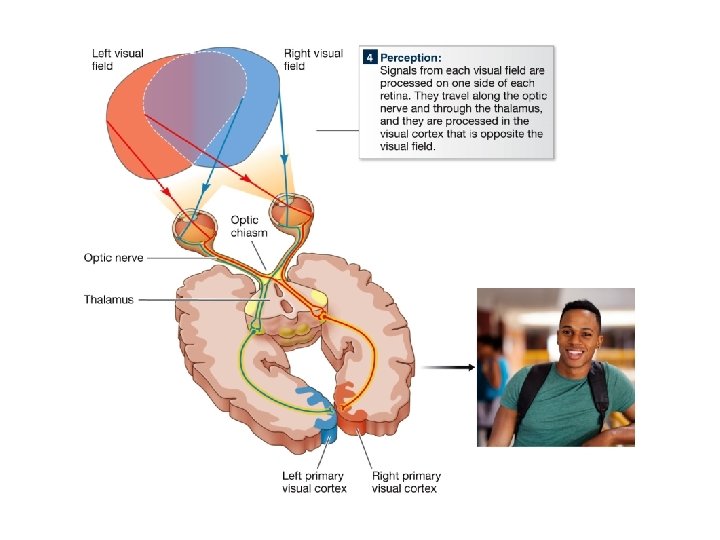
Transmission from the Eye to the Brain • A variety of retinal cells perform a series of sophisticated computations that help the visual system process the incoming information. – Ganglion cells are the first neurons in the visual pathway with axons, which are gathered into a bundle called the optic nerve. • Blind spot – At the optic chiasm, axons in the optic nerves cross to the left and right hemispheres and travel to visual areas of the thalamus and then to the primary visual cortex in the occipital lobe.
Diagram of the neural pathway from the eyes to the corresponding regions in the brain to perceive sensory input
Black dot on the left with a rabbit's head a few inches to the right used to understand the blind spot in vision
“What” and “Where” Pathways • Visual areas beyond the primary visual cortex form two parallel processing streams, or pathways. – The ventral stream appears to be specialized for the perception and recognition of objects. – The dorsal stream seems to be specialized for spatial perception (determining where an object is). – These two processing streams are therefore known as the “what” stream and the “where” stream.
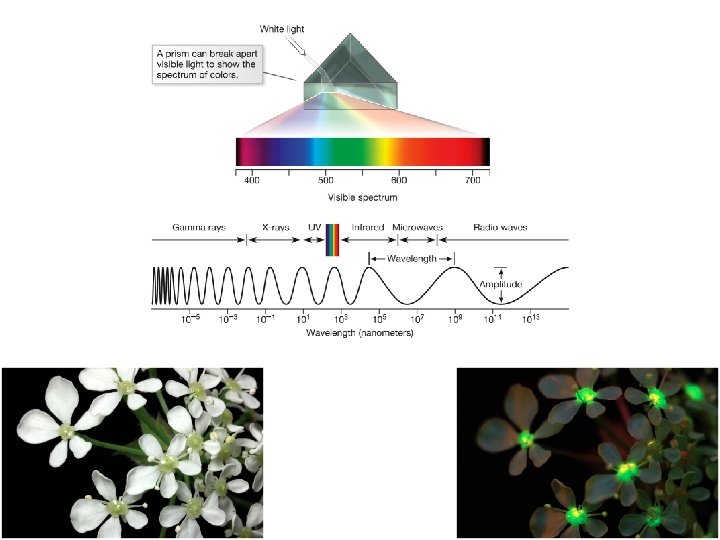
The Color of Light Is Determined by Its Wavelength • An object appears to be a particular color because of the wavelengths of light it reflects. – Color does not exist in the physical world. It is always a product of our visual system.
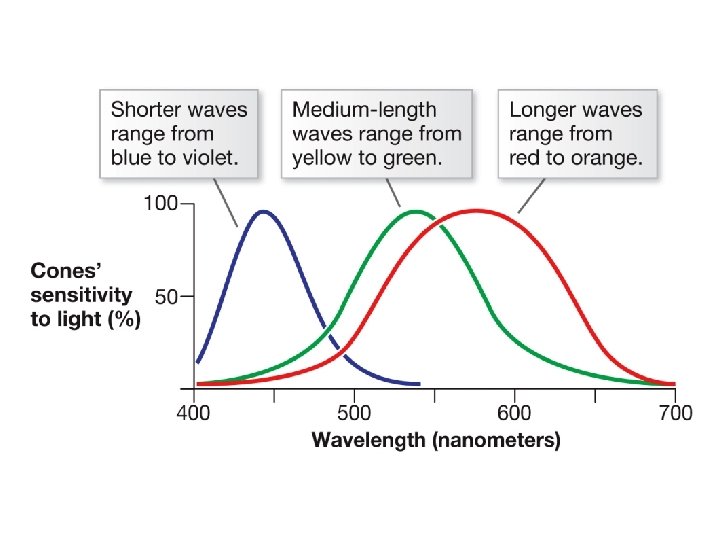
Trichromatic Theory • Trichromatic theory: activity in three different types of cones that are sensitive to different wavelengths – These receptors are sensitive to different wavelengths. • One type of cone is most sensitive to short wavelengths (blue–violet light). • Another type is most sensitive to medium wavelengths (yellow–green light). • A third type is most sensitive to long wavelengths (red– orange light).
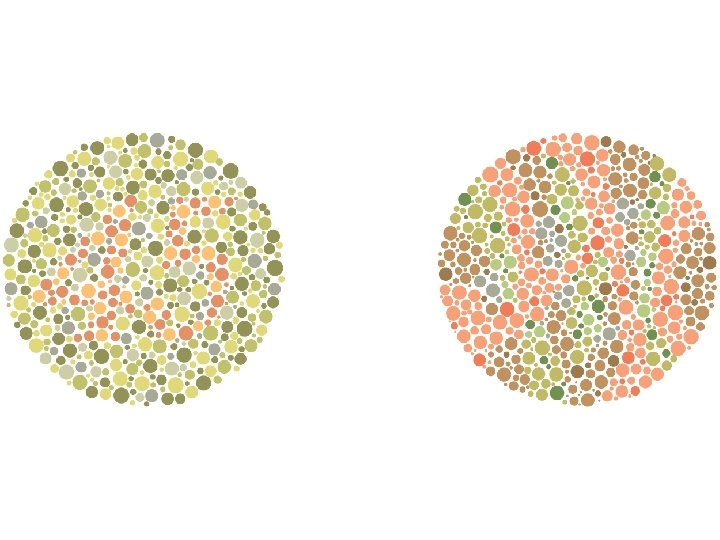
Trichromatic Theory • There are two main types of color blindness, determined by the relative activity among the three types of cone receptors. – Red–green color blindness – Blue–yellow color blindness – These genetic disorders occur in about 8 percent of males, but less than 1 percent of females.
Line graph depicting the different colors that are visible on the electromagnetic spectrum and their different wavelengths
Image A depicts an image of colors that will display the number 45 if one is not red-green colorblind. Image B depicts an image of colors that will display the number 45 if the viewer is red-green colorblind.
Opponent-Process Theory • Opponent-process theory: Different types of ganglion cells, working in opposing pairs, create the perception that red and green are opposites, as are blue and yellow. – Opponent-process theory (Hering, 1878/1964): According to this theory, red and green are opponent colors, as are blue and yellow. • Afterimages
A orange and green version of the Union Jack, flag of the United Kingdom. If stared at for awhile and then looking at the white field next to it, an afterimage of blue and red appears on the edge between the two.
Hue, Saturation, and Brightness • We categorize color along three dimensions. – Hue: the distinctive characteristics that place a particular color in the spectrum – Saturation: the purity of the color – Brightness: the color’s perceived intensity • The lightness of a visual stimulus is determined by the brightness of the stimulus relative to its surroundings.
Image A depicts a diagram showing the visible spectrum of light along with the entire electromagnetic spectrum and their wavelengths(nm). Image B shows flowers and includes the ultraviolet spectrum which displays the nectar glands. Image C shows the flowers only using the visible spectrum seen by humans.
• Image A depicts two squares, one navy blue and the other light blue. Image B shows six squares with a smaller square inside the larger square. Each pair of squares has a center square that is the same but appears different to the human eye due to the differing colors of each pair of larger squares.
Perceiving Objects Requires Organization of Visual Information • Perceptual psychologists believe that illusions reveal the mechanisms that help our visual systems determine the sizes and distances of objects in the visual environment. – Researchers rely on these tricks to reveal automatic perceptual systems that, in most circumstances, result in accurate perception.
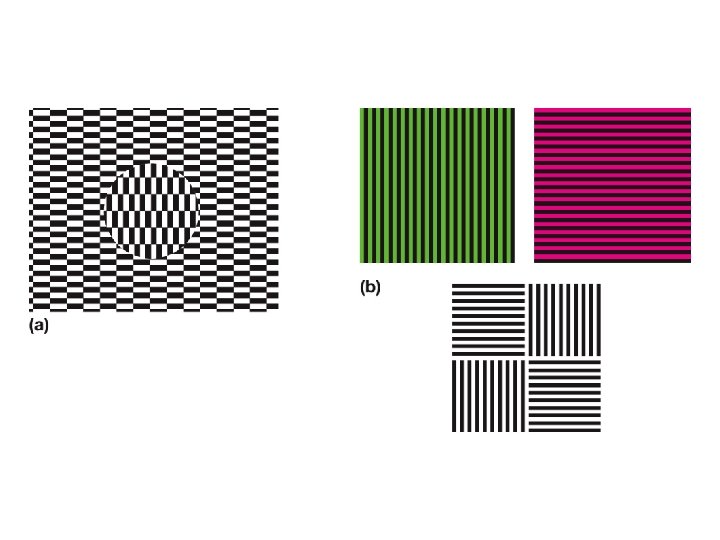
Figure A depicts the Ouchi illusion where a background of black and white is offset by a circle of black and white of a different design that appears separated from the rest of the image. Figure B depicts the Mc. Collough effect that by alternating between a field of green and black vertical lines and a field of magenta and black horizontal lines every second for almost a minute and then focusing on a field with both black and white lines with alternating quadrants of vertical and horizontal lines. The green and magenta lines will appear on that field and possibly persist for a longer period of time.
Gestalt Principles of Perceptual Organization • The German word Gestalt means “shape” or “form. ” As used in psychology, Gestalt means “organized whole. ” – Gestalt psychology postulated a series of laws to explain how our brains group the perceived features of a visual scene into organized wholes.
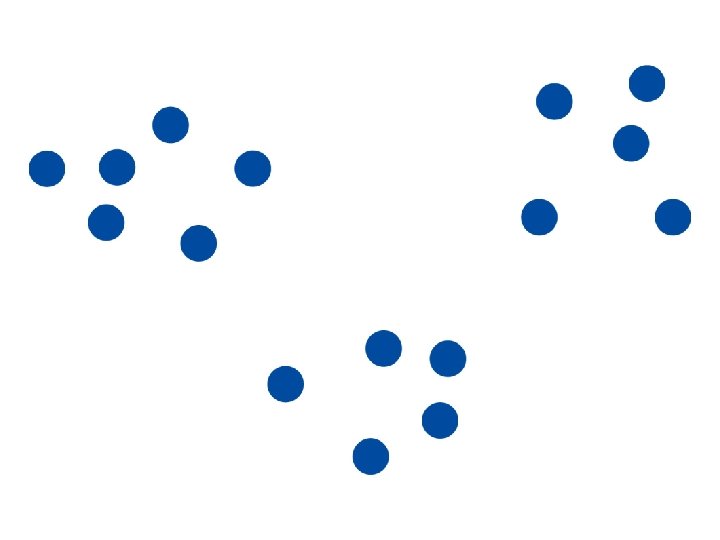
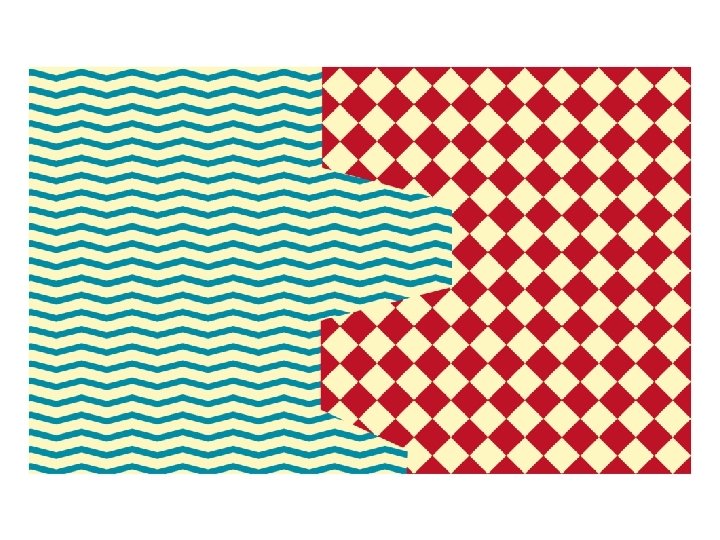
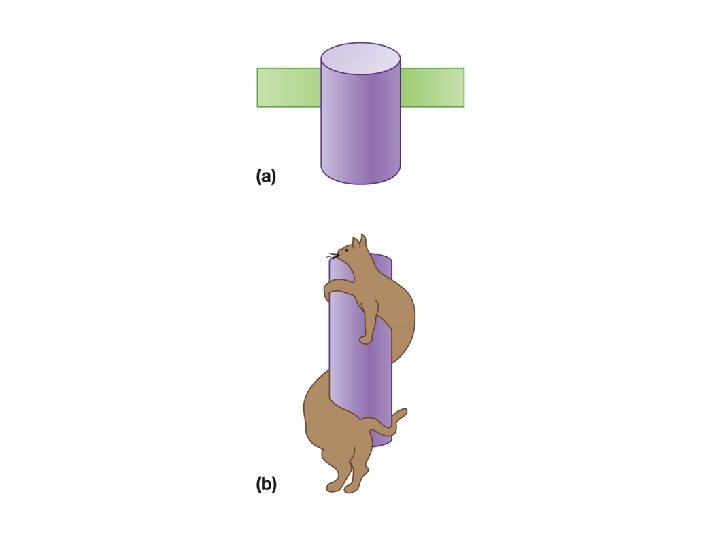
Gestalt Principles of Perceptual Organization • Rules of Gestalt perceptual grouping – Proximity: the closer two figures are to each other, the more likely we are to group them and see them as part of the same object. – Similarity: we tend to group figures according to how closely they resemble each other. – Continuity: we tend to group together edges or contours that have the same orientation, which is known as “good continuation. ”
Sixteen blue dots that appear to be in three groups by the principle of proximity
Two pieces with different designs appear to be locked together to form a rectangle
Image A depicts a bar behind a cylinder that is interpreted to be continuous despite no evidence of this. Image B depicts two cats that appears to be one extremely long cat wrapped around a cylinder despite no evidence of this.
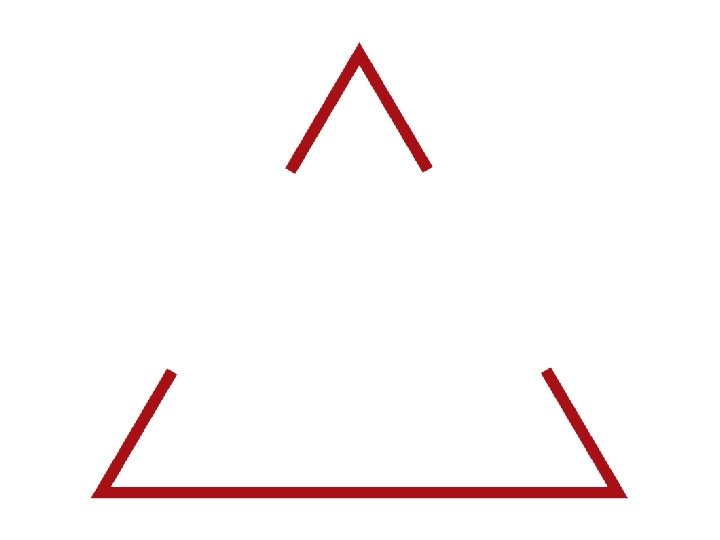
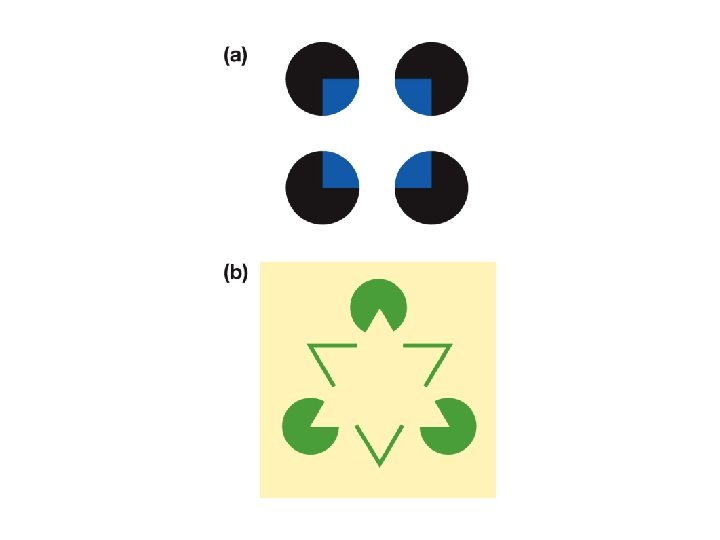
Gestalt Principles of Perceptual Organization • Rules of Gestalt perceptual grouping – Closure: we tend to complete figures that have gaps. – Illusory contours: we sometimes perceive contours and cues to depth even when they do not exist.
Two separate figures that appear to form a triangle despite it missing lines
Image A depicts four circles with a quarter of each a different color that appears to form a square despite a lack of contours. Image B depicts a series of shapes that form a illusionary triangle in the center
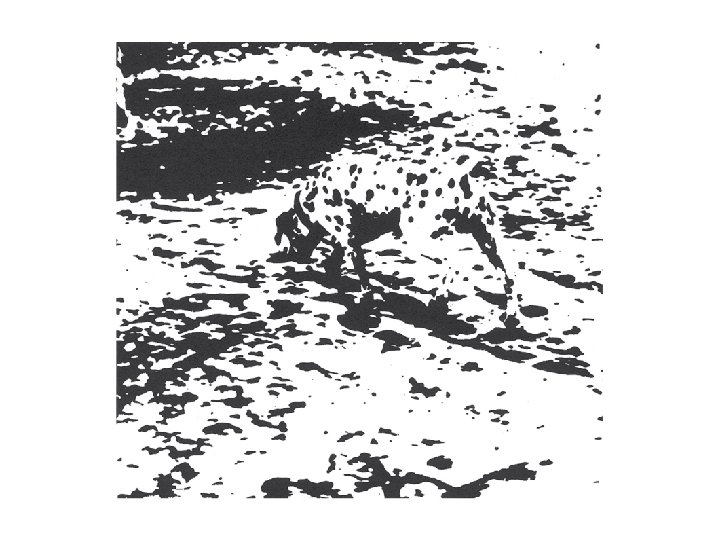
Figure and Ground • Among the most basic organizing principles is distinguishing between figure and ground. – A classic illustration of this is the reversible figure illusion, in which figure and ground switch back and forth (ambiguous). – In identifying what is figure, the brain assigns the rest of the scene to the background.
Black fragments on a white background appear to form together to show a dog in the center sniffing the ground.
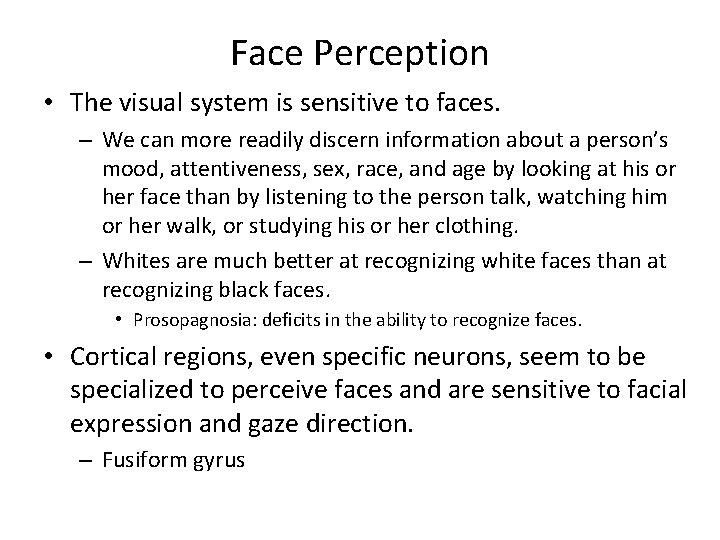
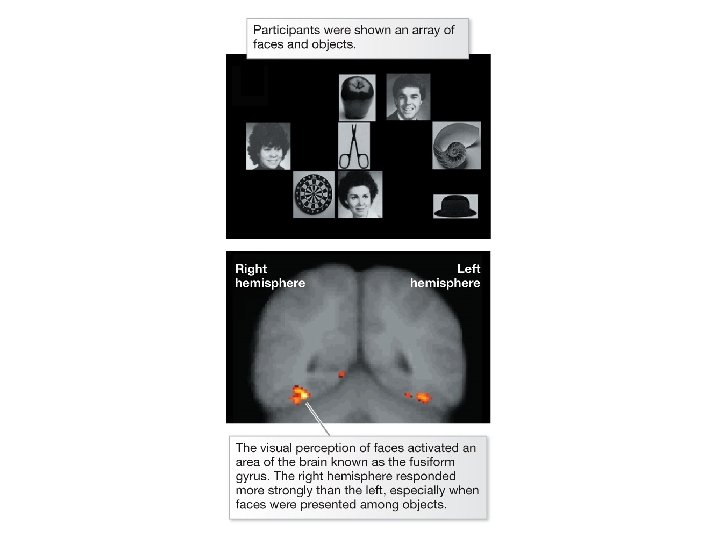
Face Perception • The visual system is sensitive to faces. – We can more readily discern information about a person’s mood, attentiveness, sex, race, and age by looking at his or her face than by listening to the person talk, watching him or her walk, or studying his or her clothing. – Whites are much better at recognizing white faces than at recognizing black faces. • Prosopagnosia: deficits in the ability to recognize faces. • Cortical regions, even specific neurons, seem to be specialized to perceive faces and are sensitive to facial expression and gaze direction. – Fusiform gyrus
Face Perception • Researchers found that people more quickly and accurately recognize angry facial expressions than happy ones. – They found that most people recognize anger more quickly on a man’s face than on a woman’s, but they found the reverse for happiness. • According to evolutionary psychology, there is an adaptive advantage to the detection of angry faces.
A picture of a glacier that appears to be a woman's crying face
Brain scan that highlights regions with increased activity when viewing people's faces
Depth Perception is Important for Locating Objects • How are we able to construct a threedimensional mental representation of the visual world from two-dimensional retinal input? – Binocular depth cues: cues of depth perception that arise from the fact that people have two eyes – Monocular depth cues: cues of depth perception that are available to each eye alone
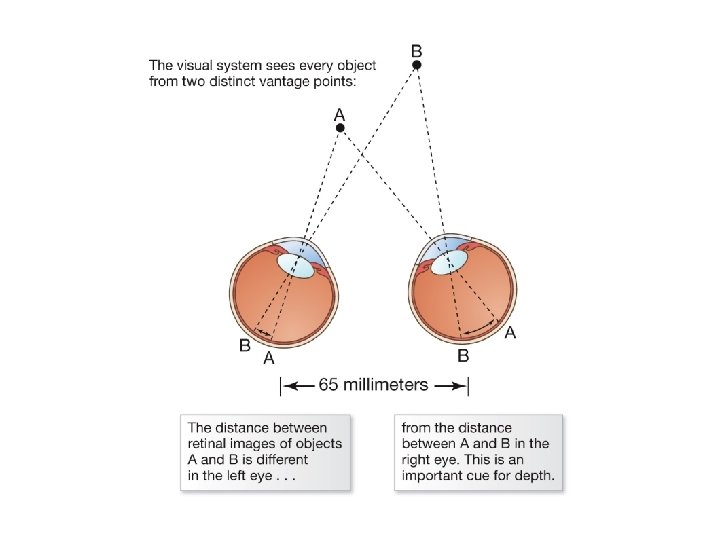
Binocular Depth Perception • Binocular disparity (or retinal disparity): A depth cue; because of the distance between the two eyes, each eye receives a slightly different retinal image. – The brain uses the disparity between these two retinal images to compute distances to nearby objects. • Stereoscopic vision: the ability to determine an object’s depth based on that object’s projections to each eye
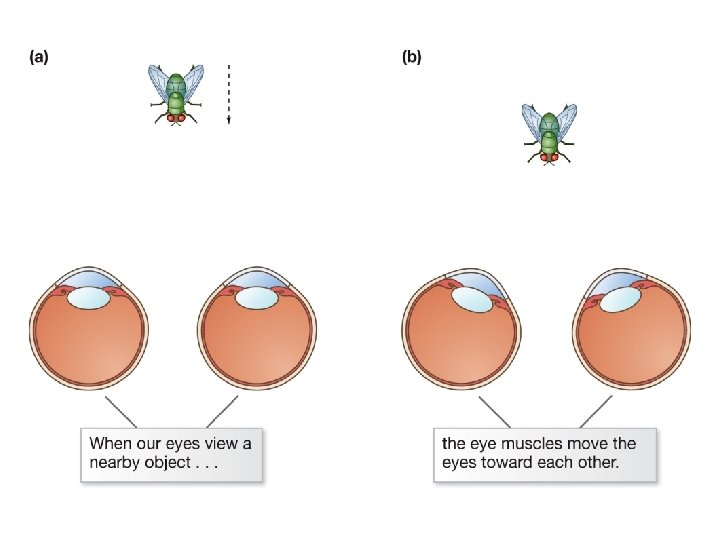
Binocular Depth Perception • Convergence: A cue of binocular depth perception; when a person views a nearby object, the eye muscles turn the eyes inward.
Diagram showing binocular disparity between each eye
Image A depicts a diagram of eyes which aim out at parallel lines when viewing an object from a distance. Image B depicts a diagram of eyes converging towards one another when the viewing object moves closer.
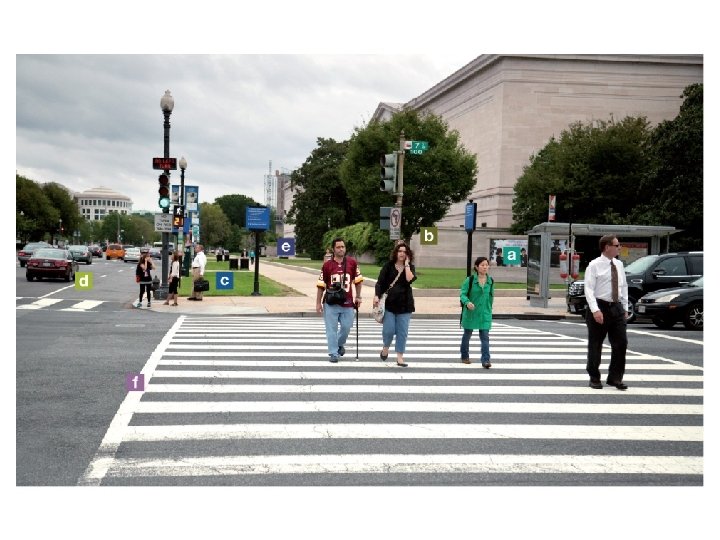
Monocular Depth Perception • We can perceive depth with one eye because of monocular depth cues. • Pictorial depth cues – Occlusion: a near object occludes (blocks) an object that is farther away. – Relative size: if the far-off and close objects are the same physical size, far-off objects will project a smaller retinal image than close objects. – Familiar size: because we know how large familiar objects are, we can tell how far away they are by the size of their retinal images.
Monocular Depth Perception – Linear perspective: Seemingly parallel lines appear to converge in the distance. – Texture gradient: As a uniformly textured surface recedes, its texture continuously becomes denser. – Position relative to horizon: All else being equal, objects below the horizon that appear higher in the visual field are perceived as being farther away. Objects above the horizon that appear lower in the visual field are perceived as being farther away.
A city intersection with people crossing the street heading towards the foreground with letters depicting the pictorial depth clues in the image
Size Perception Depends on Distance Perception • The size of an object’s retinal image depends on that object’s distance from the observer. – To determine an object’s size, the visual system needs to know how far away it is. – Depth cues can fool us into seeing depth when it is not there, and a lack of depth cues can fool us into not seeing depth when it is there.
Picture of a young boy with a tiny girl appearing to be standing directly on his head due to lack of depth information
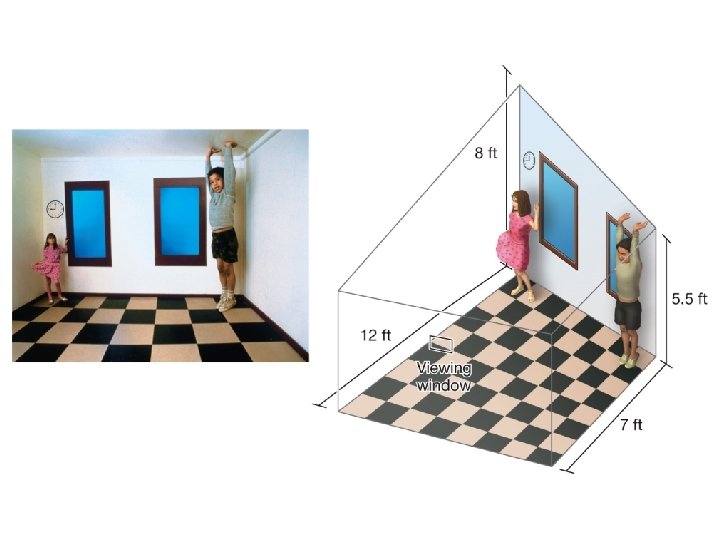
Ames Boxes • Ames boxes: first crafted in the 1940 s by Albert Ames, a painter turned scientist – The rooms in Ames boxes play with linear perspective and other distance cues to create size illusions.
Ames box which is a diagonal room that skews depth information to contrast two people inside to appear giant and tiny
The Ponzo Illusion • The Ponzo illusion, first described by the psychologist Mario Ponzo in 1913, is a classic example of a size/distance illusion. – Explained: Monocular depth cues make the twodimensional figure seem three-dimensional. – This illusion shows how much we rely on depth perception to gauge size; the brain uses depth cues even when depth is absent.
Ponzo Illusion where two horizontal lines, one intersected by diagonal lines, appear to be different lengths when they are the same length
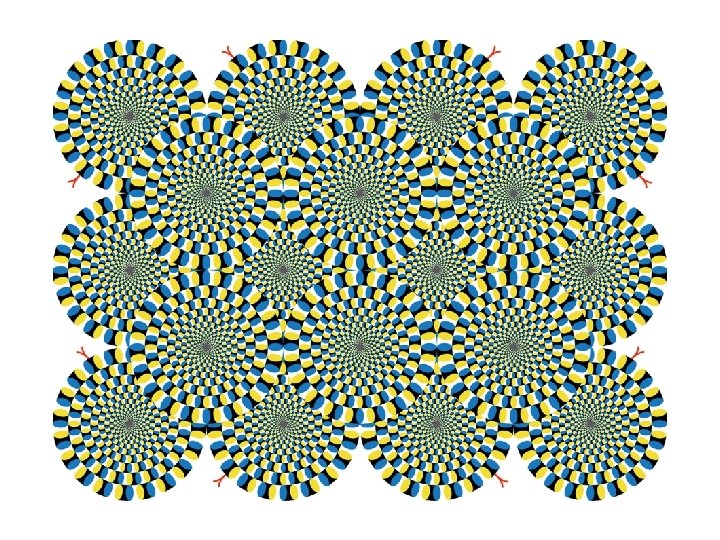
Motion Perception Has Internal and External Cues • How does the brain know what is moving? – After receiving damage to secondary visual areas of her brain—areas critical for motion perception —M. P. , a German woman, saw the world as a series of snapshots rather than as a moving image. – Neurons specialized for detecting movement fire when movement occurs.
Rotating Snakes Illusion where a series of coiled snakes appear to be moving due to movements of the human eye
Motion Aftereffects • Waterfall effect: If you stare at a waterfall and then turn away, the scenery you are now looking at will seem to move upward. – The visual cortex has neurons that respond to movement in a given direction. – When you stare at a moving stimulus long enough, these direction-specific neurons adapt to the motion and become fatigued. – When the stimulus is removed, other motion detectors that respond to all other directions are more active than the fatigued motion detectors.
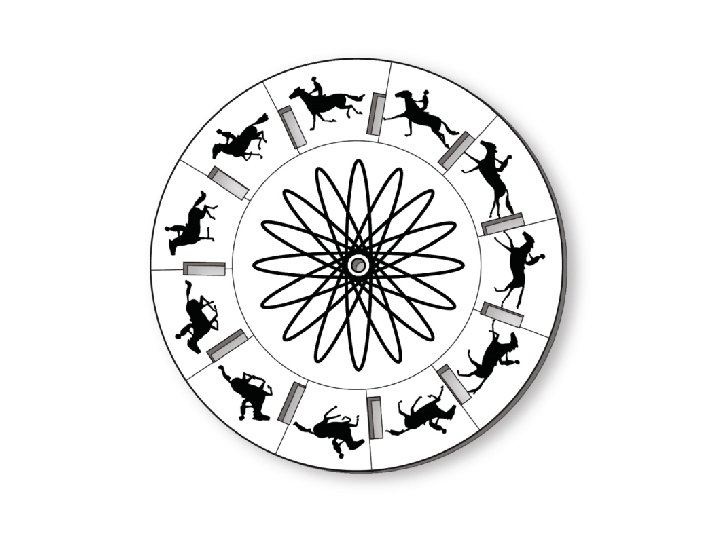
Stroboscopic Motion Perception • Stroboscopic movement: a perceptual illusion that occurs when two or more slightly different images are presented in rapid succession
Series of images of a person on horseback on a wheel that would appear to move if spun
Object Constancies Help When Perspective Changes • How does the brain know that a person is 6 feet tall when the retinal image of that person changes size? – Object constancy: correctly perceiving objects as constant in their shape, size, color, and lightness, despite raw sensory data that could mislead perception
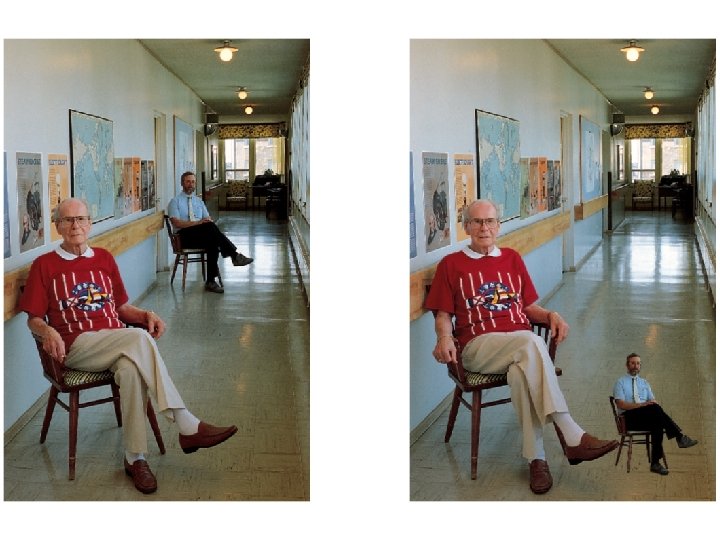
Object Constancies Help When Perspective Changes • Four constancies – Size constancy: We need to know how far away the object is from us. – Shape constancy: We need to know what angle or angles we are seeing the object from. – Color constancy: We need to compare the wavelengths of light reflected from the object with those reflected from its background. – Lightness constancy: We need to know how much light is being reflected from the object and from its background.
Image A depicts a man seated in a hallway in the foreground a man with a beard seated further down the hallway in the ground. Image B depicts the same man seated in the foreground but the bearded man is also seated in the foreground and the same size as Image A yet appears smaller in Image B.
Silver car shown from four different angles
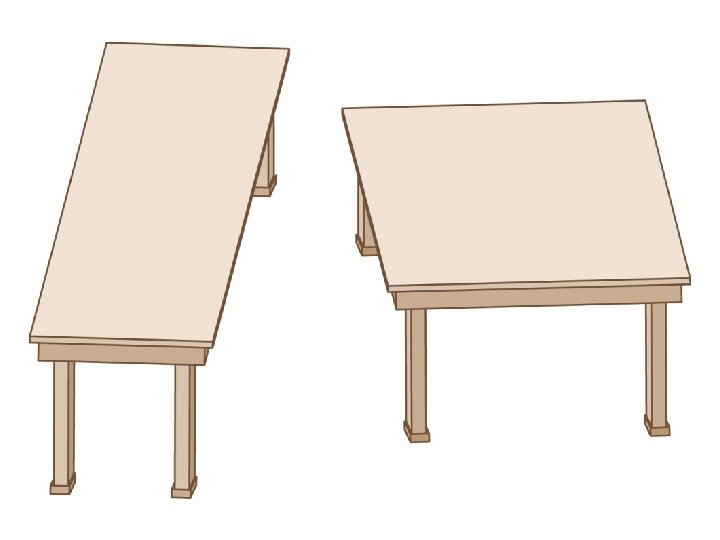
Tabletop illusion where two tables seen from different angles appear different yet are the same
5. 3 How Are We Able to Hear? Learning Objectives • Describe how sound waves are transduced into neural activity in the ear. • Explain the significance of temporal and place coding for auditory perception. • Discuss the advantages and disadvantages of cochlear implants.
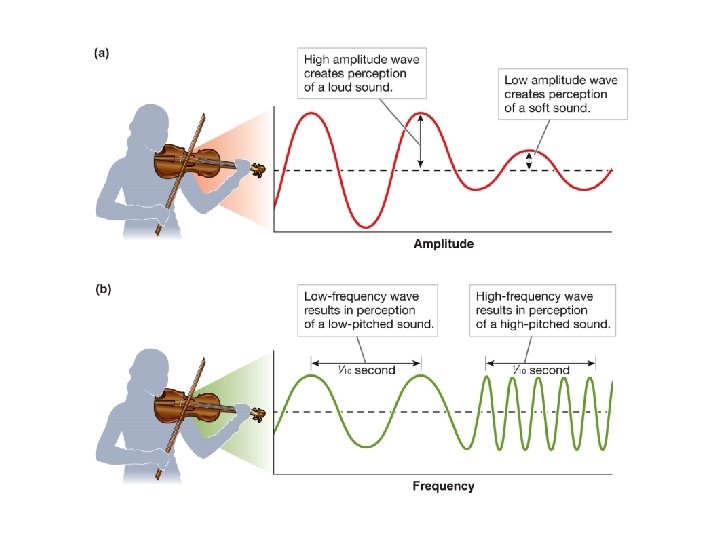
Audition Results from Changes in Air Pressure • Audition: hearing; the sense of sound perception • Sound wave: a pattern of changes in air pressure during a period of time, which produces the percept of a sound – A sound wave’s amplitude determines loudness; its frequency determines pitch. – Hertz • Humans can detect sound waves with frequencies from about 20 Hz to about 20, 000 Hz.
Image A depicts the amplitude of sound waves from a violin player. Image B depicts the frequency of sound waves from a violin player.
Audition Results from Changes in Air Pressure • Sound waves arrive at the person’s outer ear and travel down the auditory canal to the eardrum. – Eardrum: A thin membrane that marks the beginning of the middle ear; sound waves cause it to vibrate.
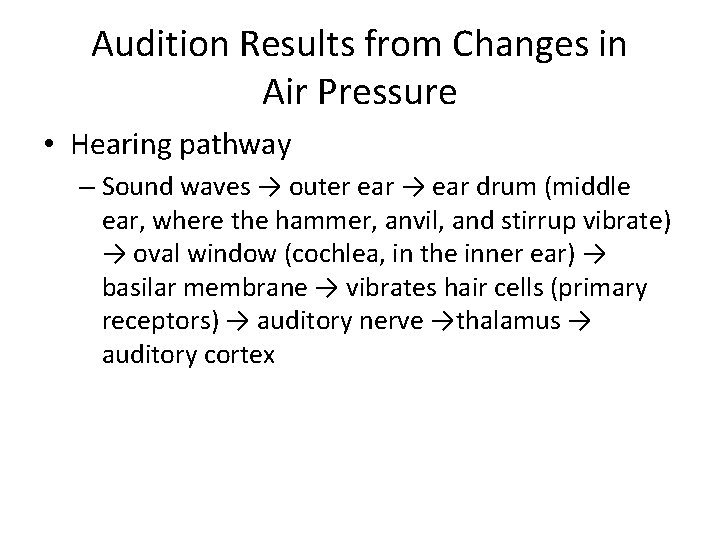
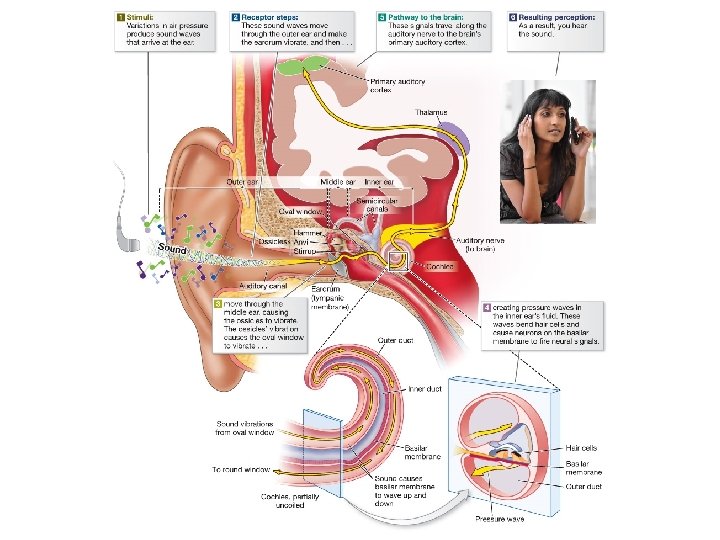
Audition Results from Changes in Air Pressure • Hearing pathway – Sound waves → outer ear → ear drum (middle ear, where the hammer, anvil, and stirrup vibrate) → oval window (cochlea, in the inner ear) → basilar membrane → vibrates hair cells (primary receptors) → auditory nerve →thalamus → auditory cortex
Diagram of the human ear and how it allows us to hear
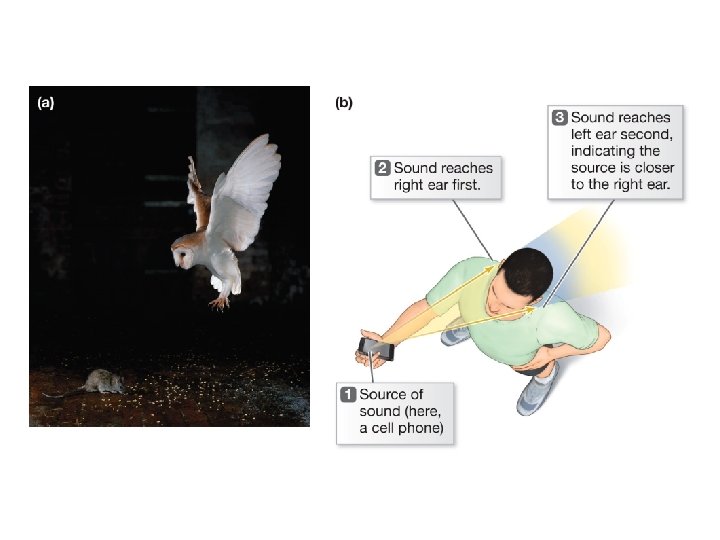
Sound Localization • The brain integrates the different sensory information coming from each ear. – Barn owl research subjects
Image A depicts a barn owl swooping down to catch a mouse. Image B depicts a diagram of a person hearing sound from their cellphone.
Vestibular System • Vestibular sense: perception of balance determined by receptors in the inner ear – The vestibular sense uses information from receptors in the semicircular canals of the inner ear. These canals contain a liquid that moves when the head moves, bending hair cells at the ends of the canal. The bending generates nerve impulses that inform us of the head’s rotation.
Pitch Is Encoded by Frequency and Location • Temporal coding: a mechanism for encoding low-frequency auditory stimuli in which the firing rates of cochlear hair cells match the frequency of the sound wave – Low frequencies: up to about 4, 000 Hz
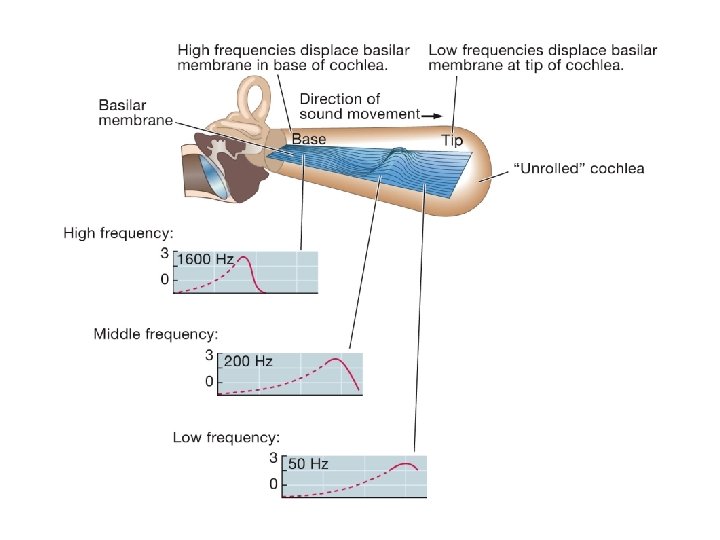
Pitch Is Encoded by Frequency and Location • Place coding: a mechanism for encoding highfrequency auditory stimuli in which the frequency of the sound wave is encoded by the location of the hair cells along the basilar membrane – Békésy discovered that different frequencies activate receptors at different locations on the basilar membrane. The receptors are similar but located in different places.
Diagram of an unrolled cochlea and the different regions that handle different frequencies
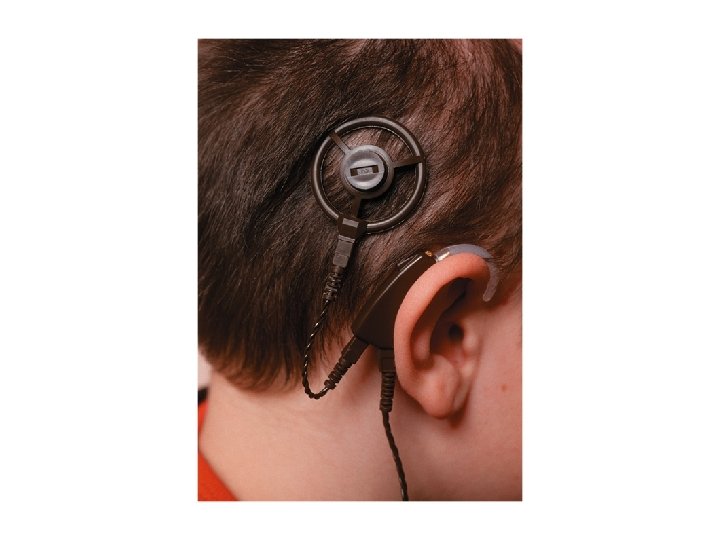
Cochlear Implants Assist the Hearing Impaired • Cochlear implantation has helped people with severe hearing problems due to the loss of hair cells in the inner ear. – Over 300, 000 of these devices have been implanted worldwide since 1984. – The implant works by directly stimulating the auditory nerve; it does not amplify sound.
Cochlear Implants Assist the Hearing Impaired – When devices are implanted in children born deaf, the child’s hearing will be quite functional and he or /she will learn to speak reasonably normally. • The problem of audism
Cochlear implant
5. 4 How Are We Able to Taste? Learning Objectives • Define the five basic taste sensations. • Describe how culture influences taste perception.
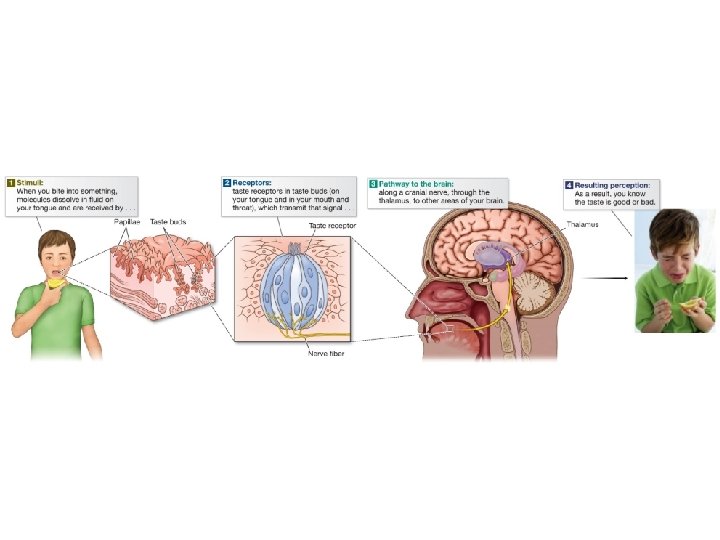
5. 4 How Are We Able to Taste? • Gustation: the sense of taste • Taste buds: sensory organs in the mouth that contain the receptors for taste – Stimulated taste buds send signals to the thalamus and the frontal lobe of the brain, which then produces the experience of taste.
Diagram of a taste bud and we use it to taste
There Are Five Basic Taste Sensations • Every taste experience is composed of a mixture of five basic qualities. – Sweet – Sour – Salty – Bitter – Umami (Japanese for “savory” or “yummy”) • Monosodium glutamate (MSG)
Supertasters • Underlying genetics, rather than the number of taste buds, is the major determinant of whether a person is a supertaster. – Women are more likely than men to be supertasters.
Culture Influences Taste Preferences • Cultural factors influence taste preferences as well. Some cultures like red hot peppers, others like salty fish, and still others like rich sauces. – Cultural influences on food preferences begin in the womb.
5. 5 How Are We Able to Smell? Learning Objectives • Describe the neural pathway for smell. • Explain the relationship between pheromones and smell.
Smell Detects Odorants • Olfaction: the sense of smell • Basic process – Odorants pass into the nose and nasal cavity. – They contact a thin layer of tissue embedded with smell receptors called the olfactory epithelium. • Olfactory epithelium: a thin layer of tissue, within the nasal cavity, that contains the receptors for smell – Olfactory bulb: the brain center for smell, located below the frontal lobes • Information about whether a smell is pleasant or unpleasant is processed in the brain’s prefrontal cortex. • The intensity of a smell is processed in brain areas that are also involved in emotion and memory.
Diagram of olfactory receptors and the nasal passage to show people smell and the sensory pathway to the brain
Pheromones Are Processed Like Olfactory Stimuli • Pheromones are chemicals released by animals, probably including humans, that trigger physiological or behavioral reactions in other animals and insects. – Specialized receptors in the nasal cavity respond to the presence of pheromones.
5. 6 How Are We Able to Feel Touch and Pain? Learning Objectives • Describe how the sense of touch is processed by the skin and brain. • Distinguish between the two types of pain. • Discuss gate control theory and the control of pain.
5. 6 How Are We Able to Feel Touch and Pain? • Haptic sense: the sense of touch – Sense conveys sensations of temperature, pressure, pain, and where our limbs are in space. • Kinesthetic sense: perception of the positions in space and movements of our bodies and our limbs.
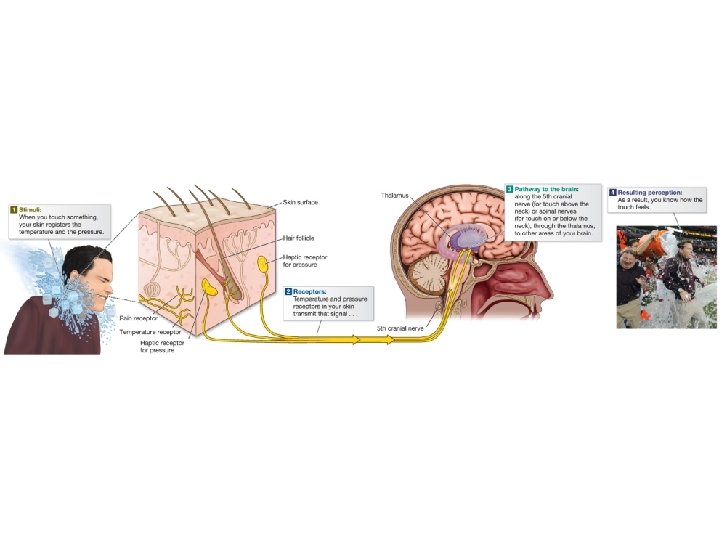
The Skin Contains Sensory Receptors For Touch • Anything that makes contact with our skin provides tactile stimulation. – For sensing temperature, there appear to be receptors for warmth and receptors for cold. – The integration of various signals and higher-level mental processes produces haptic experiences.
Diagram of haptic receptors in the skin and the sensory pathway to the brain to show we experience touch
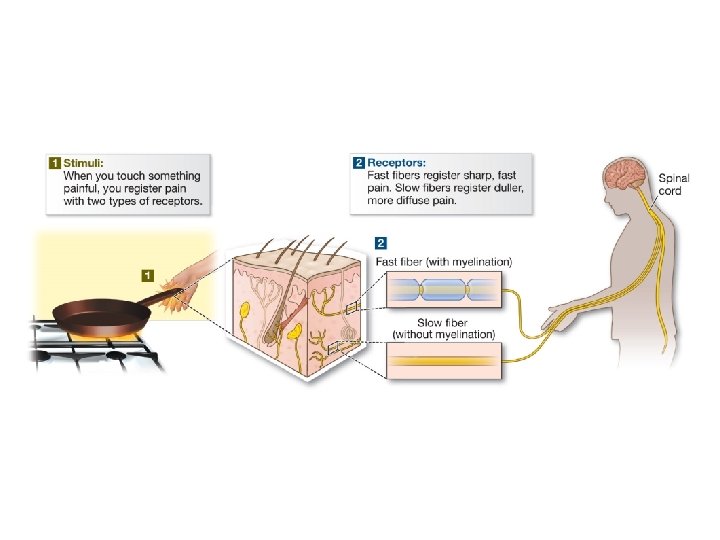
There Are Two Types of Pain • Pain is part of a warning system that stops you from continuing activities that may harm you. • Two kinds of nerve fibers have been identified for pain. – Fast fibers for sharp, immediate pain; activated by strong physical pressure and temperature extremes – Slow fibers for chronic, dull, steady pain; activated by chemical changes in tissue when skin is damaged
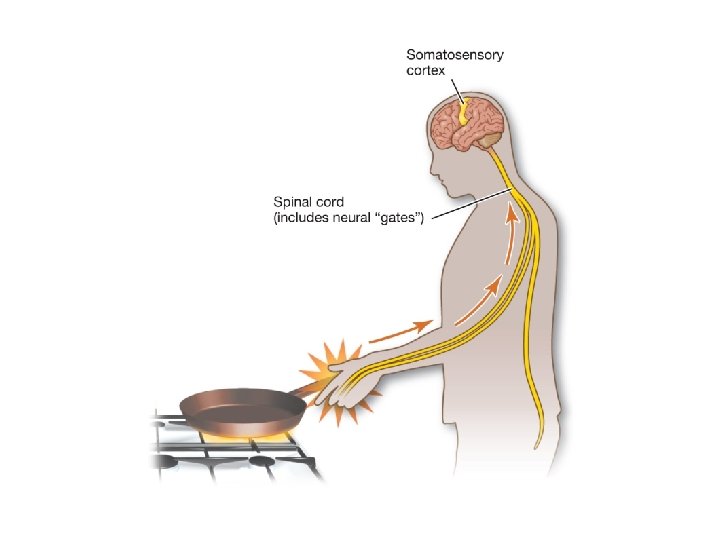
Diagram of sensory pathways to demonstrate how we experience pain
Gate Control Theory • Pain involves biological, psychological, and cultural factors. – When pain receptors are activated, a neural “gate” opens in the spinal cord and allows pain signals to be carried by nerve fibers. – Larger sensory nerve fibers can fire and close the gate, thus preventing pain perception.
Diagram to demonstrate gate control theory with neural gates in the spinal cord
Controlling Pain • Drug treatments (ibuprofen, acetaminophen, Novocain, anesthetics) • Cognitive states (distraction, positive mood, relaxation) can close the pain gate. • Some mental processes, such as worrying about or focusing on the painful stimulus, seem to open the pain gate.