
PostLiver Transplant Samantha Halpern MSN CRNP Nurse Practitioner

- Slides: 27
Post-Liver Transplant Samantha Halpern, MSN, CRNP Nurse Practitioner Liver Transplant Surgery November 3, 2018
Objectives w Discuss post-liver transplant management after discharge w Identify standard medication regimen in liver transplant recipients w Review immunosuppression including function, drug class, and side effects w Discuss ways to live healthy after transplant w Describe potential postoperative complications, problems, and management 2
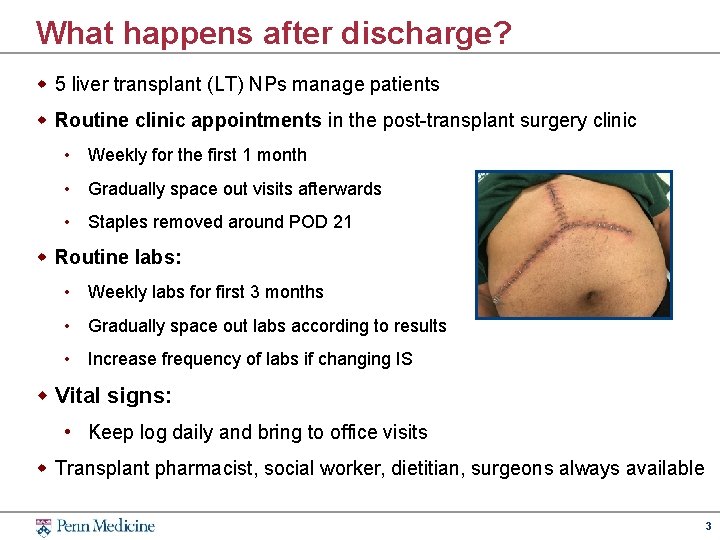
What happens after discharge? w 5 liver transplant (LT) NPs manage patients w Routine clinic appointments in the post-transplant surgery clinic • Weekly for the first 1 month • Gradually space out visits afterwards • Staples removed around POD 21 w Routine labs: • Weekly labs for first 3 months • Gradually space out labs according to results • Increase frequency of labs if changing IS w Vital signs: • Keep log daily and bring to office visits w Transplant pharmacist, social worker, dietitian, surgeons always available 3
Liver Transplant Medications w Nystatin to prevent thrush • Stopped at 3 months w Acyclovir to prevent CMV • Stopped at 3 months w Other possible medications: • Ursodiol • BP meds w Ganciclovir to prevent CMV • Insulin • Donor CMV+, Recipient CMV • Switch to oral Valganciclovir after 90 days • Daily infusions at home • Low blood cell counts w H 2 Blocker or PPI to prevent GERD • Can stop when prednisone is stopped w Colace • As needed • Magnesium • Lasix • Kayexalate/florinef • Aspirin w OTC meds: • Tylenol up to 2, 000 mg daily w NOT allowed to take: • NSAIDs • Herbal supplements 4
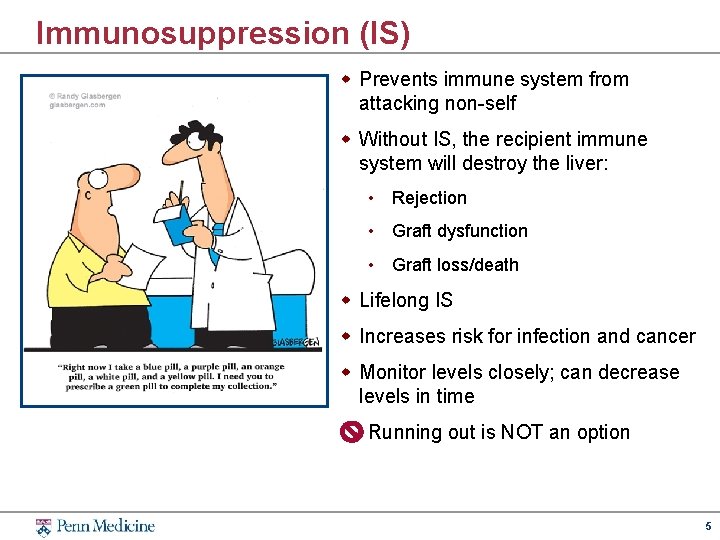
Immunosuppression (IS) w Prevents immune system from attacking non-self w Without IS, the recipient immune system will destroy the liver: • Rejection • Graft dysfunction • Graft loss/death w Lifelong IS w Increases risk for infection and cancer w Monitor levels closely; can decrease levels in time Running out is NOT an option 5
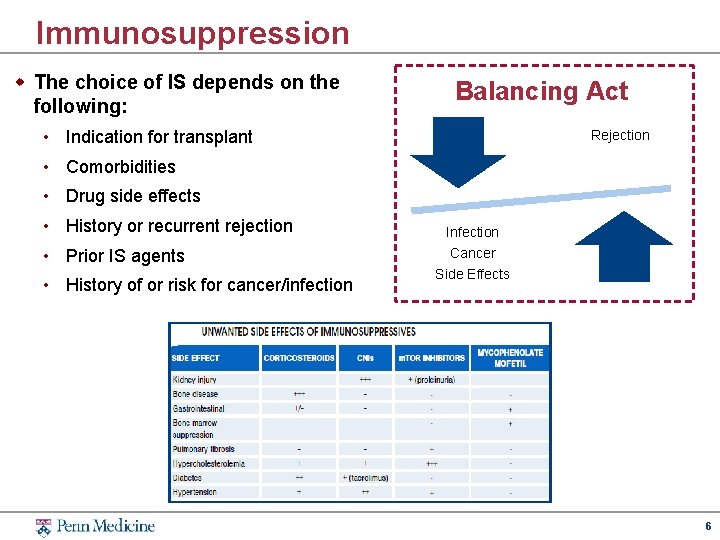
Immunosuppression w The choice of IS depends on the following: Balancing Act • Indication for transplant Rejection • Comorbidities • Drug side effects • History or recurrent rejection • Prior IS agents • History of or risk for cancer/infection Infection Cancer Side Effects 6
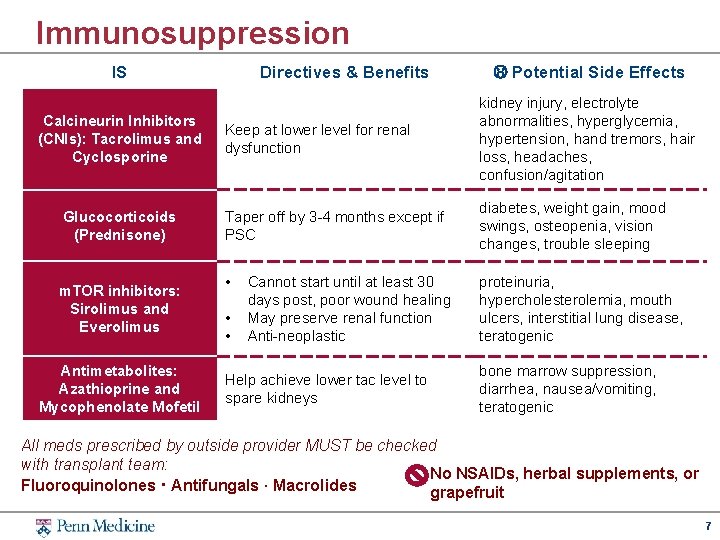
Immunosuppression IS Calcineurin Inhibitors (CNIs): Tacrolimus and Cyclosporine Glucocorticoids (Prednisone) m. TOR inhibitors: Sirolimus and Everolimus Antimetabolites: Azathioprine and Mycophenolate Mofetil Directives & Benefits Potential Side Effects Keep at lower level for renal dysfunction kidney injury, electrolyte abnormalities, hyperglycemia, hypertension, hand tremors, hair loss, headaches, confusion/agitation Taper off by 3 -4 months except if PSC diabetes, weight gain, mood swings, osteopenia, vision changes, trouble sleeping • • • Cannot start until at least 30 days post, poor wound healing May preserve renal function Anti-neoplastic Help achieve lower tac level to spare kidneys proteinuria, hypercholesterolemia, mouth ulcers, interstitial lung disease, teratogenic bone marrow suppression, diarrhea, nausea/vomiting, teratogenic All meds prescribed by outside provider MUST be checked with transplant team: No NSAIDs, herbal supplements, or Fluoroquinolones · Antifungals · Macrolides grapefruit 7
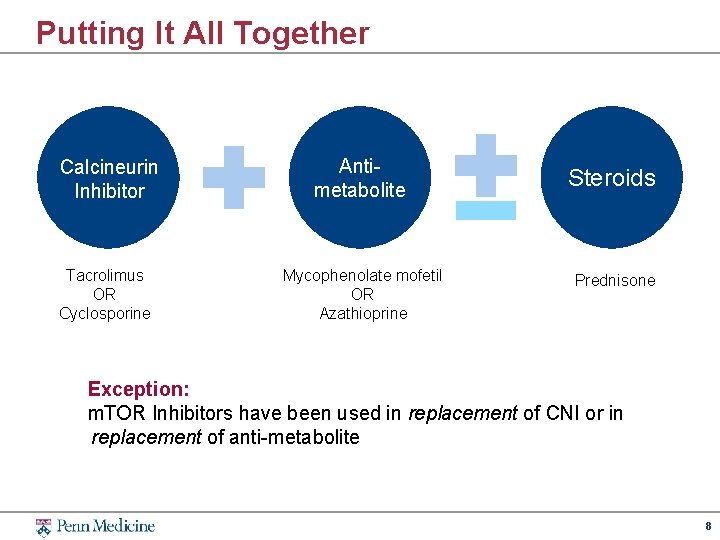
Putting It All Together Calcineurin Inhibitor Tacrolimus OR Cyclosporine Antimetabolite Mycophenolate mofetil OR Azathioprine Steroids Prednisone Exception: m. TOR Inhibitors have been used in replacement of CNI or in replacement of anti-metabolite 8
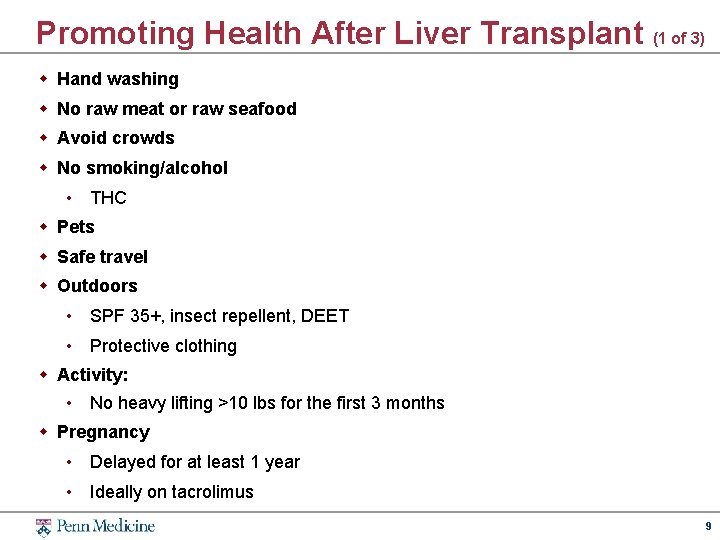
Promoting Health After Liver Transplant (1 of 3) w Hand washing w No raw meat or raw seafood w Avoid crowds w No smoking/alcohol • THC w Pets w Safe travel w Outdoors • SPF 35+, insect repellent, DEET • Protective clothing w Activity: • No heavy lifting >10 lbs for the first 3 months w Pregnancy • Delayed for at least 1 year • Ideally on tacrolimus 9
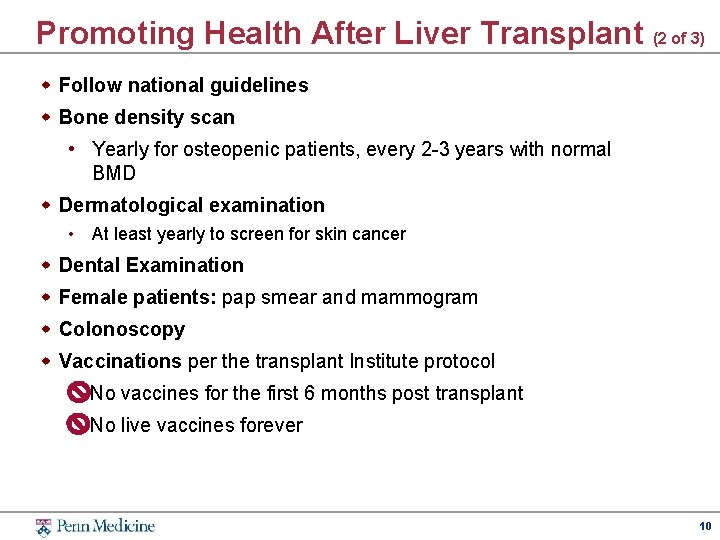
Promoting Health After Liver Transplant (2 of 3) w Follow national guidelines w Bone density scan • Yearly for osteopenic patients, every 2 -3 years with normal BMD w Dermatological examination • At least yearly to screen for skin cancer w Dental Examination w Female patients: pap smear and mammogram w Colonoscopy w Vaccinations per the transplant Institute protocol No vaccines for the first 6 months post transplant No live vaccines forever 10
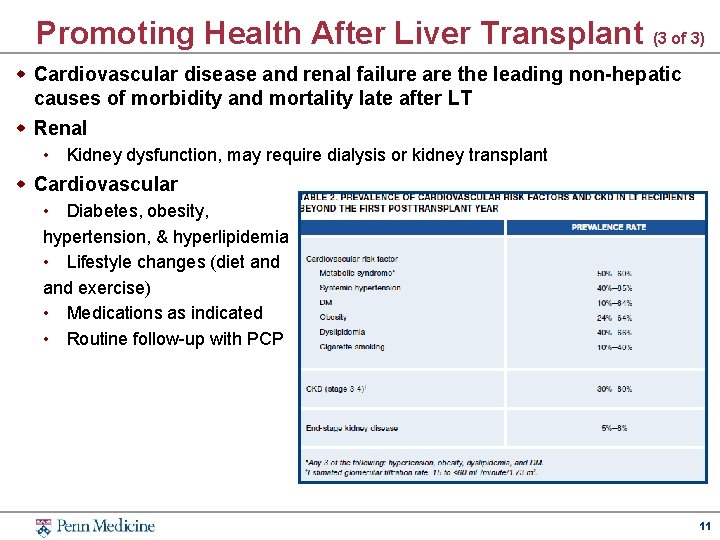
Promoting Health After Liver Transplant (3 of 3) w Cardiovascular disease and renal failure are the leading non-hepatic causes of morbidity and mortality late after LT w Renal • Kidney dysfunction, may require dialysis or kidney transplant w Cardiovascular • Diabetes, obesity, hypertension, & hyperlipidemia • Lifestyle changes (diet and exercise) • Medications as indicated • Routine follow-up with PCP 11
Complications Liver Transplant 12
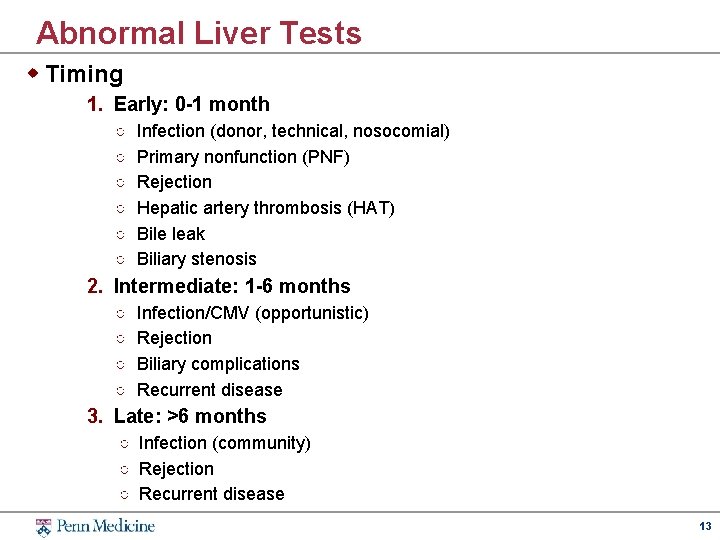
Abnormal Liver Tests w Timing 1. Early: 0 -1 month ○ ○ ○ Infection (donor, technical, nosocomial) Primary nonfunction (PNF) Rejection Hepatic artery thrombosis (HAT) Bile leak Biliary stenosis 2. Intermediate: 1 -6 months ○ ○ Infection/CMV (opportunistic) Rejection Biliary complications Recurrent disease 3. Late: >6 months ○ Infection (community) ○ Rejection ○ Recurrent disease 13
Primary Nonfunction (PNF) w Graft failure that occurs within 7 days of transplant w Occurs between 2 -10% of LT patients w Findings • Elevated LFTs, • Elevated INR • Elevated ammonia • Poor bile production • Patent hepatic vessels w Donor risk factors: • Advanced age • Steatosis • Stroke as cause of death • Prolonged ischemia time w Recipient risk factors • Renal insufficiency • Retransplantation w Treatment • Requires urgent retransplantation 14
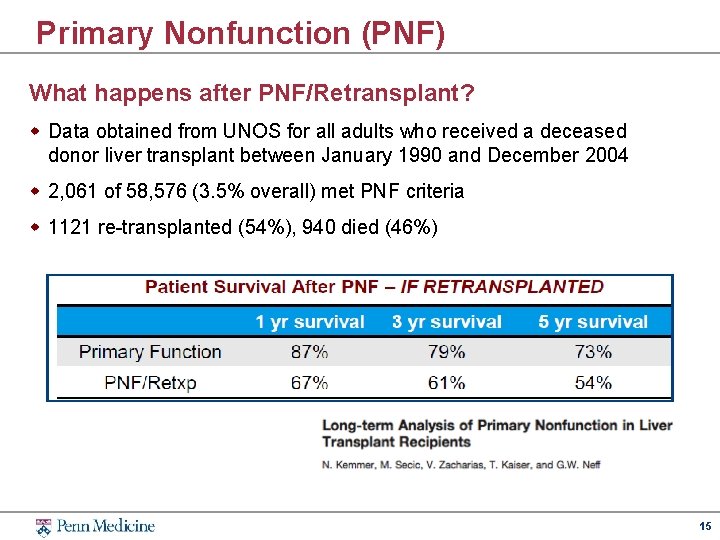
Primary Nonfunction (PNF) What happens after PNF/Retransplant? w Data obtained from UNOS for all adults who received a deceased donor liver transplant between January 1990 and December 2004 w 2, 061 of 58, 576 (3. 5% overall) met PNF criteria w 1121 re-transplanted (54%), 940 died (46%) 15
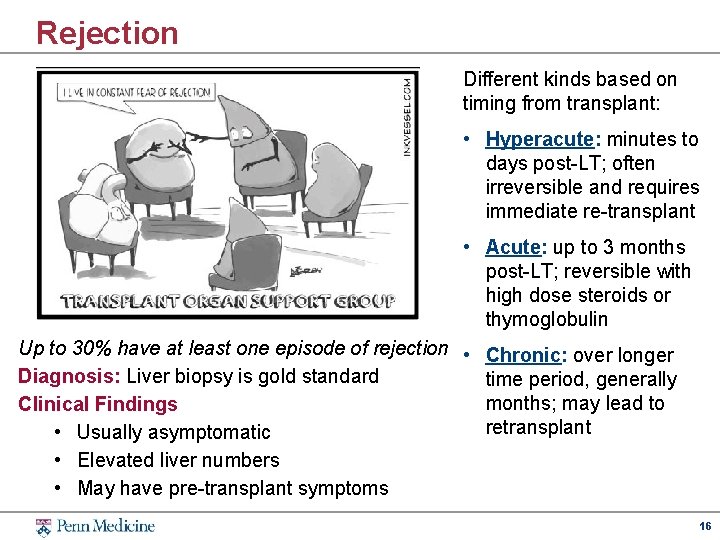
Rejection Different kinds based on timing from transplant: • Hyperacute: minutes to days post-LT; often irreversible and requires immediate re-transplant • Acute: up to 3 months post-LT; reversible with high dose steroids or thymoglobulin Up to 30% have at least one episode of rejection • Chronic: over longer Diagnosis: Liver biopsy is gold standard time period, generally months; may lead to Clinical Findings retransplant • Usually asymptomatic • Elevated liver numbers • May have pre-transplant symptoms 16
Rejection: Acute w Graft inflammation mediated by killer T cells that develop in response to donor antigens from the transplanted organ w Majority occur within 3 months post-LT w Most common and responsive form w Risk factors: • Inadequate IS (most common) • Autoimmune liver disease • Female recipient of a male donor organ w Treatment: • High dose corticosteroids • Adjust IS – increase dosages of current meds – add new agent – or switch medications • Thymoglobulin as last resort 17
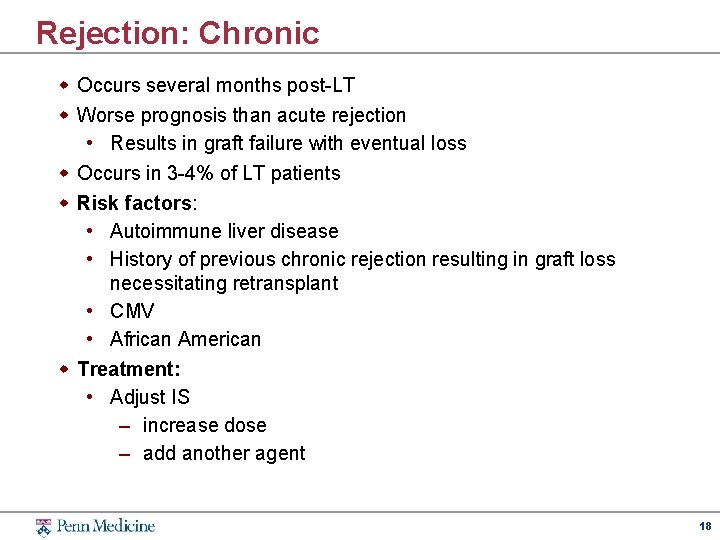
Rejection: Chronic w Occurs several months post-LT w Worse prognosis than acute rejection • Results in graft failure with eventual loss w Occurs in 3 -4% of LT patients w Risk factors: • Autoimmune liver disease • History of previous chronic rejection resulting in graft loss necessitating retransplant • CMV • African American w Treatment: • Adjust IS – increase dose – add another agent 18
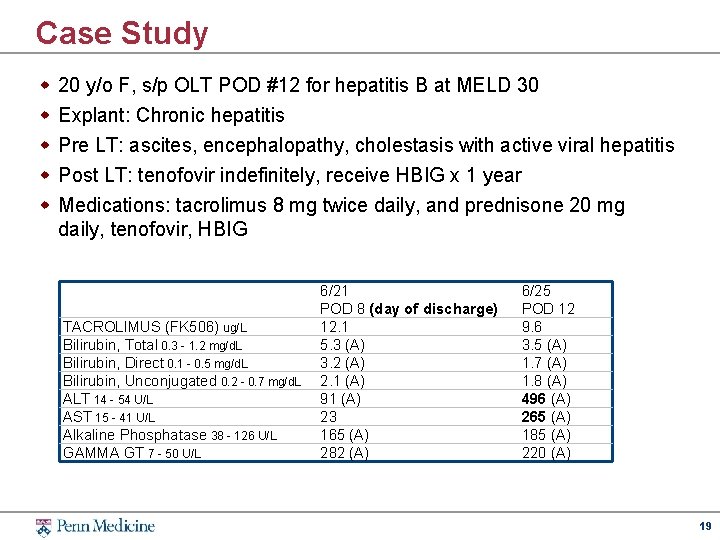
Case Study w w w 20 y/o F, s/p OLT POD #12 for hepatitis B at MELD 30 Explant: Chronic hepatitis Pre LT: ascites, encephalopathy, cholestasis with active viral hepatitis Post LT: tenofovir indefinitely, receive HBIG x 1 year Medications: tacrolimus 8 mg twice daily, and prednisone 20 mg daily, tenofovir, HBIG TACROLIMUS (FK 506) ug/L Bilirubin, Total 0. 3 - 1. 2 mg/d. L Bilirubin, Direct 0. 1 - 0. 5 mg/d. L Bilirubin, Unconjugated 0. 2 - 0. 7 mg/d. L ALT 14 - 54 U/L AST 15 - 41 U/L Alkaline Phosphatase 38 - 126 U/L GAMMA GT 7 - 50 U/L 6/21 POD 8 (day of discharge) 12. 1 5. 3 (A) 3. 2 (A) 2. 1 (A) 91 (A) 23 165 (A) 282 (A) 6/25 POD 12 9. 6 3. 5 (A) 1. 7 (A) 1. 8 (A) 496 (A) 265 (A) 185 (A) 220 (A) 19
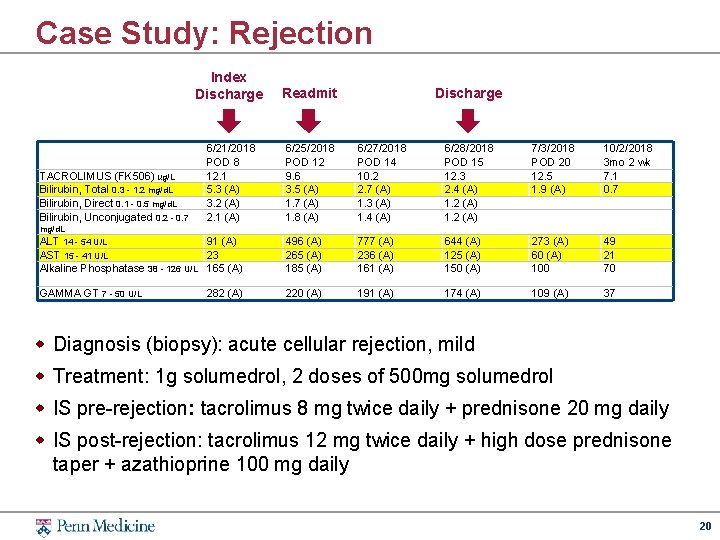
Case Study: Rejection Index Discharge Readmit 6/21/2018 POD 8 12. 1 5. 3 (A) 3. 2 (A) 2. 1 (A) 6/25/2018 POD 12 9. 6 3. 5 (A) 1. 7 (A) 1. 8 (A) 6/27/2018 POD 14 10. 2 2. 7 (A) 1. 3 (A) 1. 4 (A) 6/28/2018 POD 15 12. 3 2. 4 (A) 1. 2 (A) 7/3/2018 POD 20 12. 5 1. 9 (A) 10/2/2018 3 mo 2 wk 7. 1 0. 7 91 (A) AST 15 - 41 U/L 23 Alkaline Phosphatase 38 - 126 U/L 165 (A) 496 (A) 265 (A) 185 (A) 777 (A) 236 (A) 161 (A) 644 (A) 125 (A) 150 (A) 273 (A) 60 (A) 100 49 21 70 GAMMA GT 7 - 50 U/L 220 (A) 191 (A) 174 (A) 109 (A) 37 TACROLIMUS (FK 506) ug/L Bilirubin, Total 0. 3 - 1. 2 mg/d. L Bilirubin, Direct 0. 1 - 0. 5 mg/d. L Bilirubin, Unconjugated 0. 2 - 0. 7 mg/d. L ALT 14 - 54 U/L 282 (A) Discharge w Diagnosis (biopsy): acute cellular rejection, mild w Treatment: 1 g solumedrol, 2 doses of 500 mg solumedrol w IS pre-rejection: tacrolimus 8 mg twice daily + prednisone 20 mg daily w IS post-rejection: tacrolimus 12 mg twice daily + high dose prednisone taper + azathioprine 100 mg daily 20
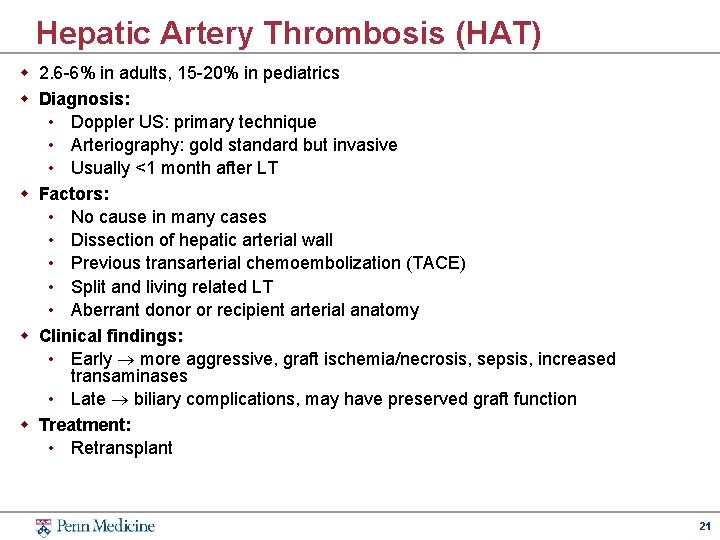
Hepatic Artery Thrombosis (HAT) w 2. 6 -6% in adults, 15 -20% in pediatrics w Diagnosis: • Doppler US: primary technique • Arteriography: gold standard but invasive • Usually <1 month after LT w Factors: • No cause in many cases • Dissection of hepatic arterial wall • Previous transarterial chemoembolization (TACE) • Split and living related LT • Aberrant donor or recipient arterial anatomy w Clinical findings: • Early more aggressive, graft ischemia/necrosis, sepsis, increased transaminases • Late biliary complications, may have preserved graft function w Treatment: • Retransplant 21
Bile Leak w Complicate 1 -25% of LT and often occur within first few months w Associated with decreased overall survival w Can occur at the following locations: • Site of anastomosis • Within the liver due to bile duct destruction • Cut surface in a split liver or after a liver biopsy w Clinical Findings: • Bile-stained fluid in JP drain • Peritonitis with systemic signs of sepsis • Elevated WBC and bilirubin levels w Treatment: • Inserting stents via an endoscopic retrograde cholangiopancreatography (ERCP) • Percutaneous Transcholangiography (PTC) if Roux-en-Y • Surgery for those with large leaks or frequent stents to switch anastamosis from duct-to-duct to a roux-en-y 22
Biliary Stricture w Complicate 3 -14% of all liver transplants w Findings • Elevated alk phos, GGT, and bilirubin • May remain undetected until infection appears w Diagnosis and treatment: • ERCP: § duct-to-duct recipients § Stent may be placed to keep the bile duct open § Requires a follow up appointment in 1 -3 months for another ERCP to either remove the stent, or reinsert another if the stricture is not corrected • PTC § May be attempted to repair the stricture and/or insert a stent. § Exploratory lap may be required due to the difficulty manipulating the bile ducts. • Surgery: § If require frequent ERCPs with stenting, may need Roux-en-Y to fix this chronic condition. 23
Infection: CMV w Most significant pathogen affecting LT recipients w All patients who are CMV- and receive CMV+ donor should receive prophylaxis with IV ganciclovir for at least 3 months post transplant w Risk factors for viremia: • CMV+ donors into CMV- recipients • First 3 months post transplant • Rejection • Coinfection with other viruses, bacteria, or fungi w Symptoms: • Bone marrow suppression • Diarrhea • Abdominal pain w Treatment: • Reduce IS • High dose IV ganciclovir or PO valganciclovir if mild to moderate disease without GI involvement • Watch liver numbers closely, CMV may precipitate rejection episode 24
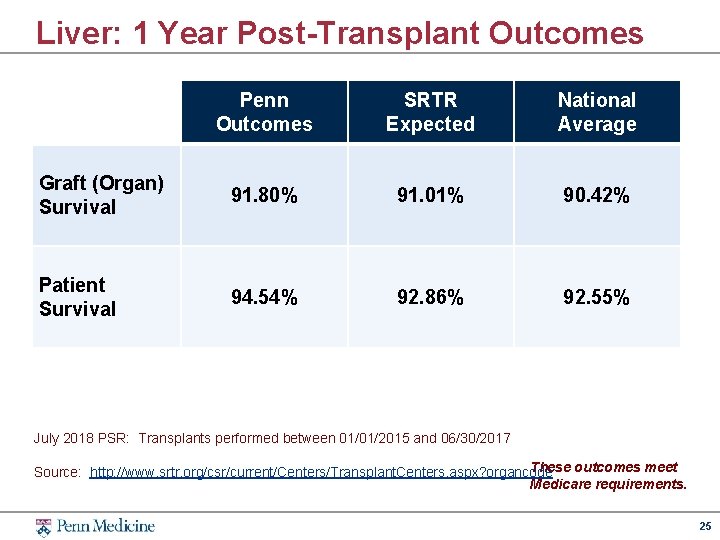
Liver: 1 Year Post-Transplant Outcomes Penn Outcomes SRTR Expected National Average Graft (Organ) Survival 91. 80% 91. 01% 90. 42% Patient Survival 94. 54% 92. 86% 92. 55% July 2018 PSR: Transplants performed between 01/01/2015 and 06/30/2017 These outcomes meet Source: http: //www. srtr. org/csr/current/Centers/Transplant. Centers. aspx? organcode Medicare requirements. 25
References w Busuttil, R. , Klintmalm, G. Transplantation of the Liver. Ed. 3. Philadelphia, Pennsylvania: Elsevier Inc. , 2015. w Cupples, S. , Ohler, L. Transplantation Nursing Secrets. Ed 1. Philadelphia, Pennsylvania: Hanley and Belfus, Inc, 2003. w N. Kemmer, M. Secic, V. Zacharias, T. Kaiser, G. W. Neff, Long-term Analysis of Primary Nonfunction in Liver Transplant Recipients, Transplantation Proceedings, Volume 39, Issue 5, 2007, Pages 1477 -1480, ISSN 0041 -1345, https: //doi. org/10. 1016/j. transproceed. 2006. 11. 012. (http: //www. sciencedirect. com/science/article/pii/S 0041134507002916) w Ohler, Linda, and Sandra A. Cupples , eds. Core Curriculum for Transplant Nurses. St. Louis, Missouri: Mosby Inc, 2008. 26
27