G 674 ETHNIC INEQUALITIES Activity Study the handout

- Slides: 62
G 674 ETHNIC INEQUALITIES
Activity � Study the handout and answer the questions provided. http: //www. youtube. com/watch? v=z. AWn 4 FO 1 MOw
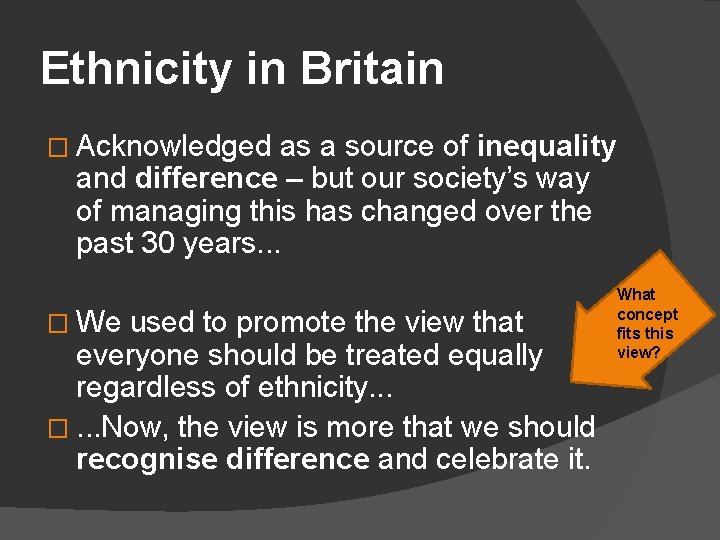
Ethnicity in Britain � Acknowledged as a source of inequality and difference – but our society’s way of managing this has changed over the past 30 years. . . � We used to promote the view that everyone should be treated equally regardless of ethnicity. . . �. . . Now, the view is more that we should recognise difference and celebrate it. What concept fits this view?
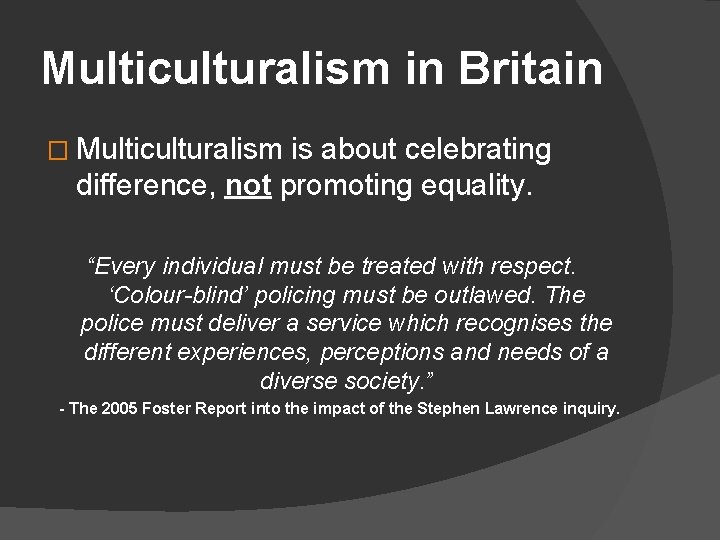
Multiculturalism in Britain � Multiculturalism is about celebrating difference, not promoting equality. “Every individual must be treated with respect. ‘Colour-blind’ policing must be outlawed. The police must deliver a service which recognises the different experiences, perceptions and needs of a diverse society. ” - The 2005 Foster Report into the impact of the Stephen Lawrence inquiry.
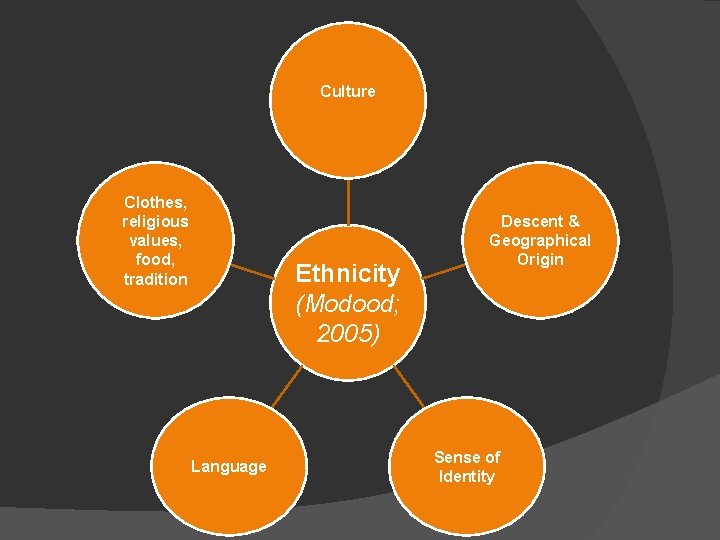
Recap � What � How do we mean by ‘ethnicity’? does this differ from race and nationality?
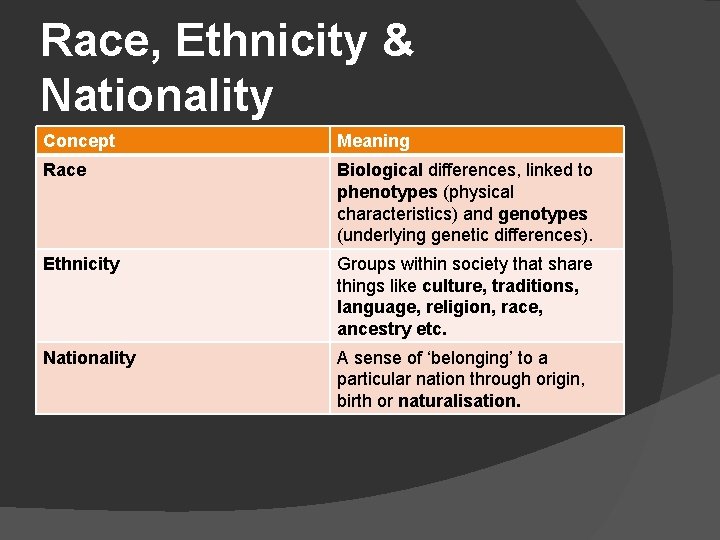
Race, Ethnicity & Nationality Concept Meaning Race Biological differences, linked to phenotypes (physical characteristics) and genotypes (underlying genetic differences). Ethnicity Groups within society that share things like culture, traditions, language, religion, race, ancestry etc. Nationality A sense of ‘belonging’ to a particular nation through origin, birth or naturalisation.
Culture Clothes, religious values, food, tradition Ethnicity (Modood; 2005) Language Descent & Geographical Origin Sense of Identity
Race or Ethnicity? � Race is often regarded as an outdated concept and sociologists prefer the broader concept of ethnicity. . . � However, some argue that race is a better term for explaining the position of ethnicities at the bottom of the social stratification system – because sociologists like Miles (1989) have identified racism as the main cause. . .
Racism
3 Elements of Racism � Cultural � Racial Attitudes / Prejudice Discrimination � Institutional Discrimination
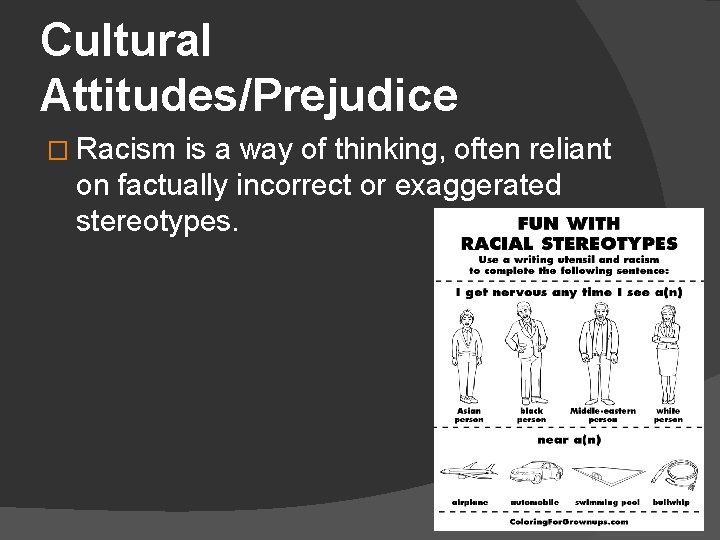
Cultural Attitudes/Prejudice � Racism is a way of thinking, often reliant on factually incorrect or exaggerated stereotypes.
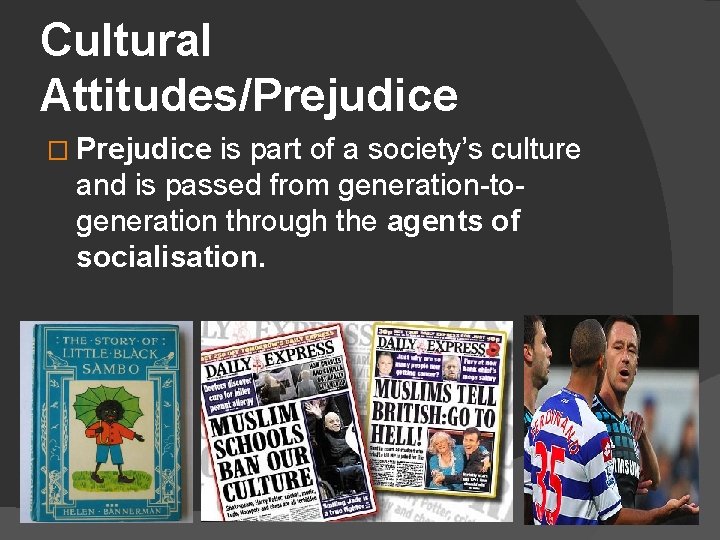
Cultural Attitudes/Prejudice � Prejudice is part of a society’s culture and is passed from generation-togeneration through the agents of socialisation.
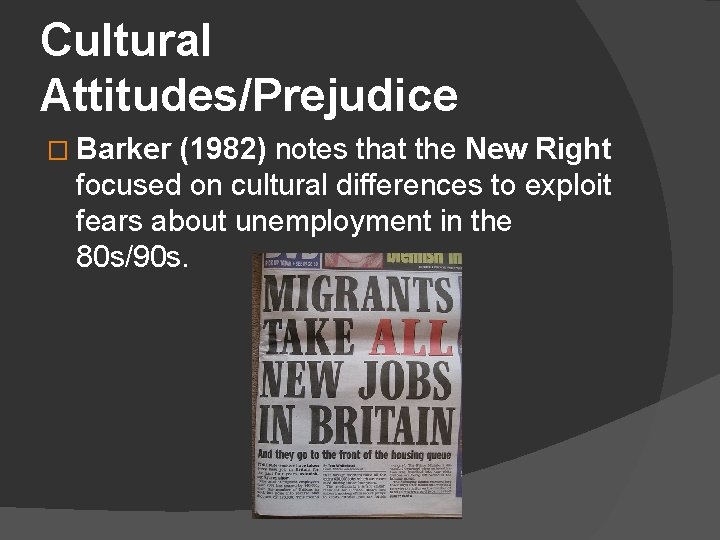
Cultural Attitudes/Prejudice � Barker (1982) notes that the New Right focused on cultural differences to exploit fears about unemployment in the 80 s/90 s.
Cultural Attitudes/Prejudice The mass media often portray ethnic minorities as a problem/threat. They do this by: 1. Offering an over-simplified view of traditional British culture 2. Exaggerating the strangeness of other cultures 3. Playing down the problem of racism (or making it seem like the fault of minorities for not fitting in)
http: //www. youtube. com/watch? v=6 MYHBr JIIFU
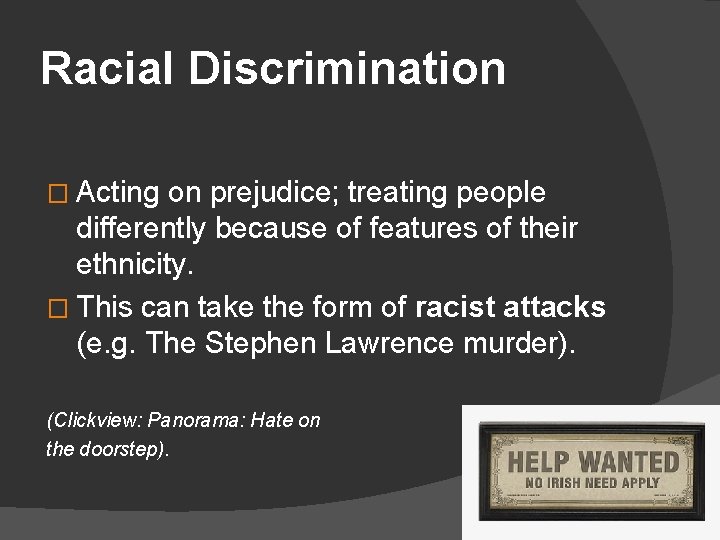
Racial Discrimination � Acting on prejudice; treating people differently because of features of their ethnicity. � This can take the form of racist attacks (e. g. The Stephen Lawrence murder). (Clickview: Panorama: Hate on the doorstep).
Institutional Racism � Where racism is a basic feature of the rules and routines of Britain’s social institutions (e. g. the police/courts, the education system, the housing markets. . . ). � Not usually conscious or intentional (e. g. schools are committed to equality but still expel four times as many black children as white).
Are some ethnic minority groups more disadvantaged than others in the UK today? How is this changing? Evidence for Ethnic Inequalities
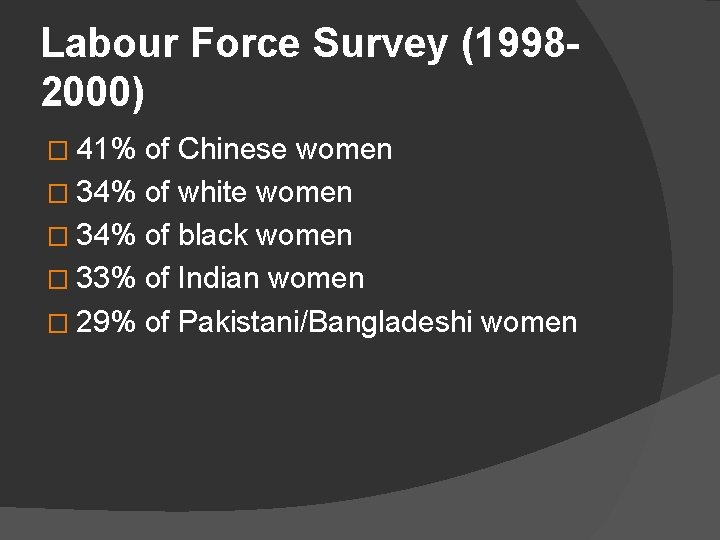
Labour Force Survey (19982000) 41% of white men in the highest two social class groups, compared to: � 47% of Indian men � 44% of Chinese men � 33% of black men � 31% of Pakistan men � 23% of Bagladeshi men and…
Labour Force Survey (19982000) � 41% of Chinese women � 34% of white women � 34% of black women � 33% of Indian women � 29% of Pakistani/Bangladeshi women
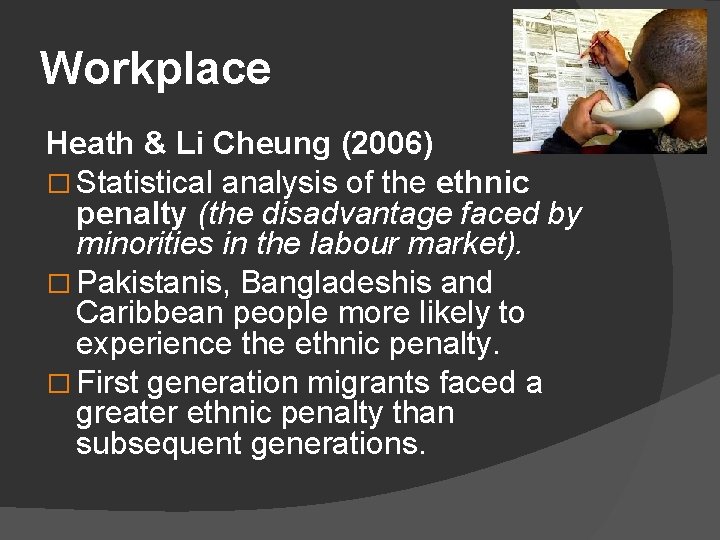
Workplace Heath & Li Cheung (2006) � Statistical analysis of the ethnic penalty (the disadvantage faced by minorities in the labour market). � Pakistanis, Bangladeshis and Caribbean people more likely to experience the ethnic penalty. � First generation migrants faced a greater ethnic penalty than subsequent generations.
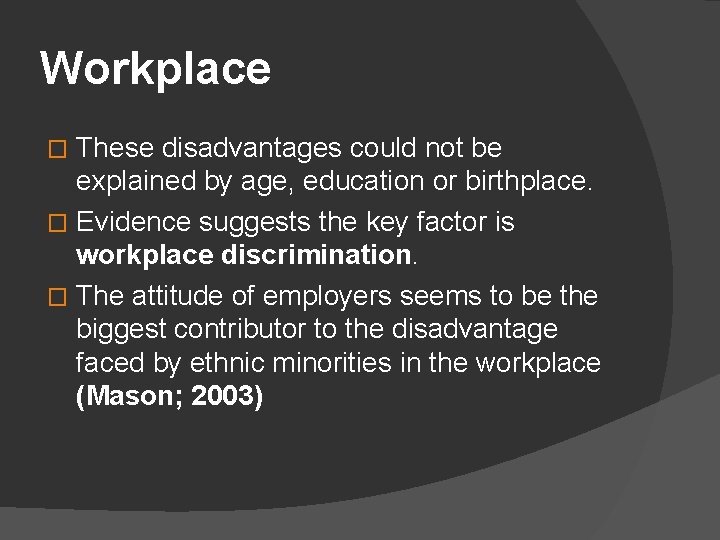
Workplace These disadvantages could not be explained by age, education or birthplace. � Evidence suggests the key factor is workplace discrimination. � The attitude of employers seems to be the biggest contributor to the disadvantage faced by ethnic minorities in the workplace (Mason; 2003) �
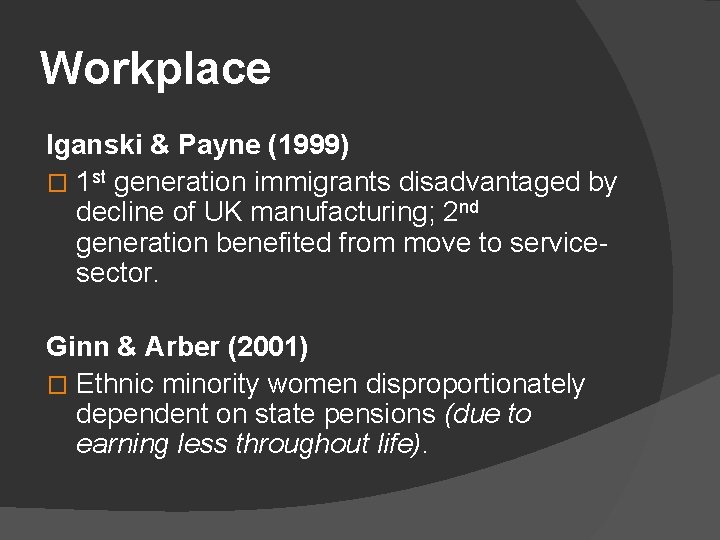
Workplace Iganski & Payne (1999) � 1 st generation immigrants disadvantaged by decline of UK manufacturing; 2 nd generation benefited from move to servicesector. Ginn & Arber (2001) � Ethnic minority women disproportionately dependent on state pensions (due to earning less throughout life).
Education
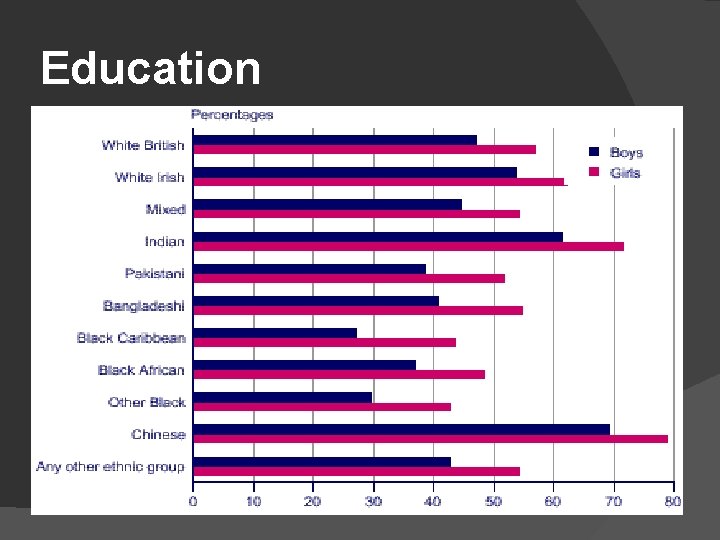
Education Some blame cultural factors e. g � High rate of male desertion in Afro-Caribbean families. . . �. . . this creates a lack of role models, leading to peer pressure that draws young males into an aggressive masculinity (Sewell; 1997) � Lack of linguistic skills � Culture of return (Bolognani; 2007) – ethnic groups are attached to their country of origin and believe they will return - intensified due to Islamophobia.
Education � However, Briggs et al (2006) argues that ethnic groups improve more at school that white pupils; this is hidden by GCSE results. � Some argue the culture of schools in more to blame (e. g. Ethnocentric curriculum; racism of teachers etc. ) � The impact of poverty
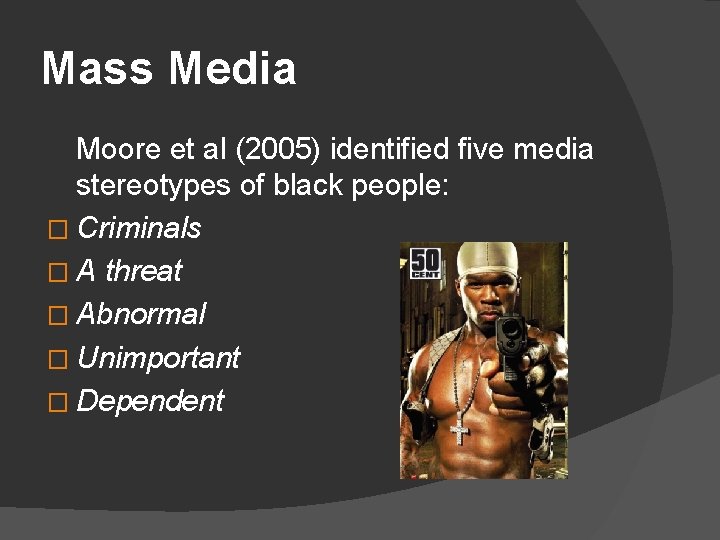
Mass Media Moore et al (2005) identified five media stereotypes of black people: � Criminals � A threat � Abnormal � Unimportant � Dependent
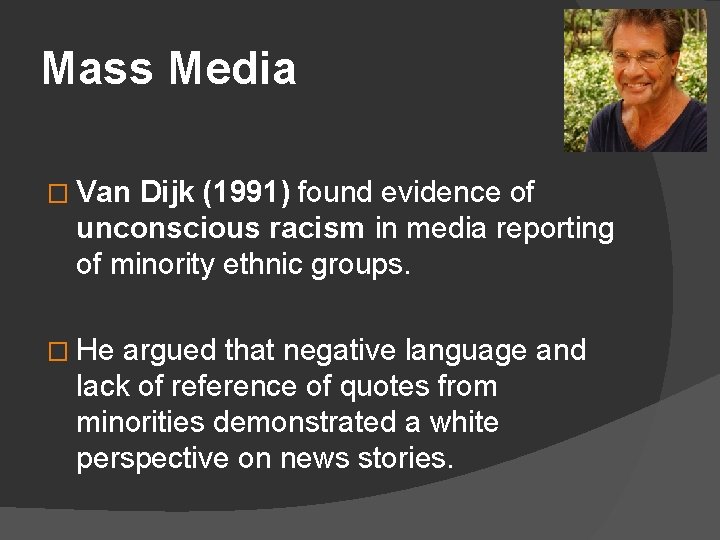
Mass Media � Van Dijk (1991) found evidence of unconscious racism in media reporting of minority ethnic groups. � He argued that negative language and lack of reference of quotes from minorities demonstrated a white perspective on news stories.
Mass Media � The contemporary media do not reflect the ethnic reality of the UK (Malik; 2002) � Programmes like Eastenders try to be representative of multi-ethnic communities, but repeatedly rely on stereotypes (Asian doctors and shopkeepers etc). Black and Asian characters also take a more marginal place in the programme (Barker; 1999)
Research � Identify the characters in Eastenders who are from a minority ethnic background. � To what extent do they conform to ethnic stereotypes? � Are they central characters in the programme? � Are issues of ethnicity and racism considered? If so, how are they dealt with?
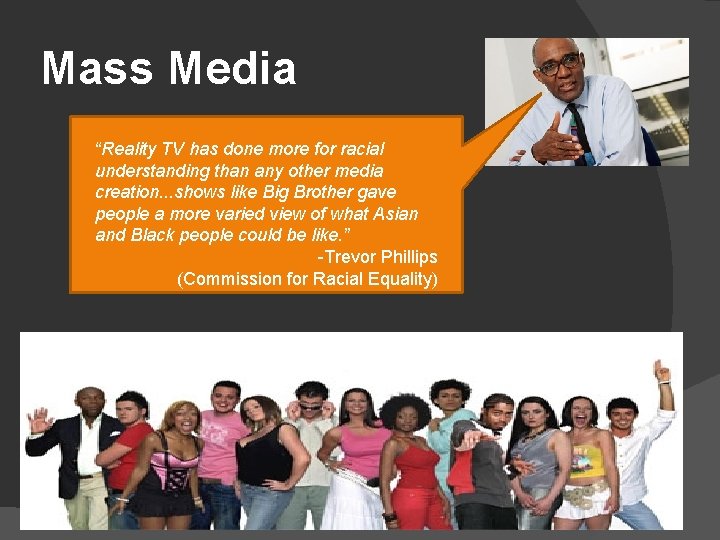
Mass Media “Reality TV has done more for racial understanding than any other media creation. . . shows like Big Brother gave people a more varied view of what Asian and Black people could be like. ” -Trevor Phillips (Commission for Racial Equality)
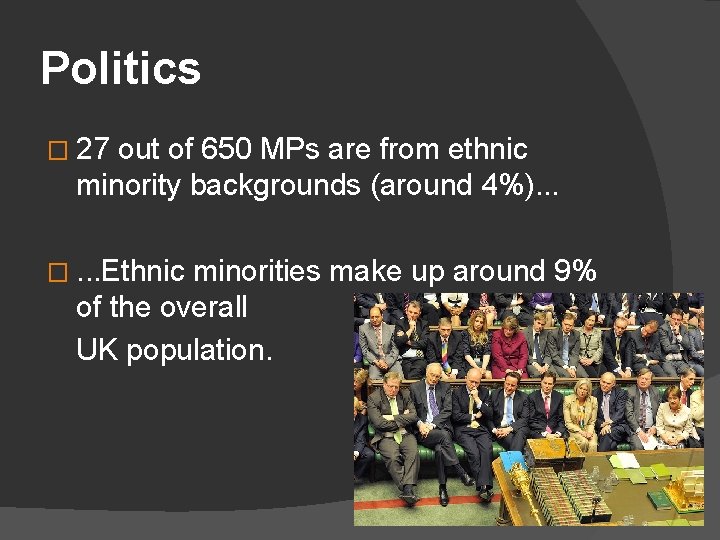
Politics � 27 out of 650 MPs are from ethnic minority backgrounds (around 4%). . . �. . . Ethnic minorities make up around 9% of the overall UK population.
Crime � Which studies/theories from the Crime & Deviance unit provide evidence for ethnic minority disadvantage in the contemporary UK?
G 674 Ethnic Inequality: Sociological Explanations
1: Functionalism
Common Value System � Explain ethnic equalities in relation to common value system. Differences and inequalities are temporary.
Parsons (1966) � Argued that the “American Negro” was a second class citizen, as skin-colour symbolised status – but over time, this common value would change and minority ethnic groups able to play full role in the meritocratic society.
Discuss � To what extent was Parsons right? Is skin colour a barrier to success and opportunities in the USA today?
Host-Immigrant Model (Park) � Cultural difference ( language, qualifications, customs) disadvantages the immigrant group in a host society � The disadvantage will disappear as the immigrant group is assimilated into the host society
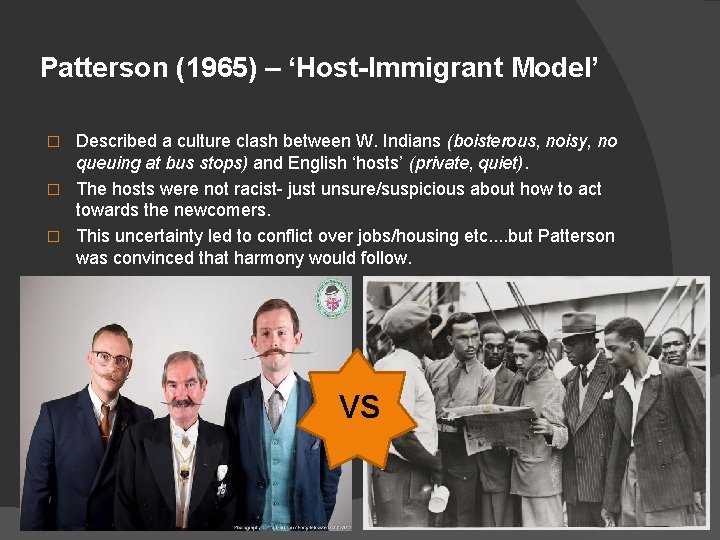
Patterson (1965) – ‘Host-Immigrant Model’ Described a culture clash between W. Indians (boisterous, noisy, no queuing at bus stops) and English ‘hosts’ (private, quiet). � The hosts were not racist- just unsure/suspicious about how to act towards the newcomers. � This uncertainty led to conflict over jobs/housing etc. . but Patterson was convinced that harmony would follow. � VS
Host-Immigrant Model: Evaluation � Accused of ‘victim blaming’ (e. g. It is the culture of immigrants that attracts conflict). . . � Racial hostility does not always decline. . . the same tensions/conflicts over housing, jobs etc still exist in the contemporary UK. . .
Research � Use the internet to research attitudes to recent immigrant groups into the UK (e. g. Eastern European; the predicted Romanian/Bulgarian wave). � To what extent were/are concerns about these immigrants: a) Cultural (e. g. Different norms/values) b) Practical (e. g. Employment, housing)
Discuss In small groups, summarise a viewpoint to present to the class: To what extent is the contemporary UK effective in assimilating immigrant groups?
Evaluation � What is the common value system? � Ignores persistence of racism � Assumes immigrants will want to assimilate; limited evidence that they actually do in the UK. � Ethnic inequality can be specific to particular areas/regions, rather than entire societies.
Evaluation � The perspective also assumes that subsequent generations will experience fewer problems. . . �. . . But Heath & Li Cheung found that the ethnic penalty does not just apply to first generation immigrants. . .
New Right Realism � Closely � Believe linked to functionalist views in encouraging/enforcing assimilation of ethnic minority groups e. g. legislation to make learning the English language compulsory for minority groups.
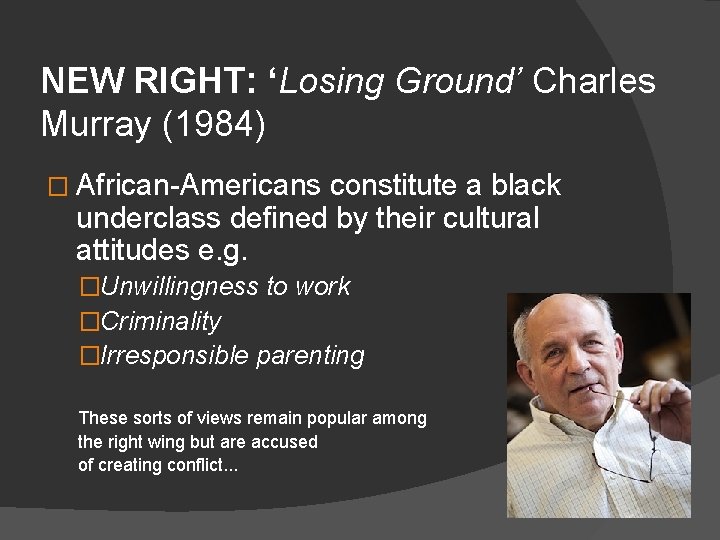
NEW RIGHT: ‘Losing Ground’ Charles Murray (1984) � African-Americans constitute a black underclass defined by their cultural attitudes e. g. �Unwillingness to work �Criminality �Irresponsible parenting These sorts of views remain popular among the right wing but are accused of creating conflict. . .
2: Marxism
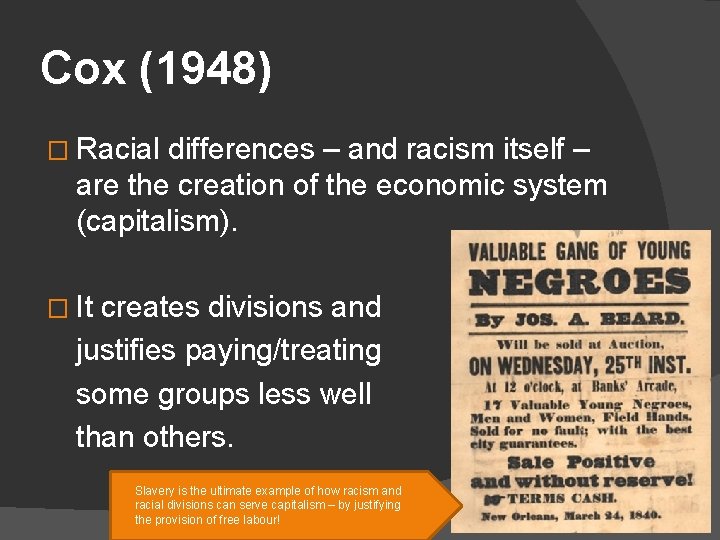
Cox (1948) � Racial differences – and racism itself – are the creation of the economic system (capitalism). � It creates divisions and justifies paying/treating some groups less well than others. Slavery is the ultimate example of how racism and racial divisions can serve capitalism – by justifying the provision of free labour!
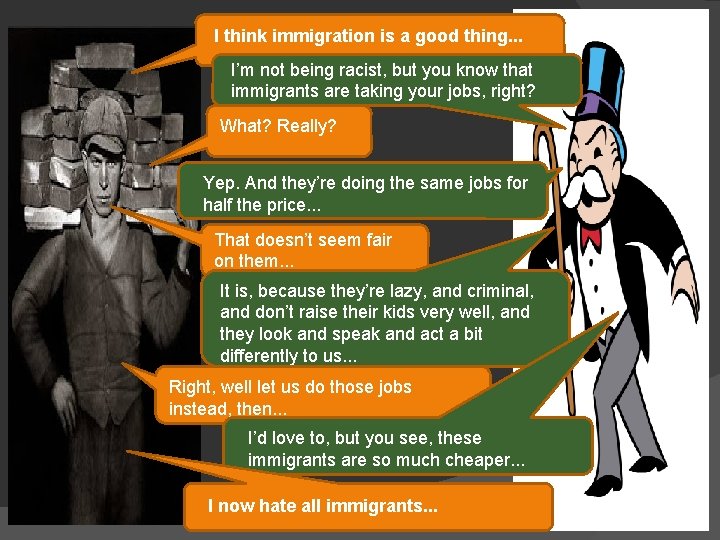
Castles & Kosack (1973) � Ethnic minorities are part of the reserve army of labour. � They are also used to ‘divide’ the working classes. For example. . .
I think immigration is a good thing. . . I’m not being racist, but you know that immigrants are taking your jobs, right? What? Really? Yep. And they’re doing the same jobs for half the price. . . That doesn’t seem fair on them. . . It is, because they’re lazy, and criminal, and don’t raise their kids very well, and they look and speak and act a bit differently to us. . . Right, well let us do those jobs instead, then. . . I’d love to, but you see, these immigrants are so much cheaper. . . I now hate all immigrants. . .
Castles & Kosack (1973) � Also believed that ethnic minorities provided a convenient scapegoat for the problems of capitalism. . . (Which study best demonstrates this? )
Miles (1980) (Neo-Marxist) Ethnic minorities are part of racialized class fractions. � This means that they occupy the same class structure as everyone else. . . but are treated differently because of their ethnicity. � Miles argues that racism prevents them being fully accepted by the white middle classes. . . � http: //www. youtube. com/watch? v=YA 8 Y_k. Gx 7 Ls
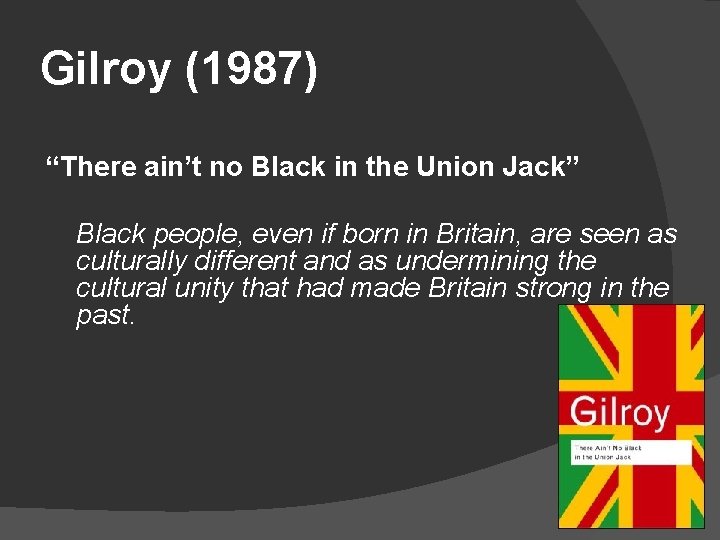
Gilroy (1987) “There ain’t no Black in the Union Jack” Black people, even if born in Britain, are seen as culturally different and as undermining the cultural unity that had made Britain strong in the past.
Evaluation � Recognises society the persistence of racism in � Assumes the reason for racism is economic (economic determinism/reductionism) � Assumes racism will disappear with communism?
3: Weberianism
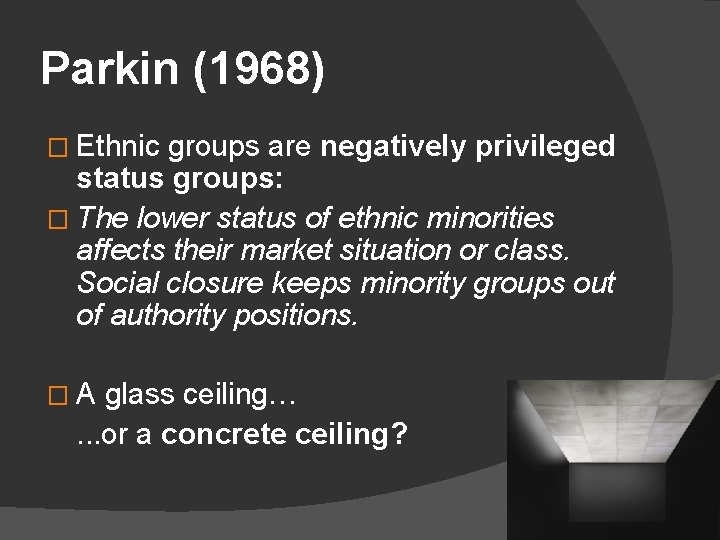
Parkin (1968) � Ethnic groups are negatively privileged status groups: � The lower status of ethnic minorities affects their market situation or class. Social closure keeps minority groups out of authority positions. �A glass ceiling…. . . or a concrete ceiling?
Dual Labour Market theory (Barron & Norris; 1967) � Minority groups placed in the Secondary Labour market; life chances and market position weaker than their white colleagues.
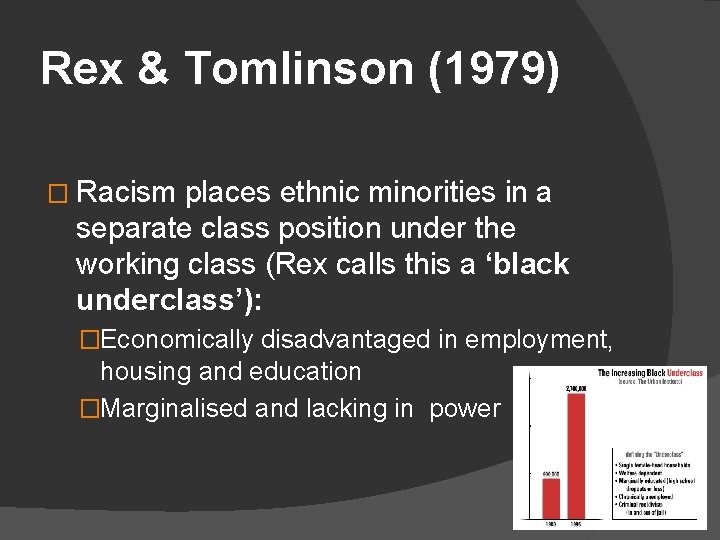
Rex & Tomlinson (1979) � Racism places ethnic minorities in a separate class position under the working class (Rex calls this a ‘black underclass’): �Economically disadvantaged in employment, housing and education �Marginalised and lacking in power
Evaluation � The Weberian view does not differentiate between different ethnic groups. . . �. . . It also overlaps with Marxist ideas, though with big differences in terms of the class position of ethnic minorities.
Postmodernism � Super-diversity � Not all ethnic groups – or individuals within ethnic groups – experience the same advantages and disadvantages. � Modood is critical of the portrayal of ethnic minority groups as victims. � Hybrid identities � Code-switching
Assessment � Outline and assess the view that ethnic minorities constitute a black underclass in contemporary Britain (44 marks)