Drugs Used in Asthma and Antihistamines 1 KATZUNG

- Slides: 65
Drugs Used in Asthma and Antihistamines 1 KATZUNG, CHAPTER 16 AND 20 G. GAYER Asthma
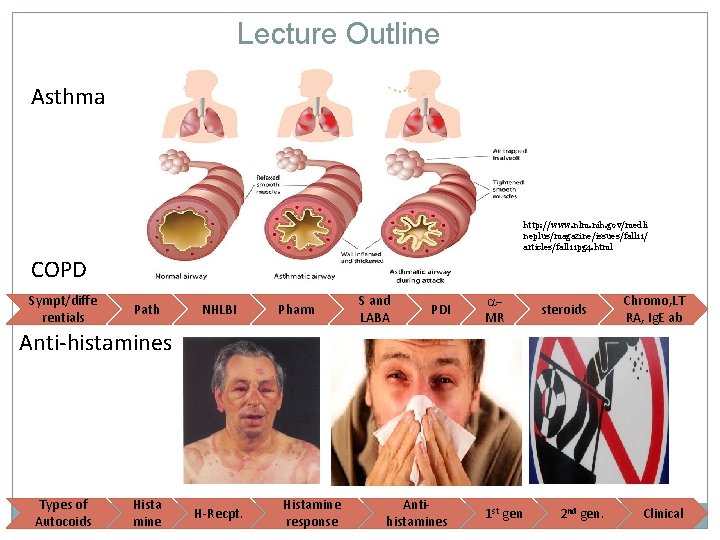
Lecture Outline Asthma http: //www. nlm. nih. gov/medli neplus/magazine/issues/fall 11/ articles/fall 11 pg 4. html COPD Sympt/diffe rentials Path NHLBI Pharm S and LABA PDI a. MR steroids Chromo, LT RA, Ig. E ab Anti-histamines Types of Autocoids Asthma Hista mine H-Recpt. Histamine response 2 Antihistamines 1 st gen 2 nd gen. Clinical
Asthma: Signs Symptoms and Differentials 3 Cough Dyspnea Asthma MC Hx C LC PE MC • Dyspnea with Exertion • Wheeze • Age < 40 • Cough reduced with beta agonist • Acute Dyspnea (lasting minutes to hours) C • Perfumes/Odors/Pollens Trigger Dyspnea • Nocturnal Episodes of Dyspnea • Family Hx of Respiratory Dx Hx • Tobacco Use • Orthopnea • Dyspnea at Rest • Intermittent Episodes of Dyspnea • Wheezes • Tachypnea • Tachycardia Sympt/diffe Asthma rentials Path NHLBI PE Pharm S and LABA PDI a. MR • Cough reduced with beta agonist • Age < 20 • Cough associated with seasonal changes • Cough lasting minutes to hours • Cough associated with exercise • Cough associated with nighttime • Family history of cough • Cough worse while supine • Recurrent episodes of URI/cough • Nasal drip LC • History of allergies • Cough associated with use of NSAIDS • Occupational exposure to toxins, fumes, etc • Cough lasting days MC • Wheezes • Tachypnea steroids Chromo, LT RA, Ig. E ab
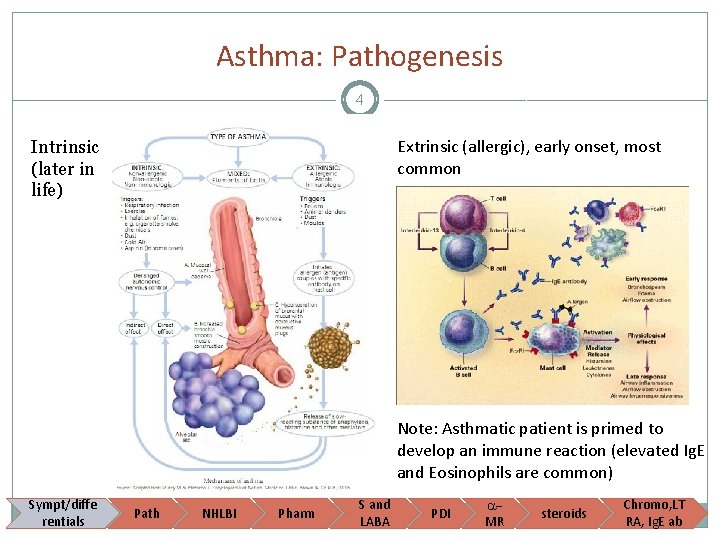
Asthma: Pathogenesis 4 Extrinsic (allergic), early onset, most common Intrinsic (later in life) Note: Asthmatic patient is primed to develop an immune reaction (elevated Ig. E and Eosinophils are common) Sympt/diffe Asthma rentials Path NHLBI Pharm S and LABA PDI a. MR steroids Chromo, LT RA, Ig. E ab
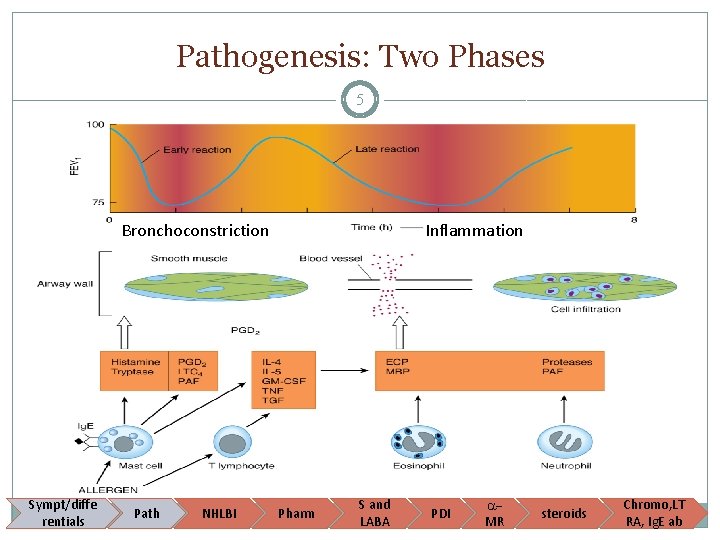
Pathogenesis: Two Phases 5 Bronchoconstriction Sympt/diffe Asthma rentials Path NHLBI Inflammation Pharm S and LABA PDI a. MR steroids Chromo, LT RA, Ig. E ab
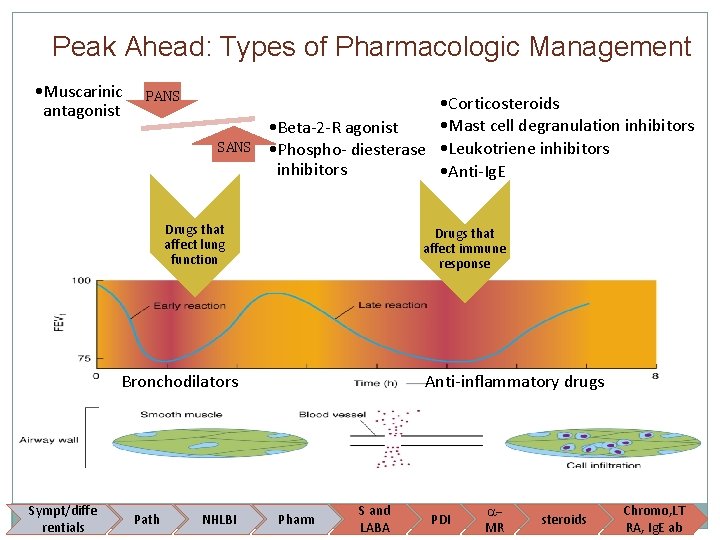
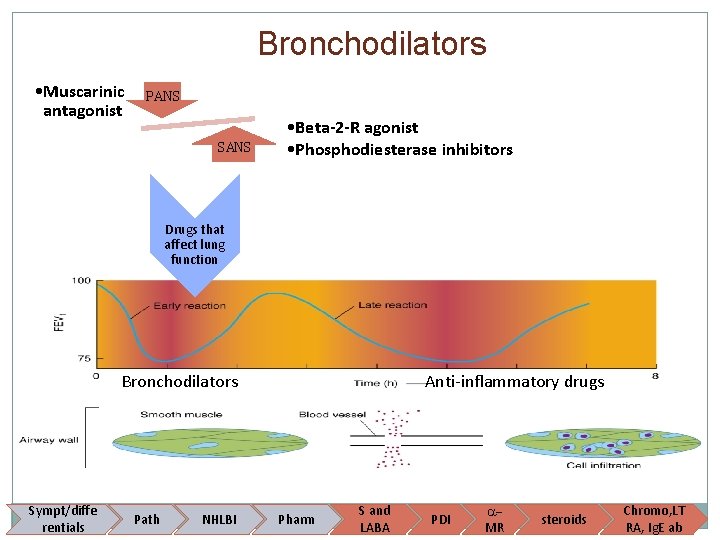
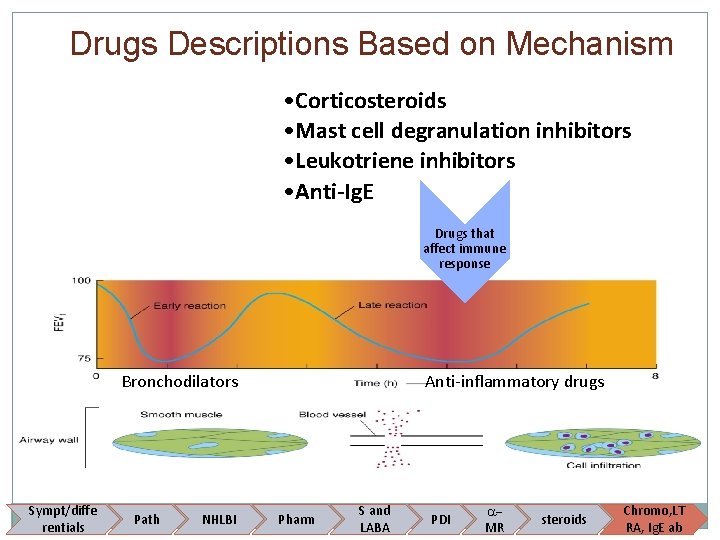
Peak Ahead: Types of Pharmacologic Management • Muscarinic antagonist PANS SANS • Corticosteroids • Mast cell degranulation inhibitors • Beta-2 -R agonist • Phospho- diesterase • Leukotriene inhibitors • Anti-Ig. E Drugs that affect lung function Drugs that affect immune response Bronchodilators Sympt/diffe Asthma rentials Path NHLBI Anti-inflammatory drugs Pharm 6 S and LABA PDI a. MR steroids Chromo, LT RA, Ig. E ab
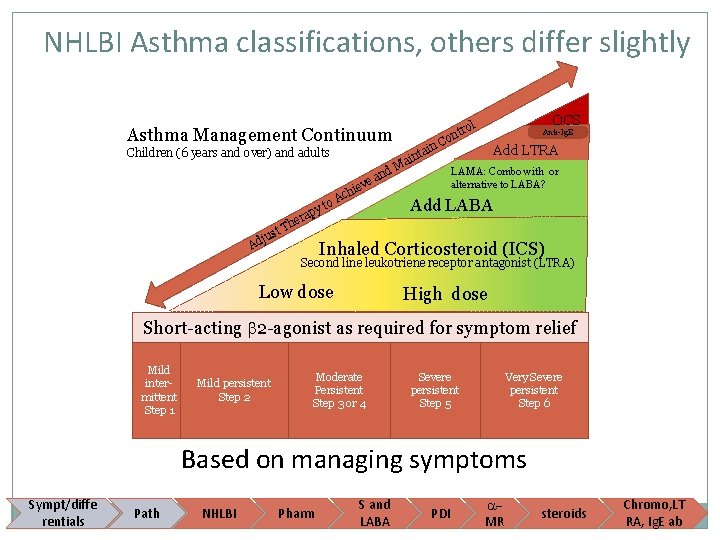
NHLBI Asthma classifications, others differ slightly Asthma Management Continuum d M o A t py ra he Anti-Ig. E n C tai ain Children (6 years and over) and adults n e a v e chi OCS l tro on Add LTRA LAMA: Combo with or alternative to LABA? Add LABA t T A s dju Inhaled Corticosteroid (ICS) Second line leukotriene receptor antagonist (LTRA) Low dose High dose Short-acting 2 -agonist as required for symptom relief Mild intermittent Step 1 Mild persistent Step 2 Moderate Persistent Step 3 or 4 Severe persistent Step 5 Very Severe persistent Step 6 Based on managing symptoms Sympt/diffe Asthma rentials Path NHLBI Pharm S and 7 LABA PDI a. MR steroids Chromo, LT RA, Ig. E ab
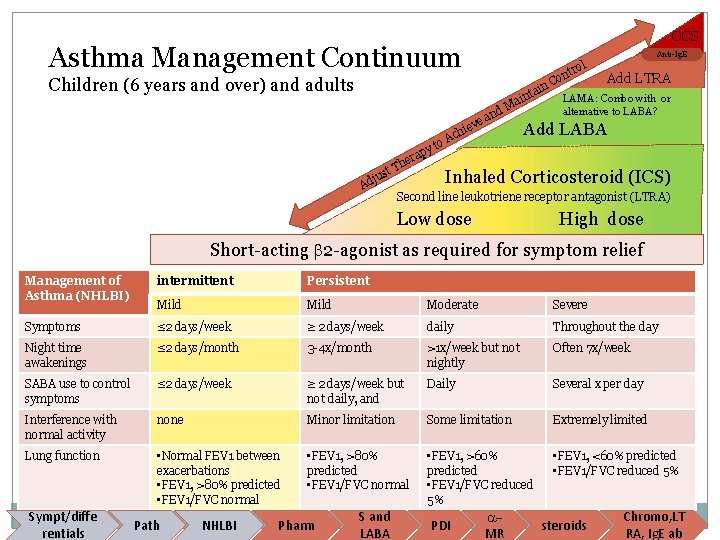
OCS Asthma Management Continuum l tro n Children (6 years and over) and adults Co ain int a d M an ve hie Ac to Anti-Ig. E Add LTRA LAMA: Combo with or alternative to LABA? Add LABA py ra he t T A s dju Inhaled Corticosteroid (ICS) Second line leukotriene receptor antagonist (LTRA) Low dose High dose Short-acting 2 -agonist as required for symptom relief Management of Asthma (NHLBI) intermittent Persistent Mild Moderate Severe Symptoms ≤ 2 days/week ≥ 2 days/week daily Throughout the day Night time awakenings ≤ 2 days/month 3 -4 x/month >1 x/week but not nightly Often 7 x/week SABA use to control symptoms ≤ 2 days/week ≥ 2 days/week but not daily, and Daily Several x per day Interference with normal activity none Minor limitation Some limitation Extremely limited Lung function • Normal FEV 1 between exacerbations • FEV 1, >80% predicted • FEV 1/FVC normal • FEV 1, >60% predicted • FEV 1/FVC reduced 5% • FEV 1, <60% predicted • FEV 1/FVC reduced 5% Sympt/diffe Asthma rentials Path NHLBI Pharm S and 8 LABA PDI a. MR steroids Chromo, LT RA, Ig. E ab
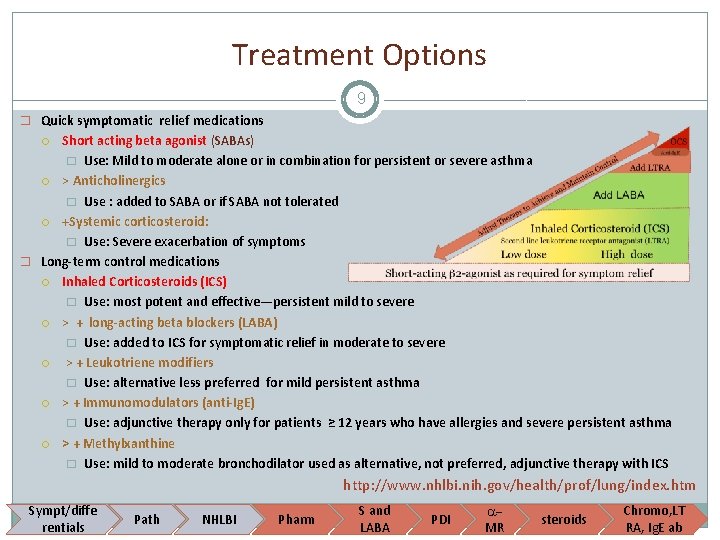
Treatment Options 9 � Quick symptomatic relief medications Short acting beta agonist (SABAs) � Use: Mild to moderate alone or in combination for persistent or severe asthma > Anticholinergics � Use : added to SABA or if SABA not tolerated +Systemic corticosteroid: � Use: Severe exacerbation of symptoms � Long-term control medications Inhaled Corticosteroids (ICS) � Use: most potent and effective—persistent mild to severe > + long-acting beta blockers (LABA) � Use: added to ICS for symptomatic relief in moderate to severe > + Leukotriene modifiers � Use: alternative less preferred for mild persistent asthma > + Immunomodulators (anti-Ig. E) � Use: adjunctive therapy only for patients ≥ 12 years who have allergies and severe persistent asthma > + Methylxanthine � Use: mild to moderate bronchodilator used as alternative, not preferred, adjunctive therapy with ICS http: //www. nhlbi. nih. gov/health/prof/lung/index. htm Sympt/diffe Asthma rentials Path NHLBI Pharm S and LABA PDI a. MR steroids Chromo, LT RA, Ig. E ab
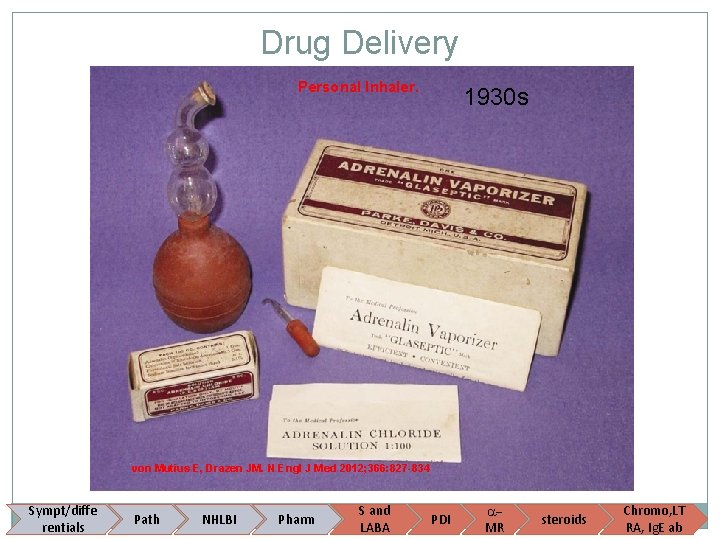
Drug Delivery Personal Inhaler. 1930 s von Mutius E, Drazen JM. N Engl J Med 2012; 366: 827 -834 Sympt/diffe rentials Path NHLBI Pharm S and LABA PDI a. MR steroids Chromo, LT RA, Ig. E ab
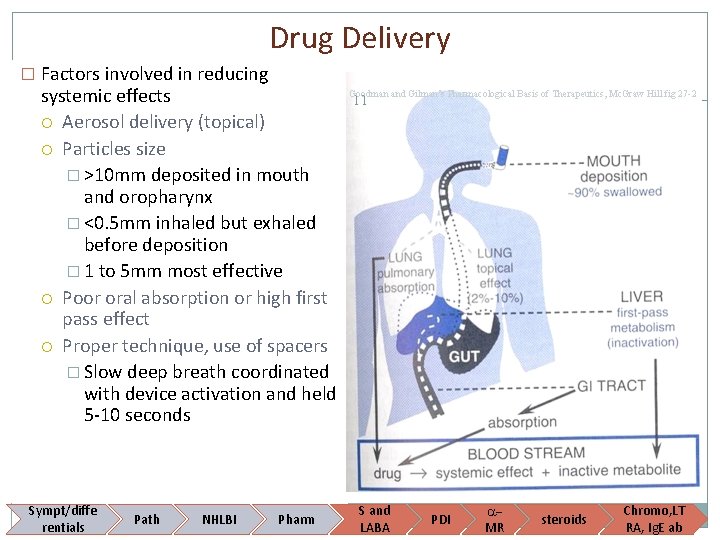
Drug Delivery � Factors involved in reducing systemic effects Aerosol delivery (topical) Particles size � >10 mm deposited in mouth and oropharynx � <0. 5 mm inhaled but exhaled before deposition � 1 to 5 mm most effective Poor oral absorption or high first pass effect Proper technique, use of spacers � Slow deep breath coordinated with device activation and held 5 -10 seconds Sympt/diffe Asthma rentials Path NHLBI Pharm Goodman and Gilman’s Pharmacological Basis of Therapeutics, Mc. Graw Hill fig 27 -2 11 S and LABA PDI a. MR steroids Chromo, LT RA, Ig. E ab
Bronchodilators • Muscarinic antagonist PANS SANS • Beta-2 -R agonist • Phosphodiesterase inhibitors Drugs that affect lung function Bronchodilators Sympt/diffe Asthma rentials Path NHLBI Anti-inflammatory drugs Pharm S and 12 LABA PDI a. MR steroids Chromo, LT RA, Ig. E ab
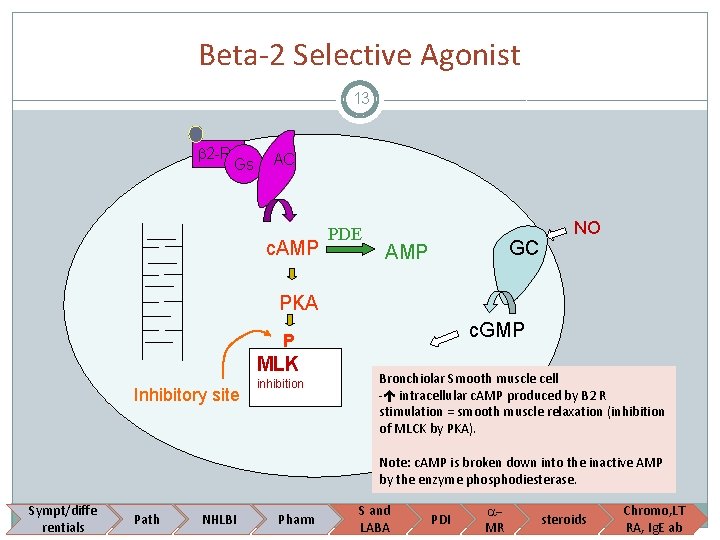
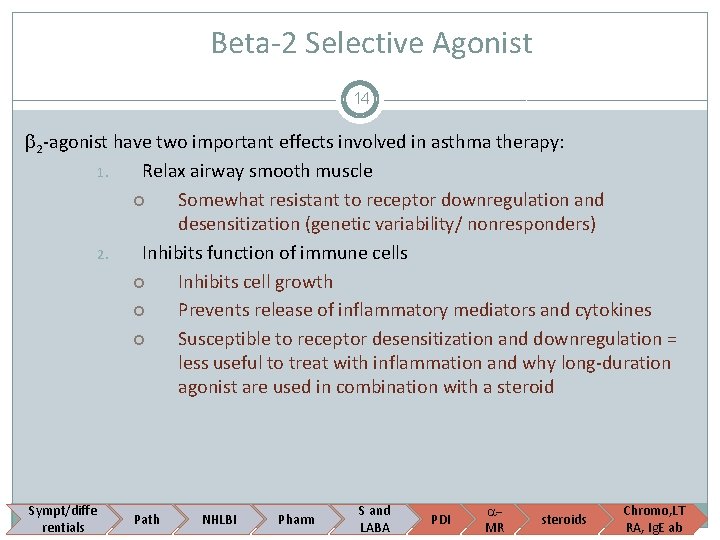
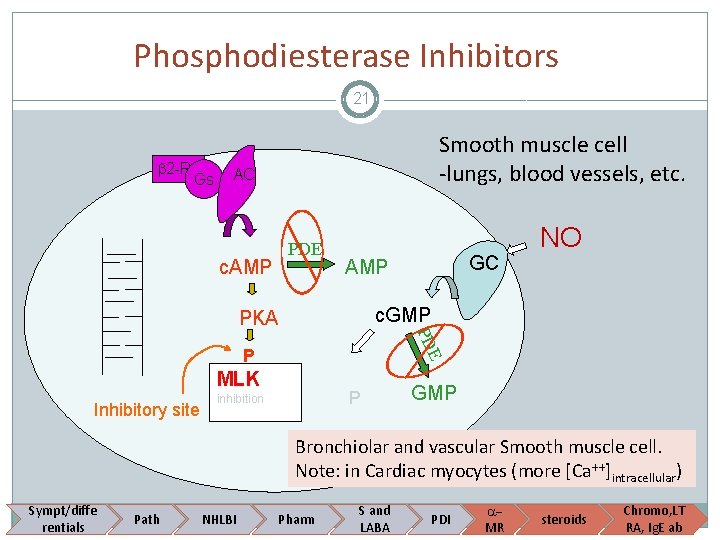
Beta-2 Selective Agonist 13 2 -R Gs AC c. AMP PDE GC AMP NO PKA c. GMP P MLK Inhibitory site inhibition Bronchiolar Smooth muscle cell - intracellular c. AMP produced by B 2 R stimulation = smooth muscle relaxation (inhibition of MLCK by PKA). Note: c. AMP is broken down into the inactive AMP by the enzyme phosphodiesterase. Sympt/diffe Asthma rentials Path NHLBI Pharm S and LABA PDI a. MR steroids Chromo, LT RA, Ig. E ab
Beta-2 Selective Agonist 14 2 -agonist have two important effects involved in asthma therapy: 1. Relax airway smooth muscle Somewhat resistant to receptor downregulation and desensitization (genetic variability/ nonresponders) 2. Inhibits function of immune cells Inhibits cell growth Prevents release of inflammatory mediators and cytokines Susceptible to receptor desensitization and downregulation = less useful to treat with inflammation and why long-duration agonist are used in combination with a steroid Sympt/diffe Asthma rentials Path NHLBI Pharm S and LABA PDI a. MR steroids Chromo, LT RA, Ig. E ab
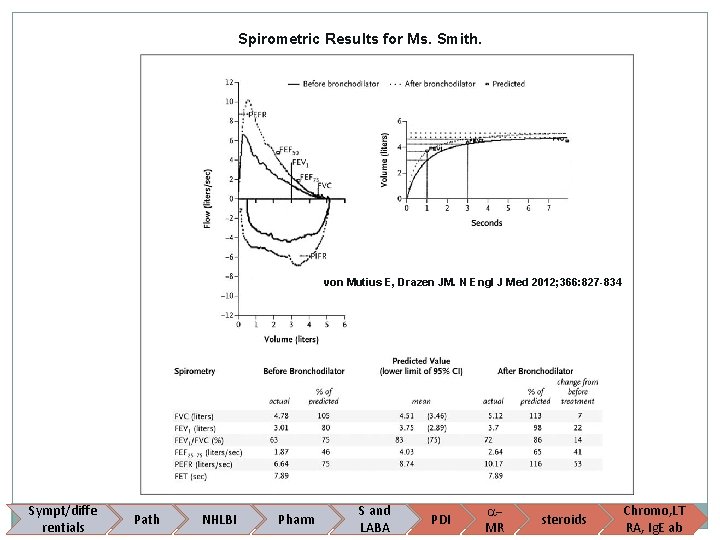
Spirometric Results for Ms. Smith. von Mutius E, Drazen JM. N Engl J Med 2012; 366: 827 -834 Sympt/diffe rentials Path NHLBI Pharm S and LABA PDI a. MR steroids Chromo, LT RA, Ig. E ab
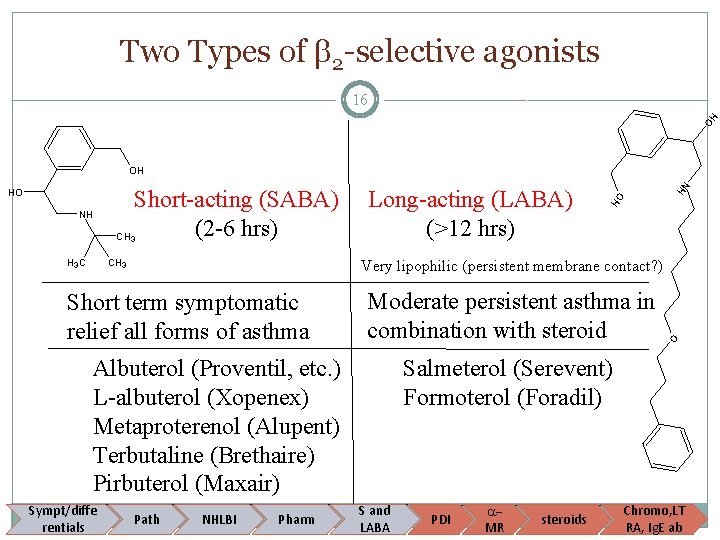
Two Types of 2 -selective agonists OH 16 3 H 3 C CH 3 Long-acting (LABA) (>12 hrs) Very lipophilic (persistent membrane contact? ) Short term symptomatic relief all forms of asthma Moderate persistent asthma in combination with steroid Albuterol (Proventil, etc. ) L-albuterol (Xopenex) Metaproterenol (Alupent) Terbutaline (Brethaire) Pirbuterol (Maxair) Sympt/diffe Asthma rentials Path NHLBI Pharm O NH HO Short-acting (SABA) (2 -6 hrs) CH HO HN OH Salmeterol (Serevent) Formoterol (Foradil) S and LABA PDI a. MR steroids Chromo, LT RA, Ig. E ab
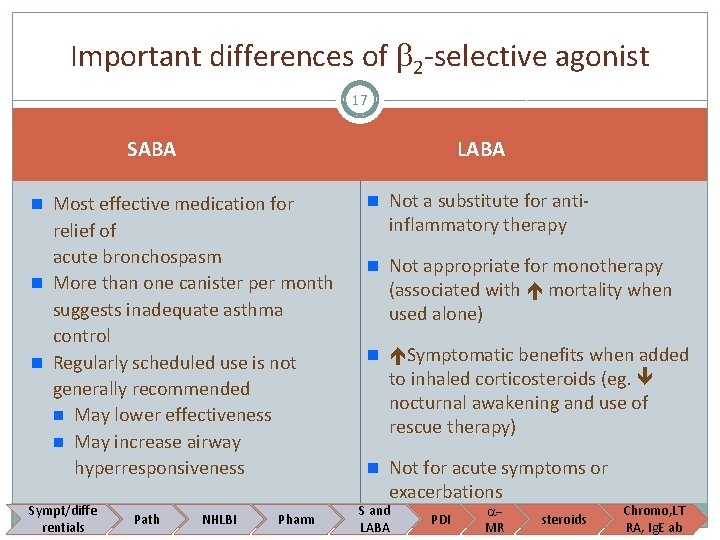
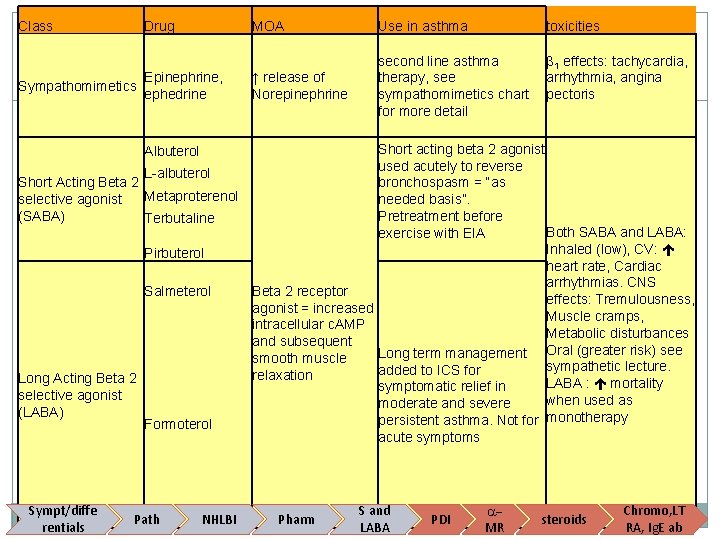
Important differences of 2 -selective agonist 17 LABA SABA n Most effective medication for relief of acute bronchospasm n More than one canister per month suggests inadequate asthma control n Regularly scheduled use is not generally recommended n May lower effectiveness n May increase airway hyperresponsiveness Sympt/diffe Asthma rentials Path NHLBI Pharm n Not a substitute for anti- inflammatory therapy n Not appropriate for monotherapy (associated with mortality when used alone) n Symptomatic benefits when added to inhaled corticosteroids (eg. nocturnal awakening and use of rescue therapy) n Not for acute symptoms or exacerbations S and LABA PDI a. MR steroids Chromo, LT RA, Ig. E ab
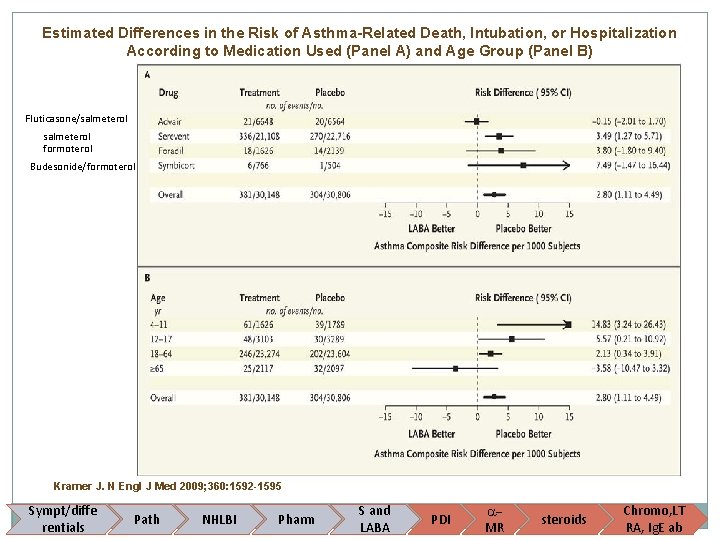
Estimated Differences in the Risk of Asthma-Related Death, Intubation, or Hospitalization According to Medication Used (Panel A) and Age Group (Panel B) Fluticasone/salmeterol formoterol Budesonide/formoterol Kramer J. N Engl J Med 2009; 360: 1592 -1595 Sympt/diffe Asthma rentials Path NHLBI Pharm S and 18 LABA PDI a. MR steroids Chromo, LT RA, Ig. E ab
Class Drug MOA Use in asthma toxicities second line asthma effects: tachycardia, Sympathetic Bronchodilators therapy, see arrhythmia, angina Epinephrine, ↑ release of 1 Sympathomimetics ephedrine Norepinephrine 19 sympathomimetics chart for more detail pectoris Short acting beta 2 agonist used acutely to reverse L-albuterol Short Acting Beta 2 bronchospasm = “as Metaproterenol selective agonist needed basis”. (SABA) Pretreatment before Terbutaline Both SABA and LABA: exercise with EIA Inhaled (low), CV: Pirbuterol heart rate, Cardiac arrhythmias. CNS Salmeterol Beta 2 receptor effects: Tremulousness, agonist = increased Muscle cramps, intracellular c. AMP Metabolic disturbances and subsequent Long term management Oral (greater risk) see smooth muscle sympathetic lecture. added to ICS for relaxation Long Acting Beta 2 LABA : mortality symptomatic relief in selective agonist when used as moderate and severe (LABA) persistent asthma. Not for monotherapy Formoterol acute symptoms Albuterol Sympt/diffe Asthma rentials Path NHLBI Pharm S and LABA PDI a. MR steroids Chromo, LT RA, Ig. E ab
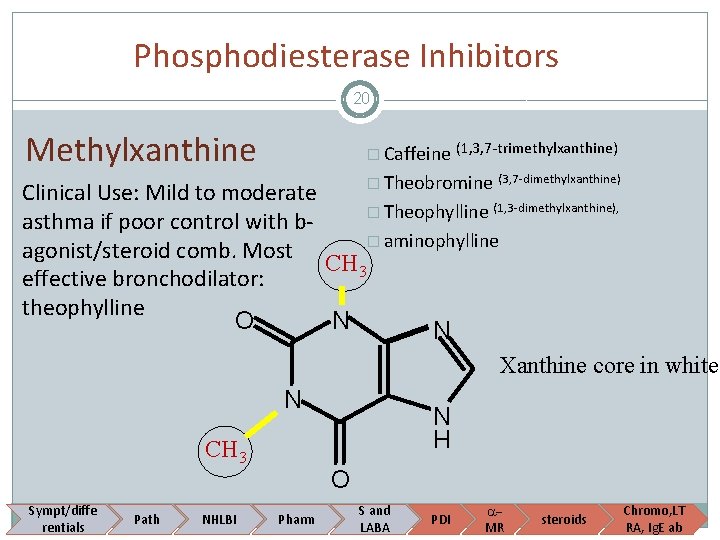
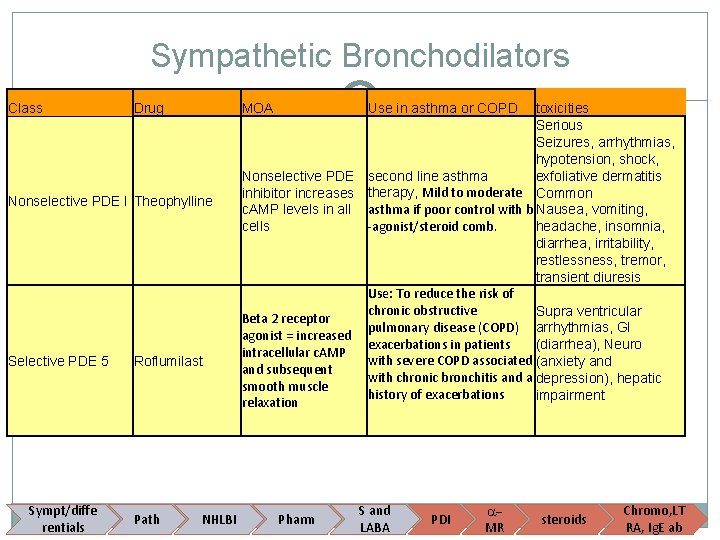
Phosphodiesterase Inhibitors 20 Methylxanthine � Caffeine (1, 3, 7 -trimethylxanthine) � Theobromine (3, 7 -dimethylxanthine) Clinical Use: Mild to moderate � Theophylline (1, 3 -dimethylxanthine), asthma if poor control with b� aminophylline agonist/steroid comb. Most CH 3 effective bronchodilator: theophylline O N N Xanthine core in white N CH 3 Sympt/diffe Asthma rentials Path NHLBI N H O Pharm S and LABA PDI a. MR steroids Chromo, LT RA, Ig. E ab
Phosphodiesterase Inhibitors 21 2 -R Gs Smooth muscle cell -lungs, blood vessels, etc. AC PDE c. AMP c. GMP PKA E PD P MLK Inhibitory site GC AMP NO P inhibition GMP Bronchiolar and vascular Smooth muscle cell. Note: in Cardiac myocytes (more [Ca++]intracellular) Sympt/diffe Asthma rentials Path NHLBI Pharm S and LABA PDI a. MR steroids Chromo, LT RA, Ig. E ab
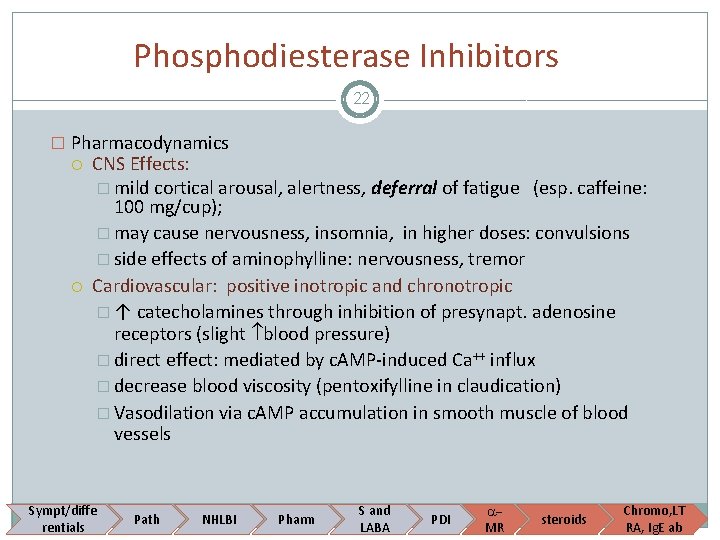
Phosphodiesterase Inhibitors 22 � Pharmacodynamics CNS Effects: � mild cortical arousal, alertness, deferral of fatigue (esp. caffeine: 100 mg/cup); � may cause nervousness, insomnia, in higher doses: convulsions � side effects of aminophylline: nervousness, tremor Cardiovascular: positive inotropic and chronotropic � ↑ catecholamines through inhibition of presynapt. adenosine receptors (slight blood pressure) � direct effect: mediated by c. AMP-induced Ca++ influx � decrease blood viscosity (pentoxifylline in claudication) � Vasodilation via c. AMP accumulation in smooth muscle of blood vessels Sympt/diffe Asthma rentials Path NHLBI Pharm S and LABA PDI a. MR steroids Chromo, LT RA, Ig. E ab
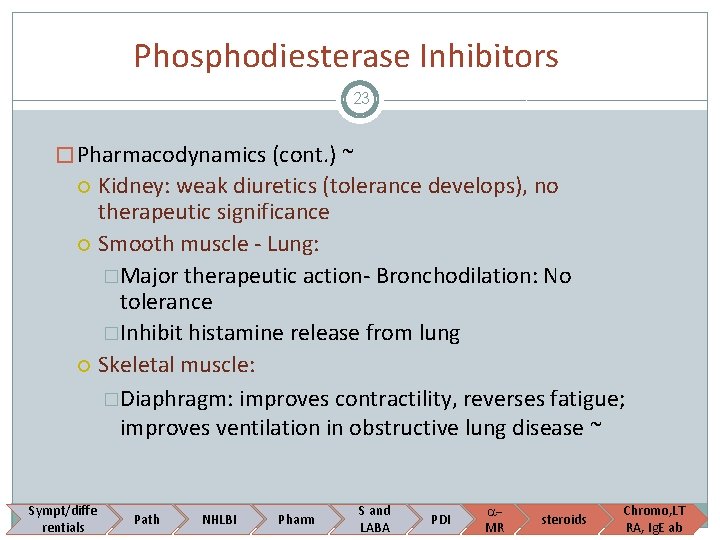
Phosphodiesterase Inhibitors 23 � Pharmacodynamics (cont. ) ~ Kidney: weak diuretics (tolerance develops), no therapeutic significance Smooth muscle - Lung: �Major therapeutic action- Bronchodilation: No tolerance �Inhibit histamine release from lung Skeletal muscle: �Diaphragm: improves contractility, reverses fatigue; improves ventilation in obstructive lung disease ~ Sympt/diffe Asthma rentials Path NHLBI Pharm S and LABA PDI a. MR steroids Chromo, LT RA, Ig. E ab
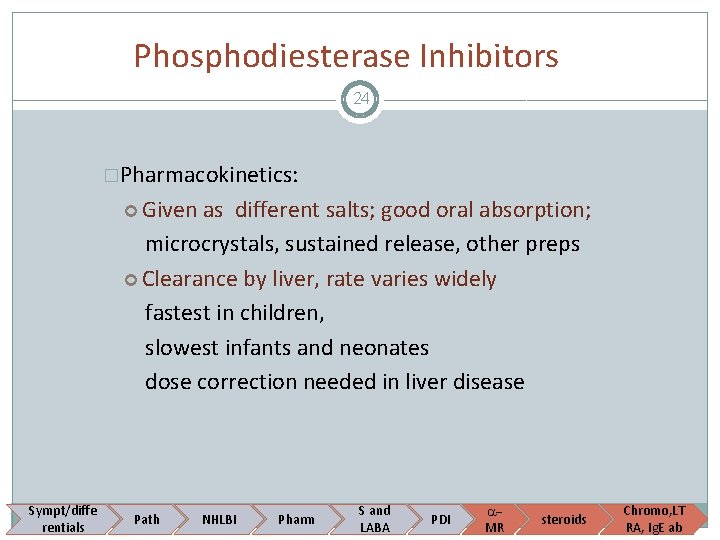
Phosphodiesterase Inhibitors 24 �Pharmacokinetics: Given as different salts; good oral absorption; microcrystals, sustained release, other preps Clearance by liver, rate varies widely fastest in children, slowest infants and neonates dose correction needed in liver disease Sympt/diffe Asthma rentials Path NHLBI Pharm S and LABA PDI a. MR steroids Chromo, LT RA, Ig. E ab
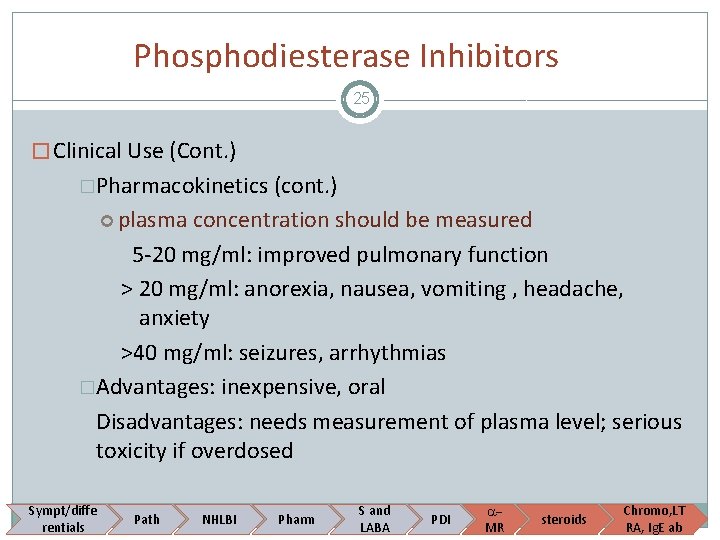
Phosphodiesterase Inhibitors 25 � Clinical Use (Cont. ) �Pharmacokinetics (cont. ) plasma concentration should be measured 5 -20 mg/ml: improved pulmonary function > 20 mg/ml: anorexia, nausea, vomiting , headache, anxiety >40 mg/ml: seizures, arrhythmias �Advantages: inexpensive, oral Disadvantages: needs measurement of plasma level; serious toxicity if overdosed Sympt/diffe Asthma rentials Path NHLBI Pharm S and LABA PDI a. MR steroids Chromo, LT RA, Ig. E ab
Sympathetic Bronchodilators Class Drug Nonselective PDE I Theophylline Selective PDE 5 Sympt/diffe Asthma rentials Roflumilast Path 26 MOA NHLBI Use in asthma or COPD toxicities Serious Seizures, arrhythmias, hypotension, shock, Nonselective PDE second line asthma exfoliative dermatitis inhibitor increases therapy, Mild to moderate Common c. AMP levels in all asthma if poor control with b Nausea, vomiting, -agonist/steroid comb. cells headache, insomnia, diarrhea, irritability, restlessness, tremor, transient diuresis Use: To reduce the risk of chronic obstructive Supra ventricular Beta 2 receptor pulmonary disease (COPD) arrhythmias, GI agonist = increased exacerbations in patients (diarrhea), Neuro intracellular c. AMP with severe COPD associated (anxiety and subsequent with chronic bronchitis and a depression), hepatic smooth muscle history of exacerbations impairment relaxation Pharm S and LABA PDI a. MR steroids Chromo, LT RA, Ig. E ab
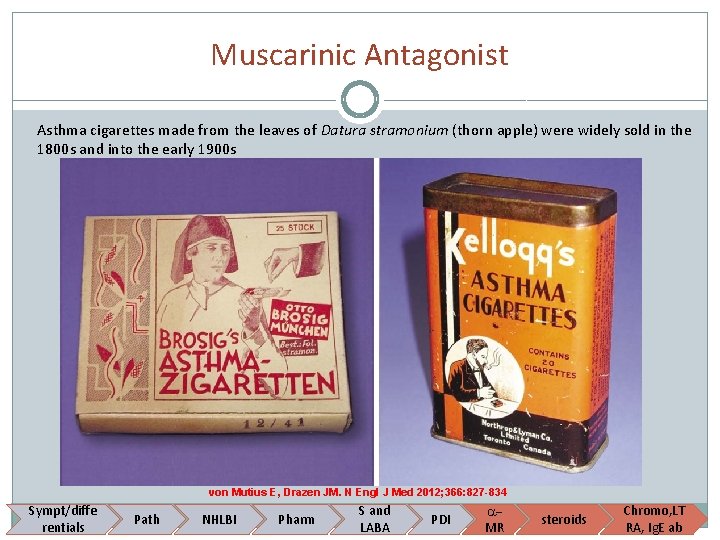
Muscarinic Antagonist Asthma cigarettes made from the leaves of Datura stramonium (thorn apple) were widely sold in the 1800 s and into the early 1900 s von Mutius E, Drazen JM. N Engl J Med 2012; 366: 827 -834 Sympt/diffe rentials Path NHLBI Pharm S and LABA PDI a. MR steroids Chromo, LT RA, Ig. E ab
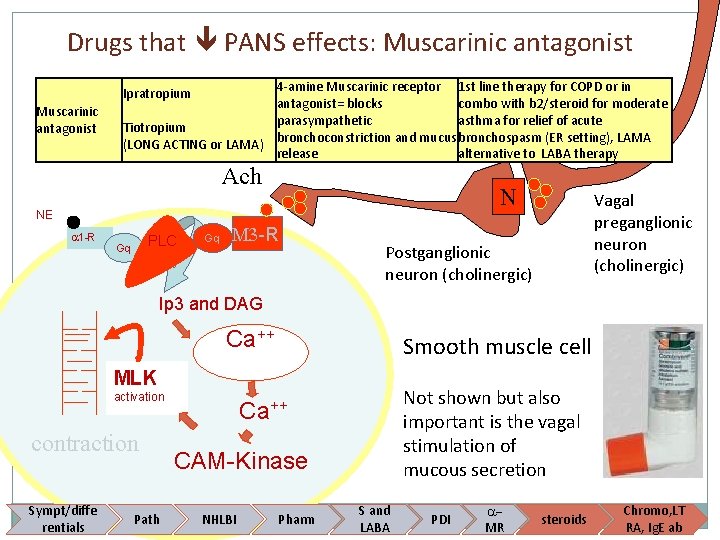
Drugs that PANS effects: Muscarinic antagonist 4 -amine Muscarinic receptor 1 st line therapy for COPD or in antagonist= blocks combo with b 2/steroid for moderate parasympathetic asthma for relief of acute Tiotropium bronchoconstriction and mucus bronchospasm (ER setting), LAMA (LONG ACTING or LAMA) release alternative to LABA therapy Ipratropium Muscarinic antagonist Ach N NE a 1 -R PLC Gq Gq M 3 -R Vagal preganglionic neuron (cholinergic) Postganglionic neuron (cholinergic) Ip 3 and DAG Ca++ Smooth muscle cell MLK activation contraction Sympt/diffe Asthma rentials Path Not shown but also important is the vagal stimulation of mucous secretion Ca++ CAM-Kinase NHLBI Pharm S and 28 LABA PDI a. MR steroids Chromo, LT RA, Ig. E ab
Drugs Descriptions Based on Mechanism • Corticosteroids • Mast cell degranulation inhibitors • Leukotriene inhibitors • Anti-Ig. E Drugs that affect immune response Bronchodilators Sympt/diffe Asthma rentials Path NHLBI Anti-inflammatory drugs Pharm S and 29 LABA PDI a. MR steroids Chromo, LT RA, Ig. E ab
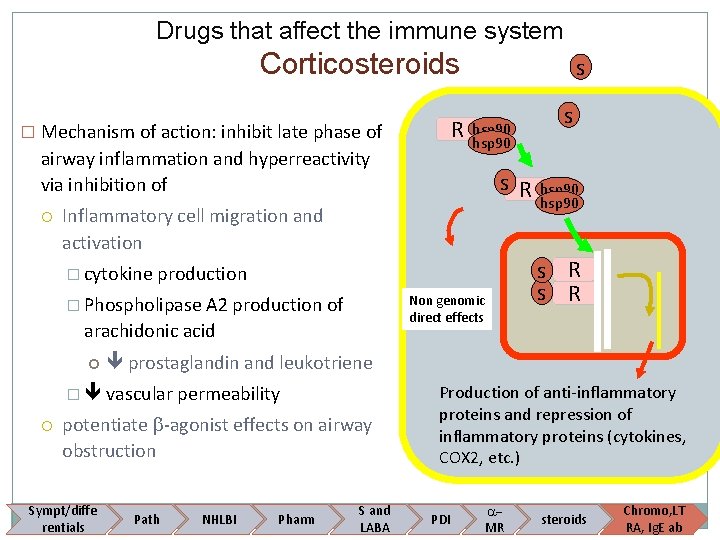
Drugs that affect the immune system Corticosteroids R � Mechanism of action: inhibit late phase of airway inflammation and hyperreactivity via inhibition of s hsp 90 s. R Inflammatory cell migration and activation Non genomic direct effects arachidonic acid prostaglandin and leukotriene � vascular permeability potentiate -agonist effects on airway obstruction Sympt/diffe Asthma rentials hsp 90 s R � cytokine production � Phospholipase A 2 production of s Path NHLBI Pharm S and 30 LABA Production of anti-inflammatory proteins and repression of inflammatory proteins (cytokines, COX 2, etc. ) PDI a. MR steroids Chromo, LT RA, Ig. E ab
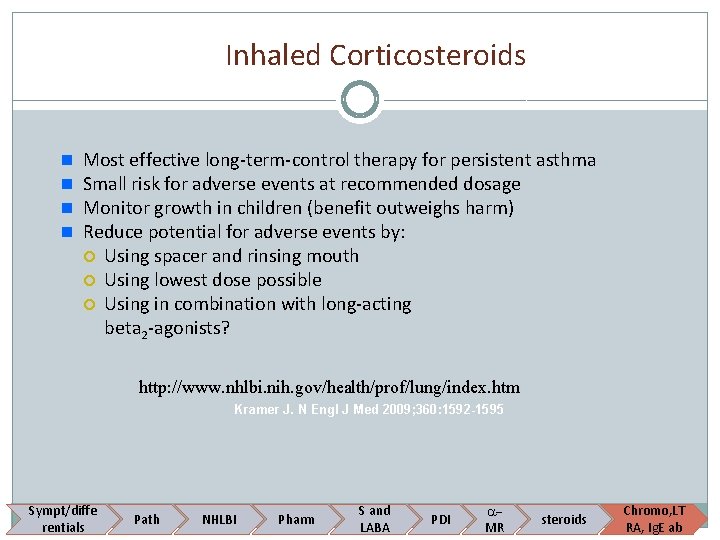
Inhaled Corticosteroids n n Most effective long-term-control therapy for persistent asthma Small risk for adverse events at recommended dosage Monitor growth in children (benefit outweighs harm) Reduce potential for adverse events by: Using spacer and rinsing mouth Using lowest dose possible Using in combination with long-acting beta 2 -agonists? http: //www. nhlbi. nih. gov/health/prof/lung/index. htm Kramer J. N Engl J Med 2009; 360: 1592 -1595 Sympt/diffe rentials Path NHLBI Pharm S and LABA PDI a. MR steroids Chromo, LT RA, Ig. E ab
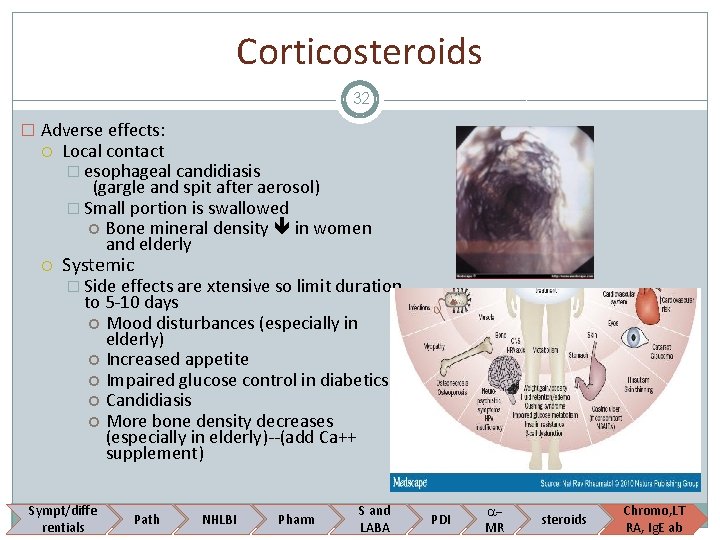
Corticosteroids 32 � Adverse effects: Local contact � esophageal candidiasis (gargle and spit after aerosol) � Small portion is swallowed Bone mineral density in women and elderly Systemic � Side effects are xtensive so limit duration to 5 -10 days Mood disturbances (especially in elderly) Increased appetite Impaired glucose control in diabetics Candidiasis More bone density decreases (especially in elderly)--(add Ca++ supplement) Sympt/diffe Asthma rentials Path NHLBI Pharm S and LABA PDI a. MR steroids Chromo, LT RA, Ig. E ab
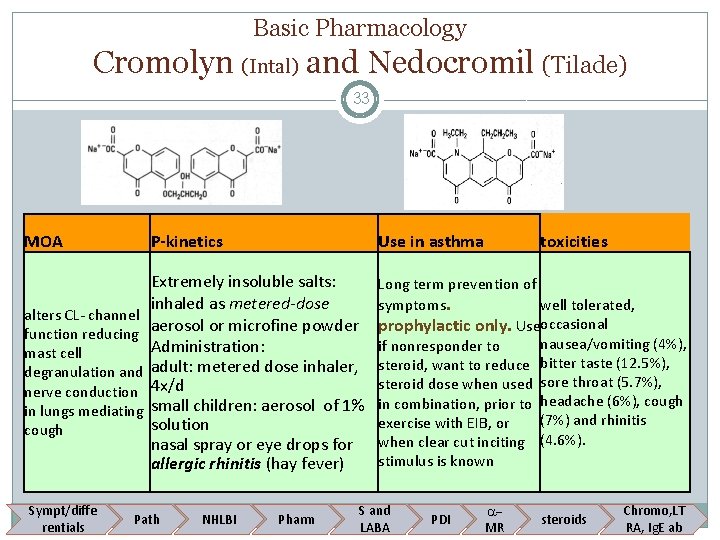
Basic Pharmacology Cromolyn (Intal) and Nedocromil (Tilade) 33 MOA P-kinetics Use in asthma alters CL- channel function reducing mast cell degranulation and nerve conduction in lungs mediating cough Extremely insoluble salts: inhaled as metered-dose aerosol or microfine powder Administration: adult: metered dose inhaler, 4 x/d small children: aerosol of 1% solution nasal spray or eye drops for allergic rhinitis (hay fever) Long term prevention of symptoms. well tolerated, prophylactic only. Useoccasional nausea/vomiting (4%), if nonresponder to steroid, want to reduce bitter taste (12. 5%), steroid dose when used sore throat (5. 7%), in combination, prior to headache (6%), cough (7%) and rhinitis exercise with EIB, or when clear cut inciting (4. 6%). stimulus is known Sympt/diffe Asthma rentials Path NHLBI Pharm S and LABA PDI toxicities a. MR steroids Chromo, LT RA, Ig. E ab
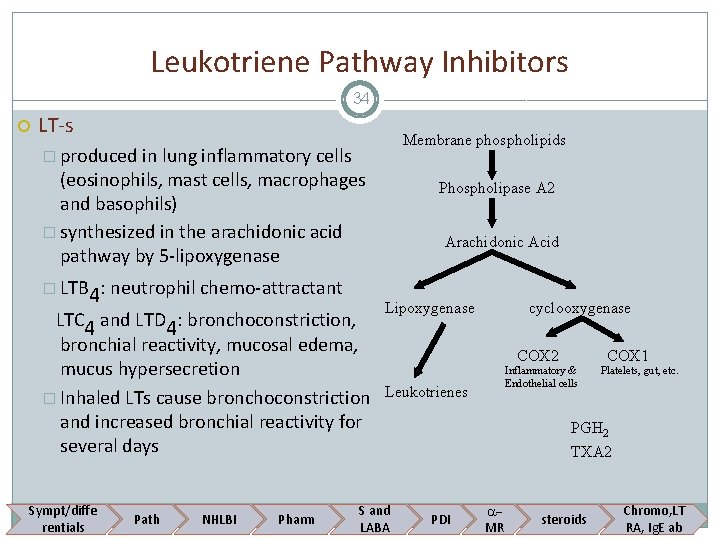
Leukotriene Pathway Inhibitors 34 LT-s Membrane phospholipids � produced in lung inflammatory cells (eosinophils, mast cells, macrophages and basophils) � synthesized in the arachidonic acid pathway by 5 -lipoxygenase � LTB 4: neutrophil chemo-attractant LTC 4 and LTD 4: bronchoconstriction, Path NHLBI Pharm Arachidonic Acid Lipoxygenase bronchial reactivity, mucosal edema, mucus hypersecretion � Inhaled LTs cause bronchoconstriction and increased bronchial reactivity for several days Sympt/diffe Asthma rentials Phospholipase A 2 cyclooxygenase COX 2 Inflammatory & Endothelial cells Leukotrienes S and LABA COX 1 Platelets, gut, etc. PGH 2 TXA 2 PDI a. MR steroids 34 Chromo, LT RA, Ig. E ab
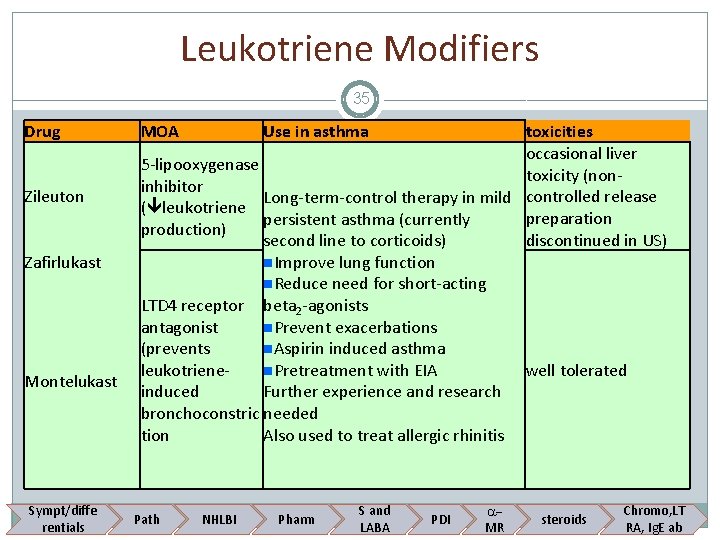
Leukotriene Modifiers 35 Drug Zileuton Zafirlukast Montelukast Sympt/diffe Asthma rentials MOA toxicities occasional liver 5 -lipooxygenase toxicity (noninhibitor Long-term-control therapy in mild controlled release ( leukotriene preparation persistent asthma (currently production) discontinued in US) second line to corticoids) n. Improve lung function n. Reduce need for short-acting LTD 4 receptor beta 2 -agonists n. Prevent exacerbations antagonist n. Aspirin induced asthma (prevents n. Pretreatment with EIA leukotrienewell tolerated Further experience and research induced bronchoconstric needed Also used to treat allergic rhinitis tion Path Use in asthma NHLBI Pharm S and LABA PDI a. MR steroids Chromo, LT RA, Ig. E ab
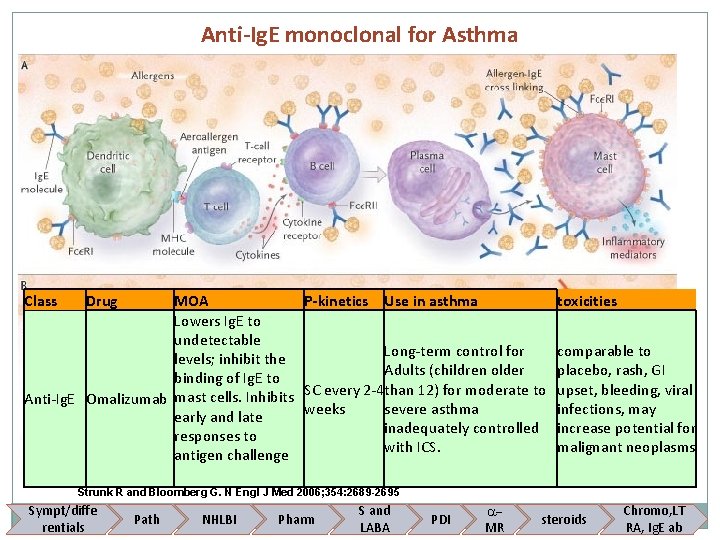
Anti-Ig. E monoclonal for Asthma Class Drug MOA P-kinetics Use in asthma Lowers Ig. E to undetectable Long-term control for levels; inhibit the Adults (children older binding of Ig. E to SC every 2 -4 than 12) for moderate to Anti-Ig. E Omalizumab mast cells. Inhibits weeks severe asthma early and late inadequately controlled responses to with ICS. antigen challenge toxicities comparable to placebo, rash, GI upset, bleeding, viral infections, may increase potential for malignant neoplasms Strunk R and Bloomberg G. N Engl J Med 2006; 354: 2689 -2695 Sympt/diffe Asthma rentials Path NHLBI Pharm S and 36 LABA PDI a. MR steroids Chromo, LT RA, Ig. E ab
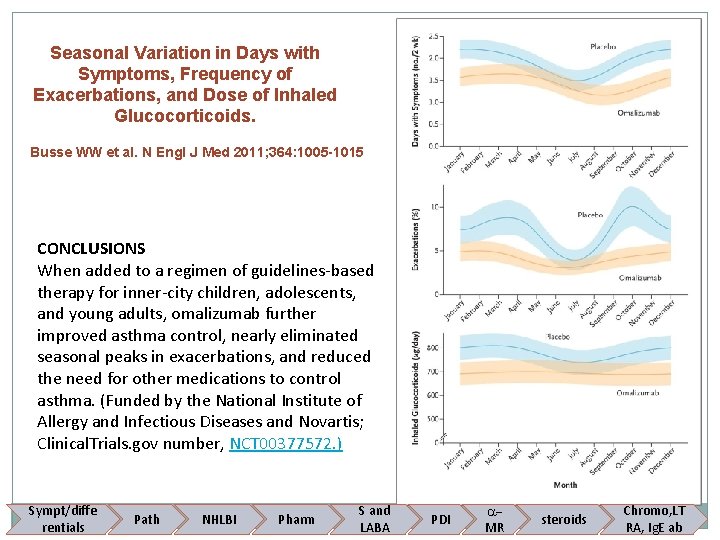
Seasonal Variation in Days with Symptoms, Frequency of Exacerbations, and Dose of Inhaled Glucocorticoids. Busse WW et al. N Engl J Med 2011; 364: 1005 -1015 CONCLUSIONS When added to a regimen of guidelines-based therapy for inner-city children, adolescents, and young adults, omalizumab further improved asthma control, nearly eliminated seasonal peaks in exacerbations, and reduced the need for other medications to control asthma. (Funded by the National Institute of Allergy and Infectious Diseases and Novartis; Clinical. Trials. gov number, NCT 00377572. ) Sympt/diffe rentials Path NHLBI Pharm S and LABA PDI a. MR steroids Chromo, LT RA, Ig. E ab
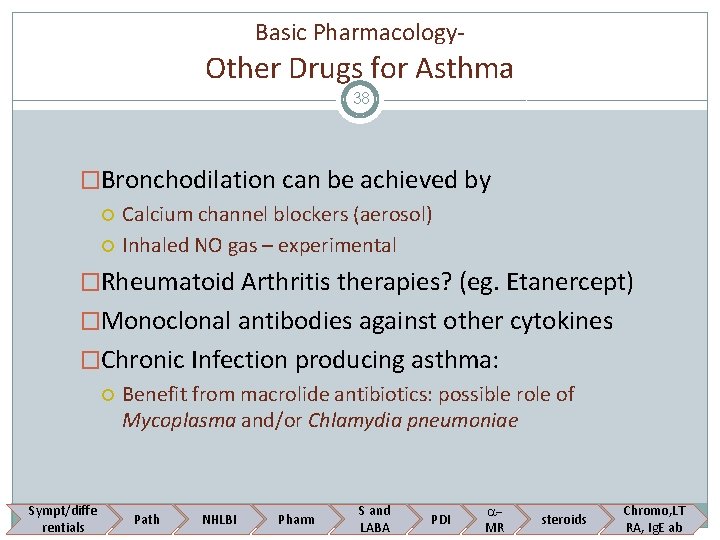
Basic Pharmacology- Other Drugs for Asthma 38 �Bronchodilation can be achieved by Calcium channel blockers (aerosol) Inhaled NO gas – experimental �Rheumatoid Arthritis therapies? (eg. Etanercept) �Monoclonal antibodies against other cytokines �Chronic Infection producing asthma: Sympt/diffe Asthma rentials Benefit from macrolide antibiotics: possible role of Mycoplasma and/or Chlamydia pneumoniae Path NHLBI Pharm S and LABA PDI a. MR steroids Chromo, LT RA, Ig. E ab
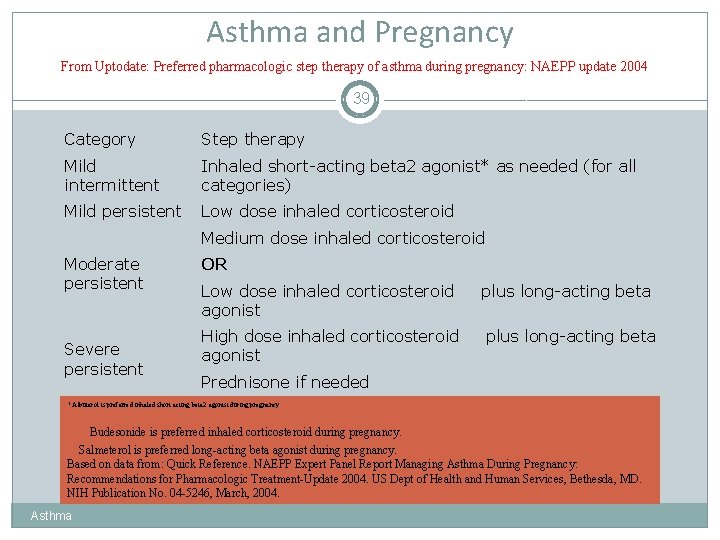
Asthma and Pregnancy From Uptodate: Preferred pharmacologic step therapy of asthma during pregnancy: NAEPP update 2004 39 Category Step therapy Mild intermittent Inhaled short-acting beta 2 agonist* as needed (for all categories) Mild persistent Low dose inhaled corticosteroid Medium dose inhaled corticosteroid Moderate persistent Severe persistent OR Low dose inhaled corticosteroid plus long-acting beta agonist High dose inhaled corticosteroid plus long-acting beta agonist Prednisone if needed * Albuterol is preferred inhaled short acting beta 2 agonist during pregnancy. Budesonide is preferred inhaled corticosteroid during pregnancy. Salmeterol is preferred long-acting beta agonist during pregnancy. Based on data from: Quick Reference. NAEPP Expert Panel Report Managing Asthma During Pregnancy: Recommendations for Pharmacologic Treatment-Update 2004. US Dept of Health and Human Services, Bethesda, MD. NIH Publication No. 04 -5246, March, 2004. Asthma
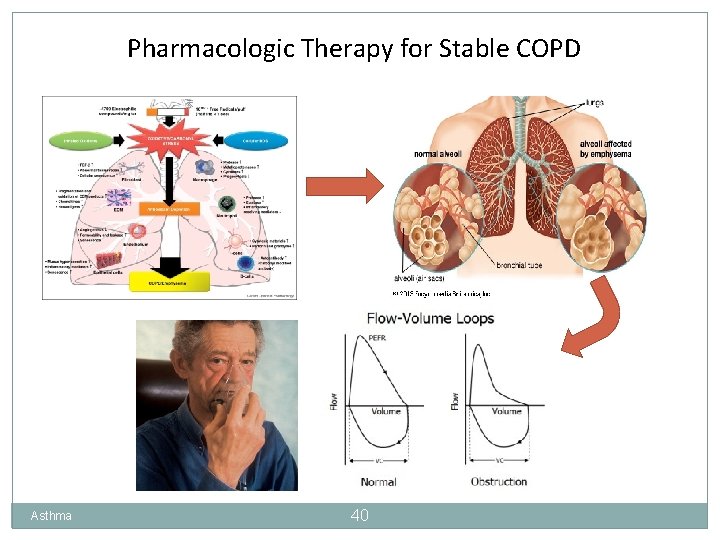
Pharmacologic Therapy for Stable COPD Asthma 40
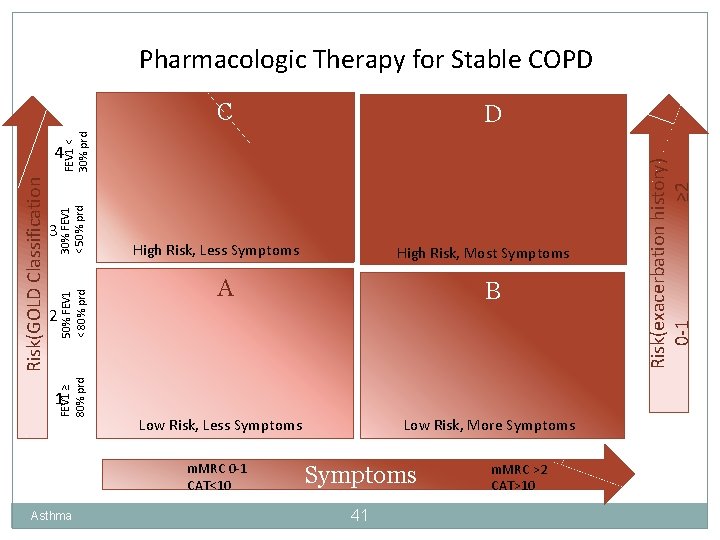
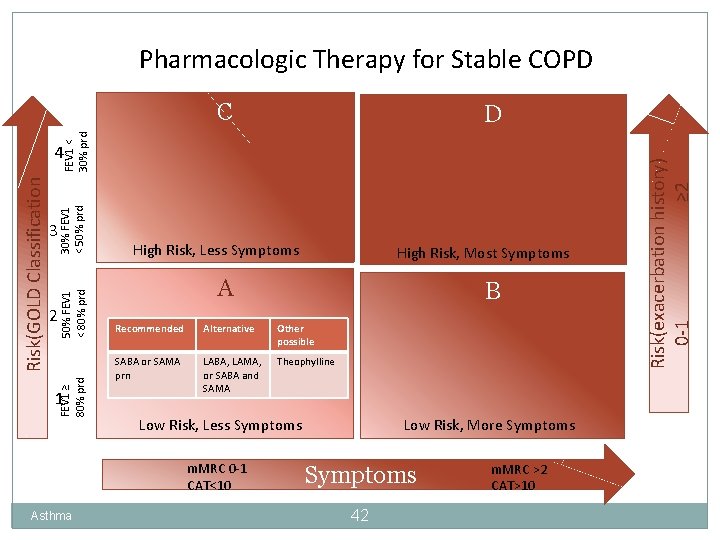
Pharmacologic Therapy for Stable COPD C 30% FEV 1 < 50% prd 2 50% FEV 1 < 80% prd 3 FEV 1 ≥ 80% prd Risk(GOLD Classification 4 High Risk, Less Symptoms High Risk, Most Symptoms A B Low Risk, Less Symptoms Low Risk, More Symptoms 1 m. MRC 0 -1 CAT<10 Asthma Symptoms 41 m. MRC >2 CAT>10 Risk(exacerbation history) 0 -1 ≥ 2 FEV 1 < 30% prd D
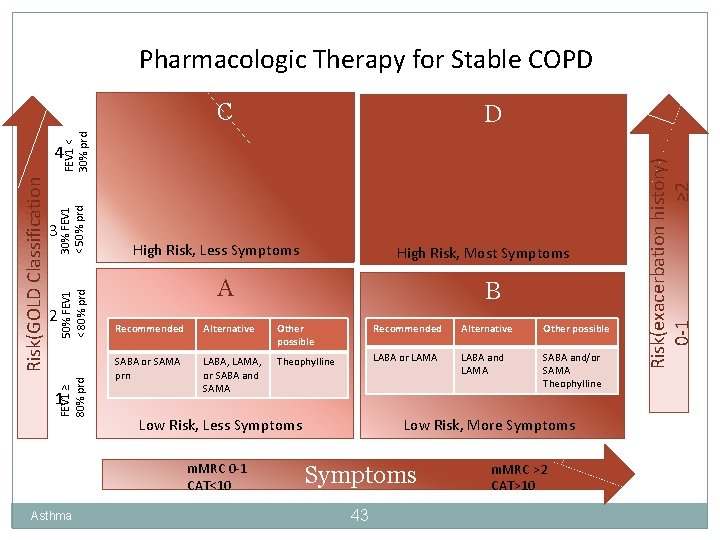
Pharmacologic Therapy for Stable COPD C 30% FEV 1 < 50% prd 2 50% FEV 1 < 80% prd 3 FEV 1 ≥ 80% prd Risk(GOLD Classification 4 1 High Risk, Less Symptoms A B Recommended Alternative Other possible SABA or SAMA prn LABA, LAMA, or SABA and SAMA Theophylline Low Risk, Less Symptoms m. MRC 0 -1 CAT<10 Asthma High Risk, Most Symptoms Low Risk, More Symptoms 42 m. MRC >2 CAT>10 Risk(exacerbation history) 0 -1 ≥ 2 FEV 1 < 30% prd D
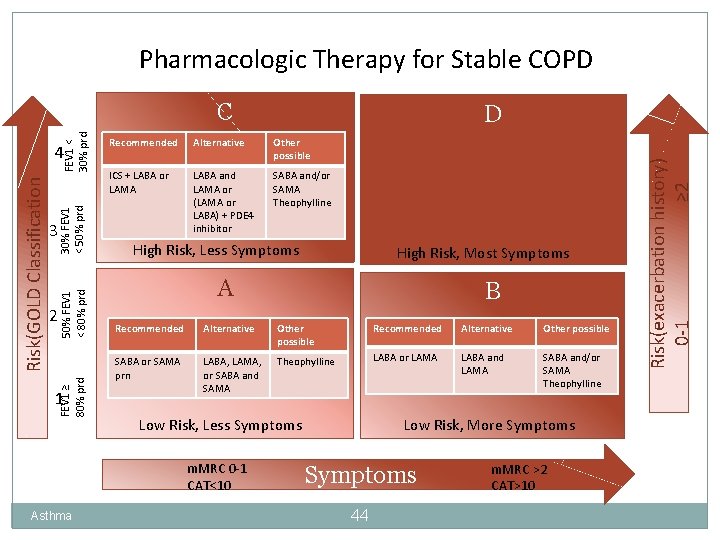
Pharmacologic Therapy for Stable COPD C 30% FEV 1 < 50% prd 2 50% FEV 1 < 80% prd 3 FEV 1 ≥ 80% prd Risk(GOLD Classification 4 1 High Risk, Less Symptoms A B Recommended Alternative Other possible SABA or SAMA prn LABA, LAMA, or SABA and SAMA Theophylline LABA or LAMA LABA and LAMA SABA and/or SAMA Theophylline Low Risk, Less Symptoms m. MRC 0 -1 CAT<10 Asthma High Risk, Most Symptoms Low Risk, More Symptoms 43 m. MRC >2 CAT>10 Risk(exacerbation history) 0 -1 ≥ 2 FEV 1 < 30% prd D
Pharmacologic Therapy for Stable COPD 30% FEV 1 < 50% prd 2 50% FEV 1 < 80% prd 3 FEV 1 ≥ 80% prd Risk(GOLD Classification 4 1 Recommended Alternative Other possible ICS + LABA or LAMA LABA and LAMA or (LAMA or LABA) + PDE 4 inhibitor SABA and/or SAMA Theophylline High Risk, Less Symptoms High Risk, Most Symptoms A B Recommended Alternative Other possible SABA or SAMA prn LABA, LAMA, or SABA and SAMA Theophylline LABA or LAMA LABA and LAMA SABA and/or SAMA Theophylline Low Risk, Less Symptoms m. MRC 0 -1 CAT<10 Asthma D Low Risk, More Symptoms 44 m. MRC >2 CAT>10 Risk(exacerbation history) 0 -1 ≥ 2 FEV 1 < 30% prd C
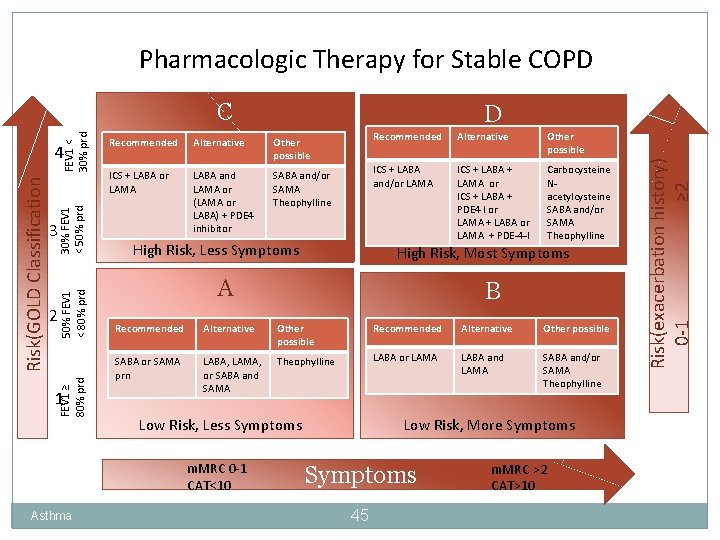
Pharmacologic Therapy for Stable COPD 30% FEV 1 < 50% prd 2 50% FEV 1 < 80% prd 3 FEV 1 ≥ 80% prd Risk(GOLD Classification 4 1 Recommended Alternative Other possible ICS + LABA or LAMA LABA and LAMA or (LAMA or LABA) + PDE 4 inhibitor SABA and/or SAMA Theophylline High Risk, Less Symptoms Recommended Alternative Other possible ICS + LABA and/or LAMA ICS + LABA + LAMA or ICS + LABA + PDE 4 I or LAMA + LABA or LAMA + PDE-4 -I Carbocysteine Nacetylcysteine SABA and/or SAMA Theophylline High Risk, Most Symptoms A B Recommended Alternative Other possible SABA or SAMA prn LABA, LAMA, or SABA and SAMA Theophylline LABA or LAMA LABA and LAMA SABA and/or SAMA Theophylline Low Risk, Less Symptoms m. MRC 0 -1 CAT<10 Asthma D Low Risk, More Symptoms 45 m. MRC >2 CAT>10 Risk(exacerbation history) 0 -1 ≥ 2 FEV 1 < 30% prd C
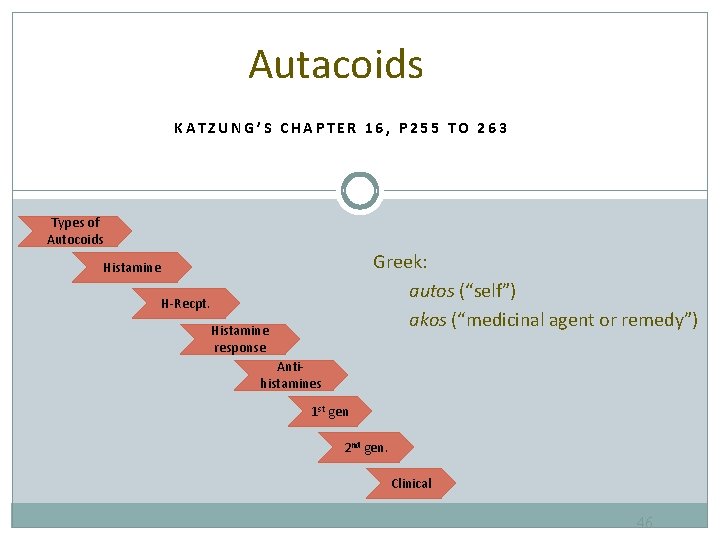
Autacoids KATZUNG’S CHAPTER 16, P 255 TO 263 Types of Autocoids Greek: autos (“self”) akos (“medicinal agent or remedy”) Histamine H-Recpt. Histamine response Antihistamines 1 st gen 2 nd gen. Clinical 46
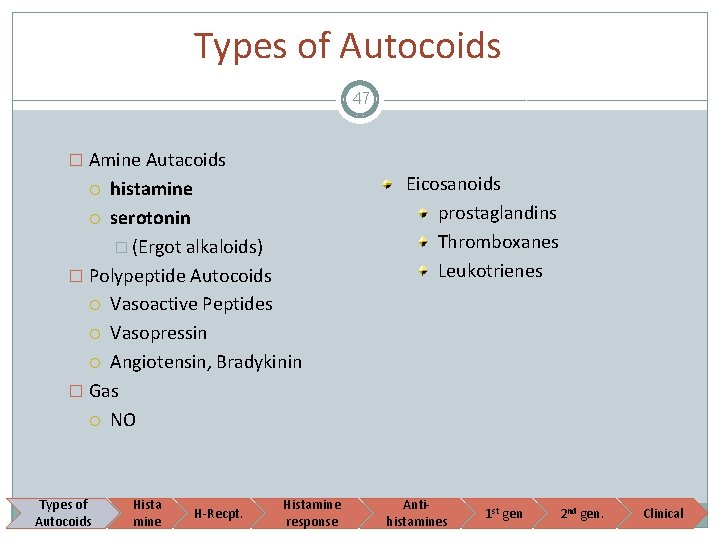
Types of Autocoids 47 � Amine Autacoids histamine serotonin � (Ergot alkaloids) � Polypeptide Autocoids Vasoactive Peptides Vasopressin Angiotensin, Bradykinin � Gas NO Types of Autocoids Hista mine H-Recpt. Histamine response Eicosanoids prostaglandins Thromboxanes Leukotrienes Antihistamines 1 st gen 2 nd gen. Clinical
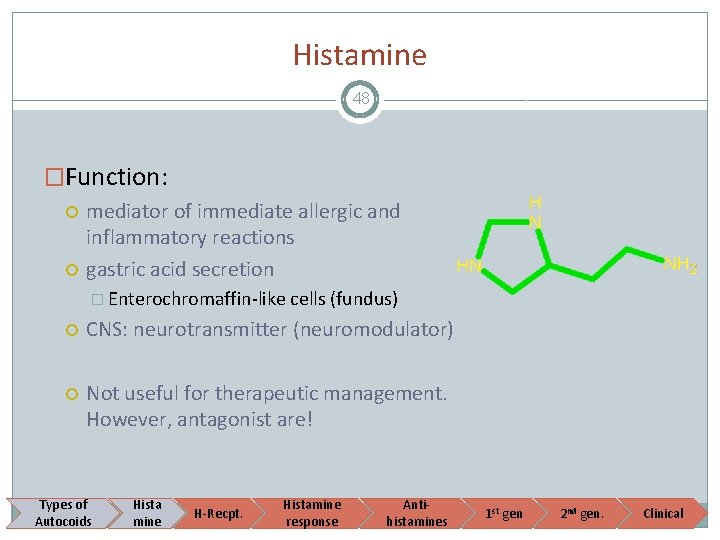
Histamine 48 �Function: mediator of immediate allergic and inflammatory reactions gastric acid secretion � Enterochromaffin-like cells (fundus) CNS: neurotransmitter (neuromodulator) Not useful for therapeutic management. However, antagonist are! Types of Autocoids Hista mine H-Recpt. Histamine response Antihistamines 1 st gen 2 nd gen. Clinical
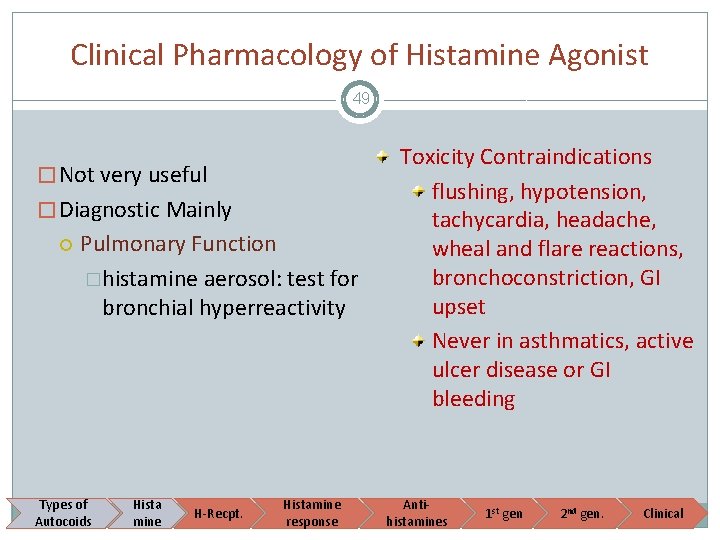
Clinical Pharmacology of Histamine Agonist 49 � Not very useful � Diagnostic Mainly Pulmonary Function �histamine aerosol: test for bronchial hyperreactivity Types of Autocoids Hista mine H-Recpt. Histamine response Toxicity Contraindications flushing, hypotension, tachycardia, headache, wheal and flare reactions, bronchoconstriction, GI upset Never in asthmatics, active ulcer disease or GI bleeding Antihistamines 1 st gen 2 nd gen. Clinical
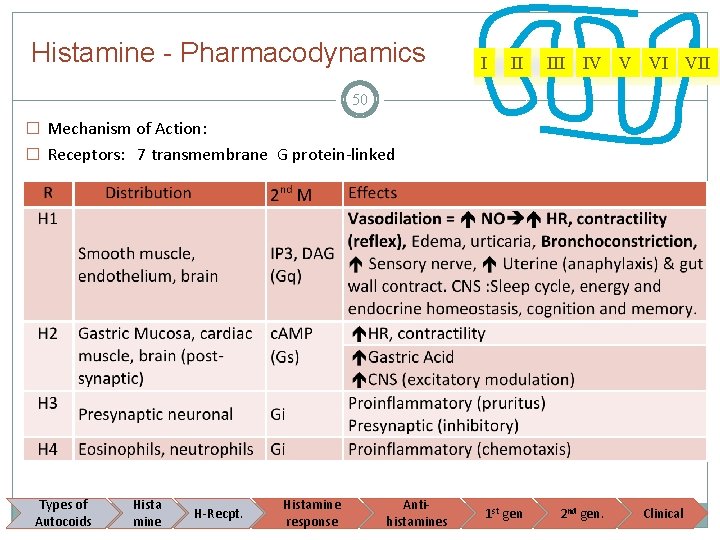
Histamine - Pharmacodynamics I II IV V VI VII 50 � Mechanism of Action: � Receptors: 7 transmembrane G protein-linked Table 16 -1 Katzung Types of Autocoids Hista mine H-Recpt. Histamine response Antihistamines 1 st gen 2 nd gen. Clinical
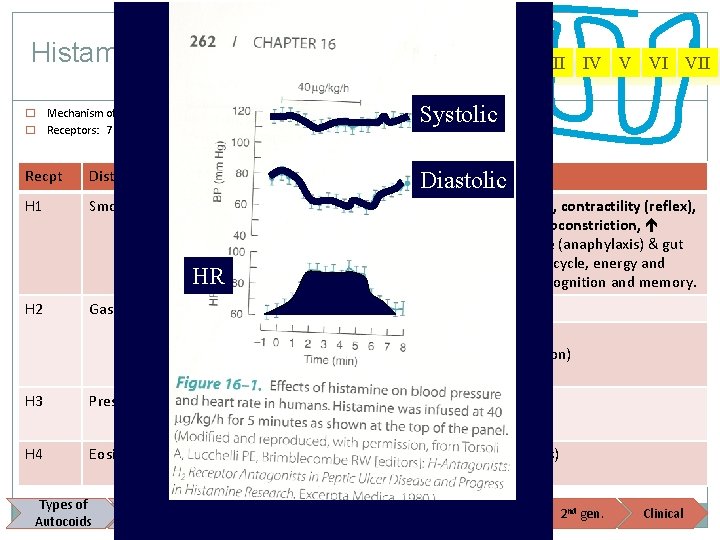
Histamine - Pharmacodynamics 51 Mechanism of Action: � Receptors: 7 transmembrane G protein-linked � I II IV V VI VII Systolic Recpt Distribution 2 nd M Effects H 1 Smooth muscle, endothelium, brain IP 3, DAG (Gq) Vasodilation = NO HR, contractility (reflex), Edema, urticaria, Bronchoconstriction, Sensory nerve, Uterine (anaphylaxis) & gut wall contract. CNS : Sleep cycle, energy and endocrine homeostasis, cognition and memory. HR Diastolic Table 16 -1 Katzung c. AMP Gastric Mucosa, cardiac muscle, (Gs) brain (postsynaptic) HR, contractility H 3 Presynaptic neuronal Gi Proinflammatory (pruritus) Presynaptic (inhibitory) H 4 Eosinophils, neutrophils Gi Proinflammatory (chemotaxis) H 2 Types of Autocoids Hista mine H-Recpt. Histamine response Gastric Acid CNS (excitatory modulation) Antihistamines 1 st gen 2 nd gen. Clinical
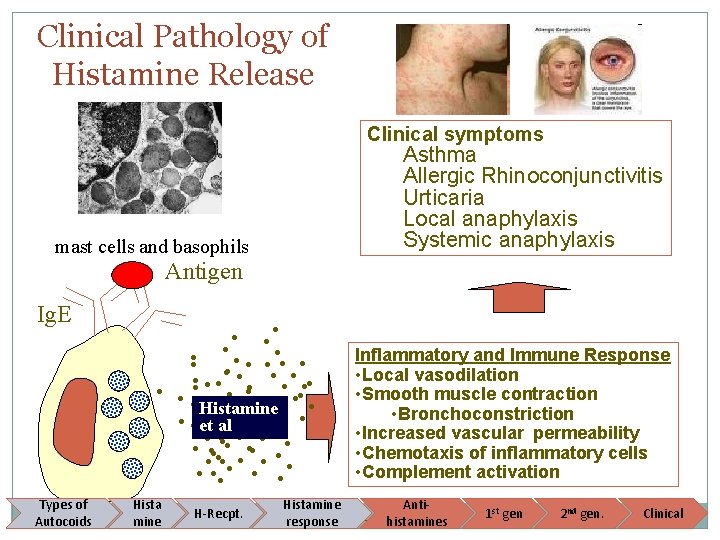
Clinical Pathology of Histamine Release Clinical symptoms Asthma Allergic Rhinoconjunctivitis Urticaria Local anaphylaxis Systemic anaphylaxis mast cells and basophils Antigen Ig. E . . . . Histamine et al Types of Autocoids Hista mine H-Recpt. Inflammatory and Immune Response • Local vasodilation • Smooth muscle contraction • Bronchoconstriction • Increased vascular permeability • Chemotaxis of inflammatory cells • Complement activation Histamine response 52 Antihistamines 1 st gen 2 nd gen. Clinical
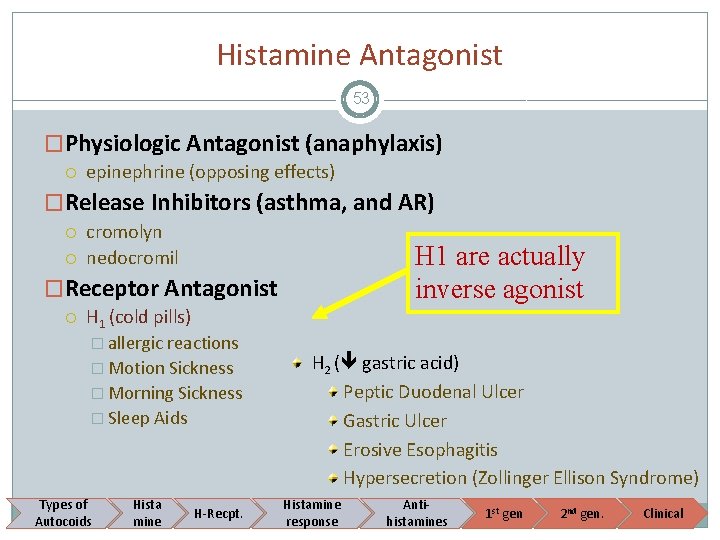
Histamine Antagonist 53 �Physiologic Antagonist (anaphylaxis) epinephrine (opposing effects) �Release Inhibitors (asthma, and AR) cromolyn nedocromil H 1 are actually inverse agonist �Receptor Antagonist H 1 (cold pills) � allergic reactions � Motion Sickness � Morning Sickness � Sleep Aids Types of Autocoids Hista mine H-Recpt. H 2 ( gastric acid) Peptic Duodenal Ulcer Gastric Ulcer Erosive Esophagitis Hypersecretion (Zollinger Ellison Syndrome) Histamine response Antihistamines 1 st gen 2 nd gen. Clinical
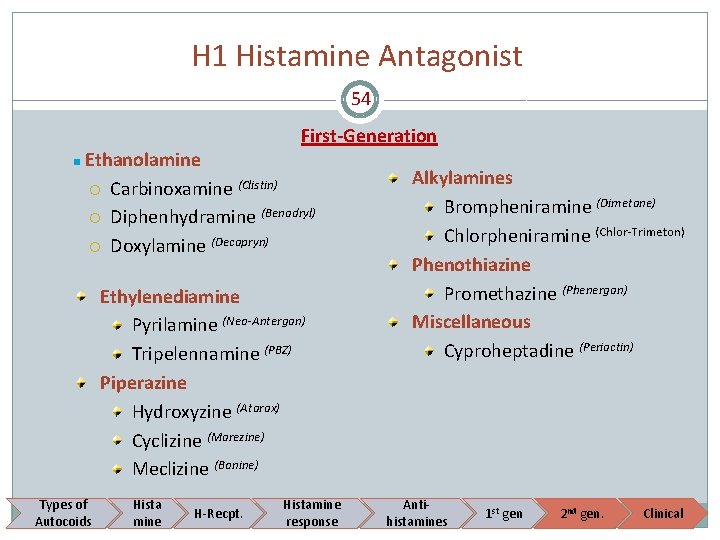
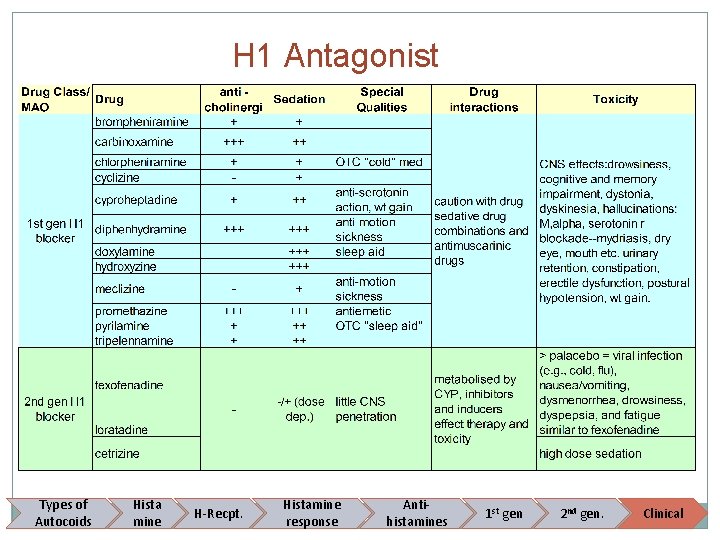
H 1 Histamine Antagonist 54 First-Generation g Ethanolamine Carbinoxamine (Clistin) Diphenhydramine (Benadryl) Doxylamine (Decapryn) Ethylenediamine Pyrilamine (Neo-Antergan) Tripelennamine (PBZ) Piperazine Hydroxyzine (Atarax) Cyclizine (Marezine) Meclizine (Bonine) Types of Autocoids Hista mine H-Recpt. Histamine response Alkylamines Brompheniramine (Dimetane) Chlorpheniramine (Chlor-Trimeton) Phenothiazine Promethazine (Phenergan) Miscellaneous Cyproheptadine (Periactin) Antihistamines 1 st gen 2 nd gen. Clinical
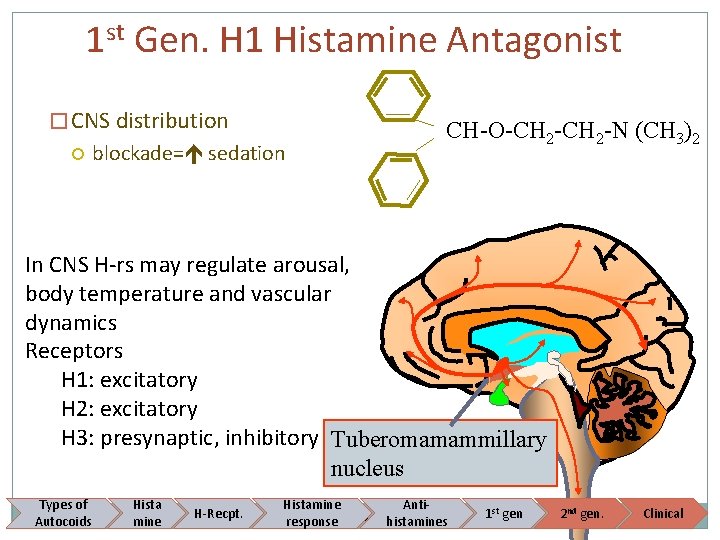
1 st Gen. H 1 Histamine Antagonist � CNS distribution blockade= sedation CH-O-CH 2 -N (CH 3)2 Note: Lipophilic structure In CNS H-rs may regulate arousal, body temperature and vascular dynamics Receptors H 1: excitatory H 2: excitatory H 3: presynaptic, inhibitory Tuberomamammillary nucleus Types of Autocoids Hista mine H-Recpt. Histamine response 55 Antihistamines 1 st gen 2 nd gen. Clinical
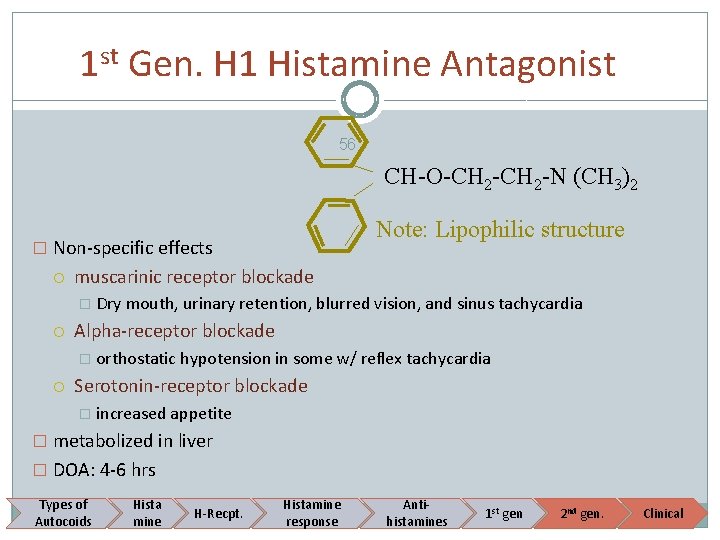
1 st Gen. H 1 Histamine Antagonist 56 CH-O-CH 2 -N (CH 3)2 Note: Lipophilic structure � Non-specific effects muscarinic receptor blockade � Dry mouth, urinary retention, blurred vision, and sinus tachycardia Alpha-receptor blockade � orthostatic hypotension in some w/ reflex tachycardia Serotonin-receptor blockade � increased appetite � metabolized in liver � DOA: 4 -6 hrs Types of Autocoids Hista mine H-Recpt. Histamine response Antihistamines 1 st gen 2 nd gen. Clinical
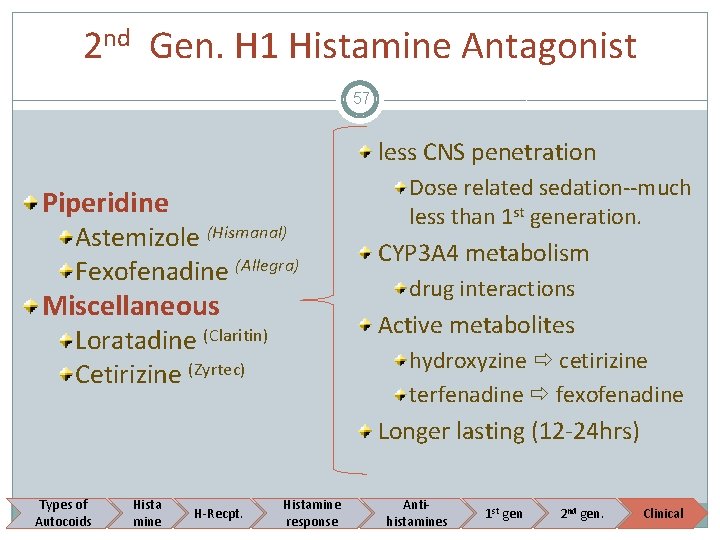
2 nd Gen. H 1 Histamine Antagonist 57 less CNS penetration Piperidine Astemizole (Hismanal) Fexofenadine (Allegra) Miscellaneous Dose related sedation--much less than 1 st generation. CYP 3 A 4 metabolism drug interactions Active metabolites Loratadine Cetirizine (Zyrtec) (Claritin) hydroxyzine cetirizine terfenadine fexofenadine Longer lasting (12 -24 hrs) Types of Autocoids Hista mine H-Recpt. Histamine response Antihistamines 1 st gen 2 nd gen. Clinical
H 1 Antagonist Types of Autocoids Hista mine H-Recpt. Histamine response 58 Antihistamines 1 st gen 2 nd gen. Clinical
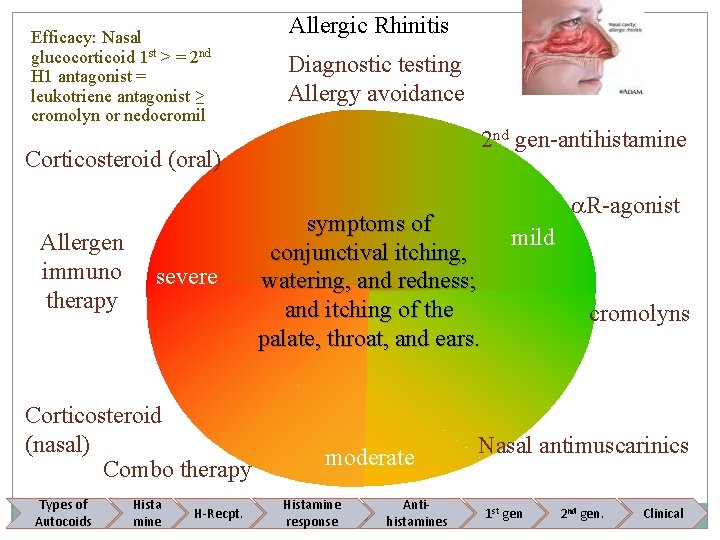
Efficacy: Nasal glucocorticoid 1 st > = 2 nd H 1 antagonist = leukotriene antagonist ≥ cromolyn or nedocromil Allergic Rhinitis Diagnostic testing Allergy avoidance 2 nd gen-antihistamine Corticosteroid (oral) Allergen immuno therapy severe Corticosteroid (nasal) Combo therapy Types of Autocoids Hista mine H-Recpt. symptoms of conjunctival itching, watering, and redness; and itching of the palate, throat, and ears. moderate Histamine response 59 Antihistamines a. R-agonist mild cromolyns Nasal antimuscarinics 1 st gen 2 nd gen. Clinical
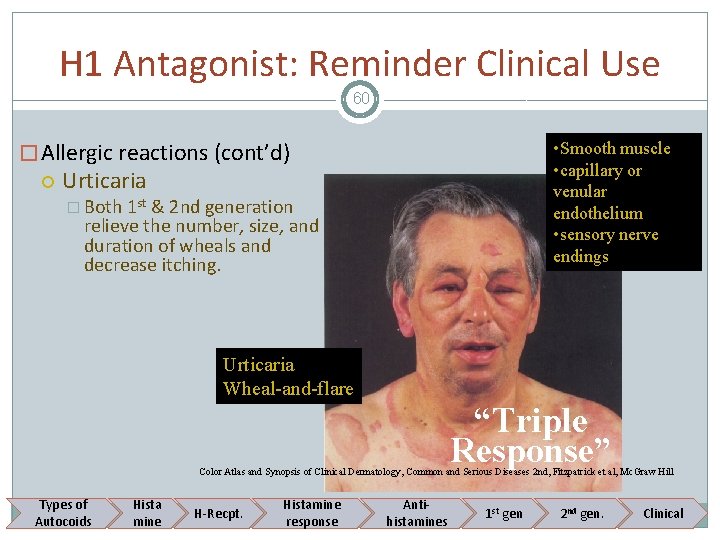
H 1 Antagonist: Reminder Clinical Use 60 � Allergic reactions (cont’d) • Smooth muscle • capillary or venular endothelium • sensory nerve endings Urticaria � Both 1 st & 2 nd generation relieve the number, size, and duration of wheals and decrease itching. Urticaria Wheal-and-flare “Triple Response” Color Atlas and Synopsis of Clinical Dermatology, Common and Serious Diseases 2 nd, Fitzpatrick et al, Mc. Graw Hill Types of Autocoids Hista mine H-Recpt. Histamine response Antihistamines 1 st gen 2 nd gen. Clinical
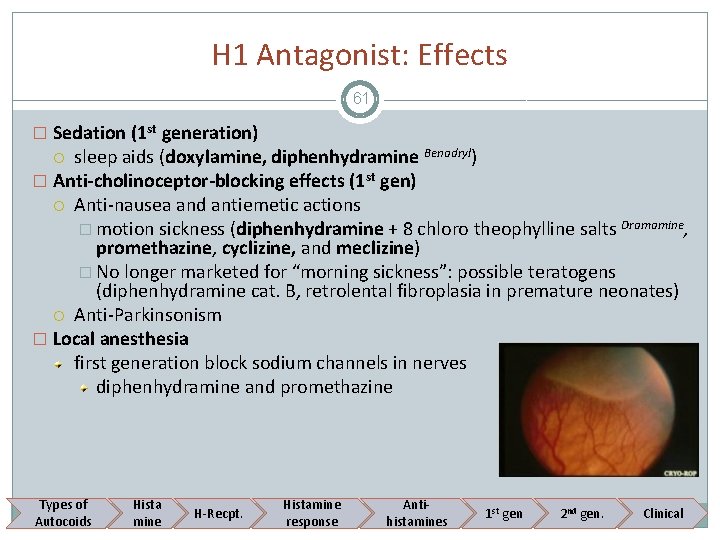
H 1 Antagonist: Effects 61 � Sedation (1 st generation) sleep aids (doxylamine, diphenhydramine Benadryl) � Anti-cholinoceptor-blocking effects (1 st gen) Anti-nausea and antiemetic actions � motion sickness (diphenhydramine + 8 chloro theophylline salts Dramamine, promethazine, cyclizine, and meclizine) � No longer marketed for “morning sickness”: possible teratogens (diphenhydramine cat. B, retrolental fibroplasia in premature neonates) Anti-Parkinsonism � Local anesthesia first generation block sodium channels in nerves diphenhydramine and promethazine Types of Autocoids Hista mine H-Recpt. Histamine response Antihistamines 1 st gen 2 nd gen. Clinical
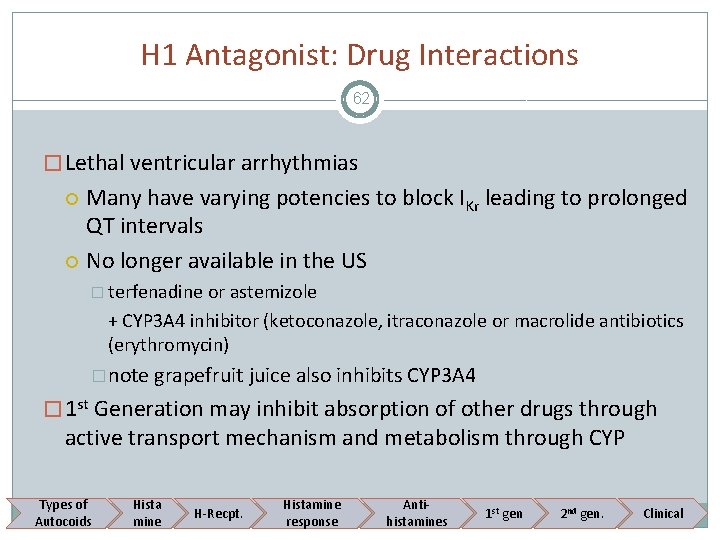
H 1 Antagonist: Drug Interactions 62 � Lethal ventricular arrhythmias Many have varying potencies to block IKr leading to prolonged QT intervals No longer available in the US � terfenadine or astemizole + CYP 3 A 4 inhibitor (ketoconazole, itraconazole or macrolide antibiotics (erythromycin) � note grapefruit juice also inhibits CYP 3 A 4 � 1 st Generation may inhibit absorption of other drugs through active transport mechanism and metabolism through CYP Types of Autocoids Hista mine H-Recpt. Histamine response Antihistamines 1 st gen 2 nd gen. Clinical
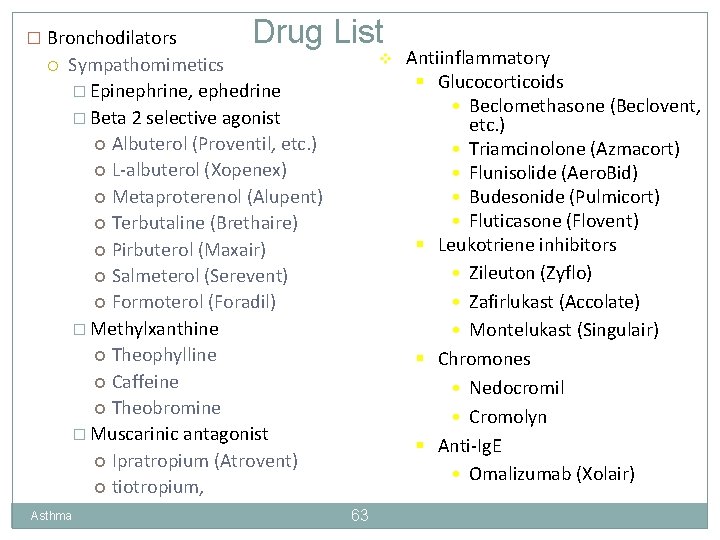
� Bronchodilators Drug List v Sympathomimetics � Epinephrine, ephedrine � Beta 2 selective agonist Albuterol (Proventil, etc. ) L-albuterol (Xopenex) Metaproterenol (Alupent) Terbutaline (Brethaire) Pirbuterol (Maxair) Salmeterol (Serevent) Formoterol (Foradil) � Methylxanthine Theophylline Caffeine Theobromine � Muscarinic antagonist Ipratropium (Atrovent) tiotropium, Asthma 63 Antiinflammatory § Glucocorticoids • Beclomethasone (Beclovent, etc. ) • Triamcinolone (Azmacort) • Flunisolide (Aero. Bid) • Budesonide (Pulmicort) • Fluticasone (Flovent) § Leukotriene inhibitors • Zileuton (Zyflo) • Zafirlukast (Accolate) • Montelukast (Singulair) § Chromones • Nedocromil • Cromolyn § Anti-Ig. E • Omalizumab (Xolair)
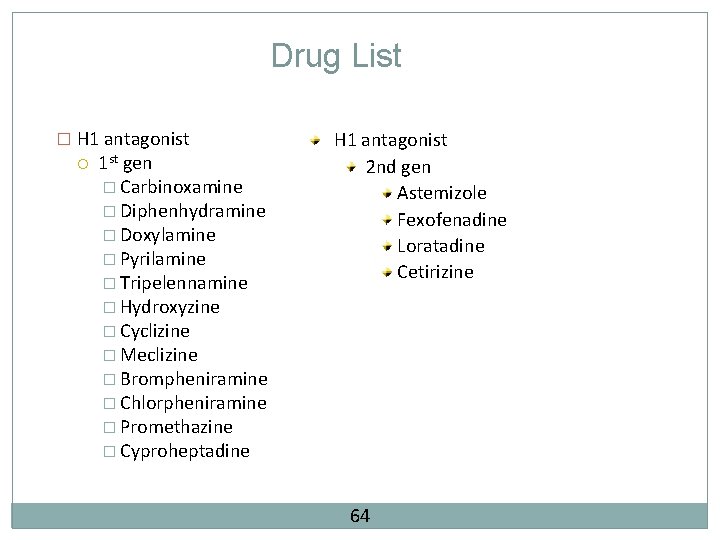
Drug List � H 1 antagonist 1 st gen � Carbinoxamine � Diphenhydramine � Doxylamine � Pyrilamine � Tripelennamine � Hydroxyzine � Cyclizine � Meclizine � Brompheniramine � Chlorpheniramine � Promethazine � Cyproheptadine H 1 antagonist 2 nd gen Astemizole Fexofenadine Loratadine Cetirizine 64
Board Style 65 http: //www. us. elsevierhealth. com/product. jsp? sid=EHS_US_BS-SPE-971&isbn=9780323068123&lid=EHS_US_BS-DIS 1&iid=0&dmnum=48843&elsca 1=sem 2012&elsca 2=google&elsca 3=rapidreview&gclid=CKqltc. XUq. K 8 CFWM 0 Qgod. Fm. V 57 A Asthma