Diagnosis Prevention and Treatment of Occupational Asthma Jonathan

- Slides: 48
Diagnosis, Prevention and Treatment of Occupational Asthma Jonathan A. Bernstein, M. D. Professor of Medicine University of Cincinnati Department of Internal Medicine Division of Immunology/Allergy Section
Jonathan A. Bernstein, M. D. Disclosures Financial: Consultant to Flint Hills Resources Research: Flint Hills Resources Legal Consult/Expert Witness: Environmental related issues Organizational: AAAAI EORD interest section Gifts: None Other: Journal of Asthma Editor-in-Chief
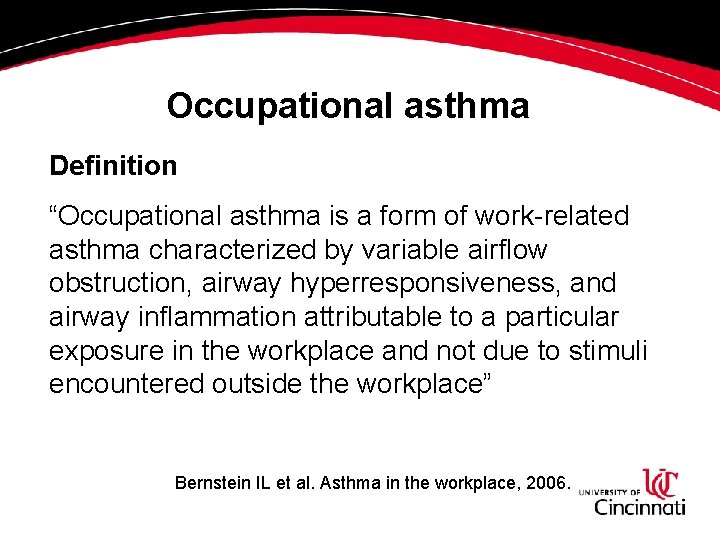
Occupational asthma Definition “Occupational asthma is a form of work-related asthma characterized by variable airflow obstruction, airway hyperresponsiveness, and airway inflammation attributable to a particular exposure in the workplace and not due to stimuli encountered outside the workplace” Bernstein IL et al. Asthma in the workplace, 2006.
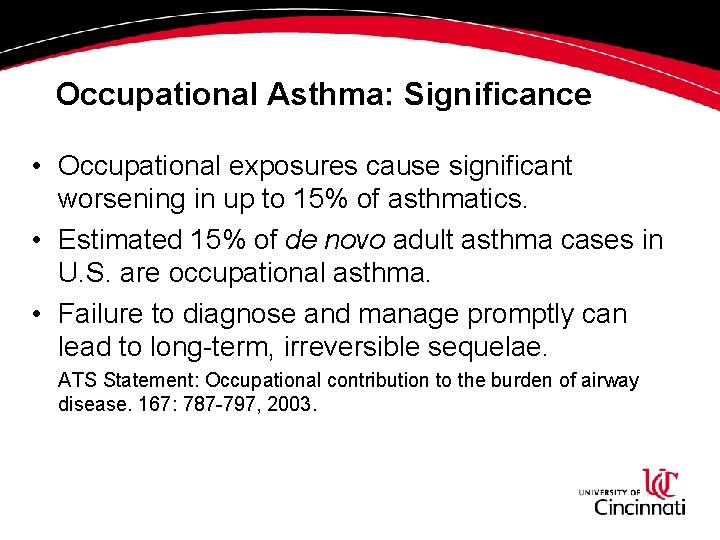
Occupational Asthma: Significance • Occupational exposures cause significant worsening in up to 15% of asthmatics. • Estimated 15% of de novo adult asthma cases in U. S. are occupational asthma. • Failure to diagnose and manage promptly can lead to long-term, irreversible sequelae. ATS Statement: Occupational contribution to the burden of airway disease. 167: 787 -797, 2003.
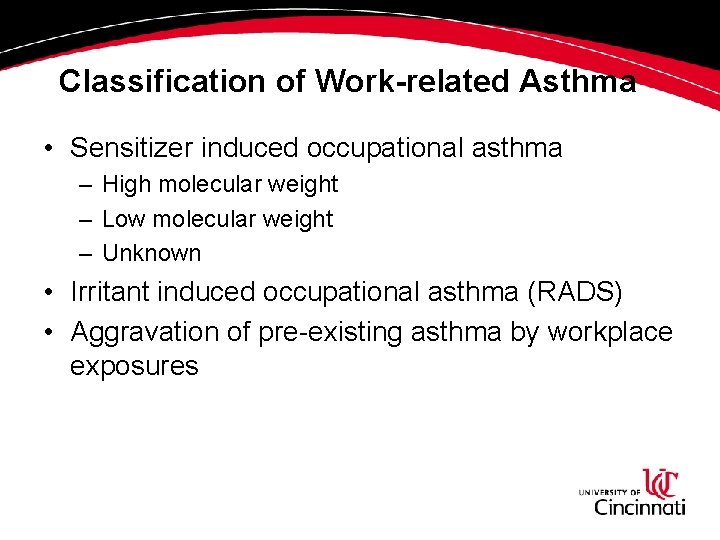
Classification of Work-related Asthma • Sensitizer induced occupational asthma – High molecular weight – Low molecular weight – Unknown • Irritant induced occupational asthma (RADS) • Aggravation of pre-existing asthma by workplace exposures
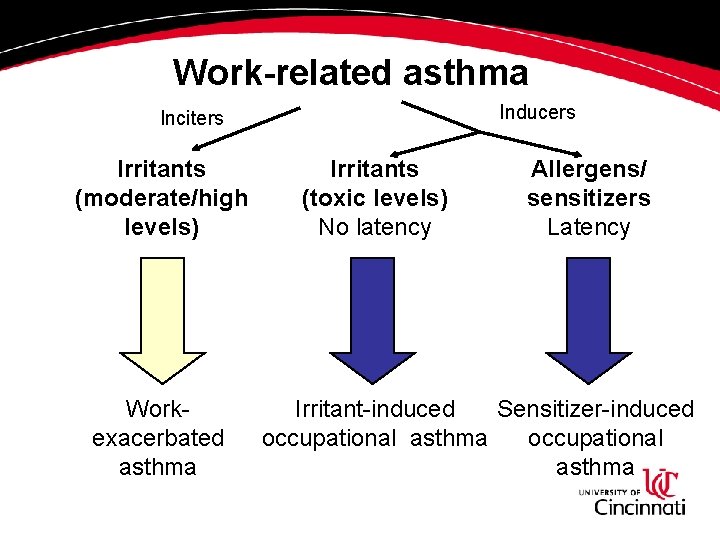
Work-related asthma Inducers Inciters Irritants (moderate/high levels) Workexacerbated asthma Irritants (toxic levels) No latency Allergens/ sensitizers Latency Irritant-induced Sensitizer-induced occupational asthma
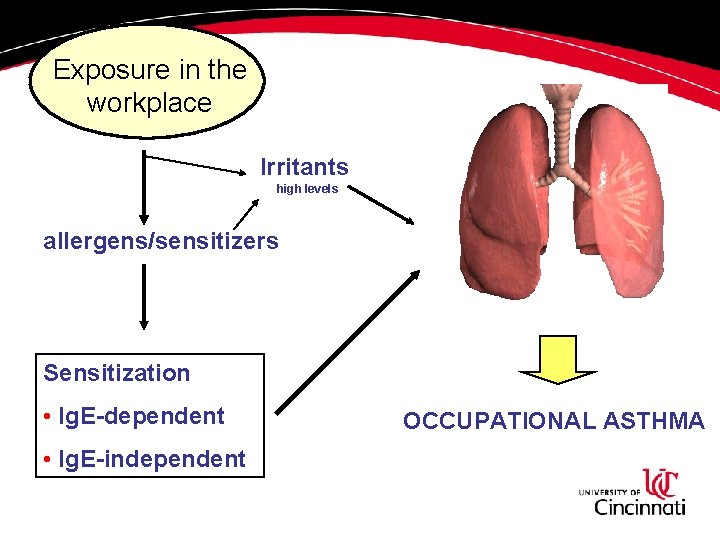
Exposure in the workplace Irritants high levels allergens/sensitizers Sensitization • Ig. E-dependent • Ig. E-independent OCCUPATIONAL ASTHMA
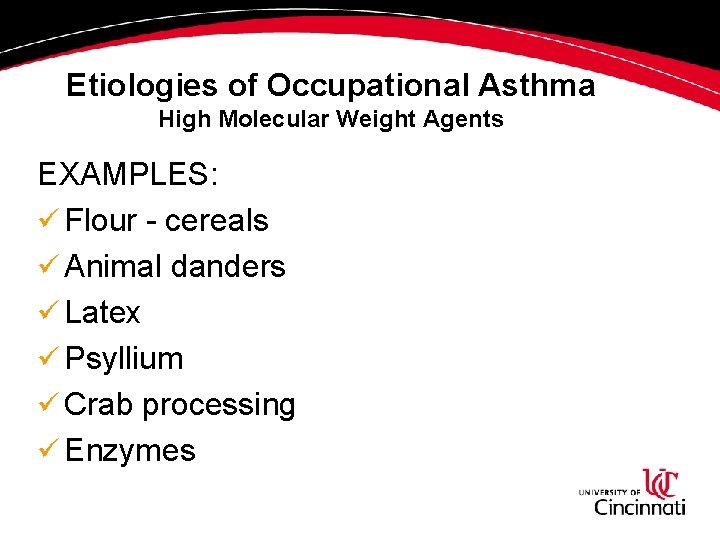
Etiologies of Occupational Asthma High Molecular Weight Agents EXAMPLES: ü Flour - cereals ü Animal danders ü Latex ü Psyllium ü Crab processing ü Enzymes
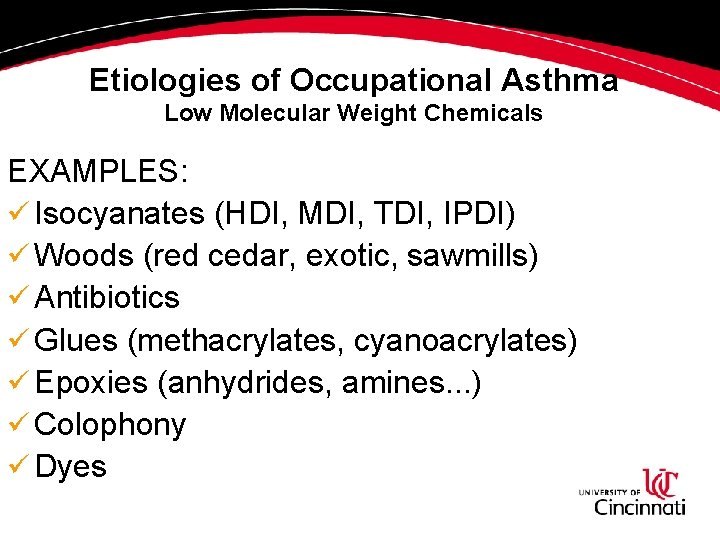
Etiologies of Occupational Asthma Low Molecular Weight Chemicals EXAMPLES: ü Isocyanates (HDI, MDI, TDI, IPDI) ü Woods (red cedar, exotic, sawmills) ü Antibiotics ü Glues (methacrylates, cyanoacrylates) ü Epoxies (anhydrides, amines. . . ) ü Colophony ü Dyes
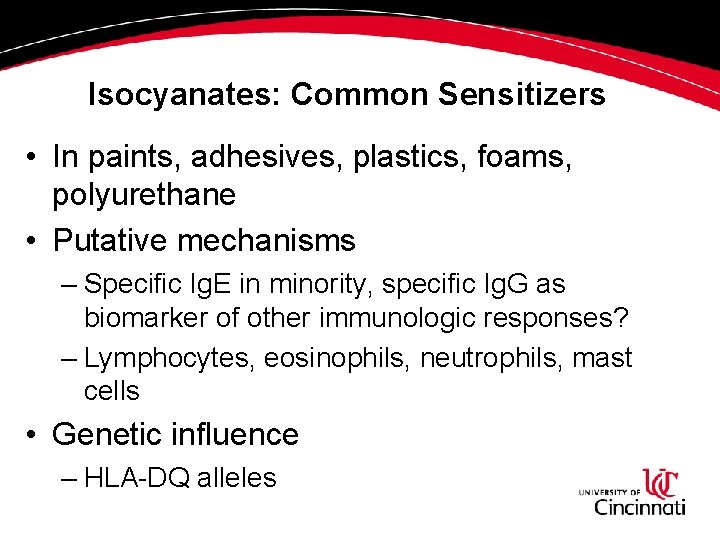
Isocyanates: Common Sensitizers • In paints, adhesives, plastics, foams, polyurethane • Putative mechanisms – Specific Ig. E in minority, specific Ig. G as biomarker of other immunologic responses? – Lymphocytes, eosinophils, neutrophils, mast cells • Genetic influence – HLA-DQ alleles
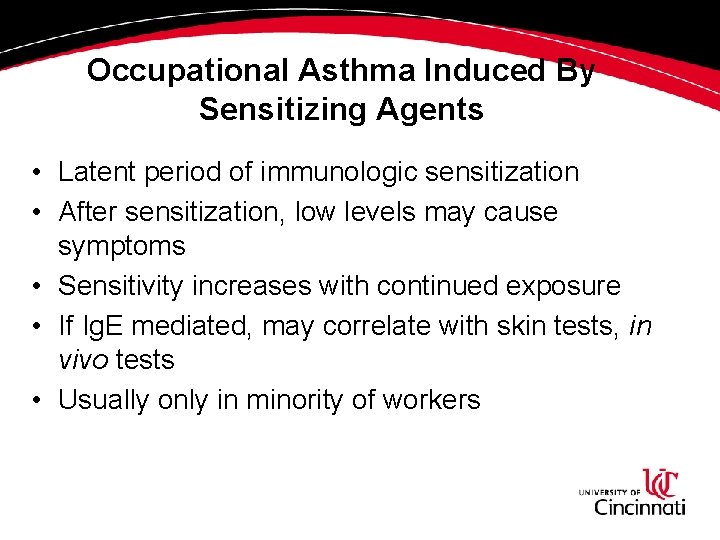
Occupational Asthma Induced By Sensitizing Agents • Latent period of immunologic sensitization • After sensitization, low levels may cause symptoms • Sensitivity increases with continued exposure • If Ig. E mediated, may correlate with skin tests, in vivo tests • Usually only in minority of workers
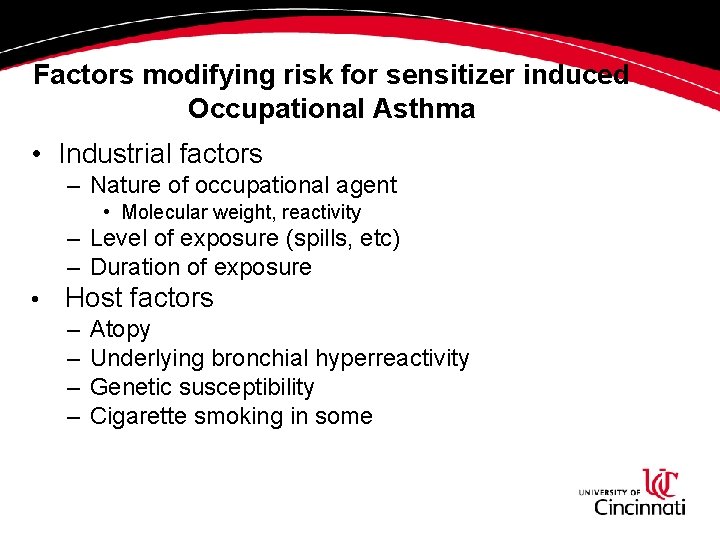
Factors modifying risk for sensitizer induced Occupational Asthma • Industrial factors – Nature of occupational agent • Molecular weight, reactivity – Level of exposure (spills, etc) – Duration of exposure • Host factors – Atopy – Underlying bronchial hyperreactivity – Genetic susceptibility – Cigarette smoking in some
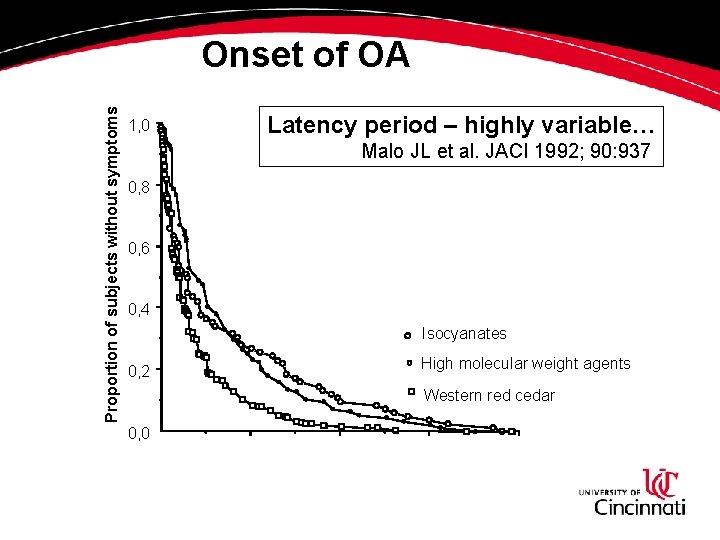
Proportion of subjects without symptoms Onset of OA Latency period – highly variable… 1, 0 Malo JL et al. JACI 1992; 90: 937 0, 8 0, 6 0, 4 Isocyanates High molecular weight agents 0, 2 Western red cedar 0, 0 0 10 20 30 40 Years of exposure before onset of symptoms
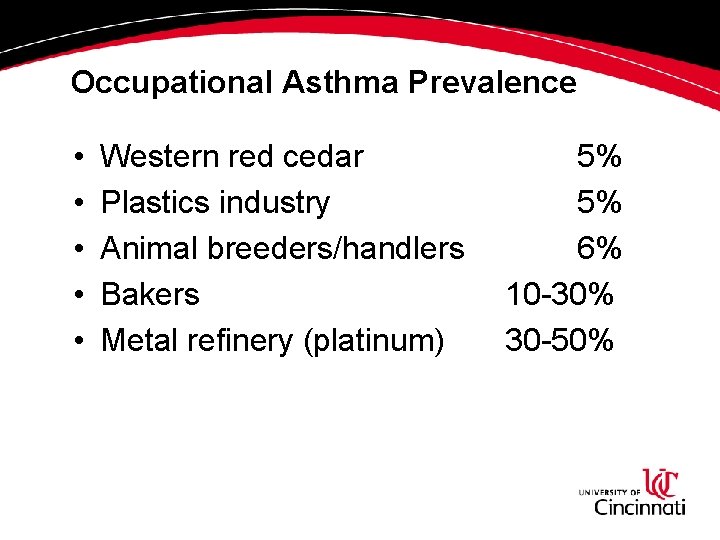
Occupational Asthma Prevalence • • • Western red cedar Plastics industry Animal breeders/handlers Bakers Metal refinery (platinum) 5% 5% 6% 10 -30% 30 -50%
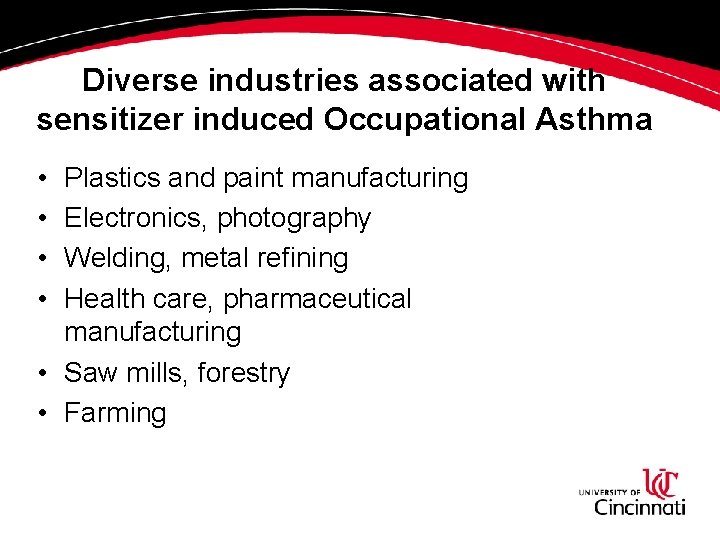
Diverse industries associated with sensitizer induced Occupational Asthma • • Plastics and paint manufacturing Electronics, photography Welding, metal refining Health care, pharmaceutical manufacturing • Saw mills, forestry • Farming
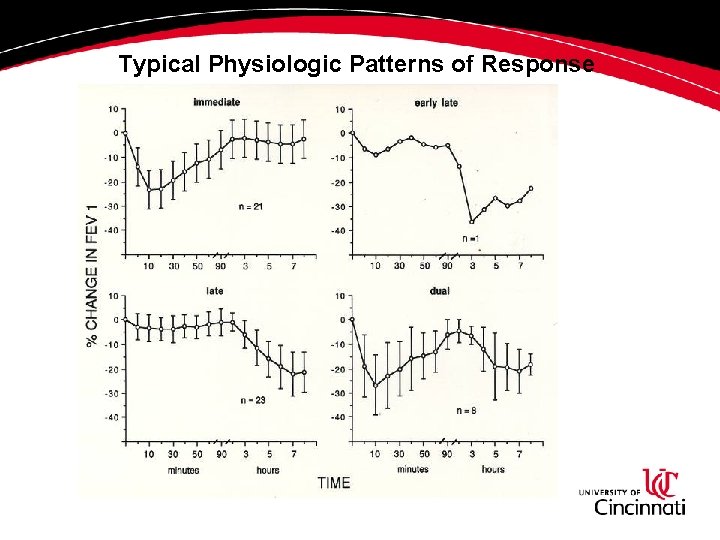
Typical Physiologic Patterns of Response Perrin B, Cartier A, Ghezzo H, Grammer L, Harris K, Chan H et. Al. Reassessment of the temporal patterns of bronchial obstruction after exposure to occupational sensitizing agents. J Allergy Clin Immunol 1991; 87: 630 -9.
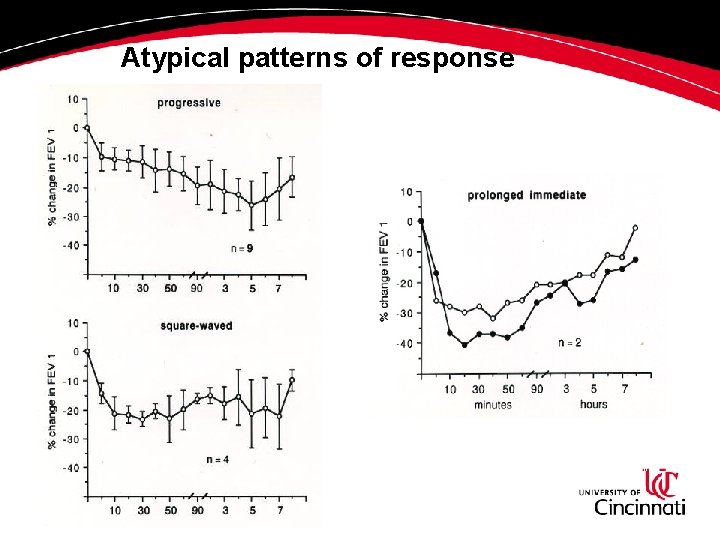
Atypical patterns of response Perrin B, Cartier A, Ghezzo H, Grammer L, Harris K, Chan H et al. Reassessment of the temporal patterns of bronchial obstruction after exposure to occupational sensitizing agents. J Allergy Clin Immunol 1991; 87: 630 -9
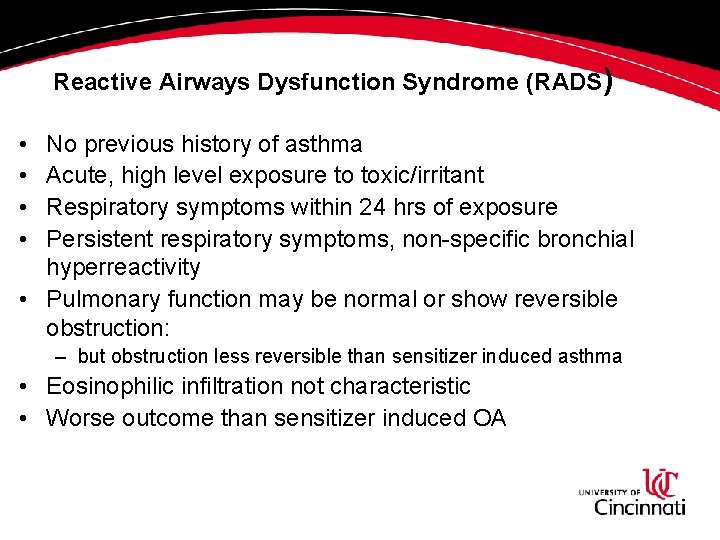
Reactive Airways Dysfunction Syndrome (RADS) • • No previous history of asthma Acute, high level exposure to toxic/irritant Respiratory symptoms within 24 hrs of exposure Persistent respiratory symptoms, non-specific bronchial hyperreactivity • Pulmonary function may be normal or show reversible obstruction: – but obstruction less reversible than sensitizer induced asthma • Eosinophilic infiltration not characteristic • Worse outcome than sensitizer induced OA
Exacerbation of pre-existing asthma • Reported in > 20% of asthmatics in 1° care settings. • Asthma that preceded or started concurrently with the implicated work conditions, and worsened at work. • Causes include typical asthma triggers such as dusts or fumes at work, cold air and exercise. • If frequent or persistent, may mimic sensitizer OA. • Document with objective tests, especially when work-related symptoms are frequent or prolonged, or sensitizer-induced OA is in the differential diagnosis. • Management includes: – optimizing asthma control. – may require reducing work exposure to triggers • (e. g. short-term use of respirators, or • move to cleaner area.
Occupational History • Current and previous jobs – Employer, job names and descriptions, duration • Specific exposures • Adverse health effects • Control measures – Provision and use of personal protective equipment – Work place practices (e. g. procedures to follow if a spill occurs) – Engineering controls
Elements of the clinical history • • • Circumstances of the onset of asthma symptoms Severity and persistence, clinical course of asthma Temporal relationships between exposures at work and disease exacerbation: – • • • Immediate (minutes), late (hours) or dual (both) Known triggers and intercurrent factors of asthma Identify risk factors: Atopy – Smoking habit Focused occupational/environmental history
Diagnostic Approach to Occupational Asthma • Does the patient have asthma? – History, physical examination – Reversible airway obstruction (e. g. spirometry) – Non-specific airway hyperreactivity If absent while symptomatic and at work, may rule out diagnosis • Is the asthma caused by work or a nonoccupational factor? – – History – Objective testing
Does History Suggest Occupational Basis? • Symptoms within months of job change? – (though may also take years to develop. ) • New agent introduced in workplace? • Are respirable agents in the workplace known to cause asthma? • Symptoms relieved on weekends or vacations? • Are other workers affected? • Have workers left because of similar symptoms?
Additional Information About Suspected Work Exposures • Information sources: employers, product manufacturers, labor unions. • Material safety data sheet (MSDS) (Bernstein JA, Material safety data sheets: are they reliable in identifying human hazards? JACI 2002; 110: 35 -8. ) – By law, employer must provide – Identity of workplace agents and information about adverse health effects – May be misleading – Contacts for additional information • Medical literature searches
Does History Suggest Non-Occupational Basis? • • No relation between work and symptoms Preexisting asthma / respiratory problems Upper respiratory infection at onset of symptoms Non-occupational allergies Smoking Medications (beta blockers, NSAIDs) Gastroesophageal reflux symptoms Review medical records
Occupational Hygiene Assessment • Occupational/industrial hygienists assess workplace environments. • Identify relevant exposures. • Measure concentrations to determine if suspect agents are present at harmful levels • Recommend changes in the work environment (e. g. product substitution, improved ventilation).
Standards for Airborne Exposure • OSHA Permissible Exposure Limits (PEL) – Time-Weighted Averages (TWA) – Short-Term Exposure Limits (STEL) – Ceiling limits • ACGIH Threshold Limit Values (TLV)
Beyond History: Testing for Occupational Asthma • History alone insufficient for diagnosis • Objective testing – Work-related changes in peak flows (&/or NSBR) – Immunologic testing for occupational allergens – Controlled inhalation challenge with suspect agent
Immunologic assessment • • • Skin prick tests (occasionally ID) to HMW agents In vitro tests – Measurements of specific Ig. E: RAST/CAP, ELISA – Immunoblotting, CRIE Reagents: – Whole “natural” extracts (not standardized, potency? ) – Purified allergens (e. g. enzymes, isolated proteins) – Recombinant allergens (e. g. latex allergens)
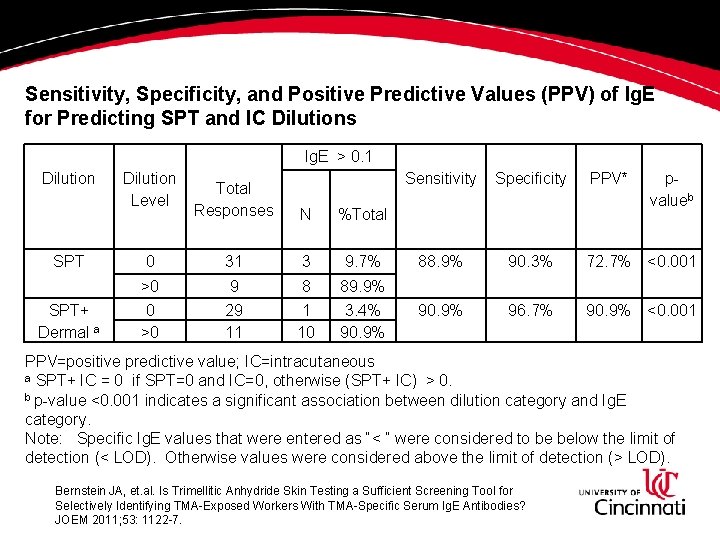
Sensitivity, Specificity, and Positive Predictive Values (PPV) of Ig. E for Predicting SPT and IC Dilutions Ig. E > 0. 1 Dilution Level Total Responses N %Total Sensitivity Specificity PPV* pvalueb SPT 0 31 3 9. 7% 88. 9% 90. 3% 72. 7% <0. 001 SPT+ Dermal a >0 0 >0 9 29 11 8 1 10 89. 9% 3. 4% 90. 9% 96. 7% 90. 9% <0. 001 PPV=positive predictive value; IC=intracutaneous a SPT+ IC = 0 if SPT=0 and IC=0, otherwise (SPT+ IC) > 0. b p-value <0. 001 indicates a significant association between dilution category and Ig. E category. Note: Specific Ig. E values that were entered as “< ” were considered to be below the limit of detection (< LOD). Otherwise values were considered above the limit of detection (> LOD). Bernstein JA, et. al. Is Trimellitic Anhydride Skin Testing a Sufficient Screening Tool for Selectively Identifying TMA-Exposed Workers With TMA-Specific Serum Ig. E Antibodies? JOEM 2011; 53: 1122 -7.
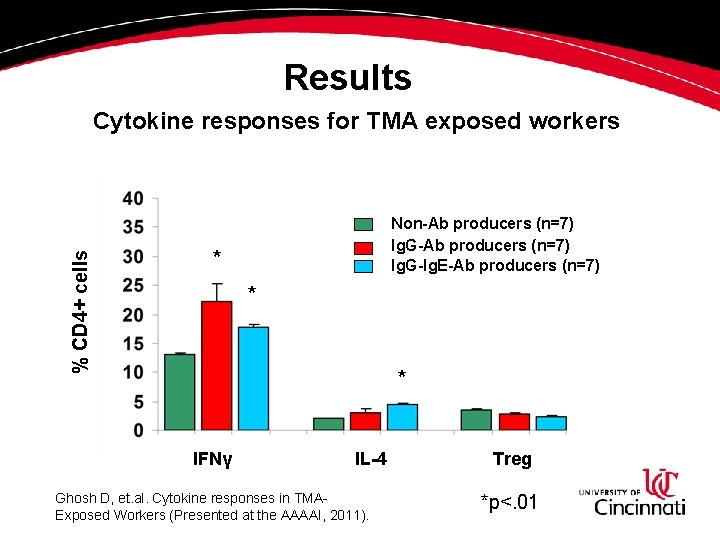
Results % CD 4+ cells Cytokine responses for TMA exposed workers Non-Ab producers (n=7) Ig. G-Ig. E-Ab producers (n=7) * * * IFNγ IL-4 Ghosh D, et. al. Cytokine responses in TMAExposed Workers (Presented at the AAAAI, 2011). Treg *p<. 01
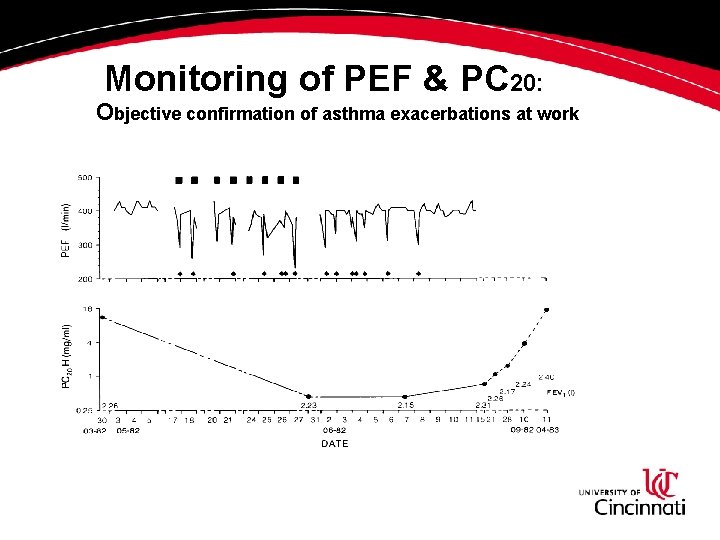
Monitoring of PEF & PC 20: Objective confirmation of asthma exacerbations at work Cartier A, Malo JL, Forest F, Lafrance M, Pineau L, St-Aubin JJ et al. Occupational asthma in snow crabprocessing workers. J Allergy Clin Immunol 1984; 74: 261 -9
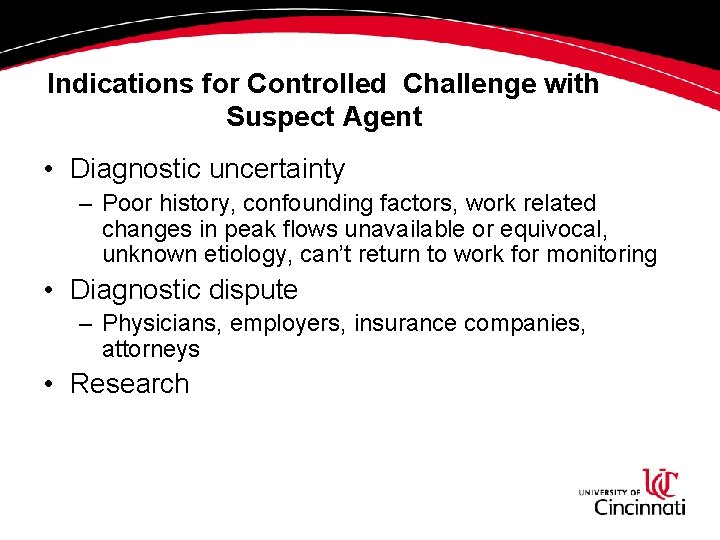
Indications for Controlled Challenge with Suspect Agent • Diagnostic uncertainty – Poor history, confounding factors, work related changes in peak flows unavailable or equivocal, unknown etiology, can’t return to work for monitoring • Diagnostic dispute – Physicians, employers, insurance companies, attorneys • Research
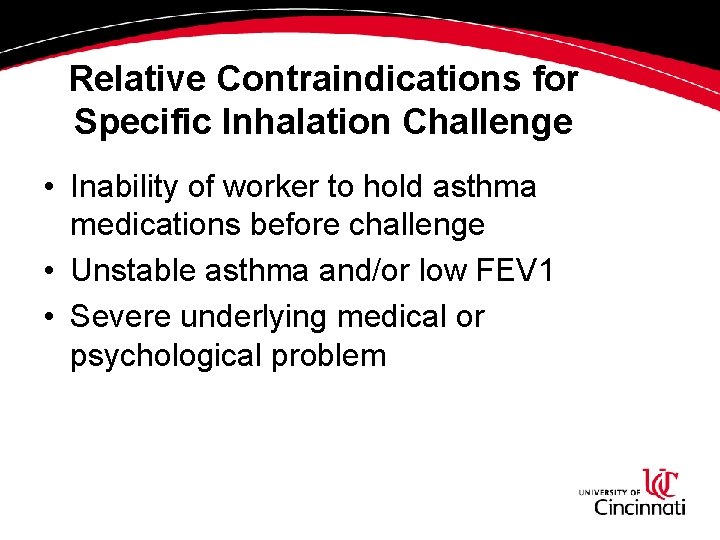
Relative Contraindications for Specific Inhalation Challenge • Inability of worker to hold asthma medications before challenge • Unstable asthma and/or low FEV 1 • Severe underlying medical or psychological problem
Specific Inhalation Challenge in Occupational Asthma • Most often, these tests are done on an outpatient basis. • Multiple challenges required. • Tests are time consuming and expensive. • Informed consent and compliance needed. • Not always available.
Interpretation of positive challenge • A positive challenge is usually defined by a sustained fall in FEV 1 of ≥ 20%, compared to the control mock exposure day. • Other indices suggesting OA: – 3. 2 -fold change in pre vs. post challenge PC 20 – Increase in eosinophils in post vs. pre challenge induced sputum.
Interpretation of negative challenge • A negative challenge, however, does not entirely exclude the diagnosis of occupational asthma: – Wrong agent (or sensitizing process not active) – Loss of sensitization over time out of exposure – Mixture of antigens at work not replicated in challenge – Took medication that blocked the test (e. g. bronchodilators)
Purpose of Immunosurveillance Programs • To periodically evaluate the health of workers in the workplace – – – Monitor clinical symptoms Monitor changes in lung function Monitor changes in Chest x-rays (Berylliosis…) Monitor specific antibody responses Monitor lymphocytic responses (Berylliosis…) • Identification of workers demonstrating signs of sensitization and/or work related symptoms – Early removal from further exposure • Identify hazardous work conditions using group health information and environmental information • Implement appropriate interventions to prevent reoccurrences or new cases – Evaluation of the effectiveness of exposure controls
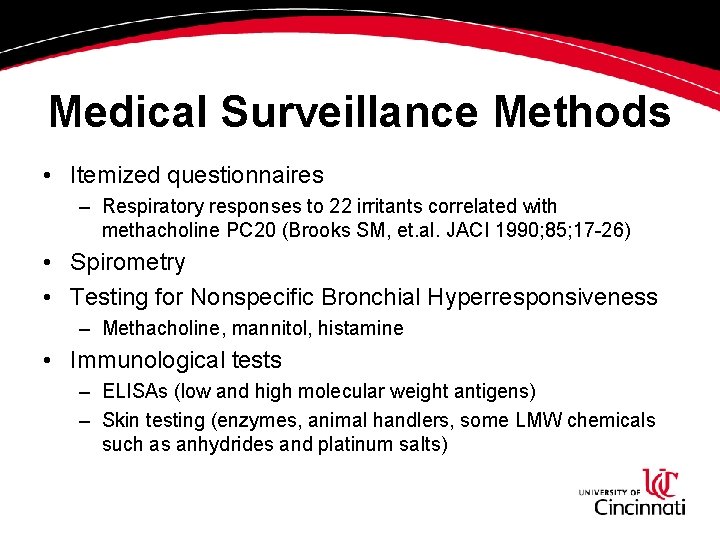
Medical Surveillance Methods • Itemized questionnaires – Respiratory responses to 22 irritants correlated with methacholine PC 20 (Brooks SM, et. al. JACI 1990; 85; 17 -26) • Spirometry • Testing for Nonspecific Bronchial Hyperresponsiveness – Methacholine, mannitol, histamine • Immunological tests – ELISAs (low and high molecular weight antigens) – Skin testing (enzymes, animal handlers, some LMW chemicals such as anhydrides and platinum salts)
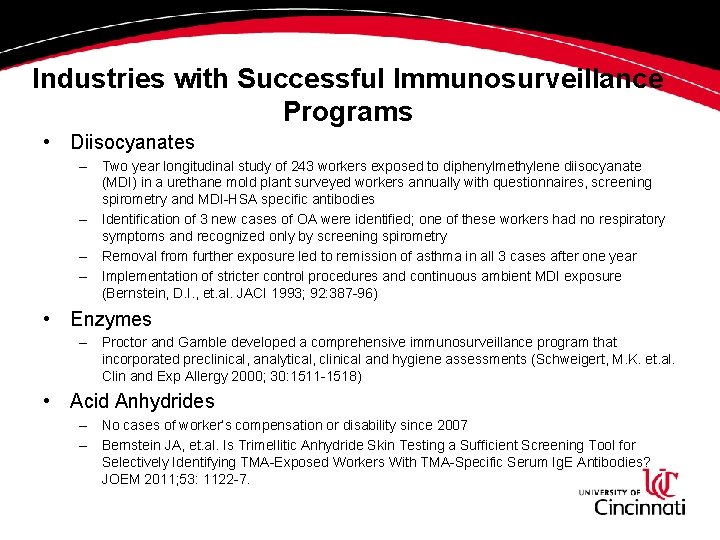
Industries with Successful Immunosurveillance Programs • Diisocyanates – Two year longitudinal study of 243 workers exposed to diphenylmethylene diisocyanate (MDI) in a urethane mold plant surveyed workers annually with questionnaires, screening spirometry and MDI-HSA specific antibodies – Identification of 3 new cases of OA were identified; one of these workers had no respiratory symptoms and recognized only by screening spirometry – Removal from further exposure led to remission of asthma in all 3 cases after one year – Implementation of stricter control procedures and continuous ambient MDI exposure (Bernstein, D. I. , et. al. JACI 1993; 92: 387 -96) • Enzymes – Proctor and Gamble developed a comprehensive immunosurveillance program that incorporated preclinical, analytical, clinical and hygiene assessments (Schweigert, M. K. et. al. Clin and Exp Allergy 2000; 30: 1511 -1518) • Acid Anhydrides – No cases of worker’s compensation or disability since 2007 – Bernstein JA, et. al. Is Trimellitic Anhydride Skin Testing a Sufficient Screening Tool for Selectively Identifying TMA-Exposed Workers With TMA-Specific Serum Ig. E Antibodies? JOEM 2011; 53: 1122 -7.
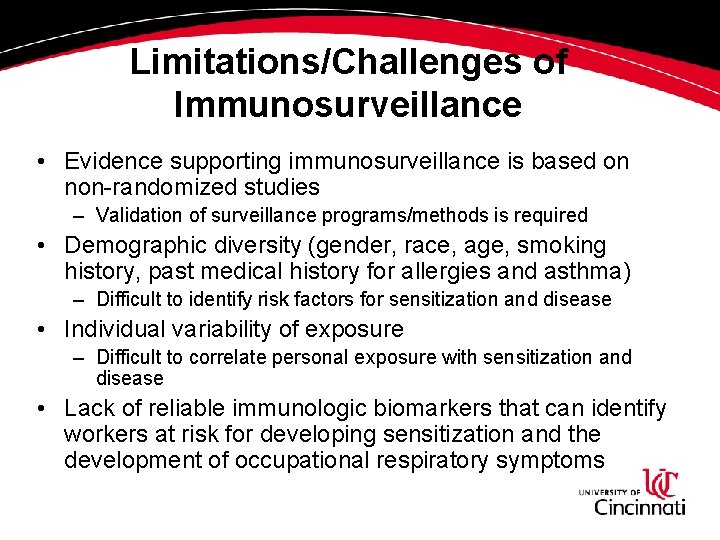
Limitations/Challenges of Immunosurveillance • Evidence supporting immunosurveillance is based on non-randomized studies – Validation of surveillance programs/methods is required • Demographic diversity (gender, race, age, smoking history, past medical history for allergies and asthma) – Difficult to identify risk factors for sensitization and disease • Individual variability of exposure – Difficult to correlate personal exposure with sensitization and disease • Lack of reliable immunologic biomarkers that can identify workers at risk for developing sensitization and the development of occupational respiratory symptoms
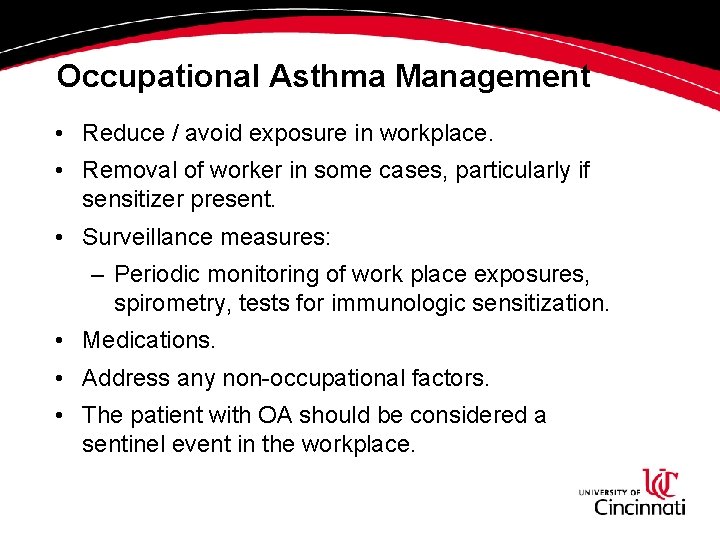
Occupational Asthma Management • Reduce / avoid exposure in workplace. • Removal of worker in some cases, particularly if sensitizer present. • Surveillance measures: – Periodic monitoring of work place exposures, spirometry, tests for immunologic sensitization. • Medications. • Address any non-occupational factors. • The patient with OA should be considered a sentinel event in the workplace.
Occupational Asthma Prognosis • Timely removal should result in improvement. • Residual disease: Isocyanates, red cedar, snow crab, some irritants, other agents. • Prognosis worse if: • longer duration of exposure, • greater severity / frequency of symptoms, • airway obstruction or hyper-reactivity, dual bronchial responses.
Occupational asthma prognosis • Restriction from exposure or removal from the job often has significant socioeconomic consequences for the worker: – Loss of income – Unemployment – Higher medication costs in those remaining in exposure • Be reasonably sure of the diagnosis and cause of OA before recommending job change.
Impairment and Disability from Occupational Asthma • Assess 2 yrs after removal from exposure • Respiratory impairment assessed by guidelines [ATS Guidelines ARRD 147: 1056 -61, 1993. ] – Degree of airway obstruction, reversibility – Airway hyperresponsiveness – Medication requirements • Disability – Limitation in work tasks or activities of daily living, including future work restrictions
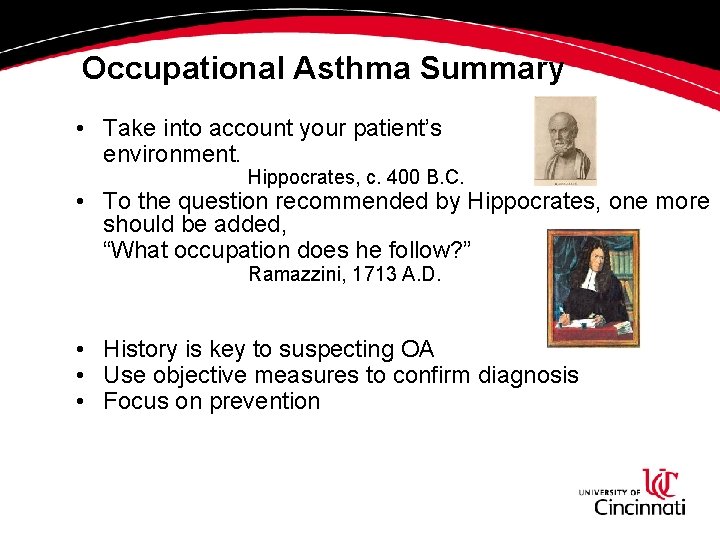
Occupational Asthma Summary • Take into account your patient’s environment. Hippocrates, c. 400 B. C. • To the question recommended by Hippocrates, one more should be added, “What occupation does he follow? ” Ramazzini, 1713 A. D. • History is key to suspecting OA • Use objective measures to confirm diagnosis • Focus on prevention
Acknowledgment • AAAAI • I. L. Bernstein, M. D. • Debajyoti Ghosh, Ph. D.
Third