
Bronchial Asthma 3 rd year Medical Students Dr
Bronchial Asthma 3 rd year Medical Students Dr R Nadama MD MRCP(lond) MRCP(UK), FRCP(Lond), EDARM, FCCP

Objectives • • Definition Epidemiology Pathophysiology Types Diagnosis Management Summary
Asthma • Word “asthma” is derived from the ancient Greek word for “panting. ” • Although asthma is a clearly recognized clinical entity, agreement on a precise definition of asthma has proved elusive. • Asthma has been more often described than defined.
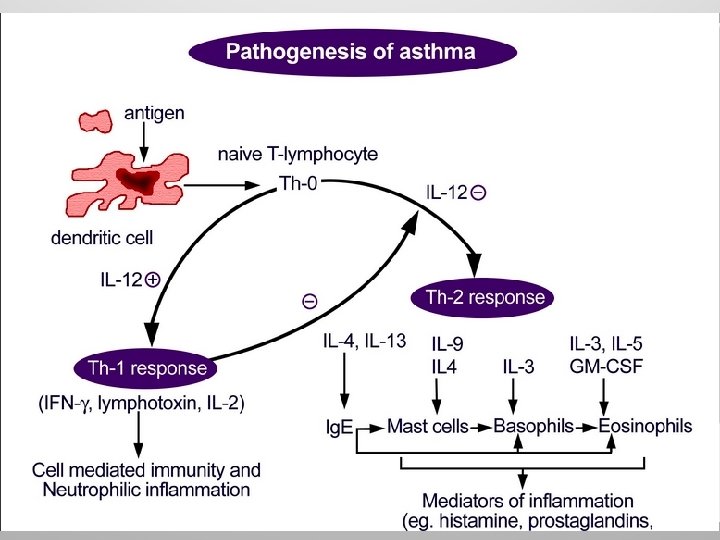
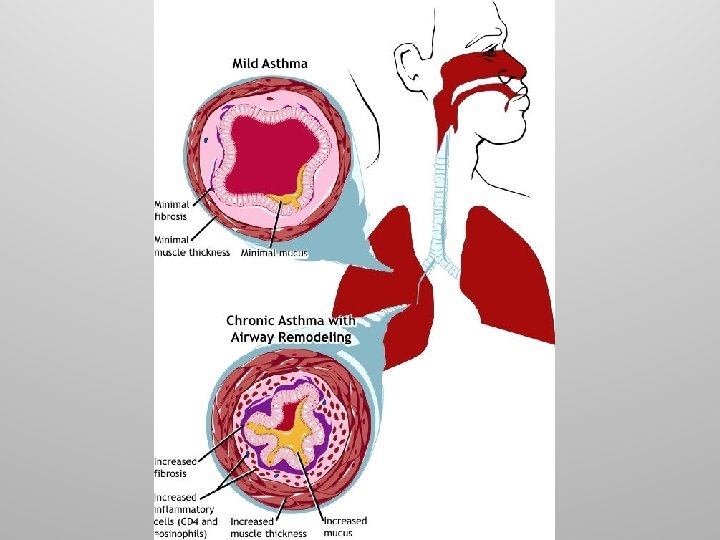
Definition Asthma is a chronic inflammatory disorder of the airways in which many cells play a role: in particular, mast cells, eosinophils, neutrophils. T lymphocytes, macrophages, and epithelial cells. In susceptible individuals, this inflammation causes recurrent episodes of coughing, wheezing, breathlessness, and chest tightness. These episodes are usually associated with widespread but variable airflow obstruction (airway hyper-responsiveness) that is often reversible either spontaneously or with treatment.
Epidemiology • • • Any age, 75% Dx age <7 Remission around puberty Prevalence on the rise. likely Multifactorial Wide geographical variation (4 -25%) Females 40% higher prevalence Severe asthma 10 % but morbidity / costs
Saudi Arabia Figures • Asthma affects >2 million Saudis • Asthma control: 5% were controlled, 31% partially controlled, 64% uncontrolled.
Etiology Although asthma is multifactorial in origin, inflammation is believed to be the cornerstone of the disease and is thought to result from inappropriate immune responses to a variety of antigens in genetically susceptible individuals.
Causes • • • Hygiene Hypothesis Atopy Genetics Smoking – controversial Obesity – New under Ix
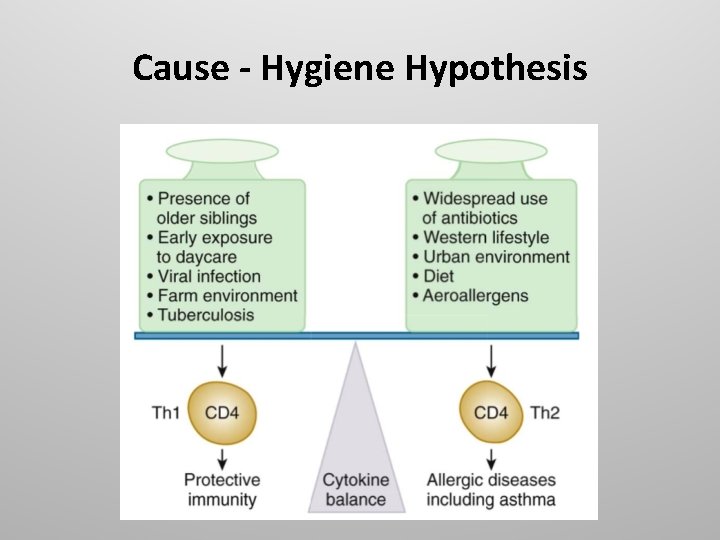
Cause - Hygiene Hypothesis
Asthma Types
Types • Phenotypes • Endotypes • Mixed or overlapping features


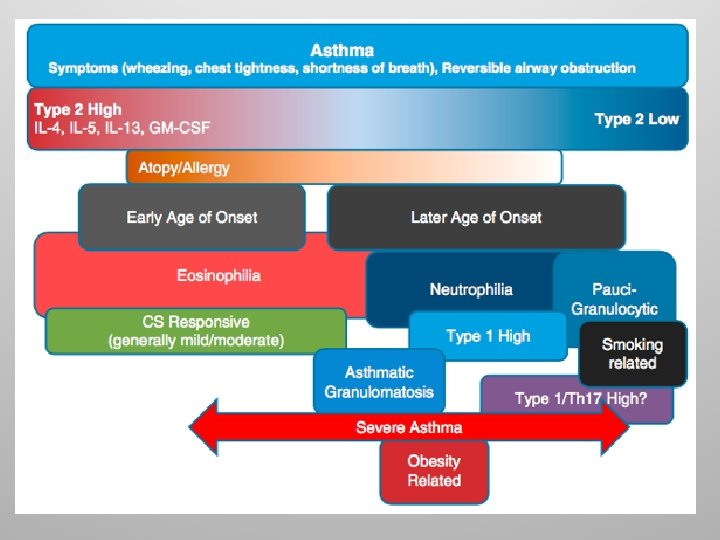
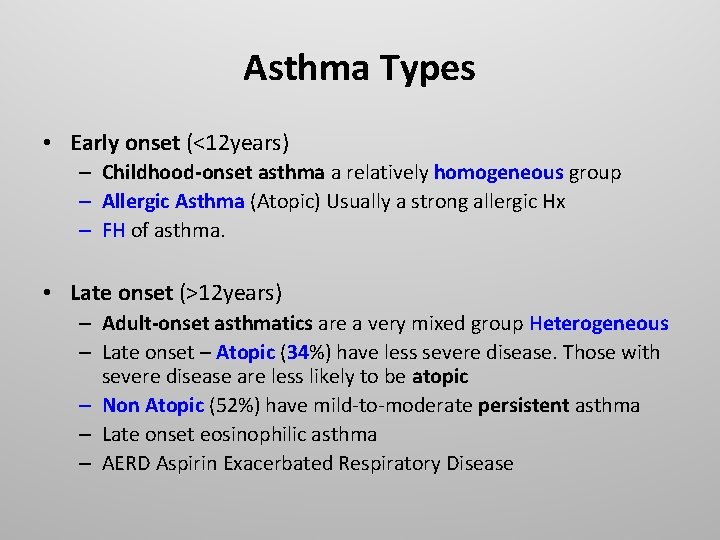
Asthma Types • Early onset (<12 years) – Childhood-onset asthma a relatively homogeneous group – Allergic Asthma (Atopic) Usually a strong allergic Hx – FH of asthma. • Late onset (>12 years) – Adult-onset asthmatics are a very mixed group Heterogeneous – Late onset – Atopic (34%) have less severe disease. Those with severe disease are less likely to be atopic – Non Atopic (52%) have mild-to-moderate persistent asthma – Late onset eosinophilic asthma – AERD Aspirin Exacerbated Respiratory Disease

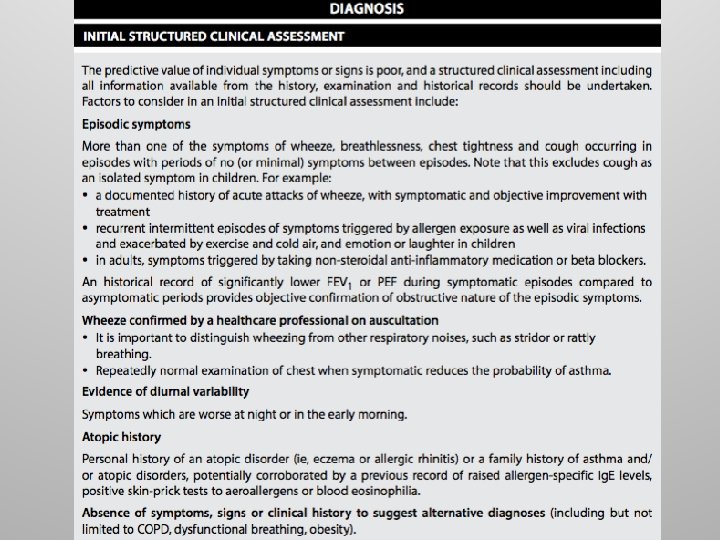
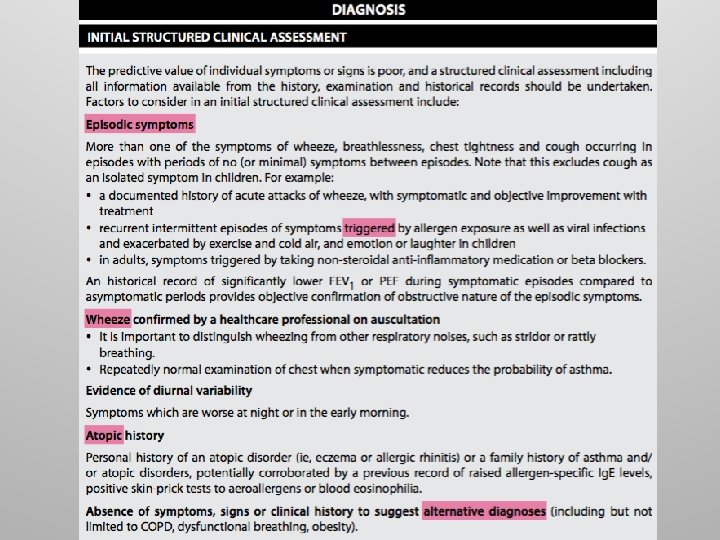
Diagnosis • • • History Examination Test

History
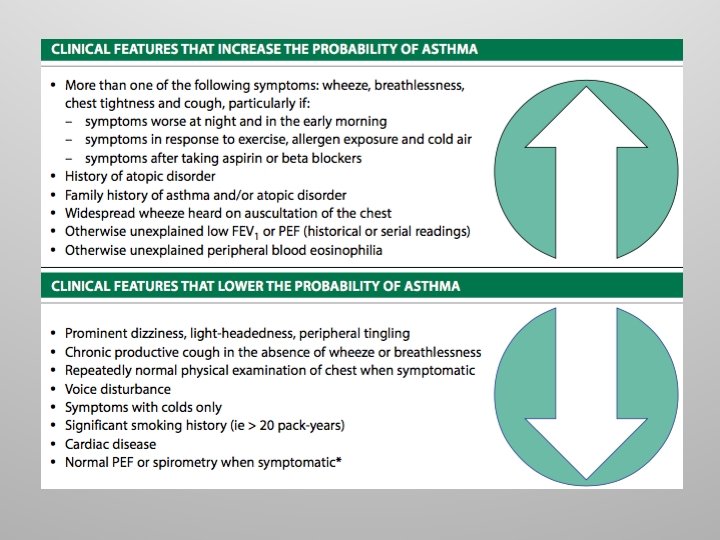

Differential Diagnosis
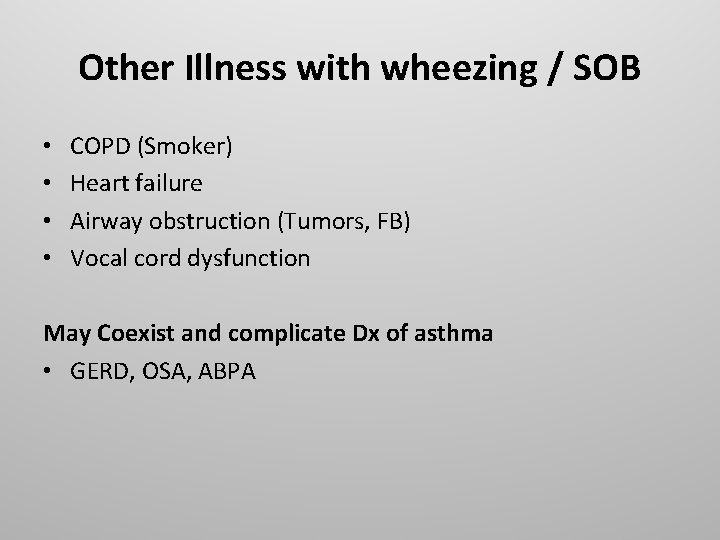
Other Illness with wheezing / SOB • • COPD (Smoker) Heart failure Airway obstruction (Tumors, FB) Vocal cord dysfunction May Coexist and complicate Dx of asthma • GERD, OSA, ABPA

Examination
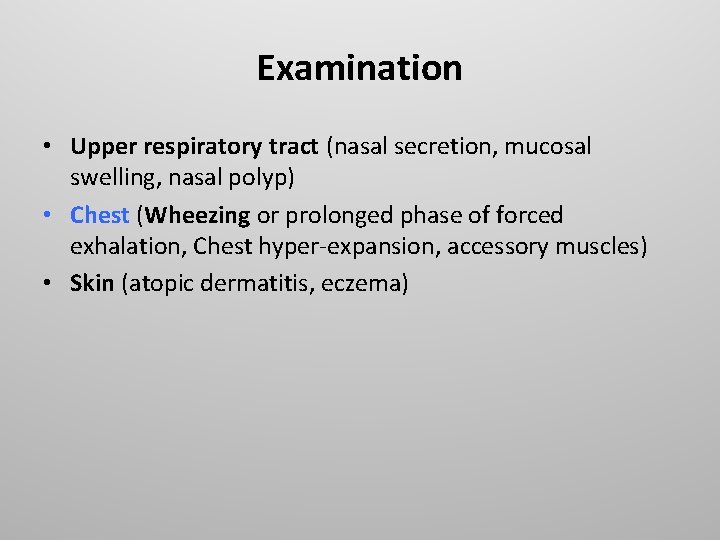
Examination • Upper respiratory tract (nasal secretion, mucosal swelling, nasal polyp) • Chest (Wheezing or prolonged phase of forced exhalation, Chest hyper-expansion, accessory muscles) • Skin (atopic dermatitis, eczema)
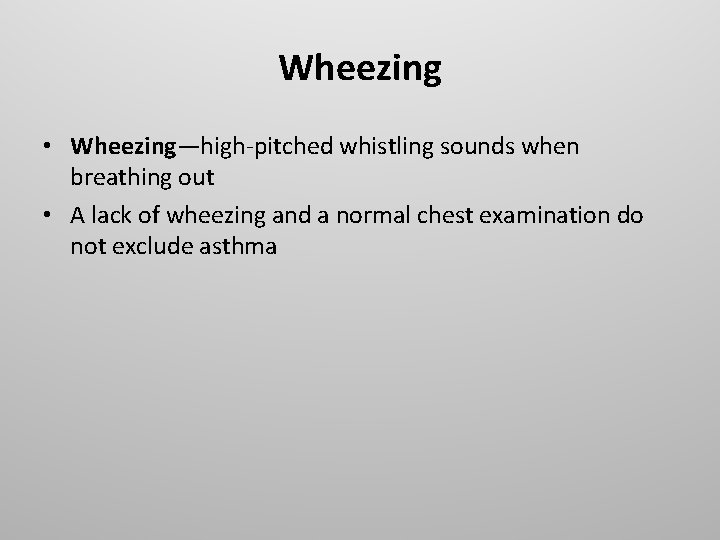
Wheezing • Wheezing—high-pitched whistling sounds when breathing out • A lack of wheezing and a normal chest examination do not exclude asthma
Wheeze

Investigations
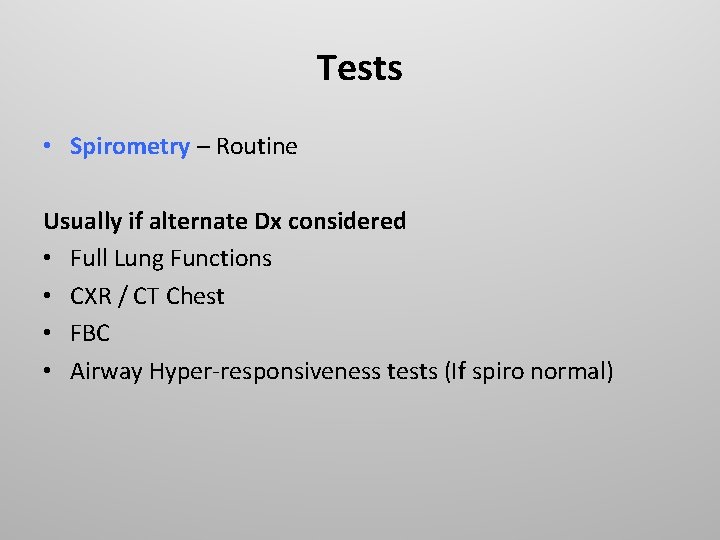
Tests • Spirometry – Routine Usually if alternate Dx considered • Full Lung Functions • CXR / CT Chest • FBC • Airway Hyper-responsiveness tests (If spiro normal)
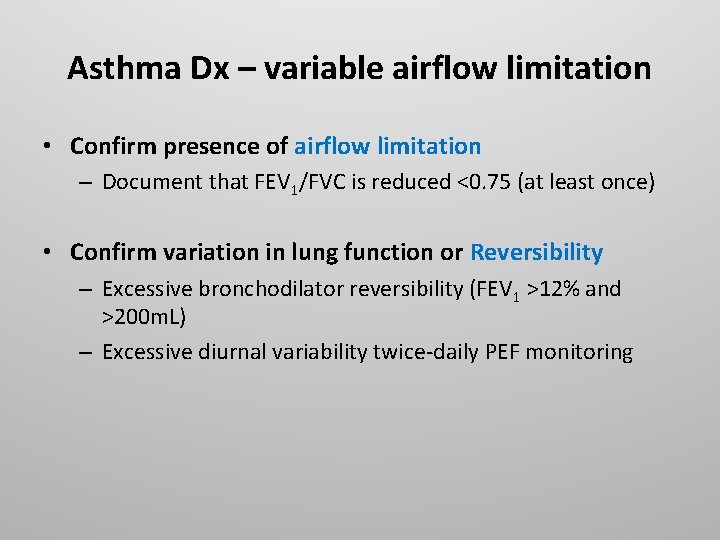
Asthma Dx – variable airflow limitation • Confirm presence of airflow limitation – Document that FEV 1/FVC is reduced <0. 75 (at least once) • Confirm variation in lung function or Reversibility – Excessive bronchodilator reversibility (FEV 1 >12% and >200 m. L) – Excessive diurnal variability twice-daily PEF monitoring
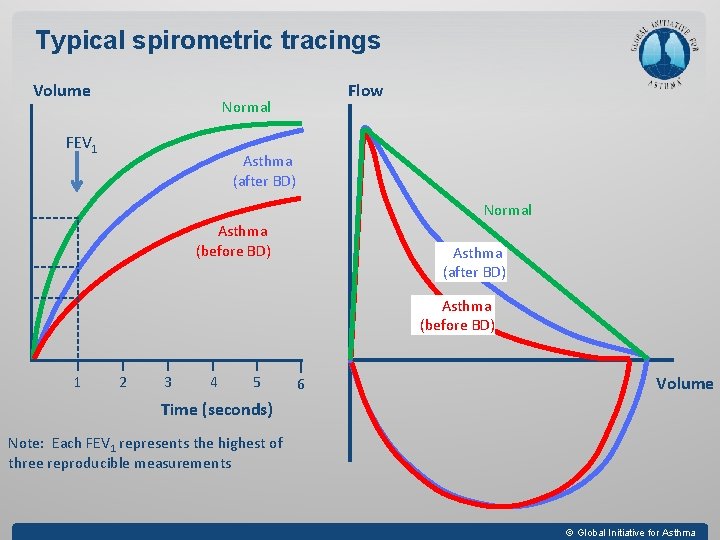
Typical spirometric tracings Volume Flow Normal FEV 1 Asthma (after BD) Normal Asthma (before BD) Asthma (after BD) Asthma (before BD) 1 2 3 4 5 6 Volume Time (seconds) Note: Each FEV 1 represents the highest of three reproducible measurements © Global Initiative for Asthma

Diagnostic Approach
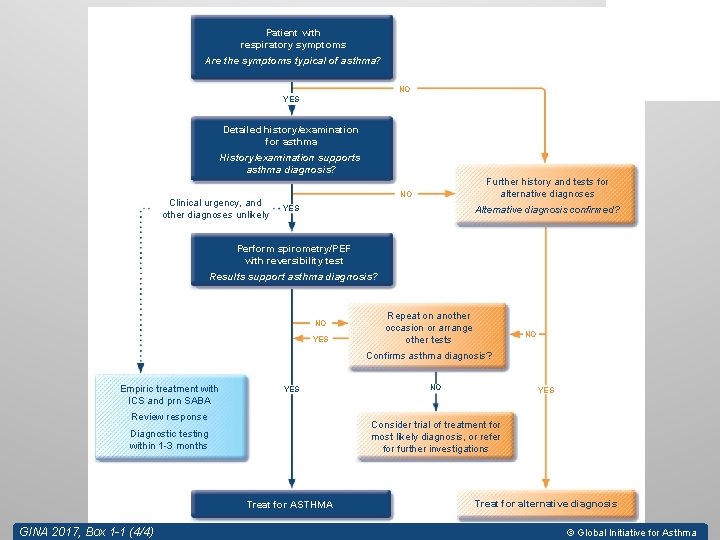
Patient with respiratory symptoms Are the symptoms typical of asthma? NO YES Detailed history/examination for asthma History/examination supports asthma diagnosis? Clinical urgency, and other diagnoses unlikely Further history and tests for alternative diagnoses NO Alternative diagnosis confirmed? YES Perform spirometry/PEF with reversibility test Results support asthma diagnosis? NO YES Repeat on another occasion or arrange other tests NO Confirms asthma diagnosis? Empiric treatment with ICS and prn SABA YES Review response YES Consider trial of treatment for most likely diagnosis, or refer for further investigations Diagnostic testing within 1 -3 months Treat for ASTHMA GINA 2017, Box 1 -1 (4/4) NO Treat for alternative diagnosis © Global Initiative for Asthma

Management
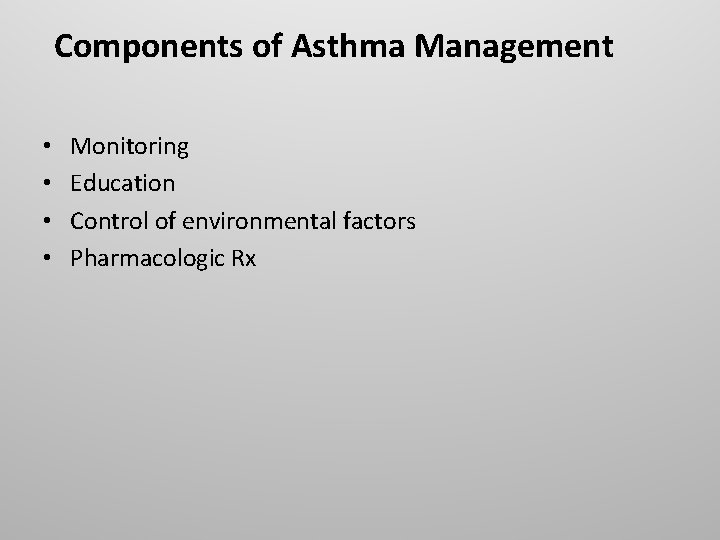
Components of Asthma Management • • Monitoring Education Control of environmental factors Pharmacologic Rx
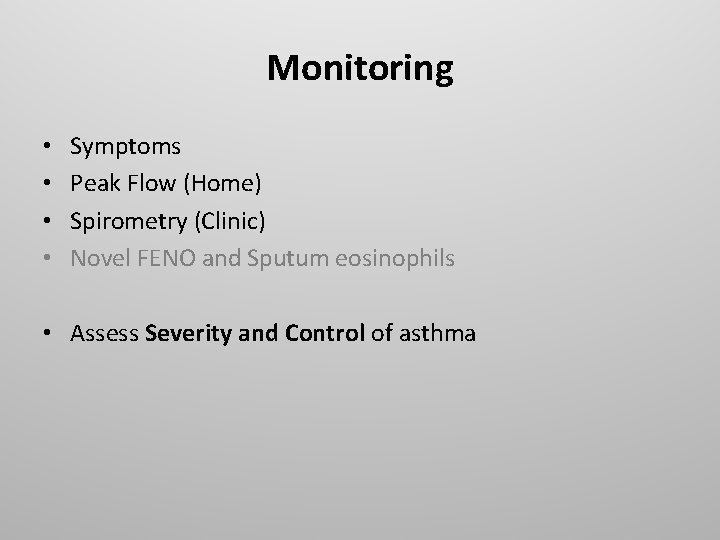
Monitoring • • Symptoms Peak Flow (Home) Spirometry (Clinic) Novel FENO and Sputum eosinophils • Assess Severity and Control of asthma
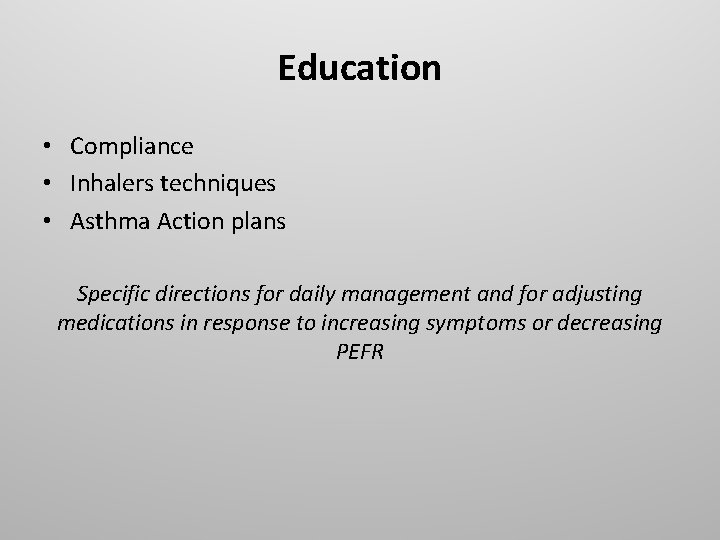
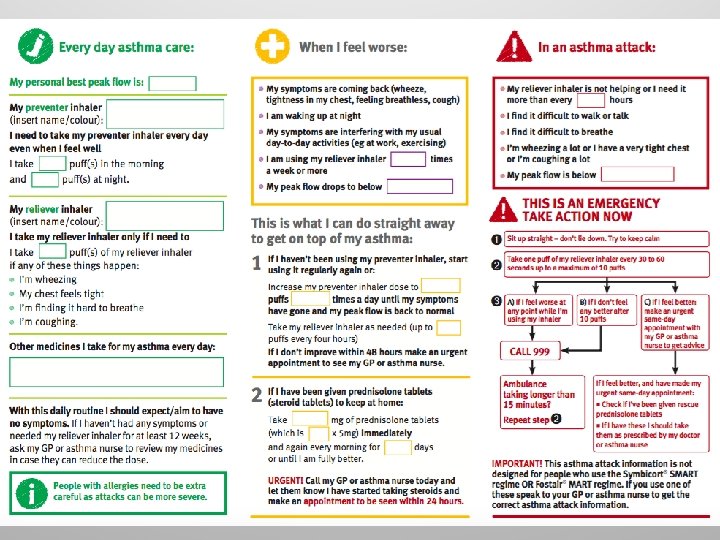
Education • Compliance • Inhalers techniques • Asthma Action plans Specific directions for daily management and for adjusting medications in response to increasing symptoms or decreasing PEFR
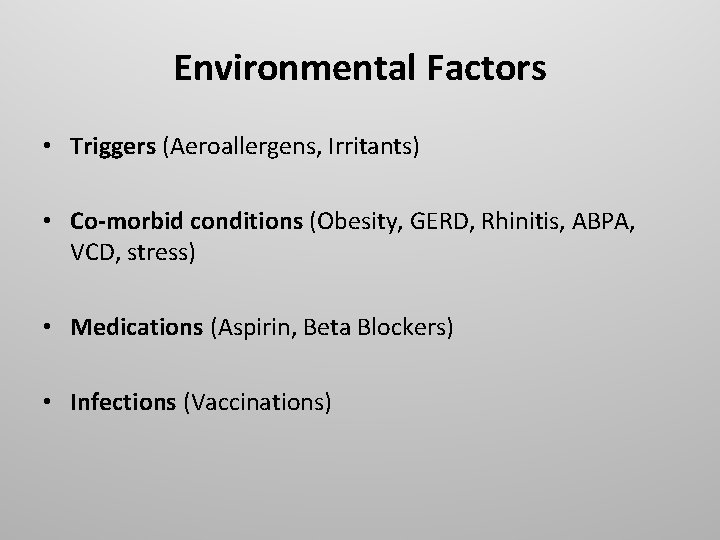
Environmental Factors • Triggers (Aeroallergens, Irritants) • Co-morbid conditions (Obesity, GERD, Rhinitis, ABPA, VCD, stress) • Medications (Aspirin, Beta Blockers) • Infections (Vaccinations)

Pharmacologic Management
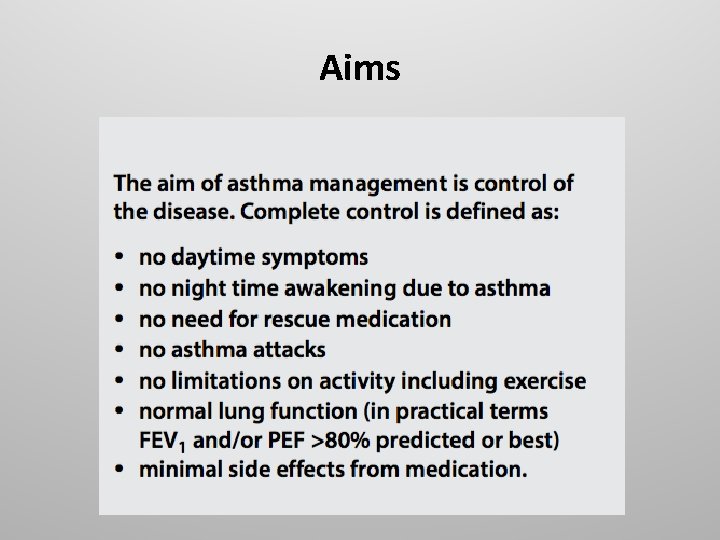
Aims
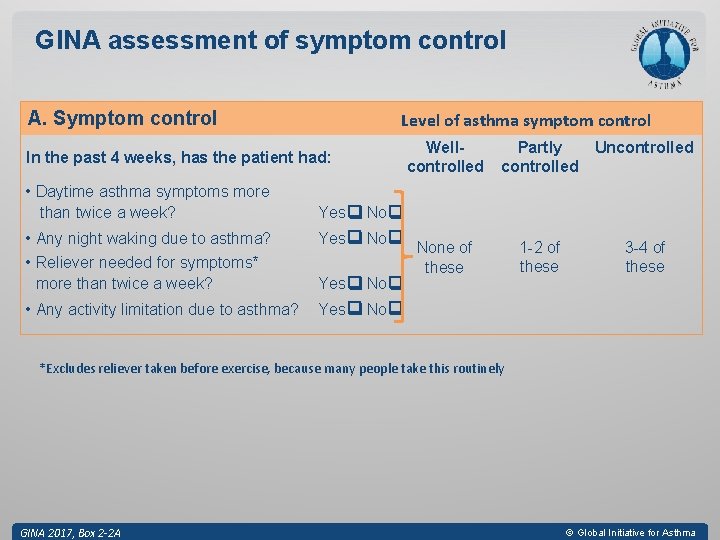
GINA assessment of symptom control A. Symptom control Level of asthma symptom control In the past 4 weeks, has the patient had: • Daytime asthma symptoms more than twice a week? Wellcontrolled Partly controlled Uncontrolled None of these 1 -2 of these 3 -4 of these Yes No • Any night waking due to asthma? • Reliever needed for symptoms* more than twice a week? Yes No • Any activity limitation due to asthma? Yes No *Excludes reliever taken before exercise, because many people take this routinely GINA 2017, Box 2 -2 A © Global Initiative for Asthma
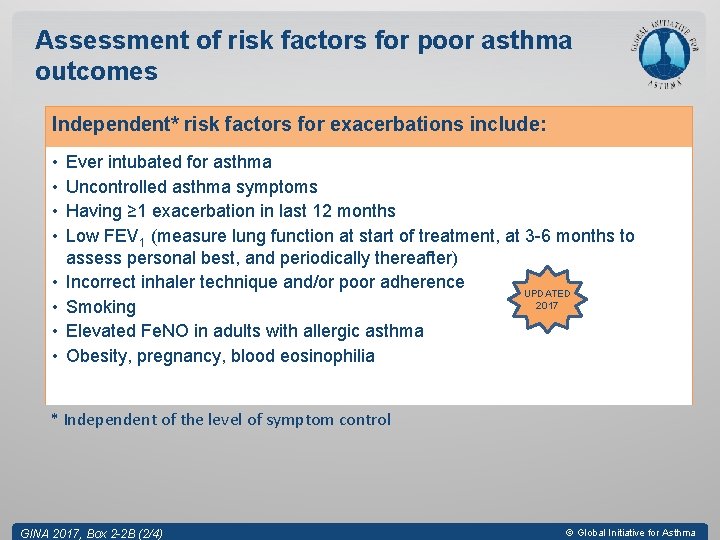
Assessment of risk factors for poor asthma outcomes Independent* for exacerbations Risk factorsrisk for factors exacerbations include: • • • Ever intubated asthma Ever intubated for asthma • Uncontrolled asthma symptoms • Having exacerbation in last months Having ≥ 1 exacerbation in last 12 12 months • Low FEV lung function at start of treatment, at 3 -6 months 1 (measure Low FEV lung function at start of treatment, at 3 -6 months to 1 (measure to assess personal and periodically thereafter) assess personal best, and periodically thereafter) • Incorrect inhaler technique and/or poor adherence UPDATED • Smoking 2017 Smoking • Obesity, pregnancy, Elevated Fe. NO in adultsblood with eosinophilia allergic asthma Obesity, pregnancy, blood eosinophilia * Independent of the level of symptom control GINA 2017, Box 2 -2 B (2/4) © Global Initiative for Asthma
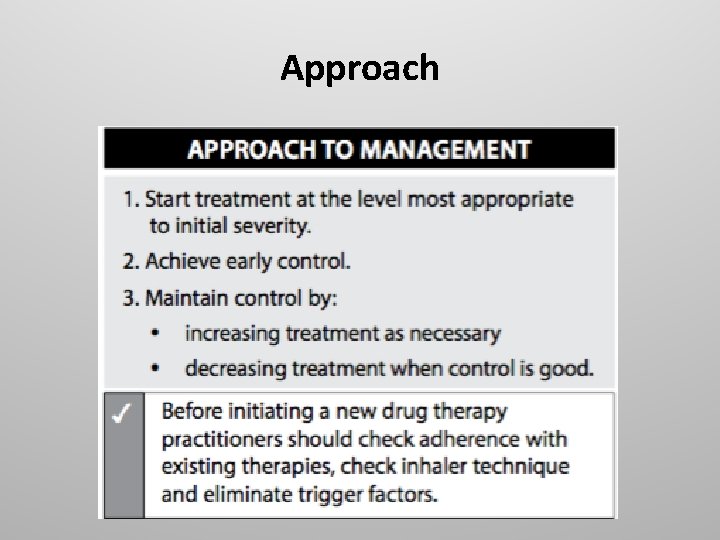
Approach
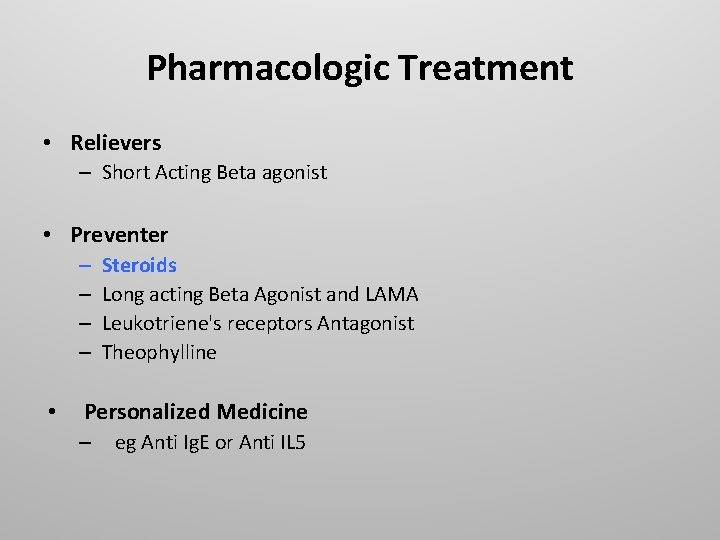
Pharmacologic Treatment • Relievers – Short Acting Beta agonist • Preventer – – • Steroids Long acting Beta Agonist and LAMA Leukotriene's receptors Antagonist Theophylline Personalized Medicine – eg Anti Ig. E or Anti IL 5
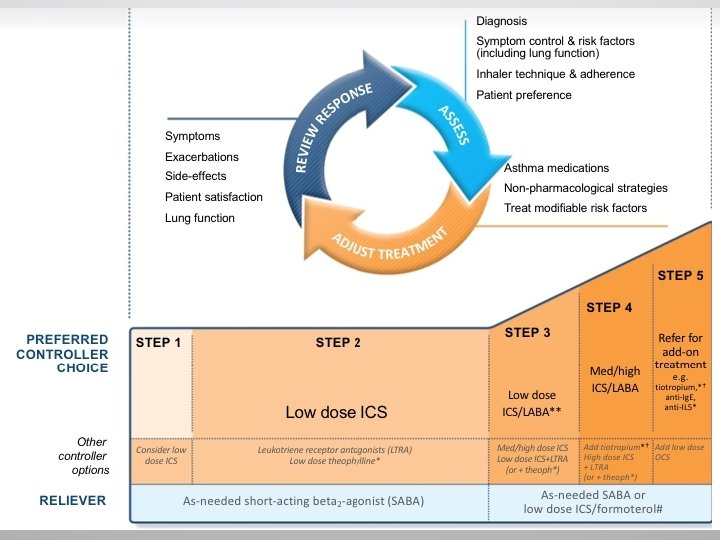
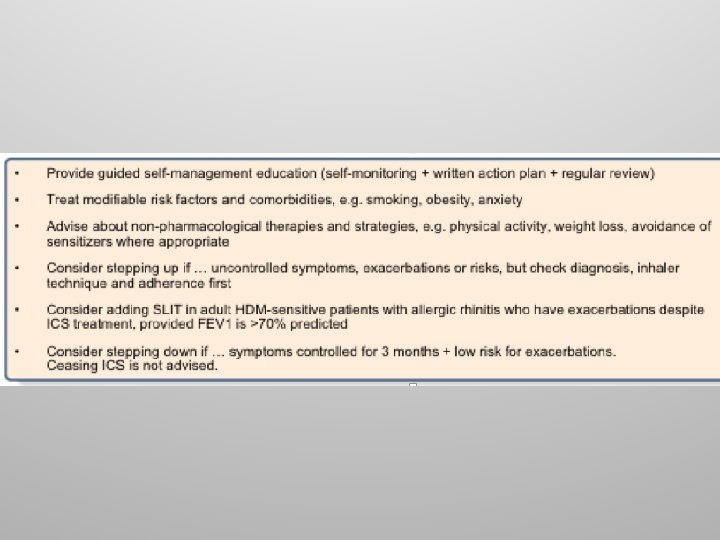
Asthma Self Management • Communicate and educate patient • A written asthma action plan includes all the information you need to look after your asthma well, so you’ll have fewer symptoms and significantly cut your risk of an asthma attack.
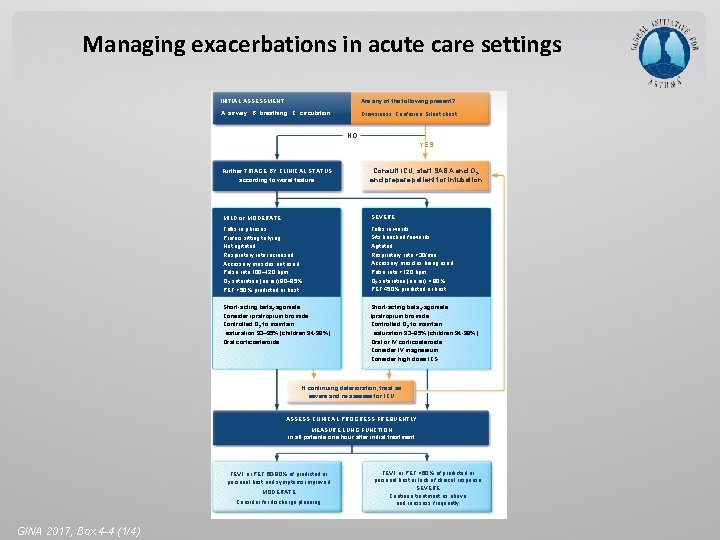
Managing exacerbations in acute care settings INITIAL ASSESSMENT Are any of the following present? A: airway B: breathing C: circulation Drowsiness, Confusion, Silent chest NO YES Further TRIAGE BY CLINICAL STATUS according to worst feature Consult ICU, start SABA and O 2, and prepare patient for intubation MILD or MODERATE SEVERE Talks in phrases Prefers sitting to lying Not agitated Respiratory rate increased Accessory muscles not used Pulse rate 100– 120 bpm O 2 saturation (on air) 90– 95% PEF >50% predicted or best Talks in words Sits hunched forwards Agitated Respiratory rate >30/min Accessory muscles being used Pulse rate >120 bpm O 2 saturation (on air) < 90% PEF ≤ 50% predicted or best Short-acting beta 2 -agonists Consider ipratropium bromide Controlled O 2 to maintain saturation 93– 95% (children 94 -98%) Oral corticosteroids Short-acting beta 2 -agonists Ipratropium bromide Controlled O 2 to maintain saturation 93– 95% (children 94 -98%) Oral or IV corticosteroids Consider IV magnesium Consider high dose ICS If continuing deterioration, treat as severe and re-aassess for ICU ASSESS CLINICAL PROGRESS FREQUENTLY MEASURE LUNG FUNCTION in all patients one hour after initial treatment FEV 1 or PEF 60 -80% of predicted or personal best and symptoms improved MODERATE Consider for discharge planning GINA 2017, Box 4 -4 (1/4) FEV 1 or PEF <60% of predicted or personal best, or lack of clinical response SEVERE Continue treatment as above and reassess frequently
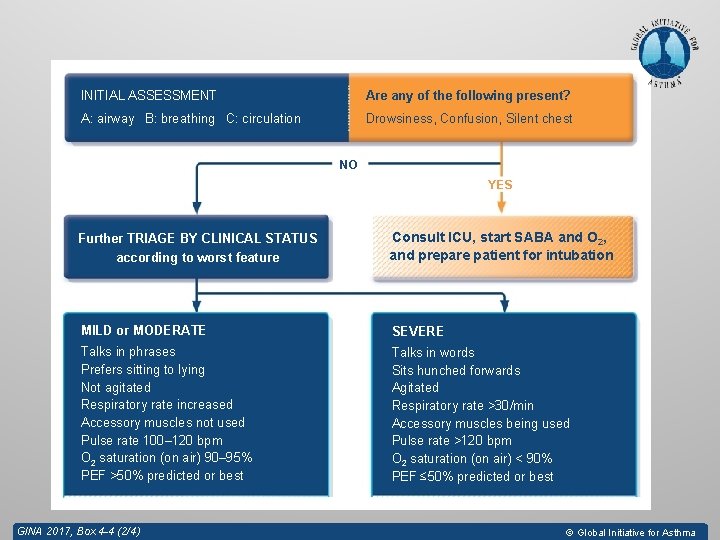
INITIAL ASSESSMENT Are any of the following present? A: airway B: breathing C: circulation Drowsiness, Confusion, Silent chest NO YES Further TRIAGE BY CLINICAL STATUS according to worst feature Consult ICU, start SABA and O 2, and prepare patient for intubation MILD or MODERATE SEVERE Talks in phrases Prefers sitting to lying Not agitated Respiratory rate increased Accessory muscles not used Pulse rate 100– 120 bpm O 2 saturation (on air) 90– 95% PEF >50% predicted or best Talks in words Sits hunched forwards Agitated Respiratory rate >30/min Accessory muscles being used Pulse rate >120 bpm O 2 saturation (on air) < 90% PEF ≤ 50% predicted or best GINA 2017, Box 4 -4 (2/4) © Global Initiative for Asthma
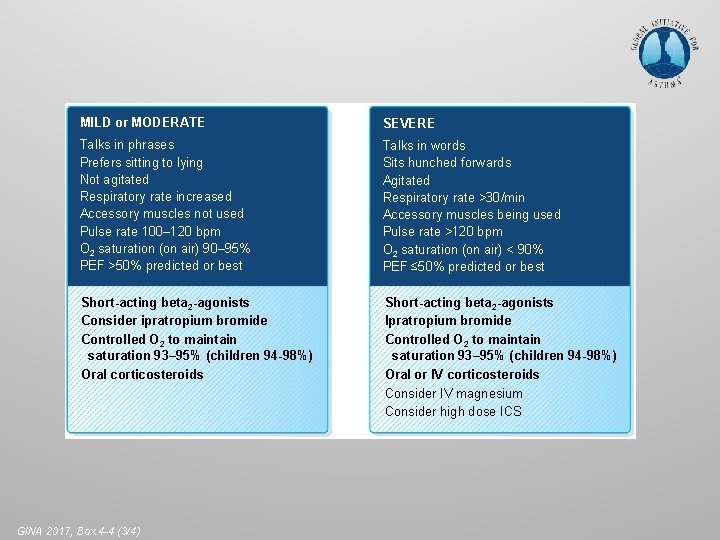
MILD or MODERATE SEVERE Talks in phrases Prefers sitting to lying Not agitated Respiratory rate increased Accessory muscles not used Pulse rate 100– 120 bpm O 2 saturation (on air) 90– 95% PEF >50% predicted or best Talks in words Sits hunched forwards Agitated Respiratory rate >30/min Accessory muscles being used Pulse rate >120 bpm O 2 saturation (on air) < 90% PEF ≤ 50% predicted or best Short-acting beta 2 -agonists Consider ipratropium bromide Controlled O 2 to maintain saturation 93– 95% (children 94 -98%) Oral corticosteroids Short-acting beta 2 -agonists Ipratropium bromide Controlled O 2 to maintain saturation 93– 95% (children 94 -98%) Oral or IV corticosteroids Consider IV magnesium Consider high dose ICS GINA 2017, Box 4 -4 (3/4)
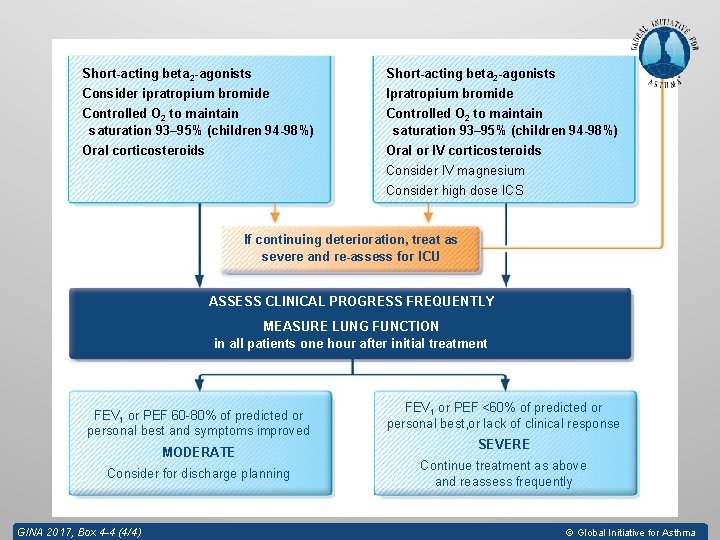
Short-acting beta 2 -agonists Consider ipratropium bromide Ipratropium bromide Controlled O 2 to maintain saturation 93– 95% (children 94 -98%) Oral corticosteroids Oral or IV corticosteroids Consider IV magnesium Consider high dose ICS If continuing deterioration, treat as severe and re-assess for ICU ASSESS CLINICAL PROGRESS FREQUENTLY MEASURE LUNG FUNCTION in all patients one hour after initial treatment FEV 1 or PEF 60 -80% of predicted or personal best and symptoms improved MODERATE Consider for discharge planning GINA 2017, Box 4 -4 (4/4) FEV 1 or PEF <60% of predicted or personal best, or lack of clinical response SEVERE Continue treatment as above and reassess frequently © Global Initiative for Asthma
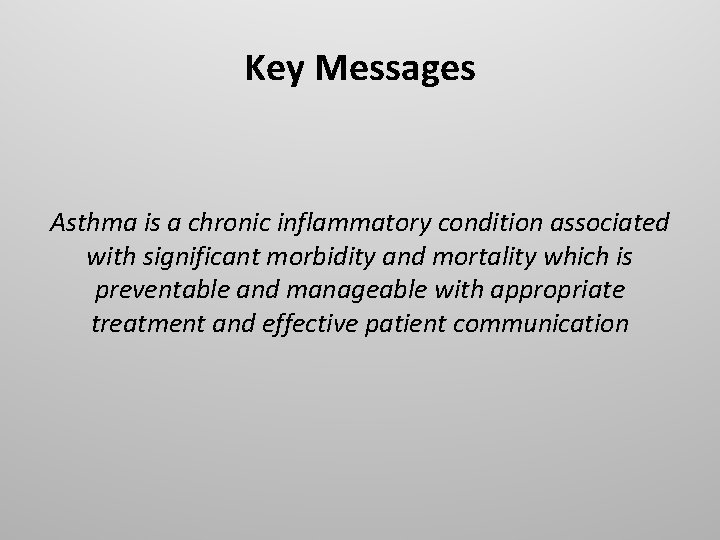
Key Messages Asthma is a chronic inflammatory condition associated with significant morbidity and mortality which is preventable and manageable with appropriate treatment and effective patient communication
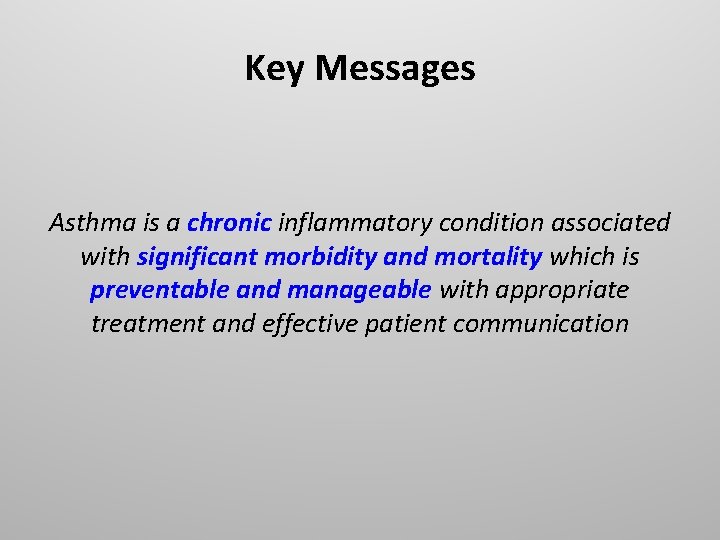
Key Messages Asthma is a chronic inflammatory condition associated with significant morbidity and mortality which is preventable and manageable with appropriate treatment and effective patient communication

References • • • International Clinical Guidelines GINA, BTS, SINA National Asthma Education and Prevention Program: Expert panel report III: Guidelines for the diagnosis and management of asthma. Bethesda, MD: National Heart, Lung, and Blood Institute, 2007. (NIH publication no. 08 -4051) www. nhlbi. nih. gov/guidelines/asthma/asthgdln. htm Smith HR, Irvin CG, Cherniack RM. The utility of spirometry in the diagnosis of reversible airways obstruction. Chest 1992; 101: 1577 Gender differences in prevalence, diagnosis and incidence of allergic and nonallergic asthma: a population-based cohort; Thorax 2012; 67: 625631 doi: 10. 1136/thoraxjnl-2011 -201249 Al Frayh AR, Shakoor Z, Gad El Rab MO, Hasnain SM. Increased prevalence of asthma in Saudi Arabia. Ann Allergy Asthma Immunol 2001; 86: 292 -6. [PUBMED]
- Slides: 57