The approach to the critically ill patient Nick


- Slides: 40
The approach to the critically ill patient Nick Smith Clinical Skills
Objectives • • • The rational of ABCDE The process of primary & secondary survey Recognition of life threatening events Treatment of life-threatening conditions Handover
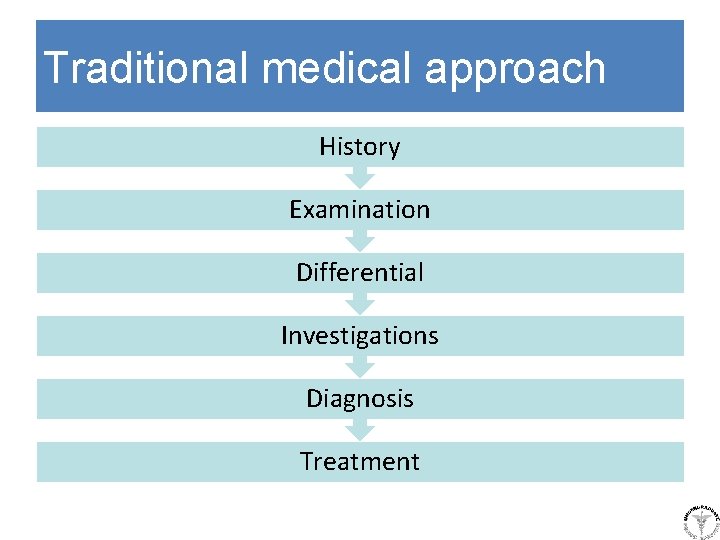
Traditional medical approach History Examination Differential Investigations Diagnosis Treatment
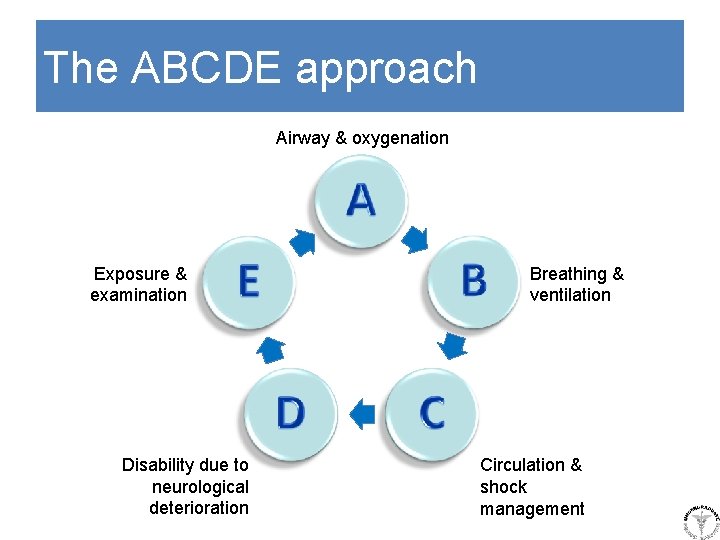
The ABCDE approach Airway & oxygenation A Exposure & examination E B D Disability due to neurological deterioration Breathing & ventilation C Circulation & shock management
The principles • Perform primary ABCDE survey (5 min) • Instigate treatment for life threatening conditions as you find them • Reassess when any treatment is completed • Perform more detailed secondary ABCDE survey including investigations • If condition deteriorates repeat primary survey
The primary survey • ABCDE assessment looking for immediately life threatening conditions • Rapid intervention usually includes max O 2, IV access, fluid challenge +/- specific treatment • Should take no longer than 5 min • Can be repeated as many times as necessary • Get experienced help as soon as you need it • If you have a team delegate jobs
The secondary survey • • • Performed when patient more stable Get a brief relevant HPC & Hx More detailed examination of patient (ABCDE) Order investigations to aid diagnosis IF PATIENT DETERIORATES RETURN TO PRIMARY SURVEY
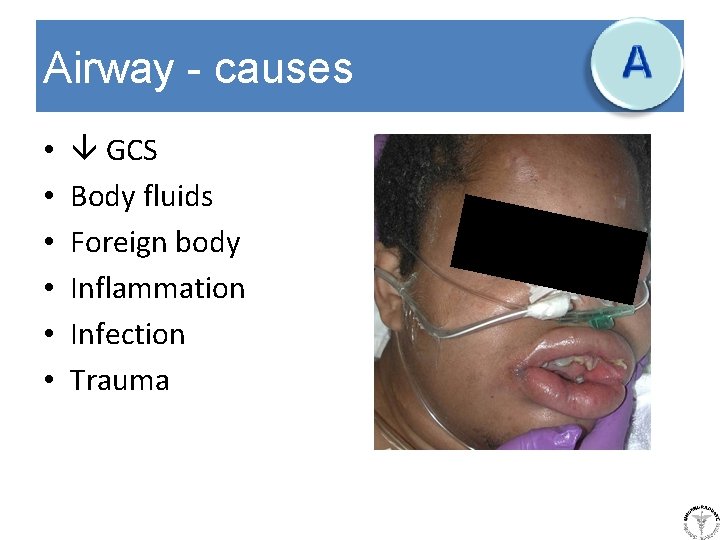
Airway - causes • • • GCS Body fluids Foreign body Inflammation Infection Trauma
Airway - assessment • Unresponsive • Added sounds – Snoring, gurgling, wheeze, stridor • Tracheal tug • Accessory muscles • See-saw respiratory pattern
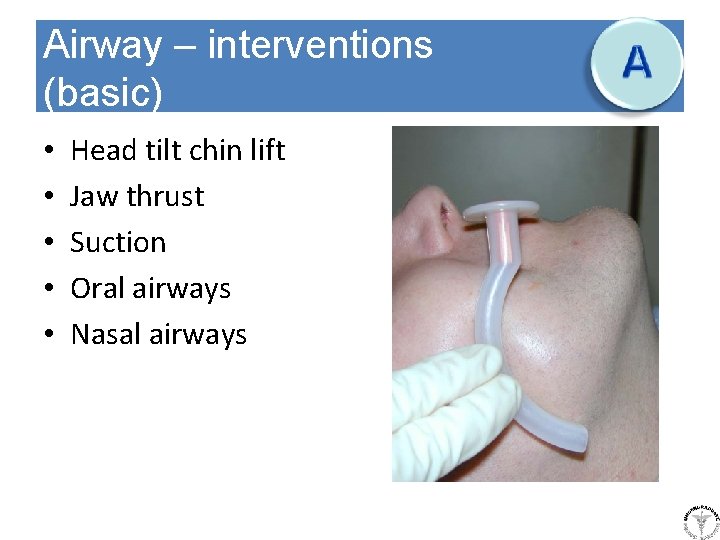
Airway – interventions (basic) • • • Head tilt chin lift Jaw thrust Suction Oral airways Nasal airways
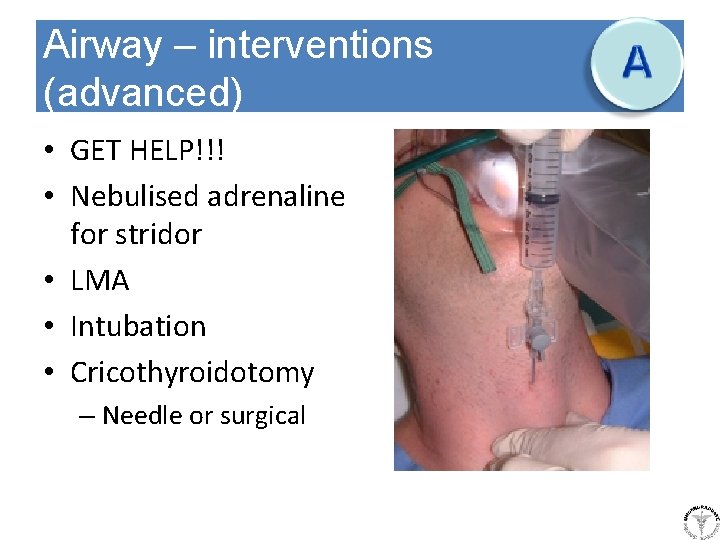
Airway – interventions (advanced) • GET HELP!!! • Nebulised adrenaline for stridor • LMA • Intubation • Cricothyroidotomy – Needle or surgical
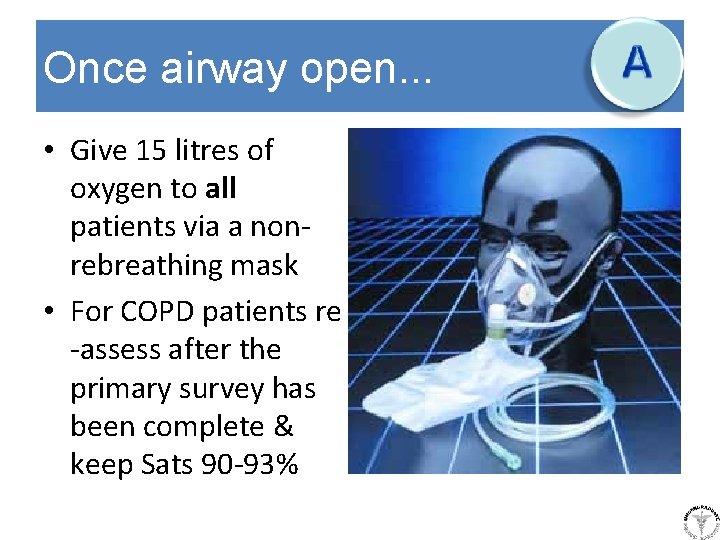
Once airway open. . . • Give 15 litres of oxygen to all patients via a nonrebreathing mask • For COPD patients re -assess after the primary survey has been complete & keep Sats 90 -93%
Breathing - causes • • GCS Resp depressions Muscle weakness Exhaustion Asthma COPD Infection • • Pulmonary oedema Pulmonary embolus ARDS Pneumothorax Haemothorax Open pneumothorax Flail chest
Breathing - assessment • Look – Rate (<10 or >20), symmetry, effort, Sp. O 2, colour • Listen – Taking: sentences, phrases, words – Bilateral air entry, wheeze, silent chest other added sounds • Feel – Central trachea, Percussion, expansion
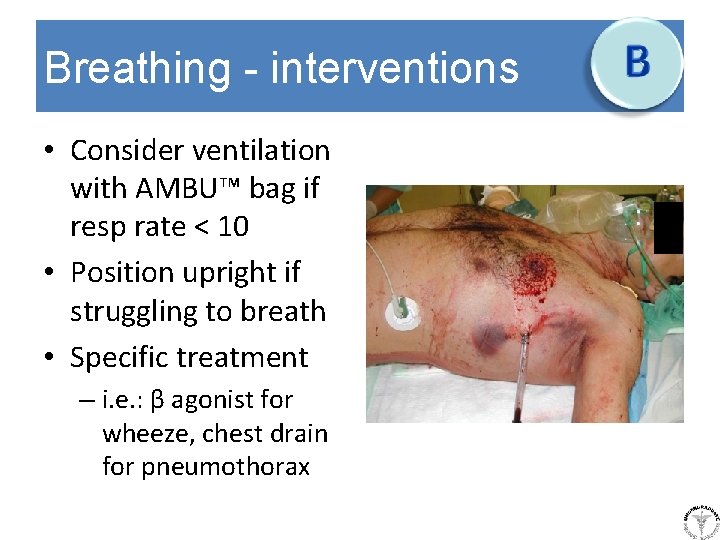
Breathing - interventions • Consider ventilation with AMBU™ bag if resp rate < 10 • Position upright if struggling to breath • Specific treatment – i. e. : β agonist for wheeze, chest drain for pneumothorax
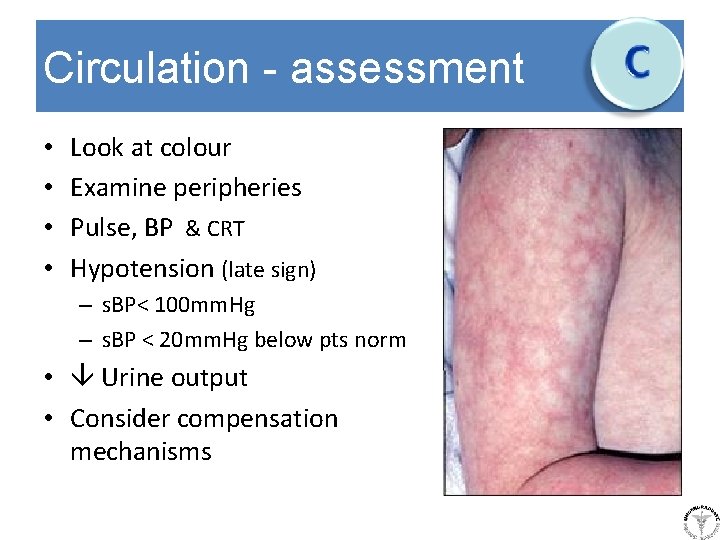
Circulation - assessment • • Look at colour Examine peripheries Pulse, BP & CRT Hypotension (late sign) – s. BP< 100 mm. Hg – s. BP < 20 mm. Hg below pts norm • Urine output • Consider compensation mechanisms
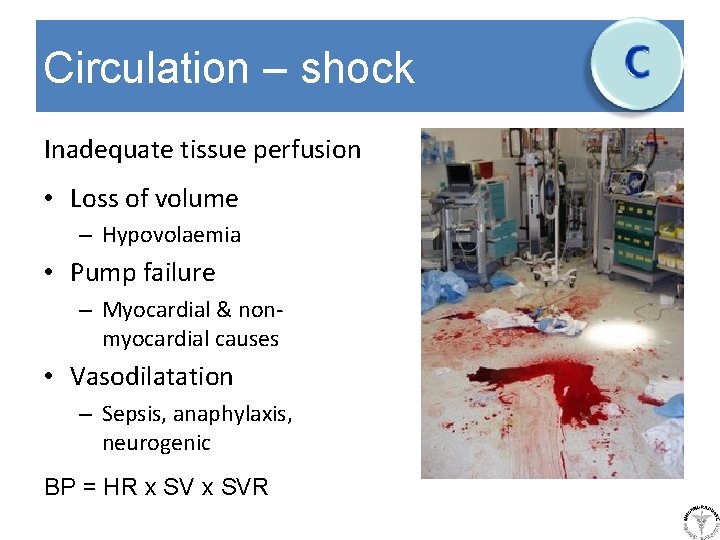
Circulation – shock Inadequate tissue perfusion • Loss of volume – Hypovolaemia • Pump failure – Myocardial & nonmyocardial causes • Vasodilatation – Sepsis, anaphylaxis, neurogenic BP = HR x SVR
Circulation - interventions • Position supine with legs raised – Left lateral tilt in pregnancy • IV access - 16 G or larger x 2 – +/- bloods if new cannula • Fluid challenge – colloid or crystalloid? • ECG Monitoring • Specific treatment
Disability - causes • • • Inadequate perfusion of the brain Sedative side effects of drugs BM Toxins and poisons CVA ICP
Disability - assessment • AVPU (or GCS) – Alert, responds to Voice, responds to Pain, Unresponsive • • Pupil size/response Posture BM Pain relief
Disability - interventions • Optimise airway, breathing & circulation • Treat underlying cause – i. e. : naloxone for opiate toxicity – Caution if reversing benzo’s • Treat BM – 100 ml of 10% dextrose (or 20 ml of 50% dextrose) • Control seizures • Seek expert help for CVA or ICP
Exposure • Remove clothes and examine head to toe front and back – Haemorrhage (inc concealed), rashes, swelling etc • Keep warm (unless post cardiac arrest) • Maintain dignity
Secondary survey • Repeat ABCDE in more detail • History • Order investigations – ABG, CXR, 12 lead ECG, Specific bloods • Management plan • Referral • Handover
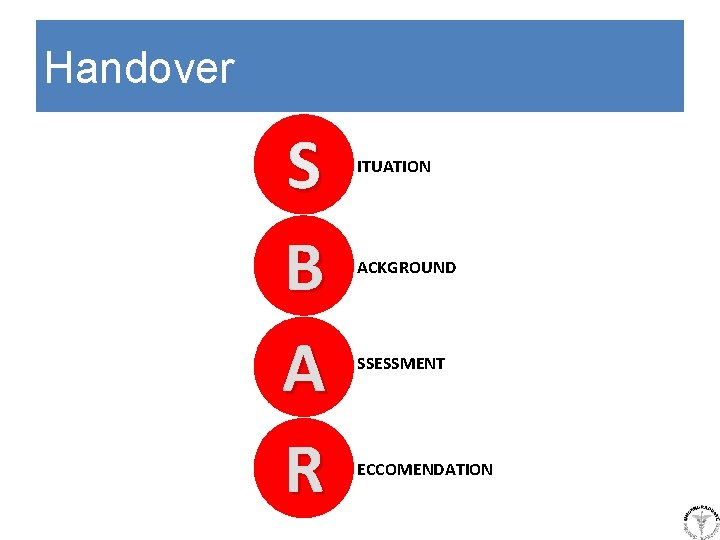
Handover S B A R ITUATION ACKGROUND SSESSMENT ECCOMENDATION
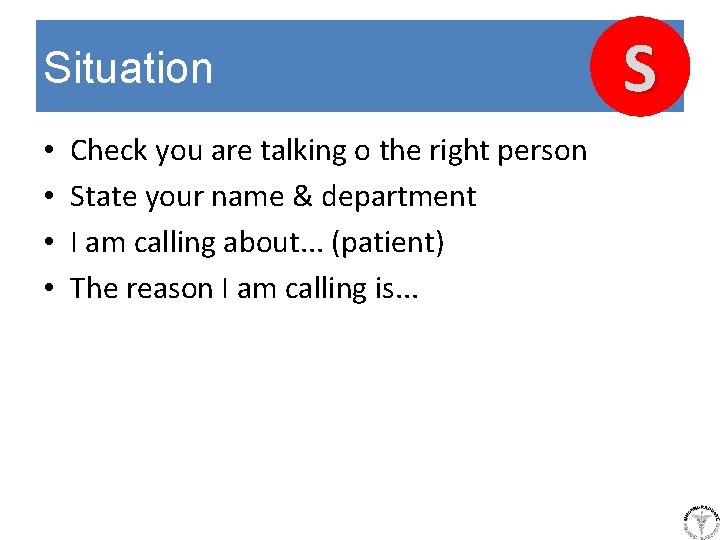
Situation • • Check you are talking o the right person State your name & department I am calling about. . . (patient) The reason I am calling is. . . S
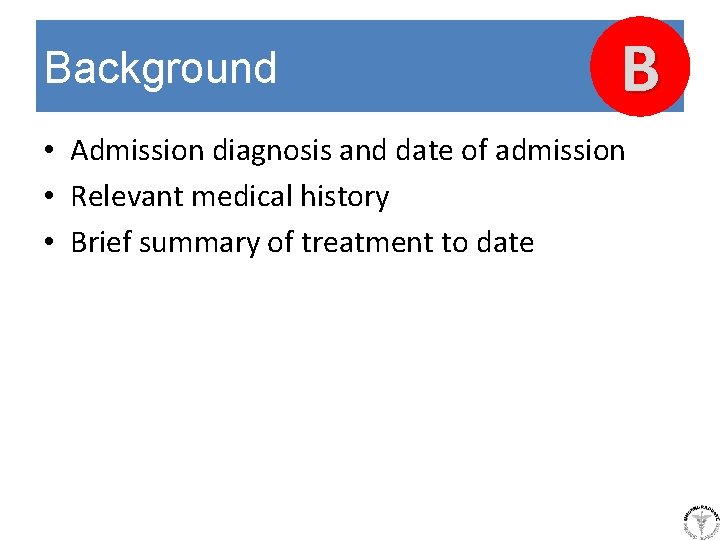
Background B • Admission diagnosis and date of admission • Relevant medical history • Brief summary of treatment to date
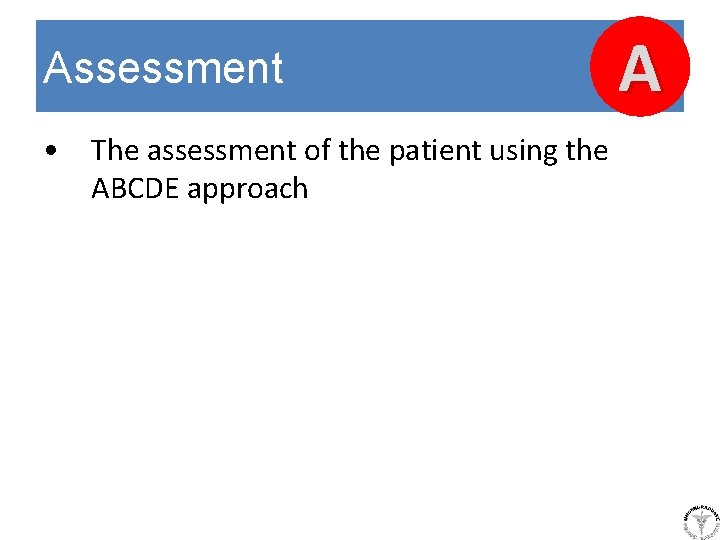
Assessment • The assessment of the patient using the ABCDE approach A
Recommendation • • R I would like you to. . . Determine the time scale Is there anything else I should do? Record the name and contact number of your contact
Questions ?
Summary • Assess ABCDE in turn • Instigate treatments for life-threatening problems as you find them • Reassess following treatment • If anything changes go back to A
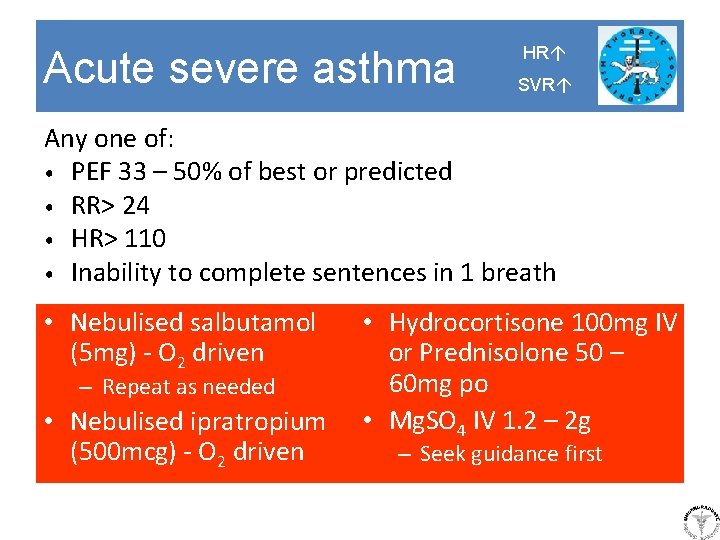
Acute severe asthma HR SVR Any one of: • PEF 33 – 50% of best or predicted • RR> 24 • HR> 110 • Inability to complete sentences in 1 breath • Nebulised salbutamol (5 mg) - O 2 driven – Repeat as needed • Nebulised ipratropium (500 mcg) - O 2 driven • Hydrocortisone 100 mg IV or Prednisolone 50 – 60 mg po • Mg. SO 4 IV 1. 2 – 2 g – Seek guidance first
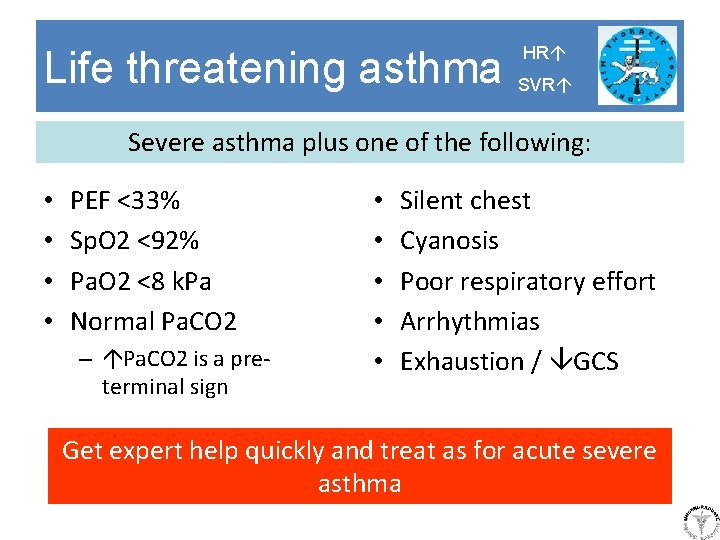
Life threatening asthma HR SVR Severe asthma plus one of the following: • • PEF <33% Sp. O 2 <92% Pa. O 2 <8 k. Pa Normal Pa. CO 2 – Pa. CO 2 is a preterminal sign • • • Silent chest Cyanosis Poor respiratory effort Arrhythmias Exhaustion / GCS Get expert help quickly and treat as for acute severe asthma
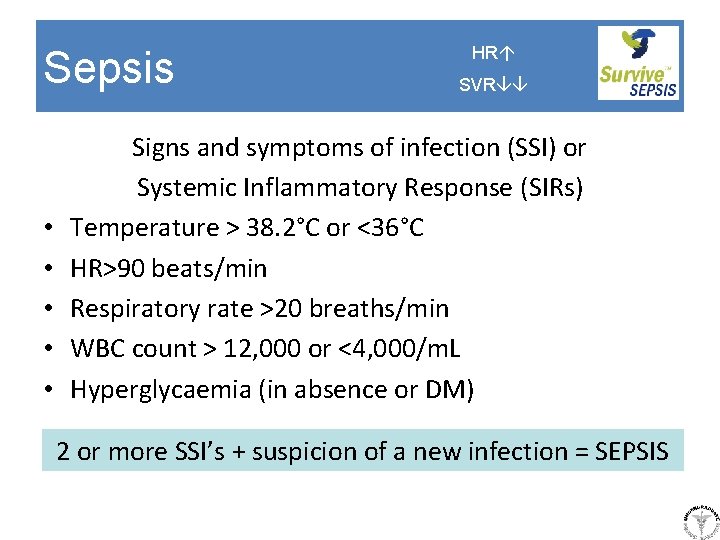
Sepsis • • • HR SVR Signs and symptoms of infection (SSI) or Systemic Inflammatory Response (SIRs) Temperature > 38. 2°C or <36°C HR>90 beats/min Respiratory rate >20 breaths/min WBC count > 12, 000 or <4, 000/m. L Hyperglycaemia (in absence or DM) 2 or more SSI’s + suspicion of a new infection = SEPSIS
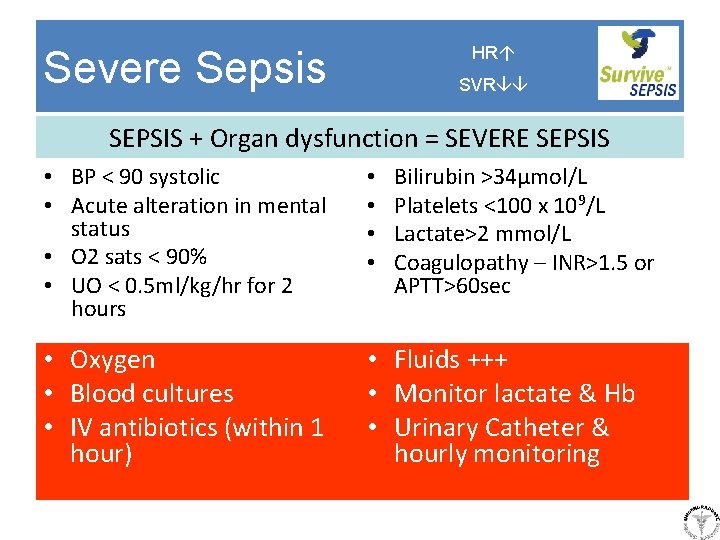
HR Severe Sepsis SVR SEPSIS + Organ dysfunction = SEVERE SEPSIS • BP < 90 systolic • Acute alteration in mental status • O 2 sats < 90% • UO < 0. 5 ml/kg/hr for 2 hours • • Bilirubin >34µmol/L Platelets <100 x 109/L Lactate>2 mmol/L Coagulopathy – INR>1. 5 or APTT>60 sec • Oxygen • Blood cultures • IV antibiotics (within 1 hour) • Fluids +++ • Monitor lactate & Hb • Urinary Catheter & hourly monitoring
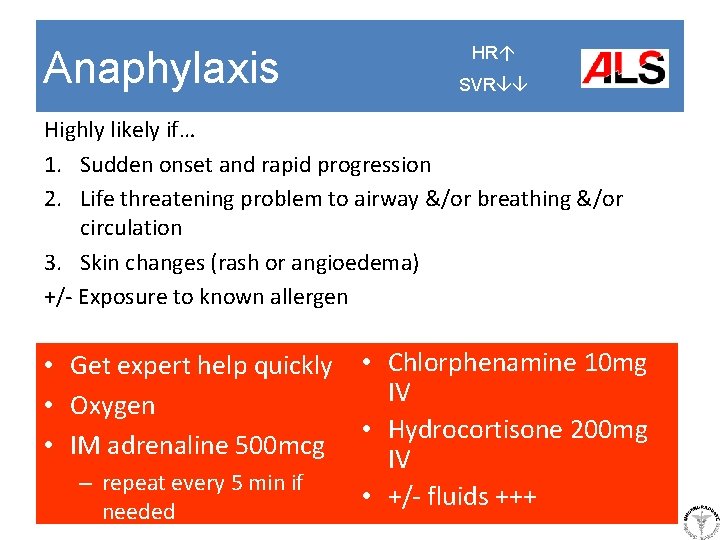
Anaphylaxis HR SVR Highly likely if… 1. Sudden onset and rapid progression 2. Life threatening problem to airway &/or breathing &/or circulation 3. Skin changes (rash or angioedema) +/- Exposure to known allergen • Get expert help quickly • Chlorphenamine 10 mg IV • Oxygen • Hydrocortisone 200 mg • IM adrenaline 500 mcg IV – repeat every 5 min if • +/- fluids +++ needed
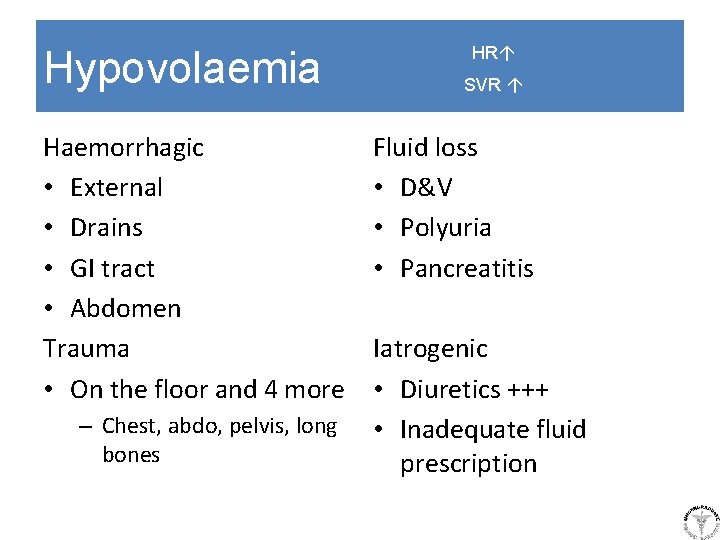
Hypovolaemia Haemorrhagic • External • Drains • GI tract • Abdomen Trauma • On the floor and 4 more – Chest, abdo, pelvis, long bones HR SVR Fluid loss • D&V • Polyuria • Pancreatitis Iatrogenic • Diuretics +++ • Inadequate fluid prescription
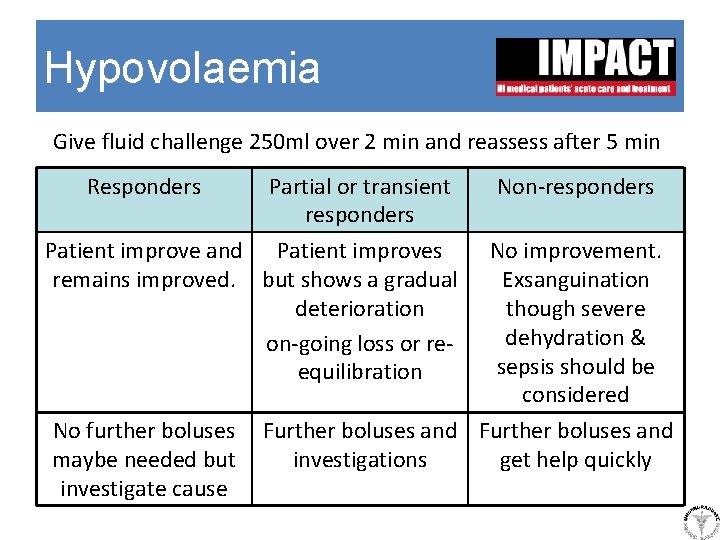
Hypovolaemia Give fluid challenge 250 ml over 2 min and reassess after 5 min Responders Partial or transient responders Non-responders Patient improve and Patient improves remains improved. but shows a gradual deterioration on-going loss or reequilibration No improvement. Exsanguination though severe dehydration & sepsis should be considered No further boluses maybe needed but investigate cause Further boluses and investigations get help quickly
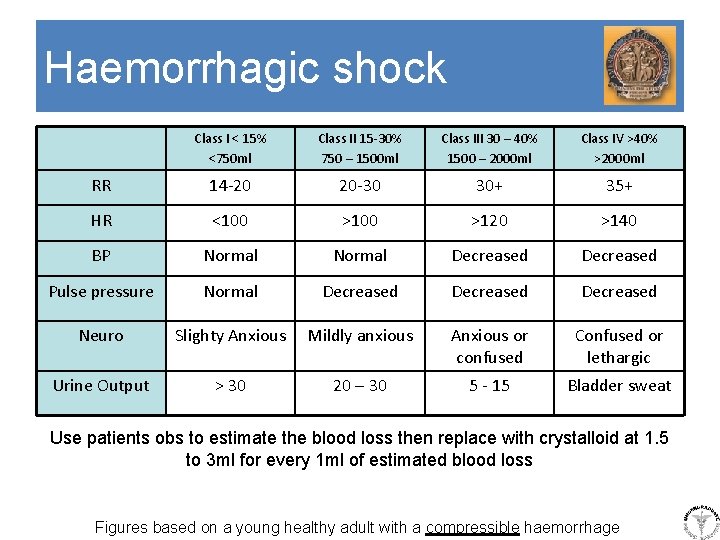
Haemorrhagic shock Class I < 15% <750 ml Class II 15 -30% 750 – 1500 ml Class III 30 – 40% 1500 – 2000 ml Class IV >40% >2000 ml RR 14 -20 20 -30 30+ 35+ HR <100 >120 >140 BP Normal Decreased Pulse pressure Normal Decreased Neuro Slighty Anxious Mildly anxious Anxious or confused Confused or lethargic Urine Output > 30 20 – 30 5 - 15 Bladder sweat Use patients obs to estimate the blood loss then replace with crystalloid at 1. 5 to 3 ml for every 1 ml of estimated blood loss Figures based on a young healthy adult with a compressible haemorrhage
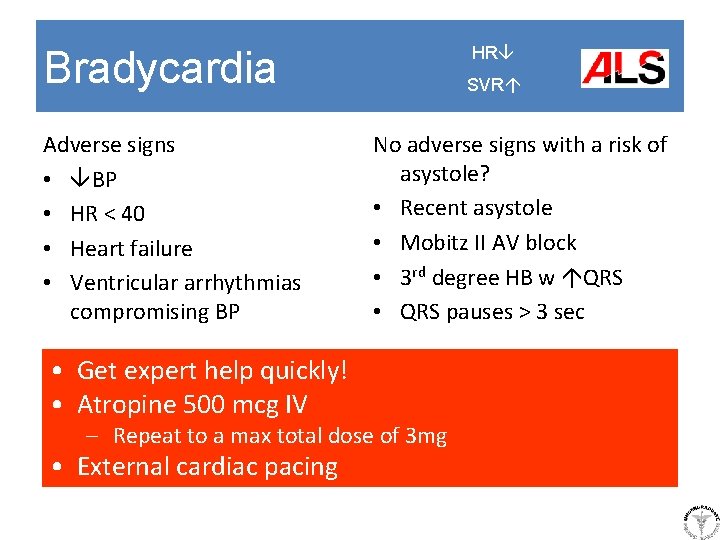
HR Bradycardia Adverse signs • BP • HR < 40 • Heart failure • Ventricular arrhythmias compromising BP • Get expert help quickly! • Atropine 500 mcg IV SVR No adverse signs with a risk of asystole? • Recent asystole • Mobitz II AV block • 3 rd degree HB w QRS • QRS pauses > 3 sec – Repeat to a max total dose of 3 mg • External cardiac pacing
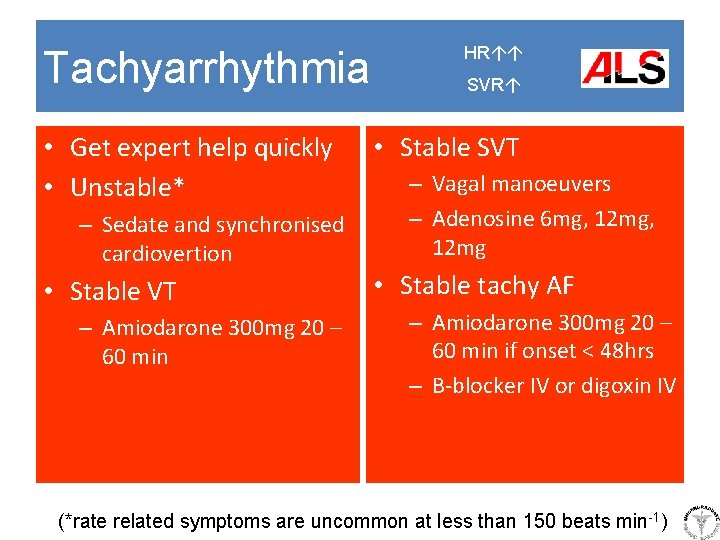
Tachyarrhythmia • Get expert help quickly • Unstable* – Sedate and synchronised cardiovertion • Stable VT – Amiodarone 300 mg 20 – 60 min HR SVR • Stable SVT – Vagal manoeuvers – Adenosine 6 mg, 12 mg • Stable tachy AF – Amiodarone 300 mg 20 – 60 min if onset < 48 hrs – Β-blocker IV or digoxin IV (*rate related symptoms are uncommon at less than 150 beats min-1)