Council for Adult and Experiential Learning PLA Workshop





- Slides: 75
Council for Adult and Experiential Learning PLA Workshop for Advisors SIUE September, 2017 Dorothy Wax, CAEL
CAEL Founded in 1974, CAEL is a 501(c)(3) non-profit dedicated to removing barriers to adult learning. Recognized by regional and national accrediting bodies as setting the standards for evaluating non-collegiate college-level learning for college credit. National leader in PLA best practices and research. 2
Workshop Outcomes • Understand your institutions’ capacity for PLA • Understand what PLA is and is not • Understand what is unique about adult learners • Understand the role of advisors in PLA 3
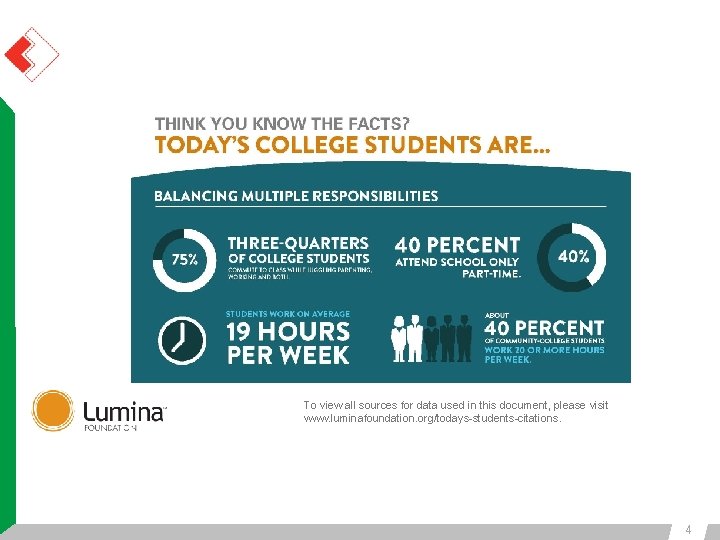
To view all sources for data used in this document, please visit www. luminafoundation. org/todays-students-citations. 4
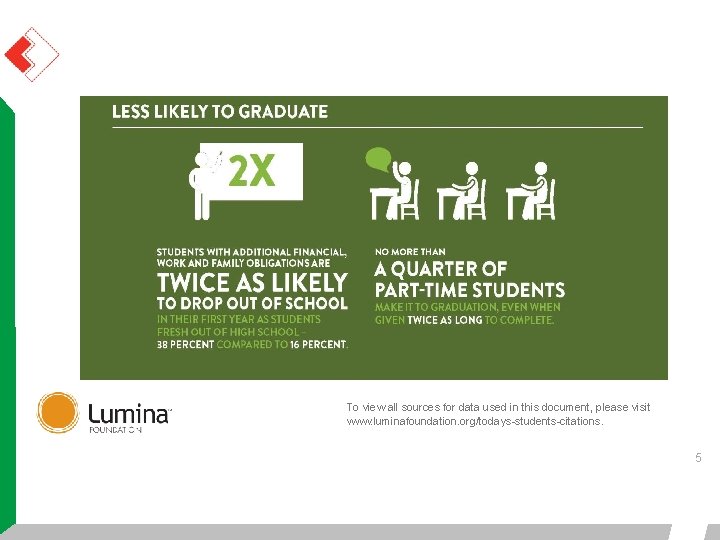
To view all sources for data used in this document, please visit www. luminafoundation. org/todays-students-citations. 5
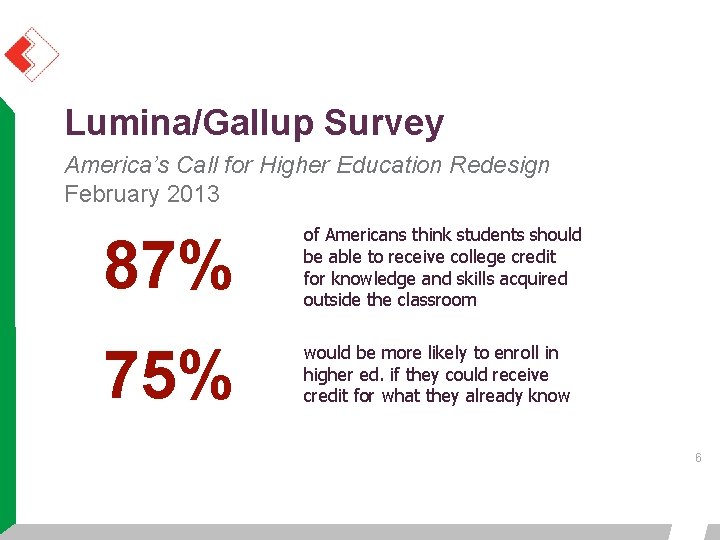
Lumina/Gallup Survey America’s Call for Higher Education Redesign February 2013 87% of Americans think students should be able to receive college credit for knowledge and skills acquired outside the classroom 75% would be more likely to enroll in higher ed. if they could receive credit for what they already know 6
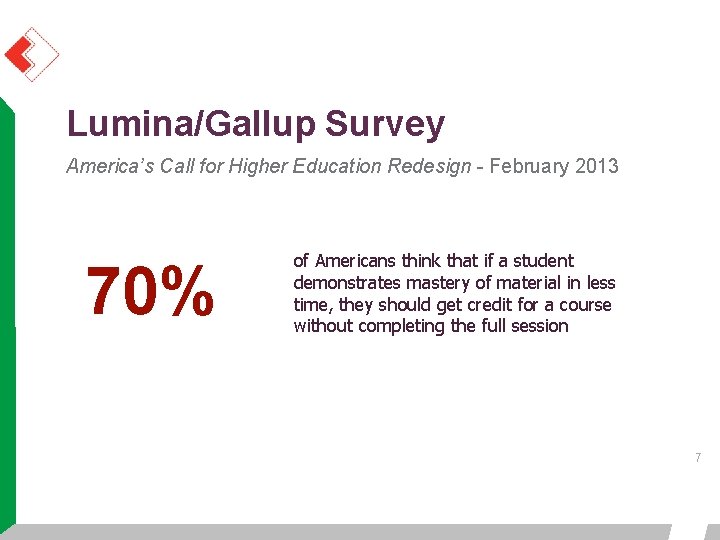
Lumina/Gallup Survey America’s Call for Higher Education Redesign - February 2013 70% of Americans think that if a student demonstrates mastery of material in less time, they should get credit for a course without completing the full session 7
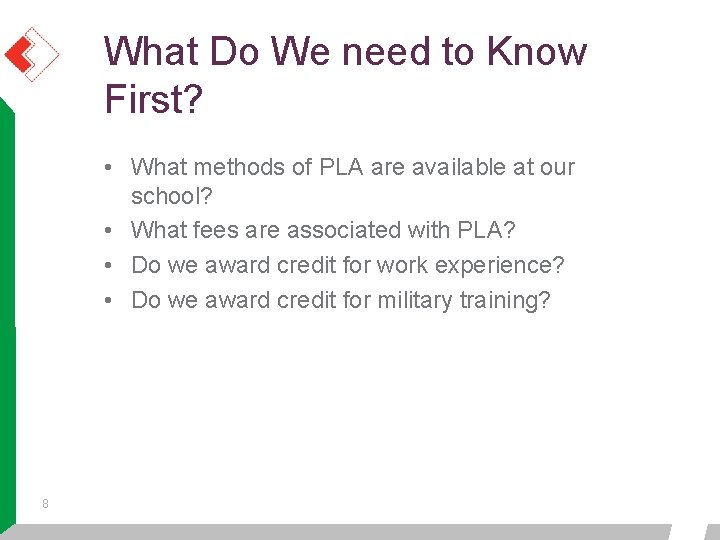
What Do We need to Know First? • What methods of PLA are available at our school? • What fees are associated with PLA? • Do we award credit for work experience? • Do we award credit for military training? 8
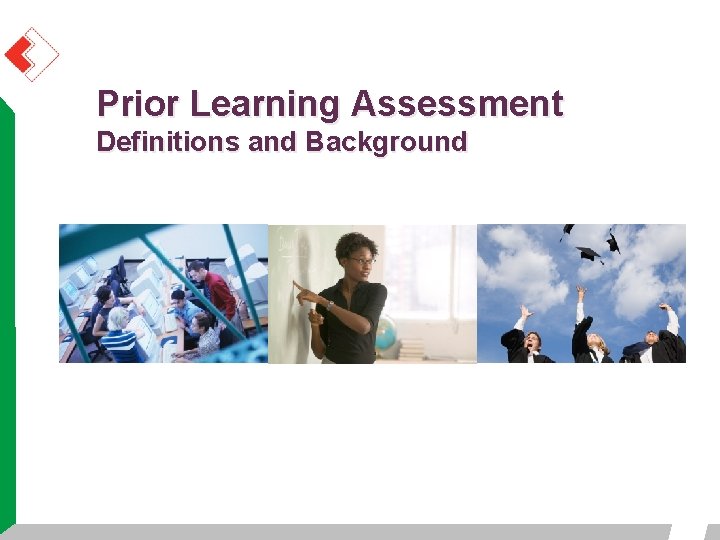
Prior Learning Assessment Definitions and Background
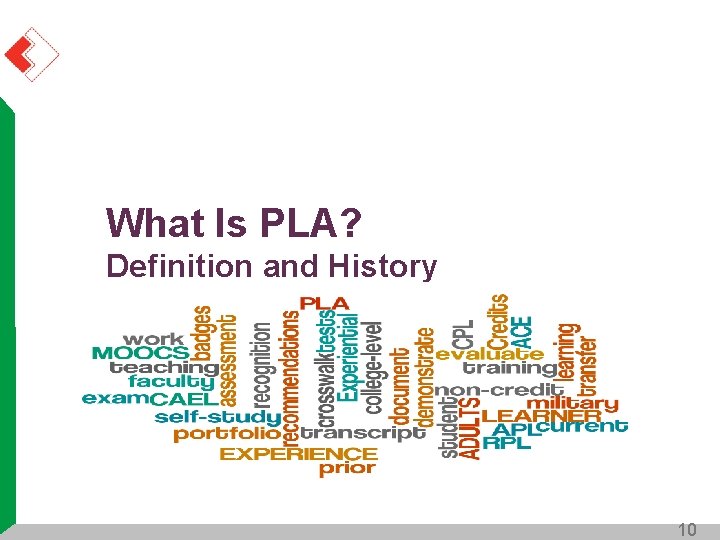
What Is PLA? Definition and History 10
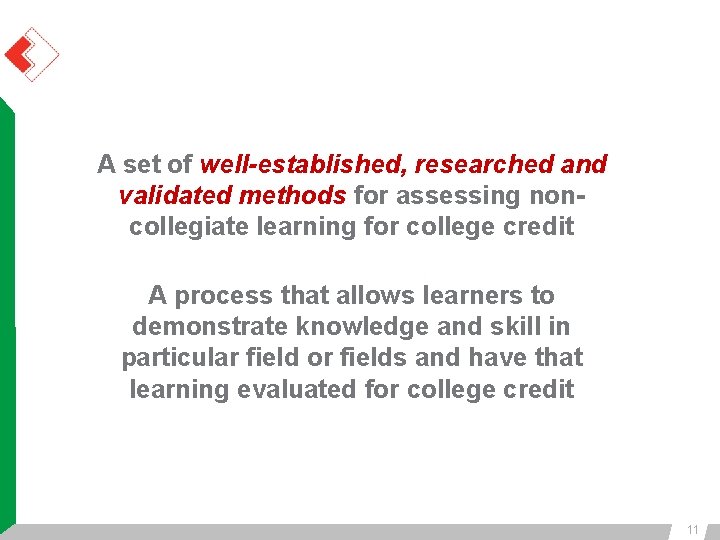
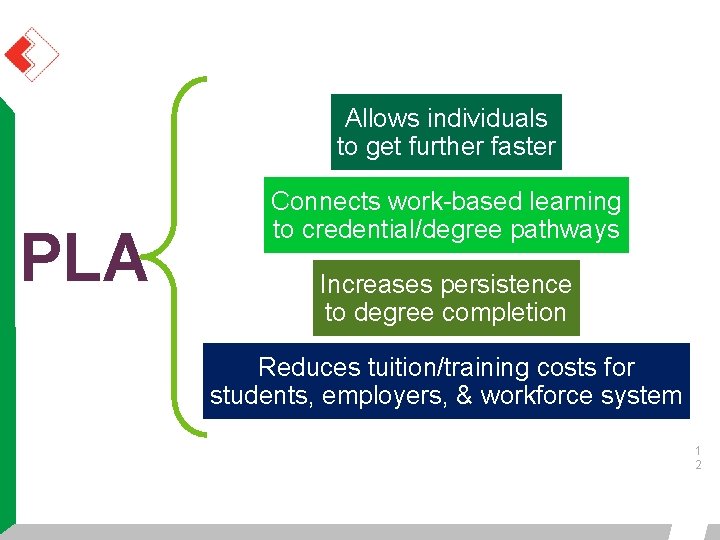
A set of well-established, researched and validated methods for assessing noncollegiate learning for college credit A process that allows learners to demonstrate knowledge and skill in particular field or fields and have that learning evaluated for college credit 11
Allows individuals to get further faster PLA Connects work-based learning to credential/degree pathways Increases persistence to degree completion Reduces tuition/training costs for students, employers, & workforce system 1 2
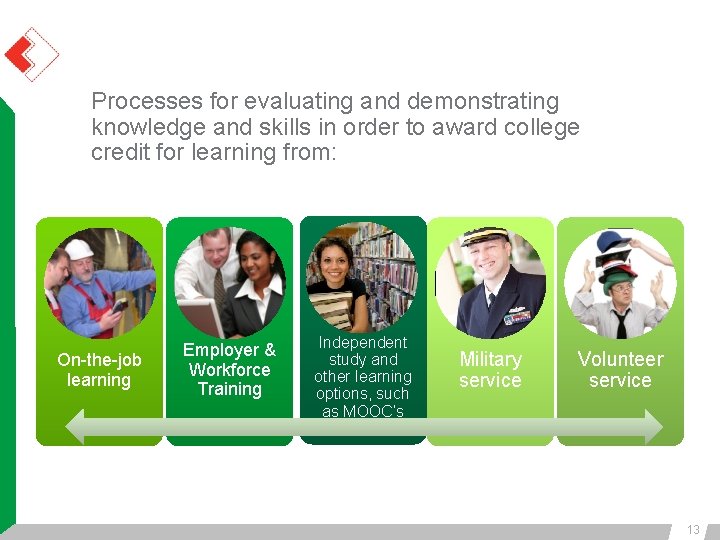
Processes for evaluating and demonstrating knowledge and skills in order to award college credit for learning from: On-the-job learning Employer & Workforce Training Independent study and other learning options, such as MOOC’s Military service Volunteer service 13
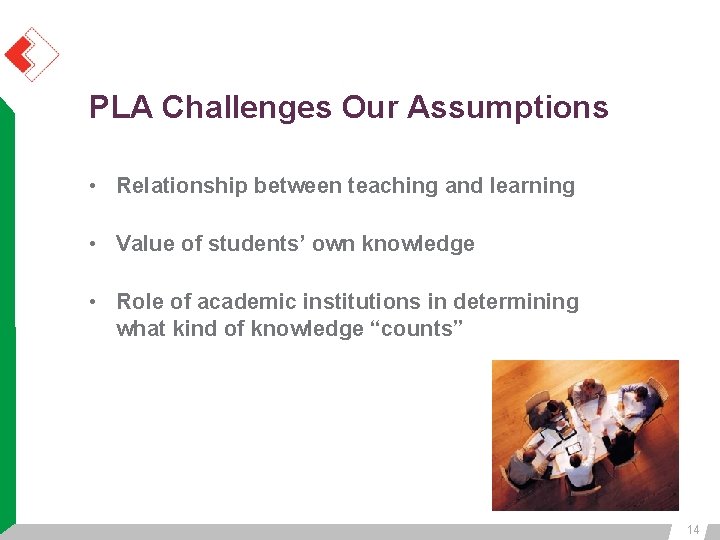
PLA Challenges Our Assumptions • Relationship between teaching and learning • Value of students’ own knowledge • Role of academic institutions in determining what kind of knowledge “counts” 14
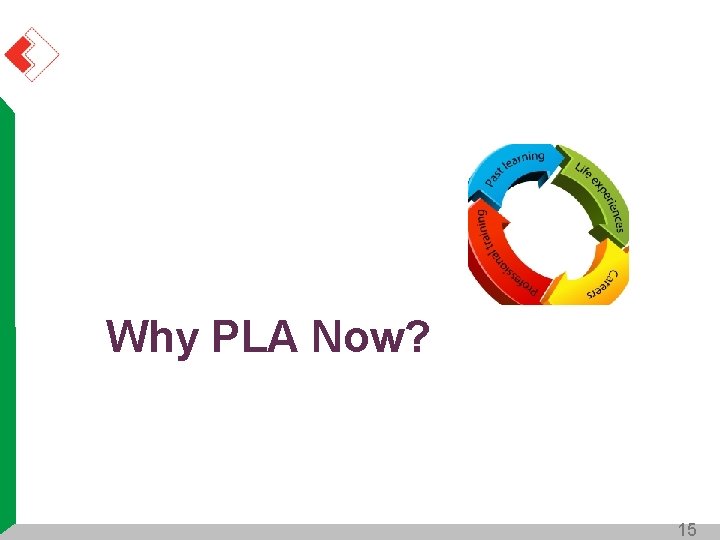
Why PLA Now? 15
Why Focus on PLA? PLA targets adult learners. And adult learners are important to Illinois. Jobs Better performing students The recent focus on increasing college completion and enriching the workforce has led to an emphasis on PLA as an effective strategy linked to both goals.
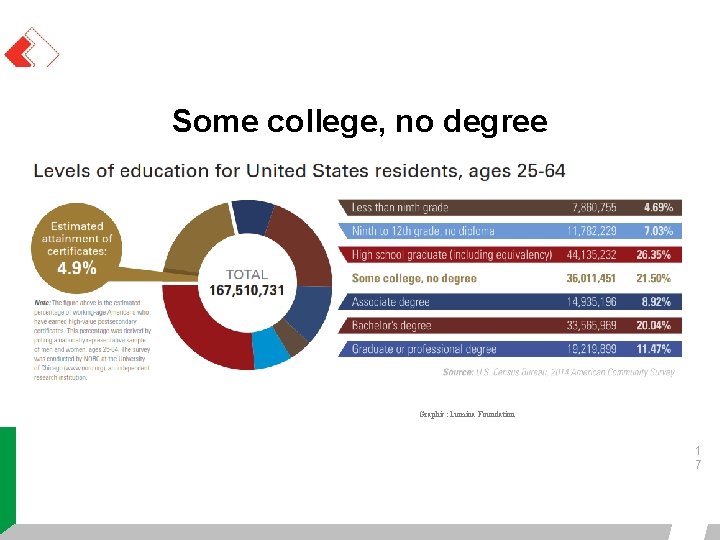
Some college, no degree Graphic: Lumina Foundation 1 7
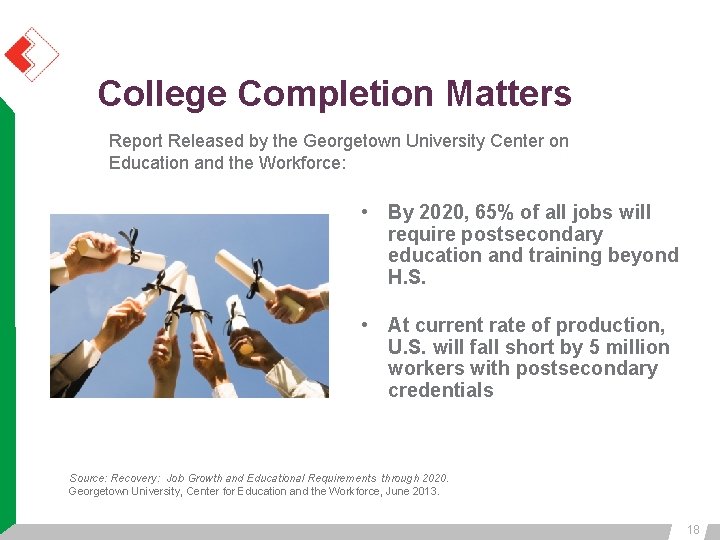
College Completion Matters Report Released by the Georgetown University Center on Education and the Workforce: • By 2020, 65% of all jobs will require postsecondary education and training beyond H. S. • At current rate of production, U. S. will fall short by 5 million workers with postsecondary credentials Source: Recovery: Job Growth and Educational Requirements through 2020. Georgetown University, Center for Education and the Workforce, June 2013. 18
Why Focus on Adults? In order to become competitive, the U. S. must increase the numbers of college graduates. The pipeline of young college graduates is in decline and will not be enough to meet future workforce skills demands.
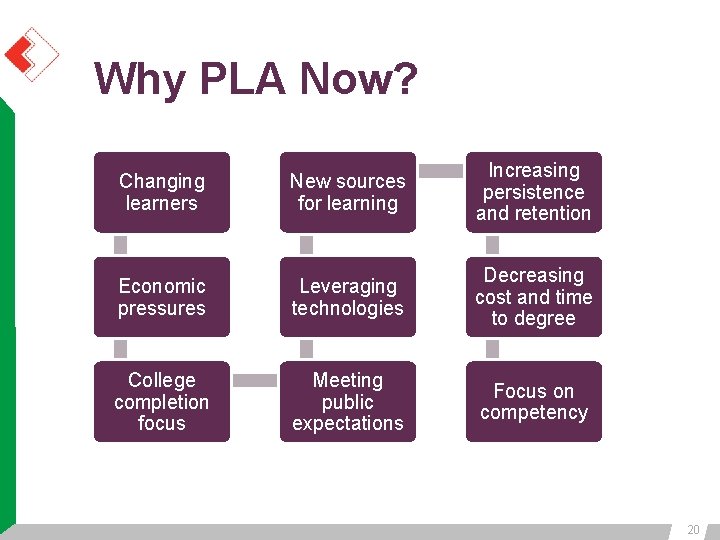
Why PLA Now? Changing learners New sources for learning Increasing persistence and retention Economic pressures Leveraging technologies Decreasing cost and time to degree College completion focus Meeting public expectations Focus on competency 20
What the Research Tells Us 21
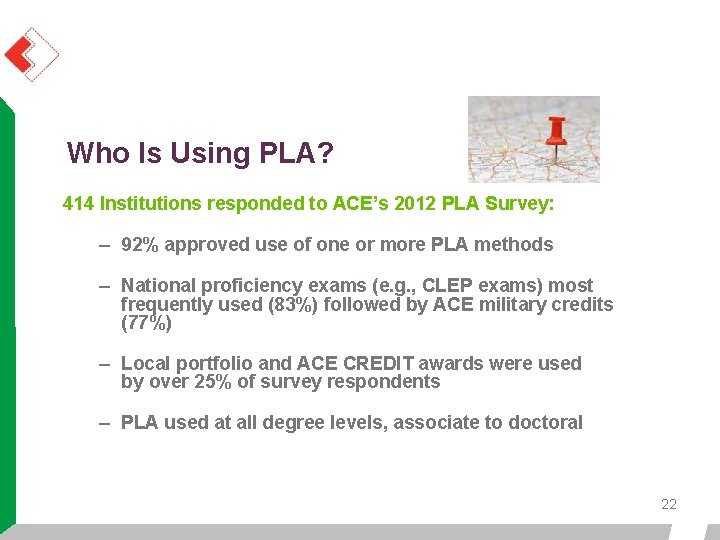
Who Is Using PLA? 414 Institutions responded to ACE’s 2012 PLA Survey: – 92% approved use of one or more PLA methods – National proficiency exams (e. g. , CLEP exams) most frequently used (83%) followed by ACE military credits (77%) – Local portfolio and ACE CREDIT awards were used by over 25% of survey respondents – PLA used at all degree levels, associate to doctoral 22 22
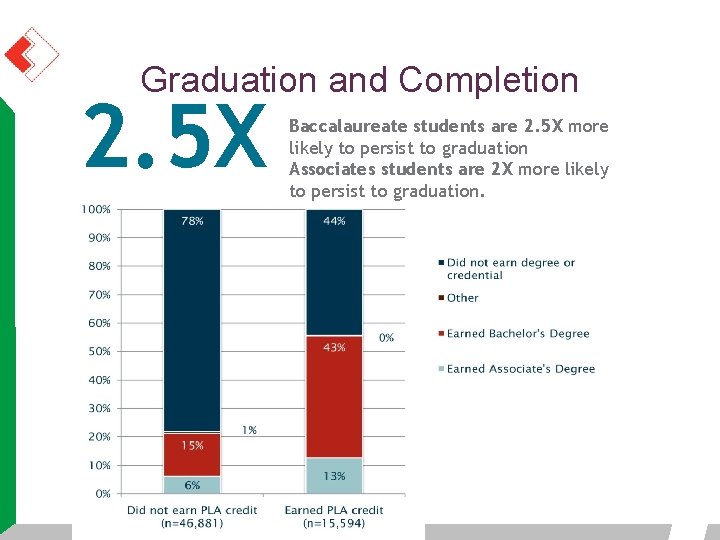
Graduation and Completion 2. 5 X Baccalaureate students are 2. 5 X more likely to persist to graduation Associates students are 2 X more likely to persist to graduation.
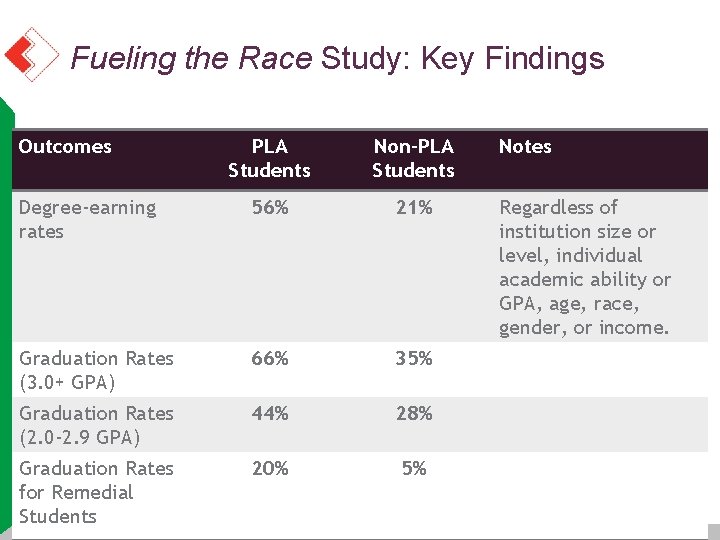
Fueling the Race Study: Key Findings Outcomes PLA Students Non-PLA Students Degree-earning rates 56% 21% Graduation Rates (3. 0+ GPA) 66% 35% Graduation Rates (2. 0 -2. 9 GPA) 44% 28% Graduation Rates for Remedial Students 20% 5% Notes Regardless of institution size or level, individual academic ability or GPA, age, race, gender, or income.
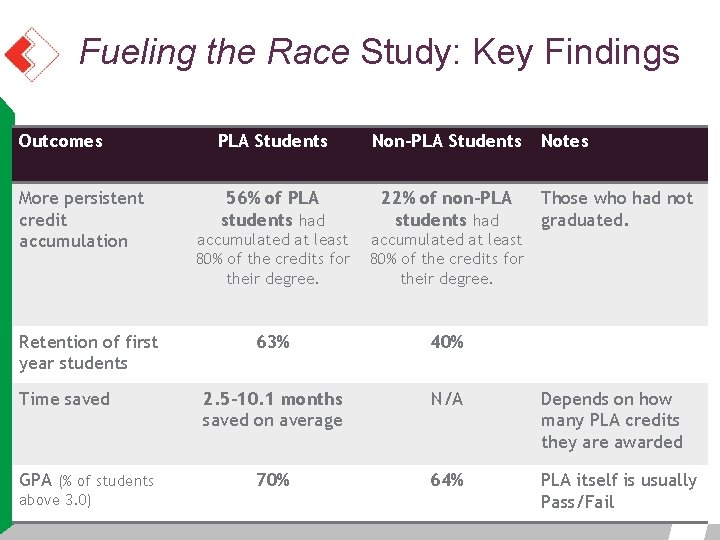
Fueling the Race Study: Key Findings Outcomes PLA Students Non-PLA Students More persistent credit accumulation 56% of PLA students had 22% of non-PLA students had accumulated at least 80% of the credits for their degree. 63% 40% 2. 5 -10. 1 months saved on average N/A Depends on how many PLA credits they are awarded 70% 64% PLA itself is usually Pass/Fail Retention of first year students Time saved GPA (% of students above 3. 0) Notes Those who had not graduated.
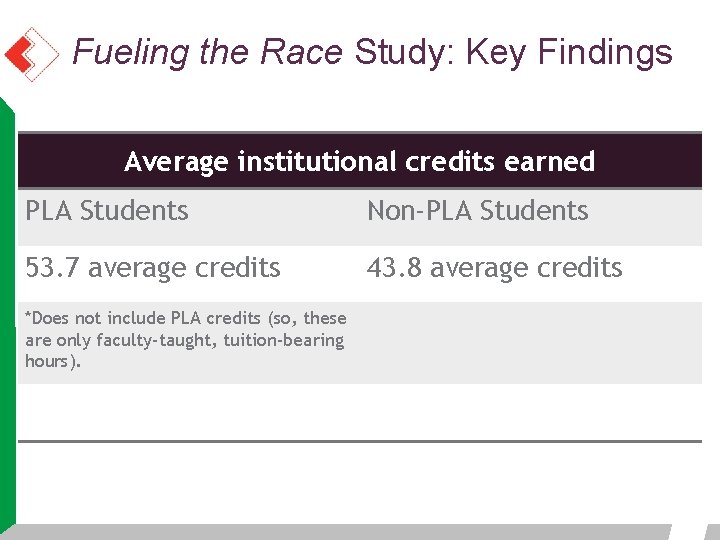
Fueling the Race Study: Key Findings Average institutional credits earned PLA Students Non-PLA Students 53. 7 average credits 43. 8 average credits *Does not include PLA credits (so, these are only faculty-taught, tuition-bearing hours).
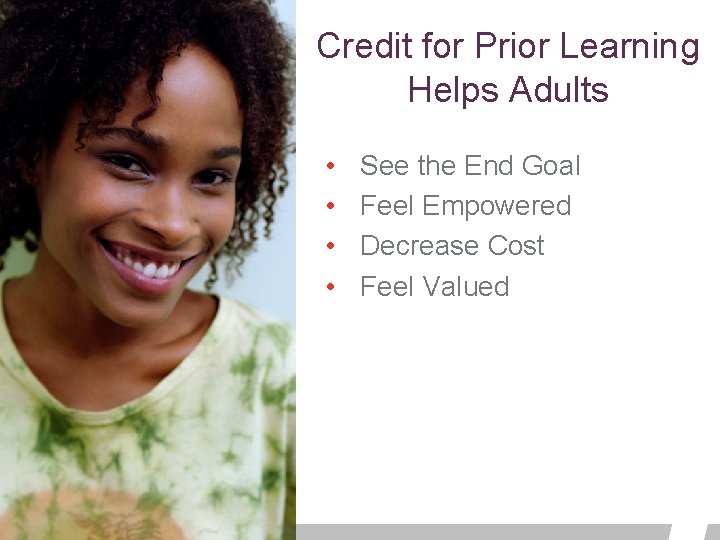
Credit for Prior Learning Helps Adults • • See the End Goal Feel Empowered Decrease Cost Feel Valued
CAEL’s Quality Assurance Principles 28
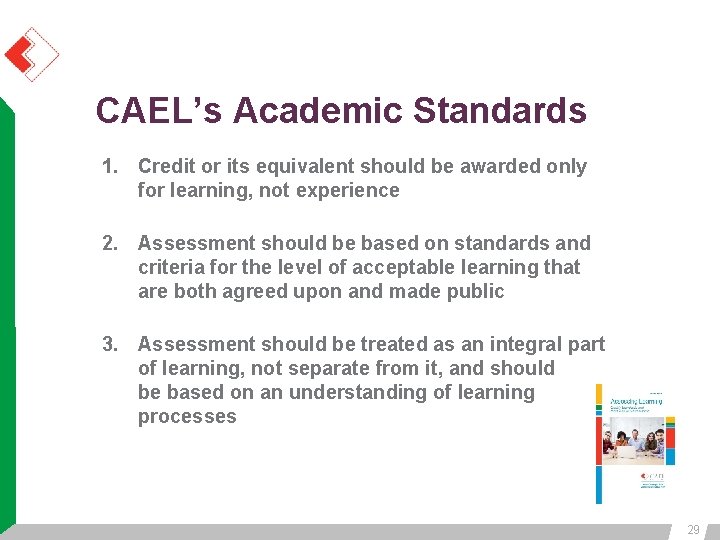
CAEL’s Academic Standards 1. Credit or its equivalent should be awarded only for learning, not experience 2. Assessment should be based on standards and criteria for the level of acceptable learning that are both agreed upon and made public 3. Assessment should be treated as an integral part of learning, not separate from it, and should be based on an understanding of learning processes 29
CAEL’s Academic Standards 4. The determination of credit awards and competence levels must be made by appropriate subject matter and academic or credentialing experts. 5. Credit or other credentialing should be appropriate to the context in which it is awarded and accepted. 30
CAEL’s Administrative Standards 5 standards related to PLA program administration address: – Transcription – Transparency of policies, procedures and criteria – Fees based on services for credit awarded – Professional development of all staff and faculty – Ongoing monitoring, review, evaluation and revision of assessment program – Inclusion of a process for appeal 31
PLA and Accreditation Higher Learning Commission Leaves most details of PLA policy and practice to the institution. HLC Policy: • • • Requires institutions to make readily available to students all information on the acceptance of transfer credit, while noting that no promises should be made to prospective students “regarding the acceptance of credit awarded by examination, credit for prior learning, or credit for transfer until an evaluation has been conducted. ” p. 17 Suggests that residency requirements (such that would liming PLA credit) help to ensure program quality. p. 18 States that the institution must have clear policies on the maximum number of credits allowed through PLA “as a reasonable proportion of the credits required to complete the student’s program” p. 18 “Higher Learning Commission Policy Book (http: //policy. ncahlc. org/) 32
Methods of Demonstrating Prior Learning 33
Approaches to PLA • Standardized Exams: AP, CLEP, DSST, Excelsior College Examinations & UExcel Exams • Challenge Exams: Developed by faculty • Evaluated Training Programs – American Council on Education (ACE) college credit recommendations for military training and occupations and workforce training – National College Credit Recommendation Service (NCCRS) college credit recommendations – College faculty credit awards based on evaluation of local workforce training, industry certifications and articulation of noncredit college programs • Individualized Assessments – Portfolio Assessment – Performance Assessment/Skill Demonstration 34
Standardized Tests: AP Advanced Placement Exams (AP) • Produced by College Board • 34 Exams in 19 subject areas • 2012: 3. 7 million exams were taken by more than 2 million students at over 18, 000 high schools • Except for 3 Studio Art exams with portfolio assessments, exams contain multiple-choice questions and free-response section • More than 3, 800 colleges & universities annually receive AP Exam scores. Most 4 -year colleges in U. S. provide credit or advanced placement for qualifying scores • ACE-reviewed and recommended for college credits 35
Standardized Tests - CLEP College Level Examination Program (CLEP) • Produced by College Board • 33 tests 5 subject areas • Covers material taught in first 2 years of college: “ 101” level material • 3 to 12 credits for each exam taken • Over 5 million users since 1967 • Nearly 90% of U. S. colleges accept CLEP 36
Standardized Tests: DSST Defense Activity for Non-Traditional Support (DSST-DANTES) – Developed for the military, available to civilians – 38 exams for upper and lower division courses – Administered by Prometric – Recognized by over 2, 000 colleges and universities for awarding of college credit for passing scores – ACE-reviewed and recommended college credit for all exams 37
Standardized Tests: UExcel and Excelsior College Examinations (ECE) – UExcelsior College Examination Program: • Credit by examination program offered by Pearson VUE at thousands of test centers globally • UExcel currently offers over 50 exams in 5 areas: Business, Humanities, Natural Sciences/Mathematics, Social Sciences and History, and Nursing – Excelsior College Exams (ECE) exams • specifically for Excelsior College associate and bachelor degree program nursing students with prior clinical experience – ACE reviewed and recommended college credit for all UExcel and ECE exams 38
Challenge Exams • At institutional discretion, using locallydeveloped tests/exams • May be actual course final exams • Option available at about 60% of U. S. institutions 39
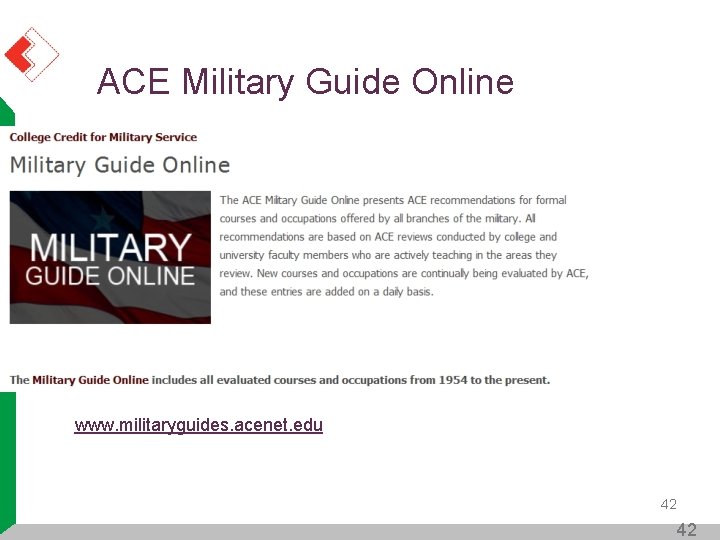
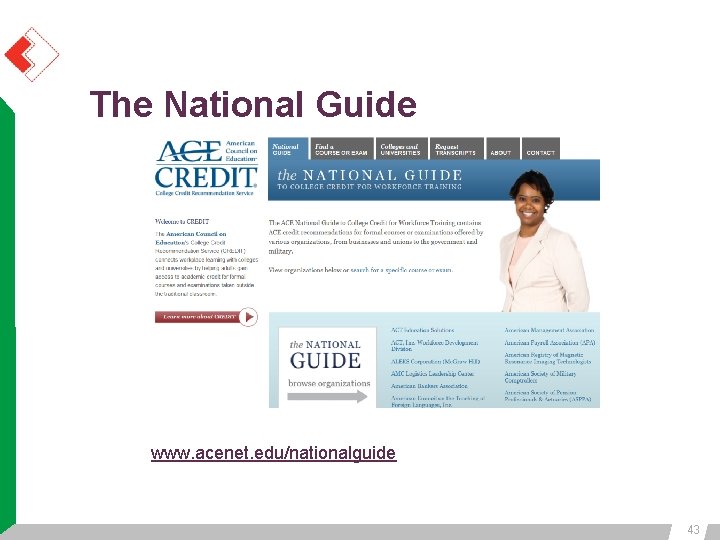
Evaluated Training: ACE American Council on Education (ACE) Program Evaluations (faculty driven) • Military Programs • Corporate Programs (ACE CREDIT®) Evaluation Activities • Evaluate formal military training and occupational specialties • Evaluate formal workplace training courses, certifications, apprenticeship programs, government agencies, examinations, and MOOCs 40
Evaluated Training–ACE cont’d Evaluation Activities – continued • Evaluate assessments (e. g. , ACT NCCR, IT certifications, foreign language tests) • Publish descriptions and credit recommendations of corporate and military training/occupations in online guides • Provide transcript and registry services • Assist learners and colleges through Lifelong Learning Resource Center • ACE College and University Network of over 2, 000 members consider ACE credit recommendations 41
ACE Military Guide Online www. militaryguides. acenet. edu 42 42
The National Guide www. acenet. edu/nationalguide 43
Evaluated Training: NCCRS National College Credit Recommendation Service (National CCRS) (formerly National PONSI) • Evaluates training programs offered by corporations, unions, religious organizations and proprietary schools • Over 1, 500 cooperating colleges and universities consider granting college credit based on NCCRS recommendations and in accordance with their own transfer policies • Board of Regents of the University of the State of New York www. nationalccrs. org 44
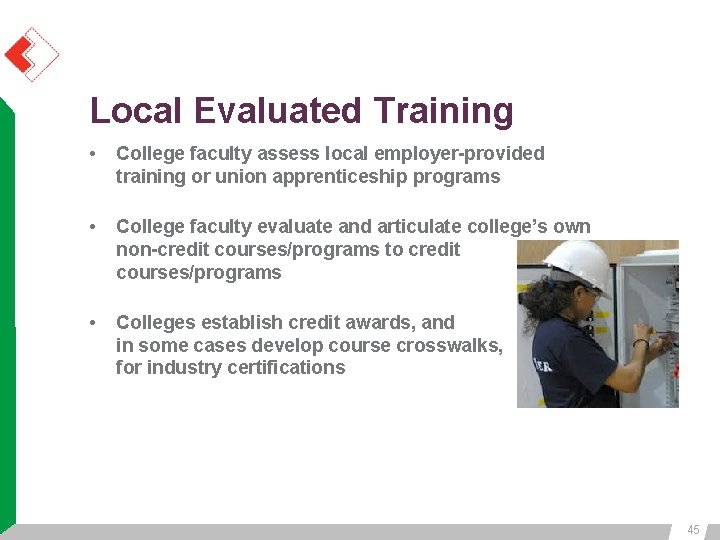
Local Evaluated Training • College faculty assess local employer-provided training or union apprenticeship programs • College faculty evaluate and articulate college’s own non-credit courses/programs to credit courses/programs • Colleges establish credit awards, and in some cases develop course crosswalks, for industry certifications 45
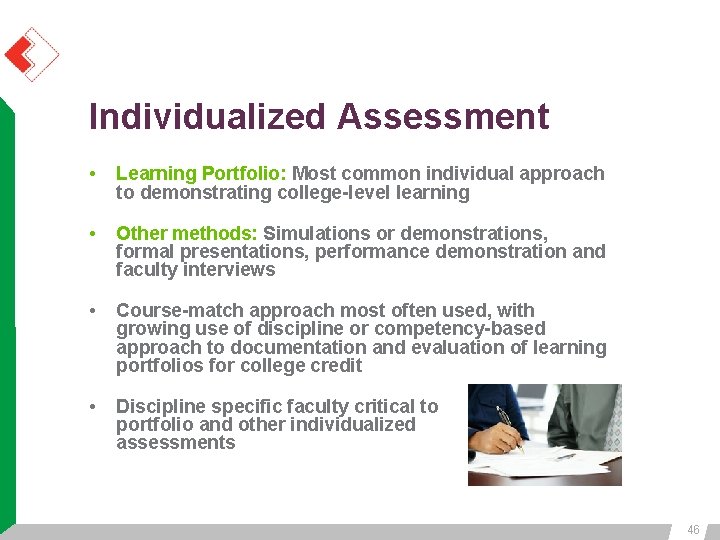
Individualized Assessment • Learning Portfolio: Most common individual approach to demonstrating college-level learning • Other methods: Simulations or demonstrations, formal presentations, performance demonstration and faculty interviews • Course-match approach most often used, with growing use of discipline or competency-based approach to documentation and evaluation of learning portfolios for college credit • Discipline specific faculty critical to portfolio and other individualized assessments 46
Portfolio Assessment What is a portfolio? • Formal communication prepared and presented by student and presented to college as part of petition requesting credit or recognition for learning outside college classroom • Must make case for credit by identifying learning clearly and succinctly – usually through learning narrative • Provides sufficient supporting information and documentation so that faculty can use it as basis for evaluation Portfolio course or non-credit workshop usually used to help students prepare portfolio/s 47
Who is a good candidate for portfolio? Do they have flexibility within their degree plan to earn portfolio credits? Do they have at least 5 years of professional experience in an applied area that aligns with courses at your school? Have they taken or tested out of Basic Composition Course and will feel comfortable writing a 5 -10 page paper?
Identifying PLA Potential Interview your students to determine the: • Who • What • When • Where • Why • How
Identifying PLA Potential • Next, ask about the types of college subjects and content areas that match the student’s prior learning. • Then determine: • Is this knowledge equivalent to a college-level course?
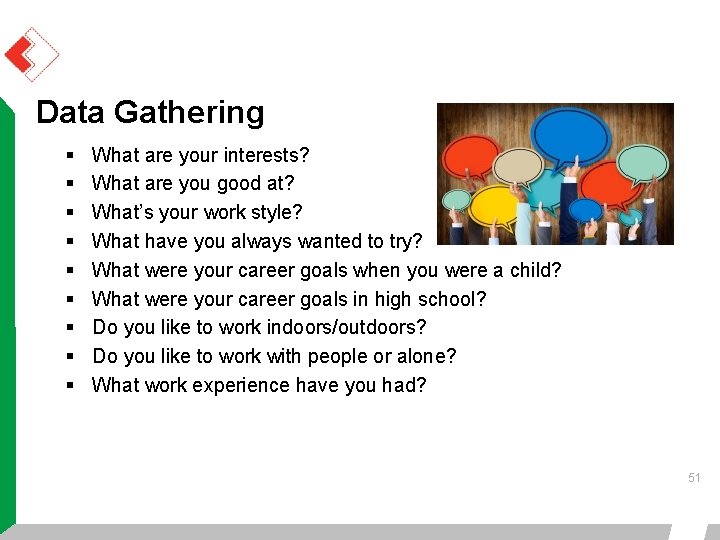
Data Gathering § § § § § What are your interests? What are you good at? What’s your work style? What have you always wanted to try? What were your career goals when you were a child? What were your career goals in high school? Do you like to work indoors/outdoors? Do you like to work with people or alone? What work experience have you had? 51
: Your Own PLA § What class have you taken that is most helpful to you in doing your current job? § What learning that you gained from outside the classroom has been important in doing your current job?
Creating a Culture for PLA 53
PLA Culture Make sure there is general understanding and support for PLA and that answers to FAQs are readily available. 54
Attracting Students to PLA • Be Positive – Use language is that is an invitation – Showcase PLA as an opportunity • Be Proactive – Don’t wait for students to ask – Reach out to students via email 80% Success Rate
The Skilled Advisor • Communication skills • Relationship skills • Group training and facilitation skills • Development and use of career-related information • Academic and career plan development • Professional relationships
Skills to Build Rapport • Effective presentation of ideas • Influence others positively • Providing accurate information • Respond to non-verbal cues • Anticipate student questions • Effectively handle complaints • Watch body language • Actively participate in discussions • Model behavior for others
What Are Emerging Trends? 58
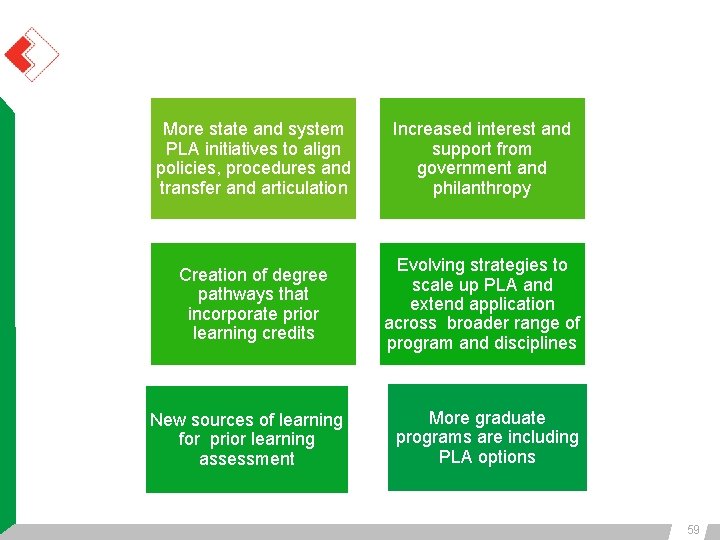
More state and system PLA initiatives to align policies, procedures and transfer and articulation Increased interest and support from government and philanthropy Creation of degree pathways that incorporate prior learning credits Evolving strategies to scale up PLA and extend application across broader range of program and disciplines New sources of learning for prior learning assessment More graduate programs are including PLA options 59
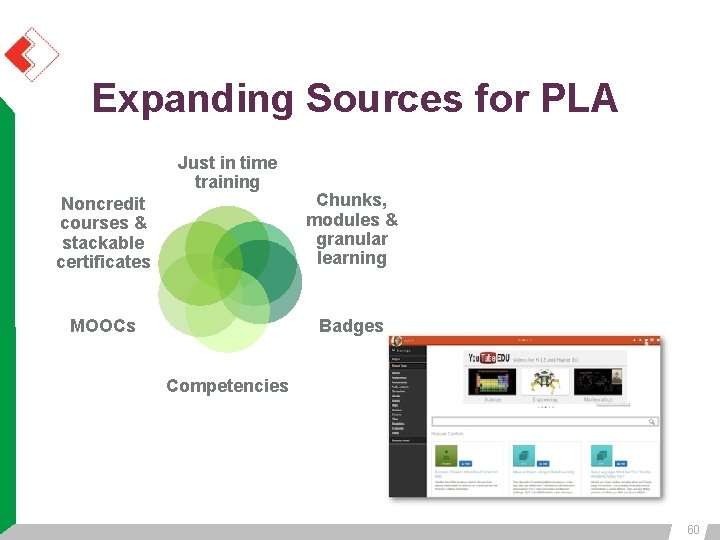
Expanding Sources for PLA Just in time training Noncredit courses & stackable certificates Chunks, modules & granular learning MOOCs Badges Competencies 60
What Are PLA Challenges? 61
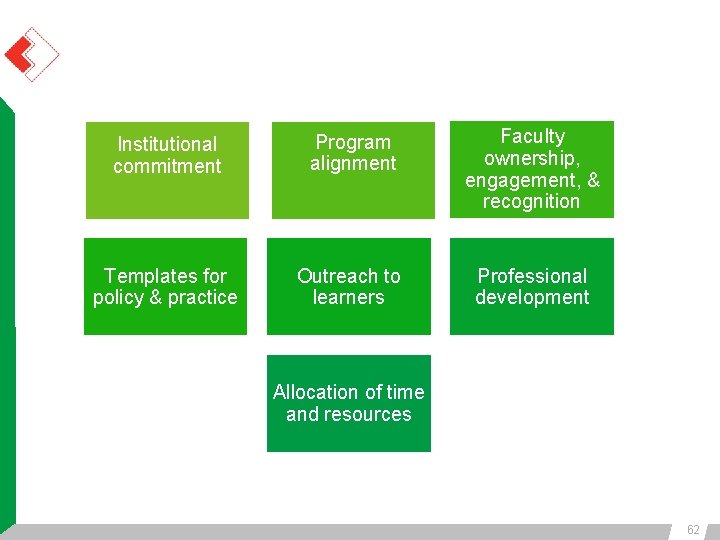
Institutional commitment Program alignment Faculty ownership, engagement, & recognition Templates for policy & practice Outreach to learners Professional development Allocation of time and resources 62
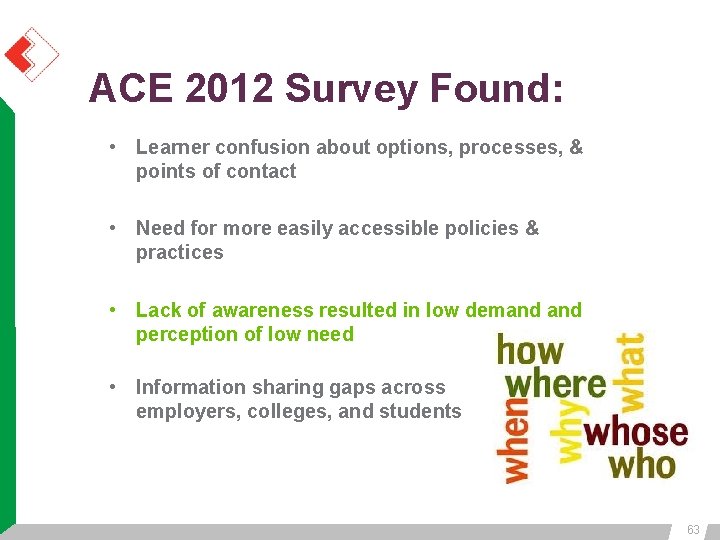
ACE 2012 Survey Found: • Learner confusion about options, processes, & points of contact • Need for more easily accessible policies & practices • Lack of awareness resulted in low demand perception of low need • Information sharing gaps across employers, colleges, and students 63
Activity - The Lightning Round
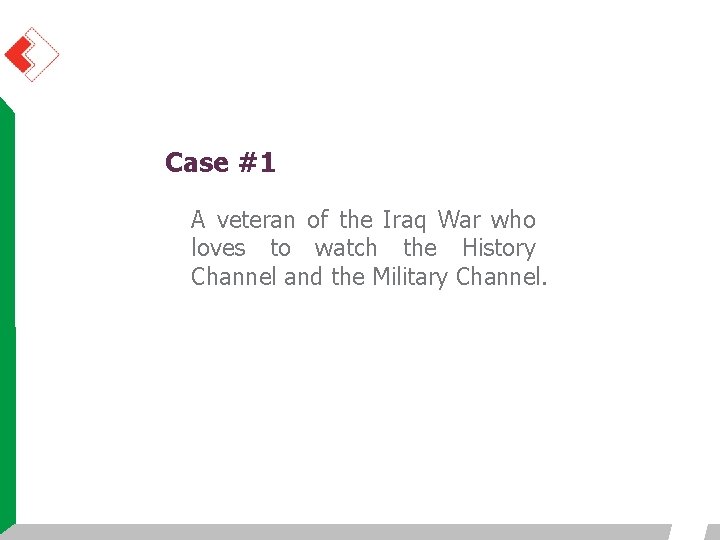
Case #1 A veteran of the Iraq War who loves to watch the History Channel and the Military Channel.
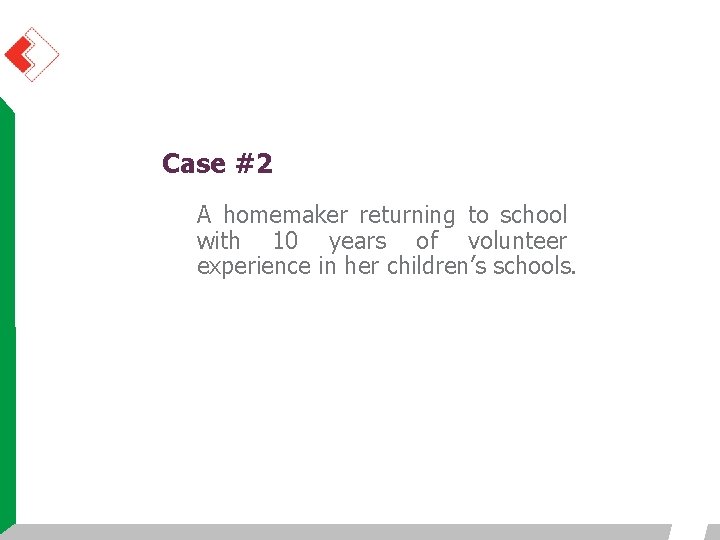
Case #2 A homemaker returning to school with 10 years of volunteer experience in her children’s schools.
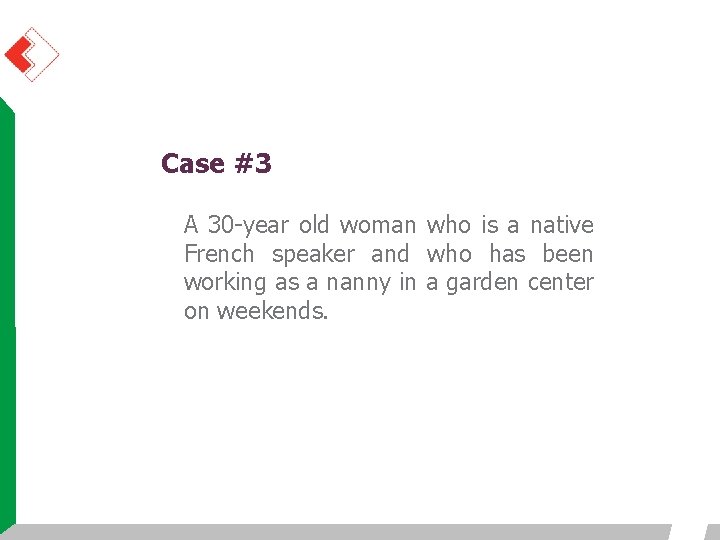
Case #3 A 30 -year old woman who is a native French speaker and who has been working as a nanny in a garden center on weekends.
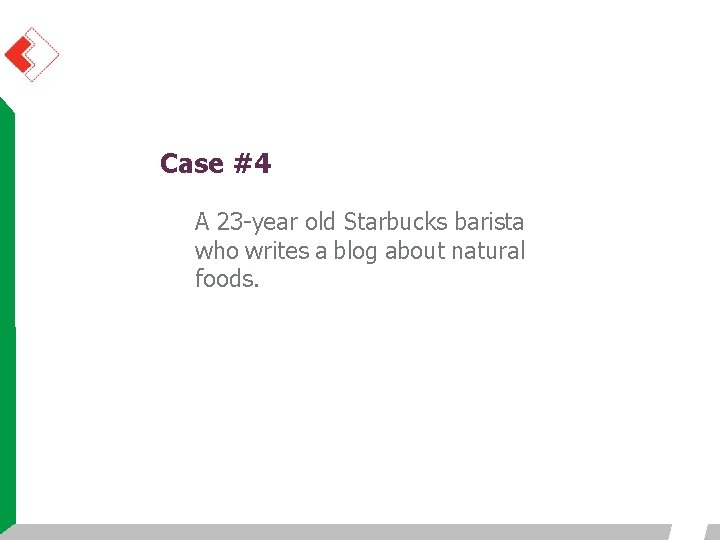
Case #4 A 23 -year old Starbucks barista who writes a blog about natural foods.
Case #5 A 40 -year old hotel concierge with an Associate’s degree in Accounting.
Case #6 A 53 -year old laid off from a cosmetics manufacturing plant.
Case #7 A stay-at-home Dad who has run the town’s soccer association for five years.
Case #8 A 28 -year old with an Associate’s degree and experience running three local political campaigns.
Case #9 A 38 -year old Mc. Donald’s manager.
Case #10 A 42 -year old administrative assistant with 18 months of college right after high school.
Questions 75