
EXPERIENTIAL METAFUNCTION TRANSITIVIY CHOICES Experiential metafunction offers us





- Slides: 67
EXPERIENTIAL METAFUNCTION TRANSITIVIY CHOICES
Experiential metafunction offers us: �Resources to encode our experience of the world � To convey a picture of reality
The Clause: Gives information about: What is happening Who is taking part Surrounding circumstances (eg; where, when, how, etc. )
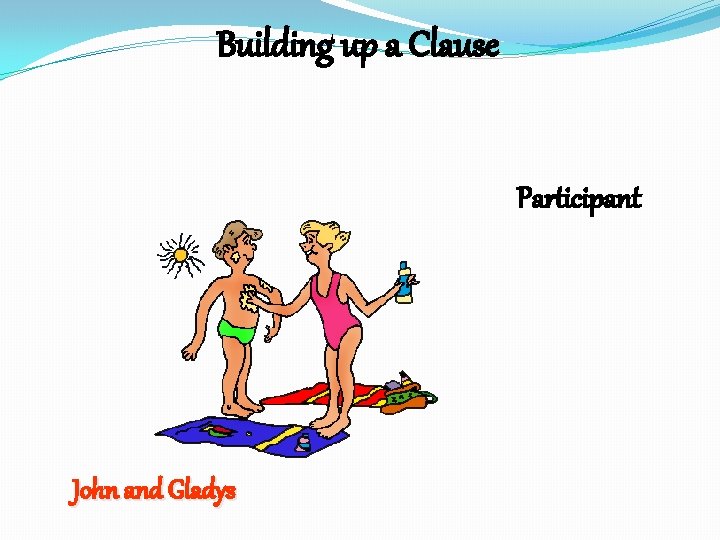
Building up a Clause Participant John and Gladys
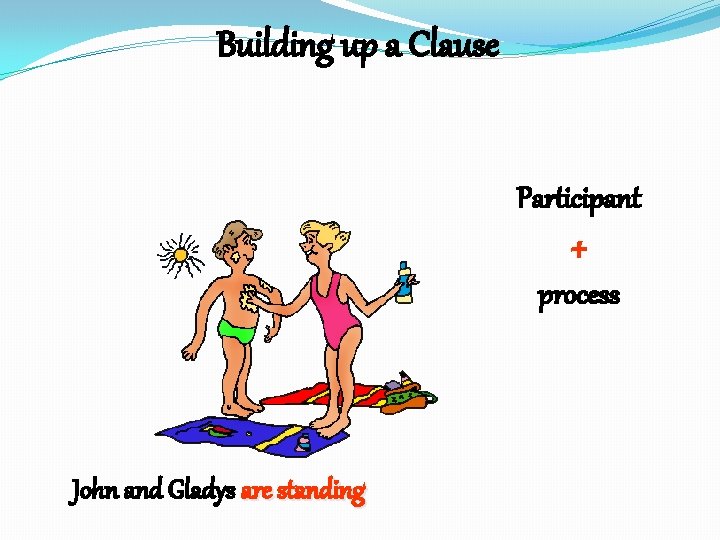
Building up a Clause Participant + process John and Gladys are standing
Building up a Clause Participant + process + circumstance John and Gladys are standing under the umbrella
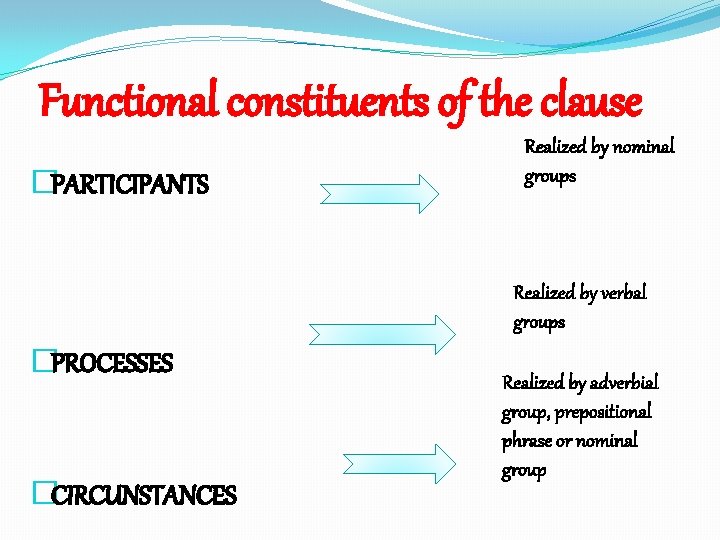
Functional constituents of the clause �PARTICIPANTS Realized by nominal groups Realized by verbal groups �PROCESSES �CIRCUNSTANCES Realized by adverbial group, prepositional phrase or nominal group
s e s s e c o r P
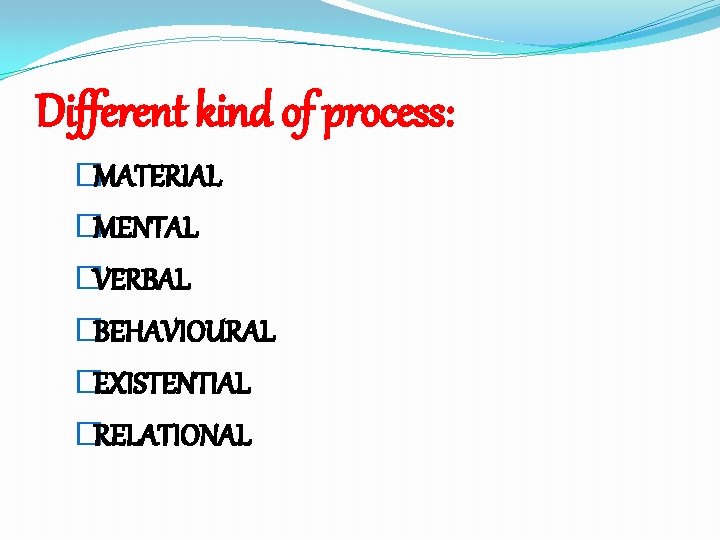
Different kind of process: �MATERIAL �MENTAL �VERBAL �BEHAVIOURAL �EXISTENTIAL �RELATIONAL
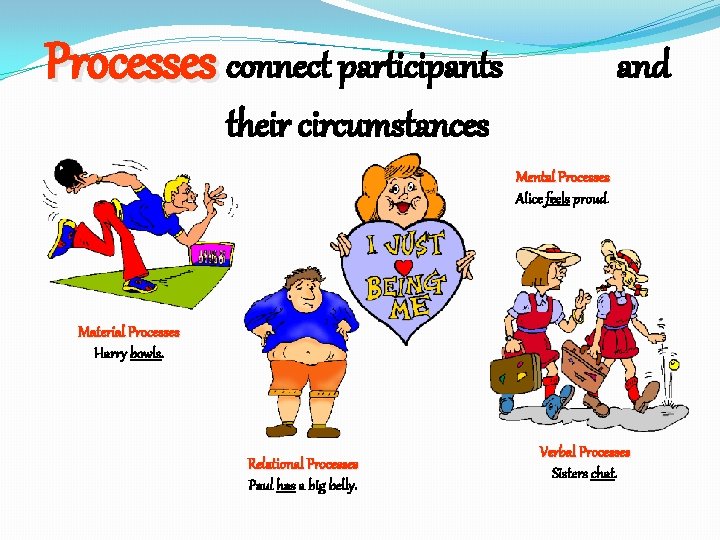
Processes connect participants and their circumstances Mental Processes Alice feels proud. Material Processes Harry bowls. Relational Processes Paul has a big belly. Verbal Processes Sisters chat.
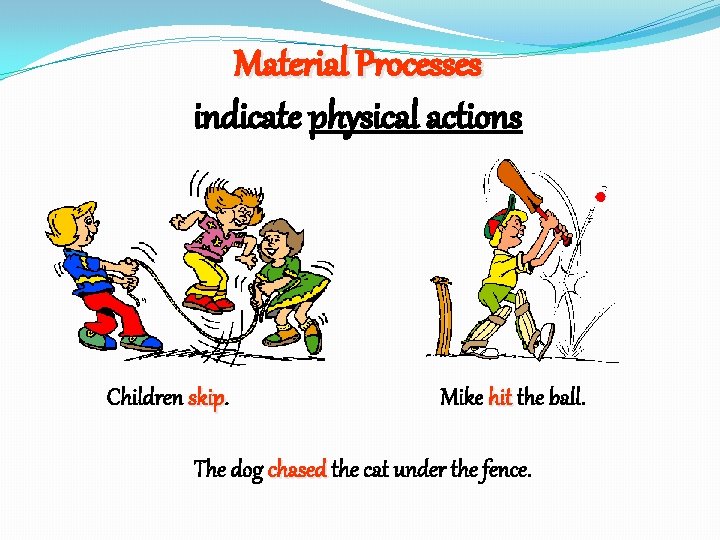
Material Processes indicate physical actions Children skip Mike hit the ball. The dog chased the cat under the fence.
Material verbs Go Fight Cook Walk Take Eat Hit Carry Play Give Run buy Climb Work
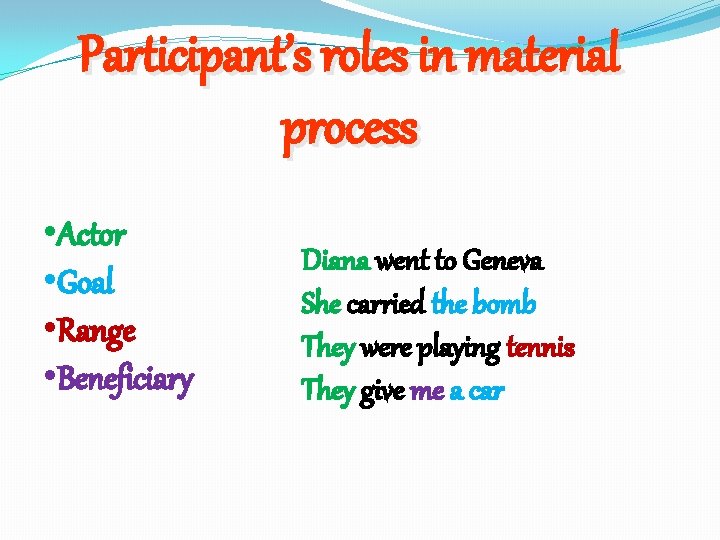
Participant’s roles in material process • Actor • Goal • Range • Beneficiary Diana went to Geneva She carried the bomb They were playing tennis They give me a car
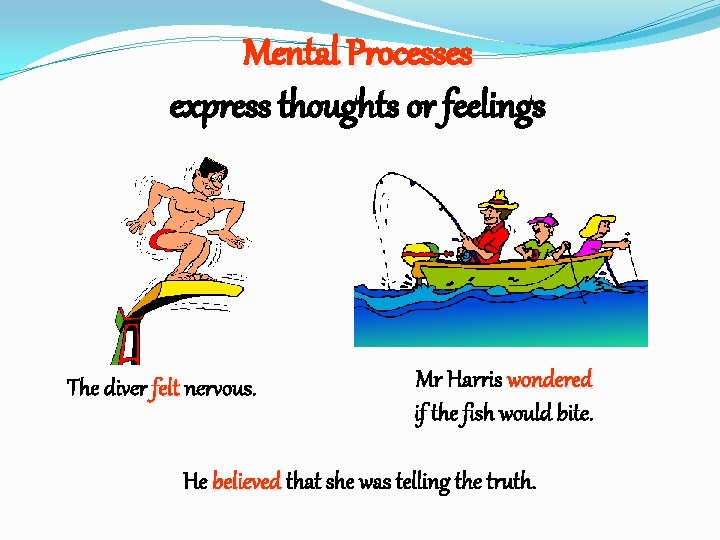
Mental Processes express thoughts or feelings The diver felt nervous. Mr Harris wondered if the fish would bite. He believed that she was telling the truth.
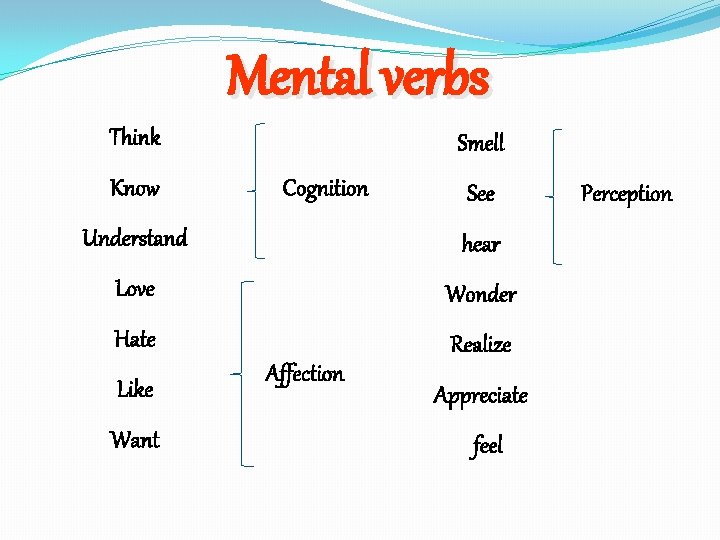
Mental verbs Think Know Smell Cognition See Understand hear Love Wonder Hate Realize Like Want Affection Appreciate feel Perception
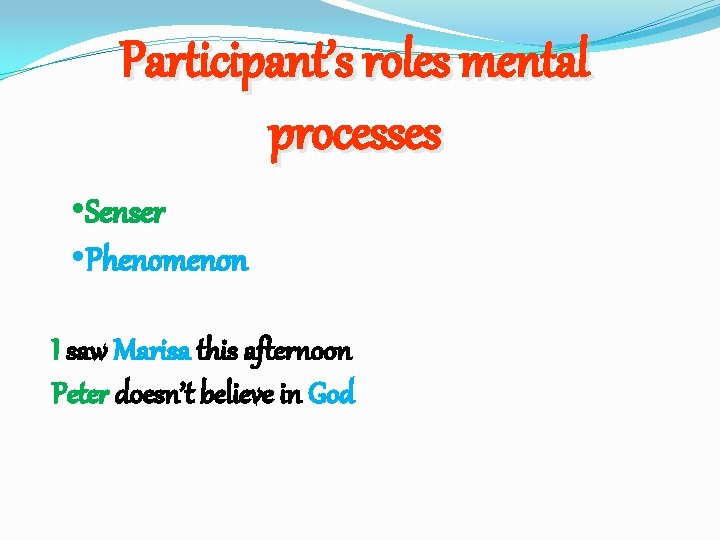
Participant’s roles mental processes • Senser • Phenomenon I saw Marisa this afternoon Peter doesn’t believe in God
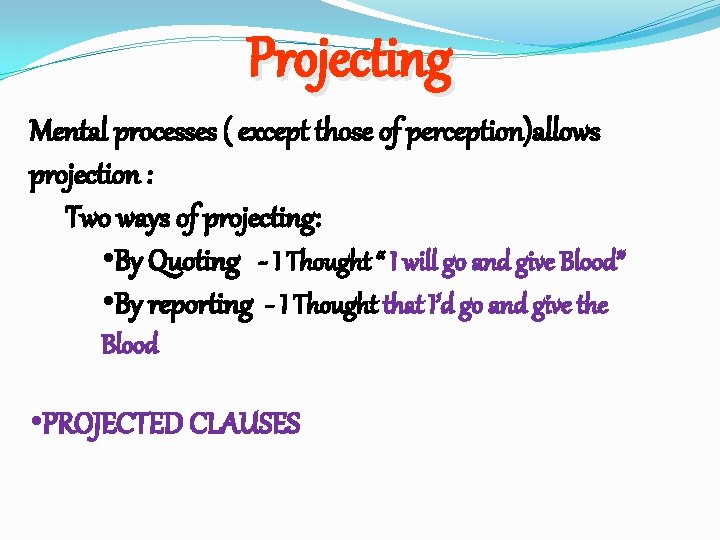
Projecting Mental processes ( except those of perception)allows projection : Two ways of projecting: • By Quoting - I Thought “ I will go and give Blood” • By reporting - I Thought that I’d go and give the Blood • PROJECTED CLAUSES
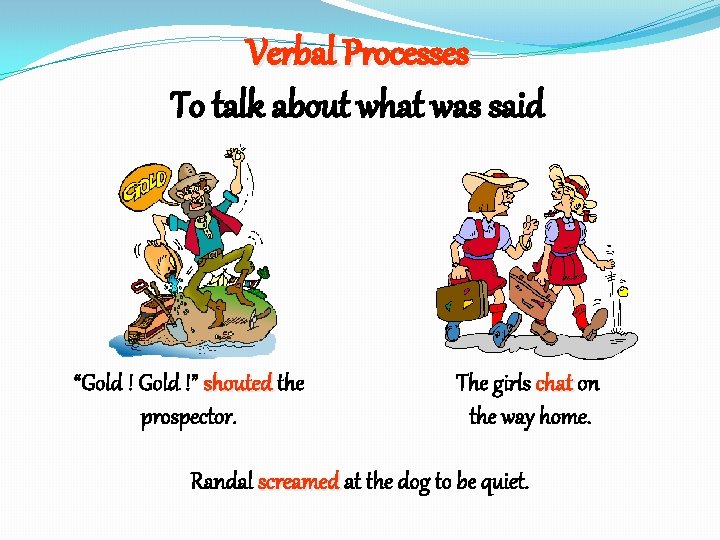
Verbal Processes To talk about what was said “Gold !” shouted the prospector. The girls chat on the way home. Randal screamed at the dog to be quiet.
Verbal verbs Ask Tell Say Chat Talk Speak Gossip Discuss Argue Quarrel
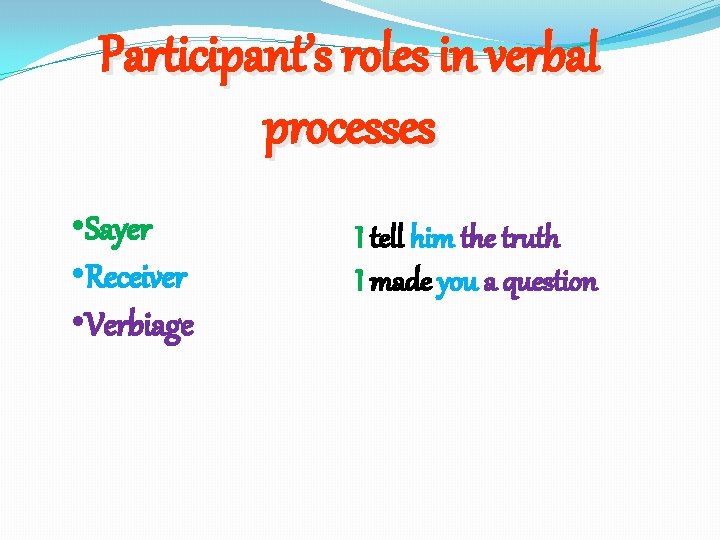
Participant’s roles in verbal processes • Sayer • Receiver • Verbiage I tell him the truth I made you a question
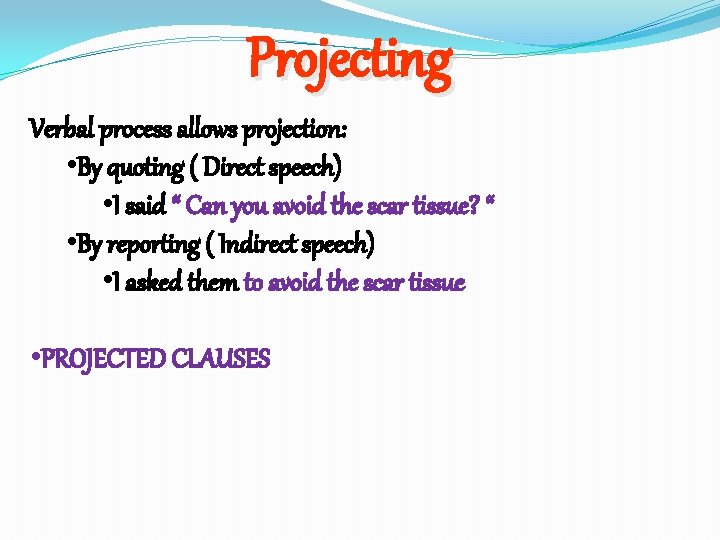
Projecting Verbal process allows projection: • By quoting ( Direct speech) • I said “ Can you avoid the scar tissue? “ • By reporting ( Indirect speech) • I asked them to avoid the scar tissue • PROJECTED CLAUSES
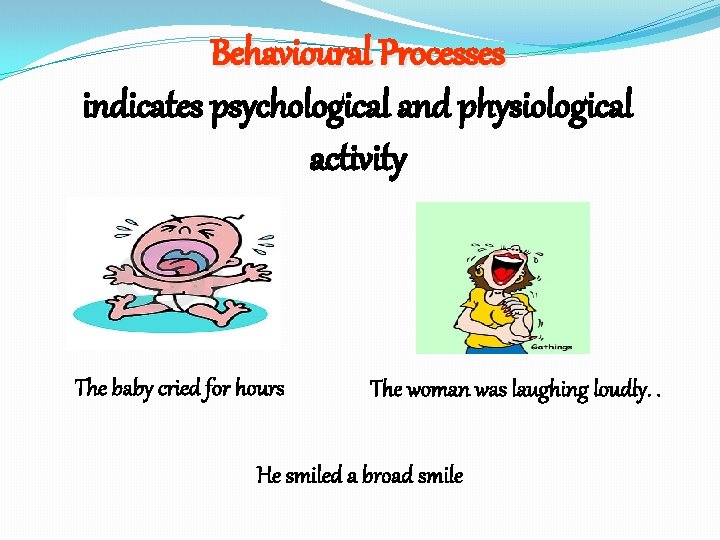
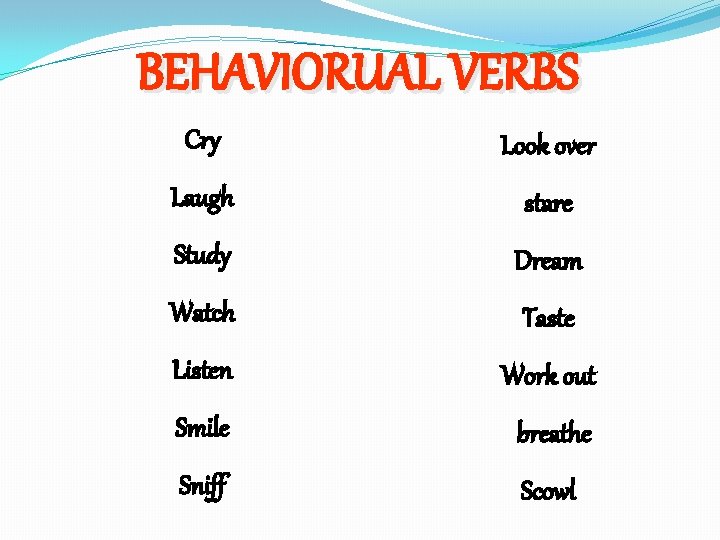
Behavioural Processes indicates psychological and physiological activity The baby cried for hours The woman was laughing loudly. . He smiled a broad smile
BEHAVIORUAL VERBS Cry Look over Laugh stare Study Dream Watch Taste Listen Work out Smile breathe Sniff Scowl
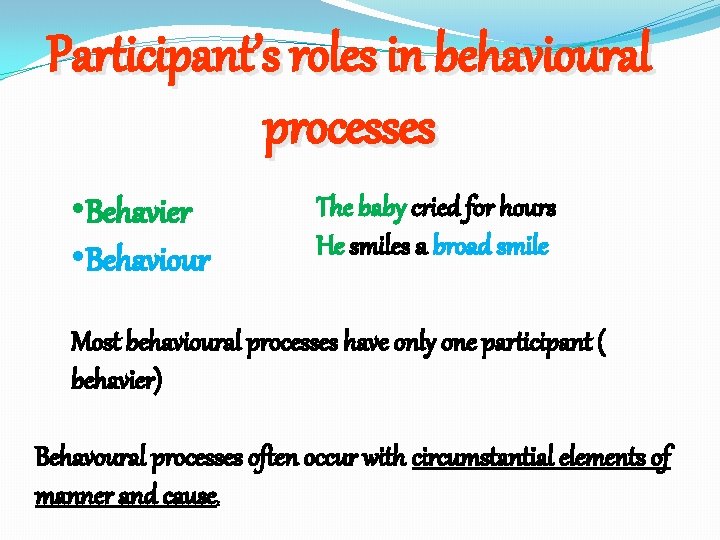
Participant’s roles in behavioural processes • Behavier • Behaviour The baby cried for hours He smiles a broad smile Most behavioural processes have only one participant ( behavier) Behavoural processes often occur with circumstantial elements of manner and cause.
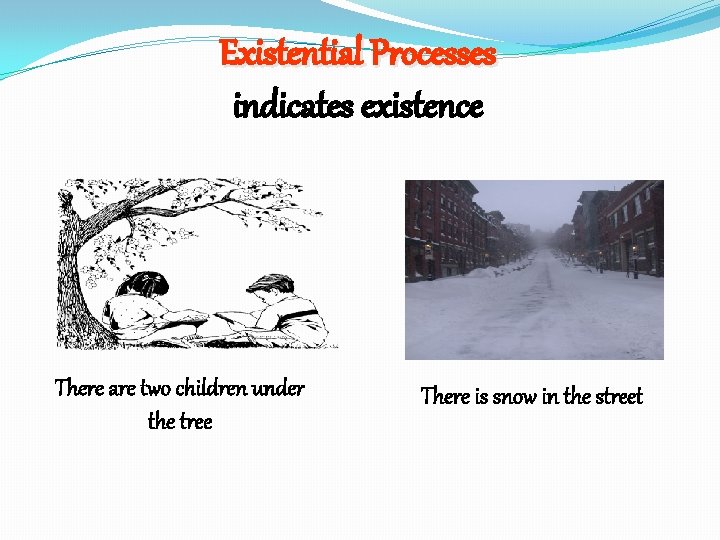
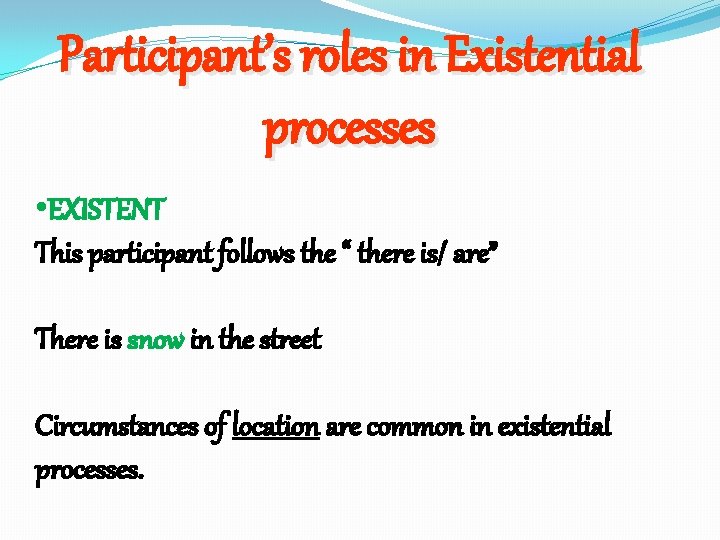
Existential Processes indicates existence There are two children under the tree There is snow in the street
Existential verbs There is/ are There was/ were
Participant’s roles in Existential processes • EXISTENT This participant follows the “ there is/ are” There is snow in the street Circumstances of location are common in existential processes.
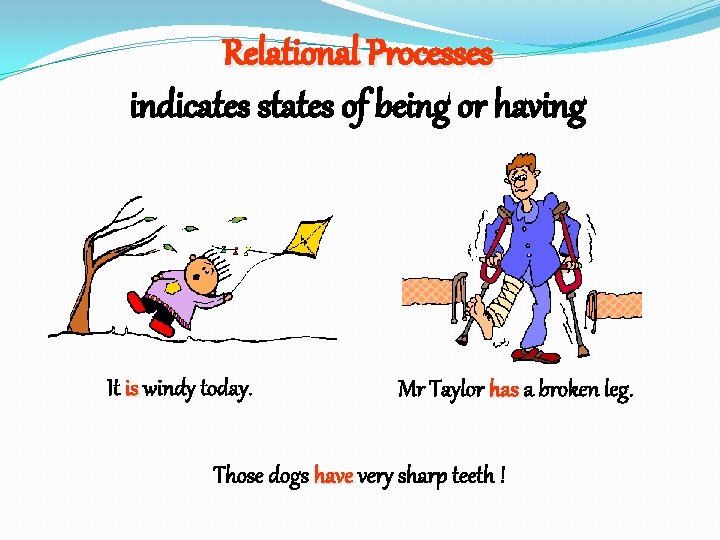
Relational Processes indicates states of being or having It is windy today. Mr Taylor has a broken leg. Those dogs have very sharp teeth !
Relational verbs Be Have Others replacing “be” or “have”
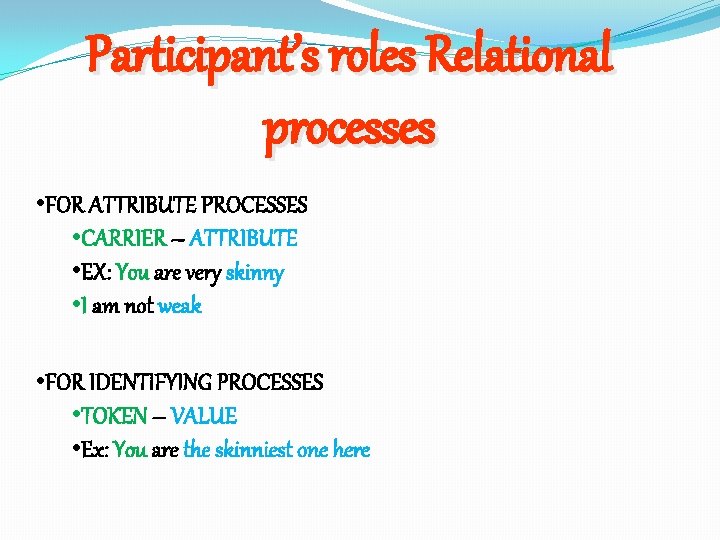
Participant’s roles Relational processes • FOR ATTRIBUTE PROCESSES • CARRIER – ATTRIBUTE • EX: You are very skinny • I am not weak • FOR IDENTIFYING PROCESSES • TOKEN – VALUE • Ex: You are the skinniest one here
s t n a p i c i Part
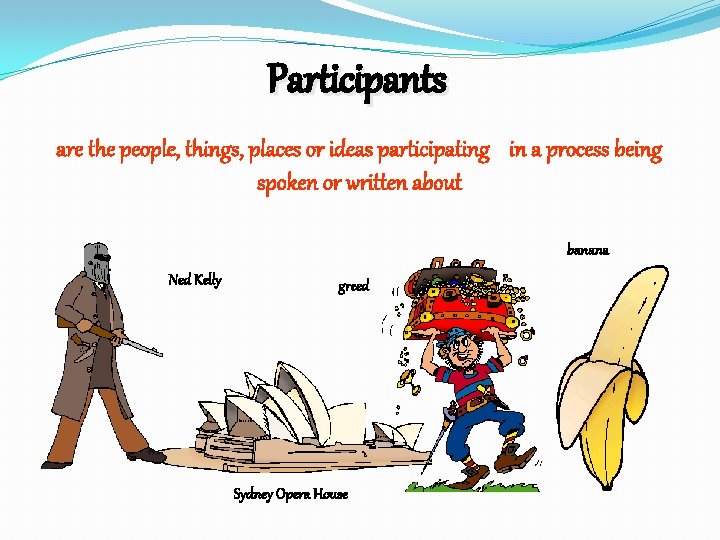
Participants are the people, things, places or ideas participating in a process being spoken or written about banana Ned Kelly greed Sydney Opera House
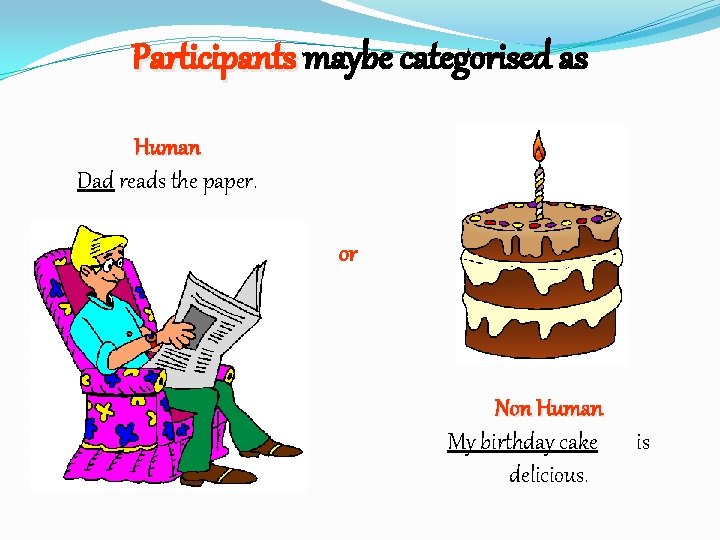
Participants maybe categorised as Human Dad reads the paper. or Non Human My birthday cake delicious. is
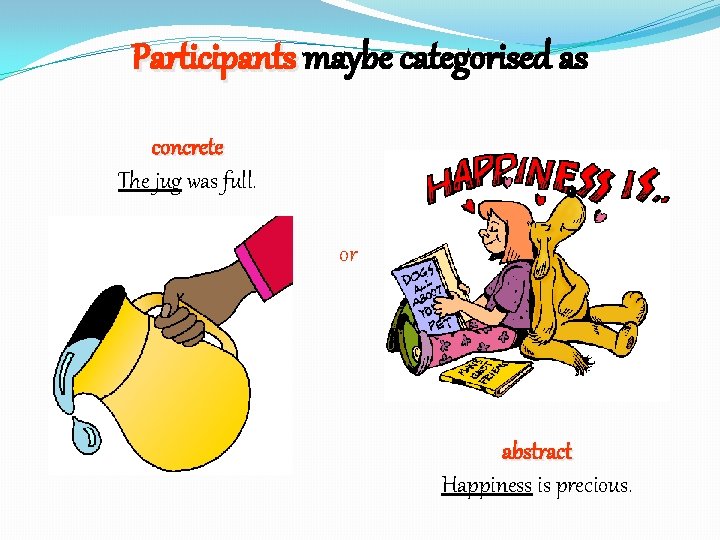
Participants maybe categorised as concrete The jug was full. or abstract Happiness is precious.
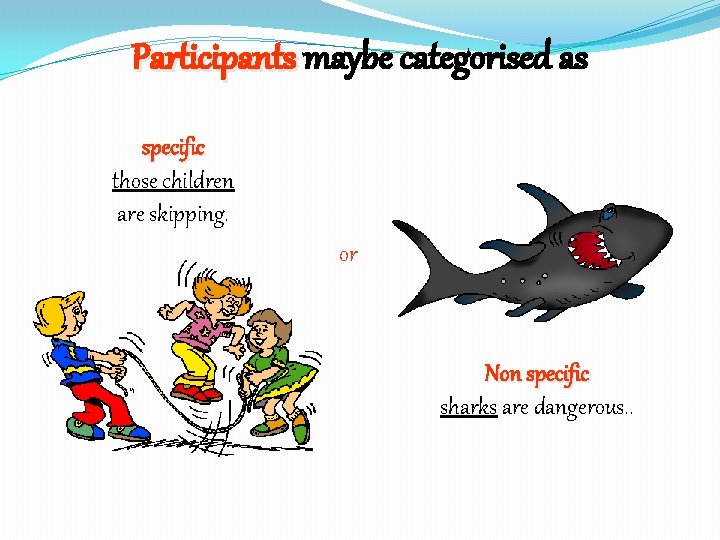
Participants maybe categorised as specific those children are skipping. or Non specific sharks are dangerous. .
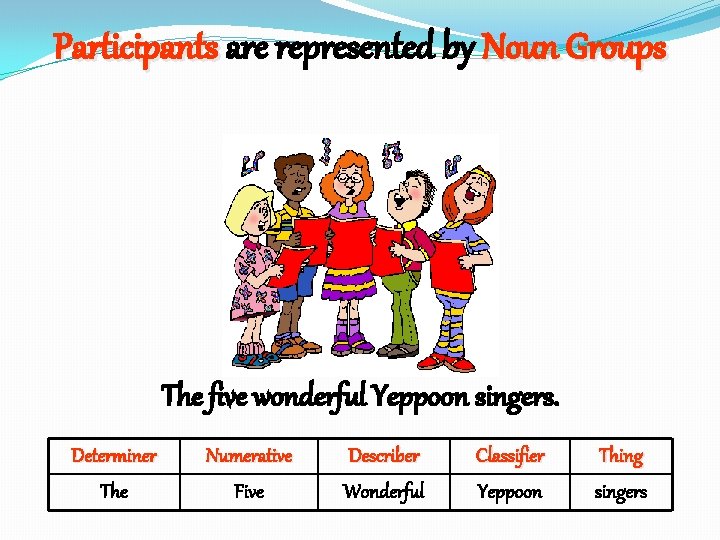
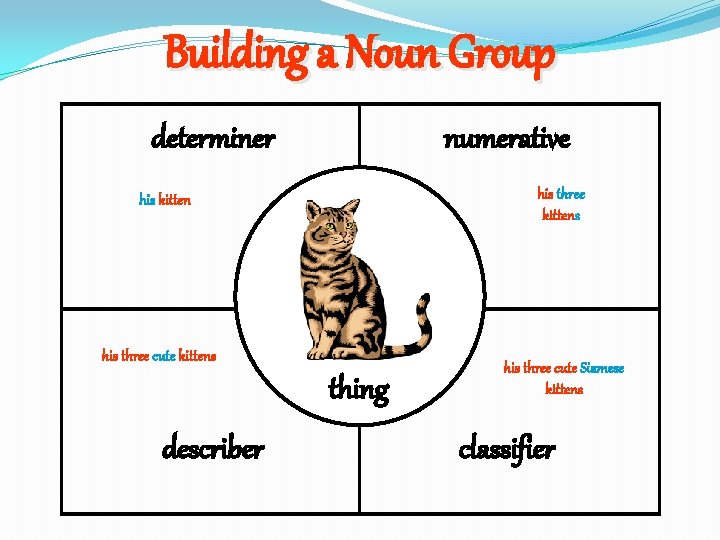
Participants are represented by Noun Groups The five wonderful Yeppoon singers. Determiner The Numerative Five Describer Wonderful Classifier Yeppoon Thing singers
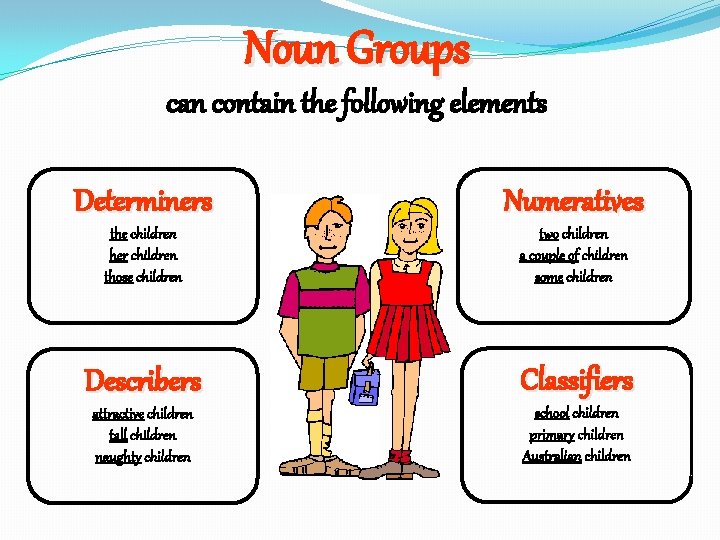
Noun Groups can contain the following elements Determiners Numeratives the children her children those children two children a couple of children some children Describers Classifiers attractive children tall children naughty children school children primary children Australian children
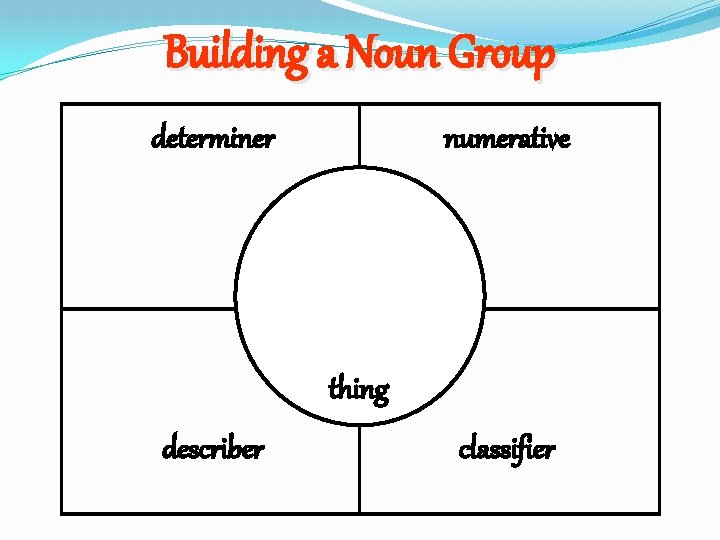
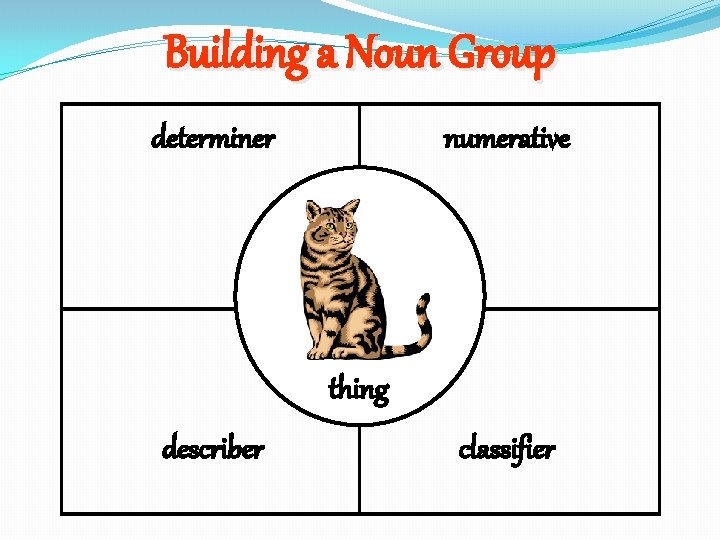
Building a Noun Group determiner numerative thing describer classifier
Building a Noun Group determiner numerative thing describer classifier
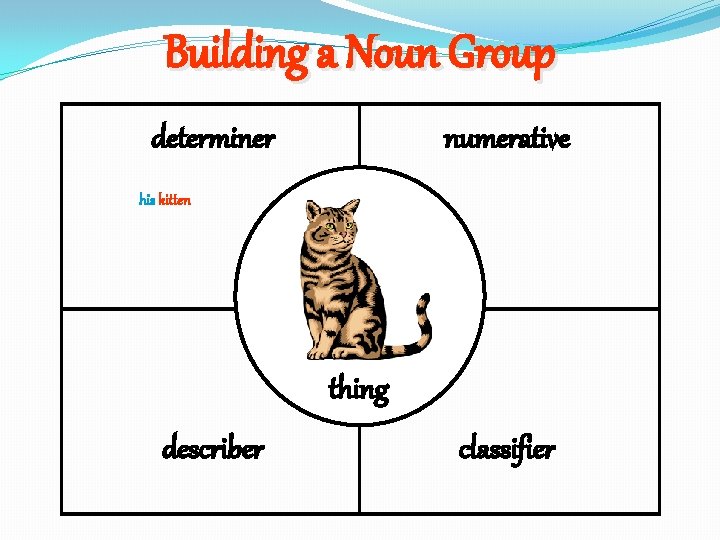
Building a Noun Group determiner numerative his kitten thing describer classifier
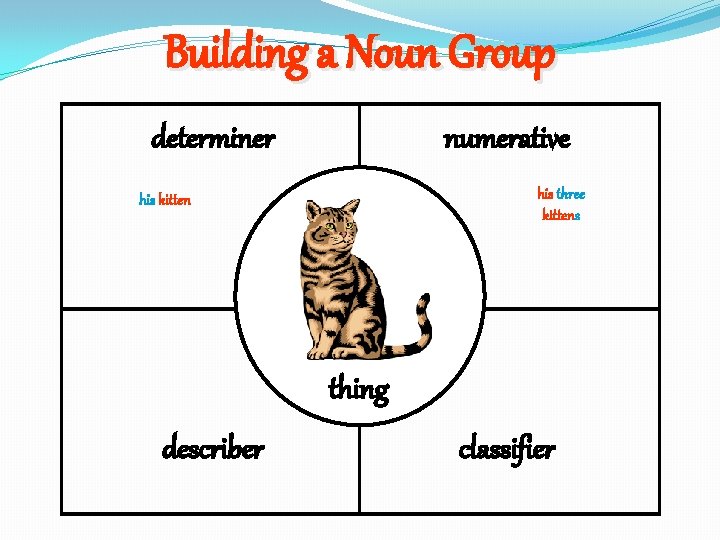
Building a Noun Group determiner numerative his three kittens his kitten thing describer classifier
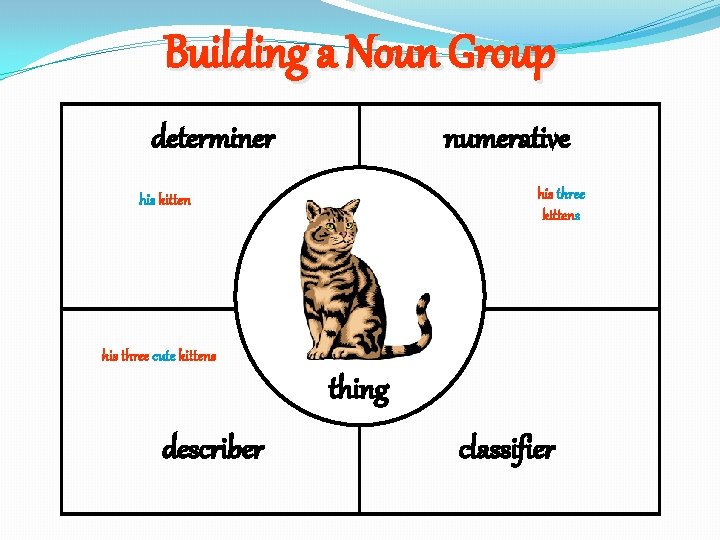
Building a Noun Group determiner numerative his three kittens his kitten his three cute kittens thing describer classifier
Building a Noun Group determiner numerative his three kittens his kitten his three cute kittens thing describer his three cute Siamese kittens classifier
s e c n a t s m Circu
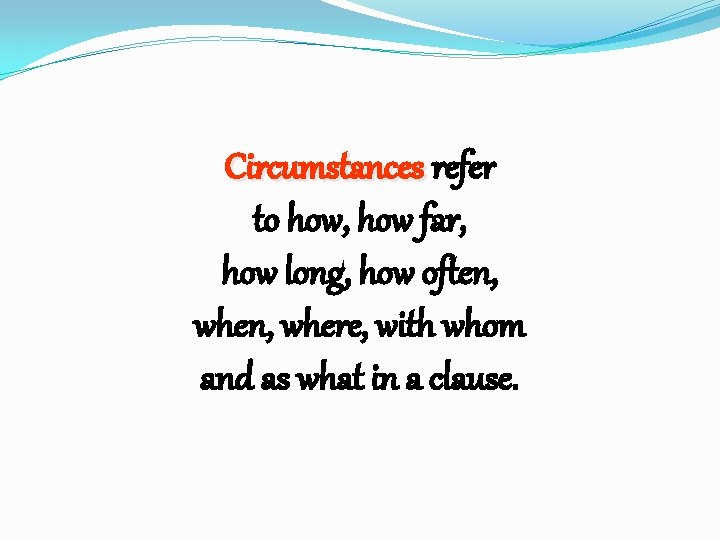
Circumstances refer to how, how far, how long, how often, where, with whom and as what in a clause.
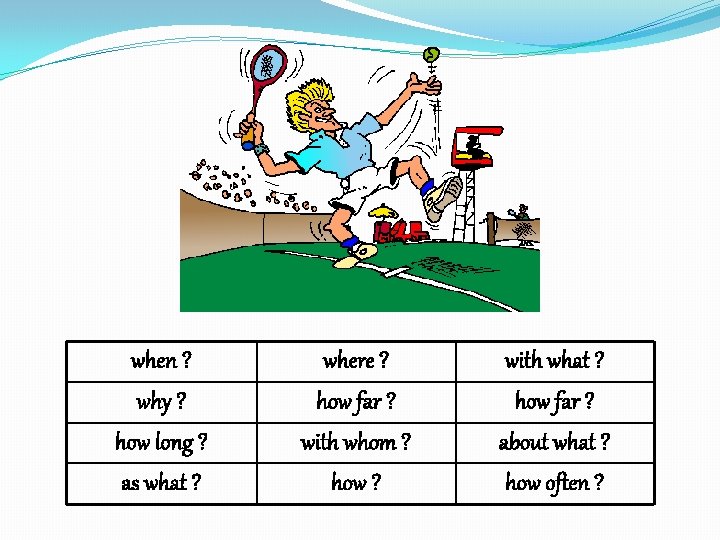
when ? why ? how long ? as what ? where ? how far ? with whom ? how ? with what ? how far ? about what ? how often ?
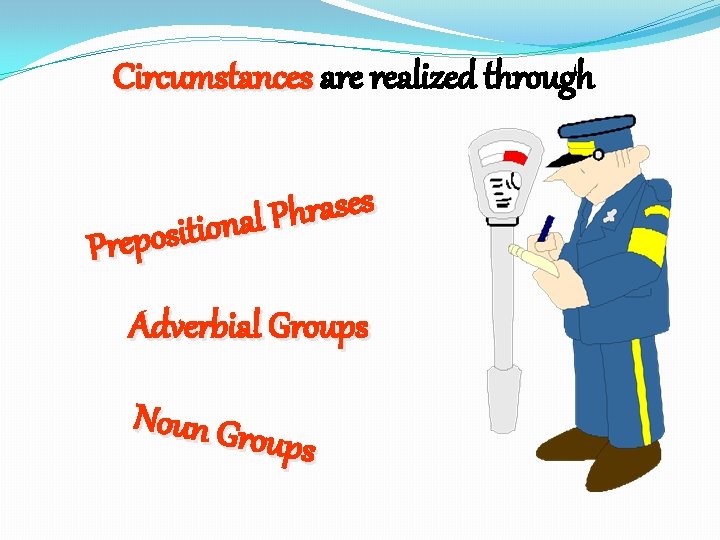
Circumstances are realized through s e s a r h P l a n o i t i Prepos Adverbial Groups Noun Gr oups
Circumstances give information about how, when, where or why a process takes place and can be reported by prepositional phrases
Prepositions are parts of speech that indicate relationships between words. Usually this relationship is expressed in terms of time and space
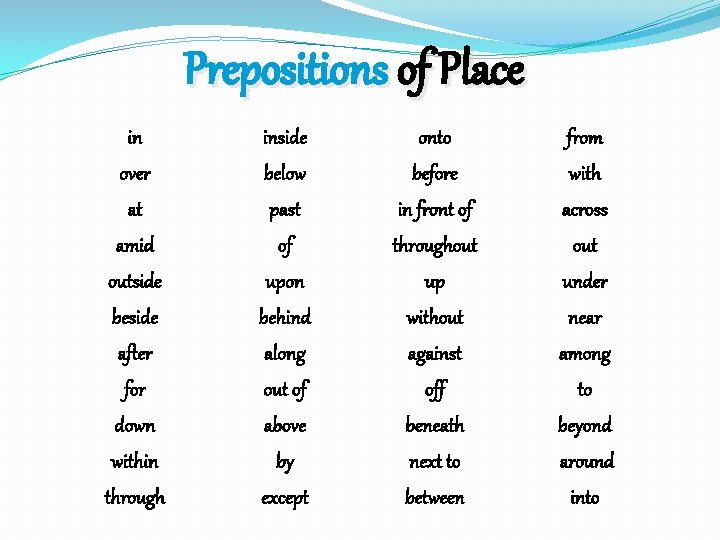
Prepositions of Place in over at amid inside below past of onto before in front of throughout from with across outside beside after for down within through upon behind along out of above by except up without against off beneath next to between under near among to beyond around into
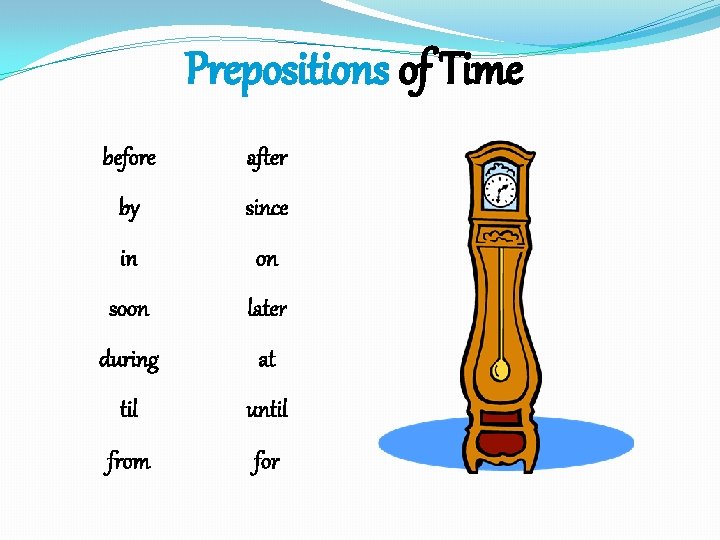
Prepositions of Time before after by since in on soon later during at til until from for
A phrase is a small group of words that makes some sense but does not contain a finite verb. Many phrases begin with a preposition.
There was a stone in my boot
That dog with the black tail belongs to Mikarla.
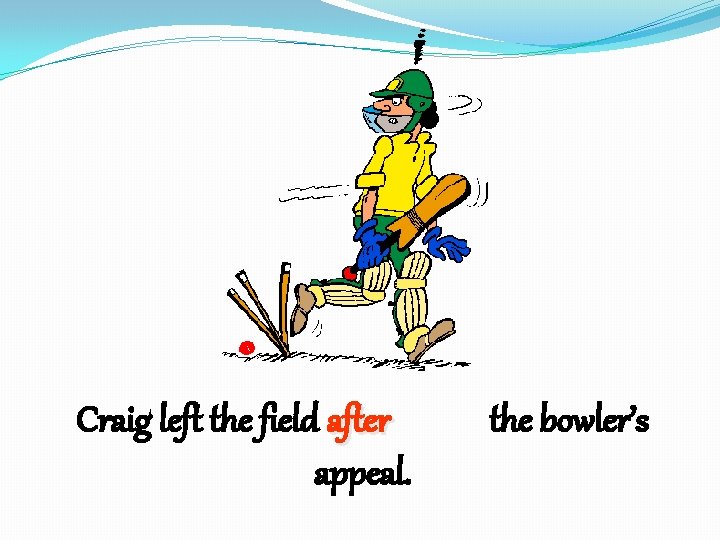
Craig left the field after appeal. the bowler’s
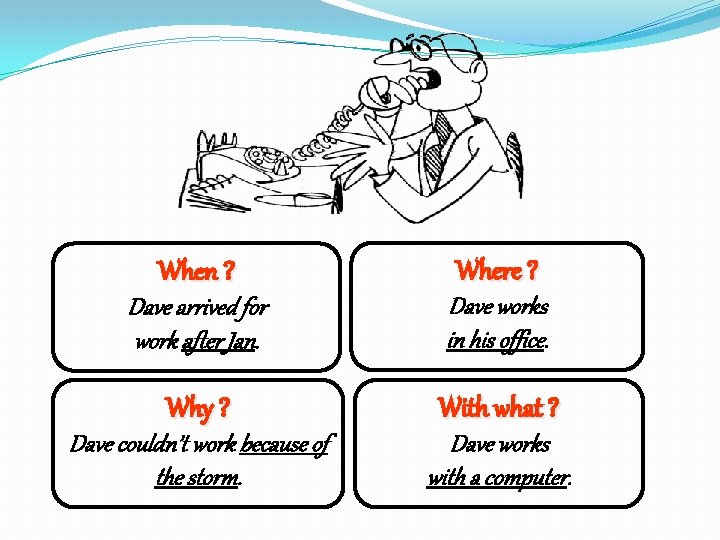
When ? Where ? Dave arrived for work after Jan. Dave works in his office. Why ? With what ? Dave couldn’t work because of the storm. Dave works with a computer.
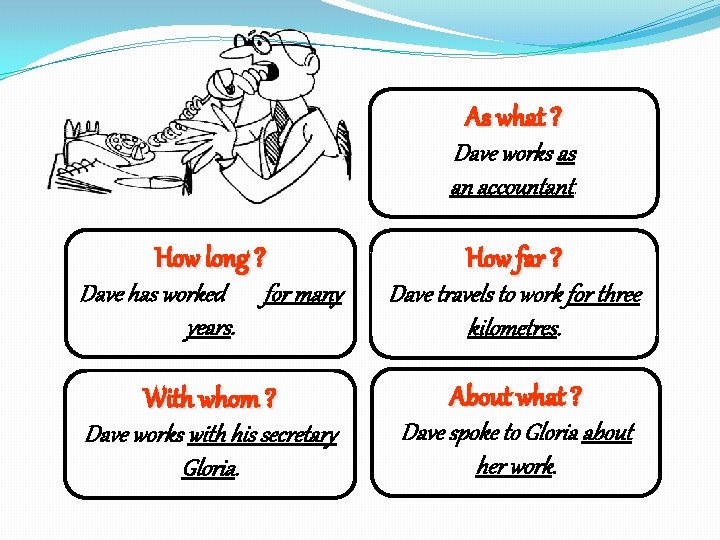
As what ? Dave works as an accountant. How long ? How far ? Dave has worked for many years. Dave travels to work for three kilometres. With whom ? About what ? Dave works with his secretary Gloria. Dave spoke to Gloria about her work.
Circumstances give information about how, when, where how often and to what degree a process takes place and can be reported by adverbial groups
Adverbs are modifiers that say something extra about a verb, adjective or another adverb. When one or more adverb is used to describe a process it is called an adverbial group
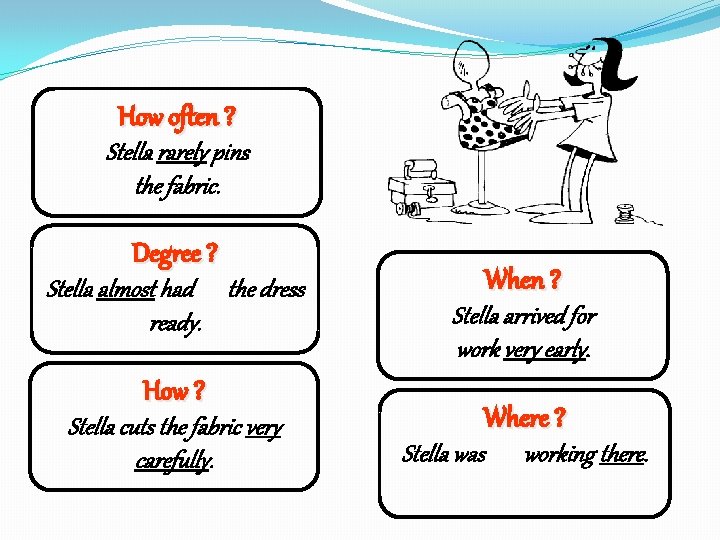
How often ? Stella rarely pins the fabric. Degree ? Stella almost had the dress ready. How ? Stella cuts the fabric very carefully. When ? Stella arrived for work very early. Where ? Stella was working there.
Circumstances give information about where and when a process takes place and can be reported by noun groups
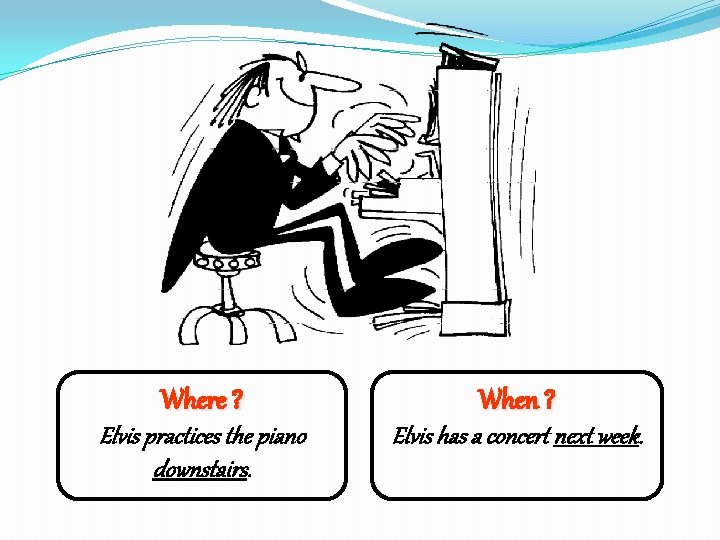
Where ? When ? Elvis practices the piano downstairs. Elvis has a concert next week.
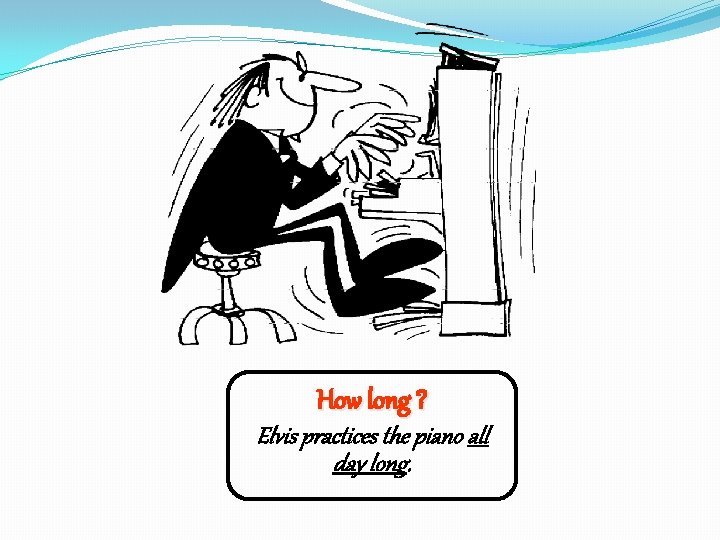
How long ? Elvis practices the piano all day long.
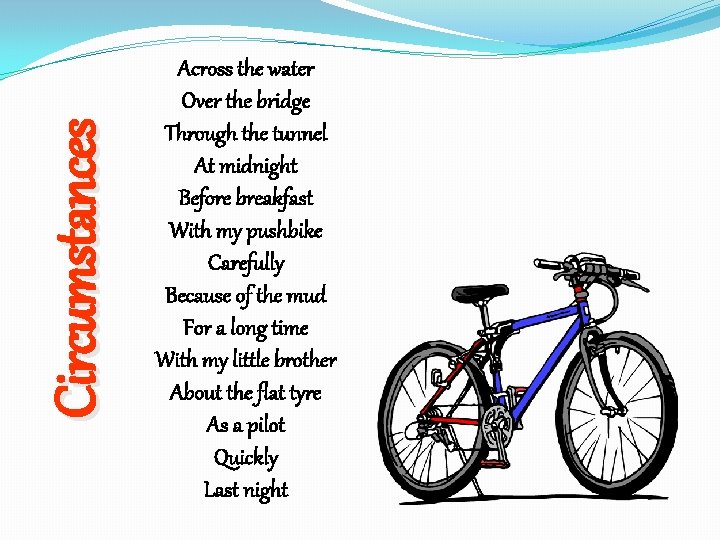
Circumstances Across the water Over the bridge Through the tunnel At midnight Before breakfast With my pushbike Carefully Because of the mud For a long time With my little brother About the flat tyre As a pilot Quickly Last night
n o i t a s i l a n i Nom
Nominalisation is the changing of a process into a participant
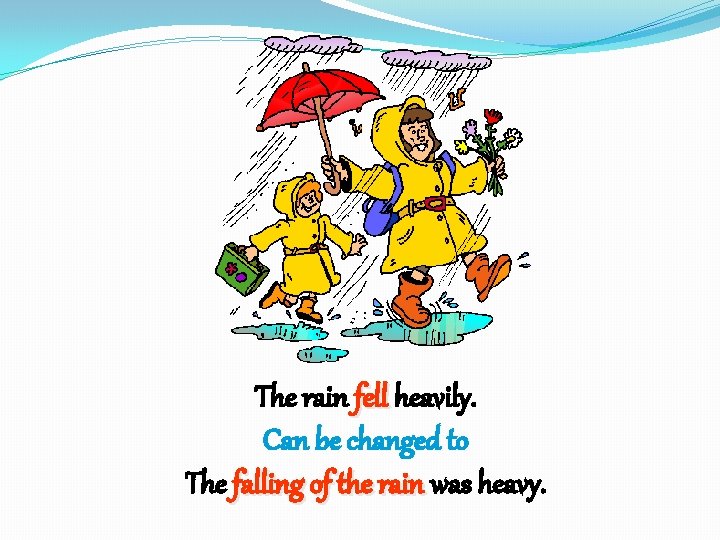
The rain fell heavily. Can be changed to The falling of the rain was heavy.