Chapter 1 The Importance of MIS This Could



- Slides: 36
Chapter 1 The Importance of MIS
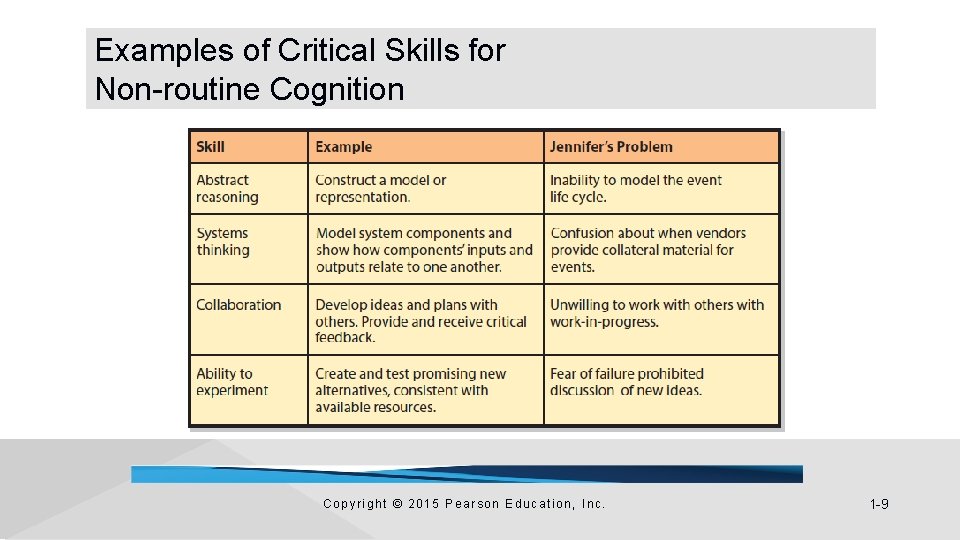
This Could Happen To You: “But Today, They’re Not Enough. ” Jennifer lacks essential skills All. Road Parts needs: 1. Abstract reasoning skills 2. Systems thinking skills 3. Collaboration skills 4. Experimentation skills Copyright © 2015 Pearson Education, Inc. 1 -2
Study Questions Q 1: Why is Introduction to MIS the most important class in the business school? Q 2: What is an information system? Q 3: What is MIS? Q 4: Why is the difference between information technology and information systems important to you? Q 5: What is your role in IS security? Copyright © 2015 Pearson Education, Inc. 1 -3
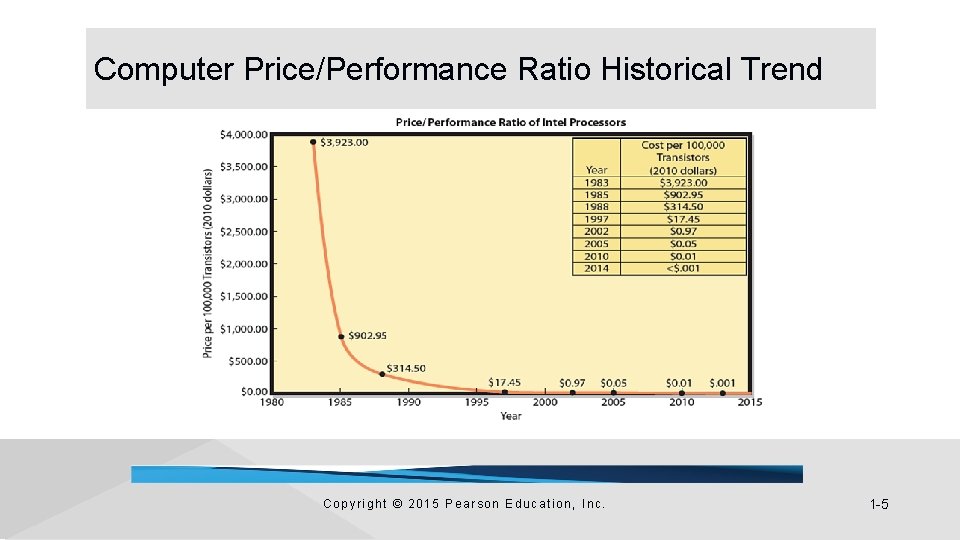
Q 1: Why Is Introduction to MIS the Most Important Class in the Business School? Moore’s Law • “The number of transistors per square inch on an integrated chip doubles every 18 months. ” • Cost of data processing and data storage is essentially zero. Copyright © 2015 Pearson Education, Inc. 1 -4
Computer Price/Performance Ratio Historical Trend Copyright © 2015 Pearson Education, Inc. 1 -5
Most Didn’t Exist In 2005 • You. Tube • Pinterest • Facebook • Foursquare • Pandora • Twitter • Linked. In • Hulu Copyright © 2015 Pearson Education, Inc. 1 -6
Why Is Introduction to MIS the Most Important Class? Second Reason • Future business professionals need to be able to assess, evaluate, and apply emerging information technology to business. – What are cost-effective business applications of Facebook, Twitter or whatever will appear next? Copyright © 2015 Pearson Education, Inc. 1 -7
Why Is Introduction to MIS the Most Important Class? Third Reason • How Can I Attain Job Security? – Any routine skill can and will be outsourced to lowest bidder. – Organizations favor those with strong non-routine cognitive skills. Copyright © 2015 Pearson Education, Inc. 1 -8
Examples of Critical Skills for Non-routine Cognition Copyright © 2015 Pearson Education, Inc. 1 -9
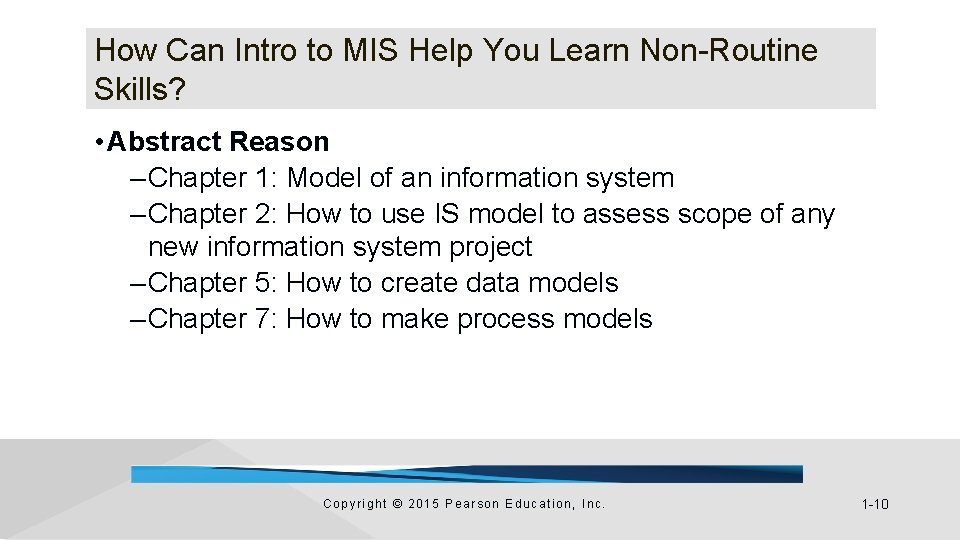
How Can Intro to MIS Help You Learn Non-Routine Skills? • Abstract Reason – Chapter 1: Model of an information system – Chapter 2: How to use IS model to assess scope of any new information system project – Chapter 5: How to create data models – Chapter 7: How to make process models Copyright © 2015 Pearson Education, Inc. 1 -10
How Can Intro to MIS Help You Learn Non-Routine Skills? (cont’d) • Systems Thinking – Ability to model system components, connect inputs and outputs among components to reflect structure and dynamics of system observed – Every chapter, especially Ch. 2– 7 and 10 Copyright © 2015 Pearson Education, Inc. 1 -11
How Can Intro to MIS Help You Learn Non-Routine Skills? (cont’d) • Collaboration – Activity of two or more people working together to achieve a common goal, result, or work product. – Chapter Extensions 2 A and 2 B discuss collaboration skills and illustrate several sample collaboration information systems. Copyright © 2015 Pearson Education, Inc. 1 -12
How Can Intro to MIS Help You Learn Non-Routine Skills? (cont’d) • Ability to Experiment – Make reasoned analysis of an opportunity; developing and evaluating possible solutions Ø “I’ve never done this before. ” Ø “I don’t know how to do it. ” Ø “But will it work? ” Ø “Is it too weird for the market? ” • Fear of failure paralyzes Copyright © 2015 Pearson Education, Inc. 1 -13
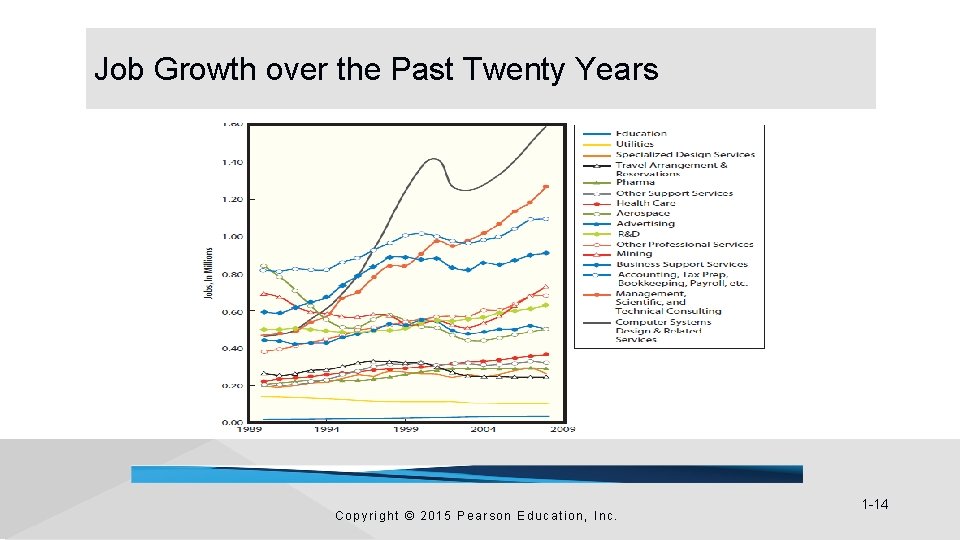
Job Growth over the Past Twenty Years Copyright © 2015 Pearson Education, Inc. 1 -14
What is the Bottom Line? 1. Assess, evaluate, and apply emerging information systems technology to business. 2. Learn abstraction, systems thinking, collaboration, and experimentation. 3. There is strong growth in number of available jobs for those with strong cognitive skills. 4. Many MIS-related jobs are available and will enjoy strong growth. Copyright © 2015 Pearson Education, Inc. 1 -15
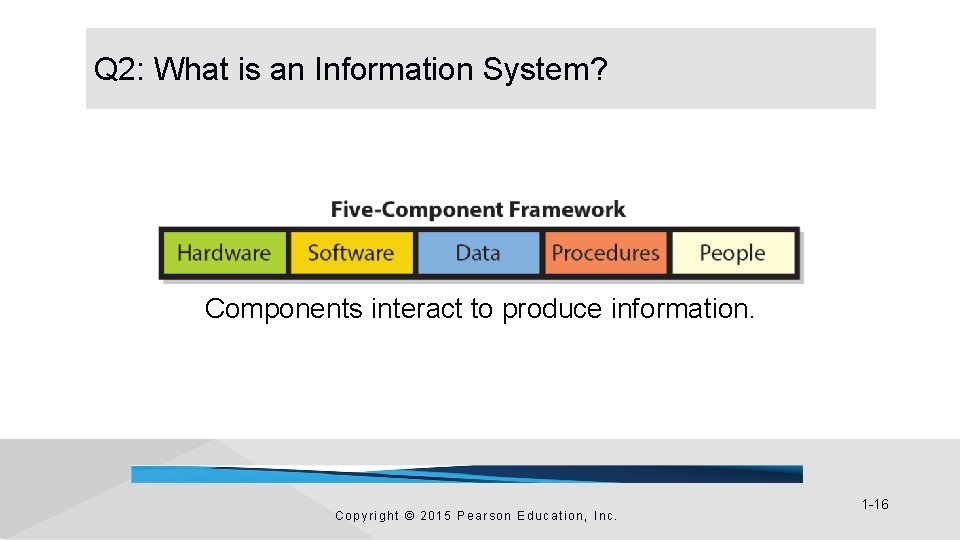
Q 2: What is an Information System? Components interact to produce information. Copyright © 2015 Pearson Education, Inc. 1 -16
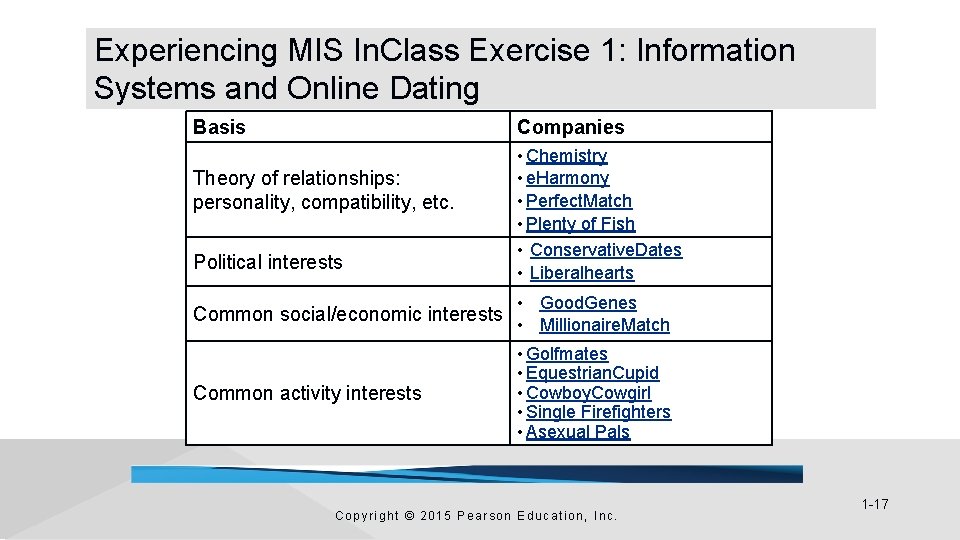
Experiencing MIS In. Class Exercise 1: Information Systems and Online Dating Basis Companies Theory of relationships: personality, compatibility, etc. Political interests • Chemistry • e. Harmony • Perfect. Match • Plenty of Fish • Conservative. Dates • Liberalhearts Common social/economic interests • Good. Genes • Millionaire. Match Common activity interests • Golfmates • Equestrian. Cupid • Cowboy. Cowgirl • Single Firefighters • Asexual Pals Copyright © 2015 Pearson Education, Inc. 1 -17
Q 3: What Is MIS? • Key elements - Management and use - Information systems - Strategies • Goal of MIS - Managing IS to achieve business strategies Copyright © 2015 Pearson Education, Inc. 1 -18
What Is MIS (cont’d) • Management - Means develop, maintain, and adapt. - To create an information system that meets your needs, take an active role in system’s development. Why? – Business professionals understand business needs and requirements. Copyright © 2015 Pearson Education, Inc. 1 -19
Development and Use of Information Systems Business professionals need to: • Take active role to ensure systems meet their needs. • Understand how IS constructed. • Consider users’ needs during development. • Learn how to use. • Ancillary (security, backups). Copyright © 2015 Pearson Education, Inc. 1 -20
Achieving Strategies • Information systems exist to help people in a business achieve the business' strategies. Copyright © 2015 Pearson Education, Inc. 1 -21
Q 4: Why Is the Difference Between IT and IS Important to You? • Information technology drives development of new information systems. • Information technology (IT) 1. 2. 3. 4. Products Methods Inventions Standards Ø IT components = Hardware + Software + Data Ø IS = IT + Procedures + People Copyright © 2015 Pearson Education, Inc. 1 -22
Why Is the Difference Between Information Technology and Information Systems Important to You? (cont’d) • Avoid a common mistake: IS cannot be bought. – Can buy IT, rent or lease hardware, software and databases, and predesigned procedures. • People execute procedures to employ new IT. • Use of new system requires training, overcoming employees’ resistance, and managing employees as they use the new system. Copyright © 2015 Pearson Education, Inc. 1 -23
Q 5: What Is Your Role in IS Security? • Security systems have five IS components. • Security system ultimately depends on behavior of users. • If security procedures are not followed, then hardware, software, and data components of security system are a wasted expense. Copyright © 2015 Pearson Education, Inc. 1 -24
Strong Passwords • Ten or more characters • Does not contain your user name, real name, or company name • Does not contain a complete dictionary word in any language • Different from previous passwords used • Contains both upper- and lowercase letters, numbers, and special characters (˜ ! @; # $ % ^; &; * ( ) _ +; – =; { } | [ ] : “ ; ’ <; >; ? , . /) Copyright © 2015 Pearson Education, Inc. 1 -25
Password Etiquette • Never write down your password, do not share it with others. • Never ask someone for their password. • Never give your password to someone. • “do-si-do” move—moving away so another person can enter password privately—common professional practice. Copyright © 2015 Pearson Education, Inc. 1 -26
How Does the Knowledge in This Chapter Help You? • Learn Reich’s four key skills: abstract reasoning, systems thinking, experimentation, and collaboration. Then, practice, practice. • Realize that the future belongs to those who can creatively envision new applications of information systems and technology. Copyright © 2015 Pearson Education, Inc. 1 -27
How Does the Knowledge in This Chapter Help You? (cont’d) • Learn IS components and understand the need of business professionals to take an active role in information systems development. • Understand the difference between IT and IS. • Create strong passwords, use them, and follow professional password etiquette Copyright © 2015 Pearson Education, Inc. 1 -28
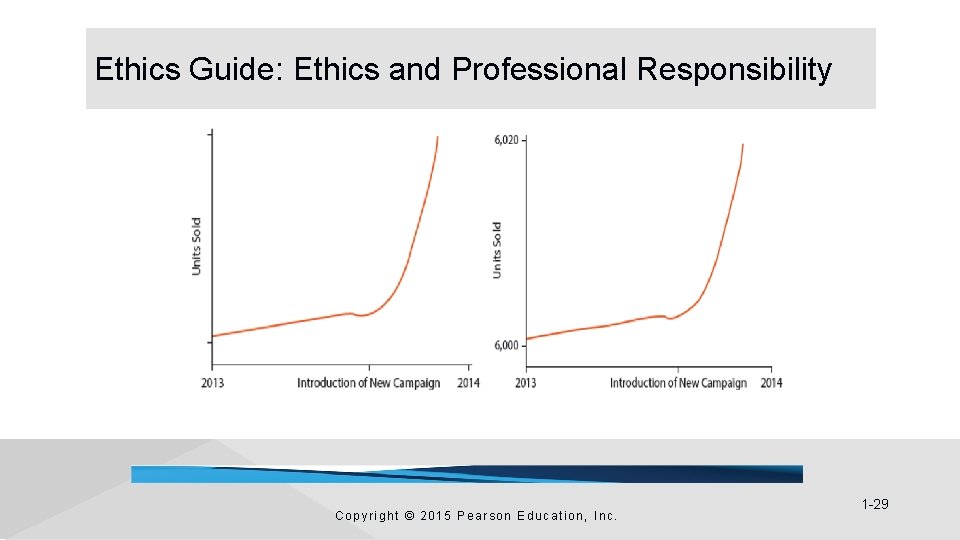
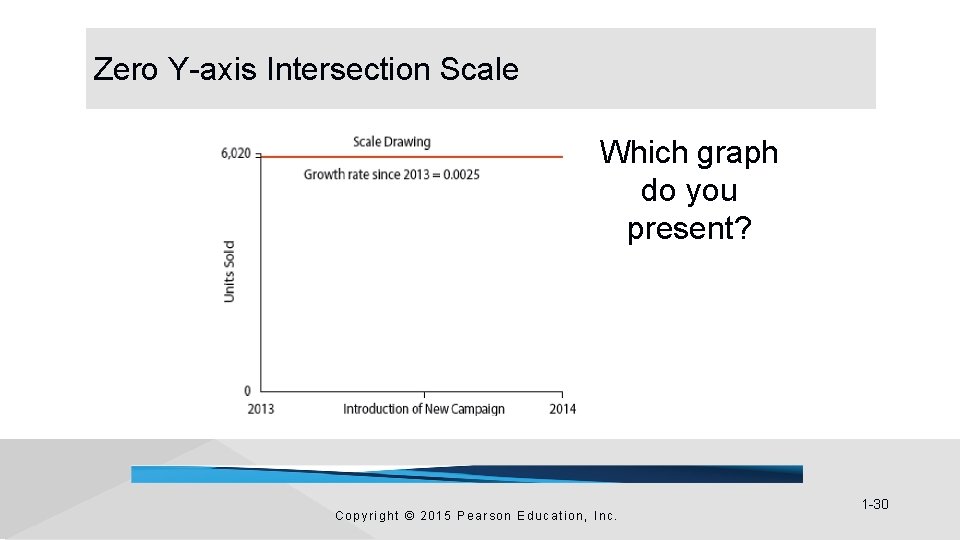
Ethics Guide: Ethics and Professional Responsibility Copyright © 2015 Pearson Education, Inc. 1 -29
Zero Y-axis Intersection Scale Which graph do you present? Copyright © 2015 Pearson Education, Inc. 1 -30
Categorical Imperative • One should behave only in a way that one would want the behavior to be as a universal law. • Are you willing to publish your behavior to the world? Copyright © 2015 Pearson Education, Inc. 1 -31
Duty • Necessity to act in accordance with the categorical imperative. • Perfect duty - behavior that must always be met. (Not lying) • Imperfect duty - action that is praiseworthy, but not required according to categorical imperative. (Giving to charity; developing your business skills and abilities) Copyright © 2015 Pearson Education, Inc. 1 -32
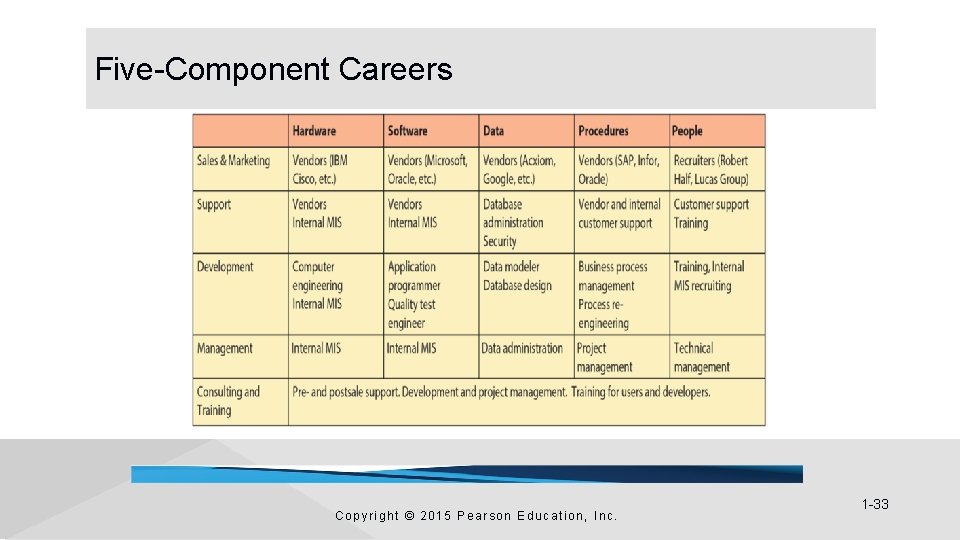
Five-Component Careers Copyright © 2015 Pearson Education, Inc. 1 -33
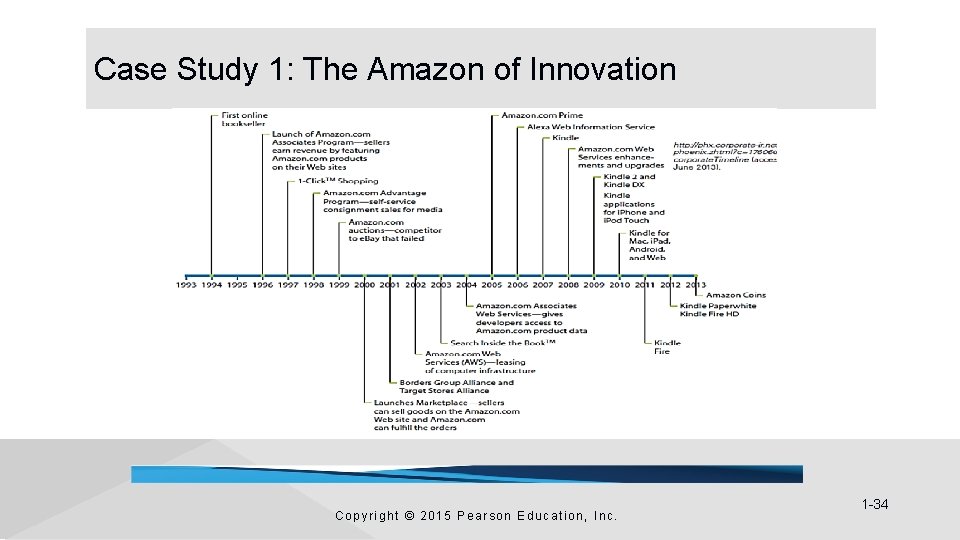
Case Study 1: The Amazon of Innovation Copyright © 2015 Pearson Education, Inc. 1 -34
Case Study 1: The Amazon of Innovation (cont'd) Amazon’s business lines three categories: 1. Online retailing – Own inventory – Associates program – Consignment 2. Order fulfillment 3. Cloud services Copyright © 2015 Pearson Education, Inc. 1 -35
1 -36