APS Therapy For pain relief energy enhancement injury




- Slides: 74
APS Therapy � � For pain relief, energy enhancement & injury repair
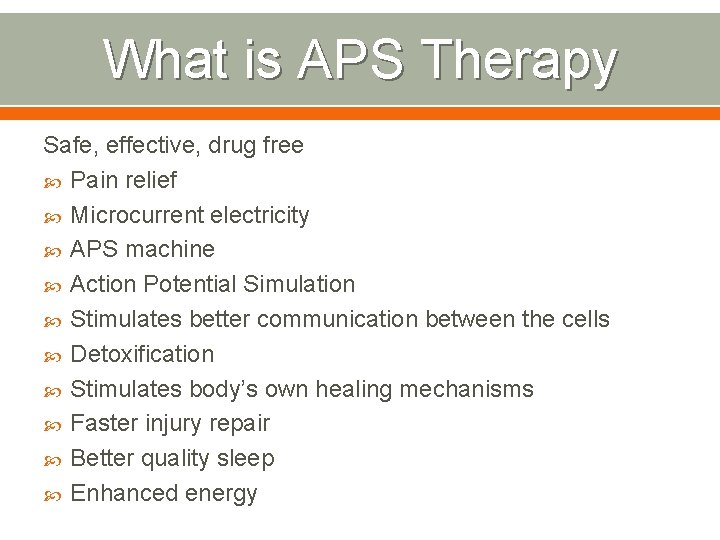
What is APS Therapy Safe, effective, drug free Pain relief Microcurrent electricity APS machine Action Potential Simulation Stimulates better communication between the cells Detoxification Stimulates body’s own healing mechanisms Faster injury repair Better quality sleep Enhanced energy
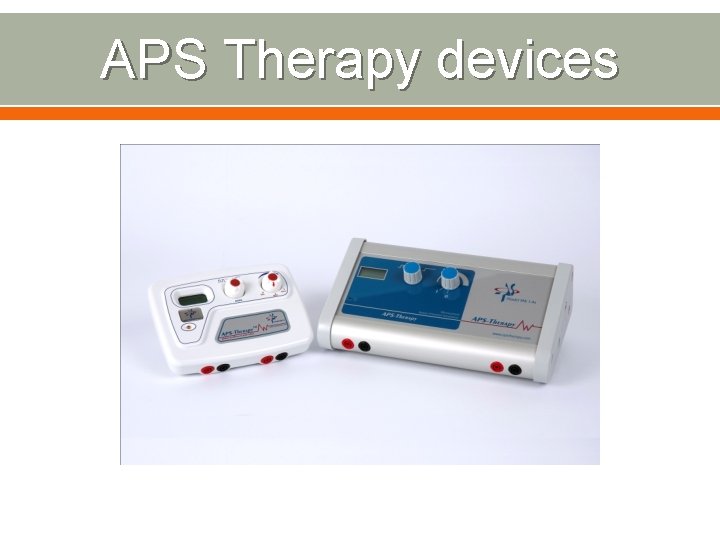
APS Therapy devices
History Developed in early 1990 s, south Africa First machine treated shattered elbows successfully Prof Christian Barnard used for arthritis to keep working 1993 1 st serial machine – MD in USA 1994 FDA approval 1998 CE approval ( Europe) 1998 Gold award Geneva Medical International Invention
What is APS Therapy? Action Potential The change in electrical potential associated with the passage of an impulse along the membrane of a muscle cell or nerve cell Electrical communication within the cells of the body Simulation - a copy
Action Potentials In the human body, action potentials occur in nerve cells, muscles cells and endocrine cells, and are also referred to as ‘nerve impulses’ or as the cell ‘firing’. In neurons, they play a central role in cell-to-cell communication. In other types of cells, their main function is to activate intracellular processes. In muscle cells, for example, an action potential is the first step in the chain of events leading to contraction.
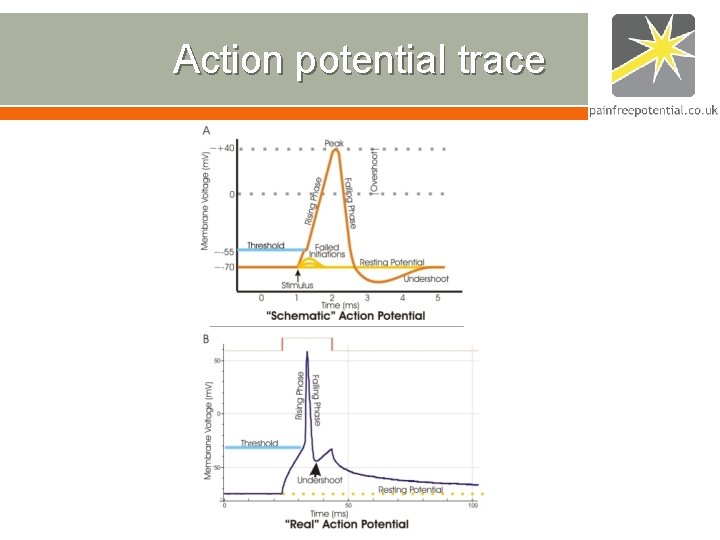
Real Action Potential
Action Potentials
Action Potentials
Action potential trace
Action potentials All the processes of the body take place by the different types of specialised cells working in harmony with each other. ‘Action potentials’ facilitate waves of electrical communication between these cells. A series of biochemical reactions take place, lasting just thousandths of a second, in which electrically charged molecules of sodium or potassium rush in and out of cells, as ‘gates’ in the cell membranes open and close, and when they get to certain concentrations, they trigger a electrical impulse, a ‘firing’ and a depolarisation, sending a wave of information along to the next cell, and setting up for the next wave of action potential
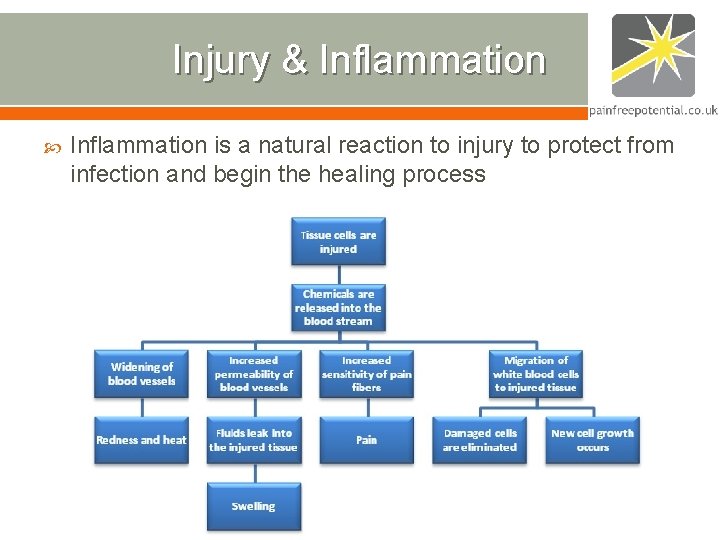
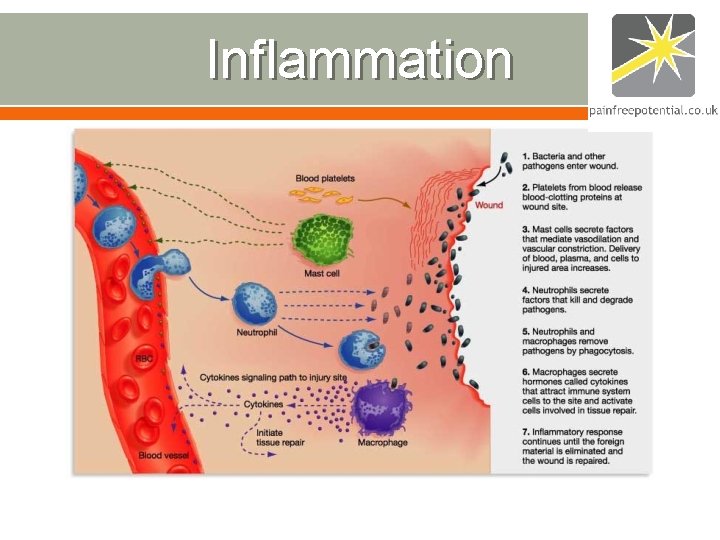
Injury & Inflammation is a natural reaction to injury to protect from infection and begin the healing process
Inflammation
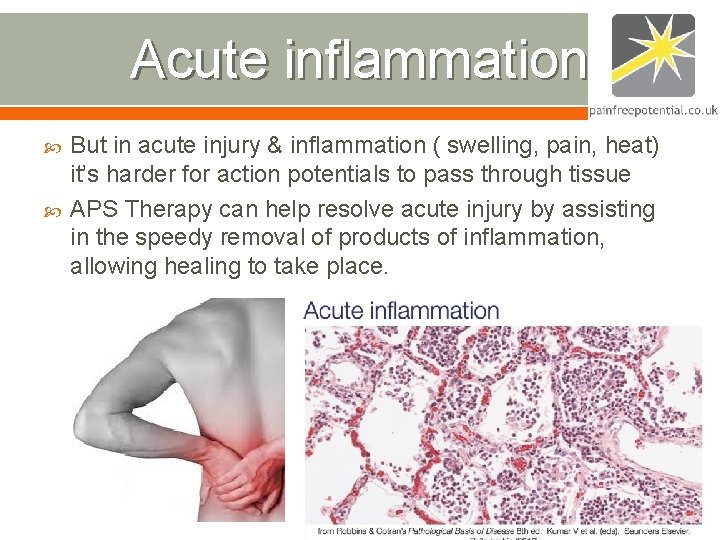
Acute inflammation But in acute injury & inflammation ( swelling, pain, heat) it’s harder for action potentials to pass through tissue APS Therapy can help resolve acute injury by assisting in the speedy removal of products of inflammation, allowing healing to take place.
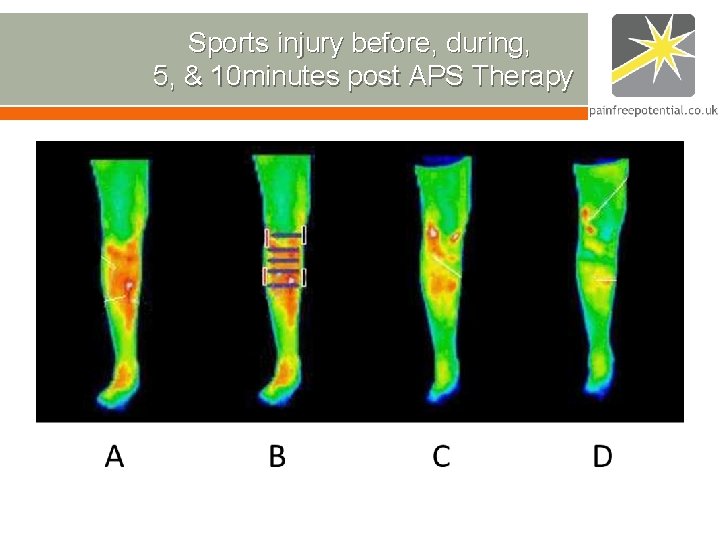
Sports injury before, during, 5, & 10 minutes post APS Therapy
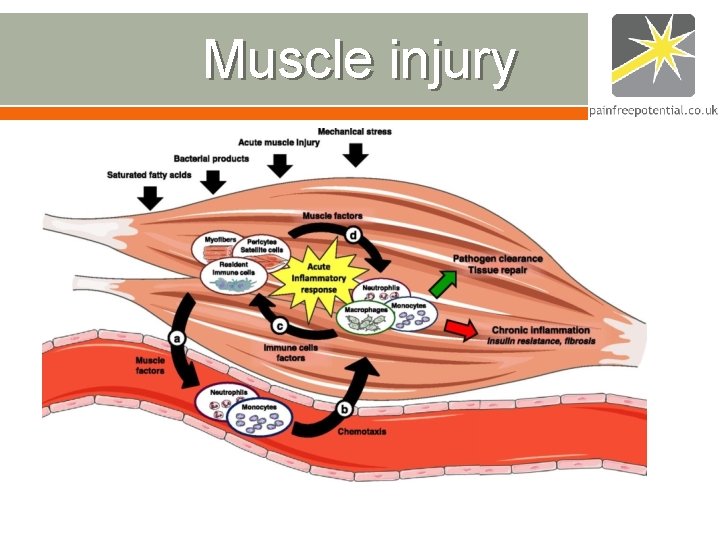
Muscle injury
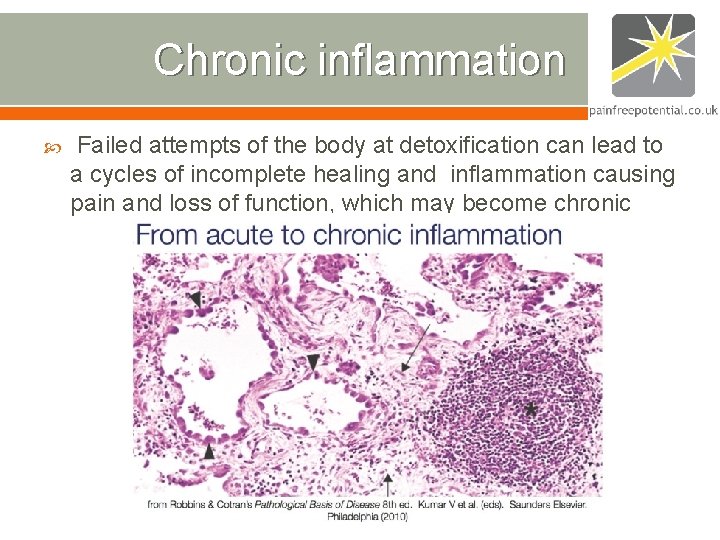
Chronic inflammation Failed attempts of the body at detoxification can lead to a cycles of incomplete healing and inflammation causing pain and loss of function, which may become chronic
Chronic Inflammation persistence of macrophages, fibroblast 'activation', local adaptive immune response reflected by the presence of B lymphocytes and T lymphocytes.
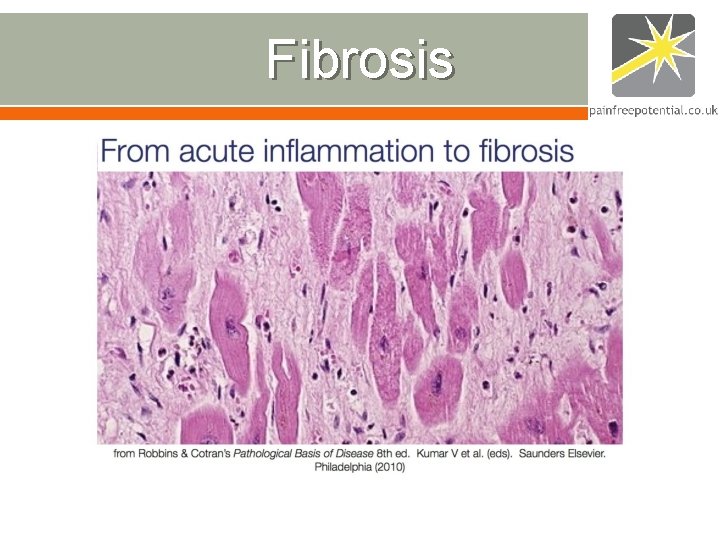
Fibrosis
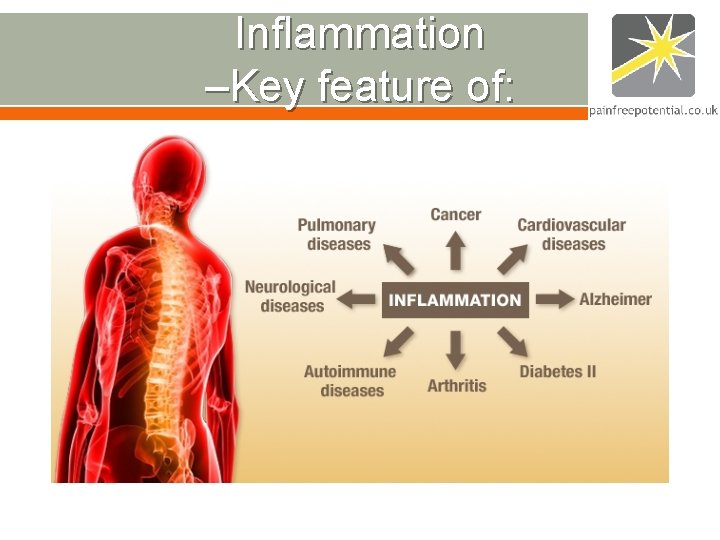
Inflammation –Key feature of:
Common causes of chronic inflammation Chronic infection Diet – hydrogenated oils, fried, processed & refined foods, meat, sugar, caffeine, dairy Chronic stress Excess calories Poor gut wall integrity Food intolerances Root canal work Environmental pollution
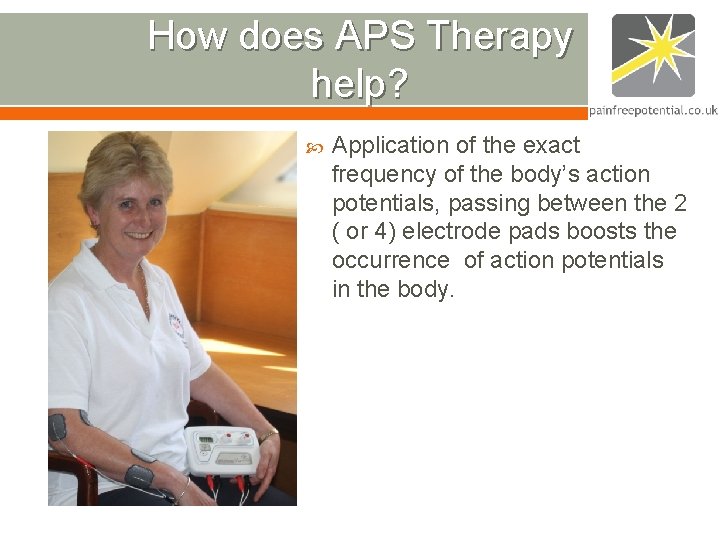
How does APS Therapy help? Application of the exact frequency of the body’s action potentials, passing between the 2 ( or 4) electrode pads boosts the occurrence of action potentials in the body.
Boosting action potentials Speeds up many cellular processes in the body Communication between cells is enhanced Speeds detoxification Cellular repair and regeneration enhanced Faster wound and injury healing Improved recovery time after exercise Pain relief, even in some long standing conditions
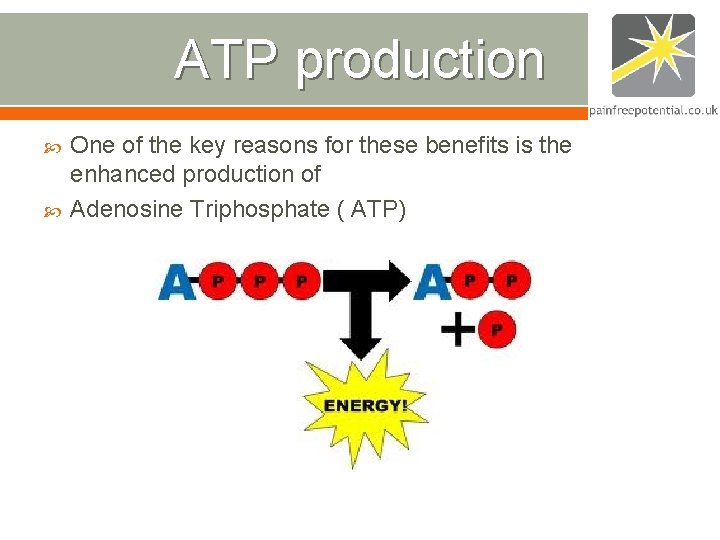
ATP production One of the key reasons for these benefits is the enhanced production of Adenosine Triphosphate ( ATP)
ATP ATP molecules: the storage and distribution vehicles for energy in the body. chemical bonds of adenosine, ribose, and three molecules of phosphate. Energy is released when the phosphate bond is broken. Function: convert glucose, from food, into energy. Allows: muscle contraction, protein biosynthesis, nerve transmission, and active transport across cell membranes. more ATP = better function and more energy
ATP declines with age lack of available nutrients, particularly oxygen and hydrogen, needed to create ATP. free radicals created by chemicals in food and pollution, poor dietary and lifestyle habits, weakened digestion leading to the inability to break down nutrients from food, disease processes, including those that damage the mitochondria. some people, eg athletes, place enormous demands on the ATP in their systems.
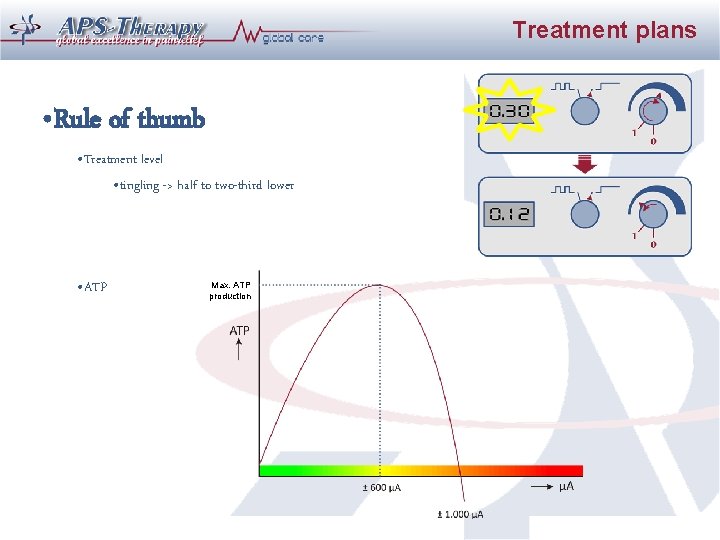
How does APS help? APS Therapy stimulates the production of ATP using the direct micro-current flowing from the positive to the negative electrode of the APS machine. This emulates the electron transport chain which is one of the key ways that the body produces ATP. This boost gives rise to up to 400% increased healing time of injuries, faster recovery time for athletes enhanced energy and wellbeing.
Electrotherapies Electrical stimulation agents, including Transcutaneous Electrical Nerve stimulation (TENS), Action Potential Simulation Therapy (APS Therapy), Interferential Therapy (IFT), Functional Electrical Stimulation (FES), and Microcurrent therapy (MCT), Thermal modalities, including Infra red Irradiation (IFR), Therapeutic Ultrasound and Laser Therapy, and Non Thermal Modalities including Pulsed Ultrasound, Pulsed Electromagnetic Fields (PEMFs) and Microcurrent Therapy (MCT) Prof Tim Watson www. electrotherapy. org
Research on micro-current A literature review on over 70 papers on micro-current therapy in 2009 concluded that there was evidence for its use with non-uniting fractures, spinal fusions and a skin ulcers, particularly where other forms of treatment had not been successful; that In vitro studies also suggest that there is unexplored potential for its use in musculoskeletal disorders. However, higher quality and more comprehensive research is needed. - Watson, T. Narrative Review : Key concepts with electrophysical agents Physical Therapy Reviews 2010. 15(4): 351 -359.
Research in APS An assessment of APS Therapy on 285 Patients with Chronic Pain in 2002 reported a mean average VAPS was 6. 8 before treatment and 3. 3 after treatment in the over 50 s, and 6. 3 and 2. 2 respectively in the under 50 s. Out of the 285 patients, 44 (15%) ended with a ‘ 0’ VAPS and 199 (69%) with a score of 5 or less. (21) A trial of APS Therapy in patients awaiting or having neurosurgery for intractable spinal pain concluded that the number of patients treated was too low to reach a statistical conclusion, but that the trend was very promising and they recommended that patients waiting for destructive surgery should first be put on a thorough trial of APS Therapy. (22) In a 1999 randomized, patient blinded, placebo-controlled study, on 76 patients with chronic osteoporotic back pain, reported pretreatment baseline VAPS value average of of 57. 79, and post- treatment value after the sixth treatment of 9. 7 (p= 0, 0001); 6 patients maintained benefits 6 months post treatment. (23) A study in 1999 on APS Therapy compared with TENS in 99 patients with osteoarthritis of the knee did not find a significant difference between the two treatment groups given just 6 treatments over a 2 week period. The authors did note, however, that the APS group showed a significant improvement in measures of knee flexion and swelling, which persisted even 1 month after the last treatment. (24)
References 21) Papendorp DH van. (2002). Assessment of Pain Relief on 285 patients with chronic pain. Biomedical Research 2002; 26: 249 -253. 22) Du Preez, J. Neurosurgical Pain Conditions University of Pretoria 23) Odendaal & Joubert APS Therapy- a new way of teating chronic backabacke, a pilot study South African Journal of Anaesthesiology and Analgesia. 1999; 5 1 24) Berger, P. Matzner, L Study on 99 patients with osteoarthritis (OA) of the knee to investigate the effectiveness of low frequency electrical currents on mobility and pain: Action Potential Simulation therapy (APS) current compared with transcutaneous electrical nerve stimulation (TENS) and placebo. South Africa Journal of Anaesthesiology and Analgesia
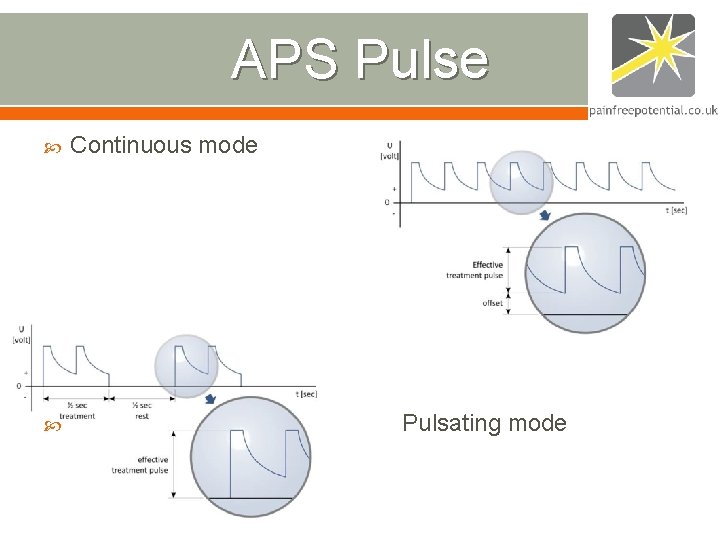
APS Pulse Continuous mode Pulsating mode
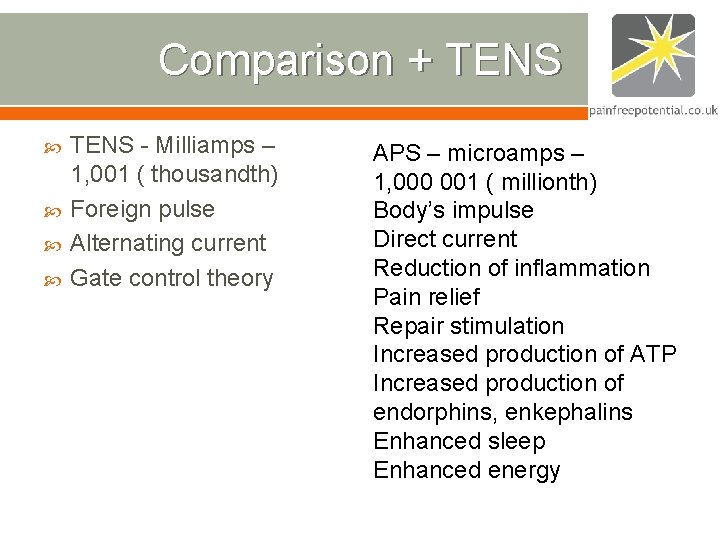
Comparison + TENS - Milliamps – 1, 001 ( thousandth) Foreign pulse Alternating current Gate control theory APS – microamps – 1, 000 001 ( millionth) Body’s impulse Direct current Reduction of inflammation Pain relief Repair stimulation Increased production of ATP Increased production of endorphins, enkephalins Enhanced sleep Enhanced energy
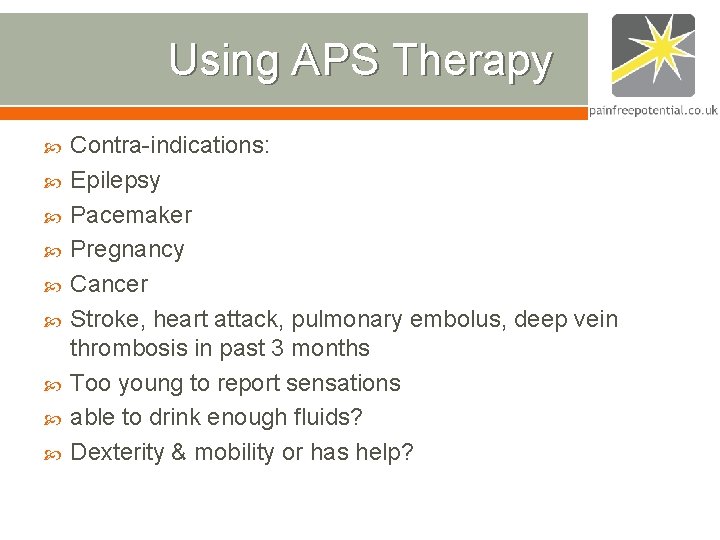
Using APS Therapy Contra-indications: Epilepsy Pacemaker Pregnancy Cancer Stroke, heart attack, pulmonary embolus, deep vein thrombosis in past 3 months Too young to report sensations able to drink enough fluids? Dexterity & mobility or has help?
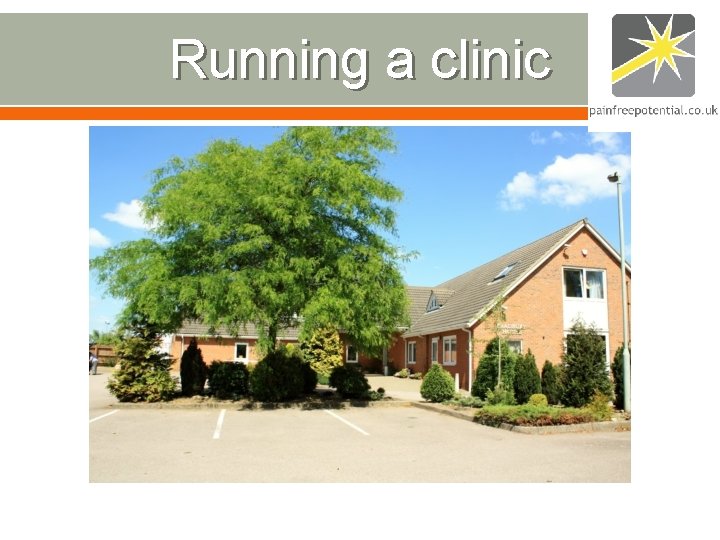
Running a clinic
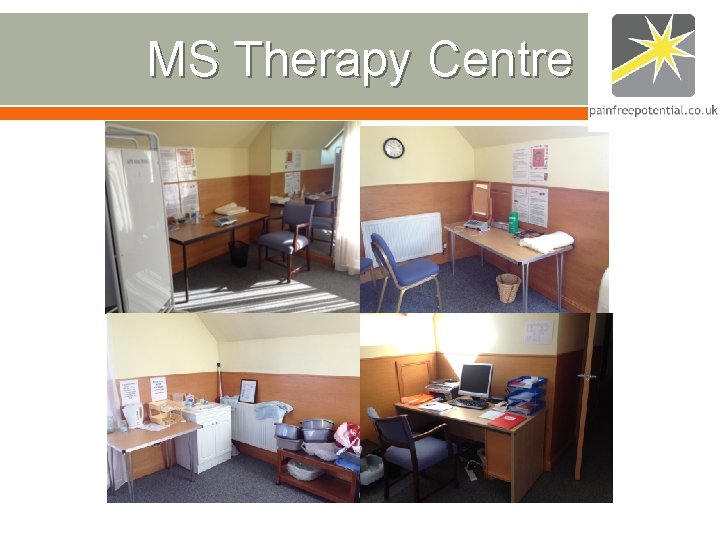
MS Therapy Centre
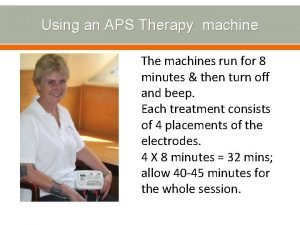
Resources Chairs – arms & no arms Table Alcohol gel & tissues or wipes, bin Mirror Blanket, Screens Files to store treatment plans & electrodes Water for treatment & to drink APS Machines, Electrodes, water electrodes Instruction posters
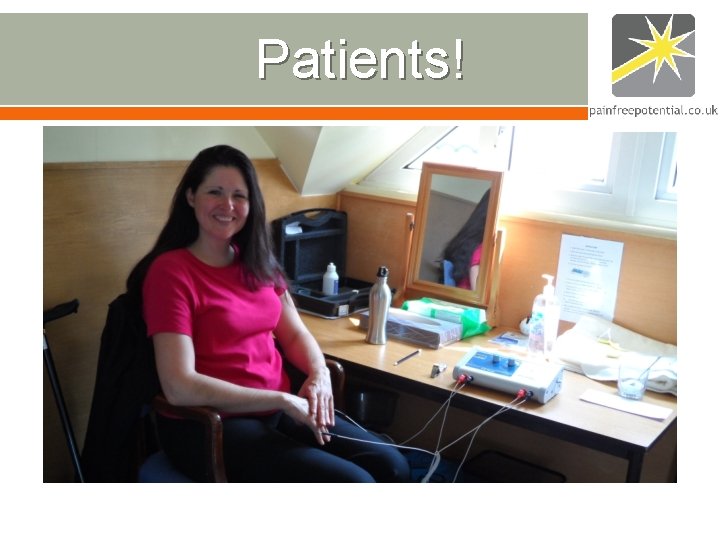
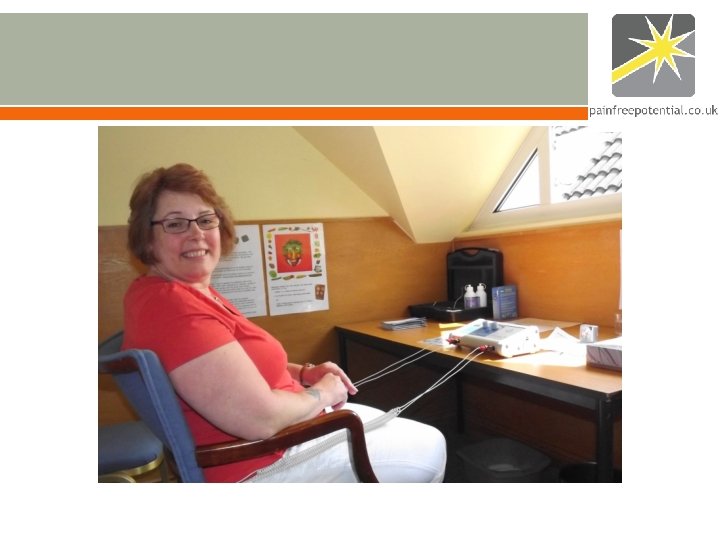
Patients!
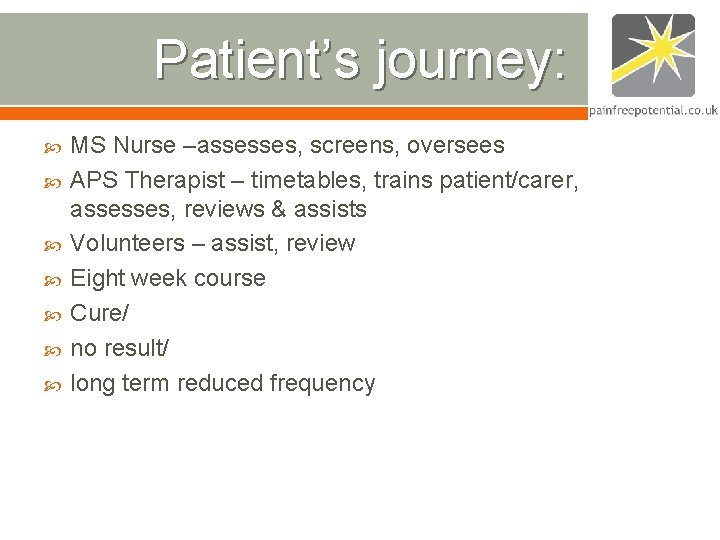
Patient’s journey: MS Nurse –assesses, screens, oversees APS Therapist – timetables, trains patient/carer, assesses, reviews & assists Volunteers – assist, review Eight week course Cure/ no result/ long term reduced frequency
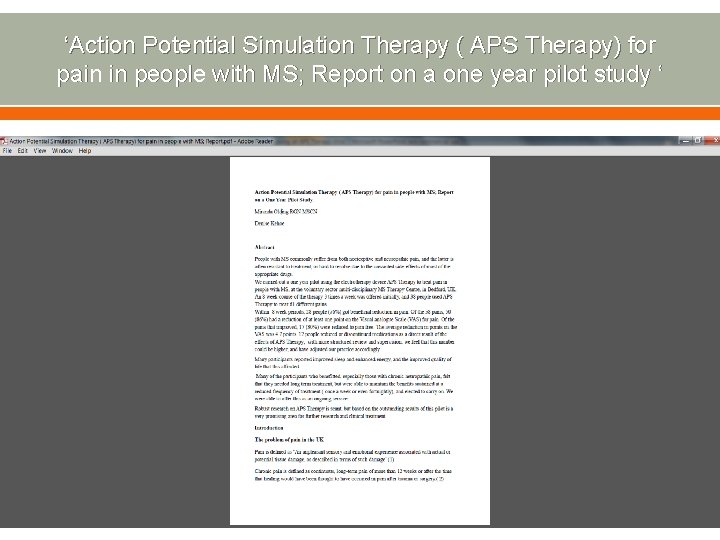
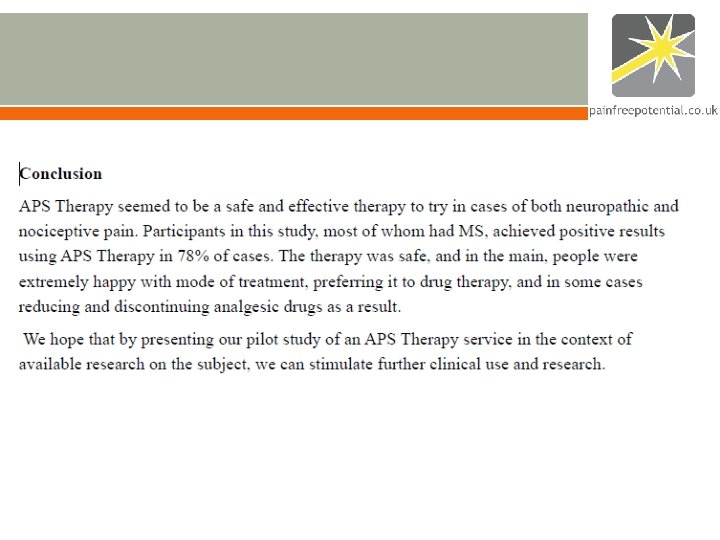
‘Action Potential Simulation Therapy ( APS Therapy) for pain in people with MS; Report on a one year pilot study ‘
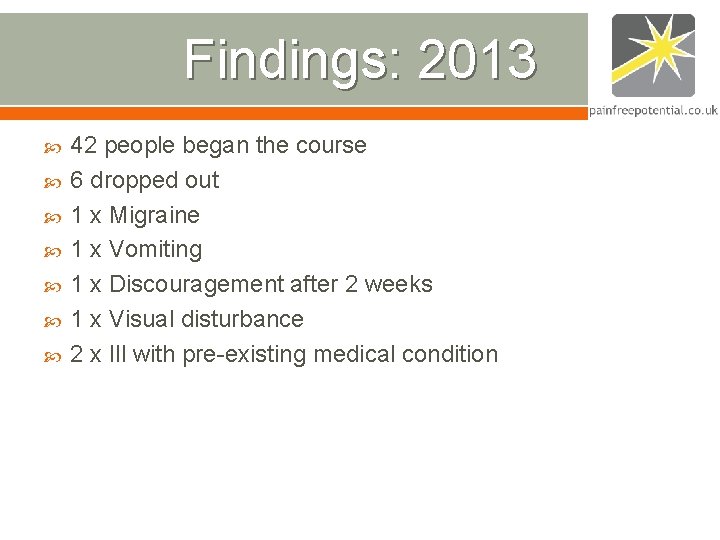
Findings: 2013 42 people began the course 6 dropped out 1 x Migraine 1 x Vomiting 1 x Discouragement after 2 weeks 1 x Visual disturbance 2 x Ill with pre-existing medical condition
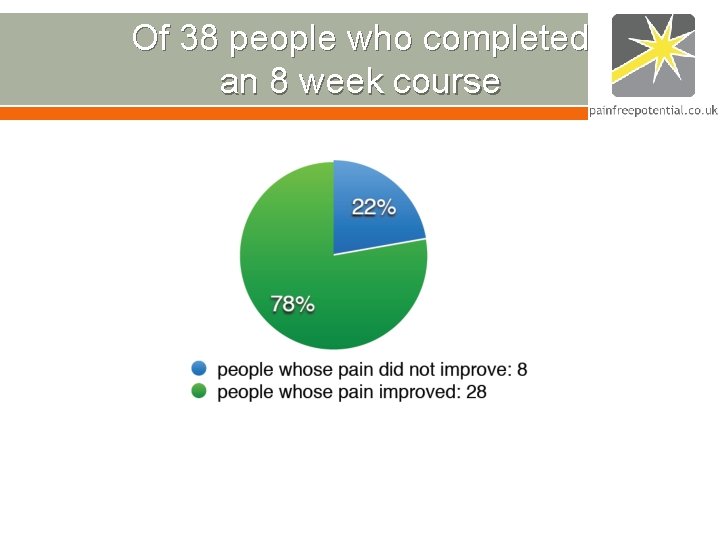
Of 38 people who completed an 8 week course
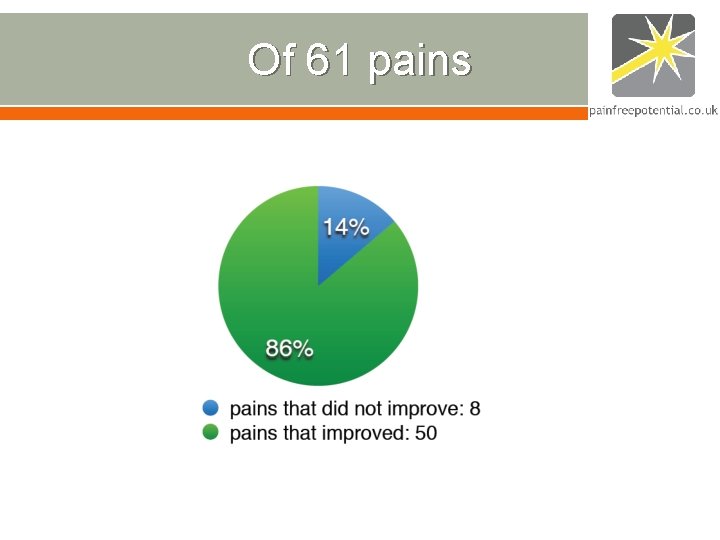
Of 61 pains
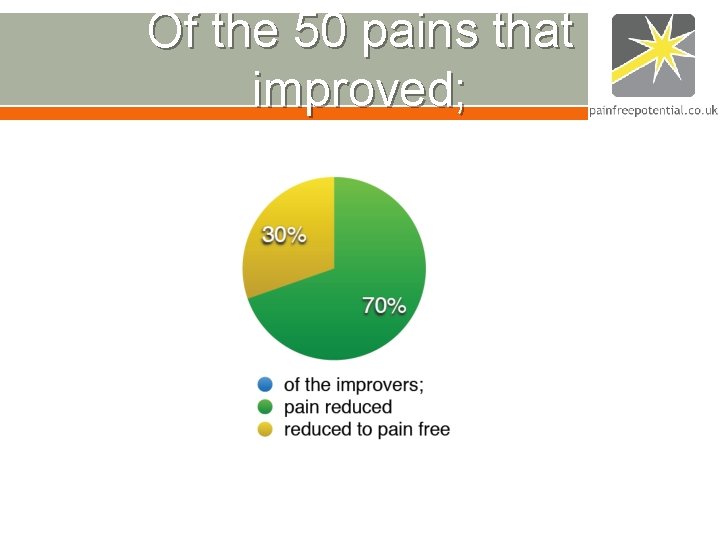
Of the 50 pains that improved;
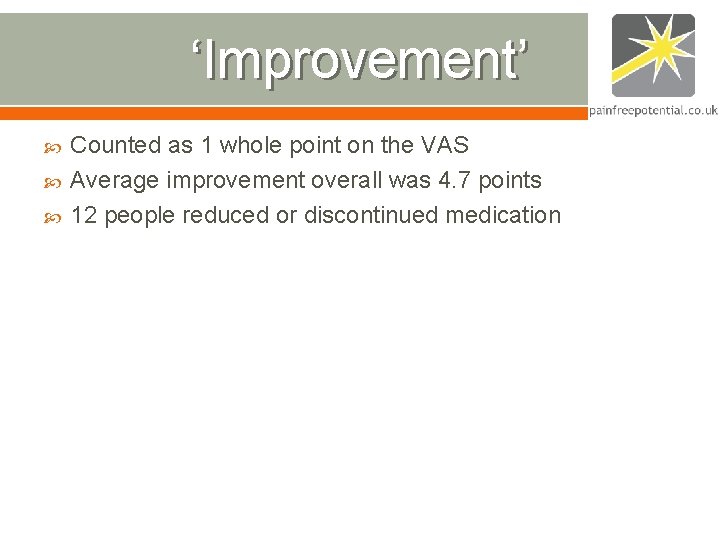
‘Improvement’ Counted as 1 whole point on the VAS Average improvement overall was 4. 7 points 12 people reduced or discontinued medication
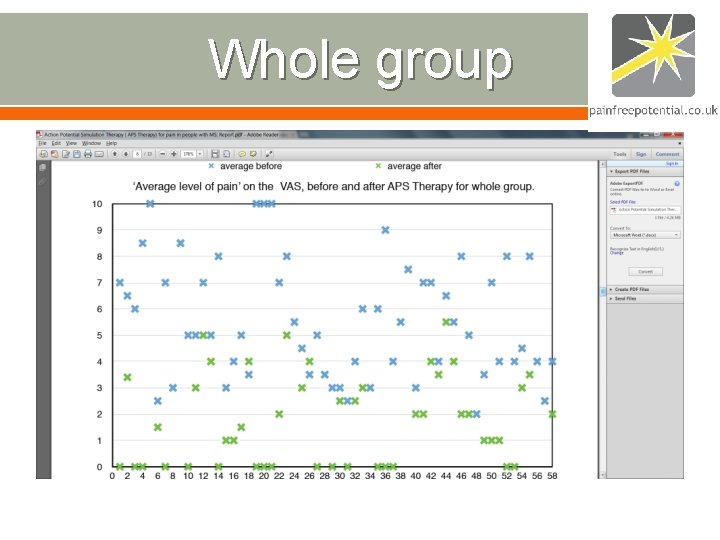
Whole group
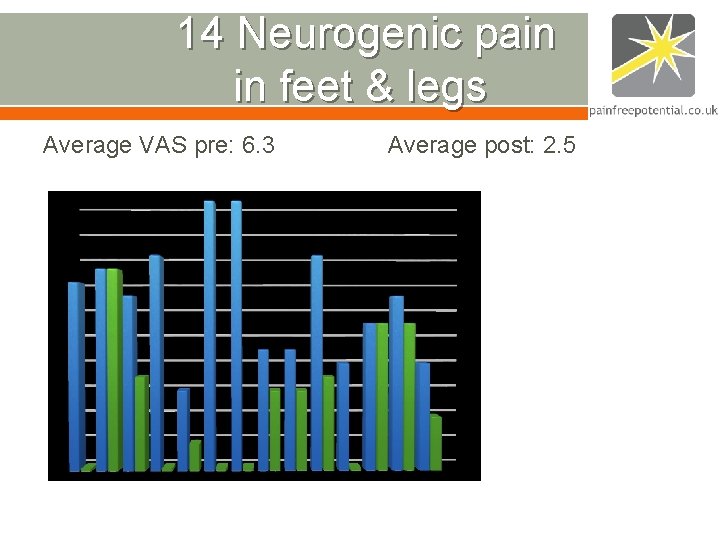
14 Neurogenic pain in feet & legs Average VAS pre: 6. 3 Average post: 2. 5
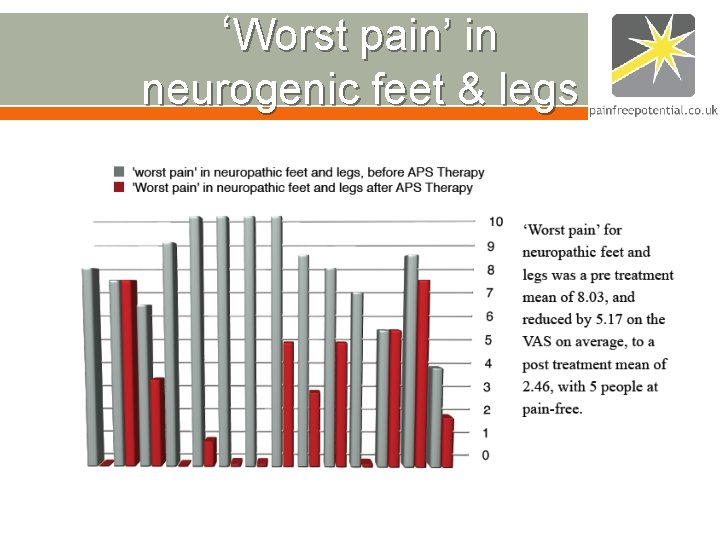
‘Worst pain’ in neurogenic feet & legs
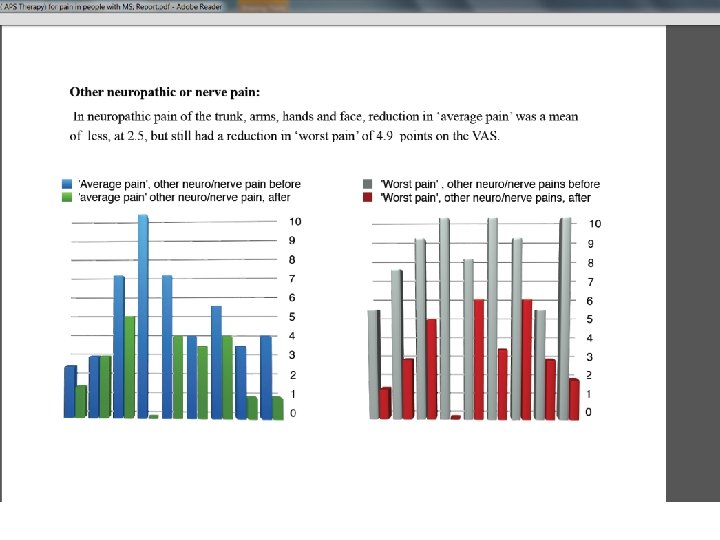
Other neurogenic & nerve pain
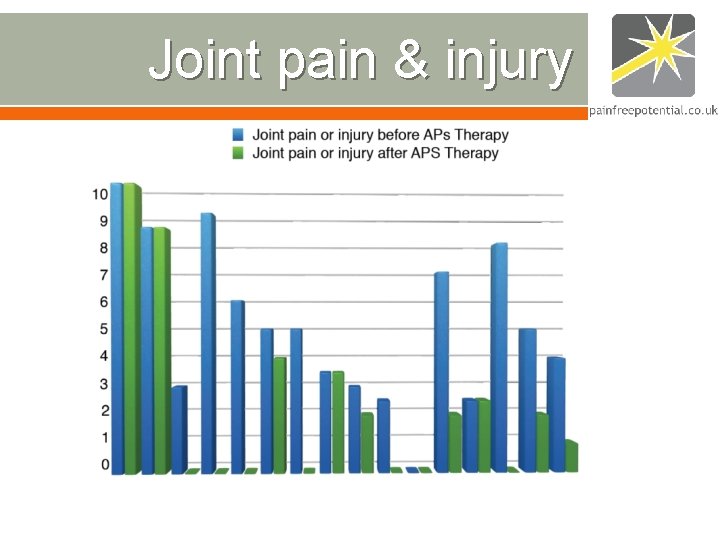
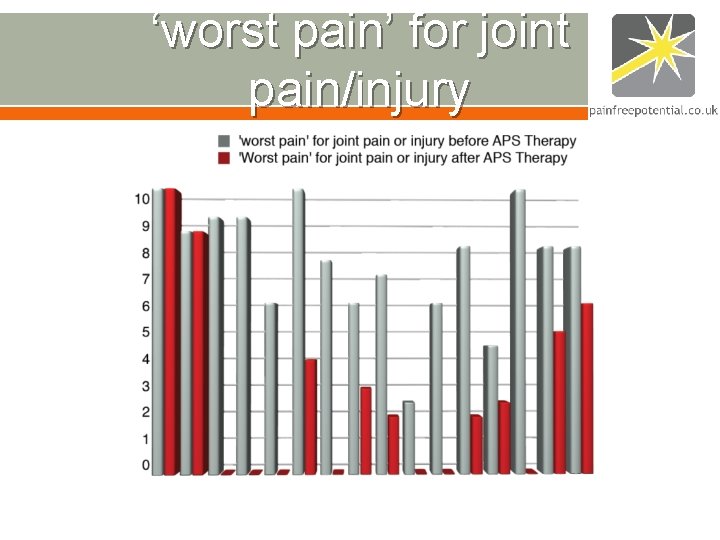
Joint pain & injury
‘worst pain’ for joint pain/injury
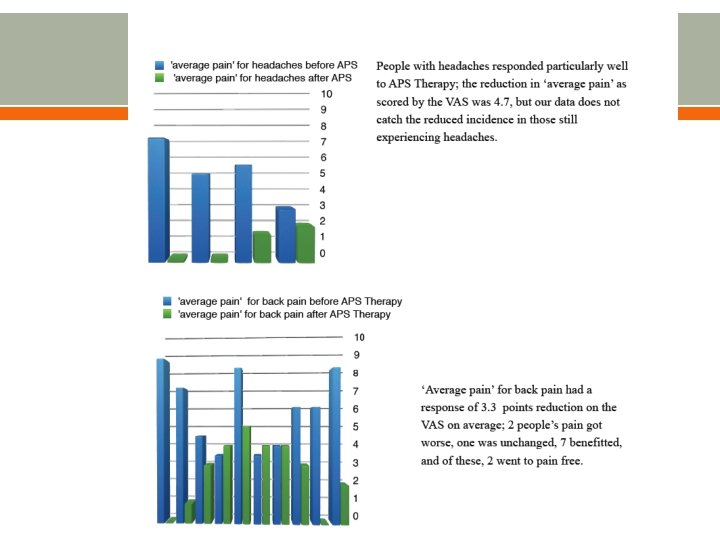
Headaches
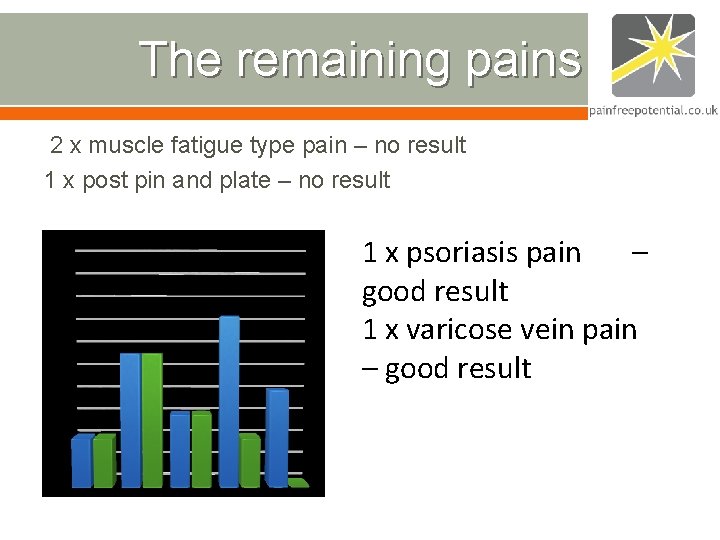
The remaining pains 2 x muscle fatigue type pain – no result 1 x post pin and plate – no result 1 x psoriasis pain – good result 1 x varicose vein pain – good result
Other benefits attributed include: Increase in energy, reduction in fatigue x 4 Reduction in swollen legs & ankles x 2 Alleviation of life-long insomnia x 2 Cessation of recurrent UTIs x 2 Improvement in circulation & discolouration Reduction of ‘fatty lump’ on hip Disappearance of swollen glands on neck Cessation of ‘fluid on skull’ sensation Reduction in dizziness & improved cognitive function
Problems Side effects Exacerbation, detox effects Long term use – management problem Attributing problems ? unexpected side-effects Individuals
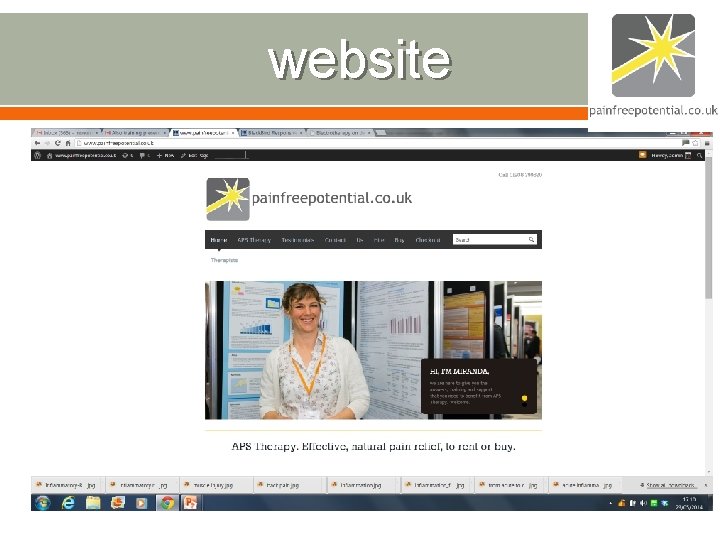
Private rental Rent for 3, 6 & 9 week blocks £ 150, £ 240, £ 290 Focus on training and customer support. Screening phone call Courier machine 1 hour training, in person, on skype, facetime, or phone Contact for therapist. Weekly call, plus availability. Can go on to buy new model, or rental model
website
Therapist’s role Uphold integrity of the brand Ethical People before profit Research based Honest expectations Create treatment plans Support individuals – as much time as they need In fact, time commitment after 1 st wk tends to be minimal Change treatment plans if necessary Liaise with hub.
Accreditation Attend training Use supervision as long as needed 5 case study treatment plans Certificate Each year, to retain accreditation, either submit 5 case study treatment plans or attend training again
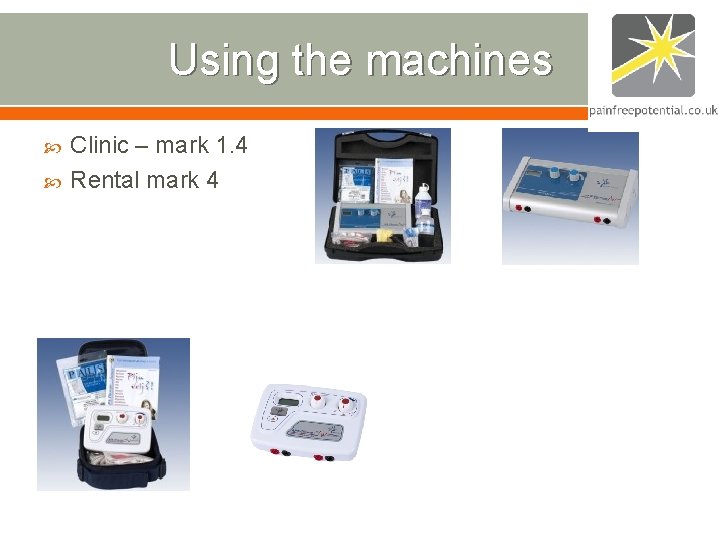
Using the machines Clinic – mark 1. 4 Rental mark 4
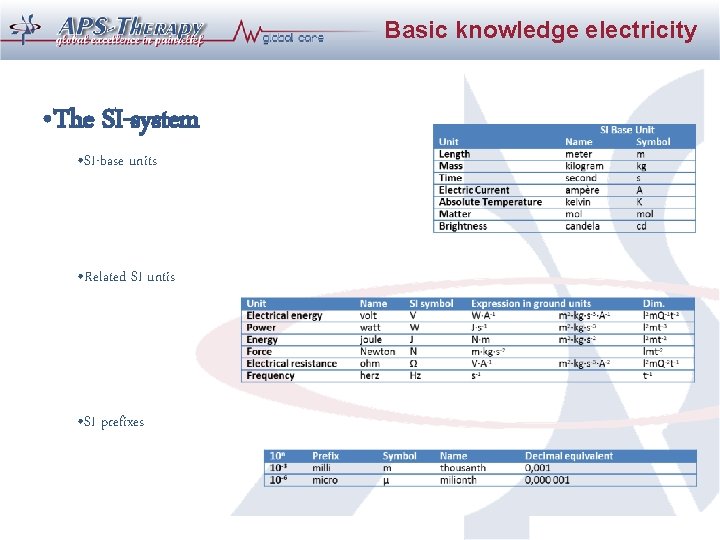
Basic knowledge electricity • The SI-system • SI-base units • Related SI untis • SI prefixes
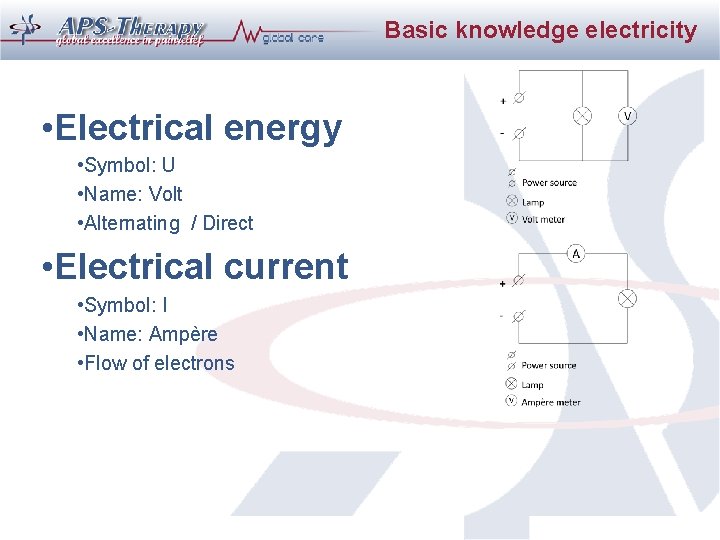
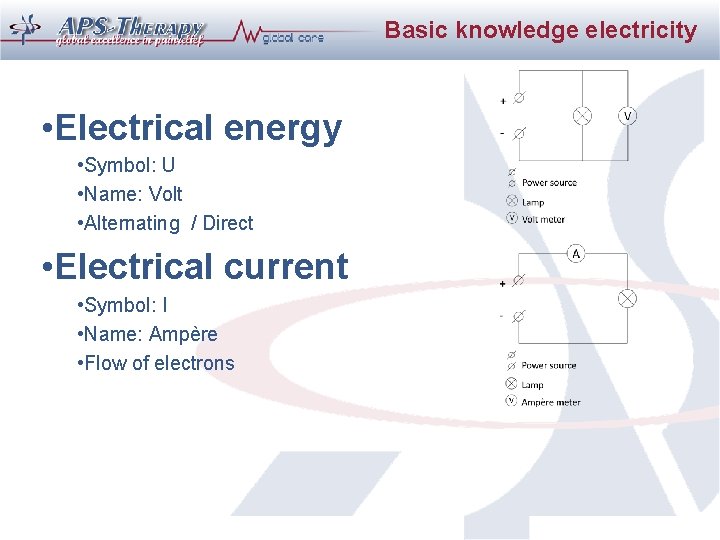
Basic knowledge electricity • Electrical energy • Symbol: U • Name: Volt • Alternating / Direct • Electrical current • Symbol: I • Name: Ampère • Flow of electrons
Basic knowledge electricity • Electrical energy • Symbol: U • Name: Volt • Alternating / Direct • Electrical current • Symbol: I • Name: Ampère • Flow of electrons
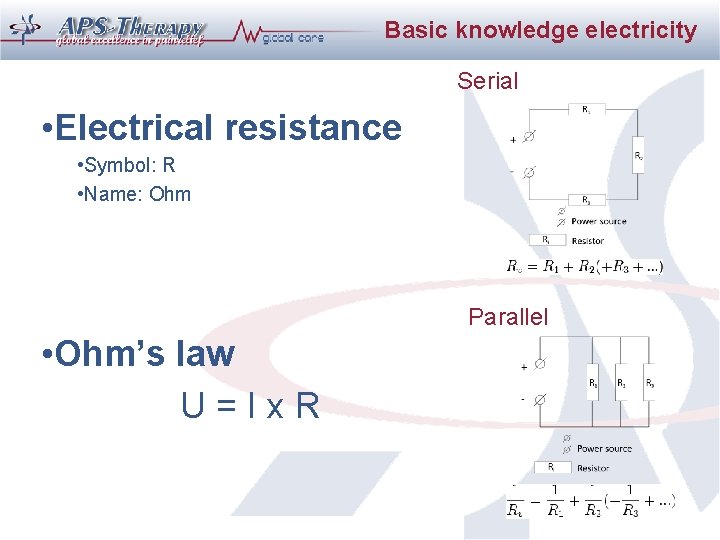
Basic knowledge electricity Serial • Electrical resistance • Symbol: R • Name: Ohm Parallel • Ohm’s law U = I x R
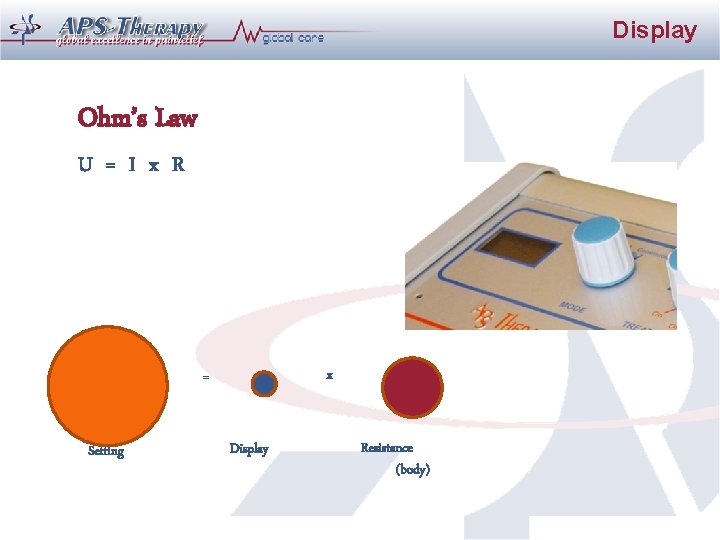
Display Ohm’s Law U = I x R x = Setting Display Resistance (body)
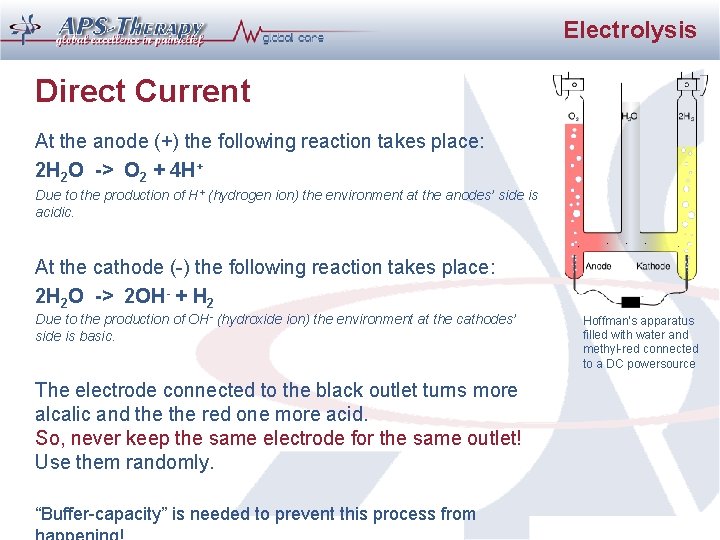
Electrolysis Direct Current At the anode (+) the following reaction takes place: 2 H 2 O -> O 2 + 4 H+ Due to the production of H+ (hydrogen ion) the environment at the anodes’ side is acidic. At the cathode (-) the following reaction takes place: 2 H 2 O -> 2 OH- + H 2 Due to the production of OH- (hydroxide ion) the environment at the cathodes’ side is basic. The electrode connected to the black outlet turns more alcalic and the red one more acid. So, never keep the same electrode for the same outlet! Use them randomly. “Buffer-capacity” is needed to prevent this process from Hoffman’s apparatus filled with water and methyl-red connected to a DC powersource
Treatment plans • Rule of thumb • Treatment level • tingling -> half to two-third lower • ATP Max. ATP production
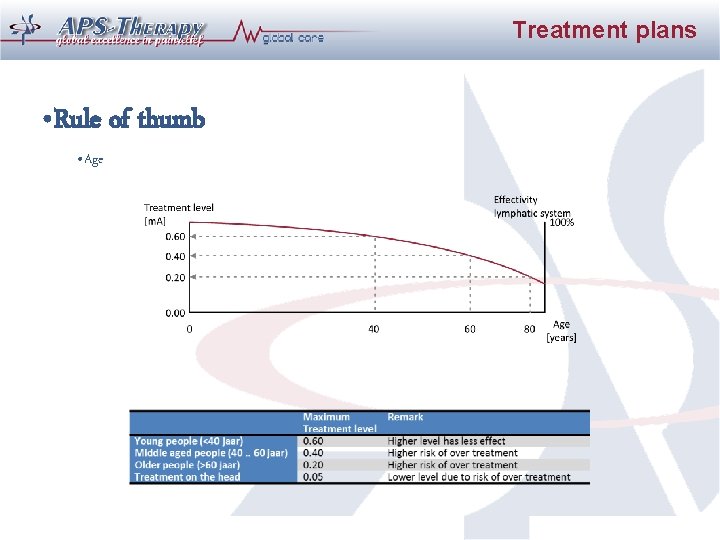
Treatment plans • Rule of thumb • Age
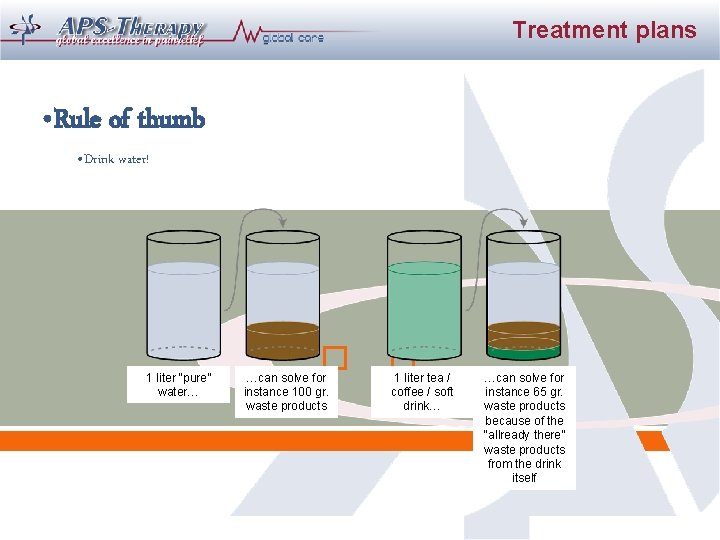
Treatment plans • Rule of thumb • Drink water! 1 liter “pure” water… � …can solve for instance 100 gr. waste products � 1 liter tea / coffee / soft drink… …can solve for instance 65 gr. waste products because of the “allready there” waste products from the drink itself
Possible side or adverse effects Headaches – drink more water, lower intensity Muscle aches possible – have not experienced Exacerbation of pain – temporary, reduce intensity Detox reaction – possible to trigger migraine in susceptible individuals 1 incident vomiting 1 incident flickering vision No serious side effects if used as advised
Thankyou for exploring APS Therapy – The next set of slides are about creating treatment plans, and aren’t available on the website For training to become an APS Therapist and adding this to your skillset To find out more about using APS therapy for yourself or family members Contact us!