ANORECTAL MALFORMATION ARM DR ENONO YHOSHU DEPT OF










- Slides: 82
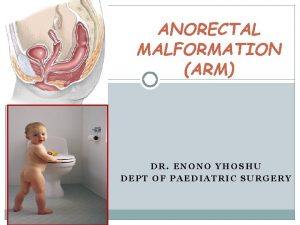
ANORECTAL MALFORMATION (ARM) DR. ENONO YHOSHU DEPT OF PAEDIATRIC SURGERY
CONTENTS v Introduction v Embryology v Genetics and associations v Incidence v Classification v Approach to a patient
ANORECTAL MALFORMATION �Complex group of congenital anomalies involving the anus and rectum, as well as the urinary and genital tracts in a significant number of cases.
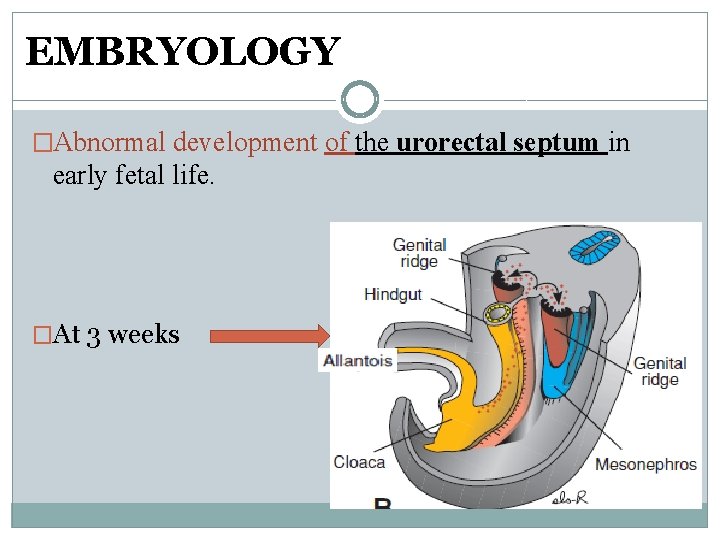
EMBRYOLOGY �Abnormal development of the urorectal septum in early fetal life. �At 3 weeks
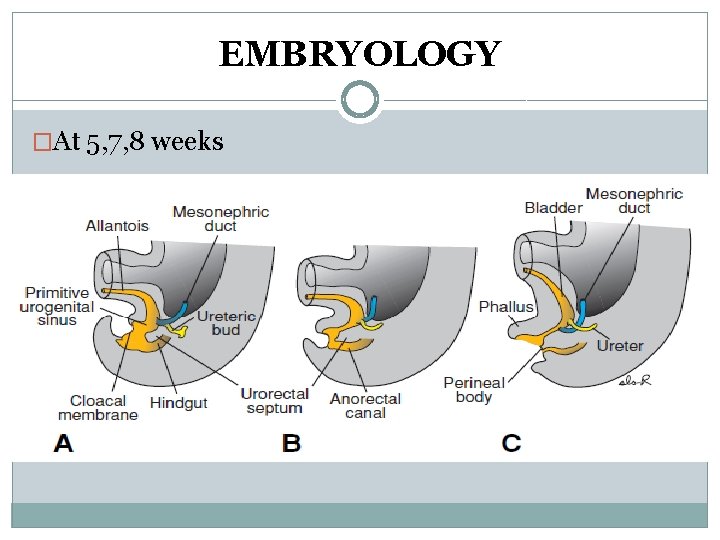
EMBRYOLOGY �At 5, 7, 8 weeks
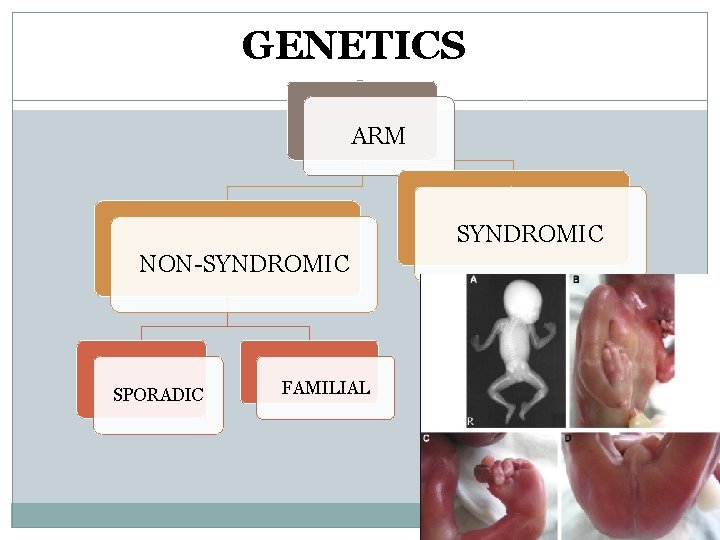
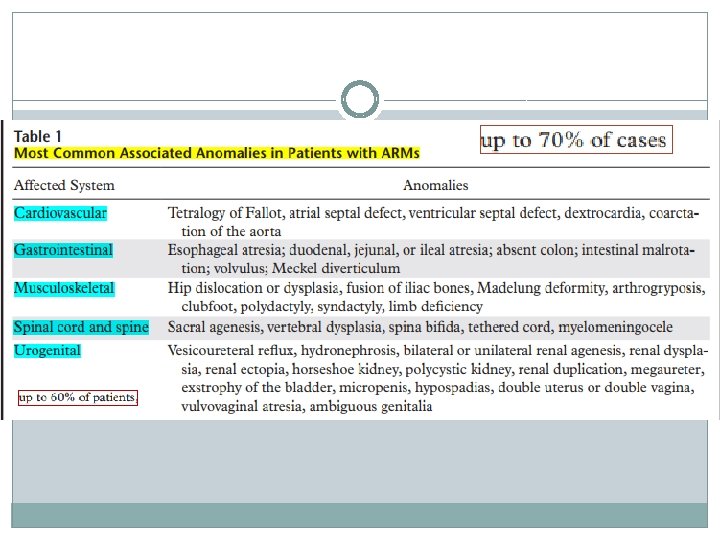
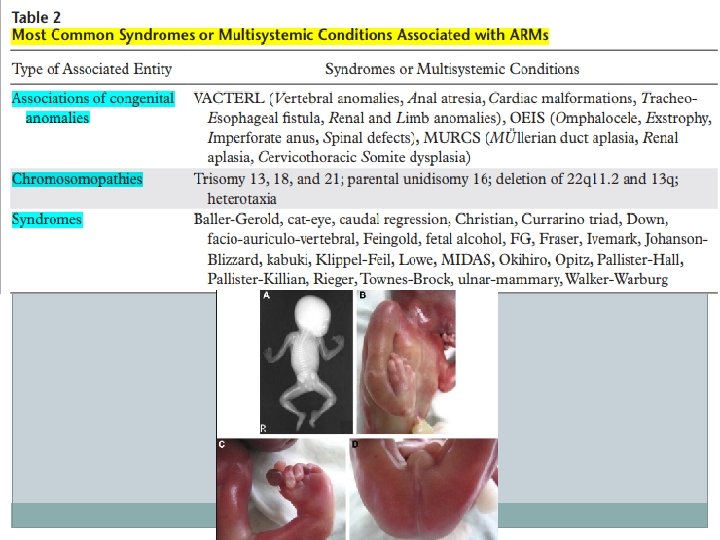
GENETICS ARM SYNDROMIC NON-SYNDROMIC SPORADIC FAMILIAL
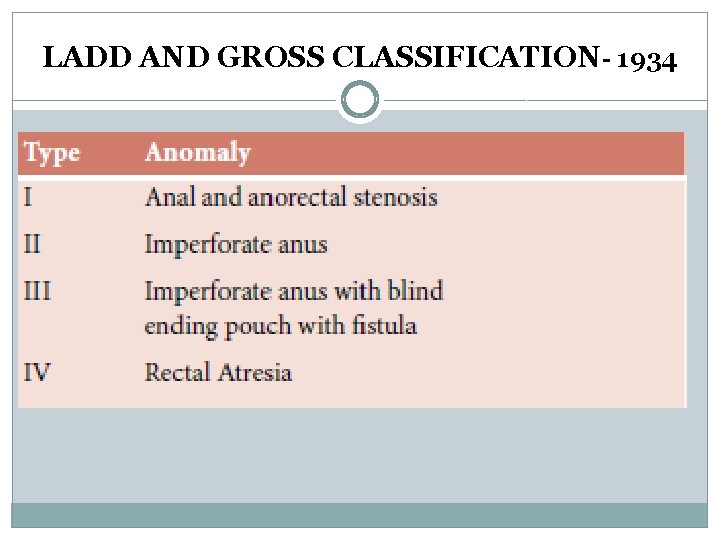
LADD AND GROSS CLASSIFICATION- 1934
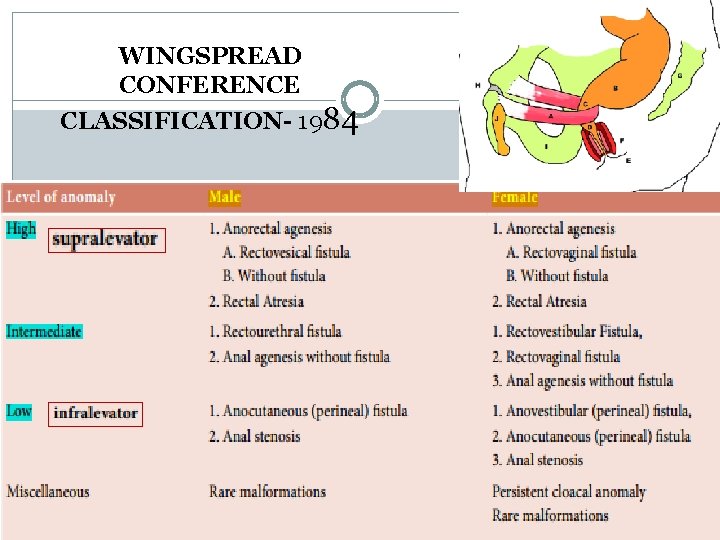
WINGSPREAD CONFERENCE CLASSIFICATION- 1984
High (Supra-levator)- Male
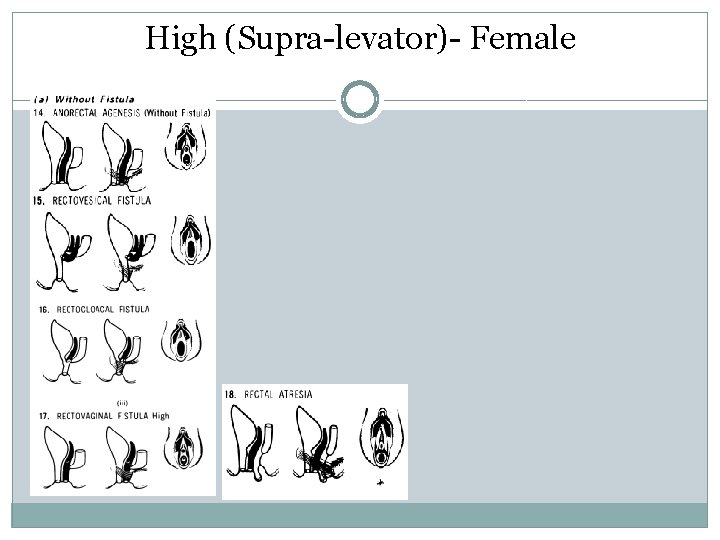
High (Supra-levator)- Female
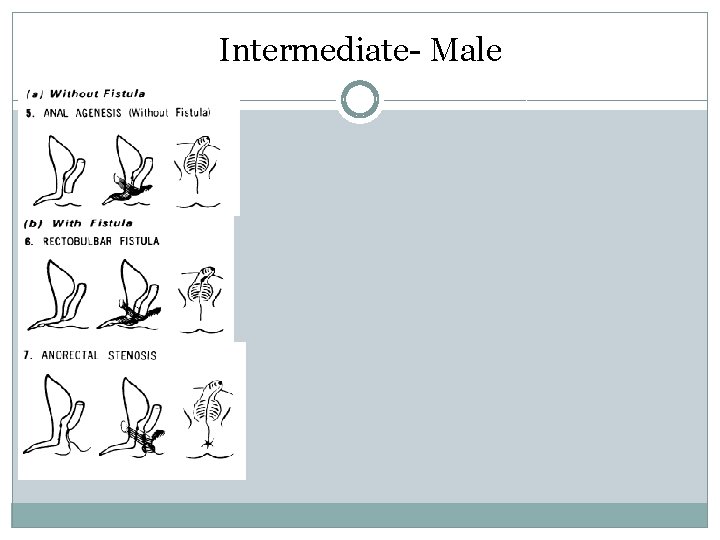
Intermediate- Male
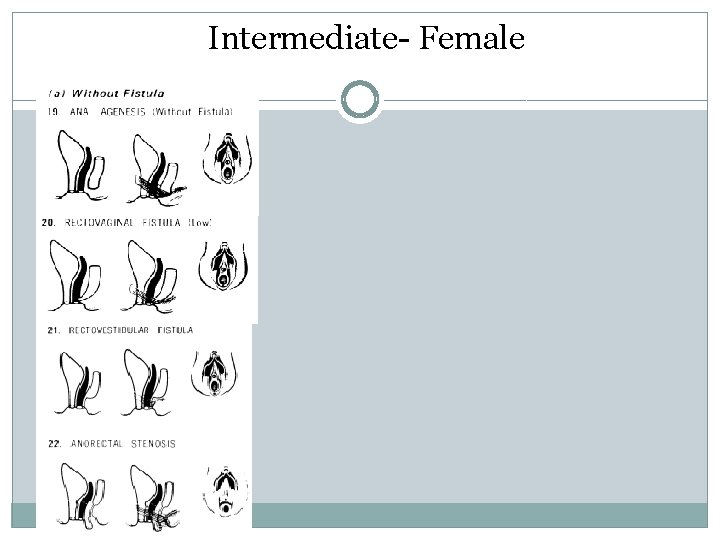
Intermediate- Female
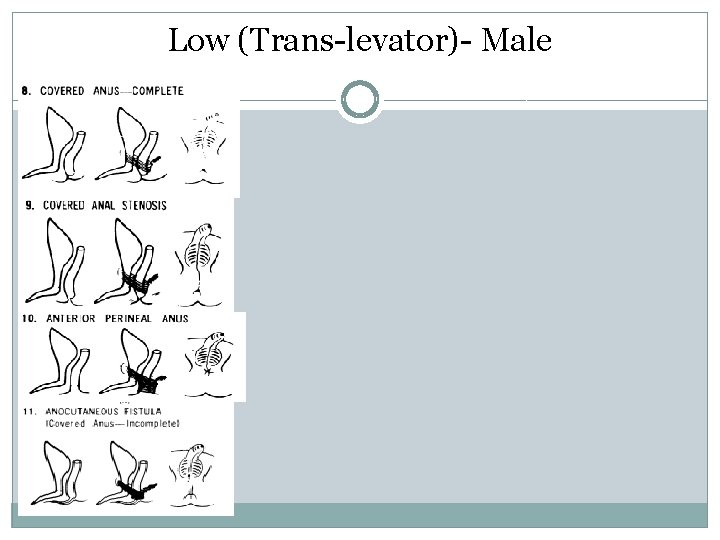
Low (Trans-levator)- Male
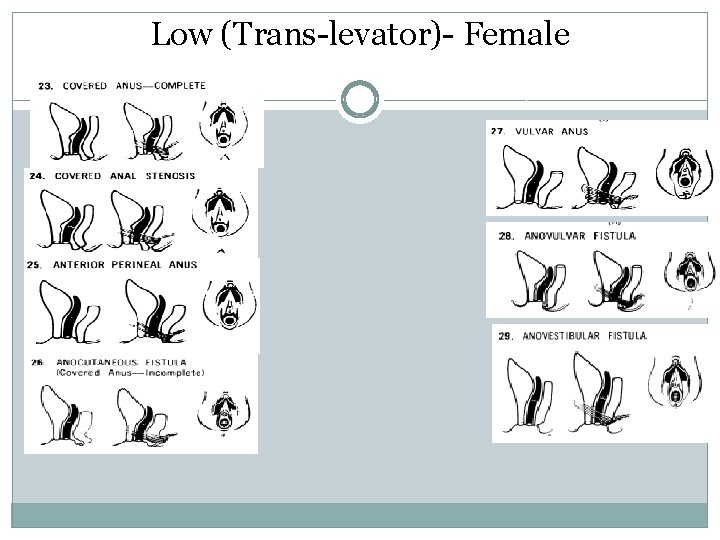
Low (Trans-levator)- Female
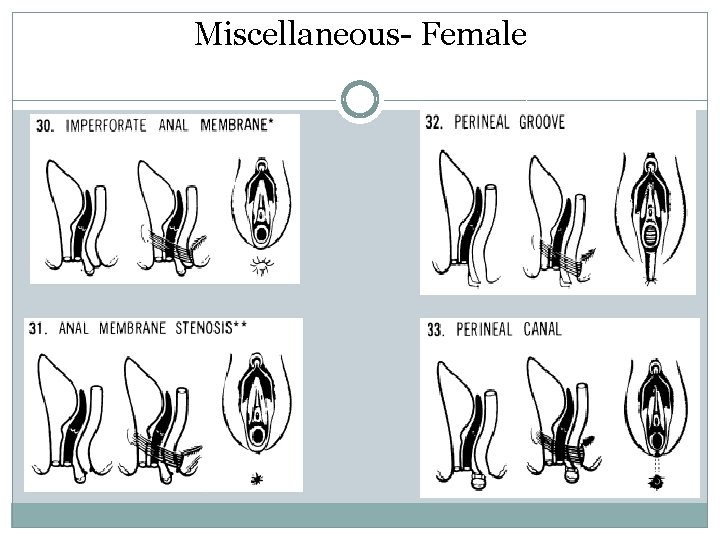
Miscellaneous- Female
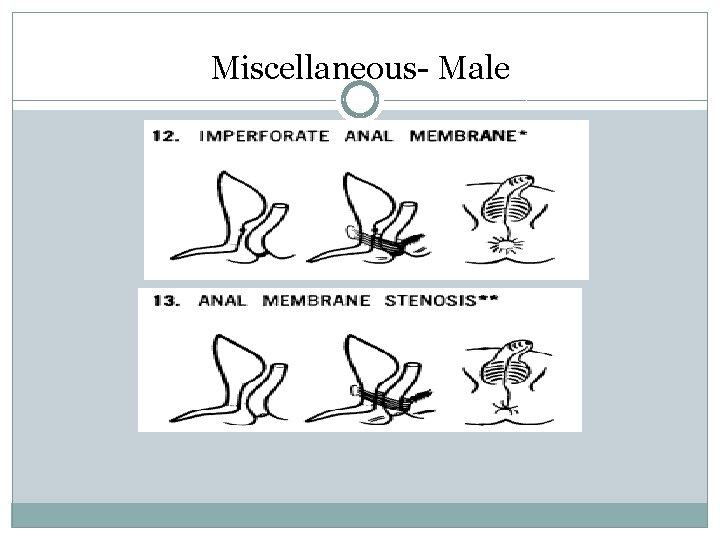
Miscellaneous- Male
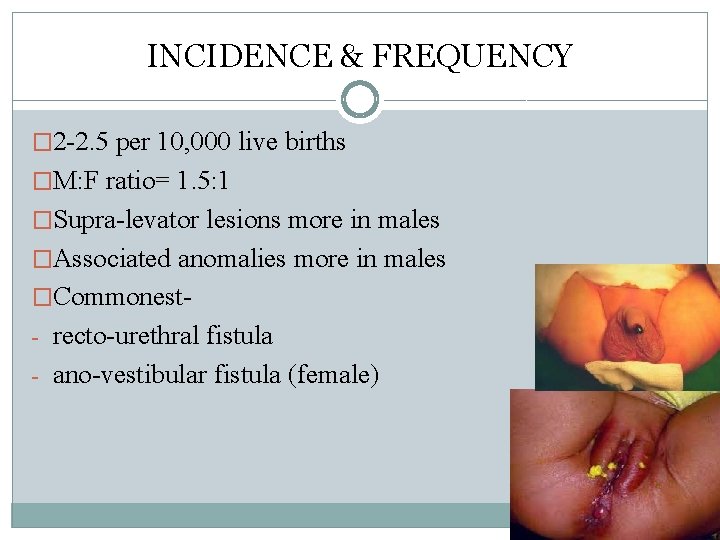
INCIDENCE & FREQUENCY � 2 -2. 5 per 10, 000 live births �M: F ratio= 1. 5: 1 �Supra-levator lesions more in males �Associated anomalies more in males �Commonest- recto-urethral fistula - ano-vestibular fistula (female)
RISK FACTORS �Mothers >35 years old �Maternal recreational drug use �Parental consanguinity �Maternal residence at high altitude �Paternal occupation in vehicle manufacture �Consumption of raw vegetables (pesticides) �Geographical (pouch colon)
ANATOMY
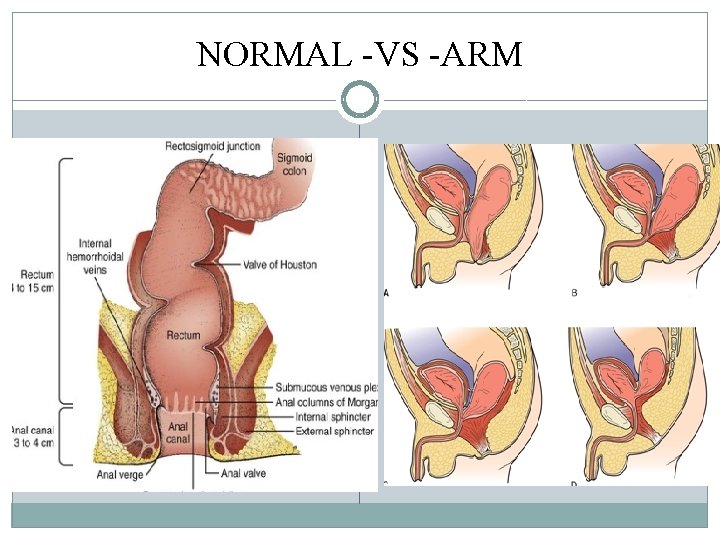
NORMAL -VS -ARM
APPROACH TO A PATIENT OF ARM
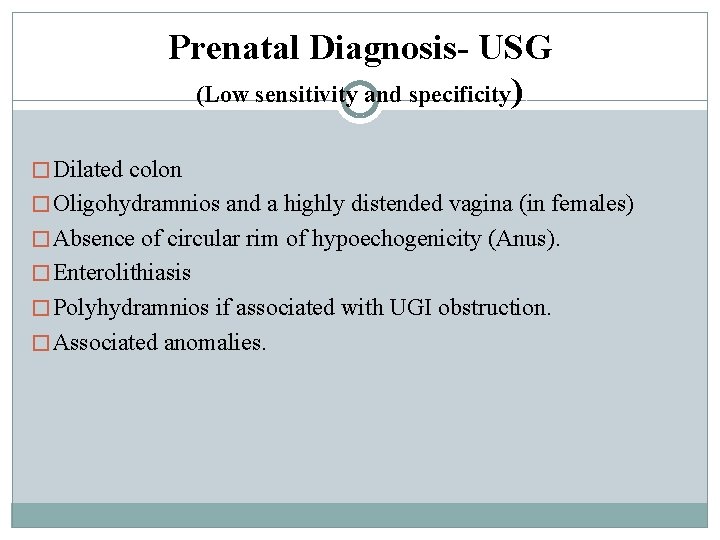
Prenatal Diagnosis- USG (Low sensitivity and specificity) � Dilated colon � Oligohydramnios and a highly distended vagina (in females) � Absence of circular rim of hypoechogenicity (Anus). � Enterolithiasis � Polyhydramnios if associated with UGI obstruction. � Associated anomalies.
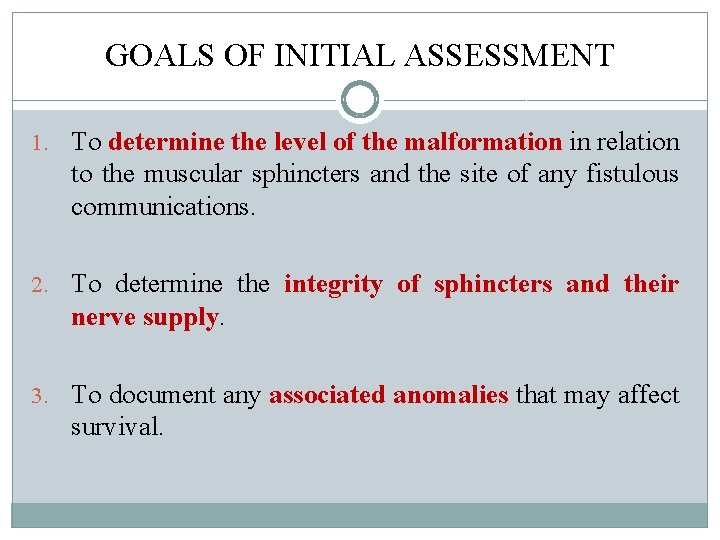
GOALS OF INITIAL ASSESSMENT 1. To determine the level of the malformation in relation to the muscular sphincters and the site of any fistulous communications. 2. To determine the integrity of sphincters and their nerve supply. 3. To document any associated anomalies that may affect survival.
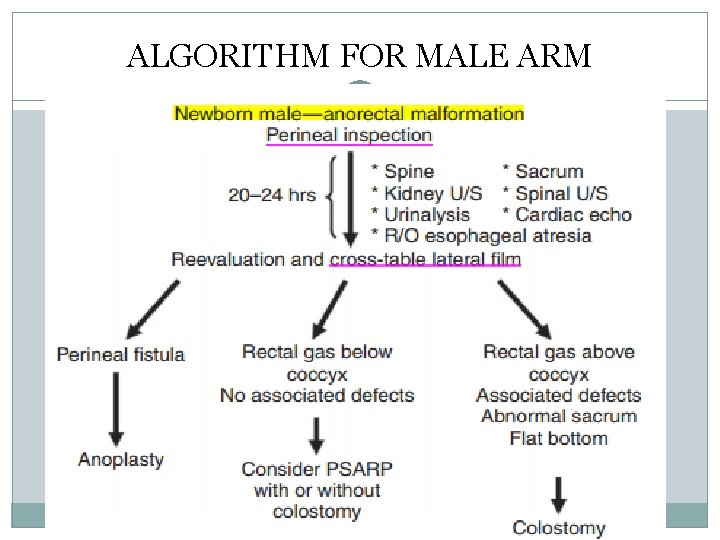
ALGORITHM FOR MALE ARM
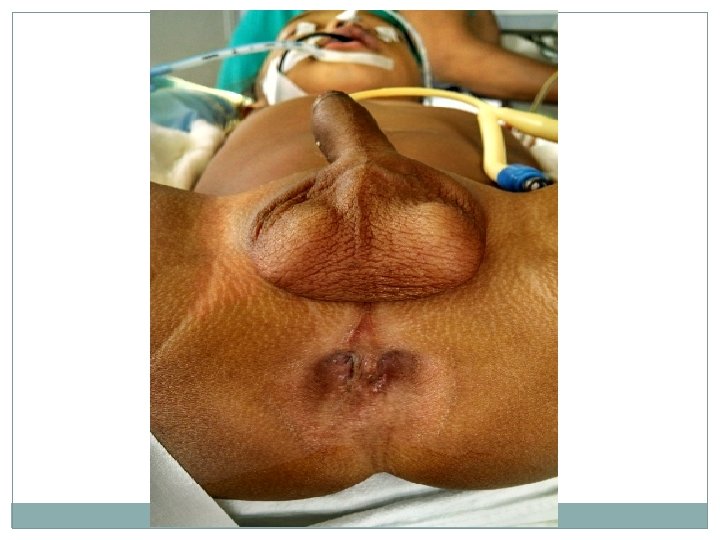
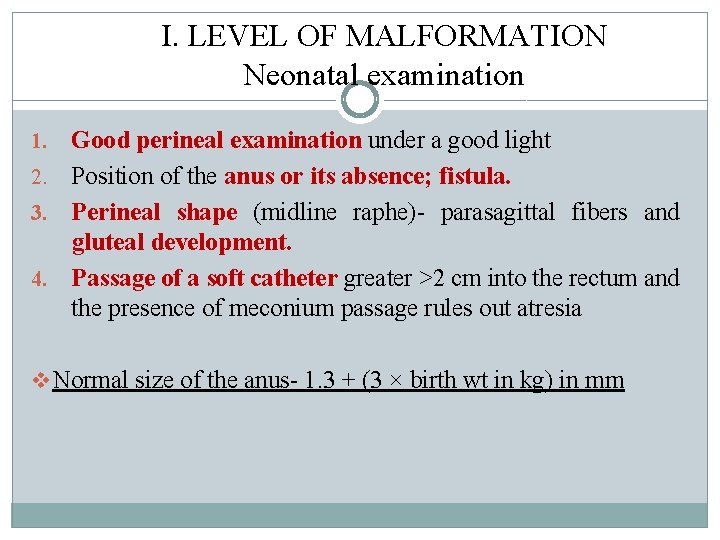
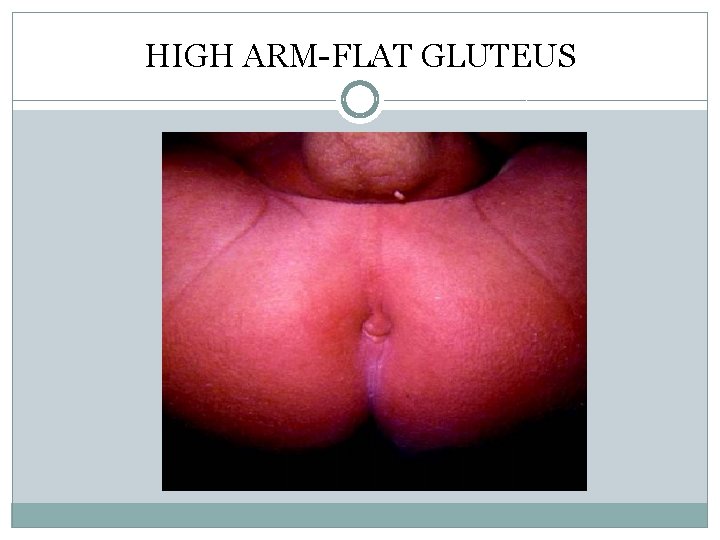
I. LEVEL OF MALFORMATION Neonatal examination Good perineal examination under a good light 2. Position of the anus or its absence; fistula. 3. Perineal shape (midline raphe)- parasagittal fibers and gluteal development. 4. Passage of a soft catheter greater >2 cm into the rectum and the presence of meconium passage rules out atresia 1. v Normal size of the anus- 1. 3 + (3 × birth wt in kg) in mm
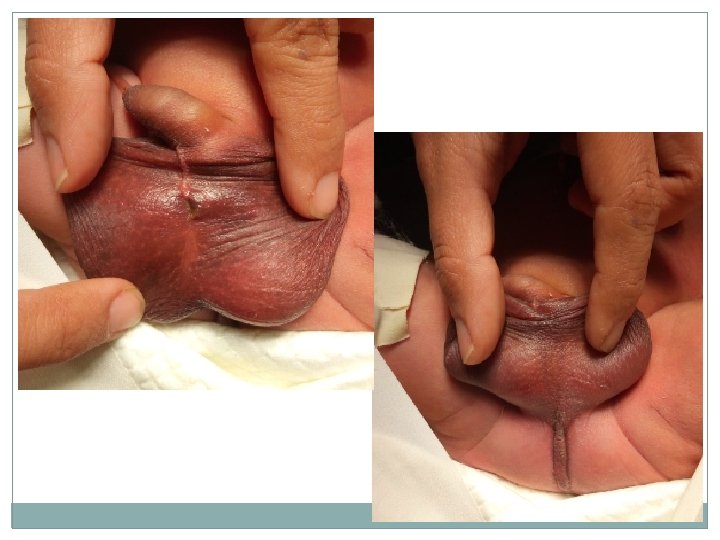
HIGH ARM-FLAT GLUTEUS
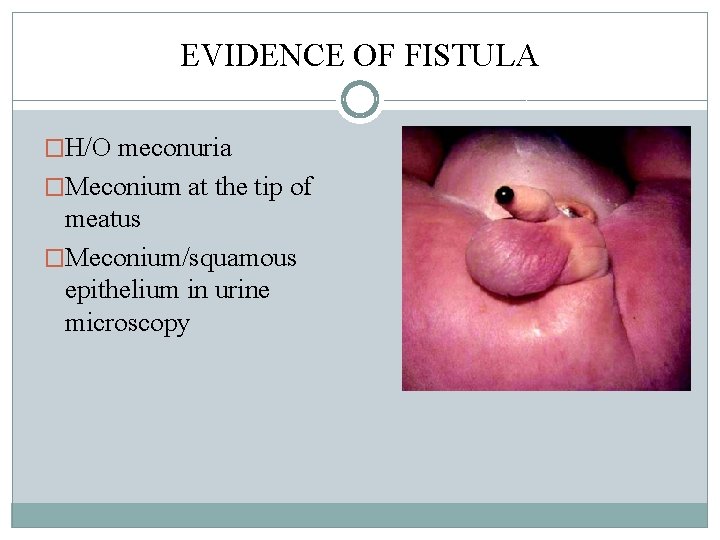
EVIDENCE OF FISTULA �H/O meconuria �Meconium at the tip of meatus �Meconium/squamous epithelium in urine microscopy
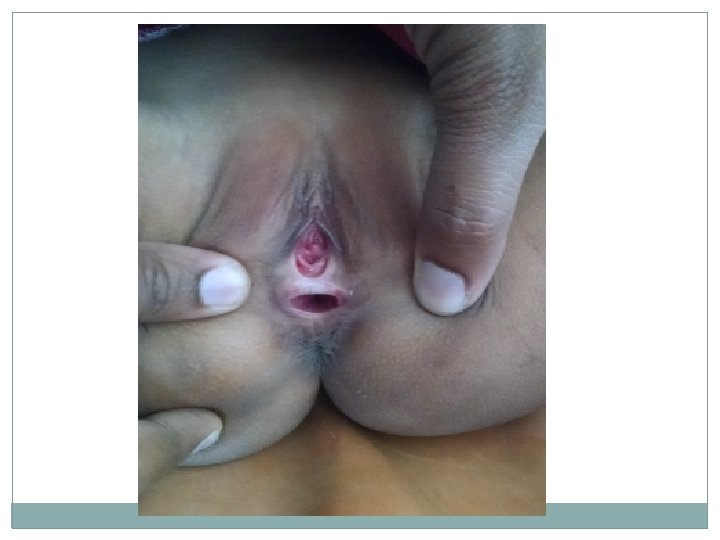
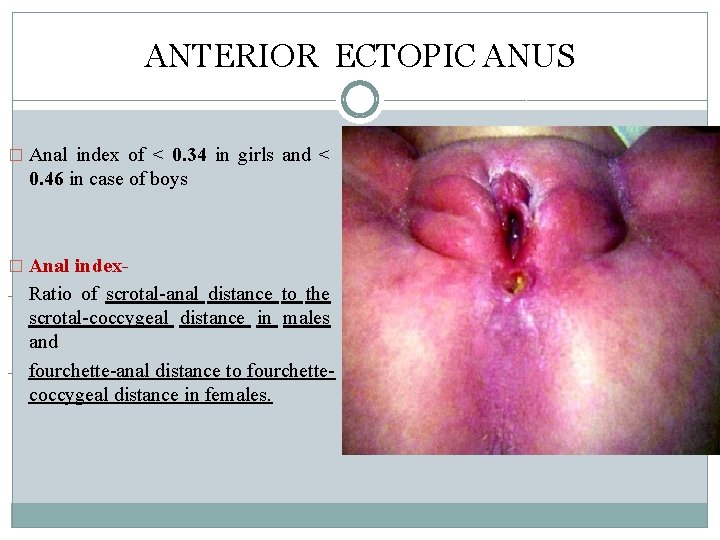
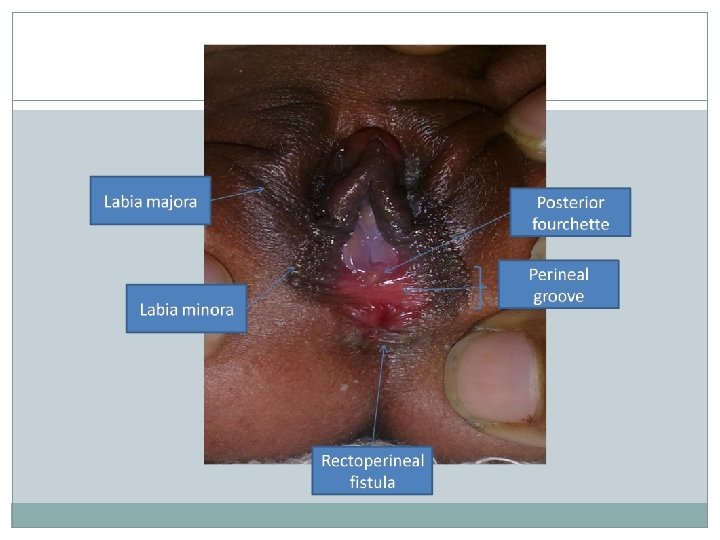
ANTERIOR ECTOPIC ANUS � Anal index of < 0. 34 in girls and < 0. 46 in case of boys � Anal index- Ratio of scrotal-anal distance to the scrotal-coccygeal distance in males and - fourchette-anal distance to fourchettecoccygeal distance in females.
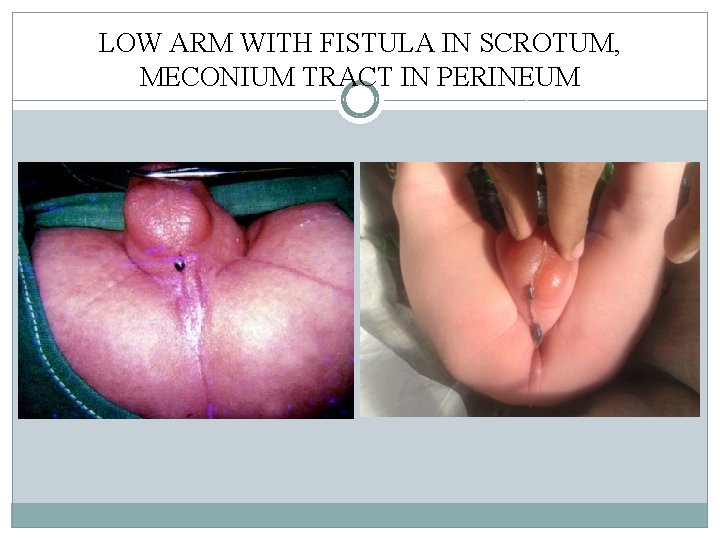
LOW ARM WITH FISTULA IN SCROTUM, MECONIUM TRACT IN PERINEUM
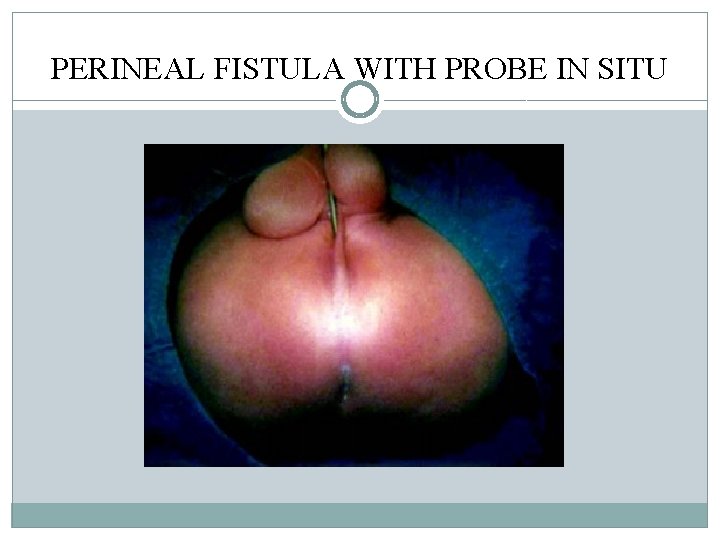
PERINEAL FISTULA WITH PROBE IN SITU
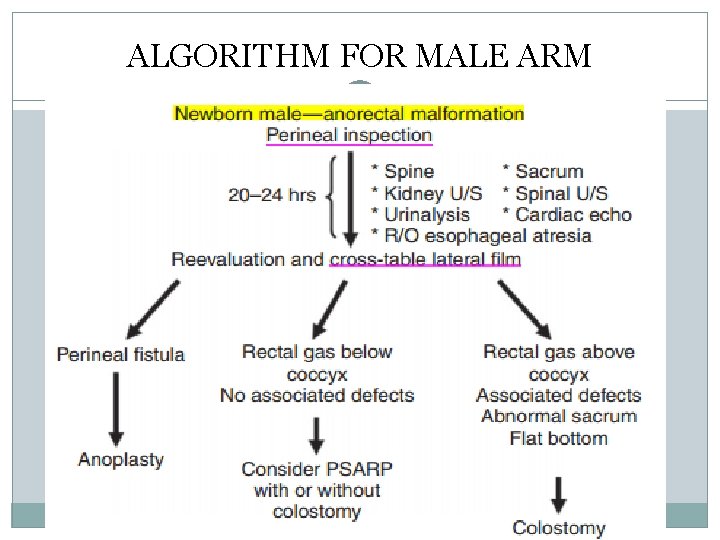
ALGORITHM FOR MALE ARM
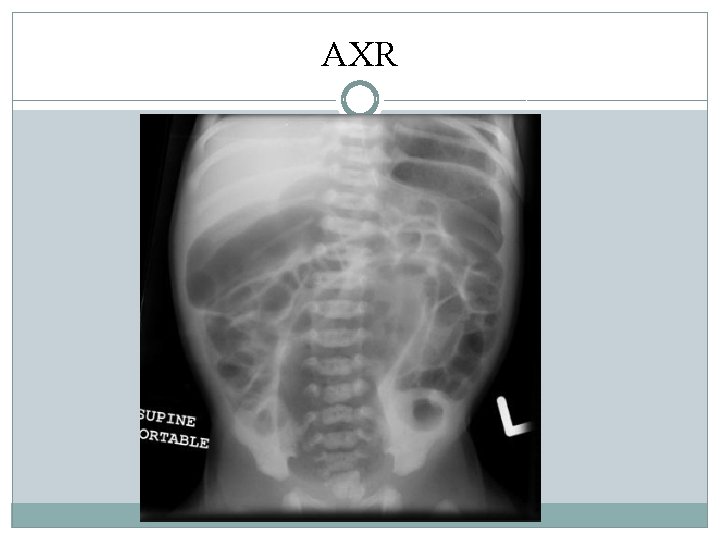
AXR
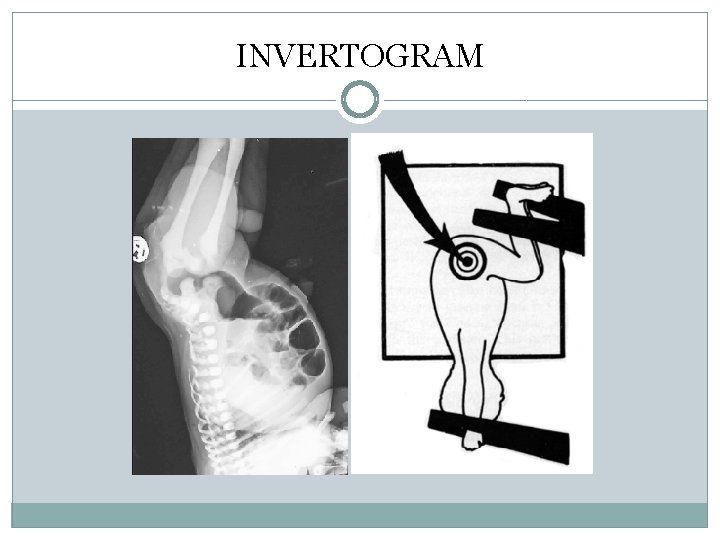
INVERTOGRAM
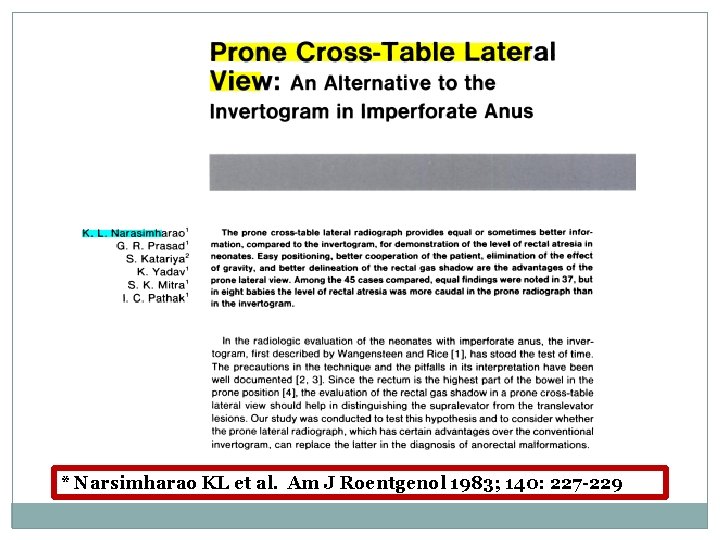
* Narsimharao KL et al. Am J Roentgenol 1983; 140: 227 -229
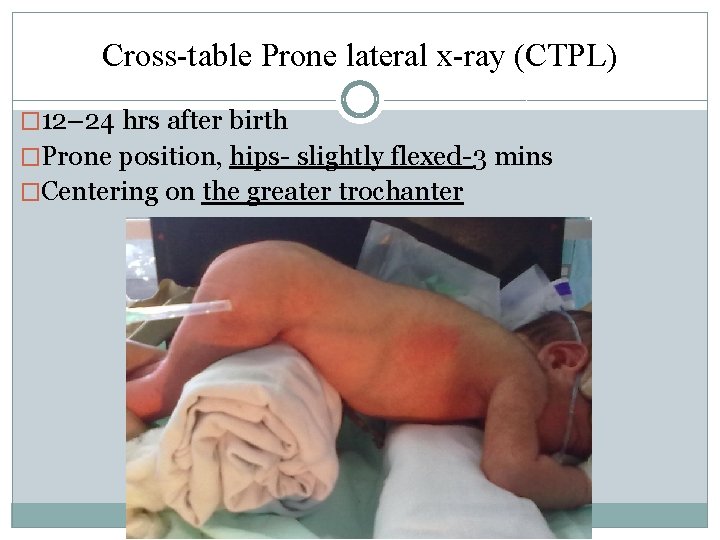
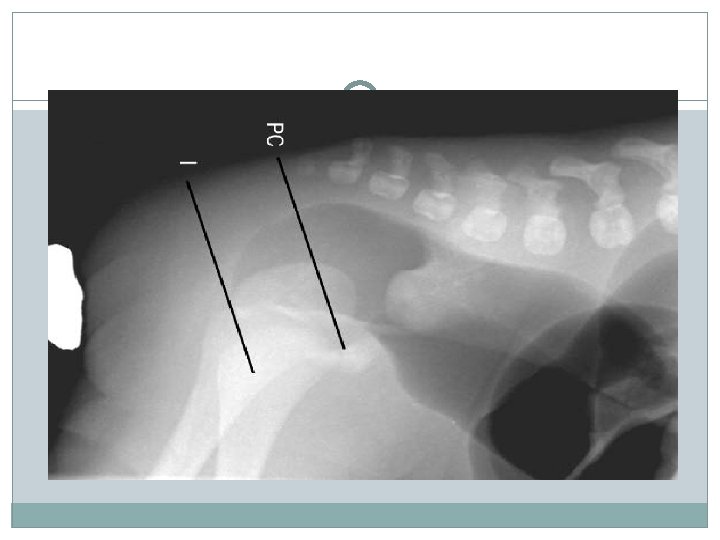
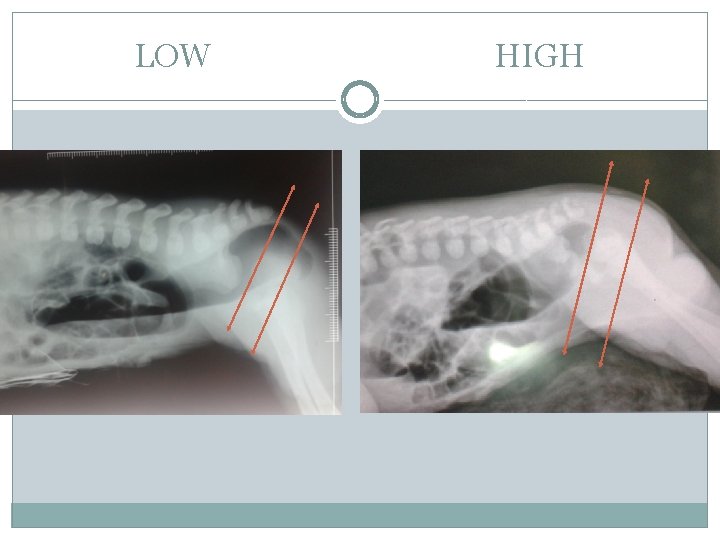
Cross-table Prone lateral x-ray (CTPL) � 12– 24 hrs after birth �Prone position, hips- slightly flexed-3 mins �Centering on the greater trochanter
LOW HIGH
ALGORITHM FOR MALE ARM
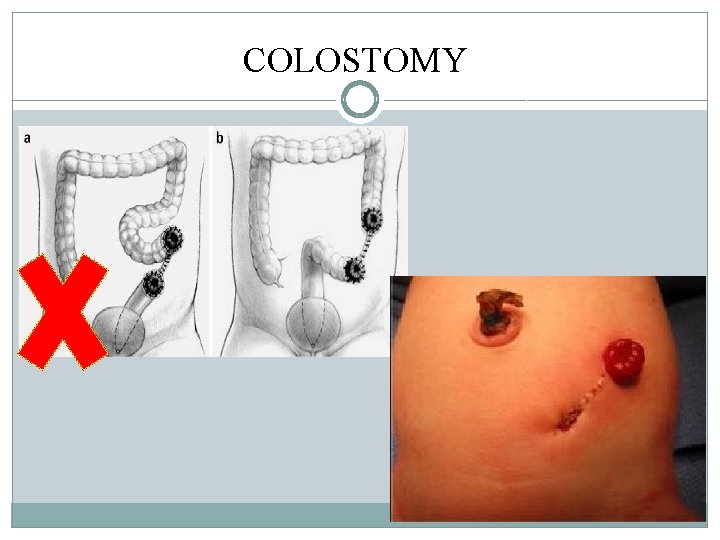
COLOSTOMY
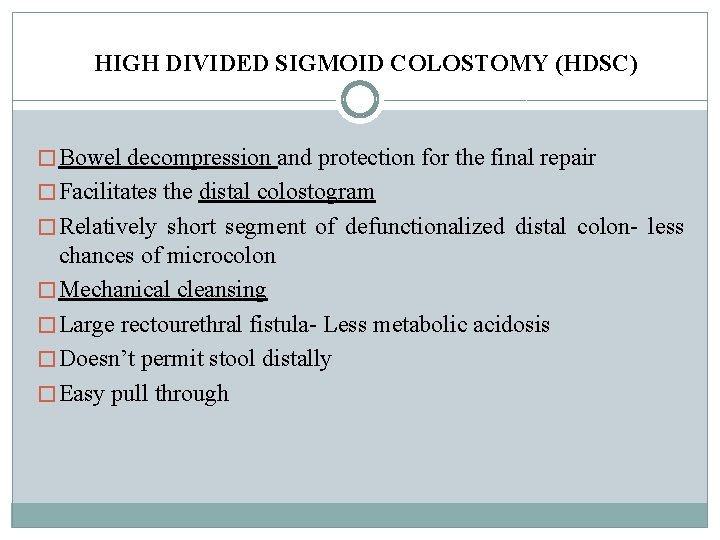
HIGH DIVIDED SIGMOID COLOSTOMY (HDSC) � Bowel decompression and protection for the final repair � Facilitates the distal colostogram � Relatively short segment of defunctionalized distal colon- less chances of microcolon � Mechanical cleansing � Large rectourethral fistula- Less metabolic acidosis � Doesn’t permit stool distally � Easy pull through
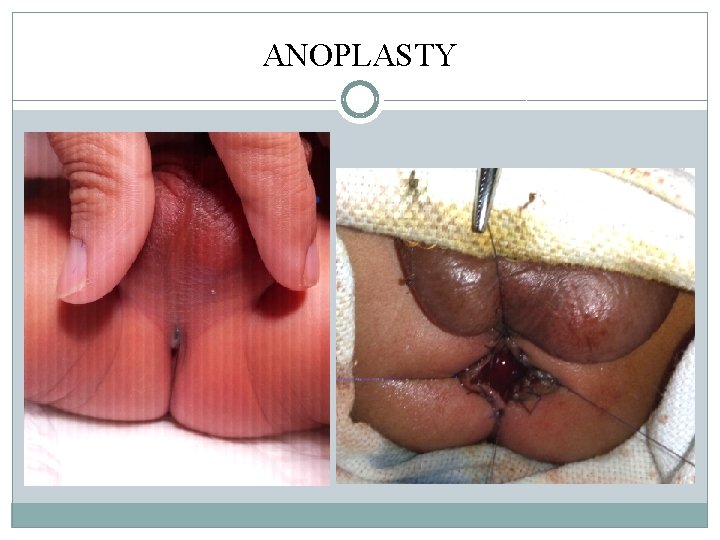
ANOPLASTY
Computed Tomography �Demonstrate the level of the terminal colon �Increased detail - osseous structures musculature. �Difficulty in distinguishing meconium from the rectal wall and adjacent musculature- and so the site of fistula. �Radiation cost to the patient.
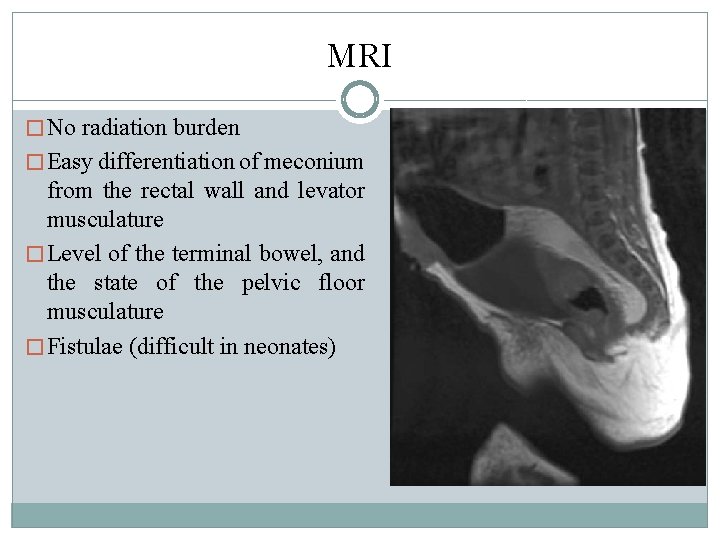
MRI � No radiation burden � Easy differentiation of meconium from the rectal wall and levator musculature � Level of the terminal bowel, and the state of the pelvic floor musculature � Fistulae (difficult in neonates)
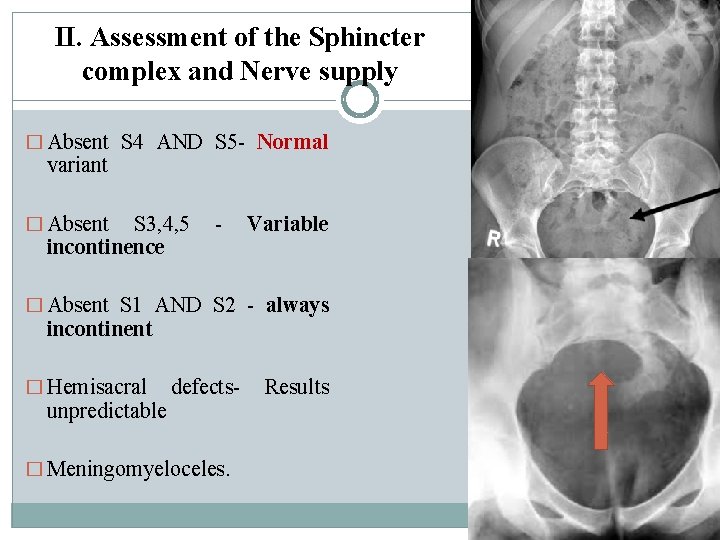
II. Assessment of the Sphincter complex and Nerve supply � Absent S 4 AND S 5 - Normal variant � Absent S 3, 4, 5 incontinence - Variable � Absent S 1 AND S 2 - always incontinent � Hemisacral unpredictable defects- � Meningomyeloceles. Results
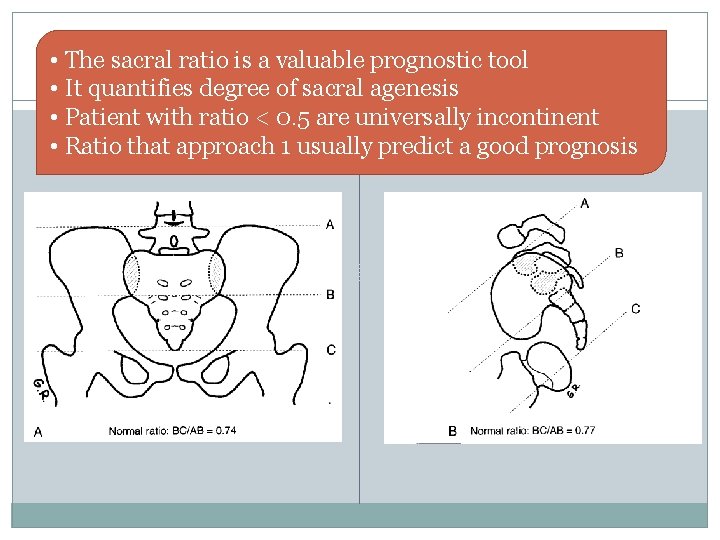
• The sacral ratio is a valuable prognostic tool • It quantifies degree of sacral agenesis • Patient with ratio < 0. 5 are universally incontinent • Ratio that approach 1 usually predict a good prognosis
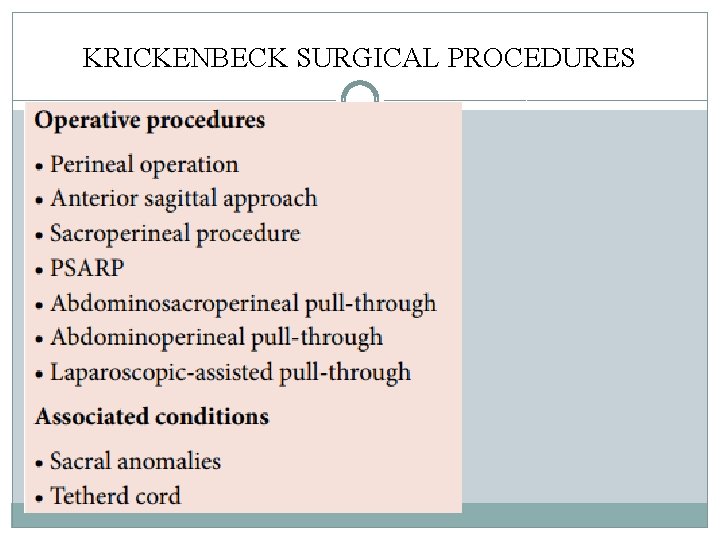
KRICKENBECK SURGICAL PROCEDURES
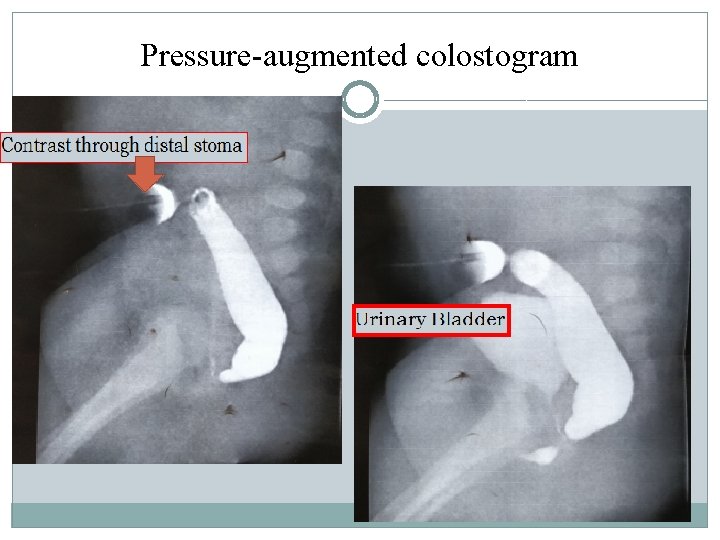
Pressure-augmented colostogram
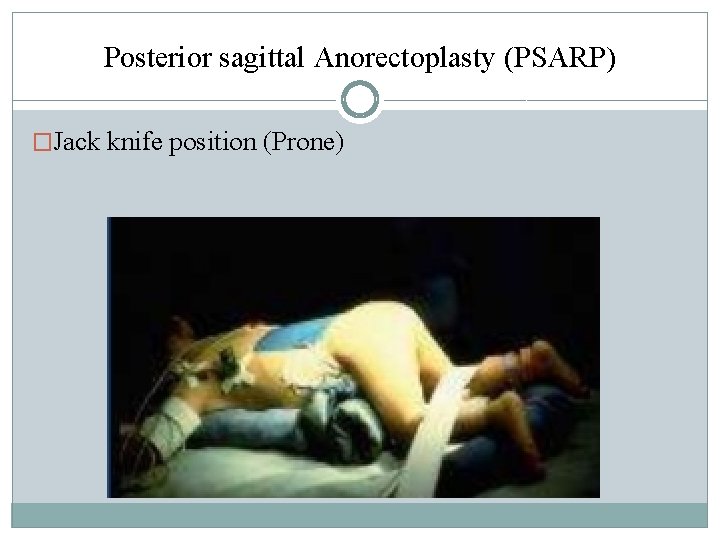
Posterior sagittal Anorectoplasty (PSARP) �Jack knife position (Prone)
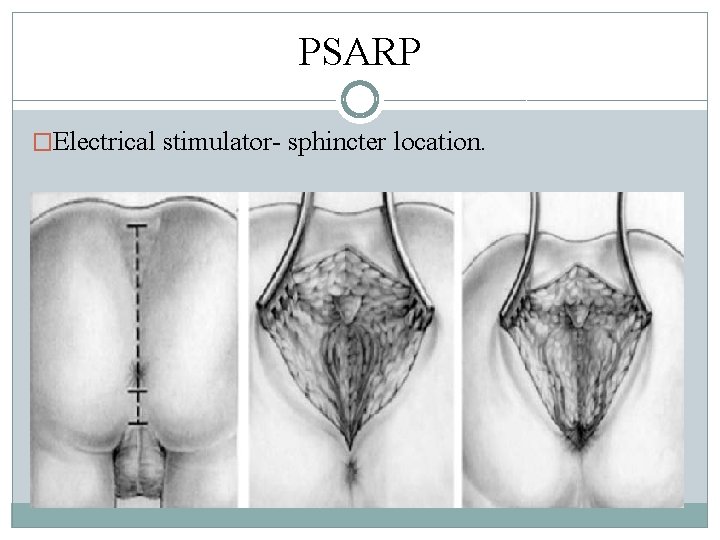
PSARP �Electrical stimulator- sphincter location.
Rectourethral fistulas Rectourethrobulbar fistula Rectourethroprostatic fistula -Most frequent defect in male patients
-Rectum identified opened posteriorly between stay sutures and in -Fistula visualized -Rectum separated from the urethra, and mobilised. -Rectum passed in front of levator and within sphincter. -Anoplasty done.
Recto-bladder neck fistula �Combined abdomino-perineal approach �Poor prognosis
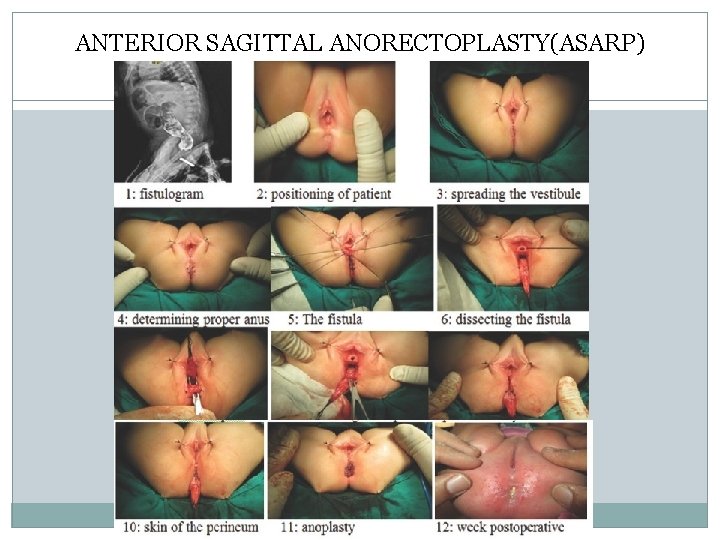
ANTERIOR SAGITTAL ANORECTOPLASTY(ASARP)
ARM VARIANTS
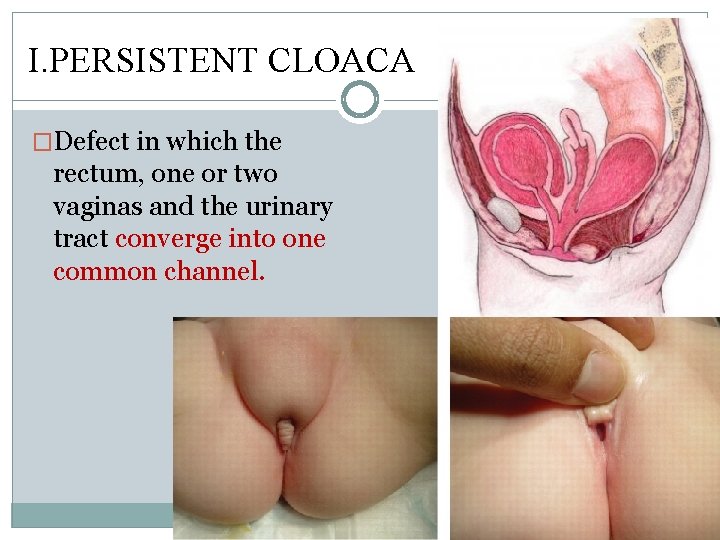
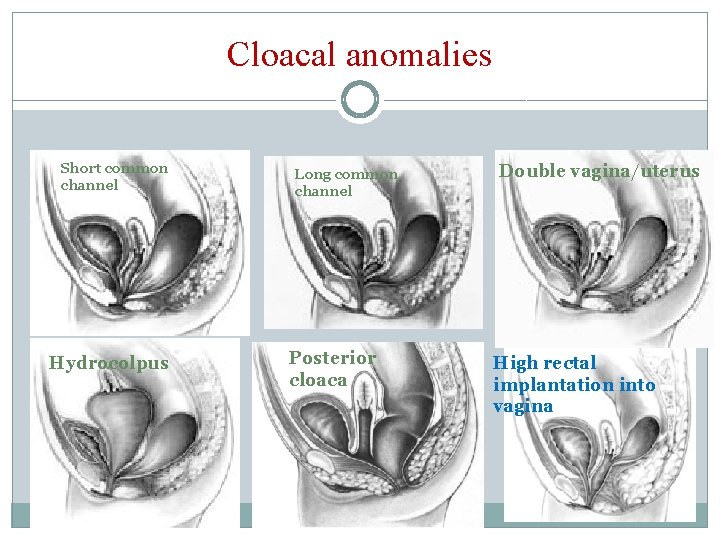
I. PERSISTENT CLOACA �Defect in which the rectum, one or two vaginas and the urinary tract converge into one common channel.
Cloacal anomalies Short common channel Hydrocolpus Long common channel Posterior cloaca Double vagina/uterus High rectal implantation into vagina
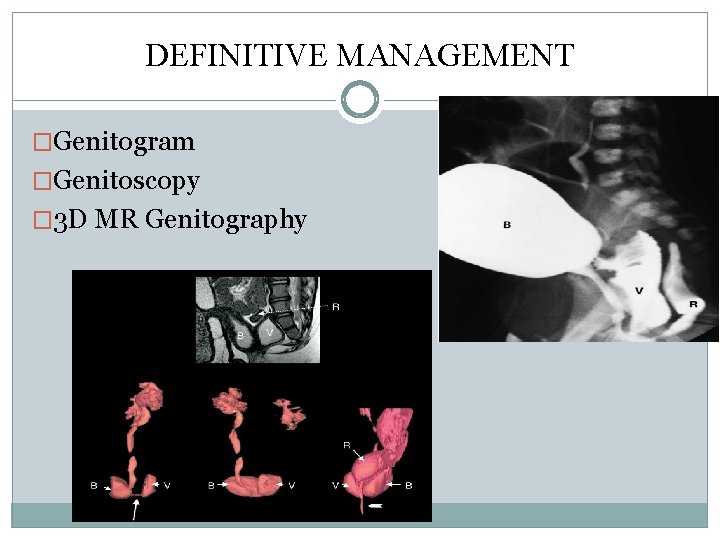
DEFINITIVE MANAGEMENT �Genitogram �Genitoscopy � 3 D MR Genitography
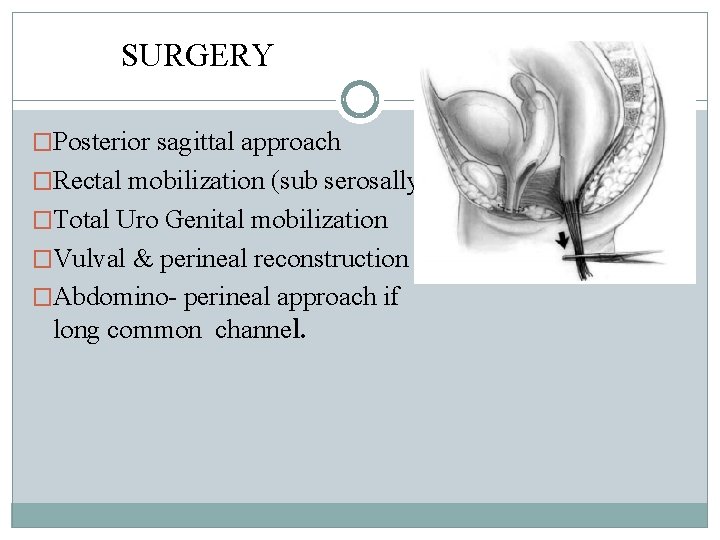
SURGERY �Posterior sagittal approach �Rectal mobilization (sub serosally) �Total Uro Genital mobilization �Vulval & perineal reconstruction �Abdomino- perineal approach if long common channel.
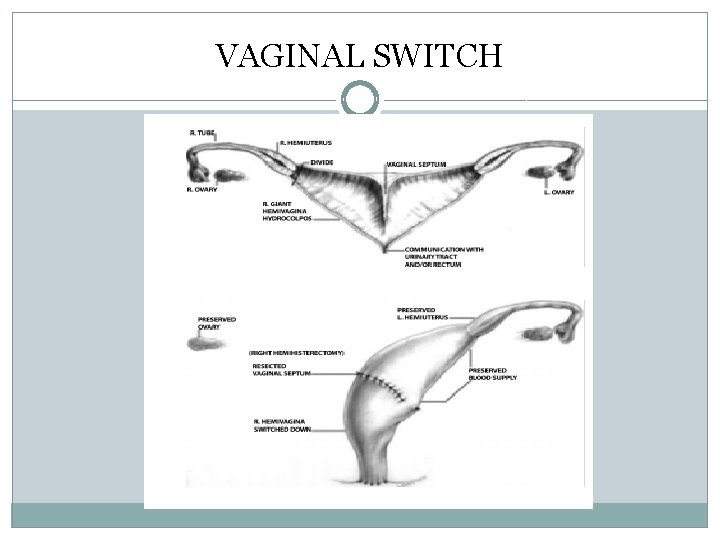
VAGINAL SWITCH
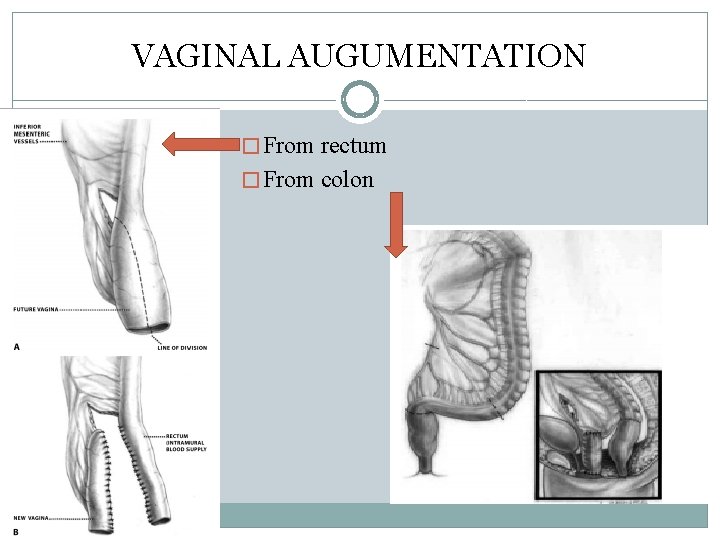
VAGINAL AUGUMENTATION � From rectum � From colon
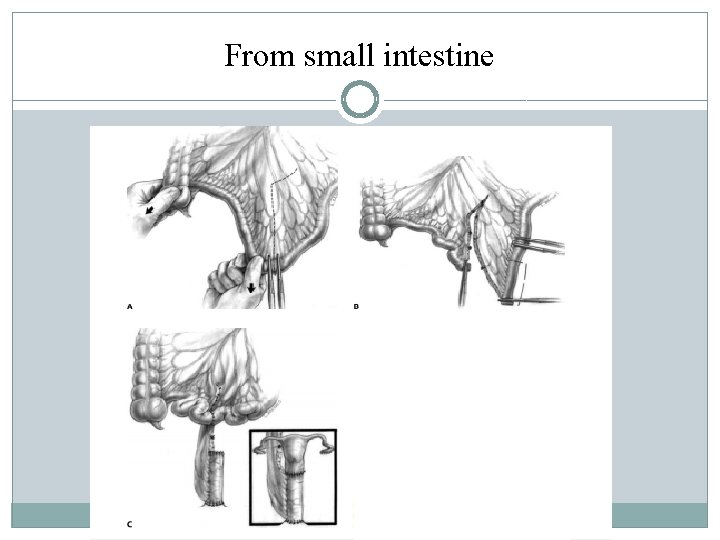
From small intestine
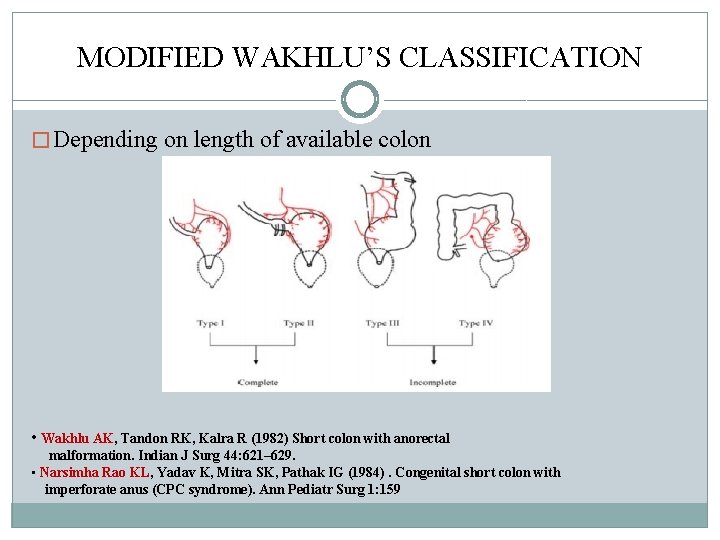
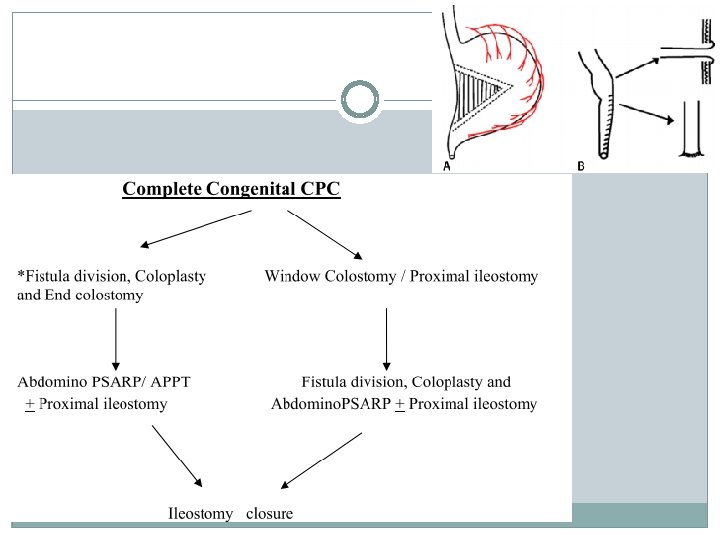
2. CONGENITAL POUCH COLON � 2. 5 – 9 % of ARM in North India. �All or part of the colon is replaced by a pouch-like dilatation, which communicates distally with the urogenital tract via a large fistula.
MODIFIED WAKHLU’S CLASSIFICATION � Depending on length of available colon • Wakhlu AK, Tandon RK, Kalra R (1982) Short colon with anorectal malformation. Indian J Surg 44: 621– 629. • Narsimha Rao KL, Yadav K, Mitra SK, Pathak IG (1984). Congenital short colon with imperforate anus (CPC syndrome). Ann Pediatr Surg 1: 159
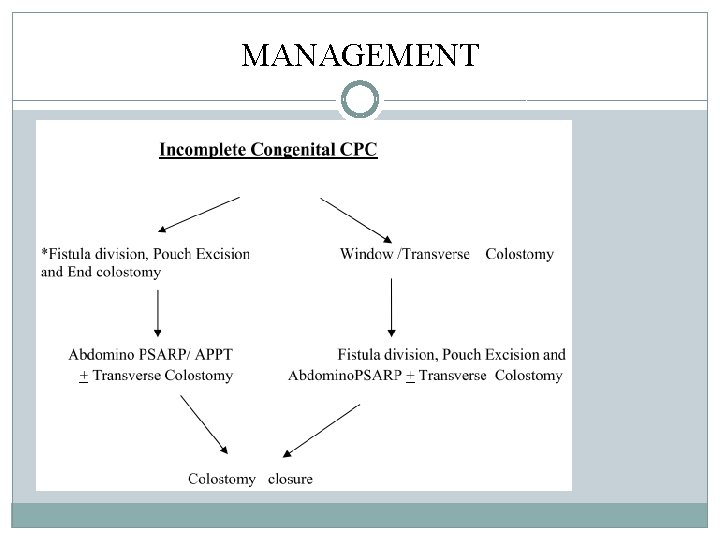
MANAGEMENT
3. RECTAL ATRESIA � 1 -2% of ARM �Common in South India �End to end anastomosis via PSARP route.
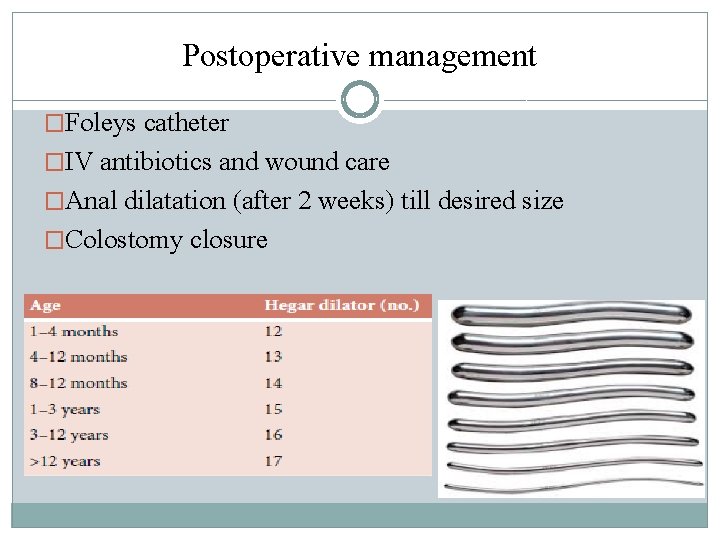
Postoperative management �Foleys catheter �IV antibiotics and wound care �Anal dilatation (after 2 weeks) till desired size �Colostomy closure
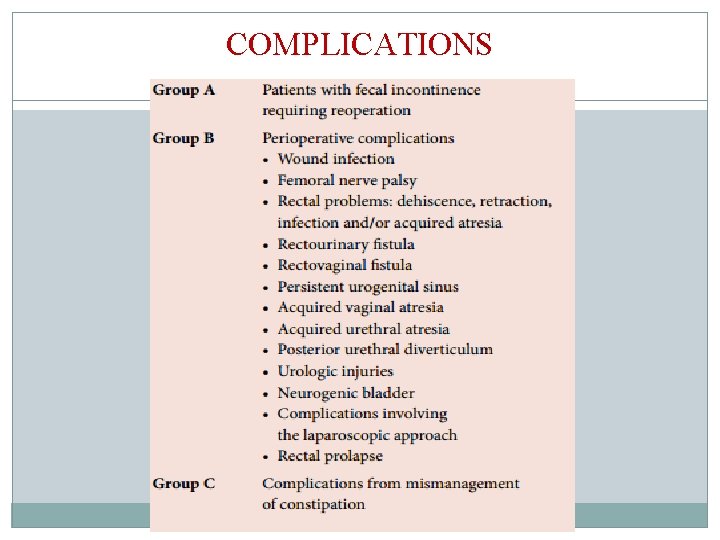
COMPLICATIONS
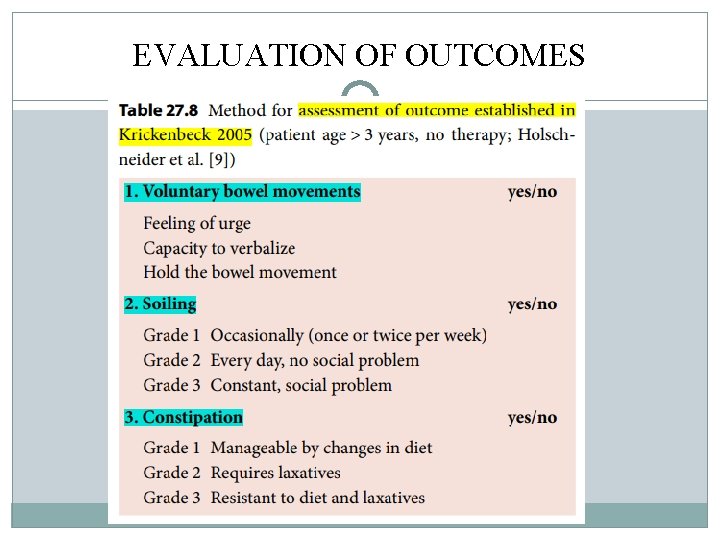
EVALUATION OF OUTCOMES
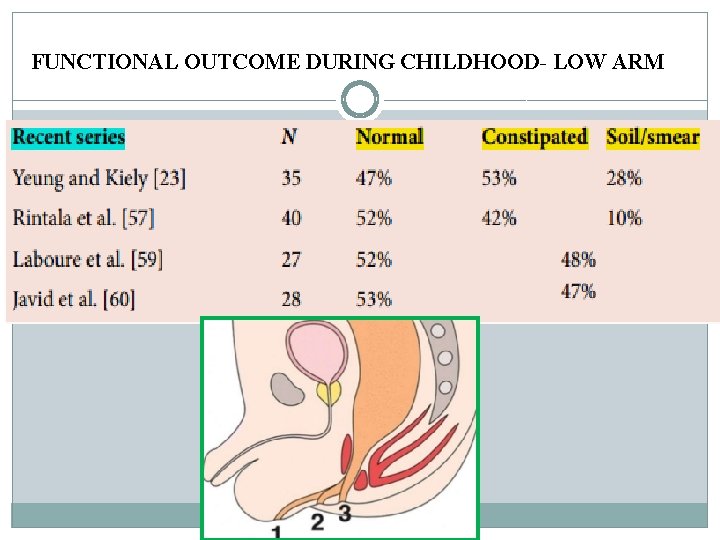
FUNCTIONAL OUTCOME DURING CHILDHOOD- LOW ARM
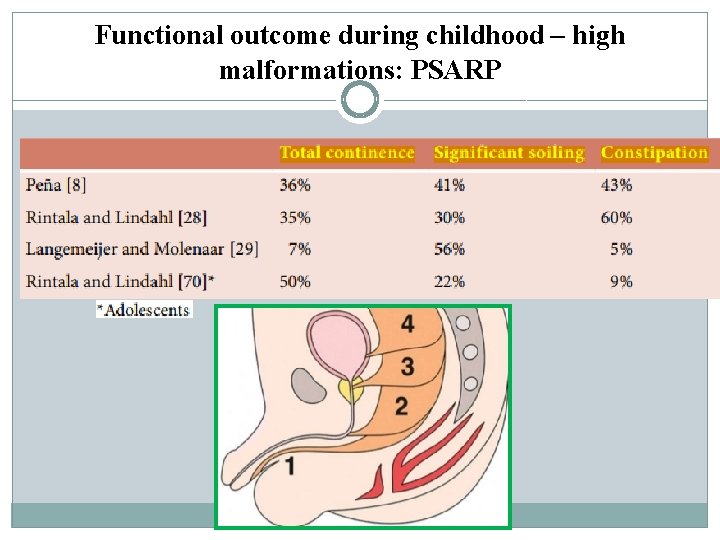
Functional outcome during childhood – high malformations: PSARP
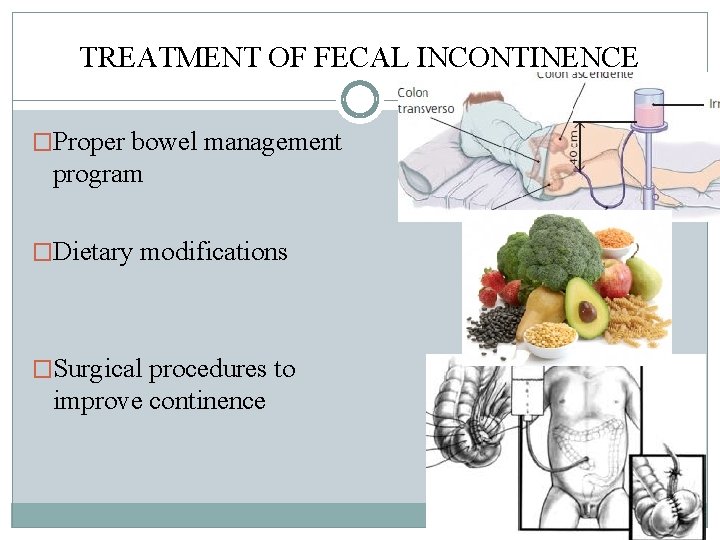
TREATMENT OF FECAL INCONTINENCE �Proper bowel management program �Dietary modifications �Surgical procedures to improve continence
OTHER OUTCOMES �Urinary function �Sexual function �Long-term growth and development