THE AGE OF IMPERIALISM Essential Question What is




- Slides: 63
THE AGE OF IMPERIALISM
Essential Question: What is imperialism and what factors led to the rise of imperialism?
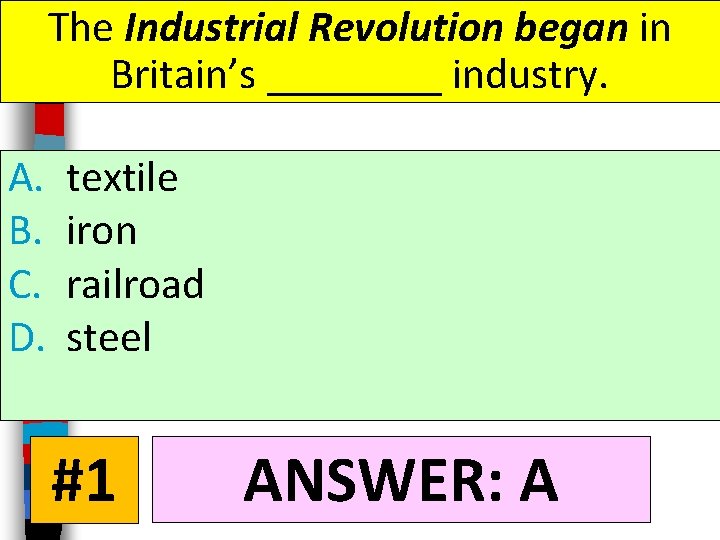
The Industrial Revolution began in Britain’s ____ industry. A. B. C. D. textile iron railroad steel #1
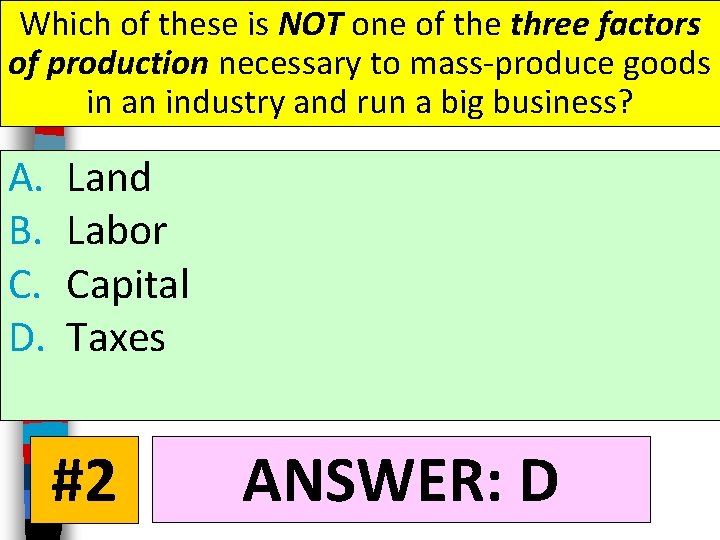
Which of these is NOT one of the three factors of production necessary to mass-produce goods in an industry and run a big business? A. B. C. D. Land Labor Capital Taxes #2
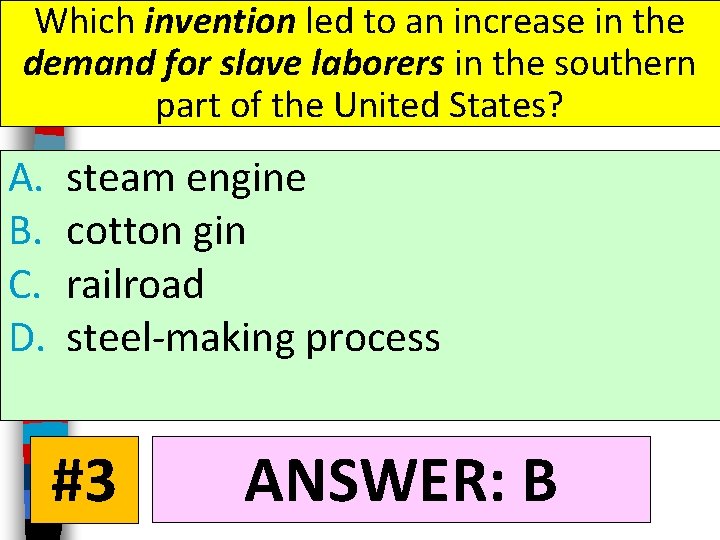
Which invention led to an increase in the demand for slave laborers in the southern part of the United States? A. B. C. D. steam engine cotton gin railroad steel-making process #3
Which of these was NOT a positive effect of the Industrial Revolution? A. Goods were mass-produced at lower costs B. Huge profits were made selling machinemade goods C. Many children worked in the factories D. There were many technological breakthroughs at this time #4
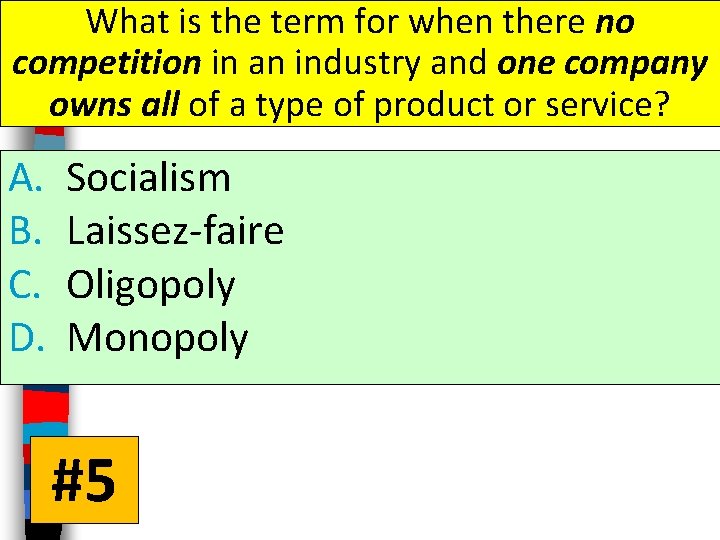
What is the term for when there no competition in an industry and one company owns all of a type of product or service? A. B. C. D. Socialism Laissez-faire Oligopoly Monopoly #5
The Industrial Revolution began in Britain’s ____ industry. A. B. C. D. textile iron railroad steel #1 ANSWER: A
Which of these is NOT one of the three factors of production necessary to mass-produce goods in an industry and run a big business? A. B. C. D. Land Labor Capital Taxes #2 ANSWER: D
Which invention led to an increase in the demand for slave laborers in the southern part of the United States? A. B. C. D. steam engine cotton gin railroad steel-making process #3 ANSWER: B
Which of these was NOT a positive effect of the Industrial Revolution? A. Goods were mass-produced at lower costs B. Huge profits were made selling machinemade goods C. Many children worked in the factories D. There were many technological breakthroughs at this time #4 ANSWER: C
What is the term for when there no competition in an industry and one company owns all of a type of product or service? A. B. C. D. Socialism Laissez-faire Oligopoly Monopoly #5 ANSWER: D
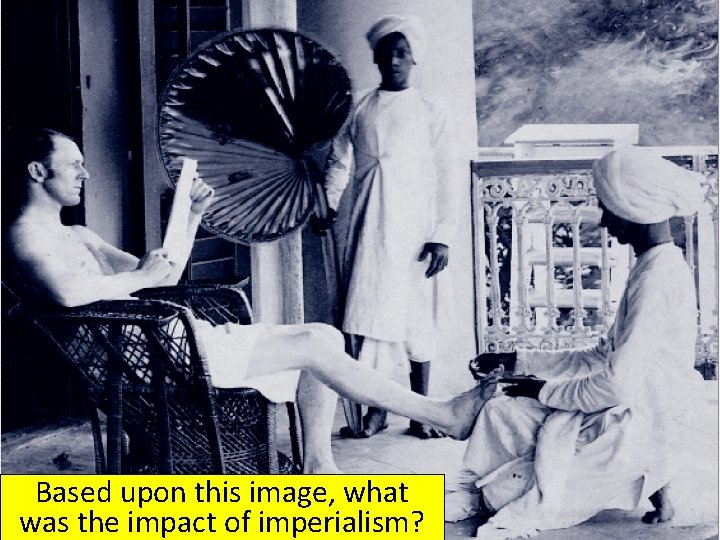
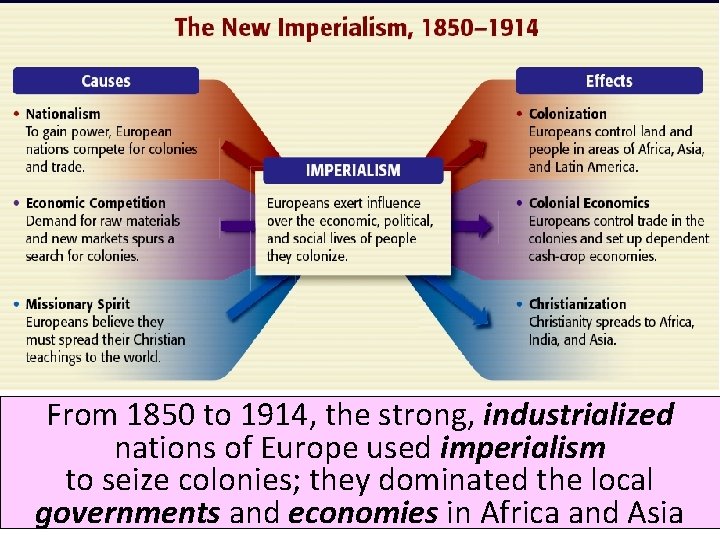
WHAT IS IMPERIALISM? IMPERIALISM is the seizure of a country or territory by a stronger country. The stronger country dominates weaker countries politically, economically, and socially. The reason: the stronger country gains power with the money it makes from using the weaker country.
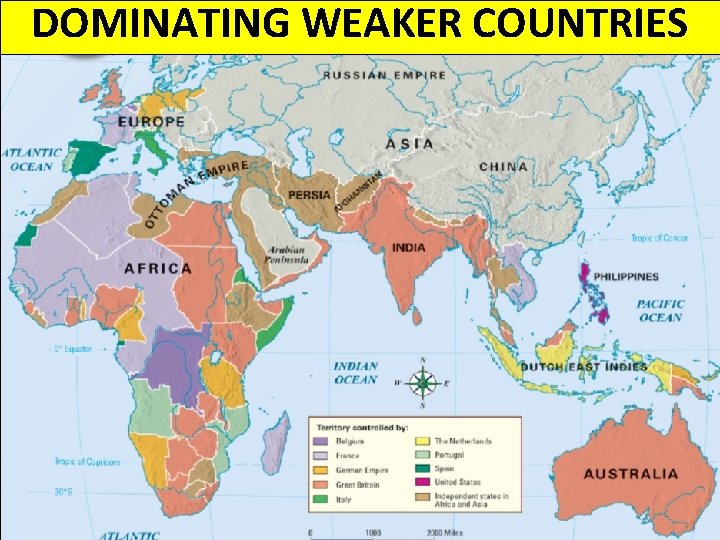
DOMINATING WEAKER COUNTRIES
Based upon this image, what was the impact of imperialism?
From 1850 to 1914, the strong, industrialized nations of Europe used imperialism to seize colonies; they dominated the local governments and economies in Africa and Asia
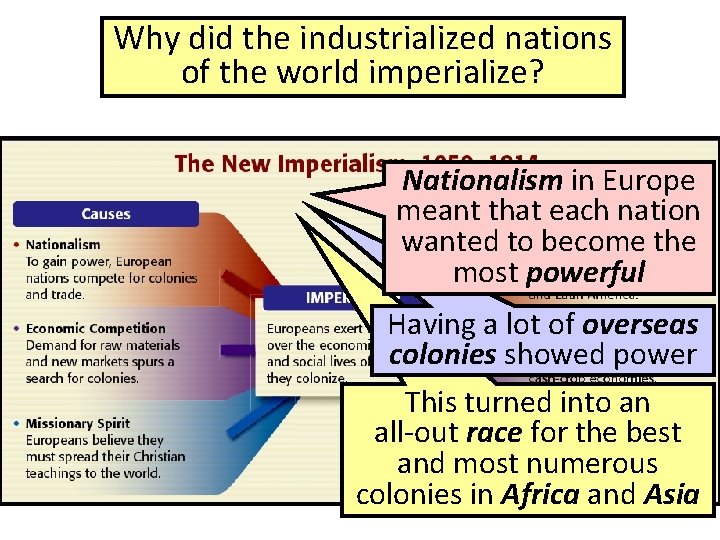
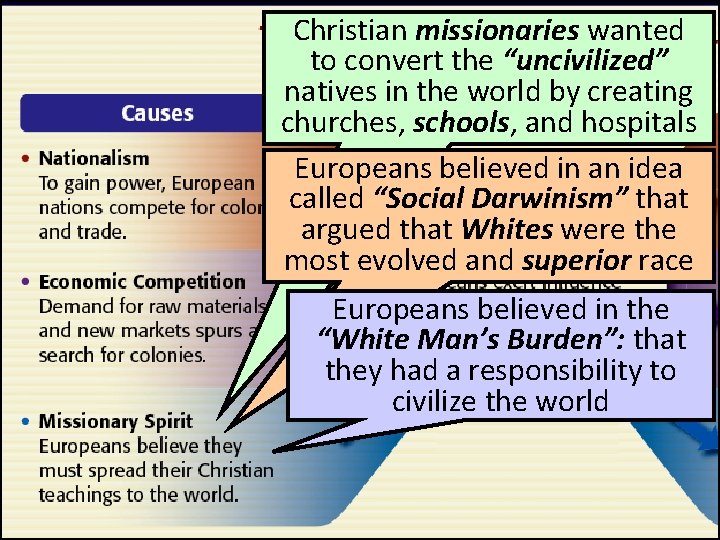
Why did the industrialized nations of the world imperialize? Nationalism in Europe meant that each nation wanted to become the most powerful Having a lot of overseas colonies showed power This turned into an all-out race for the best and most numerous colonies in Africa and Asia
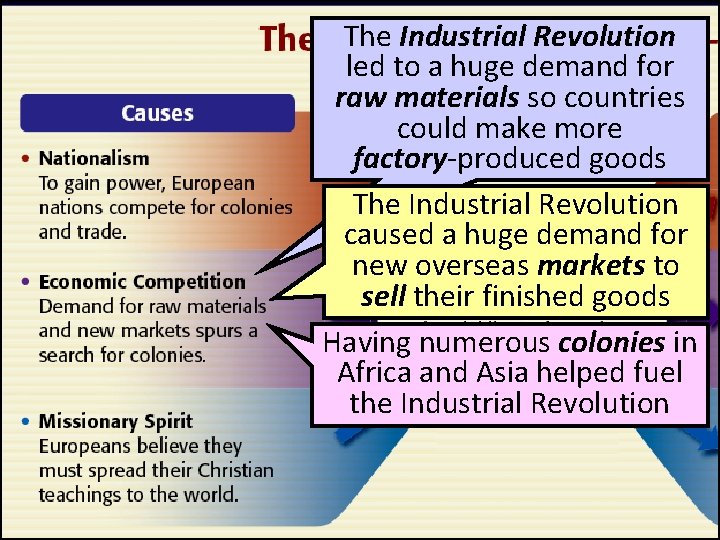
The Industrial Revolution led to a huge demand for raw materials so countries could make more factory-produced goods The Industrial Revolution caused a huge demand for new overseas markets to sell their finished goods Having numerous colonies in Africa and Asia helped fuel the Industrial Revolution
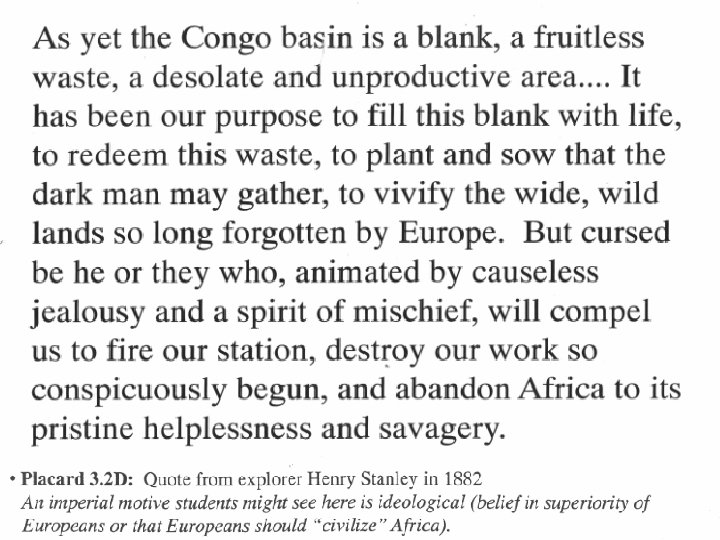
Christian missionaries wanted to convert the “uncivilized” natives in the world by creating churches, schools, and hospitals Europeans believed in an idea called “Social Darwinism” that argued that Whites were the most evolved and superior race Europeans believed in the “White Man’s Burden”: that they had a responsibility to civilize the world
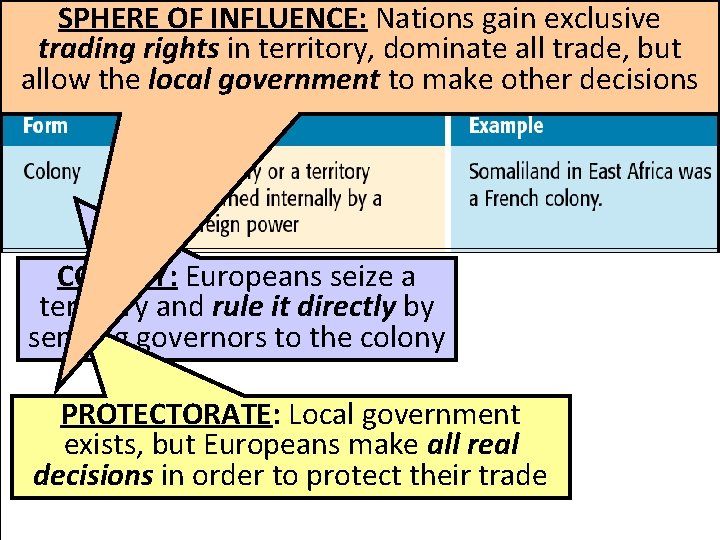
SPHERE OF INFLUENCE: Nations gain exclusive trading rights in territory, dominate all trade, but Forms of Imperialism allow the local government to make other decisions COLONY: Europeans seize a territory and rule it directly by sending governors to the colony PROTECTORATE: Local government exists, but Europeans make all real decisions in order to protect their trade
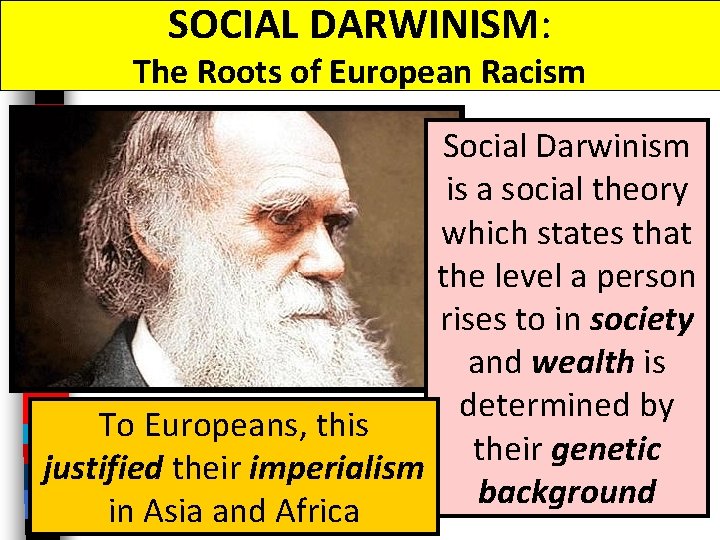
SOCIAL DARWINISM: The Roots of European Racism Charles Darwin: “survival of the fittest” Darwin was talking about nature, but people tried to apply his ideas to economics and politics This was known as “Social Darwinism”
SOCIAL DARWINISM: The Roots of European Racism Social Darwinism is a social theory which states that the level a person rises to in society and wealth is determined by To Europeans, this their genetic justified their imperialism background in Asia and Africa
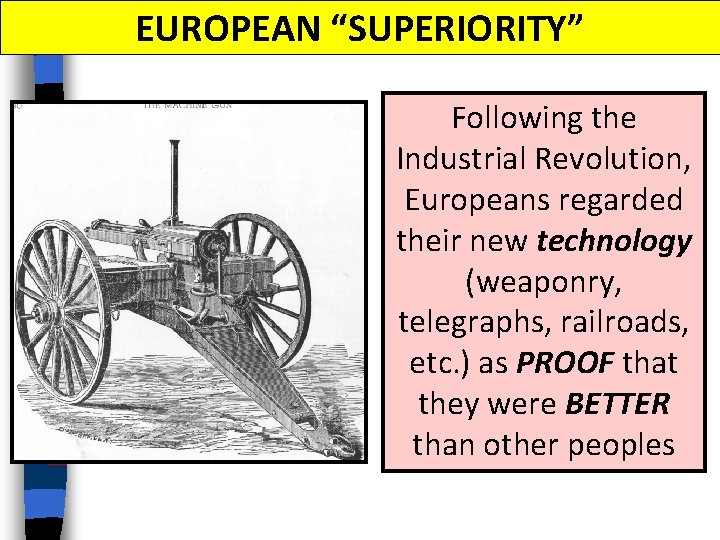
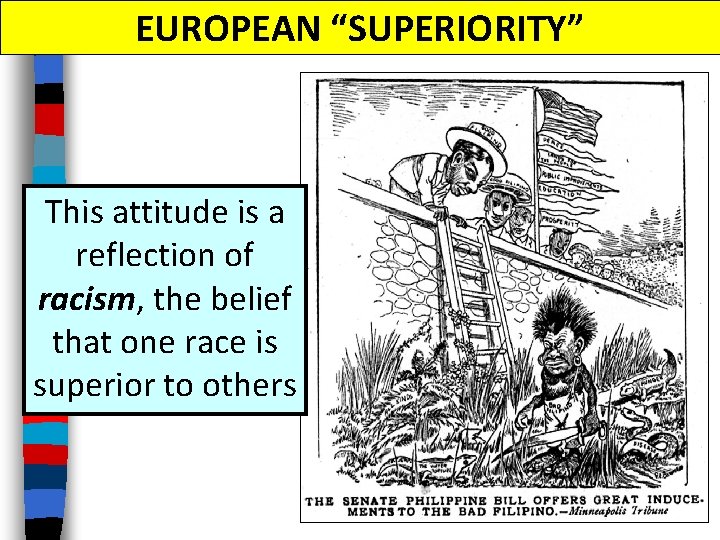
EUROPEAN “SUPERIORITY” Following the Industrial Revolution, Europeans regarded their new technology (weaponry, telegraphs, railroads, etc. ) as PROOF that they were BETTER than other peoples
EUROPEAN “SUPERIORITY” This attitude is a reflection of racism, the belief that one race is superior to others
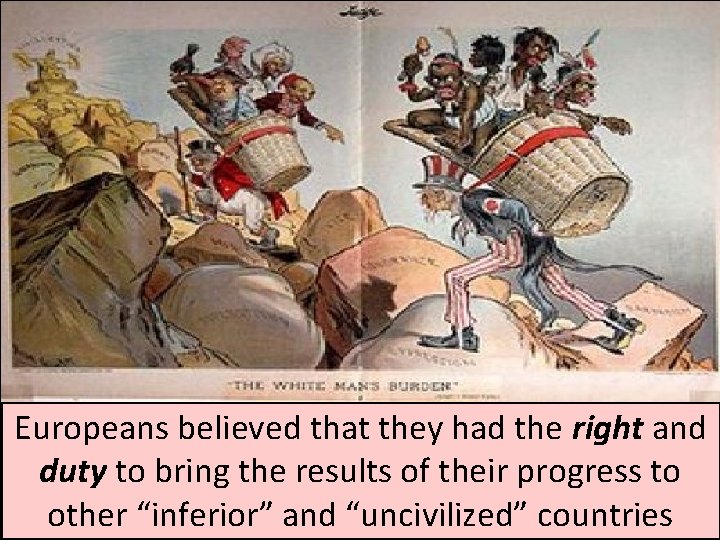
Europeans believed that they had the right and duty to bring the results of their progress to other “inferior” and “uncivilized” countries
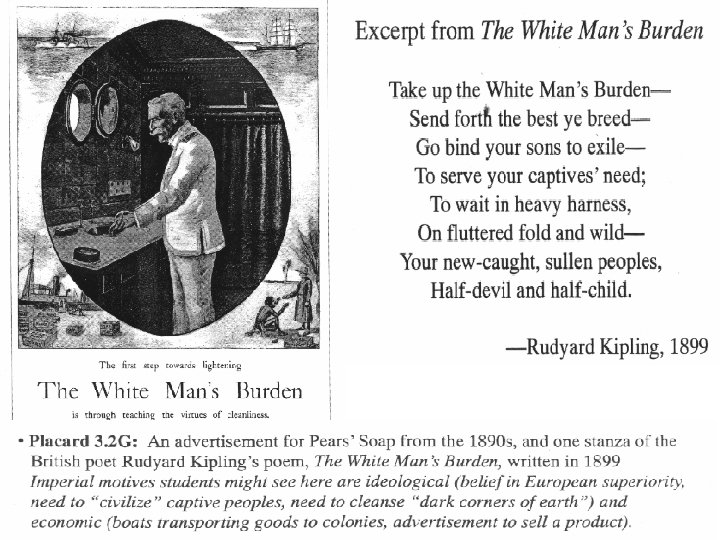
“WHITE MAN’S BURDEN” "White Man's Burden": racist patronizing that preached that “superior” Westerners had an obligation to bring their culture to “uncivilized” people in other parts of the world English writer Rudyard Kipling, in this 1899 poem, summarizes his view of the duties of imperial nations… “Take up the White Man's burden. Send forth the best you breed. Go bind your sons to exile, To serve their captives' need. To wait, with patience mighty, On folk, ragged and wild: Your new-caught, depraved peoples, Half devil and half child. ”
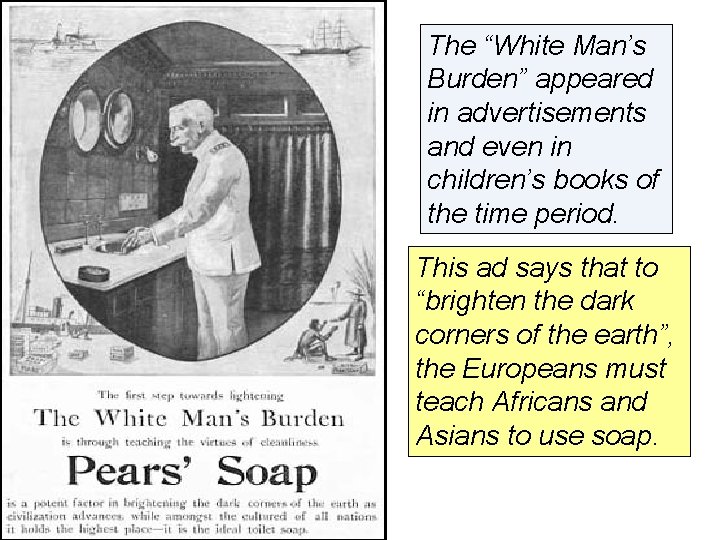
The “White Man’s Burden” appeared in advertisements and even in children’s books of the time period. This ad says that to “brighten the dark corners of the earth”, the Europeans must teach Africans and Asians to use soap.
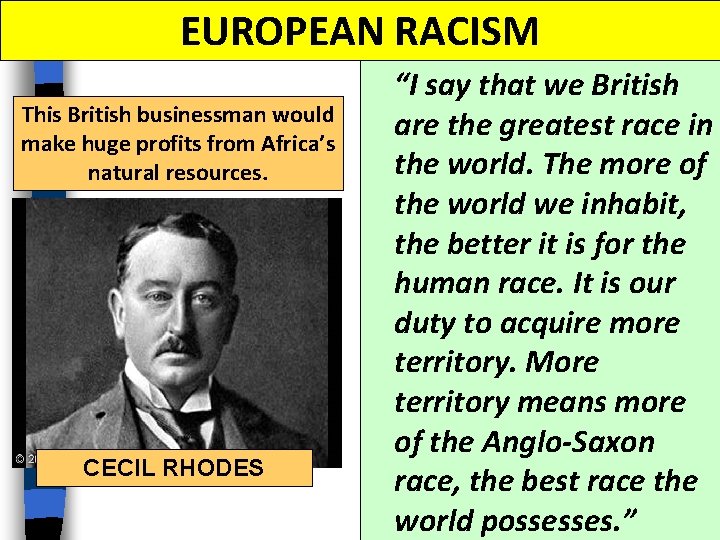
EUROPEAN RACISM This British businessman would make huge profits from Africa’s natural resources. CECIL RHODES “I say that we British are the greatest race in the world. The more of the world we inhabit, the better it is for the human race. It is our duty to acquire more territory. More territory means more of the Anglo-Saxon race, the best race the world possesses. ”
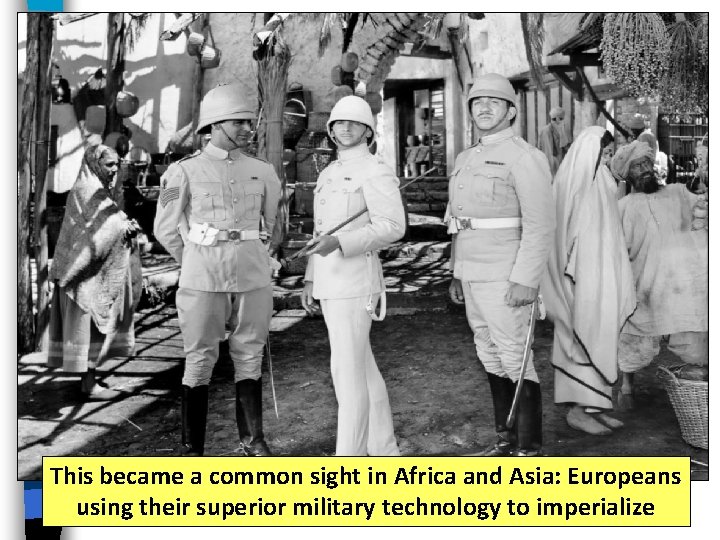
This became a common sight in Africa and Asia: Europeans using their superior military technology to imperialize
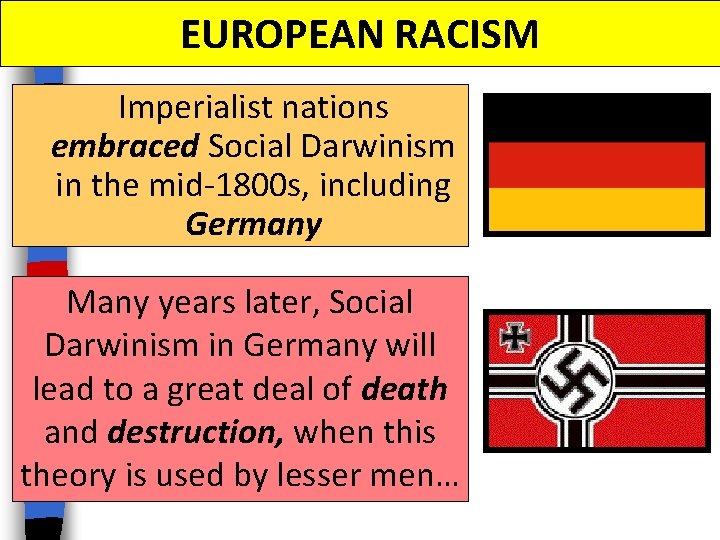
EUROPEAN RACISM Imperialist nations embraced Social Darwinism in the mid-1800 s, including Germany Many years later, Social Darwinism in Germany will lead to a great deal of death and destruction, when this theory is used by lesser men…
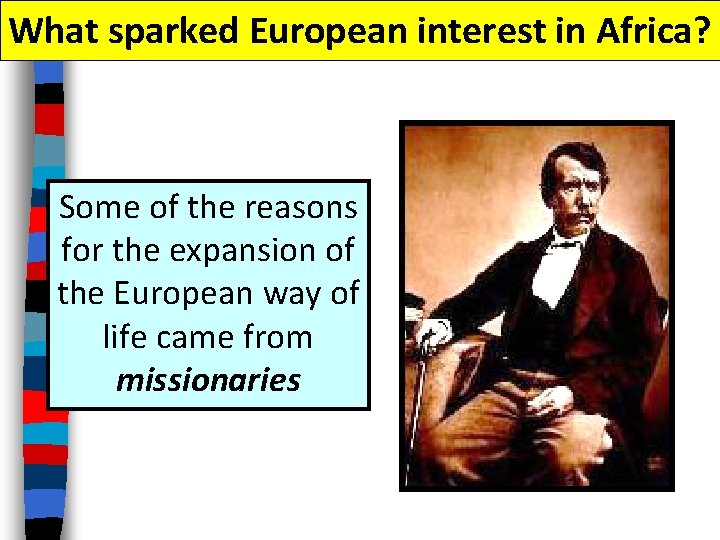
What sparked European interest in Africa? Some of the reasons for the expansion of the European way of life came from missionaries
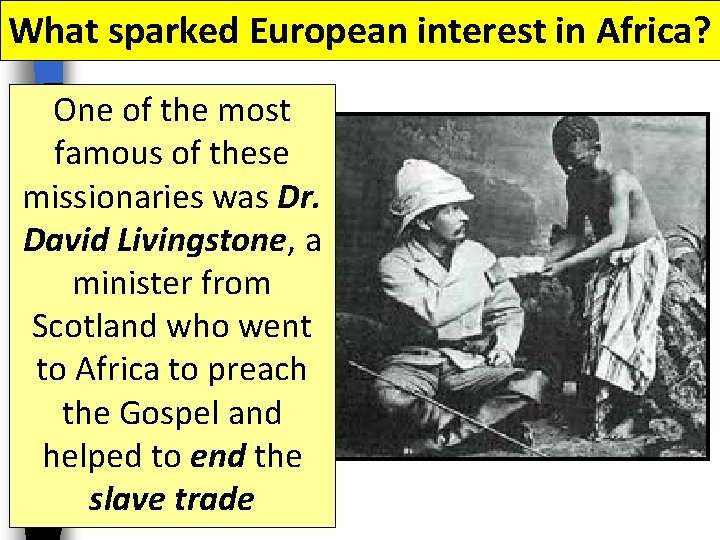
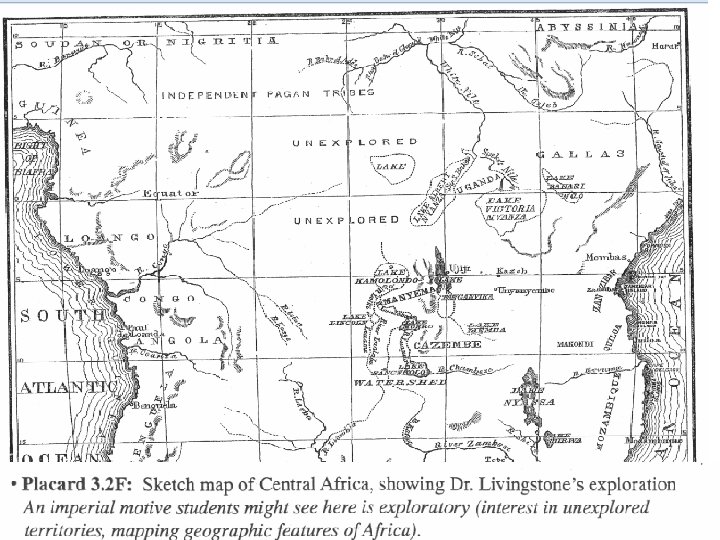
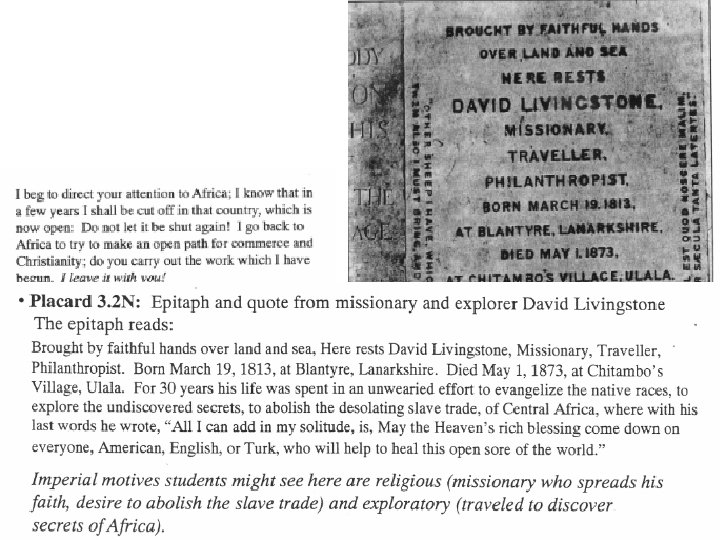
What sparked European interest in Africa? One of the most famous of these missionaries was Dr. David Livingstone, a minister from Scotland who went to Africa to preach the Gospel and helped to end the slave trade
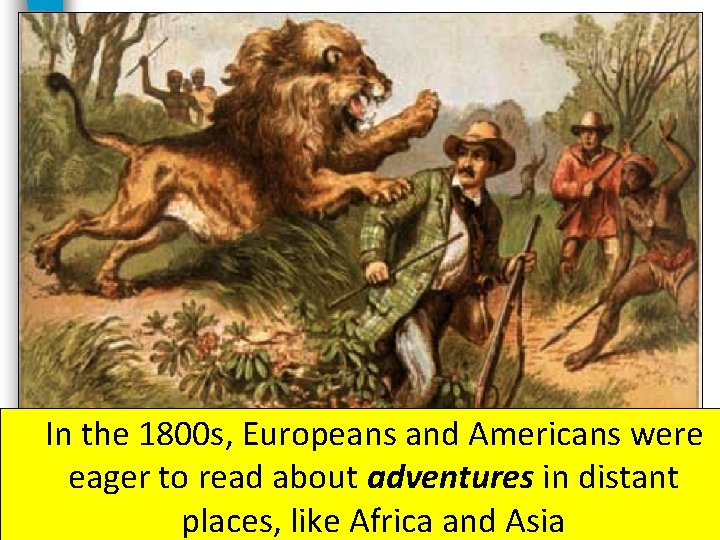
In the 1800 s, Europeans and Americans were eager to read about adventures in distant places, like Africa and Asia
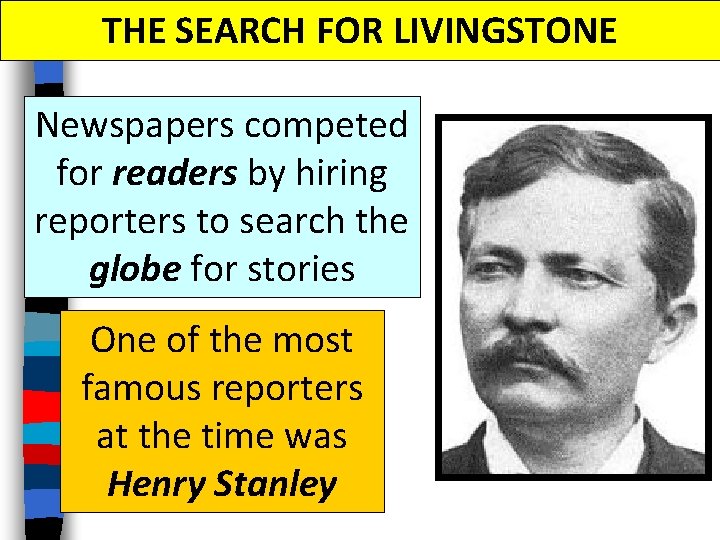
THE SEARCH FOR LIVINGSTONE Newspapers competed for readers by hiring reporters to search the globe for stories n One of the most famous reporters at the time was Henry Stanley
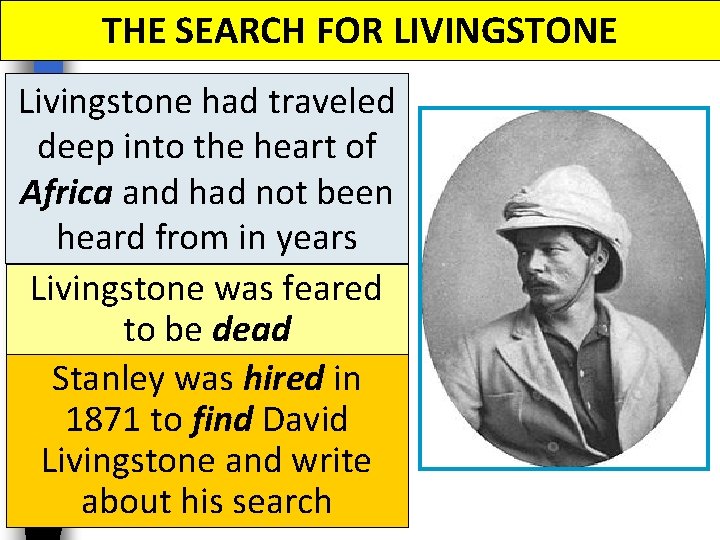
THE SEARCH FOR LIVINGSTONE Livingstone had traveled deep into the heart of Africa and had not been heard from in years Livingstone was feared to be dead Stanley was hired in 1871 to find David Livingstone and write about his search
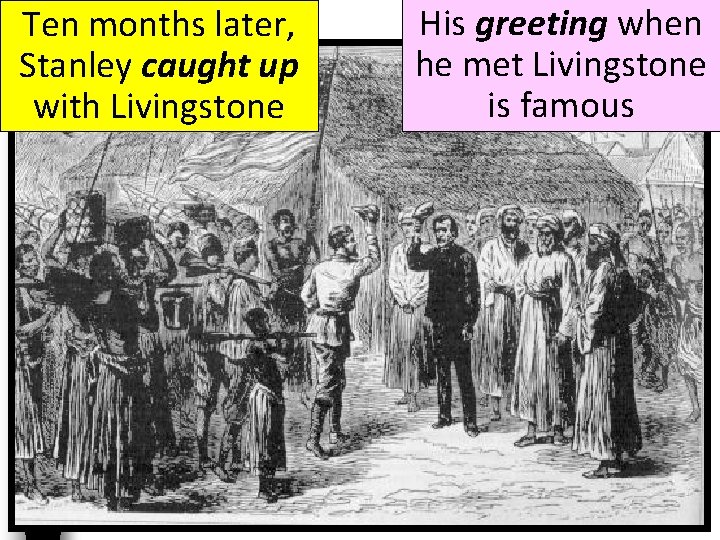
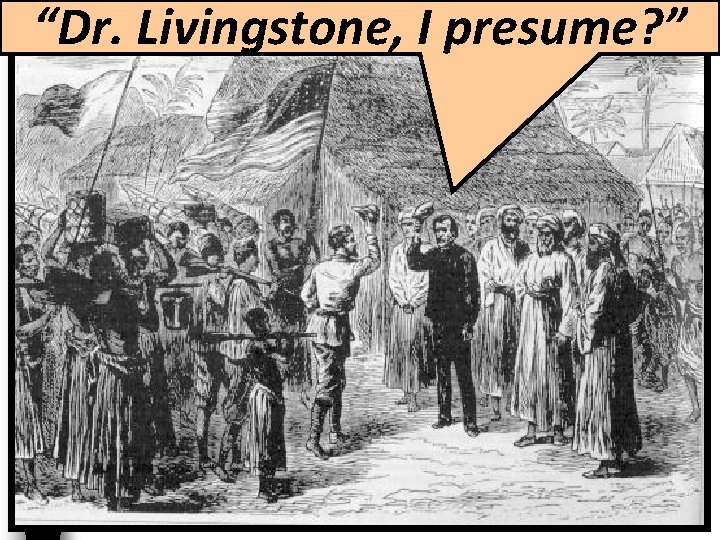
Ten months later, Stanley caught up with Livingstone His greeting when he met Livingstone is famous
“Dr. Livingstone, I presume? ”
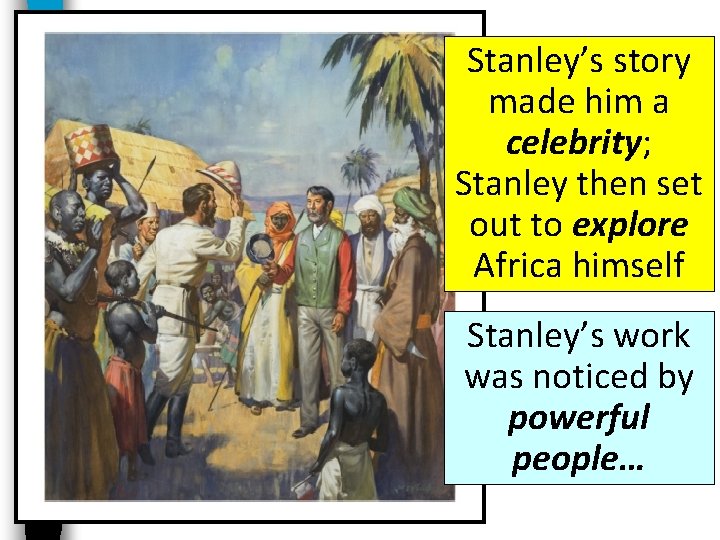
Stanley’s story made him a celebrity; Stanley then set out to explore Africa himself Stanley’s work was noticed by powerful people…
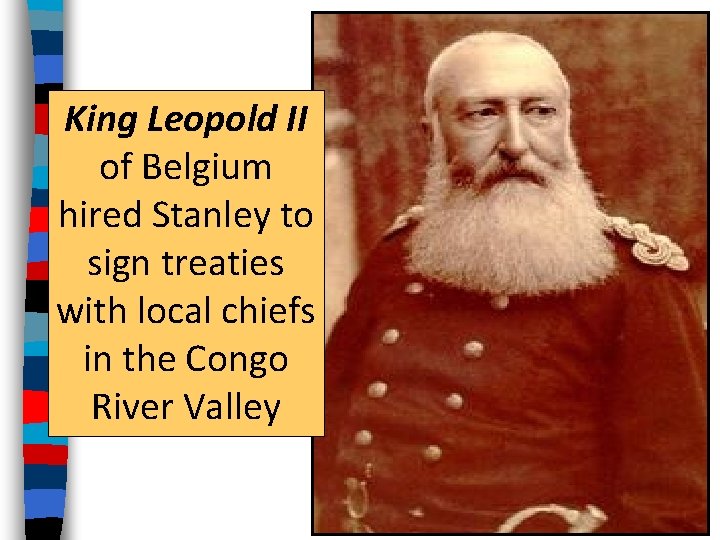
King Leopold II of Belgium hired Stanley to sign treaties with local chiefs in the Congo River Valley
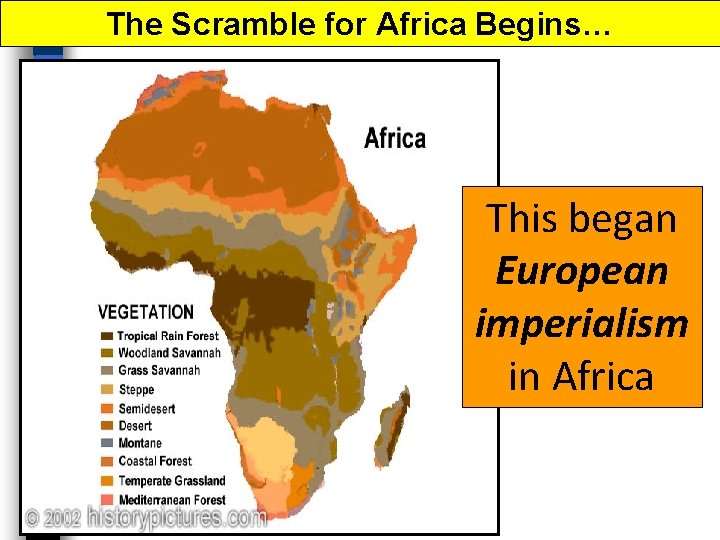
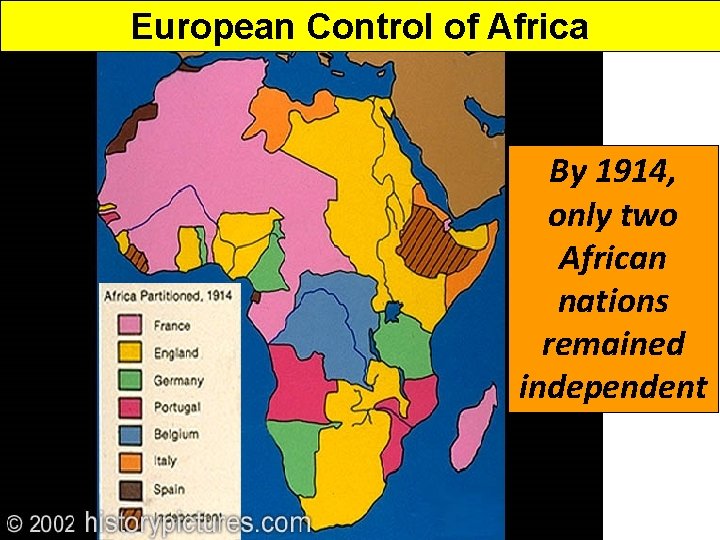
The Scramble for Africa Begins… This began European imperialism in Africa
European Control of Africa By 1914, only two African nations remained independent
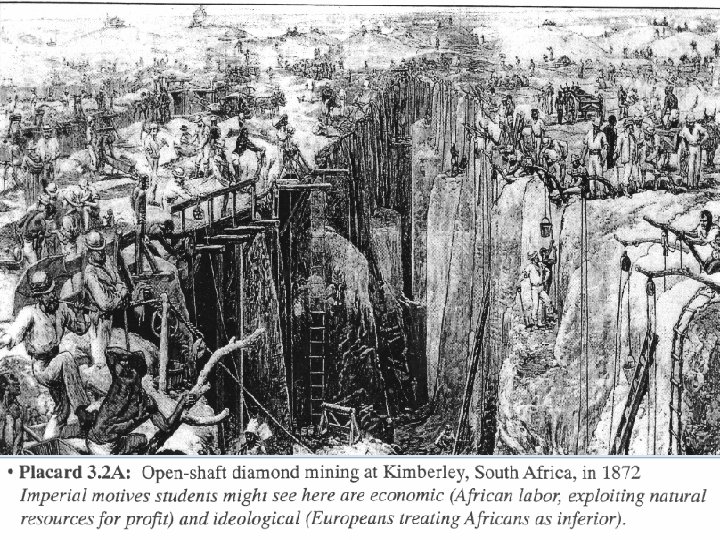
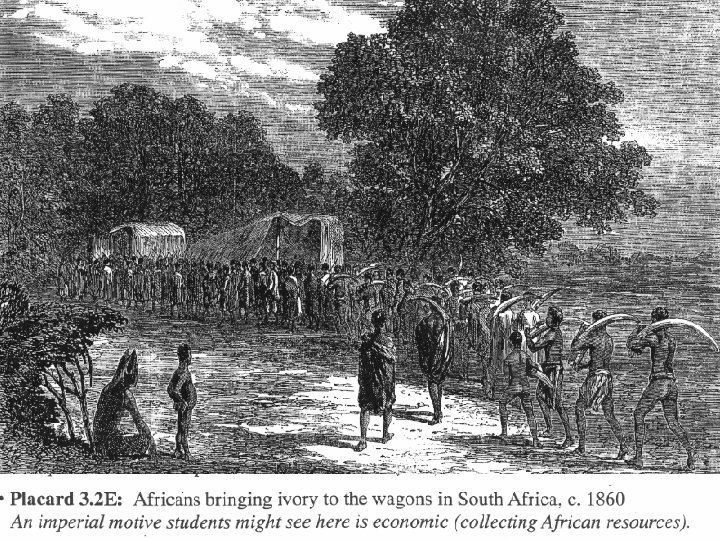
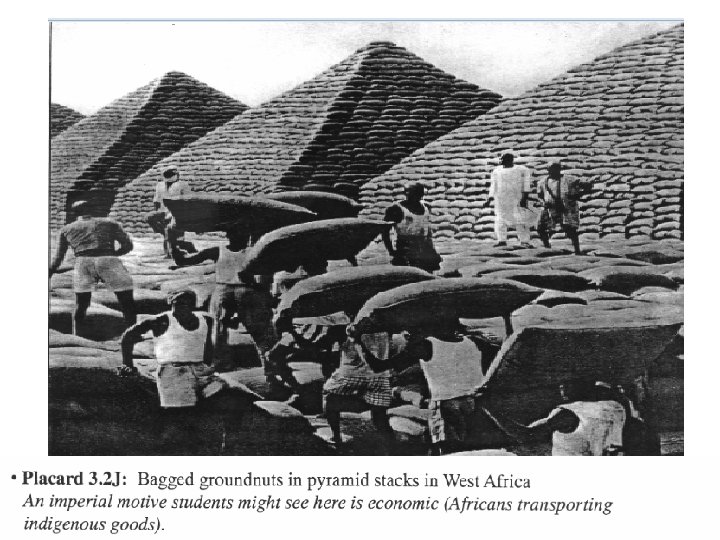
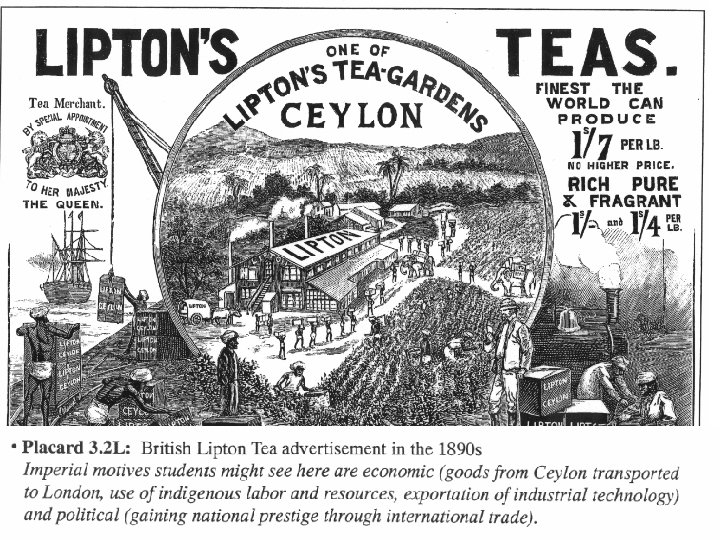
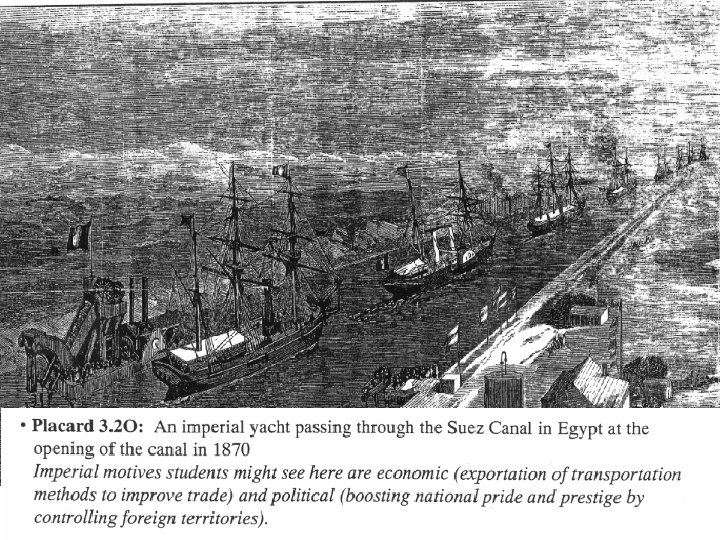
MOTIVES FOR IMPERIALISM #1: ECONOMIC Economic motives included the desire to make money, to expand control foreign trade, to create new markets for products, to acquire raw materials and cheap labor, and to export industrial technology and transportation methods
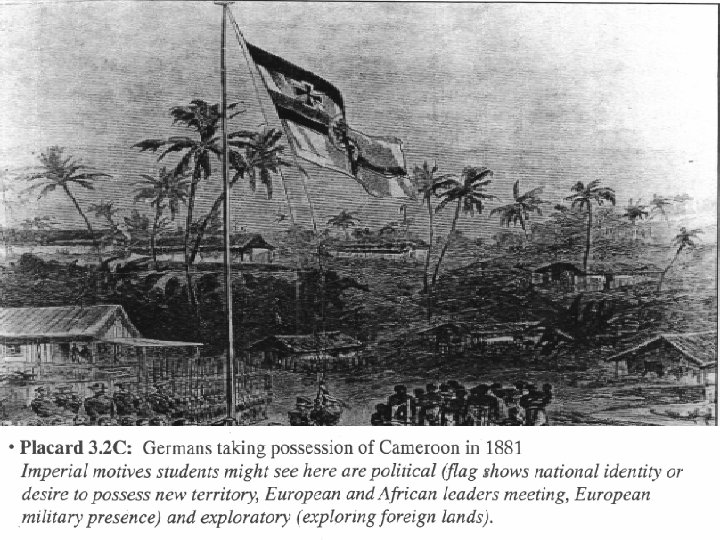
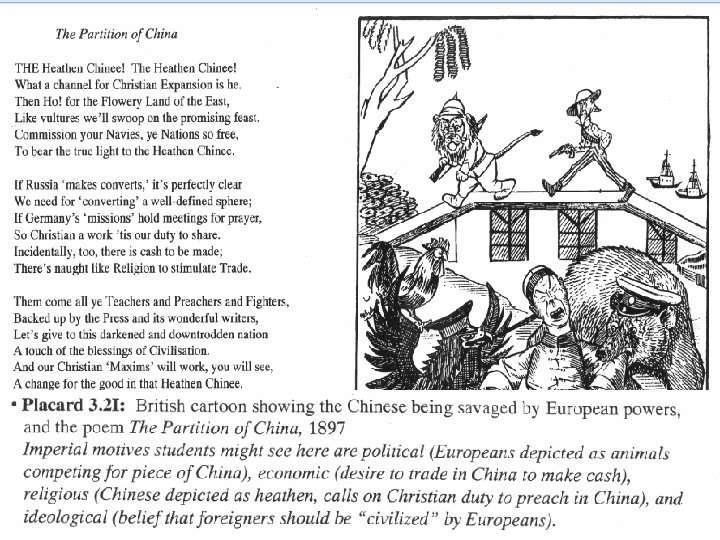
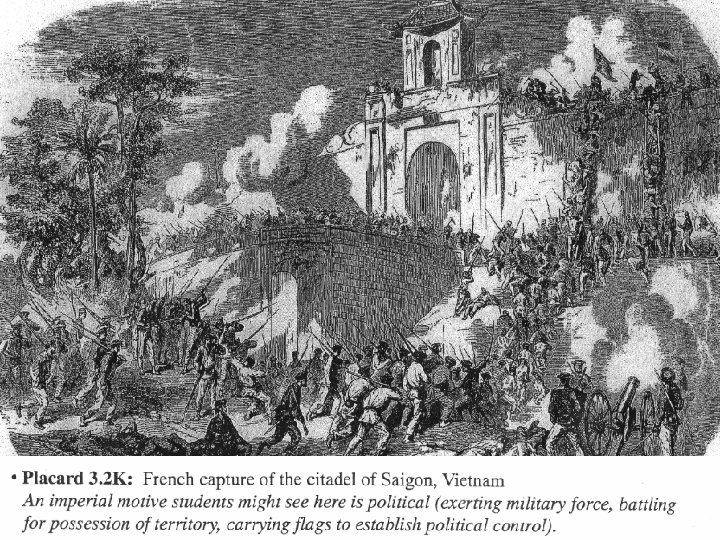
MOTIVES FOR IMPERIALISM #2: POLITICAL Political motives were based on a nation’s desire to gain power, to compete with other European countries, to expand territory, to exercise military force, to gain prestige by winning colonies, and to boost national pride
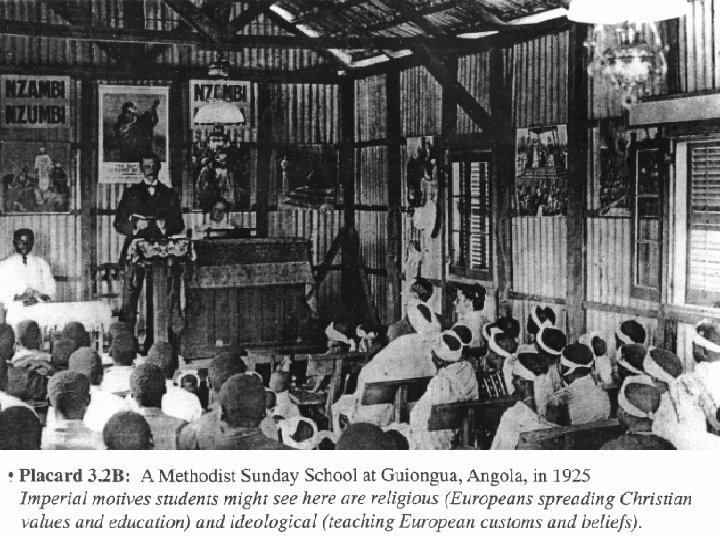
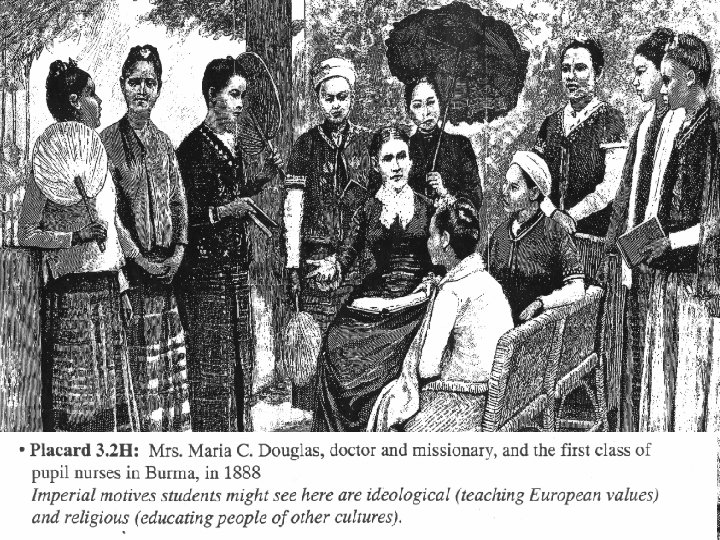
MOTIVES FOR IMPERIALISM #3: RELIGIOUS Religious motives included the desire to spread Christianity, to protect European missionaries in other lands, to spread European values and moral beliefs, to educate peoples of other cultures, and to end the slave trade in Africa
MOTIVES FOR IMPERIALISM #4: SOCIAL (IDEOLOGICAL) Social (or ideological) motives were based on the belief that the white race was superior, other cultures were “primitive, ” Europeans should “civilize” other peoples, great nations should have empires, and only the strongest nations survive
MOTIVES FOR IMPERIALISM #5: EXPLORATORY Exploratory motives were based on a desire to explore “unknown” or uncharted territories, to conduct scientific research, to conduct medical searches for the causes and treatment of diseases, to go on an adventure, and investigate unknown cultures
Discussion Questions 1. Which motivation appeared the most? 2. Why do you think that was the most common motivating factor? 3. What similarities did you see between the different “documents”? 4. What perspective was missing from the documents?
Revamped and redone by Christopher Jaskowiak Originally created by Brooks Baggett