OLD IMPERIALISM VS NEW IMPERIALISM Evaluating continuity and

- Slides: 38
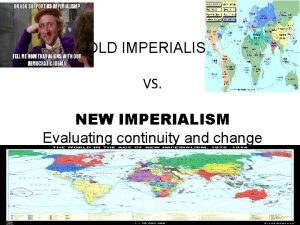
OLD IMPERIALISM VS. NEW IMPERIALISM Evaluating continuity and change
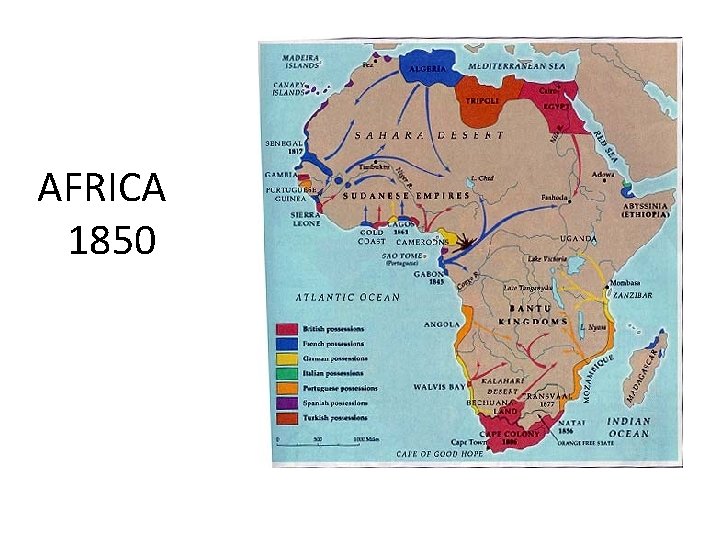
AFRICA 1850
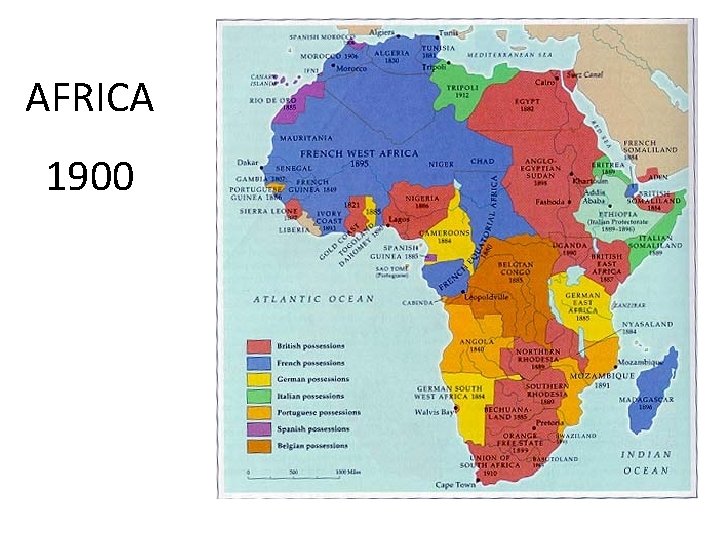
AFRICA 1900
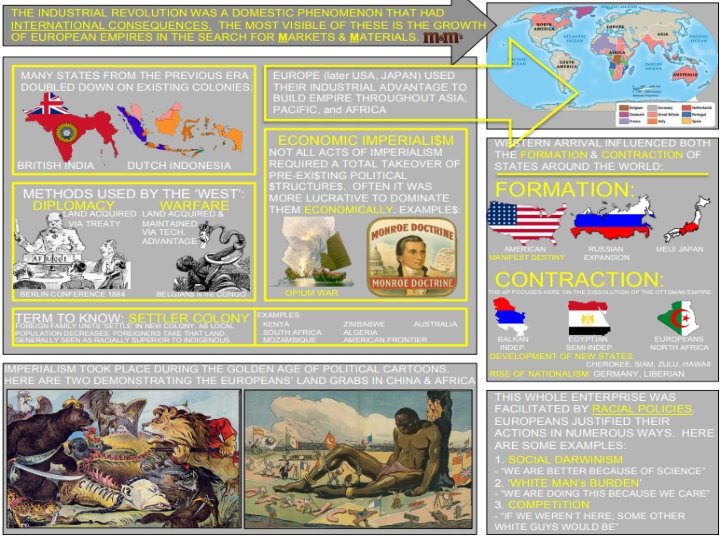
Definition of Imperialism: The domination by one country of the political (government & laws), economic (wealth, trade, resources), or cultural (language, religion, education) life of another country or region.
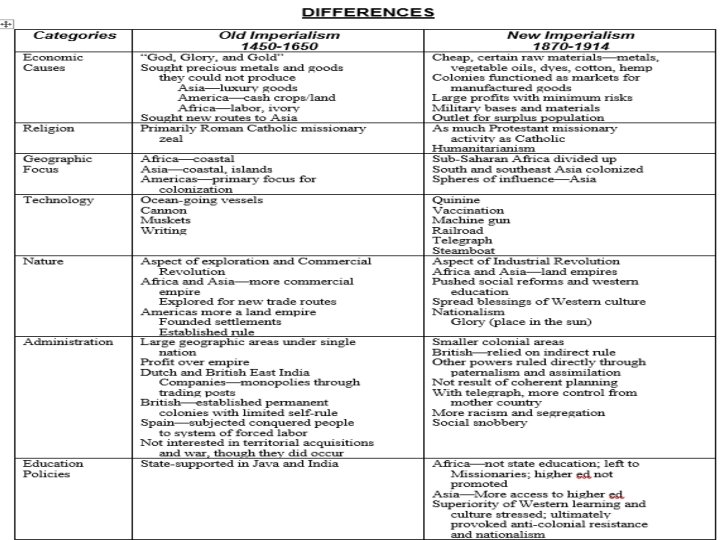
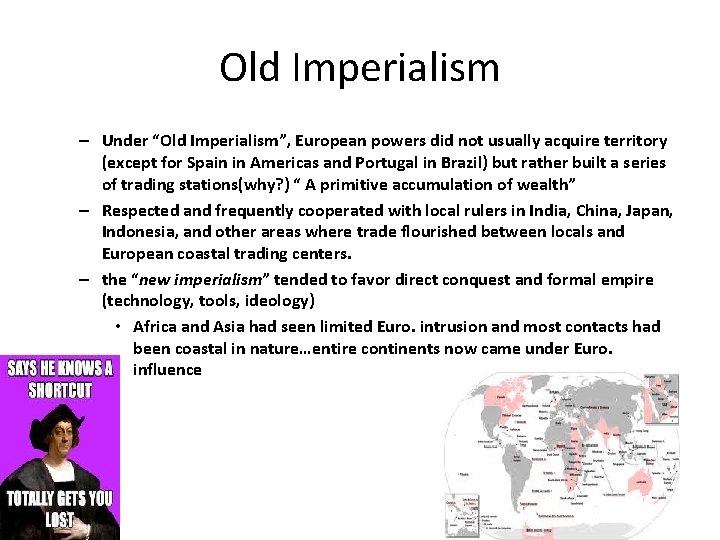
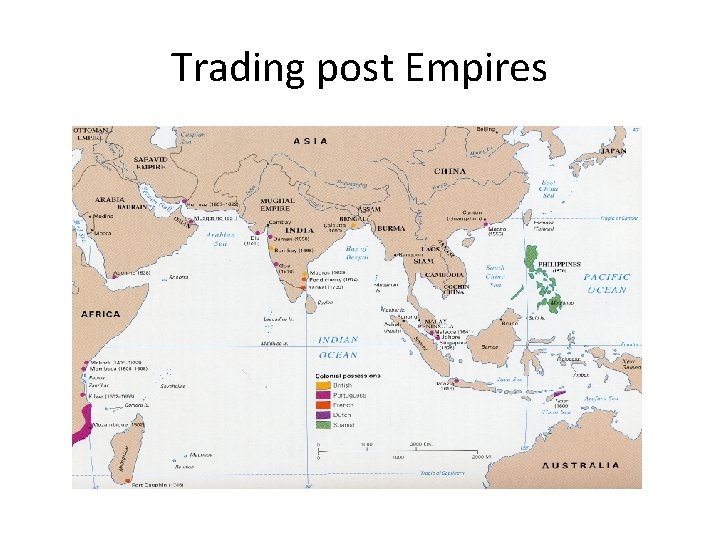
Old Imperialism – Under “Old Imperialism”, European powers did not usually acquire territory (except for Spain in Americas and Portugal in Brazil) but rather built a series of trading stations(why? ) “ A primitive accumulation of wealth” – Respected and frequently cooperated with local rulers in India, China, Japan, Indonesia, and other areas where trade flourished between locals and European coastal trading centers. – the “new imperialism” tended to favor direct conquest and formal empire (technology, tools, ideology) • Africa and Asia had seen limited Euro. intrusion and most contacts had been coastal in nature…entire continents now came under Euro. influence
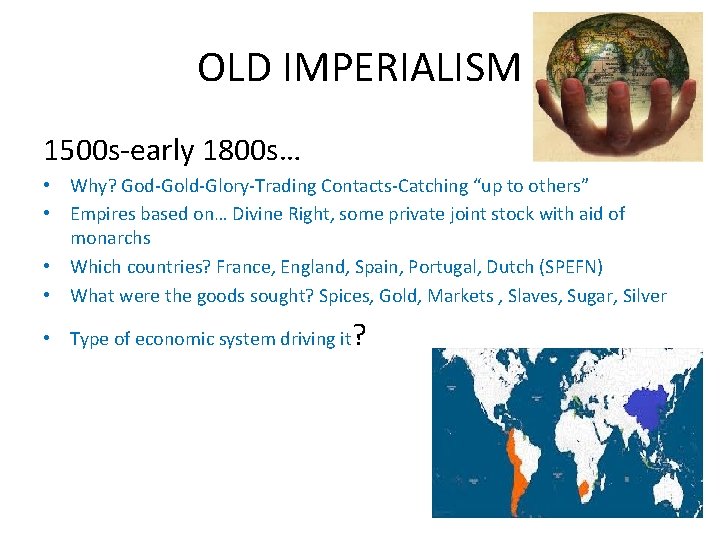
OLD IMPERIALISM 1500 s-early 1800 s… • Why? God-Gold-Glory-Trading Contacts-Catching “up to others” • Empires based on… Divine Right, some private joint stock with aid of monarchs • Which countries? France, England, Spain, Portugal, Dutch (SPEFN) • What were the goods sought? Spices, Gold, Markets , Slaves, Sugar, Silver • Type of economic system driving it?
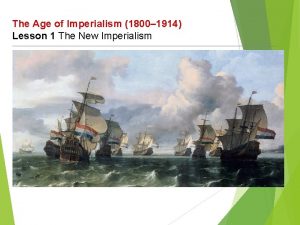
Trading post Empires
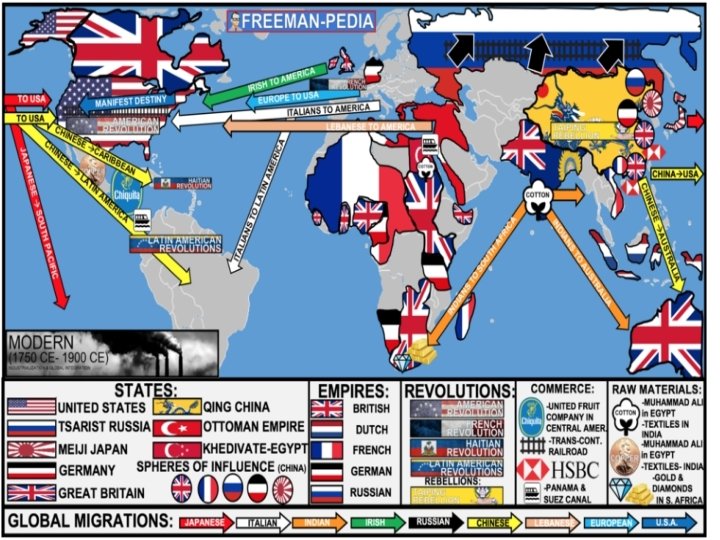
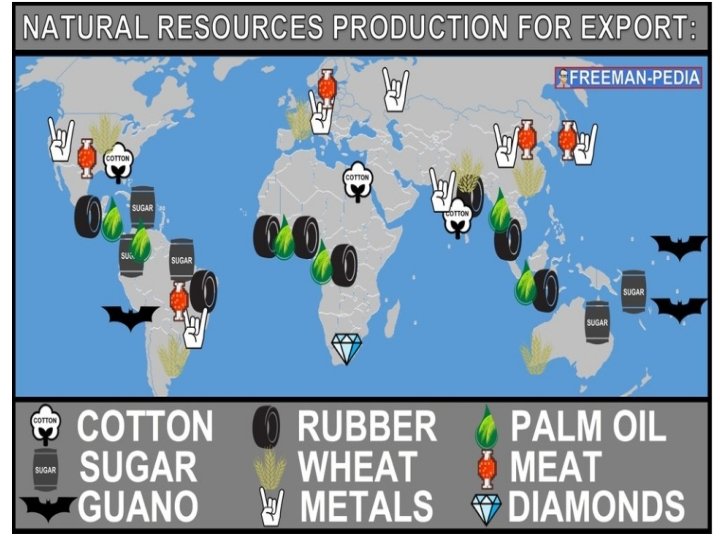
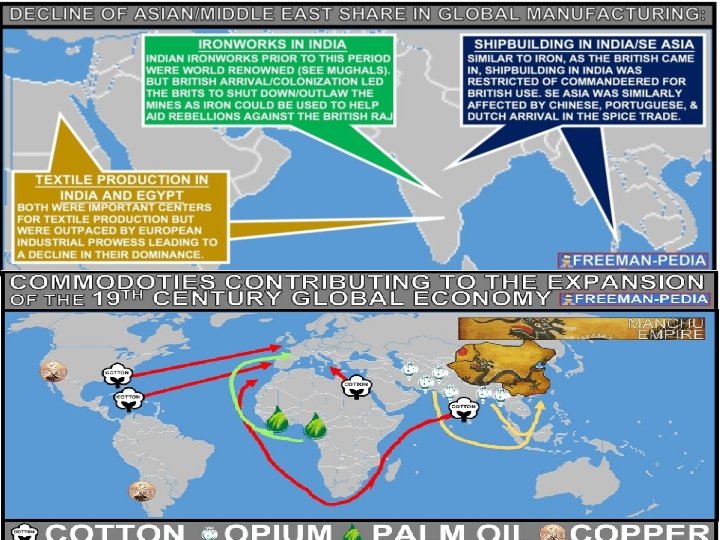
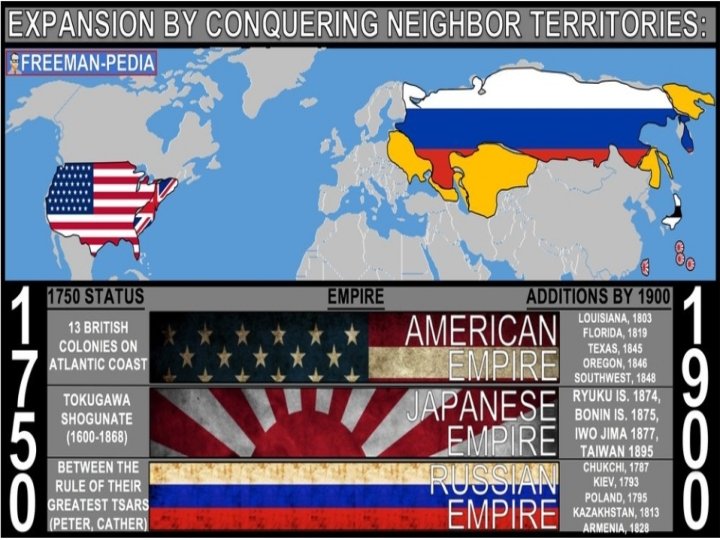
NEW IMPERIALISM Mid 1800 s-1914 • Territorial conquest • Use of economic and technological means to make regions economically dependent as suppliers of raw materials and consumers • Conquest and colonial administration
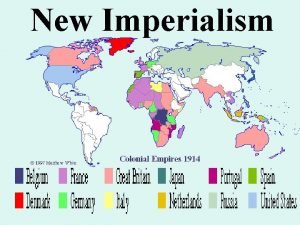
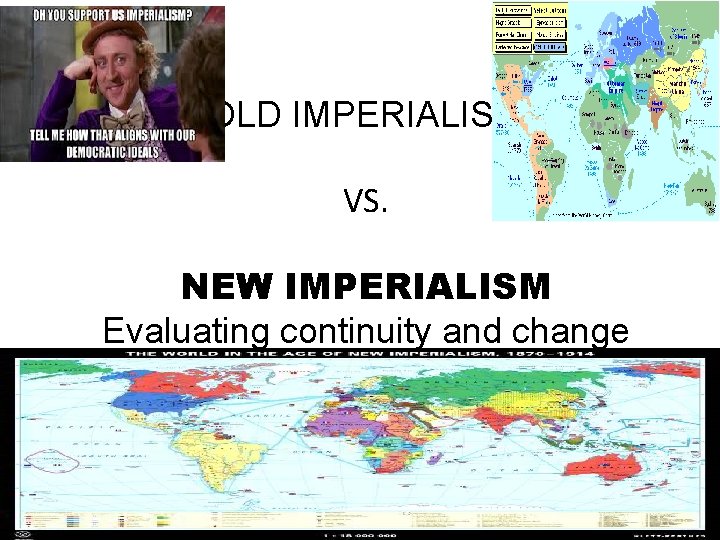
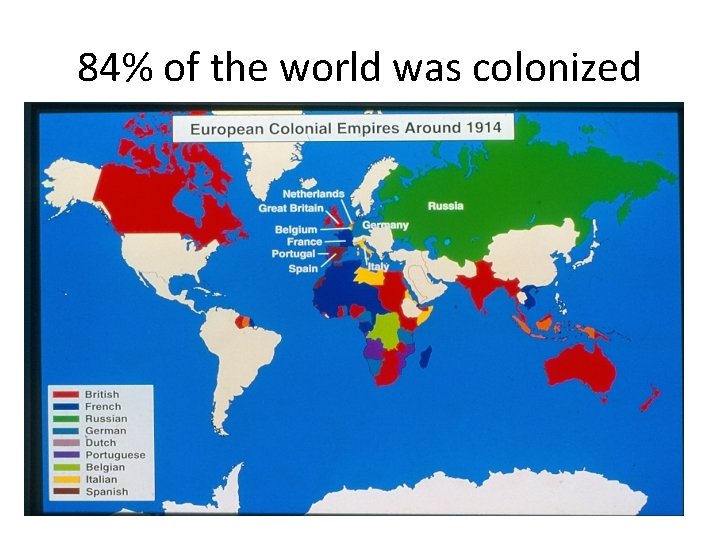
84% of the world was colonized
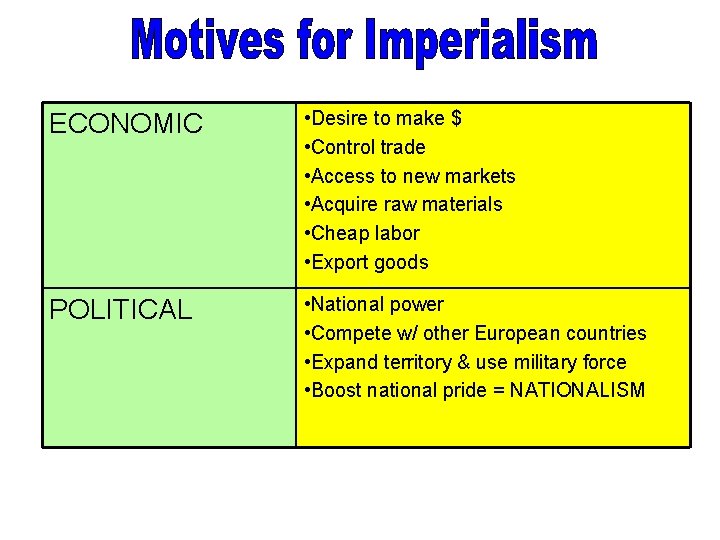
Imperialism Motives What led industrialized nations to colonize other parts of the world?
ECONOMIC • Desire to make $ • Control trade • Access to new markets • Acquire raw materials • Cheap labor • Export goods POLITICAL • National power • Compete w/ other European countries • Expand territory & use military force • Boost national pride = NATIONALISM
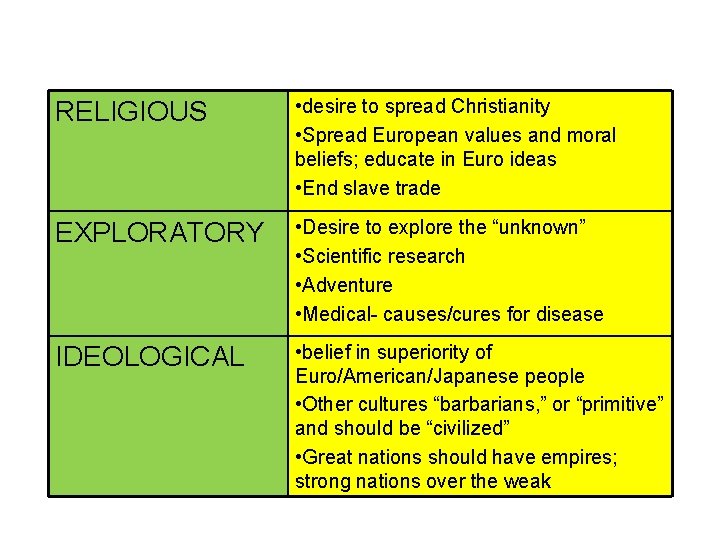
RELIGIOUS • desire to spread Christianity • Spread European values and moral beliefs; educate in Euro ideas • End slave trade EXPLORATORY • Desire to explore the “unknown” • Scientific research • Adventure • Medical- causes/cures for disease IDEOLOGICAL • belief in superiority of Euro/American/Japanese people • Other cultures “barbarians, ” or “primitive” and should be “civilized” • Great nations should have empires; strong nations over the weak
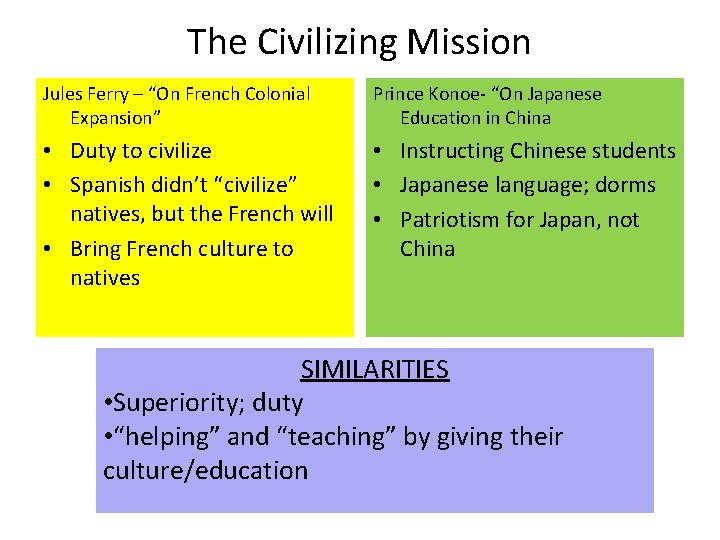
The Civilizing Mission Jules Ferry – “On French Colonial Expansion” Prince Konoe- “On Japanese Education in China • Duty to civilize • Spanish didn’t “civilize” natives, but the French will • Bring French culture to natives • Instructing Chinese students • Japanese language; dorms • Patriotism for Japan, not China SIMILARITIES • Superiority; duty • “helping” and “teaching” by giving their culture/education
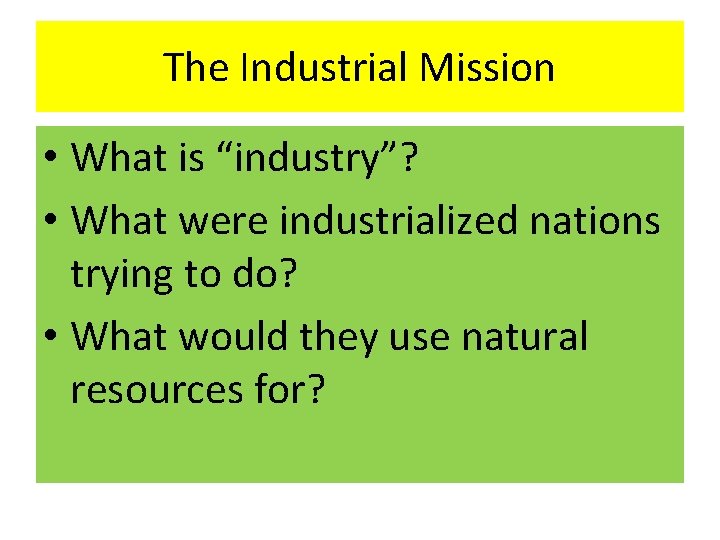
The Industrial Mission • What is “industry”? • What were industrialized nations trying to do? • What would they use natural resources for?
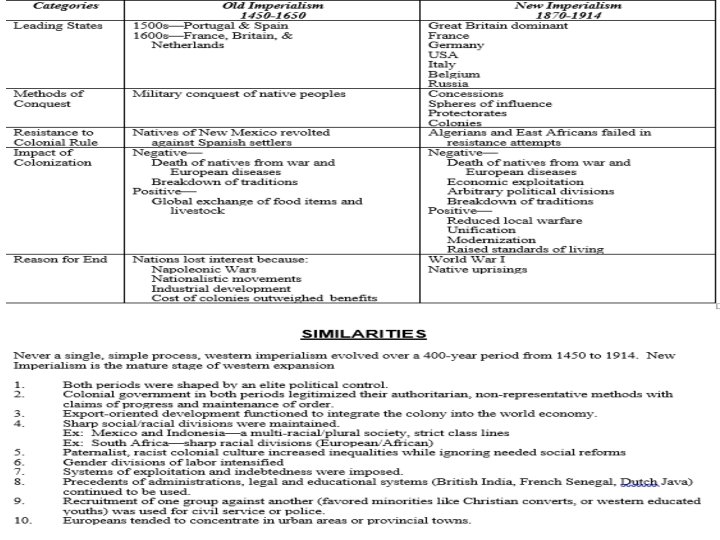
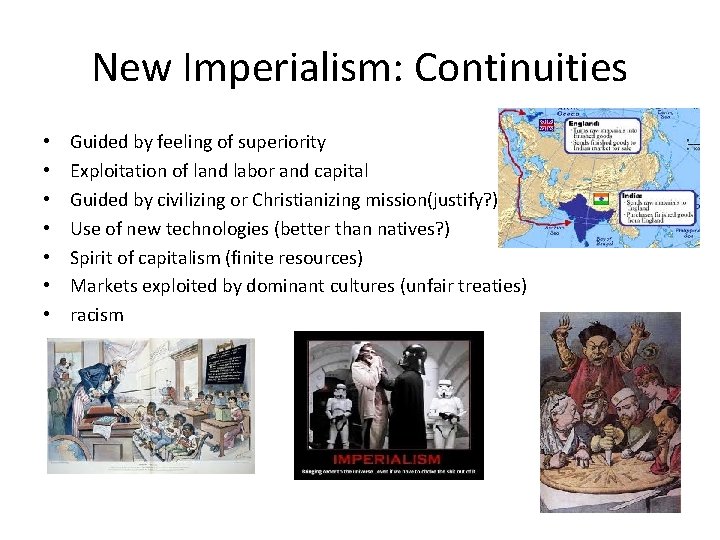
New Imperialism: Continuities • • Guided by feeling of superiority Exploitation of land labor and capital Guided by civilizing or Christianizing mission(justify? ) Use of new technologies (better than natives? ) Spirit of capitalism (finite resources) Markets exploited by dominant cultures (unfair treaties) racism
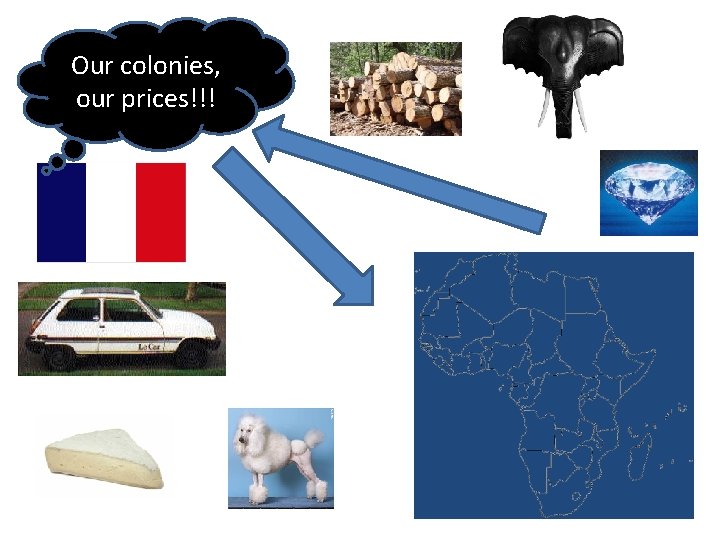
Our colonies, our prices!!!
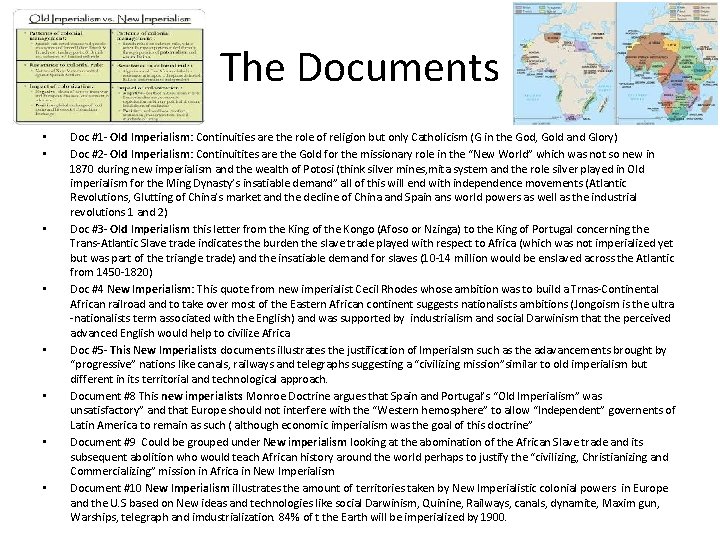
The Documents • • Doc #1 - Old Imperialism: Continuities are the role of religion but only Catholicism (G in the God, Gold and Glory) Doc #2 - Old Imperialism: Continuitites are the Gold for the missionary role in the “New World” which was not so new in 1870 during new imperialism and the wealth of Potosi (think silver mines, mita system and the role silver played in Old imperialism for the Ming Dynasty’s insatiable demand” all of this will end with independence movements (Atlantic Revolutions, Glutting of China’s market and the decline of China and Spain ans world powers as well as the industrial revolutions 1 and 2) Doc #3 - Old Imperialism this letter from the King of the Kongo (Afoso or Nzinga) to the King of Portugal concerning the Trans-Atlantic Slave trade indicates the burden the slave trade played with respect to Africa (which was not imperialized yet but was part of the triangle trade) and the insatiable demand for slaves (10 -14 million would be enslaved across the Atlantic from 1450 -1820) Doc #4 New Imperialism: This quote from new imperialist Cecil Rhodes whose ambition was to build a Trnas-Continental African railroad and to take over most of the Eastern African continent suggests nationalists ambitions (Jongoism is the ultra -nationalists term associated with the English) and was supported by industrialism and social Darwinism that the perceived advanced English would help to civilize Africa Doc #5 - This New Imperialists documents illustrates the justification of Imperialsm such as the adavancements brought by “progressive” nations like canals, railways and telegraphs suggesting a “civilizing mission”similar to old imperialism but different in its territorial and technological approach. Document #8 This new imperialists Monroe Doctrine argues that Spain and Portugal’s “Old Imperialism” was unsatisfactory” and that Europe should not interfere with the “Western hemosphere” to allow “Independent” governents of Latin America to remain as such ( although economic imperialism was the goal of this doctrine” Document #9 Could be grouped under New imperialism looking at the abomination of the African Slave trade and its subsequent abolition who would teach African history around the world perhaps to justify the “civilizing, Christianizing and Commercializing” mission in Africa in New Imperialism Document #10 New Imperialism illustrates the amount of territories taken by New Imperialistic colonial powers in Europe and the U. S based on New ideas and technologies like social Darwinism, Quinine, Railways, canals, dynamite, Maxim gun, Warships, telegraph and imdustrialization. 84% of t the Earth will be imperialized by 1900.
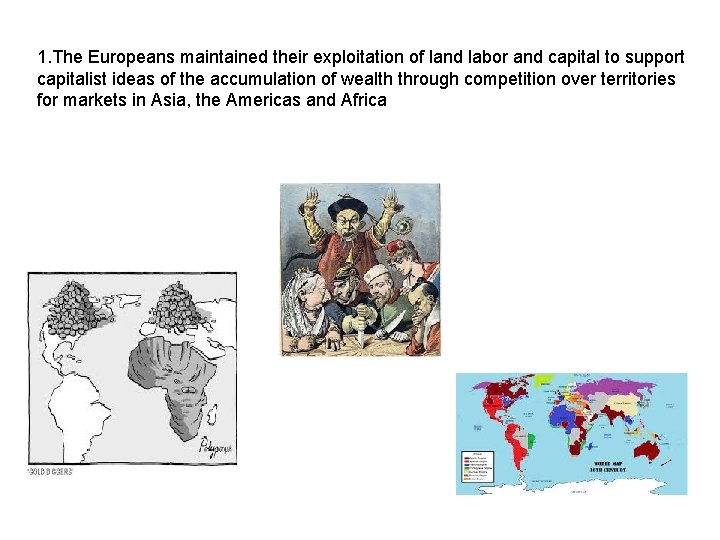
1. The Europeans maintained their exploitation of land labor and capital to support capitalist ideas of the accumulation of wealth through competition over territories for markets in Asia, the Americas and Africa
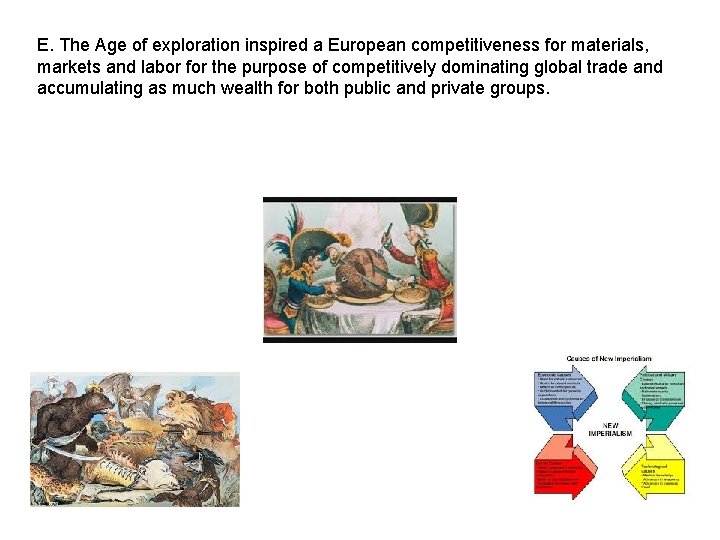
E. The Age of exploration inspired a European competitiveness for materials, markets and labor for the purpose of competitively dominating global trade and accumulating as much wealth for both public and private groups.
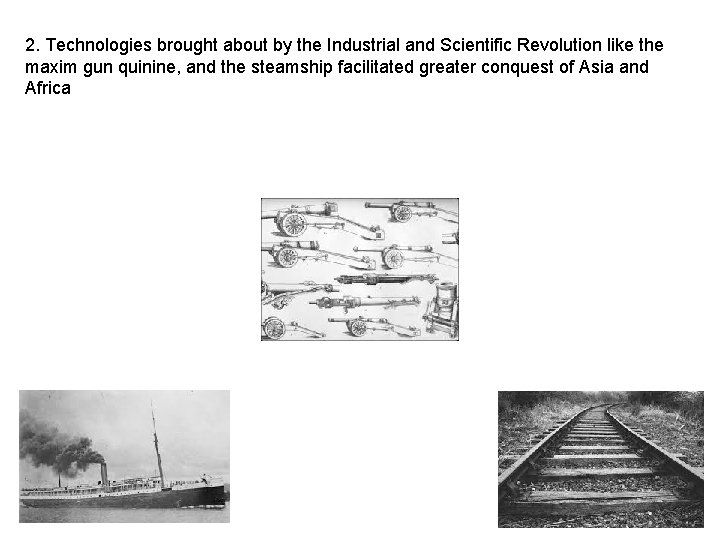
2. Technologies brought about by the Industrial and Scientific Revolution like the maxim gun quinine, and the steamship facilitated greater conquest of Asia and Africa
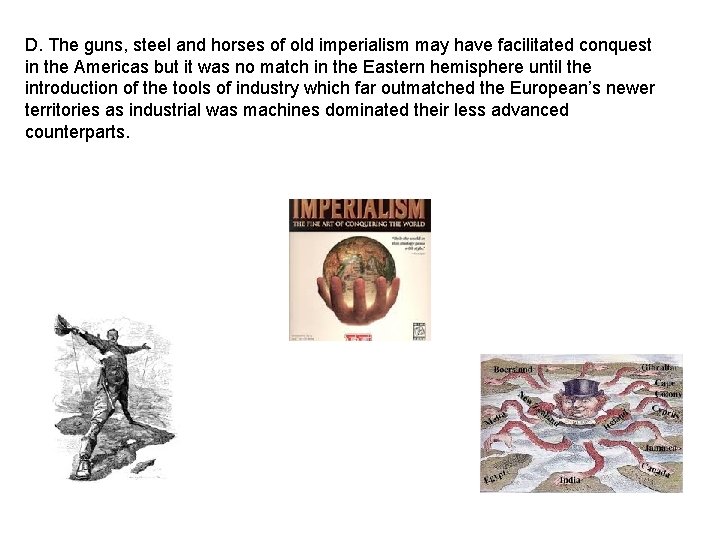
D. The guns, steel and horses of old imperialism may have facilitated conquest in the Americas but it was no match in the Eastern hemisphere until the introduction of the tools of industry which far outmatched the European’s newer territories as industrial was machines dominated their less advanced counterparts.
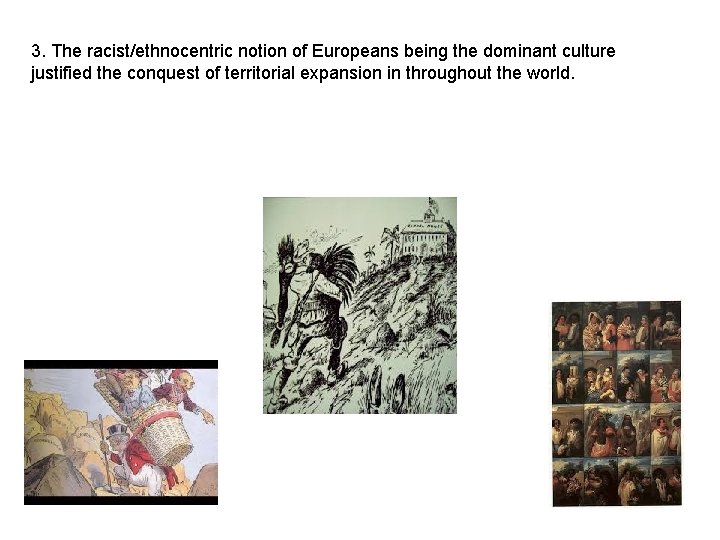
3. The racist/ethnocentric notion of Europeans being the dominant culture justified the conquest of territorial expansion in throughout the world.
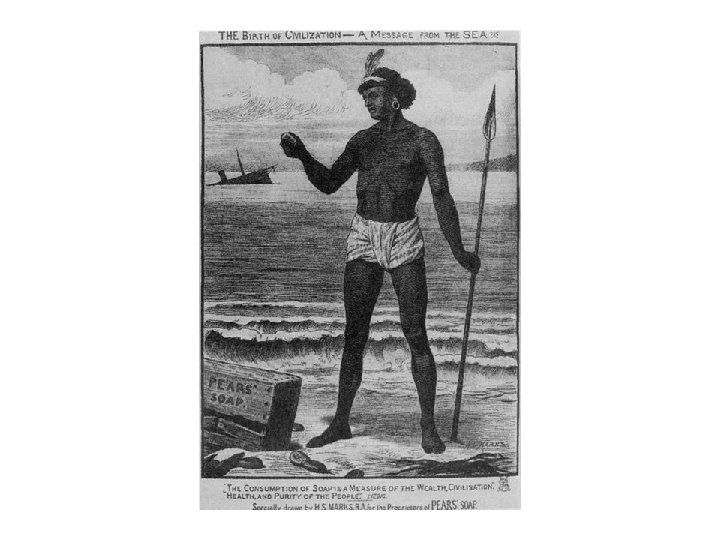
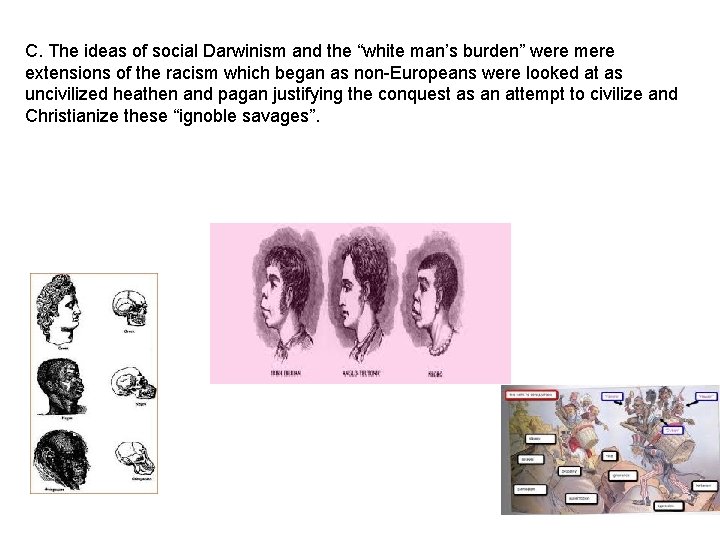
C. The ideas of social Darwinism and the “white man’s burden” were mere extensions of the racism which began as non-Europeans were looked at as uncivilized heathen and pagan justifying the conquest as an attempt to civilize and Christianize these “ignoble savages”.
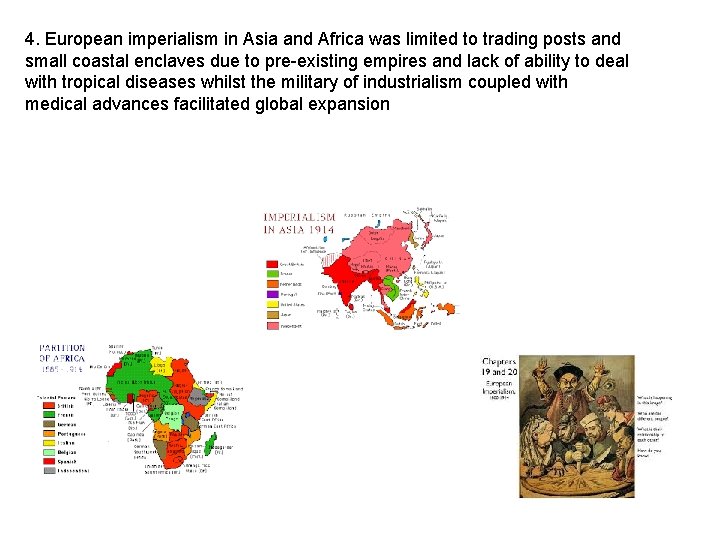
4. European imperialism in Asia and Africa was limited to trading posts and small coastal enclaves due to pre-existing empires and lack of ability to deal with tropical diseases whilst the military of industrialism coupled with medical advances facilitated global expansion
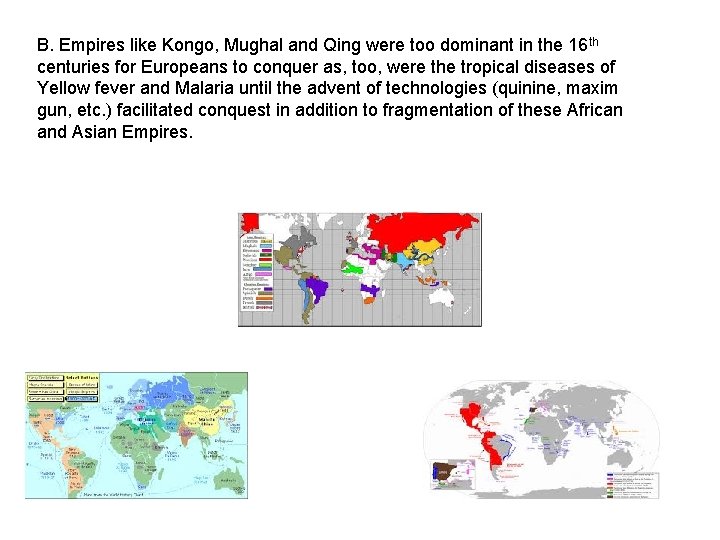
B. Empires like Kongo, Mughal and Qing were too dominant in the 16 th centuries for Europeans to conquer as, too, were the tropical diseases of Yellow fever and Malaria until the advent of technologies (quinine, maxim gun, etc. ) facilitated conquest in addition to fragmentation of these African and Asian Empires.
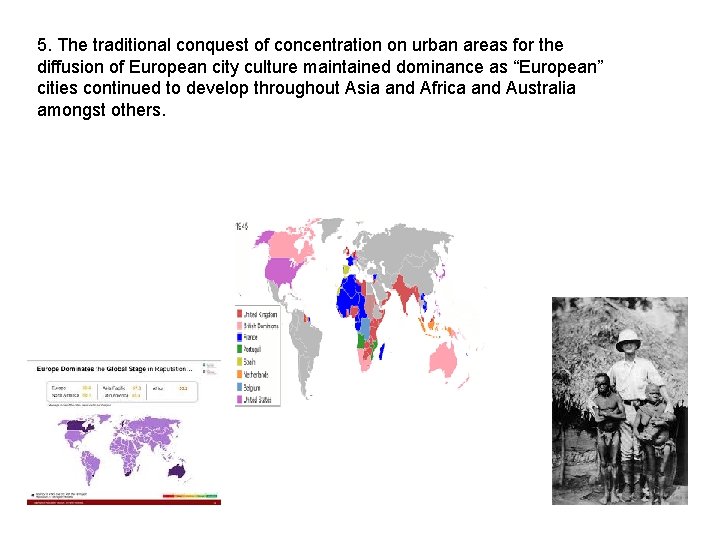
5. The traditional conquest of concentration on urban areas for the diffusion of European city culture maintained dominance as “European” cities continued to develop throughout Asia and Africa and Australia amongst others.
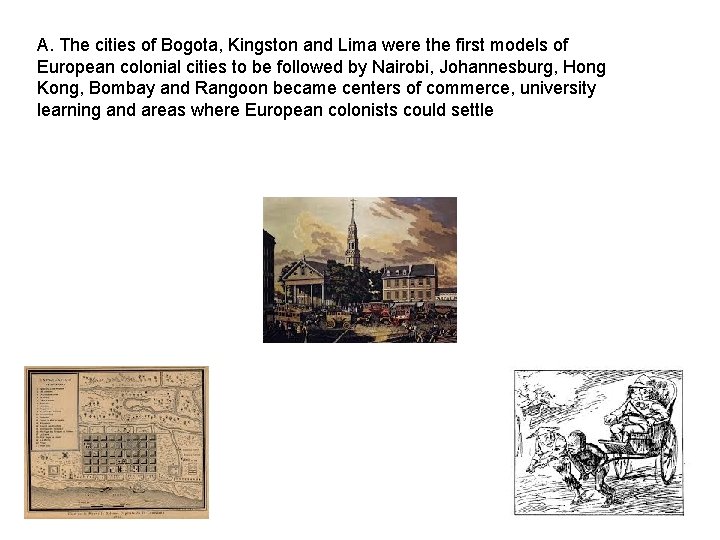
A. The cities of Bogota, Kingston and Lima were the first models of European colonial cities to be followed by Nairobi, Johannesburg, Hong Kong, Bombay and Rangoon became centers of commerce, university learning and areas where European colonists could settle
From 1450 -1900 imperialism existed for the purpose of using military force to take territories for land. labor and capital, however, industrial production needed more territories like Africa and Asia and those who wielded technologies which were industrially produced were able to easily exploit those who wee not. . The Europeans maintained their exploitation of land labor and capital to support capitalist ideas of the accumulation of wealth through competition over territories for markets in Asia, the Americas and Africa Technologies brought about by the Industrial and Scientific Revolution like the maxim gun quinine, and the steamship facilitated greater conquest of Asia and Africa European imperialism in Asia and Africa was limited to trading posts and small coastal enclaves due to pre-existing empires and lack of ability to deal with tropical diseases whilst the military of industrialism coupled with medical advances facilitated global expansion The Age of exploration inspired a European competitiveness for materials, markets and labor for the purpose of competitively dominating global trade and accumulating as much wealth for both public and private groups The guns, steel and horses of old imperialism may have facilitated conquest in the Americas but it was no match in the Eastern hemisphere until the introduction of the tools of industry which far outmatched the European’s newer territories as industrial was machines dominated their less advanced counterparts. . Empires like Kongo, Mughal and Qing were too dominant in the 16 th centuries for Europeans to conquer as, too, were the tropical diseases of Yellow fever and Malaria until the advent of technologies (quinine, maxim gun, etc. ) facilitated conquest in addition to fragmentation of these African and Asian Empires