
New Imperialism Economic Causes Need for Natural resources

- Slides: 42
New Imperialism
Economic Causes • • • Need for Natural resources Desire to expand markets Desire to invest profits Outlet needed for growing populations Economies strengthened by Industrial Revolution
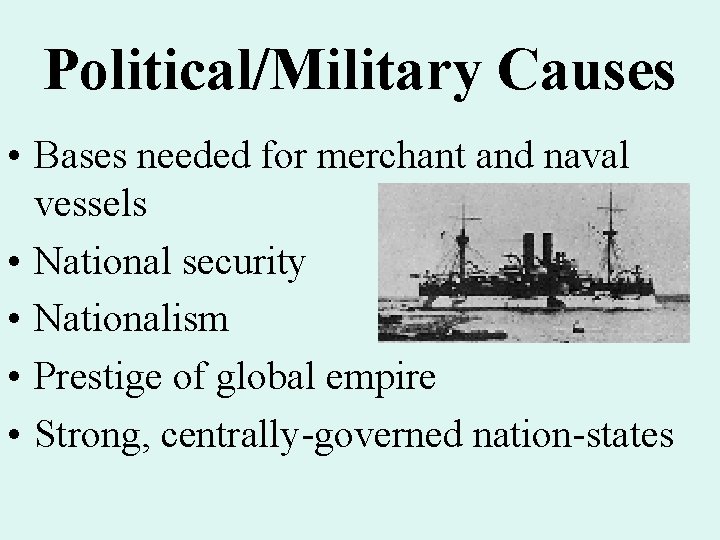
Political/Military Causes • Bases needed for merchant and naval vessels • National security • Nationalism • Prestige of global empire • Strong, centrally-governed nation-states
Social Causes • Desire to spread Christianity • Desire to share Western civilization • Belief in Social Darwinism • Increased European self-confidence
Technological Causes • Medical knowledge • Advances in weaponry • Advances in overseas travel
Imperialism • Imperialism-When one country controls another country economically, politically and socially for the benefit of the foreign “mother” country. • Direct or Indirect Rule– Direct- Country is completely controlled by mother country – Indirect- the mother country rules the colony from far away, often through a native leader
Types of Imperial Rule • Colonies- ruled by another country • Ex- Countries in Africa
Types of Imperial Rule • Protectorates- local rulers left in place to follow advice of European advisers (similar to indirect rule) • Ex- India
Types of Imperial Rule • Spheres of Influence -outside power claimed exclusive investment or trading privileges • Example: China
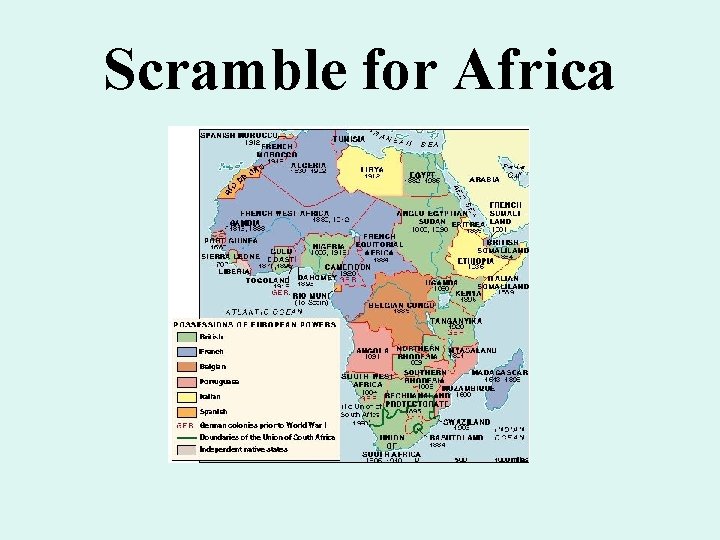
Scramble for Africa
Africa BEFORE Imperialism • Social-African people were divided into hundreds of ethnic & linguistic groups… followed traditional beliefs & others converted to Islam & Christianity • Politically-Africans had large empires & also independent villages
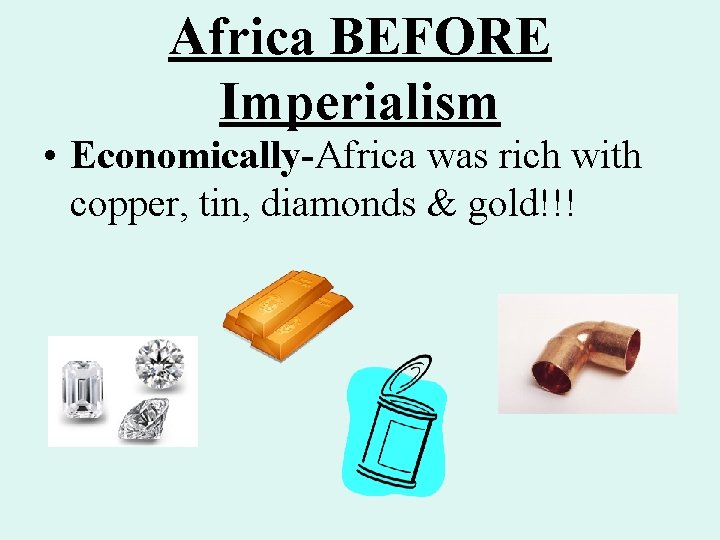
Africa BEFORE Imperialism • Economically-Africa was rich with copper, tin, diamonds & gold!!!
European Contact • Europeans 1 st came to Africa in 1450 but the African armies kept them out • Europeans sent explorers, missionaries, & humanitarians to find out about the “dark continent” (land unknown)
European Contact • David Livingstone-Missionary looking to promote Christianity • Henry Stanley- Explored Africa & traced the course of the Congo River… sparked the interest of King Leopold II of Belgium
European Superiority • The Industrial Revolution forced people to search for new markets and raw materials • Nationalism-Each country was determined to plant its flag on as much of the world as possible
European Superiority • Social Darwinism-Those who were fittest for survival enjoyed wealth & success & were considered superior to others. • Europeans had technological superiority… Maxim gun (1 st automatic machine gun)
European Superiority • The invention of the steam engine allowed Europeans to travel on rivers to control the interior. • Protected from diseases… malaria (drug quinine). • Africa's variety of languages & cultures discouraged unity among them
The “Scramble” Begins • Berlin conference (1884 -1885)- 14 European nations (NO AFRICANS) met to lay down rules for division of Africa! • They agreed that any European nation could claim land in Africa by notifying other nations of its claims+
I contend that we [Britons] are the 1 st race in the world, & the more of the world we inhabit, the better it is for the human race…It is our duty to seize every opportunity of acquiring more territory & we should keep this one idea steadily before our eyes that more territory simply means more of the Anglo-Saxon race, more of the best, the most human, most honorable race the world possesses. – Cecil Rhodes, Confessions of Faith, 1877
Boer War ( South Africa) • Three primary ethnic groups of South Africa were: Dutch (also known as Boers or Afrikaners), British & Black South Africans • The British VS The Dutch… fight over control of diamonds found in South Africa
Boer War ( South Africa) • The British were victorious by burning Dutch farms & imprisoning women & children in concentration camps. • Boers are forced to join the Union of South Africa under British control.
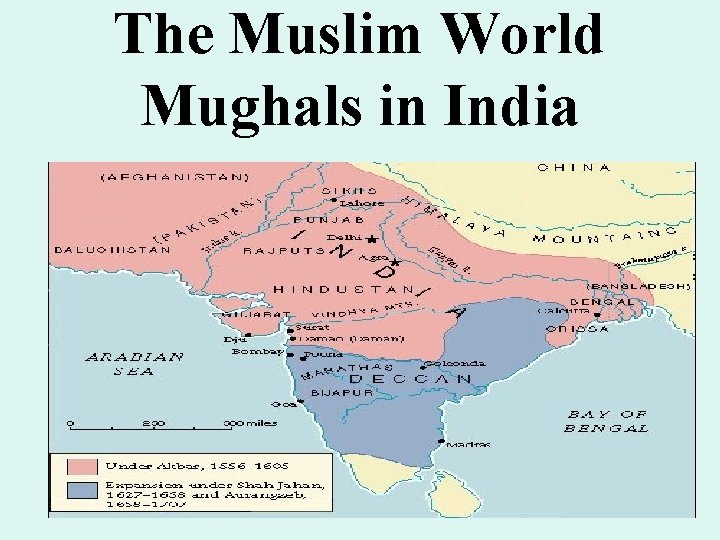
The Muslim World Mughals in India
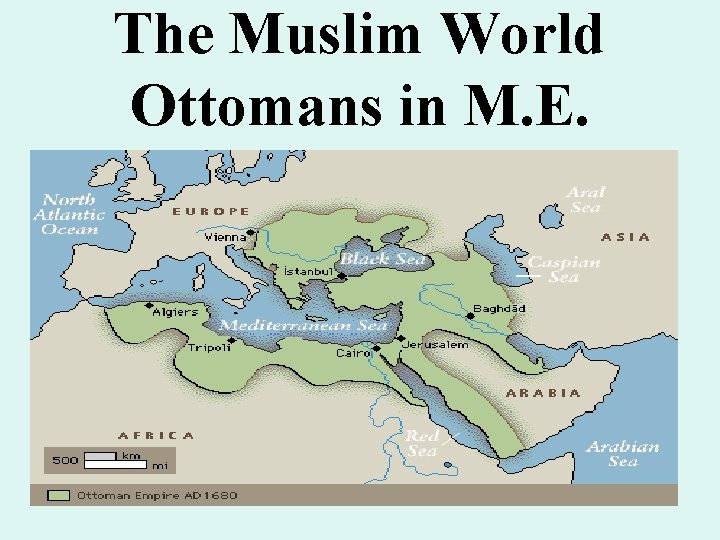
The Muslim World Ottomans in M. E.
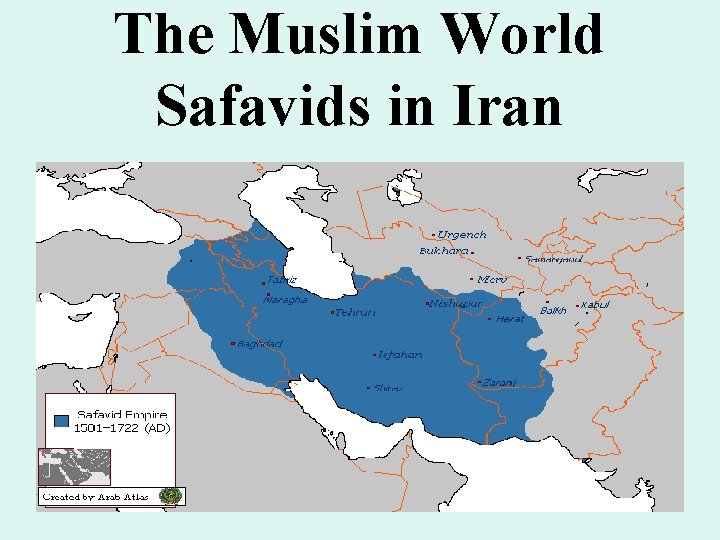
The Muslim World Safavids in Iran
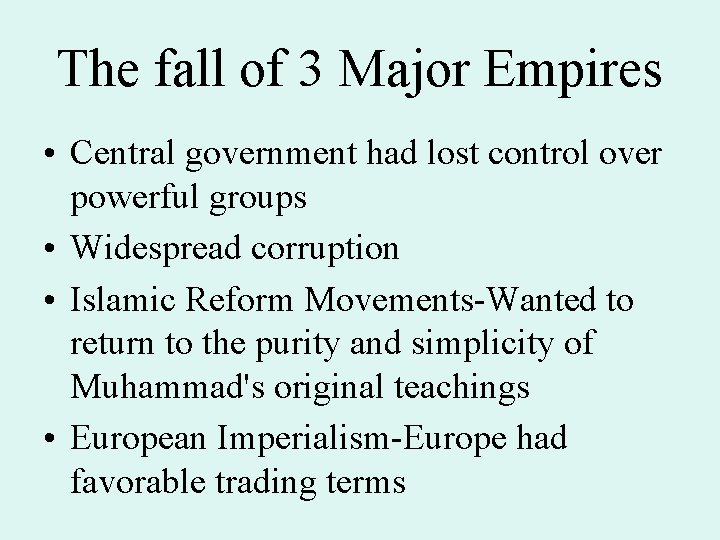
The fall of 3 Major Empires • Central government had lost control over powerful groups • Widespread corruption • Islamic Reform Movements-Wanted to return to the purity and simplicity of Muhammad's original teachings • European Imperialism-Europe had favorable trading terms
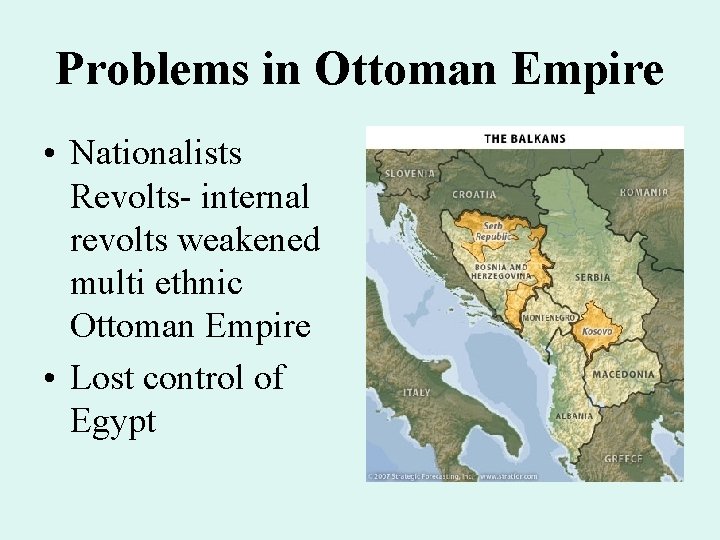
Problems in Ottoman Empire • Nationalists Revolts- internal revolts weakened multi ethnic Ottoman Empire • Lost control of Egypt
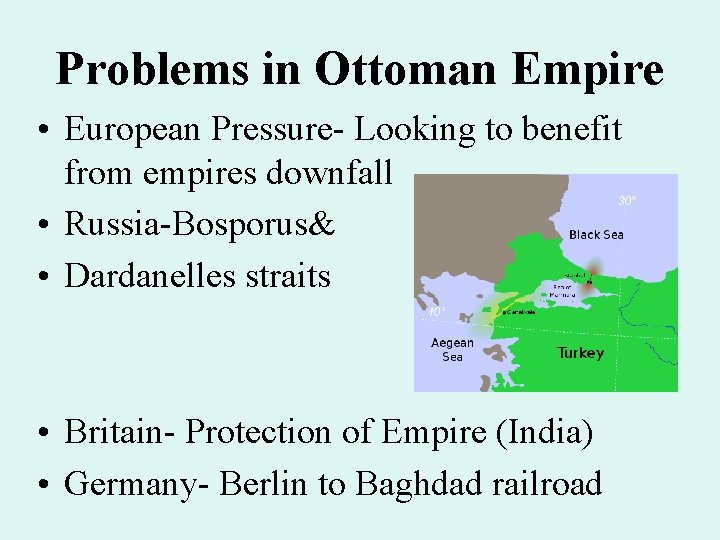
Problems in Ottoman Empire • European Pressure- Looking to benefit from empires downfall • Russia-Bosporus& • Dardanelles straits • Britain- Protection of Empire (India) • Germany- Berlin to Baghdad railroad
Problems in Ottoman Empire • Efforts to Westernize- Officials objected to changes influenced by foreign cultures • Young Turks- Reform minded liberals – 1908 - overthrew sultan – 1914 - WWI
Problems in Ottoman Empire • Massacre of Armenians- Christians accused of supporting Russian plans against Ottoman Empire • Genocide-deliberate attempt to destroy an entire religion or ethnic group.
The Suez Canal • Muhammad Ali- Positive economic reforms • Weak Successors • 1859 - Ferdinand de Lesseps- built Suez Canal – 100 mile waterway linking Red Sea and Mediterranean Sea – Egypt sold shares to Britain to pay off their debt
Imperialism in Latin America Economic Imperialism
Concessions to Imperial Powers • Foreign investors developed business holdings and industries • U. S. Intervention (Monroe Doctorine & Roosevelt Corollary
Internal Problems: • • • Unequal distribution of land Political instability Export crop economies Lacks means of production Borrowed $ at high interest rates
Modernizing Efforts • Reforms education & land distribution (little success)
Impact of Imperialism • Panama Canal made Latin America a trade crossroads • Intervention is resented • Social Unrest & Political instability
Impacts of Imperialism • Western Culture – Columbian Exchange sped up – Knowledge of Ancient Civilizations – Increased exposure to other cultures
Impacts of Imperialism • Traditional Cultures – Technology – Money for investment – Schools and Hospitals – Religion – Westernization conflicted with traditional values
Dependency • Imperial powers depended on colonies for natural resources • Colonies rely on Imperial powers for manufactured goods
New Economic Patterns • Global economy emerged • US, Britain, France, Germany dominated • Natural Resources, cheap labor came from Africa, Asia & Latin America • Industrialized nations sold manufactured goods
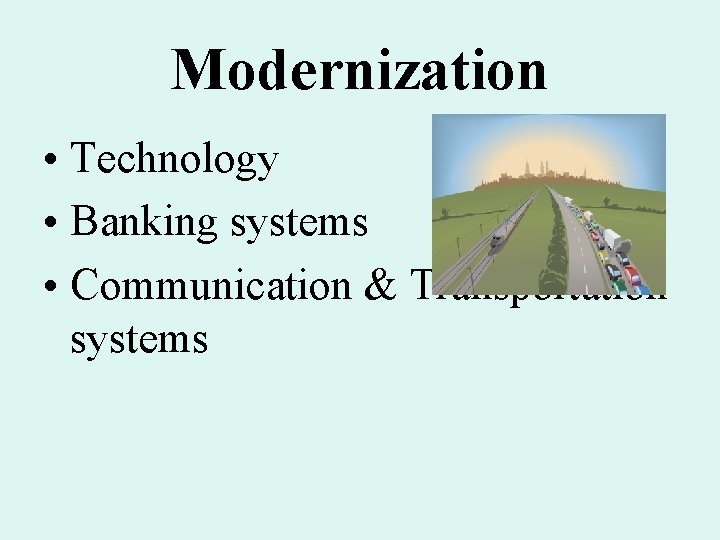
Modernization • Technology • Banking systems • Communication & Transportation systems
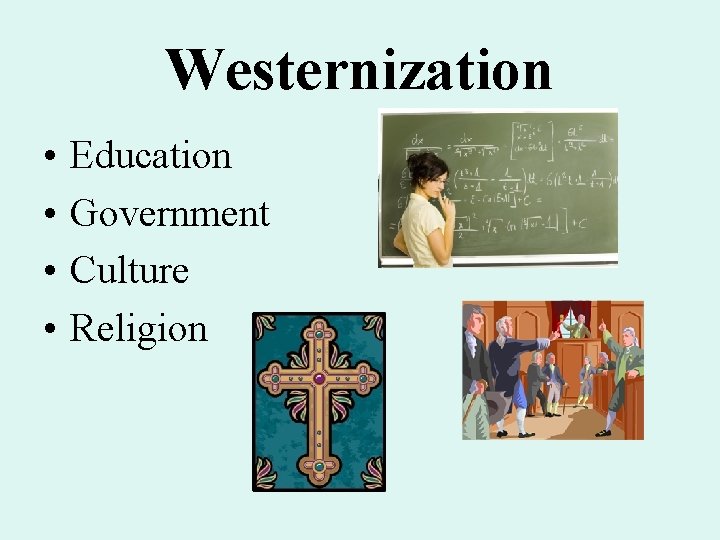
Westernization • • Education Government Culture Religion
Political Tension • Disrupted colonial governments • Rival groups were united under one territory • Conflict within the Western Powers