Technical Assistance for Development of a Strategy for



- Slides: 58
Technical Assistance for Development of a Strategy for Alignment with Common Market Organisation (CMO) Requirements TR 2014/AG/10 -A 1 -01/001 This Project is co-financed by the European Union and the Republic of Turkey VERIFICATION OF COMPLIANCE, EX-OFFICIO CONTROL, QUALITY ASSURANCE - THE ROLE OF PUBLIC ADMINISTRATION Dariusz Goszczyński Expert on training in the area of CMO Ankara, 3 May, 2018
General rules of verification of compliance with specification role of a specification, certification, obligations, role of producer’s group
VERIFICATION OF COMPLIANCE WITH SPECIFICATION q The added value of the geographical indications and traditional specialities guaranteed is based on consumer trust. It is only credible if accompanied by effective verification and controls. q Verification of compliance process of production products with registered names as PDO, PGI, TSG with is carrying out in order to confirm that these products fulfill requirements of their specifications at each level of production. The certificate, which is issued by independent control body is formal guarantee that product has specific and high quality. In the result, product may be labelled with protected name (PDO, PGI, TSG) and EU logo.
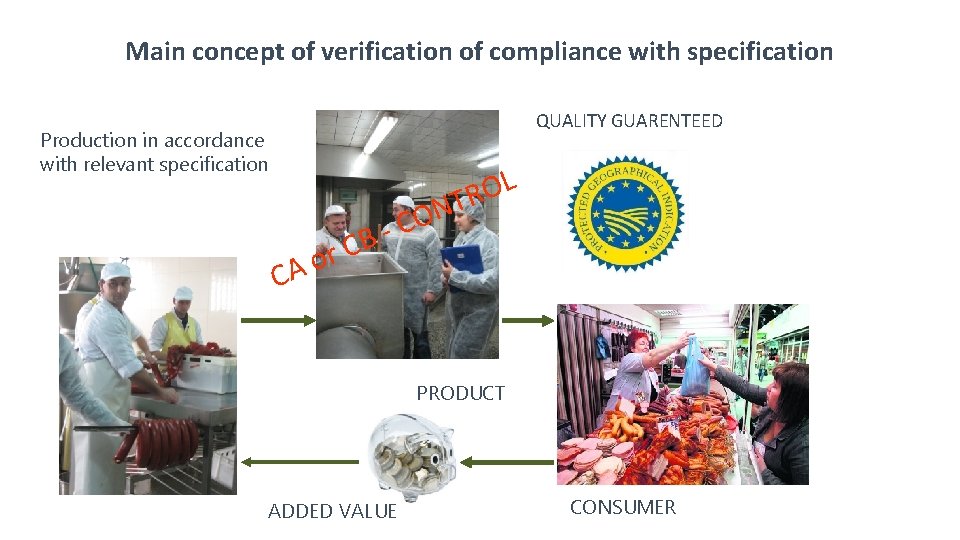
Main concept of verification of compliance with specification QUALITY GUARENTEED Production in accordance with relevant specification o A C - B r C L O R T CON PRODUCT ADDED VALUE CONSUMER
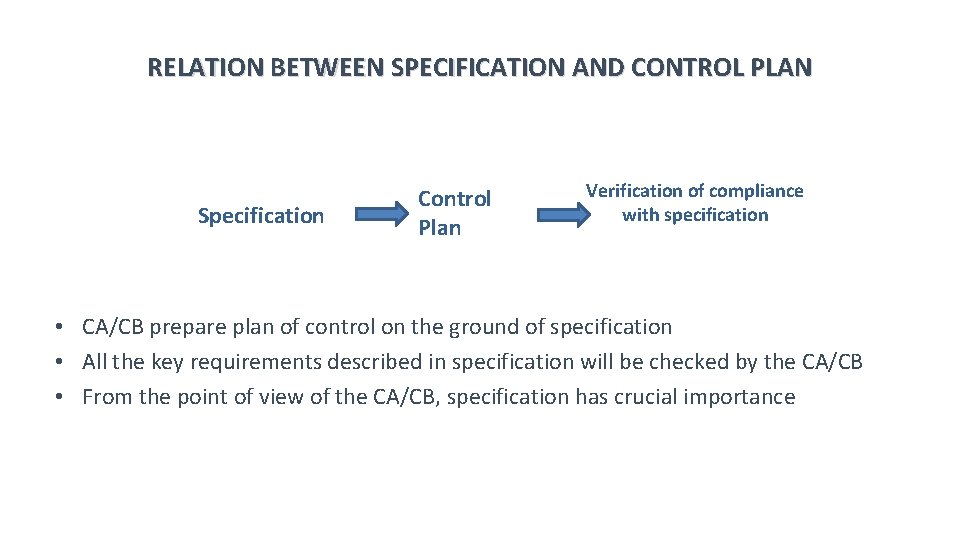
RELATION BETWEEN SPECIFICATION AND CONTROL PLAN Specification Control Plan Verification of compliance with specification • CA/CB prepare plan of control on the ground of specification • All the key requirements described in specification will be checked by the CA/CB • From the point of view of the CA/CB, specification has crucial importance
FROM SPECIFICATION TO CONTROL PLAN Specifications - an essential document, required for registration and protection of the product name as PDO/PGI or TSG q Specifications are also done in order to describe product and production methods and to guide producers and, sometimes, it is not easy to determine which are the critical control points. q An in depth study of specification is required by qualified experts in charge of control plans and control tasks q
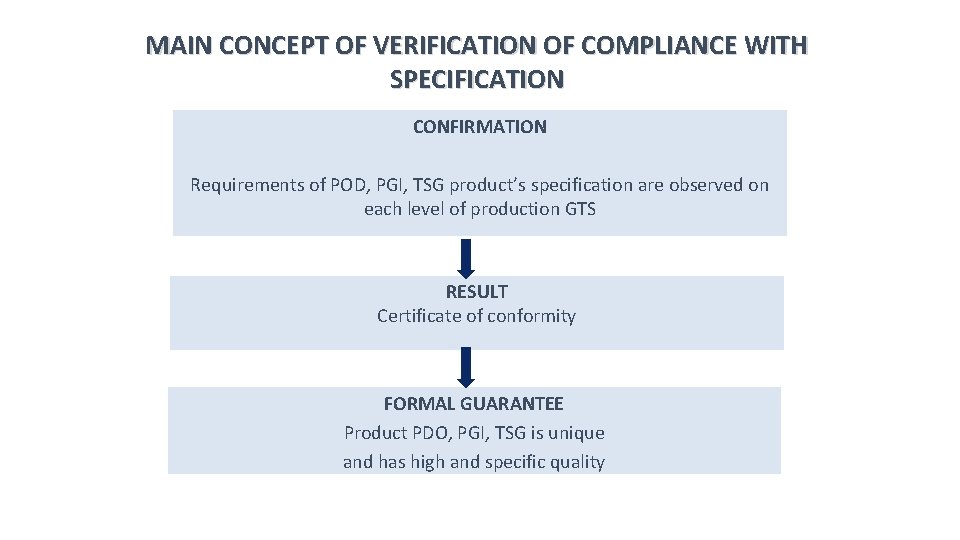
MAIN CONCEPT OF VERIFICATION OF COMPLIANCE WITH SPECIFICATION CONFIRMATION Requirements of POD, PGI, TSG product’s specification are observed on each level of production GTS RESULT Certificate of conformity FORMAL GUARANTEE Product PDO, PGI, TSG is unique and has high and specific quality
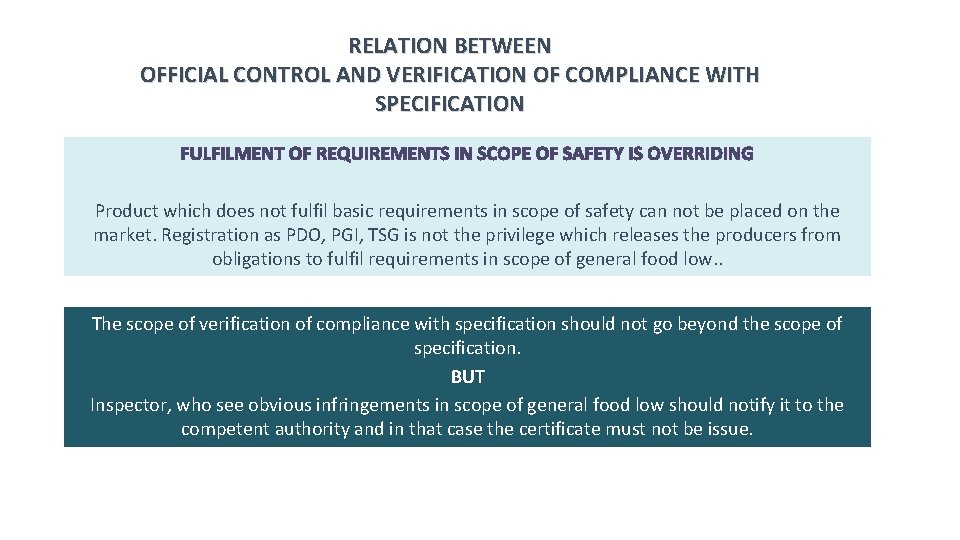
RELATION BETWEEN OFFICIAL CONTROL AND VERIFICATION OF COMPLIANCE WITH SPECIFICATION FULFILMENT OF REQUIREMENTS IN SCOPE OF SAFETY IS OVERRIDING Product which does not fulfil basic requirements in scope of safety can not be placed on the market. Registration as PDO, PGI, TSG is not the privilege which releases the producers from obligations to fulfil requirements in scope of general food low. . The scope of verification of compliance with specification should not go beyond the scope of specification. BUT Inspector, who see obvious infringements in scope of general food low should notify it to the competent authority and in that case the certificate must not be issue.
VERIFICATION OF COMPLIANCE WITH SPECIFICATION – GENERAL RULES – – – – – it is conducted on producer’s request producer bears the cost of verification of compliance with specification the scope is defined in the specification samples for laboratory tests are taken it is conducted in accordance with the principles of assessing the commercial quality of agricultural and food products; hygiene and sanitary aspects are not included it is conducted before launching the product on the market it is conducted on the spot of the production of PDO, PGI and TSG all steps of the production process must be registered by a producer in order to retrace the production process not compulsory (on producer’s request) it is a product unique quality guarantee
Verification of compliance with specification - SCOPE Basis of verification of compliance with specification: – – Actual state (on the spot of production) Registers of productions Laboratory tests Interview with producer (a statement)
MAIN RULES OF VERIFICATION OF COMPLIANCE WITH SPECIFICATION Verification of compliance with specification includes: • Control of all stages of production • Checking registers of productions (the supplier, quantity and origin of all batches of raw material and/or products received; the recipient, quantity and destination of products supplied; the correlation between each batch of inputs and each batch of outputs • Organoleptic tests • Laboratory tests (if necessary-according to the specification) • Interview with producer (or a statements)
DIFFERENCES BETWEEN OFFICIAL CONTROL AND VERIFICATION OF COMPLIANCE WITH SPECIFICATION (on producers’ request) • • • Carrying out before the PDO, PGI, TSG product are placed on the market Is carrying out on the request of producer Costs of control are cover by producer Announced Scope: compliance with specification It is results in issuing certificate of compliance (if the process of production comply the specification) or administrative decision which prohibit placing on the market product labelled as PDO, PGI, TSG OFFICIAL CONTROLS in scope of supervision of production • • • Carrying out during valid certificate of compliance Is carrying out on the basis of risk analysis Costs of control are cover by producer only in case of irregularities Scope: compliance with specification as well as other requirements of food law Annouced or unannounced In case of irregularities – penalty payments and administrative decision provided in national low
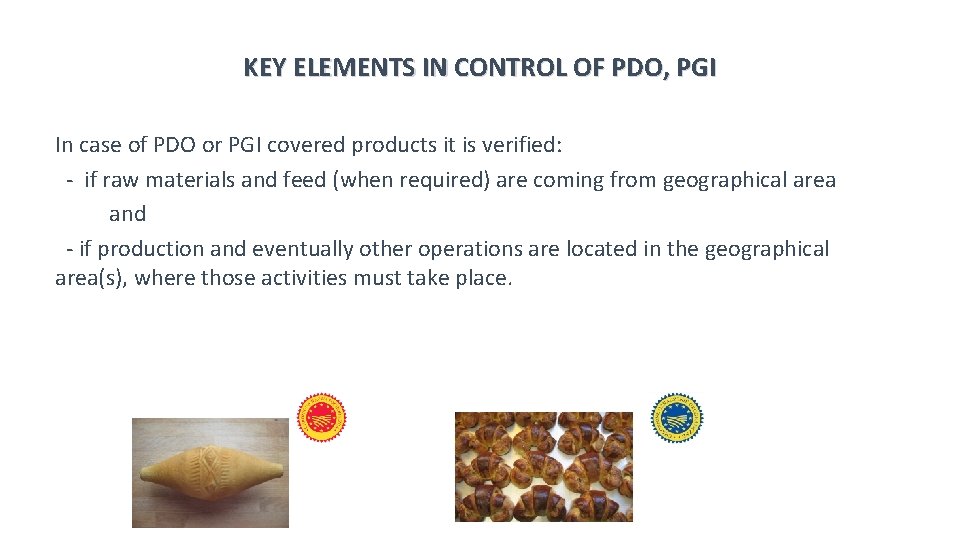
KEY ELEMENTS IN CONTROL OF PDO, PGI In case of PDO or PGI covered products it is verified: - if raw materials and feed (when required) are coming from geographical area and - if production and eventually other operations are located in the geographical area(s), where those activities must take place.
PROOF OF ORIGIN Operators shall be able to identify: (a) the supplier, quantity and origin of all batches of raw material and/or products received; (b) the recipient, quantity and destination of products supplied; (c) the correlation between each batch of inputs referred to in point (a) and each batch of outputs referred to in point (b).
PDO’S/PGI’S CONTROL SPECIFIC ISSUES • Geographical area, • Process of of production at all stages, • Origin of feed as established in art. 1 of regulation (EU) no 664/2014 • Breeds and varieties involved, • Boundaries, • Methods of harvesting or dealing with raw materials, • Materials used in production, • Technologies, tools used in production • Length of some operations or time of year that must elapse ----, packaging requirements, • Labelling requirements, • Correct use of the symbol
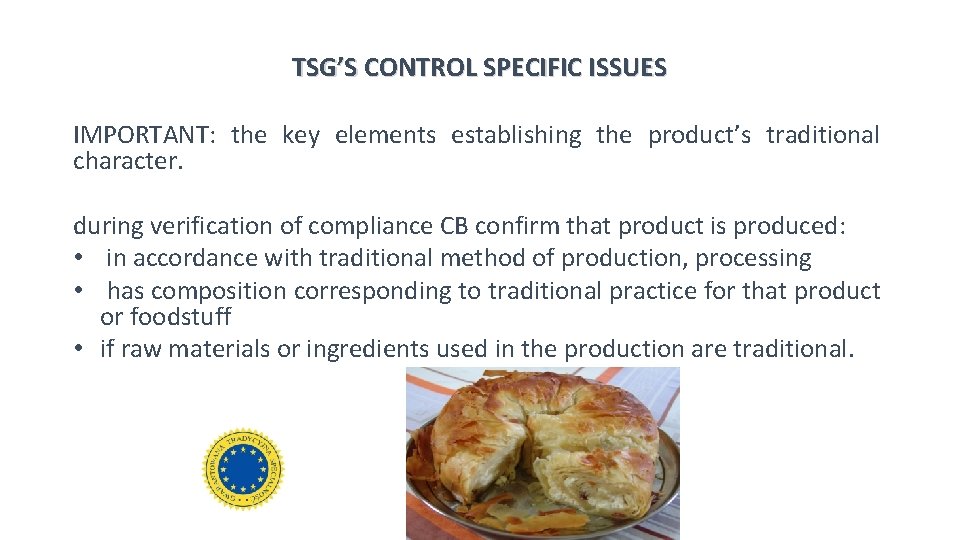
TSG’S CONTROL SPECIFIC ISSUES IMPORTANT: the key elements establishing the product’s traditional character. during verification of compliance CB confirm that product is produced: • in accordance with traditional method of production, processing • has composition corresponding to traditional practice for that product or foodstuff • if raw materials or ingredients used in the production are traditional.
EVIDENCE OF ORIGIN PROVIDED BY PRODUCERS • Control in the place of production (checking all stages of production if they take place in the defined geographical area) • Register (records) of production • Group of producers has list of producers who produce PDO, PGI products (the list should contain information about production: volume of input and output, localization, information of operator who is responsible for packaging, provide one model of label…)
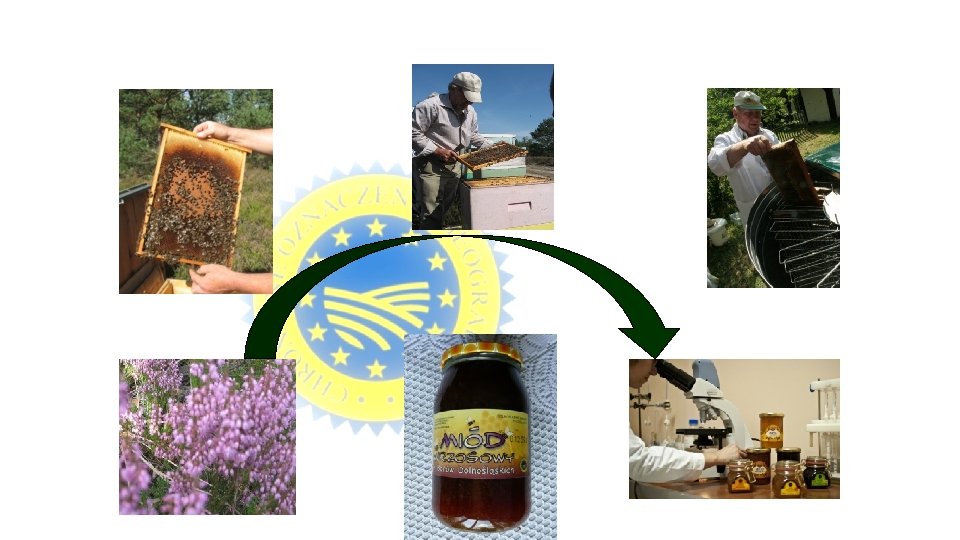
TRACEABILITY TOOL FOR QUALITY MANAGAMENT – WHY IS IT IMPORTANT? It is necessary to ensure trace of production chain. Identification of product – is provided by creation documents and labelling, identify and establish the identity of product.
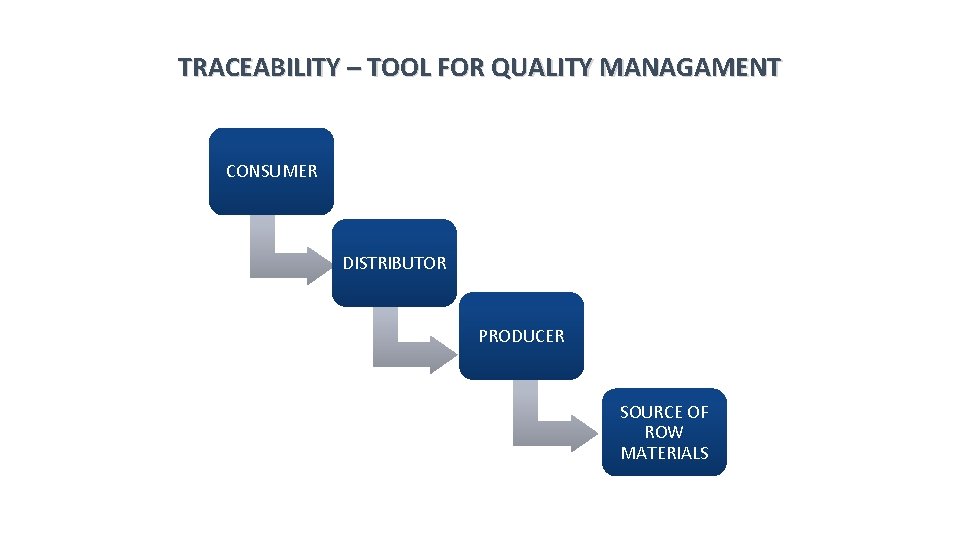
TRACEABILITY – TOOL FOR QUALITY MANAGAMENT CONSUMER DISTRIBUTOR PRODUCER SOURCE OF ROW MATERIALS
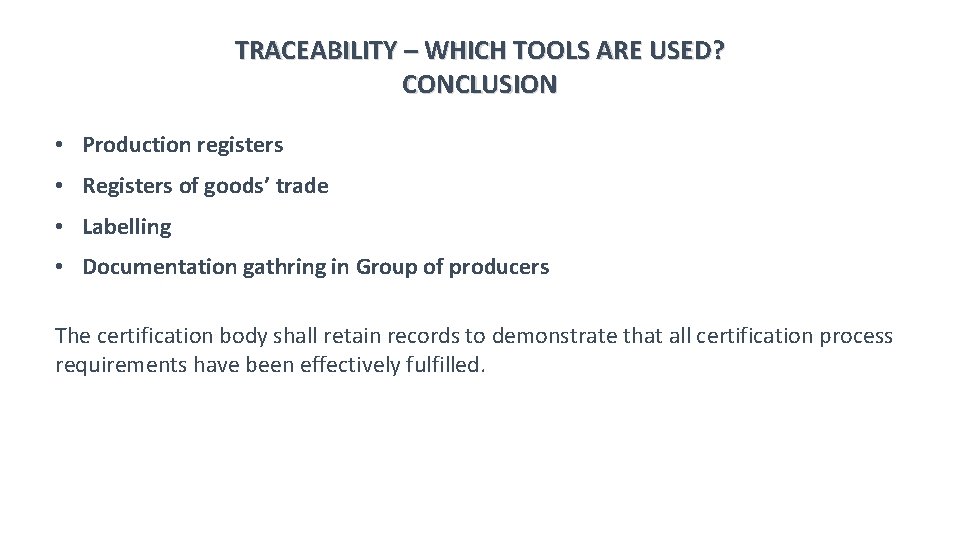
TRACEABILITY – WHICH TOOLS ARE USED? CONCLUSION • Production registers • Registers of goods’ trade • Labelling • Documentation gathring in Group of producers The certification body shall retain records to demonstrate that all certification process requirements have been effectively fulfilled.
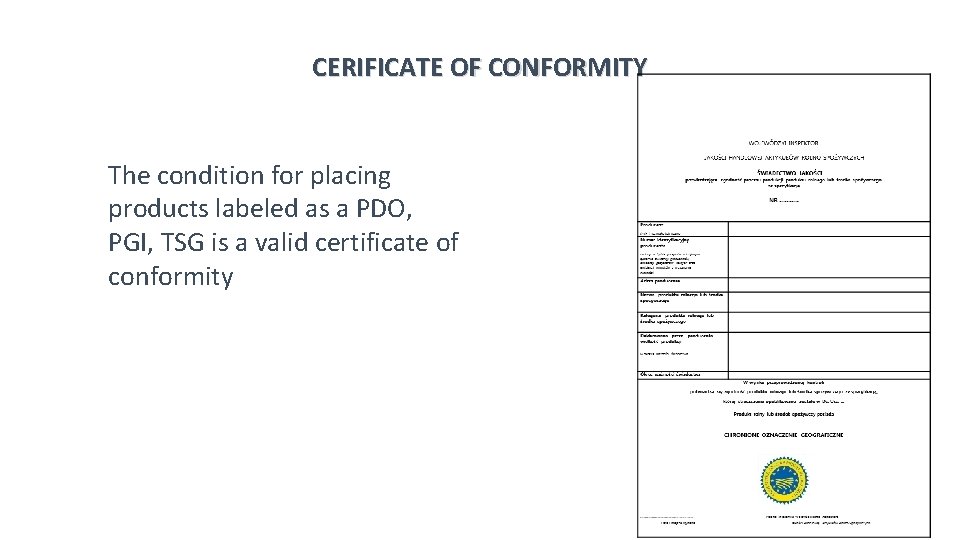
CERIFICATE OF CONFORMITY The condition for placing products labeled as a PDO, PGI, TSG is a valid certificate of conformity
TRACEABILITY - RESPONSIBILITIES • PRODUCERS are responsible for fulfillment compliance of production with specification • COMPETENT AUTHORITY /CONTROL BODY is responsible for checking if the requirements are fulfilled on each step of production, processing and distribution
OFFICIAL CONTROLS – EU FRAMEWORK Control system of PDO, PGI, TSG products shall be set up in conformity with Regulation (EC) No 882/2004 on official controls performed to ensure the verification of compliance with feed and food law, animal health and animal welfare rules
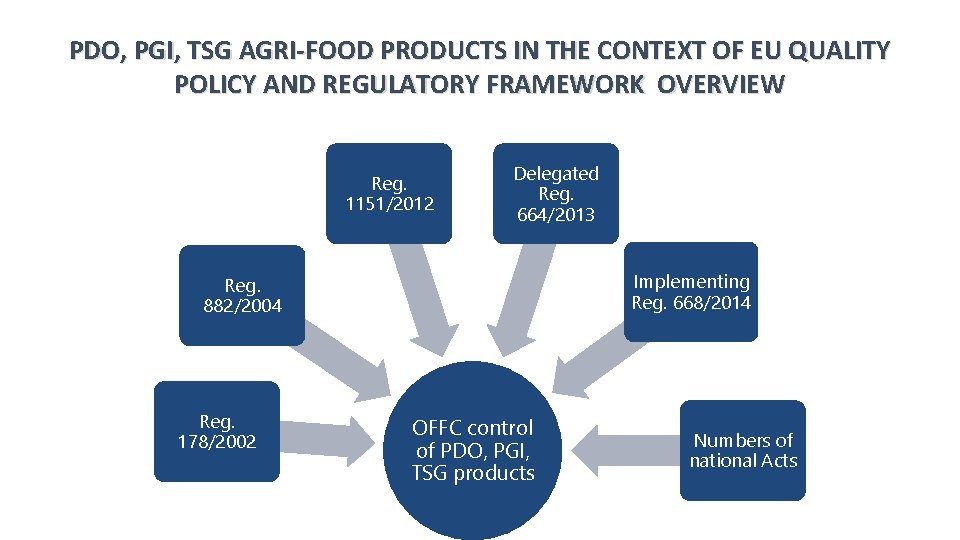
PDO, PGI, TSG AGRI-FOOD PRODUCTS IN THE CONTEXT OF EU QUALITY POLICY AND REGULATORY FRAMEWORK OVERVIEW Reg. 1151/2012 Delegated Reg. 664/2013 Implementing Reg. 668/2014 Reg. 882/2004 Reg. 178/2002 OFFC control of PDO, PGI, TSG products Numbers of national Acts
OFFICIAL CONTROLS – EU FRAMEWORK Objectives of Reg. 882/2004: – preventing, eliminating or reducing to acceptable levels risks to humans and animals, either directly or through the environment; – guaranteeing fair practices in feed and food trade and protecting consumer interests, including feed and food labelling and other forms of consumer information. Regulation no. 882/2004 requires Member States to put in place control systems regularly, on a risk basis and with appropriate frequency.
EU REGULATORY FRAMEWORK 14 -15 PREAMBLE 882/2004 • Official controls should take place on the basis of documented procedures so as to ensure that these controls are carried out uniformly and are of a consistently high quality. • The competent authorities should ensure that where different control units are involved in carrying out official controls, appropriate coordination procedures are in place and effectively implemented
COMPETENCES FOR STAFF PERFORMING OFFICIAL CONTROL • The competent authorities for performing official controls should meet a number of operational criteria so as to ensure their impartiality and effectiveness. • They should have a sufficient number of suitably qualified and experienced staff and possess adequate facilities and equipment to carry out their duties properly.
GENERAL PURPOSE OF ORGANIZING OFFICIAL CONTROLS • Ensure competent authorities for performing official controls • Effective verification of feed and food should in order to ensure safety and wholesome • Covered all stages of production, processing and distribution • Ensure impartiality and effectiveness of controls • Ensure sufficient number of suitably qualified and experienced staff as well as facilities and equipment to carry out their duties properly Reg. No 882/2004
OFFICIAL CONTROLS OF THE EU QUALITY SCHEMES COVER • Verification that a product complies with the corresponding product specification; and • Monitoring of the use of registered names to describe product placed on the market, in conformity with article 13 of regulation no 1151/2012 for names registered under title II (pdos and pgis) and in conformity with article 24 of regulation no 1151/2012 for names registered under title III (tsgs). The competent authorities to verify compliance with the legal requirements related to the quality schemes must offer adequate guarantees of objectivity and impartiality, and shall have at their disposal the qualified staff and resources necessary to carry out their functions (Article 36(3) of Regulation (EU) No 1151/2012).
GENERAL RULES ON OFFICIAL CONTROLS REGULATION (EC) N° 882/2004 • Food and feed “safe and wholesome” • Official controls to ensure the respect of EU Food and Feed Legislation • Organize official controls covering all production stages in all sectors, avoiding loopholes • Set out a clear responsibility of all inspectors
GENERAL RULES ON OFFICIAL CONTROLS Regulation (EC) n° 882/2004 • National official controls regularly, without warning, based on identified risks • Controls at any stage of production, processing, distribution • A national authority to be responsible for the effectiveness and independence of official controls • Adequate finance for necessary staff and resources • Description of the structure and organization of the national control system • Information to the general public on controls • Specific laboratories
DIFFERENT TYPES OF OFFICIAL CONTROLS COVERING PDO, PGI, TSG PRODUCTS • Official feed and food controls (safety) • Verification of compliance with specification products with registered names as PDO/PGI/TSG controls (added value) • Ex officio controls (protection)
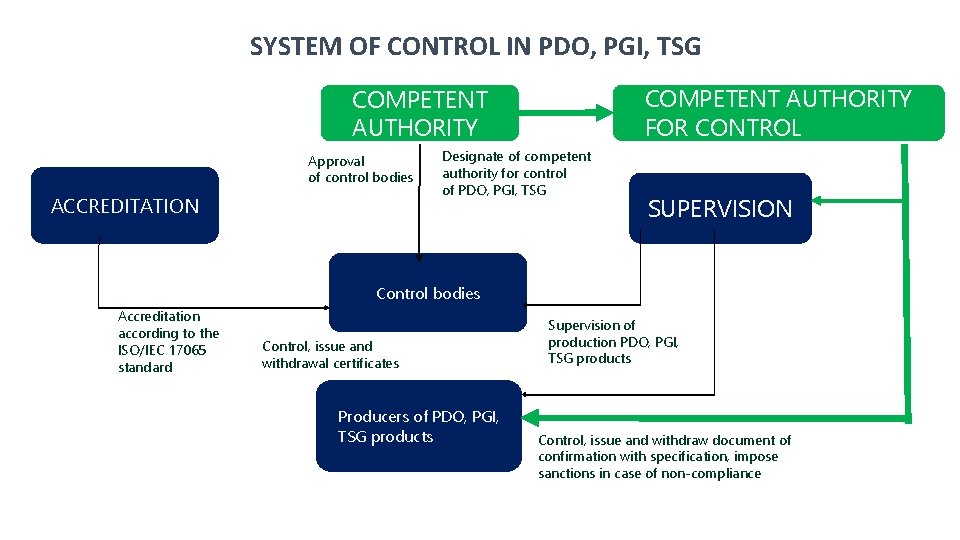
SYSTEM OF CONTROL IN PDO, PGI, TSG COMPETENT AUTHORITY FOR CONTROL COMPETENT AUTHORITY Approval of control bodies ACCREDITATION Designate of competent authority for control of PDO, PGI, TSG SUPERVISION Control bodies Accreditation according to the ISO/IEC 17065 standard Control, issue and withdrawal certificates Producers of PDO, PGI, TSG products Supervision of production PDO, PGI, TSG products Control, issue and withdraw document of confirmation with specification, impose sanctions in case of non-compliance
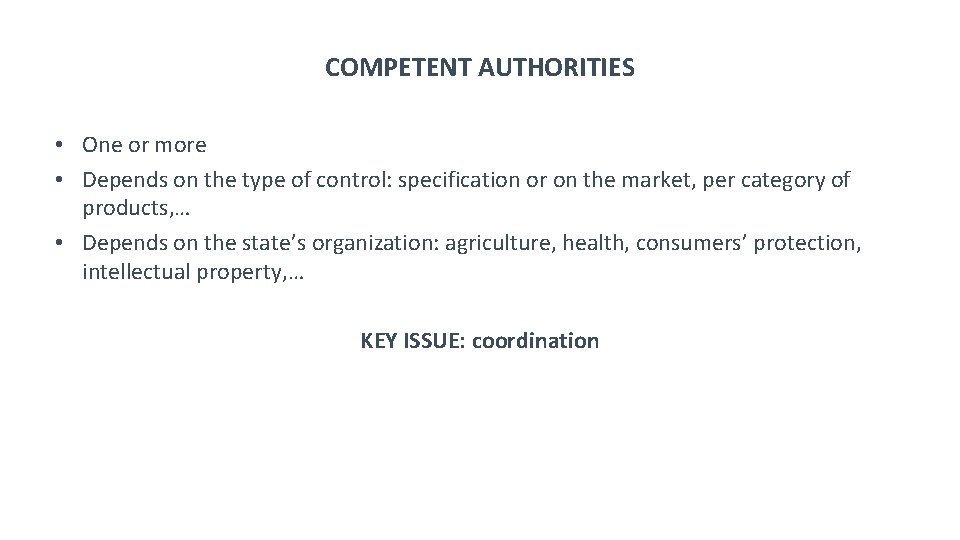
COMPETENT AUTHORITIES • One or more • Depends on the type of control: specification or on the market, per category of products, … • Depends on the state’s organization: agriculture, health, consumers’ protection, intellectual property, … KEY ISSUE: coordination
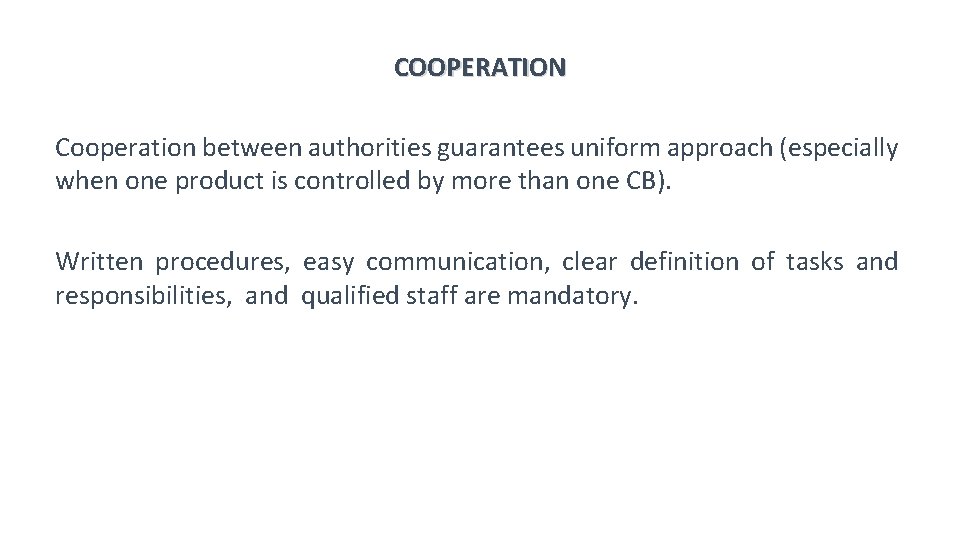
COOPERATION Cooperation between authorities guarantees uniform approach (especially when one product is controlled by more than one CB). Written procedures, easy communication, clear definition of tasks and responsibilities, and qualified staff are mandatory.
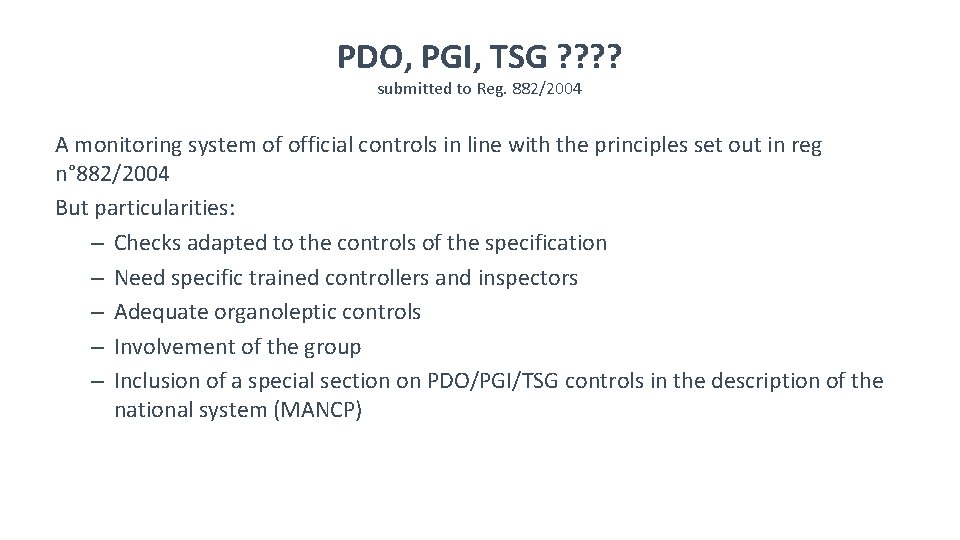
PDO, PGI, TSG ? ? submitted to Reg. 882/2004 A monitoring system of official controls in line with the principles set out in reg n° 882/2004 But particularities: – Checks adapted to the controls of the specification – Need specific trained controllers and inspectors – Adequate organoleptic controls – Involvement of the group – Inclusion of a special section on PDO/PGI/TSG controls in the description of the national system (MANCP)
MODELS OF ORGANIZATION CONTROL’S SYSTEM IN DIFFERENT MEMBERS STATE Verification of compliance with specification and ex officio
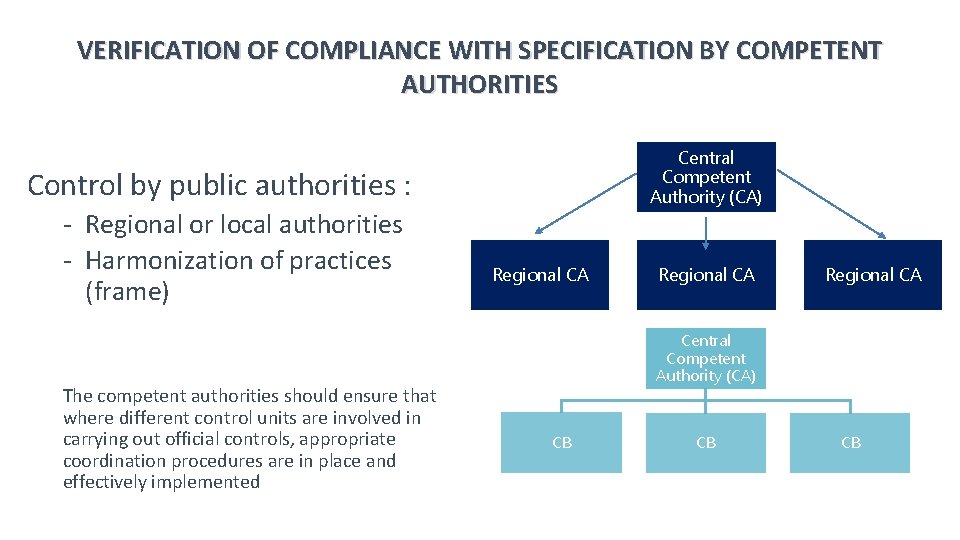
VERIFICATION OF COMPLIANCE WITH SPECIFICATION BY COMPETENT AUTHORITIES Central Competent Authority (CA) Control by public authorities : - Regional or local authorities - Harmonization of practices (frame) The competent authorities should ensure that where different control units are involved in carrying out official controls, appropriate coordination procedures are in place and effectively implemented Regional CA Central Competent Authority (CA) CB CB CB
POLAND
POLAND CENTRAL AUTHORITIES • The national central authority of the Polish GI control system is the Ministry of Agriculture and Rural Development (MARD), which is responsible for setting up policies and strategies, as well as for maintaining contact with the European Commission concerning GIs. • Moreover, the MARD is responsible for authorising control bodies (CBs) and is the competent authority (CA) for assessing requests for registration of products.
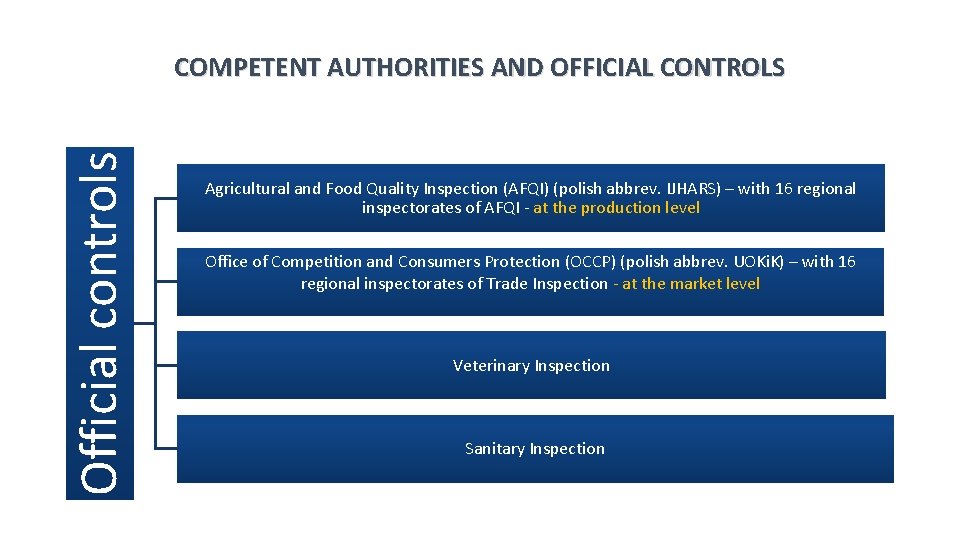
Official controls COMPETENT AUTHORITIES AND OFFICIAL CONTROLS Agricultural and Food Quality Inspection (AFQI) (polish abbrev. IJHARS) – with 16 regional inspectorates of AFQI - at the production level Office of Competition and Consumers Protection (OCCP) (polish abbrev. UOKi. K) – with 16 regional inspectorates of Trade Inspection - at the market level Veterinary Inspection Sanitary Inspection
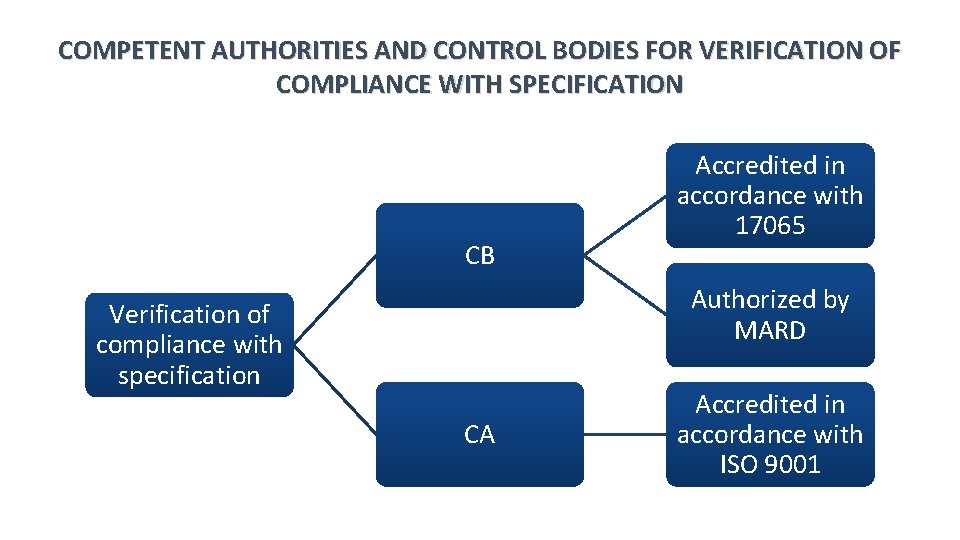
COMPETENT AUTHORITIES AND CONTROL BODIES FOR VERIFICATION OF COMPLIANCE WITH SPECIFICATION CB Accredited in accordance with 17065 Authorized by MARD Verification of compliance with specification CA Accredited in accordance with ISO 9001
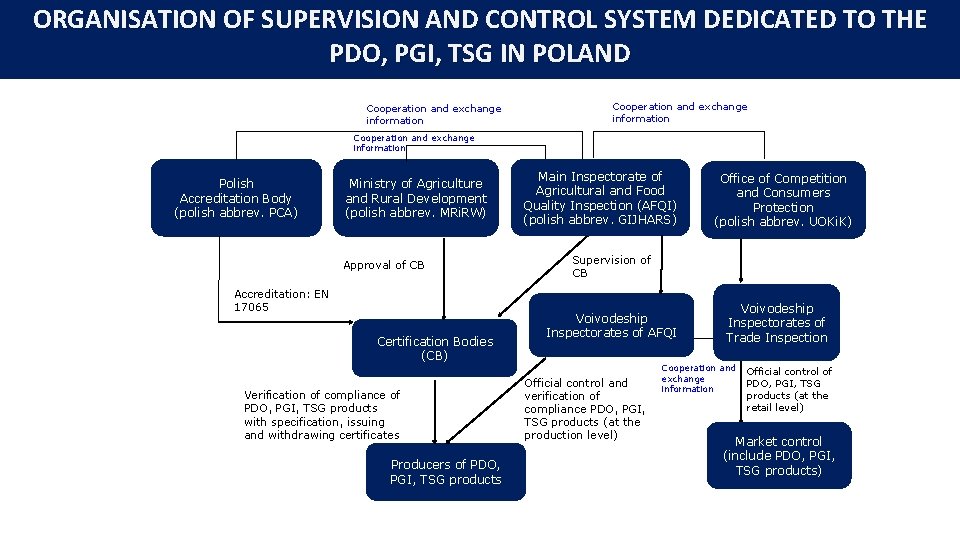
ORGANISATION OF SUPERVISION AND CONTROL SYSTEM DEDICATED TO THE PDO, PGI, TSG IN POLAND Cooperation and exchange information Polish Accreditation Body (polish abbrev. PCA) Ministry of Agriculture and Rural Development (polish abbrev. MRi. RW) Approval of CB Accreditation: EN 17065 Certification Bodies (CB) Verification of compliance of PDO, PGI, TSG products with specification, issuing and withdrawing certificates Producers of PDO, PGI, TSG products Main Inspectorate of Agricultural and Food Quality Inspection (AFQI) (polish abbrev. GIJHARS) Office of Competition and Consumers Protection (polish abbrev. UOKi. K) Supervision of CB Voivodeship Inspectorates of AFQI Official control and verification of compliance PDO, PGI, TSG products (at the production level) Voivodeship Inspectorates of Trade Inspection Cooperation and exchange information Official control of PDO, PGI, TSG products (at the retail level) Market control (include PDO, PGI, TSG products)
CROATIA
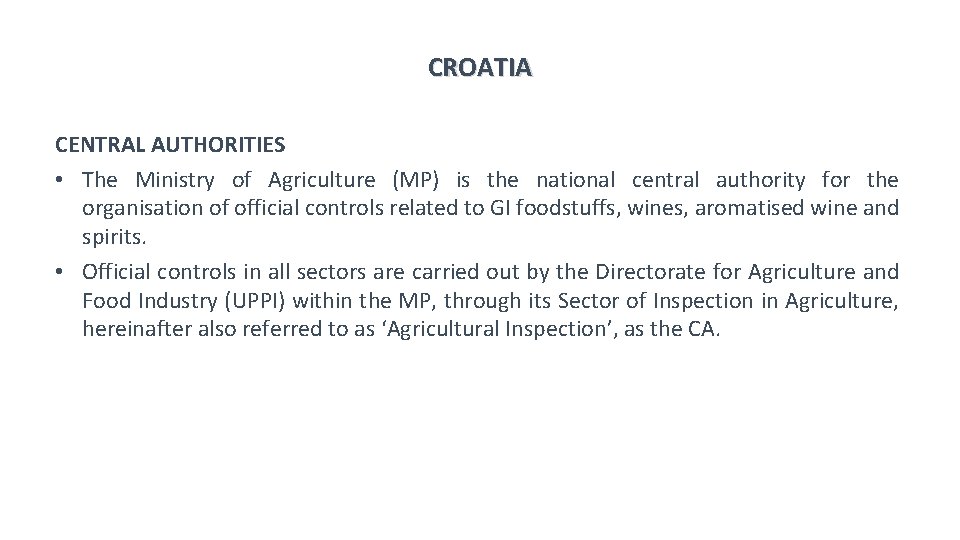
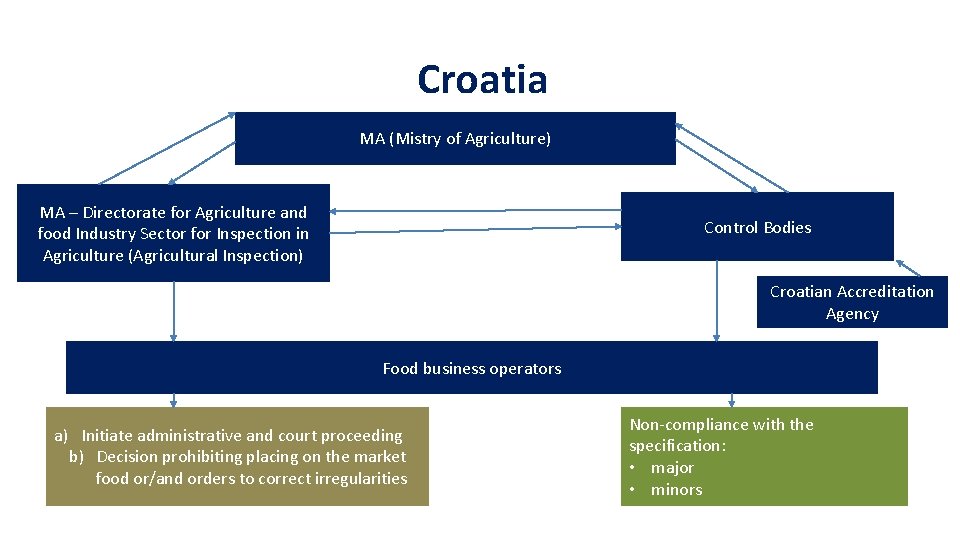
CROATIA CENTRAL AUTHORITIES • The Ministry of Agriculture (MP) is the national central authority for the organisation of official controls related to GI foodstuffs, wines, aromatised wine and spirits. • Official controls in all sectors are carried out by the Directorate for Agriculture and Food Industry (UPPI) within the MP, through its Sector of Inspection in Agriculture, hereinafter also referred to as ‘Agricultural Inspection’, as the CA.
Croatia MA (Mistry of Agriculture) MA – Directorate for Agriculture and food Industry Sector for Inspection in Agriculture (Agricultural Inspection) Control Bodies Croatian Accreditation Agency Food business operators a) Initiate administrative and court proceeding b) Decision prohibiting placing on the market food or/and orders to correct irregularities Non-compliance with the specification: • major • minors
ITALY
PERFORMANCE OF CONTROLS: THE ITALIAN EXPERIENCE In Italy, public and private CBs are delegated by the central authority to carry out controls on GIs, in order to check whether operators that wish to certify their products as a GI follow the requirements set forth in the relevant product specifications. The authorized CBs that are currently responsible for the controls on GIs are: • 48 CBs for agri-food (22 private and 26 public); • 30 CBs for wines (8 private and 22 public); • 6 CBs for spirits drinks (3 private and 3 public). To harmonize the controls on operators and the activities of CBs, the ICQRF plays an intense co-ordination action. Only in 2016, the ICQRF sent about 70 notes concerning the application of GIs control plans, giving guidance, inter alia, on the correct implementation of control plans concerning olive oil GIs, the use of the inspection staff and the management of non-compliances.
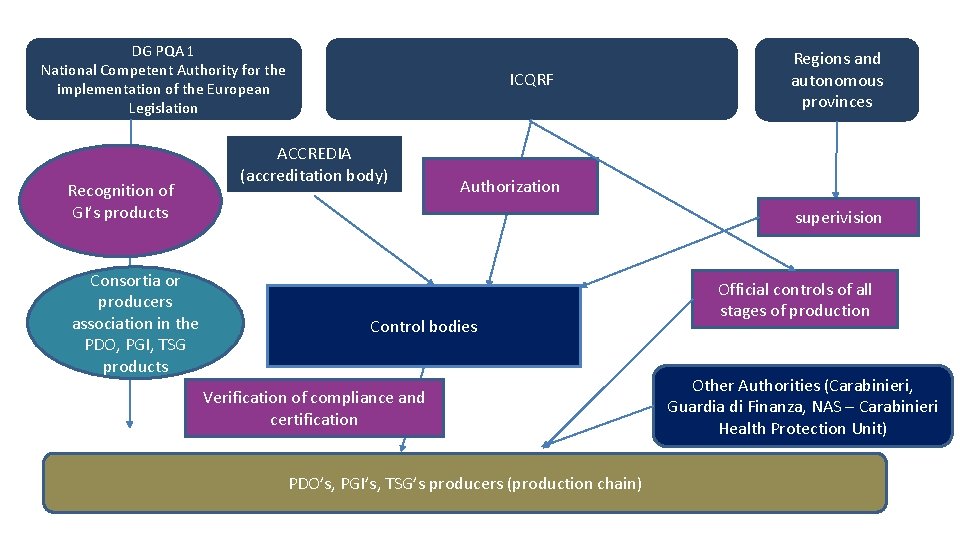
DG PQA 1 National Competent Authority for the implementation of the European Legislation ICQRF ACCREDIA (accreditation body) Recognition of GI’s products Regions and autonomous provinces Authorization superivision Consortia or producers association in the PDO, PGI, TSG products Control bodies Verification of compliance and certification PDO’s, PGI’s, TSG’s producers (production chain) Official controls of all stages of production Other Authorities (Carabinieri, Guardia di Finanza, NAS – Carabinieri Health Protection Unit)
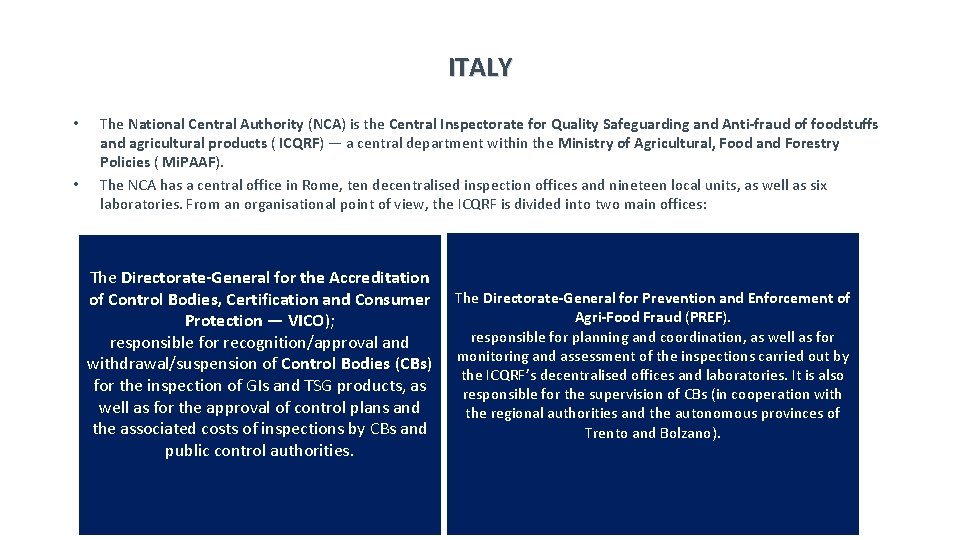
ITALY • • The National Central Authority (NCA) is the Central Inspectorate for Quality Safeguarding and Anti-fraud of foodstuffs and agricultural products ( ICQRF) — a central department within the Ministry of Agricultural, Food and Forestry Policies ( Mi. PAAF). The NCA has a central office in Rome, ten decentralised inspection offices and nineteen local units, as well as six laboratories. From an organisational point of view, the ICQRF is divided into two main offices: The Directorate-General for the Accreditation of Control Bodies, Certification and Consumer Protection — VICO); responsible for recognition/approval and withdrawal/suspension of Control Bodies (CBs) for the inspection of GIs and TSG products, as well as for the approval of control plans and the associated costs of inspections by CBs and public control authorities. The Directorate-General for Prevention and Enforcement of Agri-Food Fraud (PREF). responsible for planning and coordination, as well as for monitoring and assessment of the inspections carried out by the ICQRF’s decentralised offices and laboratories. It is also responsible for the supervision of CBs (in cooperation with the regional authorities and the autonomous provinces of Trento and Bolzano).
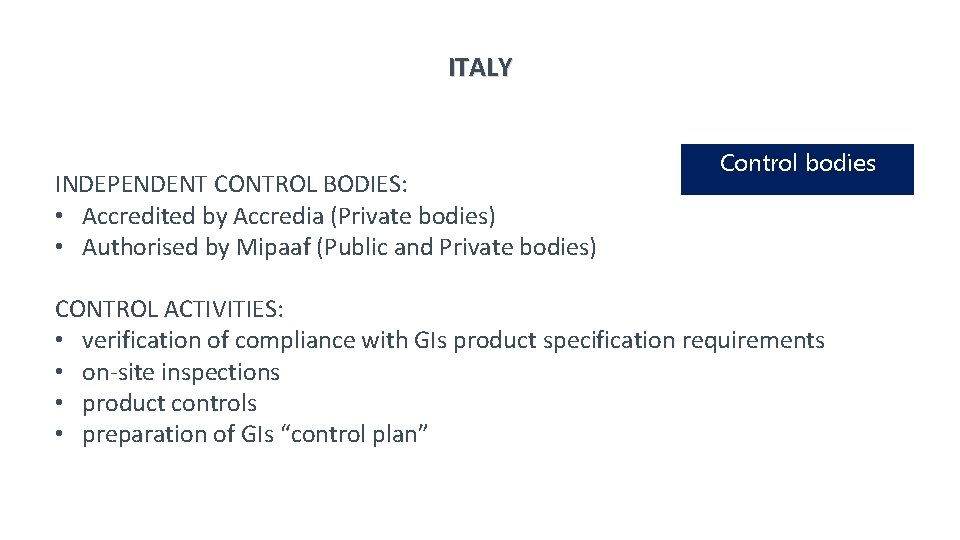
ITALY INDEPENDENT CONTROL BODIES: • Accredited by Accredia (Private bodies) • Authorised by Mipaaf (Public and Private bodies) Control bodies CONTROL ACTIVITIES: • verification of compliance with GIs product specification requirements • on-site inspections • product controls • preparation of GIs “control plan”
ITALY Protection Consortia are officially recognised by Ministry of Agriculture in accordance with M. D. 14/10/2013 and M. D. They include producers representing at least ¾ of the total GI production. The role of Protection consortia is to: • protect; • promote; • build reputation; • provide correct information to consumers; • generally safeguard the GIs
WHAT IS IMPORTANT Cooperation between producers • Producers of PDO, PGI, TSG don’t exist in isolation; they are part of regional and global system and their owners are part of local, national and global communities • Producers of PDO, PGI, TSG are community which are rely on sustainblity on having a functional system which enables its members on to respect for tradition and customs, attachment to the region, maintain culinary heritage)
WHAT IS IMPORTANT Cooperation between competent authorities Collaboration among National Authorities • Between the bodies in charge of protection of GIs (group of producers and Public authorities) • Between the bodies in charge of protection of GIs and a given State Intellectual Property Office Collaboration with other Member States • Between competent Authorities following GIs infringements Collaboration with Third Countries • Between Authorities in charge of protection
POLISH EXPERIENCE IN COOPERATION BETWEEN INSTITUTIONS AND PRODUCERS • Memorandum between inspections involved in control on PDO, PGI, TSG (integrated controls, exchanging information about infringements based on written procedures) • Regular meetings and trainings all competent authorities • Regular meetings with producers • Support ministry of rural development in promotion initiatives • Publication the list of producers of PDO, PGI, TSG on the website www. Ijhars. Gov. Pl
Thank you for your attention Dariusz Goszczyński Expert on training in the area of CMO
This publication has been produced with the financial assistance of the European Union The contents of this publication is the sole responsibility of NIRAS IC Sp. z o. o. and can in no way be taken to reflect the views of the European Union