Michigan Lean Consortium Lean 101 Dave Kippen Jerry





- Slides: 154
Michigan Lean Consortium Lean 101 Dave Kippen Jerry Browne
SAFETY MESSAGE Welcome! Fire exits In case of fire, please walk to the nearest exit. Unsafe act or condition If you see an unsafe act or condition, please notify the instructor
Agenda v. Welcome and MLC Overview v. Introductions v. The History Of Lean v. What Is Lean and how it differs v. The 8 Wastes v. Standard Work Exercise v. SQDC v 5 S v. Sustaining and Maintaining the Concepts v. What will you do Monday?
2015 Overview
Our New Vision/Mission Develop and support lean systems thinkers to transform Michigan’s organizations and economy.
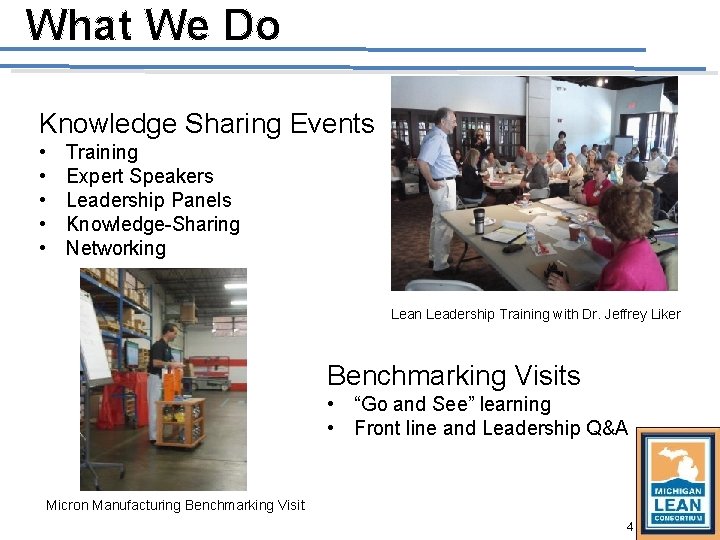
What We Do Knowledge Sharing Events • • • Training Expert Speakers Leadership Panels Knowledge-Sharing Networking Lean Leadership Training with Dr. Jeffrey Liker Benchmarking Visits • “Go and See” learning • Front line and Leadership Q&A Micron Manufacturing Benchmarking Visit 4
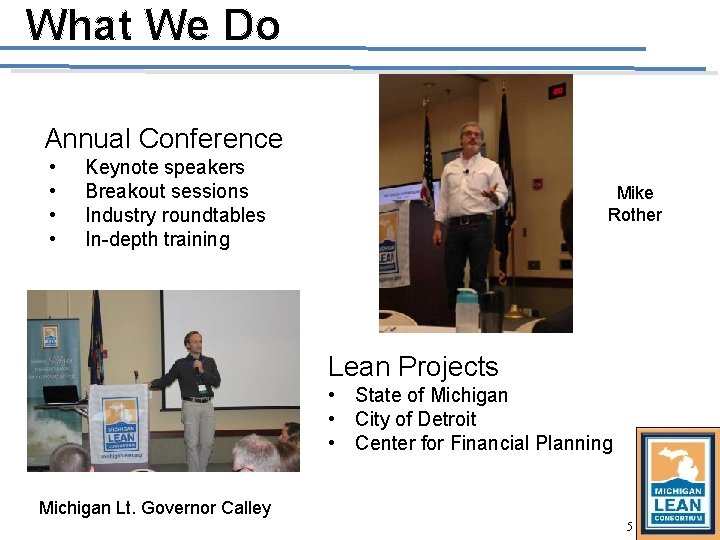
What We Do Annual Conference • • Keynote speakers Breakout sessions Industry roundtables In-depth training Mike Rother Lean Projects • State of Michigan • City of Detroit • Center for Financial Planning Michigan Lt. Governor Calley 5
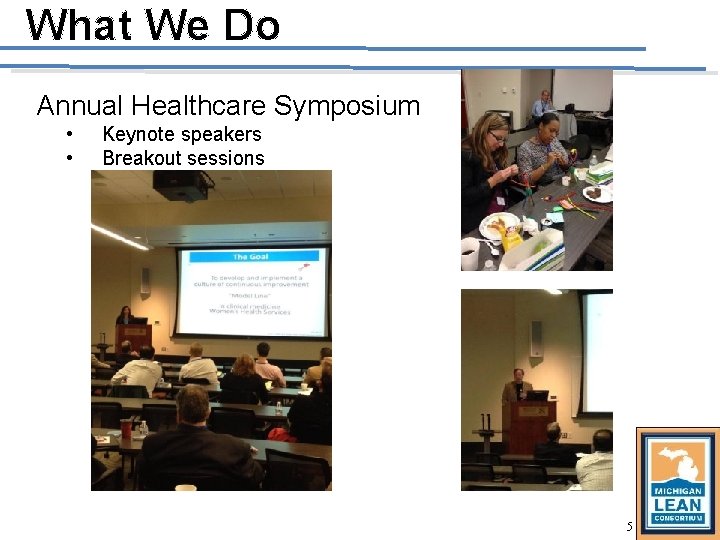
What We Do Annual Healthcare Symposium • • Keynote speakers Breakout sessions 5
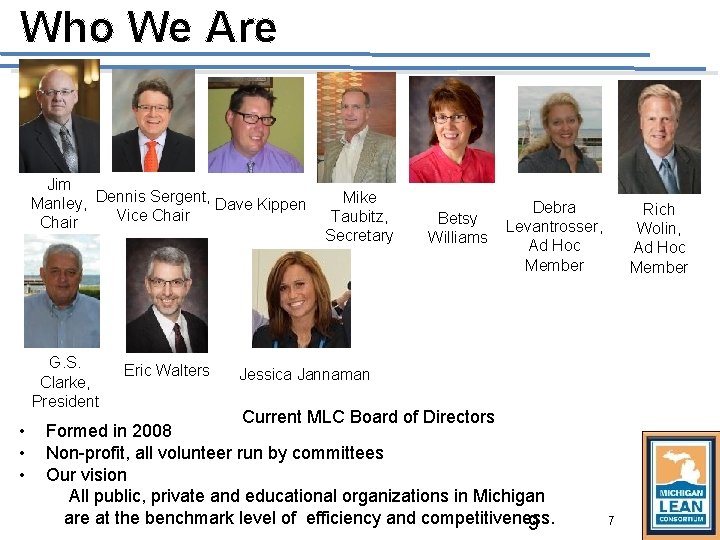
Who We Are Jim Manley, Dennis Sergent, Dave Kippen Vice Chair G. S. Clarke, President Eric Walters Mike Taubitz, Secretary Betsy Williams Debra Levantrosser, Ad Hoc Member Rich Wolin, Ad Hoc Member Jessica Jannaman Current MLC Board of Directors • Formed in 2008 • Non-profit, all volunteer run by committees • Our vision All public, private and educational organizations in Michigan are at the benchmark level of efficiency and competitiveness. 9 7
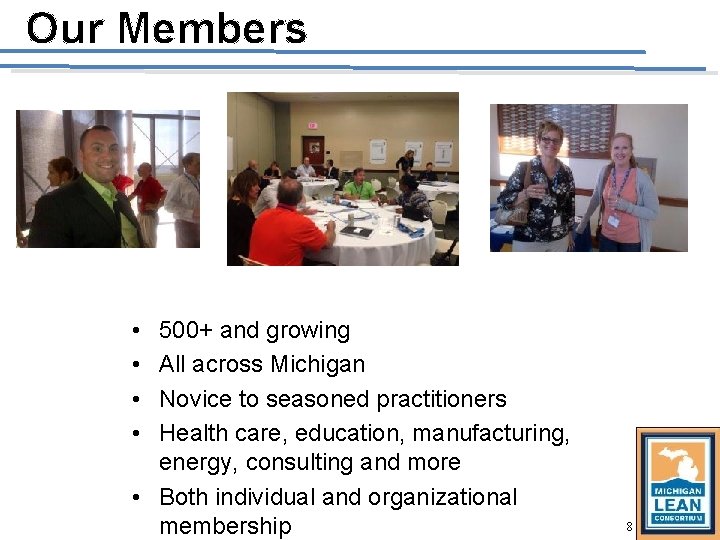
Our Members • • 500+ and growing All across Michigan Novice to seasoned practitioners Health care, education, manufacturing, energy, consulting and more • Both individual and organizational membership 8
Join Us! • Affordable • Access to organizations, leaders and best practices • Monthly Events & Annual Conference • MLC-sponsored Projects • Networking 9
Get Involved! Visit www. Michigan. Lean. org Connect on Linked. In and Twitter Like us on Facebook Join a Committee Suggest Event Topics 10
Upcoming Events June 4: Lean 102 (Superior National) Hancock June 5: Lean Assessments Houghton June 12: Toyota Kata (REGISTRATION FULL) West Olive August 12 -14: Annual Conference Traverse City September: Lean 103 (Superior National) Hancock Copper County Local Lean Group Please let us know if you have ideas for an event or have an interest to be a host. Email: register@michiganlean. org 11
Reminders üPlease complete the survey that will be emailed to you! If you complete the survey you may receive a Certificate of Attendance. THANK YOU Your support and feedback helps us to continually improve! 12
Thank You To Today’s Sponsors! 14
Agenda v. Welcome and MLC Overview v. Introductions v. The History Of Lean v. What Is Lean and how it differs v. The 8 Wastes v. Standard Work Exercise v. SQDC v 5 S v. Sustaining and Maintaining the Concepts v. What will you do Monday?
Introductions v Name v Title/Job/Time on the job v Knowledge or/Experience in Lean? v Expectations for the class
Agenda v. Welcome and Introductions v. MLC Overview v. The History Of Lean v. What Is Lean and how it differs v. The 8 Wastes v. Standard Work Exercise v. Error Proofing v 5 S v. Sustaining and Maintaining the Concepts v. What will you do Monday?
Bronze Body of Knowledge Materials Chapter 1 Lean Production Simplified Introduction Lean Thinking 1 9
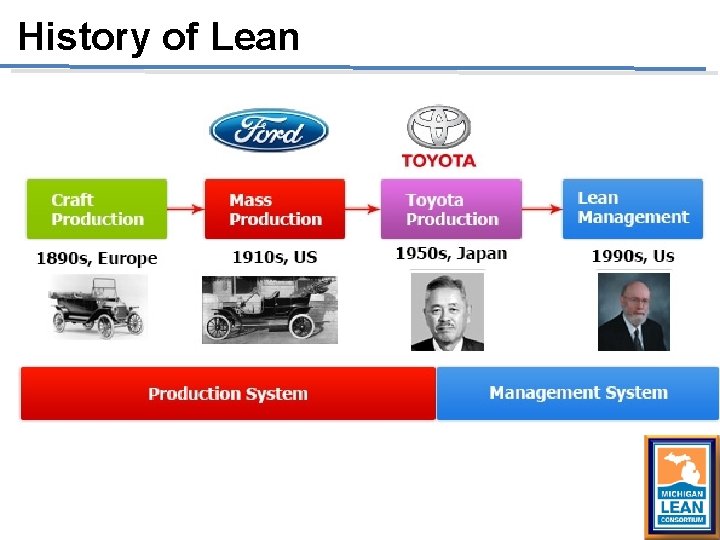
History of Lean 116 years ago you want to buy a car. What is the production system? Enter Henry Ford. What was the system he made popular? Pros? Cons?
History of Lean
Agenda v. Welcome and MLC Overview v. Introductions v. The History Of Lean v. What Is Lean and how it differs v. The 8 Wastes v. Standard Work Exercise v. SQDC v 5 S v. Sustaining and Maintaining the Concepts v. What will you do Monday?
Bronze Body of Knowledge Materials Chapter 2 Lean Production Simplified Chapter 1 Lean Thinking Chapters 1, 2 Gemba Kaizen 2 3
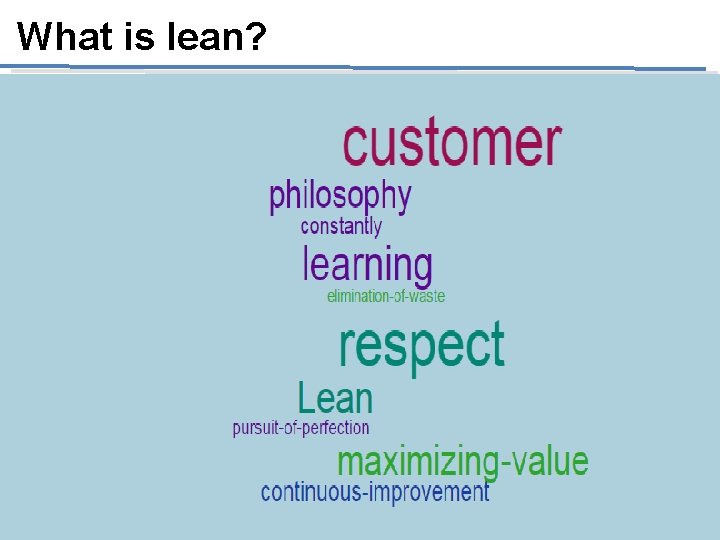
What is lean?
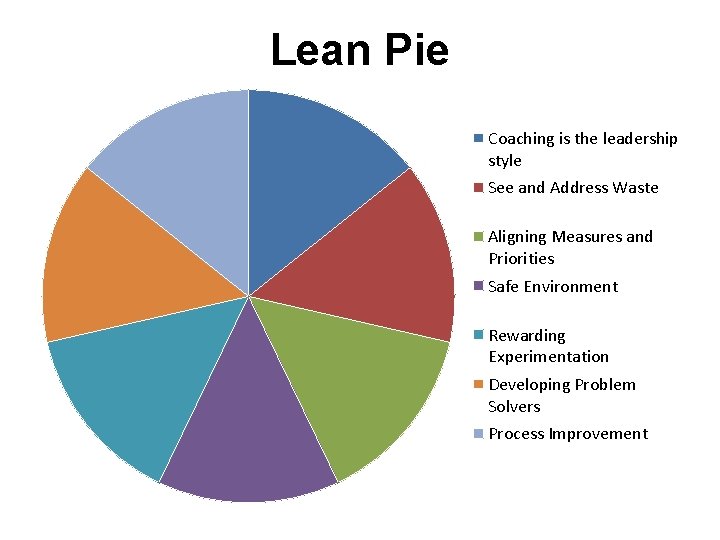
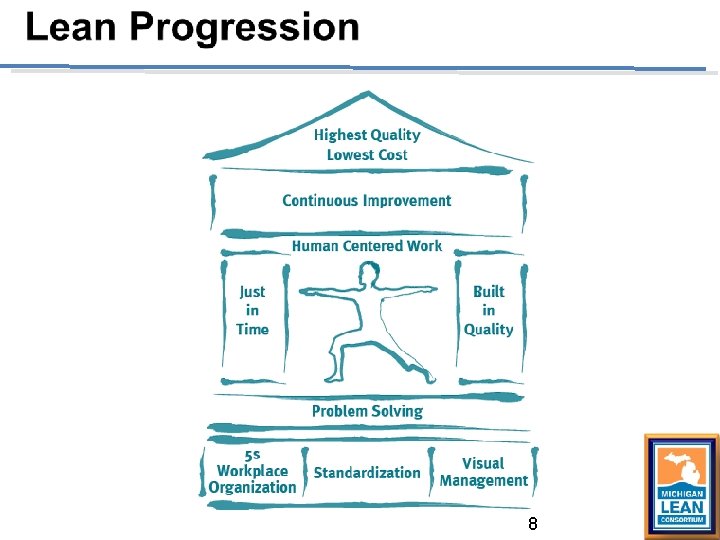
Lean Pie Coaching is the leadership style See and Address Waste Aligning Measures and Priorities Safe Environment Rewarding Experimentation Developing Problem Solvers Process Improvement
What is lean? Lean = Lean Thinking It is about a mindset, a philosophy, a culture…
Overview and Key Concepts v Being individually accountable at all levels v Management exists to support the workforce v Systematically, and continuously, taking out waste or of every aspect of a company’s operation v Challenging the tradition and status quo v Asking questions to Learn
Overview and Key Concepts v Empowering all staff to make improvements to their processes and workplace v Helping and not criticizing v Aiming for perfection, but accepting excellence along the way v Practicing deep forced reflection v True teamwork
Overview and Key Concepts v Focused on small, incremental, sustainable changes v Continuous – becomes a way of life v No blame culture and freedom to fail v Change and action-oriented v Operational performance become fit, athletic, strong, agile
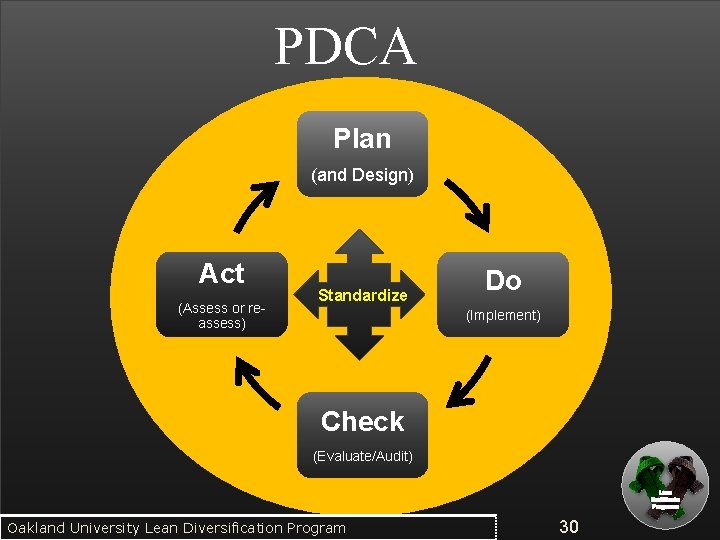
PDCA Plan (and Design) Act (Assess or reassess) Standardize Do (Implement) Check (Evaluate/Audit) Oakland University Lean Diversification Program 30
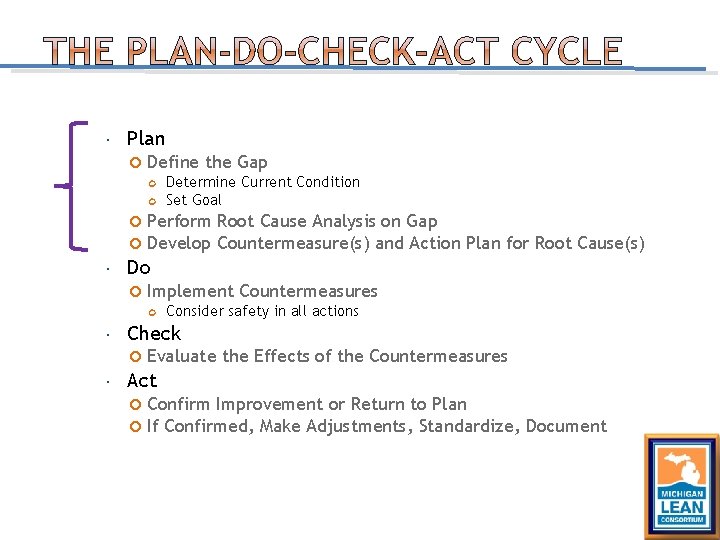
The Plan-Do-Check-Act (PDCA) cycle is the Lean operating framework — the methodology for implementing improvements (Kaizen). The PDCA cycle was first developed in the 1930 s by Walter Shewhart, the Bell Telephone physicist often called the father of statistical quality control. PDCA was brought to Japan in the 1950 s by W. Edwards Deming; in Japan, it’s known as the Deming cycle.
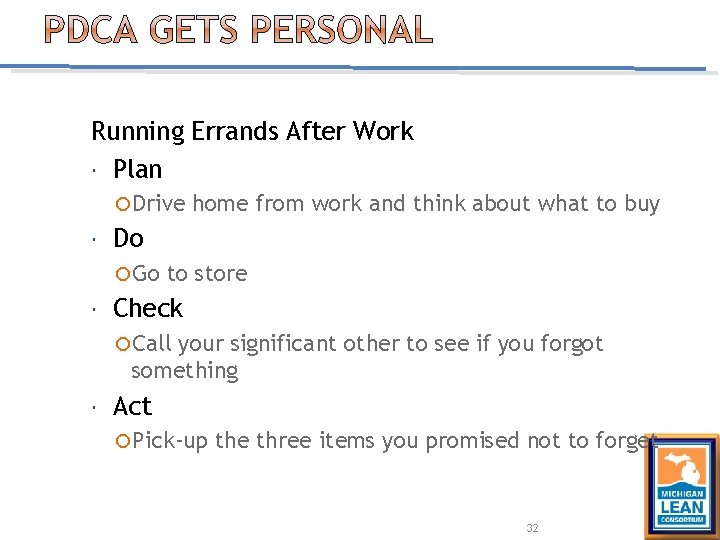
Running Errands After Work Plan Drive Do Go home from work and think about what to buy to store Check Call your significant other to see if you forgot something Act Pick-up the three items you promised not to forget 32
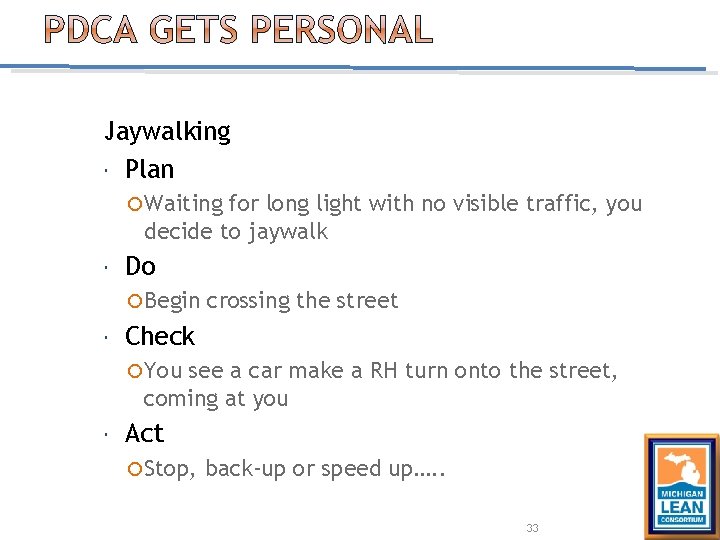
Jaywalking Plan Waiting for long light with no visible traffic, you decide to jaywalk Do Begin crossing the street Check You see a car make a RH turn onto the street, coming at you Act Stop, back-up or speed up…. . 33
Plan Define the Gap Perform Root Cause Analysis on Gap Develop Countermeasure(s) and Action Plan for Root Cause(s) Do Implement Countermeasures Consider safety in all actions Check Determine Current Condition Set Goal Evaluate the Effects of the Countermeasures Act Confirm Improvement or Return to Plan If Confirmed, Make Adjustments, Standardize, Document
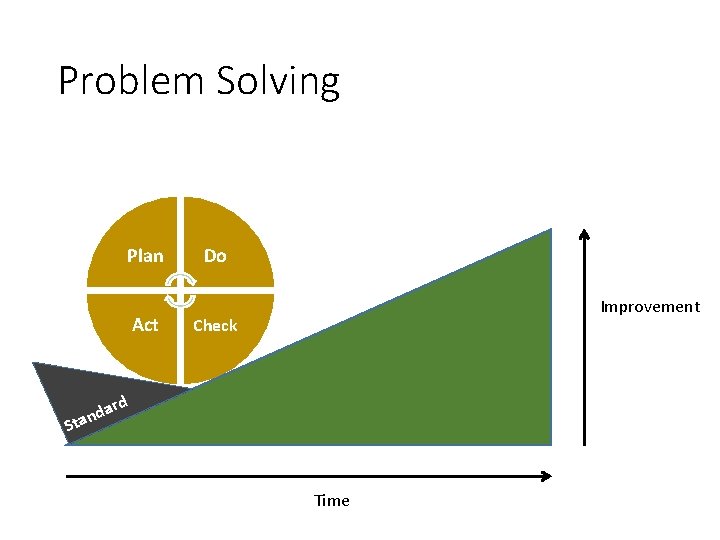
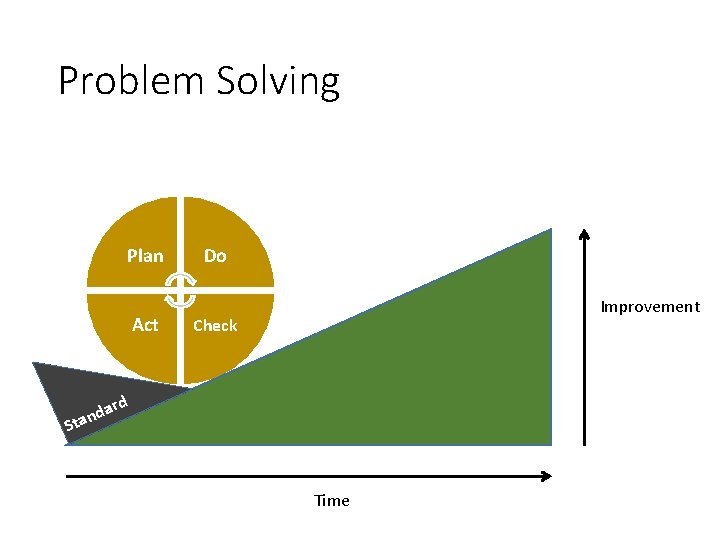
Problem Solving Plan Act Do Improvement Check ard d n ta S Time
How Lean Differs Mental Models LEAN APPROACH TO MANAGEMENT TRADITIONAL MANAGEMENT STYLE
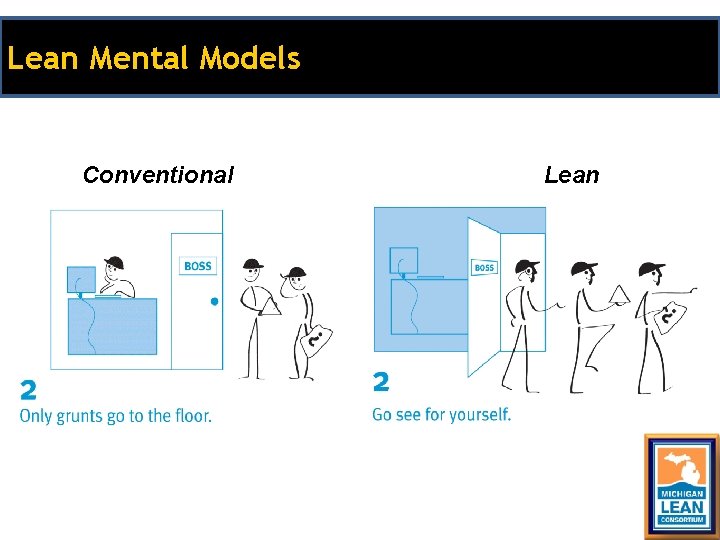
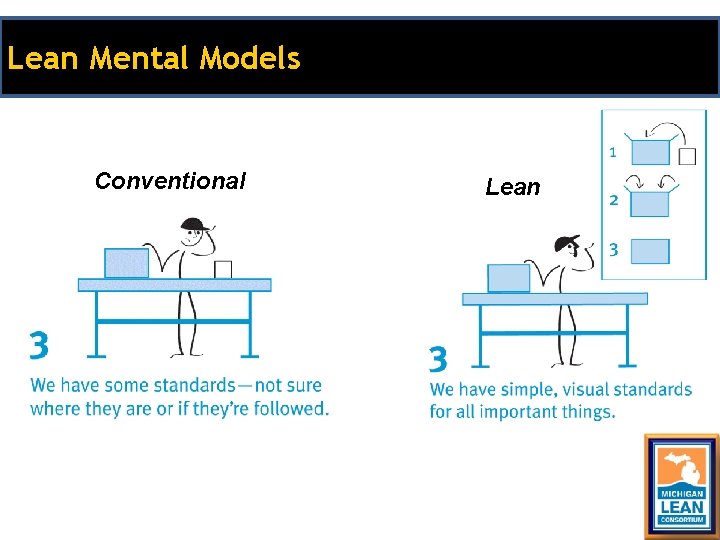
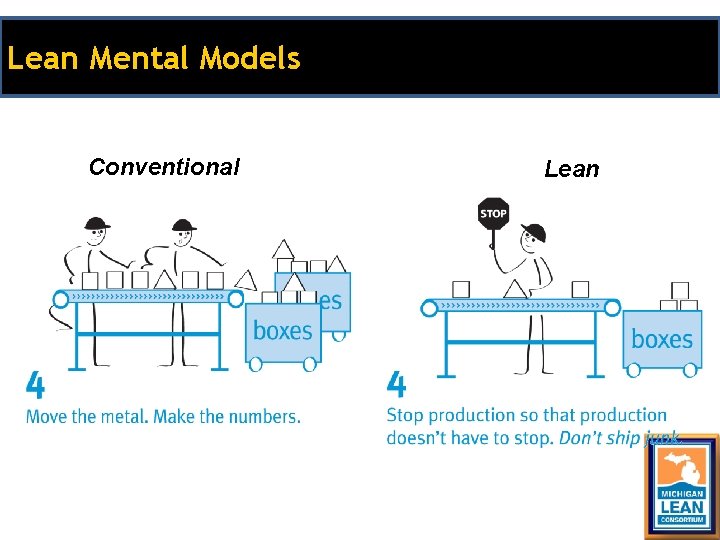
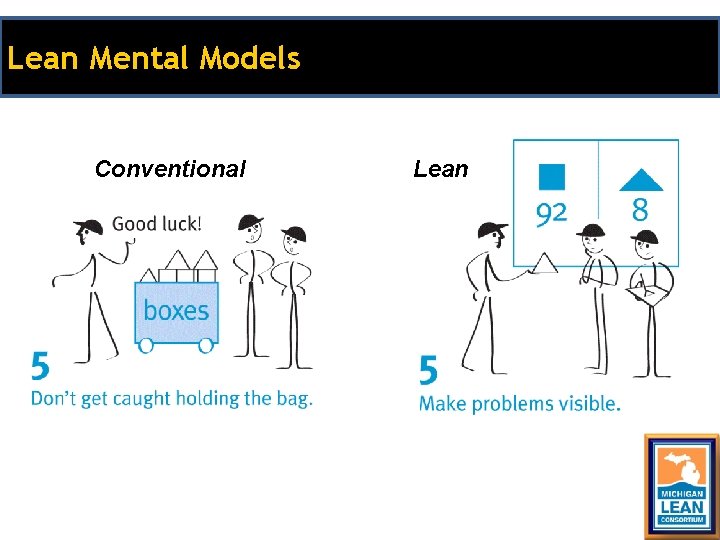
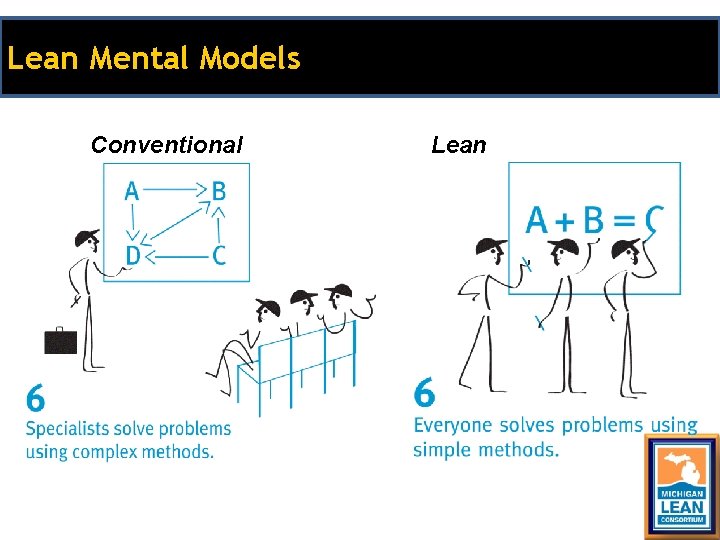
Lean Mental Models Conventional Lean
Lean Mental Models Conventional Lean
Lean Mental Models Conventional Lean
Lean Mental Models Conventional Lean
Lean Mental Models Conventional Lean
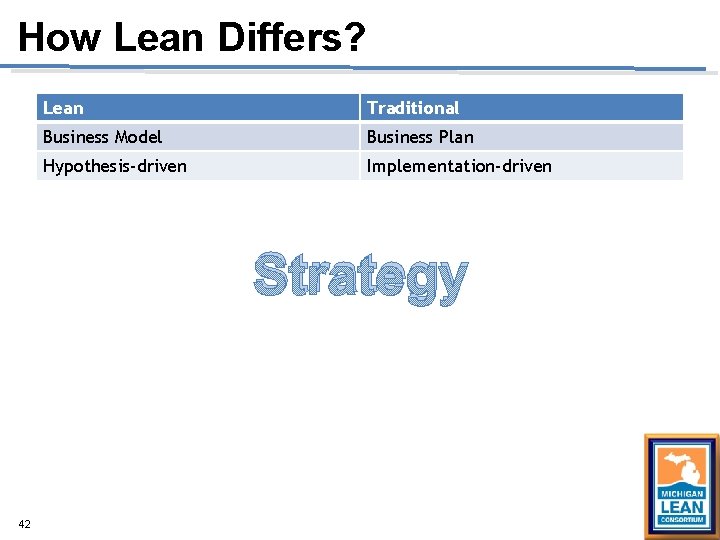
How Lean Differs? Lean Traditional Business Model Business Plan Hypothesis-driven Implementation-driven Strategy 42
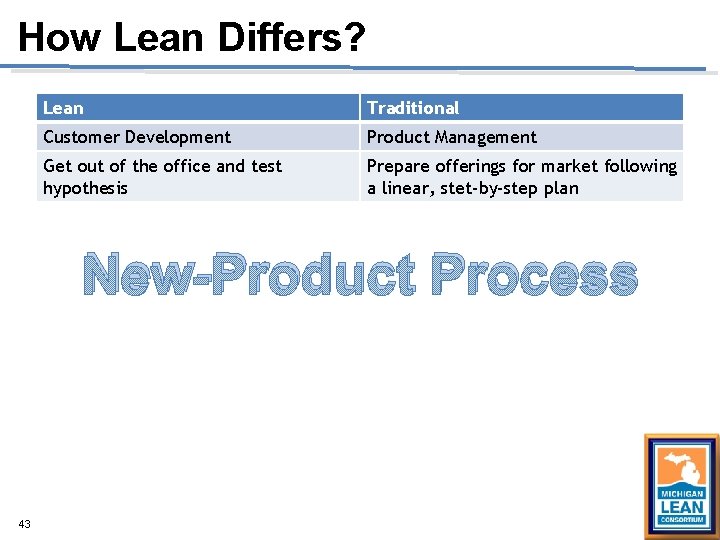
How Lean Differs? Lean Traditional Customer Development Product Management Get out of the office and test hypothesis Prepare offerings for market following a linear, stet-by-step plan New-Product Process 43
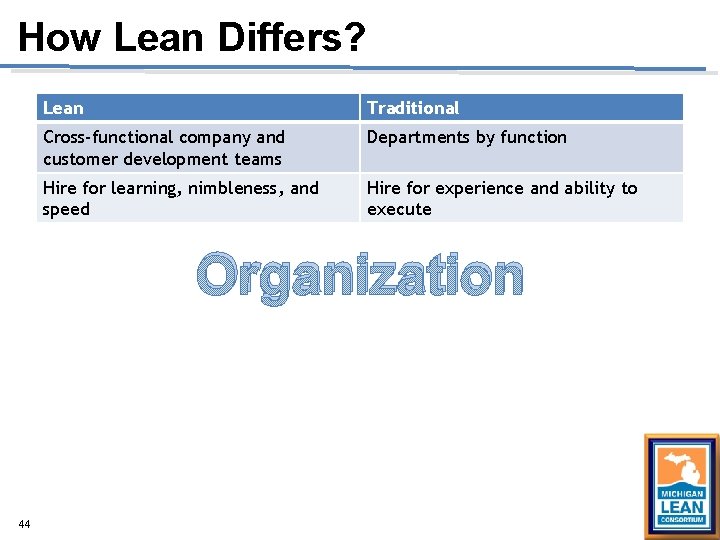
How Lean Differs? Lean Traditional Cross-functional company and customer development teams Departments by function Hire for learning, nimbleness, and speed Hire for experience and ability to execute Organization 44
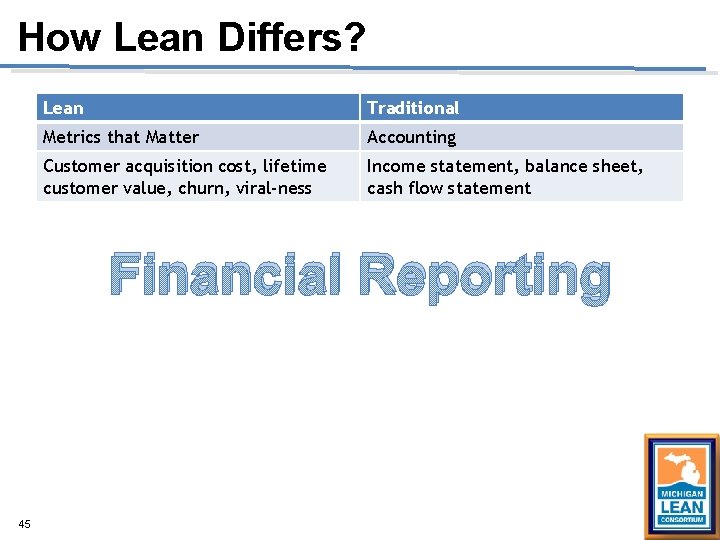
How Lean Differs? Lean Traditional Metrics that Matter Accounting Customer acquisition cost, lifetime customer value, churn, viral-ness Income statement, balance sheet, cash flow statement Financial Reporting 45
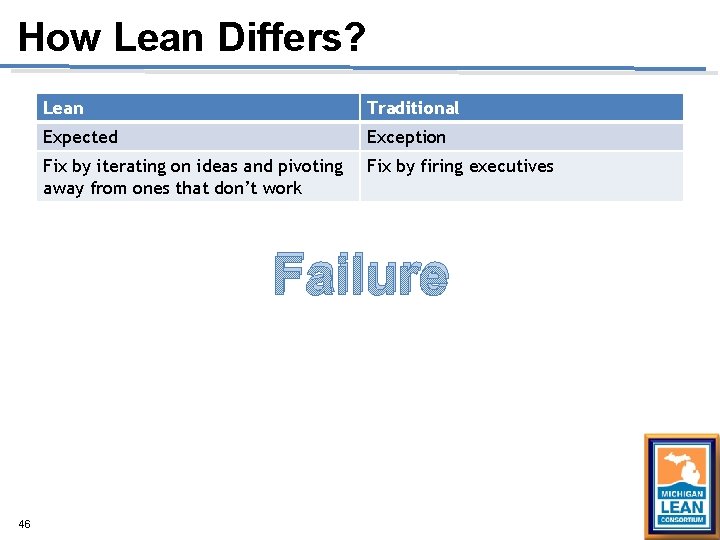
How Lean Differs? Lean Traditional Expected Exception Fix by iterating on ideas and pivoting away from ones that don’t work Fix by firing executives Failure 46
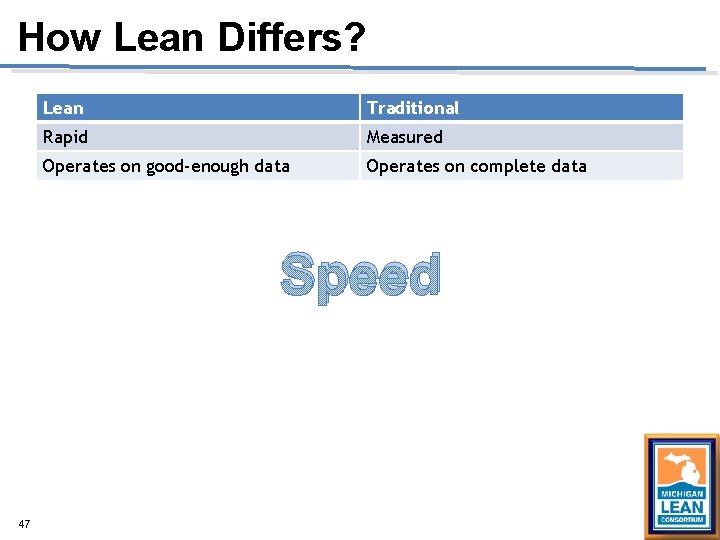
How Lean Differs? Lean Traditional Rapid Measured Operates on good-enough data Operates on complete data Speed 47
4 8
4 9
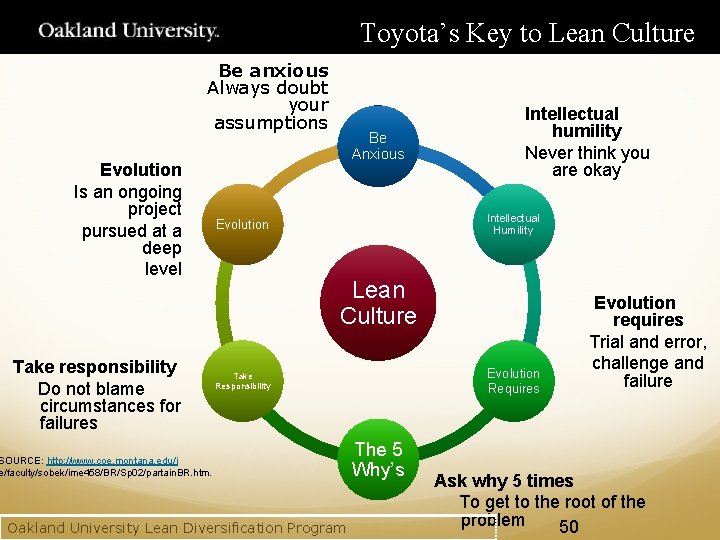
Toyota’s Key to Lean Culture Be anxious Always doubt your assumptions Evolution Is an ongoing project pursued at a deep level Take responsibility Do not blame circumstances for failures Be Anxious Intellectual humility Never think you are okay Intellectual Humility Evolution Lean Culture Evolution Requires Take Responsibility SOURCE: http: //www. coe. montana. edu/i e/faculty/sobek/ime 458/BR/Sp 02/partain. BR. htm. Oakland University Lean Diversification Program The 5 Why’s Evolution requires Trial and error, challenge and failure Ask why 5 times To get to the root of the problem 50
What is Lean? Being a coach at all levels of the organization is part of the uniqueness of lean. • • What are some attributes of a good coach? What do you think of when you hear “Coach”?
Coaching • An ongoing approach that enables individuals to achieve their full potential. • A process that enables learning and development to occur and thus performance to improve. • A training or development process via which an individual is supported while achieving a specific personal or professional competence result or goal.
Agenda v. Welcome and MLC Overview v. Introductions v. The History Of Lean v. What Is Lean and how it differs v. The 8 Wastes v. Standard Work Exercise v. SQDC v 5 S v. Sustaining and Maintaining the Concepts v. What will you do Monday? 54
Bronze Body of Knowledge Materials • Chapter 2 Lean Production Simplified • Chapter 2 Lean Thinking • Chapters 2, 6 Gemba Kaizen 55
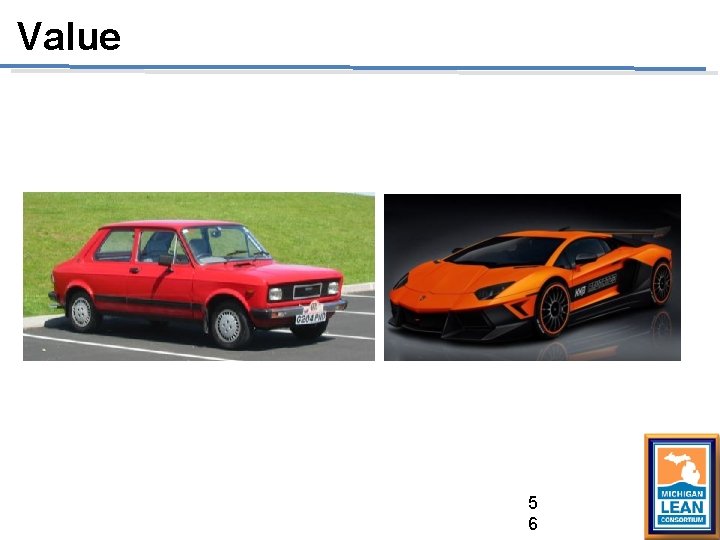
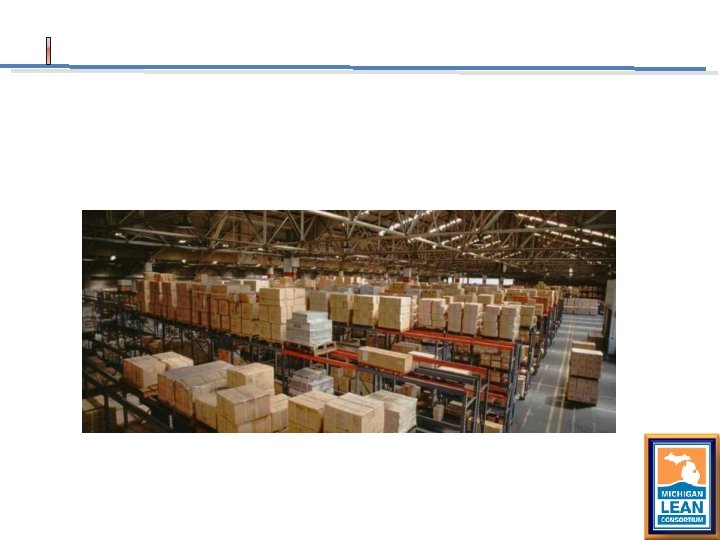
Value 5 6
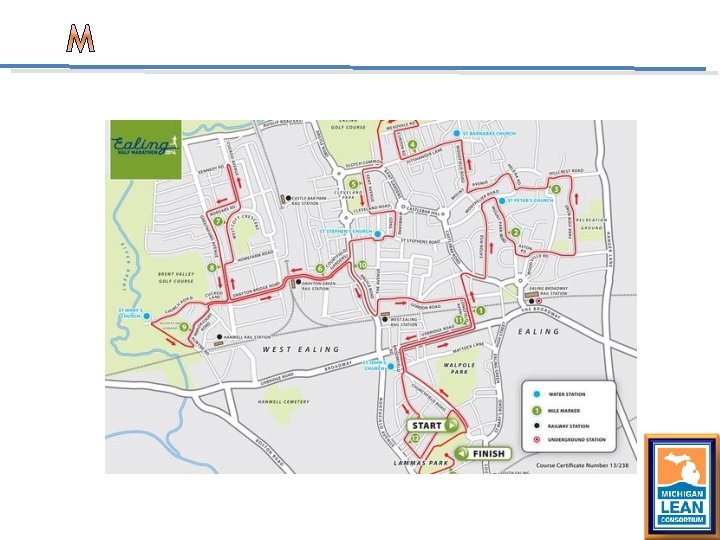
Value in Service 5 7
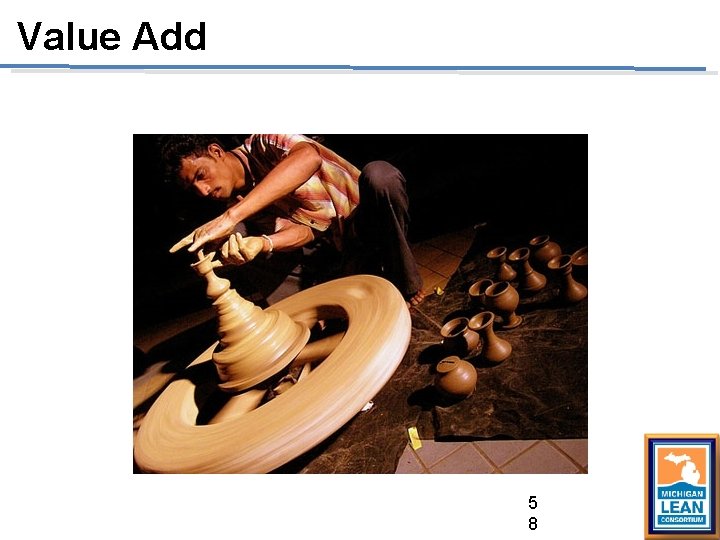
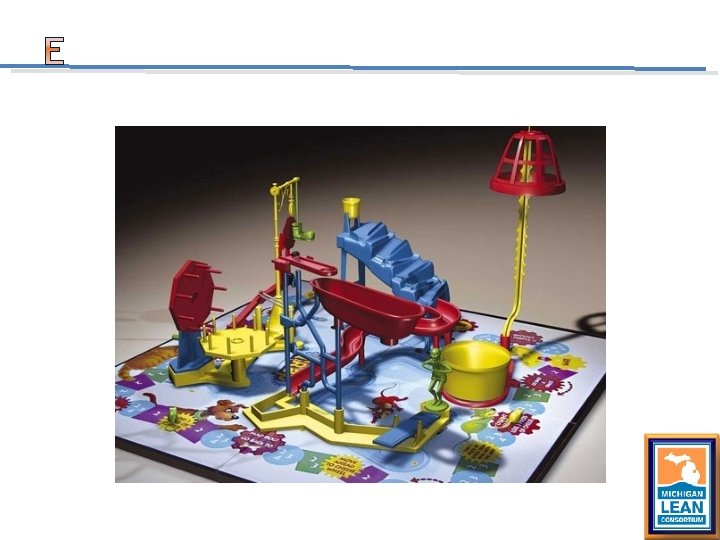
Value Add 5 8
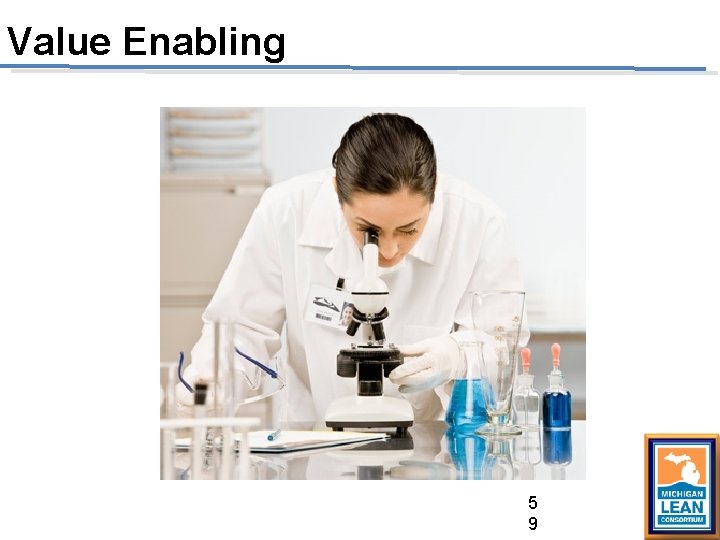
Value Enabling 5 9
Non-Value Added 6 0
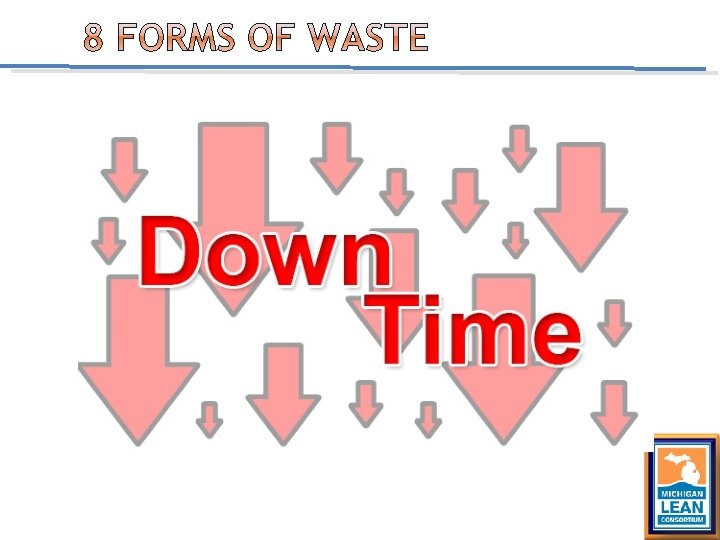
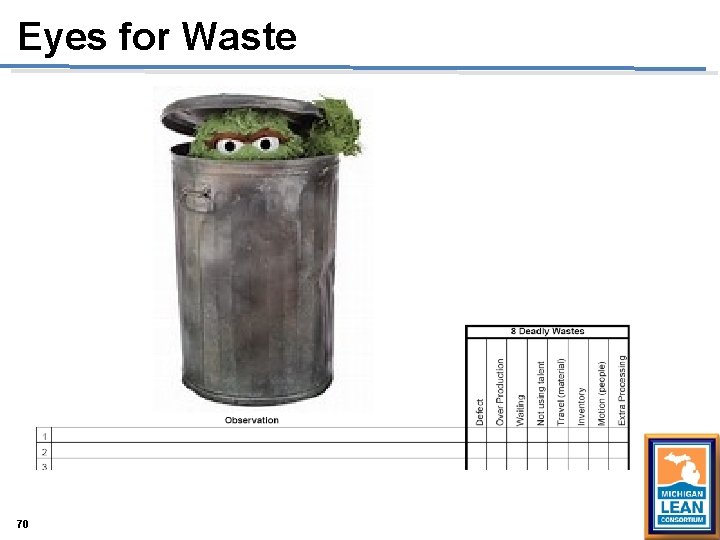
Eyes for Waste 70
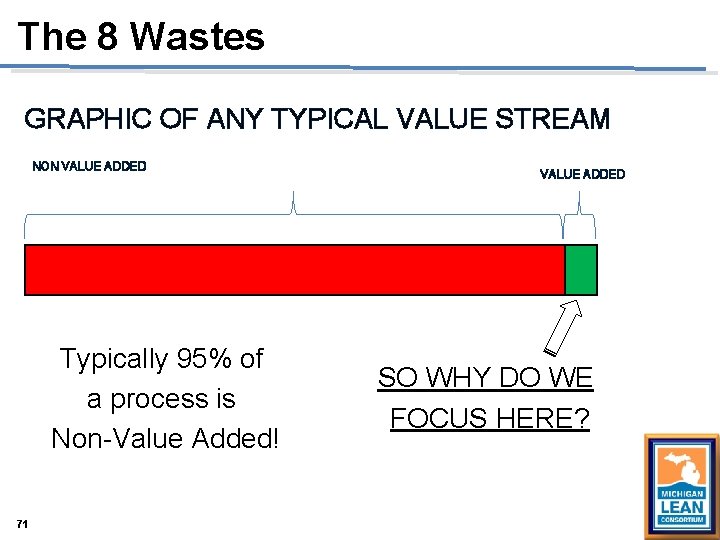
The 8 Wastes GRAPHIC OF ANY TYPICAL VALUE STREAM NON VALUE ADDED Typically 95% of a process is Non-Value Added! 71 VALUE ADDED SO WHY DO WE FOCUS HERE?
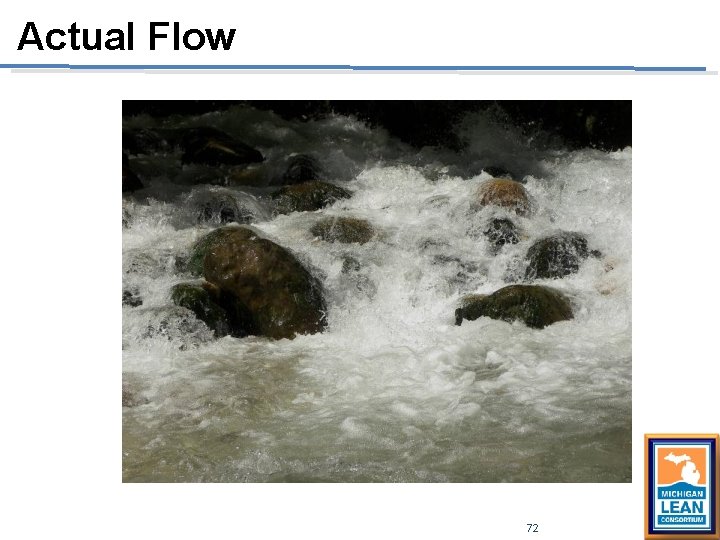
Actual Flow 72
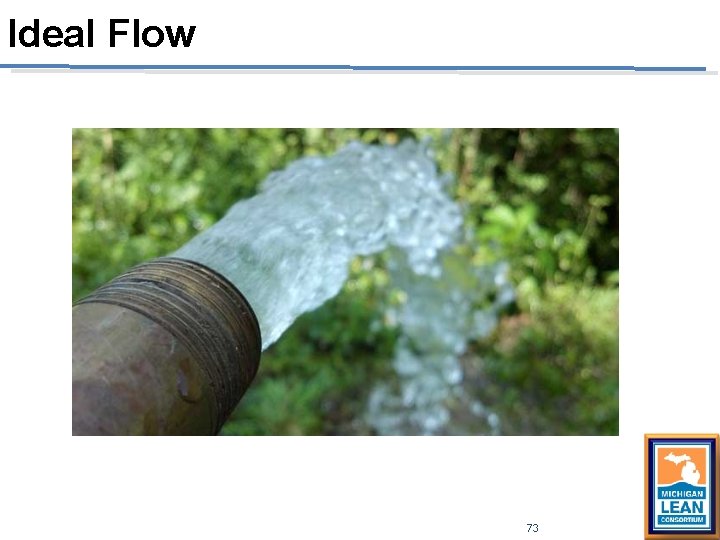
Ideal Flow 73
Some Waste is necessary 74
Agenda v. Welcome and MLC Overview v. Introductions v. The History Of Lean v. What Is Lean and how it differs v. The 8 Wastes v. Standard Work Exercise v. SQDC v 5 S v. Sustaining and Maintaining the Concepts v. What will you do Monday?
Bronze Body of Knowledge Materials Chapter 4 Lean Production Simplified Chapter 3 Lean Thinking Chapters 4 Gemba Kaizen 7 6
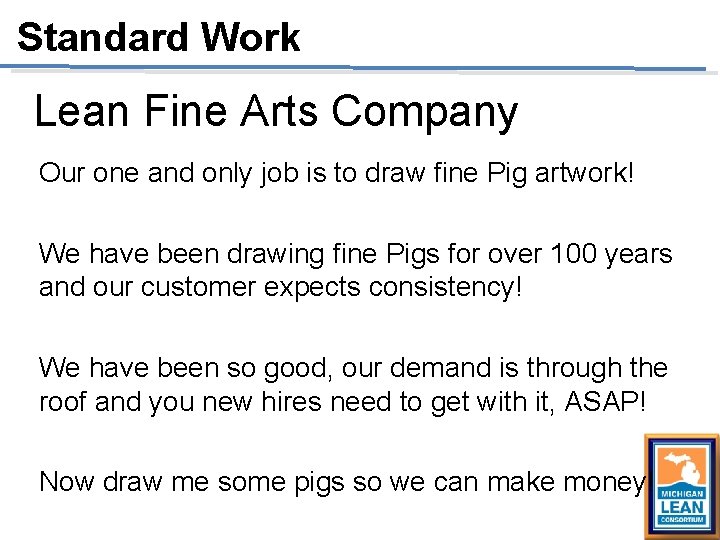
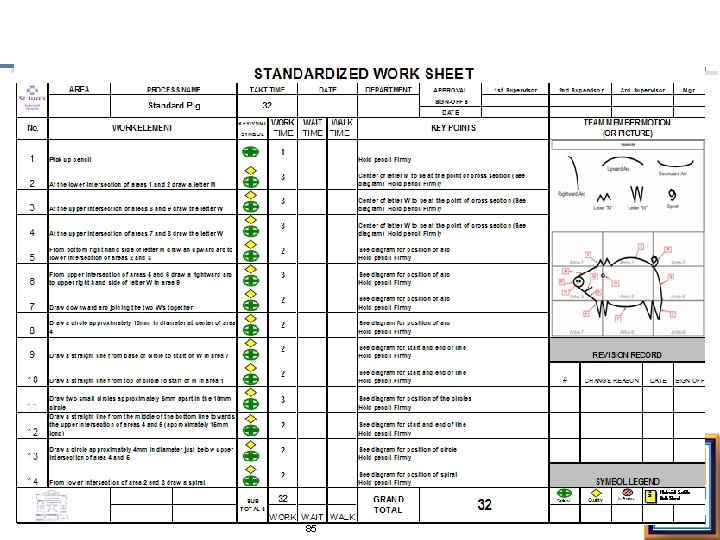
Standard Work Lean Fine Arts Company Our one and only job is to draw fine Pig artwork! We have been drawing fine Pigs for over 100 years and our customer expects consistency! We have been so good, our demand is through the roof and you new hires need to get with it, ASAP! Now draw me some pigs so we can make money!
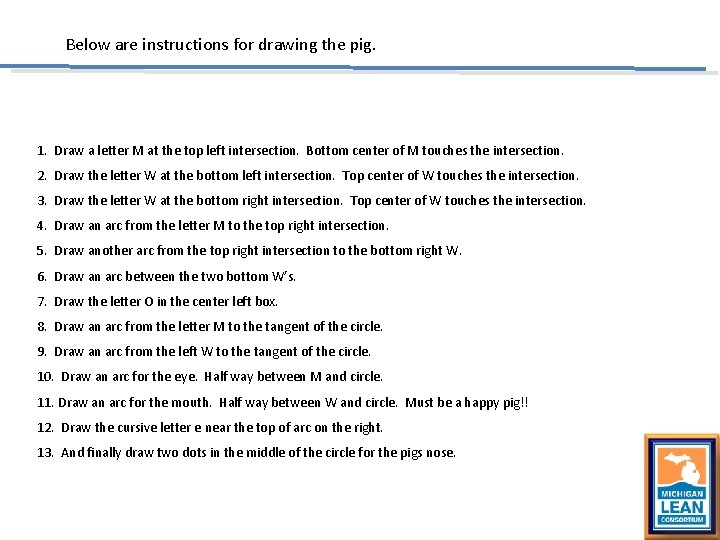
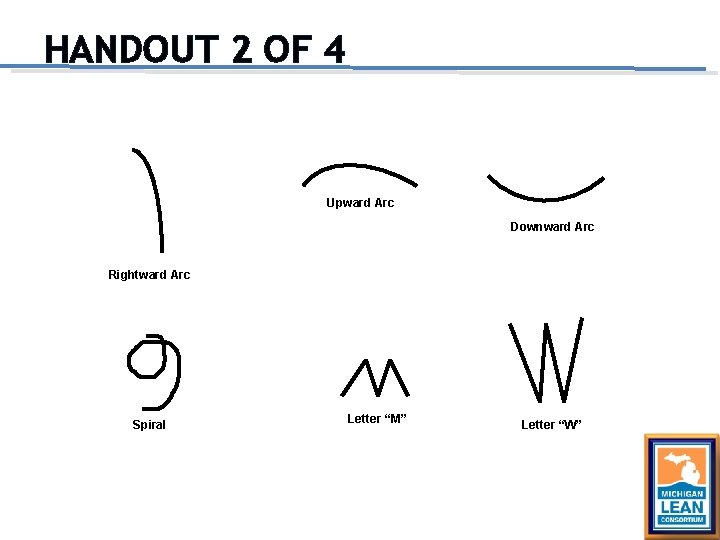
Below are instructions for drawing the pig. 1. Draw a letter M at the top left intersection. Bottom center of M touches the intersection. 2. Draw the letter W at the bottom left intersection. Top center of W touches the intersection. 3. Draw the letter W at the bottom right intersection. Top center of W touches the intersection. 4. Draw an arc from the letter M to the top right intersection. 5. Draw another arc from the top right intersection to the bottom right W. 6. Draw an arc between the two bottom W’s. 7. Draw the letter O in the center left box. 8. Draw an arc from the letter M to the tangent of the circle. 9. Draw an arc from the left W to the tangent of the circle. 10. Draw an arc for the eye. Half way between M and circle. 11. Draw an arc for the mouth. Half way between W and circle. Must be a happy pig!! 12. Draw the cursive letter e near the top of arc on the right. 13. And finally draw two dots in the middle of the circle for the pigs nose.
HANDOUT 2 OF 4 Upward Arc Downward Arc Rightward Arc Spiral Letter “M” Letter “W”
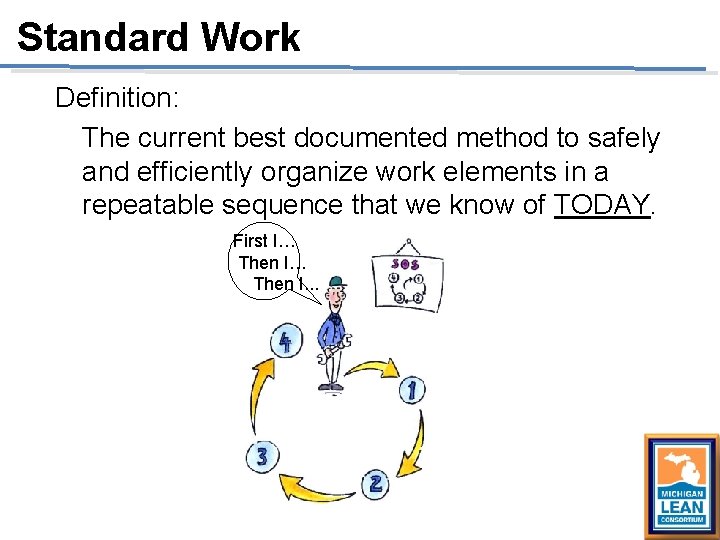
Standard Work Definition: The current best documented method to safely and efficiently organize work elements in a repeatable sequence that we know of TODAY. First I… Then I. . .
Standard Work “WITHOUT STANDARDS, THERE CAN BE NO IMPROVEMENT” – TAIICHI OHNO What does this mean?
03/29/10 S: /Lean Supply Chain/STD Pig-St Luke's-10_1216. ppt 85
Standard Work • The basis for continual improvement. • A powerful tool for eliminating waste. • A method of building-in quality. • Simple, clear & visual documents showing a Standard method of doing a job. • Results are consistent. • Live and continuously updated documentation, owned by the team. • Ensures correct use of tools and machines. • Shows safe work, based on human movements.
Standard Work DO: v. Keep standard work simple v. Make it accessible v. Include all info on one, easy-to-read document v. Create one standard work document for each part of the process v. Always look for ways to improve the process. DON’T: v. Put standard work in a desk drawer v. Change processes without changing standard work v. Make standard work difficult to change v. Give up on standard work – it can be tough, but it’s very important
Agenda v. Welcome and MLC Overview v. Introductions v. The History Of Lean v. What Is Lean and how it differs v. The 8 Wastes v. Standard Work Exercise v. SQDC v 5 S v. Sustaining and Maintaining the Concepts v. What will you do Monday?
Bronze Body of Knowledge Materials Chapter 4 Lean Production Simplified Chapters 3 Gemba Kaizen 8 9
SQDC 9 0
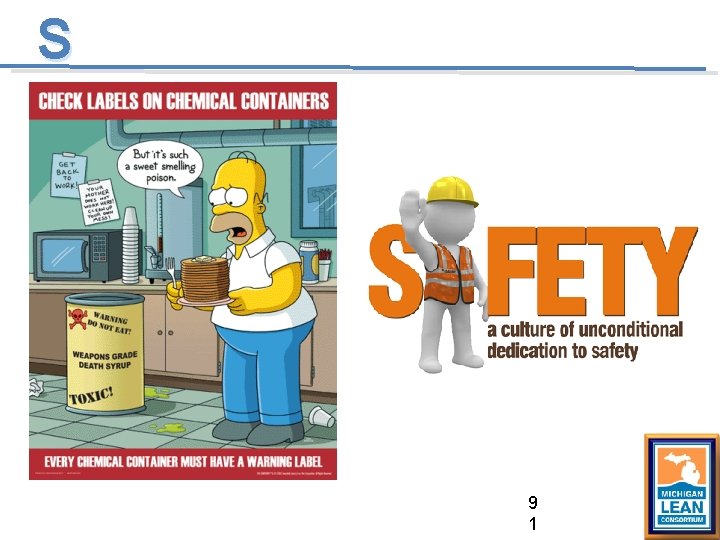
S 9 1
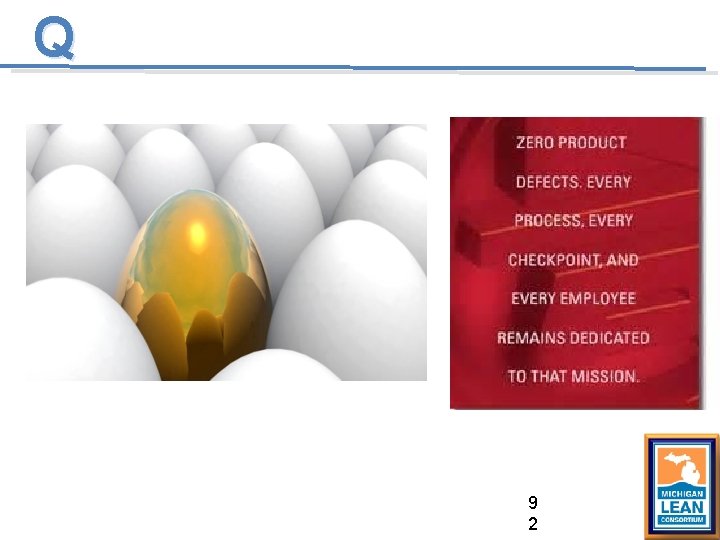
Q 9 2
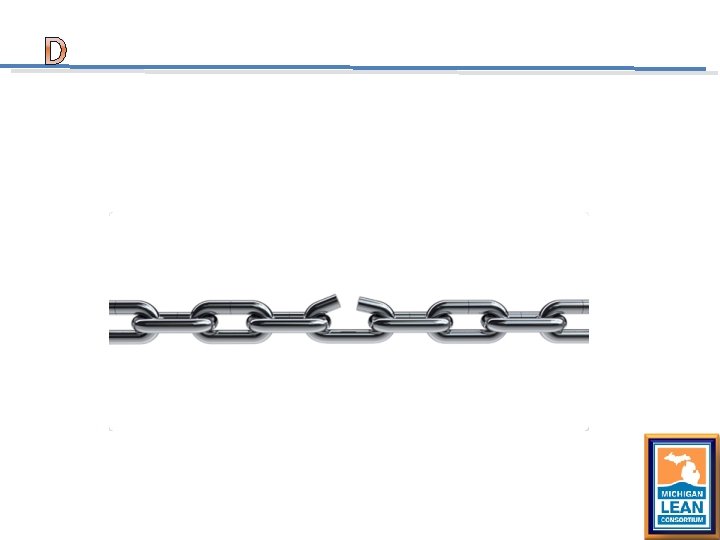
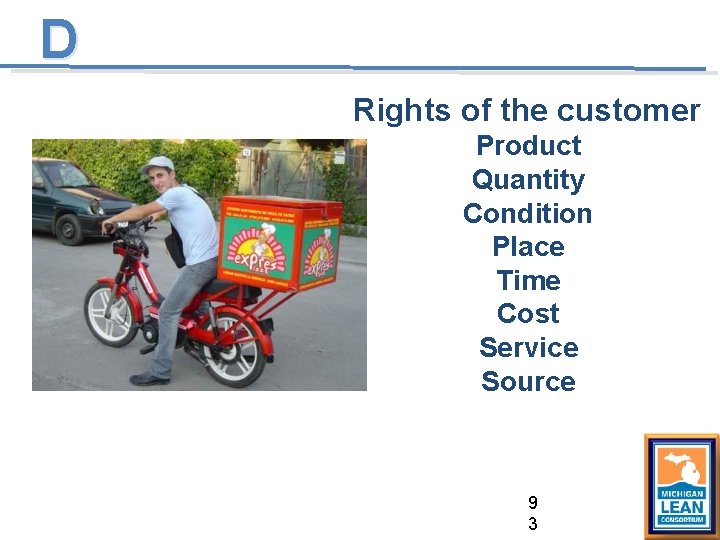
D Rights of the customer Product Quantity Condition Place Time Cost Service Source 9 3
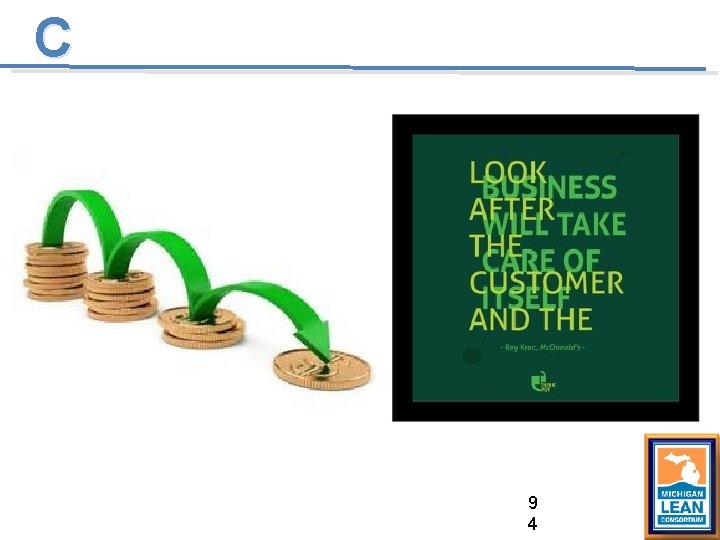
C 9 4
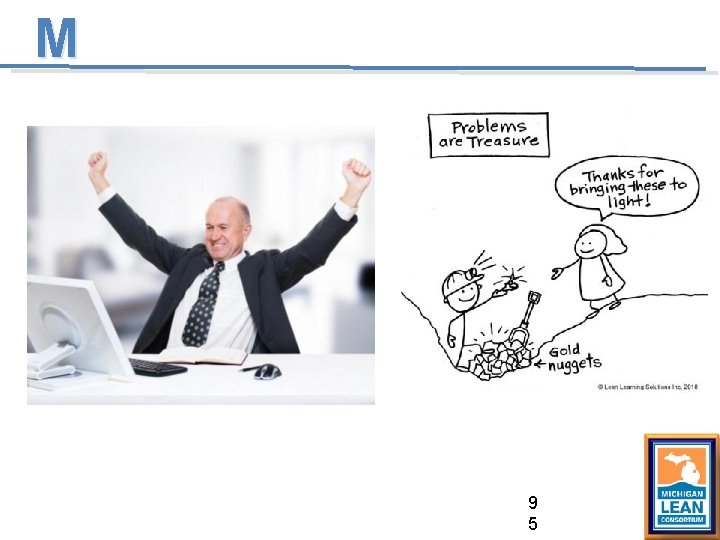
M 9 5
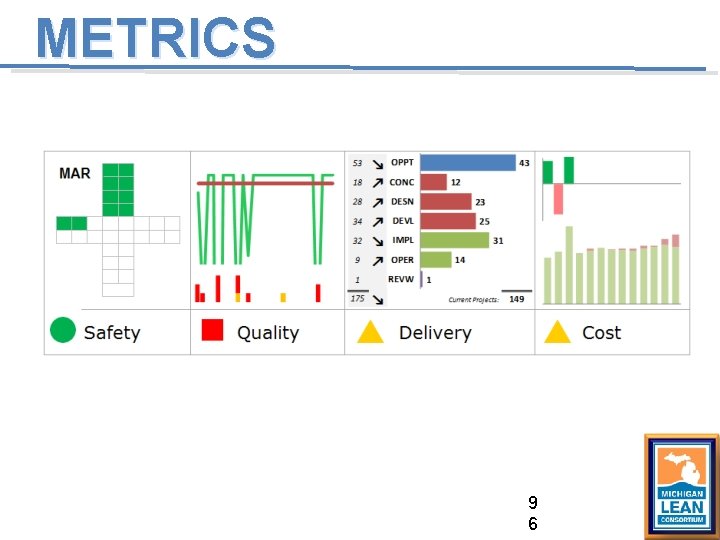
METRICS 9 6
Agenda v. Welcome and MLC Overview v. Introductions v. The History Of Lean v. What Is Lean and how it differs v. The 8 Wastes v. Standard Work Exercise v. SQDC v 5 S v. Sustaining and Maintaining the Concepts v. What will you do Monday?
Bronze Body of Knowledge Materials Chapter 3 Lean Production Simplified Chapters 2, 5 Gemba Kaizen 9 8
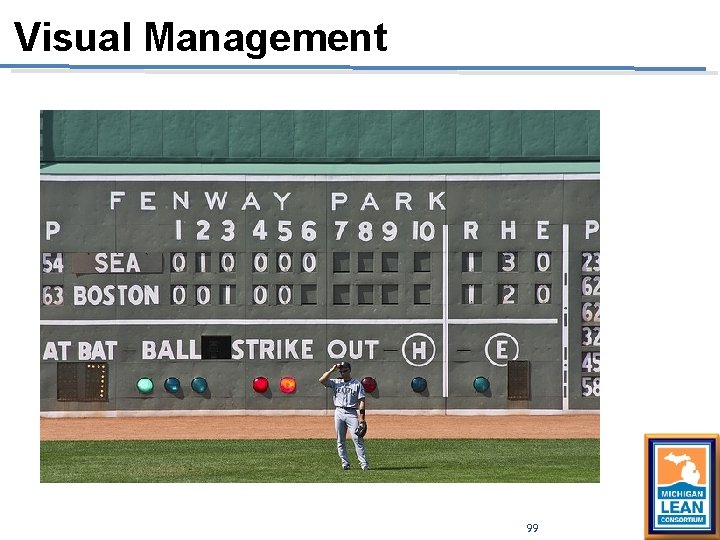
Visual Management 99
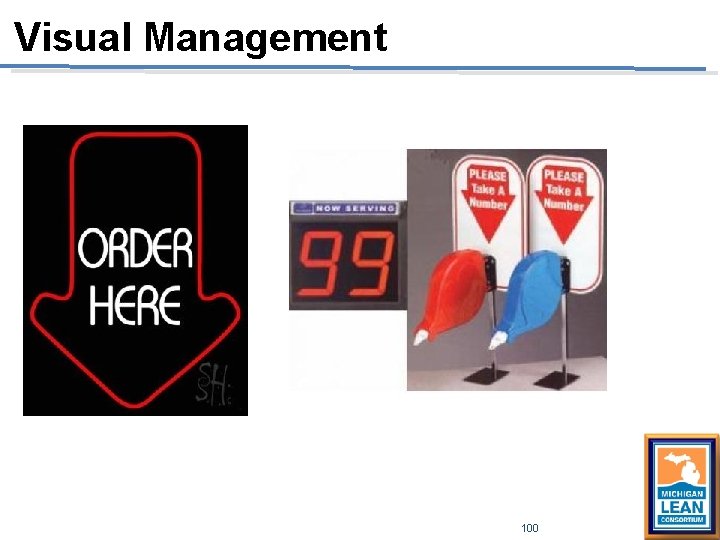
Visual Management 100
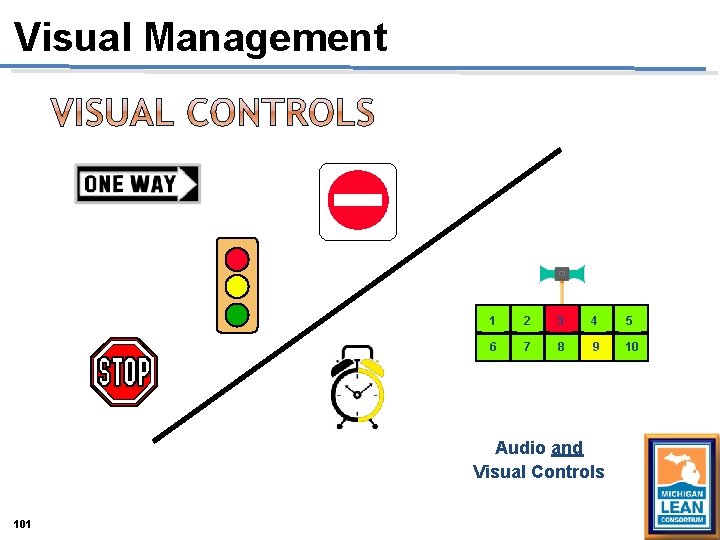
Visual Management 1 2 3 4 5 6 7 8 9 10 Audio and Visual Controls 101
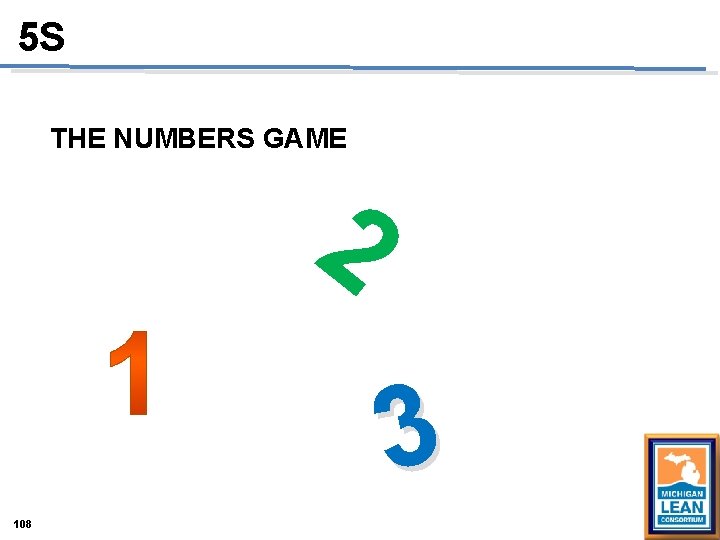
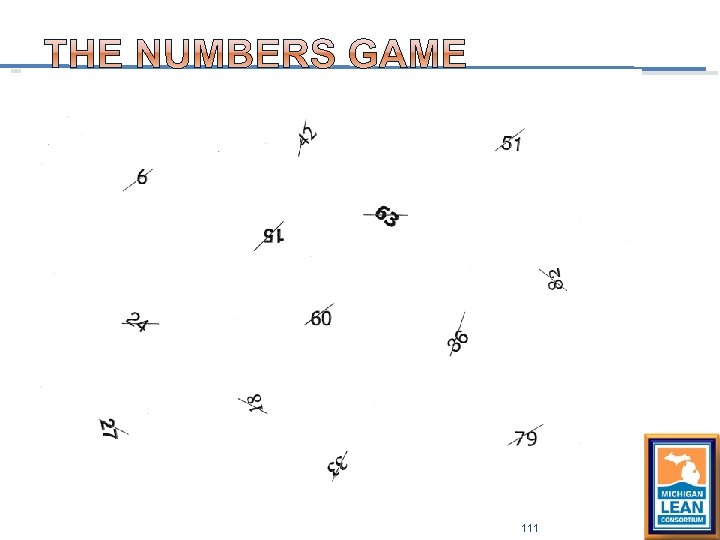
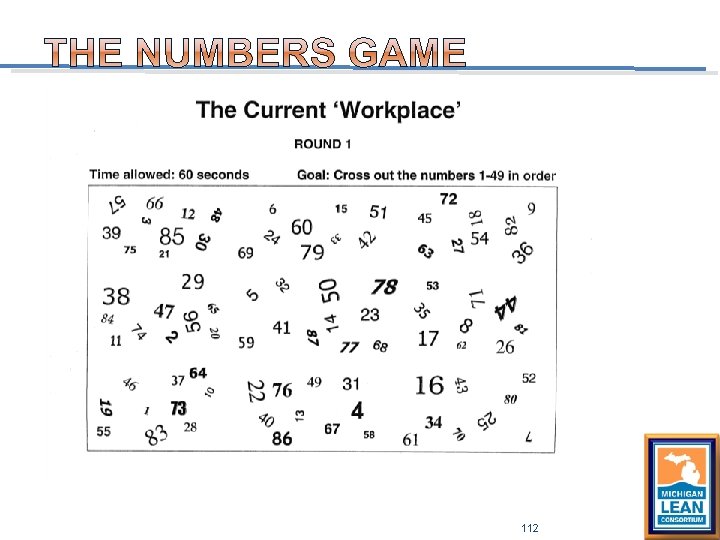
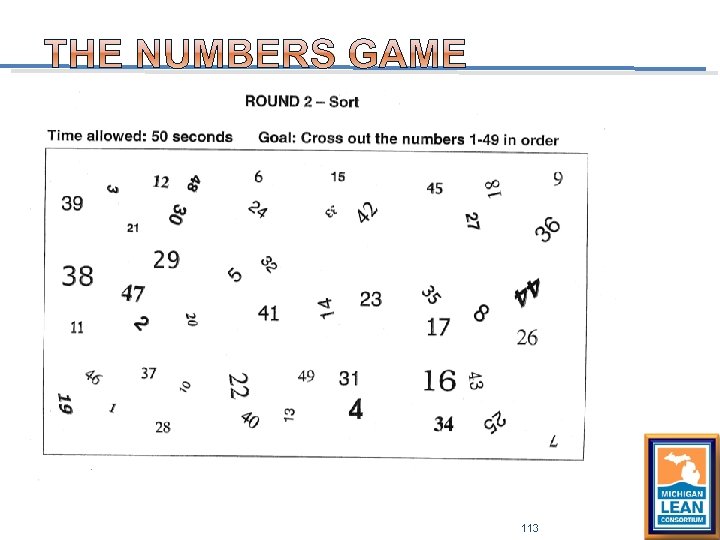
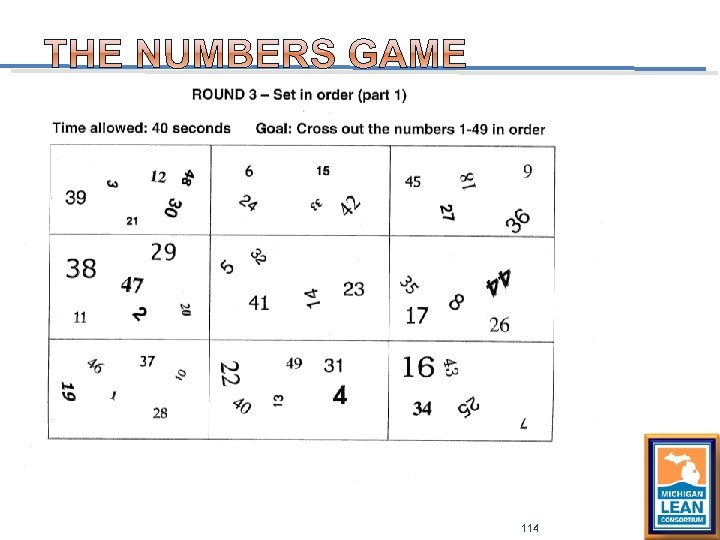
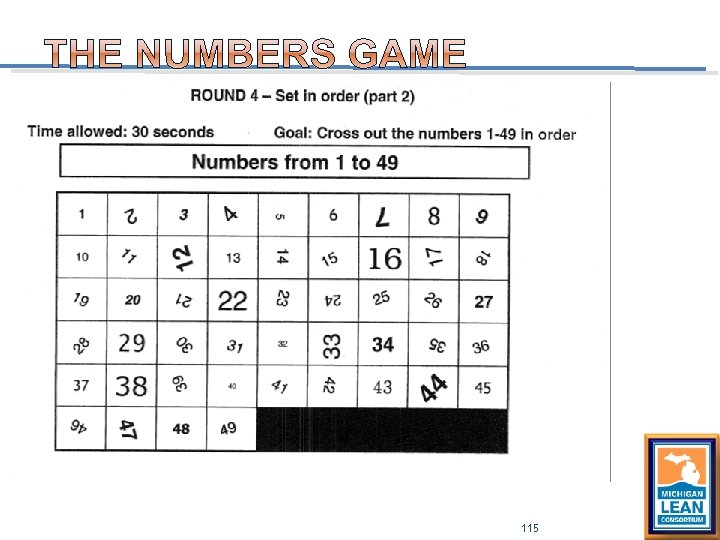
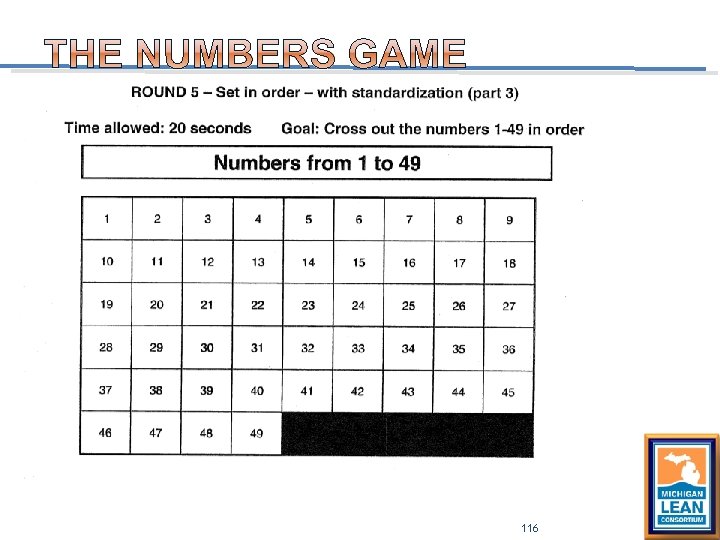
5 S THE NUMBERS GAME 2 3 108
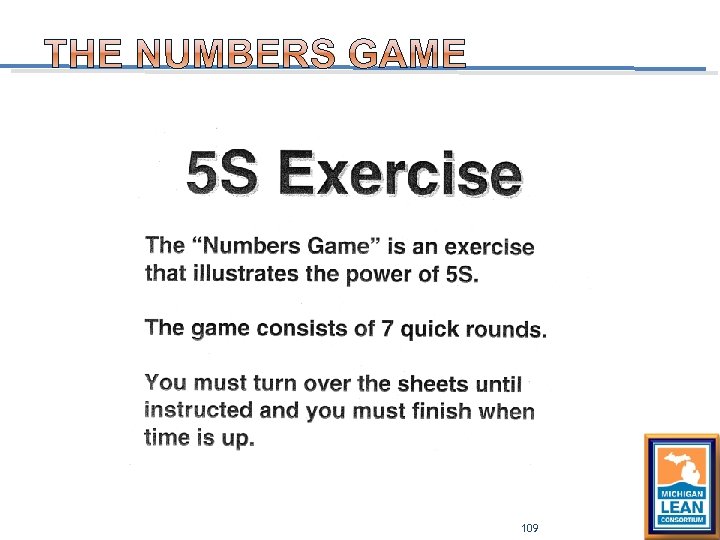
109
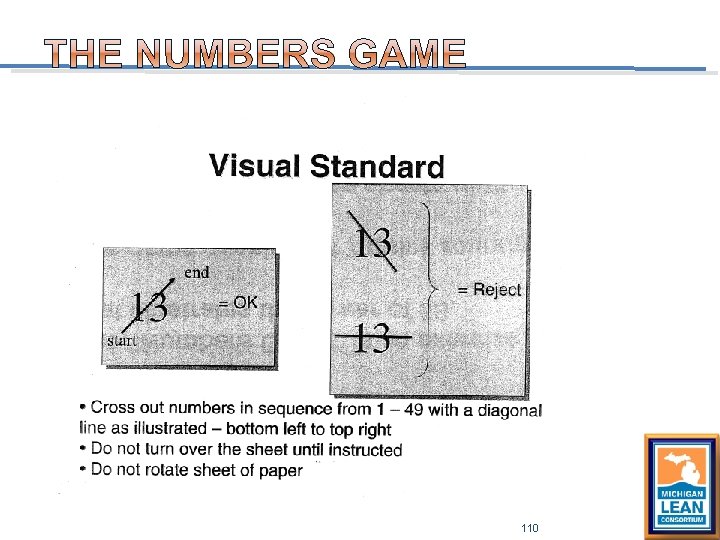
110
111
112
113
114
115
116
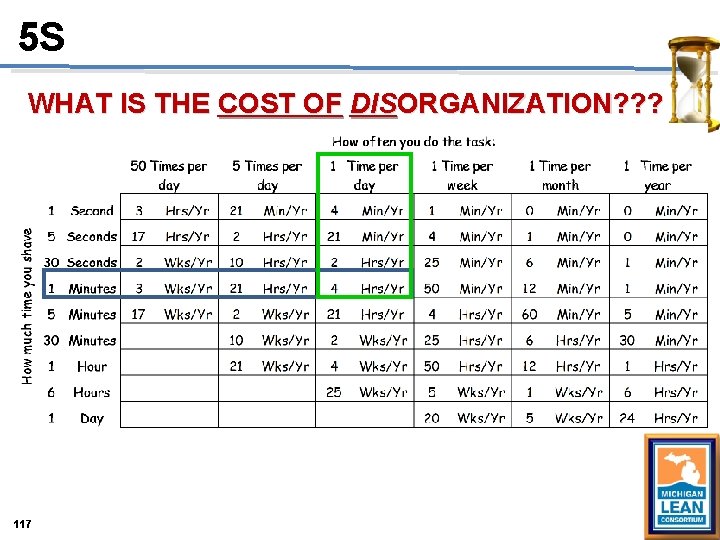
5 S WHAT IS THE COST OF DISORGANIZATION? ? ? 117
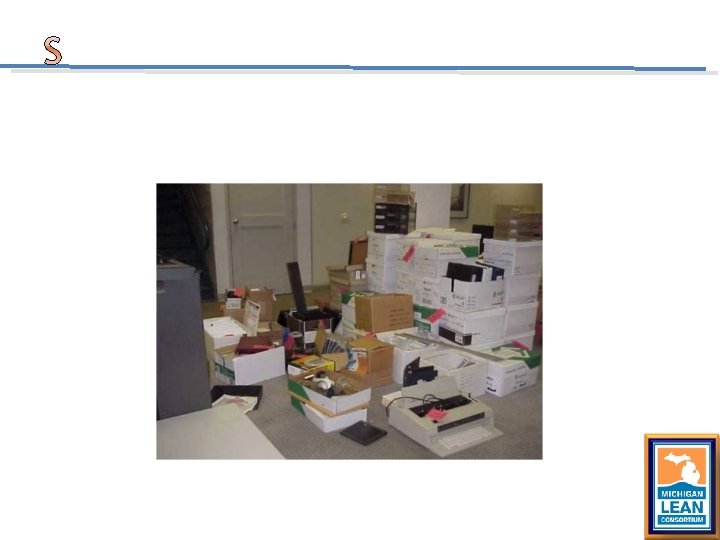
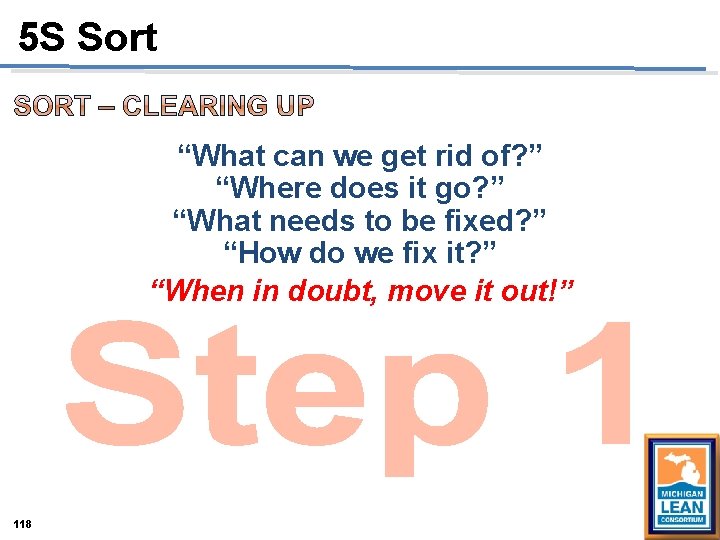
5 S Sort “What can we get rid of? ” “Where does it go? ” “What needs to be fixed? ” “How do we fix it? ” “When in doubt, move it out!” 118
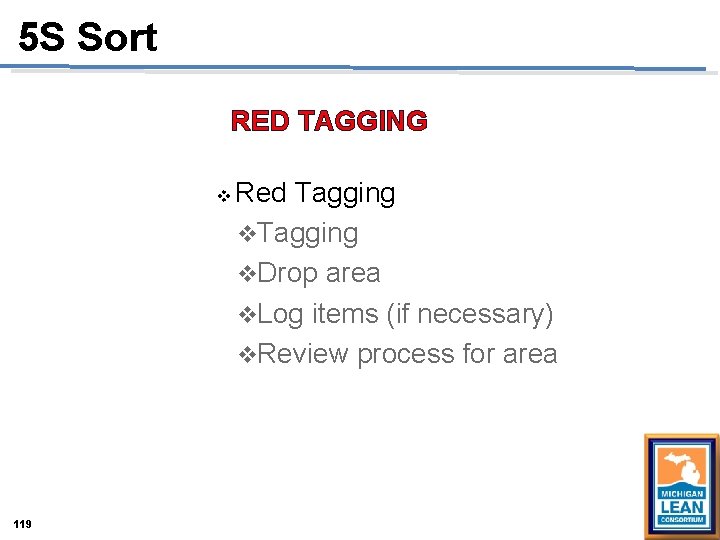
5 S Sort RED TAGGING v 119 Red Tagging v. Drop area v. Log items (if necessary) v. Review process for area
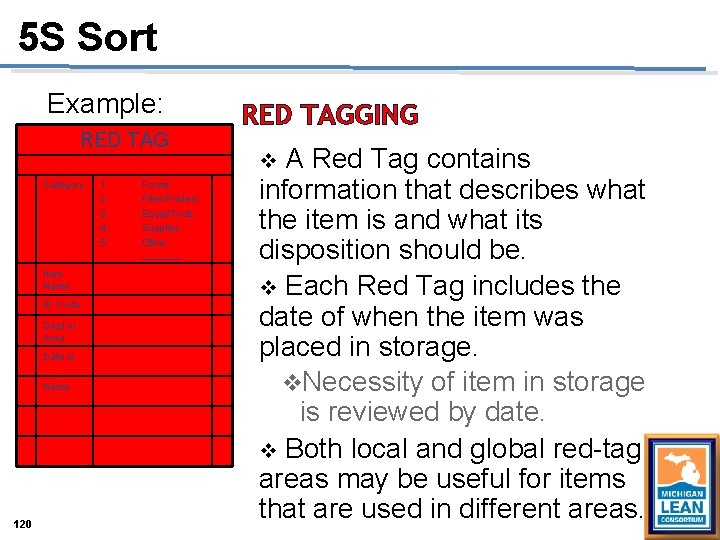
5 S Sort Example: RED TAG Category Item Name ID Code Dept or Area Date in Name … … 120 1. 2. 3. 4. 5. Forms Files/Folders Equip/Tools Supplies Other _______ RED TAGGING v A Red Tag contains information that describes what the item is and what its disposition should be. v Each Red Tag includes the date of when the item was placed in storage. v. Necessity of item in storage is reviewed by date. v Both local and global red-tag areas may be useful for items that are used in different areas.
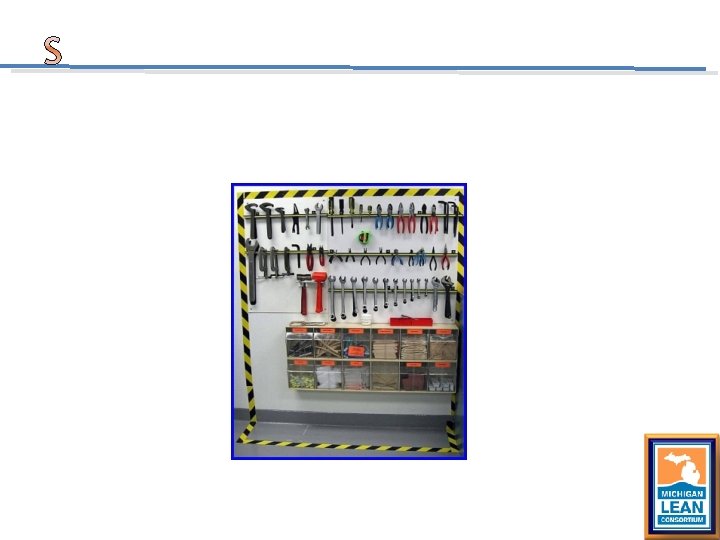
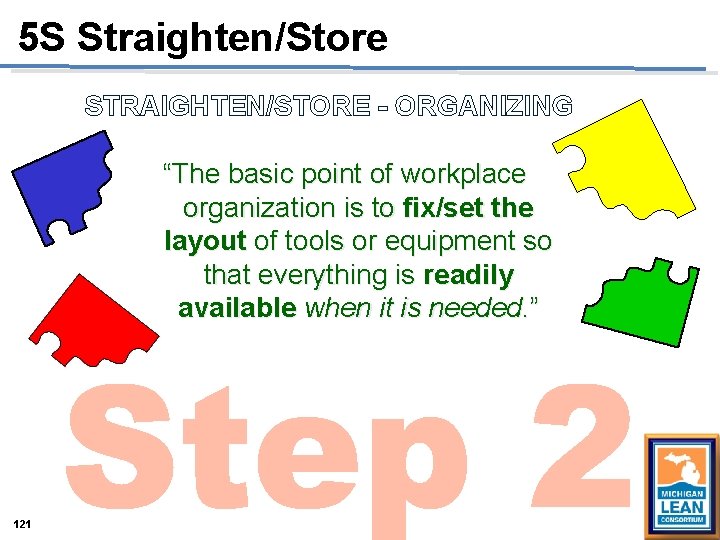
5 S Straighten/Store STRAIGHTEN/STORE - ORGANIZING “The basic point of workplace organization is to fix/set the layout of tools or equipment so that everything is readily available when it is needed. ” 121
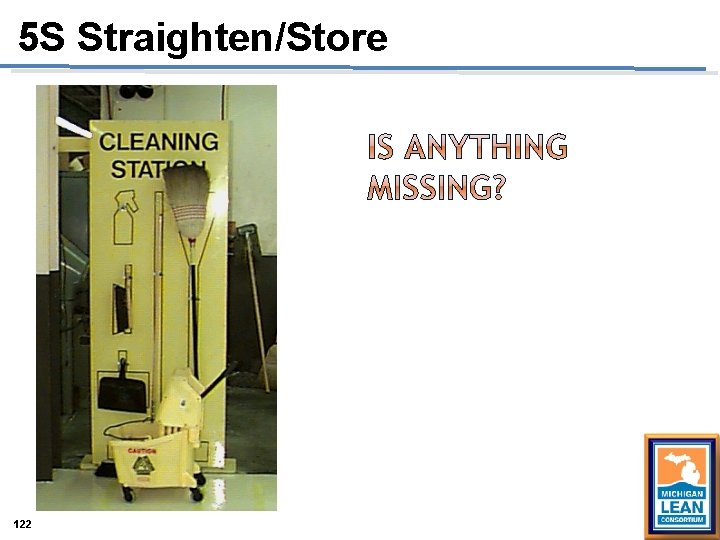
5 S Straighten/Store 122
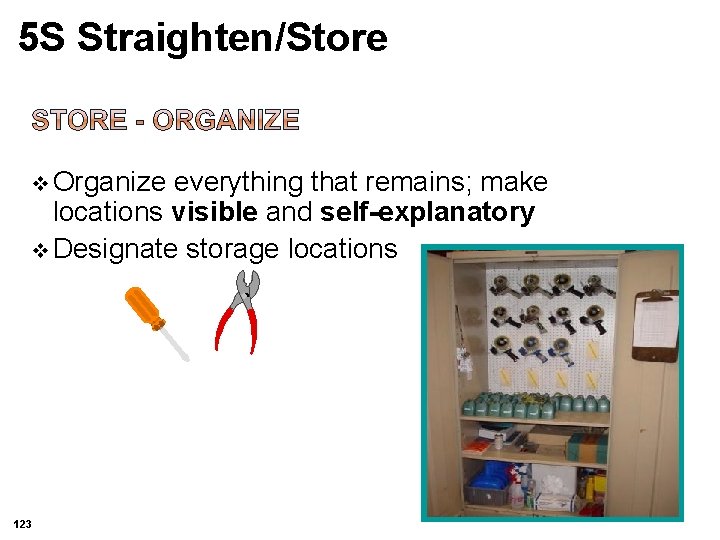
5 S Straighten/Store v Organize everything that remains; make locations visible and self-explanatory v Designate storage locations 123
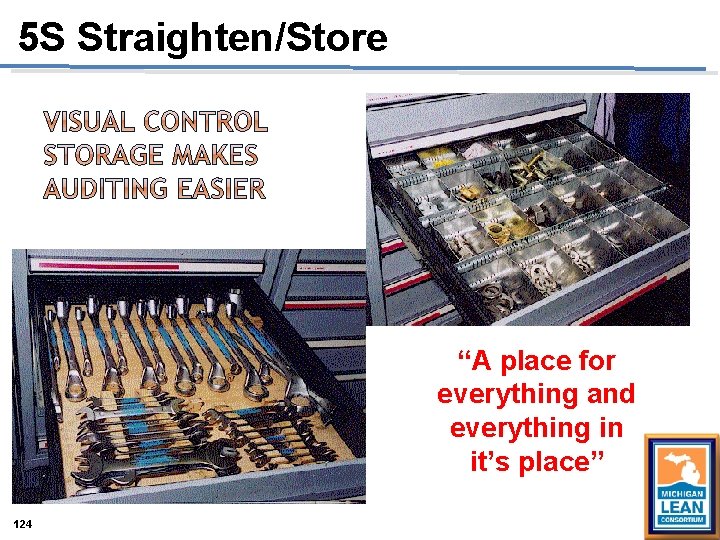
5 S Straighten/Store “A place for everything and everything in it’s place” 124
5 S Straighten/Store VISUAL MANAGEMENT v 125 VISUAL MANAGEMENT is key v. Labeling v. Signage v. Floor markings, etc.
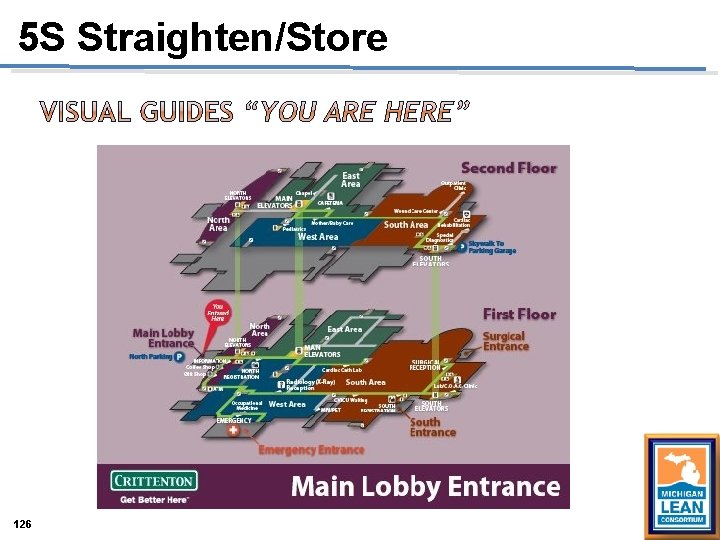
5 S Straighten/Store 126
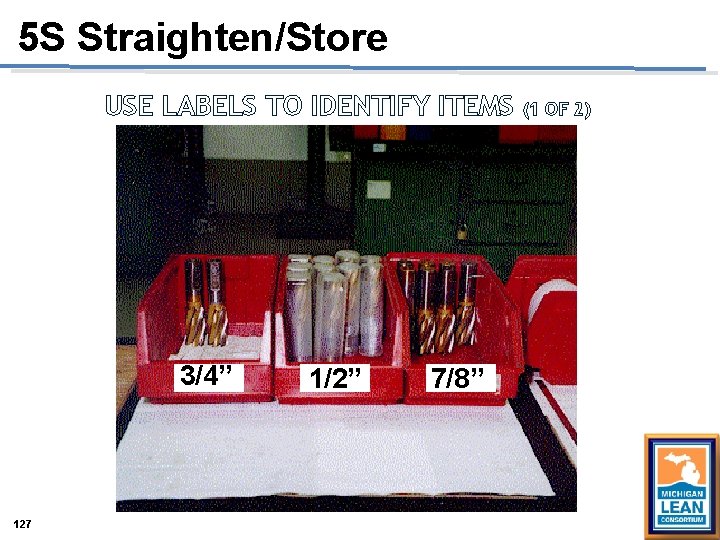
5 S Straighten/Store USE LABELS TO IDENTIFY ITEMS 3/4” 127 1/2” 7/8” (1 OF 2)
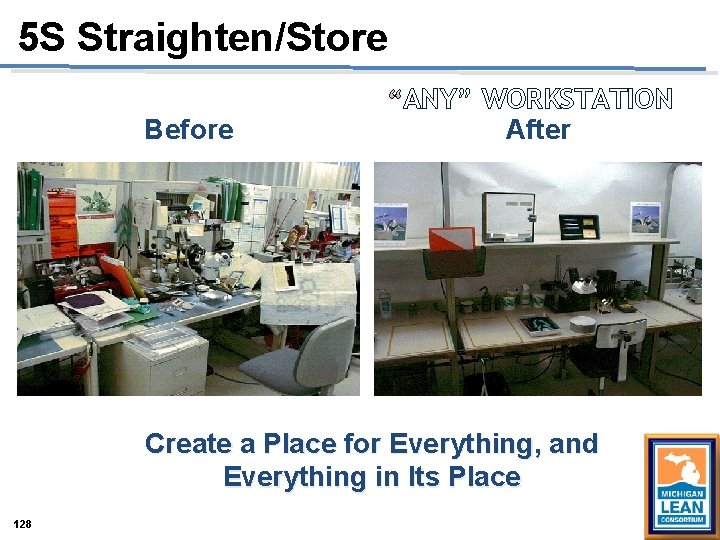
5 S Straighten/Store Before ANY” WORKSTATION After Create a Place for Everything, and Everything in Its Place 128
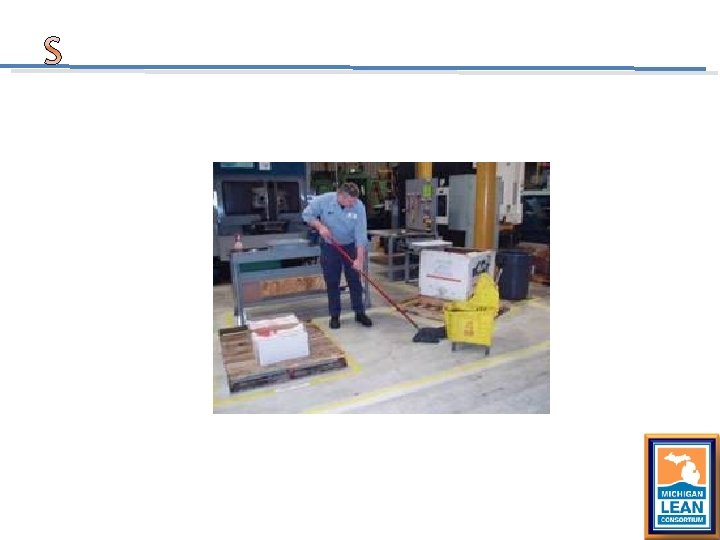
5 S Shine “A clean workplace makes the unspoken statement that quality work is expected. ” 129
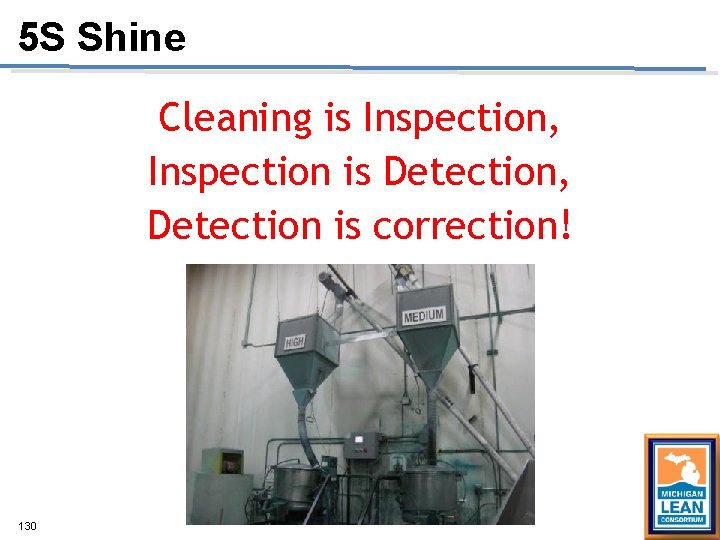
5 S Shine Cleaning is Inspection, Inspection is Detection, Detection is correction! 130
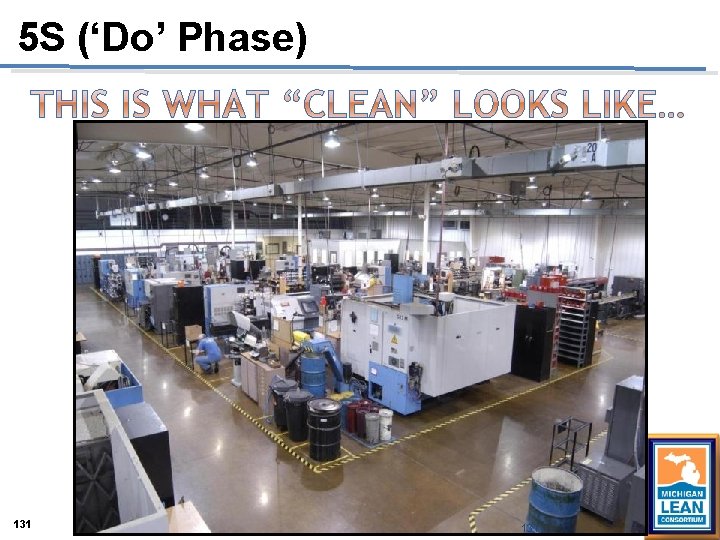
5 S (‘Do’ Phase) 131
5 S Standardize Good housekeeping habits should be everyone’s responsibility, including management and staff. STANDARDS (expectations) must be set and visual. 132
5 S Sustain SUSTAIN – SELF-DISCIPLINE Requires self-discipline Discipline is consistently working by the rules and standards of clearing, locating, and cleaning and commitment from everyone in the organization “Inspect what you expect” 133
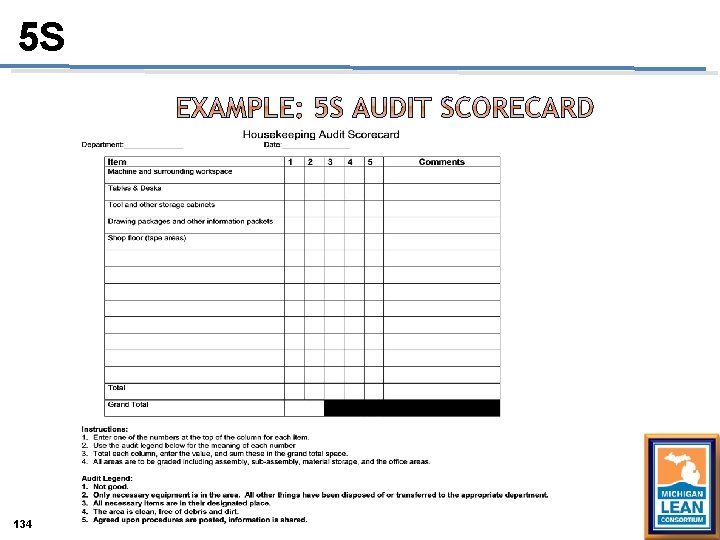
5 S 134
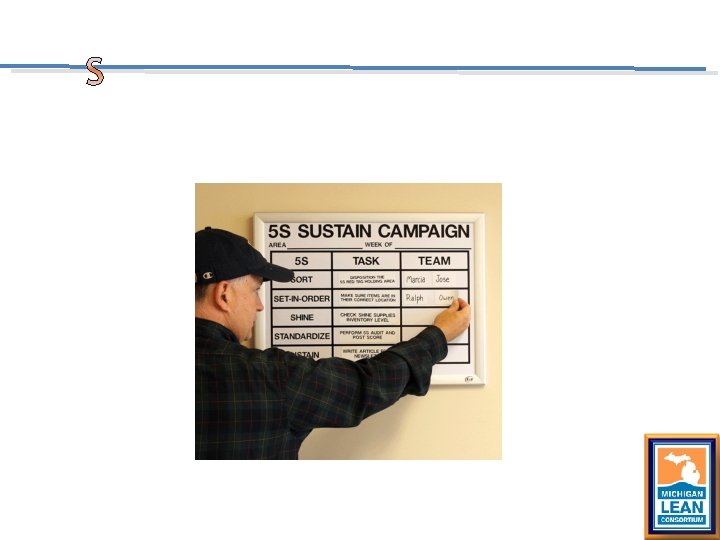
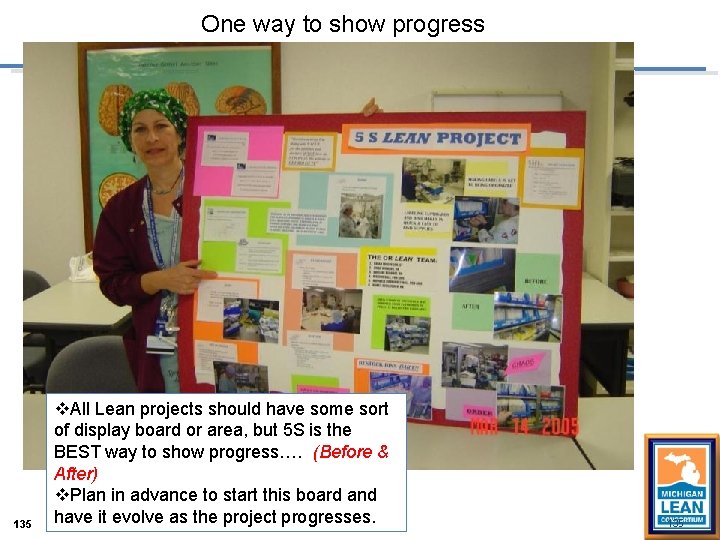
One way to show progress 135 v. All Lean projects should have some sort of display board or area, but 5 S is the BEST way to show progress…. (Before & After) v. Plan in advance to start this board and have it evolve as the project progresses. 135
5 S Where to Start? Where to start? Typical companies are highly successful at the first 3 S’s… Consider starting with system development? Who What When Where How much 136 (time) 136
Agenda v. Welcome and MLC Overview v. Introductions v. The History Of Lean v. What Is Lean and how it differs v. The 8 Wastes v. Standard Work Exercise v. SQDC v 5 S v. Sustaining and Maintaining the Concepts v. What will you do Monday?
OUR THREE JOBS 138
OUR THREE JOBS • The work • Problem solving • Improvement 139
Problem Solving Plan Act Do Improvement Check ard d n ta S Time
Sustaining And Maintaining Improving your process exercise I need a Volunteer I am going to improve your process!
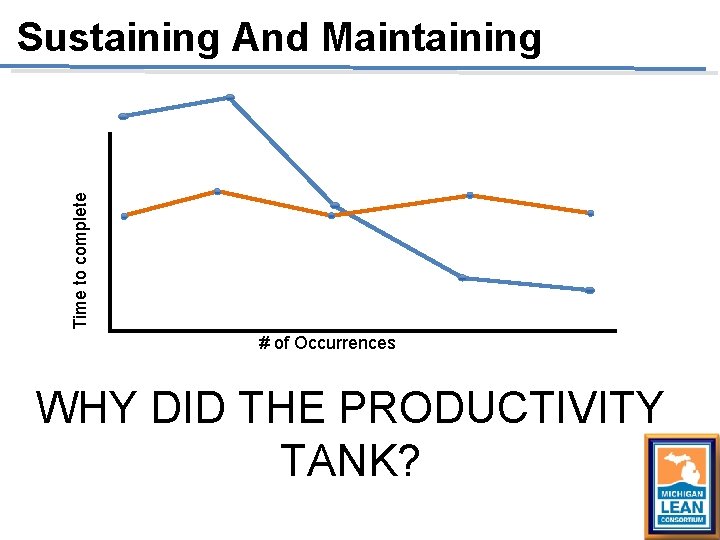
Time to complete Sustaining And Maintaining # of Occurrences WHY DID THE PRODUCTIVITY TANK?
Sustaining And Maintaining It always gets worse before it gets better. Period. Whatarewegonnadoaboutit!
1 4 4
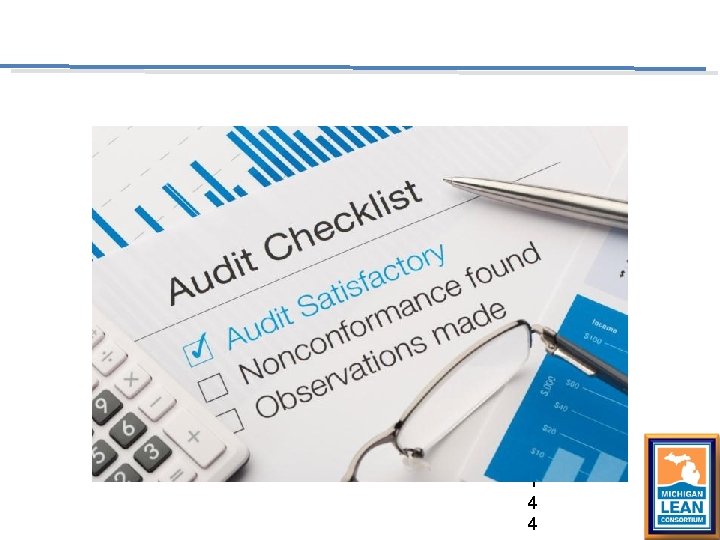
Sustaining And Maintaining • Audit for compliance and improvement • Continuous education • Changing behaviors – find a way for success instead of failure • Positive reinforcement • Help each other • Coaching • PDCA, PDCA!
Sustaining And Maintaining Sharing Our Experiences: Give me examples of Learning Curve success stories, and failures!
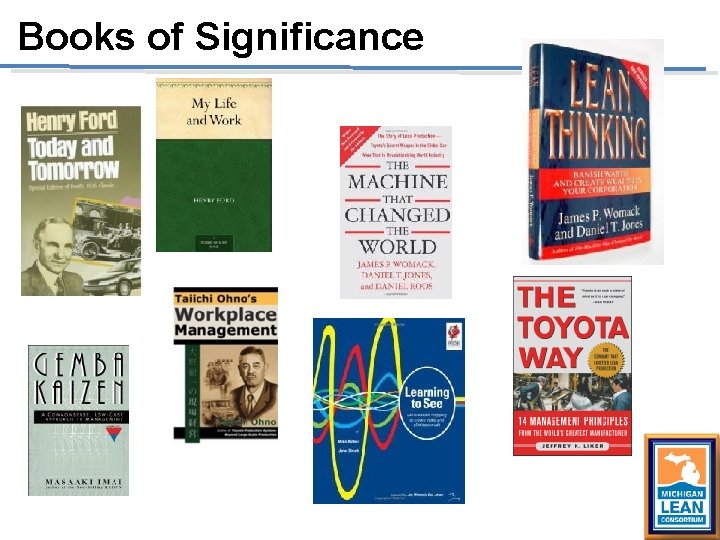
Books of Significance
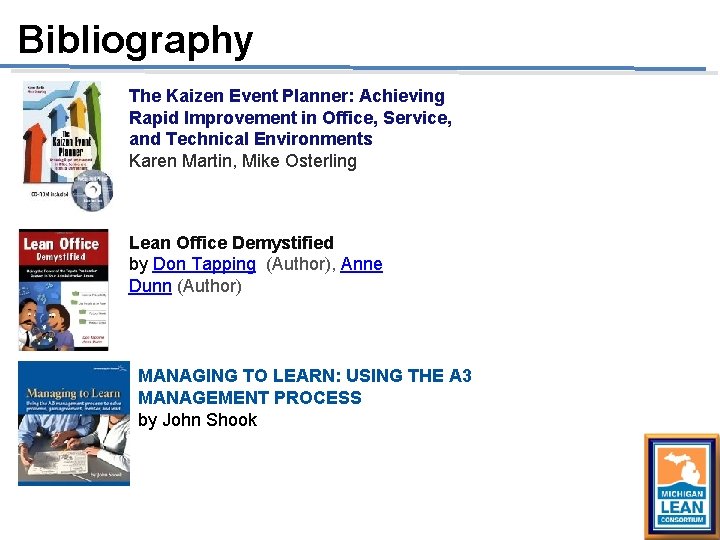
Bibliography The Kaizen Event Planner: Achieving Rapid Improvement in Office, Service, and Technical Environments Karen Martin, Mike Osterling Lean Office Demystified by Don Tapping (Author), Anne Dunn (Author) MANAGING TO LEARN: USING THE A 3 MANAGEMENT PROCESS by John Shook
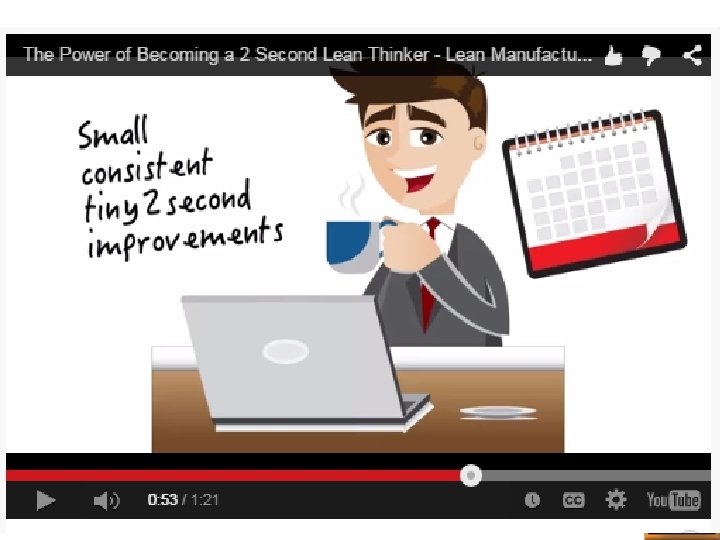
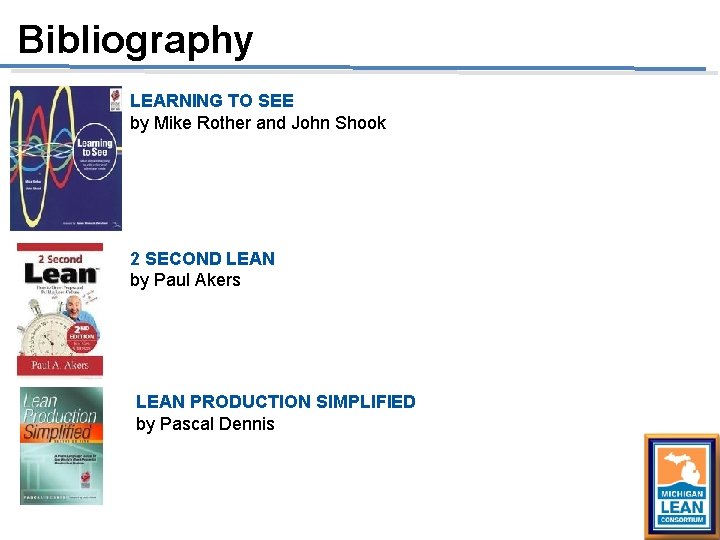
Bibliography LEARNING TO SEE by Mike Rother and John Shook 2 SECOND LEAN by Paul Akers LEAN PRODUCTION SIMPLIFIED by Pascal Dennis
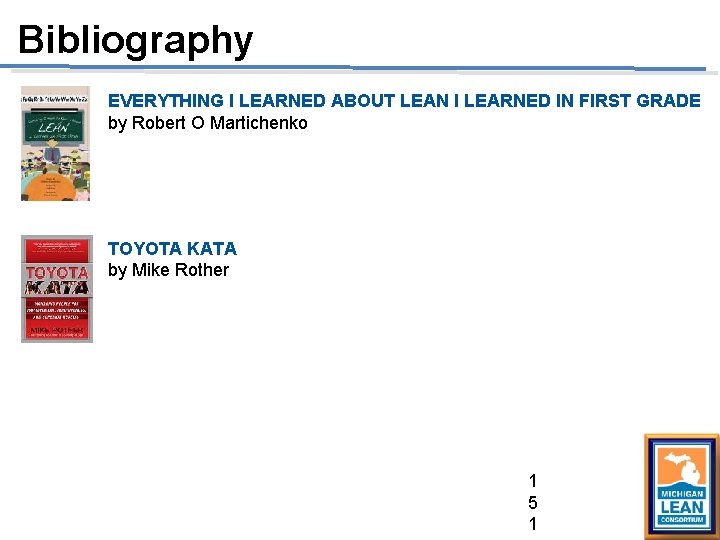
Bibliography EVERYTHING I LEARNED ABOUT LEAN I LEARNED IN FIRST GRADE by Robert O Martichenko TOYOTA KATA by Mike Rother 1 5 1
Agenda v. Welcome and MLC Overview v. Introductions v. The History Of Lean v. What Is Lean and how it differs v. The 8 Wastes v. Standard Work Exercise v. SQDC v 5 S v. Sustaining and Maintaining the Concepts v. What will you do Monday?
So, What Are You Going to Different Tomorrow The world won’t get any better if all you do is sit there and watch 153
So, What Are You Going to Different Tomorrow • Your ideas? • Start with personal reflection (Do you believe? ) • Organization assessment (large organization start with what you control). • Value Stream / Process Mapping (other discovery tools). • Pick an area and start PDCA cycle • Don’t wait! Get your Learn on! 154
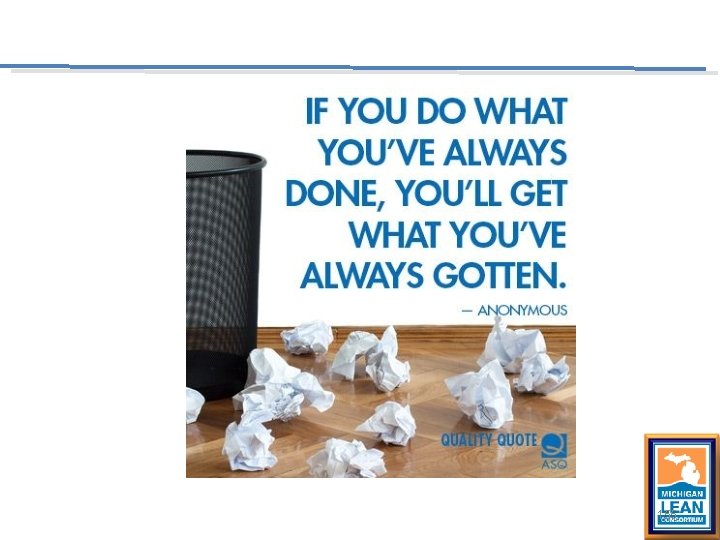
155
Reflection Everyone stand up and come to the front of the room and let’s discuss the training… What went well What should we change