Management of Hospitalacquired and Ventilatorassociated Pneumonia Amanda Cantin






- Slides: 59
Management of Hospital-acquired and Ventilator-associated Pneumonia Amanda Cantin, Pharm. D, BCCCP Assistant Professor Touro College of Pharmacy
Disclosures § I have no financial disclosures related to this presentation.
Objectives § Define hospital-acquired pneumonia (HAP) and ventilator-associated pneumonia (VAP) § Describe diagnosis of HAP and VAP § Identify risk factors for infections with multi-drug resistant organisms (MDROs) § Differentiate empiric therapy recommendations for HAP and VAP § Discuss the role of short-course therapy, antibiotic deescalation and use of local antibiograms in the treatment of HAP and VAP
Epidemiology of HAP and VAP § 22% of all hospital-acquired infections (HAIs) § Mortality rates: § VAP range from 20 – 50% § Economic burden: § Prolonged mechanical ventilation § Prolonged hospital length of stay (LOS) § Excess cost $40, 000 per patient CID. 2016; 63: 1 -51.
Historical Perspective 1966: ATSNosocomial Infections 2005: ATS/ISDAHAP and VAP Guidelines 1996: ATSHAP Consensus Statement 2016: ATS/IDSAHAP and VAP Guideline UPDATE 2014: SHEA/IDSA VAP Prevention Guidelines Am J Respir Crit Care Med. 1996; 153: 1711– 1725. Am J Respir Crit Care Med. 2005; 171: 388 -416. Infect Control Hosp Epidemiol. 2014; 35(8): 915 -936. CID. 2016; 63: 1 -51.
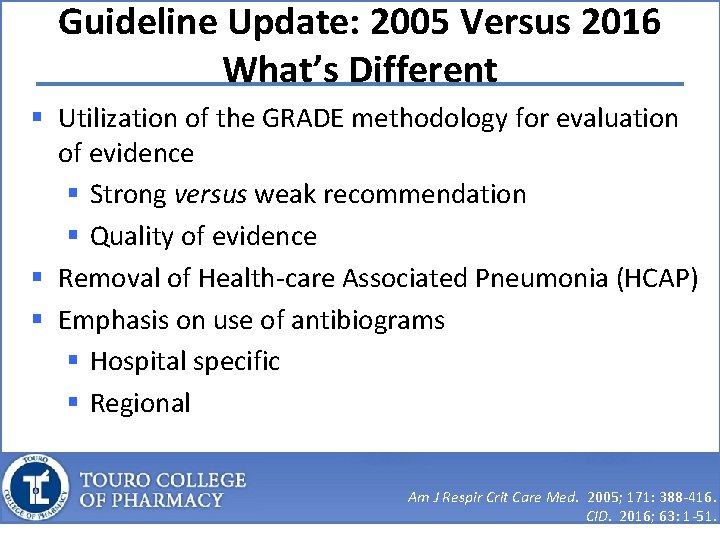
Guideline Update: 2005 Versus 2016 What’s Different § Utilization of the GRADE methodology for evaluation of evidence § Strong versus weak recommendation § Quality of evidence § Removal of Health-care Associated Pneumonia (HCAP) § Emphasis on use of antibiograms § Hospital specific § Regional Am J Respir Crit Care Med. 2005; 171: 388 -416. CID. 2016; 63: 1 -51.
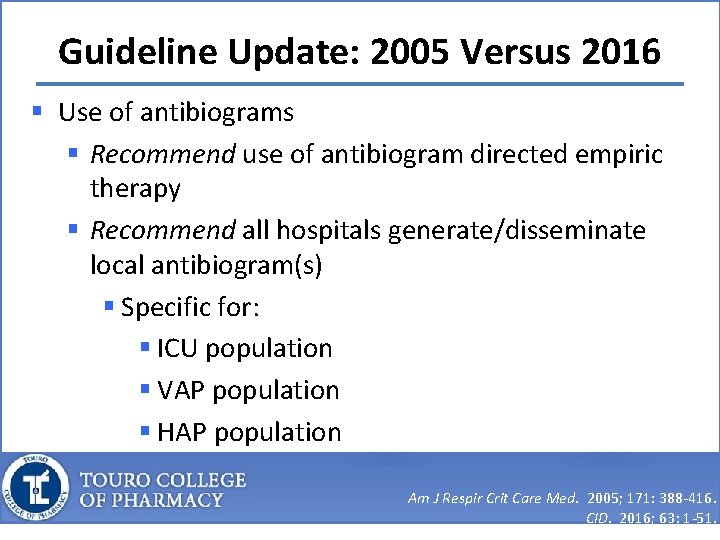
Guideline Update: 2005 Versus 2016 § Use of antibiograms § Recommend use of antibiogram directed empiric therapy § Recommend all hospitals generate/disseminate local antibiogram(s) § Specific for: § ICU population § VAP population § HAP population Am J Respir Crit Care Med. 2005; 171: 388 -416. CID. 2016; 63: 1 -51.
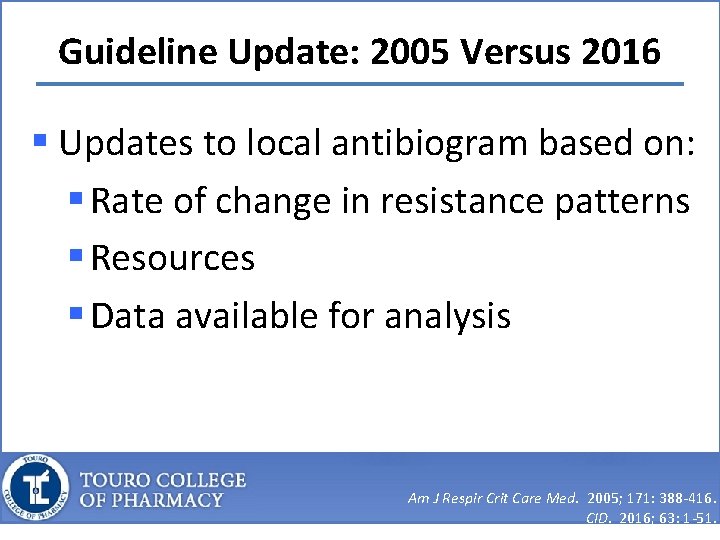
Guideline Update: 2005 Versus 2016 § Updates to local antibiogram based on: § Rate of change in resistance patterns § Resources § Data available for analysis Am J Respir Crit Care Med. 2005; 171: 388 -416. CID. 2016; 63: 1 -51.
Guideline Update: 2005 Versus 2016 § Biomarkers to Diagnose HAP/VAP § Recommend using clinical criteria alone over: § Procalcitonin (PCT) § Soluble Triggering Receptor Expressed on Myeloid Cells (s. TREM-1) § Strong recommendation; moderate quality evidence § Suggest using clinical criteria alone over: § C-reactive Protein (CRP) § Modified Clinical Pulmonary Infection Score (CPIS) § Weak recommendation; low-quality evidence Am J Respir Crit Care Med. 2005; 171: 388 -416. CID. 2016; 63: 1 -51.
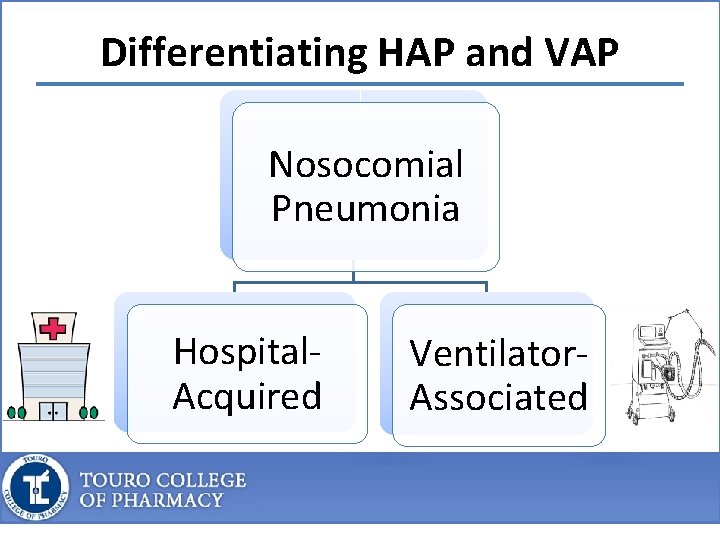
Differentiating HAP and VAP Nosocomial Pneumonia Hospital. Acquired Ventilator. Associated
Definition of HAP • Unchanged from 2005 guidelines • Development of symptoms ≥ 48 hours after hospital admission Time zero = Admission – Radiographic infiltrate – Clinical criteria: • • Fever Leukocytosis Purulent sputum Decline in oxygenation ≥ 48 hours after admission Symptom Development Hospital-acquired Pneumonia Am J Respir Crit Care Med. 2005; 171: 388 -416. CID. 2016; 63: 1 -51.
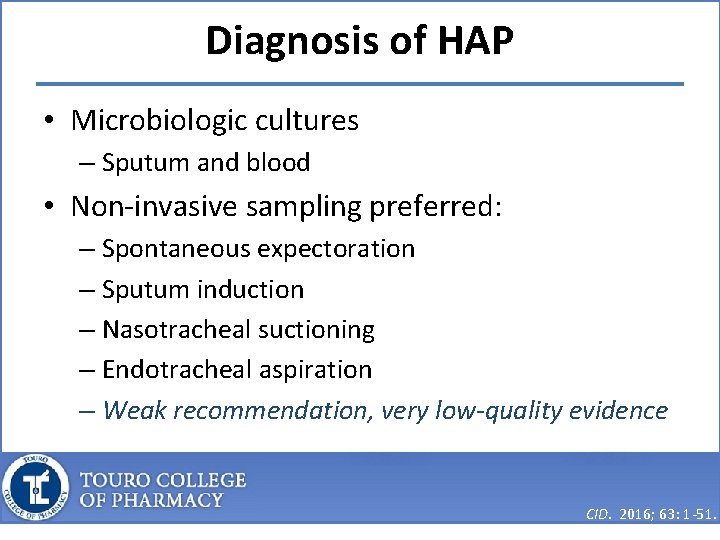
Diagnosis of HAP • Microbiologic cultures – Sputum and blood • Non-invasive sampling preferred: – Spontaneous expectoration – Sputum induction – Nasotracheal suctioning – Endotracheal aspiration – Weak recommendation, very low-quality evidence CID. 2016; 63: 1 -51.
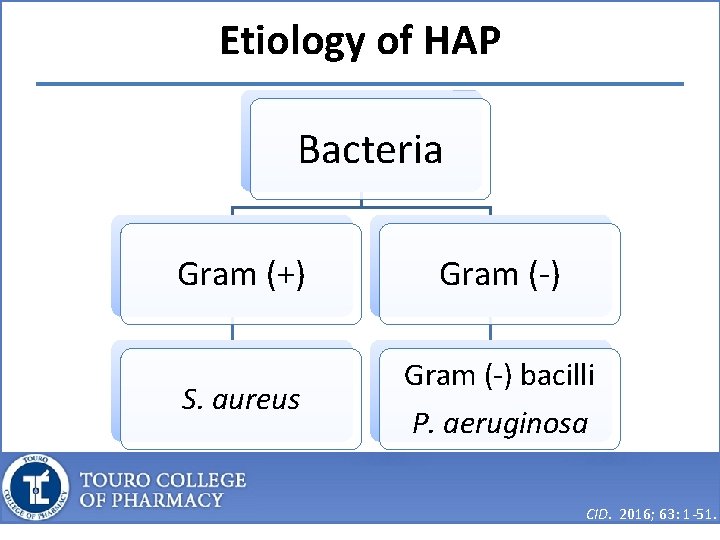
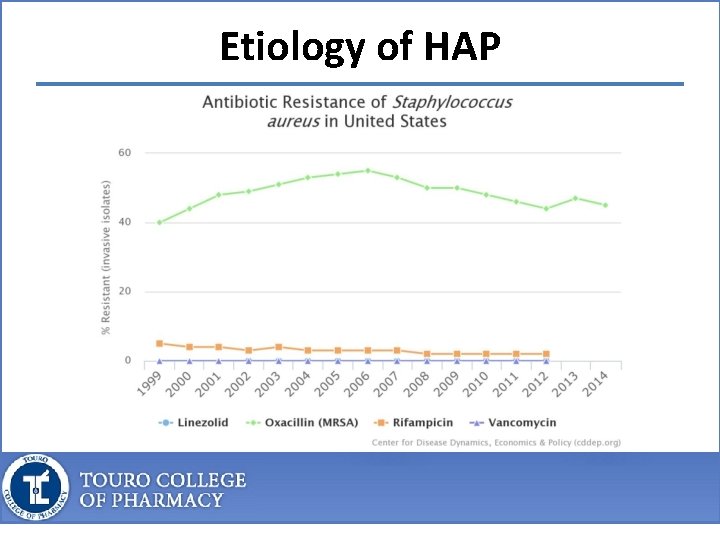
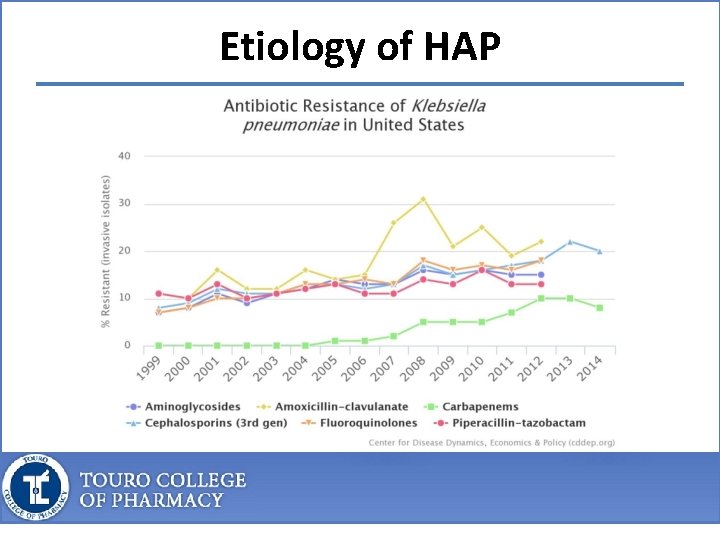
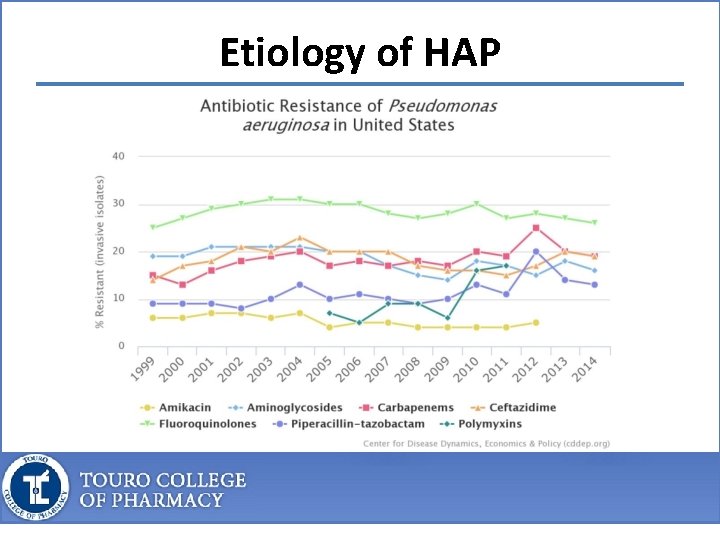
Etiology of HAP Bacteria Gram (+) Gram (-) S. aureus Gram (-) bacilli P. aeruginosa CID. 2016; 63: 1 -51.
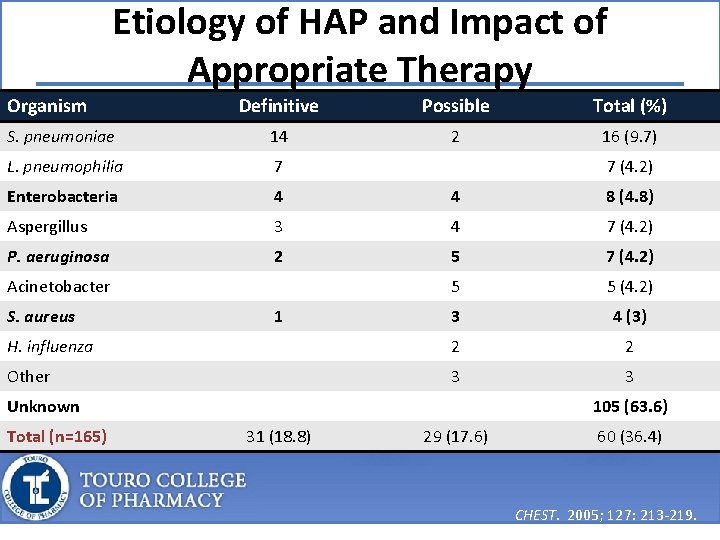
Etiology of HAP and Impact of Appropriate Therapy Organism Definitive Possible Total (%) S. pneumoniae 14 2 16 (9. 7) L. pneumophilia 7 Enterobacteria 4 4 8 (4. 8) Aspergillus 3 4 7 (4. 2) P. aeruginosa 2 5 7 (4. 2) 5 5 (4. 2) 3 4 (3) H. influenza 2 2 Other 3 3 Acinetobacter S. aureus 1 7 (4. 2) 105 (63. 6) Unknown Total (n=165) 31 (18. 8) 29 (17. 6) 60 (36. 4) CHEST. 2005; 127: 213 -219.
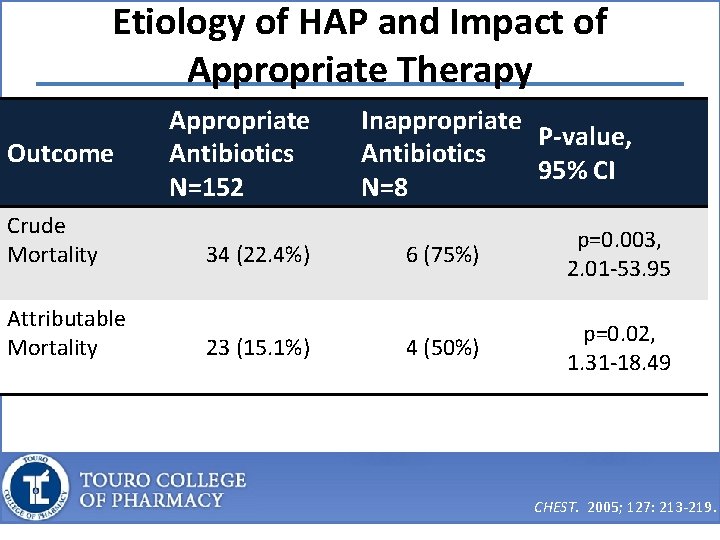
Etiology of HAP and Impact of Appropriate Therapy Outcome Appropriate Antibiotics N=152 Inappropriate P-value, Antibiotics 95% CI N=8 Crude Mortality 34 (22. 4%) 6 (75%) p=0. 003, 2. 01 -53. 95 Attributable Mortality 23 (15. 1%) 4 (50%) p=0. 02, 1. 31 -18. 49 CHEST. 2005; 127: 213 -219.
Etiology of HAP
Etiology of HAP
Etiology of HAP
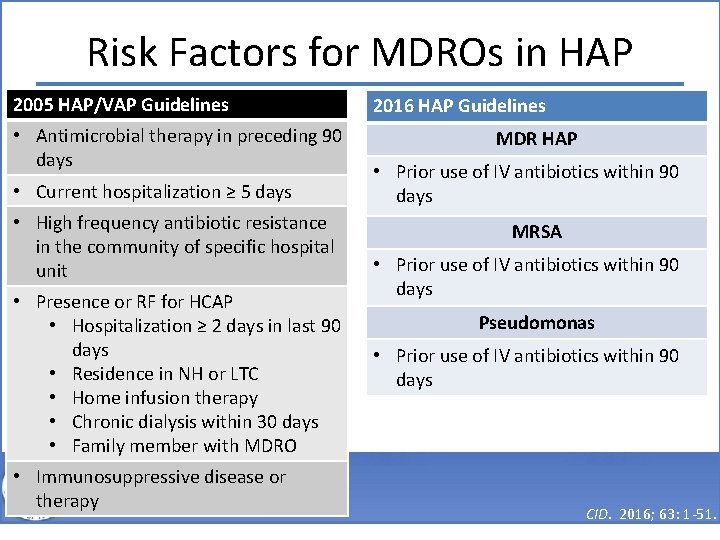
Risk Factors for MDROs in HAP 2005 HAP/VAP Guidelines • Antimicrobial therapy in preceding 90 days • Current hospitalization ≥ 5 days • High frequency antibiotic resistance in the community of specific hospital unit • Presence or RF for HCAP • Hospitalization ≥ 2 days in last 90 days • Residence in NH or LTC • Home infusion therapy • Chronic dialysis within 30 days • Family member with MDRO • Immunosuppressive disease or therapy 2016 HAP Guidelines MDR HAP • Prior use of IV antibiotics within 90 days MRSA • Prior use of IV antibiotics within 90 days Pseudomonas • Prior use of IV antibiotics within 90 days CID. 2016; 63: 1 -51.
Empiric Therapy HAP • All regimens should include coverage for: – S. aureus • Strong recommendation, low-quality evidence – Gram negative bacilli – P. aeruginosa • Strong recommendation, very low-quality evidence CID. 2016; 63: 1 -51.
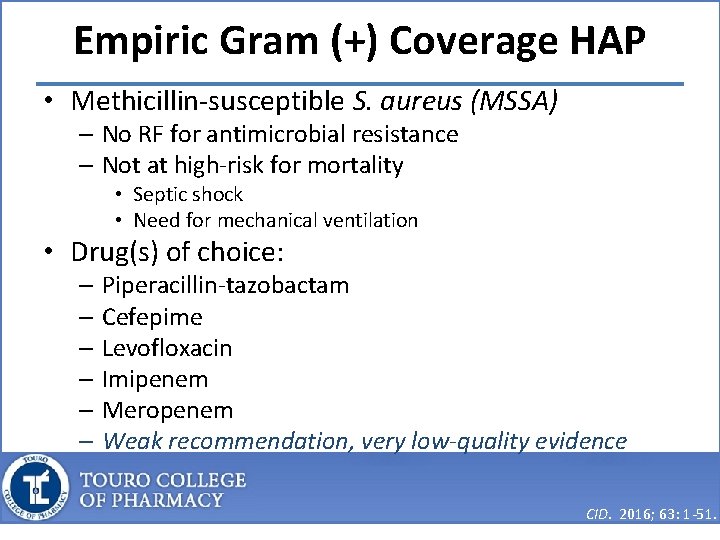
Empiric Gram (+) Coverage HAP • Methicillin-susceptible S. aureus (MSSA) – No RF for antimicrobial resistance – Not at high-risk for mortality • Septic shock • Need for mechanical ventilation • Drug(s) of choice: – Piperacillin-tazobactam – Cefepime – Levofloxacin – Imipenem – Meropenem – Weak recommendation, very low-quality evidence CID. 2016; 63: 1 -51.
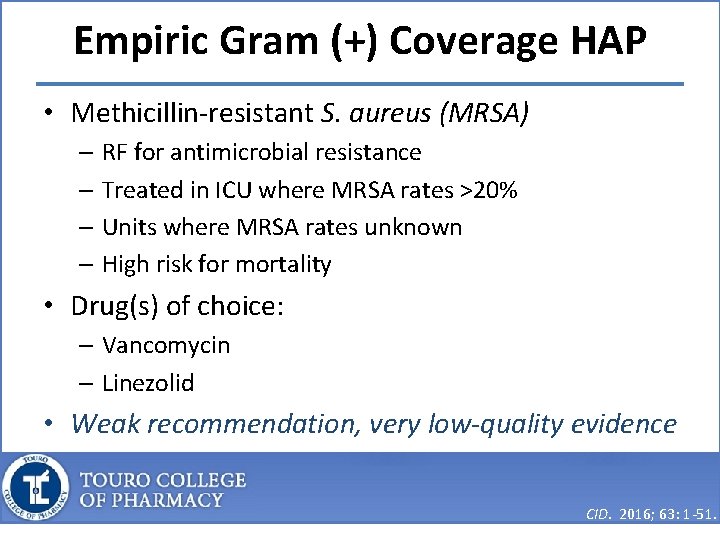
Empiric Gram (+) Coverage HAP • Methicillin-resistant S. aureus (MRSA) – RF for antimicrobial resistance – Treated in ICU where MRSA rates >20% – Units where MRSA rates unknown – High risk for mortality • Drug(s) of choice: – Vancomycin – Linezolid • Weak recommendation, very low-quality evidence CID. 2016; 63: 1 -51.
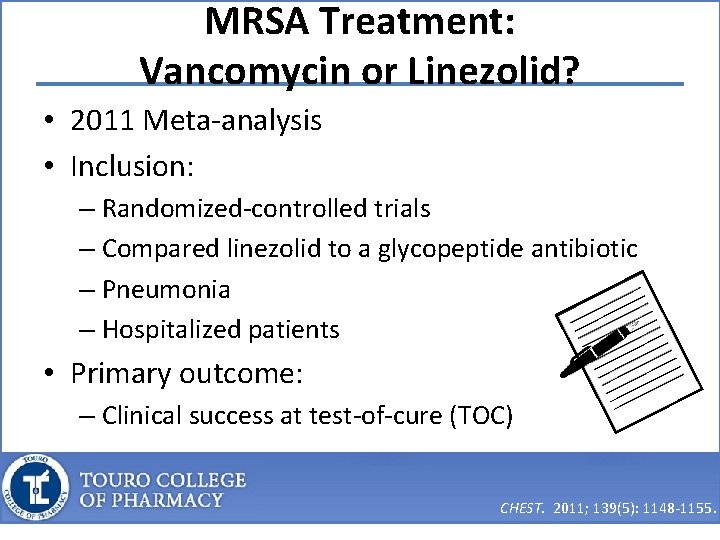
MRSA Treatment: Vancomycin or Linezolid? • 2011 Meta-analysis • Inclusion: – Randomized-controlled trials – Compared linezolid to a glycopeptide antibiotic – Pneumonia – Hospitalized patients • Primary outcome: – Clinical success at test-of-cure (TOC) CHEST. 2011; 139(5): 1148 -1155.
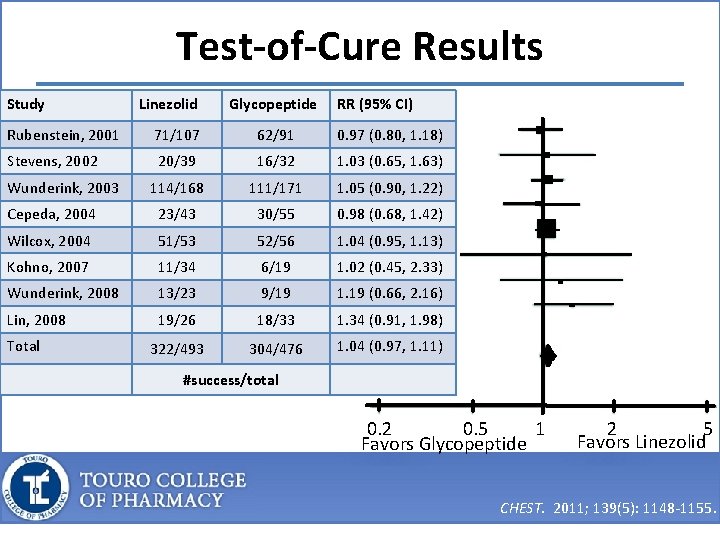
Test-of-Cure Results Study Linezolid Glycopeptide RR (95% CI) Rubenstein, 2001 71/107 62/91 0. 97 (0. 80, 1. 18) Stevens, 2002 20/39 16/32 1. 03 (0. 65, 1. 63) 114/168 111/171 1. 05 (0. 90, 1. 22) Cepeda, 2004 23/43 30/55 0. 98 (0. 68, 1. 42) Wilcox, 2004 51/53 52/56 1. 04 (0. 95, 1. 13) Kohno, 2007 11/34 6/19 1. 02 (0. 45, 2. 33) Wunderink, 2008 13/23 9/19 1. 19 (0. 66, 2. 16) Lin, 2008 19/26 18/33 1. 34 (0. 91, 1. 98) 322/493 304/476 1. 04 (0. 97, 1. 11) Wunderink, 2003 Total #success/total 0. 2 0. 5 1 Favors Glycopeptide 2 5 Favors Linezolid CHEST. 2011; 139(5): 1148 -1155.
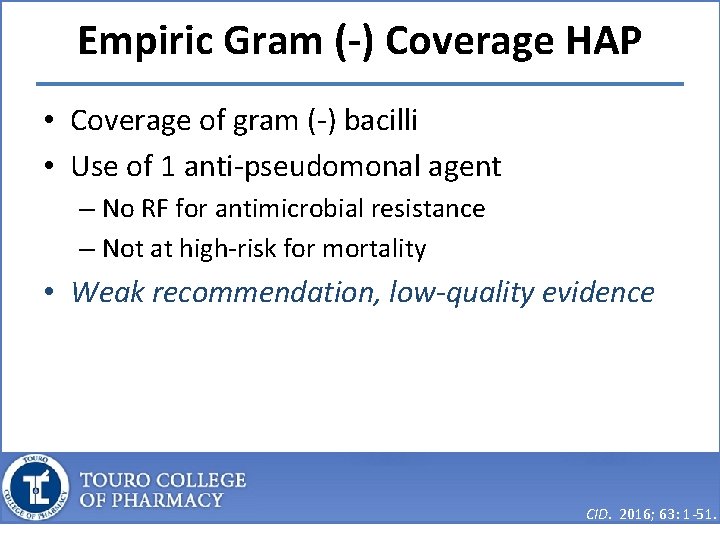
Empiric Gram (-) Coverage HAP • Coverage of gram (-) bacilli • Use of 1 anti-pseudomonal agent – No RF for antimicrobial resistance – Not at high-risk for mortality • Weak recommendation, low-quality evidence CID. 2016; 63: 1 -51.
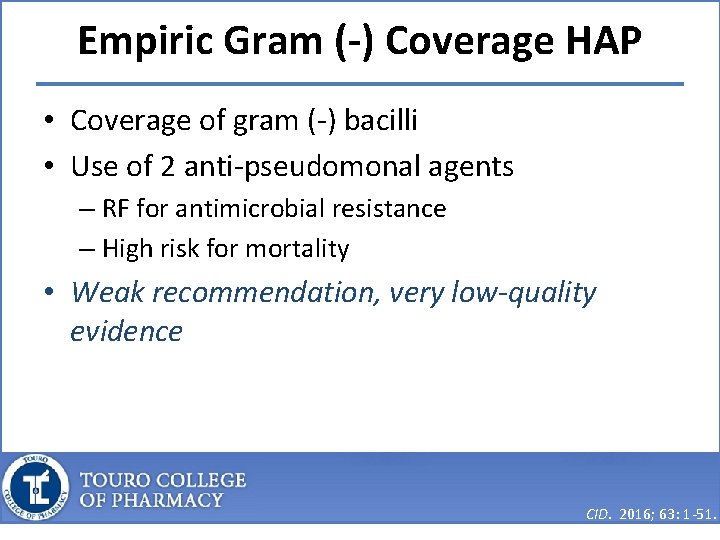
Empiric Gram (-) Coverage HAP • Coverage of gram (-) bacilli • Use of 2 anti-pseudomonal agents – RF for antimicrobial resistance – High risk for mortality • Weak recommendation, very low-quality evidence CID. 2016; 63: 1 -51.
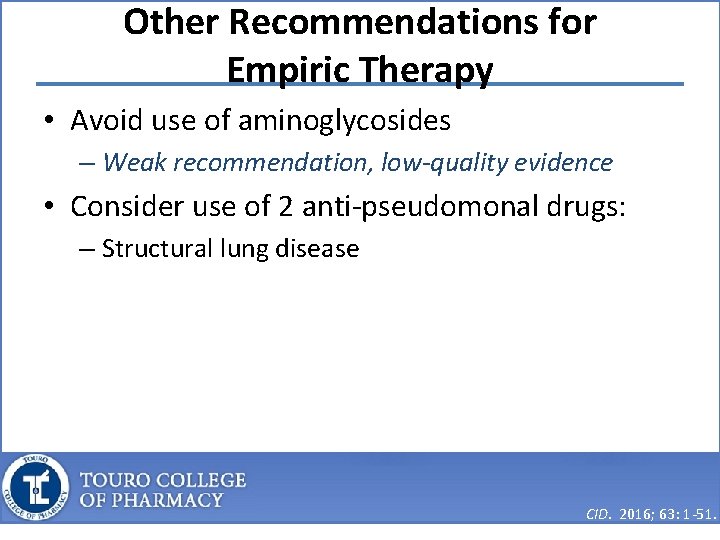
Other Recommendations for Empiric Therapy • Avoid use of aminoglycosides – Weak recommendation, low-quality evidence • Consider use of 2 anti-pseudomonal drugs: – Structural lung disease CID. 2016; 63: 1 -51.
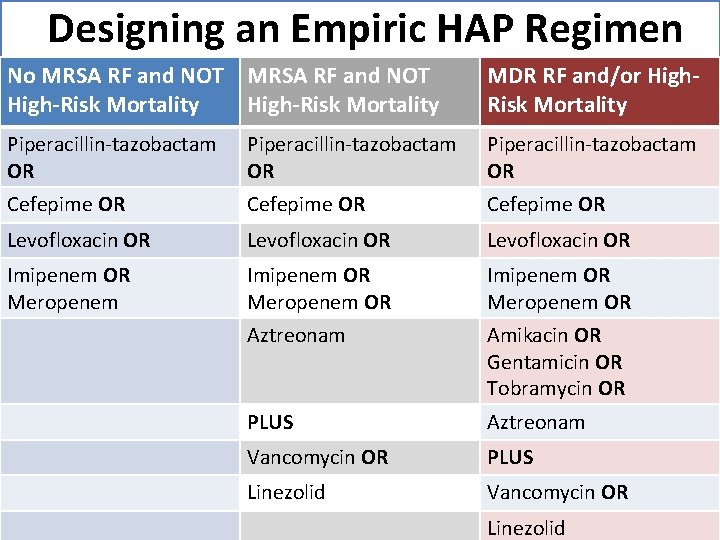
Designing an Empiric HAP Regimen No MRSA RF and NOT High-Risk Mortality MDR RF and/or High. Risk Mortality Piperacillin-tazobactam OR Cefepime OR Levofloxacin OR Imipenem OR Meropenem OR Aztreonam Amikacin OR Gentamicin OR Tobramycin OR PLUS Aztreonam Vancomycin OR PLUS Linezolid Vancomycin OR Linezolid
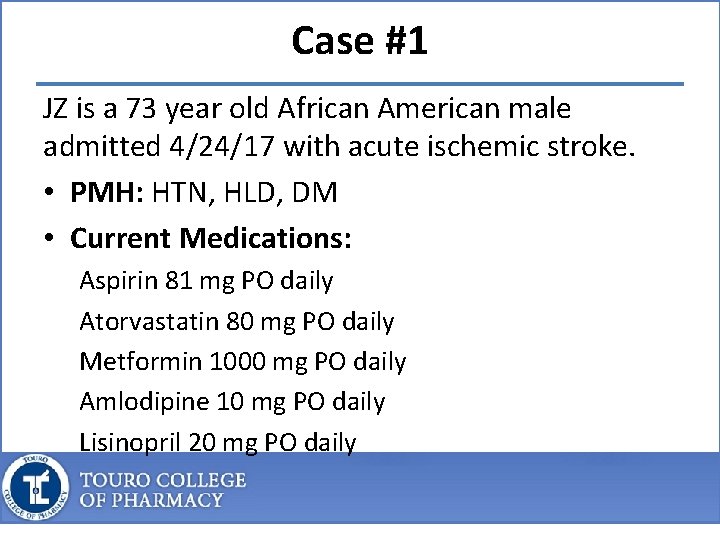
Case #1 JZ is a 73 year old African American male admitted 4/24/17 with acute ischemic stroke. • PMH: HTN, HLD, DM • Current Medications: Aspirin 81 mg PO daily Atorvastatin 80 mg PO daily Metformin 1000 mg PO daily Amlodipine 10 mg PO daily Lisinopril 20 mg PO daily
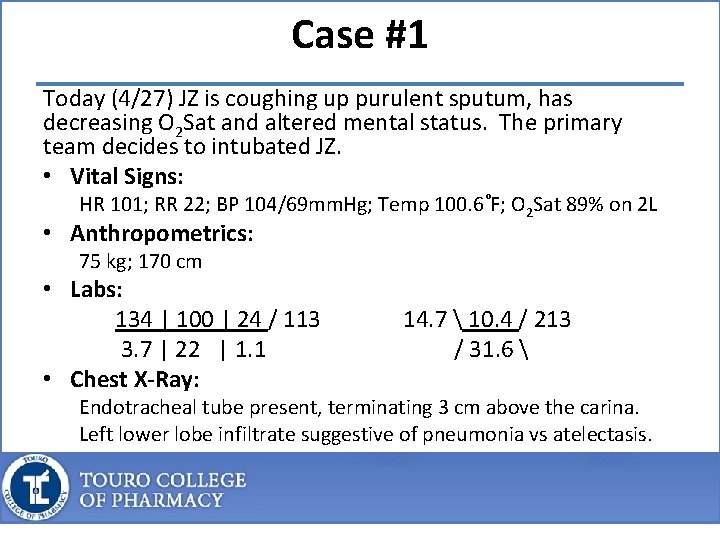
Case #1 Today (4/27) JZ is coughing up purulent sputum, has decreasing O 2 Sat and altered mental status. The primary team decides to intubated JZ. • Vital Signs: HR 101; RR 22; BP 104/69 mm. Hg; Temp 100. 6⁰F; O 2 Sat 89% on 2 L • Anthropometrics: 75 kg; 170 cm • Labs: 134 | 100 | 24 / 113 3. 7 | 22 | 1. 1 • Chest X-Ray: 14. 7 10. 4 / 213 / 31. 6 Endotracheal tube present, terminating 3 cm above the carina. Left lower lobe infiltrate suggestive of pneumonia vs atelectasis.
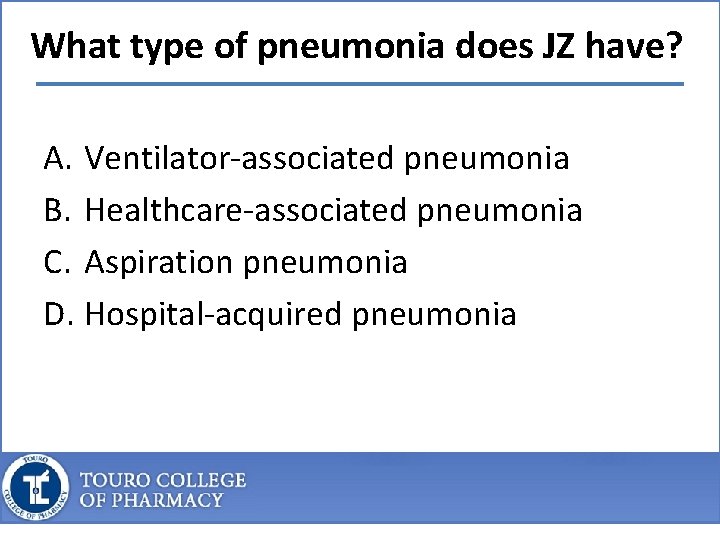
What type of pneumonia does JZ have? A. Ventilator-associated pneumonia B. Healthcare-associated pneumonia C. Aspiration pneumonia D. Hospital-acquired pneumonia
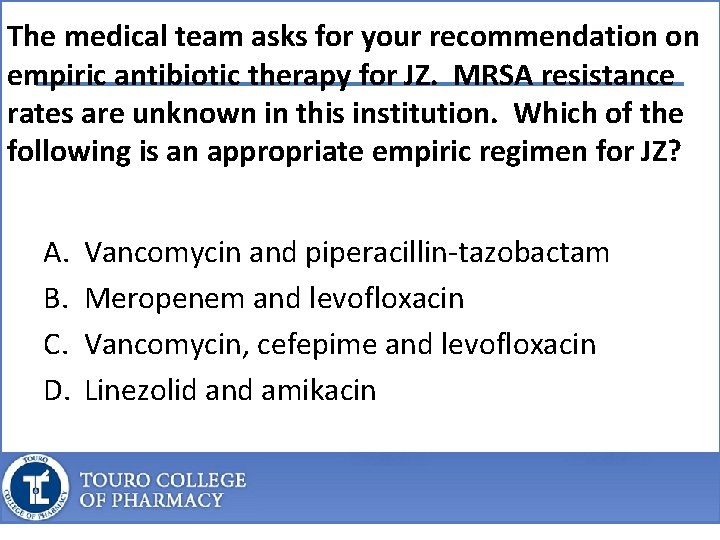
The medical team asks for your recommendation on empiric antibiotic therapy for JZ. MRSA resistance rates are unknown in this institution. Which of the following is an appropriate empiric regimen for JZ? A. B. C. D. Vancomycin and piperacillin-tazobactam Meropenem and levofloxacin Vancomycin, cefepime and levofloxacin Linezolid and amikacin
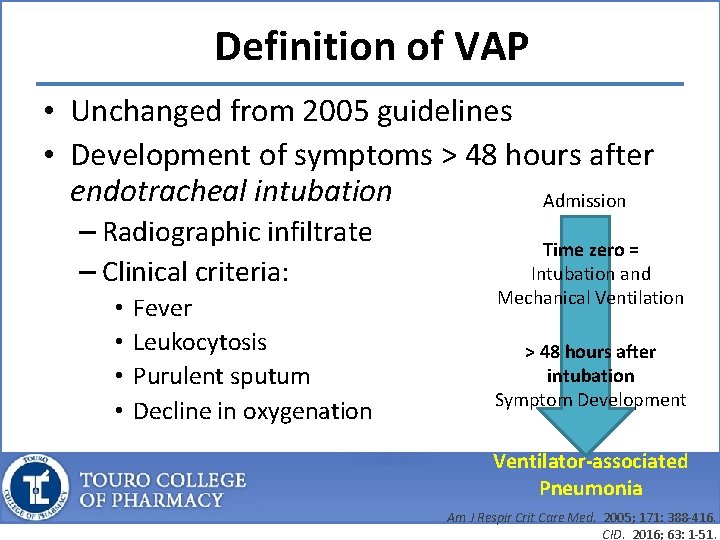
Definition of VAP • Unchanged from 2005 guidelines • Development of symptoms > 48 hours after endotracheal intubation Admission – Radiographic infiltrate – Clinical criteria: • • Fever Leukocytosis Purulent sputum Decline in oxygenation Time zero = Intubation and Mechanical Ventilation > 48 hours after intubation Symptom Development Ventilator-associated Pneumonia Am J Respir Crit Care Med. 2005; 171: 388 -416. CID. 2016; 63: 1 -51.
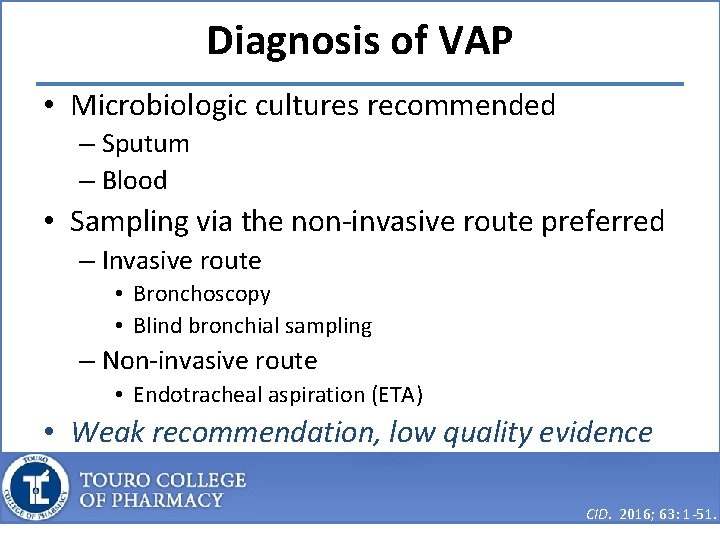
Diagnosis of VAP • Microbiologic cultures recommended – Sputum – Blood • Sampling via the non-invasive route preferred – Invasive route • Bronchoscopy • Blind bronchial sampling – Non-invasive route • Endotracheal aspiration (ETA) • Weak recommendation, low quality evidence CID. 2016; 63: 1 -51.
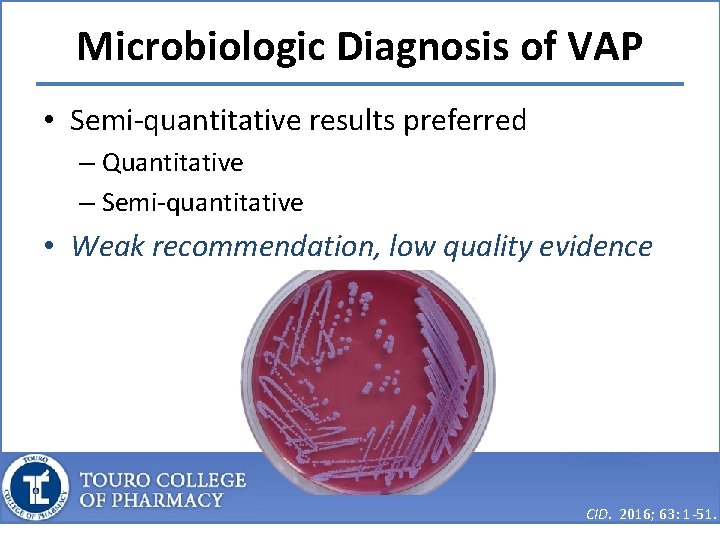
Microbiologic Diagnosis of VAP • Semi-quantitative results preferred – Quantitative – Semi-quantitative • Weak recommendation, low quality evidence CID. 2016; 63: 1 -51.
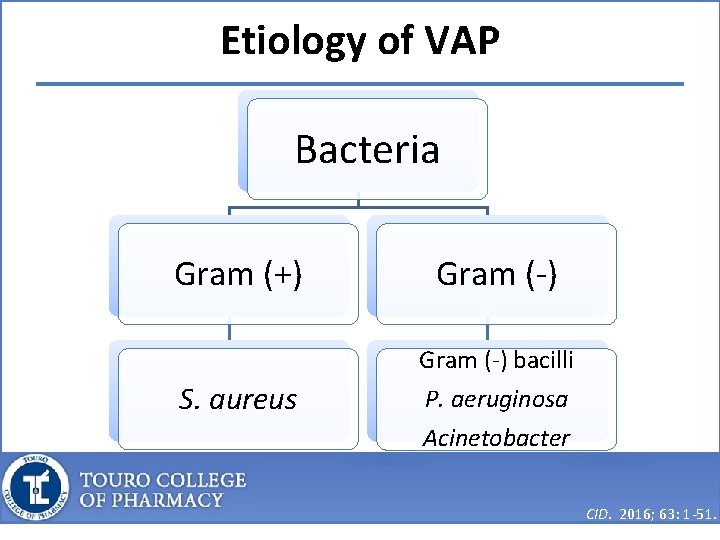
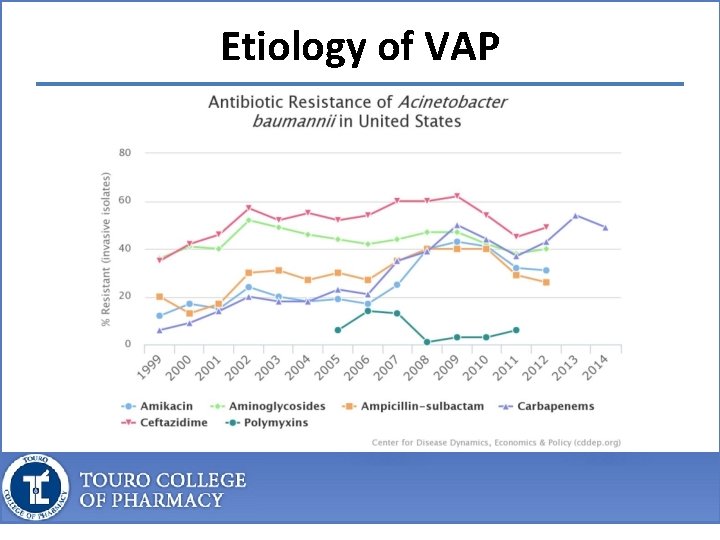
Etiology of VAP Bacteria Gram (+) Gram (-) S. aureus Gram (-) bacilli P. aeruginosa Acinetobacter CID. 2016; 63: 1 -51.
Etiology of VAP
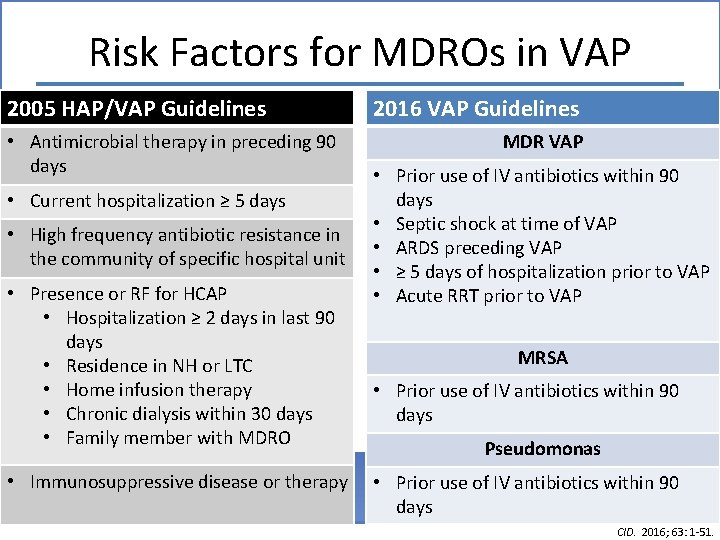
Risk Factors for MDROs in VAP 2005 HAP/VAP Guidelines • Antimicrobial therapy in preceding 90 days • Current hospitalization ≥ 5 days • High frequency antibiotic resistance in the community of specific hospital unit • Presence or RF for HCAP • Hospitalization ≥ 2 days in last 90 days • Residence in NH or LTC • Home infusion therapy • Chronic dialysis within 30 days • Family member with MDRO • Immunosuppressive disease or therapy 2016 VAP Guidelines MDR VAP • Prior use of IV antibiotics within 90 days • Septic shock at time of VAP • ARDS preceding VAP • ≥ 5 days of hospitalization prior to VAP • Acute RRT prior to VAP MRSA • Prior use of IV antibiotics within 90 days Pseudomonas • Prior use of IV antibiotics within 90 days CID. 2016; 63: 1 -51.
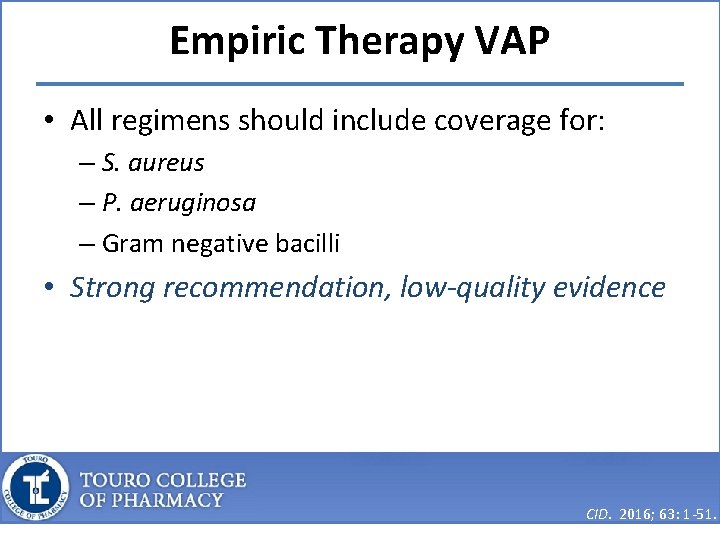
Empiric Therapy VAP • All regimens should include coverage for: – S. aureus – P. aeruginosa – Gram negative bacilli • Strong recommendation, low-quality evidence CID. 2016; 63: 1 -51.
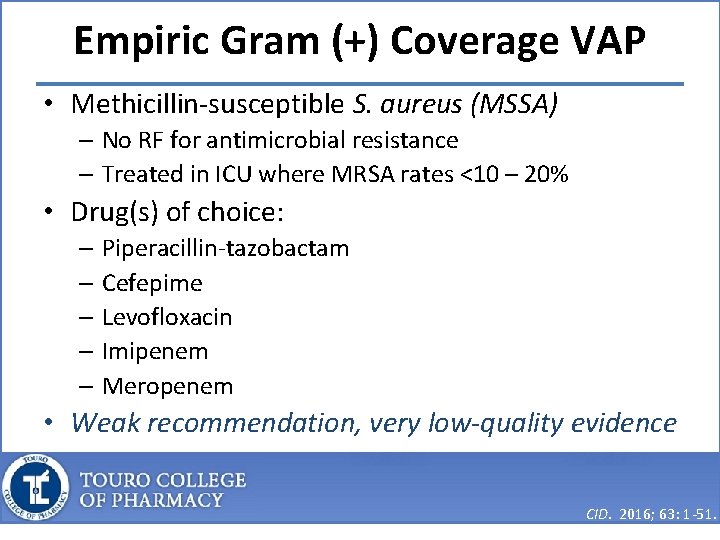
Empiric Gram (+) Coverage VAP • Methicillin-susceptible S. aureus (MSSA) – No RF for antimicrobial resistance – Treated in ICU where MRSA rates <10 – 20% • Drug(s) of choice: – Piperacillin-tazobactam – Cefepime – Levofloxacin – Imipenem – Meropenem • Weak recommendation, very low-quality evidence CID. 2016; 63: 1 -51.
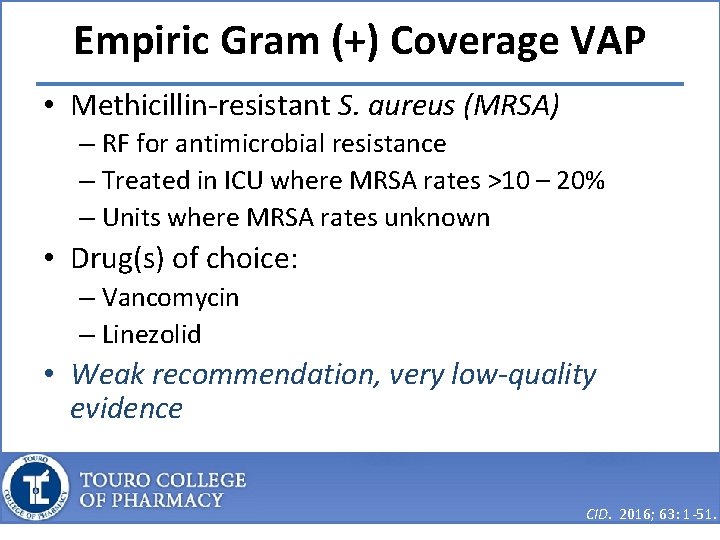
Empiric Gram (+) Coverage VAP • Methicillin-resistant S. aureus (MRSA) – RF for antimicrobial resistance – Treated in ICU where MRSA rates >10 – 20% – Units where MRSA rates unknown • Drug(s) of choice: – Vancomycin – Linezolid • Weak recommendation, very low-quality evidence CID. 2016; 63: 1 -51.
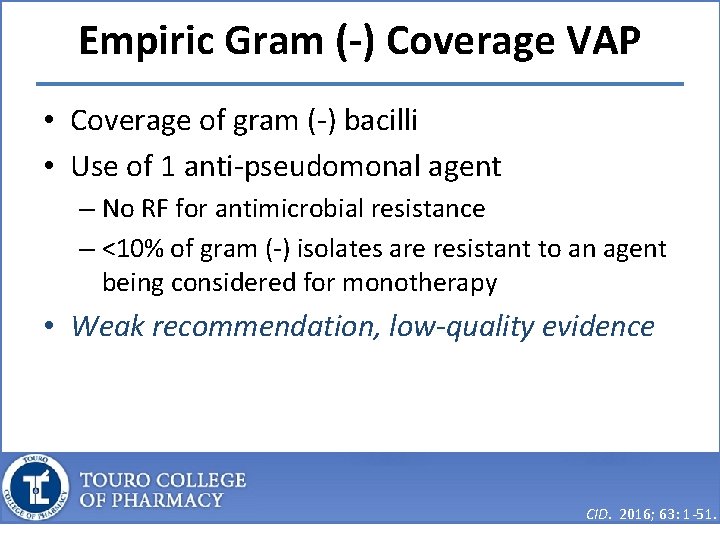
Empiric Gram (-) Coverage VAP • Coverage of gram (-) bacilli • Use of 1 anti-pseudomonal agent – No RF for antimicrobial resistance – <10% of gram (-) isolates are resistant to an agent being considered for monotherapy • Weak recommendation, low-quality evidence CID. 2016; 63: 1 -51.
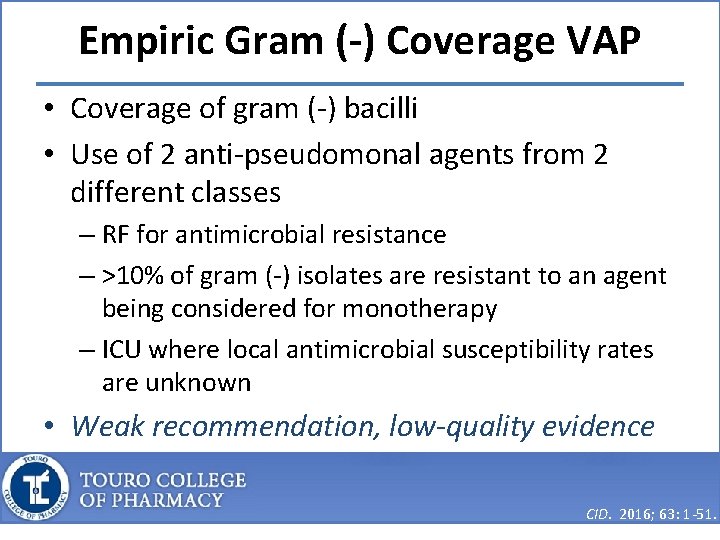
Empiric Gram (-) Coverage VAP • Coverage of gram (-) bacilli • Use of 2 anti-pseudomonal agents from 2 different classes – RF for antimicrobial resistance – >10% of gram (-) isolates are resistant to an agent being considered for monotherapy – ICU where local antimicrobial susceptibility rates are unknown • Weak recommendation, low-quality evidence CID. 2016; 63: 1 -51.
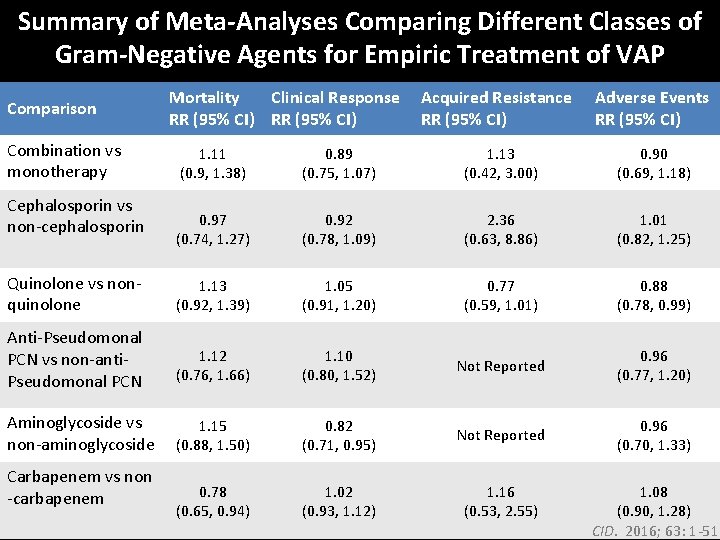
Summary of Meta-Analyses Comparing Different Classes of Gram-Negative Agents for Empiric Treatment of VAP Comparison Combination vs monotherapy Mortality Clinical Response RR (95% CI) Acquired Resistance RR (95% CI) Adverse Events RR (95% CI) 1. 11 (0. 9, 1. 38) 0. 89 (0. 75, 1. 07) 1. 13 (0. 42, 3. 00) 0. 90 (0. 69, 1. 18) 0. 97 (0. 74, 1. 27) 0. 92 (0. 78, 1. 09) 2. 36 (0. 63, 8. 86) 1. 01 (0. 82, 1. 25) Quinolone vs nonquinolone 1. 13 (0. 92, 1. 39) 1. 05 (0. 91, 1. 20) 0. 77 (0. 59, 1. 01) 0. 88 (0. 78, 0. 99) Anti-Pseudomonal PCN vs non-anti. Pseudomonal PCN 1. 12 (0. 76, 1. 66) 1. 10 (0. 80, 1. 52) Not Reported 0. 96 (0. 77, 1. 20) Aminoglycoside vs non-aminoglycoside 1. 15 (0. 88, 1. 50) 0. 82 (0. 71, 0. 95) Not Reported 0. 96 (0. 70, 1. 33) 0. 78 (0. 65, 0. 94) 1. 02 (0. 93, 1. 12) 1. 16 (0. 53, 2. 55) Cephalosporin vs non-cephalosporin Carbapenem vs non -carbapenem 1. 08 (0. 90, 1. 28) CID. 2016; 63: 1 -51.
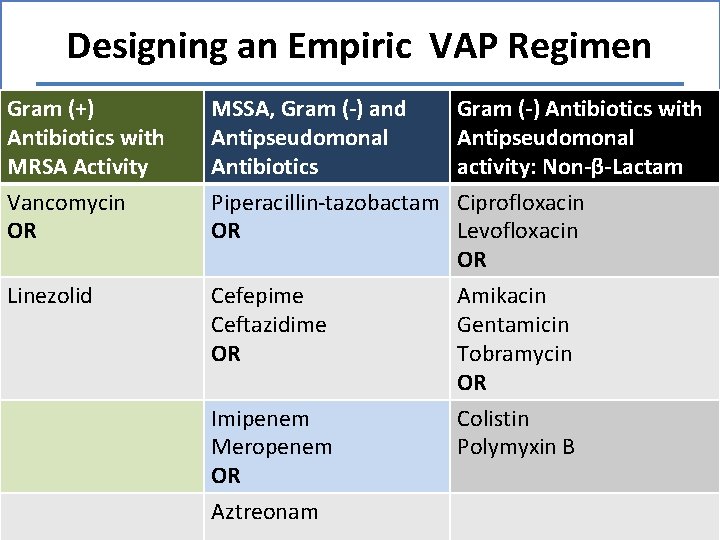
Designing an Empiric VAP Regimen Gram (+) Antibiotics with MRSA Activity Vancomycin OR MSSA, Gram (-) and Antipseudomonal Antibiotics Piperacillin-tazobactam OR Gram (-) Antibiotics with Antipseudomonal activity: Non-β-Lactam Ciprofloxacin Levofloxacin OR Linezolid Cefepime Ceftazidime OR Amikacin Gentamicin Tobramycin OR Colistin Polymyxin B Imipenem Meropenem OR Aztreonam
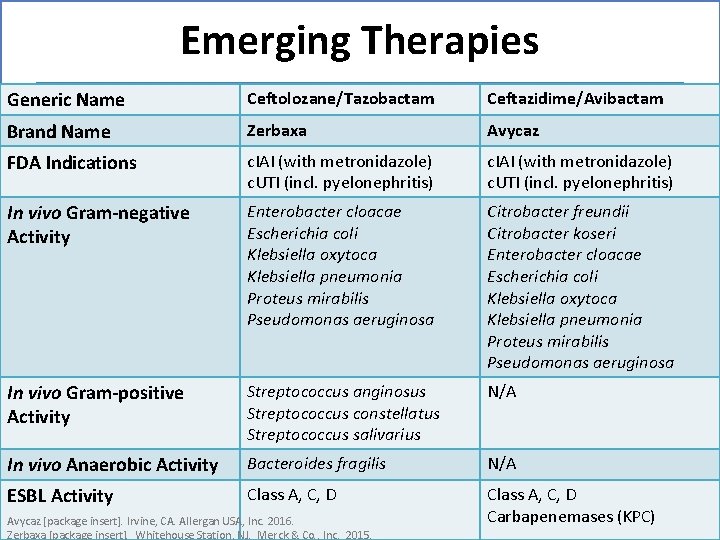
Emerging Therapies Generic Name Ceftolozane/Tazobactam Ceftazidime/Avibactam Brand Name Zerbaxa Avycaz FDA Indications c. IAI (with metronidazole) c. UTI (incl. pyelonephritis) In vivo Gram-negative Activity Enterobacter cloacae Escherichia coli Klebsiella oxytoca Klebsiella pneumonia Proteus mirabilis Pseudomonas aeruginosa Citrobacter freundii Citrobacter koseri Enterobacter cloacae Escherichia coli Klebsiella oxytoca Klebsiella pneumonia Proteus mirabilis Pseudomonas aeruginosa In vivo Gram-positive Activity Streptococcus anginosus Streptococcus constellatus Streptococcus salivarius N/A In vivo Anaerobic Activity Bacteroides fragilis N/A ESBL Activity Class A, C, D Carbapenemases (KPC) Avycaz [package insert]. Irvine, CA. Allergan USA, Inc. 2016. Zerbaxa [package insert]. Whitehouse Station, NJ. Merck & Co. , Inc. 2015.
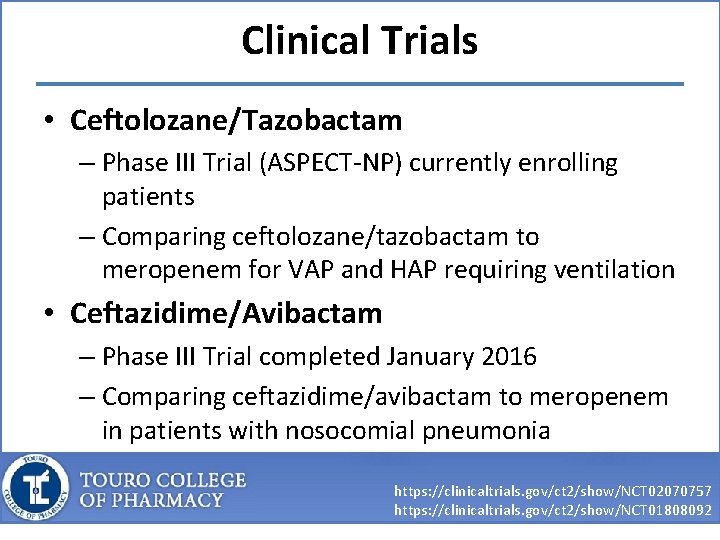
Clinical Trials • Ceftolozane/Tazobactam – Phase III Trial (ASPECT-NP) currently enrolling patients – Comparing ceftolozane/tazobactam to meropenem for VAP and HAP requiring ventilation • Ceftazidime/Avibactam – Phase III Trial completed January 2016 – Comparing ceftazidime/avibactam to meropenem in patients with nosocomial pneumonia https: //clinicaltrials. gov/ct 2/show/NCT 02070757 https: //clinicaltrials. gov/ct 2/show/NCT 01808092
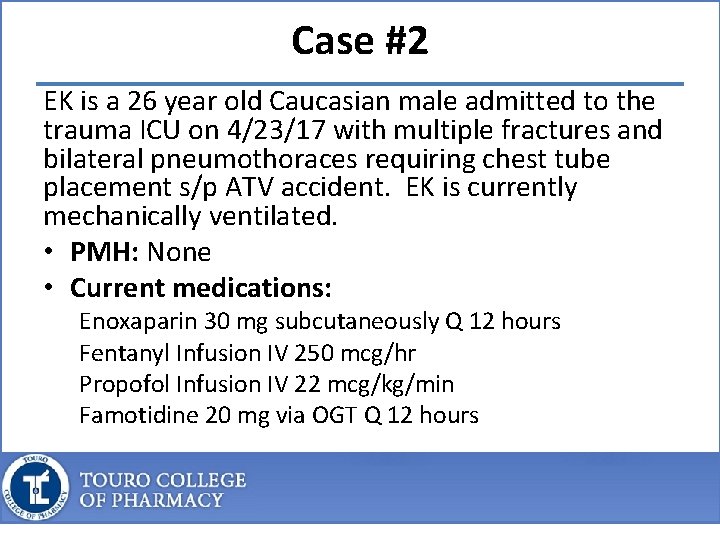
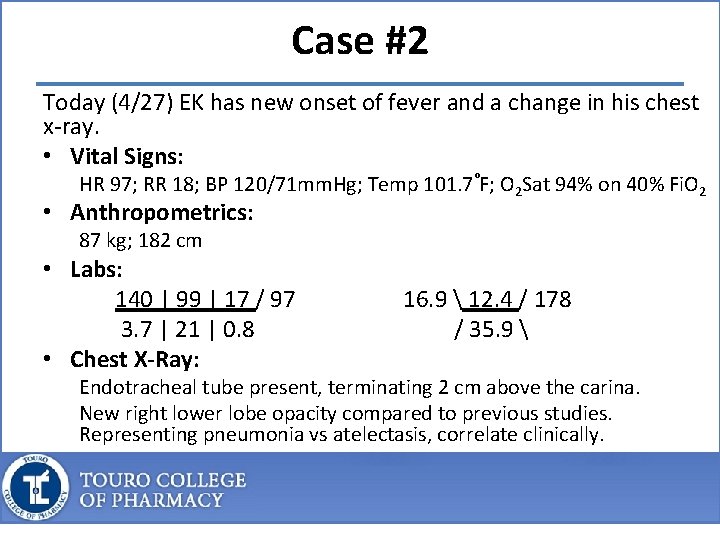
Case #2 EK is a 26 year old Caucasian male admitted to the trauma ICU on 4/23/17 with multiple fractures and bilateral pneumothoraces requiring chest tube placement s/p ATV accident. EK is currently mechanically ventilated. • PMH: None • Current medications: Enoxaparin 30 mg subcutaneously Q 12 hours Fentanyl Infusion IV 250 mcg/hr Propofol Infusion IV 22 mcg/kg/min Famotidine 20 mg via OGT Q 12 hours
Case #2 Today (4/27) EK has new onset of fever and a change in his chest x-ray. • Vital Signs: HR 97; RR 18; BP 120/71 mm. Hg; Temp 101. 7⁰F; O 2 Sat 94% on 40% Fi. O 2 • Anthropometrics: 87 kg; 182 cm • Labs: 140 | 99 | 17 / 97 3. 7 | 21 | 0. 8 • Chest X-Ray: 16. 9 12. 4 / 178 / 35. 9 Endotracheal tube present, terminating 2 cm above the carina. New right lower lobe opacity compared to previous studies. Representing pneumonia vs atelectasis, correlate clinically.
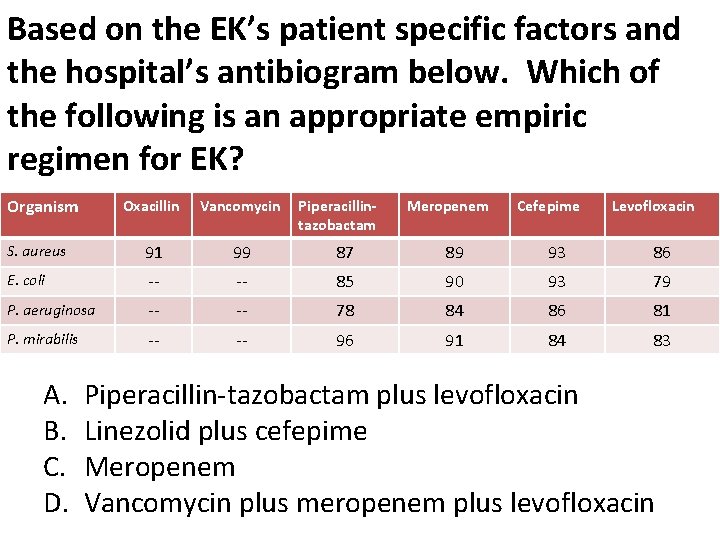
Based on the EK’s patient specific factors and the hospital’s antibiogram below. Which of the following is an appropriate empiric regimen for EK? Organism Oxacillin Vancomycin S. aureus 91 99 87 89 93 86 E. coli -- -- 85 90 93 79 P. aeruginosa -- -- 78 84 86 81 P. mirabilis -- -- 96 91 84 83 A. B. C. D. Piperacillintazobactam Meropenem Cefepime Levofloxacin Piperacillin-tazobactam plus levofloxacin Linezolid plus cefepime Meropenem Vancomycin plus meropenem plus levofloxacin
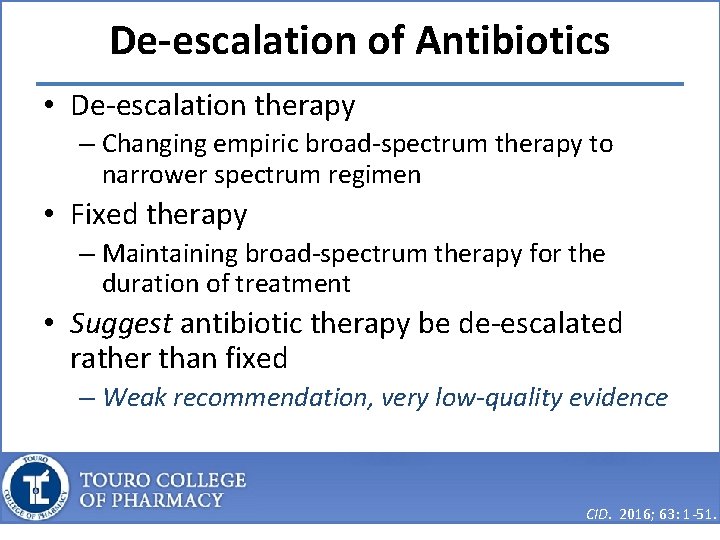
De-escalation of Antibiotics • De-escalation therapy – Changing empiric broad-spectrum therapy to narrower spectrum regimen • Fixed therapy – Maintaining broad-spectrum therapy for the duration of treatment • Suggest antibiotic therapy be de-escalated rather than fixed – Weak recommendation, very low-quality evidence CID. 2016; 63: 1 -51.
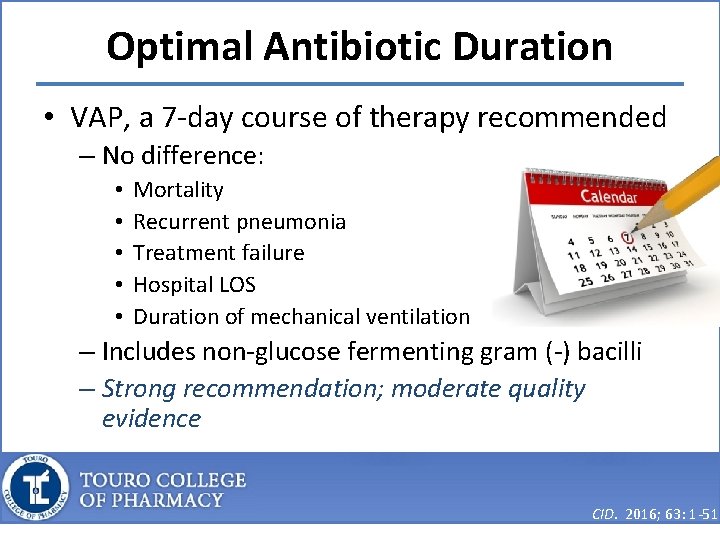
Optimal Antibiotic Duration • VAP, a 7 -day course of therapy recommended – No difference: • • • Mortality Recurrent pneumonia Treatment failure Hospital LOS Duration of mechanical ventilation – Includes non-glucose fermenting gram (-) bacilli – Strong recommendation; moderate quality evidence CID. 2016; 63: 1 -51.
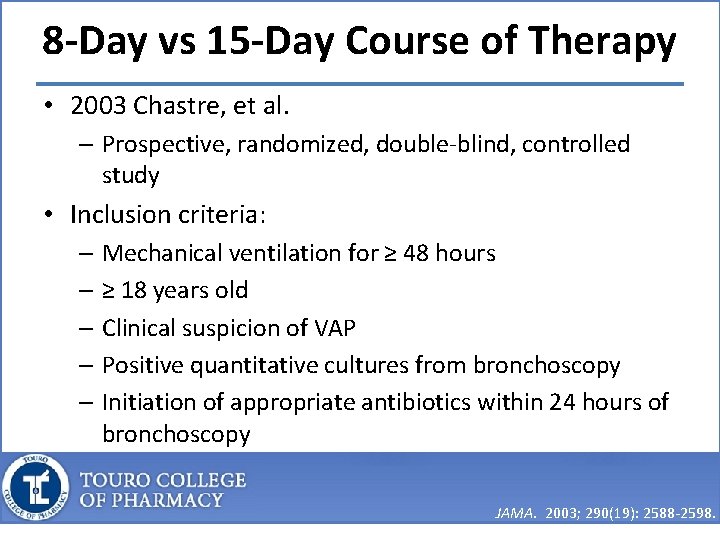
8 -Day vs 15 -Day Course of Therapy • 2003 Chastre, et al. – Prospective, randomized, double-blind, controlled study • Inclusion criteria: – Mechanical ventilation for ≥ 48 hours – ≥ 18 years old – Clinical suspicion of VAP – Positive quantitative cultures from bronchoscopy – Initiation of appropriate antibiotics within 24 hours of bronchoscopy JAMA. 2003; 290(19): 2588 -2598.
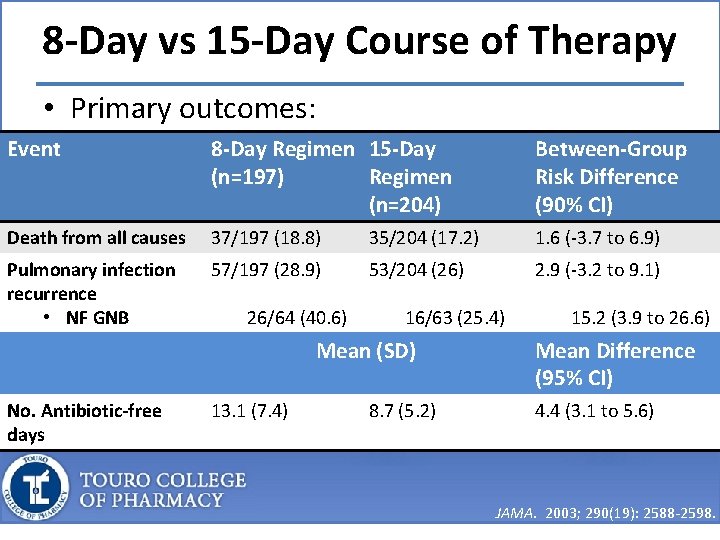
8 -Day vs 15 -Day Course of Therapy • Primary outcomes: Event 8 -Day Regimen 15 -Day (n=197) Regimen (n=204) Between-Group Risk Difference (90% CI) Death from all causes 37/197 (18. 8) 35/204 (17. 2) 1. 6 (-3. 7 to 6. 9) Pulmonary infection recurrence • NF GNB 57/197 (28. 9) 53/204 (26) 2. 9 (-3. 2 to 9. 1) 26/64 (40. 6) 16/63 (25. 4) Mean (SD) No. Antibiotic-free days 13. 1 (7. 4) 8. 7 (5. 2) 15. 2 (3. 9 to 26. 6) Mean Difference (95% CI) 4. 4 (3. 1 to 5. 6) JAMA. 2003; 290(19): 2588 -2598.
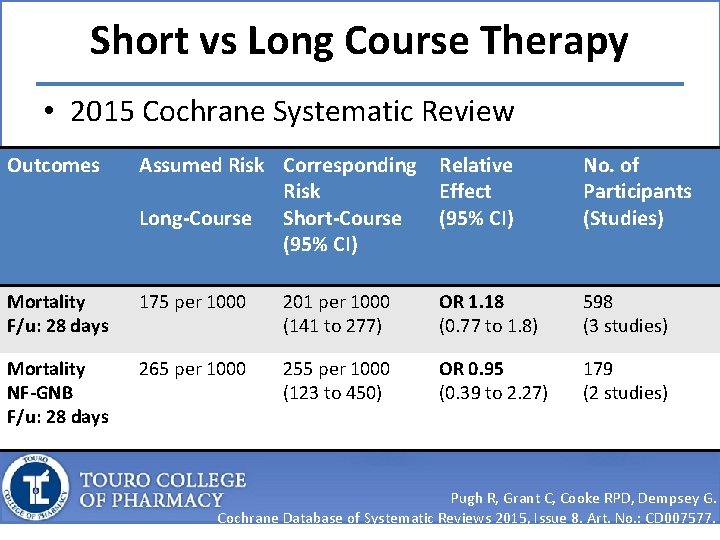
Short vs Long Course Therapy • 2015 Cochrane Systematic Review Outcomes Assumed Risk Corresponding Risk Long-Course Short-Course (95% CI) Relative Effect (95% CI) No. of Participants (Studies) Mortality F/u: 28 days 175 per 1000 201 per 1000 (141 to 277) OR 1. 18 (0. 77 to 1. 8) 598 (3 studies) Mortality NF-GNB F/u: 28 days 265 per 1000 255 per 1000 (123 to 450) OR 0. 95 (0. 39 to 2. 27) 179 (2 studies) Pugh R, Grant C, Cooke RPD, Dempsey G. Cochrane Database of Systematic Reviews 2015, Issue 8. Art. No. : CD 007577.
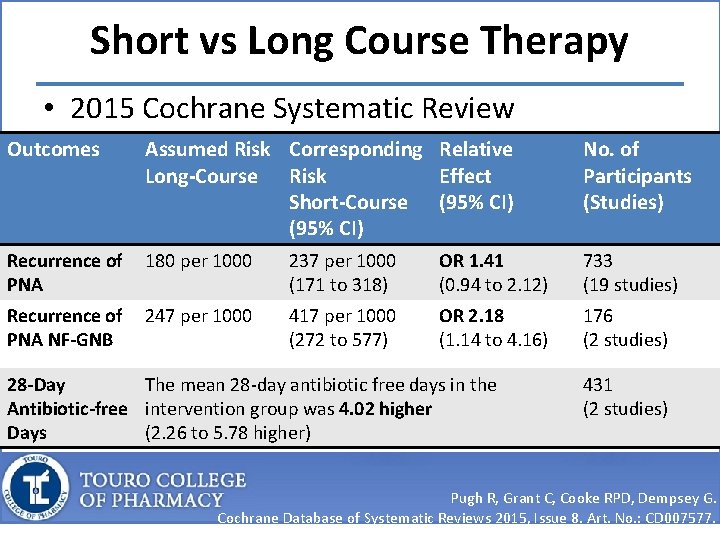
Short vs Long Course Therapy • 2015 Cochrane Systematic Review Outcomes Assumed Risk Corresponding Relative Long-Course Risk Effect Short-Course (95% CI) No. of Participants (Studies) Recurrence of PNA 180 per 1000 237 per 1000 (171 to 318) OR 1. 41 (0. 94 to 2. 12) 733 (19 studies) Recurrence of PNA NF-GNB 247 per 1000 417 per 1000 (272 to 577) OR 2. 18 (1. 14 to 4. 16) 176 (2 studies) 28 -Day The mean 28 -day antibiotic free days in the Antibiotic-free intervention group was 4. 02 higher Days (2. 26 to 5. 78 higher) 431 (2 studies) Pugh R, Grant C, Cooke RPD, Dempsey G. Cochrane Database of Systematic Reviews 2015, Issue 8. Art. No. : CD 007577.
Optimal Antibiotic Duration • HAP, a 7 -day course of therapy recommended – No specific studies available for HAP – Data extrapolated from VAP • Increased 28 -day antibiotic free days • Reduced recurrent VAP due to MDR pathogens – Strong recommendation; very-low quality evidence CID. 2016; 63: 1 -51.
Summary • Definitions of HAP and VAP are unchanged from 2005 guidelines • Diagnosis of HAP and VAP should be based on clinical criteria and non-invasive semi-quantitative cultures • Risk factors for MDROs differ between HAP and VAP patients • Empiric therapy should be based on patient risk factors and local antimicrobial resistance patterns • Short-course therapy with de-escalation recommended
THANK YOU