Impulse Imagine the force involved in hitting a

- Slides: 39
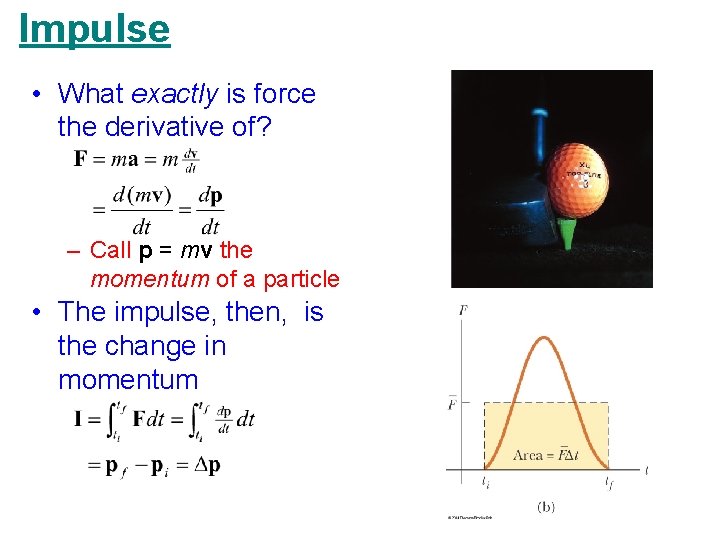
Impulse • Imagine the force involved in hitting a golf ball – Force changes very quickly – How can we use Newton’s Laws if we don’t know the force at every time? • Integrate with respect to time – Call this the “impulse”
Impulse • What exactly is force the derivative of? – Call p = mv the momentum of a particle • The impulse, then, is the change in momentum
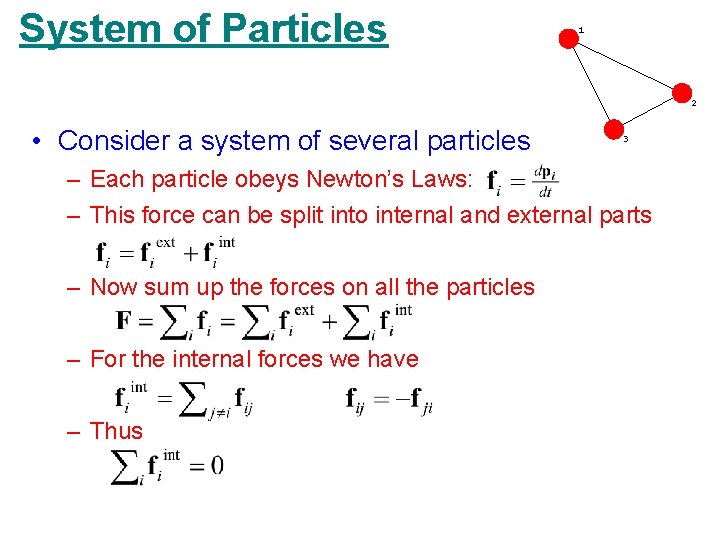
System of Particles 1 2 • Consider a system of several particles 3 – Each particle obeys Newton’s Laws: – This force can be split into internal and external parts – Now sum up the forces on all the particles – For the internal forces we have – Thus
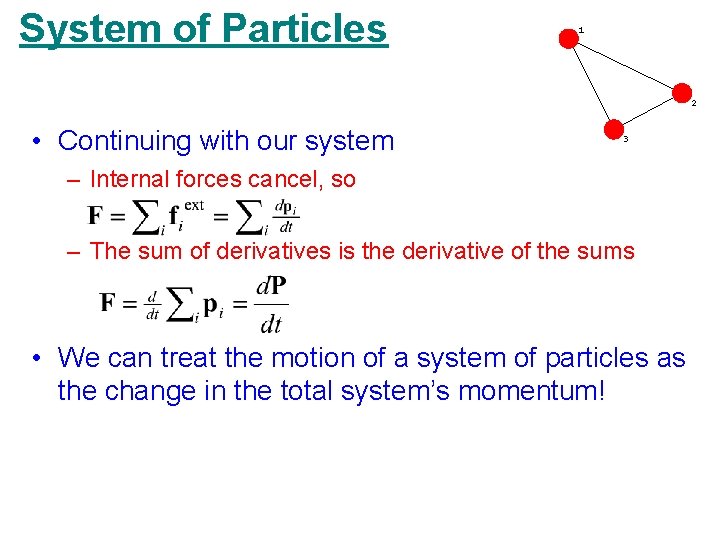
System of Particles 1 2 • Continuing with our system 3 – Internal forces cancel, so – The sum of derivatives is the derivative of the sums • We can treat the motion of a system of particles as the change in the total system’s momentum!
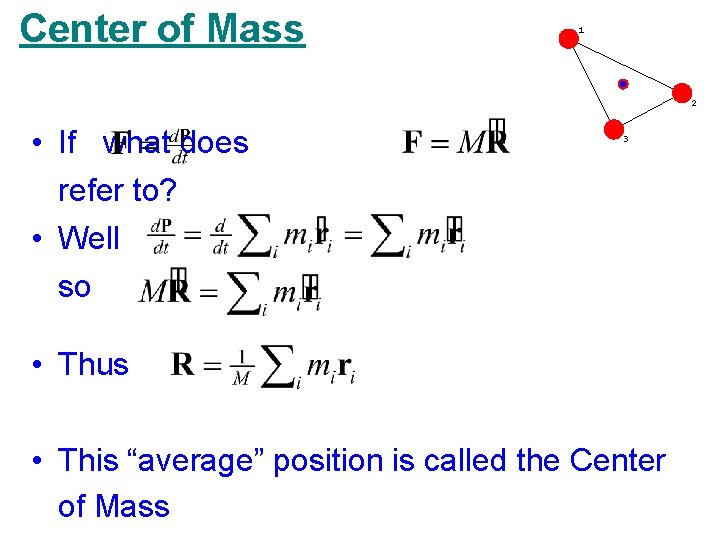
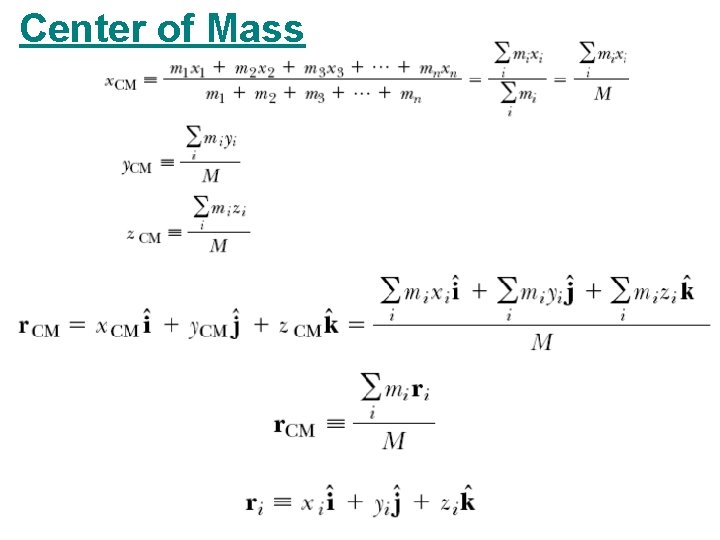
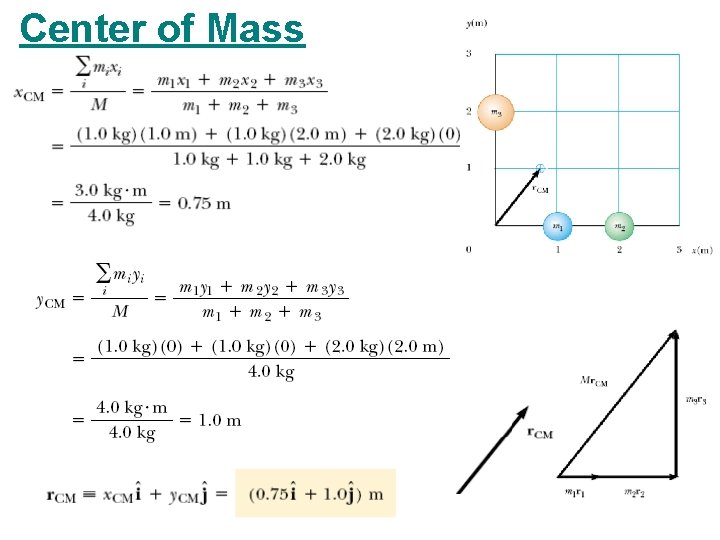
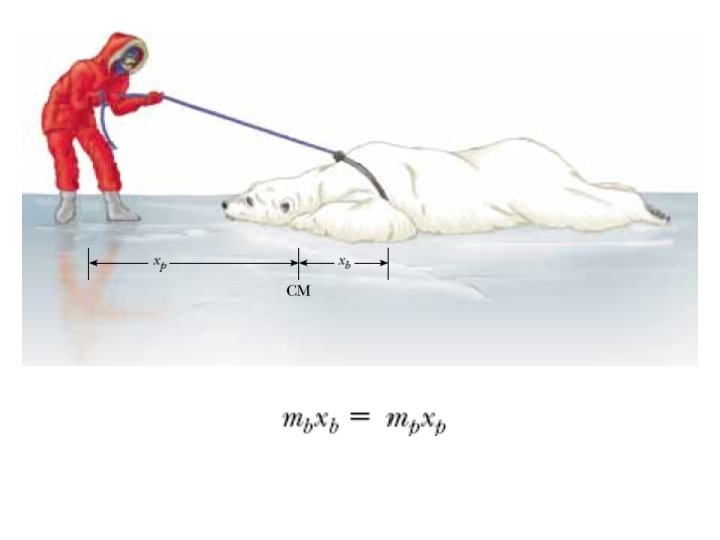
Center of Mass 1 2 • If what does refer to? • Well so 3 • Thus • This “average” position is called the Center of Mass
Center of Mass
Center of Mass
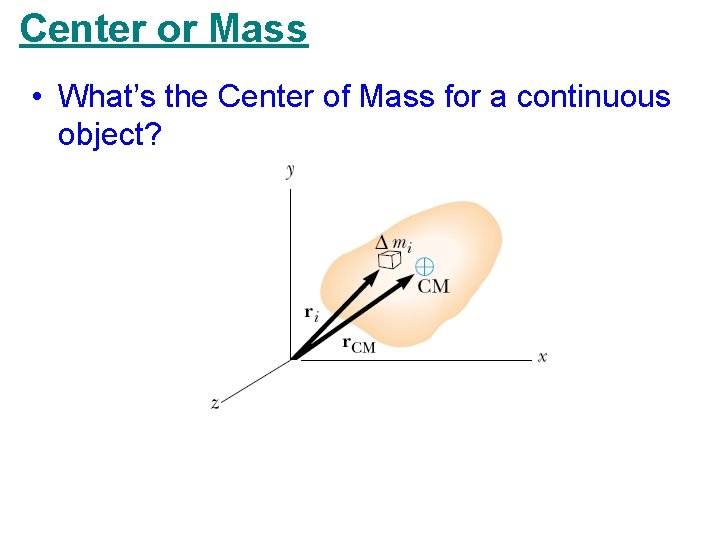
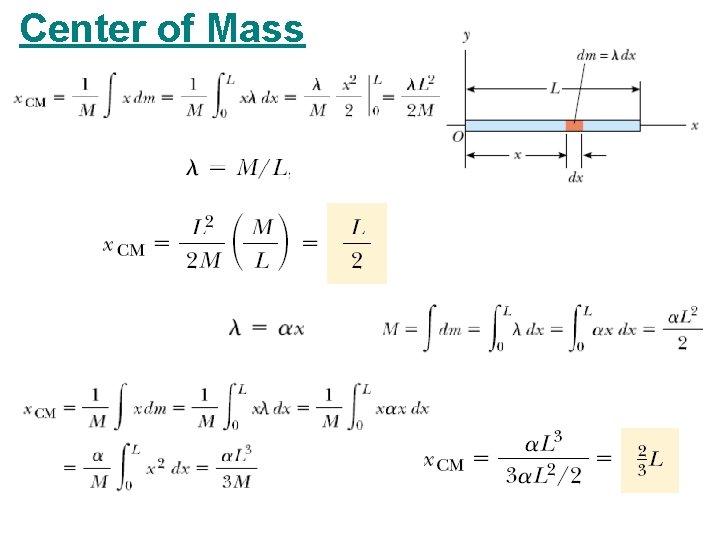
Center or Mass • What’s the Center of Mass for a continuous object?
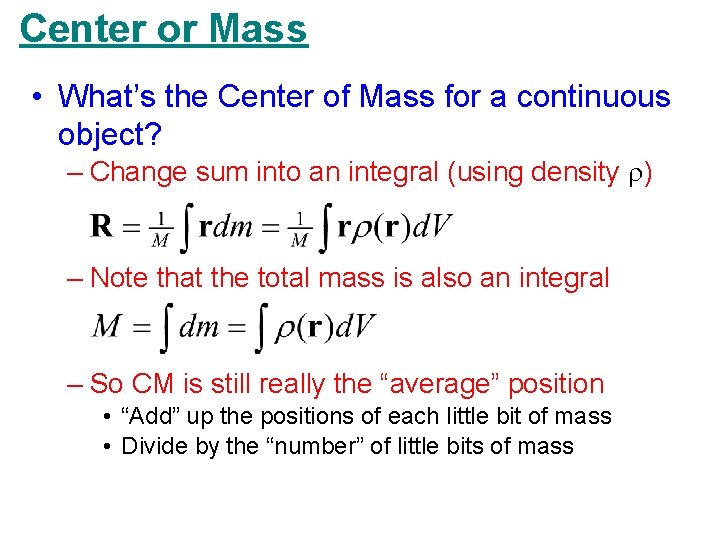
Center or Mass • What’s the Center of Mass for a continuous object? – Change sum into an integral (using density r) – Note that the total mass is also an integral – So CM is still really the “average” position • “Add” up the positions of each little bit of mass • Divide by the “number” of little bits of mass
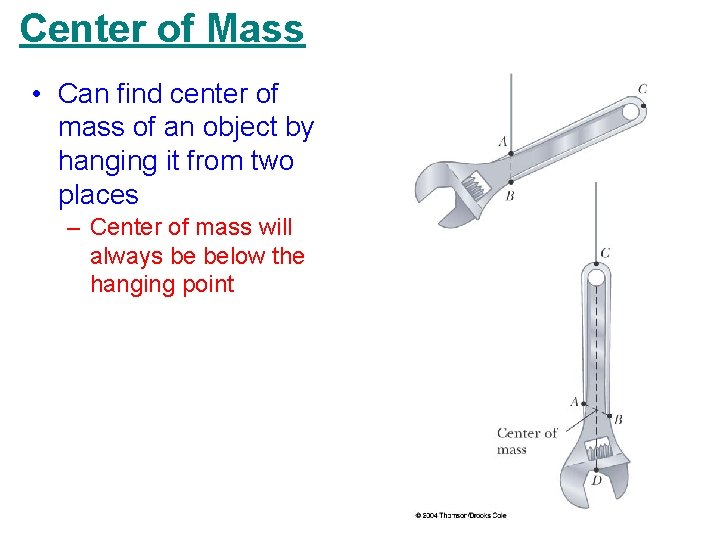
Center of Mass • Can find center of mass of an object by hanging it from two places – Center of mass will always be below the hanging point
Center of Mass
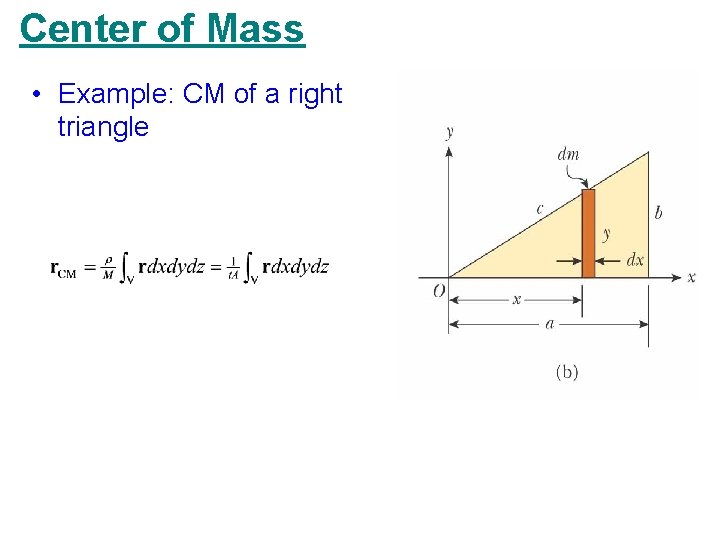
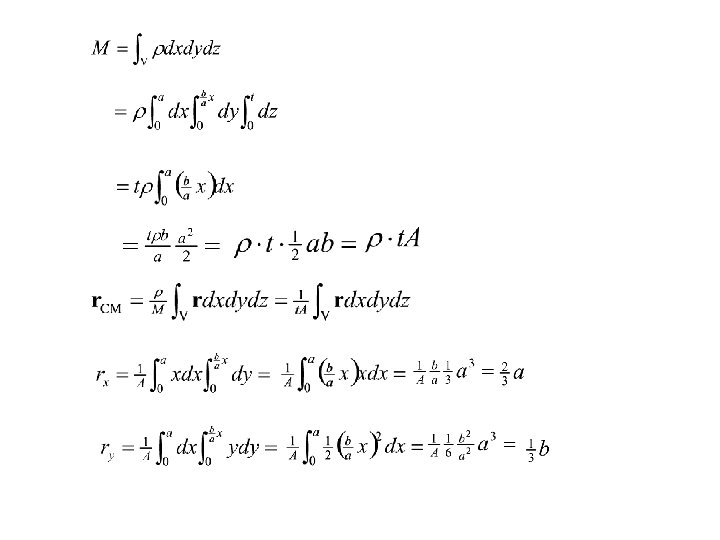
Center of Mass • Example: CM of a right triangle
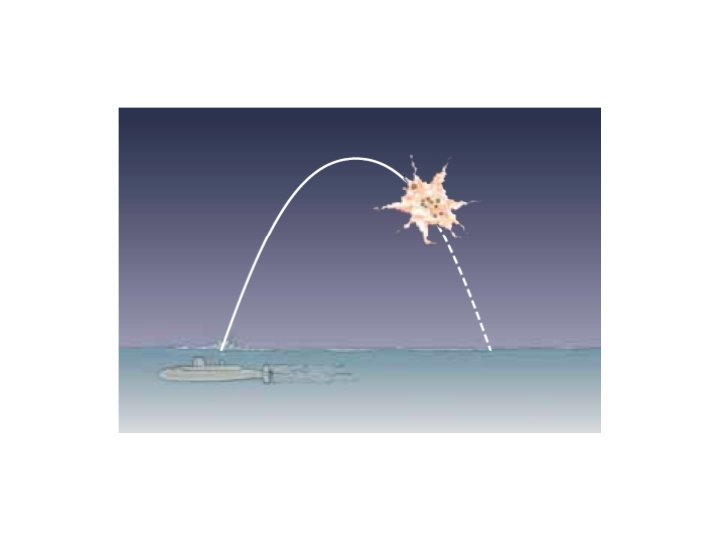
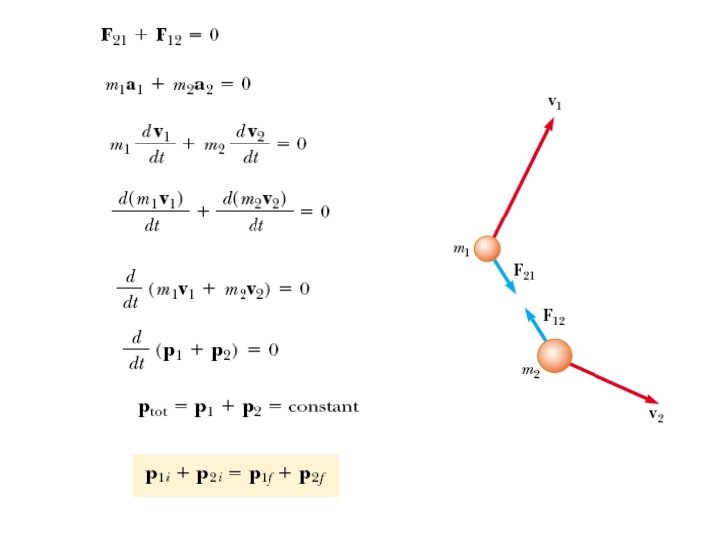
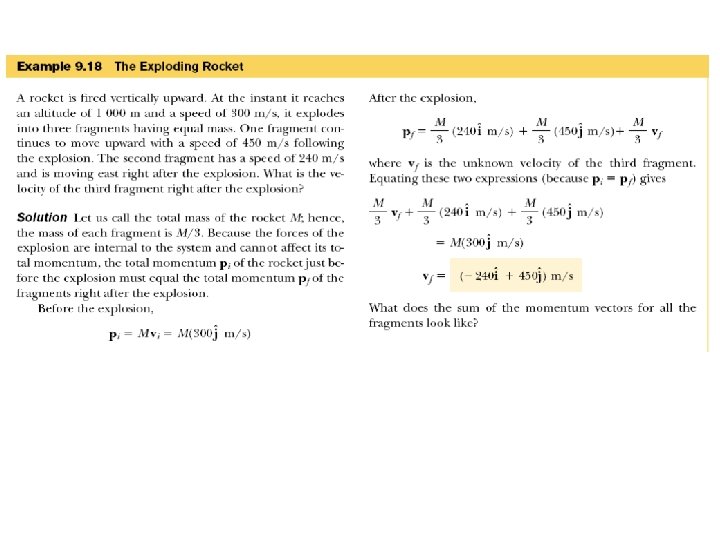
Conservation of Momentum • Since the total momentum of a system of particles is only changed by external forces, the momentum of an isolated system is constant – For this we say, “momentum is conserved” – The total momentum is conserved even though parts of the system may be doing wild things
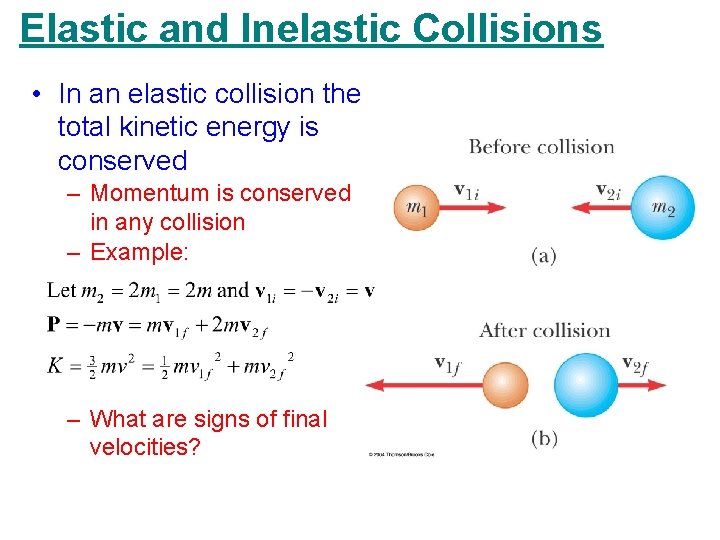
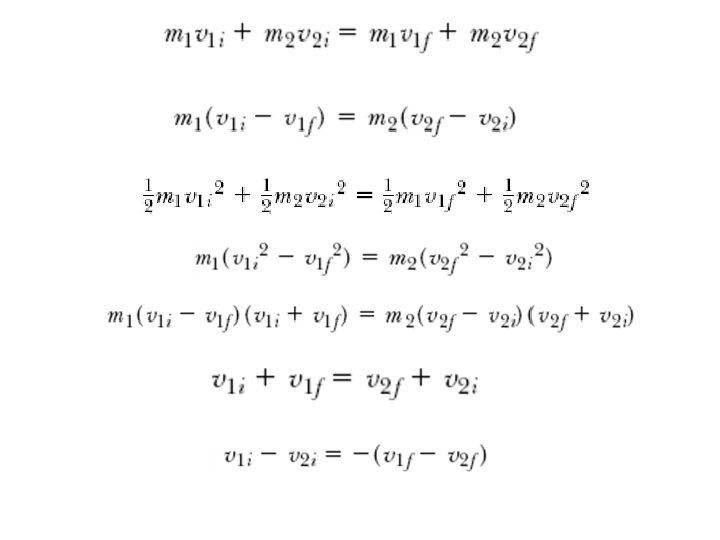
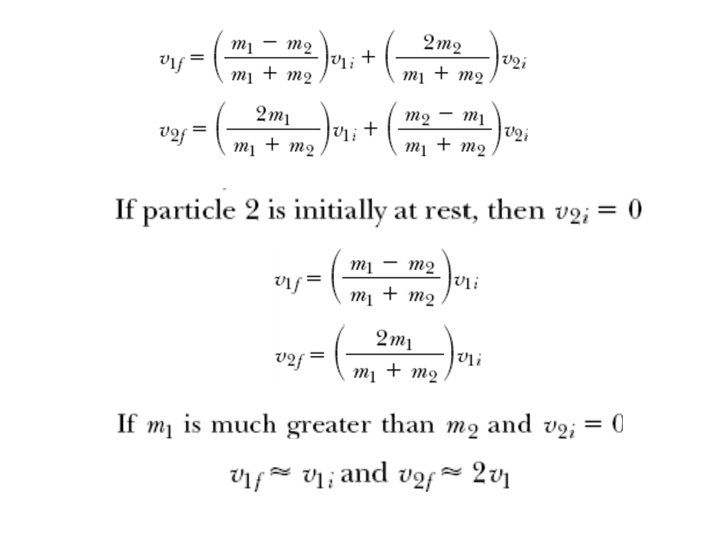
Elastic and Inelastic Collisions • In an elastic collision the total kinetic energy is conserved – Momentum is conserved in any collision – Example: – What are signs of final velocities?
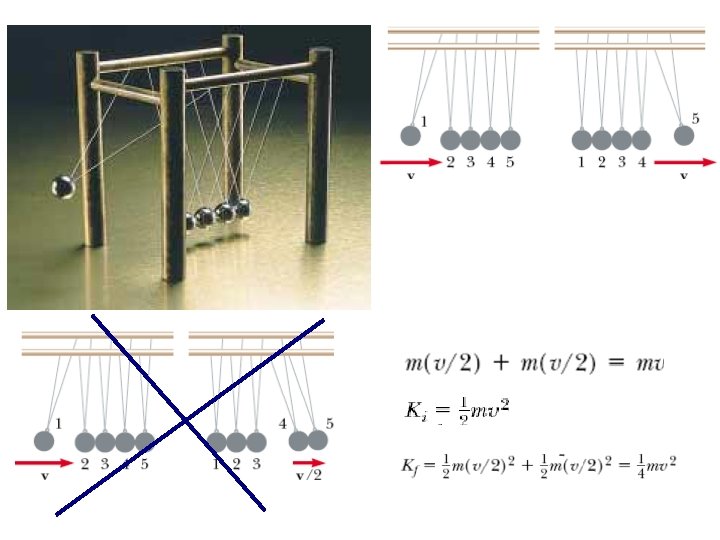
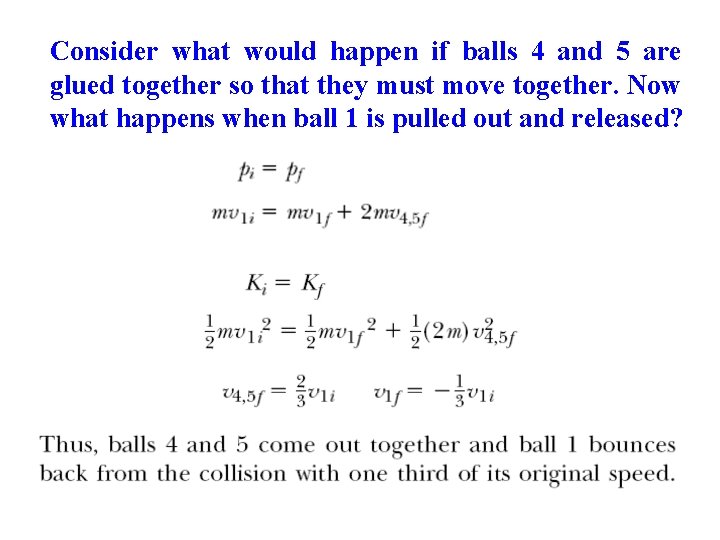
Consider what would happen if balls 4 and 5 are glued together so that they must move together. Now what happens when ball 1 is pulled out and released?
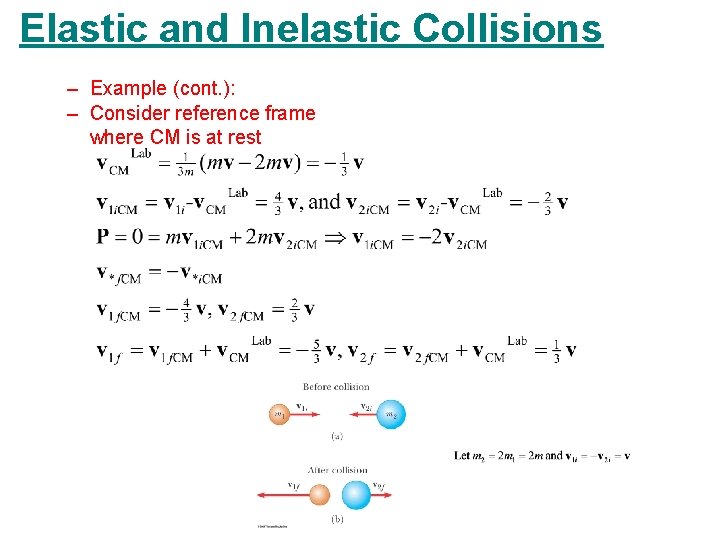
Elastic and Inelastic Collisions – Example (cont. ): – Consider reference frame where CM is at rest
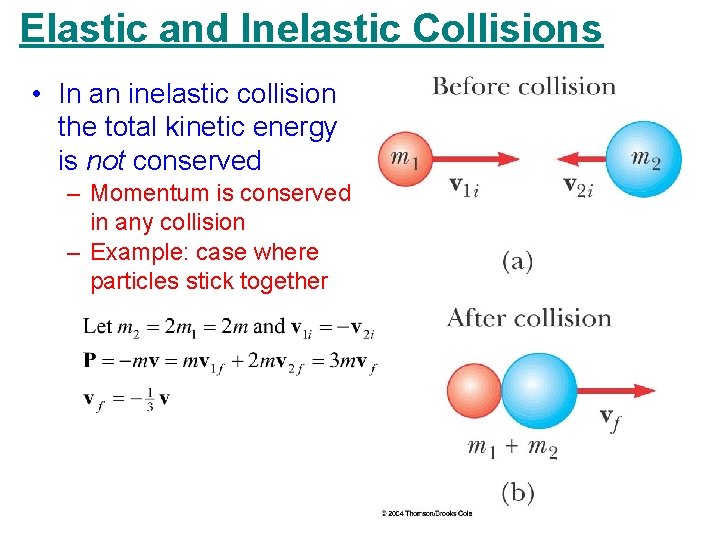
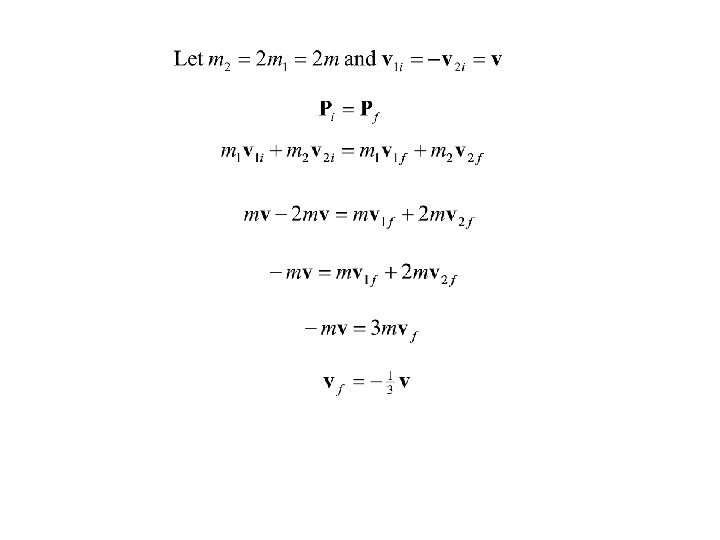
Elastic and Inelastic Collisions • In an inelastic collision the total kinetic energy is not conserved – Momentum is conserved in any collision – Example: case where particles stick together
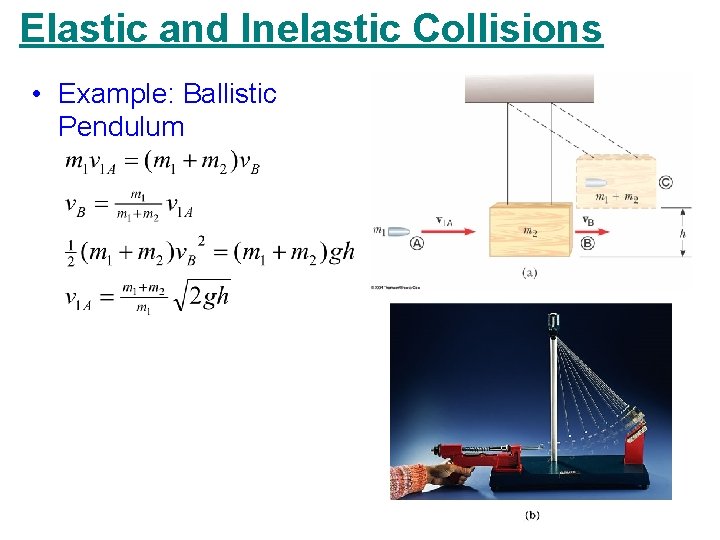
Elastic and Inelastic Collisions • Example: Ballistic Pendulum
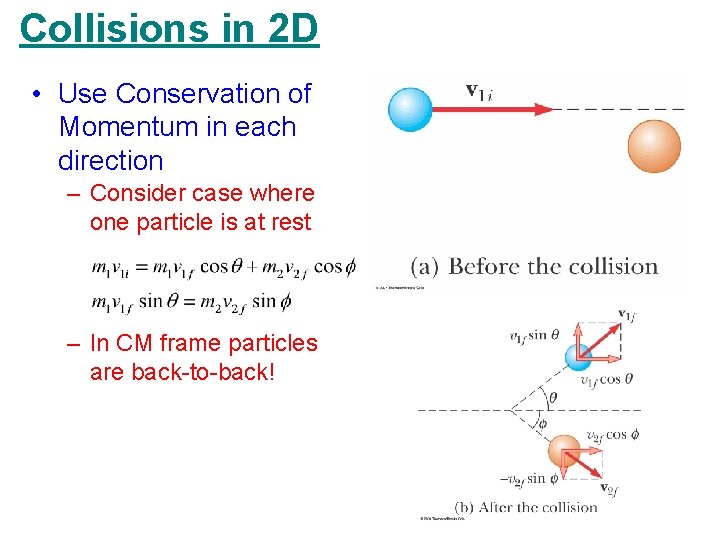
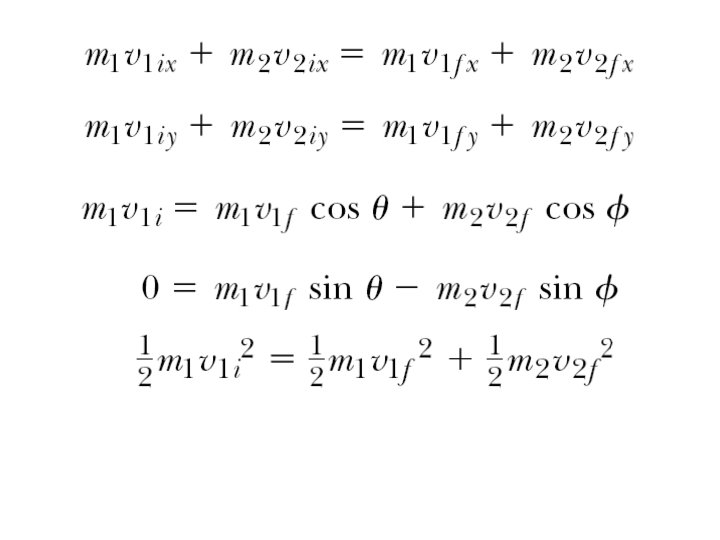
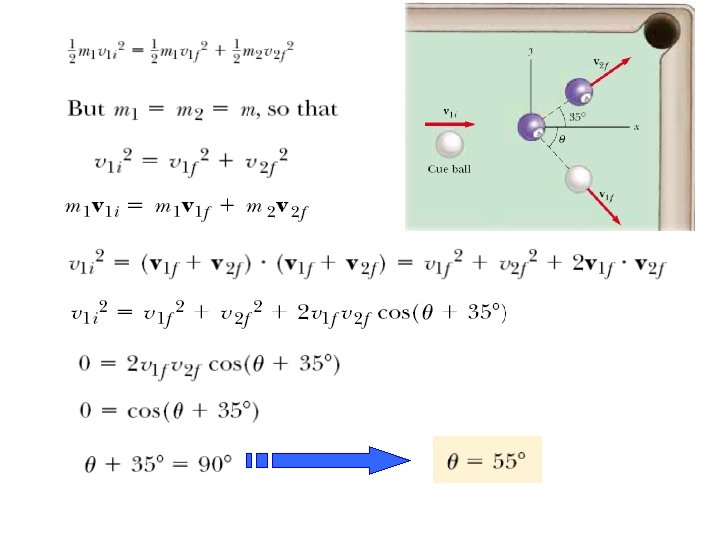
Collisions in 2 D • Use Conservation of Momentum in each direction – Consider case where one particle is at rest – In CM frame particles are back-to-back!
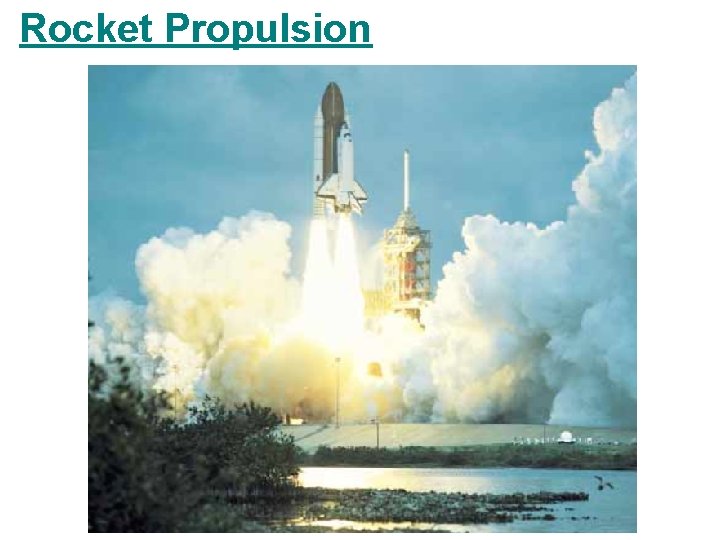
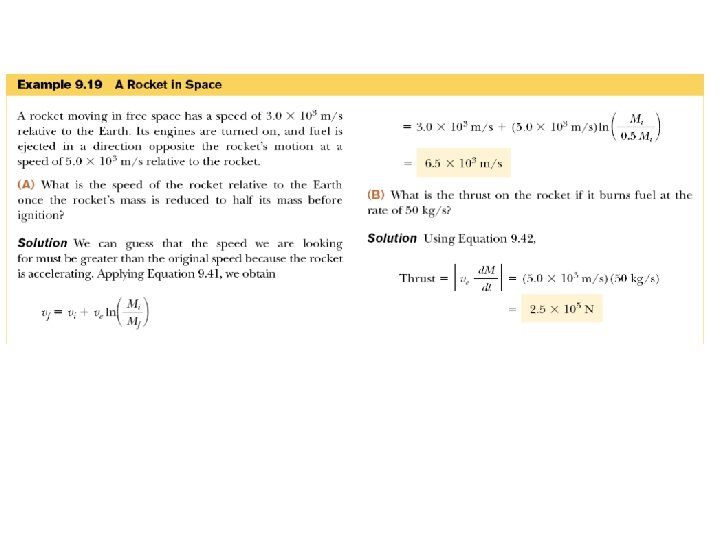
Rocket Propulsion
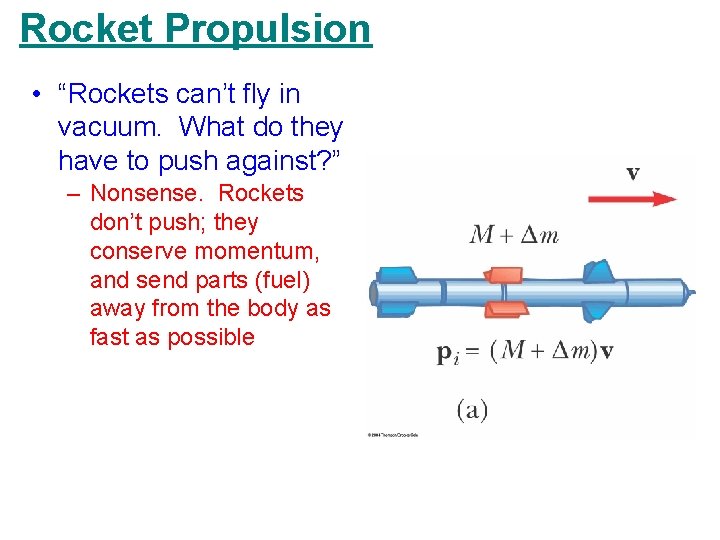
Rocket Propulsion • “Rockets can’t fly in vacuum. What do they have to push against? ” – Nonsense. Rockets don’t push; they conserve momentum, and send parts (fuel) away from the body as fast as possible
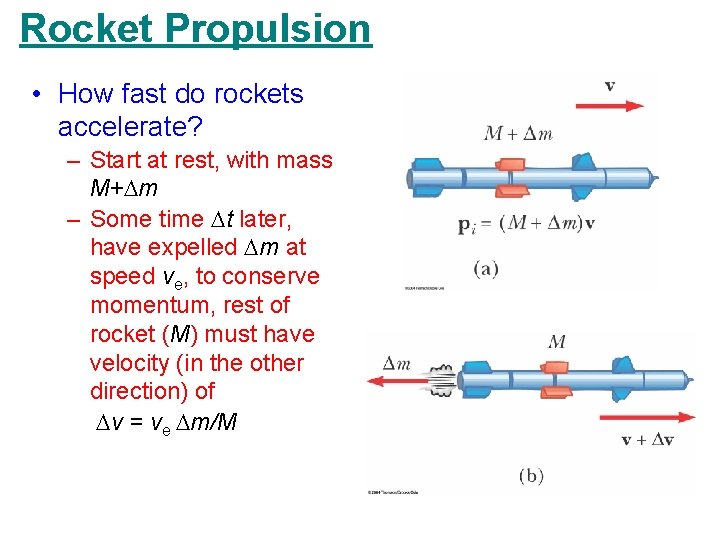
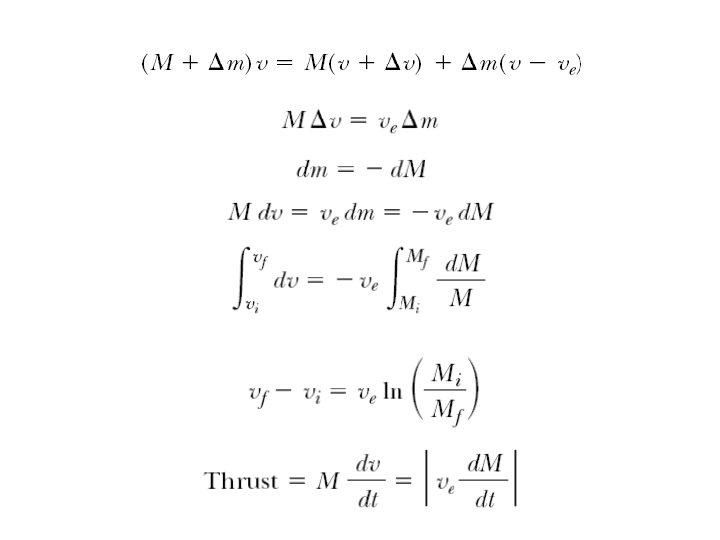
Rocket Propulsion • How fast do rockets accelerate? – Start at rest, with mass M+Dm – Some time Dt later, have expelled Dm at speed ve, to conserve momentum, rest of rocket (M) must have velocity (in the other direction) of Dv = ve Dm/M
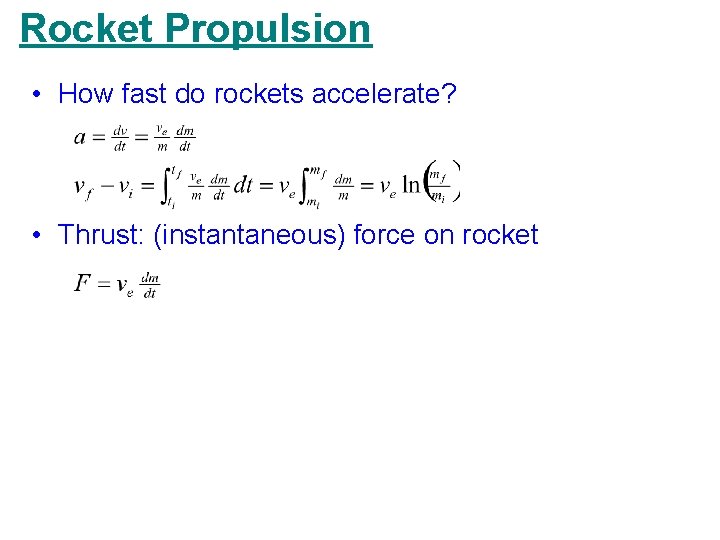
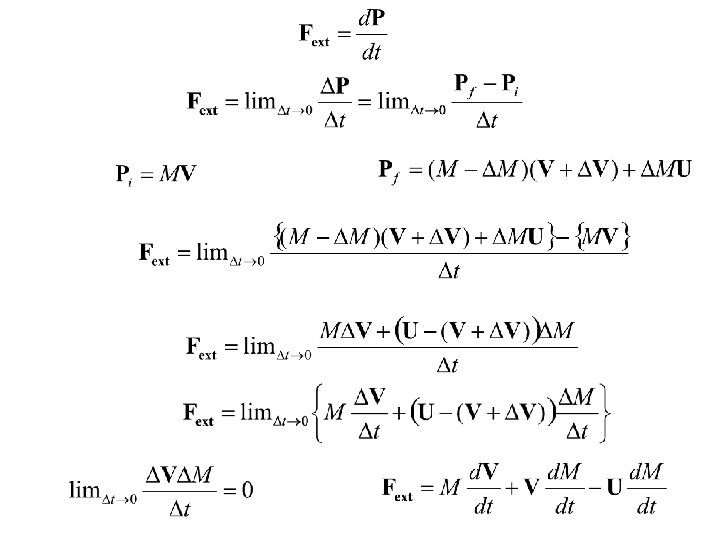
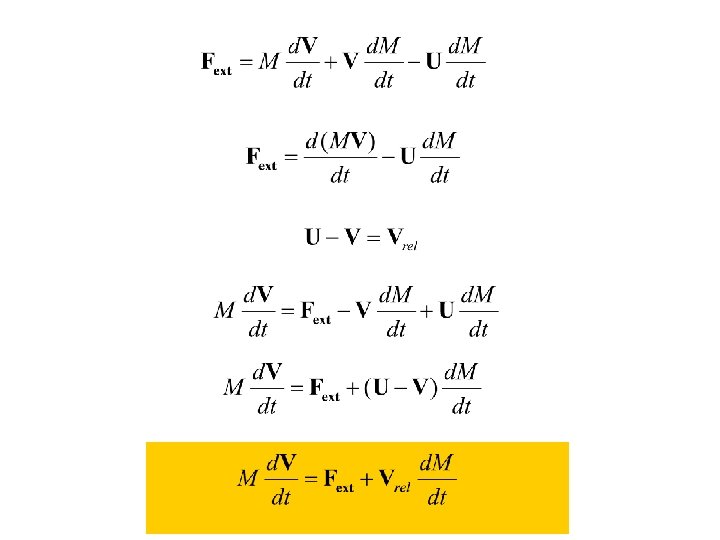
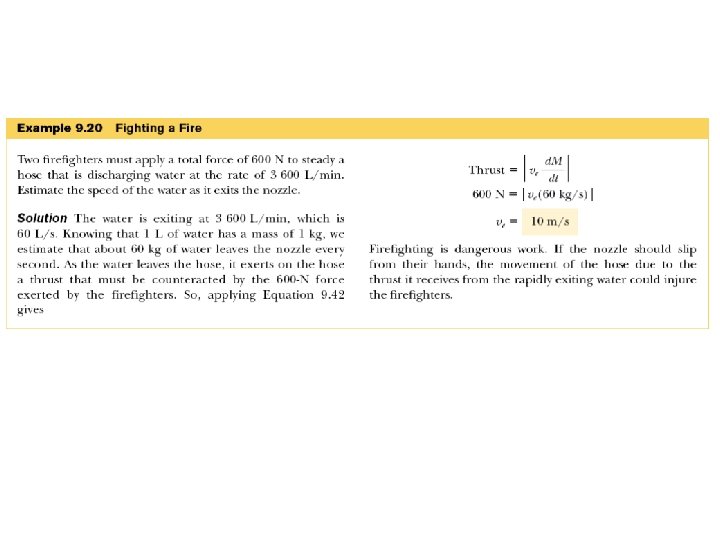
Rocket Propulsion • How fast do rockets accelerate? • Thrust: (instantaneous) force on rocket