Het antenataal CTG Prof dr P Defoort Afdeling





- Slides: 64
Het antenataal CTG Prof. dr. P. Defoort Afdeling verloskunde Sector Man-Vrouw-Kind UZ Gent
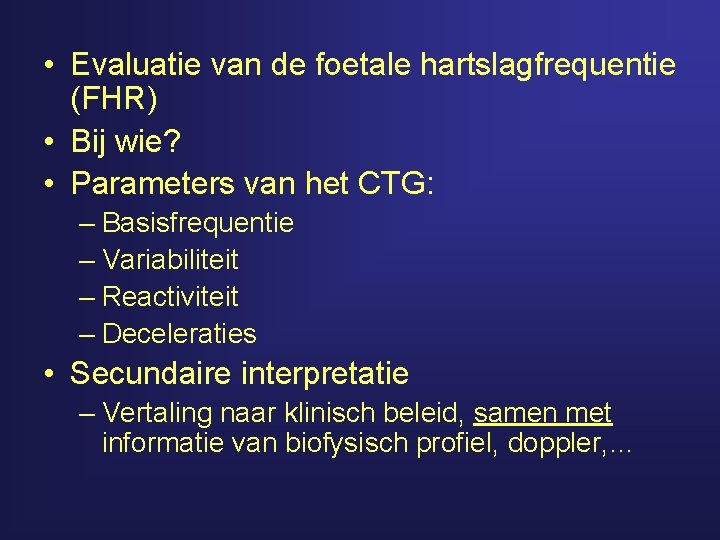
• Evaluatie van de foetale hartslagfrequentie (FHR) • Bij wie? • Parameters van het CTG: – Basisfrequentie – Variabiliteit – Reactiviteit – Deceleraties • Secundaire interpretatie – Vertaling naar klinisch beleid, samen met informatie van biofysisch profiel, doppler, …
Principe • Verband tussen foetale hartactiviteit (FHR) en de toestand van de foetus (foetaal welzijn)
Interfererende factoren 1. Foetale cardioregulatie 2. Foetale gedragspatronen 3. Farmaca (sedativa, antihypertensiva, …)
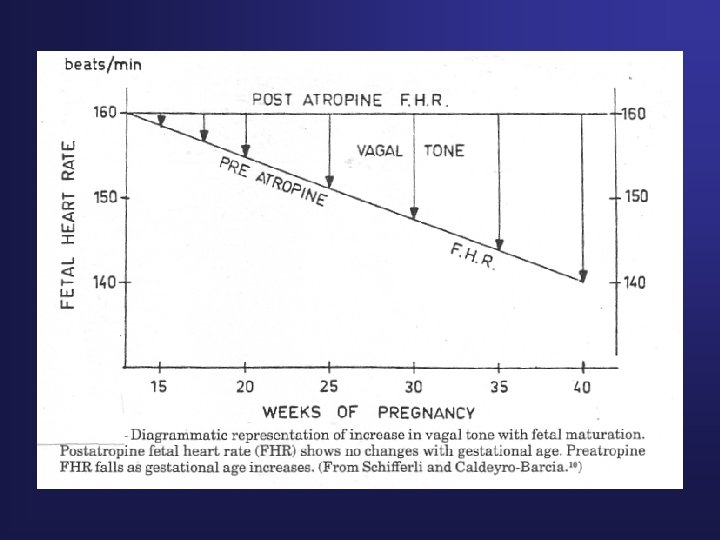
Bij de jonge foetus zijn vagaal bepaalde deceleraties fysiologisch en frequent
Foetale gedragspatronen (Prechtl, Nijhuis) • Quiet sleep • REM sleep • Awake (active)
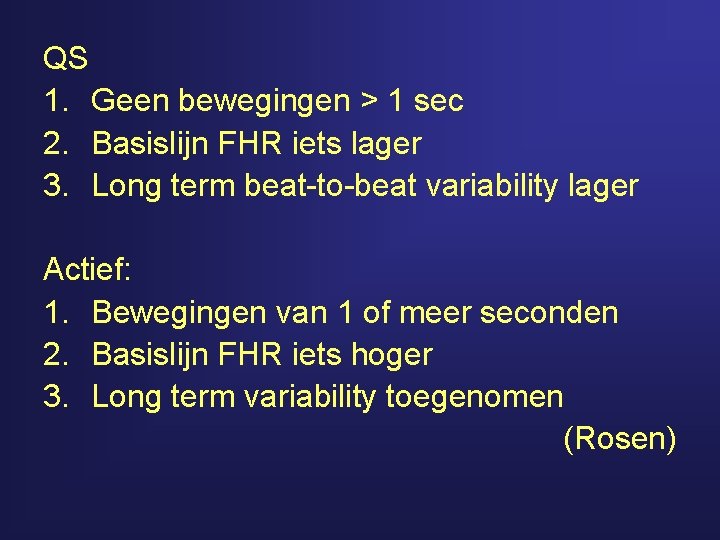
QS 1. Geen bewegingen > 1 sec 2. Basislijn FHR iets lager 3. Long term beat-to-beat variability lager Actief: 1. Bewegingen van 1 of meer seconden 2. Basislijn FHR iets hoger 3. Long term variability toegenomen (Rosen)
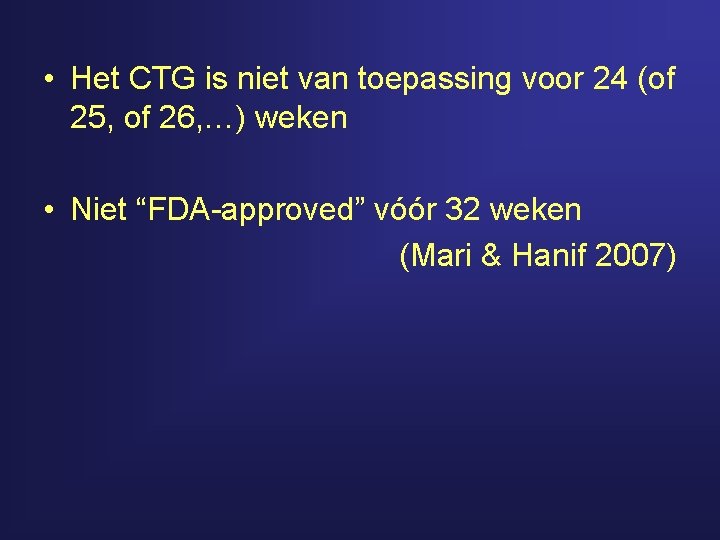
• Het CTG is niet van toepassing voor 24 (of 25, of 26, …) weken • Niet “FDA-approved” vóór 32 weken (Mari & Hanif 2007)
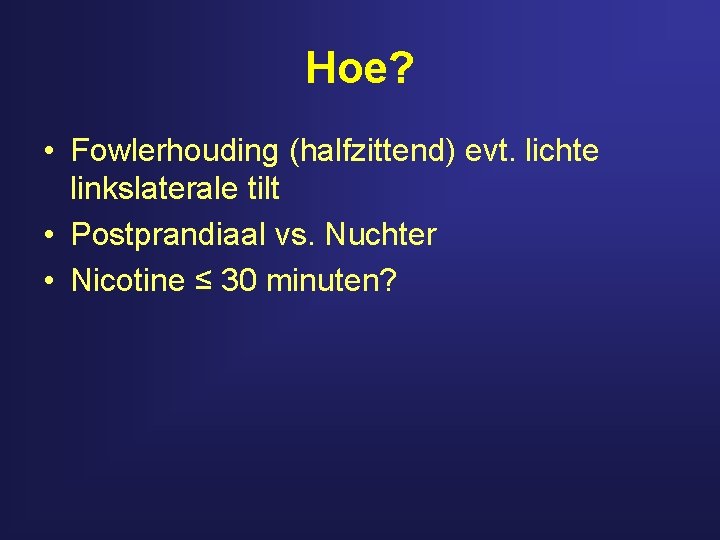
Hoe? • Fowlerhouding (halfzittend) evt. lichte linkslaterale tilt • Postprandiaal vs. Nuchter • Nicotine ≤ 30 minuten?
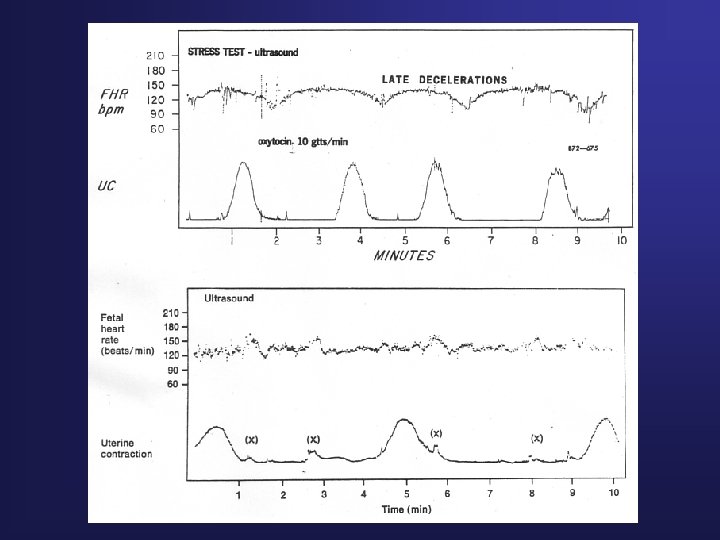
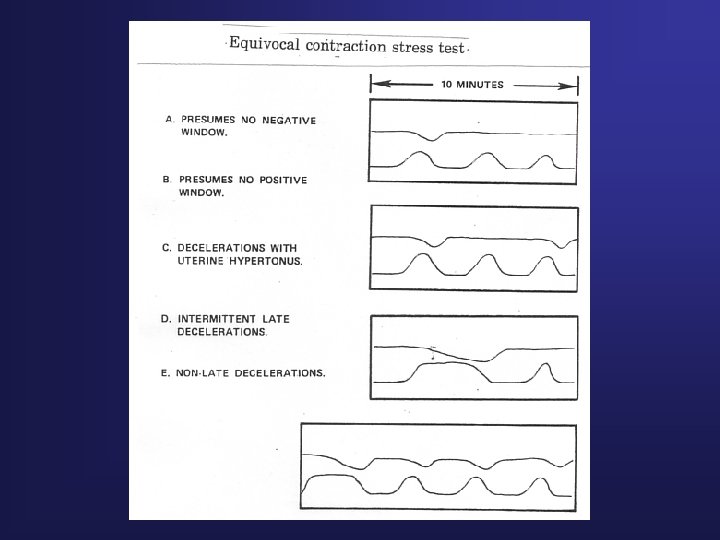
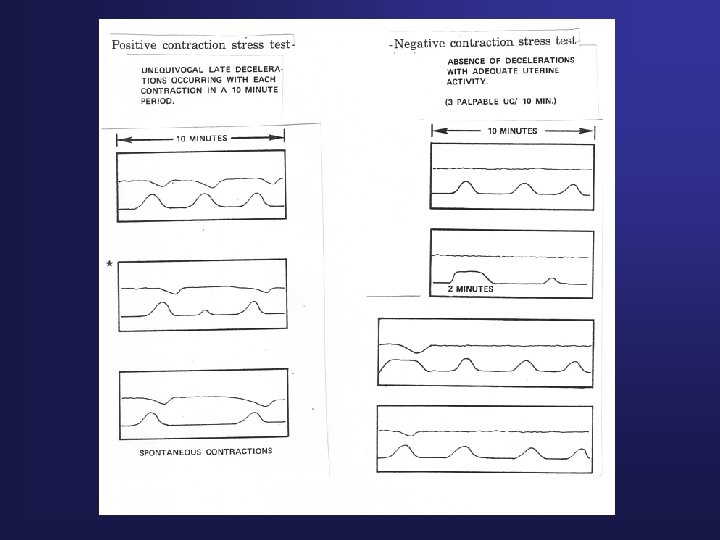
Hoe? • Stress - nonstress
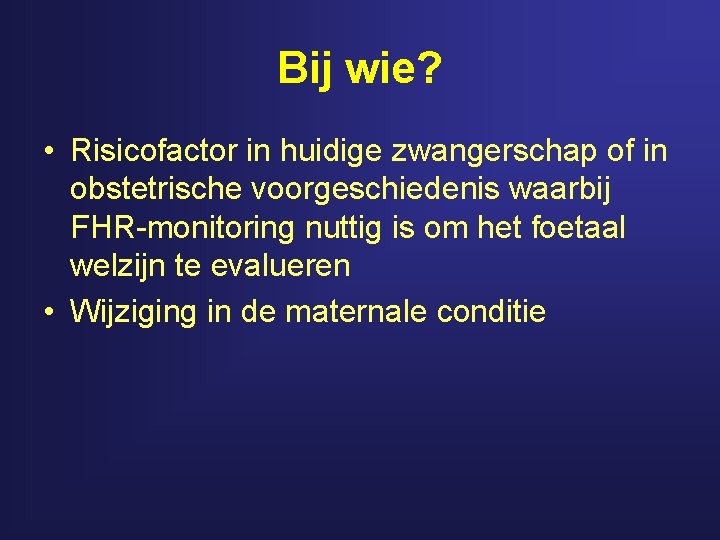
Bij wie? • Risicofactor in huidige zwangerschap of in obstetrische voorgeschiedenis waarbij FHR-monitoring nuttig is om het foetaal welzijn te evalueren • Wijziging in de maternale conditie
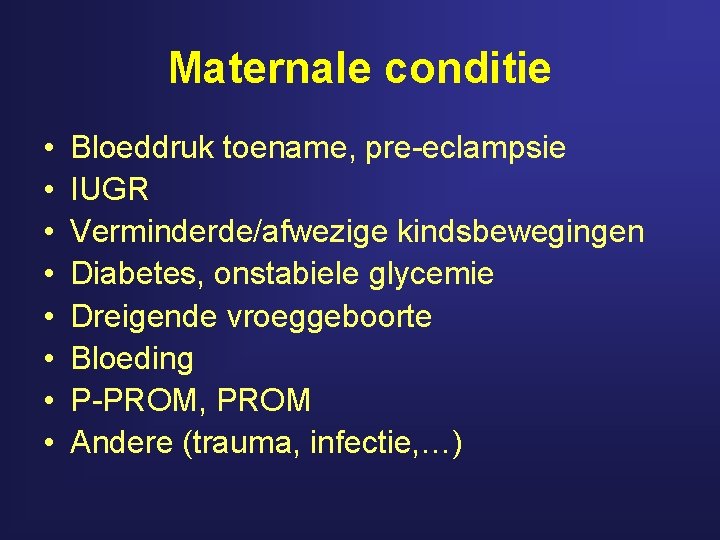
Maternale conditie • • Bloeddruk toename, pre-eclampsie IUGR Verminderde/afwezige kindsbewegingen Diabetes, onstabiele glycemie Dreigende vroeggeboorte Bloeding P-PROM, PROM Andere (trauma, infectie, …)
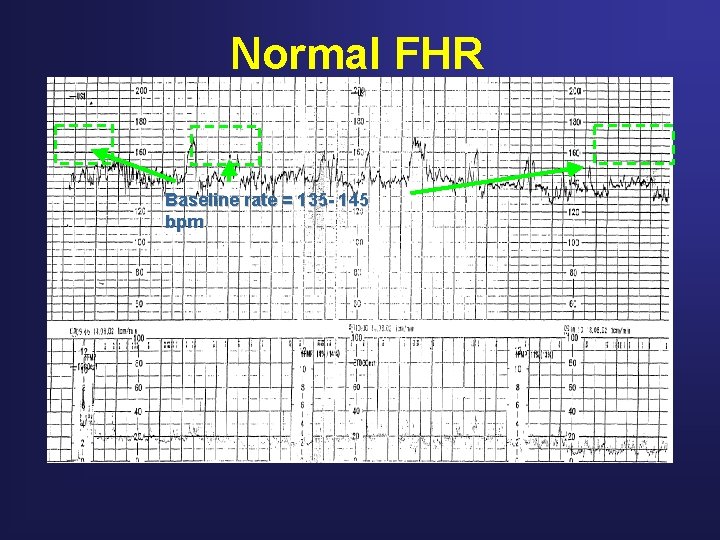
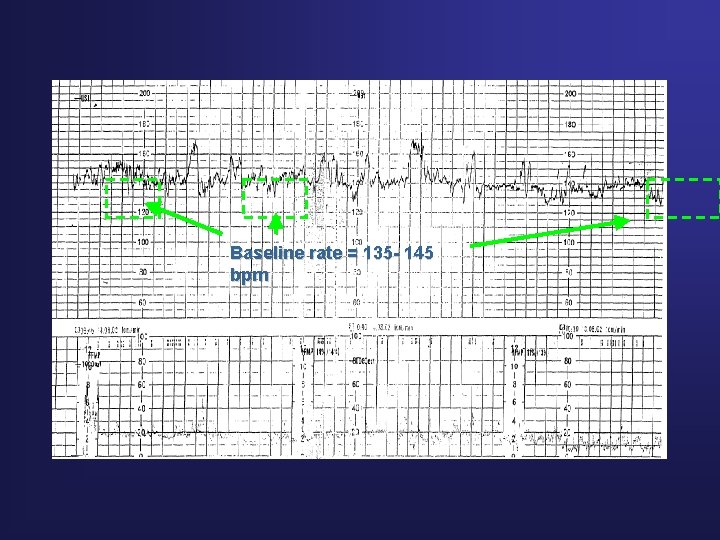
Basisfrequentie • Gemiddelde frequentie • Tussen periodes van acceleratie/deceleratie • Foetus in rustfase
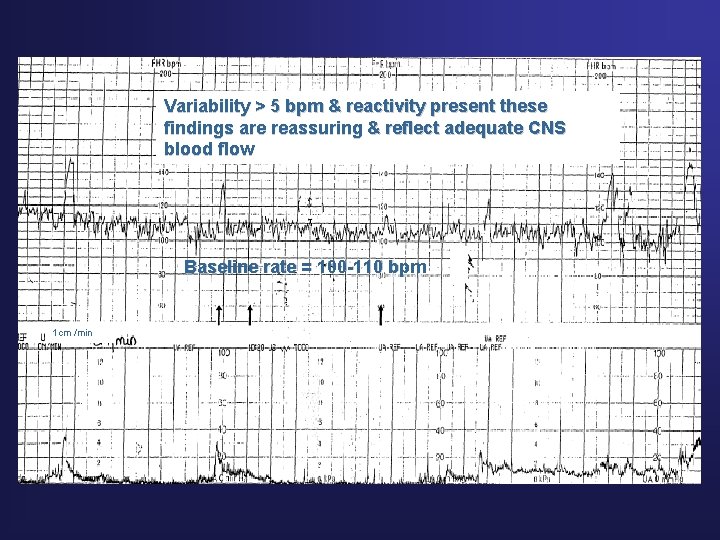
Basisfrequentie • Normaal: 110(120) – 150(160) bpm • Bradycardie: ≤ 110 bpm, > 5’ (of daling 40 bpm) • Tachycardie: > 160 bpm, > 10’
Variabiliteit • Interactie van het sympathische (positief inotroop) en vagale (negatief inotroop) systeem • Normale variabiliteit: – Integere CZS-activiteit – Integere cardiale functie – pathways • Pathway: cortex midbrain vagus cardiaal geleidingssysteem
Basislijn - variabiliteit • Slag-tot-slag variatie boven en onder basislijn • Gemiddeld over 1 minuut of meerdere periodes
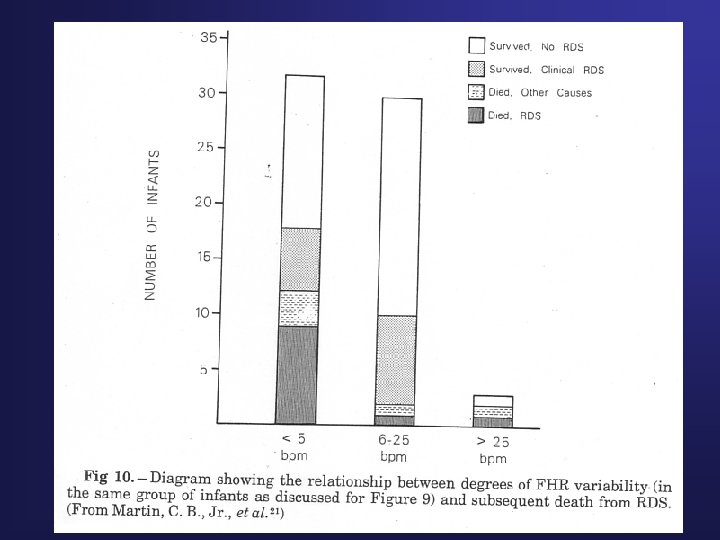
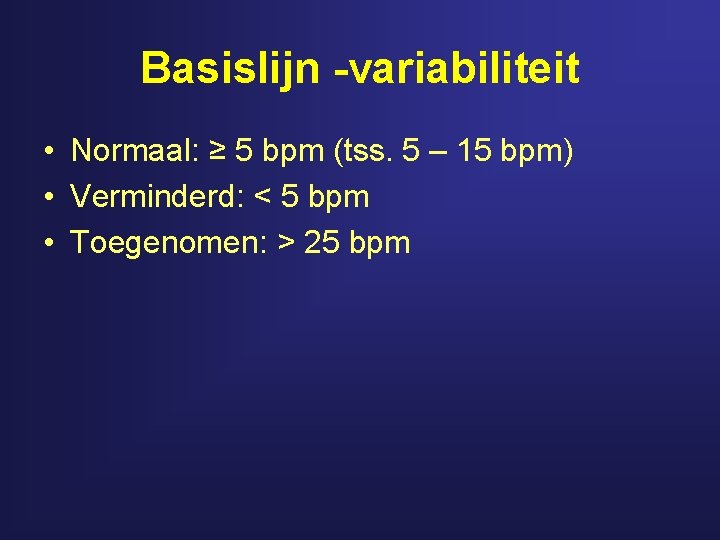
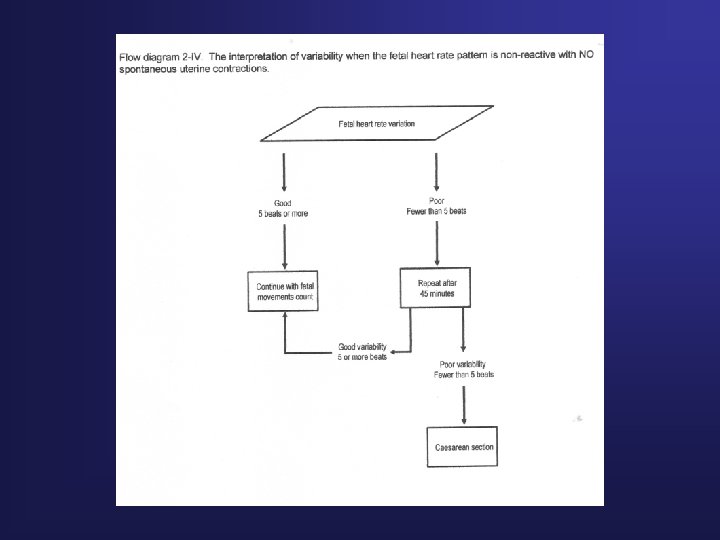
Basislijn -variabiliteit • Normaal: ≥ 5 bpm (tss. 5 – 15 bpm) • Verminderd: < 5 bpm • Toegenomen: > 25 bpm
Normal FHR Baseline rate = 135 - 145 bpm
Baseline bradycardia Variability > 5 bpm & reactivity present these findings are reassuring & reflect adequate CNS blood flow Baseline rate = 100 -110 bpm 1 cm /min
Normal FHR Baseline rate = 135 - 145 bpm
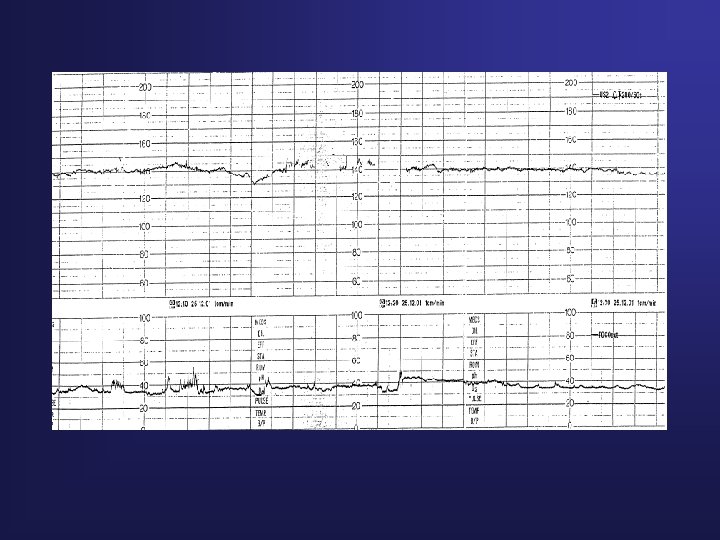
Verminderde variabiliteit • • • Foetale gedragstoestand: rust, slaap Immature vagale regulatie (jonge foetus) Milde hypoxie Farmaca (inz. bij pre-eclampsie) Neurologische beschadiging (1 R of 2 R)
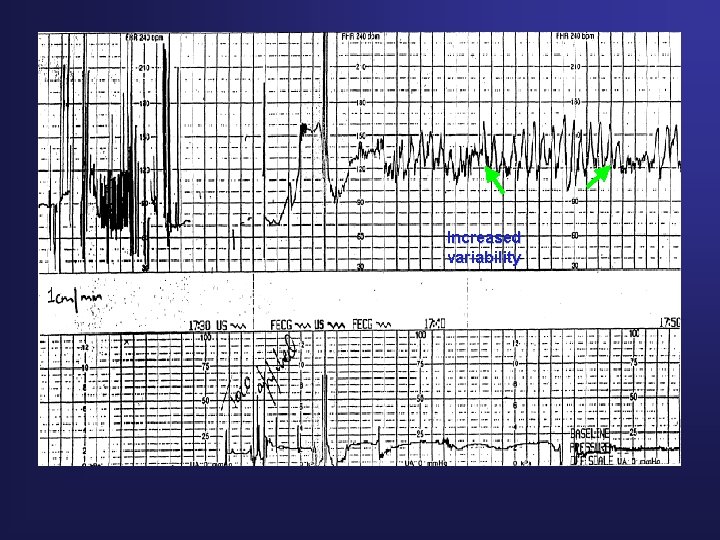
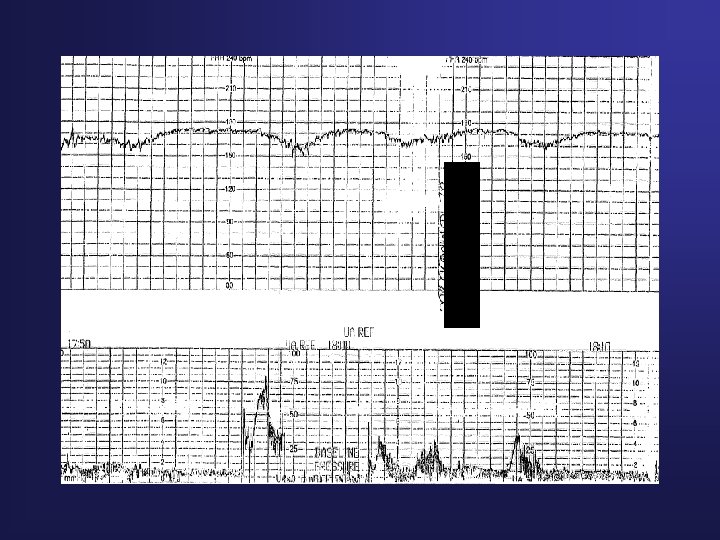
Toegenomen variabiliteit (> 25 bpm, “saltatoir” rythme) • Ernstige variabele deceleraties • Foetale stimulatie • Matige hypoxie vroeg compensatoir mechanisme
Increased variability
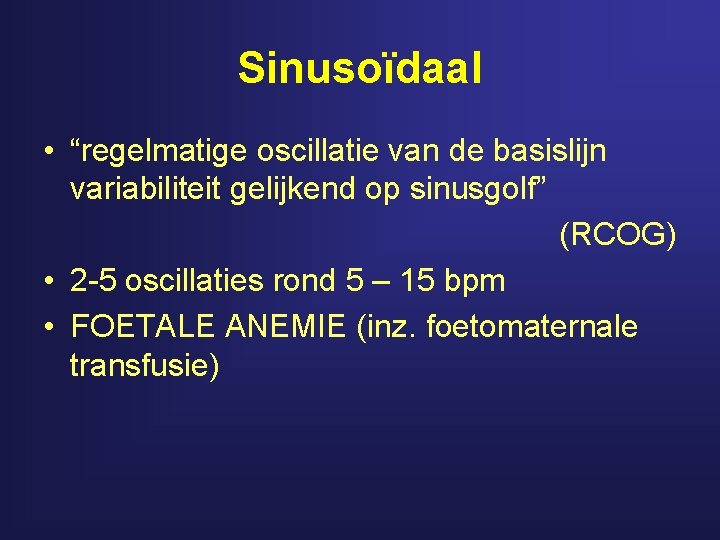
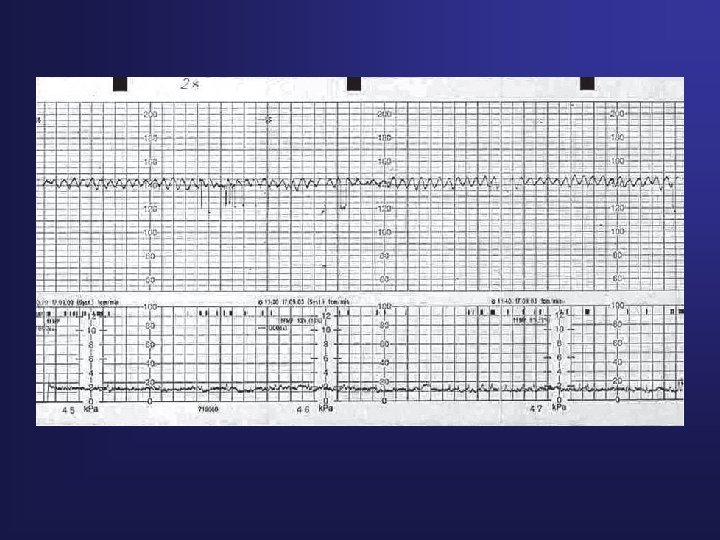
Sinusoïdaal • “regelmatige oscillatie van de basislijn variabiliteit gelijkend op sinusgolf” (RCOG) • 2 -5 oscillaties rond 5 – 15 bpm • FOETALE ANEMIE (inz. foetomaternale transfusie)
Reactiviteit • Toename van de FHR bij stimuli • Reactiviteit: 1 week overleving > 99% • Geruststellend en positieve predictor
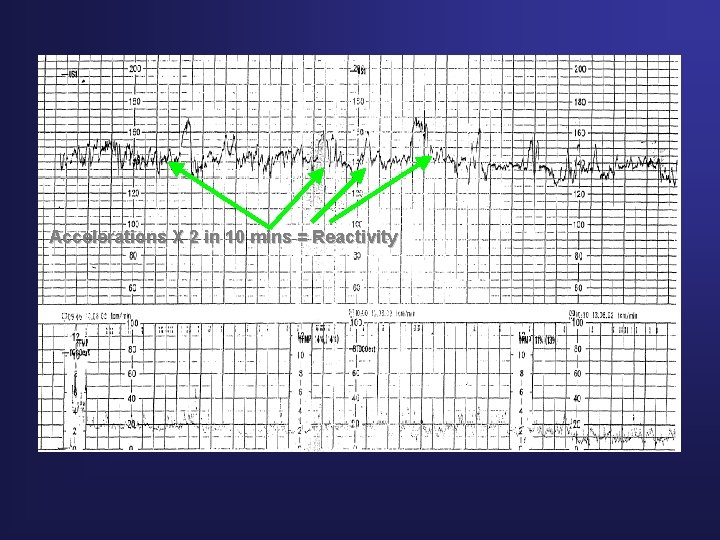
Reactiviteit • Toegenomen FHR (+ 15 slagen) voor meer dan 15 seconden twee keer in 10 minuten Non-reactief: geen acceleraties over 60 – 90 minuten
Accelerations X 2 in 10 mins = Reactivity
Bradycardie FHR < 110 bpm voor meer dan 10 minuten
Tachycardie • • Sympathische stimulatie, catecholamines Meestal geassocieerd met beweging Immaturiteit Cardiale condities
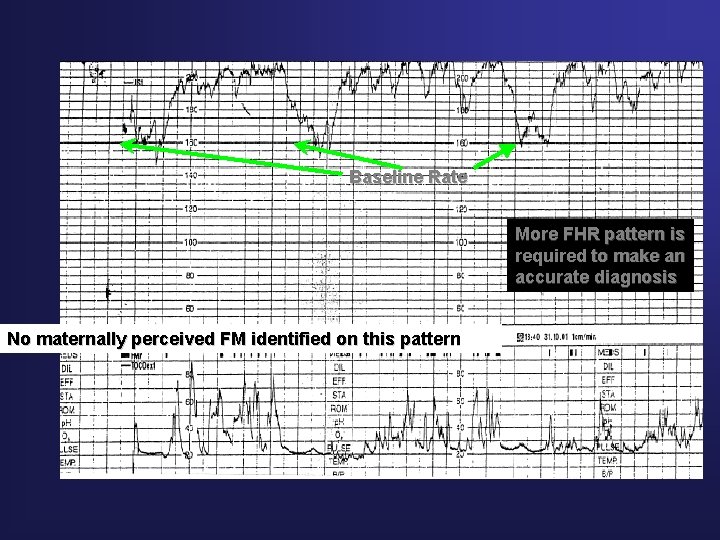
Baseline Tachycardia Baseline Rate More FHR pattern is required to make an accurate diagnosis No maternally perceived FM identified on this pattern
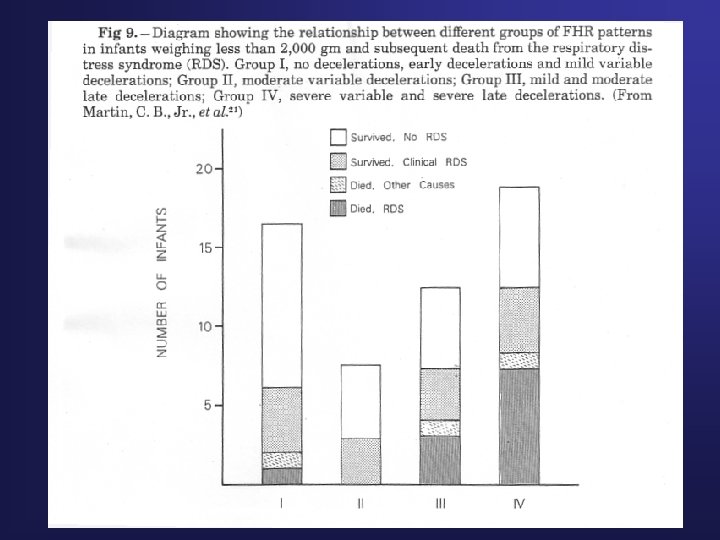
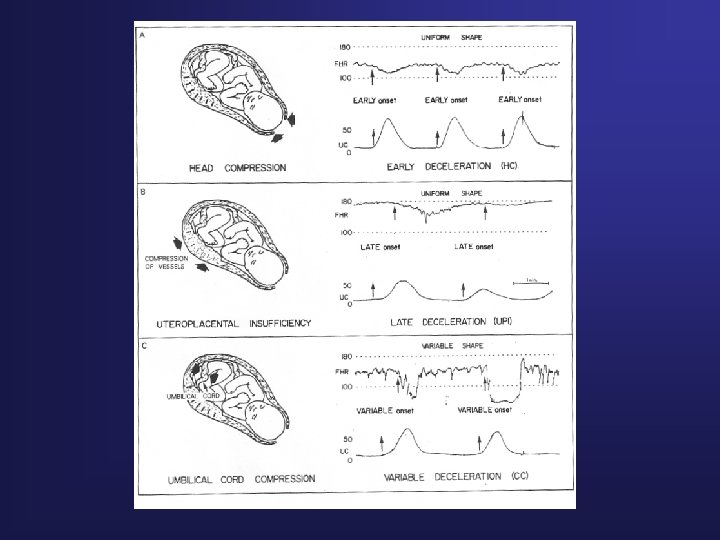
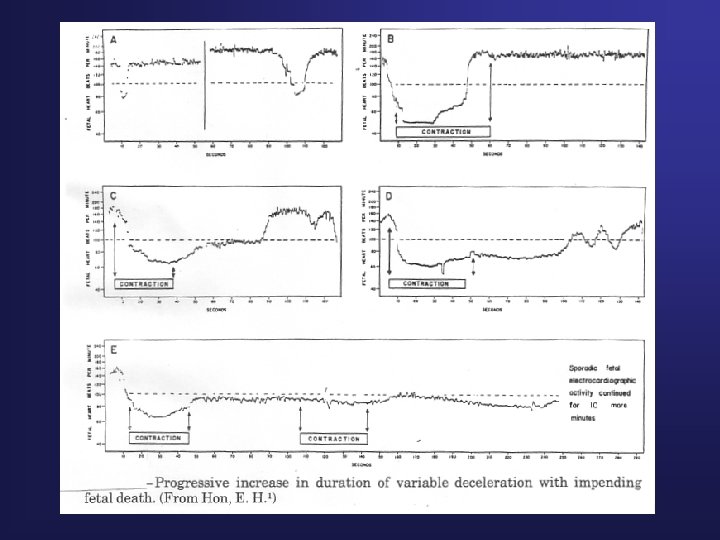
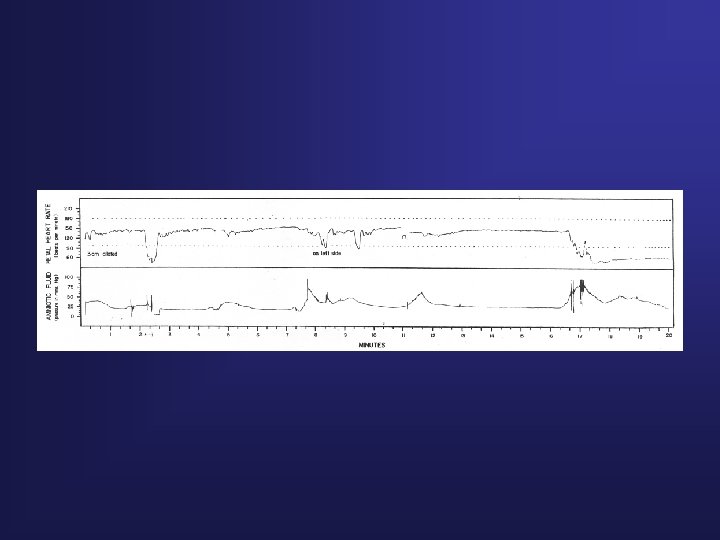
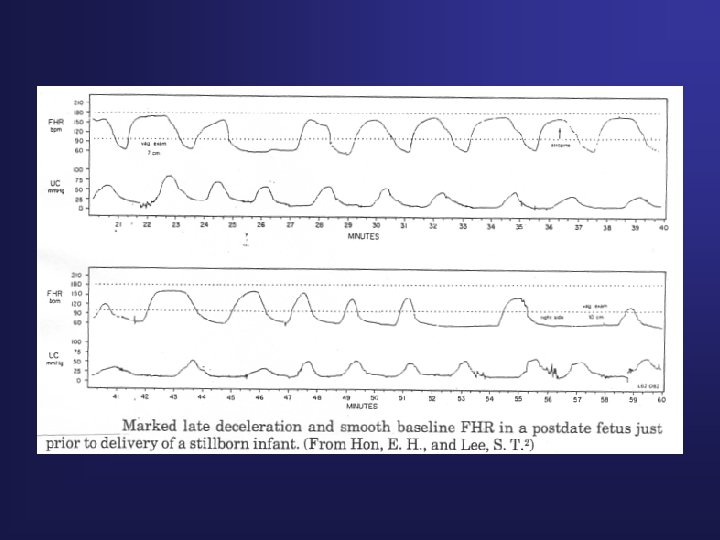
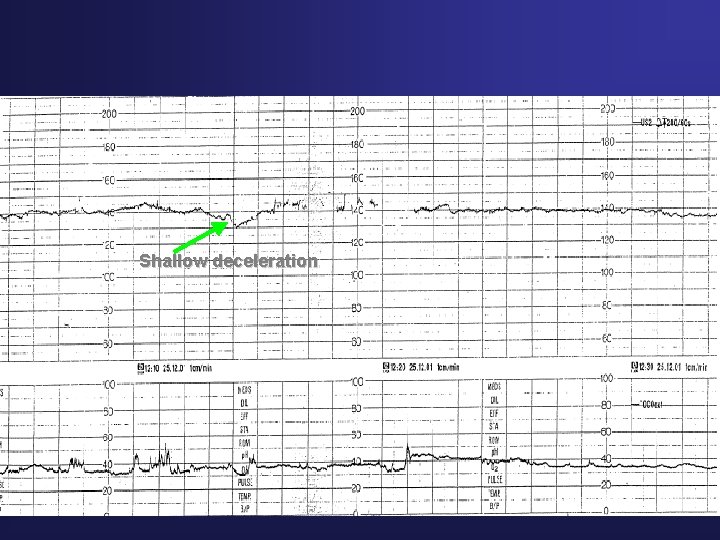
Deceleraties • Vagotonie (bij jonge foetus) • Contracties • Ondiepe deceleraties Vaak + verminderende variabiliteit Chronische stress Placentaire functie ↓
Shallow deceleration
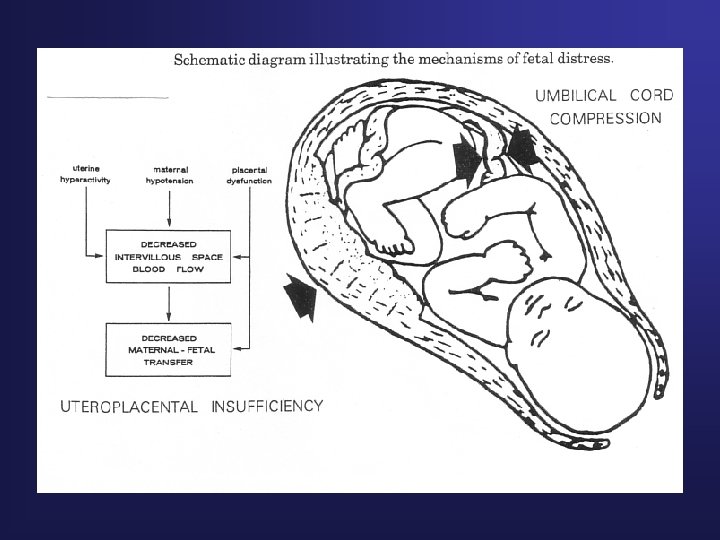
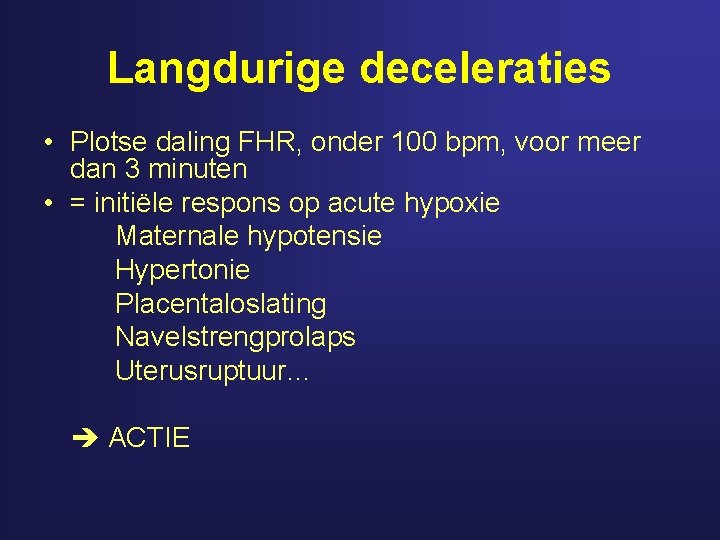
Langdurige deceleraties • Plotse daling FHR, onder 100 bpm, voor meer dan 3 minuten • = initiële respons op acute hypoxie Maternale hypotensie Hypertonie Placentaloslating Navelstrengprolaps Uterusruptuur… ACTIE
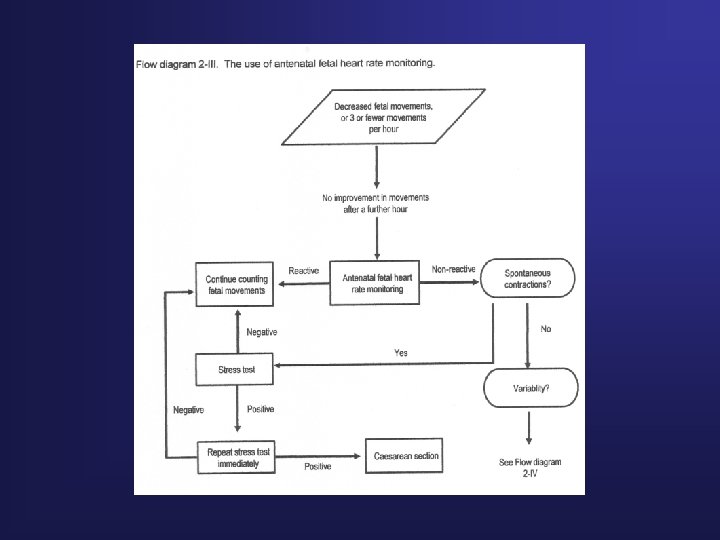
Interpretatie “ A non reactive NST has been shown to be associated with adverse perinatal outcome, although it is more often related to fetal sleep cycle” (Maulik 2006)
Predictie/vermijdbare foetale dood • Vals-negatief 2 tot 3 ‰ • Negatieve predictieve waarde: 99% • Vals positief: 80%
Dawes – Freedmand criteria: (computeranalyse) • STV > 4 msec: geen IUD of foetale acidemie • STV < 2, 5 msec: 72% acidemie † 4/5
Slechts 4 randomized trials, ± 1500 gevallen in totaal in vroege jaren 80 Alle: onvoldoende power, Geen toonde verbeterde outcome
Cochrane review (Pattison & Mc. Cowan) • Inadequacy of current evidence • Trials too dated to be relevant for current obstetrical practice
“Therefore, there is NO evidence based justification for using NST as the primary single modality for fetal surveillance” (Maulik 2006)
• Biofysisch profiel • Doppler (a umb, ductus venosus, mid cerebral artery)
Beginfase • Lage MCA PI verminderde vaatweerstand centraal toename cerebrale doorstroming
Toenemende ernst • MCA PSV ↑ (toegenomen left cardial output) • Rechterventrikel output shifts naar brein (door toenemende weerstand in ao. Descendens) • MCA PSV: kan afnemen voor overlijden, maar blijft in normale range • Cerebrale vasodilatatie • Perifere vasoconstrictie
Rechterhartfalen linkerhartfalen † (Mari & Hanif 2007)
In conclusion (1) “The goal of antenatal fetal monitoring is to differentiate the fetus who is at risk (…) but who is tolerating the in-utero environment without distress, from the fetus who is tolerating its in utero environment poorly and who is truly distressed. Early intervention may be indicated in the latter group, but should be avoided in the former group. The questions of when to intervene and when not to intervene are not easily answered” Jarrell & Sokol, 1979
Conclusion (2) “There is NO single test that seems superior to the other available tests for timing the delivery of the growth restricted fetus. Therefore, the decision to deliver a fetus, especially at less than 32 weeks, remains mostly on the basis of empirical management” Mari & Hanif 2007
Deze presentaie maakte dankbaar gebruik van o. m. : • Y. Jacquemyn: Procedureboek Verloskunde • H. Cooke & W. Giles: Antenatal Fetal Heart Rate Monitoring (NSW Health, web)