CISN Earthquake Early Warning Realtime testing of algorithms







- Slides: 69
CISN Earthquake Early Warning Real-time testing of algorithms statewide Richard Allen, UC Berkeley U. S. Geological Survey Caltech UC Berkeley SCEC/USC
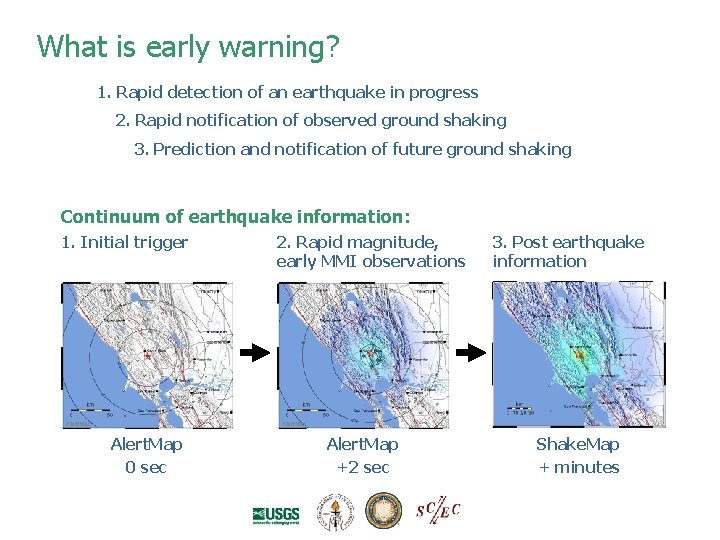
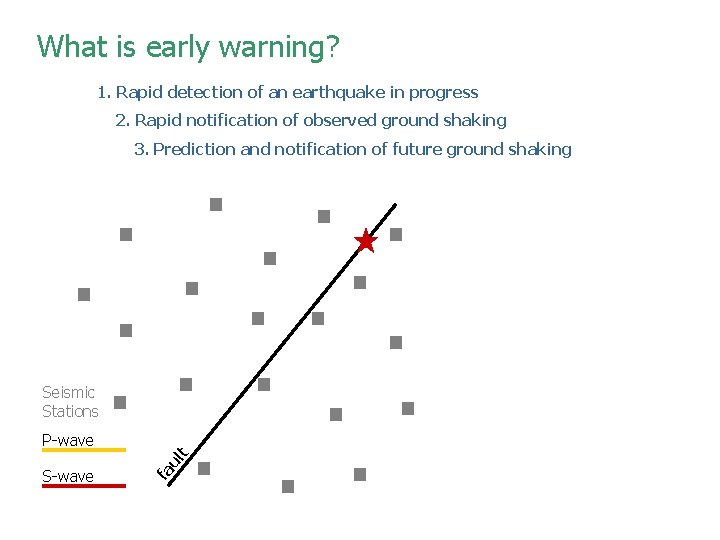
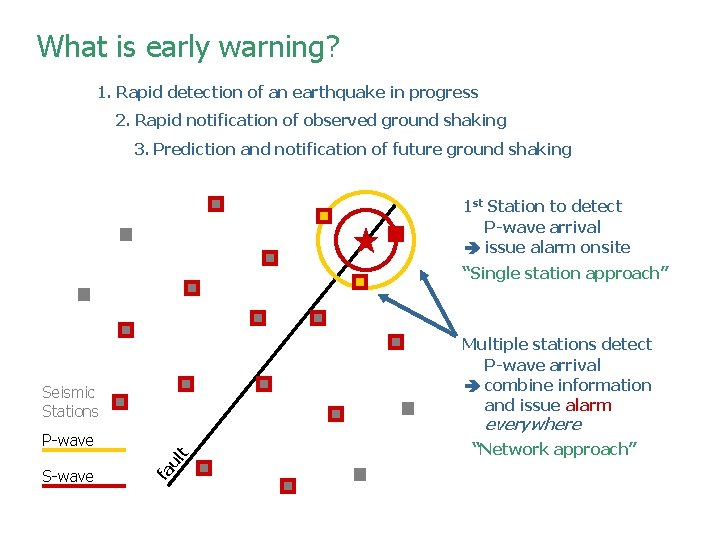
What is early warning? 1. Rapid detection of an earthquake in progress 2. Rapid notification of observed ground shaking 3. Prediction and notification of future ground shaking
What is early warning? 1. Rapid detection of an earthquake in progress 2. Rapid notification of observed ground shaking 3. Prediction and notification of future ground shaking Continuum of earthquake information: 1. Initial trigger Alert. Map 0 sec 2. Rapid magnitude, early MMI observations Alert. Map +2 sec 3. Post earthquake information Shake. Map + minutes
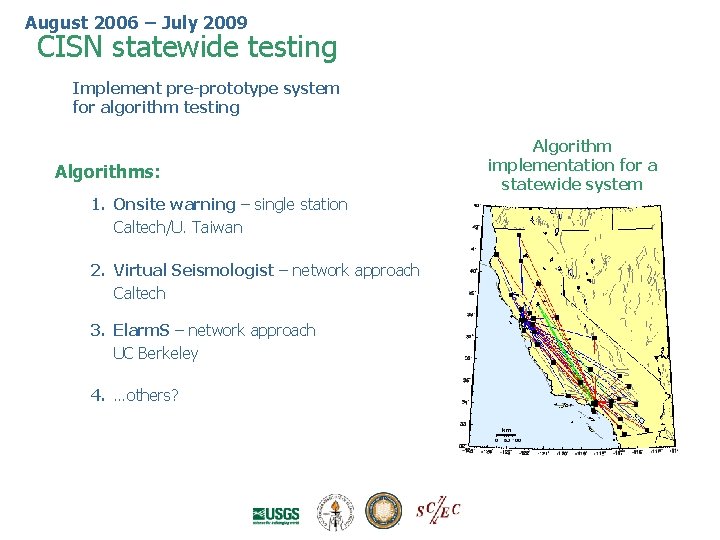
August 2006 – July 2009 CISN statewide testing Implement pre-prototype system for algorithm testing Algorithms: 1. Onsite warning – single station Caltech/U. Taiwan 2. Virtual Seismologist – network approach Caltech 3. Elarm. S – network approach UC Berkeley 4. …others? Algorithm implementation for a statewide system
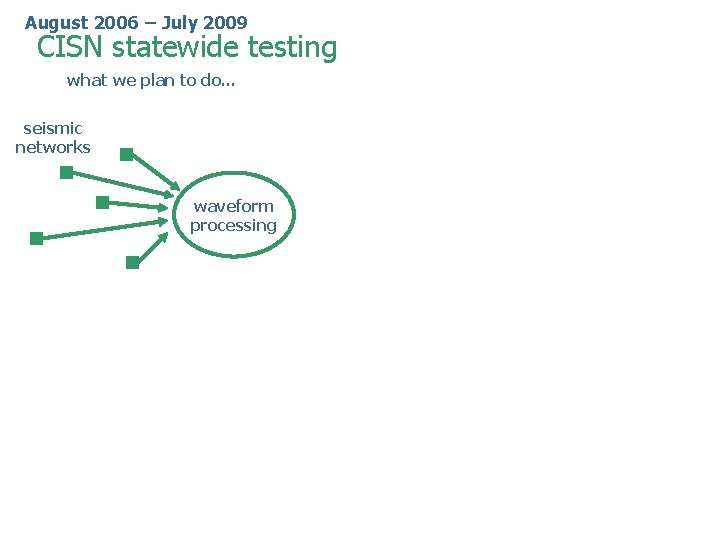
August 2006 – July 2009 CISN statewide testing what we plan to do… seismic networks waveform processing
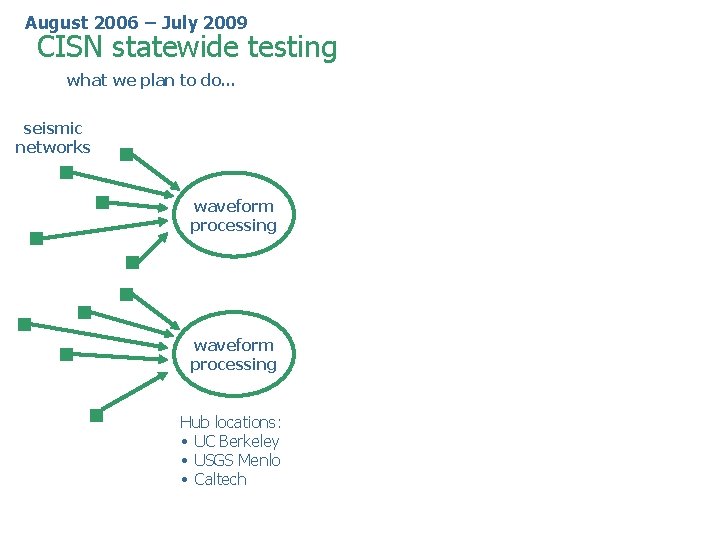
August 2006 – July 2009 CISN statewide testing what we plan to do… seismic networks waveform processing Hub locations: • UC Berkeley • USGS Menlo • Caltech
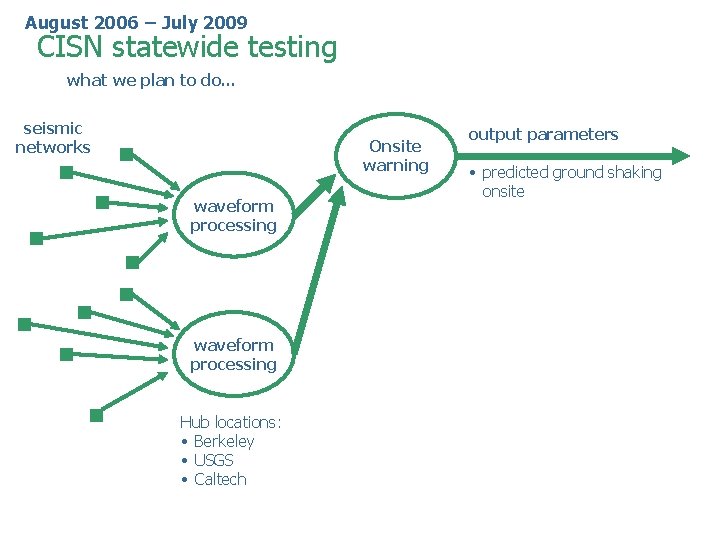
August 2006 – July 2009 CISN statewide testing what we plan to do… seismic networks Onsite warning waveform processing Hub locations: • Berkeley • USGS • Caltech output parameters • predicted ground shaking onsite
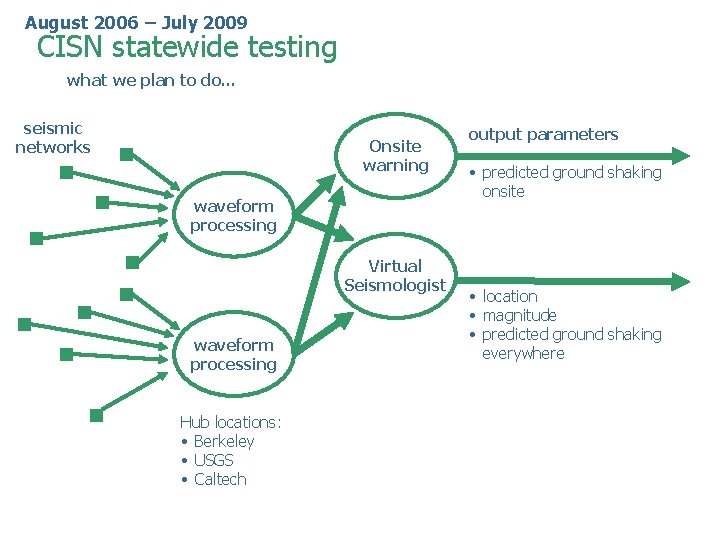
August 2006 – July 2009 CISN statewide testing what we plan to do… seismic networks Onsite warning waveform processing Virtual Seismologist waveform processing Hub locations: • Berkeley • USGS • Caltech output parameters • predicted ground shaking onsite • location • magnitude • predicted ground shaking everywhere
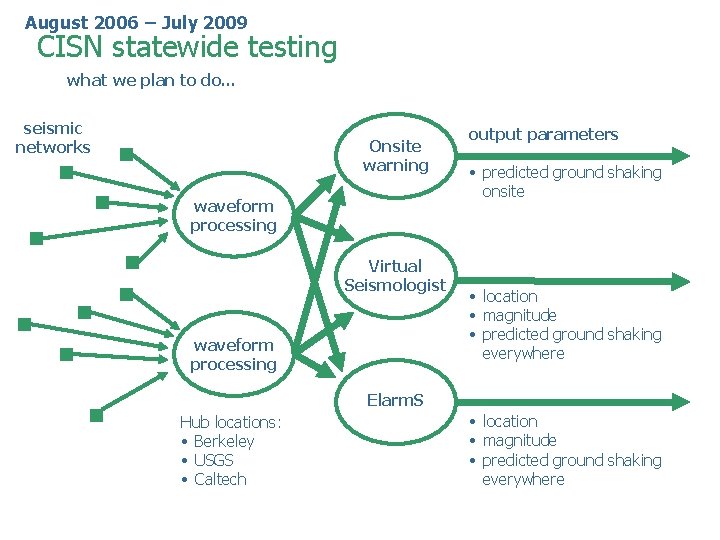
August 2006 – July 2009 CISN statewide testing what we plan to do… seismic networks Onsite warning waveform processing Virtual Seismologist waveform processing output parameters • predicted ground shaking onsite • location • magnitude • predicted ground shaking everywhere Elarm. S Hub locations: • Berkeley • USGS • Caltech • location • magnitude • predicted ground shaking everywhere
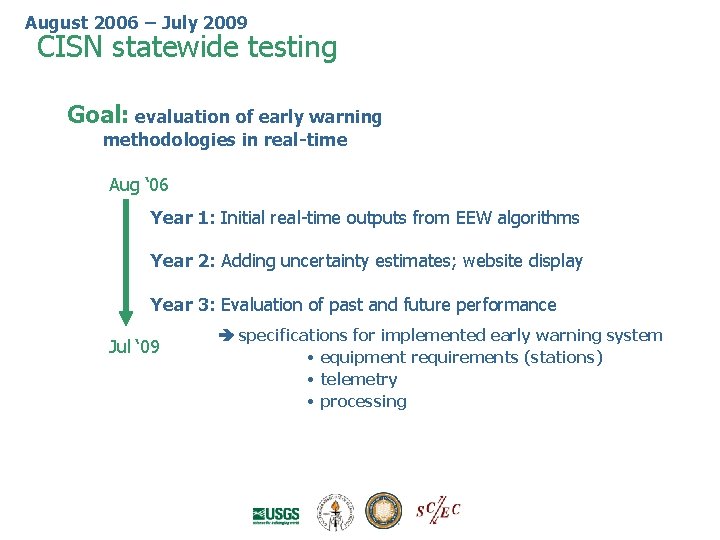
August 2006 – July 2009 CISN statewide testing Goal: evaluation of early warning methodologies in real-time Aug ‘ 06 Year 1: Initial real-time outputs from EEW algorithms Year 2: Adding uncertainty estimates; website display Year 3: Evaluation of past and future performance Jul ‘ 09 specifications for implemented early warning system • equipment requirements (stations) • telemetry • processing
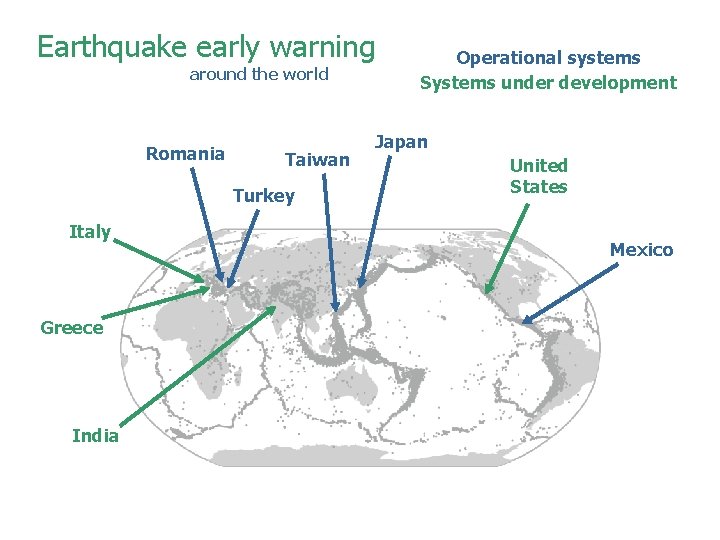
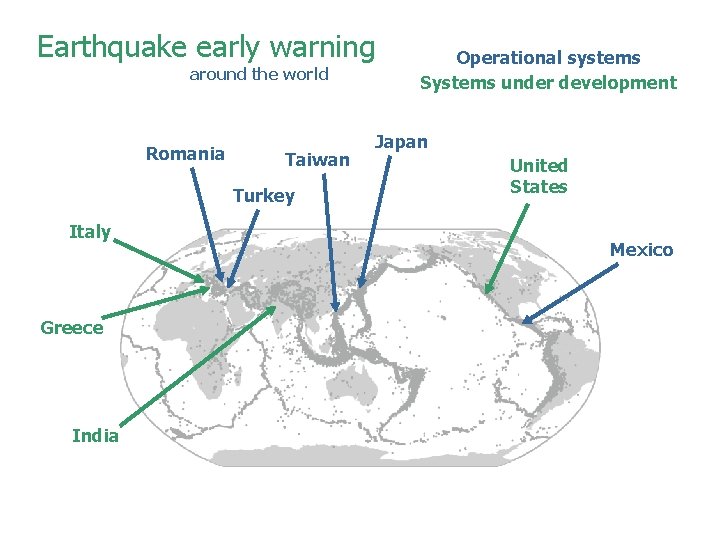
Earthquake early warning around the world Romania Taiwan Turkey Italy Greece India Operational systems Systems under development Japan United States Mexico
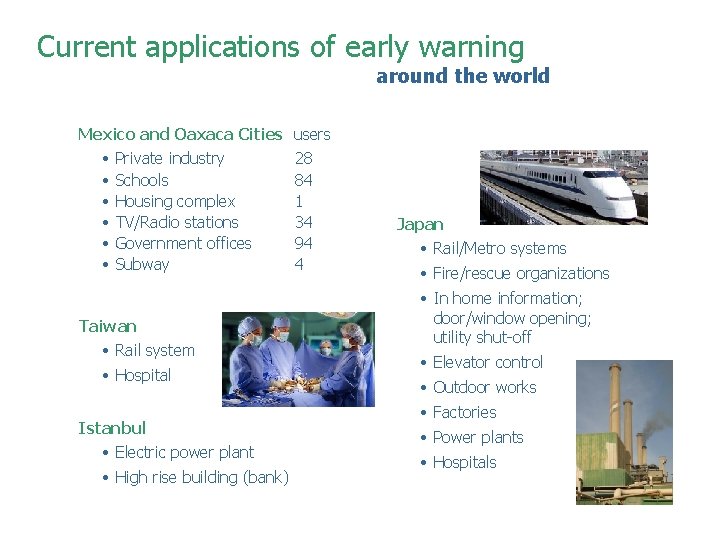
Current applications of early warning around the world Mexico and Oaxaca Cities users • • • Private industry Schools Housing complex TV/Radio stations Government offices Subway Taiwan • Rail system • Hospital Istanbul • Electric power plant • High rise building (bank) 28 84 1 34 94 4 Japan • Rail/Metro systems • Fire/rescue organizations • In home information; door/window opening; utility shut-off • Elevator control • Outdoor works • Factories • Power plants • Hospitals
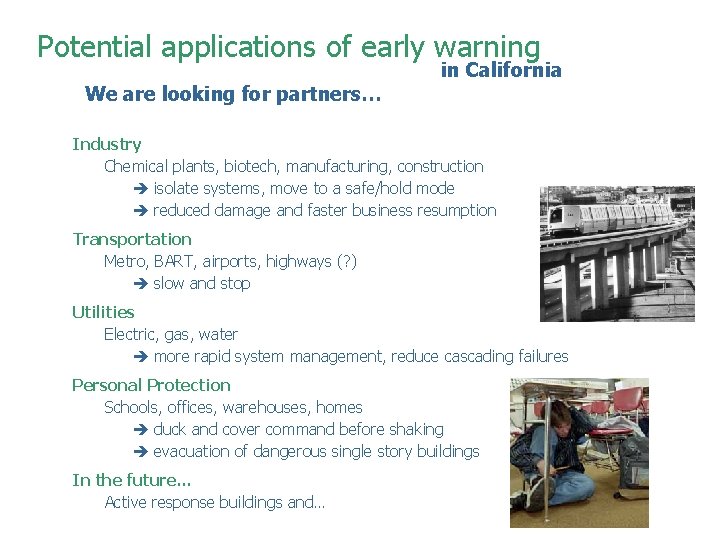
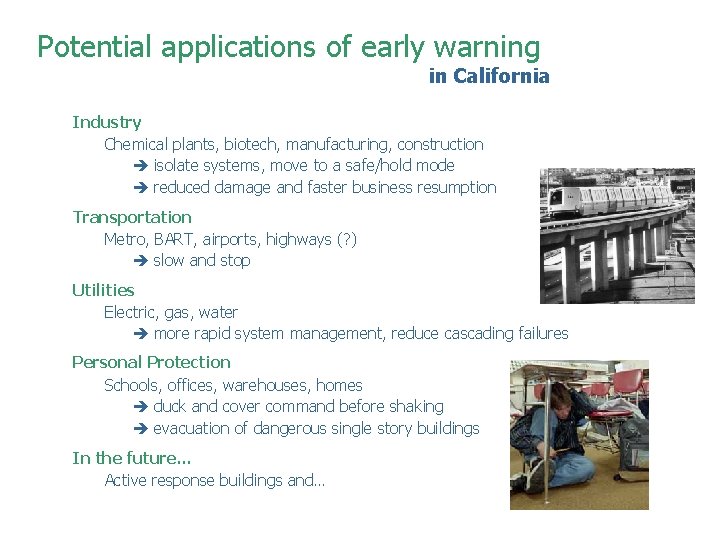
Potential applications of early warning We are looking for partners… in California Industry Chemical plants, biotech, manufacturing, construction isolate systems, move to a safe/hold mode reduced damage and faster business resumption Transportation Metro, BART, airports, highways (? ) slow and stop Utilities Electric, gas, water more rapid system management, reduce cascading failures Personal Protection Schools, offices, warehouses, homes duck and cover command before shaking evacuation of dangerous single story buildings In the future… Active response buildings and…
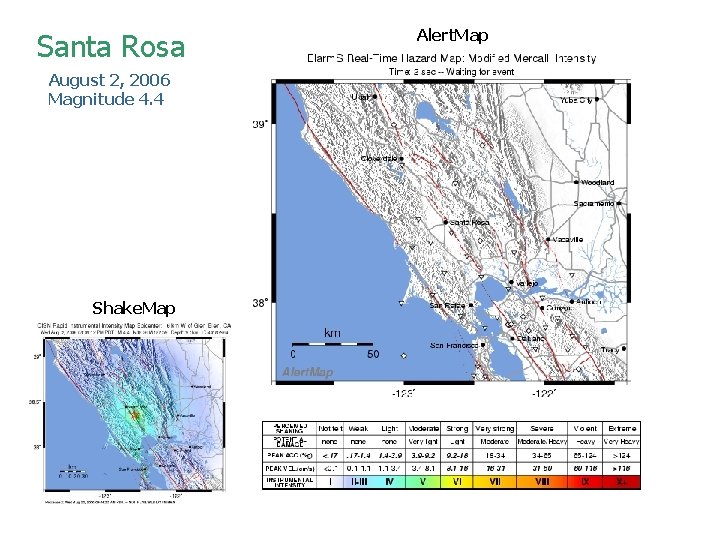
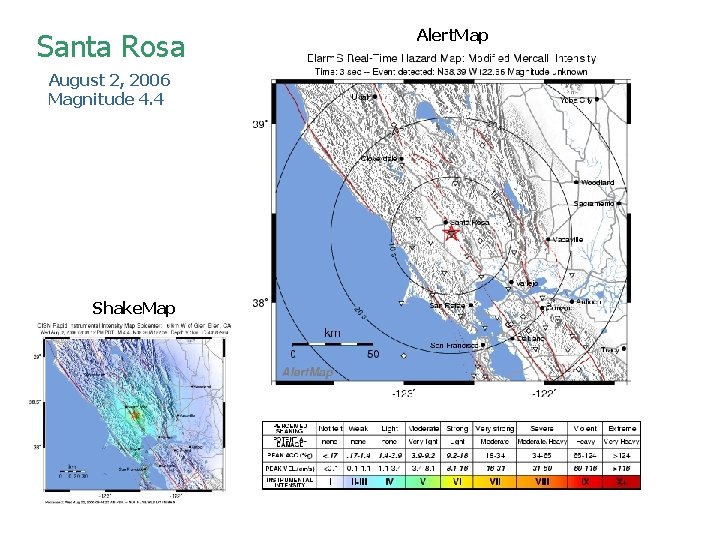
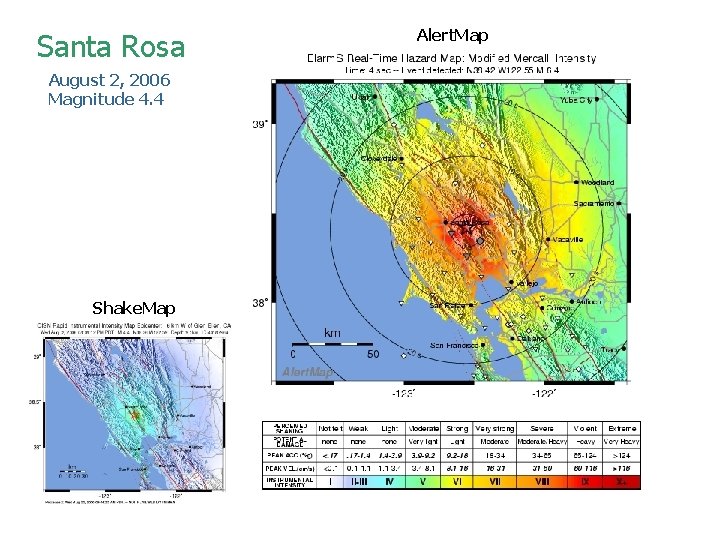
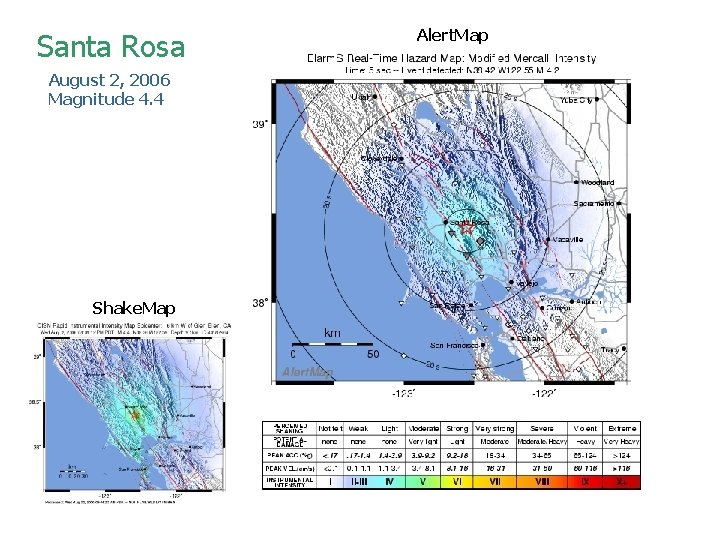
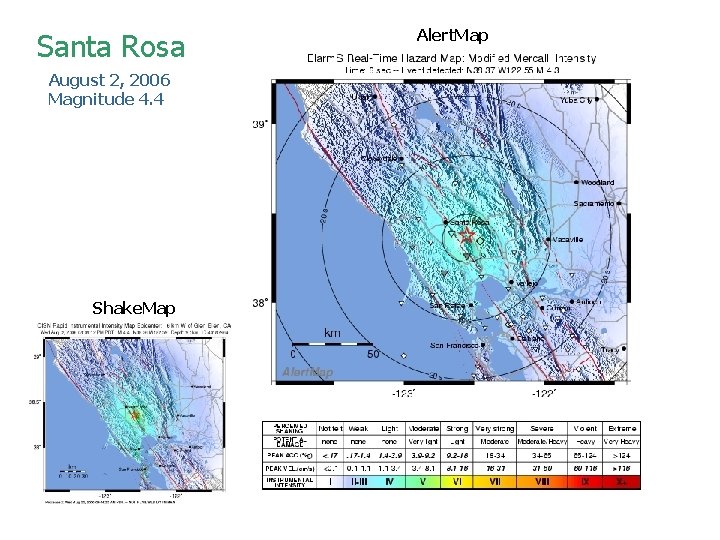
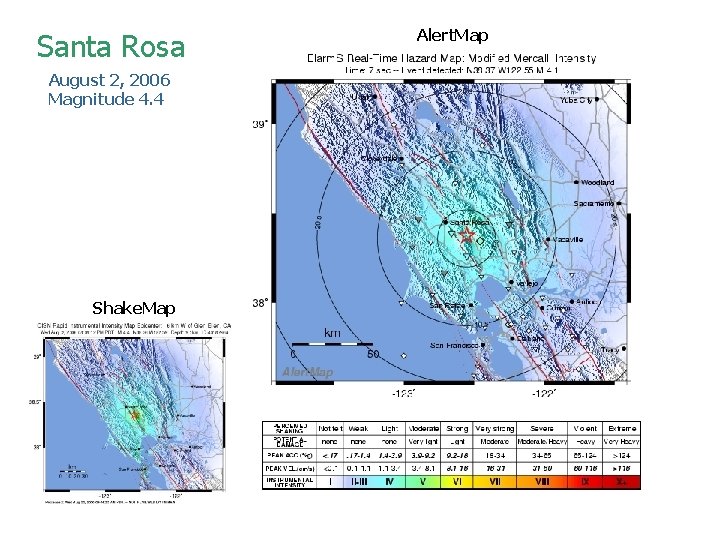
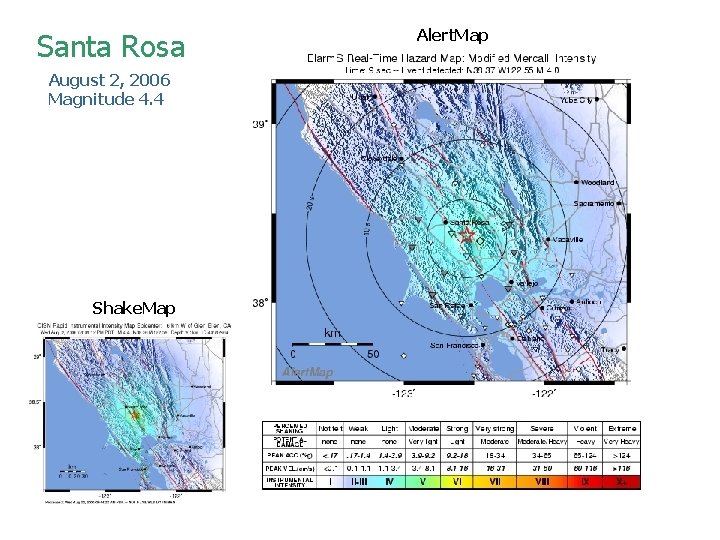
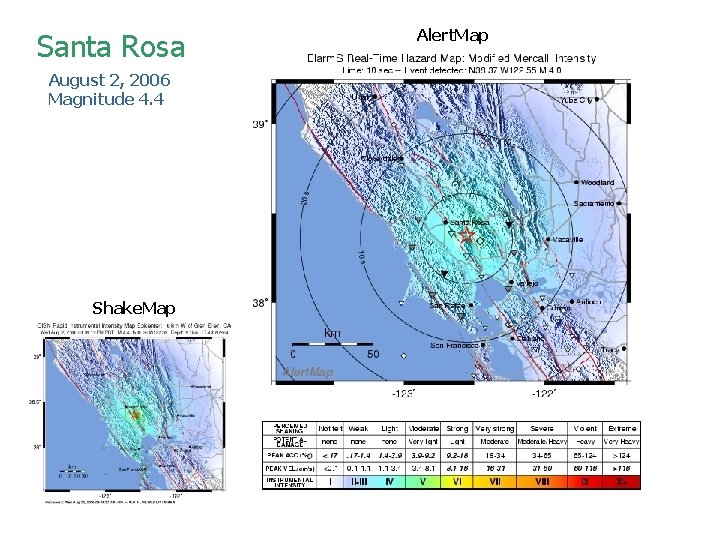
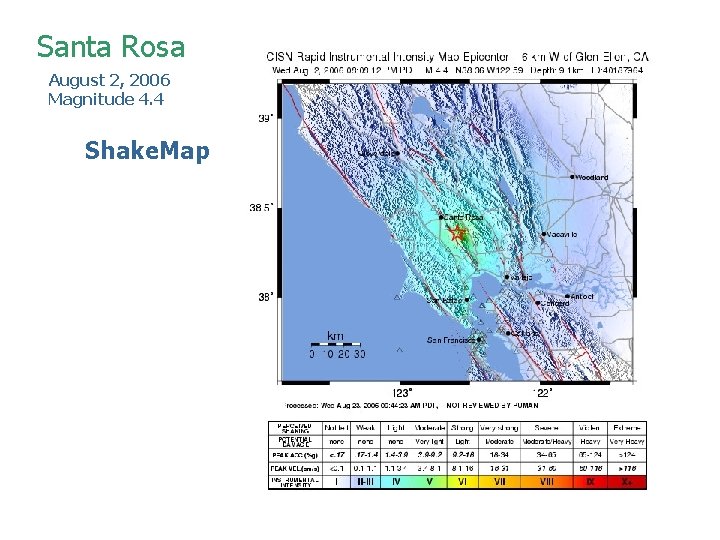
Santa Rosa August 2, 2006 Magnitude 4. 4 Shake. Map Alert. Map
Santa Rosa August 2, 2006 Magnitude 4. 4 Shake. Map Alert. Map
Santa Rosa August 2, 2006 Magnitude 4. 4 Shake. Map Alert. Map
Santa Rosa August 2, 2006 Magnitude 4. 4 Shake. Map Alert. Map
Santa Rosa August 2, 2006 Magnitude 4. 4 Shake. Map Alert. Map
Santa Rosa August 2, 2006 Magnitude 4. 4 Shake. Map Alert. Map
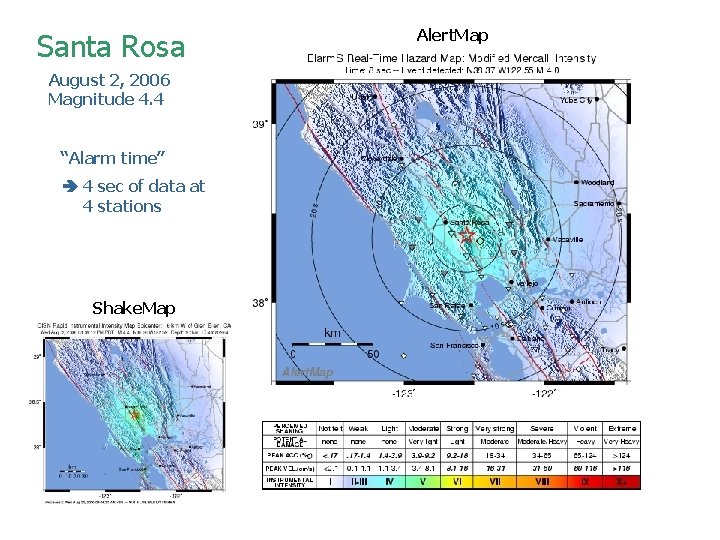
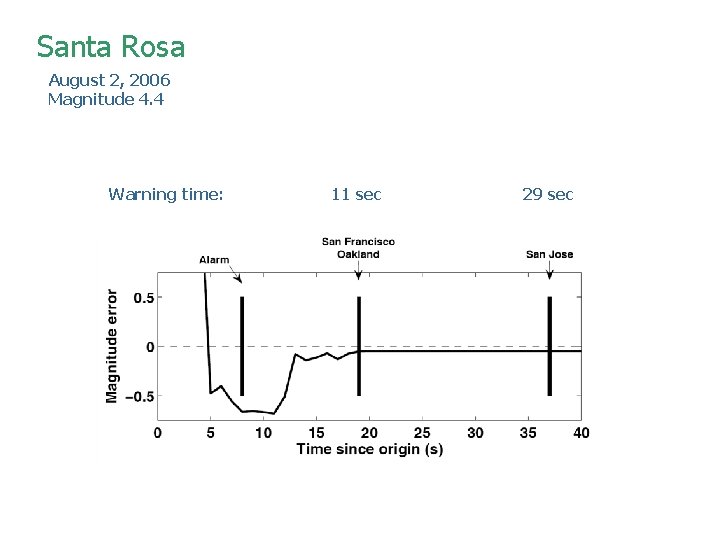
Santa Rosa August 2, 2006 Magnitude 4. 4 “Alarm time” 4 sec of data at 4 stations Shake. Map Alert. Map
Santa Rosa August 2, 2006 Magnitude 4. 4 Shake. Map Alert. Map
Santa Rosa August 2, 2006 Magnitude 4. 4 Shake. Map Alert. Map
Santa Rosa August 2, 2006 Magnitude 4. 4 Shake. Map
Santa Rosa August 2, 2006 Magnitude 4. 4 Warning time: 11 sec 29 sec
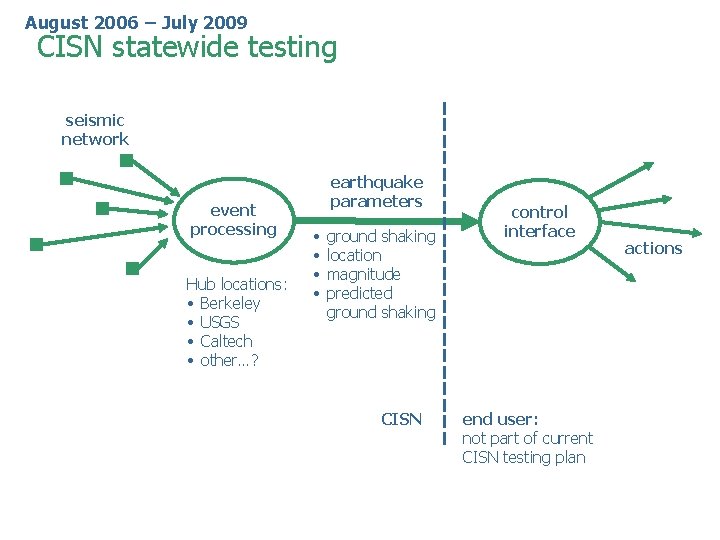
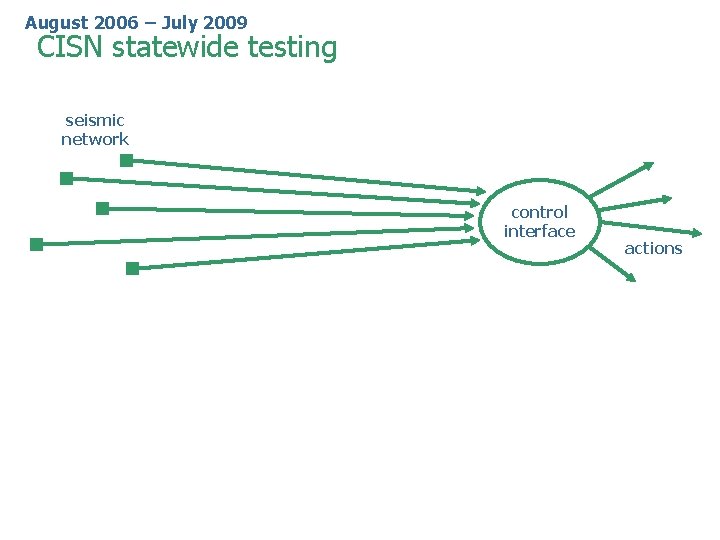
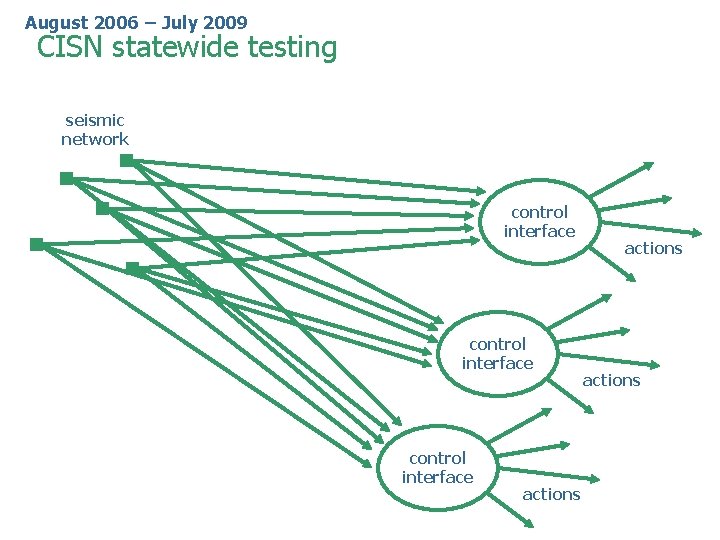
August 2006 – July 2009 CISN statewide testing seismic network event processing Hub locations: • Berkeley • USGS • Caltech • other…? earthquake parameters • • ground shaking location magnitude predicted ground shaking CISN control interface end user: not part of current CISN testing plan actions
Potential applications of early warning in California Industry Chemical plants, biotech, manufacturing, construction isolate systems, move to a safe/hold mode reduced damage and faster business resumption Transportation Metro, BART, airports, highways (? ) slow and stop Utilities Electric, gas, water more rapid system management, reduce cascading failures Personal Protection Schools, offices, warehouses, homes duck and cover command before shaking evacuation of dangerous single story buildings In the future… Active response buildings and…
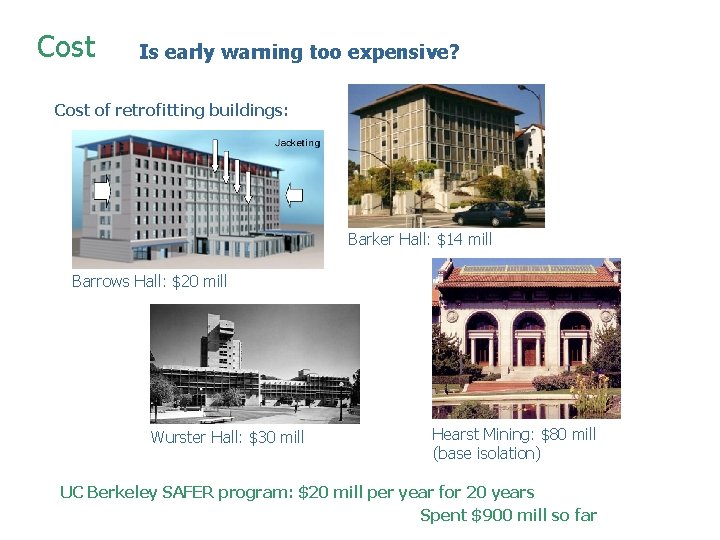
Cost Is early warning too expensive? Cost of retrofitting buildings: Barker Hall: $14 mill Barrows Hall: $20 mill Wurster Hall: $30 mill Hearst Mining: $80 mill (base isolation) UC Berkeley SAFER program: $20 mill per year for 20 years Spent $900 mill so far
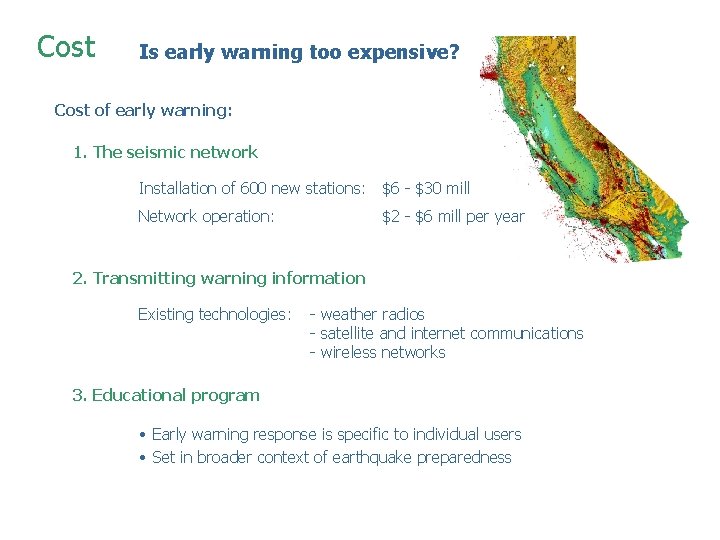
Cost Is early warning too expensive? Cost of early warning: 1. The seismic network Installation of 600 new stations: $6 - $30 mill Network operation: $2 - $6 mill per year 2. Transmitting warning information Existing technologies: - weather radios - satellite and internet communications - wireless networks 3. Educational program • Early warning response is specific to individual users • Set in broader context of earthquake preparedness
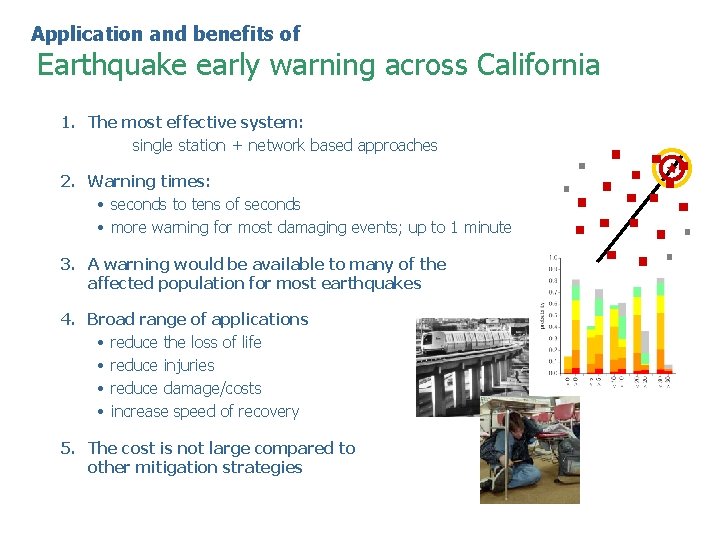
Application and benefits of Earthquake early warning across California 1. The most effective system: single station + network based approaches 2. Warning times: • seconds to tens of seconds • more warning for most damaging events; up to 1 minute 3. A warning would be available to many of the affected population for most earthquakes 4. Broad range of applications • reduce the loss of life • reduce injuries • reduce damage/costs • increase speed of recovery 5. The cost is not large compared to other mitigation strategies
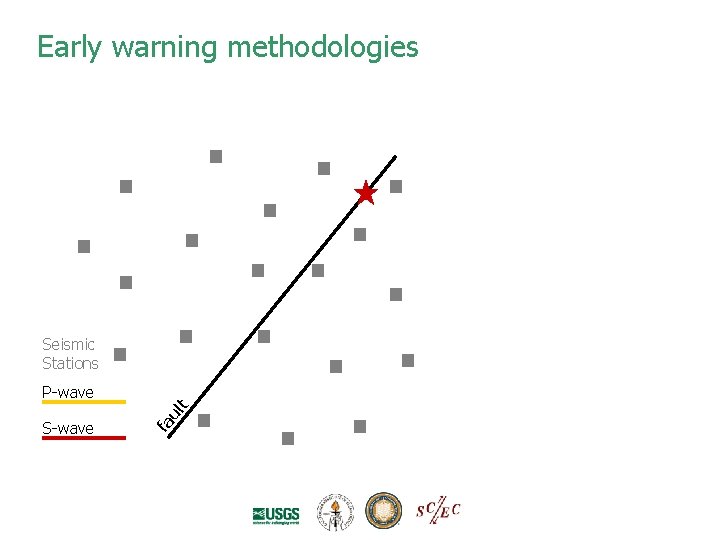
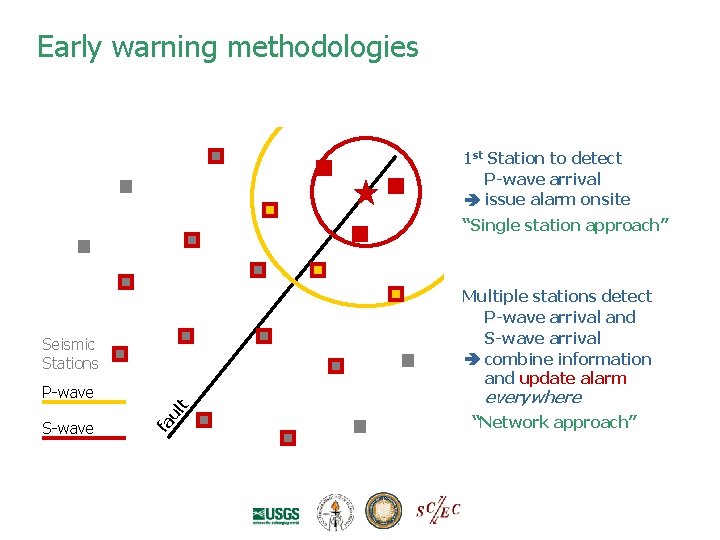
Early warning methodologies Seismic Stations S-wave fa ul t P-wave
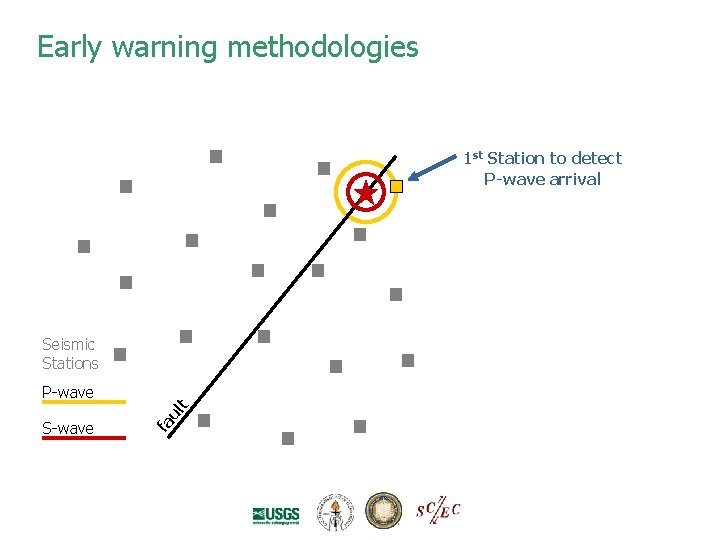
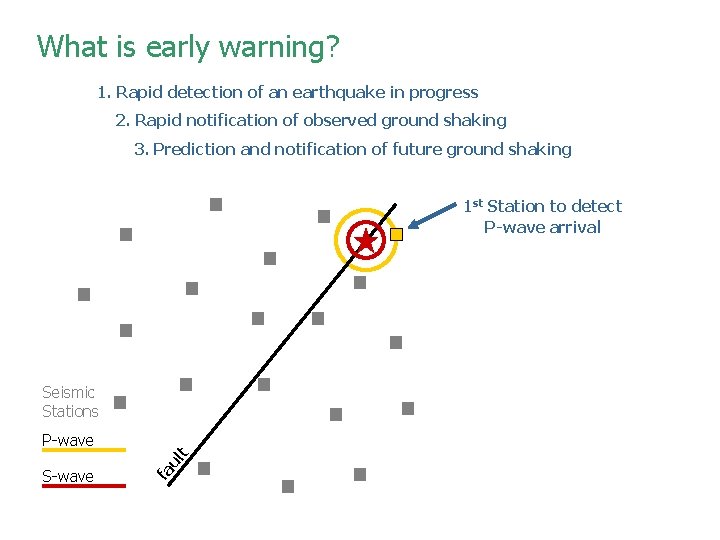
Early warning methodologies 1 st Station to detect P-wave arrival Seismic Stations S-wave fa ul t P-wave
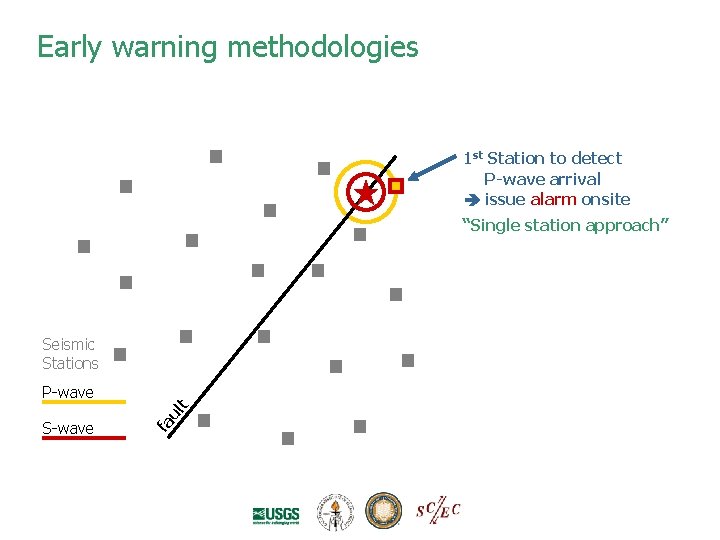
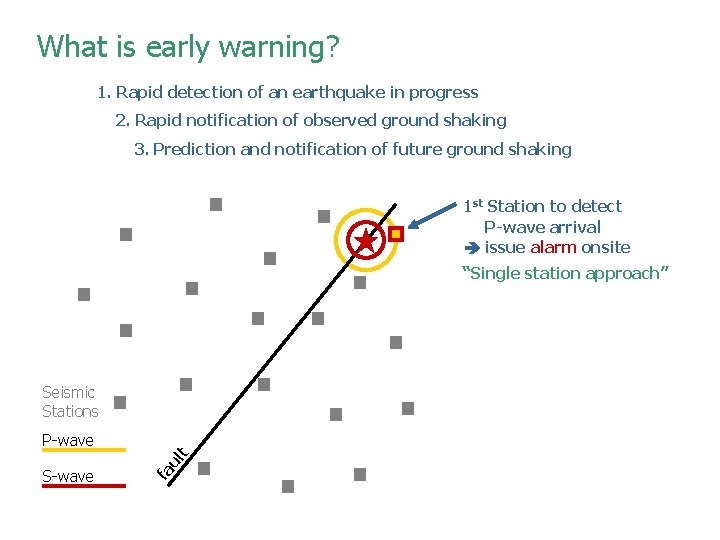
Early warning methodologies 1 st Station to detect P-wave arrival issue alarm onsite “Single station approach” Seismic Stations S-wave fa ul t P-wave
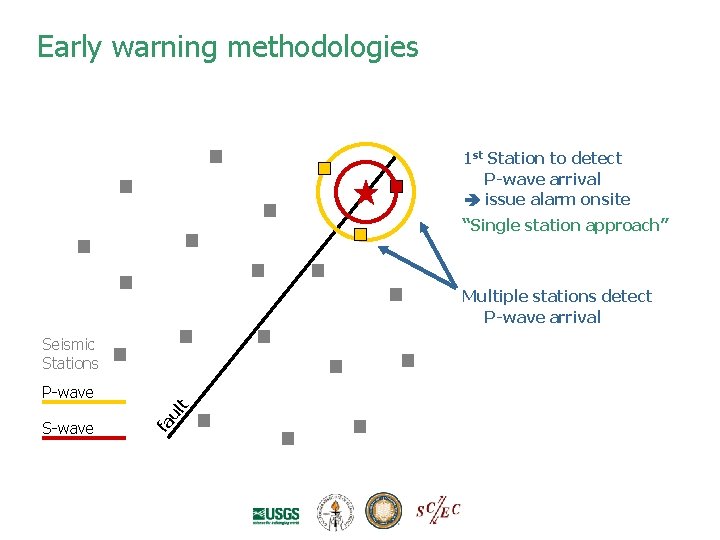
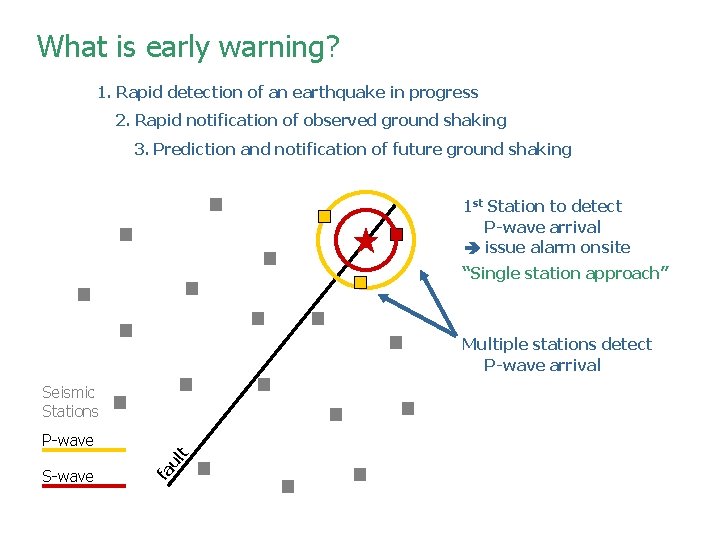
Early warning methodologies 1 st Station to detect P-wave arrival issue alarm onsite “Single station approach” Multiple stations detect P-wave arrival Seismic Stations S-wave fa ul t P-wave
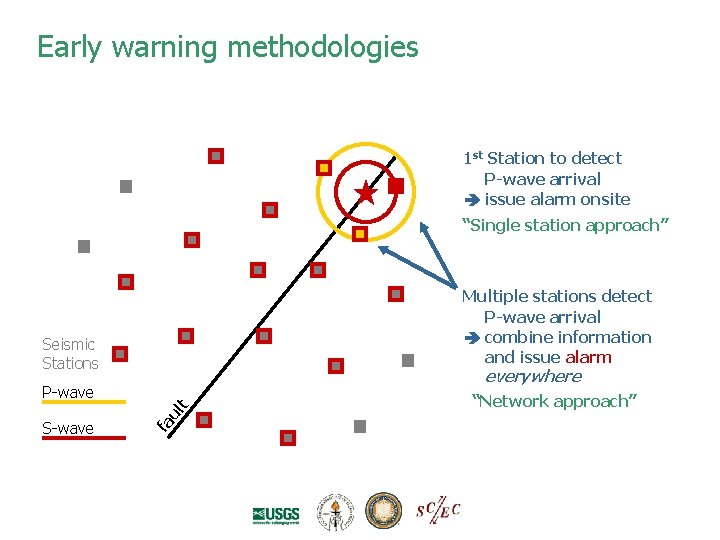
Early warning methodologies 1 st Station to detect P-wave arrival issue alarm onsite “Single station approach” Multiple stations detect P-wave arrival combine information and issue alarm Seismic Stations everywhere S-wave fa ul t P-wave “Network approach”
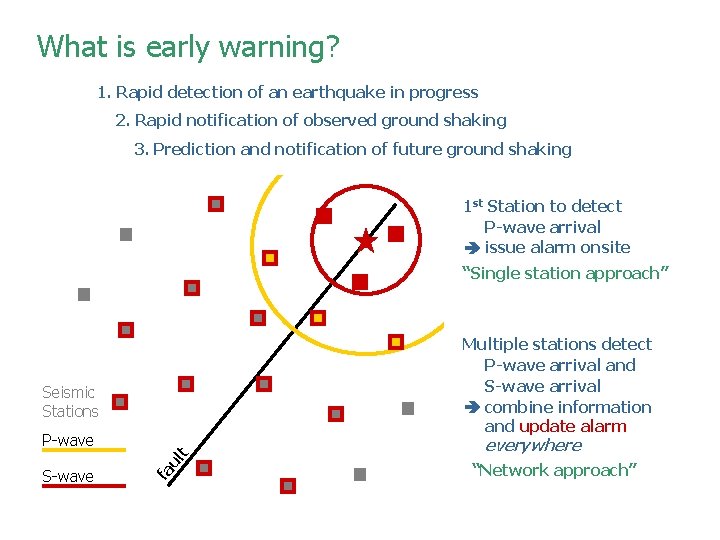
Early warning methodologies 1 st Station to detect P-wave arrival issue alarm onsite “Single station approach” Multiple stations detect P-wave arrival and S-wave arrival combine information and update alarm Seismic Stations S-wave fa ul t P-wave everywhere “Network approach”
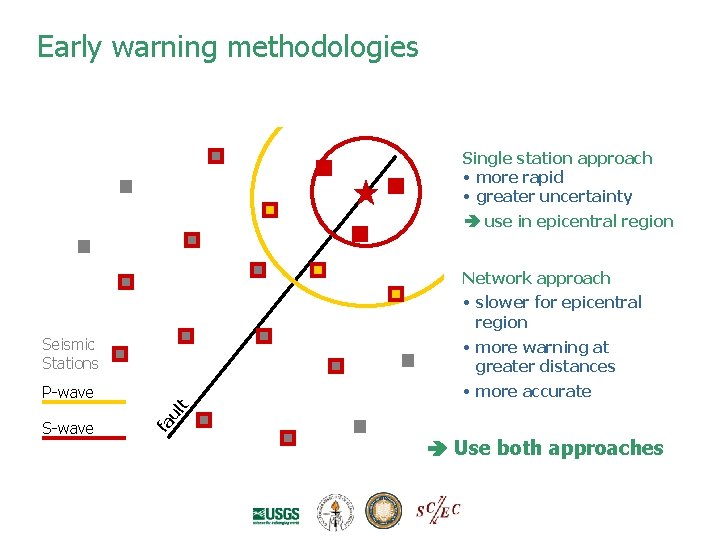
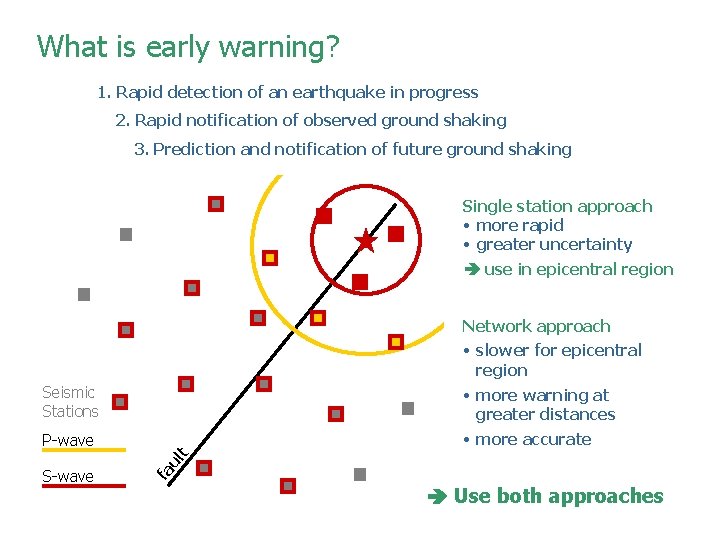
Early warning methodologies Single station approach • more rapid • greater uncertainty use in epicentral region Network approach • slower for epicentral region • more warning at greater distances P-wave • more accurate S-wave fa ul t Seismic Stations Use both approaches
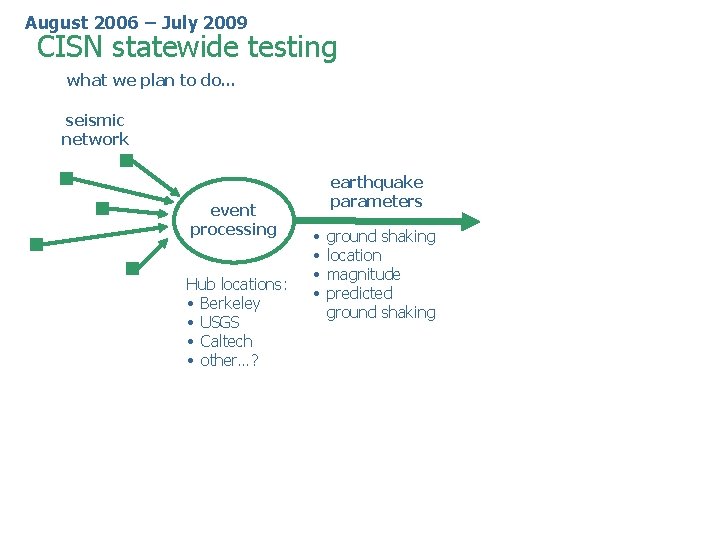
August 2006 – July 2009 CISN statewide testing what we plan to do… seismic network event processing Hub locations: • Berkeley • USGS • Caltech • other…? earthquake parameters • • ground shaking location magnitude predicted ground shaking
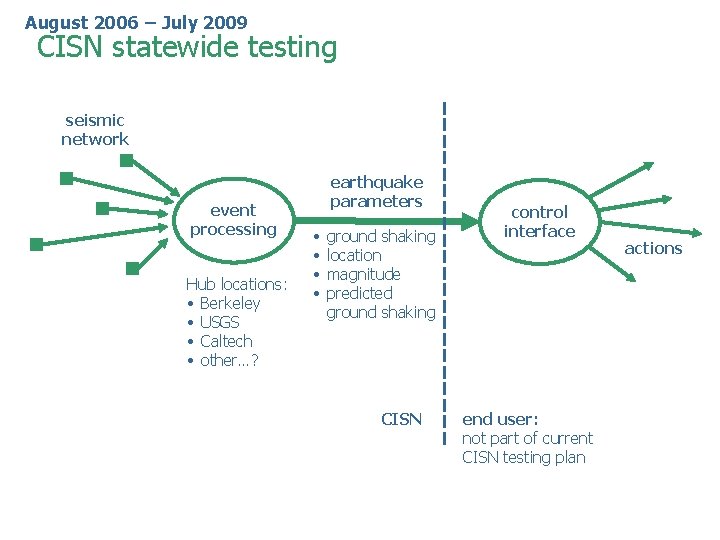
August 2006 – July 2009 CISN statewide testing seismic network event processing Hub locations: • Berkeley • USGS • Caltech • other…? earthquake parameters • • ground shaking location magnitude predicted ground shaking CISN control interface end user: not part of current CISN testing plan actions
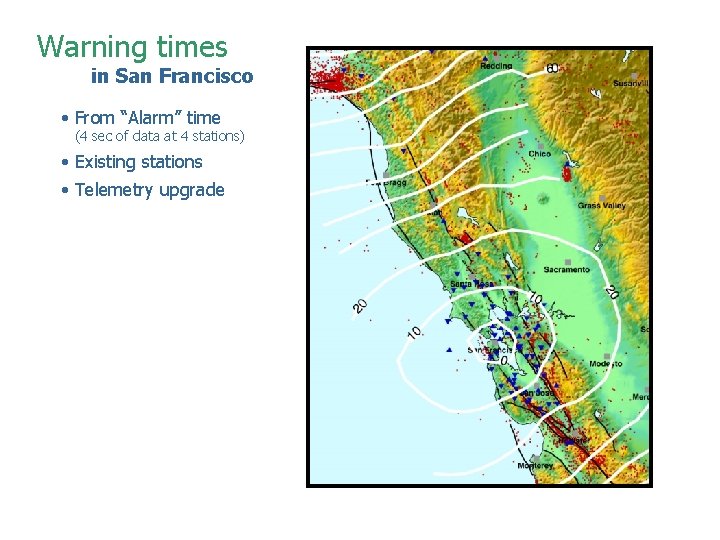
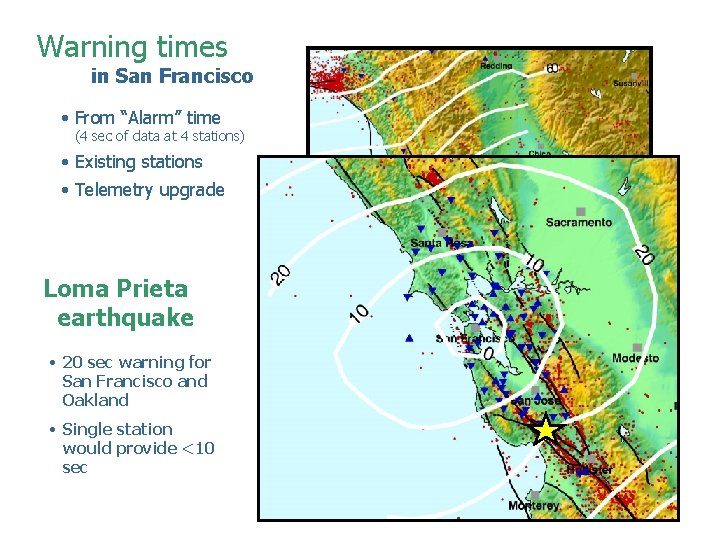
Warning times in San Francisco • From “Alarm” time (4 sec of data at 4 stations) • Existing stations • Telemetry upgrade
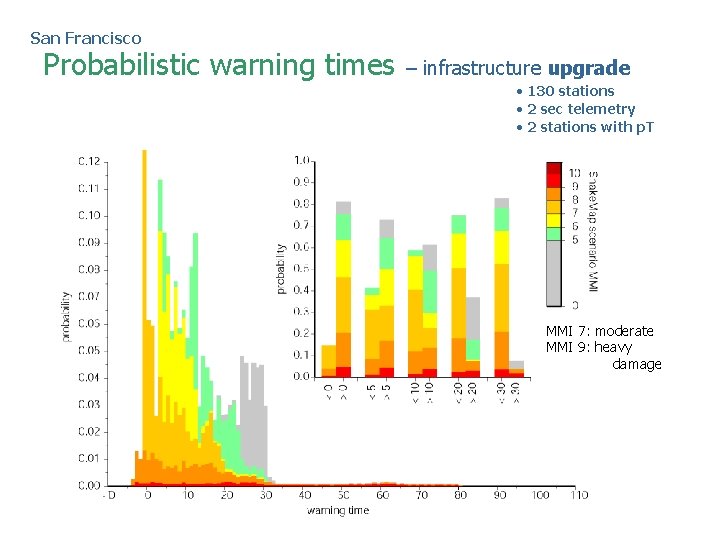
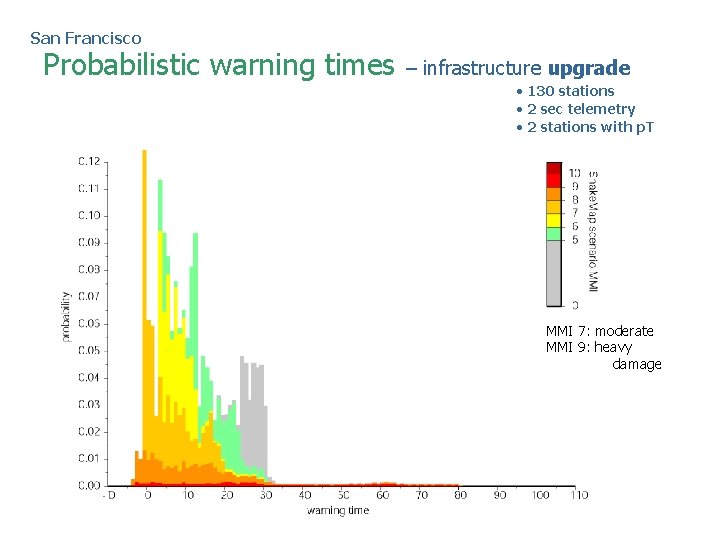
San Francisco Probabilistic warning times – infrastructure upgrade • 130 stations • 2 sec telemetry • 2 stations with p. T MMI 7: moderate MMI 9: heavy damage
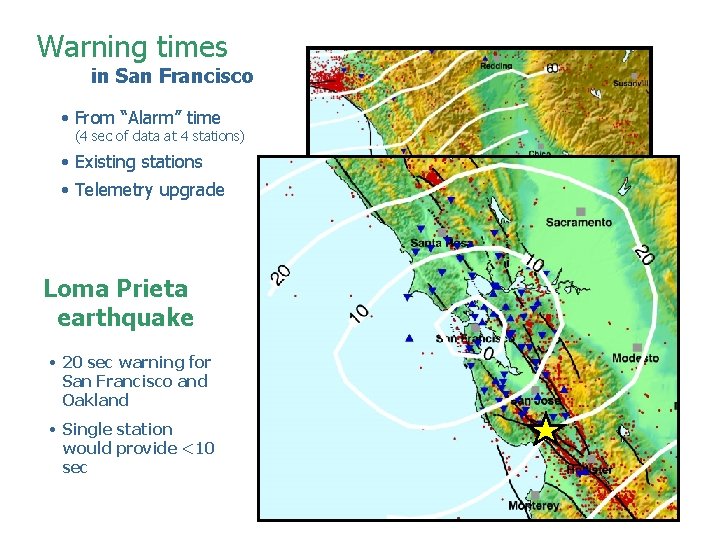
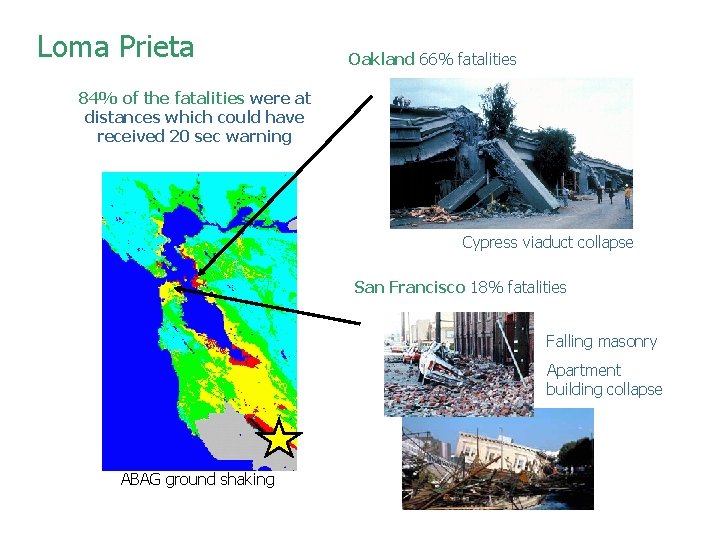
Warning times in San Francisco • From “Alarm” time (4 sec of data at 4 stations) • Existing stations • Telemetry upgrade Loma Prieta earthquake • 20 sec warning for San Francisco and Oakland • Single station would provide <10 sec
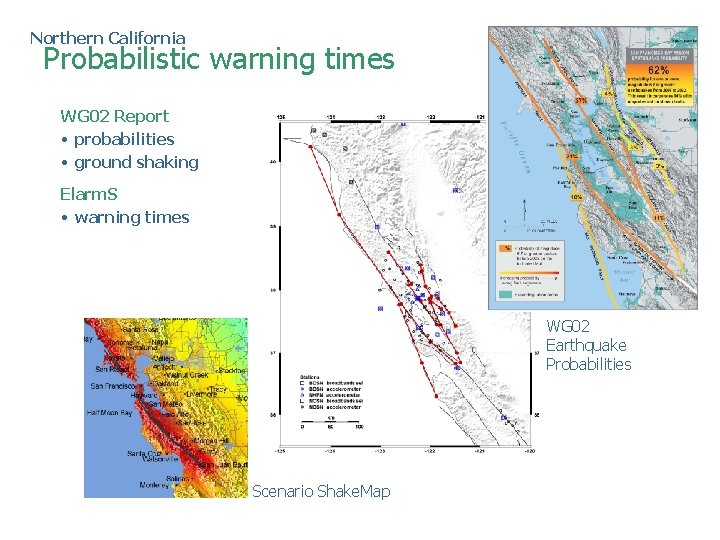
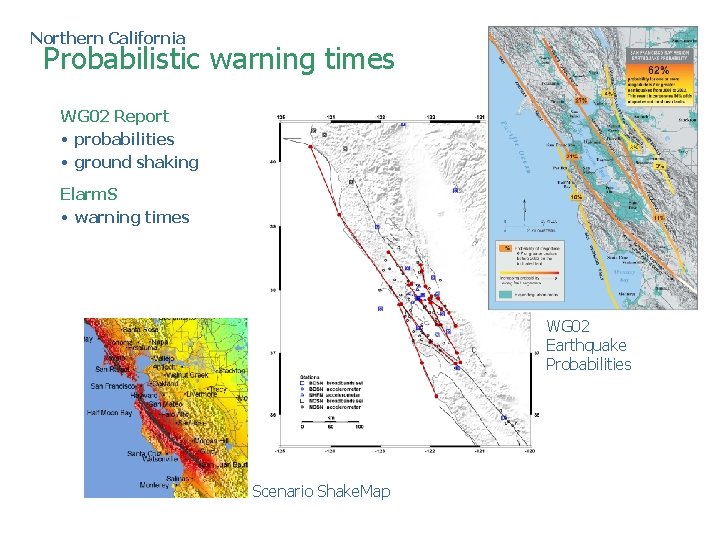
Northern California Probabilistic warning times WG 02 Report • probabilities • ground shaking Elarm. S • warning times WG 02 Earthquake Probabilities Scenario Shake. Map
August 2006 – July 2009 CISN statewide testing seismic network control interface actions
August 2006 – July 2009 CISN statewide testing seismic network control interface actions
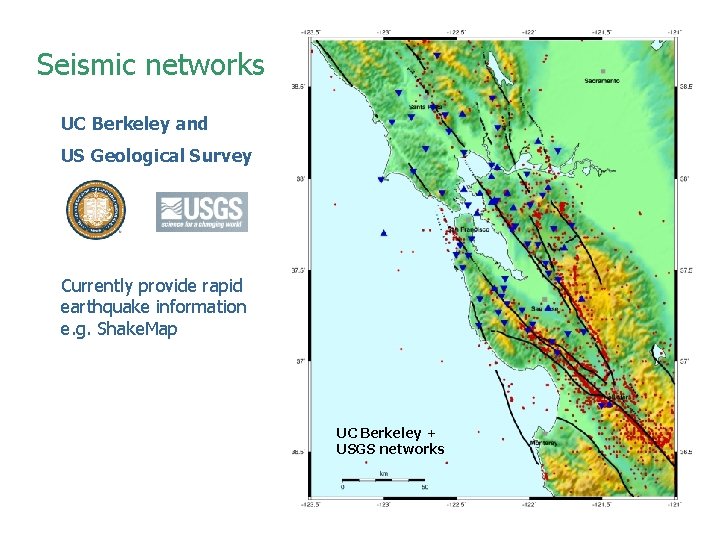
Seismic networks UC Berkeley and US Geological Survey Currently provide rapid earthquake information e. g. Shake. Map UC Berkeley + USGS networks
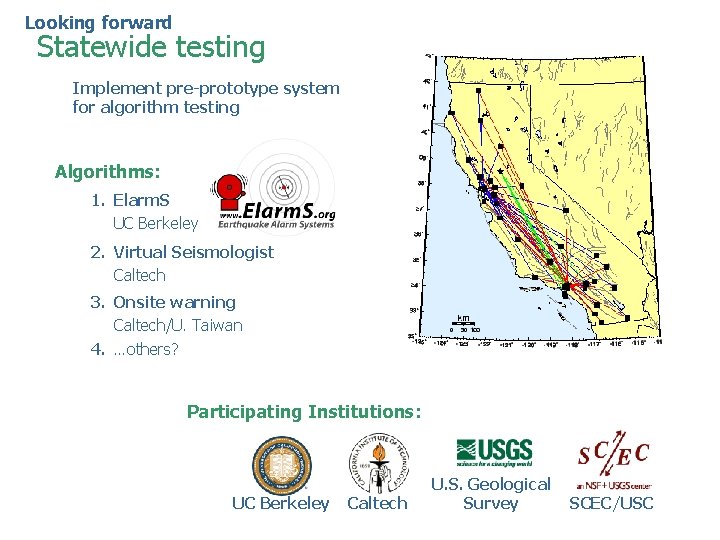
Looking forward Statewide testing Implement pre-prototype system for algorithm testing Algorithms: 1. Elarm. S UC Berkeley 2. Virtual Seismologist Caltech 3. Onsite warning Caltech/U. Taiwan 4. …others? Participating Institutions: UC Berkeley Caltech U. S. Geological Survey SCEC/USC
What is early warning? 1. Rapid detection of an earthquake in progress 2. Rapid notification of observed ground shaking 3. Prediction and notification of future ground shaking Seismic Stations S-wave fa ul t P-wave
What is early warning? 1. Rapid detection of an earthquake in progress 2. Rapid notification of observed ground shaking 3. Prediction and notification of future ground shaking 1 st Station to detect P-wave arrival Seismic Stations S-wave fa ul t P-wave
What is early warning? 1. Rapid detection of an earthquake in progress 2. Rapid notification of observed ground shaking 3. Prediction and notification of future ground shaking 1 st Station to detect P-wave arrival issue alarm onsite “Single station approach” Seismic Stations S-wave fa ul t P-wave
What is early warning? 1. Rapid detection of an earthquake in progress 2. Rapid notification of observed ground shaking 3. Prediction and notification of future ground shaking 1 st Station to detect P-wave arrival issue alarm onsite “Single station approach” Multiple stations detect P-wave arrival Seismic Stations S-wave fa ul t P-wave
What is early warning? 1. Rapid detection of an earthquake in progress 2. Rapid notification of observed ground shaking 3. Prediction and notification of future ground shaking 1 st Station to detect P-wave arrival issue alarm onsite “Single station approach” Multiple stations detect P-wave arrival combine information and issue alarm Seismic Stations everywhere S-wave fa ul t P-wave “Network approach”
What is early warning? 1. Rapid detection of an earthquake in progress 2. Rapid notification of observed ground shaking 3. Prediction and notification of future ground shaking 1 st Station to detect P-wave arrival issue alarm onsite “Single station approach” Multiple stations detect P-wave arrival and S-wave arrival combine information and update alarm Seismic Stations S-wave fa ul t P-wave everywhere “Network approach”
What is early warning? 1. Rapid detection of an earthquake in progress 2. Rapid notification of observed ground shaking 3. Prediction and notification of future ground shaking Single station approach • more rapid • greater uncertainty use in epicentral region Network approach • slower for epicentral region • more warning at greater distances P-wave • more accurate S-wave fa ul t Seismic Stations Use both approaches
Loma Prieta Oakland 66% fatalities 84% of the fatalities were at distances which could have received 20 sec warning Cypress viaduct collapse San Francisco 18% fatalities Falling masonry Apartment building collapse ABAG ground shaking
Warning times in San Francisco • From “Alarm” time (4 sec of data at 4 stations) • Existing stations • Telemetry upgrade Loma Prieta earthquake • 20 sec warning for San Francisco and Oakland • Single station would provide <10 sec
Earthquake early warning around the world Romania Taiwan Turkey Italy Greece India Operational systems Systems under development Japan United States Mexico
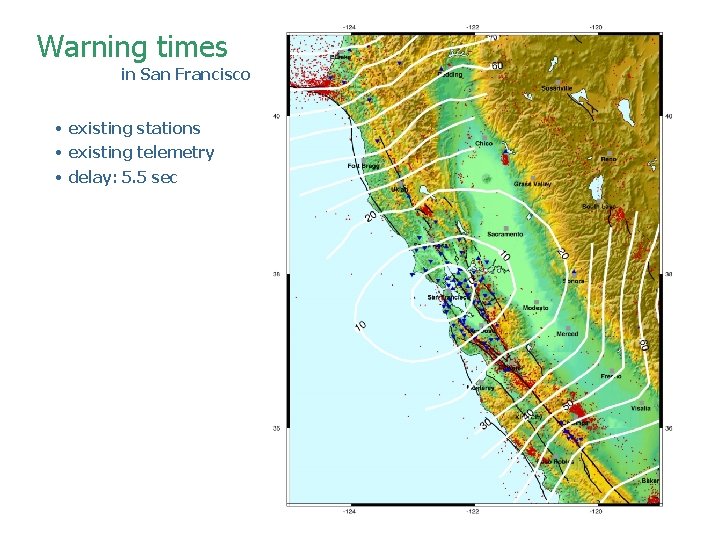
Warning times in San Francisco • existing stations • existing telemetry • delay: 5. 5 sec
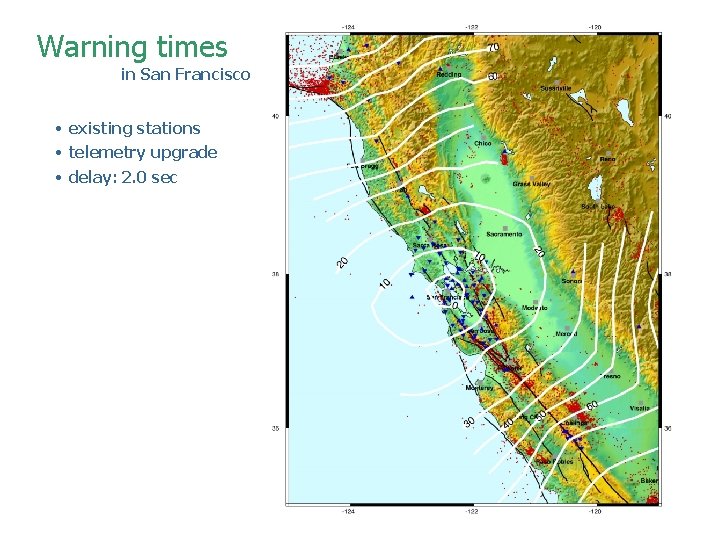
Warning times in San Francisco • existing stations • telemetry upgrade • delay: 2. 0 sec
Northern California Probabilistic warning times WG 02 Report • probabilities • ground shaking Elarm. S • warning times WG 02 Earthquake Probabilities Scenario Shake. Map
San Francisco Probabilistic warning times – infrastructure upgrade • 130 stations • 2 sec telemetry • 2 stations with p. T MMI 7: moderate MMI 9: heavy damage
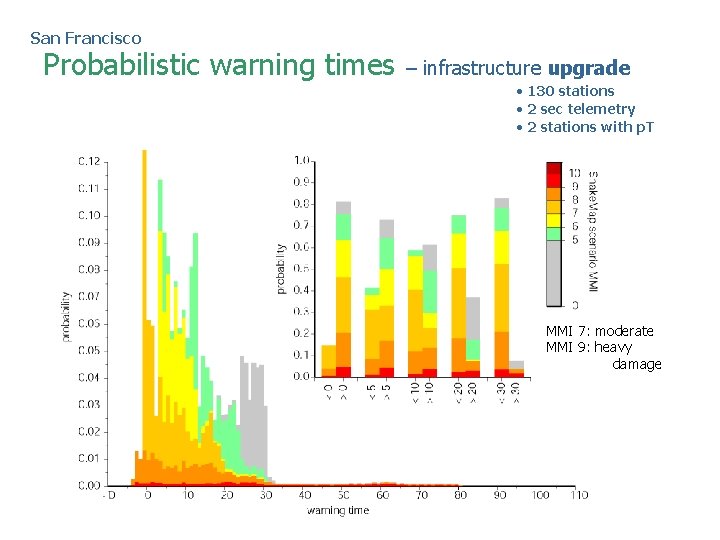
San Francisco Probabilistic warning times – infrastructure upgrade • 130 stations • 2 sec telemetry • 2 stations with p. T MMI 7: moderate MMI 9: heavy damage
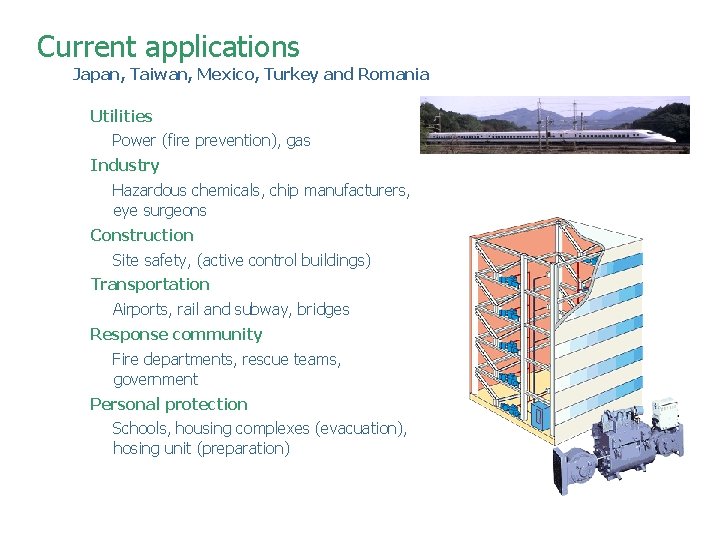
Current applications Japan, Taiwan, Mexico, Turkey and Romania Utilities Power (fire prevention), gas Industry Hazardous chemicals, chip manufacturers, eye surgeons Construction Site safety, (active control buildings) Transportation Airports, rail and subway, bridges Response community Fire departments, rescue teams, government Personal protection Schools, housing complexes (evacuation), hosing unit (preparation)