
Respiratory Rate The Forgotten Vital Sign Franklin Miller



- Slides: 38
Respiratory Rate – The Forgotten Vital Sign Franklin Miller, MA, RRT Clinical Solutions Specialist Philips Healthcare
What are Vital Signs?
“Doing the same thing over and over again and expecting a different result. ” Albert Einstein
What is the problem we are trying to solve? Slowly drowning in quicksand Avoiding to fall off a cliff
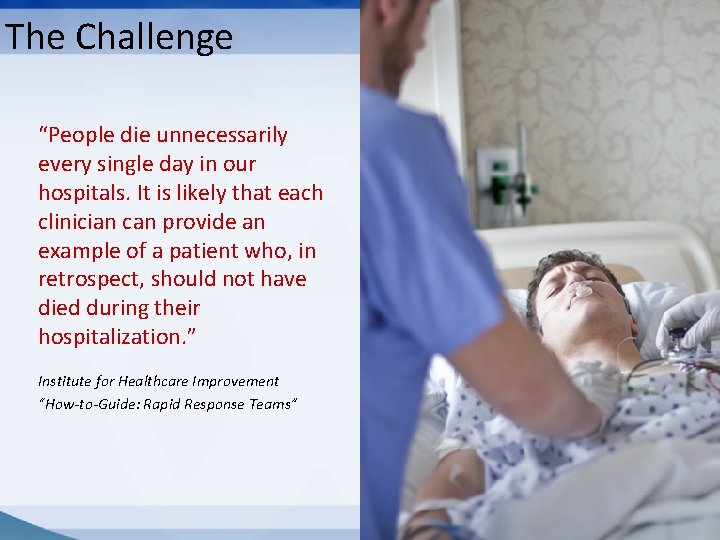
The Challenge “People die unnecessarily every single day in our hospitals. It is likely that each clinician can provide an example of a patient who, in retrospect, should not have died during their hospitalization. ” Institute for Healthcare Improvement “How-to-Guide: Rapid Response Teams” 5
Except for sudden catastrophic events, no patient in a hospital bed should be allowed to deteriorate to the point they stop breathing or their heart stops! Terri Wells, RN
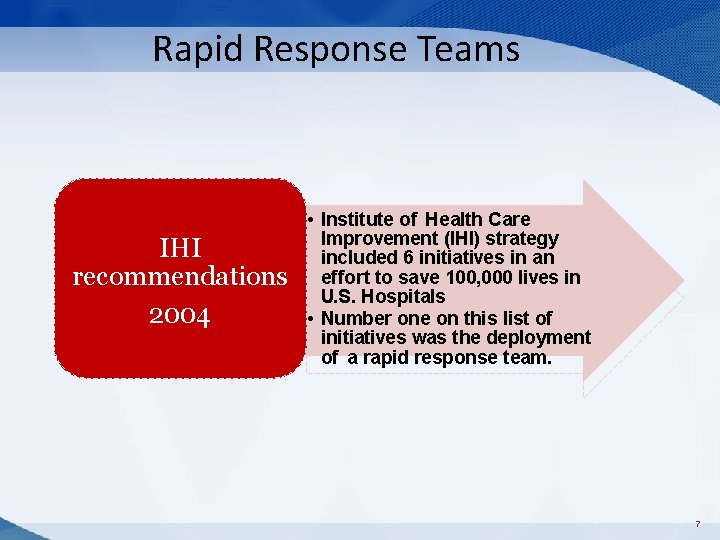
Rapid Response Teams IHI recommendations 2004 • Institute of Health Care Improvement (IHI) strategy included 6 initiatives in an effort to save 100, 000 lives in U. S. Hospitals • Number one on this list of initiatives was the deployment of a rapid response team. 7
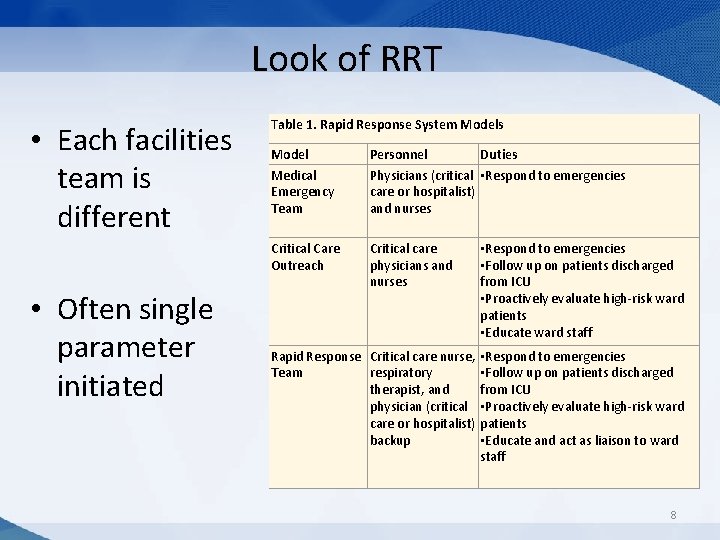
Look of RRT • Each facilities team is different • Often single parameter initiated Table 1. Rapid Response System Models Model Personnel Medical Emergency Team Physicians (critical • Respond to emergencies care or hospitalist) and nurses Critical Care Outreach Critical care physicians and nurses Rapid Response Critical care nurse, Team respiratory therapist, and physician (critical care or hospitalist) backup Duties • Respond to emergencies • Follow up on patients discharged from ICU • Proactively evaluate high-risk ward patients • Educate ward staff • Respond to emergencies • Follow up on patients discharged from ICU • Proactively evaluate high-risk ward patients • Educate and act as liaison to ward staff 8
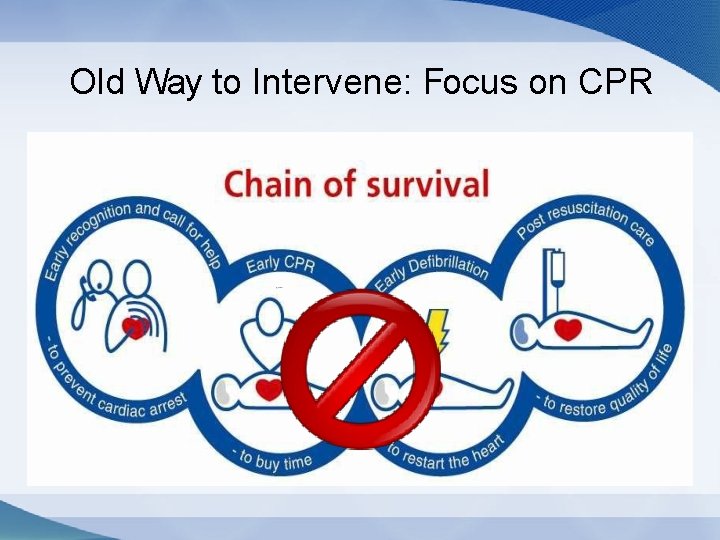
Old Way to Intervene: Focus on CPR
“A new systematic review and meta-analysis (Chan et al 2010) of studies on rapid response teams (RRT’s) again concludes that the evidence fails to support a significant impact of RRT’s on mortality. ” Chan PS, Jain R, Nallmothu BK, Berg RA, Sasson C. Rapid Response Teams: A Systematic Review and Meta-analysis. Arch Intern Med. 2010; 170(1): 18 -26
“Hospital Errors are the Third Leading Cause of Death in U. S. , and New Hospital Safety Scores Show Improvements Are Too Slow”
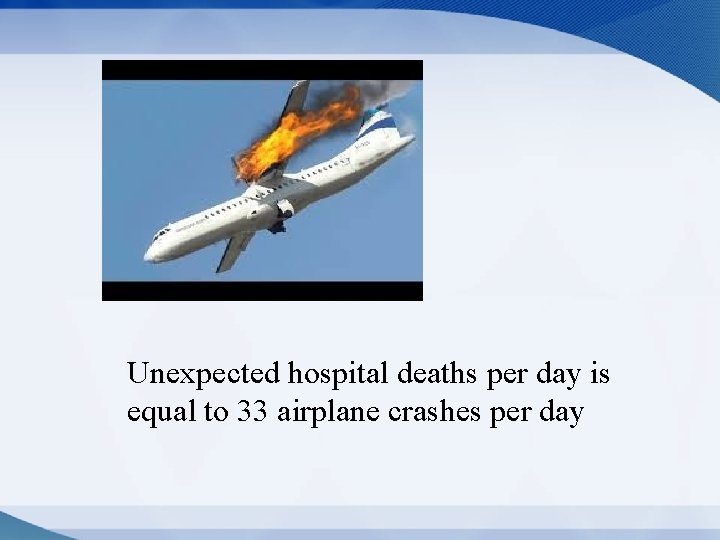
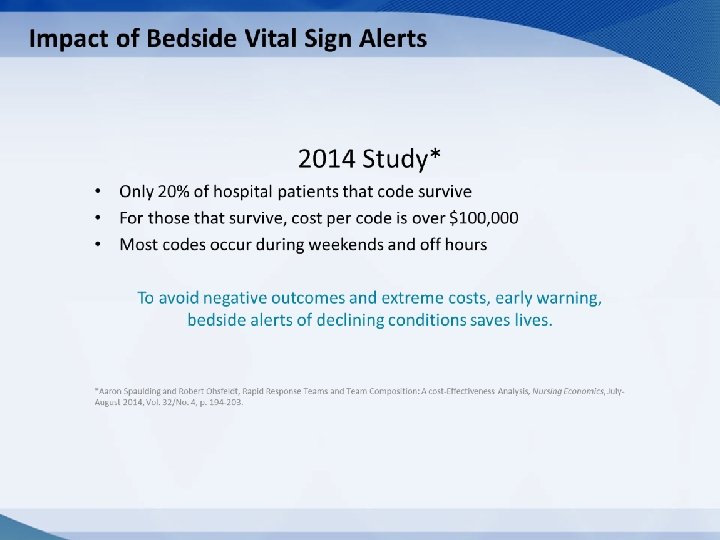
Unexpected hospital deaths per day is equal to 33 airplane crashes per day
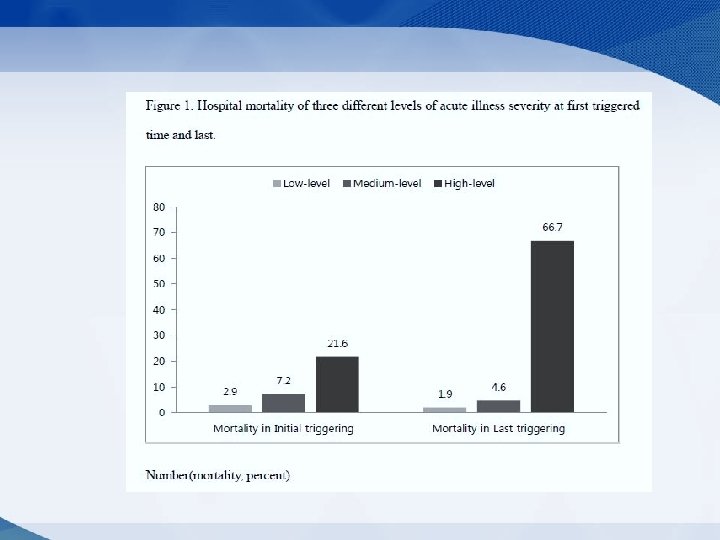
The Challenge Despite our best intentions, patients suffer adverse events… Dr. Daryl A. Jones Research indicates: Critical events are frequently preceded by one or more signs of physiological deterioration in commonly measured vital signs Subtle signs of deterioration appear 6 to 8 hours before an adverse event takes place. * * MET, Devita et al. Springer 2006
Early Warning Scoring Perspective from the Institute for Healthcare Improvement • Recommends health care organizations implement IHI recommendations a multi-parameter scoring system as part of their 2011 Rapid Response Team effort “Such a system can help build reliability into the Rapid Response Team system and attempt to or try to guarantee that no at-risk patients are missed”, says the 5 Million Lives Campaign’s Kathy Duncan. 16
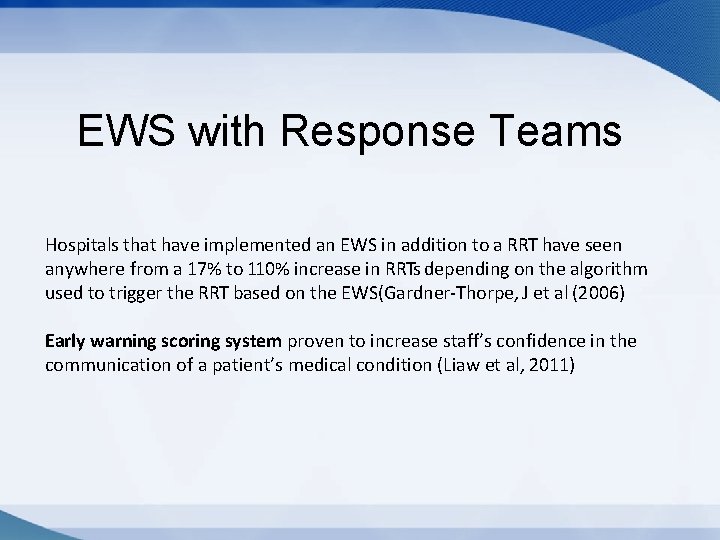
EWS with Response Teams Hospitals that have implemented an EWS in addition to a RRT have seen anywhere from a 17% to 110% increase in RRTs depending on the algorithm used to trigger the RRT based on the EWS(Gardner-Thorpe, J et al (2006) Early warning scoring system proven to increase staff’s confidence in the communication of a patient’s medical condition (Liaw et al, 2011)
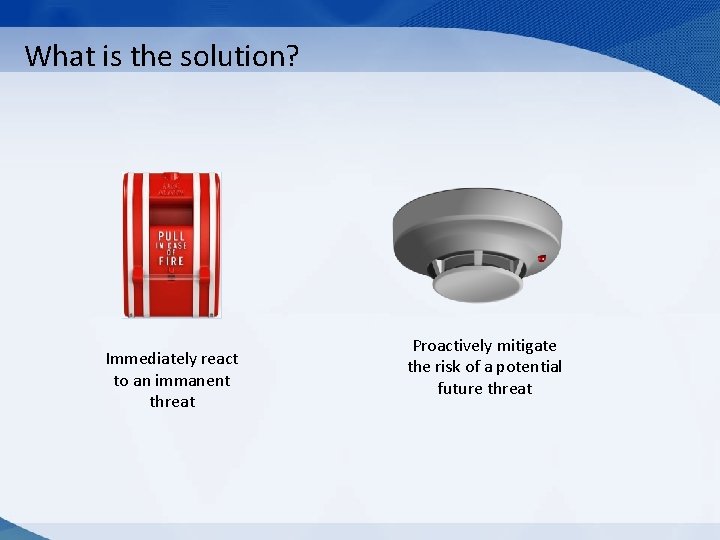
What is the solution? Immediately react to an immanent threat Proactively mitigate the risk of a potential future threat
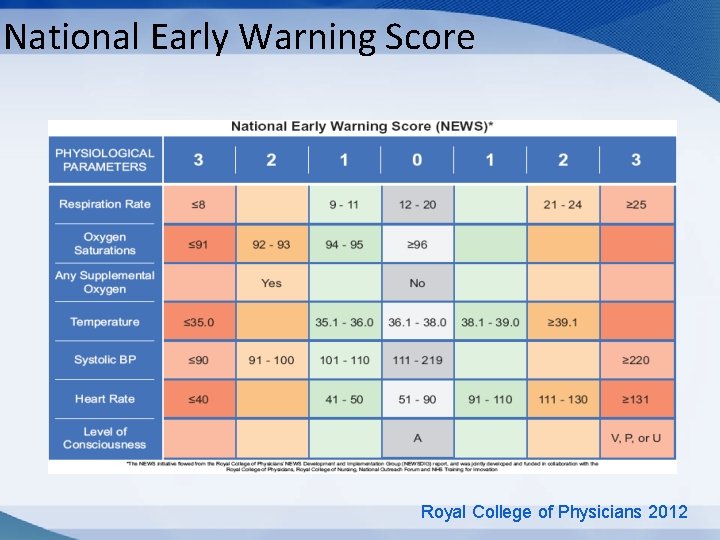
National Early Warning Score Royal College of Physicians 2012
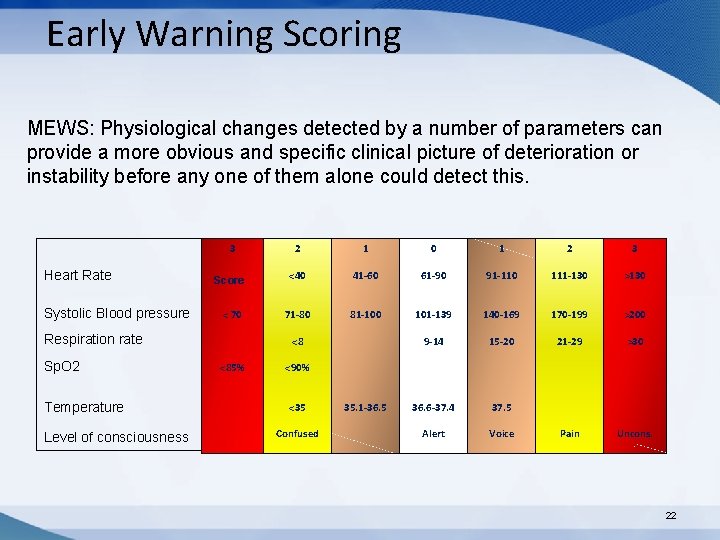
Early Warning Scoring MEWS: Physiological changes detected by a number of parameters can provide a more obvious and specific clinical picture of deterioration or instability before any one of them alone could detect this. Heart Rate Systolic Blood pressure 3 2 1 0 1 2 3 Score <40 41 -60 61 -90 91 -110 111 -130 >130 < 70 71 -80 81 -100 101 -139 140 -169 170 -199 >200 9 -14 15 -20 21 -29 >30 36. 6 -37. 4 37. 5 Alert Voice Pain Uncons. Respiration rate Sp. O 2 Temperature Level of consciousness <8 <85% <90% <35 Confused 35. 1 -36. 5 22
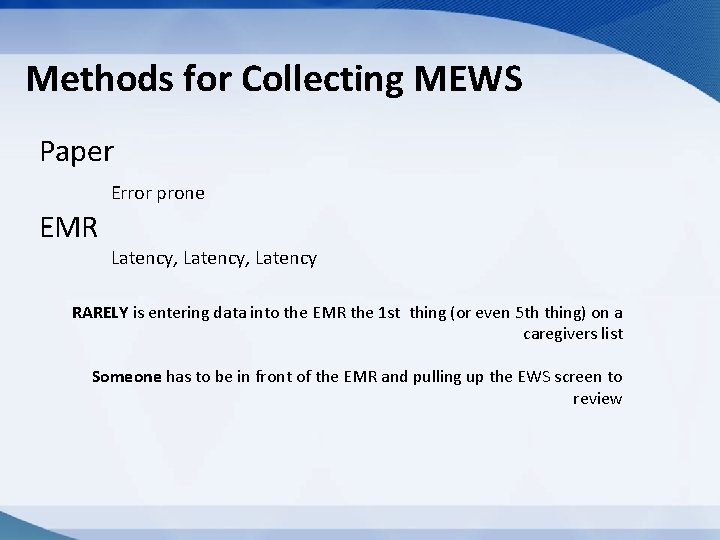
Methods for Collecting MEWS Paper Error prone EMR Latency, Latency RARELY is entering data into the EMR the 1 st thing (or even 5 th thing) on a caregivers list Someone has to be in front of the EMR and pulling up the EWS screen to review
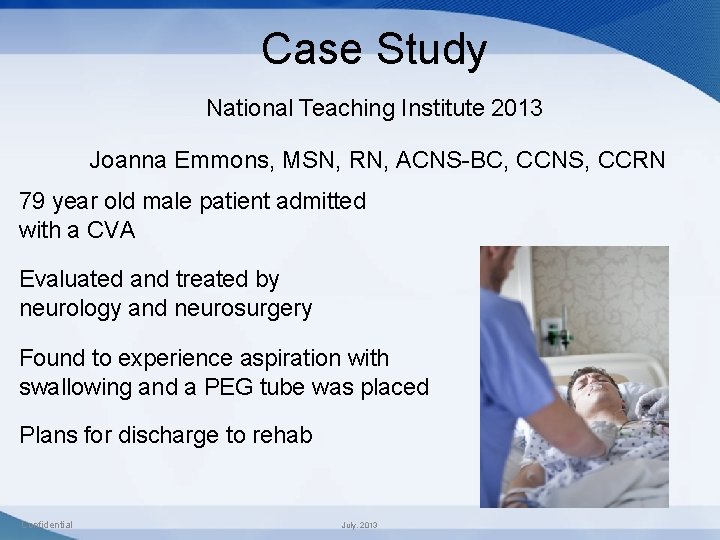
Case Study National Teaching Institute 2013 Joanna Emmons, MSN, RN, ACNS-BC, CCNS, CCRN 79 year old male patient admitted with a CVA Evaluated and treated by neurology and neurosurgery Found to experience aspiration with swallowing and a PEG tube was placed Plans for discharge to rehab Confidential July, 2013
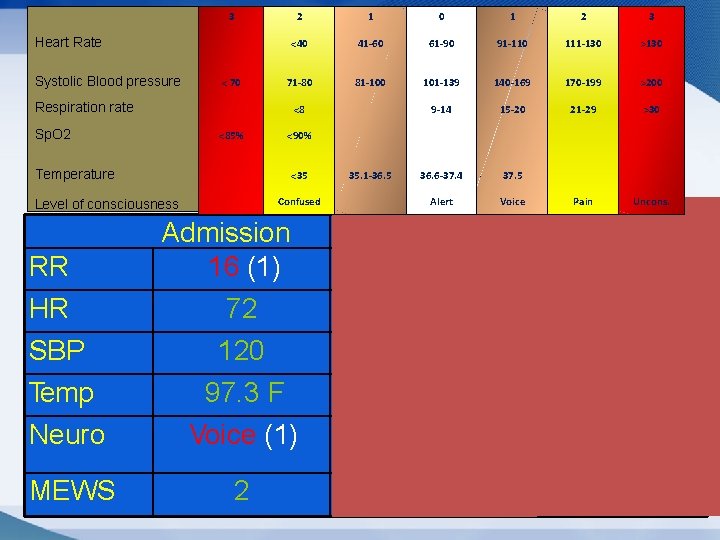
Case Study 3 2 1 0 1 2 3 <40 41 -60 61 -90 91 -110 111 -130 >130 71 -80 81 -100 101 -139 140 -169 170 -199 >200 9 -14 15 -20 21 -29 >30 Pain Uncons. Heart Rate Systolic Blood pressure < 70 Respiration rate <8 Sp. O 2 <85% <90% Data from Joanna Emmons, MSN, RN, 36. 6 -37. 4 ACNS-BC, CCNS, 37. 5 CCRN <35 35. 1 -36. 5 Temperature Confused Level of consciousness Alert Voice Admission 16 (1) Day 2 18 (1) HR SBP Temp 72 120 97. 3 F 93(1) 140(1) 97. 2 F 116 (1) 140(1) 99. 5 F Neuro Voice (1) MEWS 2 4 6 RR Day 3 28(2)
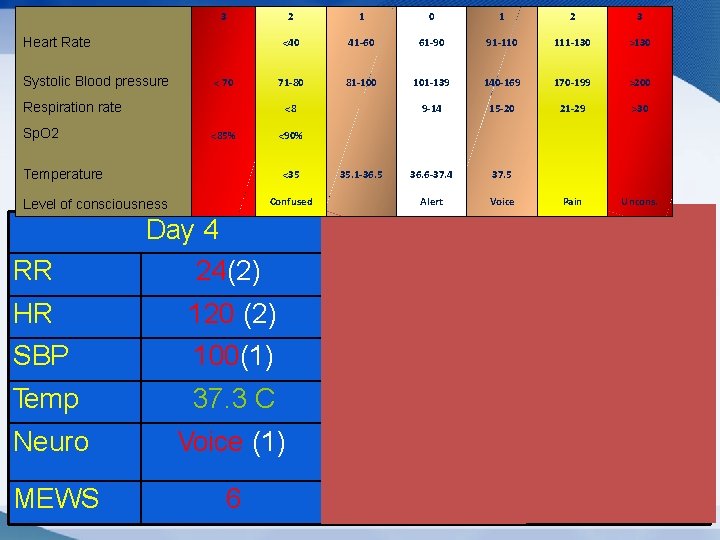
3 Heart Rate Systolic Blood pressure < 70 1 2 3 <40 41 -60 61 -90 91 -110 111 -130 >130 71 -80 Respiration rate <8 Sp. O 2 <85% <35 Level of consciousness Case Study 81 -100 101 -139 140 -169 170 -199 >200 9 -14 15 -20 21 -29 >30 36. 6 -37. 4 37. 5 Pain Uncons. <90% Temperature RR 2 35. 1 -36. 5 Data from Joanna Emmons, MSN, RN, ACNS-BC, CCNS, CCRN Confused Day 4 24(2) Alert Voice Day 5 24 (2) Day 6 32 (3) HR 120 (2) 132 (2) 140 (3) SBP 100(1) 98(1) 96(1) Temp 37. 3 C 37. 8 C 38. 7 C (2) Neuro Voice (1) MEWS 6 7 9
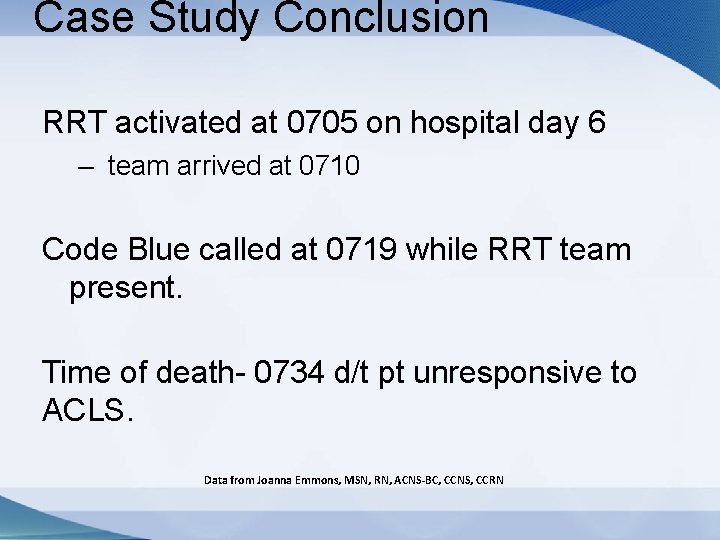
Case Study Conclusion RRT activated at 0705 on hospital day 6 – team arrived at 0710 Code Blue called at 0719 while RRT team present. Time of death- 0734 d/t pt unresponsive to ACLS. Data from Joanna Emmons, MSN, RN, ACNS-BC, CCNS, CCRN
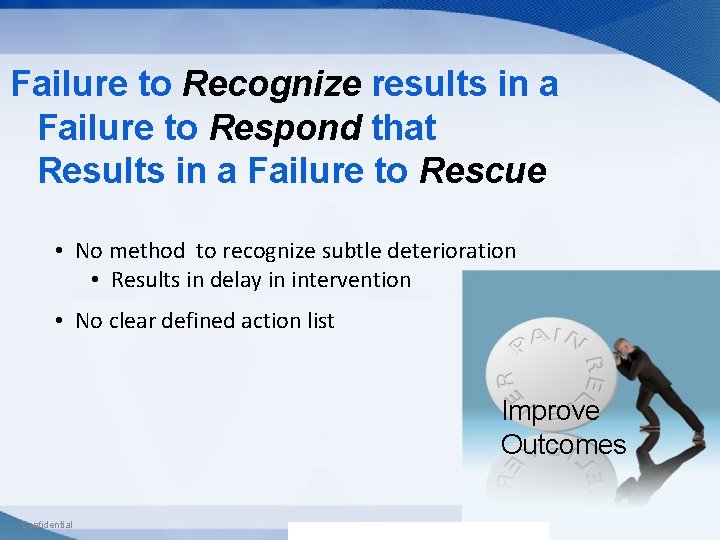
Failure to Recognize results in a Failure to Respond that Results in a Failure to Rescue • No method to recognize subtle deterioration • Results in delay in intervention • No clear defined action list Improve Outcomes Confidential July, 2013
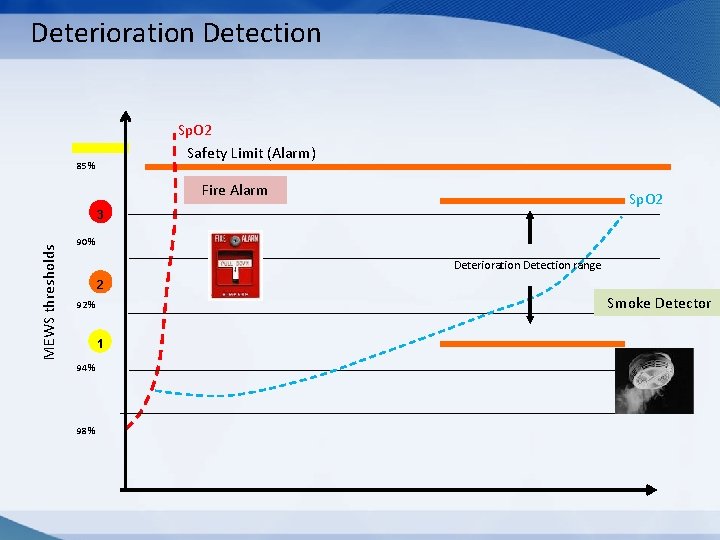
Deterioration Detection Sp. O 2 Safety Limit (Alarm) 85% Fire Alarm Sp. O 2 MEWS thresholds 3 90% Deterioration Detection range 2 Smoke Detector 92% 1 94% 98%
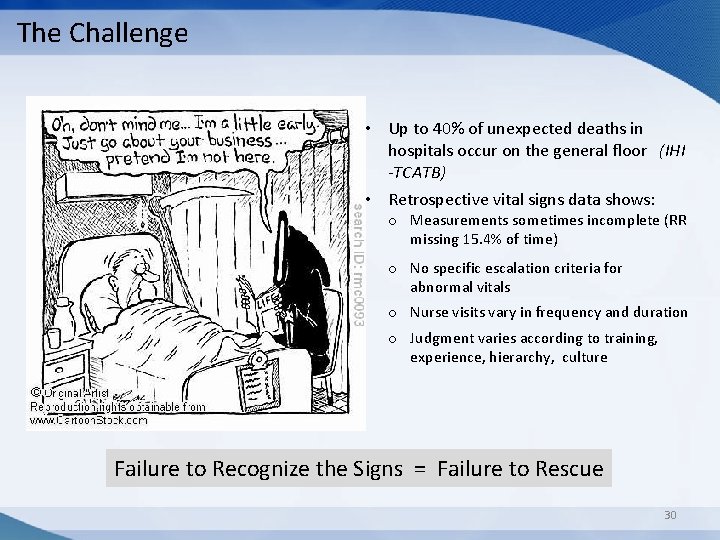
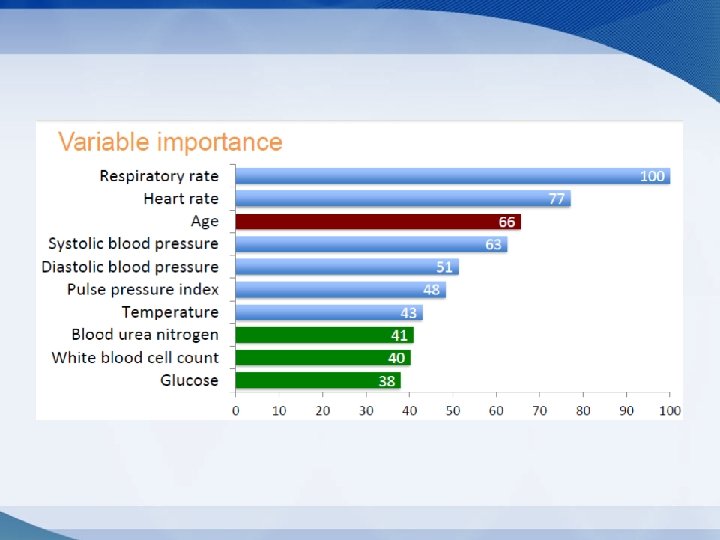
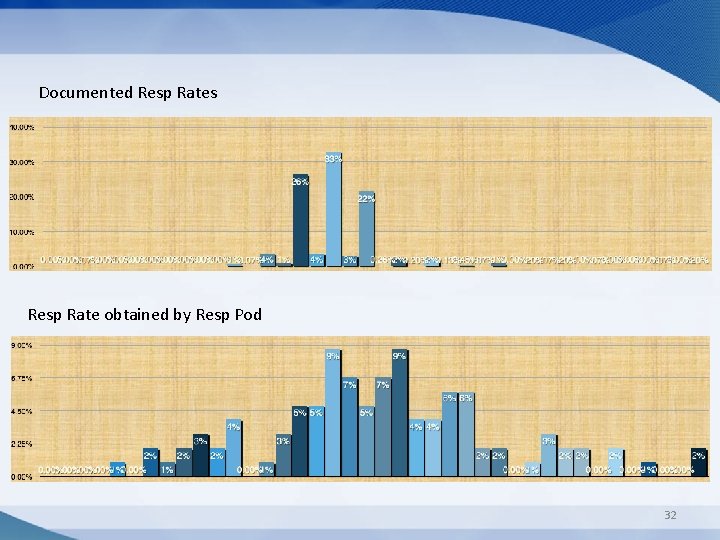
The Challenge • Up to 40% of unexpected deaths in hospitals occur on the general floor (IHI -TCATB) • Retrospective vital signs data shows: o Measurements sometimes incomplete (RR missing 15. 4% of time) o No specific escalation criteria for abnormal vitals o Nurse visits vary in frequency and duration o Judgment varies according to training, experience, hierarchy, culture Failure to Recognize the Signs = Failure to Rescue 30
Documented Resp Rates Resp Rate obtained by Resp Pod 32
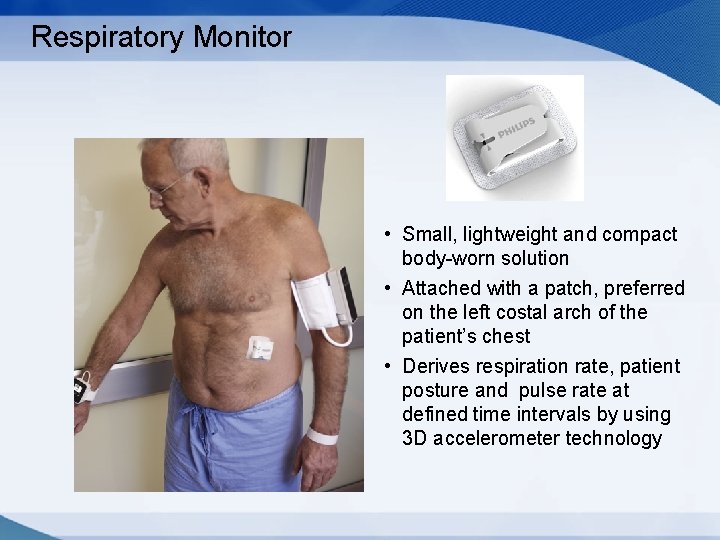
Respiratory Monitor • Small, lightweight and compact body-worn solution • Attached with a patch, preferred on the left costal arch of the patient’s chest • Derives respiration rate, patient posture and pulse rate at defined time intervals by using 3 D accelerometer technology
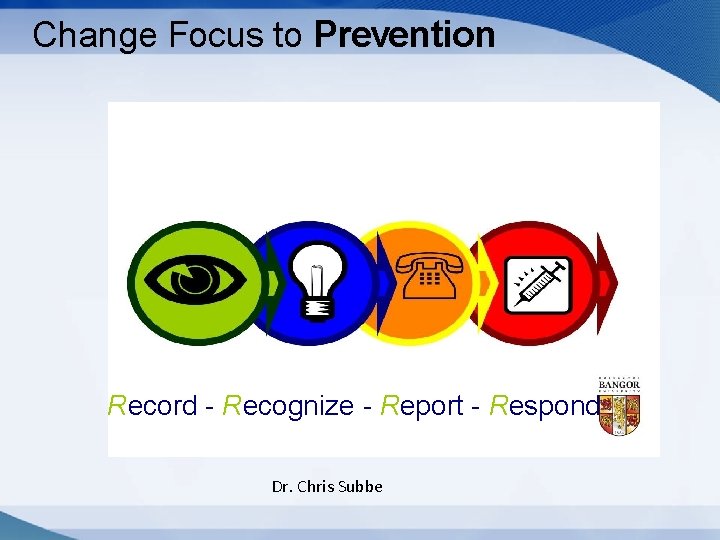
Change Focus to Prevention Record - Recognize - Report - Respond Dr. Chris Subbe
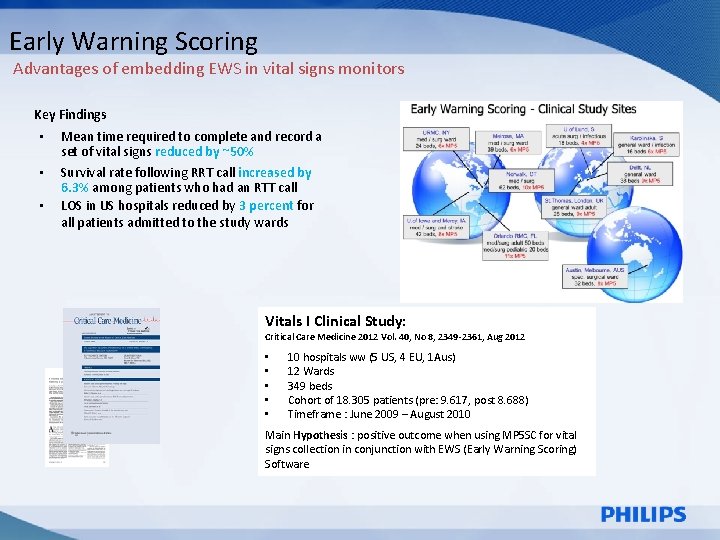
Early Warning Scoring Advantages of embedding EWS in vital signs monitors Key Findings • Mean time required to complete and record a set of vital signs reduced by ~50% • Survival rate following RRT call increased by 6. 3% among patients who had an RTT call LOS in US hospitals reduced by 3 percent for all patients admitted to the study wards • Vitals I Clinical Study: Critical Care Medicine 2012 Vol. 40, No 8, 2349 -2361, Aug 2012 • • • 10 hospitals ww (5 US, 4 EU, 1 Aus) 12 Wards 349 beds Cohort of 18. 305 patients (pre: 9. 617, post 8. 688) Timeframe : June 2009 – August 2010 Main Hypothesis : positive outcome when using MP 5 SC for vital signs collection in conjunction with EWS (Early Warning Scoring) Software
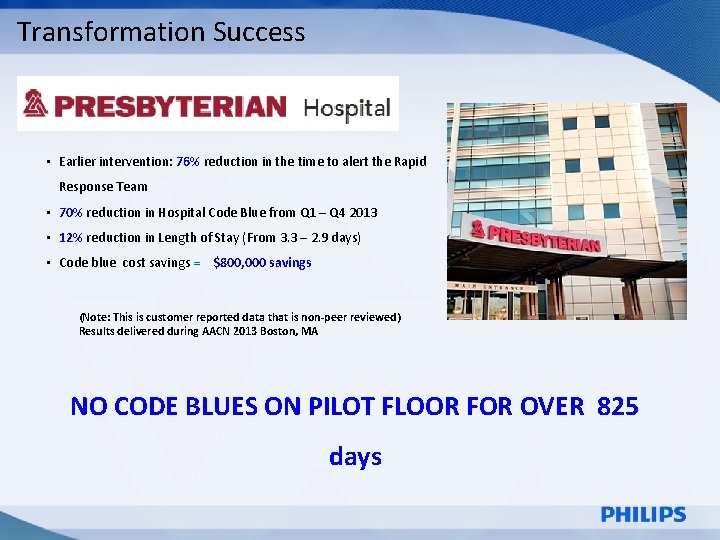
Transformation Success • Earlier intervention: 76% reduction in the time to alert the Rapid Response Team • 70% reduction in Hospital Code Blue from Q 1 – Q 4 2013 • 12% reduction in Length of Stay (From 3. 3 – 2. 9 days) • Code blue cost savings = $800, 000 savings (Note: This is customer reported data that is non-peer reviewed) Results delivered during AACN 2013 Boston, MA NO CODE BLUES ON PILOT FLOOR FOR OVER 825 days