
CAC and Scheduling Schemes for Realtime Video Applications
- Slides: 23
CAC and Scheduling Schemes for Real-time Video Applications in IEEE 802. 16 Networks Ou Yang WCNG @ UR 10/11/2006
Outline Overview of IEEE 802. 16 Networks n Motivation n Proposed CAC Scheme n Proposed Scheduling Scheme n Simulation Results n Conclusion n
Overview
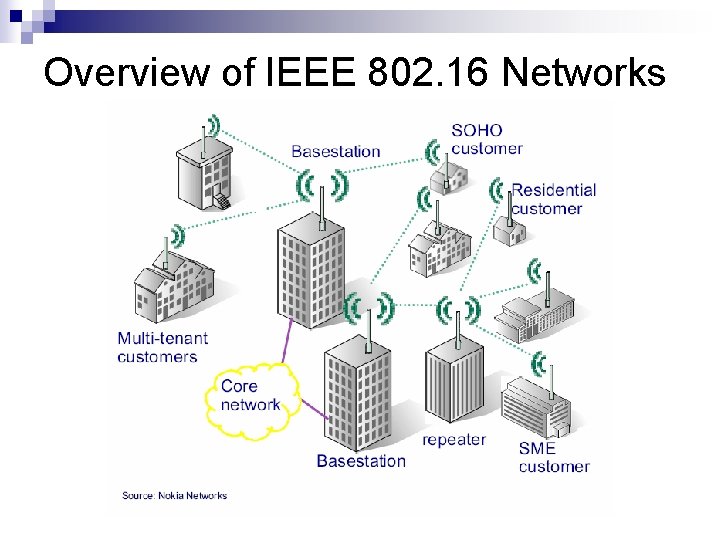
Overview of IEEE 802. 16 Networks
Brief Introduction to 802. 16 Fixed Wireless Broadband Access Networks - Line of sight n Connection Oriented - Block incoming calls when Qo. S fails n Medium Access Mechanism - TDMA n Differentiated Quality of Service - Support real-time video application n
Motivation
Motivation Real-time video applications demands high bandwidth efficiency and guaranteed Qo. S n IEEE 802. 16 standard defines a frame of MAC but leaves CAC and scheduler open to discuss n Varying bit-rate and stringent delay bound make the design of CAC and scheduler difficult n
State of the Art CAC - Determines throughput - Influences delay performance n Scheduler - Determines fairness - Influences delay performance n No reference focuses on throughput, delay performance and fairness simultaneously. n
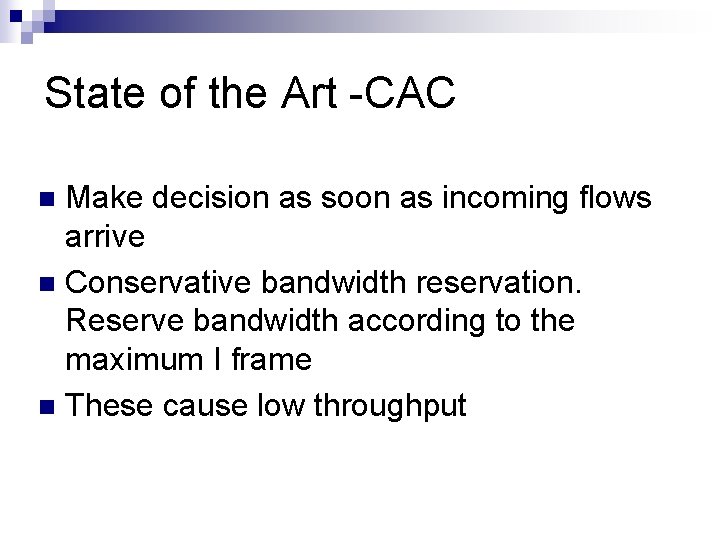
State of the Art -CAC Make decision as soon as incoming flows arrive n Conservative bandwidth reservation. Reserve bandwidth according to the maximum I frame n These cause low throughput n
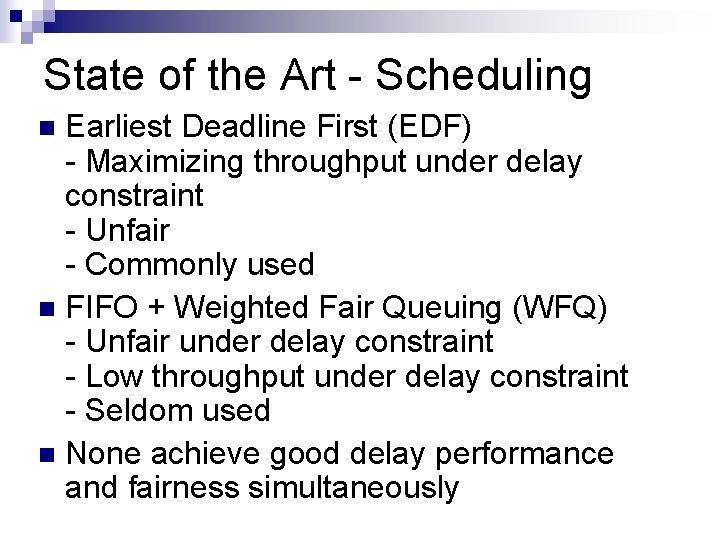
State of the Art - Scheduling Earliest Deadline First (EDF) - Maximizing throughput under delay constraint - Unfair - Commonly used n FIFO + Weighted Fair Queuing (WFQ) - Unfair under delay constraint - Low throughput under delay constraint - Seldom used n None achieve good delay performance and fairness simultaneously n
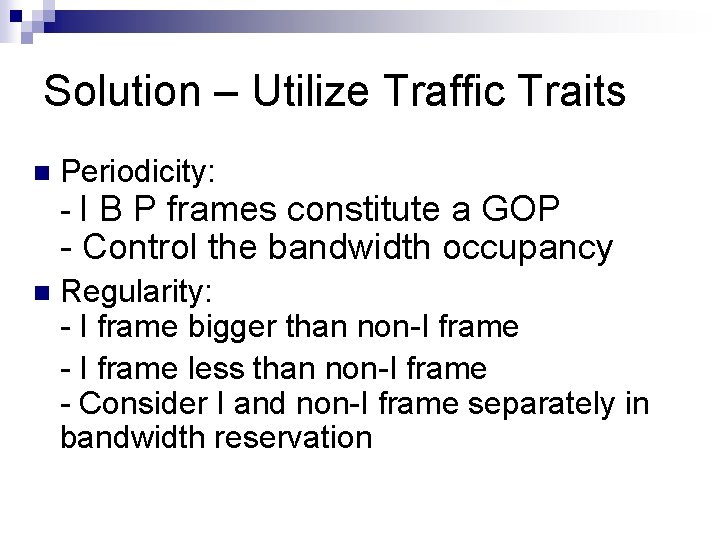
Solution – Utilize Traffic Traits n Periodicity: - I B P frames constitute a GOP - Control the bandwidth occupancy n Regularity: - I frame bigger than non-I frame - I frame less than non-I frame - Consider I and non-I frame separately in bandwidth reservation
Proposed CAC Scheme
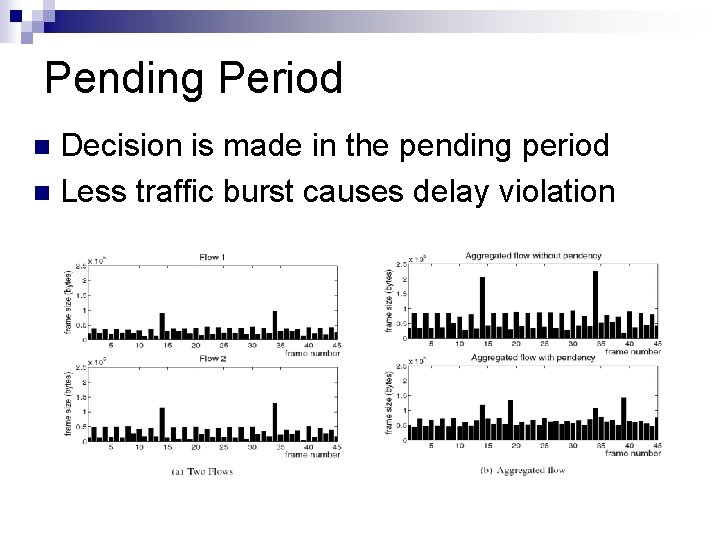
Pending Period Decision is made in the pending period n Less traffic burst causes delay violation n
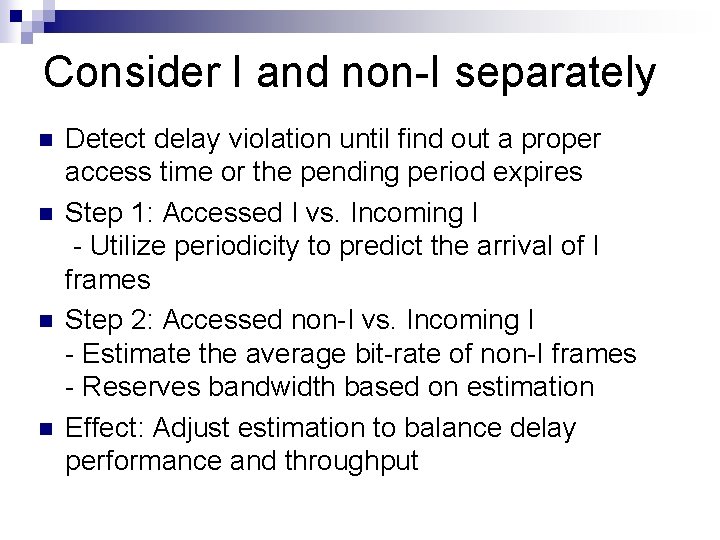
Consider I and non-I separately n n Detect delay violation until find out a proper access time or the pending period expires Step 1: Accessed I vs. Incoming I - Utilize periodicity to predict the arrival of I frames Step 2: Accessed non-I vs. Incoming I - Estimate the average bit-rate of non-I frames - Reserves bandwidth based on estimation Effect: Adjust estimation to balance delay performance and throughput
Proposed Scheduling Scheme
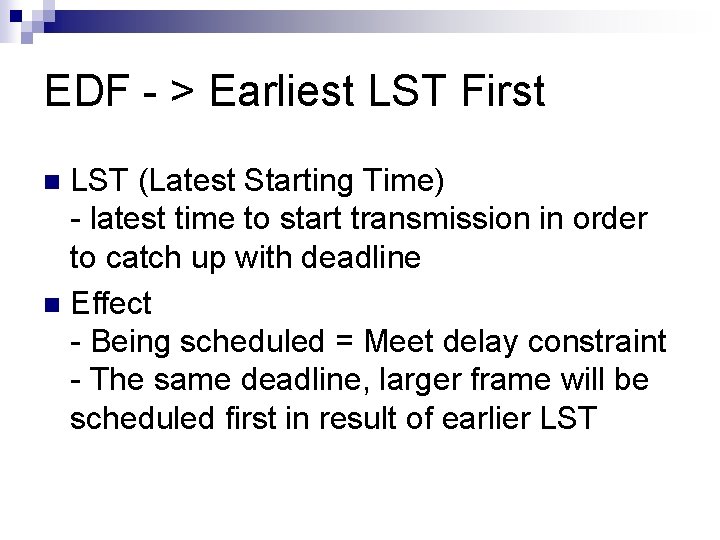
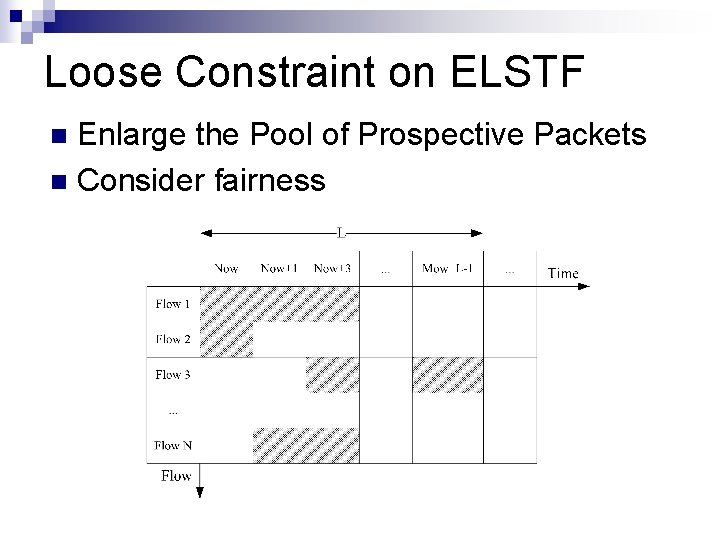
EDF - > Earliest LST First LST (Latest Starting Time) - latest time to start transmission in order to catch up with deadline n Effect - Being scheduled = Meet delay constraint - The same deadline, larger frame will be scheduled first in result of earlier LST n
Loose Constraint on ELSTF Enlarge the Pool of Prospective Packets n Consider fairness n
Effect ELSTF improve the delay performance n Loose constraint improves fair service n L is adjustable, compromising delay and fairness n
Simulation Results
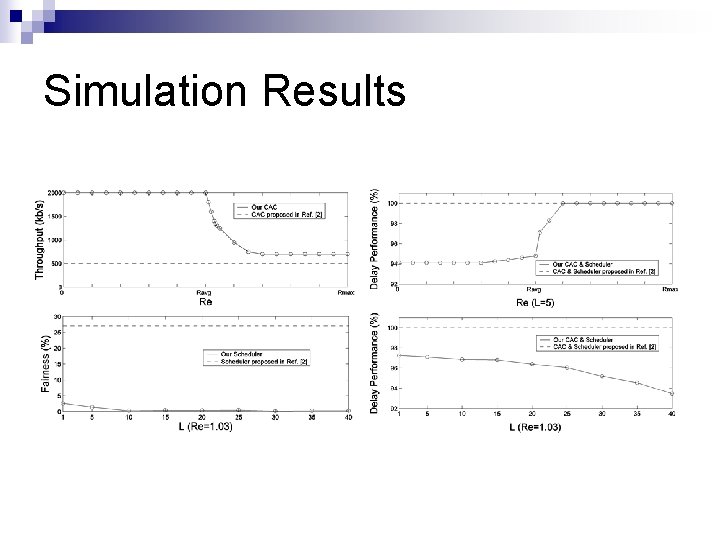
Analysis Throughput, delay performance and fairness are involved in two trade-offs, handled by Re and L n Re↑ Throughput↓ Delay performance↑ L ↑ Fairness ↑ Delay performance ↓ n
Conclusion
The proposed CAC introduces a pending period and utilizes traffic traits to compromise throughput and delay performance n The proposed scheduler applies loose constraint on ELSTF to balance fairness and delay performance n Simulation results show the proposed schemes significantly improve throughput with acceptable delay performance and fairness. n
Thank You