
RealTime Communications over the Web web RTC Claudio
Real-Time Communications over the Web: web. RTC Claudio Vacalebre claudio@cloudators. com
Agenda • Introduction – 10 minutes • Technology in action – xx minutes • Feel free to interrupt any time
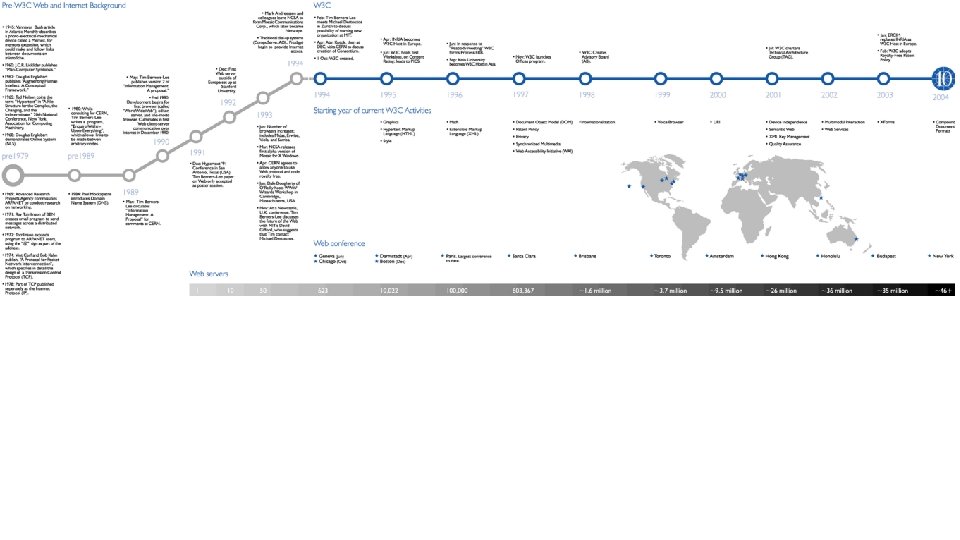

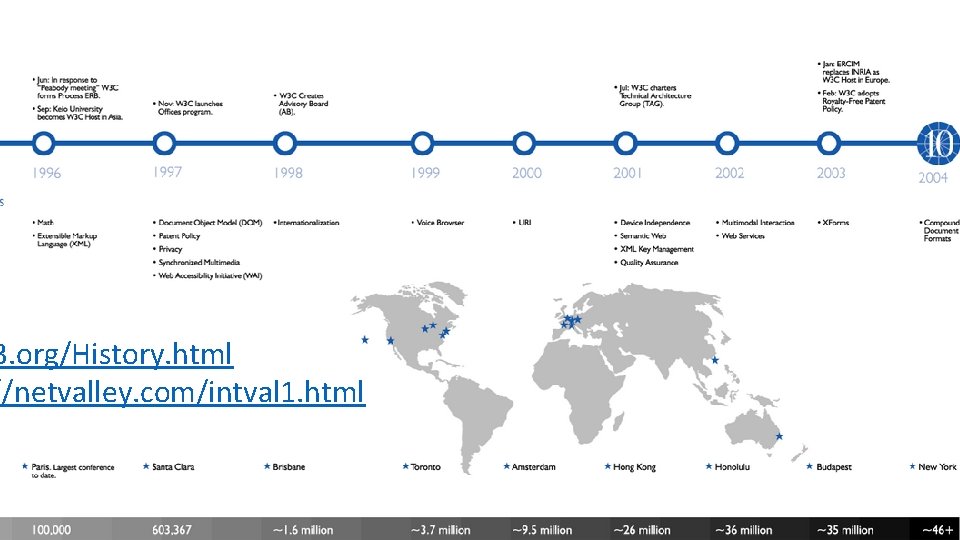
3. org/History. html //netvalley. com/intval 1. html
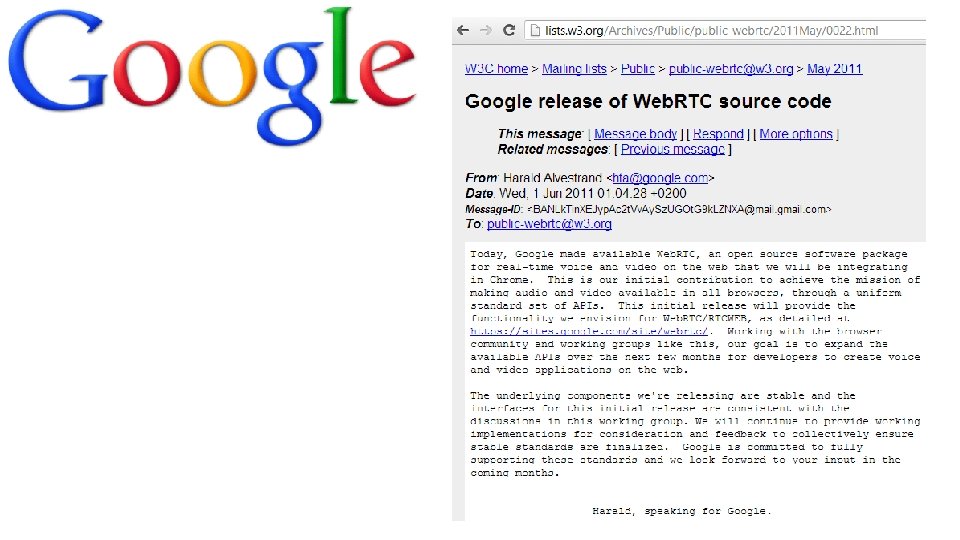

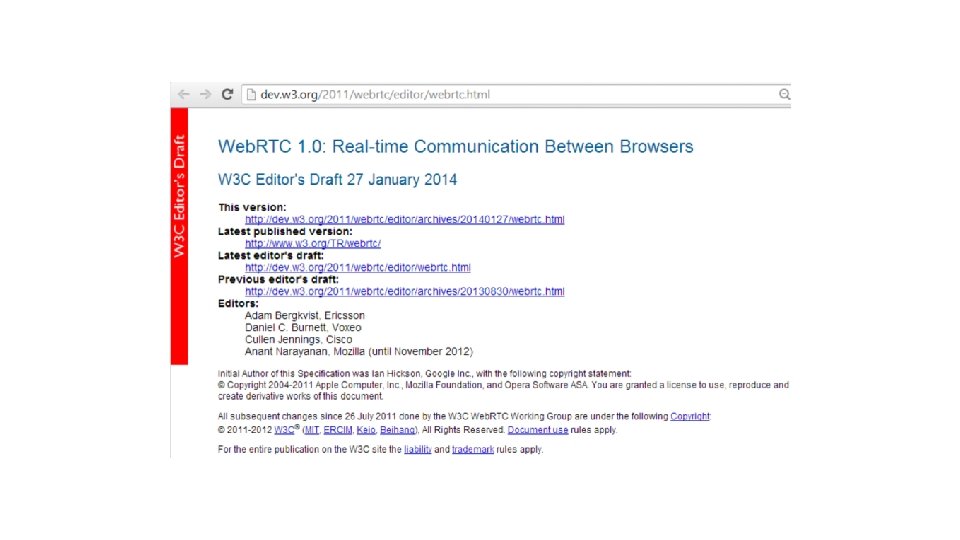
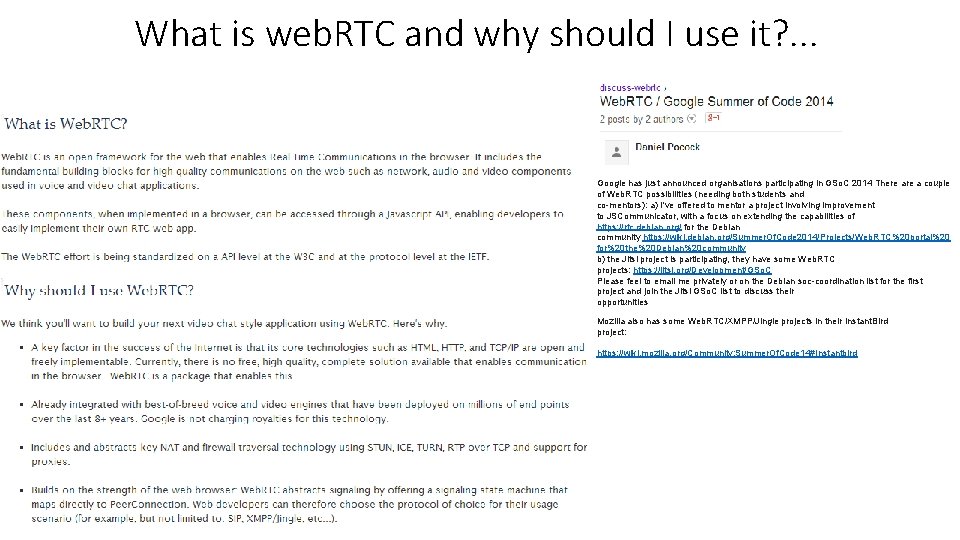
What is web. RTC and why should I use it? . . . Google has just announced organisations participating in GSo. C 2014 There a couple of Web. RTC possibilities (needing both students and co-mentors): a) I've offered to mentor a project involving improvement to JSCommunicator, with a focus on extending the capabilities of https: //rtc. debian. org/ for the Debian community https: //wiki. debian. org/Summer. Of. Code 2014/Projects/Web. RTC%20 portal%20 for%20 the%20 Debian%20 community b) the Jitsi project is participating, they have some Web. RTC projects: https: //jitsi. org/Development/GSo. C Please feel to email me privately or on the Debian soc-coordination list for the first project and join the Jitsi GSo. C list to discuss their opportunities Mozilla also has some Web. RTC/XMPP/Jingle projects in their Instant. Bird project: https: //wiki. mozilla. org/Community: Summer. Of. Code 14#Instantbird
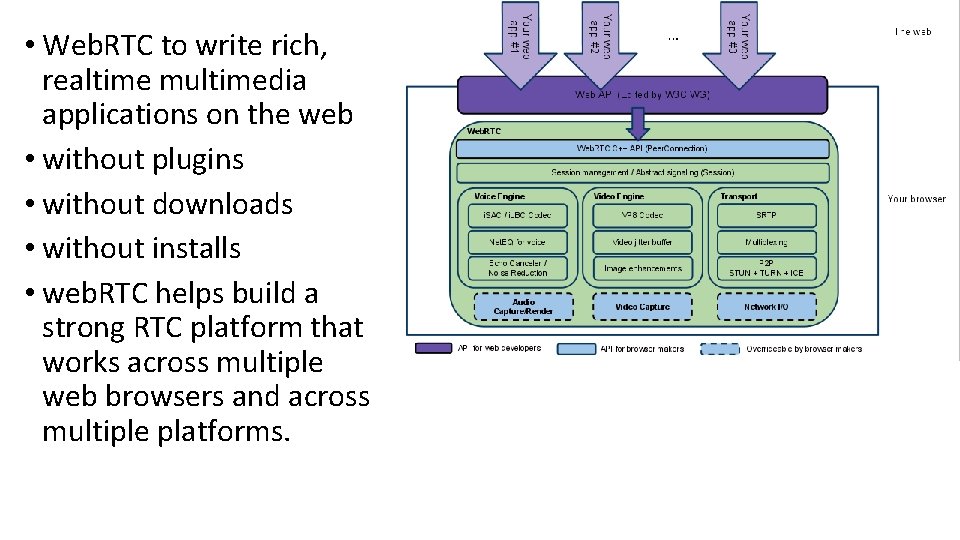
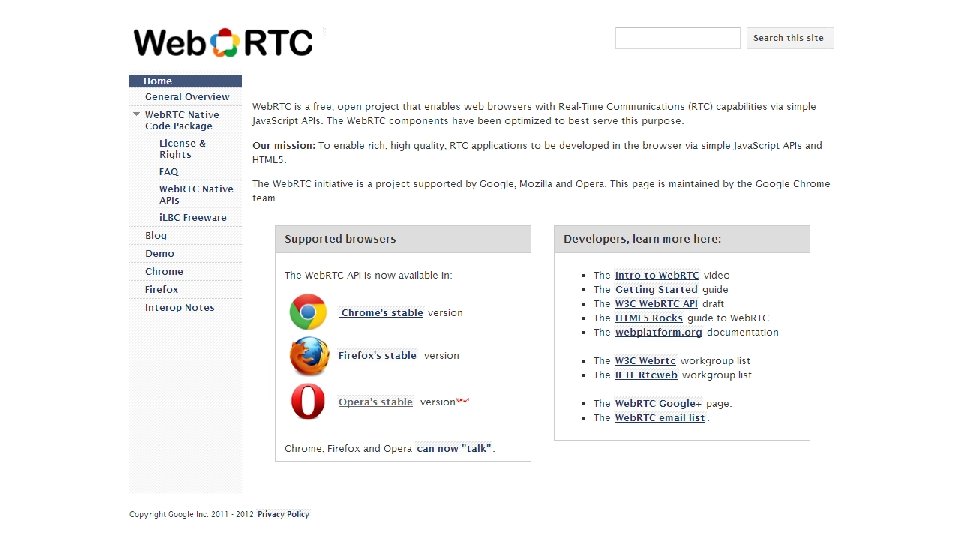
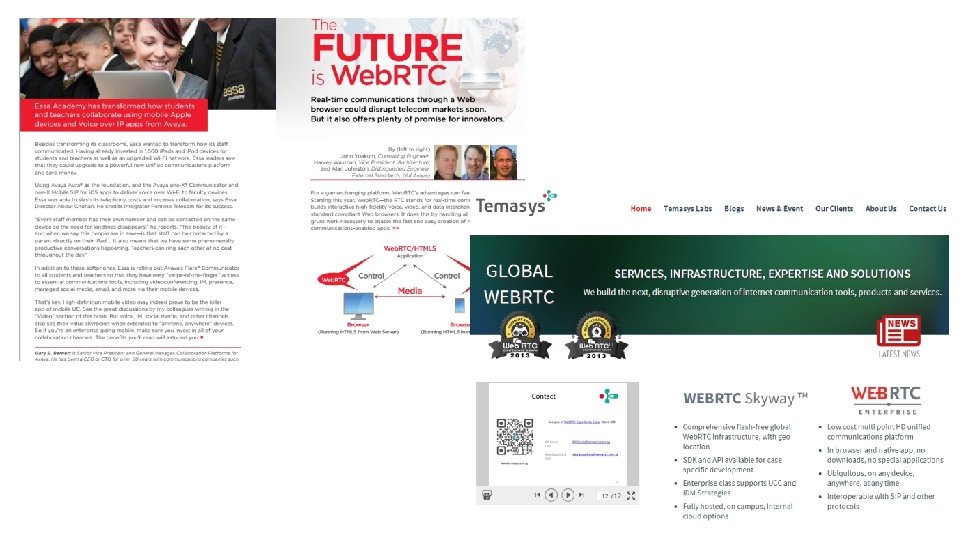
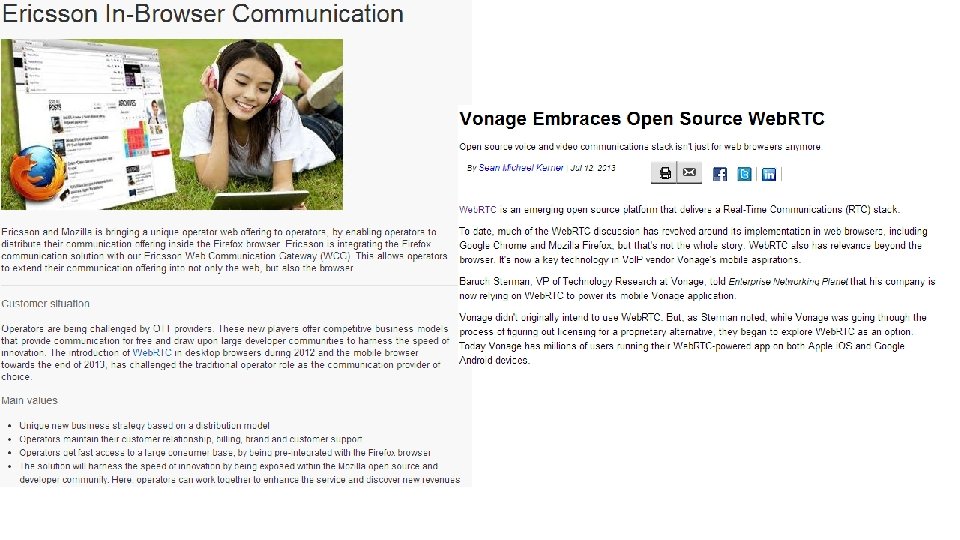
• Web. RTC to write rich, realtime multimedia applications on the web • without plugins • without downloads • without installs • web. RTC helps build a strong RTC platform that works across multiple web browsers and across multiple platforms.
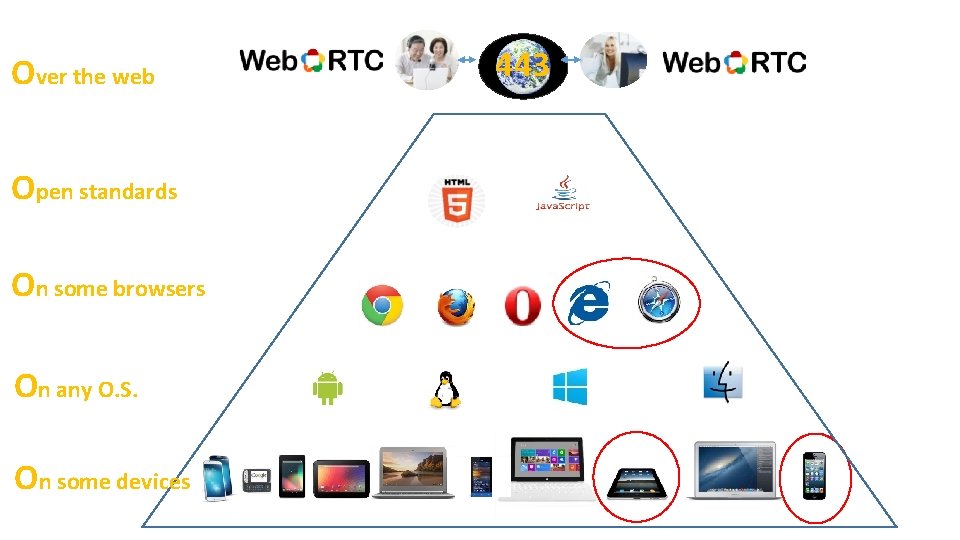
Over the web Open standards On some browsers On any O. S. On some devices 443
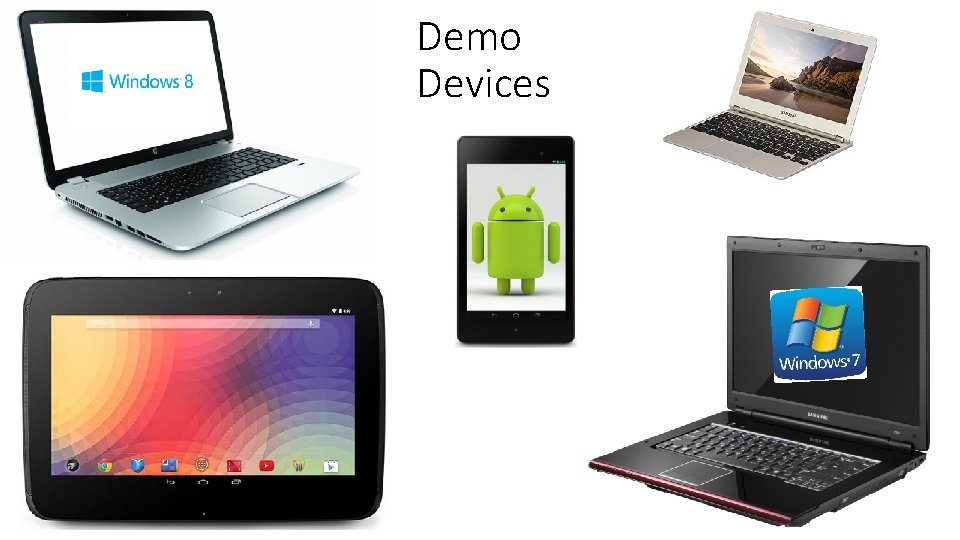
Demo Devices
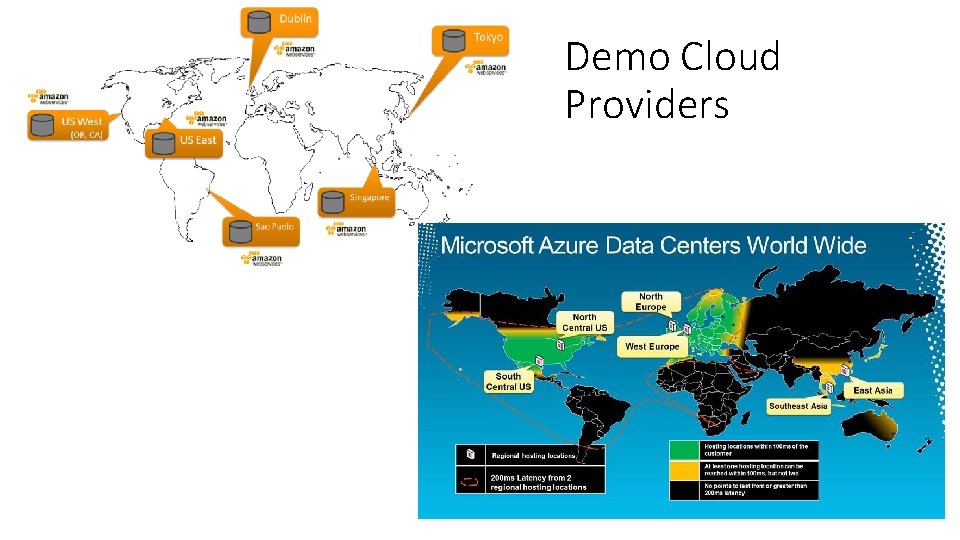
Demo Cloud Providers
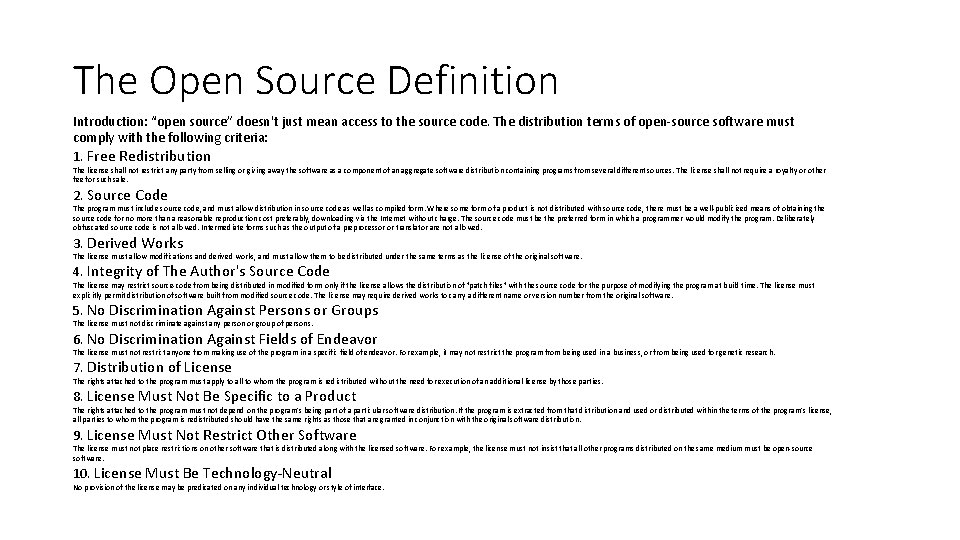
The Open Source Definition Introduction: “open source” doesn't just mean access to the source code. The distribution terms of open-source software must comply with the following criteria: 1. Free Redistribution The license shall not restrict any party from selling or giving away the software as a component of an aggregate software distribution containing programs from several different sources. The license shall not require a royalty or other fee for such sale. 2. Source Code The program must include source code, and must allow distribution in source code as well as compiled form. Where some form of a product is not distributed with source code, there must be a well-publicized means of obtaining the source code for no more than a reasonable reproduction cost preferably, downloading via the Internet without charge. The source code must be the preferred form in which a programmer would modify the program. Deliberately obfuscated source code is not allowed. Intermediate forms such as the output of a preprocessor or translator are not allowed. 3. Derived Works The license must allow modifications and derived works, and must allow them to be distributed under the same terms as the license of the original software. 4. Integrity of The Author's Source Code The license may restrict source-code from being distributed in modified form only if the license allows the distribution of "patch files" with the source code for the purpose of modifying the program at build time. The license must explicitly permit distribution of software built from modified source code. The license may require derived works to carry a different name or version number from the original software. 5. No Discrimination Against Persons or Groups The license must not discriminate against any person or group of persons. 6. No Discrimination Against Fields of Endeavor The license must not restrict anyone from making use of the program in a specific field of endeavor. For example, it may not restrict the program from being used in a business, or from being used for genetic research. 7. Distribution of License The rights attached to the program must apply to all to whom the program is redistributed without the need for execution of an additional license by those parties. 8. License Must Not Be Specific to a Product The rights attached to the program must not depend on the program's being part of a particular software distribution. If the program is extracted from that distribution and used or distributed within the terms of the program's license, all parties to whom the program is redistributed should have the same rights as those that are granted in conjunction with the original software distribution. 9. License Must Not Restrict Other Software The license must not place restrictions on other software that is distributed along with the licensed software. For example, the license must not insist that all other programs distributed on the same medium must be open-source software. 10. License Must Be Technology-Neutral No provision of the license may be predicated on any individual technology or style of interface.
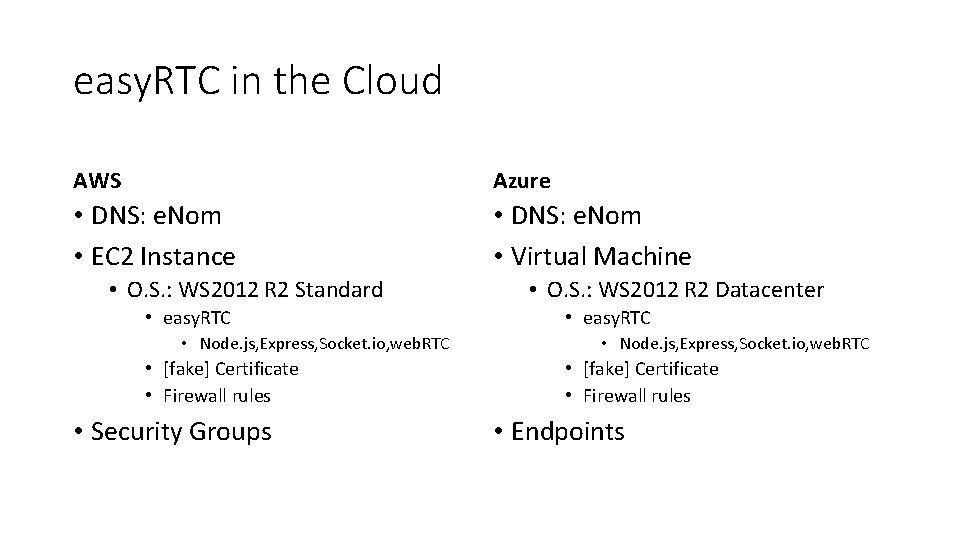
easy. RTC in the Cloud AWS Azure • DNS: e. Nom • EC 2 Instance • DNS: e. Nom • Virtual Machine • O. S. : WS 2012 R 2 Standard • easy. RTC • Node. js, Express, Socket. io, web. RTC • [fake] Certificate • Firewall rules • Security Groups • O. S. : WS 2012 R 2 Datacenter • easy. RTC • Node. js, Express, Socket. io, web. RTC • [fake] Certificate • Firewall rules • Endpoints
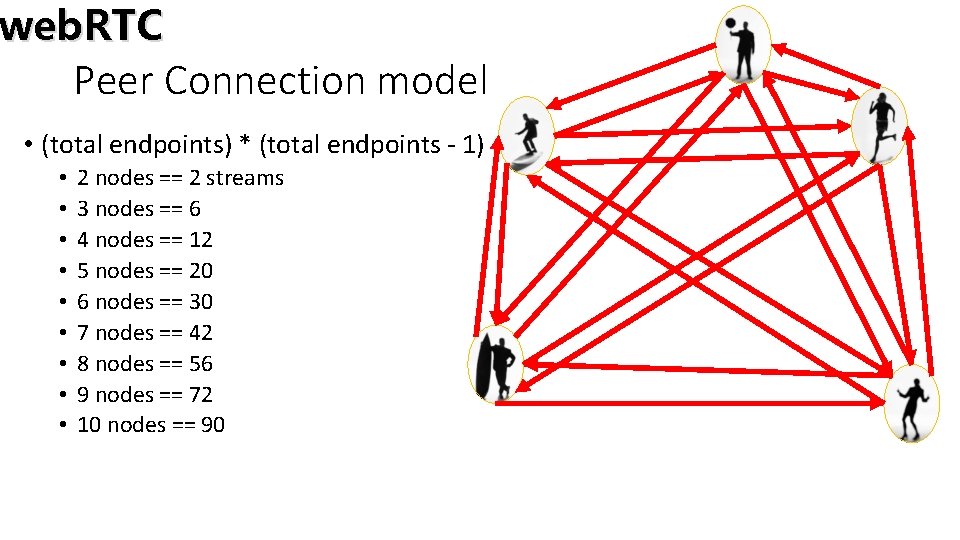
web. RTC Peer Connection model • (total endpoints) * (total endpoints - 1) • • • 2 nodes == 2 streams 3 nodes == 6 4 nodes == 12 5 nodes == 20 6 nodes == 30 7 nodes == 42 8 nodes == 56 9 nodes == 72 10 nodes == 90
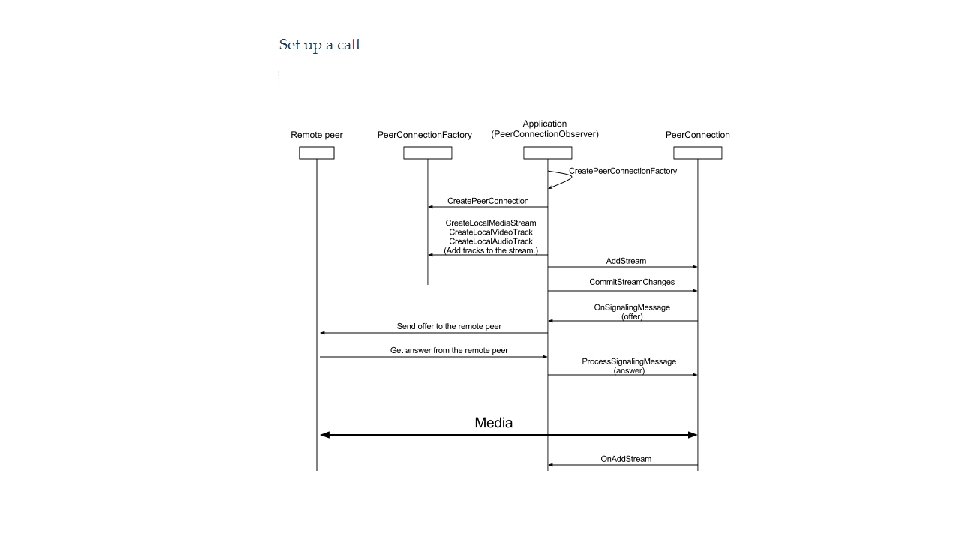
Signaling • Signaling is the process of coordinating communication. In order for a Web. RTC application to set up a 'call', its clients need to exchange information: • Session control messages used to open or close communication. • Error messages. • Media metadata such as codecs and codec settings, bandwidth and media types. • Key data, used to establish secure connections. • Network data, such as a host's IP address and port as seen by the outside world.
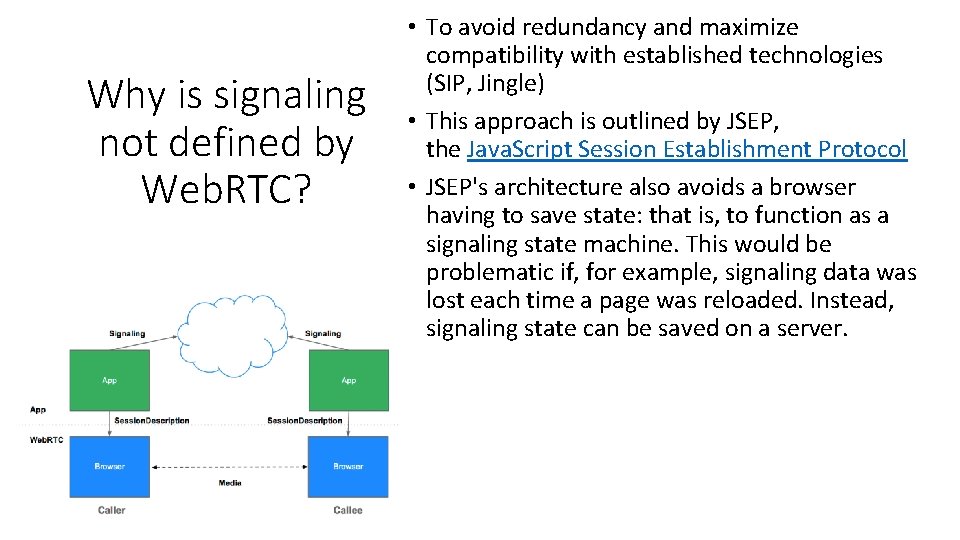
Why is signaling not defined by Web. RTC? • To avoid redundancy and maximize compatibility with established technologies (SIP, Jingle) • This approach is outlined by JSEP, the Java. Script Session Establishment Protocol • JSEP's architecture also avoids a browser having to save state: that is, to function as a signaling state machine. This would be problematic if, for example, signaling data was lost each time a page was reloaded. Instead, signaling state can be saved on a server.
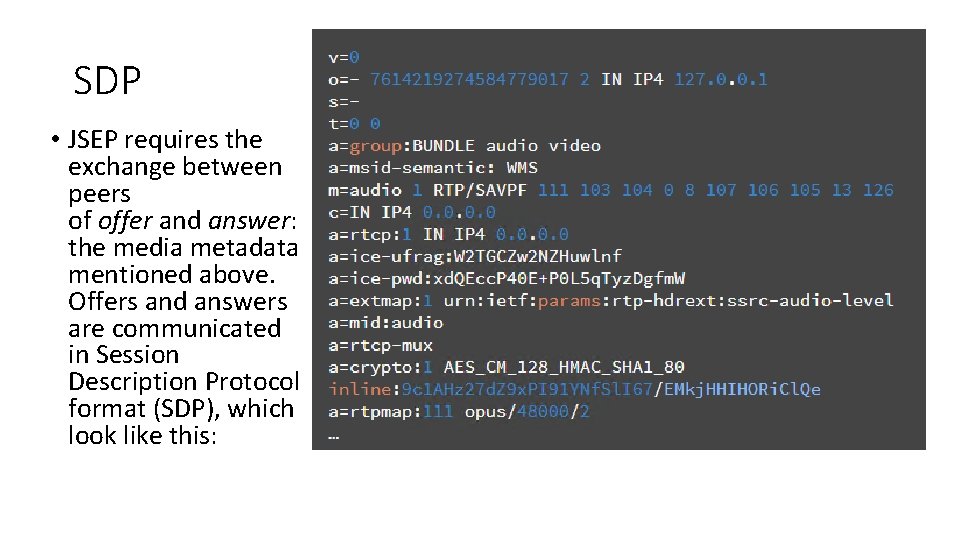
SDP • JSEP requires the exchange between peers of offer and answer: the media metadata mentioned above. Offers and answers are communicated in Session Description Protocol format (SDP), which look like this:
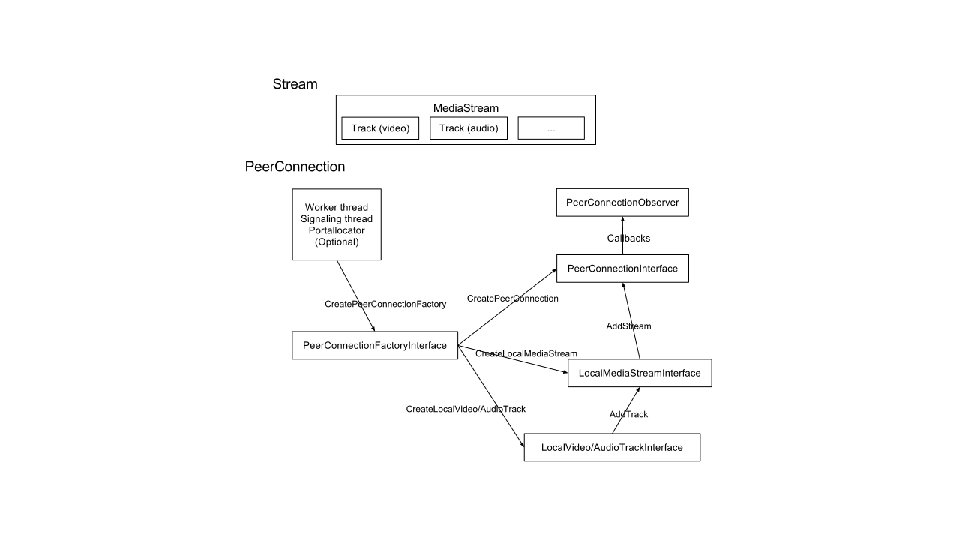
web. RTC Major components • get. User. Media, which allows a web browser to access the camera and microphone • Peer. Connection, which sets up the audio/video calls • Data. Channels, which allow browsers to share data via peer-topeer
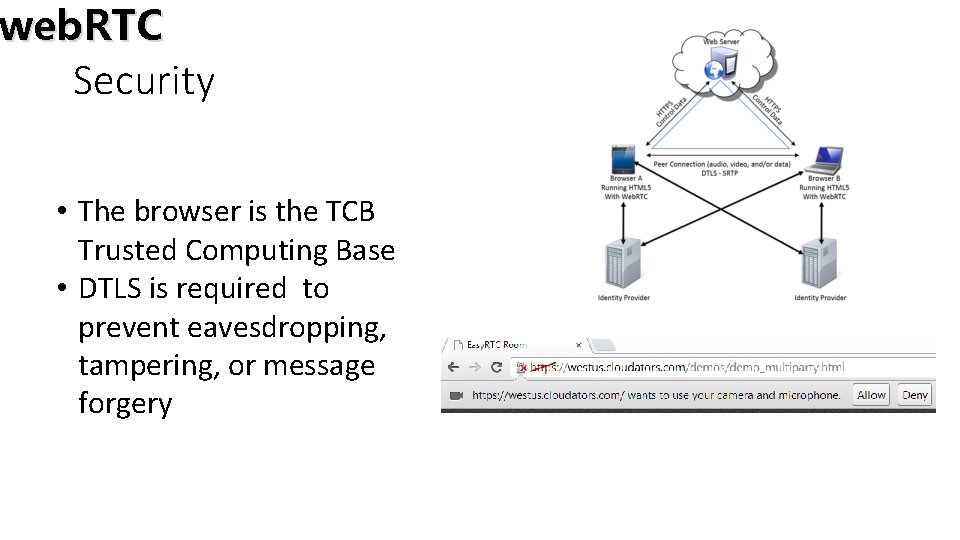
web. RTC Security • The browser is the TCB Trusted Computing Base • DTLS is required to prevent eavesdropping, tampering, or message forgery
Notes • Web. RTC enables peer to peer communication BUT. . . • Web. RTC still needs servers: • For clients to exchange metadata to coordinate communication: this is called signaling. • To cope with network address translators (NATs) and firewalls.
- Slides: 33