Ch 11 Fourier Series Integrals and Transform 1



- Slides: 86
Ch # 11 Fourier Series, Integrals, and Transform 1
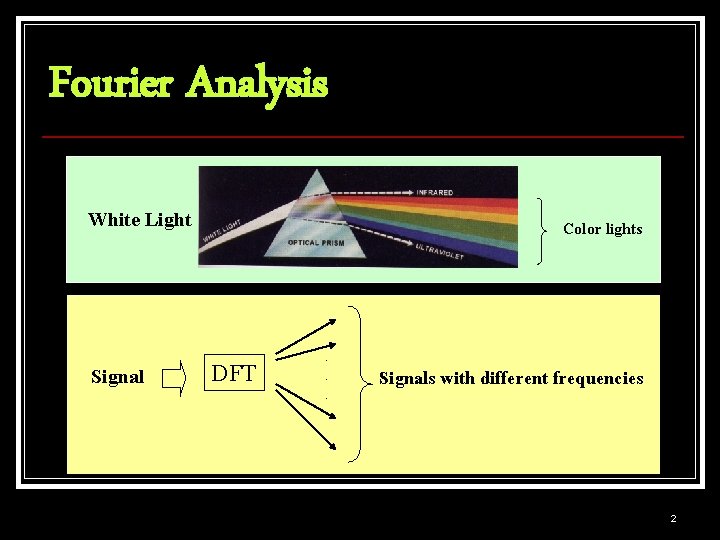
Fourier Analysis White Light Signal Color lights DFT . . . Signals with different frequencies 2
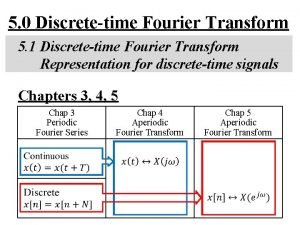
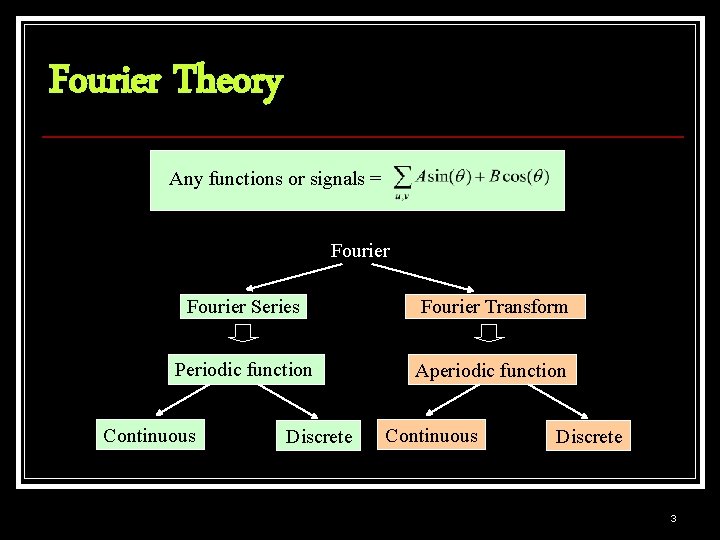
Fourier Theory Any functions or signals = Fourier Series Fourier Transform Periodic function Aperiodic function Continuous Discrete 3
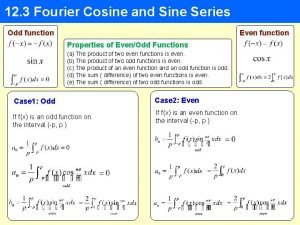
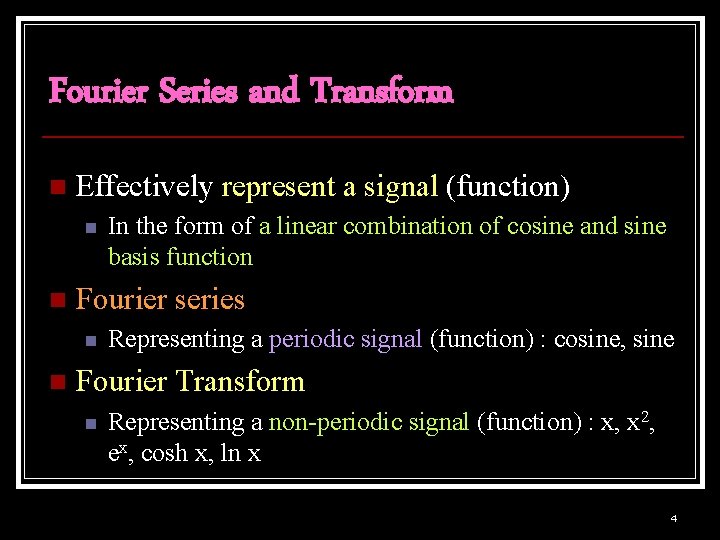
Fourier Series and Transform n Effectively represent a signal (function) n n Fourier series n n In the form of a linear combination of cosine and sine basis function Representing a periodic signal (function) : cosine, sine Fourier Transform n Representing a non-periodic signal (function) : x, x 2, ex, cosh x, ln x 4
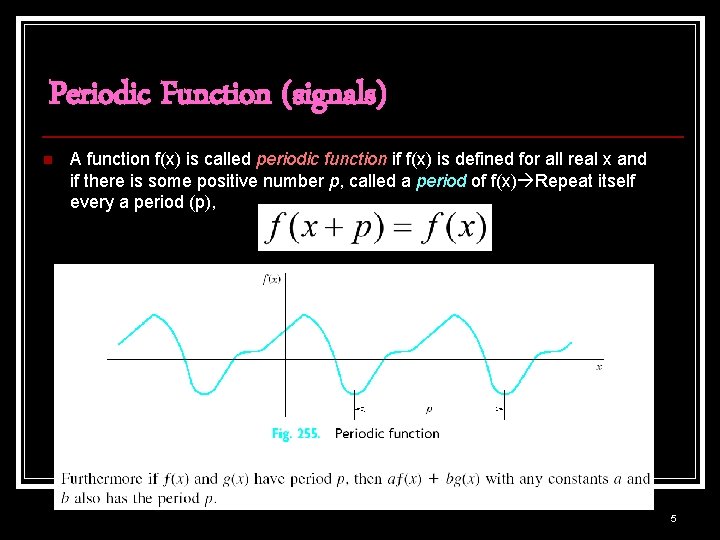
Periodic Function (signals) n A function f(x) is called periodic function if f(x) is defined for all real x and if there is some positive number p, called a period of f(x) Repeat itself every a period (p), 5
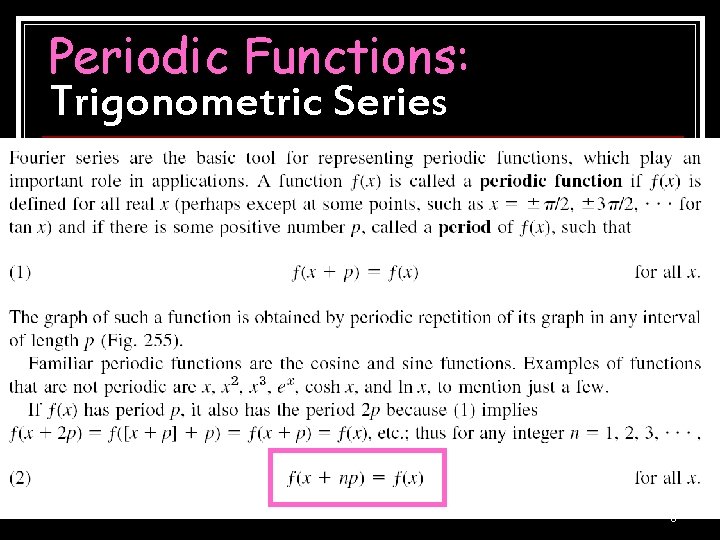
Periodic Functions: Trigonometric Series Continued 6
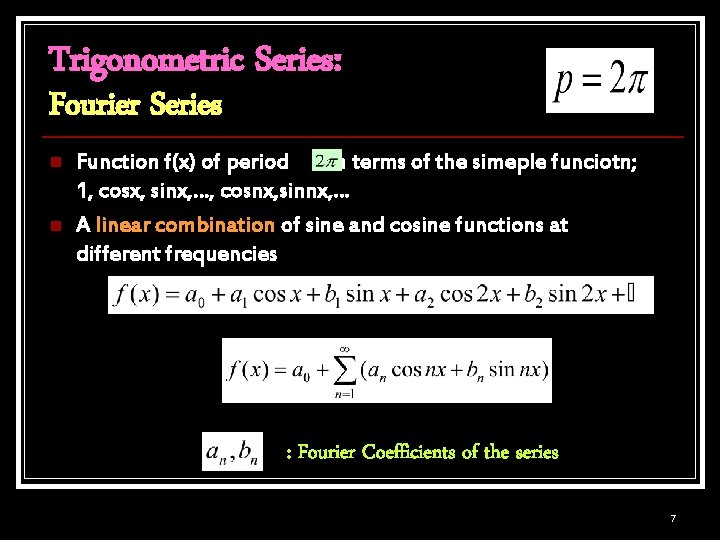
Trigonometric Series: Fourier Series n n Function f(x) of period in terms of the simeple funciotn; 1, cosx, sinx, …, cosnx, sinnx, … A linear combination of sine and cosine functions at different frequencies : Fourier Coefficients of the series 7
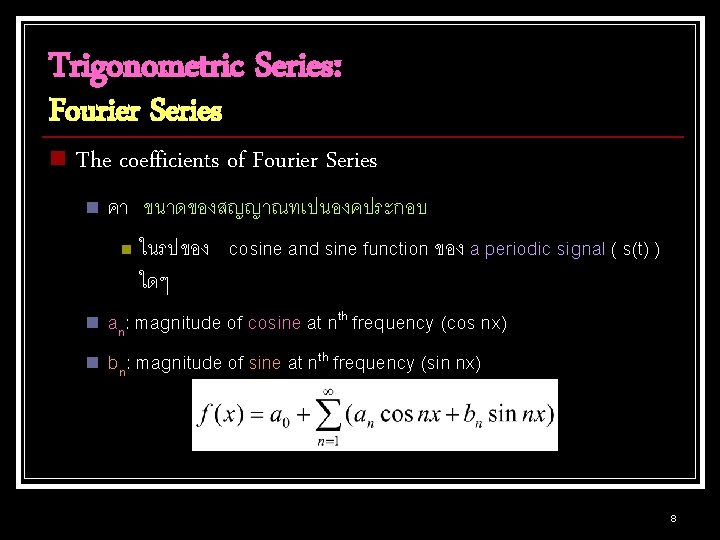
Trigonometric Series: Fourier Series n The coefficients of Fourier Series n n n คา ขนาดของสญญาณทเปนองคประกอบ n ในรปของ cosine and sine function ของ a periodic signal ( s(t) ) ใดๆ an: magnitude of cosine at nth frequency (cos nx) bn: magnitude of sine at nth frequency (sin nx) 8
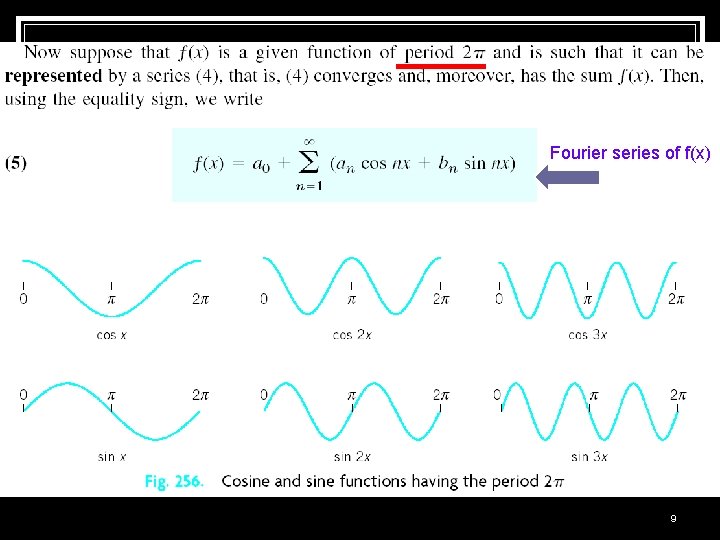
Fourier series of f(x) Continued 9
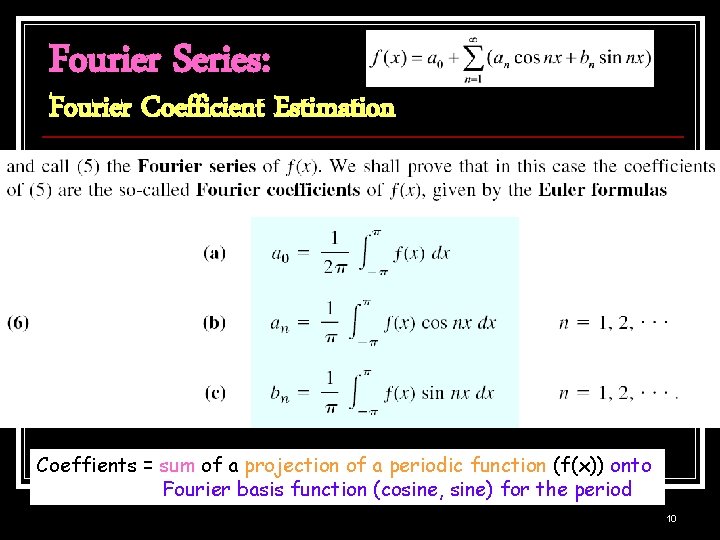
Fourier Series: Fourier Coefficient Estimation Coeffients = sum of a projection of a periodic function (f(x)) onto Fourier basis function (cosine, sine) for the period 10
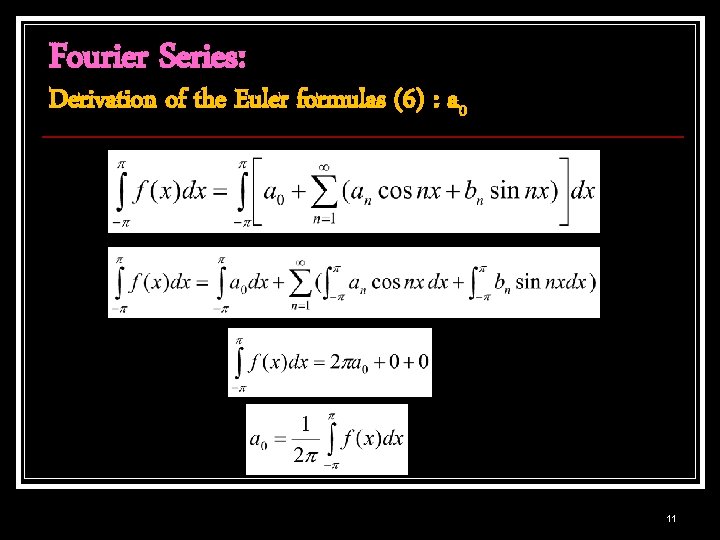
Fourier Series: Derivation of the Euler formulas (6) : a 0 11
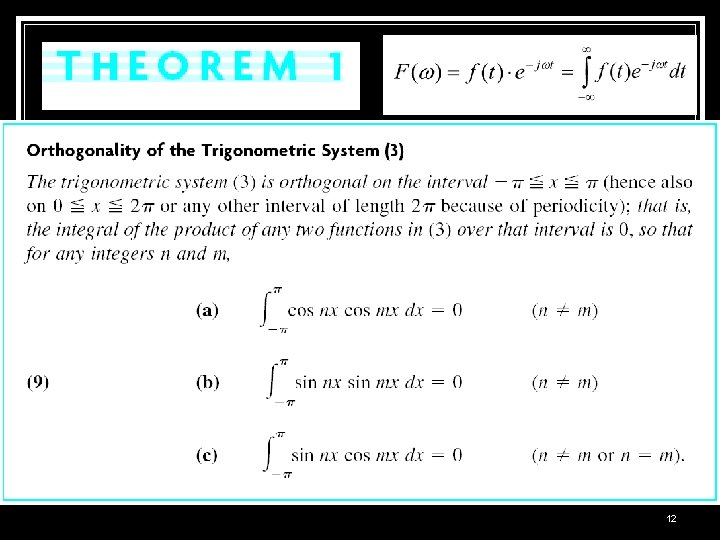
12
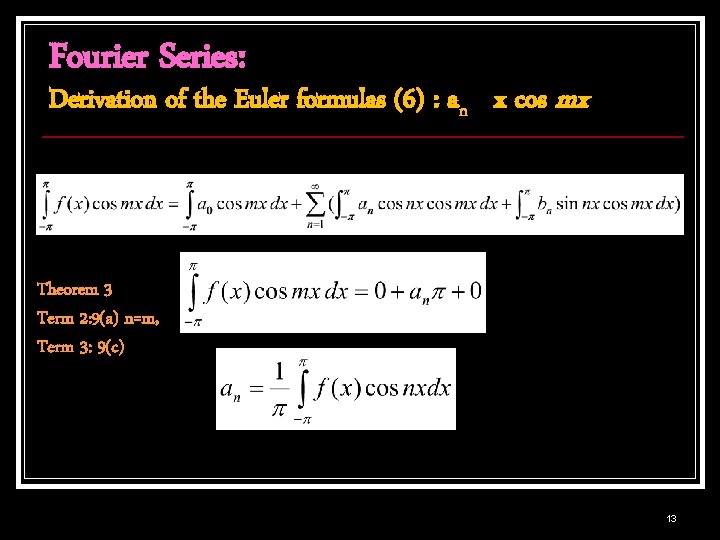
Fourier Series: Derivation of the Euler formulas (6) : an x cos mx Theorem 3 Term 2: 9(a) n=m, Term 3: 9(c) 13
Fourier Series: Derivation of the Euler formulas (6) : bn , x sin mx Theorem 3 term 2 : 9(c) term 3: 9(b), n=m 14
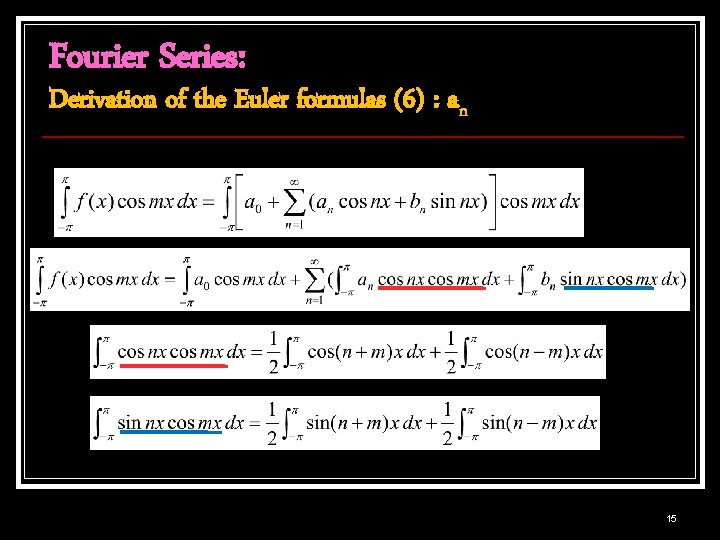
Fourier Series: Derivation of the Euler formulas (6) : an 15
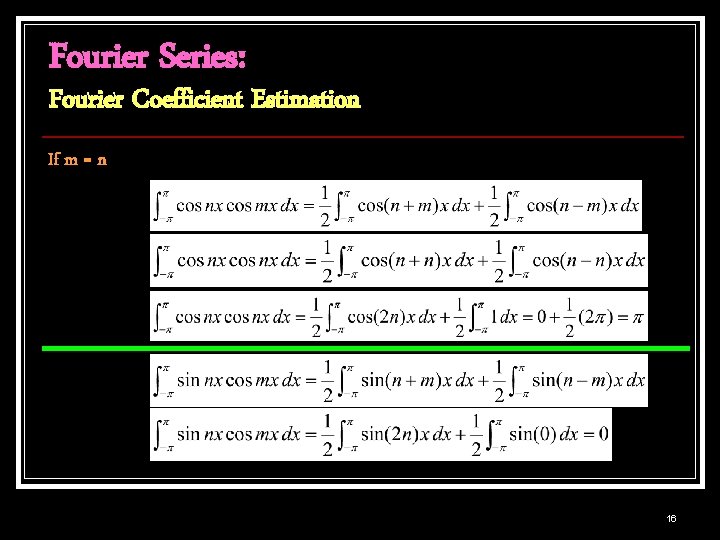
Fourier Series: Fourier Coefficient Estimation If m = n 16
17
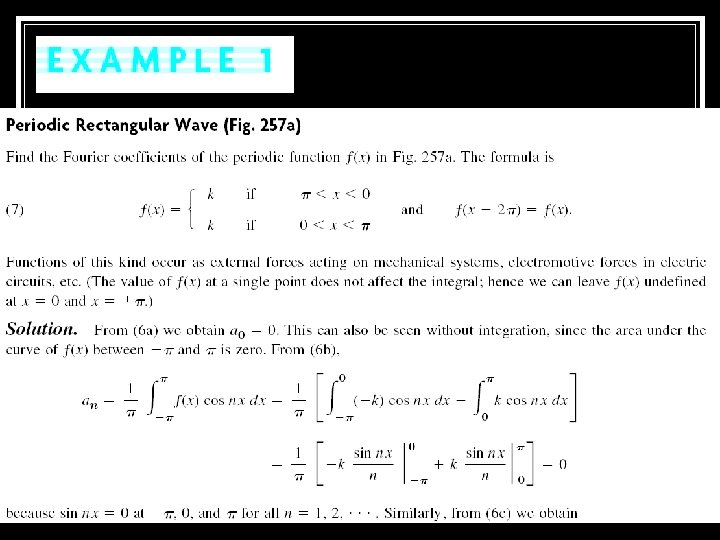
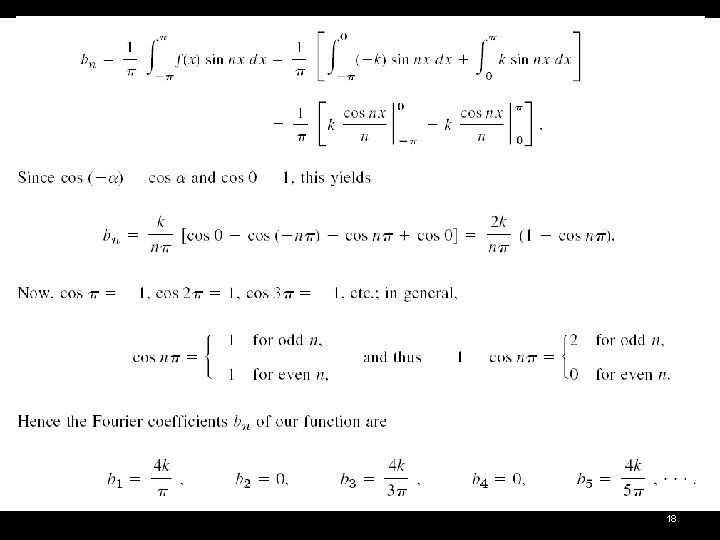
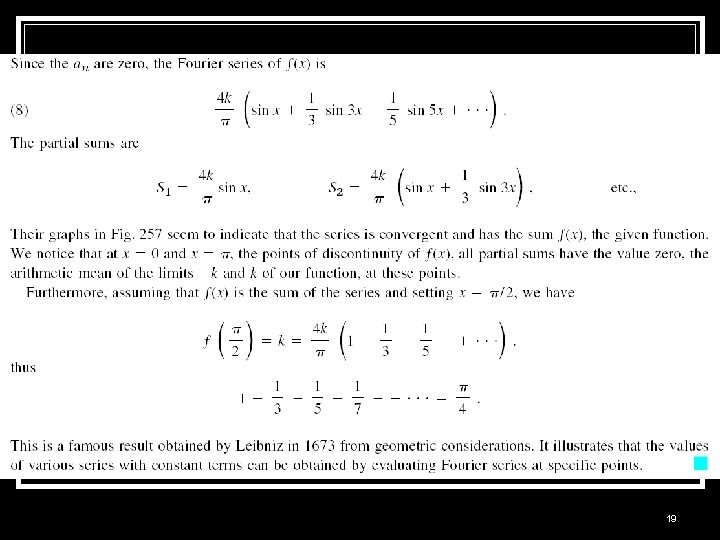
Continued 18
19
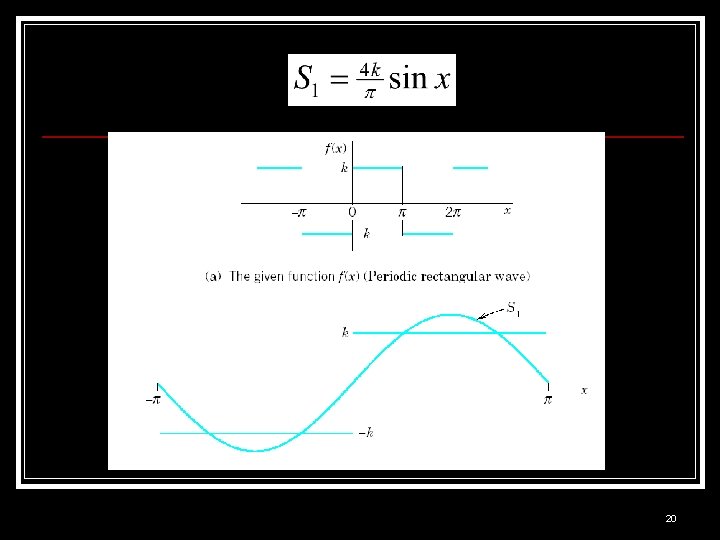
20
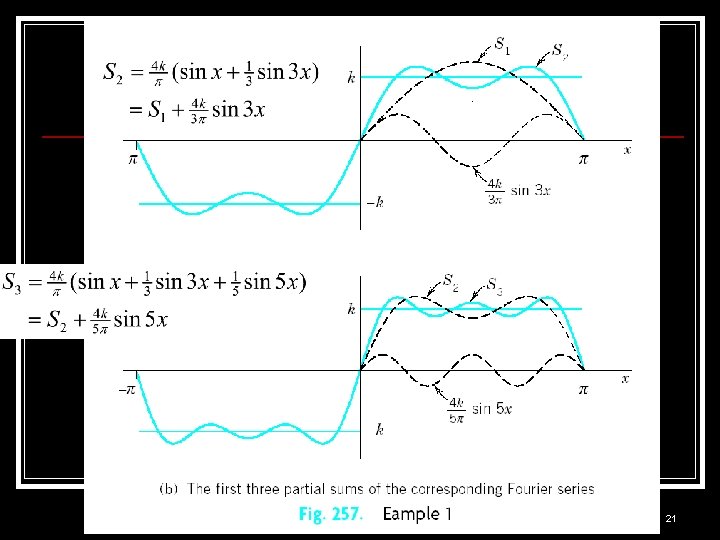
21
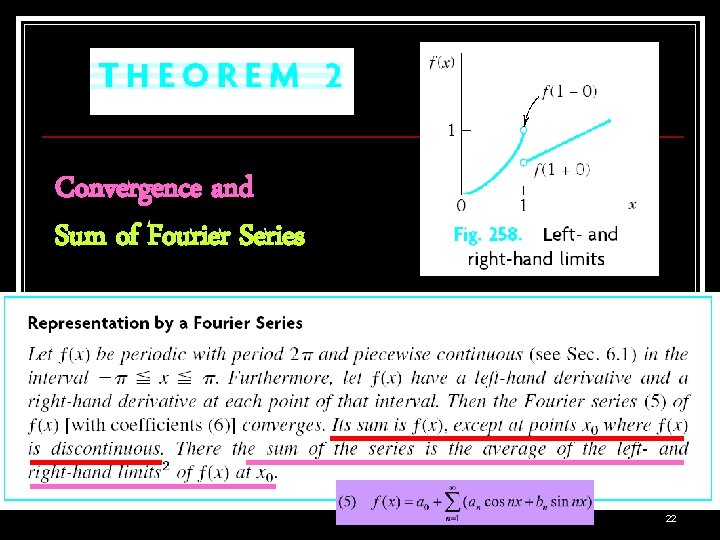
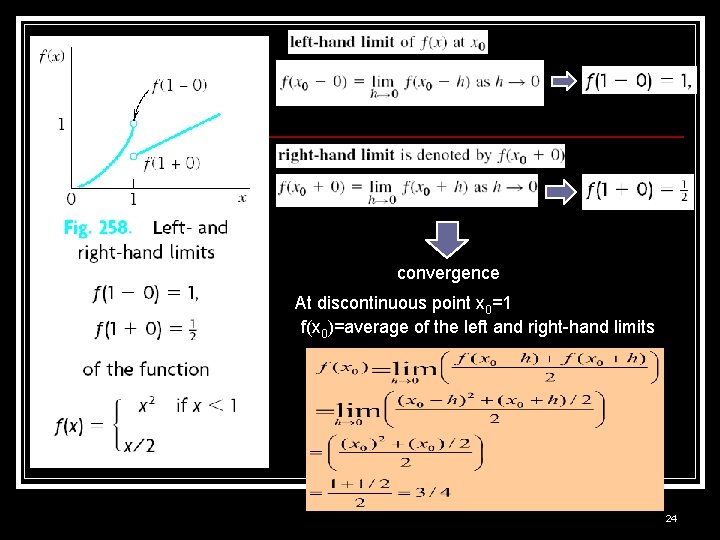
Convergence and Sum of Fourier Series 22
23
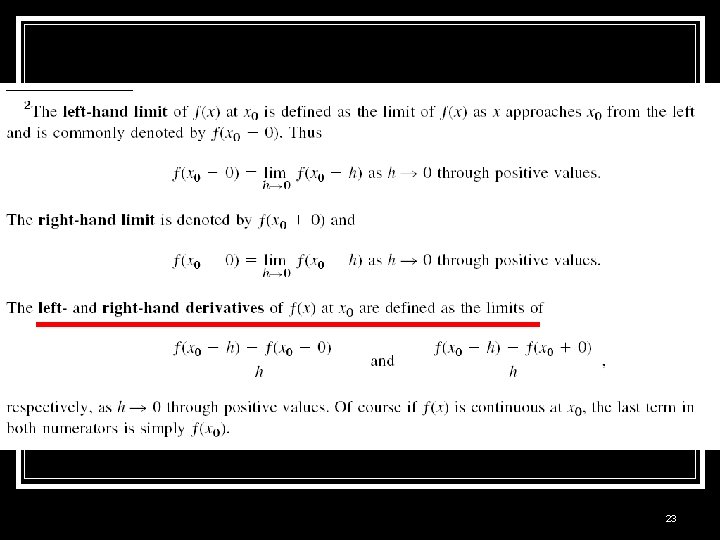
convergence At discontinuous point x 0=1 f(x 0)=average of the left and right-hand limits 24
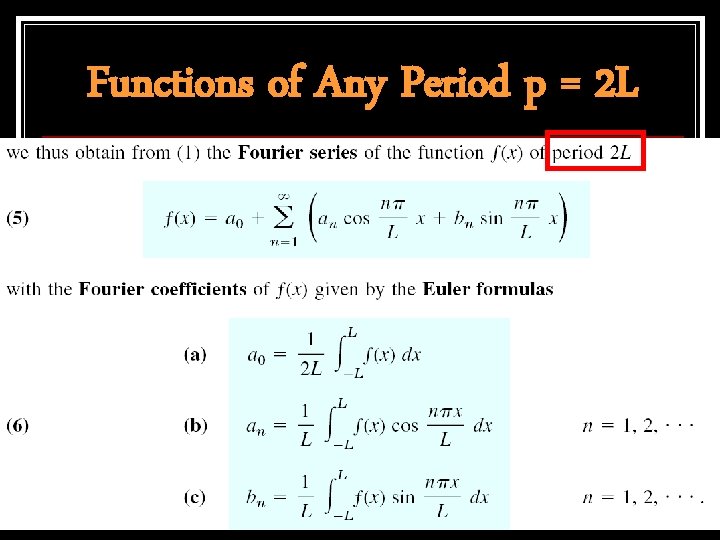
Functions of Any Period p = 2 L 25
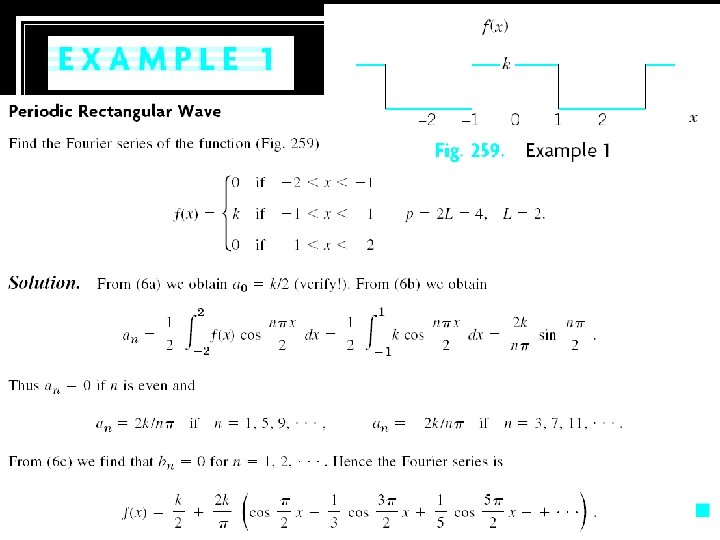
26
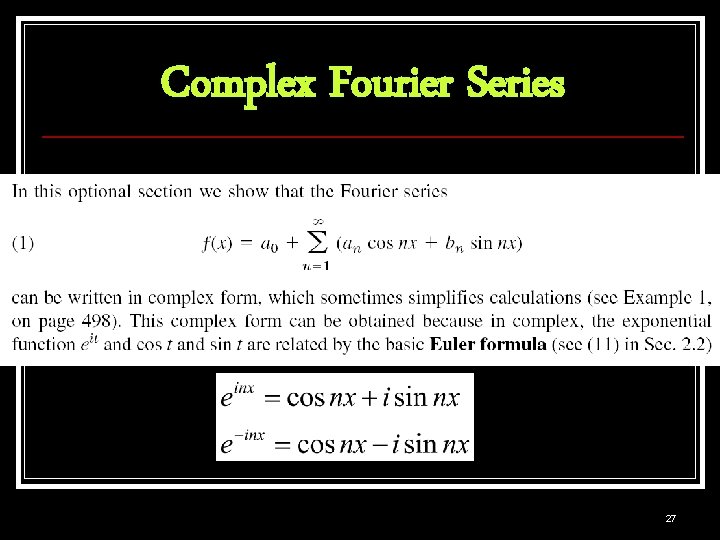
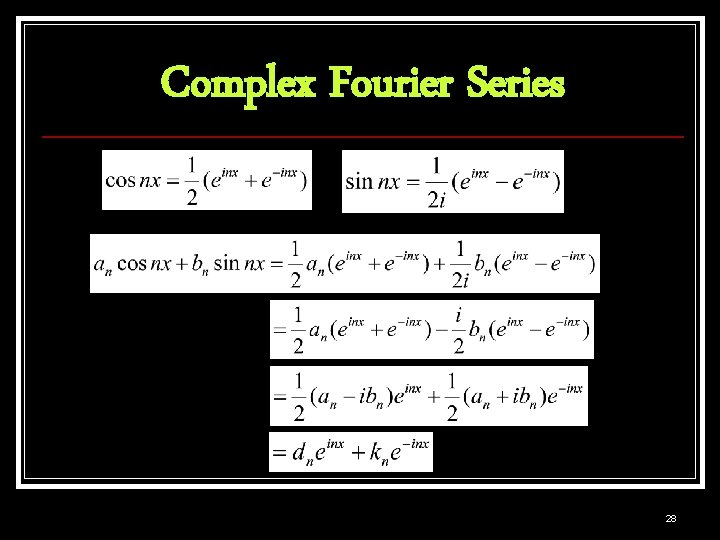
Complex Fourier Series 27
Complex Fourier Series 28
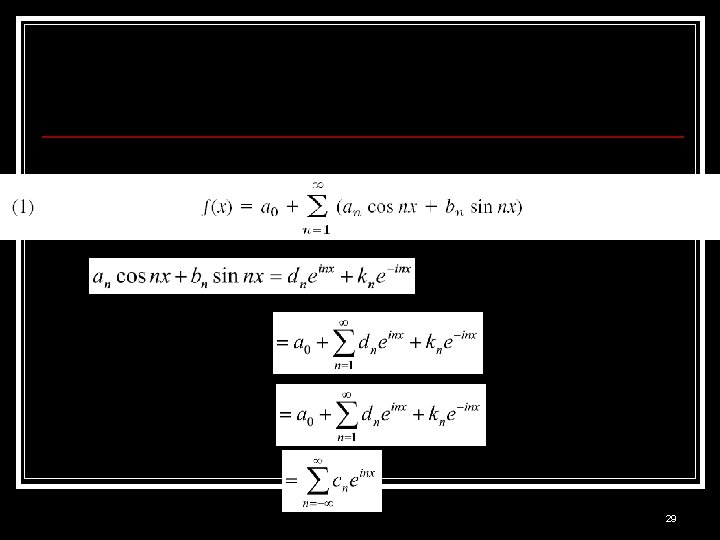
29
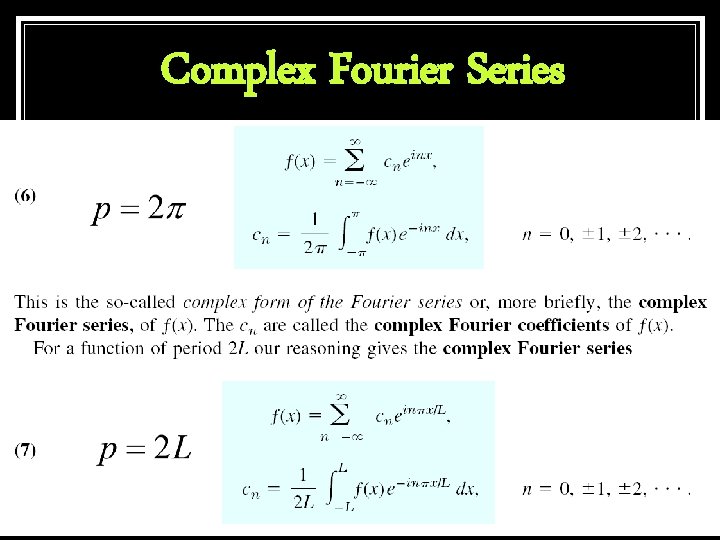
Complex Fourier Series 30
Fourier Transform 31
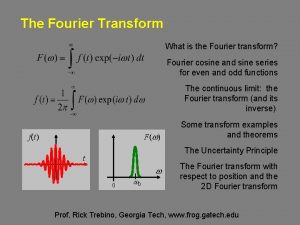
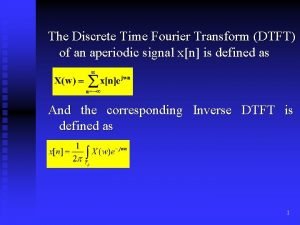
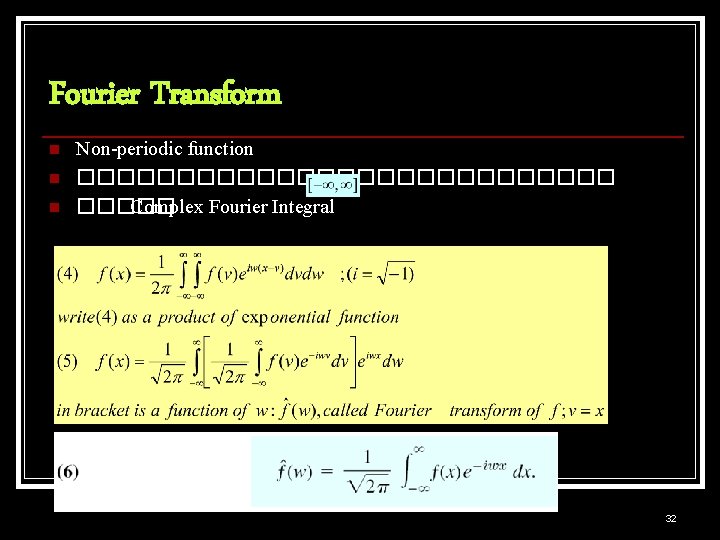
Fourier Transform n n n Non-periodic function �������������� Complex Fourier Integral 32
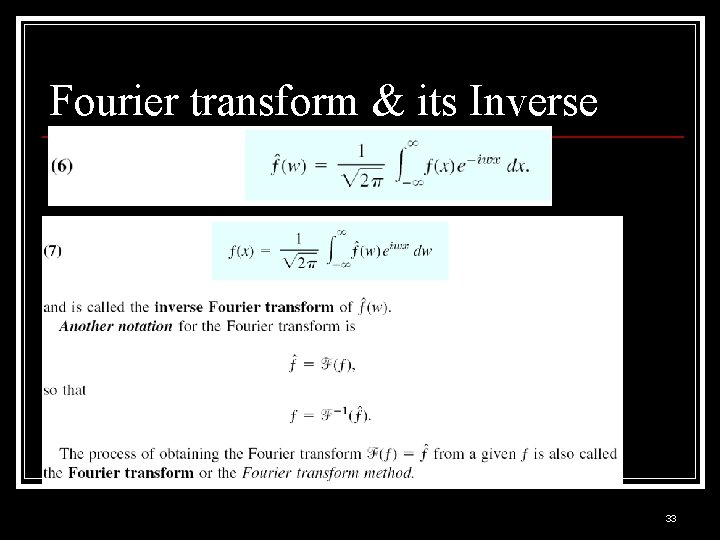
Fourier transform & its Inverse 33
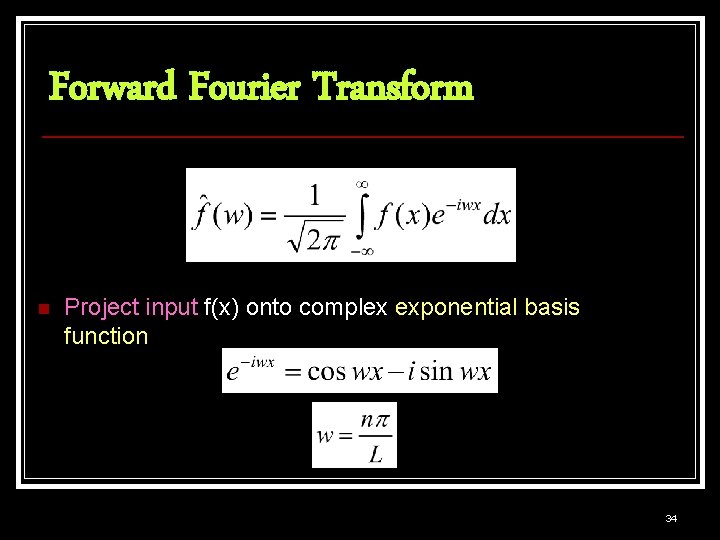
Forward Fourier Transform n Project input f(x) onto complex exponential basis function 34
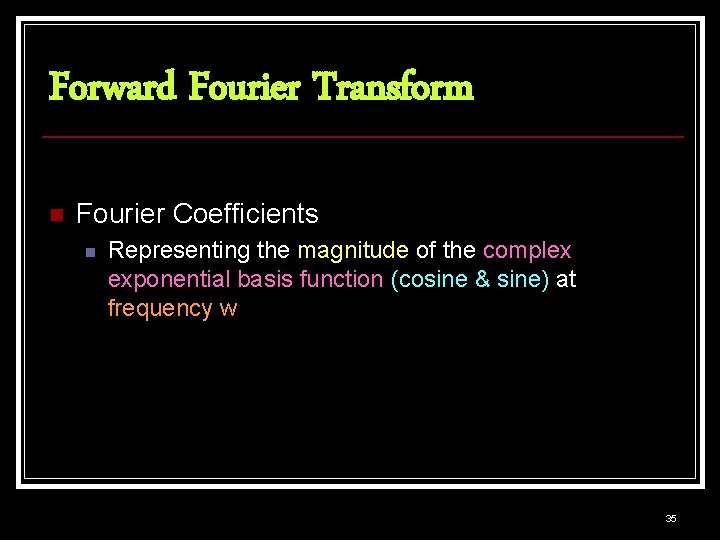
Forward Fourier Transform n Fourier Coefficients n Representing the magnitude of the complex exponential basis function (cosine & sine) at frequency w 35
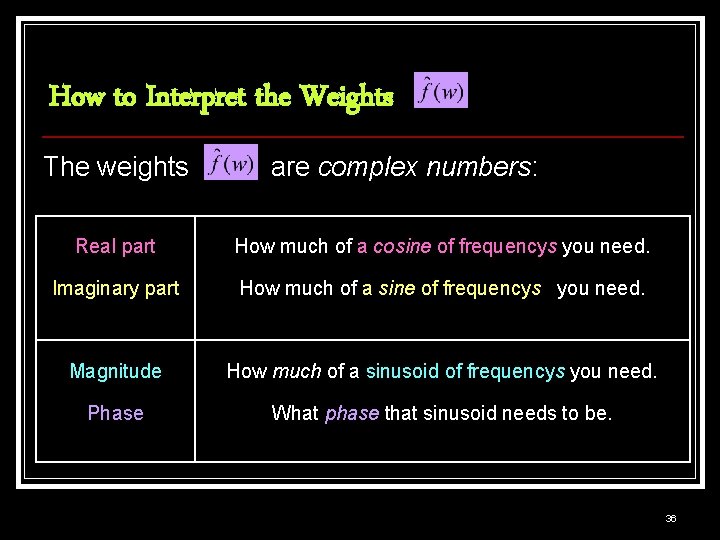
How to Interpret the Weights The weights are complex numbers: Real part How much of a cosine of frequencys you need. Imaginary part How much of a sine of frequencys you need. Magnitude How much of a sinusoid of frequencys you need. Phase What phase that sinusoid needs to be. 36
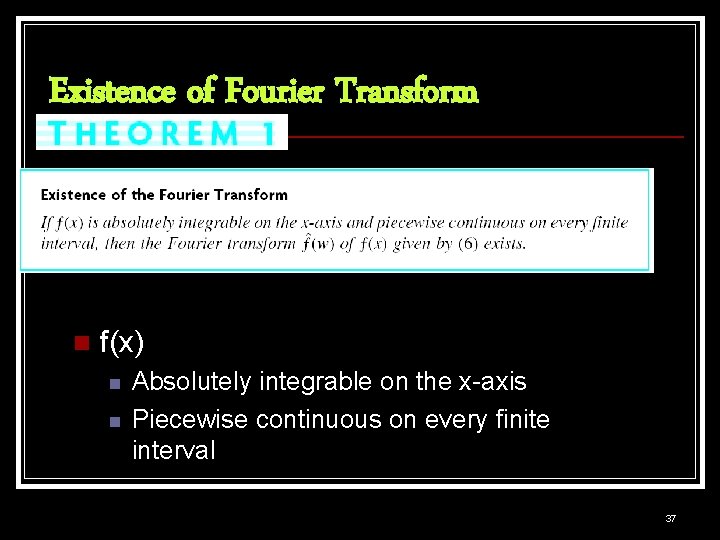
Existence of Fourier Transform n f(x) n n Absolutely integrable on the x-axis Piecewise continuous on every finite interval 37
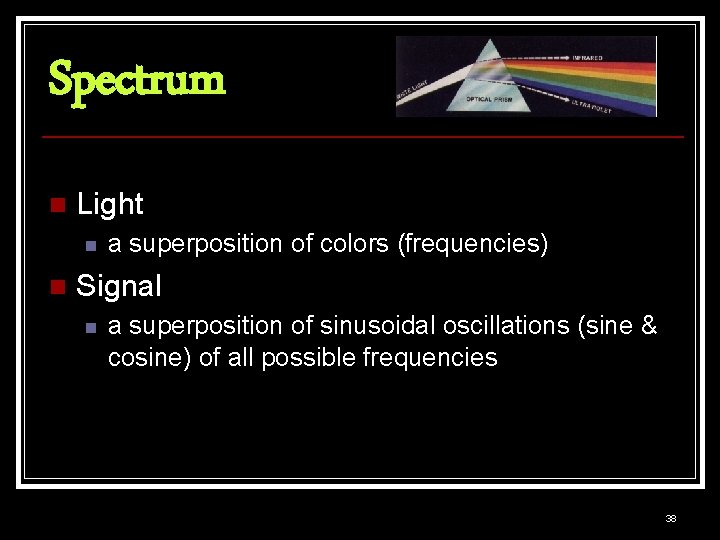
Spectrum n Light n n a superposition of colors (frequencies) Signal n a superposition of sinusoidal oscillations (sine & cosine) of all possible frequencies 38
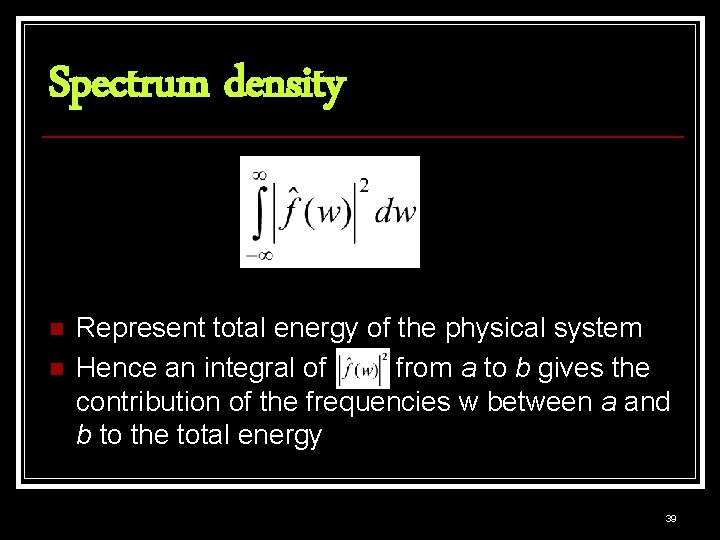
Spectrum density n n Represent total energy of the physical system Hence an integral of from a to b gives the contribution of the frequencies w between a and b to the total energy 39
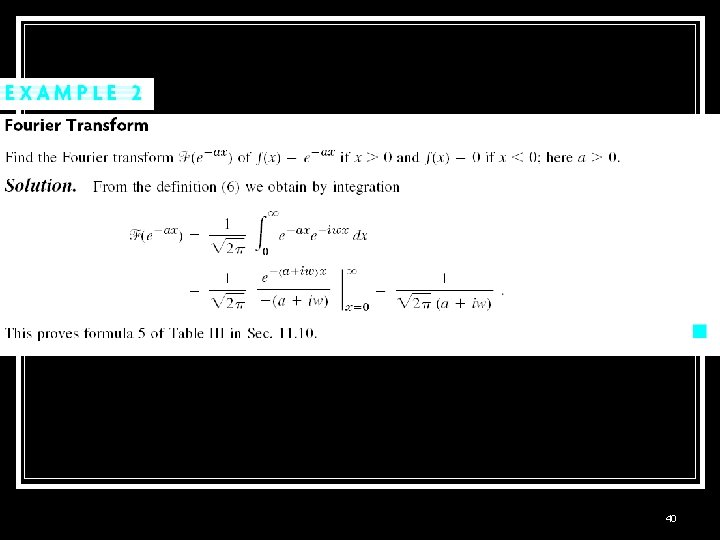
Page 520 40
Fourier Transform Properties Linearity n Fourier Transform of Derivative n Convolution n 41
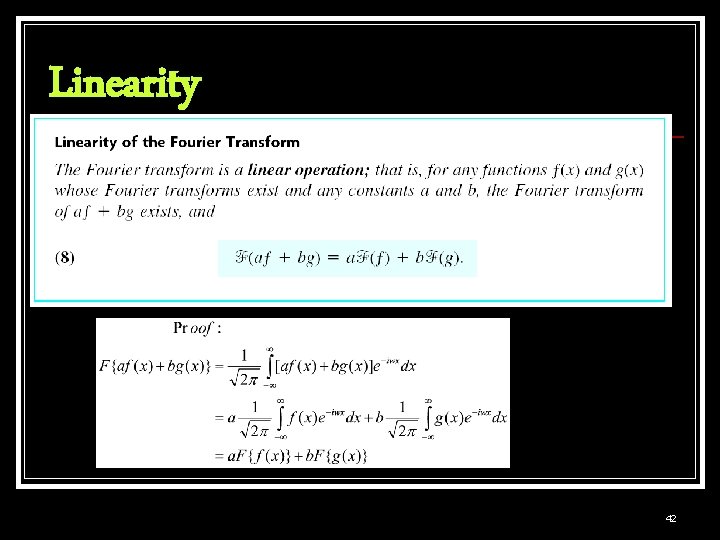
Linearity 42
Fourier Transform of Derivative Integrating by parts 43
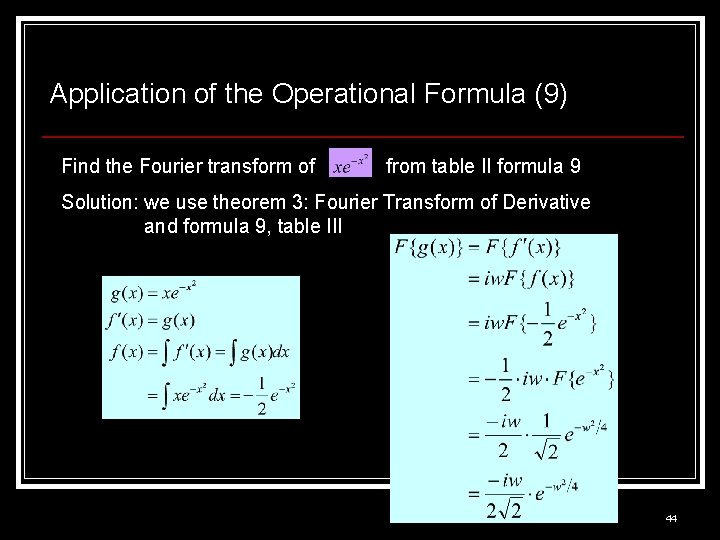
Application of the Operational Formula (9) Find the Fourier transform of from table II formula 9 Solution: we use theorem 3: Fourier Transform of Derivative and formula 9, table III 44
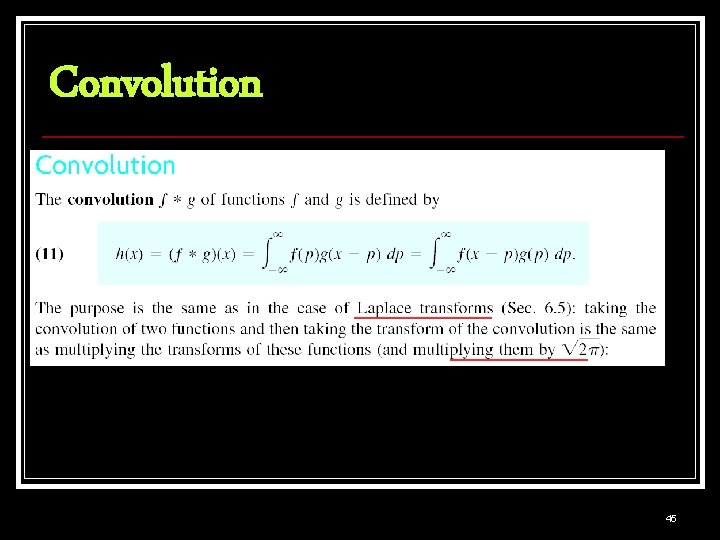
Convolution 45
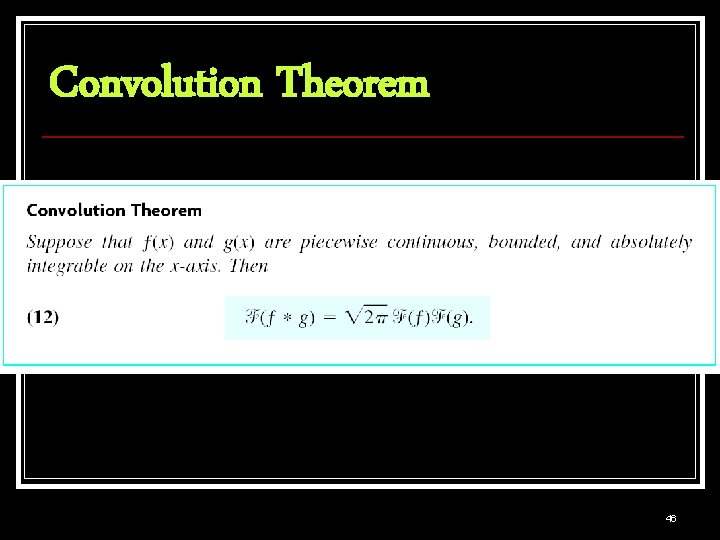
Convolution Theorem 46
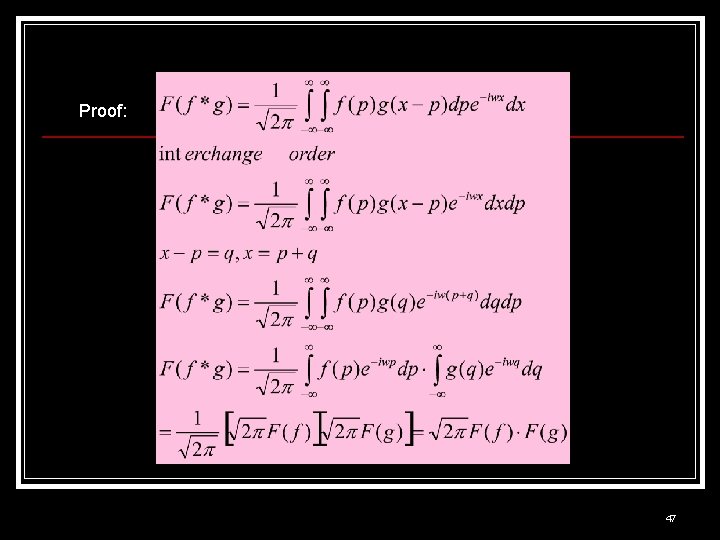
Proof: 47
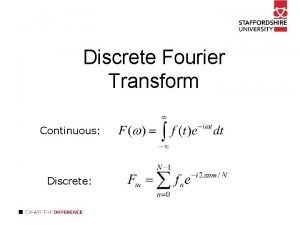
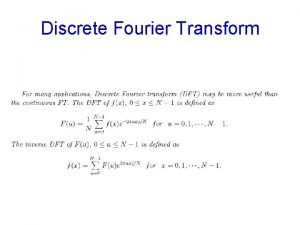
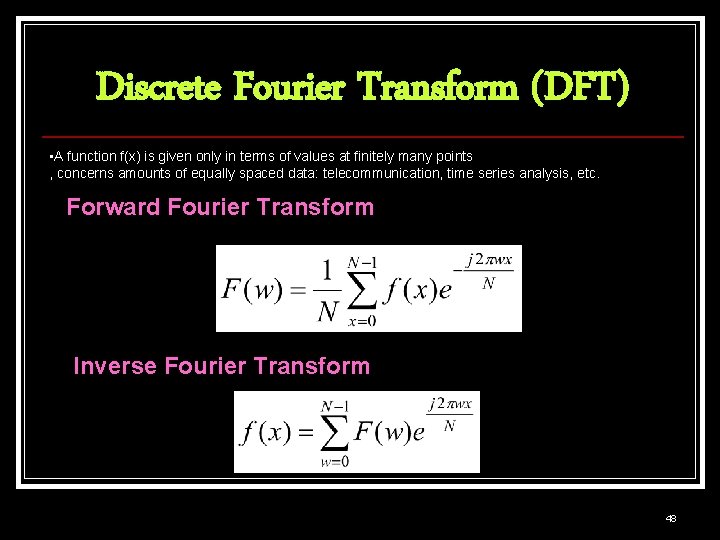
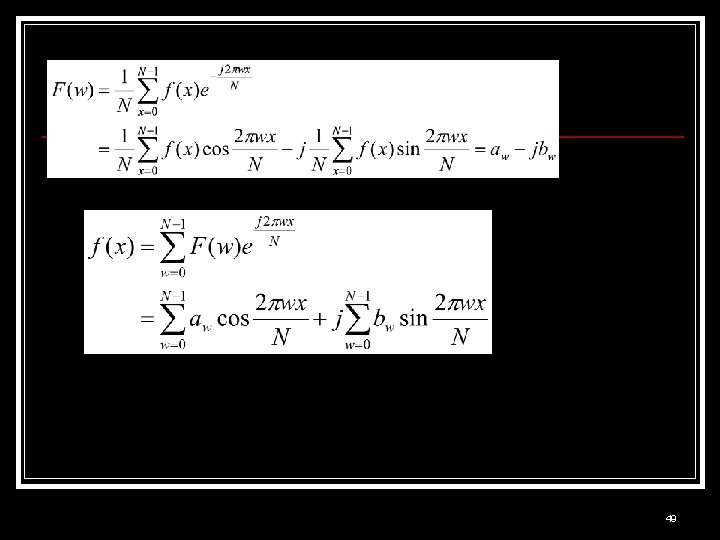
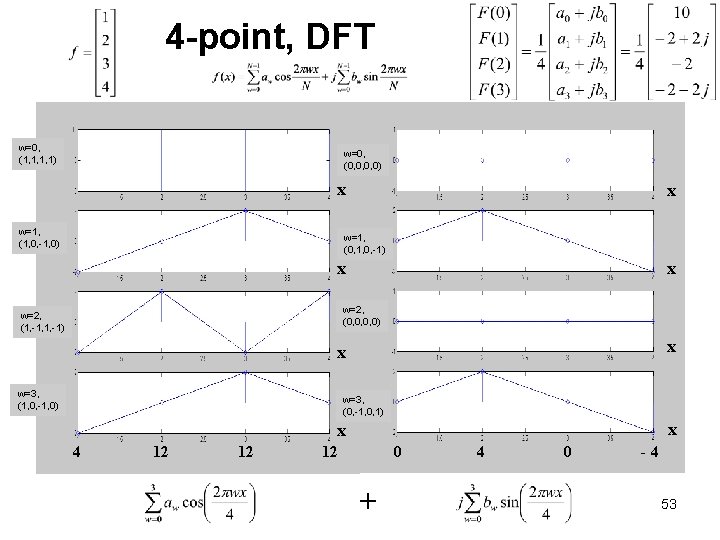
Discrete Fourier Transform (DFT) • A function f(x) is given only in terms of values at finitely many points , concerns amounts of equally spaced data: telecommunication, time series analysis, etc. Forward Fourier Transform Inverse Fourier Transform 48
49
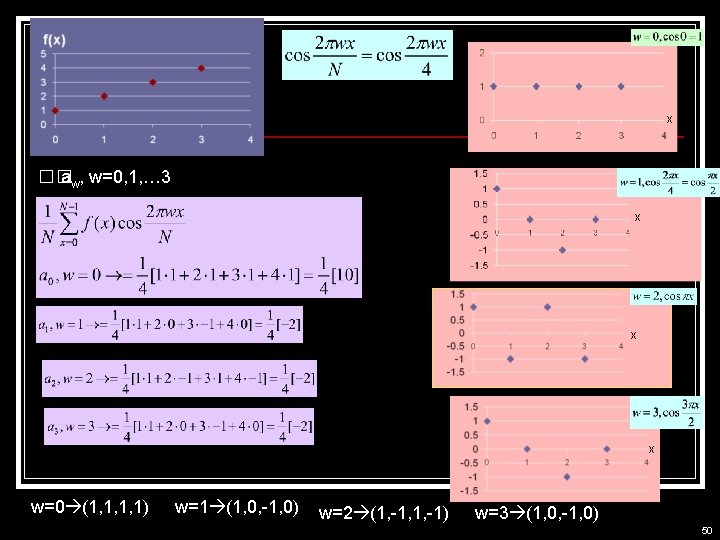
x �� aw, w=0, 1, … 3 x x x w=0 (1, 1, 1, 1) w=1 (1, 0, -1, 0) w=2 (1, -1, 1, -1) w=3 (1, 0, -1, 0) 50
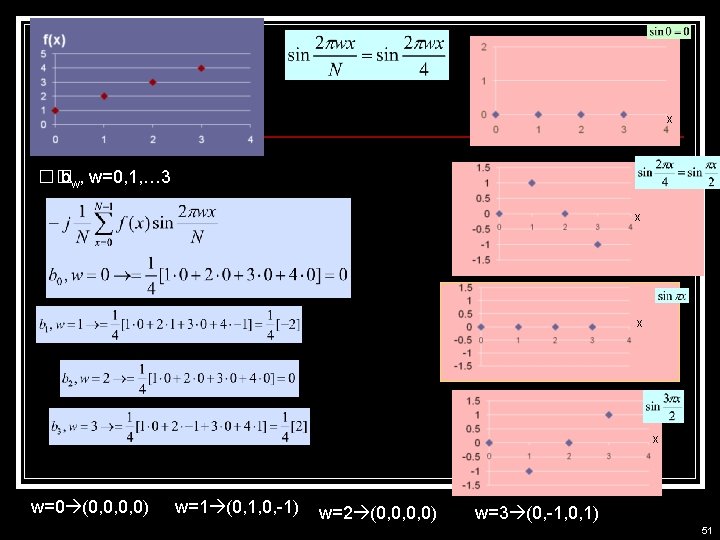
x �� bw, w=0, 1, … 3 x x x w=0 (0, 0, 0, 0) w=1 (0, 1, 0, -1) w=2 (0, 0, 0, 0) w=3 (0, -1, 0, 1) 51
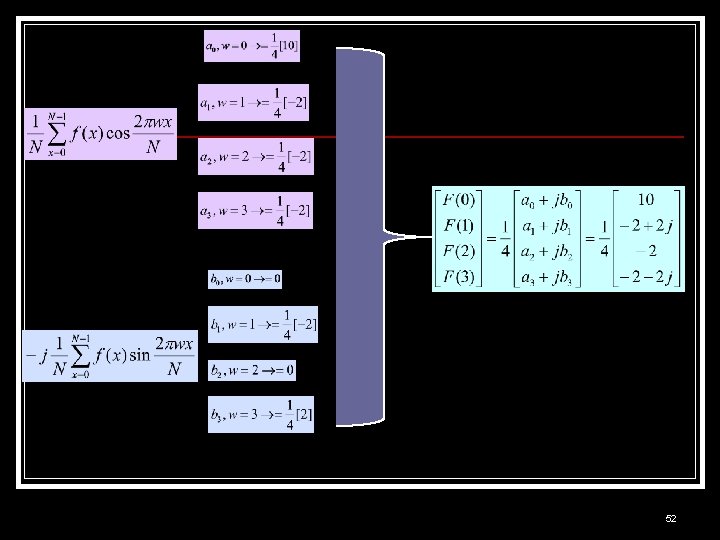
52
4 -point, DFT w=0, (1, 1, 1, 1) w=0, (0, 0, 0, 0) x w=1, (1, 0, -1, 0) x w=1, (0, 1, 0, -1) x x w=2, (0, 0, 0, 0) w=2, (1, -1, 1, -1) x x w=3, (1, 0, -1, 0) w=3, (0, -1, 0, 1) x x 4 12 12 12 0 + 4 0 -4 53
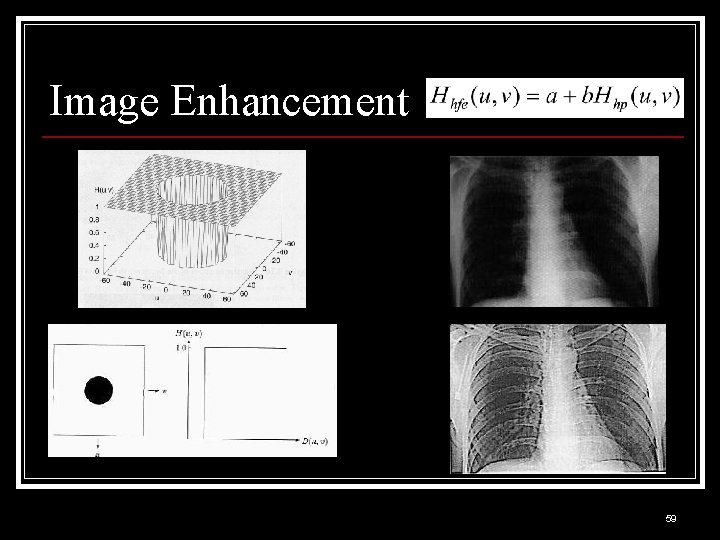
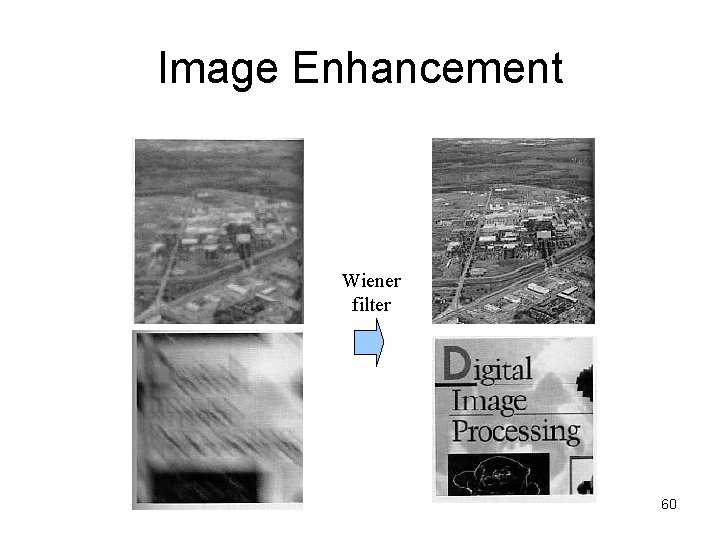
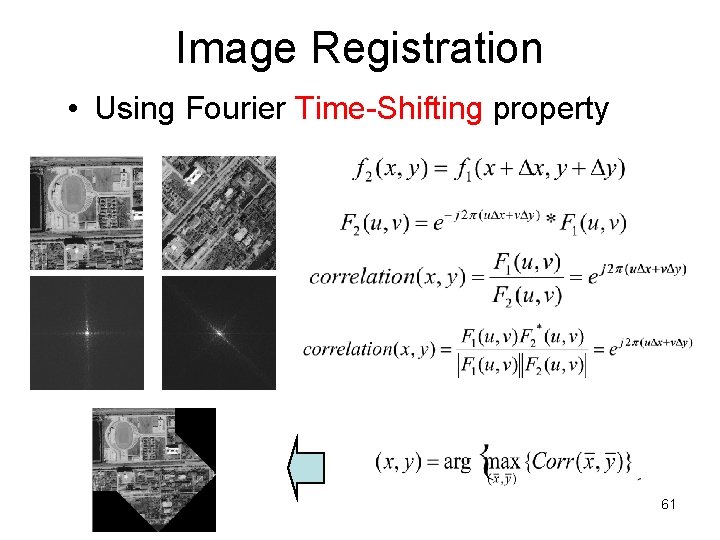
Fourier Applications n Analysis of Linear System (PDE) n Power Spectrum Analysis n Filtering Noise n n Convolution / Correlation Low Pass / Band Pass / High Pass Filters n Signal Sampling n Signal Enhancement n Signal Registration 54
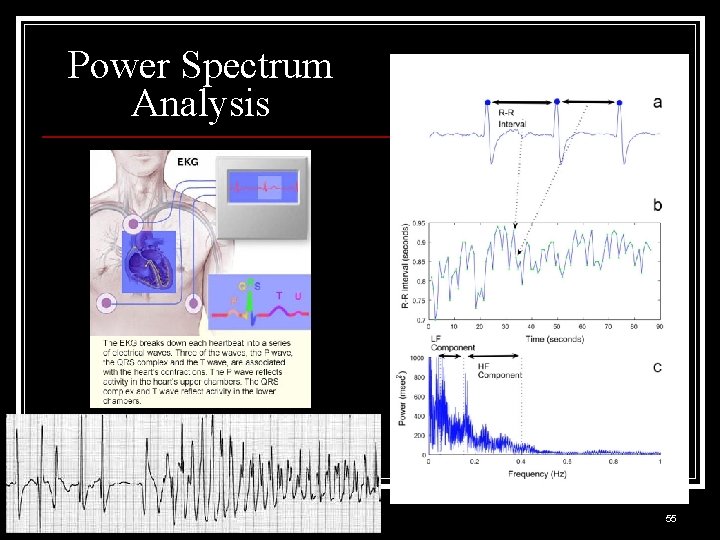
Power Spectrum Analysis 55
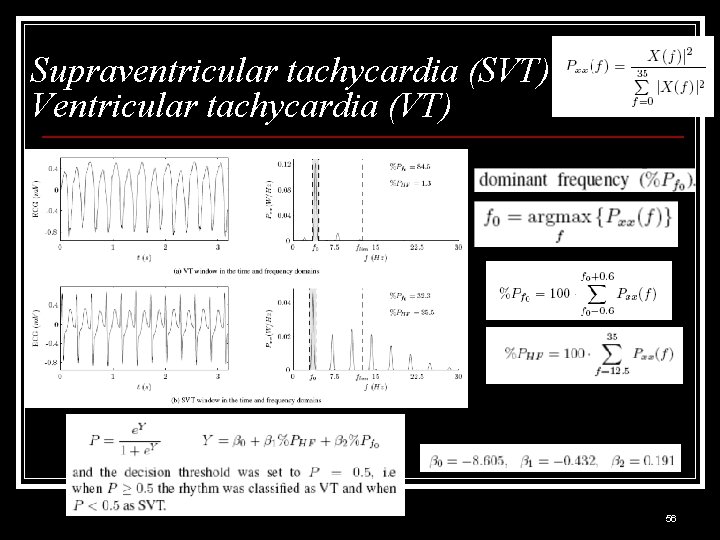
Supraventricular tachycardia (SVT) Ventricular tachycardia (VT) 56
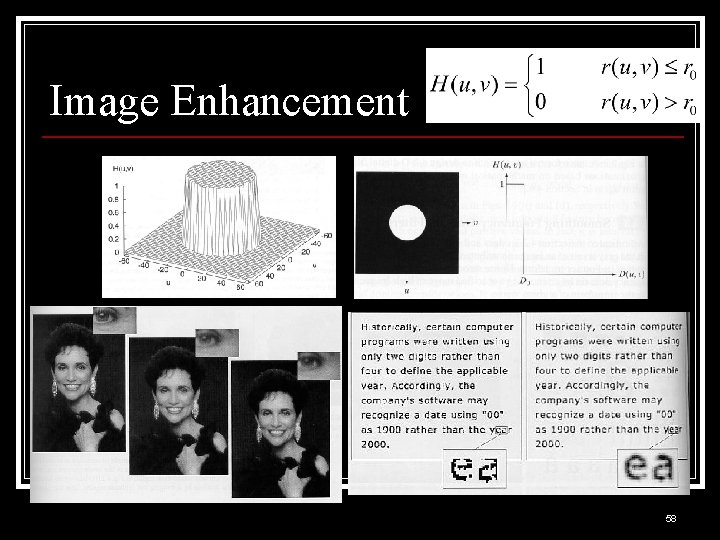
Filtering Noise DFT f(x, y) F(u, v) Inverse DFT F(u, v)H(u, v) g(x, y) H(u, v) 57
Image Enhancement 58
Image Enhancement 59
Image Enhancement Wiener filter 60
Image Registration • Using Fourier Time-Shifting property 61
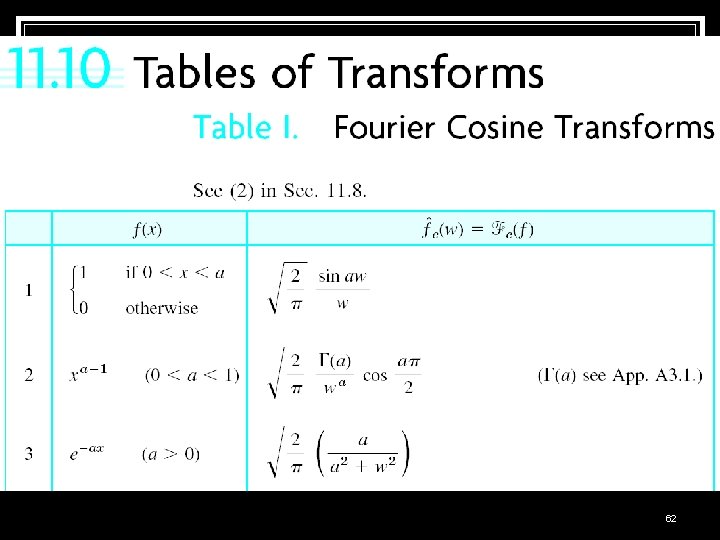
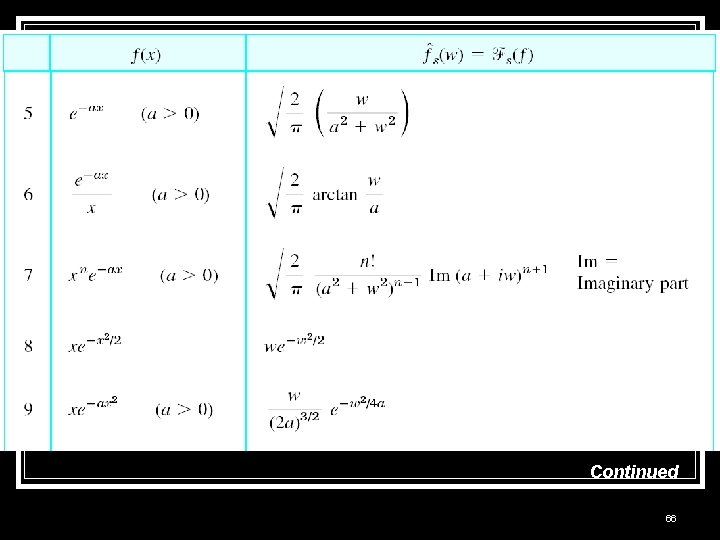
Page 529 a Continued 62
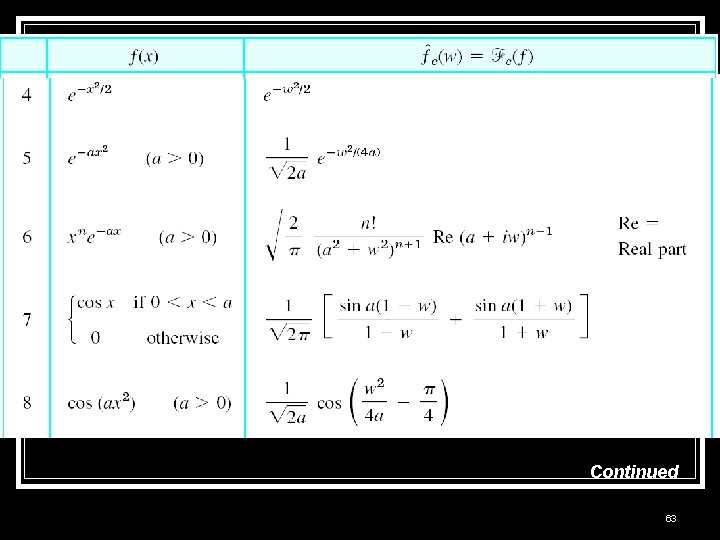
Page 529 b Continued 63
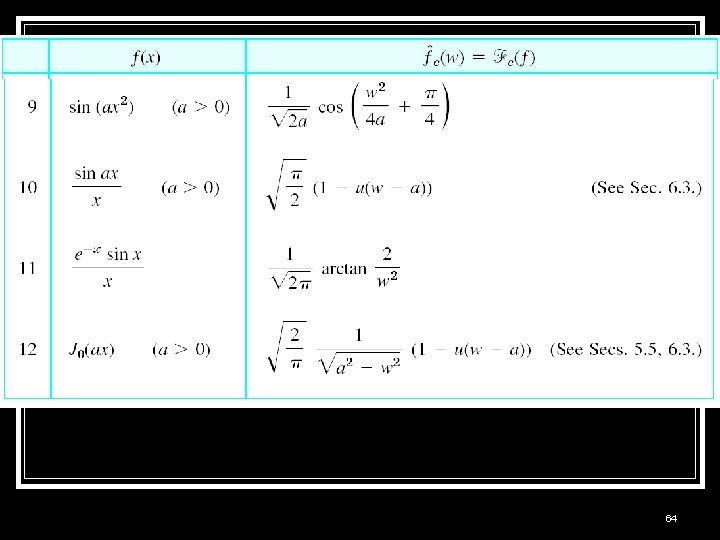
Page 529 c 64
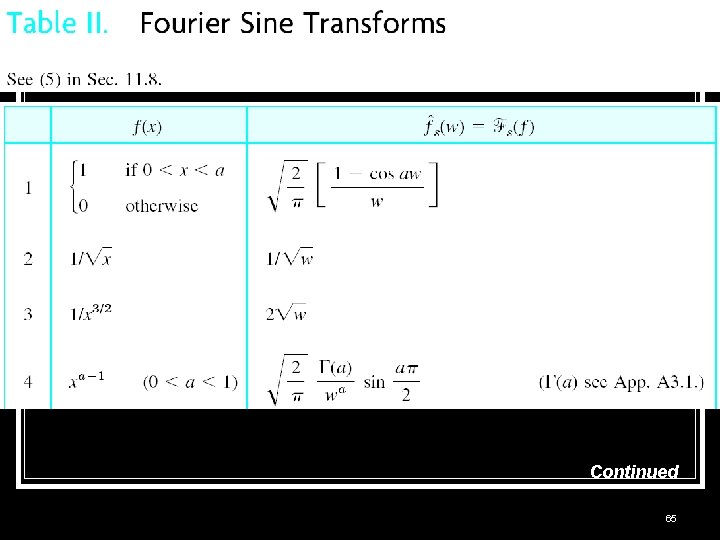
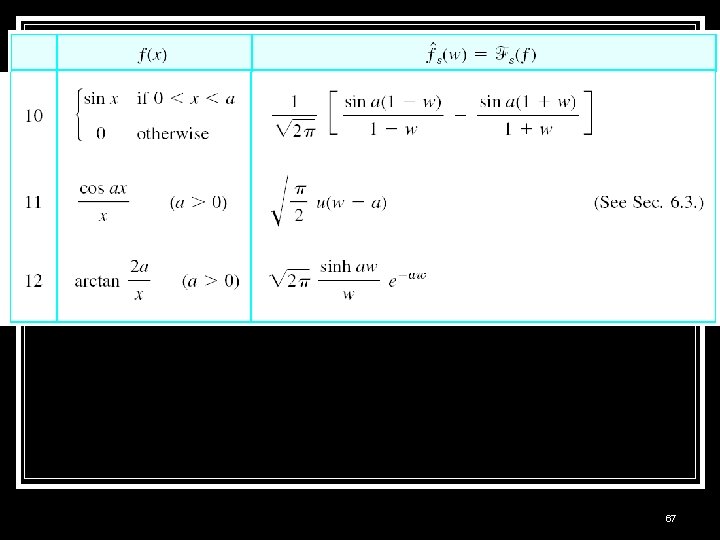
Page 530 a Continued 65
Page 530 b Continued 66
Page 530 c 67
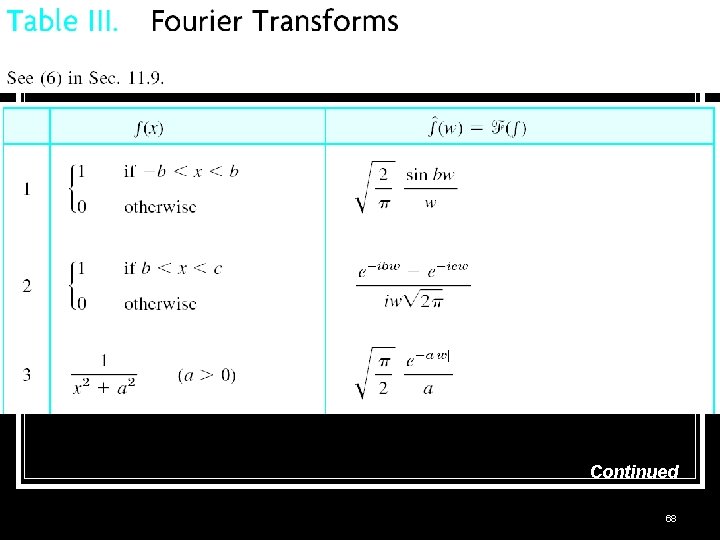
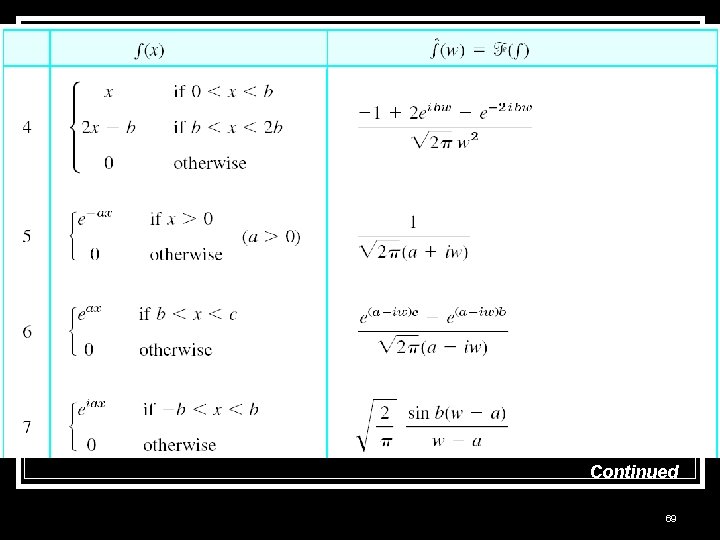
Page 531 a Continued 68
Page 531 b Continued 69
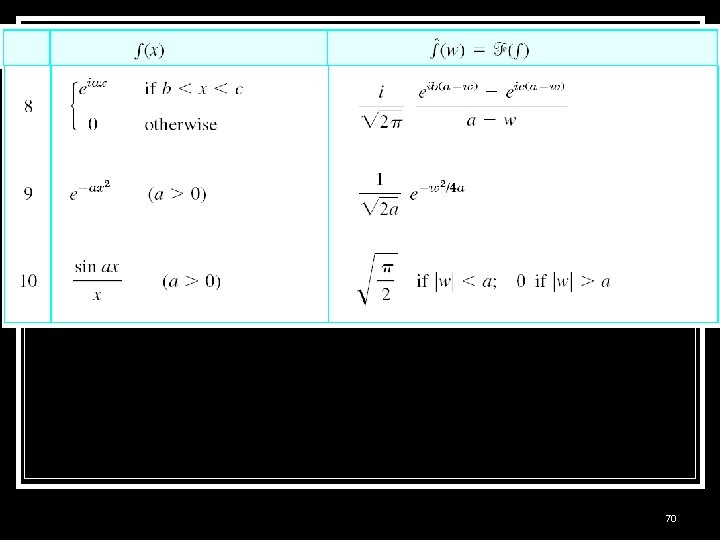
Page 531 c 70
Fourier Transform Comp 344 Tutorial Kai Zhang
Outline n Fourier Transform (FT) Properties n Fourier Transform of regular signals n Exercises
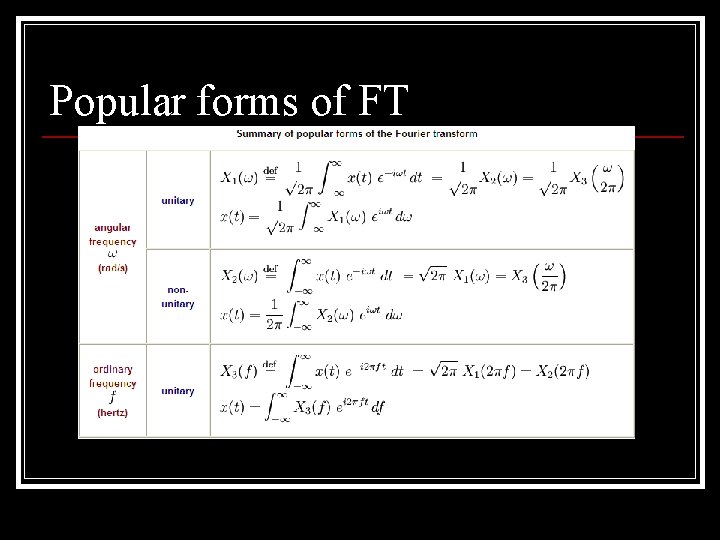
Popular forms of FT
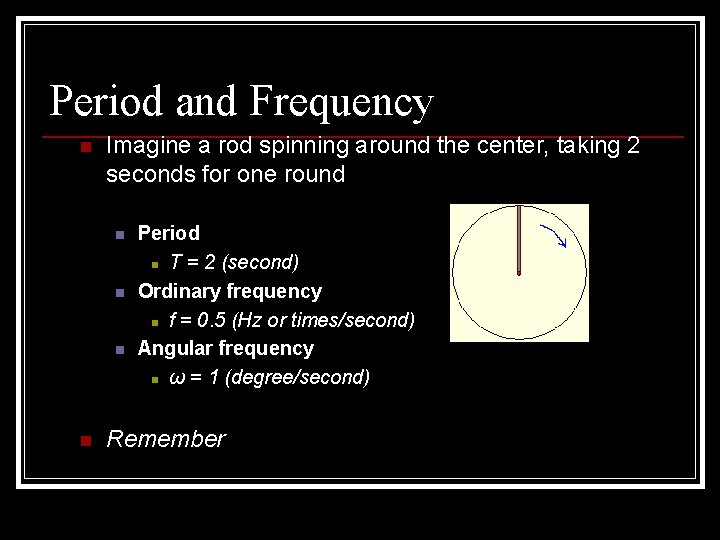
Period and Frequency n Imagine a rod spinning around the center, taking 2 seconds for one round n n Period n T = 2 (second) Ordinary frequency n f = 0. 5 (Hz or times/second) Angular frequency n ω = 1 (degree/second) Remember
FT Properties n Property 1: time domain shifting (or delay) n Proof
FT Properties n Property 2: frequency domain shifting n Proof
FT Properties n Property 3: scaling n Proof
FT Properties n Property 4: time domain differentiation n Proof n Question: what about
FT Properties n Property 5: Symmetry n Proof:
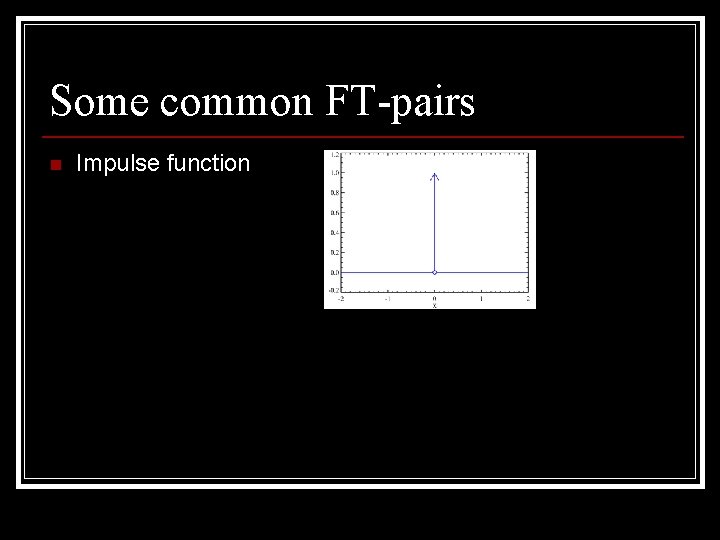
Some common FT-pairs n Impulse function
Some common FT-pairs n Complex exponential function n Using the frequency domain shifting property, and symmetry property
Some common FT-pairs n Sine function n By using the Euler formula and delay property
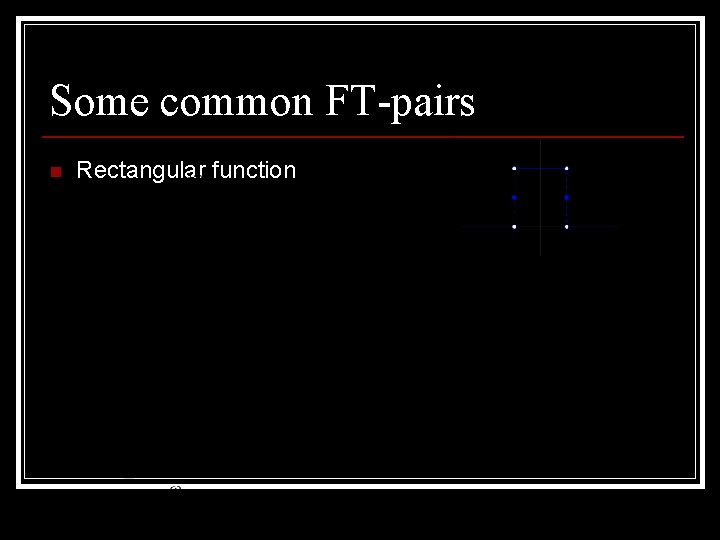
Some common FT-pairs n Rectangular function
Some common FT-pairs n Gaussian function
More Example n Let f(t)-F(w) be a FT-pair. Now compute the FT of g(t) = f(t)cos(t). n using Euler’s Formula and FT frequency shifting property
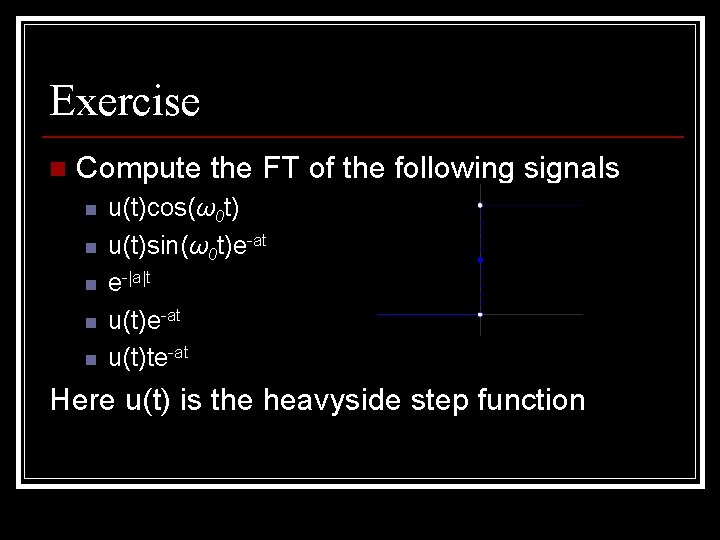
Exercise n Compute the FT of the following signals n n n u(t)cos(ω0 t) u(t)sin(ω0 t)e-at e-|a|t u(t)e-at u(t)te-at Here u(t) is the heavyside step function