
Chapter 10 fourier analysis of signals using discrete
- Slides: 21
Chapter 10 fourier analysis of signals using discrete fourier transform 10. 1 fourier analysis of signals using the DFT 10. 2 DFT analysis of sinusoidal signals 10. 3 the time-dependent fourier transform 1
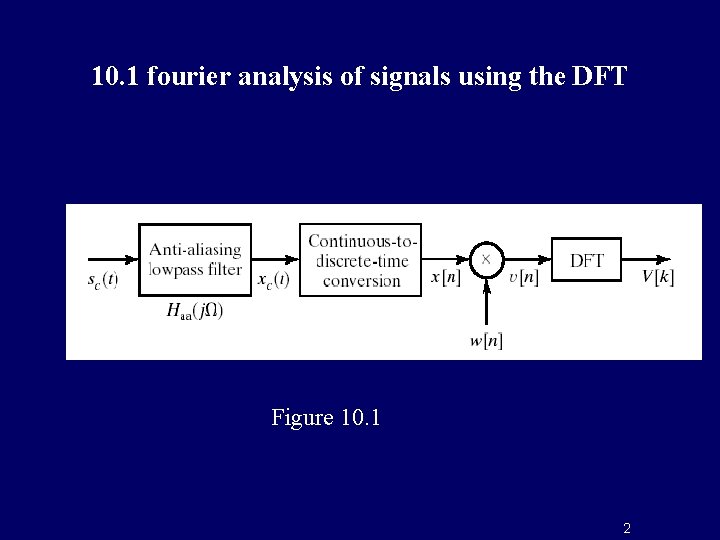
10. 1 fourier analysis of signals using the DFT Figure 10. 1 2
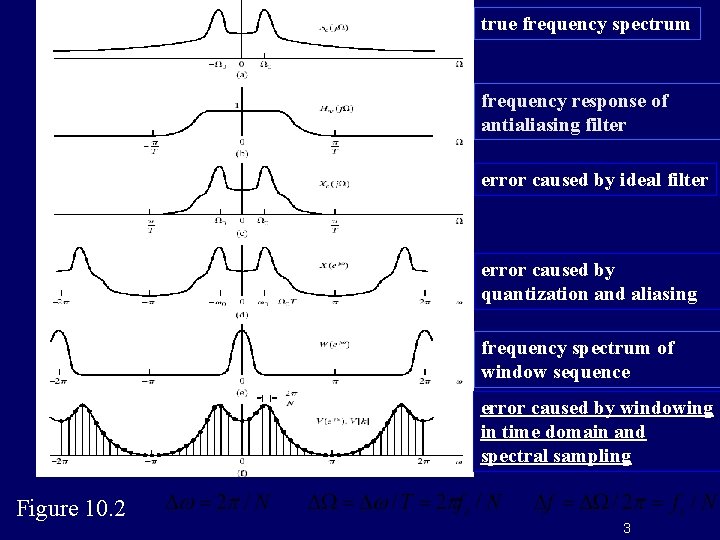
true frequency spectrum frequency response of antialiasing filter error caused by ideal filter error caused by quantization and aliasing frequency spectrum of window sequence error caused by windowing in time domain and spectral sampling Figure 10. 2 3
10. 2 DFT analysis of sinusoidal signals 10. 2. 1 the effect of windowing 10. 2. 2 the effect of spectral sampling 4
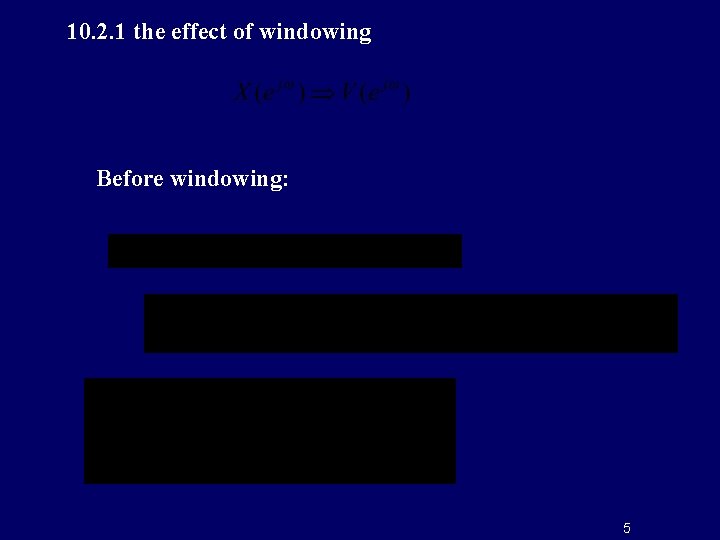
10. 2. 1 the effect of windowing Before windowing: 5
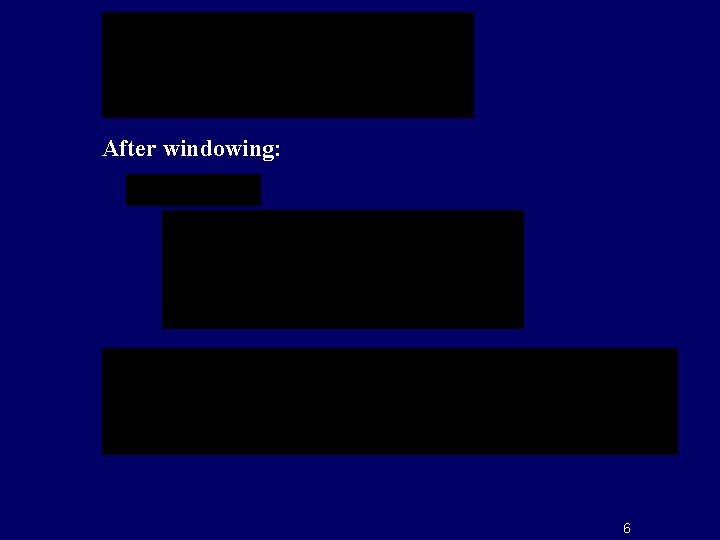
After windowing: 6
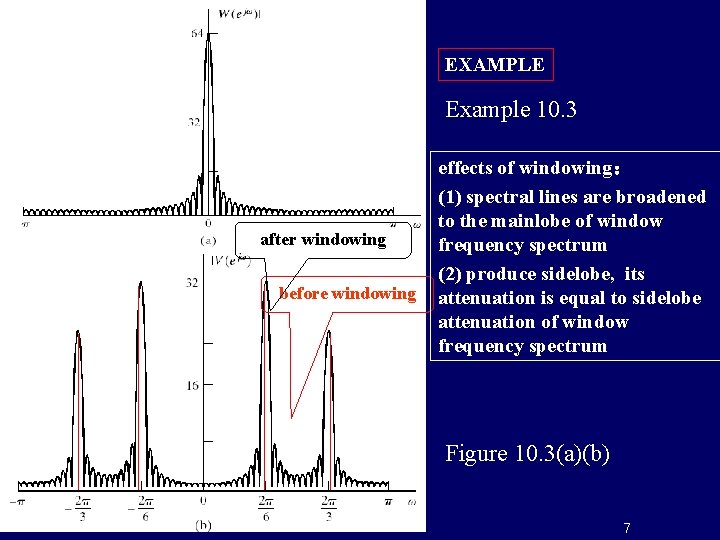
EXAMPLE Example 10. 3 after windowing before windowing effects of windowing: (1) spectral lines are broadened to the mainlobe of window frequency spectrum (2) produce sidelobe, its attenuation is equal to sidelobe attenuation of window frequency spectrum Figure 10. 3(a)(b) 7
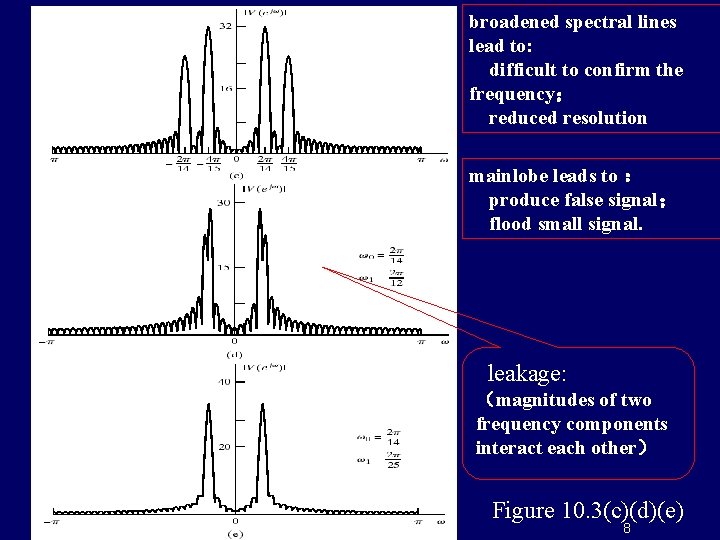
broadened spectral lines lead to: difficult to confirm the frequency; reduced resolution mainlobe leads to : produce false signal; flood small signal. leakage: (magnitudes of two frequency components interact each other) Figure 10. 3(c)(d)(e) 8
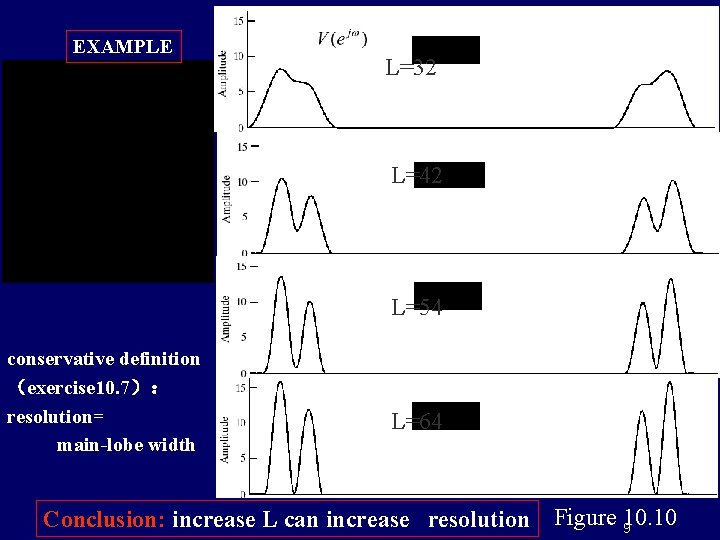
EXAMPLE L=32 L=42 L=54 conservative definition (exercise 10. 7): resolution= main-lobe width L=64 Conclusion: increase L can increase resolution Figure 10. 10 9
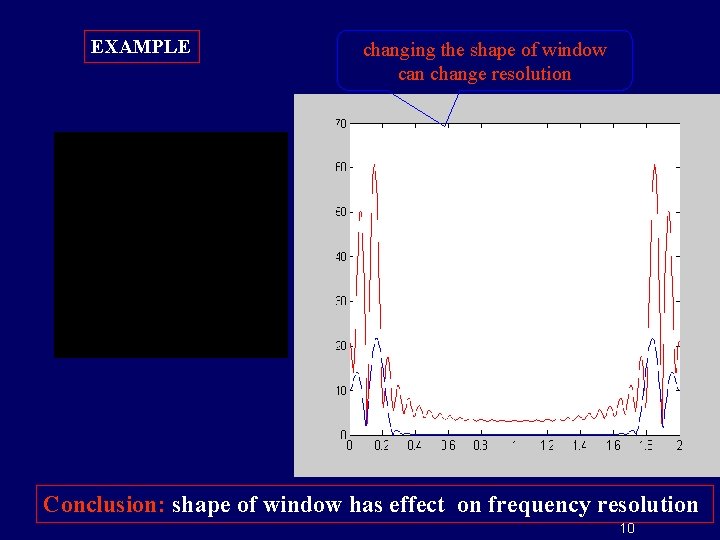
EXAMPLE changing the shape of window can change resolution Conclusion: shape of window has effect on frequency resolution 10
Determin window’s shape and length (1) for kaiser windows: (2)for blackman window: look up the table 11
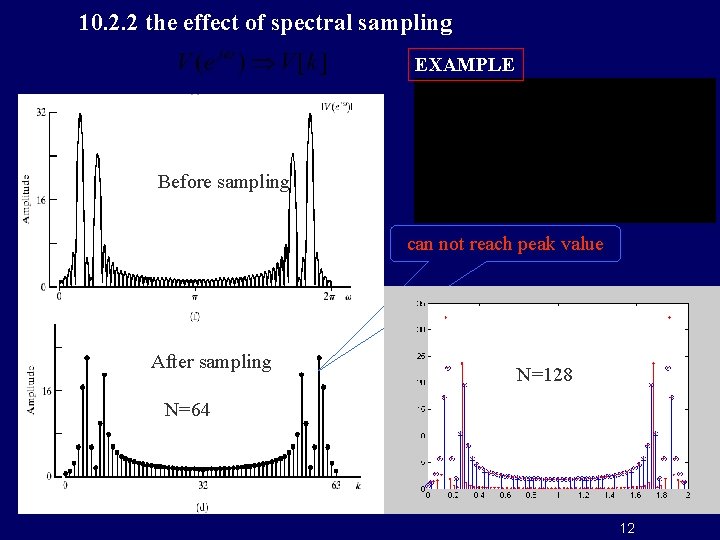
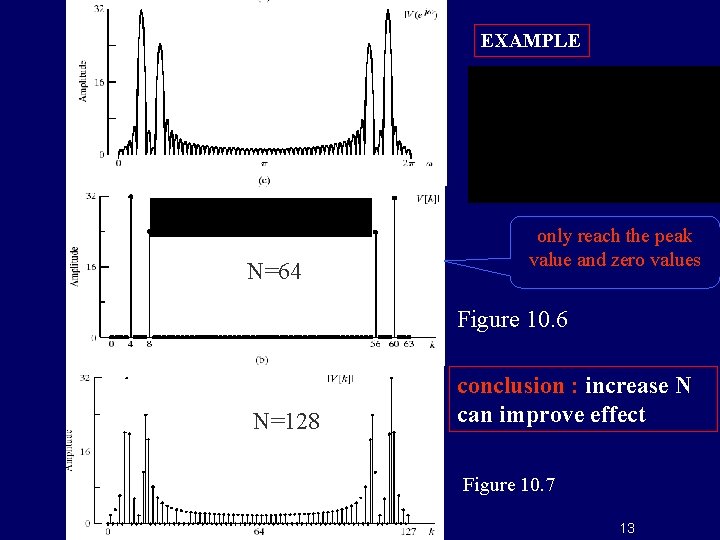
10. 2. 2 the effect of spectral sampling EXAMPLE Before sampling can not reach peak value After sampling N=128 N=64 Figure 10. 5(a)(b)(f) 12
EXAMPLE N=64 only reach the peak value and zero values Figure 10. 6 N=128 conclusion : increase N can improve effect Figure 10. 7 13
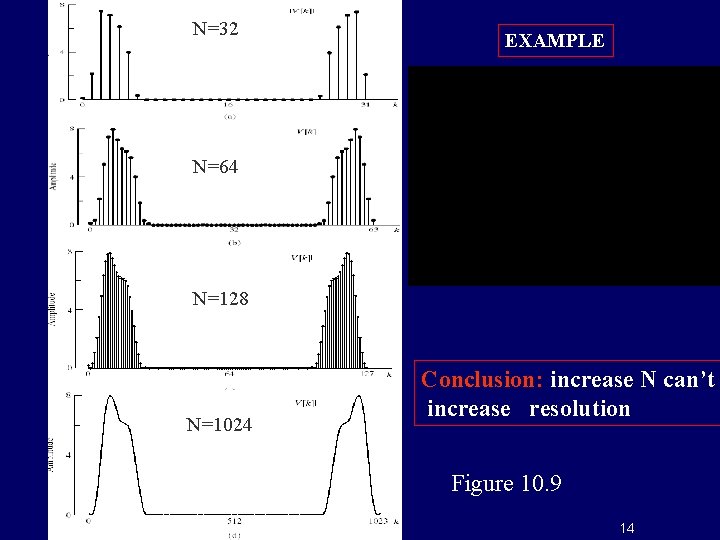
N=32 EXAMPLE N=64 N=128 N=1024 Conclusion: increase N can’t increase resolution Figure 10. 9 14
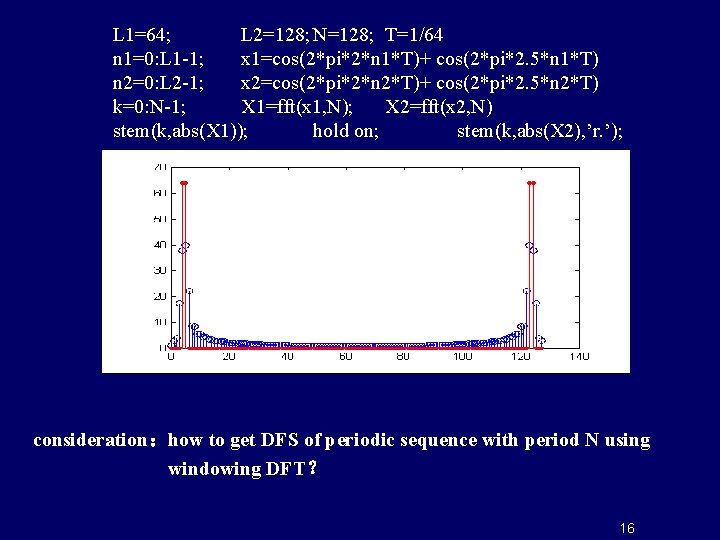
EXAMPLE analyze effects of window length to DFT using MATLAB 15
L 1=64; L 2=128; N=128; T=1/64 n 1=0: L 1 -1; x 1=cos(2*pi*2*n 1*T)+ cos(2*pi*2. 5*n 1*T) n 2=0: L 2 -1; x 2=cos(2*pi*2*n 2*T)+ cos(2*pi*2. 5*n 2*T) k=0: N-1; X 1=fft(x 1, N); X 2=fft(x 2, N) stem(k, abs(X 1)); hold on; stem(k, abs(X 2), ’r. ’); consideration:how to get DFS of periodic sequence with period N using windowing DFT? 16
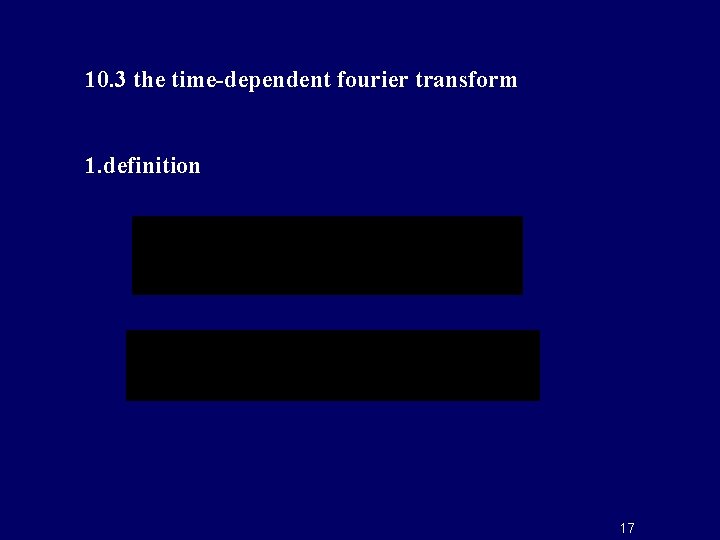
10. 3 the time-dependent fourier transform 1. definition 17
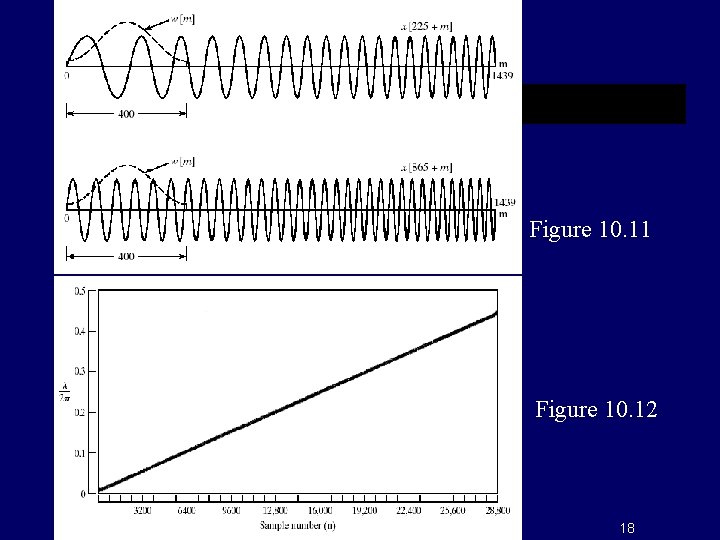
Figure 10. 11 Figure 10. 12 18
summary 10. 1 fourier analysis of signals using the DFT 10. 2 DFT analysis of sinusoidal signals conclusion: effects of windowing and spectral sampling 10. 3 the time-dependent fourier transform apply the conclusion in 10. 2 in analysis of general signals 19
requirements: effects of windowing and sampling to DFT line; concept of frequency resolution,relationship among the shape and length of window , and the points of DFT; DFT analysis of sinusoidal signals. 20
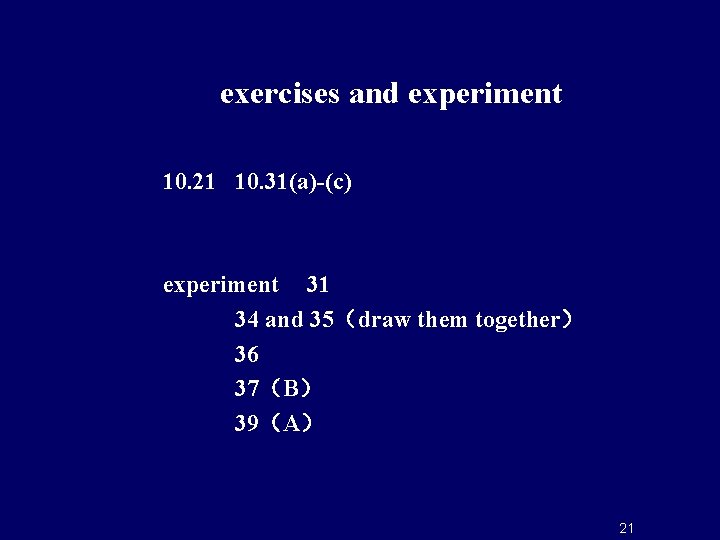
exercises and experiment 10. 21 10. 31(a)-(c) experiment 31 34 and 35(draw them together) 36 37(B) 39(A) 21