A Intersection 6 Thermochemistry 101005 6 4 p



- Slides: 38
A Intersection 6: Thermochemistry 10/10/05 6. 4 p 228 -232; 6. 7 p 240 -242; 6. 10 -6. 11 p 248 -256 11. 3 -11. 4 p 494 -507
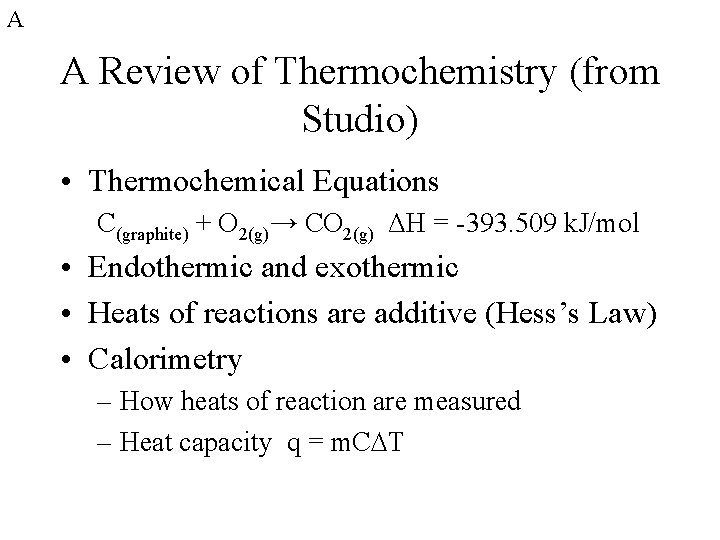
A A Review of Thermochemistry (from Studio) • Thermochemical Equations C(graphite) + O 2(g)→ CO 2(g) ΔH = -393. 509 k. J/mol • Endothermic and exothermic • Heats of reactions are additive (Hess’s Law) • Calorimetry – How heats of reaction are measured – Heat capacity q = m. C T
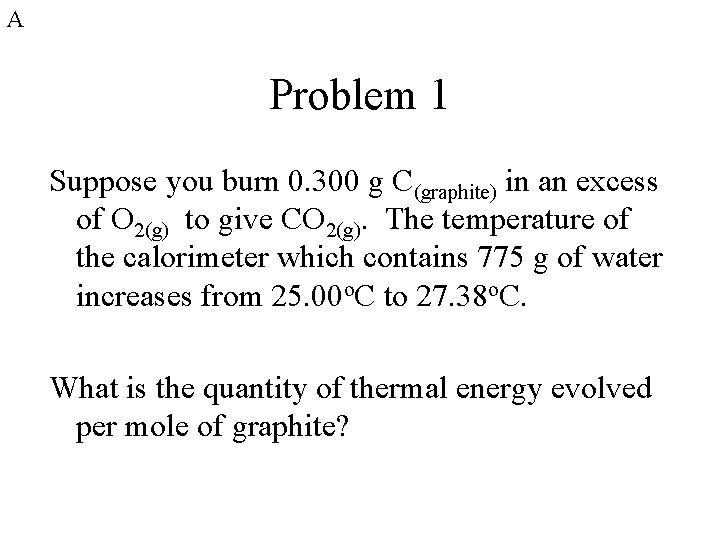
A Problem 1 Suppose you burn 0. 300 g C(graphite) in an excess of O 2(g) to give CO 2(g). The temperature of the calorimeter which contains 775 g of water increases from 25. 00 o. C to 27. 38 o. C. What is the quantity of thermal energy evolved per mole of graphite?
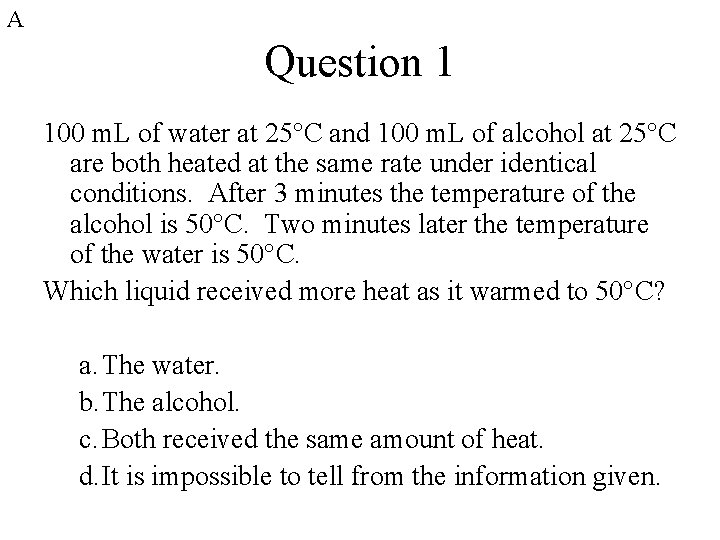
A Question 1 100 m. L of water at 25°C and 100 m. L of alcohol at 25°C are both heated at the same rate under identical conditions. After 3 minutes the temperature of the alcohol is 50°C. Two minutes later the temperature of the water is 50°C. Which liquid received more heat as it warmed to 50°C? a. The water. b. The alcohol. c. Both received the same amount of heat. d. It is impossible to tell from the information given.
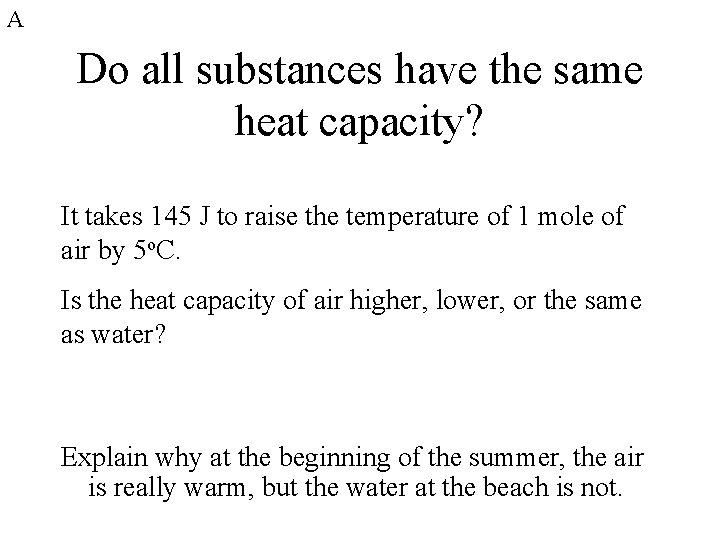
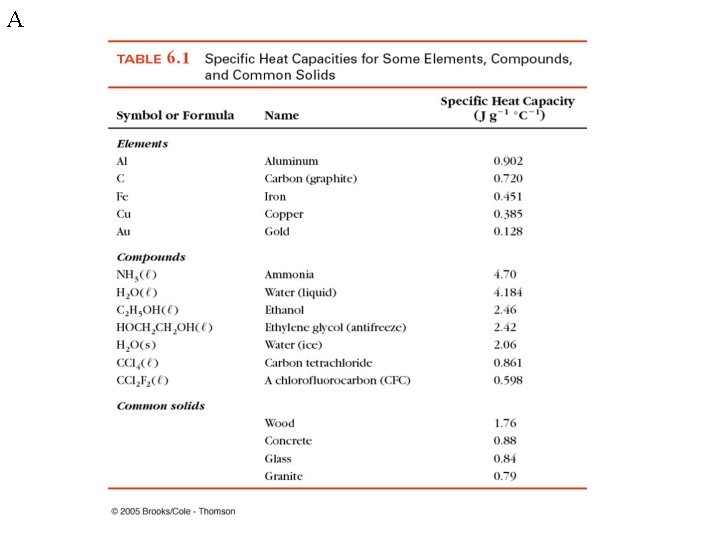
A Do all substances have the same heat capacity? It takes 145 J to raise the temperature of 1 mole of air by 5 o. C. Is the heat capacity of air higher, lower, or the same as water? Explain why at the beginning of the summer, the air is really warm, but the water at the beach is not.
A
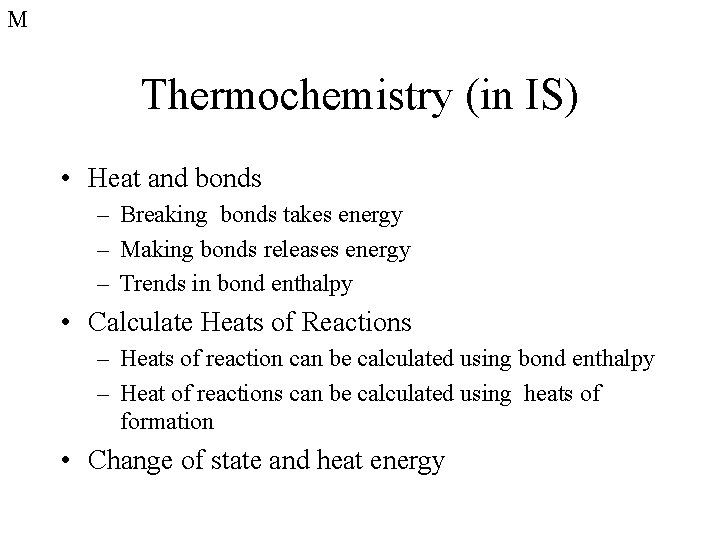
M Thermochemistry (in IS) • Heat and bonds – Breaking bonds takes energy – Making bonds releases energy – Trends in bond enthalpy • Calculate Heats of Reactions – Heats of reaction can be calculated using bond enthalpy – Heat of reactions can be calculated using heats of formation • Change of state and heat energy
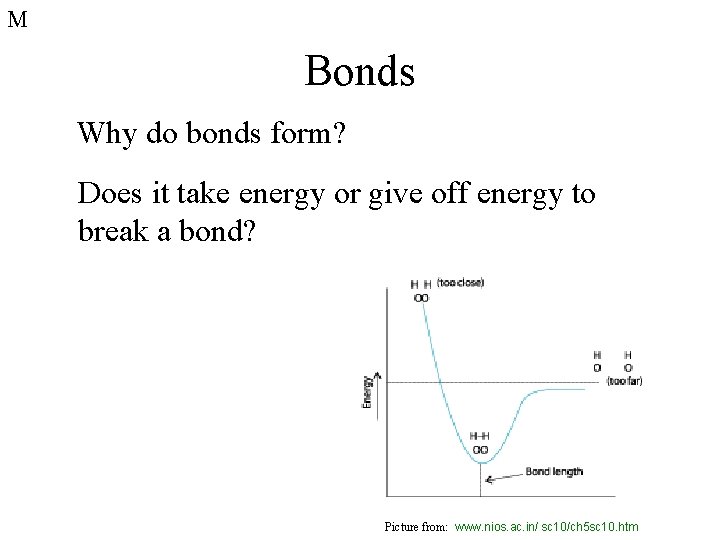
M Bonds Why do bonds form? Does it take energy or give off energy to break a bond? Picture from: www. nios. ac. in/ sc 10/ch 5 sc 10. htm
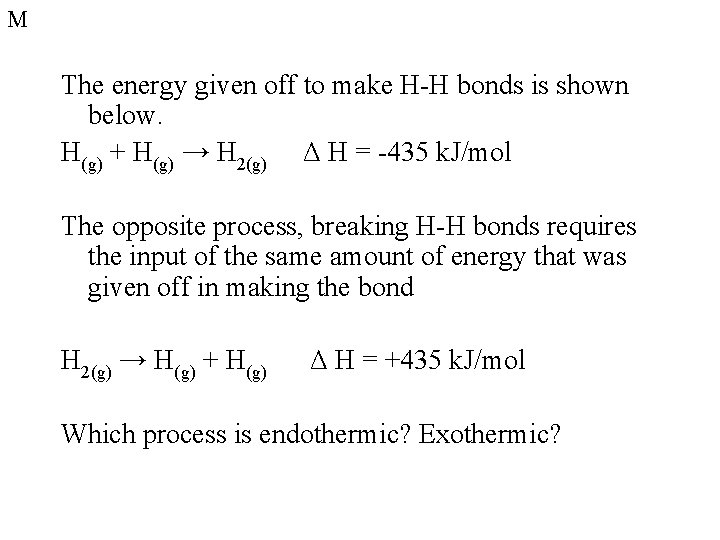
M The energy given off to make H-H bonds is shown below. H(g) + H(g) → H 2(g) Δ H = -435 k. J/mol The opposite process, breaking H-H bonds requires the input of the same amount of energy that was given off in making the bond H 2(g) → H(g) + H(g) Δ H = +435 k. J/mol Which process is endothermic? Exothermic?
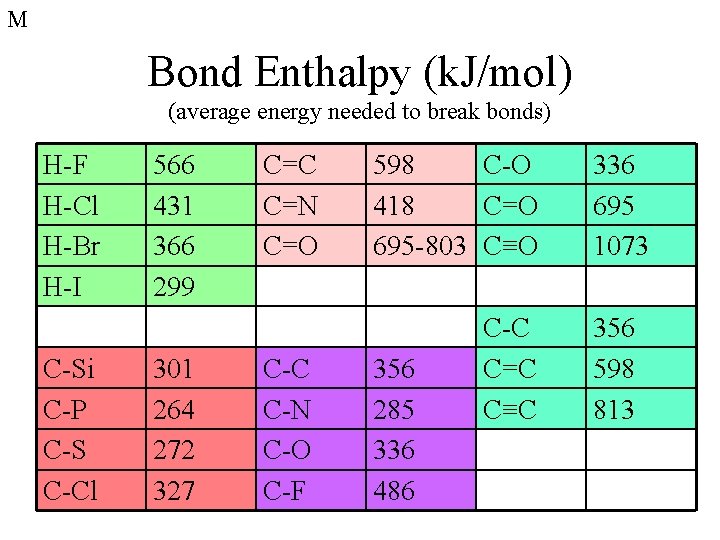
M Bond Enthalpy (k. J/mol) (average energy needed to break bonds) H-F H-Cl H-Br H-I C-Si C-P C-S C-Cl 566 431 366 299 301 264 272 327 C=C C=N C=O C-C C-N C-O C-F 598 C-O 418 C=O 695 -803 C≡O 356 285 336 486 C-C C=C C≡C 336 695 1073 356 598 813
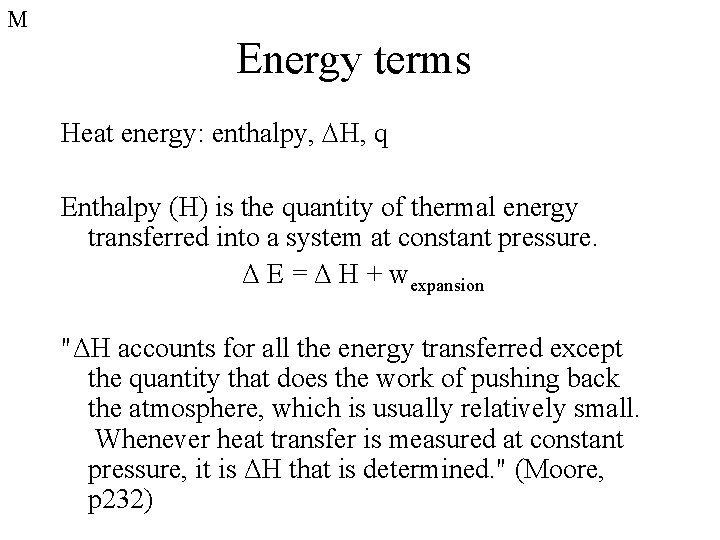
M Energy terms Heat energy: enthalpy, H, q Enthalpy (H) is the quantity of thermal energy transferred into a system at constant pressure. Δ E = Δ H + wexpansion "ΔH accounts for all the energy transferred except the quantity that does the work of pushing back the atmosphere, which is usually relatively small. Whenever heat transfer is measured at constant pressure, it is ΔH that is determined. " (Moore, p 232)
A Holy Contradiction! It takes energy to break bonds…. and yet we get energy from fats (and carbohydrates and alcohol) by breaking them down ? ? ?
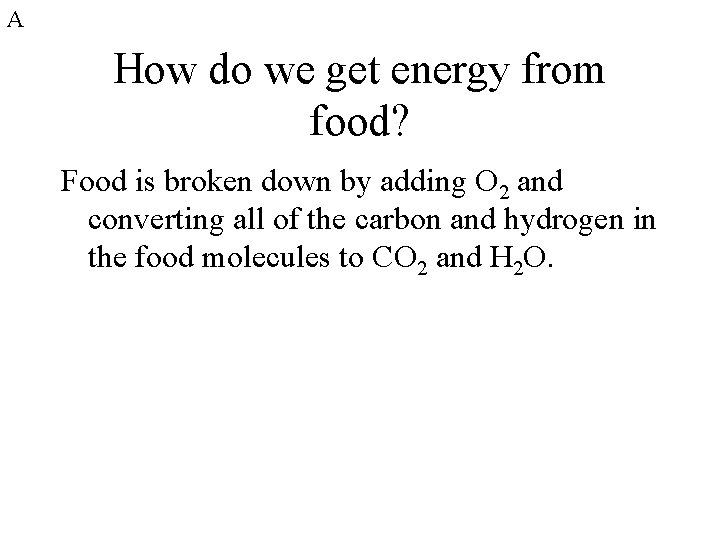
A How do we get energy from food? Food is broken down by adding O 2 and converting all of the carbon and hydrogen in the food molecules to CO 2 and H 2 O.
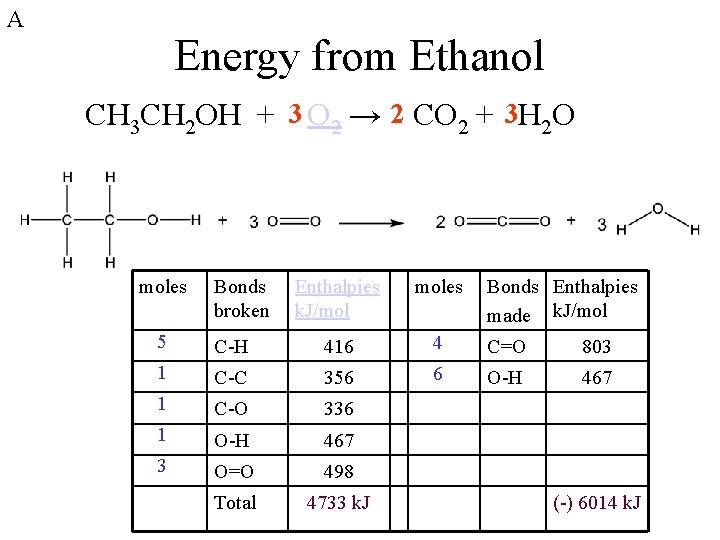
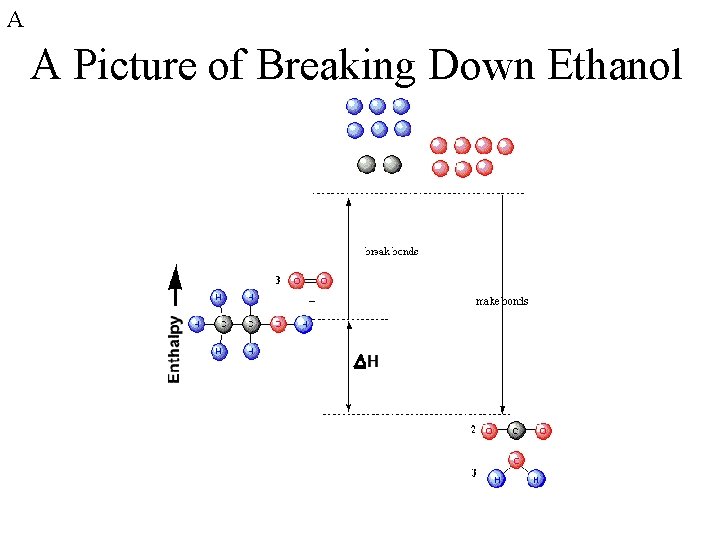
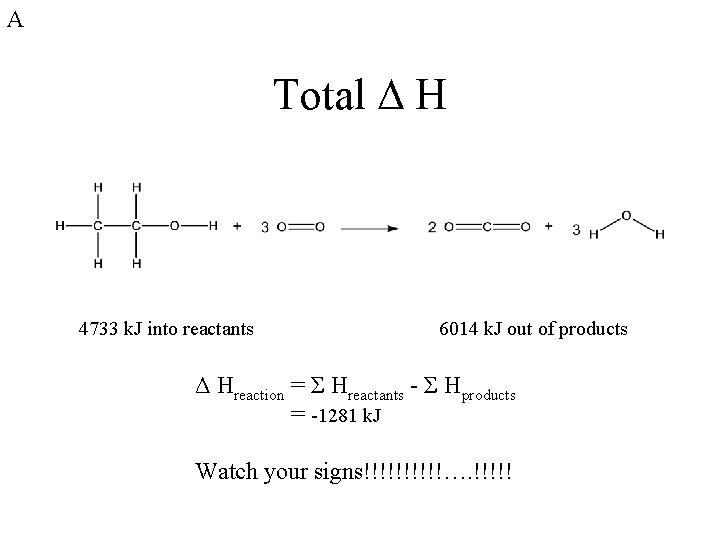
A Energy from Ethanol 3 2 → CO 2 3 CH 3 CH 2 OH + O 2 + H 2 O moles Bonds broken Enthalpies k. J/mol moles Bonds Enthalpies made k. J/mol 5 C-H 416 4 C=O 803 1 C-C 356 6 O-H 467 1 C-O 336 1 O-H 467 3 O=O 498 Total 4733 k. J (-) 6014 k. J
A A Picture of Breaking Down Ethanol
A Total H 4733 k. J into reactants 6014 k. J out of products Δ Hreaction = Σ Hreactants - Σ Hproducts = -1281 k. J Watch your signs!!!!!…. !!!!!
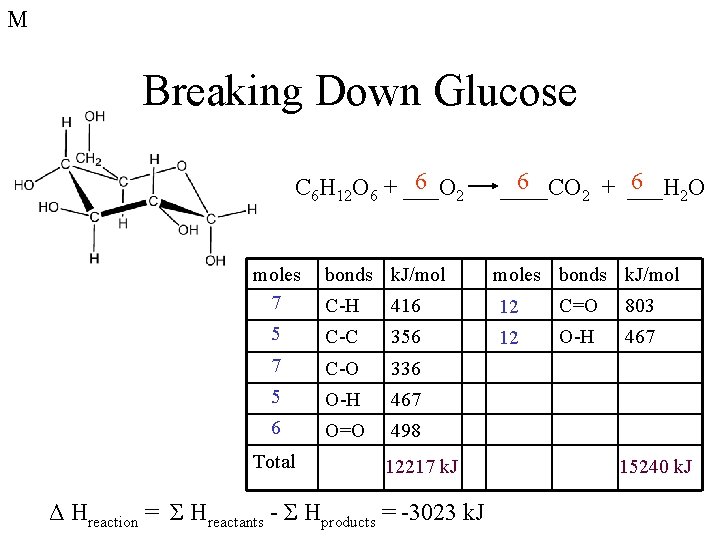
M Breaking Down Glucose 6 2 ____CO 6 6 C 6 H 12 O 6 + ___O 2 + ___H 2 O moles 7 bonds k. J/mol moles bonds k. J/mol C-H 416 12 C=O 803 5 C-C 356 12 O-H 467 7 C-O 336 5 O-H 467 6 O=O 498 Total 12217 k. J Δ Hreaction = Σ Hreactants - Σ Hproducts = -3023 k. J 15240 k. J
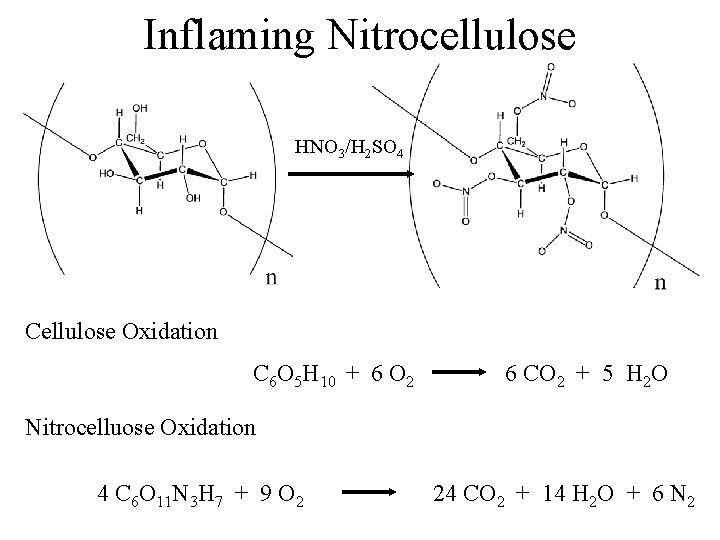
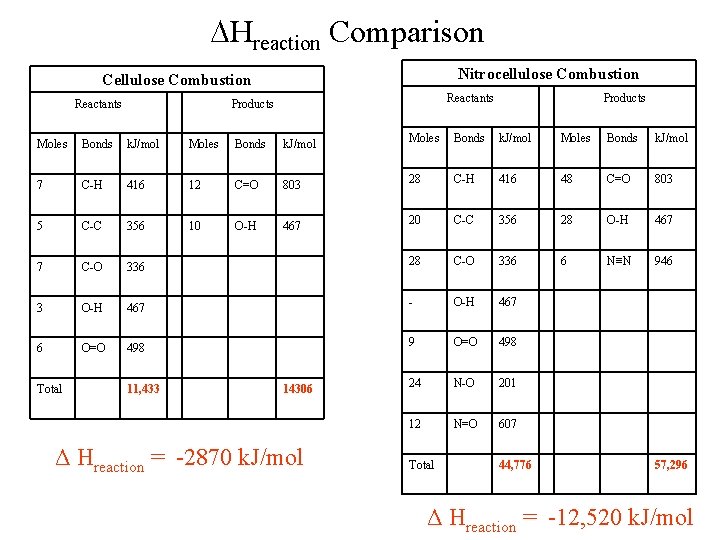
Inflaming Nitrocellulose HNO 3/H 2 SO 4 Cellulose Oxidation C 6 O 5 H 10 + 6 O 2 6 CO 2 + 5 H 2 O Nitrocelluose Oxidation 4 C 6 O 11 N 3 H 7 + 9 O 2 24 CO 2 + 14 H 2 O + 6 N 2
Hreaction Comparison Nitrocellulose Combustion Cellulose Combustion Reactants Products Moles Bonds k. J/mol 7 C-H 416 12 C=O 803 28 C-H 416 48 C=O 803 5 C-C 356 10 O-H 467 20 C-C 356 28 O-H 467 7 C-O 336 28 C-O 336 6 N≡N 946 3 O-H 467 - O-H 467 6 O=O 498 9 O=O 498 24 N-O 201 12 N=O 607 Total 11, 433 14306 Δ Hreaction = -2870 k. J/mol Total 44, 776 57, 296 Δ Hreaction = -12, 520 k. J/mol
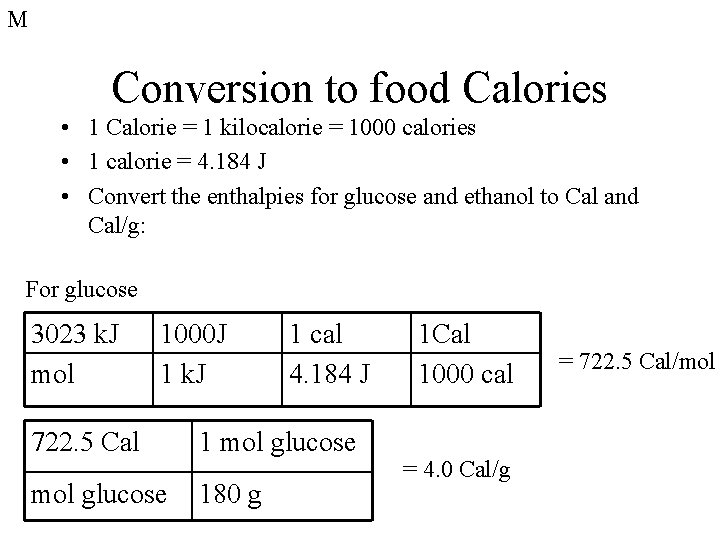
M Conversion to food Calories • 1 Calorie = 1 kilocalorie = 1000 calories • 1 calorie = 4. 184 J • Convert the enthalpies for glucose and ethanol to Cal and Cal/g: For glucose 3023 k. J mol 1000 J 1 k. J 1 cal 4. 184 J 722. 5 Cal 1 mol glucose 180 g 1 Cal 1000 cal = 4. 0 Cal/g = 722. 5 Cal/mol
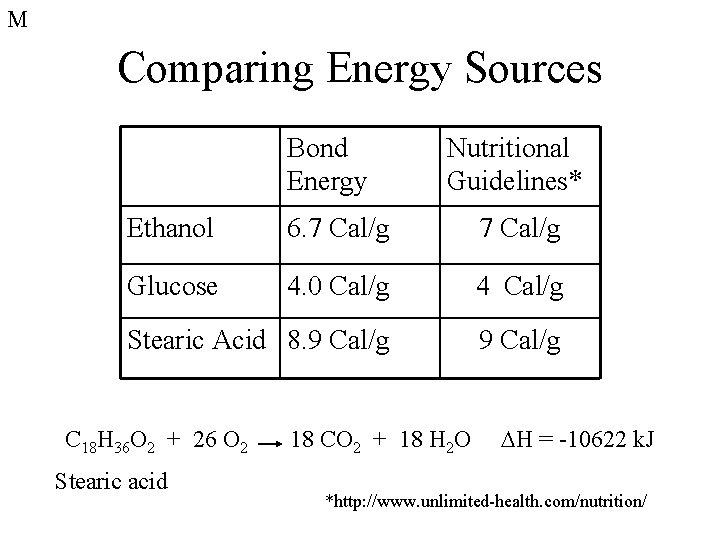
M Comparing Energy Sources Bond Energy Nutritional Guidelines* Ethanol 6. 7 Cal/g Glucose 4. 0 Cal/g 4 Cal/g Stearic Acid 8. 9 Cal/g C 18 H 36 O 2 + 26 O 2 18 CO 2 + 18 H 2 O H = -10622 k. J Stearic acid *http: //www. unlimited-health. com/nutrition/
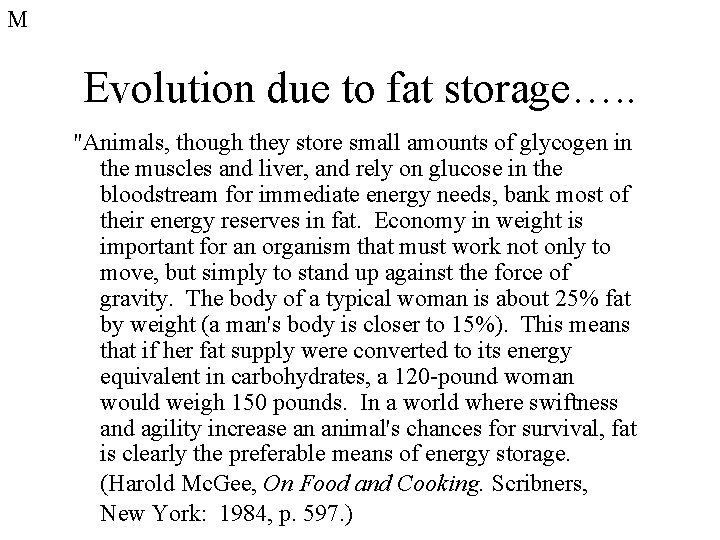
M Evolution due to fat storage…. . "Animals, though they store small amounts of glycogen in the muscles and liver, and rely on glucose in the bloodstream for immediate energy needs, bank most of their energy reserves in fat. Economy in weight is important for an organism that must work not only to move, but simply to stand up against the force of gravity. The body of a typical woman is about 25% fat by weight (a man's body is closer to 15%). This means that if her fat supply were converted to its energy equivalent in carbohydrates, a 120 -pound woman would weigh 150 pounds. In a world where swiftness and agility increase an animal's chances for survival, fat is clearly the preferable means of energy storage. (Harold Mc. Gee, On Food and Cooking. Scribners, New York: 1984, p. 597. )
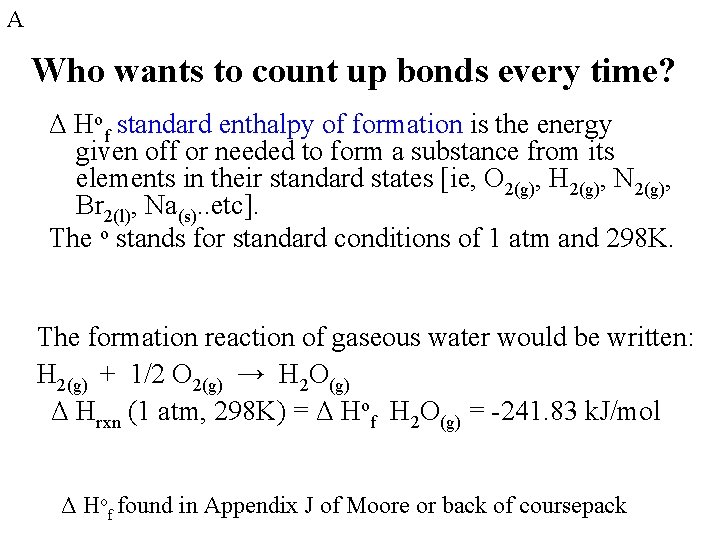
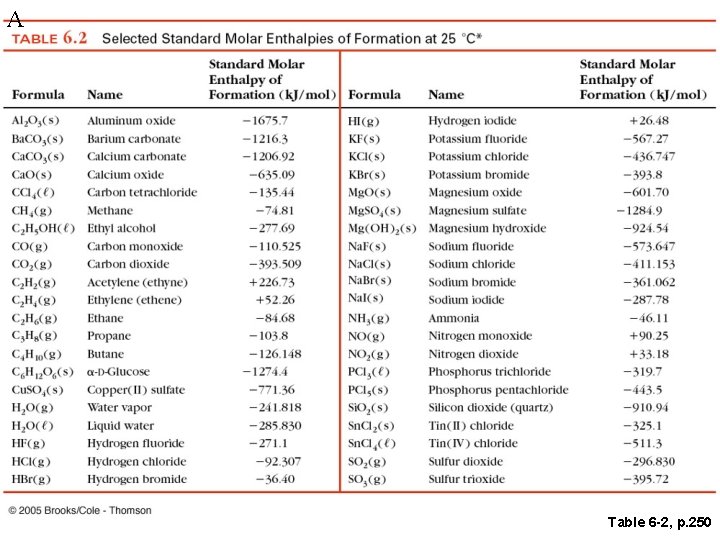
A Who wants to count up bonds every time? Δ Hof standard enthalpy of formation is the energy given off or needed to form a substance from its elements in their standard states [ie, O 2(g), H 2(g), N 2(g), Br 2(l), Na(s). . etc]. The o stands for standard conditions of 1 atm and 298 K. The formation reaction of gaseous water would be written: H 2(g) + 1/2 O 2(g) → H 2 O(g) Δ Hrxn (1 atm, 298 K) = Δ Hof H 2 O(g) = -241. 83 k. J/mol Δ Hof found in Appendix J of Moore or back of coursepack
A Table 6 -2, p. 250
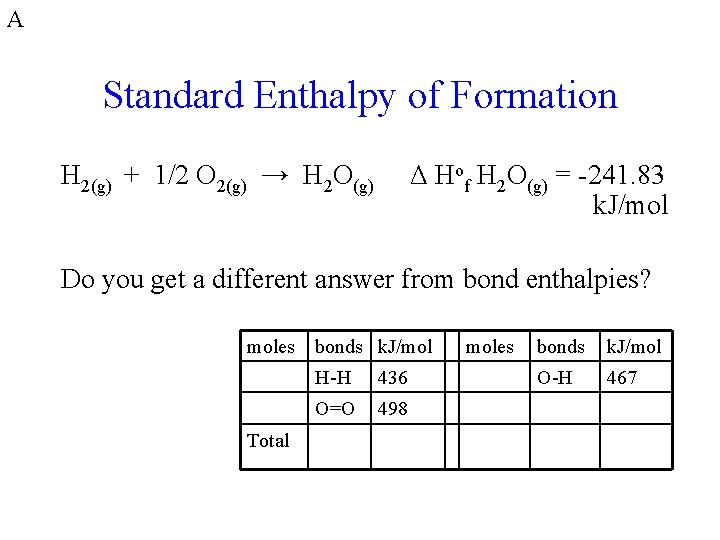
A Standard Enthalpy of Formation H 2(g) + 1/2 O 2(g) → H 2 O(g) Δ Hof H 2 O(g) = -241. 83 k. J/mol Do you get a different answer from bond enthalpies? moles Total bonds k. J/mol H-H 436 O=O 498 moles bonds k. J/mol O-H 467
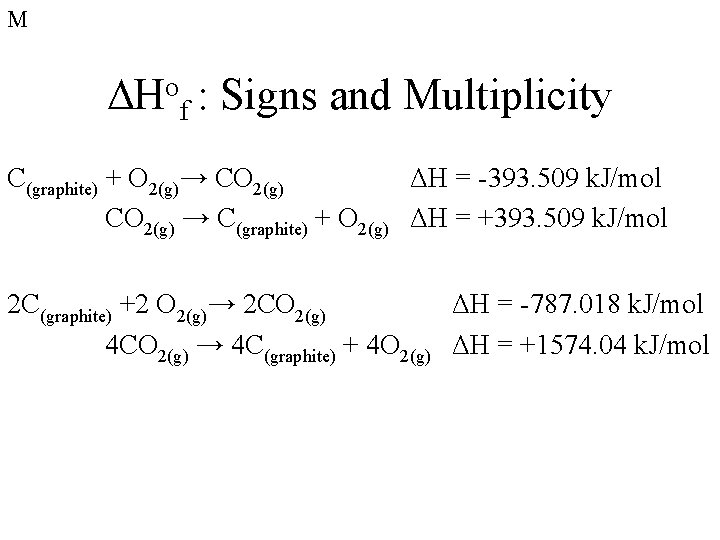
M o H f : Signs and Multiplicity C(graphite) + O 2(g)→ CO 2(g) ΔH = -393. 509 k. J/mol CO 2(g) → C(graphite) + O 2(g) ΔH = +393. 509 k. J/mol 2 C(graphite) +2 O 2(g)→ 2 CO 2(g) ΔH = -787. 018 k. J/mol 4 CO 2(g) → 4 C(graphite) + 4 O 2(g) ΔH = +1574. 04 k. J/mol
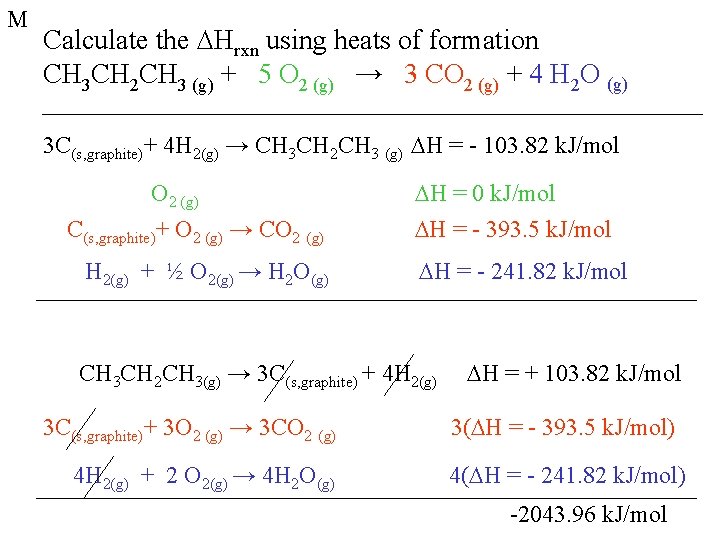
M Calculate the Hrxn using heats of formation CH 3 CH 2 CH 3 (g) + 5 O 2 (g) → 3 CO 2 (g) + 4 H 2 O (g) 3 C(s, graphite)+ 4 H 2(g) → CH 3 CH 2 CH 3 (g) H = - 103. 82 k. J/mol O 2 (g) H = 0 k. J/mol C(s, graphite)+ O 2 (g) → CO 2 (g) H = - 393. 5 k. J/mol H 2(g) + ½ O 2(g) → H 2 O(g) H = - 241. 82 k. J/mol CH 3 CH 2 CH 3(g) → 3 C(s, graphite) + 4 H 2(g) H = + 103. 82 k. J/mol 3 C(s, graphite)+ 3 O 2 (g) → 3 CO 2 (g) 3( H = - 393. 5 k. J/mol) 4 H 2(g) + 2 O 2(g) → 4 H 2 O(g) 4( H = - 241. 82 k. J/mol) -2043. 96 k. J/mol
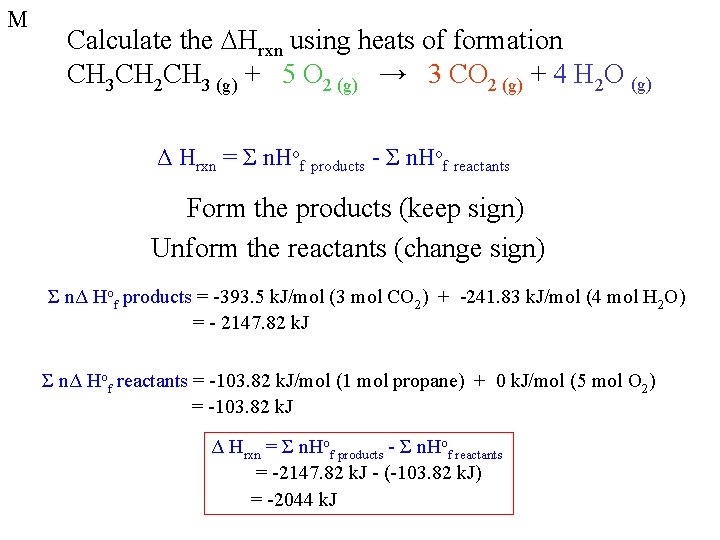
M Calculate the Hrxn using heats of formation CH 3 CH 2 CH 3 (g) + 5 O 2 (g) → 3 CO 2 (g) + 4 H 2 O (g) Δ Hrxn = Σ n. Hof products - Σ n. Hof reactants Form the products (keep sign) Unform the reactants (change sign) Σ nΔ Hof products = -393. 5 k. J/mol (3 mol CO 2) + -241. 83 k. J/mol (4 mol H 2 O) = - 2147. 82 k. J Σ nΔ Hof reactants = -103. 82 k. J/mol (1 mol propane) + 0 k. J/mol (5 mol O 2) = -103. 82 k. J Δ Hrxn = Σ n. Hof products - Σ n. Hof reactants = -2147. 82 k. J - (-103. 82 k. J) = -2044 k. J
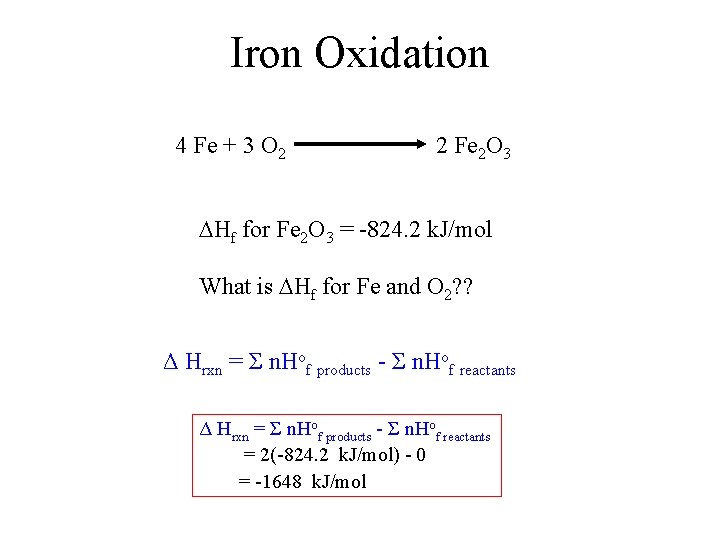
Iron Oxidation 4 Fe + 3 O 2 2 Fe 2 O 3 Hf for Fe 2 O 3 = -824. 2 k. J/mol What is Hf for Fe and O 2? ? Δ Hrxn = Σ n. Hof products - Σ n. Hof reactants = 2(-824. 2 k. J/mol) - 0 = -1648 k. J/mol
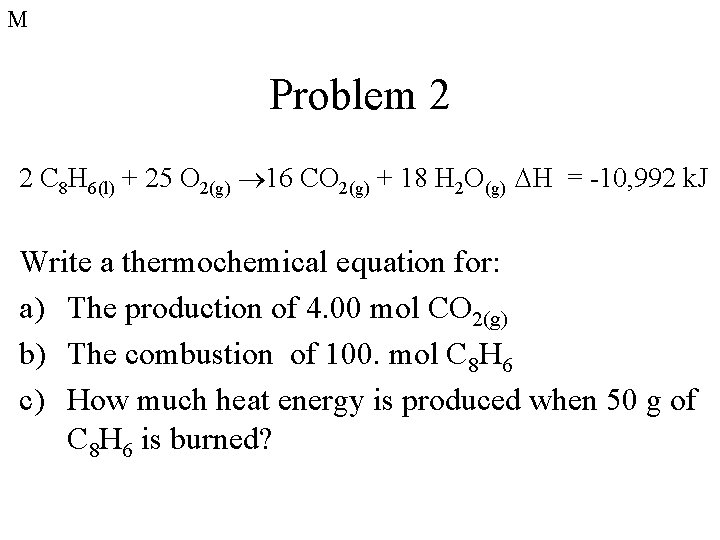
M Problem 2 2 C 8 H 6(l) + 25 O 2(g) 16 CO 2(g) + 18 H 2 O(g) H = -10, 992 k. J Write a thermochemical equation for: a) The production of 4. 00 mol CO 2(g) b) The combustion of 100. mol C 8 H 6 c) How much heat energy is produced when 50 g of C 8 H 6 is burned?
A Problem 3 The standard molar enthalpy of formation of Ag. Cl(s) is – 127. 1 k. J/mol. Write a balanced thermochemical equation for which the enthalpy of reaction is – 127. 2 k. J
A Problem 4 The Romans used Ca. O as mortar in stone structures. The Ca. O was mixed with water to give Ca(OH)2, which slowly reacted with CO 2 in the air to give limestone. Ca(OH)2(s) + CO 2(g) Ca. CO 3(s) + H 2 O(g) Calculate the enthalpy change for this reaction
A Question 2 Heat is given off when hydrogen burns in air according to the equation 2 H 2 + O 2 2 H 2 O Which of the following is responsible for the heat? a. Breaking hydrogen bonds gives off energy. b. Breaking oxygen bonds gives off energy. c. Forming hydrogen-oxygen bonds gives off energy. d. Both (a) and (b) are responsible. e. (a), (b), and (c) are responsible.
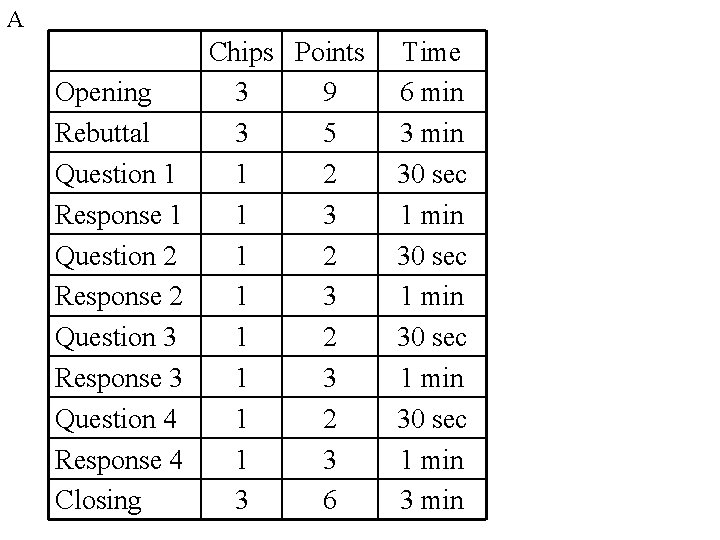
A Debate: _____is the safest and best artificial sweetener Friday, October 13 th in studio – – Splenda (sucralose) Aspartame Saccharin Acesulfame K
A Opening Rebuttal Question 1 Response 1 Question 2 Response 2 Question 3 Response 3 Question 4 Response 4 Closing Chips Points Time 3 9 6 min 3 5 3 min 1 2 30 sec 1 3 1 min 3 6 3 min