
Spring Semester Final Exam Review Thermochemistry THERMOCHEMISTRY The

- Slides: 22
Spring Semester Final Exam Review Thermochemistry
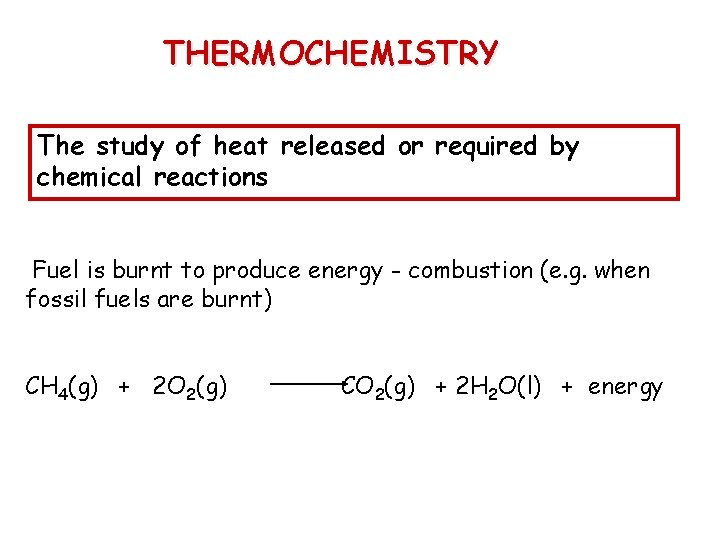
THERMOCHEMISTRY The study of heat released or required by chemical reactions Fuel is burnt to produce energy - combustion (e. g. when fossil fuels are burnt) CH 4(g) + 2 O 2(g) CO 2(g) + 2 H 2 O(l) + energy
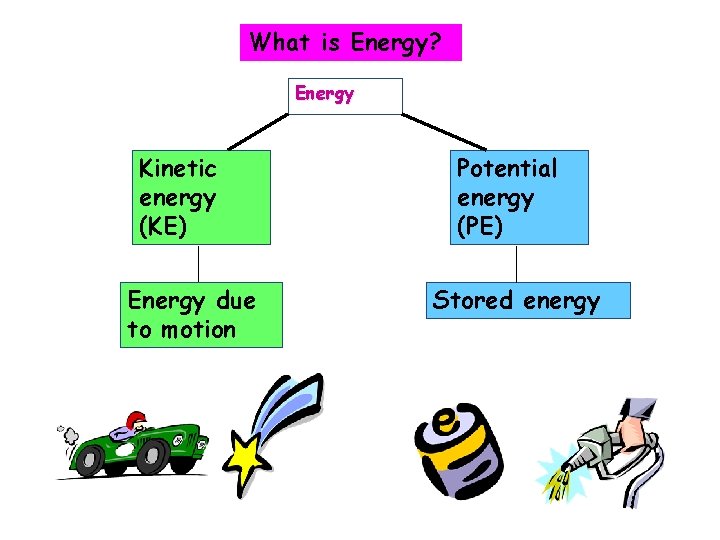
What is Energy? Energy Kinetic energy (KE) Energy due to motion Potential energy (PE) Stored energy
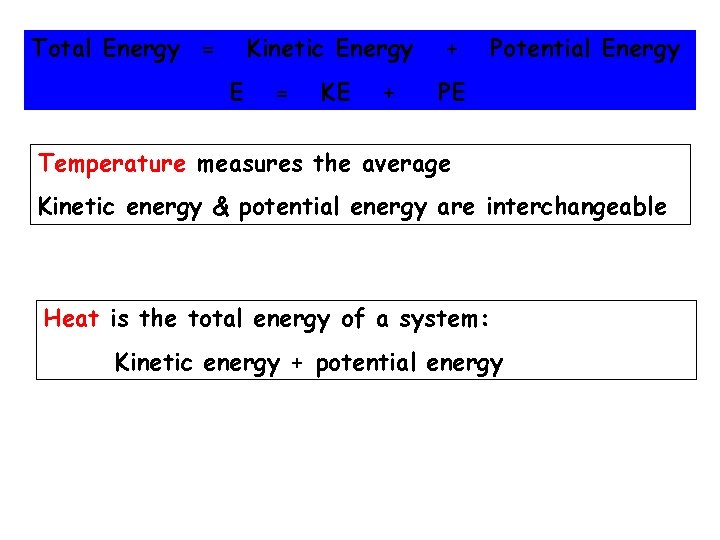
Total Energy = Kinetic Energy E = KE + + Potential Energy PE Temperature measures the average Kinetic energy & potential energy are interchangeable Heat is the total energy of a system: Kinetic energy + potential energy
Systems & Surroundings In thermodynamics, the world is divided into a system and its surroundings A system is the part of the world we want to study (e. g. a reaction mixture in a flask) The surroundings consist of everything else outside the system
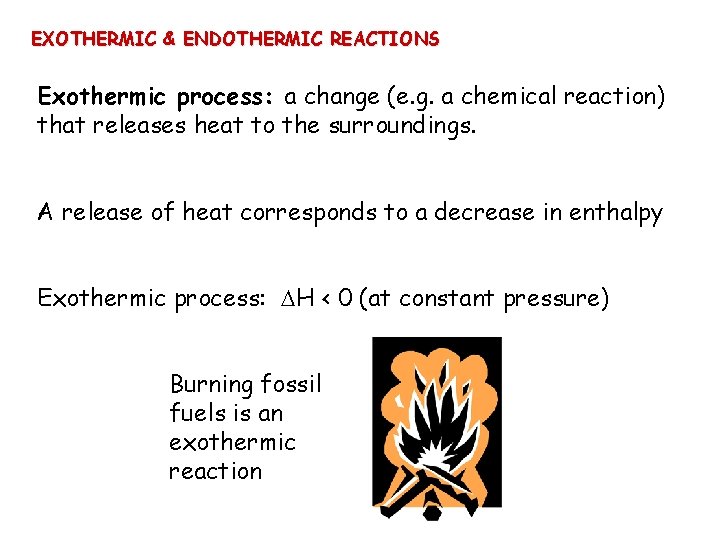
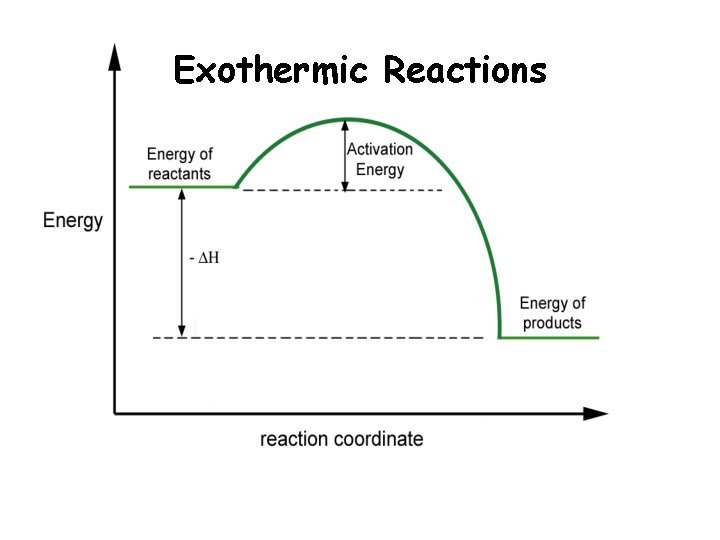
EXOTHERMIC & ENDOTHERMIC REACTIONS Exothermic process: a change (e. g. a chemical reaction) that releases heat to the surroundings. A release of heat corresponds to a decrease in enthalpy Exothermic process: H < 0 (at constant pressure) Burning fossil fuels is an exothermic reaction
Exothermic Reactions
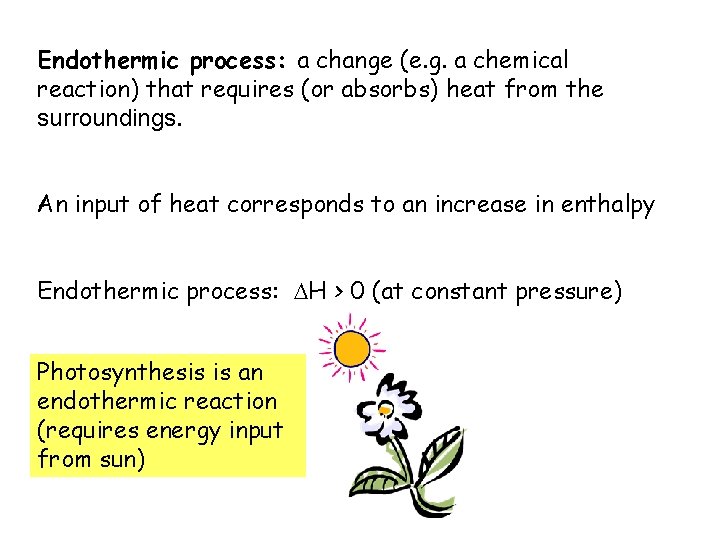
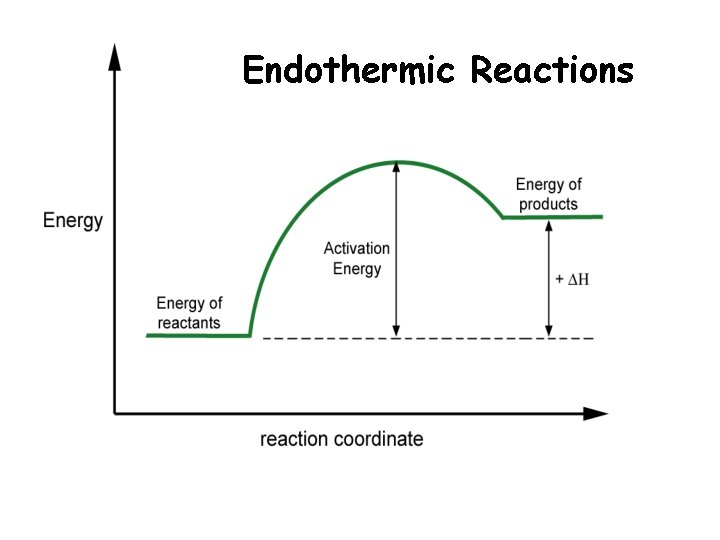
Endothermic process: a change (e. g. a chemical reaction) that requires (or absorbs) heat from the surroundings. An input of heat corresponds to an increase in enthalpy Endothermic process: H > 0 (at constant pressure) Photosynthesis is an endothermic reaction (requires energy input from sun)
Endothermic Reactions
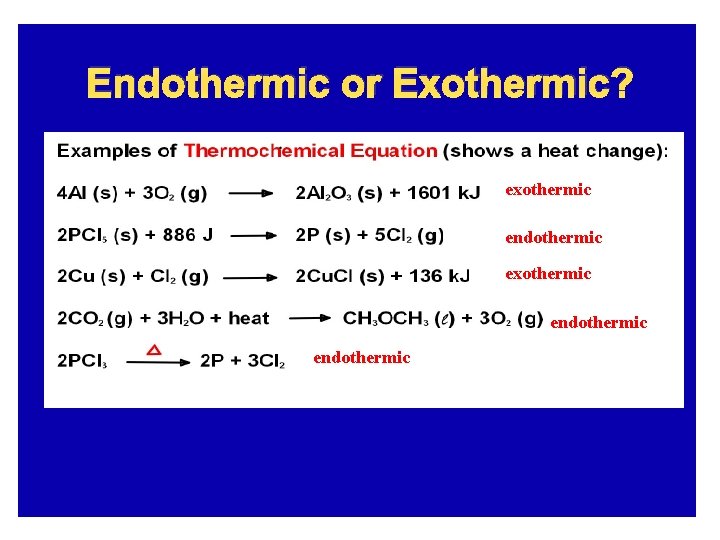
Endothermic or Exothermic? exothermic endothermic
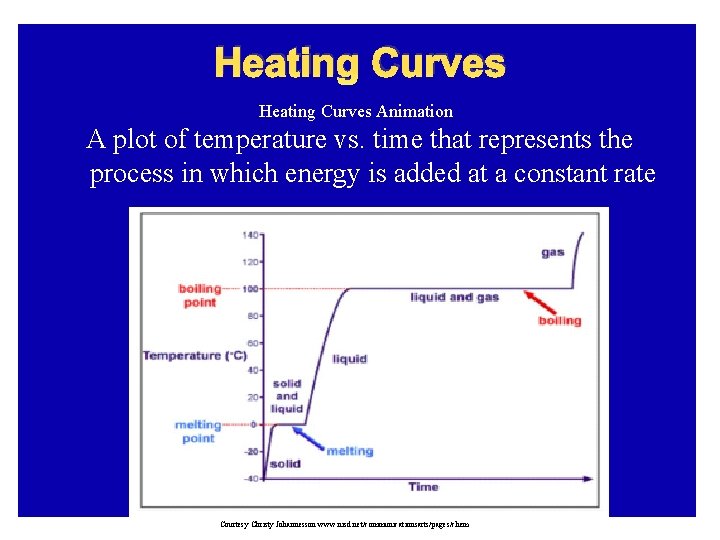
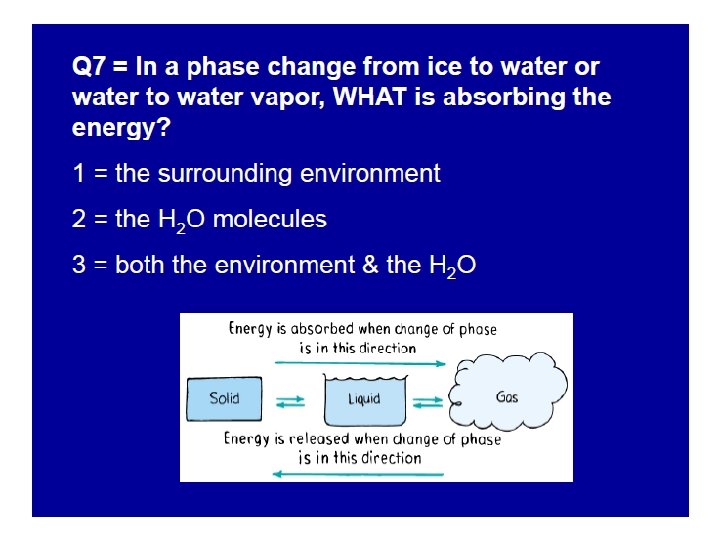
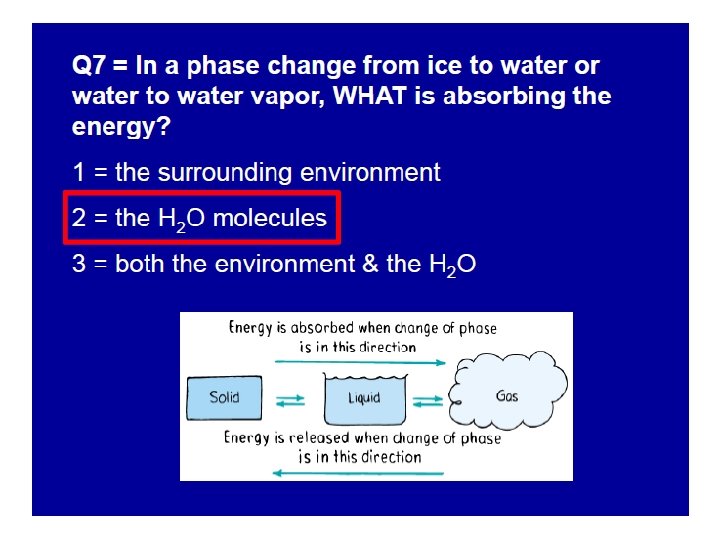
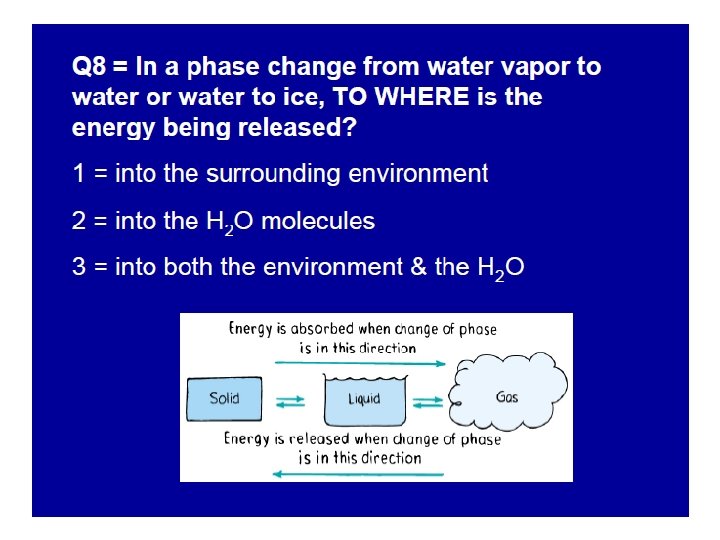
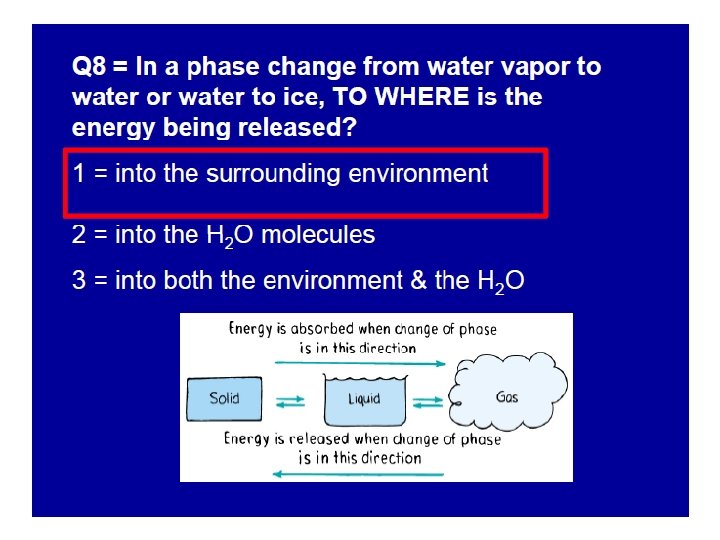
Heating Curves Animation A plot of temperature vs. time that represents the process in which energy is added at a constant rate Courtesy Christy Johannesson www. nisd. net/communicationsarts/pages/chem
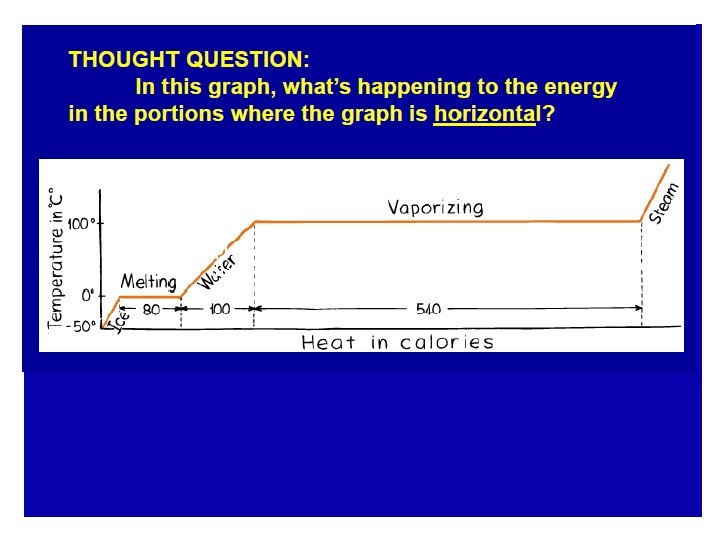
Temperature (o. C) Heating Curves 140 120 100 80 60 40 20 0 -20 -40 -60 -80 -100 Gas - KE Boiling - PE Liquid - KE Melting - PE Solid - KE Time
A plot of temperature vs. time that represents the process in which energy is added at a constant rate
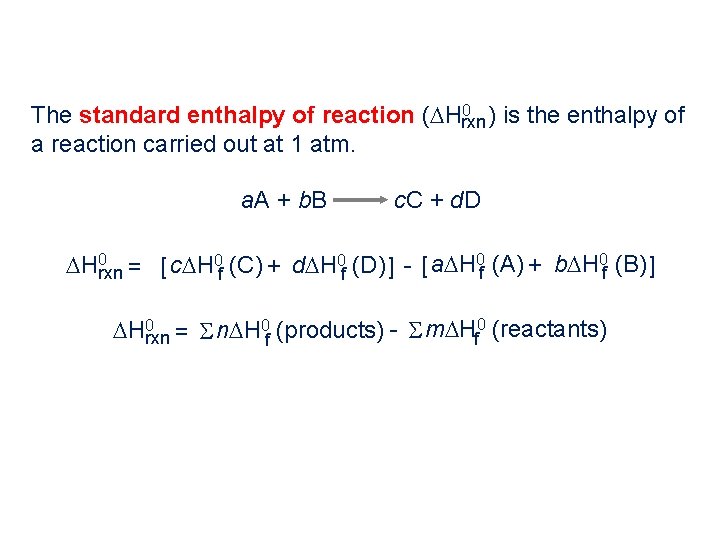
0 ) is the enthalpy of The standard enthalpy of reaction ( Hrxn a reaction carried out at 1 atm. a. A + b. B c. C + d. D H 0 rxn = [ c H 0 f (C) + d H 0 f (D) ] - [ a H 0 f (A) + b H 0 f (B) ] H 0 rxn = S n H 0 f (products) - S m Hf 0 (reactants)
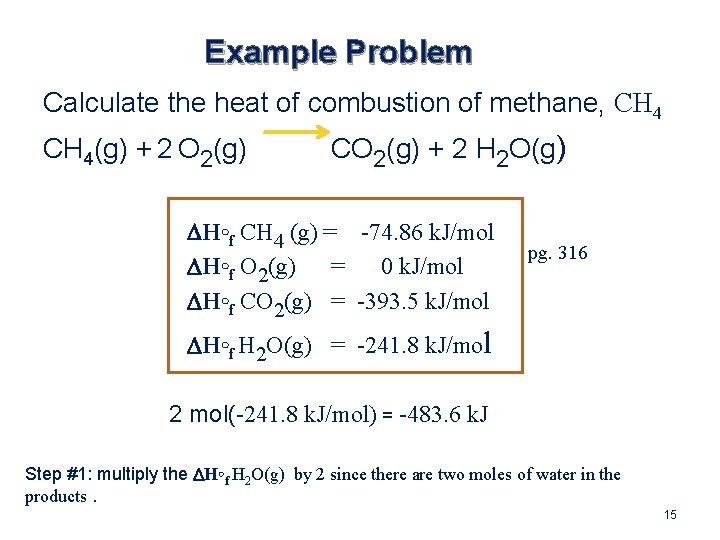
Example Problem Calculate the heat of combustion of methane, CH 4(g) + 2 O 2(g) CO 2(g) + 2 H 2 O(g) H◦f CH 4 (g) = -74. 86 k. J/mol H◦f O 2(g) = 0 k. J/mol H◦f CO 2(g) = -393. 5 k. J/mol pg. 316 H◦f H 2 O(g) = -241. 8 k. J/mol 2 mol(-241. 8 k. J/mol) = -483. 6 k. J Step #1: multiply the H◦f H 2 O(g) by 2 since there are two moles of water in the products. 15
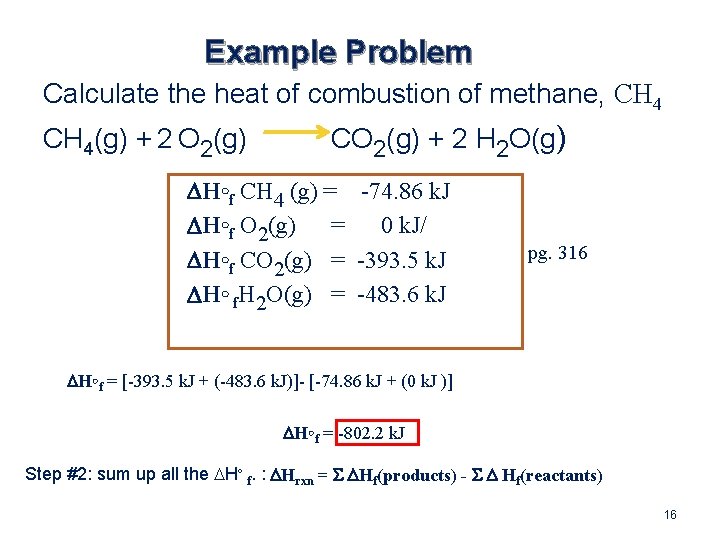
Example Problem Calculate the heat of combustion of methane, CH 4(g) + 2 O 2(g) CO 2(g) + 2 H 2 O(g) H◦f CH 4 (g) = -74. 86 k. J H◦f O 2(g) = 0 k. J/ H◦f CO 2(g) = -393. 5 k. J H◦ f. H 2 O(g) = -483. 6 k. J pg. 316 H◦f = [-393. 5 k. J + (-483. 6 k. J)]- [-74. 86 k. J + (0 k. J )] H◦f = -802. 2 k. J Step #2: sum up all the H◦ f. : Hrxn = Hf(products) - Hf(reactants) 16
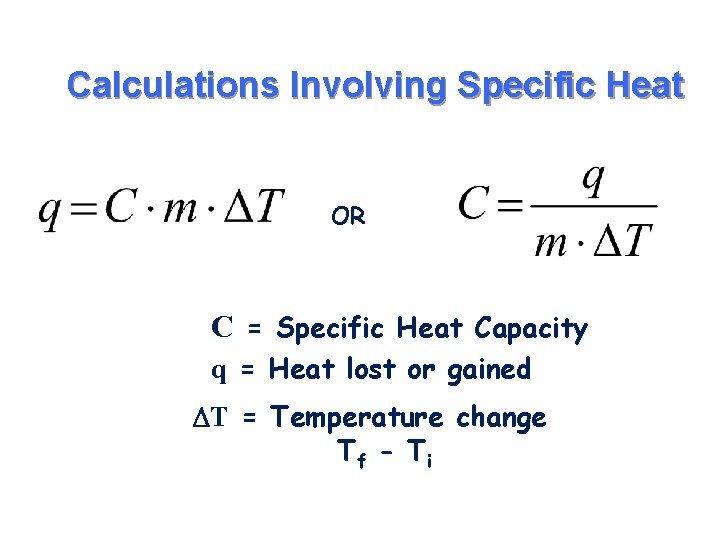
Calculations Involving Specific Heat OR C = Specific Heat Capacity q = Heat lost or gained T = Temperature change Tf - T i
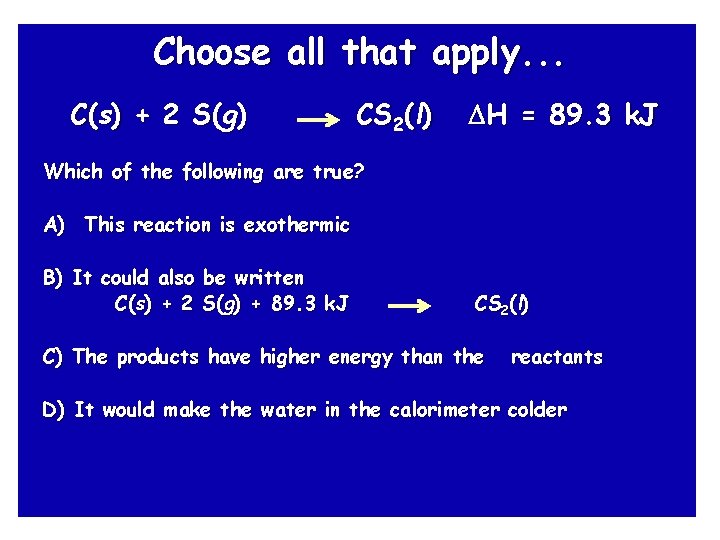
Choose all that apply. . . C(s) + 2 S(g) CS 2(l) H = 89. 3 k. J Which of the following are true? A) This reaction is exothermic B) It could also be written C(s) + 2 S(g) + 89. 3 k. J CS 2(l) C) The products have higher energy than the reactants D) It would make the water in the calorimeter colder