
Unit 6 Radical and Rational Functions Roots and


- Slides: 117
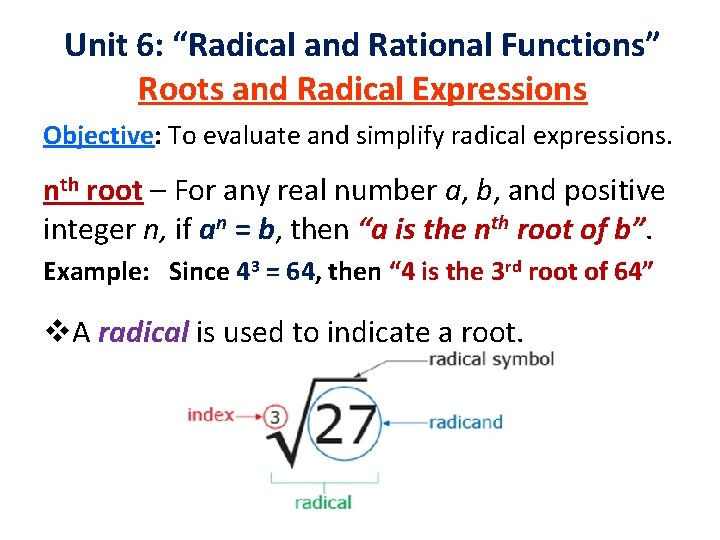
Unit 6: “Radical and Rational Functions” Roots and Radical Expressions Objective: To evaluate and simplify radical expressions. nth root – For any real number a, b, and positive integer n, if an = b, then “a is the nth root of b”. Example: Since 43 = 64, then “ 4 is the 3 rd root of 64” v. A radical is used to indicate a root.
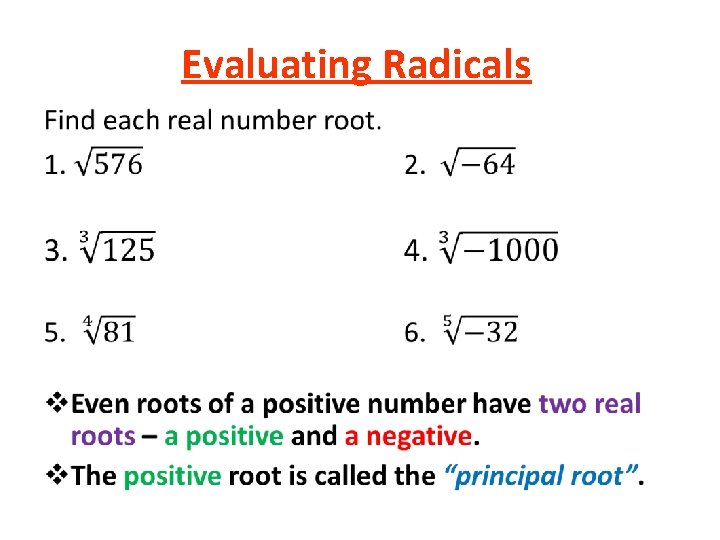
Evaluating Radicals •
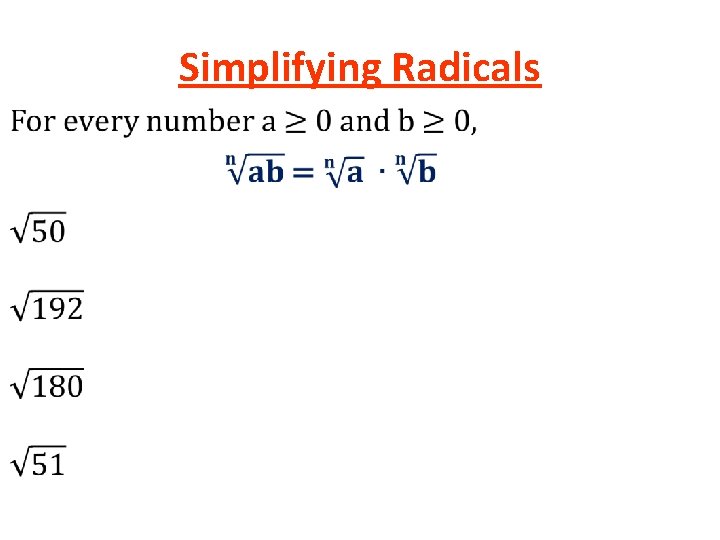
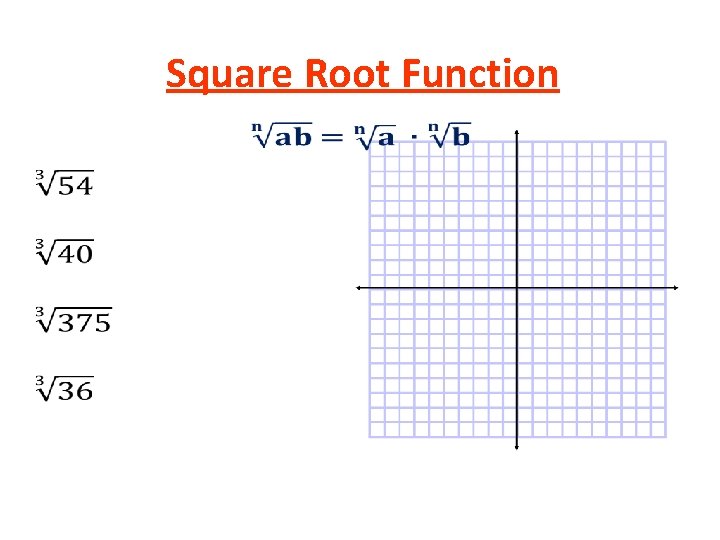
Simplifying Radicals •
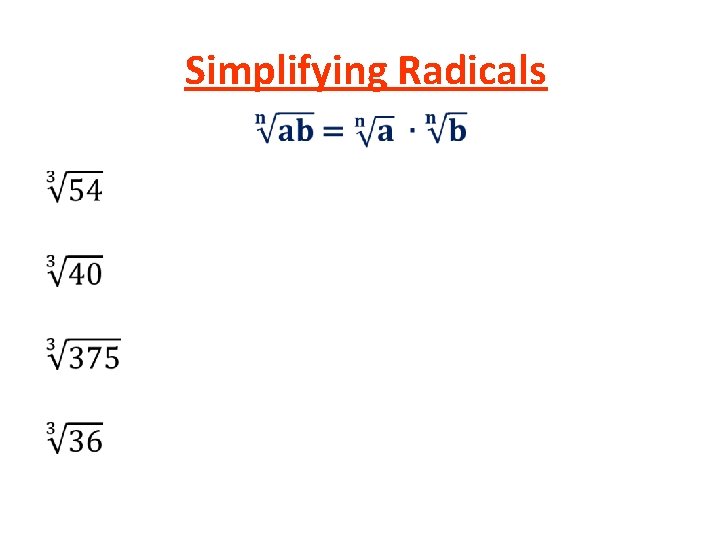
Simplifying Radicals •
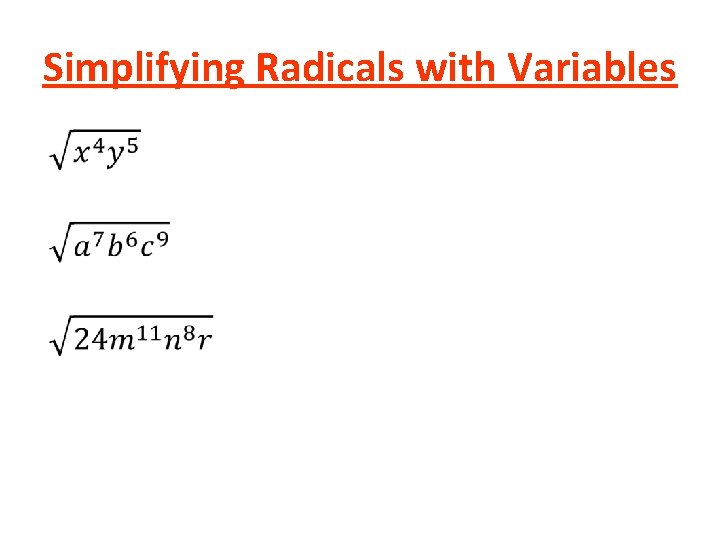
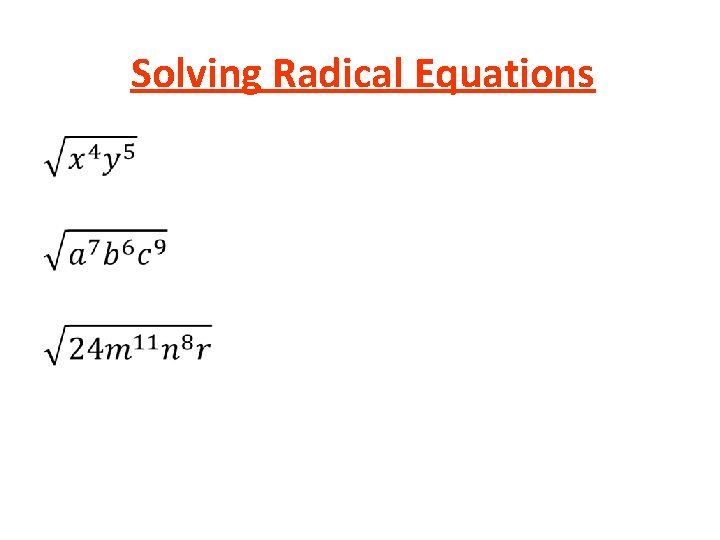
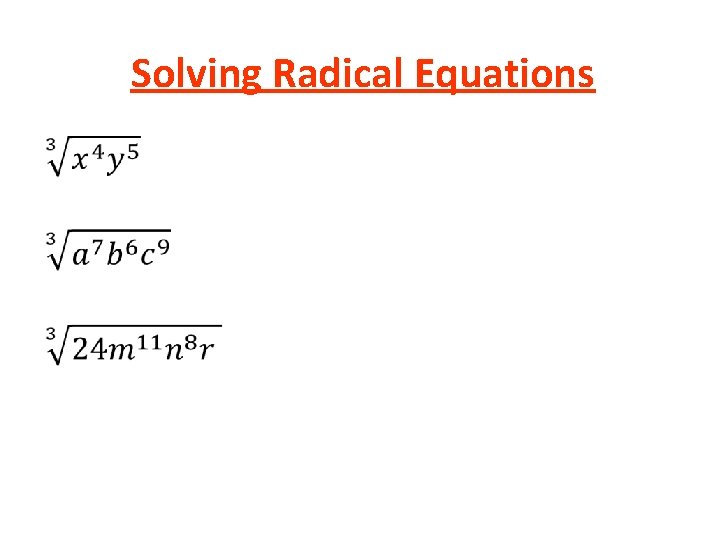
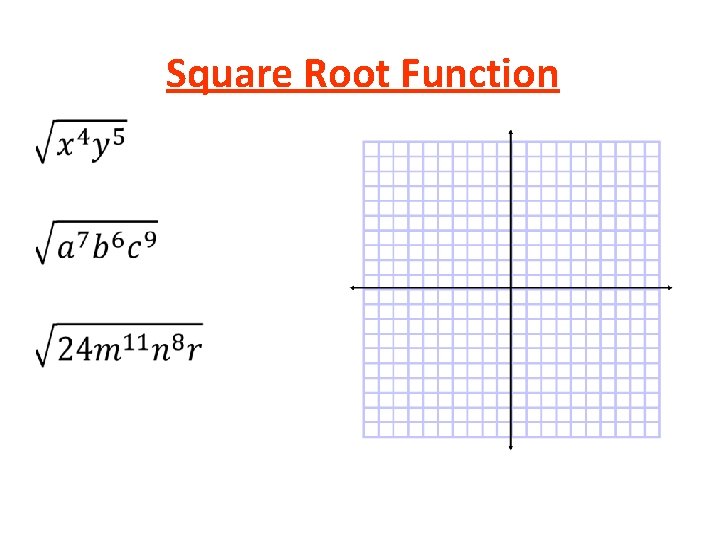
Simplifying Radicals with Variables •
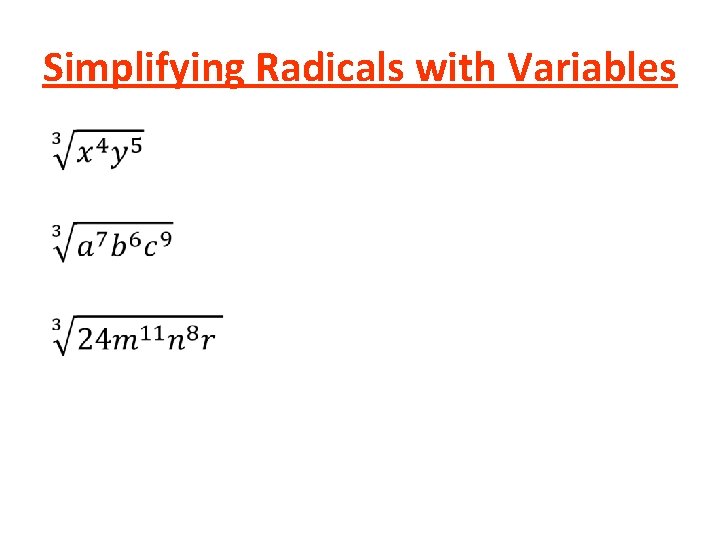
Simplifying Radicals with Variables •
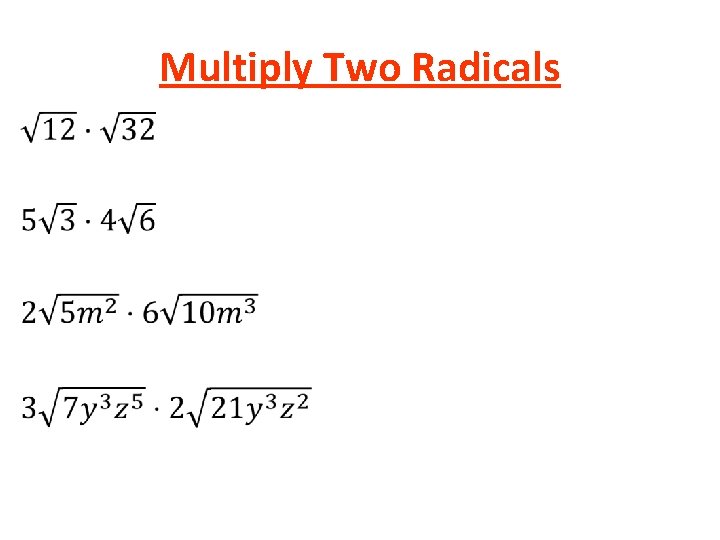
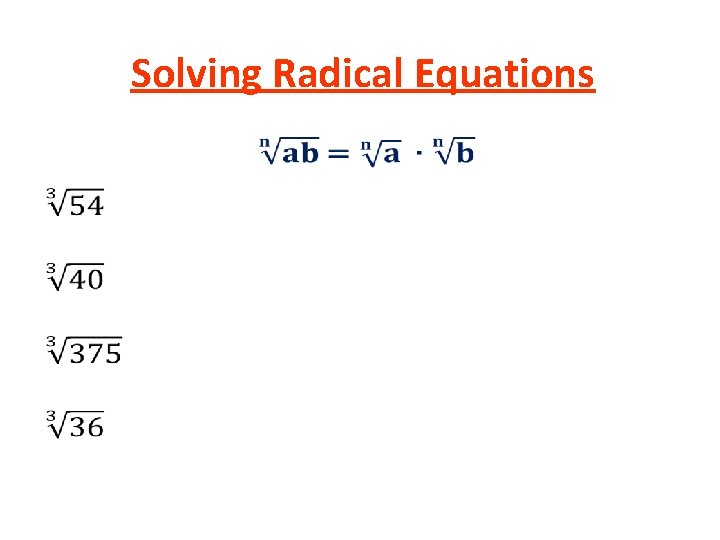
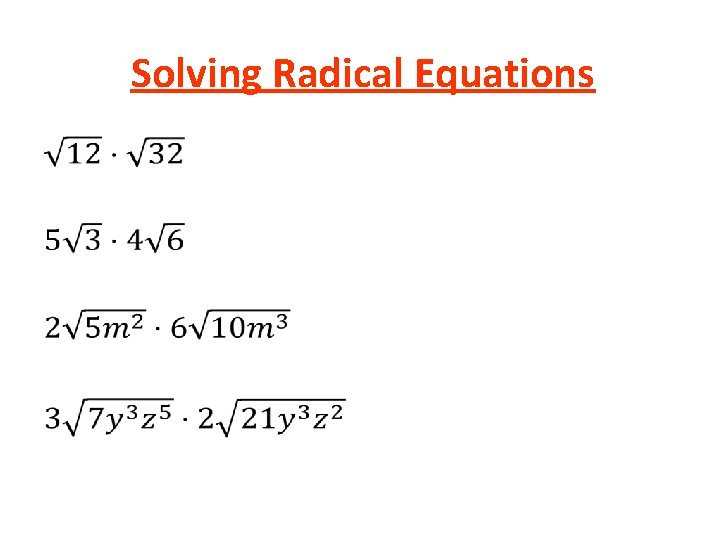
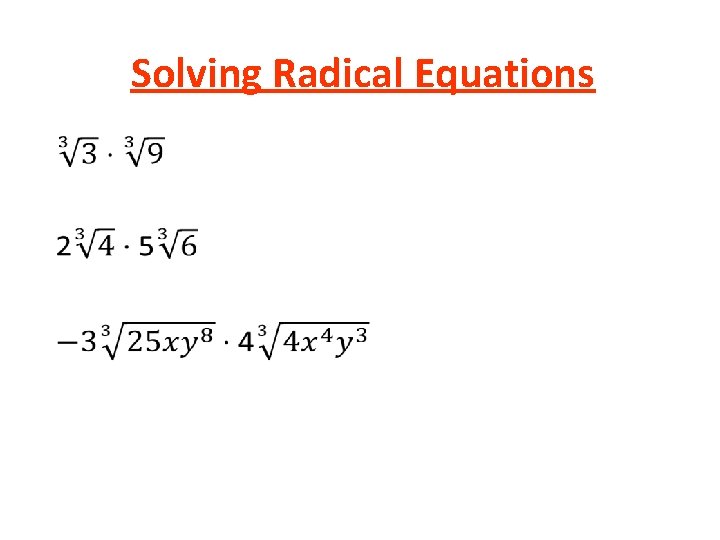
Multiply Two Radicals •
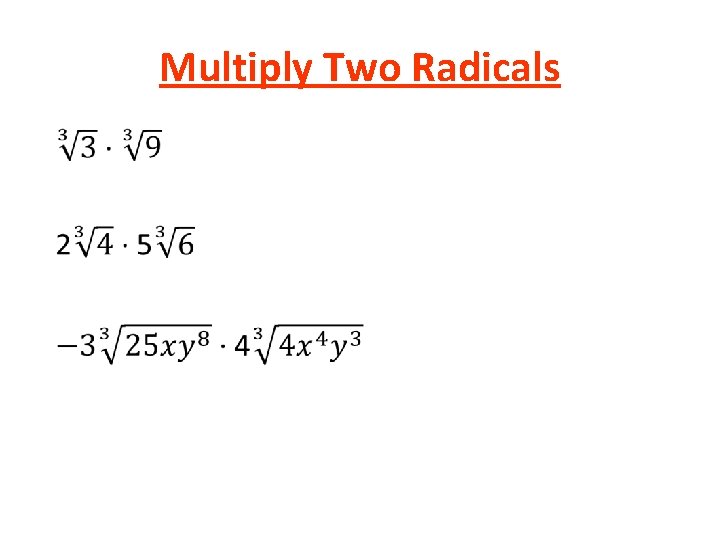
Multiply Two Radicals •
End of Day 1 P 366 #13 – 16, #39 – 46 P 371 #17 - 22
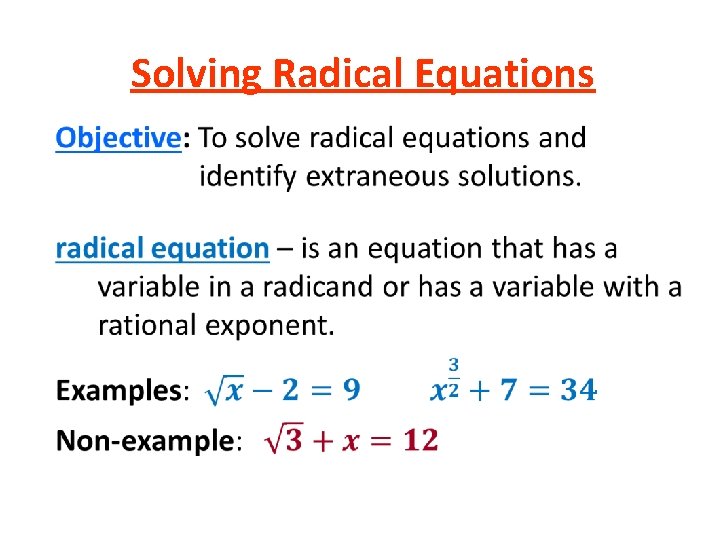
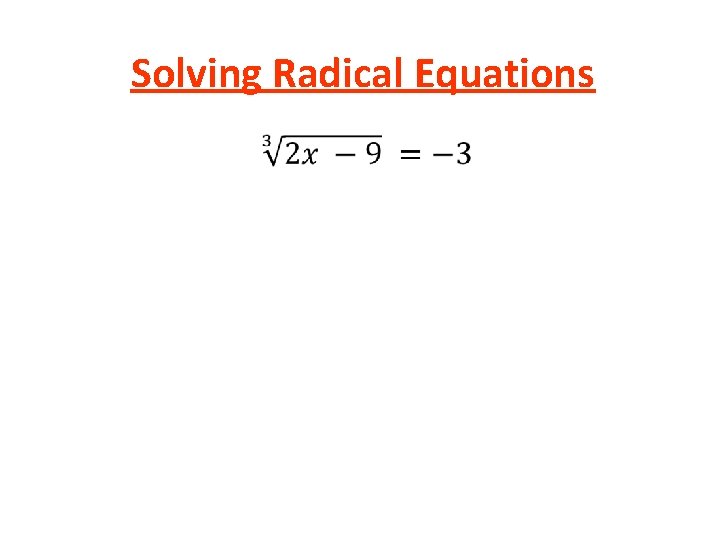
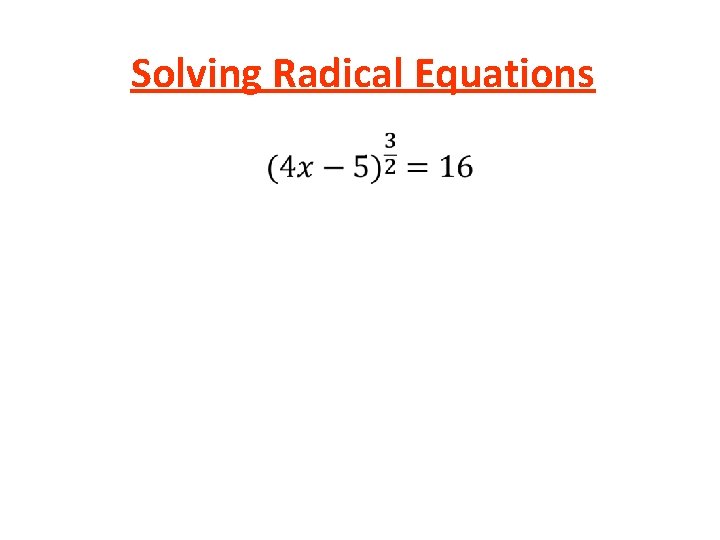
Solving Radical Equations •
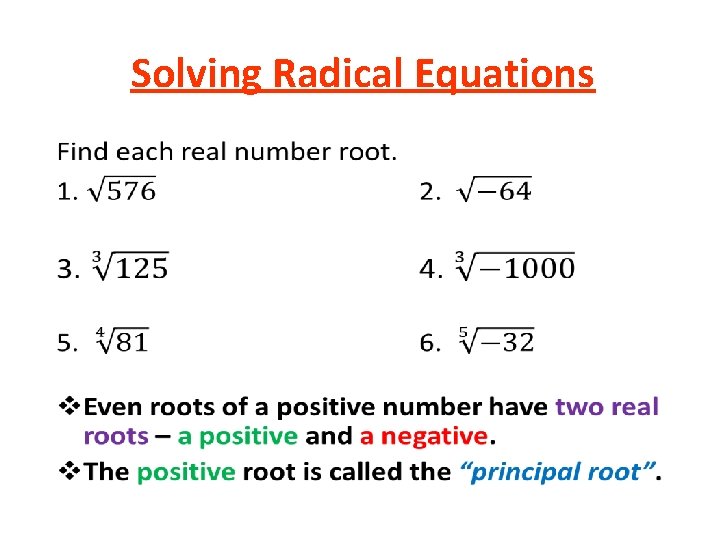
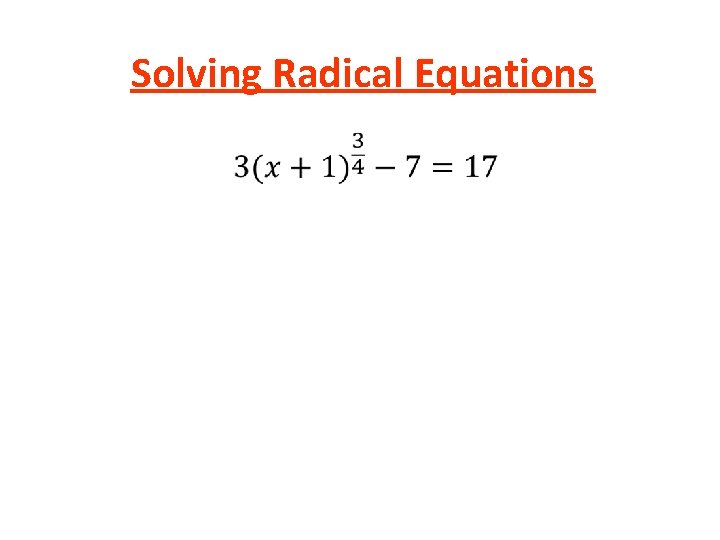
Solving Radical Equations •
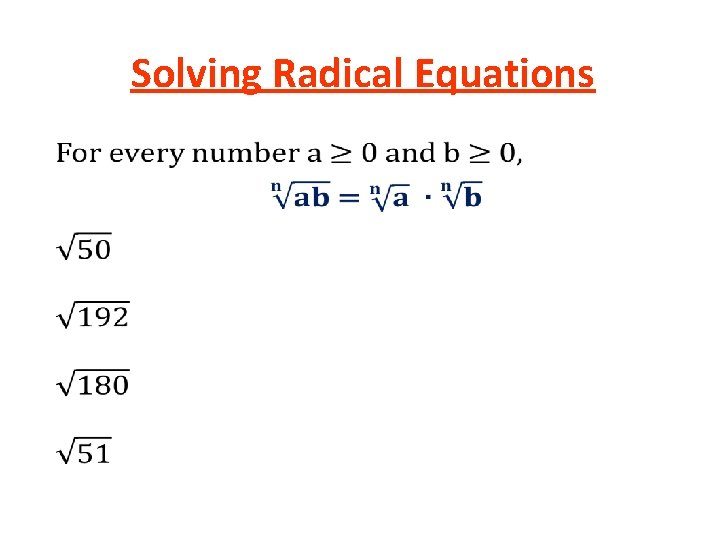
Solving Radical Equations •
Solving Radical Equations •
Solving Radical Equations •
Solving Radical Equations •
Solving Radical Equations •
Solving Radical Equations •
Solving Radical Equations •
Solving Radical Equations •
Solving Radical Equations •
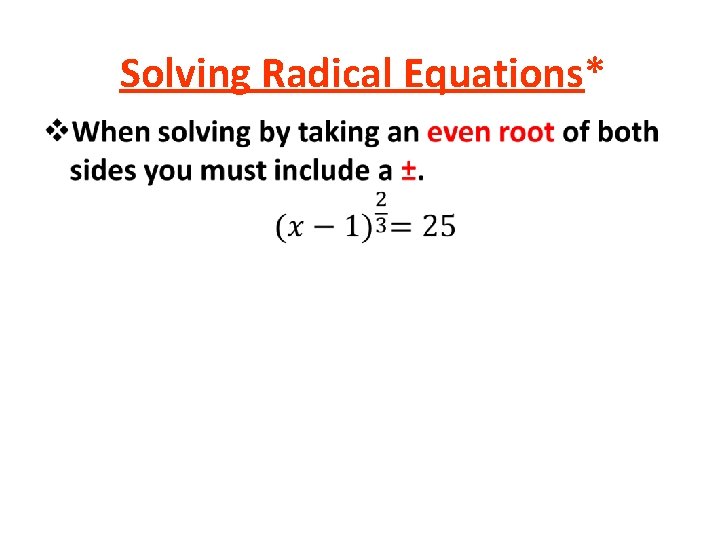
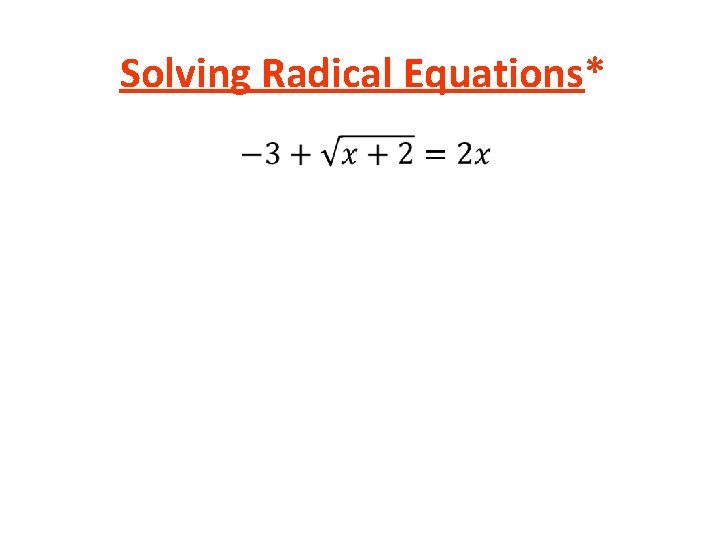
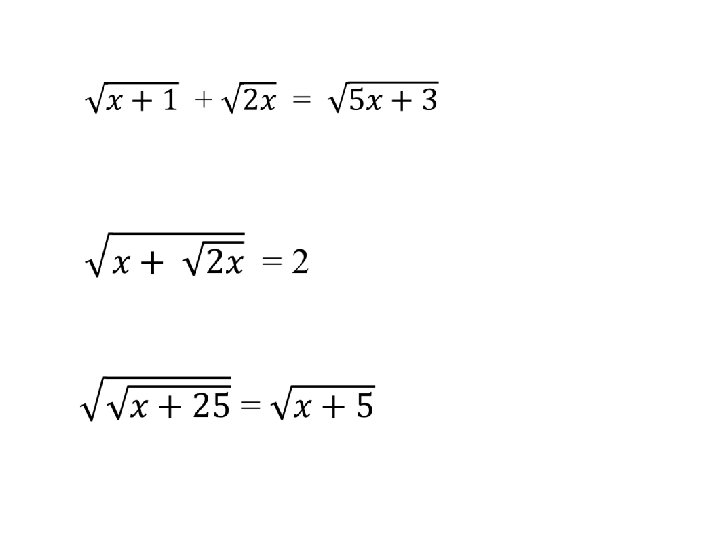
Solving Radical Equations* •
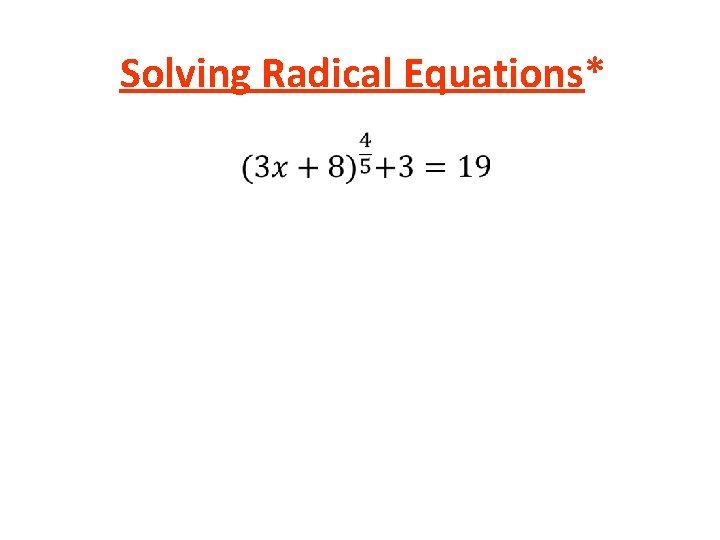
Solving Radical Equations* •
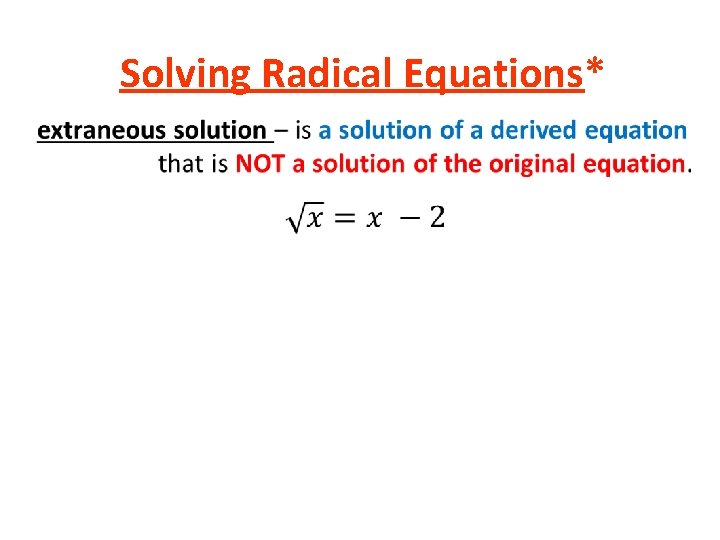
Solving Radical Equations* •
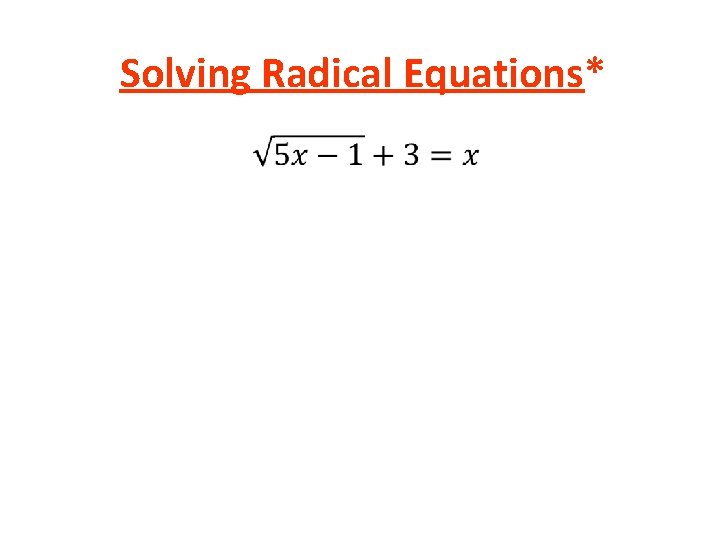
Solving Radical Equations* •
Solving Radical Equations* •
End of Day 2
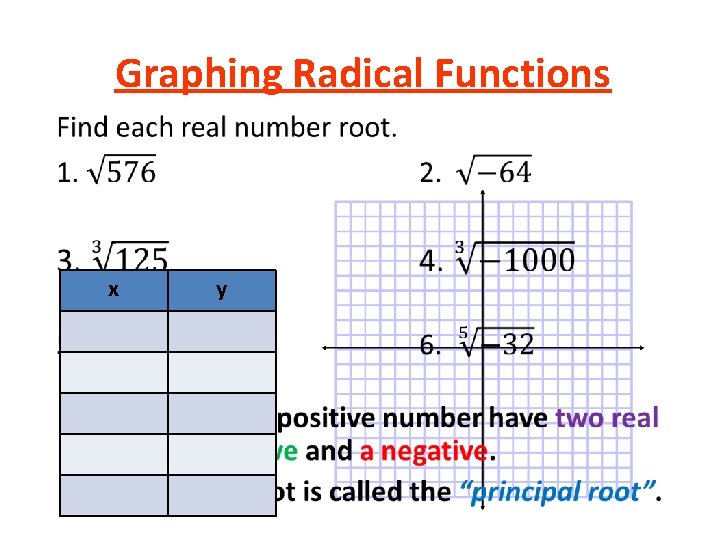
Graphing Radical Functions • x y
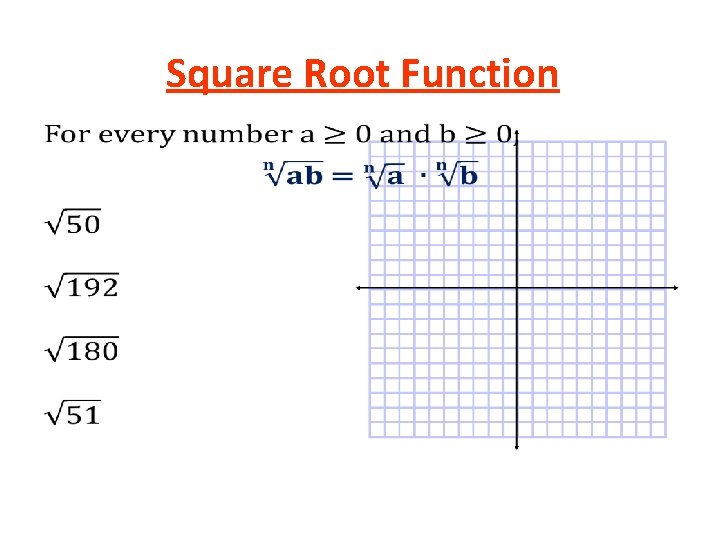
Square Root Function •
Square Root Function •
Square Root Function •
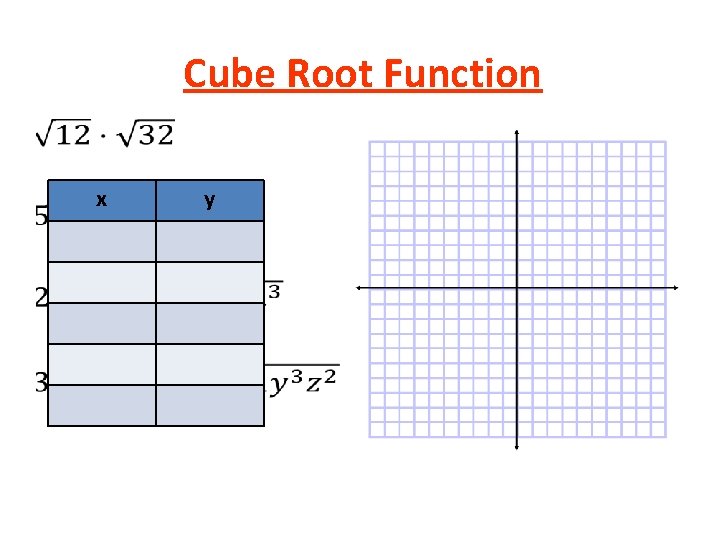
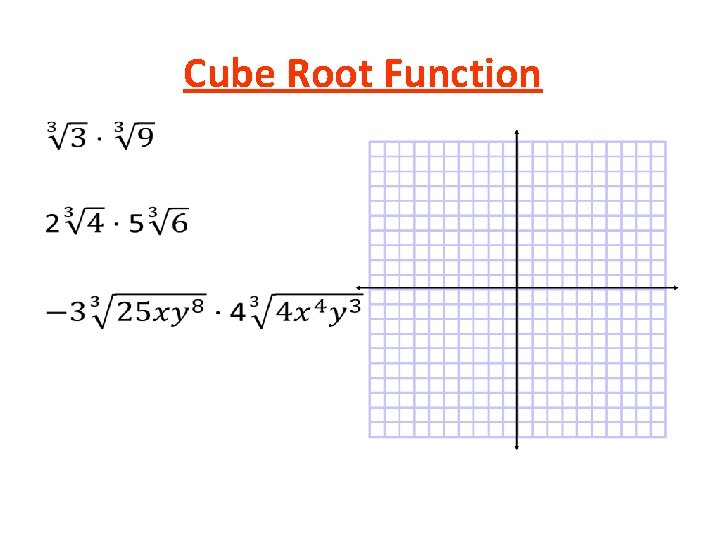
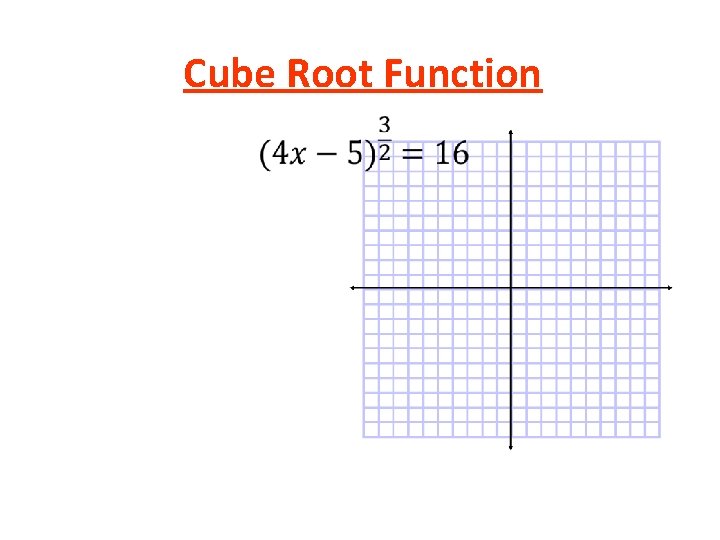
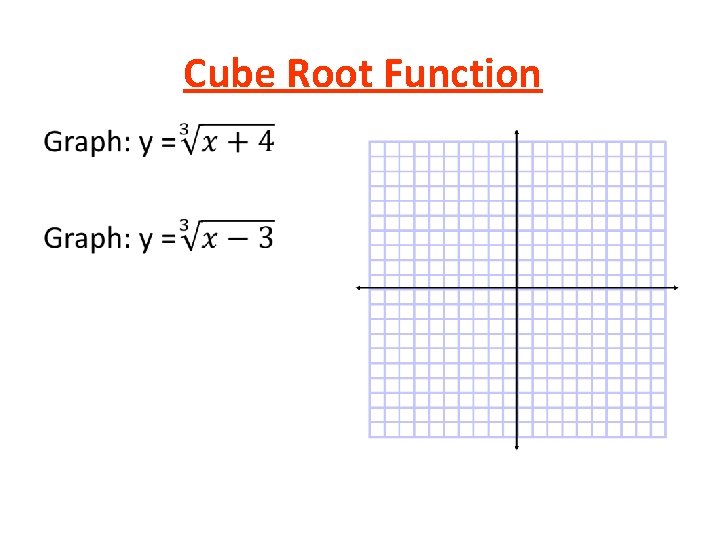
Cube Root Function • x y
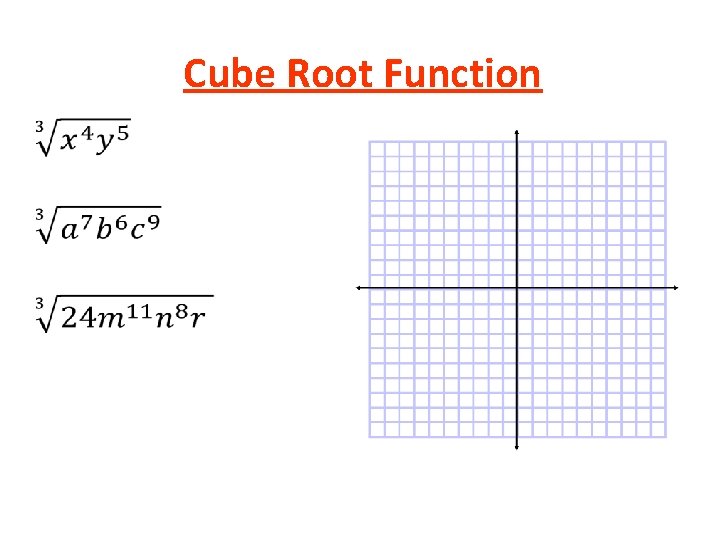
Cube Root Function •
Cube Root Function •
Cube Root Function •
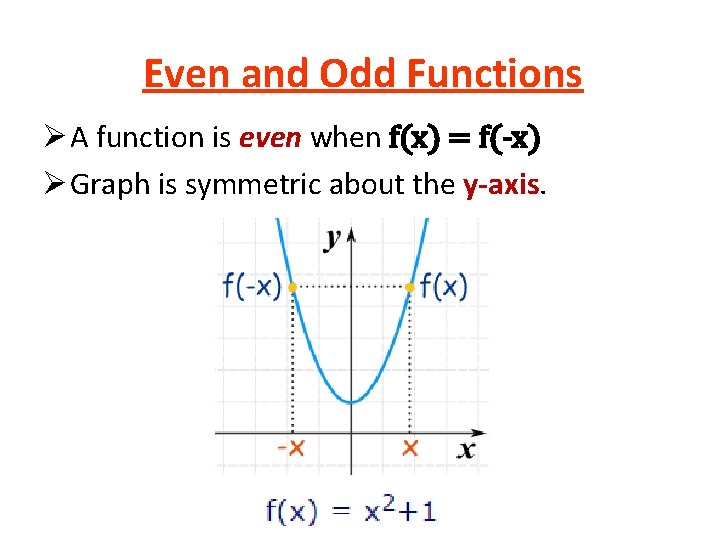
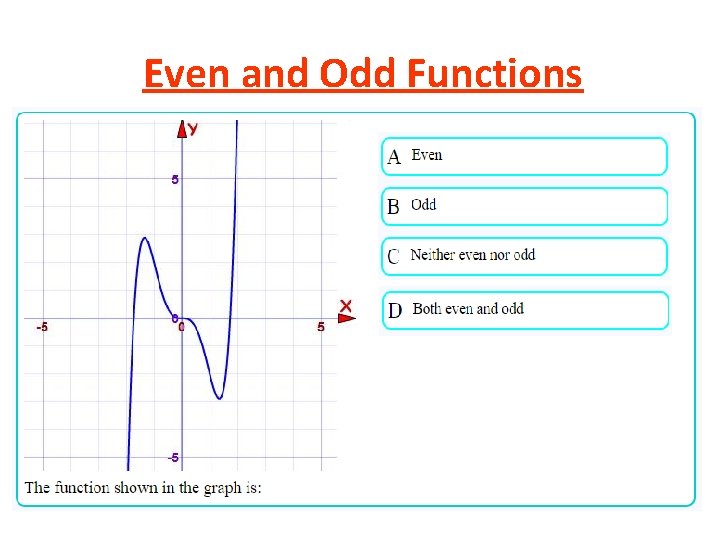
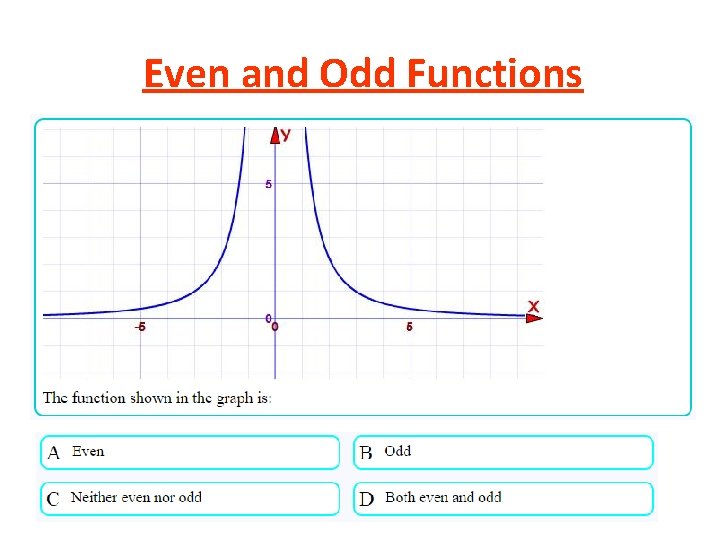
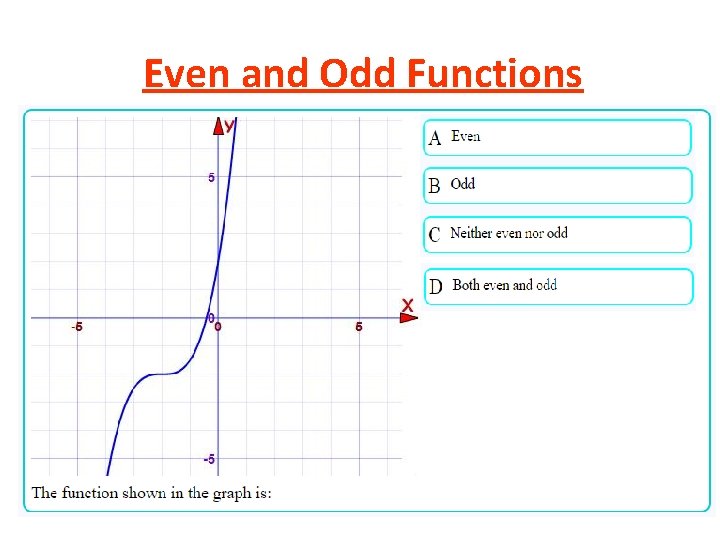
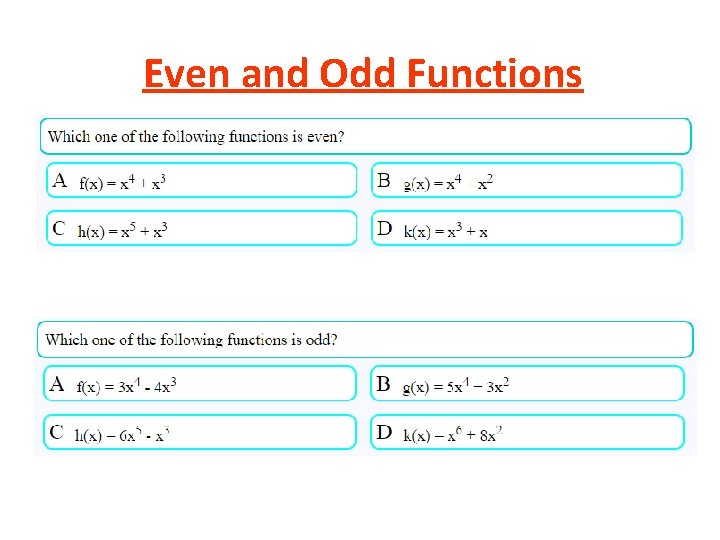
Even and Odd Functions Ø A function is even when f(x) = f(-x) Ø Graph is symmetric about the y-axis.
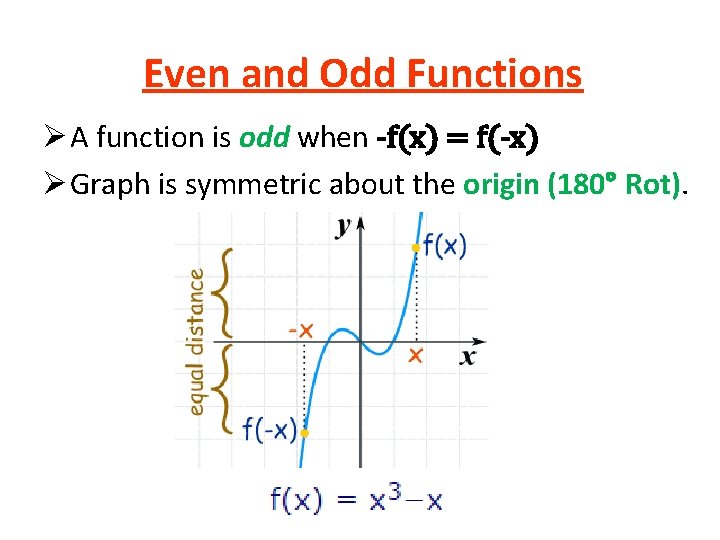
Even and Odd Functions Ø A function is odd when -f(x) = f(-x) Ø Graph is symmetric about the origin (180° Rot).
Even and Odd Functions
Even and Odd Functions
Even and Odd Functions
Even and Odd Functions
Cube Root Function •
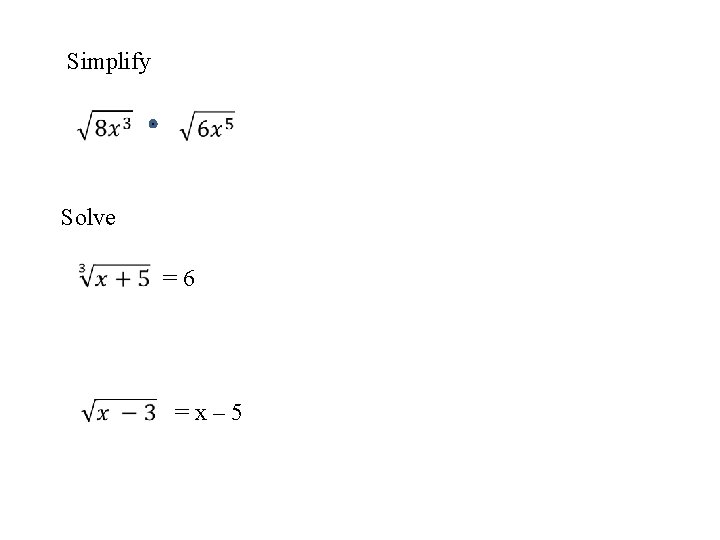
Simplify Solve =6 =x– 5
Unit 6 "Radical and Rational Functions" Title: Inverse Variation Introduction to Rational Functions Objective: To identify and use inverse variation and combined variation.
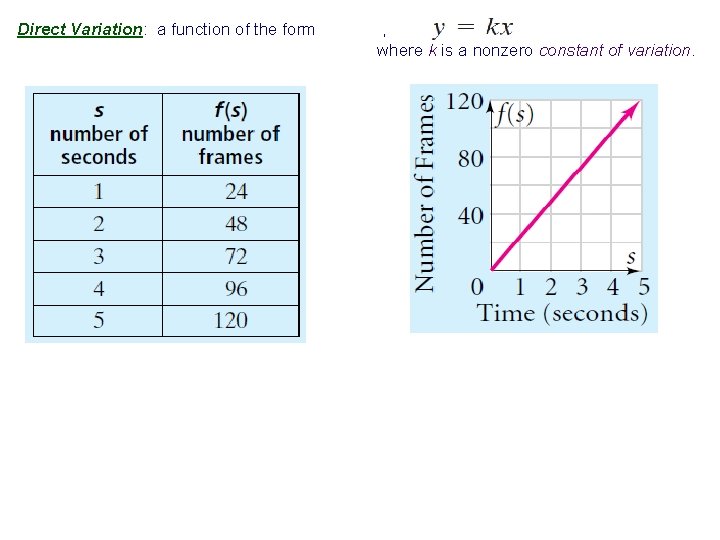
Direct Variation: a function of the form , where k is a nonzero constant of variation.
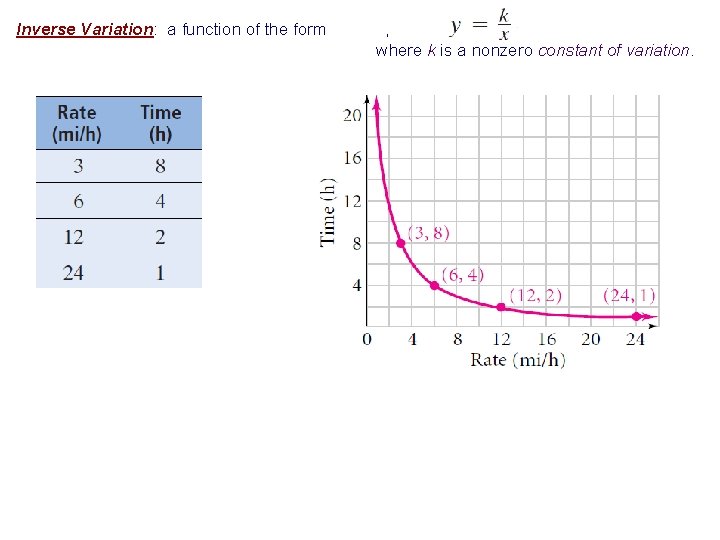
Inverse Variation: a function of the form , where k is a nonzero constant of variation.
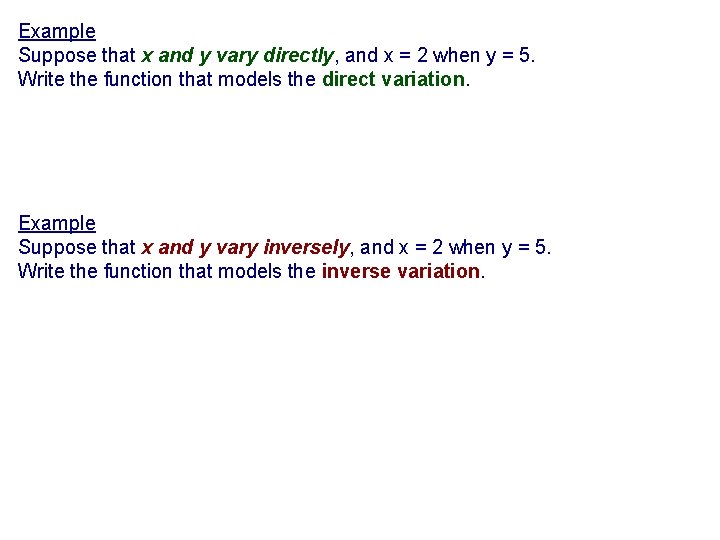
Example Suppose that x and y vary directly, and x = 2 when y = 5. Write the function that models the direct variation. Example Suppose that x and y vary inversely, and x = 2 when y = 5. Write the function that models the inverse variation.
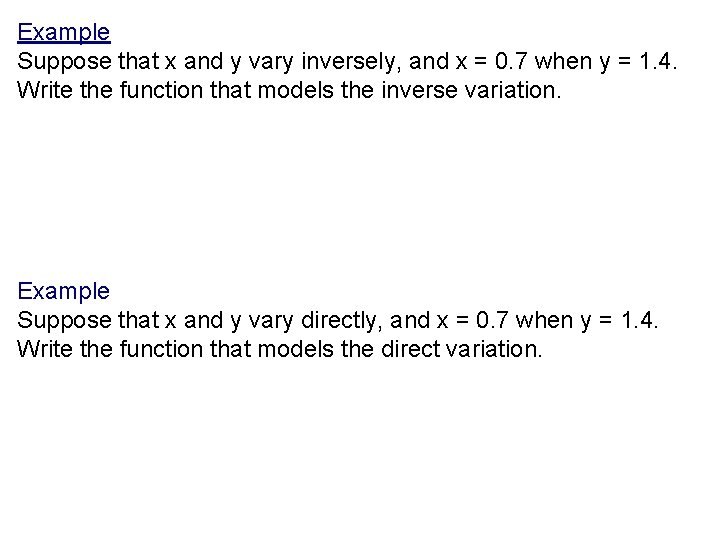
Example Suppose that x and y vary inversely, and x = 0. 7 when y = 1. 4. Write the function that models the inverse variation. Example Suppose that x and y vary directly, and x = 0. 7 when y = 1. 4. Write the function that models the direct variation.
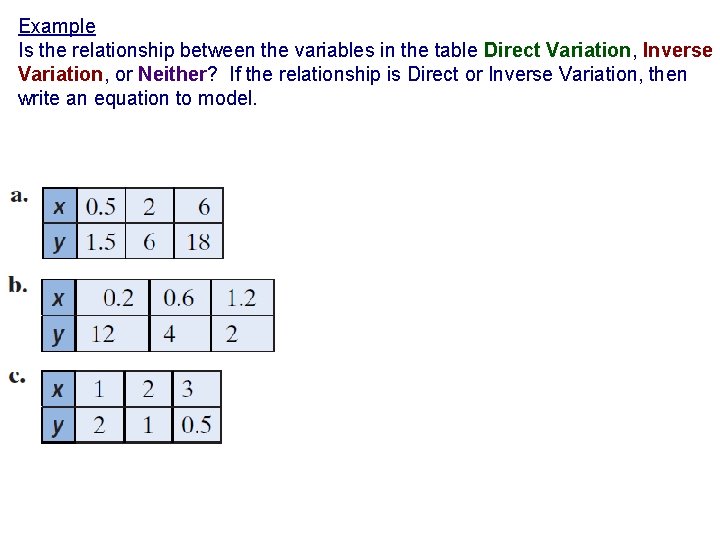
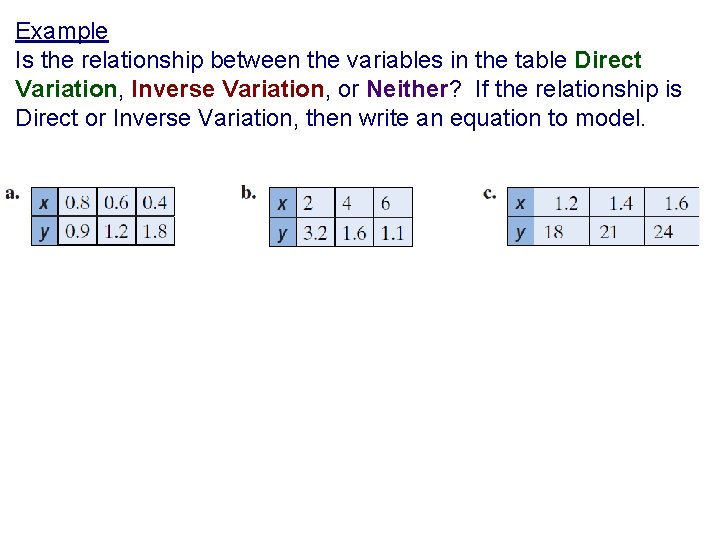
Example Is the relationship between the variables in the table Direct Variation, Inverse Variation, or Neither? If the relationship is Direct or Inverse Variation, then write an equation to model.
Example Is the relationship between the variables in the table Direct Variation, Inverse Variation, or Neither? If the relationship is Direct or Inverse Variation, then write an equation to model.
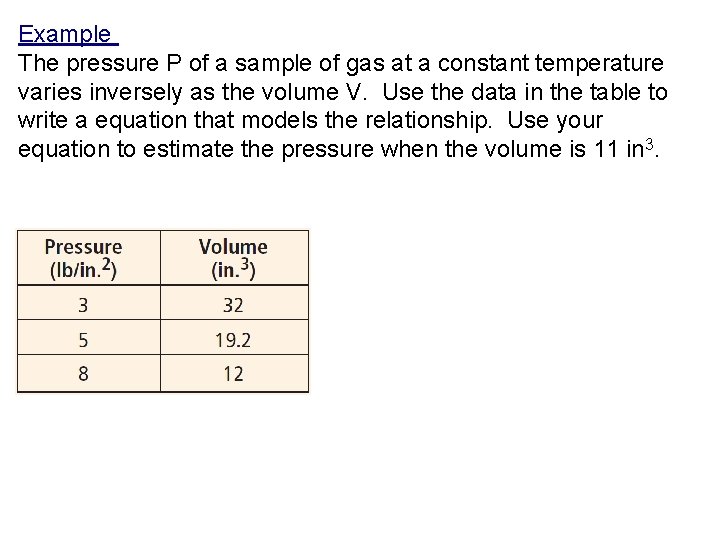
Example The pressure P of a sample of gas at a constant temperature varies inversely as the volume V. Use the data in the table to write a equation that models the relationship. Use your equation to estimate the pressure when the volume is 11 in 3.
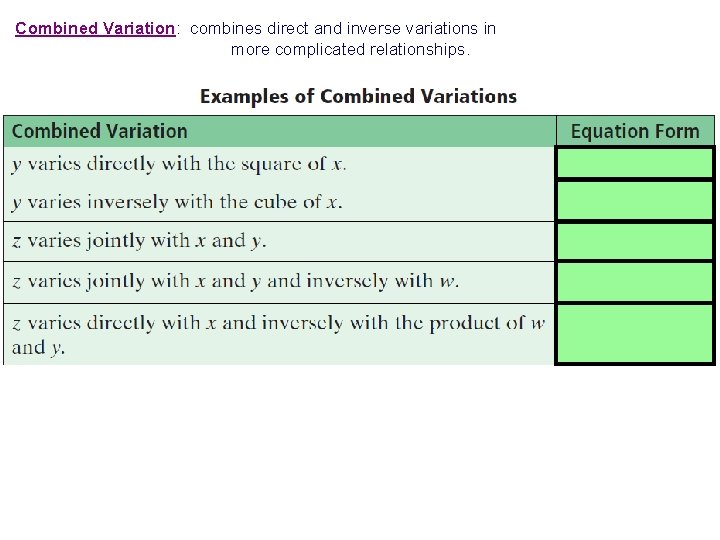
Combined Variation: combines direct and inverse variations in more complicated relationships.
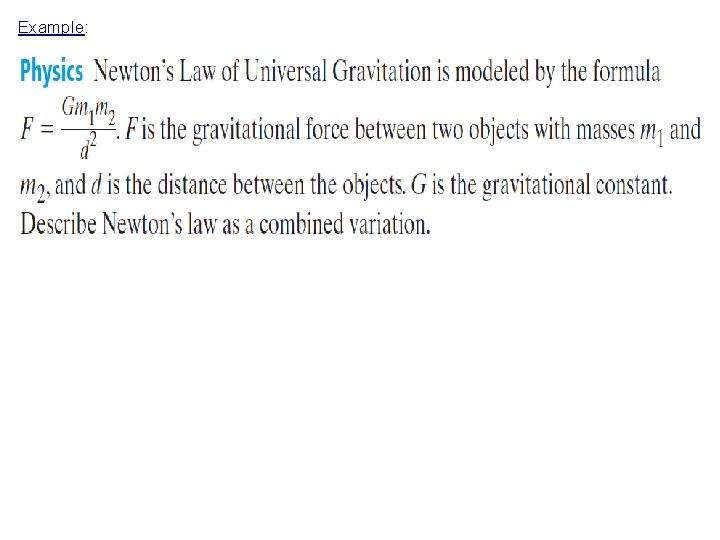
Example:
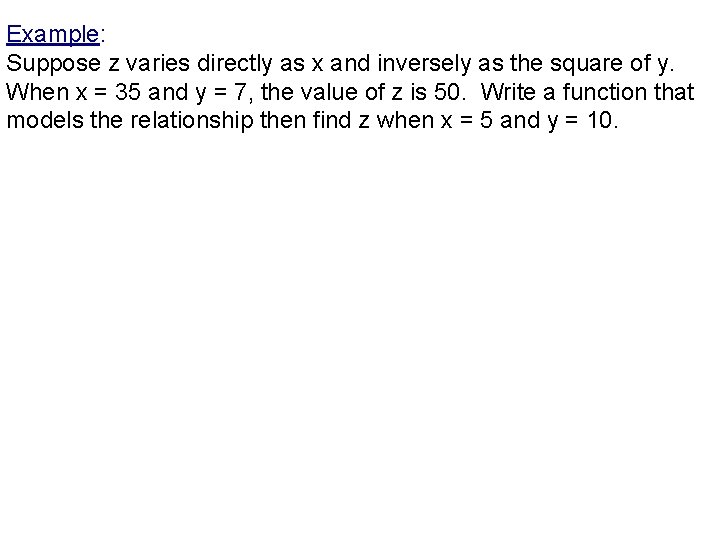
Example: Suppose z varies directly as x and inversely as the square of y. When x = 35 and y = 7, the value of z is 50. Write a function that models the relationship then find z when x = 5 and y = 10.
End of Day 3 P 412 36 – 45 all P 481 13 – 15, 21 – 27
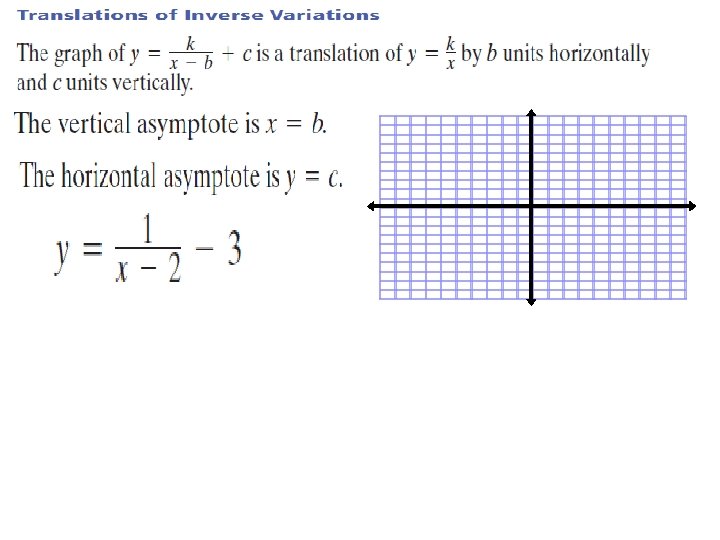
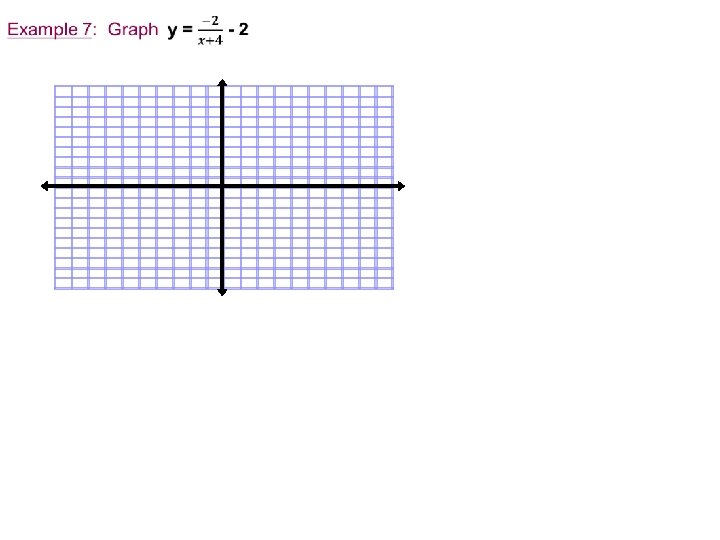
Title: Graphing Inverse Variations Objectives: To learn to graph inverse variations & translations of inverse variation.
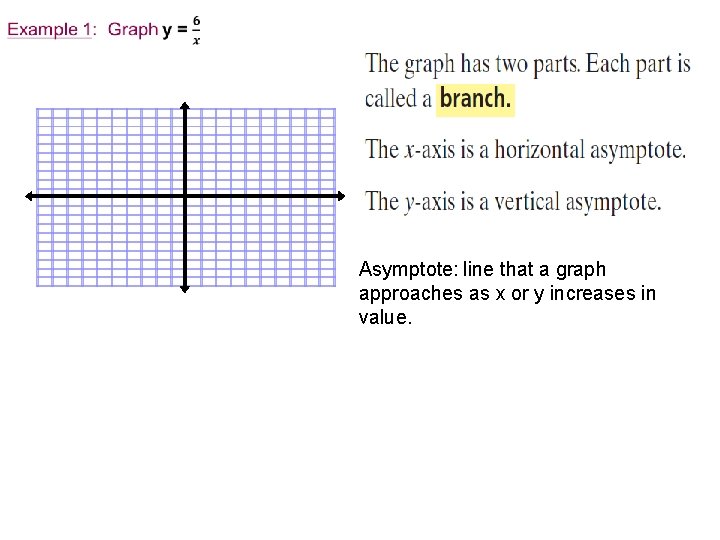
Asymptote: line that a graph approaches as x or y increases in value.
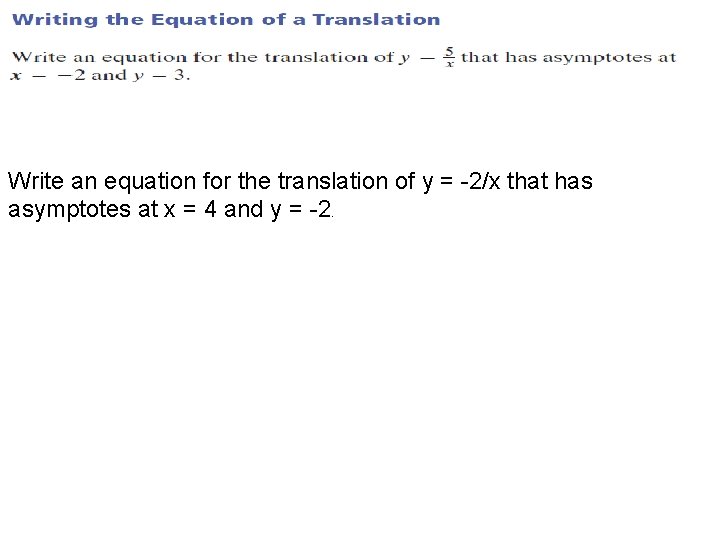
Write an equation for the translation of y = -2/x that has asymptotes at x = 4 and y = -2.
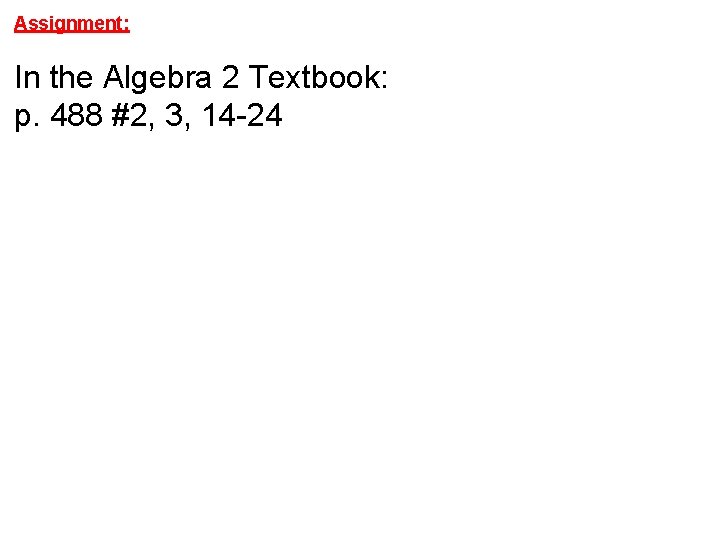
Assignment: In the Algebra 2 Textbook: p. 488 #2, 3, 14 -24
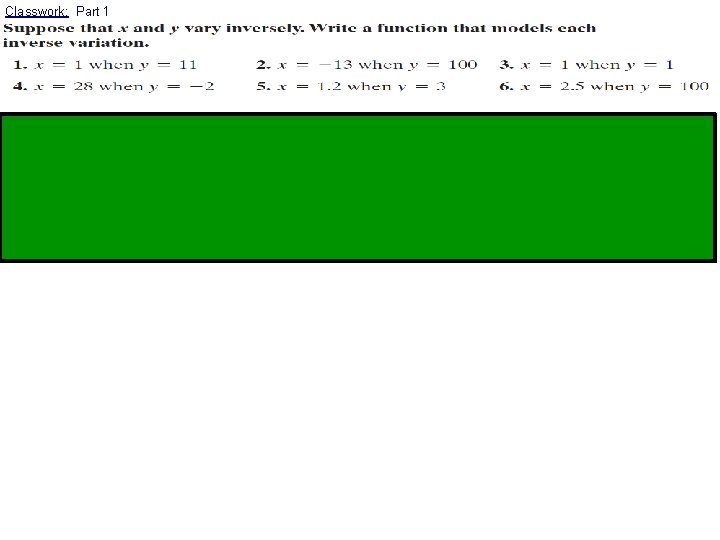
Classwork: Part 1
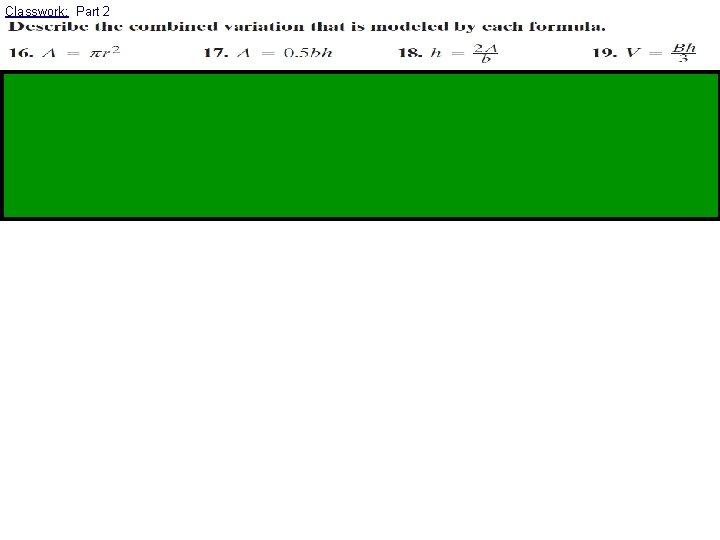
Classwork: Part 2
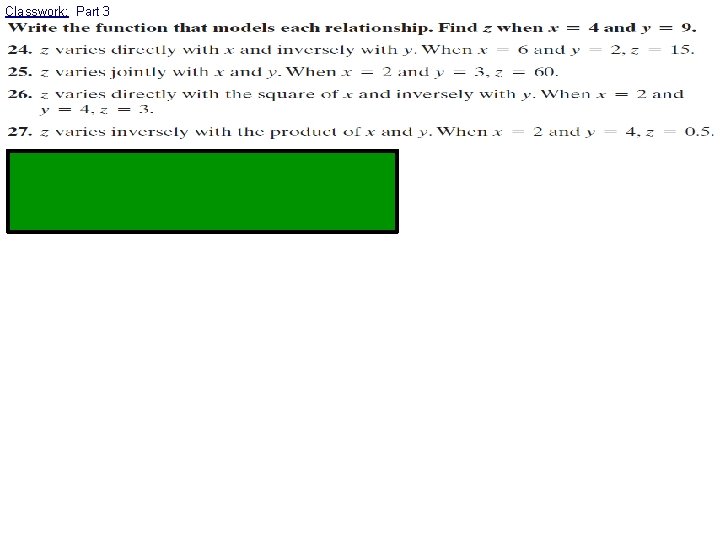
Classwork: Part 3 24. 26.
End of Day 5
Unit 6 "Radical and Rational Functions" Title: Rational Expressions Objective: To 1) simplify rational expressions, 2) multiply and divide rational expressions, and 3) identify any restrictions on the variables.
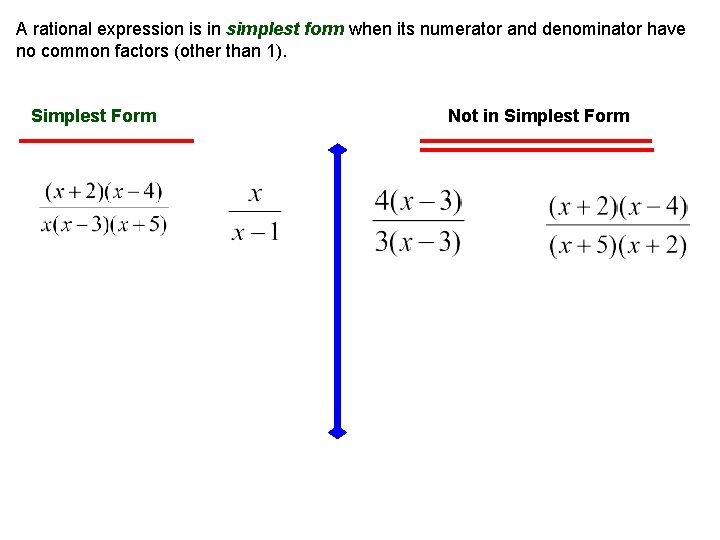
A rational expression is in simplest form when its numerator and denominator have no common factors (other than 1). Simplest Form Not in Simplest Form
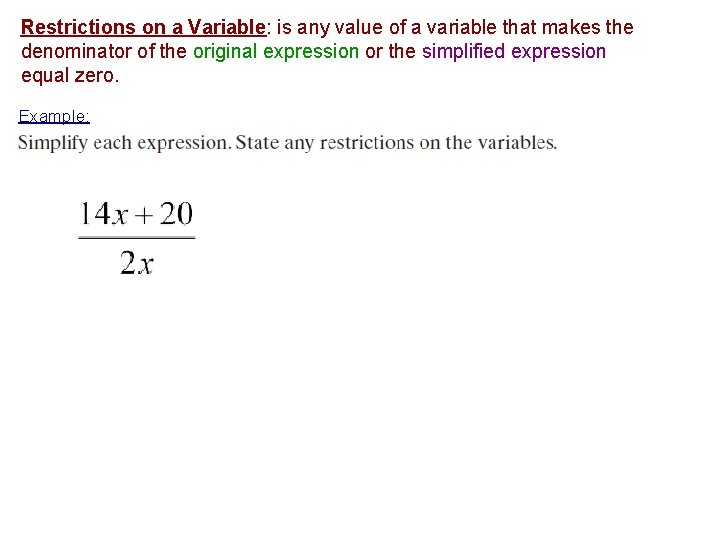
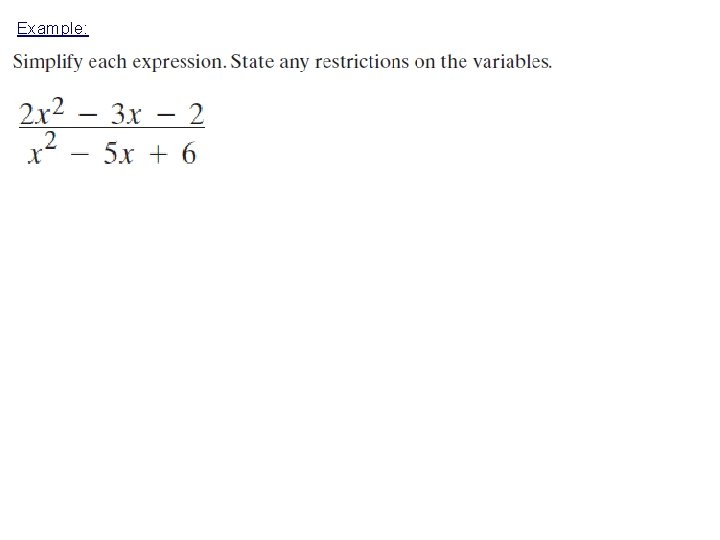
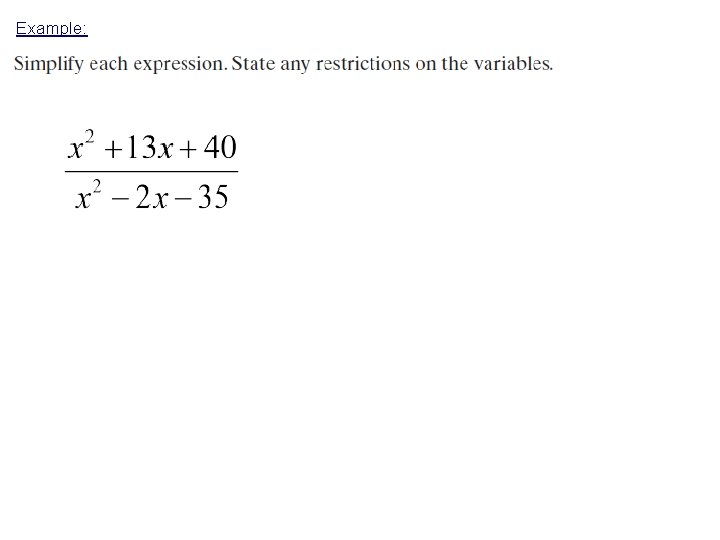
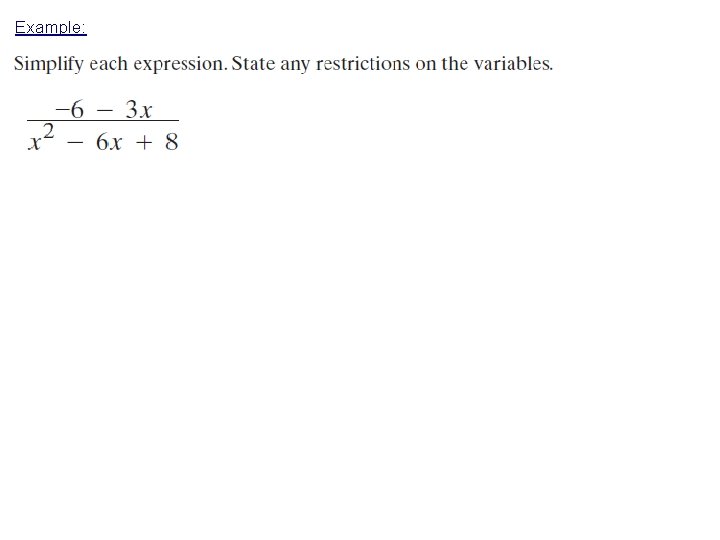
Restrictions on a Variable: is any value of a variable that makes the denominator of the original expression or the simplified expression equal zero. Example:
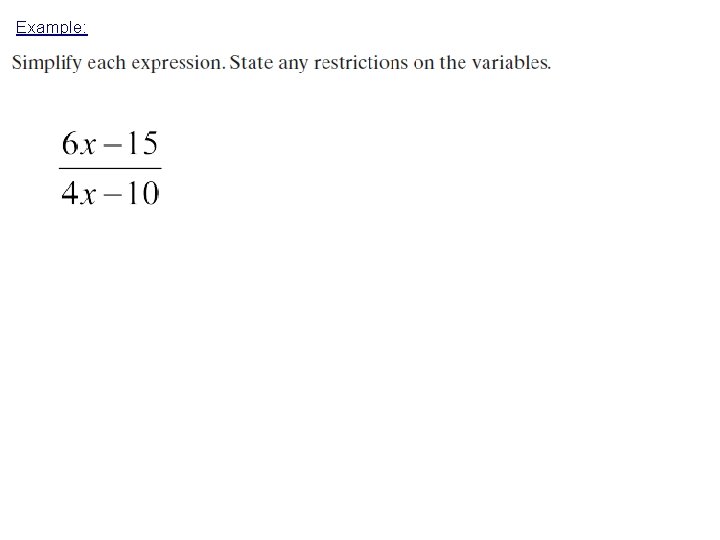
Example:
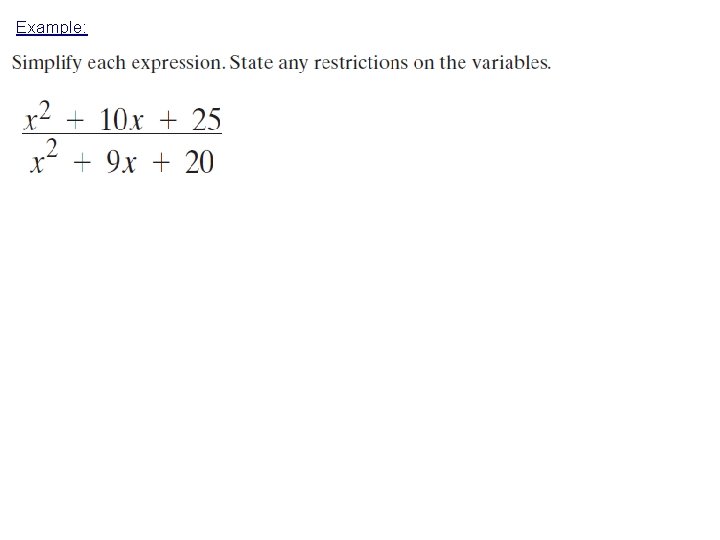
Example:
Example:
Example:
Example:
End of Day 6
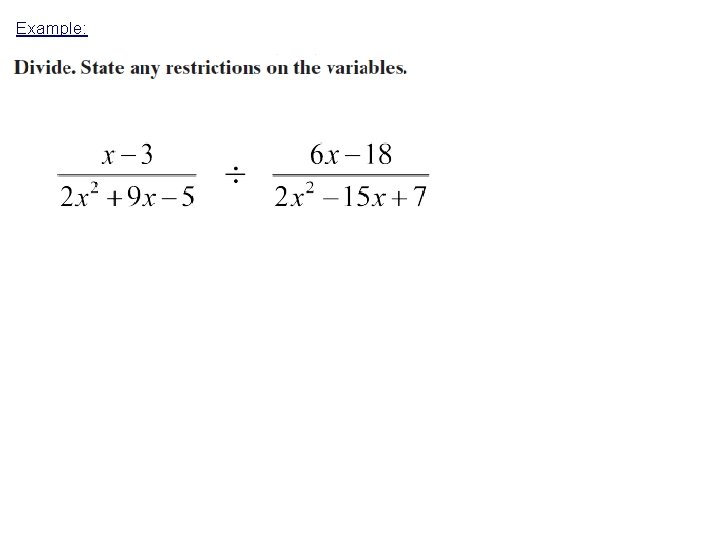
Multiplying and Dividing Rational Expressions Factor all parts of the expression You cancel top to bottom and diagonally When dividing, flip the second fraction and multiply.
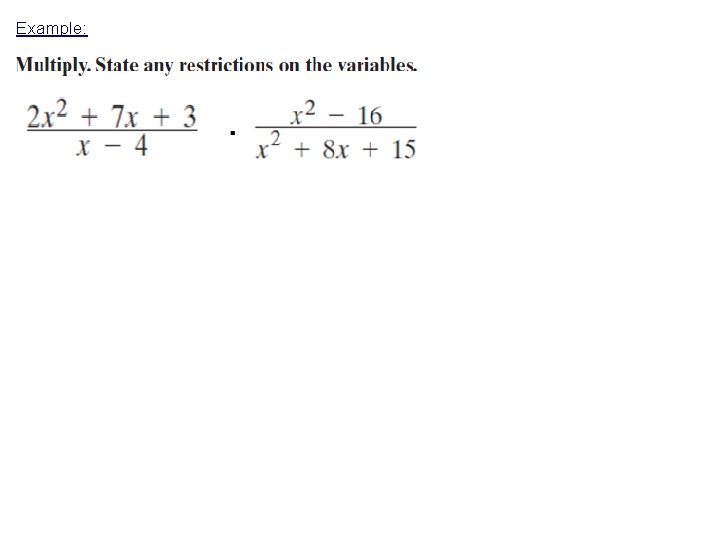
Example:
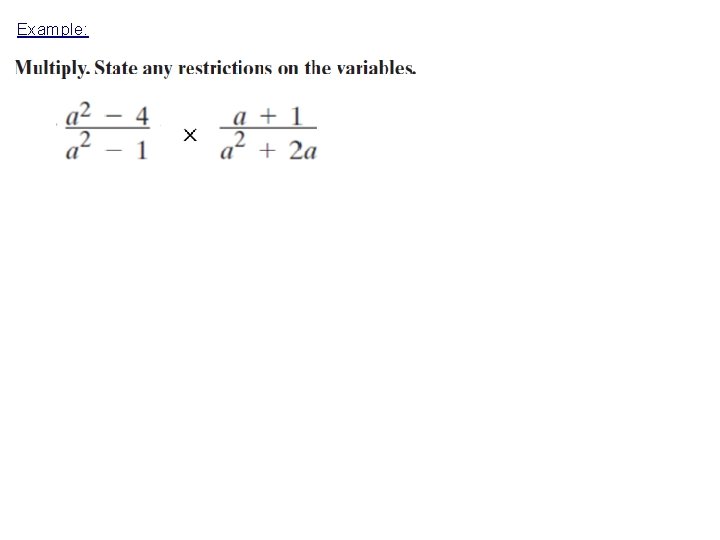
Example:
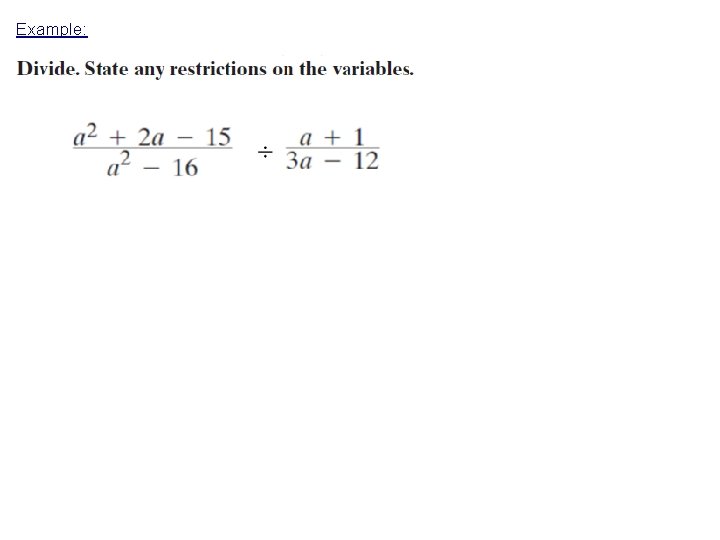
Example:
Example:
End of Day 7
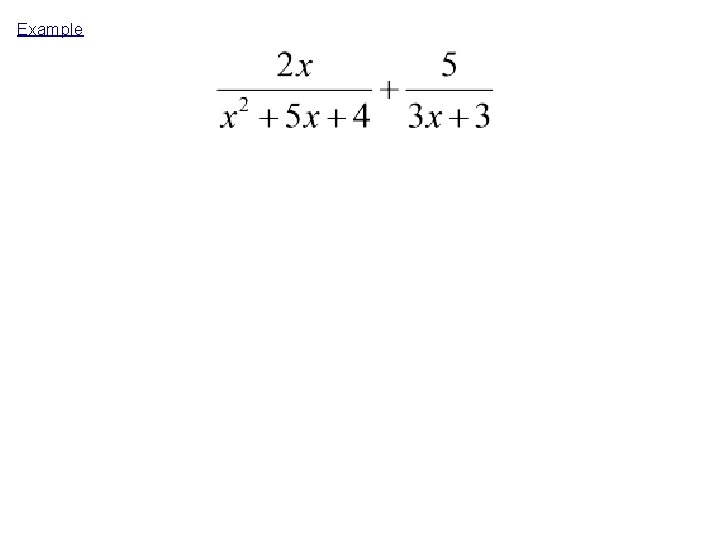
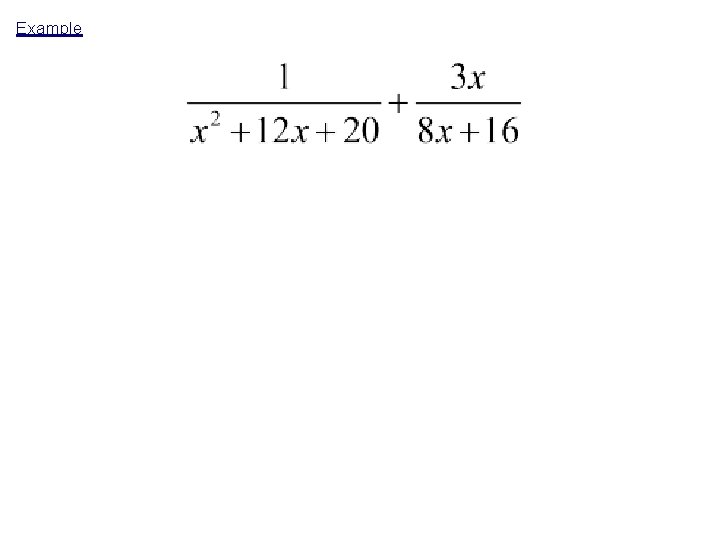
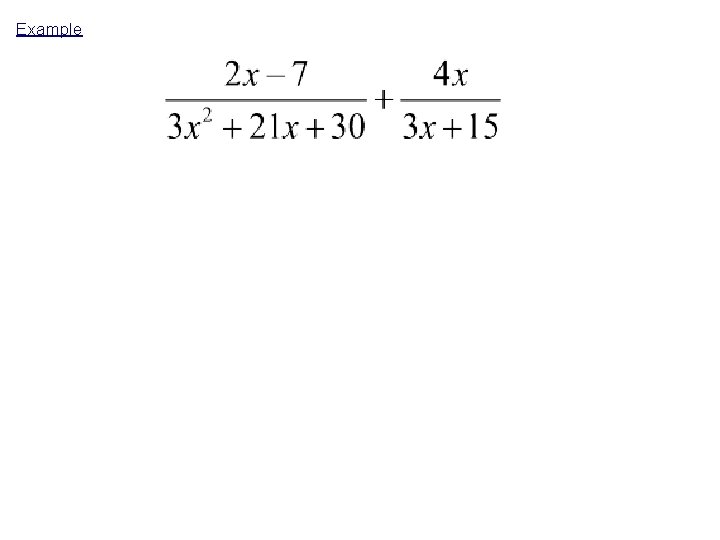
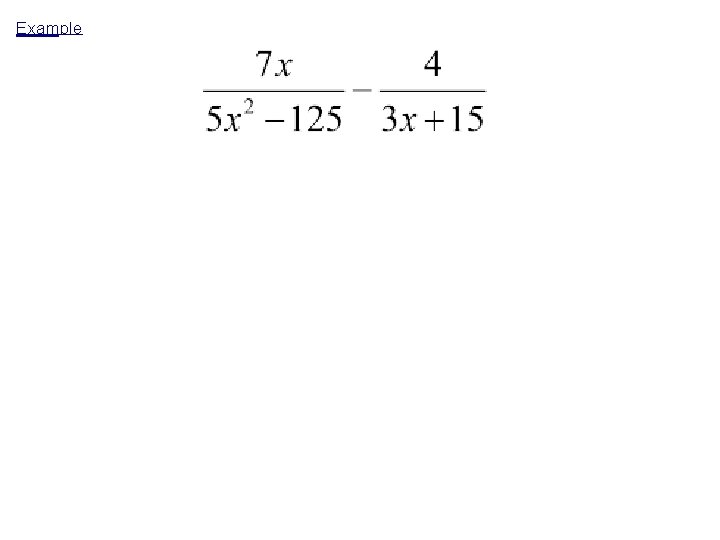
Unit 6 "Radical and Rational Functions" Title: Adding and Subtracting Rational Expressions Objective: To find the least common multiples of rational expressions and use them to add & subtract rational expressions. Adding/Subtracting Fractions - The denominators must be the same!
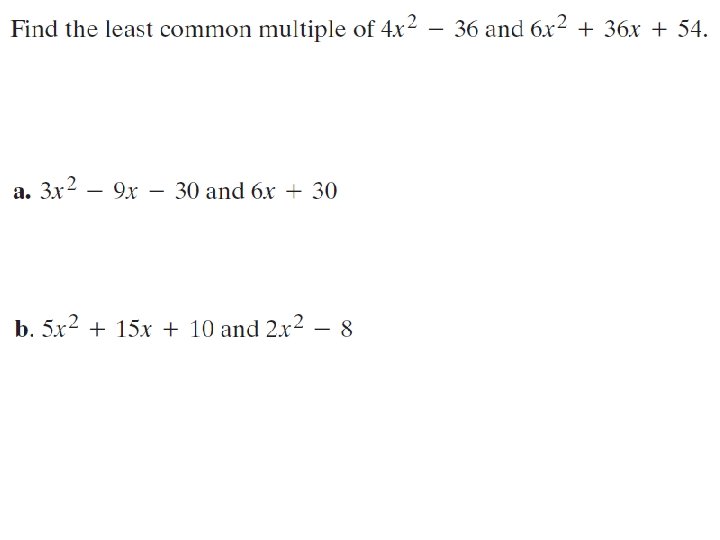
Example
Example
Example
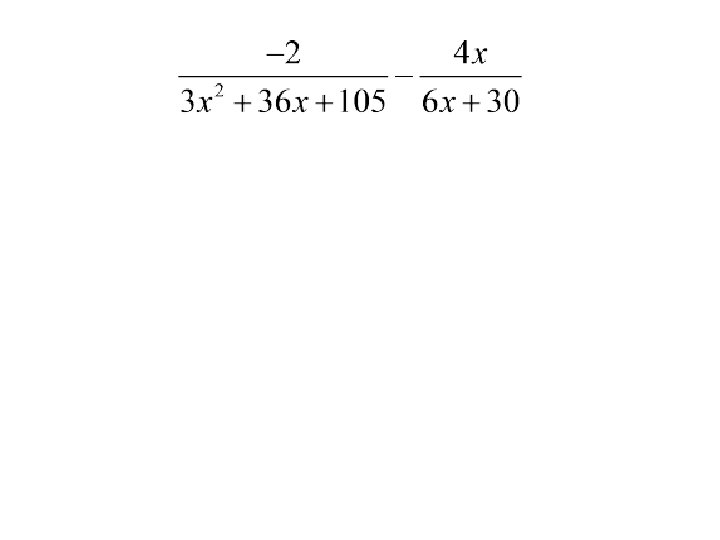
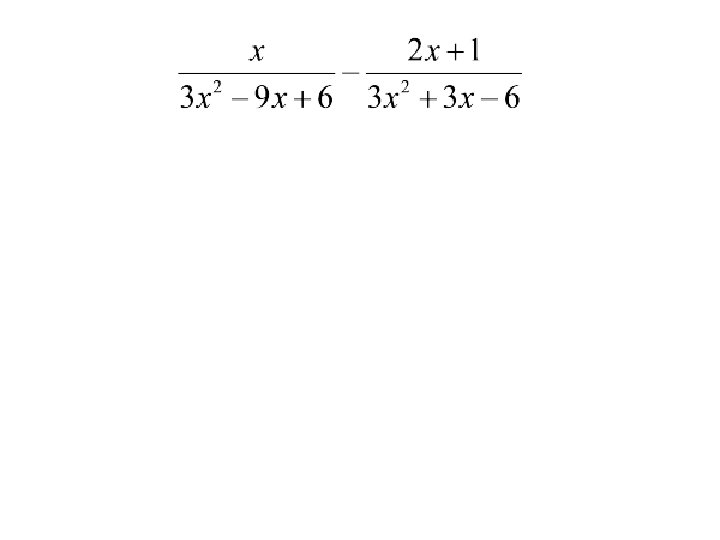
Example
End of Day 8
Complex Fractions
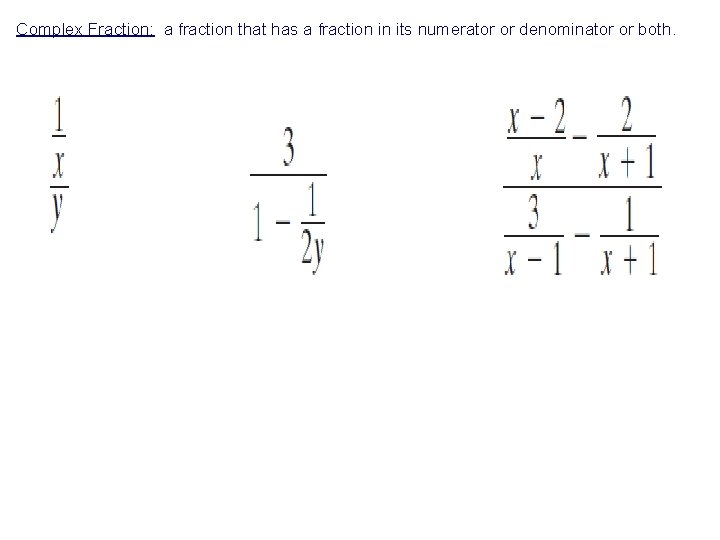
Complex Fraction: a fraction that has a fraction in its numerator or denominator or both.
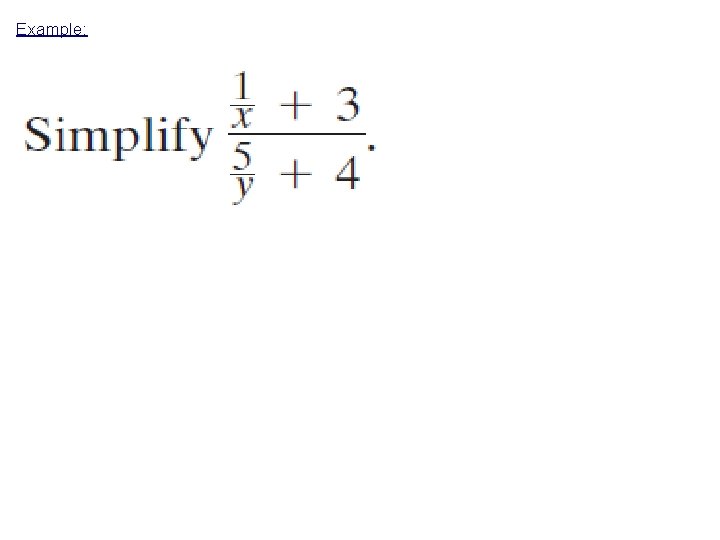
Example:
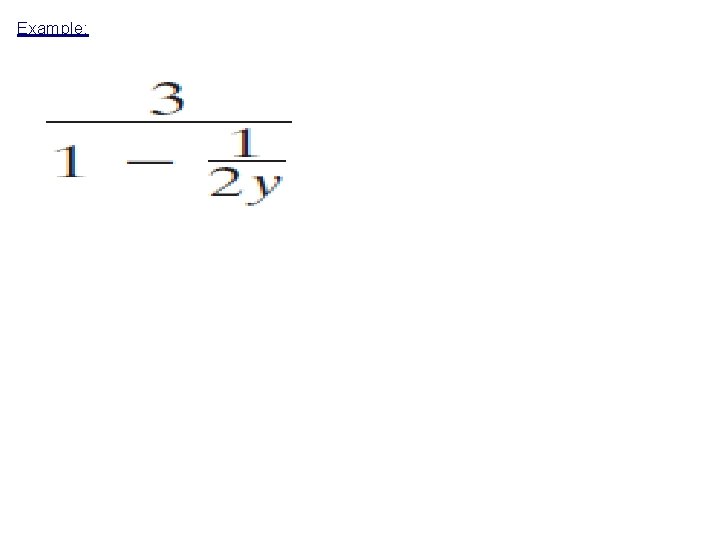
Example:
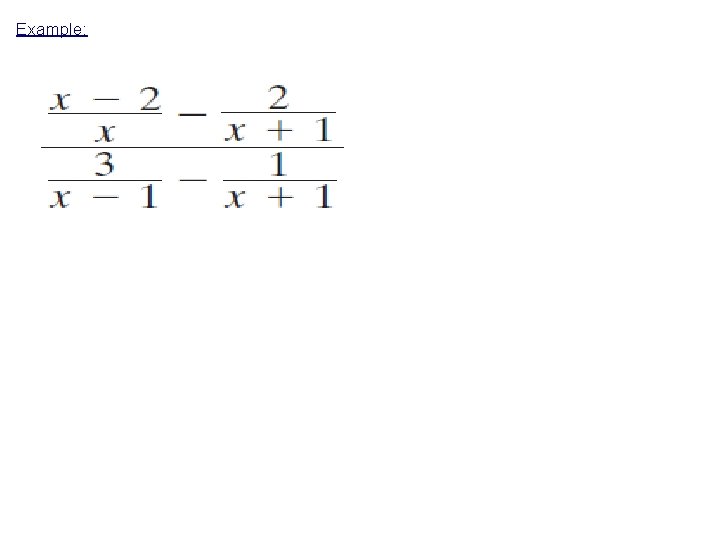
Example:
End of Day
Unit 6 "Radical and Rational Functions" Title: Rational Equations Objective: To solve equations that contain rational expressions and use rational equations in solving problems.
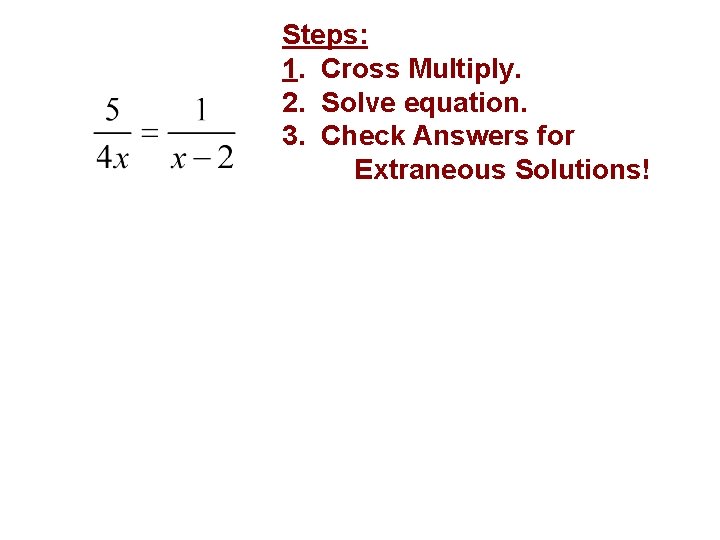
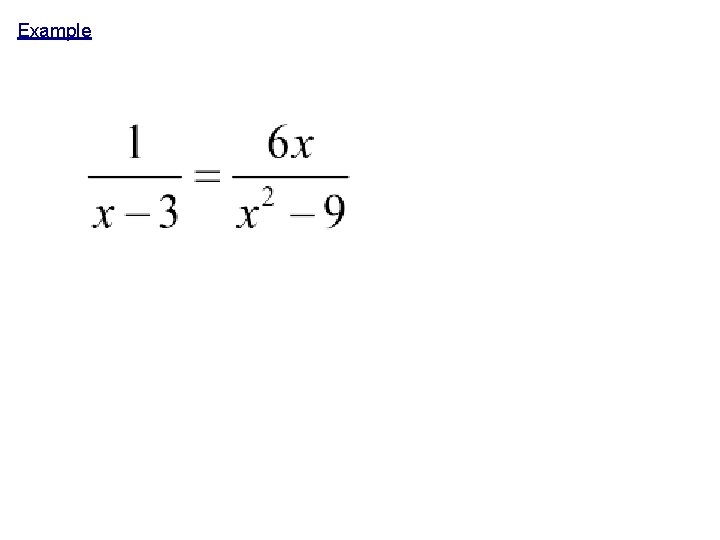
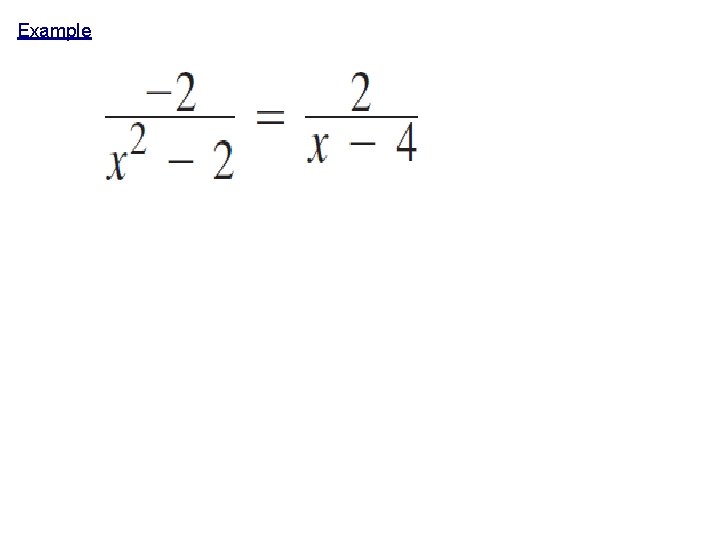
Example Steps: 1. Cross Multiply. 2. Solve equation. 3. Check Answers for Extraneous Solutions!
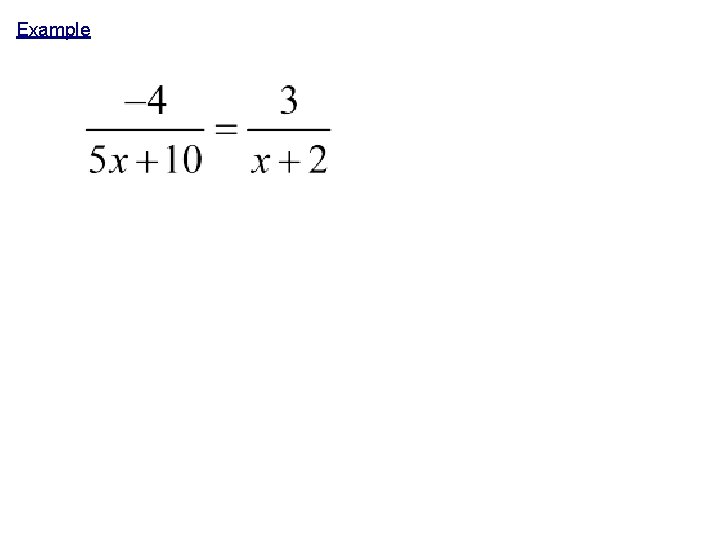
Example
Example
Example
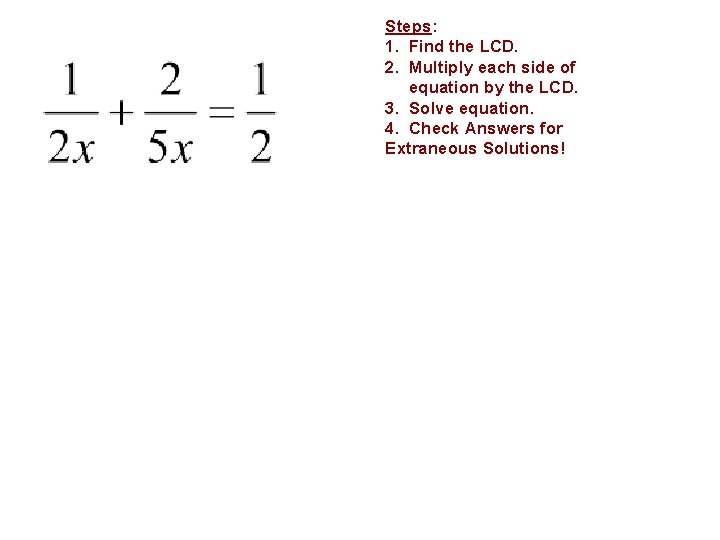
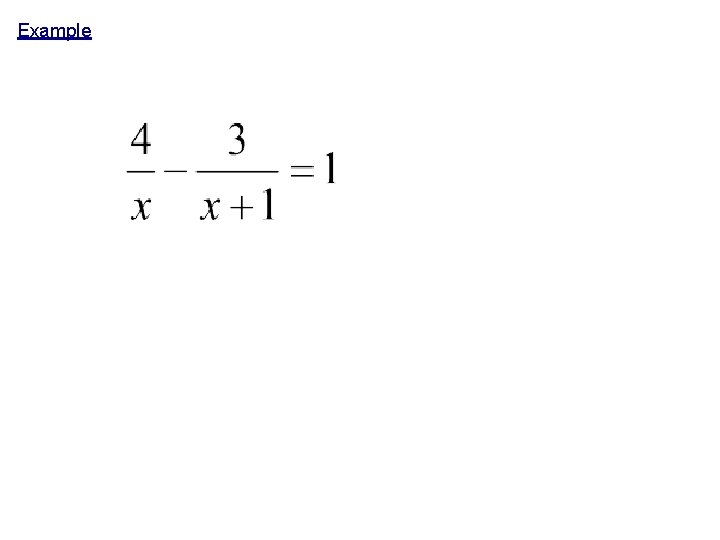
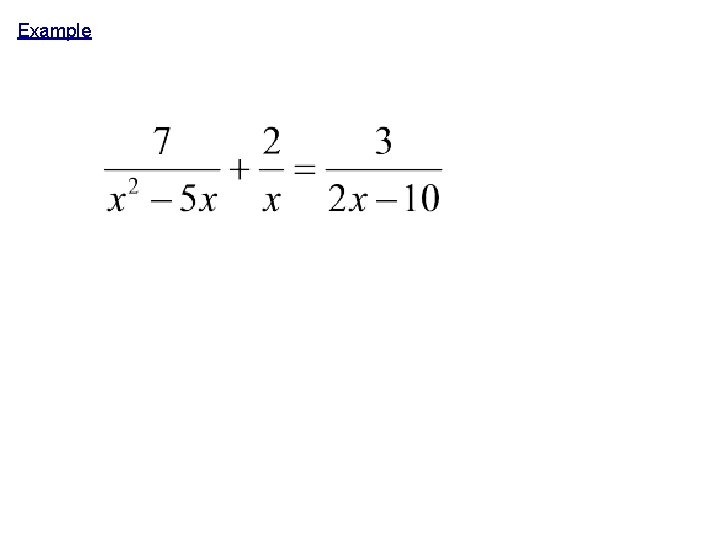
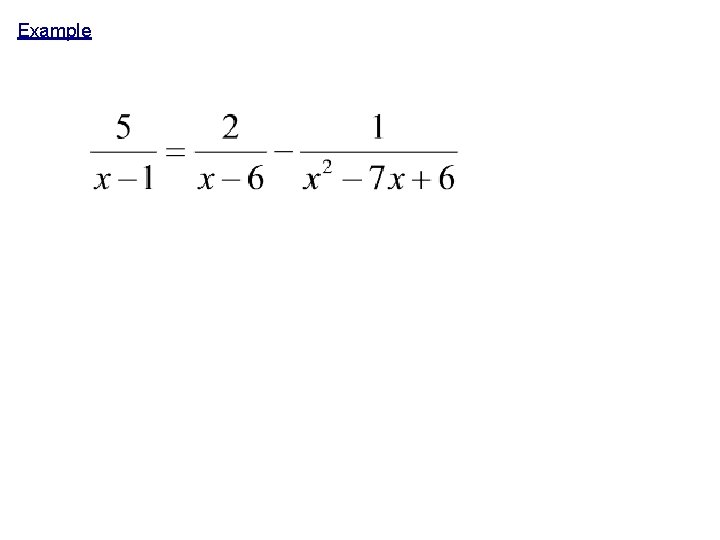
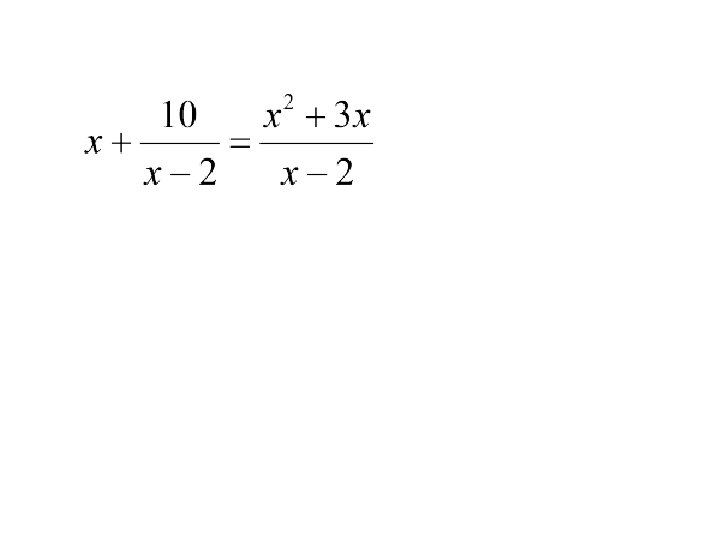
Example Steps: 1. Find the LCD. 2. Multiply each side of equation by the LCD. 3. Solve equation. 4. Check Answers for Extraneous Solutions!
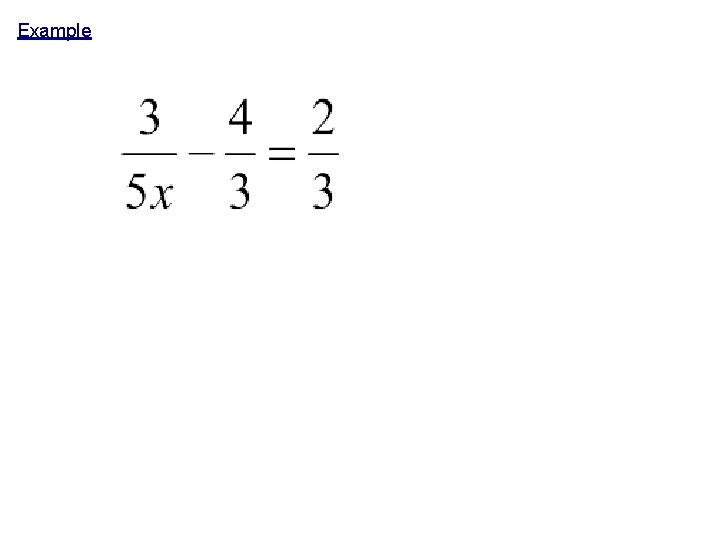
Example
Example
Example
Example
End of Day
Word Problems
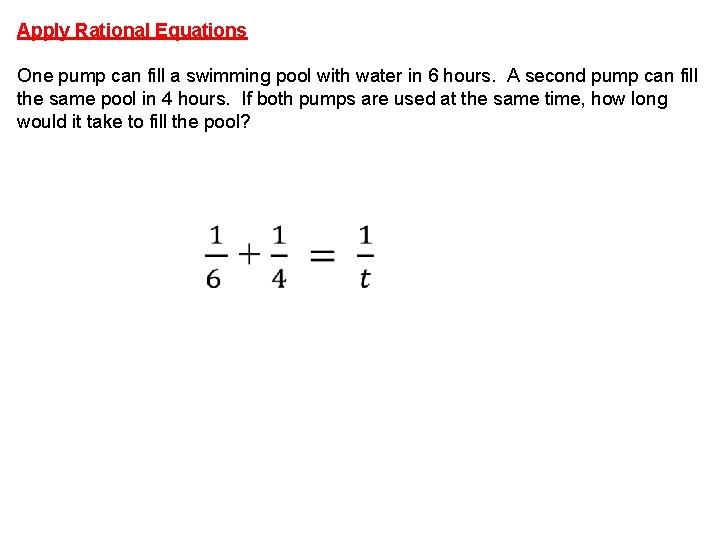
Apply Rational Equations One pump can fill a swimming pool with water in 6 hours. A second pump can fill the same pool in 4 hours. If both pumps are used at the same time, how long would it take to fill the pool?
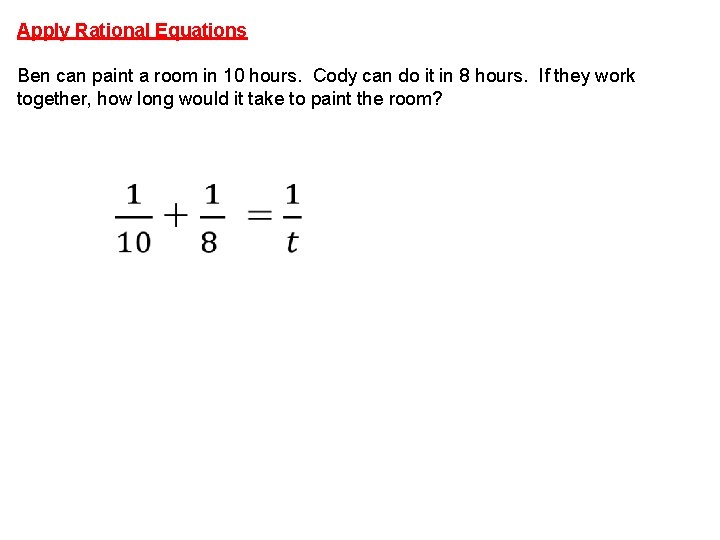
Apply Rational Equations Ben can paint a room in 10 hours. Cody can do it in 8 hours. If they work together, how long would it take to paint the room?
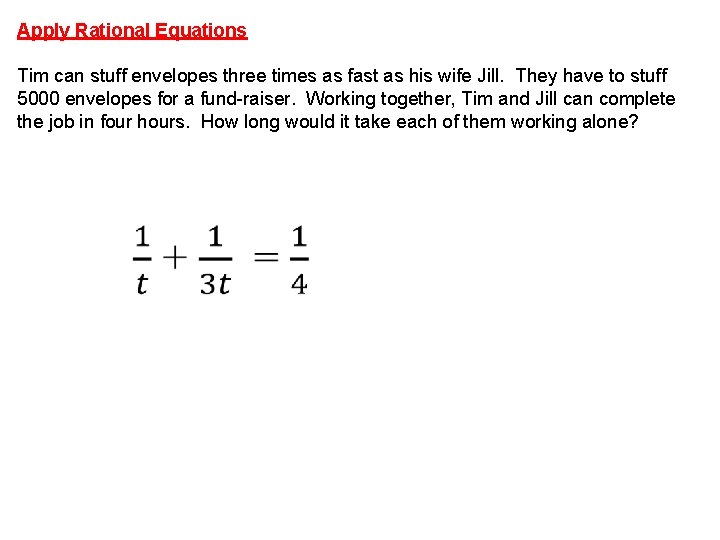
Apply Rational Equations Tim can stuff envelopes three times as fast as his wife Jill. They have to stuff 5000 envelopes for a fund-raiser. Working together, Tim and Jill can complete the job in four hours. How long would it take each of them working alone?
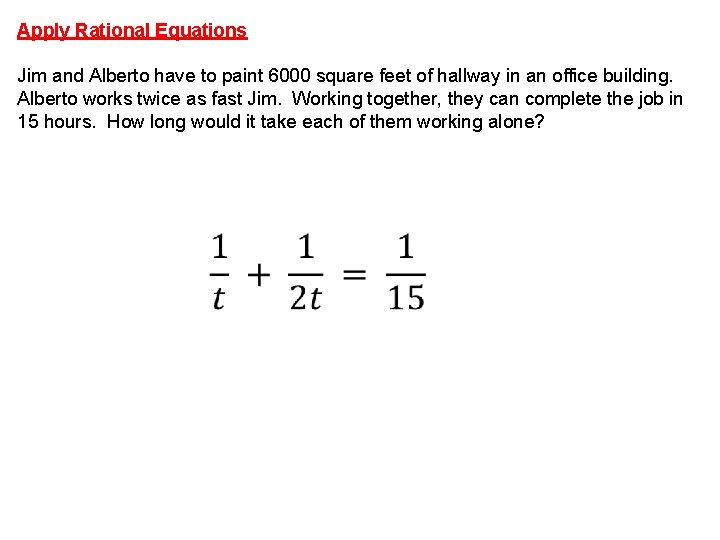
Apply Rational Equations Jim and Alberto have to paint 6000 square feet of hallway in an office building. Alberto works twice as fast Jim. Working together, they can complete the job in 15 hours. How long would it take each of them working alone?
End of Day